Bill· HJRESH.J.Res. 560 (99th)open
A joint resolution to designate 1988 as the "Year of New Sweden".
United States · United States Congress · 11 March 1986
Designates 1988 as the Year of New Sweden.
The world's political record
Person
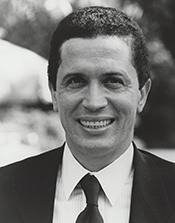
United States · Official source
3,346 records where Rep. Ford, Harold E. [D-TN-9] is listed as a sponsor, author, or other actor. Search with topics and years
United States · United States Congress · 11 March 1986
Designates 1988 as the Year of New Sweden.
United States · United States Congress · 11 March 1986
Designates the month of April 1986 as Fair Housing Month.
United States · United States Congress · 6 March 1986
Designates the week beginning November 24, 1986, as National Family Caregivers Week.
United States · United States Congress · 4 March 1986
Parental and Medical Leave Act of 1986 - Title I: General Requirements for Parental and Medical Leave - Entitles employees to parental leave for specified periods in cases involving the birth, adoption, or serious health condition of a child. Entitles employees to temporary medical leave for specified periods in cases involving inability to work because of a serious health condition. Sets forth conditions for certification for such types of leave. Provides that such leave may be without pay. Allows employees to substitute other types of paid leave to cover part of such leave period. Sets forth employment and benefits protections relating to such leave. Provides for administrative enforcement of this title by the Secretary of Labor, as well as enforcement by civil action. Sets forth provisions for injunctive relief, monetary relief, and attorneys' fees. Requires employers to post notice of the pertinent provisions of this title. Title II: Parental Leave and Temporary Medical Leave for Civil Service Employees - Amends specified Federal law to entitle civil service employees to parental leave and temporary medical leave for specified periods. Provides that such leave will be without pay. Allows employees to substitute other types of paid leave for part of such leave. Sets forth protection for job position and health insurance benefits of employees using such leave. Directs the Office of Personnel Management to prescribe regulations for administration of this title which are consistent with the regulations prescribed by the Secretary of Labor under title I of this Act. Title III: Commission on Paid Parental and Medical Leave - Establishes the Commission on Paid Parental and Medical Leave. Requires the Commission to report on its study of paid parental and medical leave to the Congress within two years after the Commission first meets. Terminates the Commission within 30 days after its final report. Title IV: Miscellaneous Provisions - Sets forth the effect of this Act on existing laws and existing employment benefits. Directs the Secretary of Labor to prescribe regulations to carry out title I of this Act.
United States · United States Congress · 27 February 1986
Directs the President to designate May 1986 as Older Americans Month.
United States · United States Congress · 27 February 1986
Disapproves a proposed deferral (number D86-48) of $500,000,000 of budget authority for the community development block grant program, as set forth in the President's message to the Congress on February 5, 1986.
United States · United States Congress · 26 February 1986
Designates the week of May 11 through May 17, 1986, as Senior Center Week.
United States · United States Congress · 25 February 1986
Amends the Federal criminal code to prohibit the sale, delivery, or importation of nonmetal firearms. Directs the Administrator of the Federal Aviation Administration to conduct research to improve the effectiveness of airport security devices with respect to the detection of nonmetal firearms.
United States · United States Congress · 20 February 1986
Designates the month of October 1986 as Lupus Awareness Month.
United States · United States Congress · 19 February 1986
Designates the week of September 21 through September 27, 1986, as Emergency Medical Services Week.
United States · United States Congress · 6 February 1986
Designates the week of March 9 through March 15, 1986, as National Employ the Older Worker Week.
United States · United States Congress · 6 February 1986
Expresses the sense of the Congress that the President should: (1) not provide any new food, development, or other economic assistance for Haiti; (2) suspend trade benefits to Haiti under the Caribbean Basin Economic Recovery Act; (3) call upon other donor countries to suspend direct assistance, including military assistance; and (4) impose economic sanctions against Haiti (excluding restrictions on U.S. food exports). Declares that all such sanctions should be continued until the Haitian Government takes steps to hold free elections, implement political reforms, establish political parties, and end human rights abuses. States that the United States should provide new food and other economic assistance only if the Haitian Government cooperates to implement such assistance.
United States · United States Congress · 5 February 1986
Expresses the sense of the House of Representatives that the President should urge the Government of South Africa to indicate its willingness to negotiate with the black majority by: (1) granting unconditional freedom to Nelson Mandela; (2) recognizing the African National Congress; and (3) establishing a framework for political talks.
United States · United States Congress · 4 February 1986
Designates the week of September 7 through September 13, 1986, as National Independent Retail Grocer Week.
United States · United States Congress · 4 February 1986
Designates August 12, 1986, as National Neighborhood Crime Watch Day.
United States · United States Congress · 4 February 1986
Designates February 28, 1986, as National TRIO Day.
United States · United States Congress · 30 January 1986
Consumer Rail Equity Act - Reaffirms the intent of the Congress that the Railroad Revitalization and Regulatory Reform Act of 1976 and the Staggers Rail Act of 1980 be implemented in a manner which provides both greater competitive alternatives and adequate railroad revenues. Establishes a rebuttable presumption of rail market dominance if a person challenging a transportation rate shows that the railroad charging such rate does not face effective transportation competition. Shifts the burden of proof regarding transportation rate reasonableness from the shipper to the rail carrier establishing the challenged rate. Declares that it is Federal policy to encourage and promote competitive transportation rates for domestically produced coal and other commodities in order to increase their competitive position in domestic and export markets. Directs the Commission to establish a rail cost adjustment factor which includes changes in railroad productivity, volume, and output mix. Provides that certain rail carrier rates shall be reduced to the extent of any subsequent decreases in rail cost adjustment factors. Includes within the standards used to determine railroad revenue adequacy: (1) identification of revenues, expenses, and investment base reasonably related to rail transportation service; (2) straight-line depreciation of assets reasonably related to rail transportation service, minus deferred tax reserves resulting from accelerated depreciation; and (3) actual cost of debt capital and reasonable estimates of the current cost of equity capital. Requires the Commission, when making revenue adequacy determinations, to consider specified indicators of a rail carrier's financial status. Requires the Commission to determine, on an annual basis, which rail carriers are earning adequate or inadequate revenues and to determine for each rail carrier the revenues required to achieve or maintain revenue adequacy. Allows (current law requires) the Commission to exempt persons from application of this Act when: (1) such application is not necessary to implement Federal transportation policy; and (2) the Commission finds there is no market dominance involved in the affected transaction. Requires any rail carrier providing service under certain line rates to participate in competitive joint rail rates through practicable interchange connections (or publish a competitive proportional rate) if requested to do so by a rail carrier (or shipper or receiver) who has an actual or practicable interchange connection. Directs the Commission, upon petition of any interested party, to require certain terminal facilities owned by a rail carrier in interstate or foreign commerce to be used by another rail carrier if the Commission finds: (1) it is in the public interest to do so; and (2) that the owner of such terminal facility will not suffer substantial impairment of its own business interests. Directs the Commission to require, upon petition by an interested party, that rail carriers enter into reciprocal switching agreements if such an agreement is in the public interest or necessary to provide alternative competitive rail service. Directs the Commission to establish reciprocal switching compensation at a level not to exceed the current percentage of the actual variable costs for such service (unless the carrier demonstrates that a higher level is reasonable and necessary). Revises railroad line abandonment procedures to provide that a rail carrier must wait one year before resubmitting a previously denied abandonment application, unless a substantial change in circumstances can be shown. Requires the Commission to hold hearings in communities affected by a proposed railroad line abandonment if requested to do so by community protestants. Requires the Commission to base its abandonment determination upon financial data regarding the facility proposed to be abandoned rather than upon financial data regarding industry-wide averages. Subjects to Commission review any State decision regarding intrastate rates, rules, and practices if a party to such State proceedings petitions for Commission review. Requires the Commission to take action on such petition within 120 days of its receipt. Authorizes the Commission to vacate a State decision found inconsistent with this Act.
United States · United States Congress · 28 January 1986
Prohibits any benefits payable from the Civil Service Retirement and Disability Fund, including cost-of-living increases, during calendar year 1987 from being subject to reduction or suspension by statute or presidential order.
United States · United States Congress · 28 January 1986
Designates the week beginning on April 20, 1986, as National Reading is Fun Week.
United States · United States Congress · 19 December 1985
Permits the reappointment of a specified number of air traffic controllers who were separated from service for participation in a strike initiated on August 3, 1981. Requires such reappointments to be made in FY 1986 and 1987.
United States · United States Congress · 2 December 1985
National Conference on Cities and Towns Act - Directs the President to conduct a National Conference on Cities and Towns not earlier than December 1, 1986, and not later than December 1, 1987. Sets forth the purposes of such Conference concerning: (1) relations between cities and towns and the Federal system; and (2) present and future problems facing cities and towns. Encourages each State Governor to conduct a State-level conference to prepare for the National Conference. Sets forth the method of selecting delegates to such Conference. Requires all departments, agencies, and instrumentalities to provide assistance as necessary to facilitate the planning of the Conference. Requires the Secretary of Housing and Urban Development to provide assistance as necessary for the organization and conduct of State conferences. Authorizes the Secretary to enter into contracts to carry out the purposes of this Act. Requires the Directors of the Congressional Research Service and the Congressional Budget Office to provide background materials for the use of participants in the National Conference and State conferences. Prohibits the use of funds under this Act to reimburse the expenses of participants to the National Conference. Authorizes the President to appoint an executive director and other directors and personnel as necessary for the Conference. Authorizes the detailing of Federal and military personnel in planning and administering such Conference. Requires a final report of findings and recommendations to the President and the Congress within six months after the date the Conference is convened. Requires that such report be distributed to delegates, alternates, and State Governors and be available for sale to the public. Authorizes appropriations.
United States · United States Congress · 21 November 1985
Amends the Export Administration Act of 1979 to limit the export of oil produced from Cook Inlet, Alaska.
United States · United States Congress · 21 November 1985
Establishes the American Slavery Memorial Council whose duty it will be to plan, construct, and oversee the operation of a museum memorializing the victims of American slavery. Specifies the number, method of appointment, and terms of Council members. Authorizes the Council to purchase real property within the District of Columbia, accept gifts of real and personal property, and enter into contracts in pursuit of its duties under this Act. Subjects the museum's design, and any Federal agency's transfer of real property in the District of Columbia to the Council, to the approval of the Commission of Fine Arts and the National Capital Planning Commission. Sets the pay and allowances to be provided to Council members. Directs the President to appoint an executive director of the Council upon the recommendation of the Council chairperson. Sets forth miscellaneous provisions regarding Council powers. Authorizes appropriations for FY 1987 and 1988, but prohibits their use for museum construction. Terminates the Council's authority to construct the museum if such construction is not commenced within five years with funds sufficient to ensure its completion.
United States · United States Congress · 20 November 1985
Telecommunications Equipment and Information Services Act of 1985 - Authorizes the Bell operating companies to provide information services (excluding electronic publishing) and to manufacture telecommunications equipment, subject to such regulations as the Federal Communications Commission may prescribe. Conditions such authority on the Commission's determination that no Bell operating company could impede competition in the information services or telecommunications equipment manufacturing businesses. Requires the Commission to include in its annual report to the Congress an assessment, providing for public comment, of the impact of this Act on employment in such businesses.
United States · United States Congress · 20 November 1985
Campaign Finance Reform Act of 1985 - Amends the Federal Election Campaign Act of 1971 to: (1) increase dollar limits on personal contributions to candidates and their authorized political committees; and (2) decrease the amount one multicandidate political committee may contribute to any other political committee. Limits to $100,000 ($125,000 where two or more candidates qualify for the ballot) the aggregate amount which all multicandidate political committees may contribute to a candidate for the House of Representatives in a general or special election, including any primary election, convention, or caucus relating to such general or special election. Limits to $25,000 the aggregate amount allowed for multicandidate political committee contributions in a runoff election for the office of Representative. Establishes a formula for multicandidate political committee contributions to candidates for the Senate based upon State populations and limited to an aggregate total of $750,000. Requires multicandidate political committees which make independent expenditures for advertisements connected with a candidate's campaign to disclose such information within the advertisement. Amends the Communications Act of 1934 to require any station licensee which allows a person to broadcast material endorsing or opposing a candidate to provide the candidate opposing the endorsed candidate, or to the candidate opposed by the material, the opportunity to use the same amount of broadcasting time, without charge, during the same period of the day.
United States · United States Congress · 20 November 1985
Designates May 25, 1986, as Hands Across America Day. Authorizes and requests the President to commend: (1) United Support of Artists for Africa for their Hands Across America project; and (2) the American people for their commitment to helping people help themselves.
United States · United States Congress · 12 November 1985
Amends the Internal Revenue Code to deny tax-exempt status (and prohibit the deduction of contributions) to certain educational organizations established to avoid the integration of the public schools.
United States · United States Congress · 12 November 1985
Designates the month of February 1986 as National Black (Afro-American) History Month.
United States · United States Congress · 6 November 1985
Directs the Secretary of the Treasury to issue public debt obligations to the Federal Old-Age and Survivors Insurance Trust Fund, Federal Disability Insurance Trust Fund, Federal Hospital Insurance Trust Fund, Federal Supplementary Medical Insurance Trust Fund, Railroad Retirement Account, Civil Service Retirement and Disability Fund, and Department of Defense Military Retirement Fund identical to the terms of public debt obligations which: (1) were redeemed on or after September 1, 1985, and on or before the date of the enactment of this Act; and (2) would not have been redeemed had the public debt limit been raised pursuant to a specified resolution of the House of Representatives. Directs the Secretary to pay to the funds the interest which would have accrued to the funds but for such non-investments, redemptions, and disinvestments. Authorizes the Secretary to disinvest such funds when necessary to prevent a shortfall in amounts available for benefit payments or to avoid violating the public debt limit, but, in the latter case, only if the Congress approves the Secretary's request for disinvestment within a specified period. Characterizes the required joint resolution of approval as an exercise of the constitutional rulemaking power of the House of Representatives and the Senate. Details the Congressional procedure to be followed upon the Secretary's submittal of a disinvestment request. Requires the Secretary, upon the extension of the public debt limit, to: (1) issue public debt obligations with terms identical to those redeemed in connection with such disinvestment; and (2) pay the interest which would otherwise have accrued to such funds.
United States · United States Congress · 5 November 1985
Designates the week of February 9 through February 15, 1986, as National Humanities Week, 1986.
United States · United States Congress · 30 October 1985
Amends the Foreign Assistance Act of 1961 to provide that funds made available for family planning programs may only be used for programs: (1) in which there is not any element of coercion of individuals to practice family planning or to accept any particular method of contraception; (2) which include an accurate description of the effectiveness and risks of all major methods of family planning; and (3) which include an agreement to provide either other family planning methods if requested or referral to programs offering other methods as appropriate.
United States · United States Congress · 24 October 1985
Expresses the sense of the Senate that the United States: (1) should not sell advanced weapons to Jordan; (2) should ensure that Israel retains its qualitative military edge in the Middle East; and (3) should focus its efforts on bringing Jordan into direct peace negotiations with Israel.
United States · United States Congress · 3 October 1985
Comprehensive Smokeless Tobacco Health Risk Education Act - Directs the Secretary of Health and Human Services to develop educational programs and materials and public service announcements on the dangers to human health from the use of smokeless tobacco and to make such programs, materials, and announcements available to States, local governments, and school systems. Permits the Secretary to make grants to States to assist in the development and distribution of educational programs, materials, and public service announcements on the dangers to human health from the use of smokeless tobacco and to establish 21 as the minimum age for purchasing smokeless tobacco. Requires specified warning labels on all smokeless tobacco products and advertisements. Directs the Federal Trade Commission (FTC) to promulgate regulations to implement this Act. Imposes a ban on smokeless tobacco advertising on any medium of electronic communication subject to the jurisdiction of the Federal Communications Commission (FCC), effective January 11, 1986. Grants district courts of the United States jurisdiction and injunctive powers to prevent and restrain violations of this Act. Directs the FTC to report to the Congress annually on the use and health effects of smokeless tobacco products. Directs the FCC to report to the Congress annually on the sales and advertising and marketing practices associated with smokeless tobacco products.
United States · United States Congress · 1 October 1985
Amends the Inspector General Act of 1978 to establish an Office of Inspector General in the Tennessee Valley Authority (TVA). Sets forth special provisions relating to the TVA's policies on electric power rates and adjustments. Requires the Inspector General to appoint an Assistant Inspector General for Rate Review.
United States · United States Congress · 1 October 1985
Amends the copyright law to make permanent the prohibition against importing certain English language books not manufactured in the United States and Canada, denying copyright protection to books imported in violation of this restriction (the manufacturing clause).
United States · United States Congress · 1 October 1985
Social Security Budget and Administrative Reorganization Act of 1985 - Title I: Establishment of the Social Security Administration - Amends title VII (Administration) of the Social Security Act to establish as an independent executive agency a Social Security Administration, headed by a Social Security Board. Provides that it shall be the duty of the Administration to administer the programs established by titles II (Old Age, Survivors and Disability Insurance) and XVI (Supplemental Security Income) of the Social Security Act. Requires the Board to study and make recommendations as to the most effective methods of providing economic security through social insurance and as to legislation and matters of administrative policy. Establishes in the Administration: (1) a Commissioner of Social Security; (2) a Deputy Commissioner of Social Security; (3) a General Counsel; (4) an Inspector General; and (5) an Office of the Beneficiary Ombudsman, to be headed by a Beneficiary Ombudsman who shall represent the interests of beneficiaries under the Old Age, Survivors and Disability Insurance program and the Supplemental Security Income Program within the Administration. Requires the annual report of the Board to include a description of the activities of the Beneficiary Ombudsman. Requires the Board to make annual budgetary recommendations relating to the Administration. Requires that appropriations requests by the Administration for staffing and personnel be based upon a comprehensive workforce plan as established by the Board. Provides for the apportionment of administrative costs. Requires the annual report of the Board to include a section reflecting the use of budget authority provided to the Administration. Requires that authority for automated data processing procurement and facilities construction be provided in the form of contract authority covering the total cost of such acquisitions. Makes amounts needed for the liquidation of contract authority so provided available from the Federal Old-Age and Survivors Insurance Trust Fund and the Federal Disability Insurance Trust Fund to the extent that such amounts are not needed to meet current obligations for benefit payments. Requires the Board and the Director of the Office of Personnel Management to implement demonstration projects relating to personnel matters. Directs the Board and the Administrator of General Services to implement such projects relating to delegations from the Administrator. Specifies the authorities which are to be delegated to the Board from the Administrator and the Director. Requires the Comptroller General to report to specified congressional committees concerning such projects, including an evaluation of the Board's readiness to assume full and permanent authority. Requires the Board to cause a seal of office to be made and judicial notice taken thereof. Provides for the transfer to the Administration of all functions carried out by the Secretary of Health and Human Services with respect to the programs and activities to be carried out by the Administration under this Act. Abolishes the position of Commissioner of Social Security in the Department of Health and Human Services. Sets forth effective date and transitional rule provisions. Title II: Conforming Amendments and Rules of Construction - Requires the Secretary and the Board to report to Congress within 120 days after the beginning of each regular session on their administration under this Act. Requires the Secretary to study and make recommendations on the most effective methods of providing economic security and on the administrative policy for the programs which he or she administers. Directs the Board to appoint, quadrennially, an Advisory Council on the Old-Age, Survivors, and Disability Insurance program and an Advisory Council on Health and Supplementary Medical Insurance to review the relation of the trust funds supporting the Old-Age, Survivors and Disability Insurance program and the Medicare program and the long-term commitments of those programs. Requires each council to submit a report to the Board for transmittal to the Congress and the Board of Trustees of each Trust Fund. Sets forth the effective dates of this title. Title III: Budgetary Treatment of Old-Age, Survivors, and Disability Insurance Program - Provides for off-budget treatment of the Federal Old-Age and Survivors Insurance Trust Fund and the Federal Disability Insurance Trust Fund beginning with FY 1987.
United States · United States Congress · 23 September 1985
Commends U.S. financial institutions for recognizing the economic instability inherent in the system of apartheid. Urges such institutions to continue calling in loans to South African borrowers as they come due.
United States · United States Congress · 12 September 1985
Designates the rose as the national floral emblem.
United States · United States Congress · 1 August 1985
Amends the Federal Tort Claims Act to allow members of the armed forces serving on active duty or on full-time National Guard duty to bring claims for damages against the United States for personal injury or death arising out of medical or dental care furnished by a medical treatment facility operated by the military or the United States.
United States · United States Congress · 1 August 1985
Designates March 16, 1986, as Freedom of Information Day.
United States · United States Congress · 1 August 1985
Expresses the sense of the House of Representatives that the President should instruct the U.S. Ambassador to the United Nations to support any U.N. resolution that proposes the imposition of any sanctions against South Africa that are contained in H.R. 1460 of the 99th Congress, as adopted by the House.
United States · United States Congress · 30 July 1985
Comprehensive Nuclear Weapons Freeze and Arms Reduction Act of 1985 - Expresses the sense of the Congress that the President should immediately invite the Soviet Union to enter into negotiations with the United States which seek an agreement on a comprehensive freeze (a bilateral and adequately verifiable halt by the United States and the Soviet Union in all testing, production, and deployment of nuclear weapons systems). Declares the President should inform the Soviet Union of the U.S. intention to engage in a bilateral halt in the testing, production, and deployment of nuclear weapons systems. Expresses the sense of the Congress that: (1) both during and after negotiations for a comprehensive freeze the President should pursue reductions in nuclear arsenals; and (2) a comprehensive freeze is entirely consistent with, and an essential part of mutual stabilizing reductions in nuclear forces. Requires both the Senate and the House Intelligence Committees to begin oversight hearings on verification procedures for the comprehensive freeze. Sets forth which committees and subcommittees may have members participate in such hearings. Requires the Intelligence Committees to report to their respective Houses within six months of enactment of this Act on the adequacy of U.S. monitoring systems and existing procedures for verifying Soviet compliance with the comprehensive freeze. Requires the reports to include: (1) an assessment of the nature and extent of Soviet activities and installations involved in the testing, production, and deployment of nuclear weapons systems; (2) an assessment of current U.S. capabilities to monitor threatening changes in the status of Soviet nuclear forces under the comprehensive freeze; and (3) an assessment of additional monitoring systems and cooperative procedures that may be needed to increase monitoring confidence of compliance. Requires the Director of the U.S. Arms Control and Disarmament Agency to begin preparing an operational plan for implementation of the comprehensive freeze. Requires the Director to report to the Congress on the plan within nine months of enactment of this Act. Requires the report to specify: (1) procedures for the cessation of activities and closure or conversion of facilities affected by the comprehensive freeze; (2) a program for the retraining and re-employment of Government and defense industry personnel directly affected by the termination of nuclear weapons-related activities; and (3) a program of economic adjustment assistance for adversely affected communities. Directs the President to submit semi-annual reports to the Congress on: (1) the status of U.S. and Soviet negotiation efforts; (2) Soviet military activities relating to the testing, production, and deployment of nuclear weapons systems; and (3) any uncertainties concerning verification of the comprehensive freeze, the status of efforts to reduce those uncertainties, and the national security implications of those uncertainties. Imposes the following restrictions on nuclear testing, deployment, and production only if the Soviet Union, within a specified time, informs the President that the Soviet Union will observe a bilateral halt in the testing, production, and deployment of nuclear weapons systems. Prohibits obligating or spending appropriations for testing, producing, or deploying nuclear weapons systems, unless the Congress expressly provides otherwise. Allows the testing and deployment of specified nuclear missiles for a limited time. Sets forth the effective dates of such restrictions. Authorizes the President to request the Congress to remove the funding restrictions on the testing, production, and deployment of nuclear weapons systems only if the President certifies to the Congress that: (1) the Soviet Union has failed to demonstrate a restraint with respect to nuclear weapons systems which corresponds to the restraint being shown by the United States; or (2) continuation of the funding restrictions would cause significant and irreparable damage to U.S. national security. Provides for expedited congressional consideration of such a request by the President.
United States · United States Congress · 30 July 1985
Elderly Crime Prevention and Victim Assistance Act of 1985 - Establishes in the Office of Justice Programs of the Department of Justice the National Resource Office Relating to Crimes Against Older Individuals. Provides for the appointment of an administrator from the employees of the Department of Justice to head such office. Requires the administrator to coordinate activities of the Department of Justice relating to training of law enforcement officers, financial assistance for older victims, compilation of statistical information, and research with regard to crimes committed against the elderly. Requires the administrator to: (1) establish a liaison with all Federal departments and agencies involved with programs for older persons who are or may become victims of crimes; (2) disseminate information regarding such programs and assistance; and (3) provide technical assistance to reduce or prevent the committing of crime against older individuals.
United States · United States Congress · 26 July 1985
Expresses the sense of the House of Representatives that the President should instruct the U.S. Ambassador to the United Nations to vote in favor of a French and Danish resolution calling for the imposition of voluntary sanctions against South Africa, the lifting of the state of emergency there, and the release of its political prisoners.
United States · United States Congress · 18 July 1985
Dropout Prevention and Reentry Act of 1985 - Amends the Elementary and Secondary Act of 1965 (ESEA) to add a new title X, the Dropout Prevention and Reentry Act of 1985. (Redesignates the current title X as title XI.) Authorizes appropriations for FY 1987 through 1990 for such new title X. Directs the Secretary of Education, from such title X funds for any fiscal year, to allot 20 percent to each of five categories of local educational agencies (LEAs) (based on total elementary and secondary school student enrollments). Directs the Secretary, from the amounts allotted to such categories of LEAs, to award as many grants as practicable within each such category to LEAs whose applications: (1) have been approved; and (2) propose a program of sufficient size and scope to be of value as a demonstration. Limits an LEA to no more than one such grant in each of three fiscal years. Requires the amount of a grant to be, to the extent practicable, proportionate to the extent and severity of the local dropout problem. Limits the amount of a grant to 90 percent of the total cost of a project during its first fiscal year, 80 percent in the second, and 70 percent in the third. Sets forth grant application requirements (including plans for addressing the needs of pregnant minors and school-age parents). Directs the Secretary to give first priority within each category of LEA to applicants with either very high numbers or very high percentages of school dropouts. Sets forth requirements for review of LEA second or third year projects. Requires such grants to be used to carry out plans set forth in the applications. Lists activities such grants may also be used for, including counseling, remedial education, work-study, community-organization service, curriculum review, and school staff training. Requires at least 30 percent of each grant to be used for dropout prevention activities, and another 30 percent for dropout reentry activities (i.e. persuading dropouts to return to school and assisting former dropouts with specialized services once they return to school). Directs the Secretary, from amounts appropriated to the Secretary for FY 1986, to use a specified limited amount to conduct a one-year study of the nature and extent of the dropout program. Sets forth requirements for such study, (including development of a model dropout information collection and reporting system and minimum reporting system requirements). Sets forth general provisions for title X, including provisions relating to withholding payments, annual reports, and audits. Requires that title X grants supplement other funds.
United States · United States Congress · 18 July 1985
Trade Emergency and Export Promotion Act - Declares that actions by the President, the International Trade Commission (ITC), the Secretary of the Treasury, the Secretary of Agriculture, and the U.S. Trade Representative (USTR) pursuant to this Act shall not be reviewable by any court, except for abuse of discretion. Title I: International Trade Actions and Agreements - Declares that a national emergency exists because of distortions and imbalances in trade and instability in exchange rates and that such emergency requires extraordinary measures, including action to: (1) restore the value of the dollar; and (2) either eliminate foreign unfair trade barriers or prohibit countries which employ such barriers from enjoying trade surpluses with the United States or increasing shares of world export markets. Authorizes the President to negotiate and enter into with any foreign country or entity agreements limiting the export from such country or entity, and the importation into the United States, of any article. Directs the USTR to initiate proceedings against Japan before appropriate international bodies in order to obtain authorization to take trade actions against Japan on the grounds that: (1) Japan has failed to comply with trade agreements entered into with the United States; and (2) Japan has adopted numerous domestic policies and practices that impair and violate such trade agreements and impede achievement of their objectives. Directs the USTR, with the cooperation of the Secretary of Agriculture, to initiate actions under all international trade agreements to which the United States is a party in order to take appropriate countermeasures against agricultural export subsidies provided by the European Communities and other countries which will be used to prevent: (1) injury to U.S. agricultural producers; (2) nullification or impairment of such trade agreements; and (3) serious prejudice to the United States. Authorizes the USTR to initiate actions against each foreign country (except Japan and the European Communities) or entity that was an excess worldwide trade surplus country or an excess bilateral trade surplus country for 1984 under all applicable U.S. laws and international agreements in order to: (1) enforce the rights of the United States under such international agreements; and (2) obtain the elimination of certain trade acts, policies, and practices of such countries or entities. Directs the USTR to explain in proceedings initiated under this title that the United States finds it necessary to take the actions provided in title II of this Act as interim measures pending the outcome of such proceedings in order to protect vital U.S. interests. Directs the Secretary of the Treasury to develop a plan to reduce fluctuations between currencies on foreign currency exchange markets. Sets forth characteristics of such plan. Title II: Interim Domestic Trade Actions to Respond to the Trade Emergency - Subtitle A: Stand-by Duties - Directs the ITC to determine annually each major exporting country's: (1) worldwide nonpetroleum export percentage; (2) bilateral nonpetroleum export percentage; (3) worldwide nonpetroleum trade surplus; (4) bilateral nonpetroleum trade surplus; (5) worldwide trade surplus limitation; and (6) bilateral trade surplus limitation. Requires the ITC to report annually to the President on: (1) the determinations on the trade of such major exporting countries; (2) the identity of each foreign country which was an excess worldwide trade surplus country or excess bilateral trade surplus country during the preceding year; and (3) whether or not standby duties should be imposed on imports from such countries. Requires the President, within 15 days of receiving such report to determine, with respect to each country identified as an excess worldwide trade surplus country or excess bilateral trade surplus country: (1) whether such country unfairly restricts or limits the access of imports to its markets; and (2) if the President determines that such country does restrict access to its markets, whether such restriction contributes to that country's trade surplus. Requires the President, if both such determinations are positive, to impose stand-by duties on all imports from such countries. Prohibits making such determinations or imposing such duties if the U.S. trade deficit divided by the U.S. gross national product is less than one and one-half percent. Requires the President to report to the Congress, within 15 days of receiving the reports on worldwide and bilateral trade, on the determinations made with respect to imposing stand-by duties. Declares that the rate of a stand-by duty shall be 25 percent ad valorem and that such duty shall be in addition to any other duties. Provides for the implementation of such duties. Requires all revenues from such stand-by duties to be allocated to the Public Debt Reduction Account in the Treasury. Expresses the sense of the Congress that all funds in such Account be used only to reduce the Federal debt. Directs the Secretary of the Treasury to report annually to the Congress on the revenue derived from such stand-by duties. Prohibits imposing stand-by duties on articles imported after April 30, 1992. Prohibits requiring reports and determinations on trade surpluses after April 1991. Subtitle B: Reports - Directs the President to report annually to specified congressional committees on the operation of this Act. Title III: Trade Law Reform - Amends the Trade Act of 1974 to transfer to the USTR from the President the authority to order import relief and the authority to extend tariff preferences. Amends the Tariff Act of 1930 to transfer to the USTR from the President the authority to approve or disapprove ITC actions to prevent unfair practices in import trade.
United States · United States Congress · 17 July 1985
Grants a Federal charter to the National Association of State Directors of Veterans Affairs, Incorporated.
United States · United States Congress · 16 July 1985
Federal Equitable Pay Practices Act of 1985 - Establishes the Commission on Equitable Pay Practices to determine whether the Government's position-classification system and prevailing rate system are designed and administered in accordance with the general policy that sex, race, and ethnicity should not be among factors considered in determining pay rates. Requires the Commission to conduct, by contract with a consultant selected under this Act, a study under which job-content analysis and economic analysis shall be applied to a representative sample of occupations in which: (1) either sex is numerically predominant; (2) any race is disproportionately represented; or (3) any ethnic group is disproportionately represented. Directs the Commission to report to the Congress and the President on the results of such study not later than 18 months after the Commission's date of establishment. Make sums appropriated to the Office of Personnel Management for general operating expenses available to carry out this Act.
United States · United States Congress · 11 July 1985
Expresses the sense of the House of Representatives that the: (1) local field office structure of the Social Security Administration should be maintained, strengthened, and fully staffed; and (2) proper amount of administrative costs of such offices should approximate 1.5 percent of the costs of the social security benefit programs serviced by such offices.
United States · United States Congress · 27 June 1985
Institutional Aid Act of 1985 - Amends title III (Institutional Aid) of the Higher Education Act of 1965 (HEA) to revise institutional aid programs, especially in relation to the development needs of historically black colleges and universities and other institutions with large concentrations of minority, low-income students. Includes as eligible institutions, for purposes of the title III part A (Strengthening Institutions) grants program, any institution of higher education which meets specified requirements and which has an enrollment of which at least: (1) 20 percent are Mexican American, Puerto Rican, Cuban, or other Hispanic students, or combination thereof; (2) 60 percent American Indian, Alaska Native, or Aleut, or combination thereof; or (3) five percent Native Hawaiian, American Samoan, Micronesian, Guamian (Chamorro), or Northern Marianan, or any combination thereof. Establishes under title III part B, "Strengthening Historically Black Colleges and Universities" (which replaces the current part B, Aid to Institutions with Special Needs). Defines a "part B institution" as any historically black college or university that was established prior to 1964 and whose principal mission was, and is, the education of black Americans. Sets forth authorized uses for grants allotted to institutions under the part B program. Directs the Secretary of Education (the Secretary) to make allotments to part B institutions according to formulas based on number of: (1) Pell grant recipients; (2) graduates; and (3) graduates in attendance at graduate or professional schools in degree programs in disciplines in which blacks are underrepresented. Sets forth a special rule regarding allotments to Howard University or the University of the District of Columbia. Sets forth provisions for applications for part B grant allotments. Sets forth provisions for part B program grants to professional and graduate institutions. Directs the Secretary, subject to the availability of appropriations for such purpose, to award such grants to each of listed postgraduate institutions that the Secretary determines to be making a substantial contribution to the legal, medical, dental, veterinary, or other graduate education opportunities for black Americans. Prohibits any such grant in excess of $500,000 unless the postgraduate institution assures that 50 percent of the cost of the purposes for which the grant is made will be paid from non-Federal sources. Limits the duration of any such grant to five years. Provides that any one undergraduate or postgraduate institution may receive no more than two such five-year grants. Allows use of such grants for: (1) any of the authorized uses of part B allotment grants; (2) contribution development offices; and (3) institutional endowments. Sets forth application requirements. Provides that independent professional or graduate institutions eligible for such grants include: (1) Morehouse School of Medicine; (2) Meharry Medical School; (3) Charles R. Drew Postgraduate Medical School; (4) Atlanta University; and (5) Tuskegee Institute School of Veterinary Medicine. Sets forth reporting and audit requirements and penalties for misuse of funds. Revises title III part C (Challenge Grants for Institutions Eligible for Assistance Under Part A or Part B) to rename the "endowment grants" under such part "challenge grants." Makes technical and conforming amendments to eligibility requirements under such part. Reduces the maximum amount of any such part C challenge grant for FY 1985 through 1987. (Retains the current maximum for FY 1988 and succeeding fiscal years.) Establishes under title III a new part D, "Reservation for Hispanic, Native American, and Pacific Basin Institutions." (Redesignates the current part D as part E.) Directs the Secretary, from part A appropriations, to make available for use for the purpose of such part the greater of specified amounts or the following portions of such funds: (1) 20 percent for Hispanic institutions; (2) five percent for Native American, Native Alaskan, or Aleut institutions; and (3) five percent for institutions serving Native American Pacific Islanders, including Native Hawaiians residing in the Pacific Basin, including the State of Hawaii. Sets forth authorized uses of such part A funds which are reserved under the new part C. Revises the redesignated part E (General Provisions) under title III. Directs the Secretary to publish in the Federal Register all policies and procedures required to exercise the authority to approve applications for title III assistance. Prohibits any other criteria, policies, or procedure from being applicable for such purpose. Directs the Secretary to: (1) use the most recent and relevant data concerning the number and percentage of students receiving need-based assistance under title IV (Student Assistance) of HEA in making eligibility determinations under part A of title III; and (2) advance the base-year forward following each annual grant cycle. Requires the Secretary to waive specified part A institutional eligibility requirements (involving an institution's having a relatively high percentage of students receiving need-based assistance under title IV of HEA) in the case of an institution which is: (1) extensively subsidized by the State in which it is located and charges low or no tuition; (2) serving a substantial number of low- and middle-income students as a percentage of its total student population; (3) contributing substantially to increasing higher education opportunities for black Americans, Hispanic Americans, Native Americans, Native American Pacific Islanders, including Native Hawaiians, who are low-income individuals; or (4) substantially increasing higher educational opportunities for individuals in rural or other isolated areas unserved by postsecondary institutions. Includes Hispanic, Native American, or Pacific Basin institutions which have been determined eligible under part D, although not satisfying a specified eligibility criterion (involving an institution's having relatively low and general expenditures), among those institutions which must be included in an annual report of the Secretary to the Congress. Includes among those reasons for which the Secretary may grant a waiver of specified eligibility requirements (involving an institution's being accredited by a nationally recognized accrediting agency and its being authorized to offer bachelor's or junior or community college degrees) a determination that such waiver will substantially increase higher education opportunities appropriate to the needs of Hispanic Americans or Native American Pacific Islanders, including Native Hawaiians. Directs the Secretary to take care to assure that representatives of historically black colleges, Hispanic institutions, Native American institutions, and Native American Pacific Islanders, including Native Hawaiians, are included as readers on title III application review panels. Revises provisions for grants to encourage cooperative arrangements to include such arrangements between title III aid recipients and institutions not receiving such assistance. Includes benefit to the applicant institutions as a priority criterion in making such grants. Authorizes appropriations for FY 1987 through 1991 for the following title III programs: (1) part A, Strengthening Institutions; (2) part B, Strengthening Historically Black Colleges and Universities (with a separate authorization for part B provisions for Professional and Graduate Institutions); and (3) part C, Challenge Grants for Institutions Eligible for Assistance Under Part A or Part B. Directs the Secretary to make available part A funds for any fiscal year to eligible institutions as follows: (1) at least 30 percent to junior or community colleges; (2) at least 20 percent (or a specified minimum amount, if that is greater) for Hispanic institutions; (3) at least five percent (or a specified minimum amount if that is greater) for Native American, Alaskan, or Aleut institutions; (4) at least five percent (or a specified minimum amount if that is greater) for Pacific Basin institutions; and (5) the remainder to institutions that plan to award a bachelor's degree during that year.