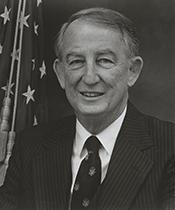
United States · United States Congress · 4 January 1989
Brady Handgun Violence Prevention Act - Makes it unlawful for any licensed importer, manufacturer, or dealer to sell, deliver, or transfer a handgun to an unlicensed individual unless: (1) the transferor has notified the chief law enforcement officer for the individual's place of residence about the proposed transfer and either has received a response indicating that such transfer is not prohibited by law or has not received a response indicating otherwise within seven days; (2) the individual has presented to the transferor a statement from the officer indicating that the individual requires a handgun because of a threat to him or his family; or (3) the individual has a State handgun permit that is less than a year old which satisfies the same requirements. Requires any transferor who subsequently receives a report from such officer that receipt or possession of the handgun by the individual violates the law to: (1) furnish information about the transfer and the individual to the chief law enforcement officer of the transferor's place of business and the individual's place of residence; and (2) keep confidential any information received which is not otherwise available to the public, with exceptions. Requires a transferor to retain a copy of the individual's sworn statement for at least a year. Requires the law enforcement officer to destroy any copy of the individual's sworn statement and any record containing information derived from such statement within 30 days, unless such officer determines that the transaction would violate Federal, State, or local law. Provides that this Act shall not apply in any State that requires: (1) a seven-day waiting period for the transfer of a handgun to an unlicensed individual; or (2) a State law enforcement officer to verify an unlicensed individual's eligibility to receive a handgun. Sets penalties for violations of this Act.
United States · United States Congress · 4 January 1989
Recyclable Materials Science and Technology Development Act of 1989 - Directs the Secretary of Commerce to study and report to the Congress concerning: (1) means to increase the use of degradable materials in manufactured goods; (2) technologies for recycling nondurable consumer products; and (3) ways to expand the marketing of recycled products. Directs the Secretary of Health and Human Services to study and report to the Congress on the feasibility of recycling nondegradable medical supplies and of substituting degradable for nondegradable materials in medical equipment and supplies. Directs the Secretary of Defense to study and report to the Congress on the national defense and security implications of requiring the use of degradable materials in defense items. Instructs the Secretary of Agriculture to initiate a pilot project to develop and demonstrate viable technology for composting municipal waste and sewage sludge. Requires the Secretary to report project results to the Congress. Directs the Secretary of Commerce to appoint a Director of Recycling Research and Information to make grants to support research into innovative recycling technology. Authorizes appropriations for such purposes for FY 1990. Prohibits, effective five years after this Act's enactment, the production, manufacture, distribution, sale, or delivery of nonrecycled consumer goods, fast food in nondegradable containers, and packaging for specified purposes that contains any material that is not naturally degradable. Establishes both civil and criminal penalties for violations. Directs the Administrator of the Environmental Protection Agency and the Secretary of Commerce jointly to issue regulations to govern the designation of goods and materials for noncompliance purposes. Directs the Secretary to publish and periodically update lists of items and materials affected by the prohibition on activities involving nonrecyclable items.
United States · United States Congress · 3 January 1989
Coal Pipeline Act of 1989 - Amends the Mineral Lands Leasing Act of 1920 to authorize a person who has secured specified water rights under State law to apply to the Secretary of the Interior for certification that it is in the national interest to construct, operate, or extend a coal pipeline. Conditions such certification upon an applicant's reservation of a specified portion of total pipeline capacity for small, independent producers located in the geographic region served by such pipeline. Makes all Federal and State environmental laws applicable to the issuance or denial of such certification. Proscribes the granting of any right-of-way through lands: (1) designated as wilderness areas; (2) administered as part of the national park system; or (3) which are part of a historic site (unless there is no reasonable alternative and reasonable planning is made to minimize the harm of such site). Prohibits any person or entity (including the United States) from claiming any right or interest in water within any State for a coal pipeline unless such claim takes place under the law of the affected State. Delegates to the States all power regarding water rights for a coal pipeline. States that this Act does not: (1) impair the validity of any State law (or interstate compact) regarding any claim to water rights; (2) alter the rights of any State to its apportioned share of water under past or future allocation or interstate compact; (3) affect any Indian water rights; or (4) preempt or otherwise affect any State or Federal law or interstate compact regarding water quality or disposal. Prohibits any State acting under authority of this Act from restricting the movement through such State of water acquired in another State and within a coal pipeline. Authorizes certain persons who have received a certification from the Secretary that it is in the national interest to operate or extend a coal pipeline to acquire rights-of-way through private lands by the power of eminent domain. States this Act shall not be construed to permit any person (including the United States) to acquire any water rights through the power of eminent domain. Prohibits the acquisition of any right-of-way through the power of eminent domain if such right-of-way is upon land which is part of a historic site unless there is no prudent alternative and reasonable planning is made to minimize harm to such site. Provides for an antitrust review of applications for certification by the Attorney General. Requires each pipeline carrier for which a certification has been issued to provide service on reasonable request. Prohibits such carriers from unreasonably discriminating or refusing to enter into contracts with coal shippers under similar conditions in a contemporaneous period. States that this Act shall not be construed to modify or preempt the ratemaking authority of any State utility regulatory agency. Requires the Secretary to establish uniform Federal standards for coal pipeline safety. Establishes penalties for failure to comply with such safety standards.
United States · United States Congress · 3 January 1989
Animal Welfare Protection Act of 1989 - Amends the Animal Welfare Act to empower the Secretary of Agriculture to request the Attorney General to obtain a temporary restraining order for violations of such Act or of regulations promulgated under such Act.
United States · United States Congress · 3 January 1989
Fire Safe Cigarette Act of 1989 - Directs the Consumer Product Safety Commission to issue by rule a fire safety standard for cigarettes. Prohibits stockpiling of cigarettes between the issuing and effective dates of the standard. Provides for judicial review of the standard. Prohibits manufacture or importing of cigarettes unless in compliance with a standard issued under provisions of this Act. Declares violation of the prohibition to be a violation of provisions of the Consumer Product Safety Act. States that this Act and the standard issued under it does not preempt any law of a State which prescribes a more stringent fire safety standard for cigarettes. Prohibits, in any civil action for damages, admitting as a defense compliance with the standard.
United States · United States Congress · 3 January 1989
Provides that the Tax Reform Act of 1986 shall be applied and administered as if the three-year basis recovery rule applicable to government employees' annuities had not been repealed.
United States · United States Congress · 3 January 1989
Amends the Wild and Scenic Rivers Act to designate the St. Marys River in Florida and Georgia for potential addition to the Wild and Scenic Rivers System.
United States · United States Congress · 3 January 1989
Federal Employees' Political Activities Act of 1989 - Prohibits an employee from using or attempting to use official authority or influence to interfere with or affect the result of any election. Prohibits an employee from using or attempting to use official authority to intimidate, threaten, coerce, command, or influence: (1) any individual for the purpose of interfering with the right of any individual to vote as the individual may choose, or of causing any individual to vote, or not to vote, for any candidate or measure in any election; (2) any person to give or withhold any political contribution; or (3) any person to engage, or not to engage, in any form of political activity. Prohibits an employee from using, attempting to use, or permitting the use of any official information, unless such information is available to the general public. Prohibits an employee from: (1) giving or offering to give a political contribution to any individual either to vote or to refrain from voting, or to vote for or against any candidate or measure, in any election; (2) soliciting, accepting, or receiving a political contribution to vote or refrain from voting, or to vote for or against any candidate or measure, in any election; or (3) giving or handing over a political contribution to a superior of the employee. Prohibits an employee from soliciting, accepting, or receiving, or from being in any manner concerned with soliciting, accepting, or receiving, a political contribution: (1) from another employee (or a member of another employee's immediate family) with respect to whom the employee is a superior; or (2) in any room or building occupied in the discharge of official duties by a Federal employee or official or an individual receiving salary or compensation from the Treasury. Prohibits an employee from soliciting, accepting, or receiving a political contribution from, or giving a political contribution to, any person who: (1) has, or is seeking to obtain, contractual or other business or financial relations with the employing agency; (2) conducts operations or activities which are regulated by that agency; or (3) has interests which may be substantially affected by the performance of the employee's official duties. Directs the Special Counsel of the Merit Systems Protection Board to prescribe regulations which exempt employees from such prohibitions. Prohibits an employee from engaging in political activity: (1) while on duty; (2) in any room or building occupied in the discharge of official duties by a Federal employee or official; (3) while wearing a uniform or official insignia identifying the office or position of the employee; or (4) while using any vehicle owned or leased by the Government. Exempts certain high level political appointees from such prohibitions if the costs associated with the political activity are not paid for by money derived from the Treasury. Authorizes leave without pay or accrued annual leave to an employee who is a candidate, upon request, to allow such employee to engage in activities relating to that candidacy. Declares that such request may be denied if the exigencies of the public business so require. Declares that such employee may be required to take leave without pay or accrued annual leave in order to be a candidate if activities relating to the candidacy interfere with the employee's performance of duties. Applies this Act to postal employees and employees of the Postal Rate Commission.
United States · United States Congress · 3 January 1989
Veal Calf Protection Act - Prohibits certain practices in the raising of calves for veal. Describes the practices as the confining of calves in small crates and the feeding of calves with diets deficient in solid foods. Fixes penalties and permits civil actions with respect to prohibited acts.
United States · United States Congress · 3 January 1989
Anti-Apartheid Act Amendments of 1989 - Title I: Sanctions Against Investment in, and Exports to, South Africa and Other Measures (Except Import Restrictions) to End Apartheid - Part A: Amendments to the Comprehensive Anti-Apartheid Act of 1986 and Other Laws - Amends the Comprehensive Anti-Apartheid Act of 1986 to prohibit any investments in South Africa by U.S. persons. Makes exceptions to such prohibition for: (1) investments in a business enterprise 90 percent owned and controlled by South Africans economically and politically disadvantaged by apartheid; and (2) investments made by certain individuals during any period and to the extent that such investments are considered South African emigrant non-resident assets and subject to transfer or disposition restrictions. Authorizes a person to apply for, and the President to grant for good cause, a waiver of such prohibition for up to 180 days. Requires U.S. controlled South African entities that are subject to the investment prohibition and that employ more than 24 South Africans economically and politically disadvantaged by apartheid to: (1) notify employees and employee organizations not less than 90 days prior to termination of the U.S. investment in such entity; and (2) enter into good faith negotiations with representative trade unions regarding the terms of such termination. Prohibits the exportation or reexportation to South Africa of any goods or technology subject to U.S. jurisdiction. Prohibits any such exportation or reexportation by any person subject to U.S. jurisdiction. Exempts from such prohibition publications, donations of food, clothing, and medical supplies, commercial sales of agricultural commodities and products, and goods and technology for use in the gathering or dissemination of information by news media organizations subject to U.S. jurisdiction. Makes such prohibitions inapplicable to: (1) any goods that are the direct product of technology of U.S. origin under a written agreement entered into on or before April 20, 1988, and that are exported within one year of the enactment of this Act; (2) economic assistance or human rights programs for disadvantaged South Africans, South African blacks or other nonwhite South Africans, or victims of apartheid in South Africa; and (3) contributions to charitable organizations engaged in social welfare, public health, religious, educational, or emergency relief activities in South Africa. Repeals specified provisions of the Comprehensive Anti-Apartheid Act of 1986 that: (1) prohibit certain exports to, imports from, and investments in South Africa; (2) set forth U.S. policy toward the recruitment and training of black South Africans; and (3) prohibit U.S. intercession with any foreign government regarding export activities of certain U.S. nationals in South Africa who are not implementing the Code of Conduct. Revises the definition of "loans" for purposes of such Act to prohibit short-term trade financing, sales on open account, and rescheduling of existing loans. Adds other definitions for purposes of such Act. Prohibits any U.S. agency or entity involved in intelligence activities from engaging in any form of cooperation with the Government of South Africa (specifically including the authorities administering Namibia so long as Namibia is illegally occupied). Prohibits any U.S. agency or entity from engaging in any form of cooperation with the armed forces of South Africa. Prohibits funds made available by the Congress from being obligated or expended for any expense related to any prohibited cooperation. States that the President should not: (1) assign or detail any member of the U.S. armed forces to serve as a defense or military attache in South Africa; or (2) accredit any individual to serve as a defense or military attache at a South African diplomatic mission in the United States. Repeals provisions of the Intelligence Authorization Act for Fiscal Year 1987 concerning restrictions on intelligence agency cooperation with South Africa. Prohibits the Secretary of Energy from authorizing any person to engage, directly or indirectly, in the production of special nuclear materials in South Africa. States that South Africa's granting of independence to Namibia is a major policy goal of the United States. Includes such granting of independence as one of several actions South Africa must take to have U.S. sanctions terminated. Revises penalty provisions of the Comprehensive Anti-Apartheid Act of 1986. Establishes within the Department of State a Coordinator of South Africa Sanctions who shall be responsible to the Secretary of State for matters pertaining to the implementation of sanctions against South Africa. Directs the Coordinator to place emphasis on activities related to strategically important trade in oil, coal, computers, specialized machinery and arms, and to financial credits. Sets forth the responsibilities of the Secretary of State in leading and coordinating the activities of other agencies in implementing and enforcing the Comprehensive Anti-Apartheid Act of 1986 and in monitoring other nations' economic relations with South Africa. Requires the Secretary to report annually to the Congress on actions to monitor and enforce such Act and on economic relations between South Africa and each of its trading partners. Establishes an Inter-Agency Coordinating Committee on South Africa to coordinate and monitor the implementation of such Act. Revises provisions of such Act regarding the Code of Conduct and expanded participation in the South African economy. Requires Federal agencies to make efforts to assist businesses more than 90 percent (currently, 50 percent) owned by black or nonwhite South Africans. Amends the Export Import Bank Act of 1945 to require the Bank to insure or participate in the extension of credit to businesses more than 90 percent owned (currently, majority owned) and controlled by black or nonwhite South Africans. Amends the Foreign Assistance Act of 1961 to permit the use of a specified amount of funds authorized for economic development assistance for assistance to disadvantaged South Africans. Specifies that such assistance may include scholarships, the promotion of the participation of disadvantaged South Africans in trade unions and private enterprise, alternative education and community development programs, and training and other assistance (including legal aid) for South African journalists. Lists major trade union federations in South Africa and Namibia as examples of recipients of U.S. assistance to the labor movement. Earmarks a specified amount of such funds for refugee education and assistance for South Africans and Namibians. Prohibits any U.S. person from providing transport to South Africa of a commercial quantity of crude oil or refined petroleum products. Includes in such prohibition transport on a vessel of U.S. registry or on a vessel owned by a U.S. person. Prohibits the Secretary of the Interior from issuing any mineral lease to any national of the United States which is controlled by any foreign person who purchases, acquires, owns, or holds any investment in South Africa or who exports crude oil or refined petroleum products to South Africa. Authorizes the President to waive such prohibitions under specified conditions. Part B: Policy Statements; Reports; Studies; and Other Miscellaneous Provisions - Expresses the sense of the Congress that the President should: (1) direct the Attorney General to conduct an antitrust investigation of the South African controlled international diamond cartel; (2) direct the Secretary of Commerce and the Commissioner of Customs to study the feasibility of identifying at the port of entry the national origin of diamonds entering the United States; and (3) ensure effective and rigorous enforcement of a prohibition on the importation into the United States of uncut South African diamonds by taking specified measures. Expresses the sense of the Congress that: (1) the President should close two of South Africa's consulates general, eliminate all honorary consuls of South Africa in the United States, and forbid expansion of South Africa's embassy staff; and (2) approval of temporary U.S. visas should be granted on a case-by-case basis after considering South Africa's record of allowing its citizens, including apartheid opponents, to travel to the United States. Requires the President to study and report to the Congress on measures to reduce South Africa's foreign exchange earnings from gold. Directs the Secretary of State to report to the Congress on South Africa's involvement in international terrorism. Title II: Sanctions Against South African Imports Into the United States - Prohibits the importation into the United States of any article from South Africa, except: (1) strategic minerals which the President certifies to the Congress are essential for military or economic purposes and are not available from alternative reliable suppliers or through improved manufacturing processes, conservation, recycling, and economical substitution; and (2) publications. Specifies that such prohibition includes: (1) krugerrands or any gold coin minted in South Africa or offered for sale by the Government of South Africa; (2) uranium hexafluoride that has been manufactured from South African uranium or uranium oxide; and (3) fish or seafood which are products of South Africa. Exempts from such prohibition any imports from business enterprises in South Africa that are wholly-owned by persons economically or politically disadvantaged by apartheid. Requires the President to confer with other industrialized democracies in order to reach cooperative agreements to impose sanctions against South Africa to bring about the dismantling of apartheid. Requires the President to report to the Congress concerning such efforts. Requires (currently, encourages) the President to seek United Nations Security Council adoption of the same sanctions against South Africa as are imposed by the United States. Requires (currently, authorizes) the President to impose penalties against foreign persons taking significant commercial advantage of U.S. sanctions against South Africa or comparable sanctions of other industrialized democracies. Includes as such a penalty the restriction of such a person from contracting with U.S. Government entities. Allows the President to waive such penalties for foreign persons of an industrialized democracy that is a party to a cooperative agreement to impose sanctions against South Africa. Requires the President to revoke such waiver if the industrialized democracy is not adequately enforcing the measures provided for under the agreement. Requires that information concerning the extent to which import restrictions are being enforced by other industrialized democracies be included in the Secretary of State's annual report to the Congress. Sets forth provisions pertaining to committee referral in the House of Representatives of joint resolutions pertaining to import restrictions. Requires the President, through the Secretary of Commerce, to submit periodic reports to the Congress setting forth the average amounts of imports of coal or any strategic and critical material entering the United States from each member and observer country of the Council for Mutual Economic Assistance. Requires the President to report annually to the Congress on the program to reduce U.S. dependence on strategic minerals from South Africa. Requires the President to confer with the governments of the African "frontline" States on measures to prevent the circumvention of the import restrictions on South African products imposed under the authority of this Act. Title III: General Provisions - Makes conforming amendments and sets forth the effective date of this Act.
United States · United States Congress · 3 January 1989
Act for Better Child Care Services of 1989 - Amends the State Dependent Care Development Grants Act (subchapter D of chapter 8 of subtitle A of title VI of the Omnibus Budget Reconciliation Act of 1981) to provide for a Federal program for the improvement of child care and to retitle such Act as the State Child Care Development Grants Act of 1989. Sets forth a formula for allotments to States based on numbers of children under age five, numbers of children eligible for free or reduced price lunches under the school lunch program, and per capita income. Authorizes the Secretary of Health and Human Services (the Secretary) to make grants to applicant Indian tribes or tribal organizations for programs and activities under this Act for the benefit of Indian children. Requires the chief executive officer of a State to designate an appropriate State lead agency. Requires the agency to establish several local advisory councils that collectively represent the entire geographical area in the State. Requires States to submit to the Secretary, in order to qualify for assistance under this Act, an application and five-year plan. Requires the plan to set forth procedures designed to ensure that: (1) the parents of children who will receive assisted child care services are permitted to select the eligible child care provider; (2) the State will attempt to place such child with such provider; and (3) each eligible child care provider will provide service to a reasonable mix of children, including those from different socioeconomic backgrounds and those with a handicapping condition. Requires the plan to specify that at least 75 percent of the State allotment will be used to provide qualified child care services to eligible children, on a sliding fee scale basis (according to specified funding methods), with priority given to services to children of families with very low incomes. Requires that at least ten percent of such reserved funds be used to provide for the extension of part-day programs. Requires the plan to make ineligible for assistance under this Act child care providers who are convicted, or who employ as providers of child care services persons convicted of specified Federal and State offenses involving sexual contact with individuals under age 16 or the production or advertisement of child pornography. Sets forth special rules for use of State allotments. Requires that child care services be provided by: (1) contracts with or grants to eligible child care providers for direct services; (2) grants to local governments to contract with direct providers; or (3) child care certificates distributed to parents of eligible children to enable them to purchase such services from such providers. Prohibits financial assistance under this Act from being expended for the construction of any new facility, and sets forth limitations on such assistance for renovation or repair of existing facilities. Authorizes the Secretary to make planning grants, in the first year of their program participation, to States which desire to participate under this Act but cannot fully satisfy the requirements of a State plan without financial assistance. Requires States receiving funds to recognize and assist private nonprofit community-based organizations, public organizations, local governments, or public agencies representing combinations of local governments, as resource and referral agencies for particular areas. Requires resource and referral programs to: (1) identify existing child care services; (2) inform and refer parents to such services; (3) provide for information, training, and technical assistance to existing and potential providers; and (4) provide information on supply of and demand for such services in a community. Requires each participating State to require that all employed or self-employed persons providing licensed or regulated child care complete at least 15 hours per year of specified training. Directs the State to make grants to and enter into contracts with specified entities to provide such training. Requires participating States to provide scholarship assistance to: (1) individuals who seek a nationally recognized child development associate credential for center-based or family child care and whose income is not more than 50 percent above the poverty line; and (2) caregivers who seek to obtain the 15-hour minimum annual training and whose income is not above the poverty line. Requires participating States to carry out activities designed to encourage businesses in the State to support or provide child care services to a reasonable mix of children of employees and nonemployees, including those from different socioeconomic backgrounds. Establishes in the Department of Health and Human Services the position of Administrator of Child Care to: (1) coordinate all Department and other Federal agency activities relating to child care; (2) collect and publish annually State child care standards; (3) evaluate activities founded under this title; (4) act as a clearinghouse for specified matters; and (5) provide technical assistance to States. Establishes Federal enforcement provisions for review of State plans and monitoring of compliance. Sets the Federal share of the aggregate amount to be spent under the State plan at 80 percent, but raises it to 85 percent when the State demonstrates that all child care providers are appropriately licensed and regulated and that those receiving assistance meet certain requirements and minimum standards. Directs the Governor of each participating State to establish a State advisory committee on child care to assist the lead agency. Requires the committee to have a subcommittee on licensing to review the laws applicable to the requirements and policies of each licensing agency. Requires a subcommittee report to the Governor, and requires the Governor, within 60 days of its receipt, to report to the Secretary with comments and a plan for correcting or improving licensing, regulating, and monitoring of child care services and programs. Requires the Secretary to establish a National Advisory Committee on Child Care Standards to: (1) review Federal policies on child care services; (2) submit to the Secretary proposed minimum standards for child care programs; and (3) develop and make available to lead agencies model regulations for resource and referral agencies. Limits the scope of such standards for specified types of child care services and sets forth the administrative procedure for promulgating them. Prohibits financial assistance under this Act for: (1) any sectarian purpose or activity; or (2) any services during the regular grade or high school day, or for which academic credit is given toward graduation, or which supplant or duplicate a public or private school academic program. Prohibits a child care provider from discriminating against any child on the basis of religion when providing child care services in return for a fee paid, reimbursement received, or certificate redeemed in whole or in part with financial assistance provided under this Act. Provides for a review of the operation of a State plan during the five-year period to determine the State's continued eligibility for funds. Makes eligible for services under this Act children: (1) under 13 years of age; (2) whose family income does not exceed 115 percent of the State median income for a family of the same size; and (3) who either reside with a parent or parents who are working, are seeking employment, or are enrolled in a job training or education program, or reside with a parent or parents not thus described and receive or need to receive protective services. Authorizes appropriations for FY 1990 through 1994.
United States · United States Congress · 12 October 1988
Authorizes the President, pursuant to provisions of the Omnibus Trade and Competitiveness Act of 1988 relating to bilateral agreements that eliminate tariff and nontariff trade barriers, to initiate negotiations for a trade agreement with Japan that creates a free trade area between it and the United States. Sets forth the negotiating objectives of such agreement.
United States · United States Congress · 6 October 1988
Older Women's Cancer Prevention Act of 1988 - Amends part B (Supplementary Medical Insurance) of title XVIII (Medicare) of the Social Security Act to eliminate the cap on coverage of screening mammography.
United States · United States Congress · 16 September 1988
Illegal Dumping Prevention Act of 1988 - Amends the Marine Protection, Research, and Sanctuaries Act of 1972 to authorize the seizure and forfeiture of vessels illegally dumping wastes into ocean waters.
United States · United States Congress · 16 September 1988
Declares that the Air Force should continue to fly WC-130 aircraft for the purpose of collecting scientific data on hurricanes until satellites that can provide similar data are in place and functioning properly.
United States · United States Congress · 14 July 1988
Resolves that the Congress should implement policies under which: (1) the Bell operating companies would be permitted to provide information services, conduct research, design and market software, and design, manufacture, and market telecommunications equipment and customer premises equipment; and (2) statutory safeguards would ensure that these Bell activities would not harm telephone service customers or competition in the information services or manufacturing industries and would prevent cross subsidies between regulated and unregulated service offerings.
United States · United States Congress · 16 June 1988
Omnibus Trade and Competitiveness Act of 1988 - Makes the legislative history of H.R. 3 applicable to this Act, with specified exceptions. Title I: Trade, Customs, and Tariff Laws - Sets forth congressional findings and purposes with respect to U.S. trade. Subtitle A: United States Trade Agreements - Part 1: Negotiation and Implementation of Trade Agreements - Declares that the overall U.S. negotiating objectives with respect to trade agreements are to obtain: (1) more open and equitable market access; (2) the reduction or elimination of barriers and other trade-distorting practices; and (3) a more effective system of international trading procedures. Sets forth the principal U.S. trade negotiating objectives with respect to: (1) dispute settlement procedures; (2) improvement of the General Agreement on Tariffs and Trade (GATT) and multilateral trade negotiation agreements; (3) transparency; (4) developing countries; (5) current account surpluses; (6) trade and monetary coordination; (7) agriculture; (8) unfair trade practices; (9) trade in services; (10) intellectual property; (11) foreign direct investment; (12) safeguard measures; (13) specific trade barriers, including the reduction and elimination of tariff and nontariff trade barriers; (14) worker rights; (15) access to high technology; and (16) border taxes. Grants the President the authority, whenever he determines that one or more existing duties or import restrictions of any foreign country or the United States are unduly burdening and restricting the foreign trade of the United States, to: (1) enter, before June 1, 1993, into trade agreements with foreign countries; and (2) proclaim any modification or continuance of duties, continuance of duty-free treatment, or imposition of additional duties, as appropriate. Grants the President the authority to enter, before June 1, 1993, into trade agreements with foreign countries to reduce or eliminate nontariff trade barriers or other distortions or to prohibit or limit the imposition of such barriers or distortions if he determines that they unduly burden or restrict U.S. commerce or adversely affect the U.S. economy, or that the imposition of such barriers or distortions is likely to result in a burden, restriction, or adverse effect. Grants the President the authority, before June 1, 1993, to enter into bilateral trade agreements with foreign countries to eliminate or reduce U.S. duties or trade barriers or distortions to international trade of a foreign country or the United States. Requires the President, before entering into such trade agreements, to consult with specified congressional committees. Sets forth the procedure for entering into such trade agreements. Amends the Trade Act of 1974 to authorize the President, whenever specified actions increase or impose a duty or import restriction, to enter into trade agreements to grant new concessions as compensation to a foreign country that has an existing trade agreement with the United States or to proclaim the modification or continuance of existing duties or duty-free treatment with respect to such agrement if it is necessary to meet U.S. international obligations. Requires the President to determine, before June 1, 1993, whether any major industrial country has failed to make reciprocal trade concessions to the United States under a trade agreement. Requires the President to recommend certain legislation to the Congress with respect to such country if the country has failed to make such concessions. Requires the President to make certain determinations based on specified criteria, regarding state trading enterprises before a foreign country accedes to the GATT. Requires the President, if a country's state trading enterprises meet such criteria, to reserve the right of the United States to withhold extension of such trade agreement between the United States and such country. Provides that, if a country's state trading enterprises meet such criteria, such trade agreement shall not apply between the United States and such country until: (1) such country and the United States enter into an agreement providing that the state trading enterprises will make certain purchases and sales in accordance with commercial considerations and sales; or (2) a bill which approves the extension of such agreement between the United States and such foreign country is enacted. Provides for expedited congressional consideration of such an implementing bill. Part 2: Hearings and Advice Concerning Negotiations - Requires the President, in connection with any proposed trade agreements under this Act, to publish and furnish the International Trade Commission (ITC) with lists of articles which may be considered for modification or continuance of duties, continuance of duty-free or excise treatment, or additional duties. Authorizes the President, in connection with non-tariff trade agreements, to publish and furnish the ITC with lists of non-tariff matters which may be considered for modification. Requires the ITC, with respect to each article or non-tariff matter, to advise the President of the probable economic effects of such modifications on: (1) industries producing like or directly competitive articles; and (2) U.S. manufacturing, agriculture, mining, fishing, services, intellectual property, investment, labor, and consumers. Requires the ITC, in order to assist the President with respect to entering into proposed trade agreements and developing U.S. trade policy, to investigate and report to the President as to the effects of modification of any barrier or other distortion to international trade on domestic workers, industries or sectors, purchasers, prices, and quantities of articles in the United States. Sets forth specified actions the ITC must take in preparing advice on trade matters to the President. Requires the President, before entering into certain trade agreements, to: (1) seek information and advice with regard to such an agreement from the Departments of Agriculture, Commerce, Defense, Interior, Labor, State, and Treasury and from the United States Trade Representative (USTR); and (2) hold public hearings for comments. Permits the President, when seeking certain trade agreements, to make a formal offer for the modification or continuance of any U.S. duty, import restrictions, barriers or distortions to international trade, the continuance of U.S. duty free or excise treatment, or the imposition of additional duties, import restrictions, or other barriers to international trade, including trade in services, foreign direct investment, and intellectual property, with respect to any article or matter only after receiving a summary of the public hearings on such actions and advice from the ITC. Directs the President with respect to offers made in the course of trade negotiations for the modification or continuance of any U.S. duty, import restriction, or barrier to international trade to take into account any advice or reports submitted by: (1) the ITC; (2) the Advisory Committee For Trade Negotiations; or (3) any organization that holds public hearings with respect to any article, or domestic industry that is sensitive or potentially sensitive to imports. Part 3: Other Trade Agreement and Negotiation Provisions - Repeals the Educational, Scientific, and Cultural Materials Importation Act of 1982. Amends the Tariff Schedules of the United States to exempt from duty the following items: (1) catalogs of films, recordings, or other visual and auditory material of an educational, scientific, or cultural character; (2) architectural, engineering, industrial, or commercial drawings and plans, whether originals or reproductions; (3) loose illustrations, reproduction proofs or reproduction films used for the production of books; (4) microfilm, microfiches, and similar film media of printed matter issued by literary or scientific institutions, books with the exception of Bibles and prayer books, newspapers, periodicals, tourist and other literature containing geographic, historical, hotel, or similar information, and manuscripts; (5) puzzles, game, sport, gymnastic, athletic or playground equipment; (6) microfilm, microfiches, or similar film media of crossword puzzle books and toy books; and (7) microfilm, microfiches, or similar film media of official Government publications and documents. Provides that no article of developed photographic film may be exempted from duty unless: (1) a Federal agency designated by the President determines that such article is visual or auditory material of an educational, scientific, or cultural character; or (2) such article is imported by, or certified by the importer to be for the use of, any public or private institution or association approved as educational, scientific, or cultural by a Federal agency designated by the President and is certified by the importer to be visual or auditory material of an educational, scientific, or cultural character or to have been produced by the United Nations. Provides that if the President determines that there is or may be profitmaking exhibition or use of developed photographic film which interferes significantly with domestic production of similar articles he may prescribe regulations imposing restrictions on the entry of that item to insure its use only for nonprofitmaking activities. Provides that the exemption from duty for holograms for laser projection, motion-picture films, sound records and patterns and wall charts will apply only if such items are: (1) imported by, or certified by the importer to be for the use of, educational, scientific, or cultural institutions certified by a Federal agency; and (2) certified by the importer to be of an educational, scientific, or cultural character or to have been produced by the United Nations. Grants duty-free treatment to: (1) holograms for laser projection; (2) motion picture film; (3) sound recordings; (4) patterns and wall charts; (5) tools specially designed to be used for the maintenance, checking, gauging, or repair of scientific instruments; and (6) articles specially designed or adapted for the use or benefit of the blind or other physically or mentally handicapped person. Removes toy models from the exemption from duty. Authorizes the President to restrict the duty-free treatment accorded to tools for scientific instruments or apparatus or articles for the blind and for other handicapped persons if the duty-free treatment has significant adverse impact on a domestic industry manufacturing or producing a like or directly competitive article and the effect of such change is consistent with the provisions of the relevant annexes of the Florence Agreement or the Nairobi Protocol. Provides that if the President proclaims changes to the Tariff Schedules of the United States to limit duty-free treatments, the rate of duty thereafter applicable shall be the rate determined by the President as the rate which would then be applicable to such article from such source if the duty-free treatment had not been enacted. Allows the President to resume duty-free treatment if he determines it could be restored without significant adverse impact on a domestic industry or portion thereof. Requires the President, before limiting or resuming duty-free treatment, to afford an opportunity for interested Government agencies and private persons to present their views concerning the proposed action. Authorizes the President to remove or modify any condition or restriction imposed for visual or auditory material to implement the Nairobi Protocol. Requires the Secretary of the Treasury and the Secretary of Commerce to obtain statistical information with respect to printed matter. Implements changes in the tariff treatment of the following products pursuant to the United States-European Communities Agreement on Citrus and Pasta: (1) anchovies; (2) certain cheeses; (3) satsuma oranges (mandarin); (4) olives; (5) capers; (6) paprika; (7) cider; and (8) olive oil. Authorizes the President to modify or terminate such changes at any time. Amends the International Coffee Agreement Act of 1980 to extend the effective period of such Act until October 1, 1989. Requires the Secretary of the Treasury to initiate bilateral currency negotiations with a foreign country on an expedited basis whenever, in the course of trade negotiations, the President is advised by the Secretary that such foreign country satisfies specified criteria for initiating bilateral currency negotiations. Requires the President to update each report on wine exports that the President submitted to specified congressional committees pursuant to the Wine Equity and Export Expansion Act of 1984. Requires each updated report to contain: (1) a description of the tariff or nontariff barriers to trade in U.S. wine of each major wine trading country with respect to which the USTR has carried out consultations; (2) the status of such consultations; and (3) other information based on developments since the submission of the President's report on wine exports. Subtitle B: Implementation of the Harmonized Tariff Schedule - Declares that the Congress approves the U.S. accession to the International Convention on the Harmonized Commodity Description and Coding System. Requires the President to submit a copy of each final instrument of the Convention to the Congress. Amends the Tariff Act of 1930 to require the President to make such modifications to the Harmonized Tariff Schedule as are necessary to conform the old Tariff Schedules to the format of the Convention. Requires the ITC periodically to review and recommend modifications to the President with respect to the Harmonized Tariff Schedule. Permits the President to proclaim such modifications if he determines that they: (1) conform to U.S. obligations under the Convention; and (2) do not run counter to U.S. economic interests. Requires the ITC to publish the Harmonized Tariff Schedule. Directs the Secretary of Commerce to compile U.S. import and export trade statistics. Makes the USTR responsible for coordinating U.S. trade policy with respect to the Convention. Sets forth provisions with respect to U.S. participation in the Customs Cooperation Council. Provides for conversion to the Harmonized Tariff Schedule. Amends the Trade Act of 1974 to include digital processing units for automatic data processing machines among the products subject to the President's authority to modify their tariff treatment with respect to the enforcement of trade agreements with foreign countries. Subtitle C: Response to Unfair International Trade Practices - Part I: Enforcement of United States Rights Under Trade Agreements and Response to Certain Foreign Trade Practices - Amends the Trade Act of 1974 to require the USTR, subject to the direction of the President, to take specified action to enforce U.S. trade rights under an agreement or to eliminate unfair trade practices if the USTR determines that: (1) the rights of the United States under any agreement are being denied; or (2) a foreign act, policy, or practice violates or otherwise denies U.S. benefits under any agreement, or burdens or restricts U.S. commerce. Sets forth circumstances under which the USTR is not required to take such action. Requires the USTR to take appropriate action to eliminate any foreign act, policy, or practice whenever he determines: (1) that such act, policy, or practice is unreasonable or discriminatory and burdens or restricts U.S. commerce; and (2) that action by the United States is appropriate. Permits any interested person to file a petition with the USTR requesting action to enforce U.S. trade rights under an agreement or eliminate unfair trade practices. Requires the USTR to initiate an investigation with regard to such petition if an affirmative determination is made. Requires the USTR to consult with the foreign country concerned regarding the issues involved in such investigation. Requires the USTR, based on his investigation and the consultations, to: (1) determine whether U.S. trade rights are being denied under any agreement, or any unfair trade act, policy, or practice exists; and (2) determine what action to take if an affirmative determination is made. Sets forth a timetable for such determinations. Requires the USTR to implement action to eliminate such unfair trade practices or enforce U.S. trade rights within 30 days after such determination is made. Requires the USTR, if he makes an affirmative determination involving export targeting by a foreign country and determines not to take action with respect to such affirmative determination, to: (1) establish an advisory panel to recommend measures to promote the competitiveness of the domestic industry affected by the export targeting; (2) on the basis of a specified panel report, take administrative actions or propose legislation that would restore international competitiveness of the affected domestic industry; and (3) submit to the Congress a report on such actions and legislative proposals. Requires the USTR to monitor each measure undertaken or each agreement entered into by a foreign country to: (1) enforce U.S. trade rights under the agreement; or (2) eliminate any unfair trade practice. Provides for modification or termination of actions to enforce U.S. trade rights or eliminate unfair trade practices. Requires the USTR to make available to any person upon request information concerning: (1) trade practices of a foreign country with respect to goods, services, investment, or intellectual property rights; (2) U.S. trade rights under any agreement and the remedies available under such agreement; and (3) past and present domestic and international proceedings with respect to such practices. Requires the USTR to identify U.S. trade liberalization priorities, including major trade barriers and trade distorting practices which if eliminated would have the most potential to increase U.S. exports. Requires the USTR to initiate an investigation with respect to all priority practices identified by the USTR for each of the priority foreign countries. Requires the USTR to identify: (1) those foreign countries that deny adequate protection of intellectual property rights or deny fair market access to U.S. persons that rely upon intellectual property protection; and (2) those foreign countries that have been determined by the USTR to be priority foreign countries. Requires the national trade estimate prepared annually by the USTR to include a list of the trade barriers of each foreign country and an estimate of the value of additional U.S. goods and services and the value of additional foreign direct investment by U.S. persons that would have been exported to, or invested in, each foreign country if each of such trade barriers did not exist. Requires the USTR to consider the value of such U.S. exports and investments in determining the trade distorting impact of such trade barriers. Changes the date on which such annual report (to be known as the National Trade Estimate) is due to April 30, 1989, and on or before March 31 of each succeeding calendar year. Requires the USTR to initiate an investigation with respect to Japanese practices that are barriers to the offering or performance by U.S. persons of architectural, engineering, construction, and consulting services in Japan. Expresses the sense of the Congress that the President should propose to the Japanese Prime Minister that a summit be held between the leaders of the United States and Japan to: (1) address trade and economic issues; and (2) establish an agreement that provides objectives for improvement in trade and economic relations, including targets for achieving such objectives. Expresses the sense of the Congress that the USTR and other U.S. officials should: (1) give highest priority to concluding and enforcing agreements with Japan which achieve improved market access for U.S. manufacturers of supercomputers and end predatory pricing activities of Japanese companies in the United States, Japan, and other countries; and (2) continue to monitor the efforts of U.S. manufacturers of supercomputers to gain access to Japanese markets while recognizing that Japan may continue to manipulate the government procurement process to maintain the market dominance of Japanese manufacturers. Part 2: Improvement in the Enforcement of Antidumping and Countervailing Duty Laws - Amends the Tariff Act of 1930 to require the administering authority, with respect to antidumping duty cases, to determine whether a foreign subsidy has been provided to a specific foreign enterprise or industry. Requires a finding that subsidies exist with respect to the manufacture, production, or exportation of certain agricultural products processed from raw agricultural products. Permits the USTR to revoke the status of a foreign country as a country under the Agreement on Subsidies and Countervailing Measures if such foreign country: (1) announces that it does not intend, or is not able, to honor its obligations with respect to the United States or the Agreement; or (2) does not in fact honor such obligations. Requires the administering authority, with respect to countervailing duty investigations, to cumulate all subsidies provided to members of any international consortium in determining any countervailing duty upon merchandise that is manufactured by such consortium. Requires the administering authority, if the merchandise involved in a dumping investigation is exported from a nonmarket economy country and it is not possible to accurately determine the foreign market value of such merchandise from the information submitted by such country, to determine the foreign market value on the basis of the trade-weighted average price at which comparable merchandise is sold by a specified eligible market economy country. Provides for determining such foreign market value when there is inadequate information for making such determination. Defines "nonmarket economy country" to mean any country that the administering authority determines does not operate on market principles of cost or pricing structures. Requires the Commissioner of Customs and the ITC to provide the administering authority, upon request, with a copy of all public and proprietary information that they possess that is relevant to dumping proceedings involving merchandise from nonmarket economy countries. Authorizes the administering authority to suspend an antidumping investigation involving a nonmarket economy country if specified conditions are met. Allows a domestic industry that produces a product that is like or directly competitive with merchandise produced by a foreign country to petition the USTR for antidumping action if such industry has reason to believe that: (1) such merchandise is being dumped in an Agreement country (Agreement on Implementation of Article VI of the General Agreement on Tariffs and Trade-relating to antidumping measures); and (2) such industry is being materially injured, or threatened with material injury, by reason of such dumping. Sets forth provisions relating to input dumping. Allows the administering authority to consider the occurrence of different movements in the prices at which different forms of merchandise subject to an antidumping duty order are sold after the issuance of such order in the foreign country markets from which such merchandise is exported as evidence of the establishment of a fictitious market for the merchandise if the movement in such prices appears to reduce the amount by which the foreign market value of such merchandise exceeds the U.S. price of the merchandise. Authorizes any domestic producer of an article that is like a "component part" or a "downstream product" to petition the administering authority to designate a downstream product for monitoring. Defines "component part" to mean an import that: (1) during the five years preceding the petition has been subject to a countervailing or antidumping duty order or agreement; and (2) is used routinely as a major part in other manufactured articles. Defines "downstream product" to mean any import into which is incorporated any component part. Requires the administering authority, within 14 days of receiving the petition, to determine whether there is a reasonable likelihood that imports of the downstream product will increase as an indirect result of any diversion of such component parts. Sets forth factors to be considered in making such determination. Requires the administering authority to notify the ITC if such determination is affirmative. Requires the ITC to monitor, and report on, the levels of trade in downstream products. Requires the administering authority to: (1) consider the reports in determining whether to initiate an antidumping or countervailing duty investigation on any downstream product; and (2) request the ITC to stop monitoring such product if the reports indicate that imports are not increasing and there is no reasonable likelihood of diversionary dumping of component parts. Authorizes the administering authority, under specified circumstances, to include within an antidumping or countervailing duty order imported parts or components of certain merchandise assembled in the United States or in other foreign countries. Provides that any steel product manufactured in a country that is not party to a bilateral arrangement (a non-arrangement country), from steel melted and poured in a country that is an arrangement country will be treated for purposes of the quantitative restrictions under that arrangement as if it were a product of an arrangement country. Allows an eligible domestic entity to file a petition with the ITC requesting that a product category be established for short life cycle merchandise that becomes the subject of two or more affirmative dumping determinations. Defines "short life cycle merchandise" to mean any product that the ITC determines is likely to become outmoded within four years. Permits the administering authority, if it finds a reasonable basis to suspect that an alleged subsidy is inconsistent with the Agreement after the initiation of a countervailing or antidumping duty investigation, to request the Commissioner of Customs to compile information on an expedited basis regarding entries of the class or kind of merchandise that is the subject of such investigation. Requires the Commissioner to collect information regarding the volume and value of entries of such merchandise and to transmit such information to the administering authority upon request until: (1) a final determination is made with respect to such investigation; (2) such investigation is terminated; or (3) the administering authority withdraws its request for such information. Requires the ITC, if there is an affirmative determination of a subsidy or dumping, and critical circumstances and material injury to an industry exist, to determine whether retroactive imposition of a countervailing or antidumping duty on the merchandise is necessary to prevent recurrence of material injury that was caused by massive imports of such merchandise over a short period of time. Adds to the conditions permitting a foreign exporter to post a bond in lieu of the deposit of estimated antidumping duties in antidumping duty cases: (1) the antidumping duty investigation has not been designated as extraordinarily complicated; (2) the final determination by the administering authority has not been postponed; (3) the person who was sold dumped products provides credible evidence that the amount by which the foreign market value of such products exceeds the U.S. price for such products is significantly less than the amount of such excess specified in the administering authority's antidumping duty order; and (4) the foreign market value and U.S. price data apply to sales in the ordinary course of trade and the number of such sales are sufficient to form an adequate basis for comparison by the administering authority. Requires the administering authority, before determining whether to permit the posting of such bond in lieu of the deposit of estimated duties, to: (1) make available all proprietary information supplied to it under protective order to all interested parties; and (2) afford all such parties an opportunity to file comments with respect to the posting of such bond. Provides that certain producers of raw agricultural products may be considered part of the industry producing processed agricultural products for purposes of bringing countervailing and antidumping duty complaints. Sets forth the criteria such producers must meet. Defines "material injury" for purposes of complaints involving imports of a raw agricultural product and products processed from such raw agricultural product. Classifies a coalition or trade association which represents either processors, processors and producers, or processors and growers as interested parties in such investigations. Sets forth specified factors to be considered by the administering authority in determining whether a lease is equivalent to a sale for purposes of antiduming or countervailing investigations. Allows the ITC, in making a determination of material injury in an antidumping or countervailing duty case, to consider other economic factors that are relevant to the determination of such injury. Requires the ITC to explain its analysis and the relevance of each factor considered in making its determination. Adds to the factors that the ITC must consider in examining the impact of imports on a domestic industry the actual and potential negative effects on existing efforts of such industry to develop and produce a type of product derived or developed from an earlier type of product. Requires the ITC to evaluate all relevant economic factors within the context of the business cycle and conditions of competition that are distinctive to such industry. Adds to the factors that the ITC must consider in determining whether the threat of material injury exists: (1) the actual and potential negative effects on existing efforts of a domestic industry to develop and produce a type of product derived or developed from an earlier type of product; and (2) in dumping cases, dumping findings in other countries against the same exporter. Requires the ITC in such dumping cases to request information from the foreign exporter or U.S. importer on threat of material injury. Requires the ITC, in determining whether material injury occurred in an antidumping or countervailing duty case, to assess cumulatively the volume and effect of imports from two or more countries of like products if such imports compete with each other and with like products of the domestic industry in the U.S. market and if such imports: (1) are subject to any countervailing or antidumping duty; or (2) during the preceding 12 months were subjected to a final order, suspension agreement, or quantitative restraint resulting from such an investigation. Requires persons making submissions to the administering authority or the ITC in antidumping or countervailing duty proceedings to certify that such submissions are accurate and complete to the best of that person's knowledge. Provides that the administering authority and the ITC shall require that business information for which proprietary treatment is requested in an antidumping or countervailing duty investigation be accompanied by a statement that such information is of a type that should not be released under an administrative protective order. Requires the administering authority to establish procedures for the correction of ministerial errors in final determinations made with respect to antidumping and countervailing duty investigations. Prohibits antidumping and countervailing duties from being treated as regular customs duties for drawback purposes. Subjects merchandise imported by, or for the use of, a U.S. agency to the imposition of countervailing or antidumping duties. Sets forth specified exceptions. Requires the Secretary of Commerce to undertake a study regarding the new market orientation of the People's Republic of China. Part 3: Protection of Intellectual Property Rights - Amends the Tariff Act of of 1930 to make unlawful (and therefore subject to remedies for unfair trade practices) the importation or sale within the United States, if a related industry exists in the United States or is being established, of articles that: (1) infringe a U.S. patent or copyright or are produced by a process covered by a U.S. patent; or (2) infringe a trademark. Makes it unlawful to import a semiconductor chip product in a manner that constitutes infringement of a registered mask work. Sets forth the manner of determining whether a U.S. industry exists. Authorizes the ITC to terminate an investigation into unfair practices in the import trade by issuing a consent order or on the basis of a settlement agreement. Authorizes a complainant to petition the ITC to issue an order for the exclusion of certain articles during an investigation into unfair practices in the import trade. Sets forth the timetable for action by the ITC. Authorizes the ITC to grant preliminary relief with respect to violations involving intellectual property. Provides that the ITC may issue cease and desist orders in addition to or in lieu of exclusionary orders. Increases the penalty for violations of such orders. Requires the ITC to presume the facts alleged in the complaint are true and to issue, upon request, an exclusion from entry or a cease and desist order or both under certain circumstances. Authorizes the ITC to prescribe sanctions for abuse of discovery and abuse of process. Authorizes the ITC to order the forfeiture of an article imported in violation of the import trade unfair practices section if: (1) the importer had previously attempted to import the article; (2) the article was previously denied entry into the United States; and (3) upon such previous denial of entry the Secretary of the Treasury had provided the importer with a specified written notice. Provides that a person who has been previously found to be in violation of the provisions relating to unfair import practices may petition the ITC for a finding that such person is no longer in violation of such provisions or for a modification or rescission of an exclusion. Excludes intellectual property imported by or for the United States from certain exclusion orders. Provides for the protection of the confidentiality of information submitted to the ITC or exchanged among the parties in cases involving unfair import practices. Part 4: Telecommunications Trade - Telecommunications Trade Act of 1988 - Directs the USTR to conduct an investigation to identify priority foreign countries that maintain barriers to U.S. telecommunications products. Requires the USTR within 30 days after such investigation is completed to report on it to the President and appropriate congressional committees. Directs the President to negotiate with such countries for the purpose of entering into an agreement which meets specific negotiating objectives. Sets forth such objectives. Directs the President, if unable to enter into such an agreement, to take whatever actions are necessary to achieve such objectives. Directs the President to take those actions which most directly affect trade in telecommunications products and services with the country concerned, unless it is determined that actions against other economic sectors would be more effective in achieving the negotiating objectives. Sets forth the actions the President may take in such circumstances. Requires the USTR to review annually the effectiveness of: (1) each trade agreement negotiated by the President; and (2) every other trade agreement regarding telecommunications products or services that is in force with respect to the United States. Requires the USTR, with respect to such review, to determine whether a foreign country that has entered into an agreement: (1) is not in compliance with such agreement; or (2) denies to telecommunications products and services of U.S. firms mutually advantageous market opportunities in that country. Authorizes the President to enter into trade agreements with a foreign country to grant concessions as compensation in order to maintain the general level of reciprocal and mutually advantageous concessions if: (1) the President has taken action because no trade agreement could be reached under this Act; and (2) such action is found to be inconsistent with U.S. international obligations, including the GATT. Requires the President to seek advice from a specified interagency trade organization before taking any any action against a foreign country under this Act. Directs the USTR to keep the Congress informed of: (1) the negotiating priorities and objectives for each country involved; (2) the assessment of negotiating prospects; and (3) any U.S. concessions which might be included in negotiations to achieve such objectives. Authorizes the importation of a product that is subject to registration or approval by the Federal Communications Commission (FCC) only if: (1) such product conforms with all applicable FCC regulations; and (2) the information which is required on a specified FCC form is provided to the appropriate customs officer at the time of entry into the United States. Directs the FCC, the Secretary of Commerce, and the USTR to provide enforcement assistance to the Secretary of the Treasury upon request. Directs the Secretary of the Treasury to provide the Congress with information on such imports. Directs the Secretary of Commerce to study the competitiveness of the U.S. telecommunications industry and the effects of foreign telecommunications policies on it in order to assist the Congress and the President in determining what actions might be necessary to preserve such competitiveness. Subtitle D: Adjustment to Import Competition - Part 1: Positive Adjustment by Industries Injured by Imports - Amends the Trade Act of 1974 to require the President to take appropriate action to help an affected industry make a positive adjustment to import competition if the ITC determines that an article is being imported in such increased quantities as to be a substantial cause (or threat) of serious injury to such industry, which produces an article like or directly competitive with the imported article. Authorizes an entity, including a trade association, firm, union, or group of workers, to file a petition with the ITC requesting action to facilitate positive adjustment to such import competition. Permits a petitioner to submit to the ITC and the USTR a plan to facilitate positive adjustment to such competition. Requires the ITC (upon the filing of a petition, the request of the President or the USTR, the resolution of either the House Committee on Ways and Means or the Senate Committee on Finance, or on its own motion) to investigate whether an article is being imported in such increased quantities as to be a substantial cause (or threat) of serious injury to such industry. Sets forth factors the ITC shall take into account when making such determinations. Authorizes an entity which represents an industry that produces a perishable agricultural product which is like or directly competitive with an imported perishable agricultural product to file a request with the USTR for the monitoring of such imported products. Requires the USTR, within 21 days of such request, to determine if: (1) such import is a perishable agricultural product; and (2) there is a reasonable indication that such product is being imported in such increased quantities as to be, or likely to be, a substantial cause (or threat) of serious injury to an industry. Requires the President, if he considers provisional relief to be warranted, to proclaim any relief necessary to prevent or remedy such injury or threat. Requires the ITC, with respect to affirmative determinations of import injury, to make recommendations about such injury to a domestic industry. Requires the ITC to submit to the President a report on each import injury investigation. Requires the ITC, with respect to such affirmative determinations, to notify the Secretary of Labor and the Secretary of Commerce. Requires such Secretaries to give expedited consideration to petitions by workers for certification of eligibility for trade adjustment assistance. Requires the President, after receiving an affirmative finding of serious injury to a domestic industry, to take appropriate action to facilitate industry efforts to make a positive adjustment to import competition. Directs the President to transmit to the Congress a document describing such actions. Authorizes the President to negotiate orderly marketing agreements with foreign countries if he takes action other than the implementation of such agreements. Sets forth provisions relating to the monitoring, modification, and termination of action implemented under this Act. Part 2: Market Disruption - Declares that affirmative determinations of the ITC with respect to market disruption due to imports from Communist countries must be treated as affirmative determinations requiring action for positive adjustment to import competition under this Act. Sets forth specified factors to be considered by the ITC when making determinations as to the existence of market disruption. Part 3: Trade Adjustment Assistance - Revises the eligibility requirements for trade adjustment assistance for workers and firms. Authorizes the eligibility certification for such assistance of: (1) firms (including those in the oil and gas industry) if increased imports of articles like or directly competitive with articles produced by such firms contribute to a worker's total or partial separation from employment, or threat thereof, and to a decline in sales or production; and (2) workers (including workers in the oil and gas industry) if there are increased imports of articles that are competitive with articles to which the workers or firms provide essential goods or services. Requires the Secretary of Labor to notify each worker who is covered by a certification for trade adjustment assistance. Requires a worker, in order to receive cash assistance, to: (1) be enrolled in a training program approved by the Secretary of Labor; (2) have completed such a program; or (3) have received a written certification from the Secretary or the relevant State or State agency that it is not feasible or appropriate to approve a training program for such worker. Prohibits payment of such assistance to such worker if the worker has failed to begin, or has ceased to participate in, such training program and there is no justifiable cause for such failure or cessation, or the certification for such assistance is revoked, until the worker begins or resumes participation in such training program. Requires the Secretary of Labor to report annually to specified congressional committees on the number of workers who received certifications of job training and the number of such certifications revoked during the preceding year. Directs the Secretary to establish for FY 1989 and 1990 one or more supplemental wage allowance demonstration projects. Limits such allowances to no more than 52 weeks. Requires the Secretary to transmit to the Congress a report regarding such demonstration projects. Requires that if the Secretary approves training for adversely affected workers, the training must be reasonably available. Provides that such training may be paid for directly or through a voucher system. Includes as an approved training program for adversely affected workers: (1) any remedial education program; and (2) any training program for which all, or any portion, of the costs of training the worker are paid under any Federal or State program or from any other source other than from this Act. Limits the total amount of payments for each adversely affected worker to $120,000 for any fiscal year. Requires agreements entered into with States for the provision of training program services for adversely affected workers to include the coordination of the administration of employment services, training, and supplemental job assistance for such workers. Requires each cooperating State agency (agency which provides trade adjustment assistance services) to advise adversely affected workers of training opportunities as soon as practicable. (Current law requires the agency to provide such advice within 60 days of receiving an application for training.) Revises the period of time that trade readjustment allowances can be paid to an adversely affected worker. Terminates on September 30, 1993, trade adjustment assistance programs for workers, technical assistance for firms, and the imposition of import fees to fund such programs. Authorizes appropriations for trade adjustment assistance for workers and for firms through FY 1993. (Current law authorizes such appropriations through FY 1991.) Establishes within the Treasury a Trade Adjustment Assistance Trust Fund. Provides for funding the Trust Fund. Requires the amounts in the Trust Fund to be used to: (1) pay drawbacks and refunds of the duty imposed on all imports under the Trade Act of 1974; (2) carry out trade adjustment assistance for workers and firms; and (3) repay advances made to the Trust Fund from appropriations. Prohibits the use of the amounts in the Trust Fund to pay certain loans guaranteed under programs for trade adjustment assistance for firms. Limits the amount for payment of trade adjustment assistance for workers and firms to available funds in the Trust Fund. Authorizes appropriations to the Trust Fund for payment of such assistance. Directs the President to undertake negotiations to change the GATT to allow countries to impose a small uniform fee on all imports in order to use the revenue from such duty to fund trade adjustment assistance programs. Directs the President to report to the Congress in 1989 and 1990 on the progress of such negotiations. Directs the President to report to the Congress as soon as the GATT allows the imposition of such a fee. Imposes an additional fee on all imports into the United States, including those imports granted duty-free treatment, with specified exceptions. Directs the Secretary of Labor to conduct a study of the methods that could be used to expedite the certification of workers and firms for trade adjustment assistance. Subtitle E: National Security - Amends the Trade Expansion Act of 1962 to require the Secretary of Commerce (Secretary) to initiate an investigation to determine the effects of imports on U.S. national security upon the request of the head of a Federal agency, application of an interested party, or upon the Secretary's motion. Requires the Secretary of Defense to provide the Secretary with an assessment of the defense requirements of any imported article that is the subject of such an investigation. Requires the Secretary to submit to the President a report on the findings of such investigation with respect to the effect of the importation of such article on national security. Requires the President, within 90 days after receiving a report from the Secretary finding that an article is being imported in such quantities or circumstances as to threaten to impair national security, to: (1) determine whether he concurs with the Secretary's finding; and (2) if he concurs, determine the nature and duration of the action he must take to eliminate such threat to national security. Requires the President, within 30 days of determining what action to take, to submit to the Congress a written statement of the reasons why he has decided to take action or has refused to take action. Repeals a provision of the Trade Act of 1974 relating to presidential reports to the Congress about actions taken with respect to imports that threaten to impair national security. Sets forth provisions relating to the enforcement of machine tool import arrangements. Subtitle F: Trade Agencies; Advice, Consultation, and Reporting Regarding Trade Matters - Part 1: Functions and Organization of Trade Agencies - Subpart A: Office of the United States Trade Representative - Amends the Trade Act of 1974 to revise the duties of the USTR. Requires the USTR to: (1) coordinate the application of Federal interagency resources to specific unfair trade practice cases; (2) identify each act, policy, or practice that may be inconsistent with a trade agreement or has an adverse impact on U.S. commerce or on domestic firms or industries; (3) identify practices that have an adverse impact on U.S. commerce which the attainment of U.S. negotiating objectives would eliminate; and (4) identify, on a biennial basis, those U.S. policies and practices which if engaged in by foreign countries, might constitute unfair trade practices under U.S. law. Subpart B: United States International Trade Commission - Amends the Tariff Act of 1930 to make the International Trade Commission an independent Federal agency. Prohibits the ITC from releasing confidential business information with respect to investigations concerning the effects of U.S. customs laws unless the party submitting such information has notice that such information would be released by the ITC, or such party subsequently consents to such release. Requires the Trade Remedy Assistance Office of the ITC to provide technical and legal assistance and advice (currently only technical advice) to eligible small businesses with respect to petitions for trade remedies and benefits under U.S. trade laws. Subpart C: Interagency Trade Organization - Amends the Trade Expansion Act of 1962 to revise provisions relating to the functions and composition of the interagency trade organization. Expresses the sense of the Congress that such organization should be the principal interagency forum within the executive branch on international trade policy matters. Part 2: Advice and Consultation Regarding Trade Policy, Negotiations, and Agreements - Amends the Trade Act of 1974 to revise provisions relating to private sector and non-Federal information and advice given to the President with respect to the negotiation of trade agreements. Requires the President to establish an Advisory Committee for Trade Policy and Negotiations (currently the Advisory Committee for Trade Negotiations) to provide overall policy with respect to the negotiation of such trade agreements. Revises provisions relating to the selection of congressional advisors on trade policy and negotiations. Part 3: Annual Reports and National Trade Policy Agenda - Requires the President to submit to the Congress an annual report on the national trade policy agenda for the United States. Subtitle G - Tariff Provisions - Part 1: Amendments to the Tariff Schedules of the United States - Subpart A: Permanent Changes in Tariff Treatment - Amends the Tariff Schedules of the United States to create a new tariff classification to cover imports of certain woven fabrics of man-made fibers. Creates a new tariff classification for, and imposes a duty on, motor fuel blending stocks. Revises special marking requirements for watches and watch components. Excludes the dials of watches and clocks from such requirements. Permits such marking to be done by mold-marking. Deletes the requirement of including information on watch adjustments. Changes the definition of iron and steel slabs to include those exceeding six inches in thickness. Increases the duty on certain gloves by classifying work gloves made of a textile fabric coated with rubber or plastics as gloves of textile material rather than as gloves of rubber or plastics. Provides permanent, duty-free treatment for hatters' fur. Excludes extracorporeal shock wave lithotripters with respect to the duty treatment of electro-surgical apparatus. Reduces the duty on salted and dried plums. Amends the definition of "complete" as used to describe television receivers to mean a television receiver fully assembled in its cabinet (currently, assembled). Provides that picture tubes imported in combination with, or incorporated into, other articles are to be classified in specified tariff schedules, unless they are: (1) incorporated into complete television receivers; (2) incorporated into fully assembled units; (3) put up in kits containing all the parts necessary for assembly into complete television receivers; or (4) put up in kits containing all the parts necessary for assembly into fully assembled units. Provides for duty-free treatment of color television picture tubes of a specified size through December 31, 1990, and September 30, 1988. Reclassifies and imposes a duty on casein, caseinates, and dried milk for human food and animal feed use. Defines plywood and wood verneer panels to include an edge which has been tongued, grooved, lapped, or otherwise worked. Excludes plywood, wood veneer panels, or cellular panels from building boards. Provides a duty on fresh and concentrated grapefruit juice. Provides that the term "synthetic plastics materials" includes silicones whether or not such materials are solid in the finished articles. Places a duty on silicone resins and materials. Provides that the term "rubber" does not include silicones. Subpart B: Temporary Changes in Tariff Treatment - Suspends through December 31, 1990, the tariff on: (1) color couplers and coupler intermediates; (2) specified chemicals; (3) carding and spinning machines specially designed for wool; (4) silk yarn; (5) parts of indirect process electrostatic copying machines; (6) certain plastic sheeting; (7) doll wig yarns; (8) jacquard cards and jacquard heads; (9) tungsten ore; (10) certain stuffed toy figures; (11) kitchenware of transparent, nonglazed glass ceramics; (12) needles for knitting machines; and (13) certain hosiery knitting machines. Suspends through October 31, 1992, the tariff on: (1) certain knitwear fabricated in Guam; and (2) specified chemicals. Suspends through December 31, 1987, the tariff on extracorporeal shock wave lithotripters imported by nonprofit institutions. Provides for a temporary reduction of duties on glass inners for vacuum vessels. Suspends through December 31, 1990, the tariff on: (1) certain offset printing presses; (2) certain bicycle parts; (3) frozen cranberries; (4) specified chemicals; and (5) power-driven weaving machines for fabrics more than 16 feet in width. Extends through December 31, 1990, the suspension of duties on: (1) cantaloupes; (2) certain wools; (3) needlecraft display models; (4) specified chemicals; (5) certain clock radios; (6) machines designed for heat-set, stretch texturing of continuous man-made fibers; (7) mixtures of mashed or macerated hot red peppers and salt; (8) certain small toys; (9) stuffed dolls, certain toy figures, and skins thereof; (10) umbrella frames; (11) crude feathers and down; (12) menthol feedstocks; (13) natural graphite; (14) narrow weaving machines; (15) certain lace-braiding machines; (16) certain hovercraft skirts; (17) surgical gowns; and (18) nicotine resins. Subpart C: Effective Dates - Sets forth effective dates for amendments made by this part. Part 2: Miscellaneous Provisions - Allows specified articles to be imported duty free for use in construction of the telescope for the W.M. Keck Observatory Project in Mauna Kea, Hawaii. Provides for the reliquidation, without liability of the importer of record for antidumping duties, of specified entries. Directs the Secretary of the Treasury to reliquidate, as duty-free, four specified entries covering tubular tin products, if a certificate of actual use for the products is submitted to the U.S. Customs Service at the port of entry after September 30, 1988, and before April 1, 1989. Provides that the entry for consumption in October 1986 of any extracorporeal shock wave lithotripter exclusively for use in Hawaii shall be free of duty. Requires an appropriate refund after September 30, 1988. Provides that the entry of certain transistors between March 1, 1985, and November 6, 1986, will be liquidated or reliquidated as if the entry had occurred on November 6, 1986, if a proper request is filed after September 30, 1988, and before April 1, 1989. Subtitle H: Miscellaneous Customs, Trade, and Other Provisions - Part 1: Customs Provisions - Amends the Tariff Act of 1930 to require customs officers who seize imported pornography to transmit information about it to the United States Attorney of the district of either: (1) the office at which the seizure took place; or (2) the place to which the book or other matter is addressed. Requires the United States Attorney to institute proceedings for the forfeiture, confiscation, and destruction of the book or matter seized. Increases the period for instituting judicial proceedings for the forfeiture of seized pornography imports to 30 days (from 14 days). Requires an allowance to be made for all detectable moisture and impurities found in imported crude oil or petroleum products when ascertaining tare on such imports. Amends the Trade Act of 1974 to allow the President to designate for duty free treatment watches entered after June 30, 1989, which the President specifically determines will not cause material injury to watch or watch band, strap, or bracelet manufacturing and assembly operations in U.S. or the United States insular possessions. Amends the Tariff Act of 1930 to require the Secretary of the Treasury to publish guidelines establishing standards for setting the terms and conditions for cancellation of bonds or charges. Amends the Trade and Tariff Act of 1984 to specify that the Pontiac/Oakland Michigan airport will become a reimbursable customs port. Expresses the sense of the Congress that the President should express U.S. opposition to the Soviet Union's slave labor practices, including refusing to permit the importation of products made by such labor. Amends the Tariff Act of 1930 to increase the penalties for any person who violates country-of-origin marking requirements under such Act. Requires containers of imported preserved mushrooms to indicate in English the country in which they were grown. Provides that Native-American style jewelry and Native-American style arts and crafts will be considered to be in compliance with the Tariff Act of 1930 only if the English name of the country of origin is indelibly marked in a conspicuous place. Allows a duty-free sales enterprise to be located anywhere within: (1) the port of entry from which purchasers of duty-free merchandise depart the customs territory; and (2) 25 statute miles from the exit point where purchasers of duty-free merchandise depart the customs territory. Requires each duty-free enterprise to: (1) establish procedures for reasonable assurance that duty-free merchandise will be exported; (2) enforce guidelines that the merchandise sold will be for personal use if the enterprise is in an airport; (3) display notices stating that duty-free merchandise has not been subject to any Federal duty or tax, must be declared and is subject to Federal duty and tax if brought back to the customs territory, and is subject to the customs laws and regulation of any foreign country to which it is taken; (4) place the merchandise in a duty-free sales enterprise before it is unpacked into saleable units; and (5) deliver duty-free merchandise to the purchaser in an airport, at the exit point of a specific departing flight, within the aircraft on which the purchaser will depart, or by any other reasonable method if the duty-free enterprise is an airport store or to a location beyond the exit point or any location approved by the Secretary before the passage of this Act if the enterprise is a border store. Prohibits the transfer of merchandise for a duty-free enterprise to or through such a facility unless the operator demonstrates to the Secretary of the Treasury that he has obtained any concession or approval required by State or local authorities. Allows the sale of merchandise other than duty-free merchandise, providing it has not been stored in a bonded warehouse facility other than a bonded facility used for retail sales. Removes the exemption from duty if merchandise bought at a duty-free sales enterprise is brought back to the customs territory. Requires the Secretary to establish by regulation a separate class of bonded warehouses for duty-free sales enterprises. Amends the Caribbean Basin Economic Recovery Act to authorize the President to withdraw, suspend, or limit duty-free treatment of articles imported from a beneficiary country if he determines that changed circumstances would bar such country from being designated a beneficiary country under such Act. Amends the Tax Reform Act of 1986 to extend through 1989 duty-free treatment of ethyl alcohol and mixtures thereof from Caribbean countries. Requires the USTR to request relevant agencies to prepare recommendations for improving the enforcement of import restrictions on articles from Cuba. Part 2: Miscellaneous Trade Provisions - Requires the Director of the Census to conduct a study to determine the feasibility of developing an index: (1) that measures the real volume of merchandise trade monthly; and (2) that would be reported simultaneously with the U.S. balance of trade. Requires U.S. trade statistics to be adjusted for inflation or deflation. Expresses the sense of the Congress with respect to U.S. exports of coal to Japan. Declares that the Congress supports U.S. negotiators in efforts to expand opportunities for U.S. automotive parts producers to supply original and replacement parts for Japanese automobiles. Requires the USTR and the Secretary of Commerce to report to the Congress at the conclusion of the MOSS talks with respect to purchases by Japanese firms of U.S. automotive parts. Directs the Secretary of Commerce, after receiving certain study results from the Secretary of Energy, to report recommendations to the President and the Congress for actions to address any impact of imports of crude oil and petroleum products on domestic crude oil exploration and production and the domestic petroleum refining capacity. Directs the USTR to conduct a study of trade barriers erected by auto producing countries against automobile imports and the impact of such barriers on the diversion of automobile imports into the United States. Directs the ITC to monitor and investigate for a two-year period the importation of fresh, chilled, and frozen lamb meat. Part 3: Other Provisions - Amends the Interal Revenue Code to repeal the windfall profit tax on crude oil. Title II: Export Enhancement - Export Enhancement Act of 1988 - Subtitle A: Trade and Foreign Policy - Part 1: Relations with Certain Countries - Urges the President within the context of the Bilateral Framework Agreement on Trade and Investment to continue to pursue consultations with Mexican representatives with respect to implementation of such Agreement and the expansion of trade and investment. Expresses the sense of the Congress that the President should persuade all countries to desist from further transfers of offensive weaponry to belligerent countries in the Persian Gulf region. Part 2: Fair Trade in Auto Parts - Fair Trade in Auto Parts Act of 1988 - Requires the Secretary of Commerce to establish an initiative to increase the sale of U.S.-made auto parts to Japanese markets. Sets forth specified actions the Secretary should take to achieve such increase in sales. Directs the Secretary to establish a Special Advisory Committee. Sets forth the functions of the Committee, including to: (1) report to the Secretary on Japanese barriers to sales of U.S. auto parts in Japanese markets; (2) advise the Secretary during consultation with Japan on issues concerning such sales; and (3) report to the Congress on the progress of such U.S. sales to Japan. Subtitle B: Export Enhancement - Part 1: General Provisions - Requires the American Institute of Taiwan to employ personnel to perform duties similar to those performed by U.S. and Foreign Commercial Service personnel. Requires the Secretary of State to prepare and transmit to the House Committees on Foreign Affairs and on Ways and Means and the Senate Committees on Foreign Relations and on Finance, and to other appropriate committees a report regarding the economic policy and trade practices of each country with which the United States has a trade relationship. Declares that the Congress reaffirms its support for the Overseas Private Investment Corporation and urges such Corporation to increase its loan guaranty and direct investment programs. Amends the Foreign Assistance Act of 1961 to increase from $750,000,000 to $1,000,000,000 the maximum contingent liability of the Corporation for guarantees under the facultative reinsurance program. Authorizes the Corporation to make loans for direct investment in foreign corporations of not less $25,000,000 in each fiscal year. Declares that the Congress reaffirms its support for the Trade and Development Program. Authorizes the use of development program funds by the President for planning, development, management, and procurement for both bilateral and multilateral projects (including training activities) in order to promote the use of U.S. exports in such projects. Establishes the Trade and Development Program as a separate agency of the International Development Cooperation Agency. Provides for the appointment of the Director of the Trade and Development Program. Requires the Director to establish an advisory board. Authorizes appropriations. Amends the Trade and Development Enhancement Act of 1983 to transfer functions of the Agency for International Development relating to the tied aid credit program to the Trade and Development Program. Directs the President to establish an interagency group on countertrade to review and evaluate: (1) U.S. policy on countertrade and offsets; (2) the use of countertrade and offsets in U.S. exports and bilateral U.S. foreign economic assistance programs; and (3) the need for negotiating with other countries to reach agreements on the use of such countertrade and offsets. Establishes the Office of Barter within the International Trade Administration of the Department of Commerce to: (1) monitor information relating to trends in international barter; (2) disseminate such information to business firms and other interested persons; and (3) provide assistance to enterprises seeking barter and countertrade opportunities. Sets forth provisions relating to the protection of intellectual property. Requires the Secretary of State to conduct a study concerning the utility of specified reports regarding the status of internationally recognized worker rights in foreign countries. Expresses the sense of the Congress with respect to the Japanese importation of goods from less developed countries. Expresses the sense of the Congress that the United States should encourage Japan to end its boycott of trade with Israel. Expresses the sense of the Congress that the United States should become a party to the Convention on the Control and Marking of Articles of Precious Metals in order that the U.S. jewelry industry may penetrate foreign markets. Amends the Foreign Assistance Act of 1961 to authorize the issuance of loan guarantees for the development of private enterprises, including cooperatives in developing countries. Part 2: Assistance to Poland - American Aid to Poland Act of 1988 - Authorizes appropriations for FY 1988 for purposes of implementing the 1987 United States-Polish science and technology agreement. Authorizes the donation of surplus agricultural commodities to Poland. Authorizes the use of nonconvertible Polish currencies held by the United States for eligible projects approved by a U.S.-Polish Joint Commission. Sets forth such eligible projects. Establishes a U.S.-Polish Joint Commission to approve such projects. Authorizes appropriations for FY 1988 and 1989 for providing medical supplies and hospital equiment to Poland through private and voluntary organizations. Subtitle C: Export Promotion - Requires the Secretary of Commerce to establish the United States and Foreign Commercial Service within the International Trade Administration. Directs the Commercial Service to place emphasis on the promotion of U.S. exports of goods and services, particularly by small and medium-sized businesses, and on the protection of U.S. businesses abroad. Provides for the appointment of a procurement officer to serve with the Executive Directors of multilateral development banks. Authorizes the Secretary of Commerce to establish a Market Development Cooperator Program within the International Trade Administration to develop, maintain, and expand foreign markets for U.S. nonagricultural goods and services. Directs the Secretary to establish a partnership program with cooperators as part of the Market Development Cooperator Program. Requires the Secretary to provide assistance for trade shows involving U.S. businesses seeking to export goods or services to foreign countries (including small businesses new to exporting). Amends the Export Administration Amendments Act of 1985 to authorize appropriations for such export promotion programs for FY 1988 through 1990. Sets forth provisions relating to the Commercial Service's promotion of U.S. goods and services to Japan, South Korea, and Taiwan. Authorizes the Secretary of Commerce to provide grants to entities for the development of foreign markets for American Indian arts and crafts. Amends the Export Administration Amendments Act of 1985 to authorize the Secretary of Commerce to provide for the printing and distribution outside of the United States of documents related to any export promotion program. Amends the Agricultural Trade Development and Assistance Act of 1954 to include the construction of low- and medium-income housing and shelter within the definitions of "private sector development activity" and "private enterprise investment." Amends the Export Trading Company Act of 1982 to require the Office of Export Trade to establish a program to assist the operation of other export intermediaries, including existing and newly formed export management companies. Requires the Secretary of Commerce to submit a report to specified congressional committees on the activities of the Department of Commerce to promote the formation of new and the operation of existing and new export promotion intermediaries, including export management companies, export trade associations, bank export trading companies, and export trading companies. Subtitle D: Export Controls - Part 1: Export Controls Generally - Amends the Export Administration Act of 1979 to prohibit any fee charge in connection with the submission or processing of an export license application. Authorizes the Secretary of Commerce to issue distribution licenses for consignees in the People's Republic of China. Excludes China from the definition of "controlled country" for purposes of such Act. Sets forth provisions with respect to: (1) the reexport of goods and technology to countries which maintain comparable export controls on such goods and technology; (2) export of goods and technology to non-controlled countries; (3) export control lists, including the review of such lists; (4) trade shows; (5) foreign availability of goods and technology to controlled and non-controlled countries; (6) the review of the performance levels of goods and technology; (7) the control of microprocessors containing controlled parts or components; (8) foreign policy controls; (9) the review of restrictions on exports of crude oil produced in the contiguous United States; (10) the review of export license applications by the Secretary of Defense; (11) violations of the export control laws; (12) the enforcement of such laws; and (13) the judicial review of orders denying the issuance of export licenses. Authorizes appropriations to the Department of Commerce for FY 1989. Terminates the Export Administration Act of 1979 on September 30, 1990. Directs the Secretary of Commerce to monitor for a two-year period, beginning on the enactment of the Omnibus Trade and Competitiveness Act of 1988, exports of processed and unprocessed wood to all countries of the Pacific Rim (Japan, South Korea, and Taiwan). Directs the Secretary of Commerce and Defense to conduct a study on U.S. national security export controls. Part 2: Multilateral Export Control Enhancement - Multilateral Export Control Enhancement Amendments Act - Requires the President to impose, for a three-year period, a prohibition on: (1) any U.S. Government contracting with, or procurement of products and services from, the Toshiba Machine Company, the Kongsberg Trading Company, or any other foreign persons who help divert advanced milling machinery to the Soviet Union; and (2) the importation of products produced by such companies or foreign persons. Requires a similar three-year ban on U.S. Government contracts with or procurement from the Toshiba Corporation and Kongsberg Vaapenfabrikk by any U.S. agency. Sets forth specified exceptions. Sets forth provisions relating to: (1) multilateral export control violations; and (2) improvement of multilateral cooperation with respect to export controls. Amends the Trade Expansion Act of 1962 to repeal specified provisions of the Department of Defense Appropriations Act, 1988 with respect to the prohibition on the use of funds to purchase goods or services from the Toshiba Corporation or Kongsberg Vaapenfabrikk. Subtitle E: Miscellaneous Provisions - Amends the Trading with the Enemy Act to set forth provisions relating to the termination of the Office of Alien Property as it relates to World War II war claims. Limits the authority of the President to regulate or prohibit the importation or exportation of publications, films, posters, phonograph records, photographs, microfilms, microfiche, tapes, or other informational materials which are not otherwise controlled for export under the Export Administration Act of 1979. Amends the International Emergency Economic Powers Act to set forth similar limitations. Title III: International Financial Policy - Subtitle A: Exchange Rates and International Economic Policy Coordination - Exchange Rates and International Economic Policy Coordination Act of 1988 - Declares it is U.S. policy that: (1) the United States and other major industrialized countries should take steps to continue the process of coordinating monetary, fiscal, and structural policies initiated in the Plaza Agreement of September 1985; (2) the goal of the United States in international economic negotiations should be to achieve macroeconomic policies and exchange rates consistent with more sustainable balances in trade and capital flows and to foster price stability in conjunction with economic growth; (3) the United States, in coordination with other major industrialized countries, should participate in international currency markets with the objective of producing more orderly adjustment of foreign exchange markets and assisting adjustment toward a more sustainable balance in current accounts; and (4) the accountability of the President for the impact of economic policies and exchange rates on trade competitiveness should be increased. Requires the President to negotiate with other countries to: (1) achieve better coordination of macroeconomic policies of the major industrialized nations, including more sustainable levels of trade and current account balances, and exchange rates of the dollar and other currencies consistent with such balances; and (2) develop a program for improving existing mechanisms for coordination and improving the functioning of the exchange rate system to provide for long-term exchange rate stability consistent with more sustainable current account balances. Directs the Secretary of the Treasury annually to analyze the exchange rate policies of foreign countries and to consider whether countries manipulate the rate of exchange between their currencies and the U.S. dollar for purposes of preventing effective balance of payments adjustments or of gaining unfair competitive advantage in international trade. Requires the Secretary, if he considers that such manipulation is occurring with respect to countries with material global current account surpluses and significant bilateral trade surpluses with the United States, to initiate negotiations with such countries in the International Monetary Fund or bilaterally to ensure that they regularly adjust the exchange rates between their currencies and the U.S. dollar. Requires the Secretary of the Treasury to submit to specified congressional committees a report regarding international economic policy, including exchange rate policy. Sets forth the contents of such report. Amends the Federal Reserve Act to include, in a specified annual report of the Board of Governors of the Federal Reserve System to the Congress, an analysis of the impact of the U.S. dollar's exchange rate on the U.S. economy. Subtitle B: International Debt - Part 1: Findings, Purposes, and Statement of Policy - International Debt Management Act of 1988 - Sets forth congressional findings concerning international debt issues and sets forth the purposes and policy of this title. Part 2: The International Debt Management Authority - Requires the Secretary of the Treasury to study the feasibility and advisability of establishing the International Debt Management Authority which would undertake to: (1) purchase sovereign debt of less developed countries from private creditors at an appropriate discount; (2) enter into negotiations with debtor countries for the purpose of restructuring debt; and (3) assist the creditor banks in the voluntary disposition of their Third World loan portfolio. Lists specific proposals which the Secretary should include in such discussions. Requires the Secretary to report to the Congress on a regular basis on the progress being made on such study and in such discussions. Prohibits the use of any funds, appropriations, contributions, financial guarantee, or any other financial support or obligation of the United States for the creation, operation, or support of the Authority without the express approval of the Congress through subsequent law. Requires the U.S. Executive Director of the International Monetary Fund (IMF) and the U.S. Executive Director of the World Bank to request the management of the IMF and of the World Bank, respectively, to prepare an analysis of the debt burden of the developing countries. Part 3: Regulatory Provisions Affecting International Debt - Expresses the sense of the Congress that regulations prescribed by Federal banking regulatory agencies which affect the international assets of the U.S. commercial banks should grant the widest latitude to the banks for negotiating principal and interest reductions with respect to obligations of heavily indebted countries. Sets forth provisions concerning such debtor countries with regard to: (1) debt restructuring; (2) recapitalization; (3) depository reserves for loan losses; and (4) data on foreign loan risks. Requires the Comptroller of the Currency, the Board of Governors of the Federal Reserve System, and the Federal Deposit Insurance Corporation to conduct a study to determine the extent of any regulatory obstacle to negotiated reductions in the debt service obligations associated with a foreign debt. Requires the Secretary of the Treasury to conduct a study of the feasibility and the efficacy of reducing the international debt of the poorest of the heavily indebted countries through a one-time allocation by the IMF of limited purpose Special Drawing Rights to such countries. Subtitle C: Multilateral Development Banks - Multilateral Development Banks Procurement Act of 1988 - Requires the Secretary of the Treasury to instruct the U.S. Executive Director of each multilateral development bank to give high priority to promoting opportunities for the export of U.S. goods and services and, in carrying out this function, to investigate complaints from U.S. bidders about the award of procurement contracts by such banks. Directs the Secretary of the Treasury to designate an officer of multilateral development bank procurement within the Office of International Affairs in the Department of the Treasury. Subtitle D: Export-Import Bank and Tied Aid Credit Amendments - Export-Import Bank and Tied Aid Credit Amendments of 1988 - Amends the Export-Import Bank Act of 1945 to authorize appropriations for the Tied Aid Credit Fund for FY 1989. Requires the President and Chairman of the Export-Import Bank, on or before December 31, 1988, to submit to the Speaker of the House of Representatives and the President pro tempore of the Senate a report identifying and analyzing the tied aid credit practices of other countries and to make recommendations for dealing with such practices. Requires the President and such chairman, within 90 days after enactment of this Act, to submit to the House Committee on Banking, Finance and Urban Affairs and the Senate Committee on Banking, Housing, and Urban Affairs a report which contains: (1) an assessment of the effectiveness of recent program changes in increasing U.S. exports to developing countries; and (2) an identification of additional specific policy changes which would enable the Export-Import Bank to increase the financing of U.S. exports to developing countries and would encourage greater private sector participation in such financing efforts. Provides that, for purposes of determining "substantial injury" with respect to certain Export-Import Bank determinations, the extension of credit or guarantee by the Bank will cause substantial injury if the amount of the capacity for production established, or the amount of the increase in such capacity expanded, by such credit or guarantee equals or exceeds one percent of U.S. production. Subtitle E: Export Trading Company Act Amendments - Export Trading Company Act Amendments of 1988 - Amends the Bank Holding Company Act of 1956 to set forth provisions with respect to the determination of whether a company is operating as an export trading company. Prohibits the Board of Governors of the Federal Reserve System from disapproving a proposed investment solely because of the proposed assets-to-equity ratio of an export trading company unless such ratio is greater than 20-to-one. Prohibits the Board from imposing a dollar limit on the amount of goods an export trading company may maintain in inventory, except under specified circumstances (such as such action being found necessary to prevent unduly burdensome risks being borne by the investor bank holding company). Subtitle F: Primary Dealers - Primary Dealers Act of 1988 - Prohibits the Federal Reserve Board and the Federal Reserve Bank of New York from designating any person of a foreign country as a primary dealer in government debt instruments if that foreign country does not accord to United States companies the same competitive opportunities in the underwriting and distribution of government debt instruments issued by that country as it accords to domestic companies. Allows an exception to such prohibition for countries having or negotiating bilateral agreements with the United States. Subtitle G: Financial Reports - Financial Reports Act of 1988 - Requires the Secretary of the Treasury, in conjunction with the Secretary of State, the Board of Governors of the Federal Reserve System, the Comptroller of the Currency, the Federal Deposit Insurance Corporation, the Securities and Exchange Commission, and the Department of Commerce, to report to the Congress on: (1) the foreign countries from which foreign financial services institutions have entered into the business of providing financial services in the United States; (2) the kinds of financial services being offered; (3) the extent to which such countries deny national treatment to U.S. banking organizations and securities companies; and (4) the efforts undertaken by the United States to eliminate such discrimination. Requires the President (when advantageous) to conduct discussions with the governments of countries that are major financial centers, aimed at: (1) ensuring that U.S. banking organizations and securities companies have access to foreign markets and receive national treatment in those markets; (2) reducing or eliminating barriers to, and other distortions of, international trade in financial services; (3) achieving reasonable comparability in the types of financial services permissible for financial service companies; and (4) developing uniform supervisory standards for banking organizations and securities companies, including uniform capital standards. Requires consultation with the Congress prior to entering into such discussions and requires the President to transmit to the Congress any recommendations that have emerged from those discussions. Requires the Federal Reserve Board to submit a report to the Congress on the issues raised by including loan loss reserves as part of banks' primary capital for regulatory purposes. Title IV: Agricultural Trade - Agricultural Competitiveness and Trade Act of 1988 - Subtitle A: Findings, Policies, and Purpose - Expresses the findings of the Congress regarding: (1) the decline in U.S. agricultural exports; (2) the resulting loss of jobs and economic threat to family farms and rural areas; and (3) the need for increased use of agricultural export programs, including food aid programs, and programs to strengthen the purchasing and distribution capacities of importing nations. States that it is the policy of the United States to: (1) provide agricultural commodities and products for export at competitive prices; (2) support the principal of free trade and the promotion of fair trade in such products; (3) support the negotiating objectives of this Act to eliminate or reduce constraints on open trade in such products; (4) use statutory authority to counter unfair foreign trade practices, including export promotion programs, and, if necessary, restrictions on U.S. imports of agricultural commodities and products in order to encourage fair and open trade; and (5) provide for increased representation of U.S. agricultural trade interests in the formulation of national fiscal and monetary policy affecting trade. Declares it is the purpose of this title to: (1) increase the Department of Agriculture's effectiveness in agricultural trade policy formulation; and (2) improve the competitiveness of U.S. agricultural commodities and products in the world market. Subtitle B: Agricultural Trade Initiatives - Part 1: General Provisions - Requires the Secretary of Agriculture annually to prepare, and the President to submit with the budget for each fiscal year, a Long-Term Agricultural Trade Strategy Report establishing recommended levels of spending on international activities of the Department of Agriculture for one, five, and ten fiscal year periods. Sets forth the contents of such report. Directs the Secretary of Agriculture to provide technical services to the USTR with respect to international negotiations on agricultural trade. Authorizes the Secretary of Agriculture, with respect to any country that has a positive trade balance with the United States, to develop a plan under which that country would purchase U.S. agricultural products for use in development activities in developing countries. Requires the Secretary of Agriculture to evaluate the reorganization proposal recommended by the National Commission on Agricultural Trade and Export Policy to improve management of international trade activities of the Department of Agriculture. Directs the Secretary of Agriculture to establish within the Foreign Agricultural Service (FAS) an office to provide trade assistance and information to persons who are interested in exporting U.S. agricultural products or who believe they have been injured by unfair trade practices with respect to trade in such products. Part 2: Foreign Agricultural Service - Sets forth provisions concerning the FAS with respect to: (1) personnel levels; (2) agricultural attache educational programs; and (3) the foreign market development cooperator program. Authorizes appropriations for the FAS for FY 1988 through 1990. Subtitle C: Existing Agricultural Trade Programs - Requires the President, if a law has not been enacted before January 1, 1990, that implements a negotiated agreement under the Uruguay round of multilateral trade negotiations conducted under the GATT, to: (1) report to specified congressional committees on the status of the GATT negotiations on agricultural trade; and (2) certify to the Congress whether or not progress has been made in such negotiations. Requires the President, if he does not certify that progress has been made before the marketing of the 1990 wheat crop, to instruct the Secretary of Agriculture to permit the producers to repay loans made under the Agricultural Act of 1949 for each of the 1990 crops of wheat, feed grains, and soybeans at a level that is the lesser of: (1) the loan level determined for such crop; or (2) the prevailing world market price for such crop. Sets forth provisions relating to the promotion of agricultural exports. Sets forth provisions relating to price support programs for sunflower seeds and cottonseed. Amends the Food Security Act of 1985 to require the President to approve agreements for agricultural commodities distribution or sale by recipient countries on a multiyear basis if such agreements meet specified requirements. Sets forth provisions relating to: (1) export assistance for agricultural products; (2) the export credit gruarantee program; (3) the agricultural export enhancement program; (4) dairy export incentive program; (5) the barter of agricultural products; (6) food assistance to foreign countries; and (7) food aid and market development. Subtitle D: Wood and Wood Products - Amends the Agricultural Trade Development and Assistance Act of 1954 to include wood and processed wood products as agricultural commodities under such Act. Amends the Food Security Act of 1985 to include wood and wood products as agricultural commodities for short-term export credit purposes under such Act. Amends the Food for Peace Act of 1966 to include wood and wood products as agricultural commodities for intermediate-term credit purposes under such Act. Amends the Cooperative Forestry Assistance Act of 1978 to establish a cooperative national forest products marketing program to provide: (1) technical assistance to States, landowners, and small- or medium-sized forest products firms in order to improve foreign and domestic marketing; and (2) matching grants to States for State and regional forest products marketing. Authorizes FY 1988 through 1991 appropriations. Directs the Secretary to submit annual program reports to the Congress, with the final report due by September 30, 1990. Subtitle E: Studies and Reports - Requires the Secretary of Agriculture to conduct studies and/or reports on: (1) the Canadian Wheat Board's import licensing program; (2) the quantity of imported raw and processed agricultural products; (3) imported honey; (4) dairy import quotas; (5) intermediate export credit with respect to the enhancement of U.S. agricultural exports; (6) imported meat, poultry, eggs, and egg products; (7) circumvention of U.S. agricultural quotas; (8) imports of lamb meat; and (9) imported roses. Subtitle F: Miscellaneous Agricultural Provisions - Amends the Agricultural Adjustment Act to treat as other-source milk any milk produced by dairies owned by foreign persons and financed by or with the use of tax exempt bonds. Requires allocation of such milk as though it were received from producer-handlers for purposes of classifying it under the milk marketing program of such Act. Provides marketing order paid advertising for Florida-grown strawberries. Provides for an extension (not to exceed 35 days) of the time period for marketing orders. Amends the Federal Meat Inspection Act with respect to the inspection of meat by foreign countries that is imported into the United States. Expresses the sense of the Congress that land grant colleges should encourage the study and career objective of international marketing of agricultural products. Expresses the sense of the Congress that the USTR should enter into negotiations with the European Community concerning its use of duties, tariffs, and subsidies to limit the access to it of U.S. eggs and egg products. Expresses the sense of the Congress with respect to the opening of Republic of Korea markets to U.S. beef. Expresses the sense of the Congress with respect to U.S. access to Japanese agricultural markets. Subtitle G: Pesticide Monitoring Improvements - Pesticide Monitoring Improvements Act of 1988 - Sets forth provisions relating to the monitoring of imported and domestic food products for pesticide residues. Title V: Foreign Corrupt Practices Amendments; Investment; and Technology - Subtitle A: Foreign Corrupt Practices Act Amendments; Review of Certain Acquisitions - Part 1: Foreign Corrupt Practices Act Amendments - Foreign Corrupt Practices Act Amendments of 1988 - Amends the Securities Exchange Act of 1934 to prohibit the imposition of criminal liability on securities issuers who fail to maintain an internal accounting controls system. Prohibits anyone from knowingly circumventing such accounting system for a purpose inconsistent with the accountability and accuracy goals of such system. Requires only good faith efforts at ensuring compliance by issuers who hold 50 percent or less of the voting power of domestic or foreign firms. Defines "reasonable assurances" and "reasonable detail." Amends the Foreign Corrupt Practices Act of 1977 to revise the prohibition against domestic concerns using any means of interstate commerce to further payments to obtain business with a foreign official. Prohibits such payments that are made to: (1) influence a foreign official's act or induce such an official to violate a legal duty; or (2) induce a foreign official to affect a foreign government's act. Exempts from such prohibitions payments to foreign officials to expedite or to secure the performance of routine governmental action. Sets forth affirmative defenses for violations of this Act. Revises the fines and criminal penalties for violations of such Act. Prohibits domestic concerns from using interstate commerce to direct or authorize an agent to further such a payment to a foreign official. Empowers the Attorney General to undertake all civil investigations necessary to enforce this Act. Part 2: Review of Certain Mergers, Acquisitions, and Takeovers - Amends the Defense Production Act of 1950 to authorize the President to initiate an investigation to determine the effects on national security of mergers, acquisitions, and takeovers of U.S. corporations by foreign persons and persons engaged in U.S. interstate commerce. Authorizes the President to take action to restrict, suspend, or prohibit such merger, acquisition, or takeover if national security is threatened. Sets forth specified factors the President must consider in taking such action. Requires the President to report to the Congress. Subtitle B: Technology - Part 1: Technology Competitiveness - Technology Competitiveness Act - Subpart A: National Institute of Standards and Technology - Renames the National Bureau of Standards as the National Institute of Standards and Technology. Establishes the National Institute of Standards and Technology within the Department of Commerce. Declares that the National Institute of Standards and Technology shall enhance the competitiveness of American industry while maintaining its function as the lead national laboratory for providing the measurements, calibrations, and quality assurance techniques which underpin U.S. commerce, technological progress, improved product reliability and manufacturing processes, and public safety. Repeals specified provisions of Federal law relating to the National Bureau of Standards. Subpart B: Technology Extension Activities and Clearinghouse on State and Local Initiatives - Requires the Secretary of Commerce to provide assistance for the creation and support of Regional Centers for the Transfer of Manufacturing Technology that will be affiliated with any nonprofit institution or organization that applies for and is awarded a grant. Provides for the Centers to enhance productivity and technological performance in United States manufacturing through: (1) the transfer of manufacturing technology and techniques developed at the Institute; (2) the participation of individuals from industry, universities, State governments, other Federal agencies and the Institute; (3) efforts to make new manufacturing technology usable by small and medium-sized companies; (4) the dissemination of scientific, engineering, technical, and management information about manufacturing to industrial firms; and (5) use of the expertise of Federal laboratories other than the Institute. Provides that the Center's activities will include: (1) establishing experimental automated manufacturing systems, based on the Institute's research ; (2) disseminating Center expertise to a wide range of companies; and (3) making loans of items of advanced manufacturing equipment to small manufacturing firms with less than 100 employees. Authorizes the Secretary to provide financial support to any Center for a period not to exceed six years. Prohibits the Secretary from providing to a Center more than 50 percent of the capital and annual operating and maintenance funds required to maintain it. Requires that applicants for financial assistance provide assurances that they will contribute at least 50 percent of the Center's capital and annual operating and maintenance costs. Requires applicants to submit as part of their proposals a plan for the allocation of the legal rights associated with any invention which may result from the Center's technology transfer and research. Requires the Secretary to subject each application to merit review, peer review or other similar process and to consider: (1) the merits of the application; (2) the quality of service; (3) geographical diversity; and (4) the percentage of funding from other sources. Requires that each Center receiving a grant shall be evaluated during its third year of operation by a panel appointed by the Secretary. Prohibits the Secretary from providing funding for the fourth through the sixth years of such Center's operation unless the evaluation is positive. Prohibits the Department of Commerce from funding a Center after the sixth year of operation. Authorizes appropriations for FY 1989 and 1990. Authorizes the Secretary to provide technical assistance to State technology programs to help U.S. businesses, particularly small- and medium-sized businesses, enhance their competitiveness through the application of science and technology. Directs the Secretary to conduct a nationwide study of current State technology extension services. Authorizes appropriations for FY 1989 through 1991. Requires the Director of the National Institute of Standards and Technology to establish a program for the evaluation of inventions that are not energy-related to complement but not replace the Energy-Related Inventions Program established under the Federal Nonnuclear Energy Research and Development Act of 1974. Establishes within the Office of Productivity, Technology, and Innovation a Clearinghouse on State and Local Initiatives on Productivity, Technology, and Innovation to serve as a central repository of information on initiatives by State and local governments to enhance the competitiveness of American business. Requires the Secretary to: (1) establish relationships with State and local governments; (2) collect information on the nature, extent, and effects of State and local initiatives; (3) disseminate information on State and local initiatives through reports, directories, handbooks, conferences, and seminars; (4) provide technical assistance to State and local governments; (5) study ways in which Federal agencies can use existing programs to assist State and local governments; (6) make recommendations concerning modifications in Federal policies to improve assistance to State and local governments; (7) develop methodologies to evaluate State and local programs' effectiveness in enhancing the competitiveness of American business; and (8) make use of, and disseminate, the nationwide study of State industrial extension programs. Subpart C: Advanced Technology Program - Establishes within the National Institute of Standards and Technology an Advanced Technology Program to assist U.S. industry to create the generic technology to: (1) commercialize economically significant new scientific discoveries rapidly; and (2) refine advanced manufacturing technologies. Establishes within the National Institute of Standards and Technology a visiting Committee on Advanced Technology to review and make recommendations regarding general policy for the National Institute of Standards and Technology, its organization, budget, and programs. Subpart D: Technology Reviews - Requires the President, at the time of the submission of his FY 1989 budget request to the Congress, to also submit a report on his policies and budget proposals regarding: (1) Federal research in semiconductors and semiconductor manufacturing technology; (2) Federal research and acquisition policies for fiber optics and optical-electronic technologies; and (3) Federal research to assist U.S. industry to develop advanced manufacturing technologies for the production of durable and nondurable goods. National Advisory Committee on Semiconductor Research and Development Act of 1988 - Establishes within the executive branch the National Advisory Committee on Semiconductors to monitor and make recommendations with respect to the competitiveness of U.S. semiconductor technologies. Authorizes appropriations for FY 1988 through 1990. Directs the President to appoint a National Commission on Superconductivity to review all major policy issues regarding U.S. applications of research advances in superconductors. Subpart E: Authorization of Appropriations - Authorizes appropriations for FY 1988 to the Secretary of Commerce to carry out the following activities performed by the National Institute of Technology: (1) measurement research and technology; (2) engineering measurements and manufacturing; (3) materials science and engineering; (4) computer science and technology; (5) research support activities; (6) Cold Neutron Source Facility; and (7) other specified programs. Authorizes the transfer of funds among such activities, not to exceed ten percent of the amount appropriated for such activity. Authorizes appropriations for FY 1988 through 1990 for the Cold Neutron Source Facility. Amends the Stevenson-Wydler Technology Innovation Act of 1980 to authorize appropriations for FY 1988 for the Office of Productivity, Technology, and Innovation. Authorizes appropriations for FY 1988 through 1990 for the establishment of Cooperative Research Centers. Authorizes appropriations for FY 1988 for grants and cooperative agreements for technology and industrial innovation. Subpart F: Miscellaneous Technology and Commerce Provisions - Prohibits the National Institute of Technology from charging fees to research associates. Requires the Board of Assessment of the National Institute of Standards and Technology to make as part of its annual review an assessment of emerging technologies which are expected to require research in meteorology to keep the Institute abreast of its mission, including process and quality control, engineering databases, advanced materials, electronics and fiber optics, bioprocess engineering, and advanced computing concepts. Requires the Director of the National Institute of Standards and Technology to prepare a plan detailing the manner in which the Institute will make small businesses more aware of its activities and research, particularly in manufacturing. Amends the Stevenson-Wydler Technology Innovation Act of 1980 to prohibit activities of the National Technical Information Service which were not performed by contractors as of September 30, 1987, from being contracted out unless the transfer is authorized by statute, or the value of all work performed in each fiscal year does not exceed $250,000. Establishes within the Department of Commerce a Commerce, Science, and Technology Fellowship Program. Amends the Metric Conversion Act of 1975 to declare it to be U.S. policy to designate the metric system of measurement as the preferred system of weights and measures for U.S. trade and commerce. Part 2: Symmetrical Access to Technological Research - Amends the Foreign Relations Authorization Act, Fiscal Year 1979 to declare it to be U.S. policy that federally-supported international science and technology agreements should be negotiated to ensure that: (1) intellectual property rights are properly protected; and (2) access to research and development opportunities and facilities and the flow of scientific and technological information are, to the maximum extent practicable, equitable and reciprocal. Requires the President to transmit to the Speaker of the House of Representatives and the Committees on Foreign Relations and Governmental Affairs of the Senate (currently, the Congress) a report containing recommendations with respect to equity of access by U.S. public and private entities to public research and development opportunities and facilities in each country which is a major trading partner of the United States. Part 3: National Critical Materials Council - Requires the National Critical Materials Council to prepare the national Federal program plan for advanced materials research and development under the National Critical Materials Act of 1984 and to submit such plan to the Congress. Amends the National Critical Materials Act of 1984 to authorize appropriations through FY 1992. Subtitle C: Competitiveness Policy Council Act - Competitiveness Policy Council Act - Establishes the Competitiveness Policy Council to analyze information and develop strategies with respect to the competitiveness of U.S. industries and business and trade policy. Authorizes appropriations for FY 1989 and 1990. Subtitle D: Federal Budget Competitiveness Impact Statement - Requires the President to include in the budget an analysis, prepared by the Office of Management and Budget, of the budget's impact on the international competitiveness of U.S. businesses and the U.S. balance of payments. Subtitle E: Trade Data and Studies - Part 1: National Trade Data Bank - Establishes the Interagency Trade Data Advisory Committee. Declares that such committee shall advise the Secretary of Commerce on the establishment and operation of a National Trade Data Bank in order to assure the timely collection of accurate data and provide the private sector and government officials efficient access to economic and trade data collected by the Federal Government for purposes of policymaking and export promotion. Directs the Secretary of Commerce to establish the Data Bank, which shall consist of the International Economic Data System and the Export Promotion Data System. Part 2: Studies - Requires the President or head of the appropriate Federal agency to include in every report made to the Congress on legislation which may affect the ability of U.S. firms to compete in domestic and international commerce a statement of the impact of such legislation on: (1) the international trade and public interest of the United States; and (2) the ability of U.S. firms engaged in the manufacture or provision of goods or services to compete in foreign or domestic markets. Requires the Advisory Council on Federal Participation in Sematech to submit to specified congressional committees a report concerning Federal participation in Sematech. Expresses the sense of the Congress that the President should evaluate the impact on U.S. competitiveness of: (1) defense spending by foreign countries, particularly Japan; and (2) other specified factors. Title VI: Education and Training for American Competitiveness - Education and Training for a Competitive America Act of 1988 - Subtitle A: Elementary and Secondary Education - Chapter 1: Mathematics and Science - Amends the Education for Economic Security Act to authorize appropriations for FY 1988 for financial assistance from the Secretary of Education to State and local educational agencies and to institutions of higher education to improve the skills of teachers and instruction in mathematics, science, computer learning, and foreign languages. Chapter 2: Adult Literacy - Amends the Adult Education Act to authorize the Secretary of Education to make grants to States for workplace adult literacy programs. Authorizes appropriations for FY 1988 through 1990. Authorizes the Secretary to make grants to States for the establishment of English literacy programs for individuals of limited English proficiency. Chapter 3: Foreign Languages - Subchapter A: Foreign Language Assistance - Foreign Language Assistance Act of 1988 - Directs the Secretary of Education to make grants to State education agencies to fund model programs, designed and operated by local educational agencies, for the improvement and expansion of foreign language study for children who reside within their school districts. Sets forth formulas for determining the amount of such grants based on State population. Sets forth provisions relating to the availability of such funds. Sets forth grant application requirements for State educational agencies, including provisions for periodic student proficiency evaluation. Provides for program participation by private school children. Authorizes appropriations for FY 1988 to carry out this subtitle. Subchapter B: Presidential Award for Languages - Authorizes the President to make Presidential Awards for Teaching Excellence in Foreign Languages to elementary and secondary school teachers of foreign languages who have demonstrated outstanding qualifications in the field of teaching foreign languages. Authorizes appropriations for FY 1988 for such awards. Chapter 4: Science and Mathematics Elementary and Secondary Business Partnerships - Amends the Education for Economic Security Act to authorize the Secretary of Education to make grants to States for the improvement of elementary and secondary school resources with respect to mathematics and science. Authorizes appropriations for FY 1988. Chapter 5: Educational Partnerships - Educational Partnerships Act of 1988 - Declares that the purpose of this chapter is to encourage the creation of educational partnerships between public schools and the private sector in order to apply the resources of the private and nonprofit sectors of the community, particularly business concerns and community-based organizations, to the needs of educational institutions in that community designed to encourage excellence in education. Authorizes the Secretary of Education (Secretary) to make grants to educational partnerships to pay the Federal share of costs of the model cooperative programs for authorized activities. Includes among such authorized activities: (1) projects which serve educationally disadvantaged and gifted and talented students; (2) projects designed to enrich secondary school students' career awareness; (3) projects for foreign language instruction; (4) special training for staff to facilitate public school/private sector cooperation; (5) academic internship programs; and (6) projects to provide tutoring by private sector personnel. Sets forth application requirements and the Federal share of such activities. Directs the Secretary annually to evaluate grants made under this chapter. Directs the Secretary to disseminate to State and local educational agencies and other participants in the eligible partnerships any information relating to the activities assisted under this chapter. Authorizes appropriations for FY 1988 through 1993. Chapter 6: Star Schools Program - Star Schools Program Assistance Act - Amends the Education for Economic Security Act to add a title establishing a star schools program. Cites the new title as the Star Schools Program Assistance Act. Empowers the Secretary to make demonstration grants of up to a fiscal year maximum of $20,000,000 per grant to eligible telecommunications partnerships for the development, construction, and acquisition of telecommunications facilities and equipment and for technical assistance. Authorizes appropriations for FY 1988 through 1992, subject to fiscal year limitations. Mandates that at least 50 percent of funds under this Act for any fiscal year be used for the cost of facilities, equipment, teacher training or retraining, technical assistance, or programming for certain local educational agencies. Sets forth eligibility criteria to identify eligible telecommunications partnerships, which must be organized on a statewide or multistate regional basis and be either: (1) a public agency or corporation established to provide education-related telecommunications networks to certain educational or health institutions or to industries; or (2) a partnership that will provide a telecommunications network and whose membership includes combinations of certain specified educational entities (especially elementary and secondary schools eligible for funds under title I of the Elementary and Secondary Education Act of 1965 or such eligible schools operated by the Department of the Interior for Indian children) or public or private organizations experienced with telecommunications. Authorizes eligible partnerships to submit a grant application: (1) describing the telecommunications facilities, equipment, and technical assistance for which aid is being sought; (2) demonstrating that the services offered will increase the availability of courses of instruction in mathematics, science, and foreign languages; (3) describing teacher training policies to be implemented to ensure the effective use of the relevant facilities; (4) providing assurances that the financial interest of the United States in the telecommunications facilities and equipment will be protected for their useful life; (5) assuring that a significant portion of the facilities, equipment, technical assistance, and programming will be made available within local educational agencies having a high percentage of educationally deprived students; (6) describing how traditionally underserved students will participate in the benefits of such technology; and (7) containing other assurances and information as required by the Secretary. Directs the Secretary, in approving applications, to assure an equitable geographic distribution of grants and to give priority to certain applicants, including those partnerships that: (1) have the capacity to serve the broadest range of targeted institutions; (2) have substantial academic and teaching capabilities; (3) will serve a multistate area; (4) demonstrate strength in mathematics, science, and foreign language resources which by distribution through the partnership will offer new educational opportunities, especially to traditionally underserved populations and to areas with limited access to such resources; and (5) will meet the needs of individuals traditionally excluded from careers in mathematics and science because of discrimination, inaccessibility, or economically disadvantaged backgrounds. Requires each grantee to report to the Secretary concerning courses and materials to be transmitted by satellite to educational institutions and teacher training centers and to specify the locus and time of such transmissions. Directs the Secretary to: (1) compile and prepare for dissemination a listing and description of the courses and materials submitted by each grantee; and (2) distribute such list to all State educational agencies. Chapter 7: Projects and Programs Designed to Address School Dropout Problems and to Strengthen Basic Skills Instruction - Subchapter A - Assistance to Address School Dropout Problems - School Dropout Demonstration Assistance Act of 1988 - Authorizes appropriations for FY 1988 for grants to local educational agencies (LEAs) for demonstration programs of dropout prevention, reentry, information, and identification of at-risk students. Allots specified percentages of such funds to various categories of LEAs and educational partnerships. Limits the Federal share of project cost to no more than 90 percent in the first fiscal year and 75 percent in the second. Sets forth grant application requirements, including plans for dropout information collection and reporting systems. Sets forth authorized activities for which such grants may be used. Requires that: (1) at least 30 percent of grant funds be used for dropout prevention activities; (2) at least 30 percent of grant funds be used for dropout reentry persuasion and assistance activities; and (3) not more than five percent of any grant be used for administrative costs. Subchapter B: Assistance to Provide Basic Skills Improvement - Secondary Schools Basic Skills Demonstration Assistance Act of 1988 - Provides assistance to local eduational agencies with high concentrations of low-income children to improve the achievement of educationally deprived children enrolled in secondary schools. Authorizes appropriations for FY 1988. Sets forth the authorized uses of such funds. Requires local educational agencies to include in applications for such funds a plan of operation as specified by this Act. Describes the process for the award of grants by State educational agencies to local agencies. Subchapter C: General Provisions - Sets forth provisions with respect to the administration of such grants. Chapter 8: Miscellaneous - Amends the Drug-Free Schools and Communities Act of 1986 to require State educational agencies to distribute specified funds for use among areas served by local or intermediate educational agencies or consortia on the basis of relative enrollments in public and private, nonprofit schools within such areas. Provides that FY 1987 funds may be allotted to local and intermediate educational agencies and educational agencies or consortia on the basis of relative enrollments in public and private, nonprofit schools within such areas. Provides that FY 1987 funds may be allotted to local and intermediate educational agencies and consortia on the basis of their relative numbers of children in the school-age population. Subtitle B: Technology and Training - Chapter 1: Transfer of Education and Training Software - Training Technology Transfer Act of 1988 - Establishes the Office of Training Technology Transfer in the Office of Educational Research and Improvement of the Department of Education. Provides that the Director of the Office shall be appointed by the Secretary of Education. Sets forth provisions relating to staffing and staff compensation. Requires the Director to compile and maintain a current and comprehensive clearinghouse of all knowledge and education and training software developed or scheduled to be developed by or under the supervision of Federal agencies. Requires the Director, in compiling such clearinghouse to: (1) consult with and fully utilize the resources of all Federal agencies engaged in the collection and dissemination of information concerning training technology; and (2) request the participation and cooperation of entities in the legislative and judicial branches. Requires the Director to disseminate the clearinghouse and its revisions widely and on a regular basis to give all potential users of training technology ample notice of its development by Federal agencies. Requires the Director, in doing so, to use all interagency and intergovernmental communications mechanisms and to encourage the participation of independent private sector organizations. Requires the Director to develop and distribute detailed instructions and procedures for securing copies, and rights thereto, of education and training software listed in such clearinghouse and guidelines for cooperative agreements between commercial users and public interest users under specified provisions of this title. Requires the Director to advise, consult and make grants to any prospective public interest user of education and training software listed in the clearinghouse and assist such user in securing the transfer and conversion of such technology from the Federal agency which developed it. Requires the Director to encourage such user to obtain such software by working with the Training Technology Transfer Officer of such agency. Requires the Director, if an agency has not established procedures for the transfer of such education and training software, to negotiate the transfer of such software upon application by such user. Authorizes the Director to enter into contracts with institutions of higher education and qualified private sector business concerns for the conversion of education and training software in order to adapt such software to the requirements of a public interest user. Requires the Director to advise and consult with any prospective commercial user of an education and training software listed in the clearinghouse. Authorizes the Director to sell or lease such software, including exclusive or nonexclusive rights in patents or copyrights, to a commercial user for a price or fee which reflects a reasonable return to the Government. Authorizes the Director to waive, or negotiate reductions of, such purchase prices or lease fees, or negotiate exclusive sale or lease agreements or other favorable terms for commercial users who agree to enter into cooperative agreements with public interest users or user groups. Requires such agreements to be acceptable to the Director and to provide for a conversion of the education and training software, without charge, by the commercial user to meet the specific needs of the public interest user or user group. Requires the Director, in negotiating such terms for the sale or lease of education and training software, to give preferential consideration to cooperative agreements which: (1) will result in enhancing the employment potential and potential earnings of the maximum number of individuals; (2) encourage and promote multiple uses of education and training software converted by users with similar training needs; and (3) provide beneficial uses of education and training software for small businesses. Requires any education and training software converted under such a cooperative agreement to be: (1) listed in the clearinghouse; and (2) available for transfer to any other public interest user. Requires the Director to: (1) study the effectiveness of education and training software transfers and conversions under this title; and (2) analyze national needs for methods to convert such education and training software which are in addition to the method of cooperative agreements between commercial and public interest users. Requires the Director, within two years after the enactment of this title, to report to the Congress on such study and analysis, with the Director's recommendations as to whether the public interest would be served through the establishment of a program of grants to support the conversion of education and software training. Requires all Federal agencies to cooperate with the Director in implementing this title. Requires Federal agency heads to report to the Secretary of Commerce if they find that their agency cannot cooperate with the Director for reasons of national security or any other reason. Directs the Secretary to report all such findings received during the preceding 12-month period to the Congress by July 1 of each year. Requires the Director to cooperate with the Federal Software Exchange Center of the National Technical Information Service to facilitate education and training software transfers between Federal agencies. Chapter 2: Instructional Programs in Technology Education - Authorizes appropriations for FY 1988 through 1993 for the Secretary of Education to establish a program of grants to local educational agencies, State educational agencies, consortia of public and private agencies, organizations and institutions, and institutions of higher education for not more than ten demonstration programs in technology education for secondary schools. Chapter 3: Replication of Technical Education Programs - Requires the Secretary of Education to gather, organize, and disseminate information on innovative programs at postsecondary and secondary schools designed to: (1) enhance the development of technical skills needed to improve the competitiveness of American industry; (2) encourage the development of higher skills of individuals facing job dislocation; (3) encourage the acquisition of basic literacy skills by youth as well as adults; and (4) involve the business community in the planning and offering of employment opportunities to the trained workforce. Directs the Secretary to: (1) gather, organize, and disseminate information on consultative efforts by elementary, secondary, and postsecondary education, business, labor, local, State, and Federal governments designed to improve the competitiveness of American business; and (2) provide technical assistance to any institution or entity to facilitate the gathering of information for replication models. Chapter 4: Vocational Education Programs - Amends the Carl D. Perkins Vocational Education Act to authorize grants to States to enable them to expand and improve vocational education programs designed to meet needs for training and employment development of adults. Sets forth the eligible programs for such grants. Requires a State receiving such a grant to include in its State plan, methods and procedures for coordinating vocational education programs and activities under this Act. Authorizes appropriations for FY 1988 and 1989. Requires the Secretary to conduct a demonstration program designed to provide secondary school students with skills needed for employment or further education by forming partnerships with business and industry. Authorizes appropriations for FY 1988 and 1989 to provide vocational education to individuals (particularly those 55 years of age or older) in order to assist their entry into, or advancement in, high technology occupations or to meet the technological needs of other industries or business. Directs the Secretary to establish demonstration programs in vocational training centers and community colleges to provide modular training in basic skills with the objective of rendering participants technologically literate. Authorizes appropriations for FY 1988. Chapter 5: Access Demonstration Programs - Authorizes the Secretary of Education to make grants to institutions of higher education, private nonprofit agencies (including regional educational laboratories), public agencies, State educational agencies, or combinations thereof to support the development of training programs for secondary school personnel, including guidance counselors. Authorizes appropriations for FY 1988. Subtitle C: Higher Education - Chapter 1: Student Literacy Corps - Authorizes appropriations for FY 1988 and any fiscal year thereafter, not to exceed two fiscal years, for literacy corps programs. Authorizes the Secretary to make grants to institutions of higher education for: (1) the costs for participation in such programs and stipends for student coordinators; and (2) technical assistance, collection and dissemination of information, and evaluation of such programs. Chapter 2: Special Research Facilities - Amends the Higher Education Act of 1965 to require the Secretary of Education to establish a new College and University Research Facilities and Instrumentation Modernization Program for agriculture, strategic metals, minerals, energy, forestry, and oceanic research that will provide assistance for the replacement or renovation of such institutions' obsolete laboratories, research facilities, and outmoded equipment. Sets forth program requirements. Authorizes appropriations for FY 1988 through 1991. Chapter 3: Minority Science and Engineering Improvement - Amends the Higher Education Act of 1965 to authorize appropriations for FY 1988 through 1991 for funding new activities aimed at increasing the participation of minority students in scientific and engineering research careers. Chapter 4: Technology Transfer Centers - Amends the Higher Education Act of 1965 to authorize appropriations for FY 1988 through 1991 to develop, construct, and operate regional technology transfer centers to promote the development of programs to further the transfer of technology to relevant regions of the economy. Outlines administrative provisions. Chapter 5: Library Technology Enhancement - Amends the Higher Education Act of 1965 to authorize appropriations for FY 1988 through 1991 for activities that will enable libraries to participate in initiatives funded under the Education and Training for American Competitiveness Act of 1987. Chapter 6: International Business Education Program - Amends the Higher Education Act of 1965 to authorize the Secretary of Education to make grants to institutions of higher education to establish centers for international business education which will: (1) be natural resources for the teaching of improved international business techniques and strategies; (2) provide instruction in critical foreign languages and international fields to provide understanding of the customs of U.S. trading partners; and (3) provide research and training in the international aspects of trade and commerce. Outlines administrative provisions. Authorizes appropriations for FY 1988 through 1991. Chapter 7: Additional Higher Education Provisions - Amends the fundings requirements of the Ronald E. McNair Post-Baccalaureate Achievement Program to raise the amount of funding that may be allocated for such program if the annual appropriation for the Special Programs for Students from Disadvantaged Backgrounds equals or exceeds a specified amount. Subtitle D: Employment and Training for Dislocated Workers - Economic Dislocation and Worker Adjustment Assistance Act - Amends the Job Training Partnership Act to replace title III (Employment and Training Assistance for Dislocated Workers) with new provisions to aid dislocated persons. Outlines administrative provisions with respect to the allocation and use of such aid. Authorizes appropriations. Requires the Secretary of Labor to develop, in coordination with the Secretary of Agriculture, statistical data relating to permanent dislocation of farmers and ranchers due to farm and ranch failures. Directs the Secretary of Labor to conduct a study, in conjunction with the Secretary of State, to identify the extent to which countries enforce (and the producers who fail to comply with) internationally recognized worker rights. Requires such report to be submitted to the Congress. Requires the Secretary of Labor to make funds available through the U.S. Employment Service for the development and implementation of job bank systems in each State. Authorizes appropriations. Subtitle E: National Science Foundation University Infrastructure - National Science Foundation University Infrastructure Act of 1988 - Directs the National Science Foundation to establish: (1) an Academic Research Facilities Modernization Program which shall make awards to institutions, research museums, and consortia for the repair or replacement of such institutions' obsolete laboratories and other research facilities; and (2) the College Science Instrumentation Program which shall make awards to two-year and community colleges and four-year, non-Ph. D. degree-granting institutions or consortia for the purchase of instructional instrumentation. Authorizes appropriations for FY 1989. Title VII: Buy American Act of 1988 - Buy American Act of 1988 - Amends the Buy American Act to prohibit a Federal agency from awarding a procurement contract for goods produced or manufactured in: (1) a signatory country that is considered not in good standing under the Agreement on Government Procurement (Agreement); or (2) a foreign country whose government discriminates in awarding procurement contracts against U.S. products or services. Sets forth exceptions to such prohibition. Allows the President or the head of a Federal agency to award a contract for the procurement of goods produced or manufactured in, or a service provided by a foreign country to which such prohibition applies if the President or the head of an agency: (1) determines that such action is necessary in the public interest or to avoid the restriction of competition in a manner that would limit the procurement in question to, or would establish a preference for, the services or articles of a single manufacturer, or because there is an insufficient number of bidders; and (2) notifies the Congress of such determination. Amends the Trade Agreements Act of 1979 to require the President, by no later than April 30, 1990, and annually thereafter, to submit to specified congressional committees a report on the extent to which foreign countries discriminate against U.S. products or services. Requires the USTR to request consultations with such countries to obtain their compliance with the Agreement or the elimination of their discriminatory procurement practices. Sets forth provisions with respect to violations of the Agreement. Title VIII: Small Business - Small Business International Trade and Competitiveness Act - Amends the Small Business Act to require the Office of International Trade (Office) to cooperate with other relevant Federal agencies, including the Department of Commerce, the Small Business Export Assistance Centers, regional and local Small Business Administration (Administration) offices, the small business community, and relevant State and local export promotion programs to: (1) develop a distribution network for existing trade promotion, trade finance, trade adjustment, trade data collection programs; (2) assist in the marketing of these programs and the dissemination of marketing information to the small business community; and (3) give preference in hiring or transferring personnel fluent in English into the Office. Requires the Office to: (1) cooperate with the Department of Commerce and other relevant agencies, regional and local Administration offices, the Small Business Development Center network, the Small Business Export Assistance network, and State programs to develop mechanisms for identifying subsectors of the small business community with strong export potential, identify areas of demand in foreign markets, prescreen foreign buyers for commercial and credit purposes, increase international marketing by disseminating information about market leads, goods and services produced by small businesses and linking potential sellers and buyers; (2) assist small businesses in the formation of export trading companies, export management companies and research and development pools; (3) work with other Federal agencies, the Administration's local and regional offices, the Small Business Export Assistance Center network, and the private sector to identify existing foreign language translation services; (4) work closely with the Department of Commerce and other relevant Federal agencies to collect and analyze data regarding the small business share of U.S. exports and the nature of State exports, make recommendations to the Secretary of Commerce and to the Congress regarding revision of the SIC code, improve the utility and accessibility of existing export promotion programs for small businesses, and increase the accessibility of the Export Trading Company contact facilitation service; and (5) make available to the small business community information regarding conferences on exporting and international trade. Requires the Office to work with the Export-Import Bank, the Department of Commerce, and the States to develop a program through which export specialists in the regional and district offices of the Administration, regional and local loan officers, and Small Business Export Assistance Center personnel can facilitate the access of small businesses to relevant export financing programs of the Export-Import Bank and to export and preexport financing programs available through the Administration and the private sector. Directs the Office to cooperate with the Export-Import Bank and the small business community to: (1) market existing Administration export financing and preexport financing programs; (2) identify financing available under various Export-Import Bank programs; (3) assist in the development of financial intermediaries; (4) promote greater participation by private financial institutions in export finance; and (5) provide for the participation of Administration personnel in training programs conducted by the Export-Import Bank. Directs the Office to: (1) cooperate with other Federal agencies and the private sector to counsel small business on proceedings related to the United States trade laws; and (2) cooperate with the Department of Commerce, the United States Trade Representative, and the International Trade Commission to increase access to trade remedy proceedings for small businesses. Requires the Office to report to the House and Senate small business committees on the implementation of the above provisions. Authorizes appropriations to the Administration to conduct a National Seminar on Small Business Exports for FY 1988 and 1989. Authorizes the Administration to provide extensions and revolving lines of credit for export purposes and for preexport financing to enable small business concerns to develop foreign markets. Limits extensions and revolving lines of credit to 18 months. Requires the Administration, when considering loan or guarantee applications, to consider export-related benefits. Authorizes appropriations to the Administration for FY 1988 and 1989 for Small Business Development Centers. Requires the Small Business Development Centers to work with the Administration's regional and local offices, the Department of Commerce, appropriate Federal, State, and local agencies and the small business community to disseminate and service delivery mechanisms for existing trade promotion, trade finance, trade adjustment, trade remedy, and trade data collection programs of particular utility for small businesses. Revises requirements with respect to loans from the Administration to small businesses. Requires the Administrator of the Small Business Administration to report to the House and Senate small business committees on the advisability of amending the Small Business Innovation Research program to: (1) increase each agency's share of research and development expenditures devoted to it by 0.25 percent per year until a goal of three percent is achieved; (2) make the Small Business Innovation Research Program permanent with a formal congressional review every ten years, beginning in 1993; (3) allocate a share of each agency's Small Business Innovation Research fund for administrative purposes for effective management, quality maintenance, and the elimination of program delays; and (4) include within the Small Business Innovation and Research program all agencies expending between $20,000,000 and $100,000,000 in extramural research and development funds annually. Requires the Administrator to submit to specified congressional committees a report that would: (1) analyze the possible effect of increased outsourcing and other shifts in production arrangements on small firms within the subcontractor tier; (2) assess the impact of specific economic policies, including, but not limited to, procurement, tax and trade policies, in facilitating outsourcing and other international production arrangements; and (3) make recommendations on Government policy that would improve the competitiveness of smaller U.S. subcontractors. Requires the Comptroller General to conduct a study and submit a report to specified congressional committees on: (1) the costs incurred by small businesses to institute import relief actions under the trade laws; and (2) the extent of assistance provided to small businesses by the Trade Remedy Assistance Office. Requires the Administration to conduct a National Seminar on Small Business Exports within one year following enactment of this Act. Provides that the Conference will bring together experts in international trade and small business development and representatives of small businesses, trade associations, the labor community, academic institutions, and Federal, State, and local governments. Expresses the sense of the Congress that the United States Trade Representative should appoint a special trade assistant for small business. Title IX: Patents - Subtitle A: Process Patents - Process Patent Amendments Act of 1988 - Amends the patent laws to make it an infringement of a patent to use, sell, or import into the United States without authority a product produced by a process patented in the United States. Excludes products materially changed by subsequent processes or products which become a trivial and nonessential component of another product. States that no modification of remedies is available to any person who practiced the patented process, is controlled by or controls the person who practiced the process, or who had knowledge before the infringement that a patented process was being used in violation of this Act. Requires an infringer to have actual knowledge of infringement or sufficient information as to the likelihood of infringement before remedies are available to the patent holder. Makes remedies contingent upon the good faith practiced by both parties, as well as the need to restore exclusive patent rights. Requires a party to show good faith by requesting or responding to a request for disclosure by a manufacturer of all process patents owned or licensed to such manufacturer at the time of the request which could reasonably be believed to be infringed if imported, used, or sold in the United States by an unauthorized party. Limits requests to persons regularly engaged or about to be regularly engaged in the business. Requires requests to be made before a notice of infringement and to include a representation that the requester will submit identified patents to the manufacturer or supplier to obtain a written statement that these patents are not being violated. Requires notices of infringement to specify the patent allegedly infringed and the reasons why such infringement is suspected. Places the burden of proof in an infringement action to show that product was not produced by the patented process on the defendant. Makes this provision effective prospectively only, except where a specific product is already in substantial and continuous sale or use by a person in the United States on January 1, 1988, or for which substantial preparation has been made. Directs the Secretary of Commerce to report annually to the Congress for five years on the effect of this provision on the importation of manufacturing ingredients in certain domestic industries. Subtitle B: Foreign Filing - Patent Law Foreign Filing Amendments Act of 1988 - Permits the modification of an application for patent protection filed in a foreign country if the original subject matter and modifications would not have required permission because of their detrimental effect on national security. Subtitle C: Patent Term Extension - Extends the patent term for the drug Lopid for a three-year-and-six-month period from the date of its expiration. Title X: Ocean and Air Transportation - Subtitle A: Foreign Shipping Practices - Foreign Shipping Practices Act of 1988 - Requires the Federal Maritime Commission to investigate all laws, regulations, and practices of foreign governments and all practices of foreign carriers or of other persons providing maritime or maritime-related services in a foreign country which result in different conditions, in U.S. oceanborne trades, for U.S. carriers than for foreign carriers. Authorizes initiation of such investigation on the Commission's own motion or on petition of any person. Requires the investigation to be completed within 120 days after it is initiated, subject to one extension of 90 days in certain circumstances. Authorizes the Commission to order any person to file necessary information. Authorizes the Commission to order the response to such order to be under oath, prescribe the form and time of such response, and determine that information submitted under this provision, in response to a subpoena under a specified provision of this Act, or otherwise, shall not be disclosed to the public. Authorizes the Commission, when such different conditions exist, after notice and opportunity for comment, to take any action it considers necessary, including limiting sailings, suspending tariffs, and suspending the right of an ocean common carrier to operate under any agreement filed with the Commission. Requires that, before an order becomes effective or a request is made by the Commission for an action by the collector of customs or the Coast Guard under provisions of this Act, the order must be submitted to the President who may, within ten days of receiving the order, disapprove the order, in certain circumstances. Requires, upon request of the Commission, when the Commission finds that such different conditions exist: (1) the collector of customs to refuse clearance to any foreign vessel identified by the Commission; and (2) the Secretary of the department in which the Coast Guard is operating to deny entry of any foreign vessel so identified into the United States or to detain any such vessel from leaving one U.S. port for another U.S. port. Requires the Commission to include in its annual report to the Congress a list of countries generating the largest volume of oceanborne bilateral trade with the United States, an analysis of conditions being investigated, actions taken by the Commission, and any recommendations for legislation. Amends the Merchant Marine Act, 1936 to authorize the President to make use of foreign currencies owned by or owed to the United States for the development and use of mobile trade fairs which are designed to show and sell U.S. products at foreign ports. Subtitle B: International Air Transportation - Amends the International Air Transportation Fair Competitive Practices Act of 1974 to reduce the maximum period from 180 days to 90 days in whch the Secretary of Transportation must act upon complaints charging foreign discriminatory, predatory, or anticompetitive practices against U.S. air carriers. Requires the Secretary in considering any complaint to: (1) solicit the views of the Department of State, the Department of Commerce, and the Office of the U.S. Trade Representative; and (2) provide any affected air carrier or foreign air carrier with reasonable notice and opportunity to file evidence with respect to such complaint. Directs the Secretary not later than the 30th day after taking action with respect to such complaint to report his actions to specified congressional committees.
United States · United States Congress · 15 June 1988
Amends Internal Revenue Code provisions relating to the export financing exception to the separate application of the foreign tax credit limitation to financial services income. Permits a taxpayer predominantly engaged in the active business of providing financial services to treat any interest derived from export financing as overall limitation income for foreign tax credit calculation purposes. (Under current law there is a special limitation for financial services income.) Revises the definition of "export financing interest" to include (and thus defer from taxation) interest derived from financing the sale for export of any qualified property manufactured, produced, grown, or extracted in the United States. (Current law applies to the same properties, but only if produced by the taxpayer or a related person.) Applies this amendment expressly to Export-Import Bank loans.
United States · United States Congress · 10 June 1988
Amends the Federal Cigarette Labeling and Advertising Act to require manufacturers and importers of cigarettes to place warnings on packages and in advertisements that the nicotine in cigarettes is an addictive drug.
United States · United States Congress · 2 June 1988
Designates the Federal building numbered 31, at 9000 Rockville Pike, Bethesda, Maryland, which contains facilities of the National Institute on Aging, the National Cancer Institute, and other institutes in the Public Health Service as the Claude Denson Pepper Building.
United States · United States Congress · 26 May 1988
Agricultural Commodity Embargo Limitation Act - Provides that the President may not prohibit or restrict the export of U.S. agricultural products to any country unless: (1) a state of war exists between such country and the United States; or (2) the President certifies to the Congress that such country is engaged in military hostilities against the United States, and such certification is in effect.
United States · United States Congress · 25 May 1988
Social Security Work Incentives Act of 1988 - Amends title II (Old Age, Survivors and Disability Insurance) (OASDI) of the Social Security Act to reduce monthly disability benefits by 50 percent of a beneficiary's monthly earnings in excess of $85. Limits the total amount by which an individual's OASDI disability benefits may be reduced if such individual is also eligible for benefits provided under title XVI (Supplemental Security Income) (SSI) of the Act to individuals who perform substantial gainful activity despite severe medical impairment. Prohibits deductions from disability-based child insurance benefits for the recovery of prior overpayments resulting from a failure to reduce such benefits on the basis of earnings. Extends to current OASDI disability beneficiaries the rule preventing reductions in the primary insurance amount for prior recipients. Continues an individual's entitlement to disability benefits while such individual is under disabled and working status, meaning that such individual is earning enough to be considered engaged in substantial gainful activity, but would otherwise continue to satisfy eligibility requirements. Sets a four-year limit on the Medicare hospital insurance eligibility (under part A of title XVIII of the Act) of individuals who owe their eligibility to their disabled and working status under the OASDI program. Amends the Medicare program to authorize such individuals to enroll for hospital insurance benefits upon the termination of such four-year limit. Amends title XIX (Medicaid) of the Act to cover Medicare cost-sharing amounts for individuals of disabled and working status who are entitled to enroll for Medicare hospital insurance benefits and whose income and resources do not exceed 300 percent of the Federal poverty level and the SSI resource eligibility limit, respectively. Requires States to collect a coinsurance percentage from such individuals pursuant to a sliding scale which increases such percentage from 0 to 100 percent in reasonable increments as incomes move from 150 to 300 percent of the Federal poverty level. Extends to all recipients of disability-based child's insurance benefits the rule permitting continued entitlement to Medicaid benefits of individuals who would remain eligible for SSI benefits but for their receipt of such child's insurance benefits.
United States · United States Congress · 19 May 1988
Nuclear Decommissioning Reserve Fund Act of 1988 - Amends the Internal Revenue Code to: (1) decrease from 34 percent to 15 percent the rate of the tax imposed on the income of any Nuclear Decommissioning Reserve Fund; and (2) remove restrictions on permitted investments of Fund monies.
United States · United States Congress · 17 May 1988
Older Americans Child Care Employment Amendments of 1988 - Amends the Older Americans Community Service Employment Act to require the Secretary of Labor to enter into agreements with public or private nonprofit agencies or organizations for the conduct of no more than 100 experimental projects employing individuals who are age 55 or older in providing day care to children. Requires that such agencies or organizations: (1) receive one-third of their funding from non-Federal sources; (2) charge families a day care fee which is proportional to their financial resources; (3) provide day care in facilities other than private residences; and (4) be subject to the most comprehensive State licensing requirements or regulatory standards applicable to similar day care providers in the State. Prohibits the making of grants pursuant to this Act to more than two agencies or organizations in each State in any fiscal year. Authorizes appropriations for such projects.
United States · United States Congress · 12 May 1988
Declares that the Congress recognizes the heroic acts of civilian construction workers who participated in the defense of Wake Island during its invasion by Japan between December 8 and December 23, 1941.
United States · United States Congress · 4 May 1988
Designates specified land as the Manassas National Battlefield Addition. Directs the Secretary of the Interior to acquire land within the boundaries of the Addition and to administer such lands as part of the Manassas National Battlefield Park, Virginia. Authorizes appropriations.
United States · United States Congress · 28 April 1988
Defense Savings Act - Directs the Secretary of Defense to: (1) close or realign military installations as recommended by the Commission on Base Realignment and Closure in the report transmitted to the Secretary pursuant to the charter establishing such Commission; and (2) initiate all such closures and realignments no later than September 30, 1991, and complete all such closures and realignments no later than September 30, 1995. Outlines certain conditions to such closures or realignments, including timely notice to the Congress of the Secretary's decision to accept and implement all of the closures and realignments recommended by the Commission. Terminates the authority of the Secretary to carry out any closure or realignment as of October 1, 1995. Directs the Commission, no later than December 31, 1988, to transmit its report to the Secretary and to the appropriate congressional committees with a certification that it has identified all the military installations to be closed or realigned by reviewing all military installations inside the United States. Authorizes the Secretary to: (1) carry out appropriate action to implement any such closure or realignment; (2) provide appropriate economic adjustment and community planning assistance to communities affected by any such closure or realignment; (3) carry out appropriate activities for the purpose of environmental restoration; (4) sell or exchange any real property under the control of the Department of Defense and located at such an installation; and (5) deposit funds received from any such sale or exchange into the Department of Defense Base Closure Account. Outlines administrative procedures in connection with the sale or transfer of property in connection with a closure or realignment to a Federal, State, or local government entity. Requires the Secretary to include specified information concerning such closures or realignments as part of each annual request to the Congress for authorization of appropriations. Requires the Secretary to conduct a study of actions planned with respect to military installations outside the United States which may affect the recommendations of the Commission and to report the findings and conclusions to the Commission and to the appropriate committees of the Congress no later than September 15, 1988. Requires the Secretary to notify the Congress in writing when a decision is made to carry out a construction project to facilitate a closure or realignment and the amount required for such project is greater than the maximum amount for a minor construction project. Establishes in the Treasury the Department of Defense Base Closure Account and authorizes appropriations to be transferred to such Account. Requires the Secretary, no later than 60 days after the end of each fiscal year in which the Secretary carries out activities under this Act, to report to the appropriate congressional committees on the amount and nature of deposits into, and expenditures from, the Account during such fiscal year. Requires another report from the Secretary, no later than 60 days after the termination of the authority of the Secretary to carry out an alignment or closure under this Act, concerning funds used and remaining in such Account.
United States · United States Congress · 21 April 1988
Drug-Free America Act of 1988 - Amends the Controlled Substances Act to establish criteria for the imposition of the death penalty when, during the course of a continuing criminal enterprise drug offense, an individual knowingly causes the death of another. Requires the Government, for such offense, to serve notice upon the defendant a reasonable time before trial or acceptance of a plea, disclosing that it intends to seek the death penalty and the aggravating factors upon which it will rely. Requires a separate sentencing hearing before a jury, or the court upon motion by the defendant, when the defendant is found guilty or pleads guilty to such offense. Allows the defendant and the Government to present any information relevant to sentencing without regard to the rules of evidence, but permits information to be excluded if its probative value is substantially outweighed by the danger of unfair prejudice, confusion of the issues, or misleading of the jury. Directs the court, or the jury by unanimous vote, to impose the death penalty upon finding that such sentence is justified based on consideration of both aggravating and mitigating factors. Sets forth some mitigating factors to be considered by the jury or the court when imposing its sentence. Includes as aggravating factors: (1) the intentional nature of the act which resulted in the victim's death; (2) previous convictions for offenses for which life imprisonment or death is authorized; and (3) the especially heinous, cruel, or depraved nature of the offense. Requires the court to instruct the jury not to consider the race, color, national origin, creed, or sex of the defendant in its consideration of the sentence. Allows the court to impose a sentence of life imprisonment without the possibility of parole for such offenses when the death penalty is not imposed. Establishes procedures for appeal from a death sentence. Requires the Court of Appeals, upon consideration of the record and the information and procedures of the sentencing hearing, to affirm the decision if: (1) the sentence was not imposed under the influence of passion, prejudice, or arbitrariness; and (2) the information supports the finding of aggravating factors or the absence of mitigating factors. Requires the court to provide a written explanation of its determination. Provides increased criminal penalties for the possession of a mixture or substance which contains cocaine base (crack). Establishes recordkeeping and reporting requirements for the manufacture, distribution, importation, and exportation of listed precursor and essential chemicals. Prohibits the distribution of such chemicals unless the recipient provides a certification of lawful use and proper identification. Establishes exemptions from such requirements: (1) for the distribution of such chemicals between agents or employees within a single facility; (2) for the delivery of such chemicals to or by common carriers; (3) if the Attorney General determines that such requirements are not necessary for the enforcement of this Act; and (4) if products containing such chemicals are lawfully marketed under the Federal Food, Drug, and Cosmetic Act. Establishes an import-export permit requirement for listed precursors and a declaration requirement for listed essential chemicals. Includes as precursor chemicals: (1) N-Acetylanthranilic acid; (2) Anthranilic acid; (3) Ergotamine tartrate; (4) Ergonovine maleate; (5) Phenylacetic acid; (6) Ephedrine; (7) Pseudoephedrine; (8) Benzyl cyanide; (9) Benzyl chloride; and (10) Piperidine. Includes as essential chemicals: (1) Potassium permanganate; (2) Acetic anhydride; (3) Acetone; and (4) Ethyl ether. Establishes a mechanism and criteria for adding or deleting chemicals from such lists. Prohibits the transfer of commercial tableting and encapsulating machines unless a certification of lawful use and proper identification are provided. Establishes reporting requirements for such transfers. Establishes criminal penalties for the unlawful: (1) possession, manufacture, distribution, sale, importation, or exportation of a precursor or essential chemical; and (2) possession, manufacture, distribution, or importation of drug manufacturing equipment, tableting or encapsulating machines, and gelatin capsules. Subjects all listed precursor and essential chemicals, drug manufacturing equipment, tableting and encapsulating machines, and gelatin capsules which have been imported, exported, manufactured, possessed, or distributed in violation of such Act (as well as all conveyances and equipment) to forfeiture to the United States. Directs the Attorney General to maintain an active program, both domestic and international, to curtail the diversion of precursor and essential chemicals. Grants the Attorney General subpoena power with respect to precursor and essential chemicals. Provides additional civil penalties for certain Controlled Substances Act violations involving heroin or cocaine. States that individuals who have been convicted of violations involving a controlled substance, or of criminal violations regarding certain reporting or recordkeeping requirements, shall be ineligible for any license or permit issued under the authority of the United States for a specified period of time. Provides that any permit or license held at the time of the conviction shall be revoked. Amends the Public Health Service Act to require States receiving Alcohol and Drug Abuse and Mental Health Services Block Grants to make grants for demonstration projects which provide treatment services to expectant mothers. Establishes in the Executive Office of the President the Office of the Director of National Drug Control Policy to be headed by a Director, who shall be responsible for: (1) developing, reviewing, implementing, and enforcing U.S. policy with respect to drug control and abuse; (2) directing and coordinating U.S. efforts to halt the importation, manufacture, distribution, and use of illicit drugs; and (3) preparing a National and International Drug Control Strategy. Terminates the National Drug Enforcement Policy Board 90 days after the appointment of the Director. Makes conforming amendments to the Comprehensive Crime Control Act of 1984 and the Drug Abuse Prevention, Treatment, and Rehabilitation Act. Authorizes appropriations for FY 1988 through 1996. Makes supplemental appropriations for Coast Guard drug enforcement activities. Authorizes Coast Guard vessels and aircraft to fire at or into vessels which are liable to seizure or examination that do not bring-to after being ordered to do so by an authorized vessel or aircraft. Grants the commanding officer of the authorized vessel or aircraft immunity for such actions. Allows the Commandant of the Coast Guard to indemnify members or employees of the Coast Guard against any claim arising out of an act committed within the scope of their official drug enforcement duties. Amends the Controlled Substances Act to extend jurisdiction over possession offenses to U.S. vessels and aircraft (and vessels and aircraft subject to the operation of the law of the United States). Subjects any U.S. citizen or resident on board any vessel to Federal criminal penalties for manufacturing, possessing, or distributing a controlled substance. Expresses the sense of the Congress that the suppression of international narcotics trafficking is a major security objective of the United States and the most important national security objective within the Western Hemisphere. Allows the Secretary of Defense to provide equipment to, or assign members of the armed forces to assist, foreign governments in the enforcement of drug laws. Provides for the assignment of members of the armed forces to assist Federal agencies in drug interdiction activities. Requires the Secretary to prepare a plan to implement such provision. Directs the Secretary of the Treasury to evaluate alternatives to the use of deadly force as a means of forcing suspected drug-smuggling aircraft entering the United States to land. Requires the Secretary to submit such recommendations to the Congress in the form of proposed legislation. Directs the Secretary to submit proposed legislation to the Congress relating to special restrictions and inspections for vessels and aircraft arriving from drug-producing countries. Amends the Foreign Assistance Act of 1961 to modify the factors to be considered by the President when determining whether to certify a country as having cooperated with United States drug interdiction programs. Directs the President to consider whether such countries have taken the steps necessary to eliminate the laundering of drug-related profits. Amends Federal law to include electronic fund transfers within the definition of "money instruments." Amends the National Forest System Drug Control Act of 1986 to provide additional law enforcement authority for the Forest Service in dealing with Controlled Substances Act violations by: (1) removing the limitation on the number of Service personnel who may exercise specified law enforcement powers; and (2) permitting the exercise of such powers by Service personnel outside of the boundaries of the National Forest System. Grants the Service authority, with respect to the specified law enforcement powers, to: (1) coordinate investigations and enforcement activities and prepare national and regional strategy plans in coordination with the Drug Enforcement Administration (DEA) and the Federal Bureau of Investigation (FBI); and (2) cooperate with the Attorney General in carrying out the seizure and forfeiture provisions of the Controlled Substances Act as such activities relate to the manufacture, distribution, or dispensing of controlled substances within the System. Establishes criminal penalties for polluting Federal lands while manufacturing, distributing, or dispensing a controlled substance. Amends the Comprehensive Drug Abuse Prevention and Control Act of 1970 to grant the Postal Service certain seizure and law enforcement authority with respect to Controlled Substances Act violations. States that all moneys and proceeds from such seizures shall be deposited in the Postal Service Fund (and later withdrawn and paid into the Department of Justice Assets Forfeiture Fund). States that any person convicted of a drug-related offense shall be ineligible for any form of student assistance provided under title IV of the Higher Education Act of 1965. Requires any person applying for such assistance to file a statement with the institution certifying that the person has not been convicted of a drug-related offense. Requires the Secretary of Education to prescribe methods for verifying such statements. Amends the Drug-Free Schools and Communities Act of 1986 to require State educational agencies to distribute funds for State and local programs for drug abuse education and prevention programs on the basis of relative enrollments in public and private, nonprofit schools (currently, on the basis of the relative number of children in the school-age population) within an area. Requires local applications for funds for a three-year period to include a description of: (1) the extent and nature of the current drug and alcohol problem in the schools of the applicant; (2) the applicant's drug and alcohol policy; and (3) how the applicant will monitor program effectiveness. Requires applicants to submit a progress report to State educational agencies for the preceding two years in order to receive funds for the third year. Requires the report to show reasonable progress toward accomplishing program objectives or a modified plan to meet such objectives. Requires States to report annually to the Secretary with specified information on programs funded under this Act. Authorizes appropriations for FY 1988 through 1991 to carry out the provisions of such Act. Authorizes appropriations for FY 1989 to the building and facilities account, Federal Prison System, for the construction, acquisition, remodeling, and equipping of prisons. Expresses the sense of the Congress that the National Institute of Justice should conduct a research project to obtain, on a voluntary basis, and analyze urine samples from individuals who are arrested to determine whether they use controlled substances. Amends the Federal criminal code to make regular drug testing and refrainment from any use of controlled substances mandatory conditions of parole and probation. Amends the Omnibus Crime Control and Safe Streets Act of 1968 to require Drug Law Enforcement Program grant recipients to provide additional matching funds. Amends the Rehabilitation Act of 1973 to exclude any individual who uses or is addicted to illegal drugs from the definition of an individual with handicaps, for purposes of specified provisions. Amends specified Federal law which prohibits discrimination against Federal employees or applicants for Federal employment to provide that such prohibition shall not be construed to permit or require the employment of an individual who uses illegal drugs.
United States · United States Congress · 20 April 1988
Immigration Nursing Crisis Relief Act of 1988 - Provides for a one-year visa (H-1) extension for alien nurses who have completed five years of nursing in the United States. Permits adjustment to permanent resident status for an alien nurse who: (1) has completed such six years' service; (2) has performed any of such service in a nursing crisis area; and (3) meets the applicable requirements set forth under this Act. Directs the Secretary of Health and Human Services to make an annual determination of whether a national nursing shortage exists and, if so, to determine: (1) the number of nursing visas necessary; and (2) areas in the United States which are nursing crisis areas. Authorizes the issuance of such additional visas. Subjects an alien to deportation for failure to maintain nursing employment for 60 months.
United States · United States Congress · 19 April 1988
Medicare Trauma Care and Emergency Services Quality Assurance Act of 1988 - Amends title XVIII (Medicare) of the Social Security Act to require each State to develop a statewide trauma and emergency medical services plan which: (1) provides for the designation of hospitals as level I, level II, or level III trauma centers; (2) establishes standards for the prehospital care and emergency transport of trauma patients; and (3) sets forth guidelines for the transfer of patients to trauma centers. Directs the Secretary of Health and Human Services to make grants to States for the development and implementation of such plans. Covers 40 percent of State expenditures on such plans, but limits State allotments to five cents multiplied by the number of State residents. Requires the Secretary to conduct a study and report to the Congress by March 1, 1990, on the adequacy of Medicare payments for trauma discharges.
United States · United States Congress · 13 April 1988
Amends the Internal Revenue Code to permit unpackaged imported tobacco products and cigarette papers and tubes to be released from customs custody for delivery to a manufacturer of such items without payment of the tobacco excise tax.
United States · United States Congress · 30 March 1988
Directs the Commissioner of Customs to implement a pilot preclearance program during FY 1989 and 1990 to assess the extent to which the availability of preclearance operations can assist in the development of tourism in the Caribbean Basin. Sets forth eligibility criteria for the selection of Caribbean Basin countries for the preclearance operations program. Requires the Commissioner to submit to the Congress a report regarding such program.
United States · United States Congress · 23 March 1988
Omnibus Antidrug Abuse Act of 1988 - Title I: Drug Enforcement and Personnel Enhancement - Subtitle A: Asset Forfeiture Fund Amendments Act of 1988 - Department of Justice and Department of Treasury Assets Forfeiture Fund Amendments Act of 1988 - States that expenditures out of the Department of Justice Assets Forfeiture Fund and the Customs Forfeiture Fund shall not be scored as outlays which either increase or decrease the Federal budget deficit. Amends the Tariff Act of 1930 to provide that the Customs Forfeiture Fund shall be available to the U.S. Customs Service permanently. Authorizes the transfer of funds from the Department of Justice Assets Forfeiture Fund to the Building and Facilities account of the Federal prison system for the construction of correctional institutions, and to the Support of United States Prisoners in non-Federal Institutions account of the Department of Justice. Allows the Attorney General, with respect to the DOJ Assets Forfeiture Fund, and the Commissioner of Customs, with respect to the Customs Forfeiture Fund, to exempt the procurement of supplies and services under such funds if necessary to maintain the security and confidentiality of related criminal or civil investigations. Amends the Controlled Substances Act to require the Attorney General to ensure the equitable transfer of forfeited property to the appropriate State and local law enforcement agency or prosecutor's office. Subtitle B: State and Local Narcotics Control Assistance Act of 1988 - Part A: Establishment of the Bureau of Justice Assistance - Amends the Omnibus Crime Control and Safe Streets Act of 1968 to require the Director of the Bureau of Justice Assistance to: (1) develop an annual State and Local Strategic Drug Control Plan; and (2) publish and disseminate information on the condition and progress of drug control activities. Requires the Bureau to: (1) coordinate Federal, State, and local government efforts toward a national drug control strategy; (2) serve as the coordinating Federal agency with respect to the submission of State and local applications for grant-in-aid programs under the Antidrug Abuse Act of 1986; and (3) maintain a liaison with Federal agencies having drug control authority. Part B: Drug Control Formula Grant Program - Authorizes the Bureau to make grants to States having approved statewide drug control strategies for: (1) Zero Tolerance Enforcement Programs that effect heightened public awareness of and support for local drug control enforcement projects; (2) Multi-Jurisdictional Task Force Programs; (3) Drug Control Law Enforcement Training Programs; (4) Multi-Jurisdictional Intelligence and Data Sharing Programs; (5) Judicial Drug Control Training Programs; (6) Prison Treatment Programs; (7) Drug Treatment for Youthful Offenders Programs; and (8) Statewide and National Intelligence Systems Programs. Requires the executive officer of each participating State to designate a State drug control office to: (1) prepare applications to obtain funds under this Program; and (2) administer such funds. Requires the chief executive officer of each participating State to maintain a State Drug Control Board to: (1) analyze the drug control problems within the State; (2) prepare a statewide drug control strategy; (3) receive, review, and approve (or disapprove) applications from State agencies and units of local governments; (4) prepare annual reports containing assessments of the State drug control program; and (5) assure fund accountability, auditing, and evaluation of programs and projects funded under the Program. Permits the establishment of local drug control offices to prepare and coordinate drug control strategies and implement the provisions of this Act at the local level. States that each jurisdiction which is eligible to have a local drug control office shall establish local drug control boards to: (1) analyze the drug control problem within that jurisdiction; (2) prepare a jurisdiction-wide drug control strategy; (3) receive, review, and approve (or disapprove) applications from units of local government; and (4) prepare annual reports containing assessments of the drug control program. Directs the Bureau to establish a National Drug Control Assistance Coordination Board to provide for the representation of drug control agencies at the Federal, State, and local levels for the purpose of articulating national drug control priorities, programs, and resource needs. Sets forth: (1) State application procedures under the Program; (2) certain limitations on the use of Program funds for administrative expenses; and (3) procedures for the allocation and distribution of Program funds. Part C: Drug Control Discretionary Grant Program - Authorizes the Bureau to develop programs and make grants to public agencies and private nonprofit organizations for technical assistance, training, and national scope and demonstration projects in support of any of the purposes specified in part B of this subsection (Drug Control Formula Grant Program), and any purpose specified in the strategic drug control plan developed by the Bureau. Sets forth application requirements with respect to such program and procedures for the allocation and distribution of program funds. Provides that grants under this program shall be for a period not to exceed three years (may be extended for up to two years under certain circumstances). Part D: Targeted State and Local Strategic Drug Control Plan - Requires the Bureau to complete an annual National Strategic Drug Control Plan which targets the most critical drug control problems that are most effectively resolved at the State and local levels. Part E: Miscellaneous Amendments to Justice Assistance Act of 1984 - Allows Criminal Justice Facility Construction grants to cover 80 percent of the estimated costs of approved construction. (Current law allows such grants to cover 20 percent of such costs.) Part F: Administrative Provisions - Authorizes the Bureau to establish such rules, regulations, and procedures as may be necessary to carry out the purposes of this subtitle. Directs the Bureau to prepare a "Program Brief" and an "Implementation Guide" for each of the programs and projects contained in the formula grant programs. States that the functions, powers, and duties specified in this subsection to be carried out by the Bureau shall not be transferred elsewhere in the Department of Justice unless specifically authorized by the Congress. Allows the Bureau to arrange with and reimburse other Federal departments and agencies for the performance of functions under this subtitle only if the funds are to benefit the units of State and local government. Sets forth program and project evaluation and reporting requirements. Part G: Funding - Authorizes appropriations for FY 1989 through 1991 to carry out the grant programs authorized under this subtitle. Authorizes appropriations for FY 1989 for salaries and expenses of the Bureau. Authorizes appropriations for FY 1989 through 1991 for grants to State and local governments for the construction of correctional facilities. Part H: Relationship with the Justice Assistance Act of 1984 - Directs the Bureau to administer any funds available to it under the Omnibus Crime Control and Safe Streets Act of 1968 in such a manner as to compensate for the increase in cases resulting from apprehensions and accelerated prosecutions of persons accused of drug trafficking, possession, and related offenses. Encourages State and local jurisdictions to participate in funding under this Act. Subtitle C: Chemical Diversion and Trafficking Act of 1988 - Chemical Diversion and Trafficking Act of 1988 - Amends the Controlled Substances Act to establish recordkeeping and reporting requirements for the manufacture, distribution, importation, and exportation of listed precursor and essential chemicals. Prohibits the distribution of such chemicals unless the recipient provides a certification of lawful use and proper identification. Establishes exemptions from such requirements: (1) for the distribution of such chemicals between agents or employees within a single facility; (2) for the delivery of such chemicals to or by common carriers; (3) where the Attorney General determines that such requirements are not necessary for the enforcement of this Act; and (4) where products containing such chemicals are lawfully marketed under the Federal Food, Drug, and Cosmetic Act. Establishes an import-export notice and declaration requirement for listed precursor and essential chemicals. Includes as precursor chemicals: (1) N-Acetylanthranilic acid; (2) Anthranilic acid; (3) Ergotamine tartrate; (4) Ergonovine maleate; (5) Phenylacetic acid; (6) Ephedrine; (7) Pseudoephedrine; (8) Benzyl cyanide; (9) Benzyl chloride; and (10) Piperidine. Includes as essential chemicals: (1) Potassium permanganate; (2) Acetic anhydride; (3) Acetone; and (4) Ethyl ether. Establishes a mechanism and criteria for adding or deleting chemicals from such lists. Prohibits the transfer of commercial tableting and encapsulating machines unless a certification of lawful use and proper identification are provided. Establishes reporting requirements for such transfers. Establishes criminal penalties for the unlawful: (1) possession, manufacture, distribution, sale, importation, or exportation of a precursor or essential chemical; and (2) possession, manufacture, distribution, or importation of drug manufacturing equipment, tableting or encapsulating machines, and gelatin capsules. Subjects all listed precursor and essential chemicals, drug manufacturing equipment, tableting and encapsulating machines, and gelatin capsules which have been imported, exported, manufactured, possessed, or distributed in violation of such Act (as well as all conveyances and equipment) to forfeiture to the United States. Directs the Attorney General to maintain an active program, both domestic and international, to curtail the diversion of precursor and essential chemicals. Grants the Attorney General subpoena power with respect to precursor and essential chemicals. Subtitle D: Comprehensive Federal Law Enforcement Officer Improvements Act of 1988 - Comprehensive Federal Law Enforcement Officer Improvements Act of 1988 - Amends the Omnibus Crime Control and Safe Streets Act of 1968 to increase the basic level of public safety officer death benefits. Removes the requirement that parent beneficiaries be dependents of the deceased officer. Establishes the National Advisory Commission on Law Enforcement to study the methods and rates of compensation of law enforcement officers. Requires the Commission to report the results of such study to the President and the Congress within six months of enactment of this Act. Subtitle E: Deportation of Convicted Foreign Drug Inmates - Violent Criminal Alien Deportation Act - Allows the Attorney General to order the deportation of any alien convicted of an aggravated violent felony. Allows the District Director of the Immigration and Naturalization Service for the district in which the alien was sentenced and convicted to issue the order of deportation on behalf of the Attorney General. Sets forth procedures for the appeal of such a deportation order. Subtitle F: Customs Enforcement Amendments Act of 1988 - Customs Enforcement Amendments Act of 1988 - Requires the pilot of any aircraft, prior to departing the United States, to comply with advance notification and reporting requirements prescribed by the Secretary of Commerce. Establishes civil penalties for violations of such requirements. Increases the penalties for failing to declare controlled substances brought into the United States. States that a declaration of forfeiture by a customs officer shall have the same force and effect as a final decree and order of forfeiture in a judicial forfeiture proceeding in a U.S. District Court. Provides that title in such forfeited property shall be deemed to vest in the United States free of any liens or encumbrances (with certain exceptions). Allows the Secretary of the Treasury to retain forfeited property for official use. Allows the Secretary to transfer forfeited property to any Federal agency, to any State or local law enforcement agency, or to any foreign government that cooperates with the U.S. Customs Service in joint enforcement operations. States that any person who is convicted of a criminal offense under any law administered or enforced by the Customs Service involving the Bank Secrecy Act, Money Laundering Act, or the Controlled Substances Act shall be fined the reasonable costs of the investigation and prosecution. Authorizes the Secretary of State to make regulations prescribing procedures for marking the passports of those convicted of controlled substances offenses. Provides for the revocation of the passports of those convicted of a controlled substances violation, or any criminal violation of the Bank Secrecy Act or the Money Laundering Act. Establishes procedures for the reissuance of such passports. Grants the Secretary of the Treasury certain powers (including the power to subpoena witnesses and compel their testimony) which are necessary to the enforcement of laws relating to the importation or exportation of prohibited merchandise. Amends the Racketeer Influenced and Corrupt Organizations (RICO) statute to include in the definition of "racketeering activity" acts relating to: (1) the illegal exportation of munitions; (2) the illegal exportation of merchandise; (3) criminal violations of the Trading With the Enemy Act; or (4) criminal sanctions under the International Emergency Economic Powers Act. Amends the Federal Aviation Act of 1958 to provide civil penalties for failing to report the transfer of ownership of an aircraft to the Secretary as required under such Act. Subjects such aircraft to seizure and forfeiture. Subtitle G: Authorization of Additional Appropriations for Drug Enforcement Personnel, Fiscal Year 1989 - Authorizes additional appropriations for FY 1989 for the: (1) Coast Guard for drug enforcement personnel; (2) U.S. Customs Service for drug enforcement personnel; (3) Immigration and Naturalization Service Border Patrol for drug interdiction personnel; (4) Immigration and Naturalization Service for criminal investigator personnel, and for the Organized Crime Drug Enforcement Task Force in New York City; (5) Bureau of Alcohol, Tobacco, and Firearms; (6) Drug Enforcement Administration; (7) Federal Bureau of Investigation (FBI) for drug enforcement personnel; (8) U.S. Marshals Service; and (9) Federal Prison System. Subtitle H: Miscellaneous Law Enforcement Provisions - Authorizes rewards to be paid for assisting in, or furnishing information which leads to, the capture of an escaped Federal prisoner or a person who has violated parole or probation or defaulted on bail bond. Makes it unlawful for any person to carry a dangerous weapon into a Federal courthouse. Authorizes the Attorney General to make payments for the support of U.S. prisoners in non-Federal institutions. Title II: International Narcotics Control and Assistance to Foreign Countries - Subtitle A: International Drug Eradication Improvement Program - Establishes within the Department of State, under the Office of International Narcotics Matters, an International Special Operations Drug Eradication Squadron to: (1) provide special assistance to drug source countries who request drug eradication assistance; and (2) participate in joint international drug eradication operations in drug source countries. Authorizes appropriations for FY 1989 for the International Narcotics Matters program at the Department of State for the procurement and maintenance of aircraft and for Squadron personnel. Directs the Secretary of State to establish guidelines and procedures to govern the deployment of the Squadron. Subtitle B: International Narcotics Matters Improvement and Special Assistance Programs - Establishes under the Agency for International Development (AID) a special economic assistance incentive grant program to provide assistance to drug source countries that meet specific eradication goals during FY 1989, 1990, and 1991. Sets forth grant eligibility requirements. Authorizes appropriations for FY 1989 through 1991 for AID. Requires the Comptroller General of the United States to monitor such program. Requires the Attorney General, the Director of AID, and representatives of the House and Senate to meet at the start of FY 1991 to consider whether such program should be continued beyond FY 1991. Subtitle C: Amendments to Foreign Assistance Act of 1961, as Amended - Amends the Foreign Assistance Act of 1961 to list additional factors to be considered by the President when determining whether to certify that a foreign country is cooperating with the United States in its international narcotics control efforts. Subtitle D: International Narcotics Matters Authorization of Appropriations - Authorizes appropriations for FY 1989 and 1990 for the economic assistance incentive grant program. Earmarks specified amounts of FY 1989 and 1990 appropriations for: (1) developing safe and effective herbicides for use in the aerial eradication of coca; (2) the procurement of weapons to defend aircraft involved in narcotics control efforts; and (3) pilot and aircraft maintenance training for narcotics control activity. Provides that funds withheld from countries which fail to take adequate steps to halt illicit drug production or trafficking may be reallocated to countries which take such steps. Lists additional requirements (regarding coca production, possession, and distribution) which must be met by Bolivia before receiving FY 1989 assistance. Limits FY 1989 and 1990 international narcotics control assistance for Mexico. Withholds $1,000,000 of such assistance until Mexico has fully investigated (and prosecuted those responsible for) the murder, detention, and torture of certain Drug Enforcement Administration (DEA) agents. Directs the Assistant Secretary of State for International Narcotics Matters to provide more narcotics control assistance to those drug-transit countries which are not "major drug-transit countries" and which are cooperating with the United States in its international narcotics control efforts. Authorizes additional funding for activities aimed at increasing awareness of the efforts of production and trafficking of illicit narcotics in source and transit countries. Directs the Secretary of State and the Attorney General to develop a model extradition treaty with respect to narcotics-related violations, a model legal assistance treaty, and model comprehensive anti-narcotics legislation. Subjects any transfer by the United States of property seized or forfeited in connection with narcotics-related activities to a foreign country for narcotics control purposes to the regular reprogramming procedures applicable under the Foreign Assistance Act of 1961. Requires that the annual narcotics control reports include: (1) a description of the assistance provided by the DEA and the Customs Service to each country; (2) a description of the assistance provided by each country to the DEA and Customs Service; (3) an expression, in numerical terms, of achievable reductions in illicit drug production; and (4) a description of U.S. assistance denied to each major illicit drug producing and drug-transit country. Subtitle E: Latin American Antidrug Strike Force - Expresses the sense of the Congress that: (1) the operations of international illegal drug smuggling organizations pose a threat to the national security of the member states of the Organization of American States (OAS); (2) illegal international drug smuggling organizations threaten to overwhelm small nations; (3) members of OAS should coordinate their efforts to fight the illegal drug trade; (4) the formation of a multinational strike force to conduct operations against illegal drug smuggling organizations is necessary; (5) the United States should initiate diplomatic discussions to achieve an agreement to establish and operate the Latin American Antidrug Strike Force; and (6) the United States stands ready to provide equipment, training, and financial resources to support the Strike Force, but believes that Strike Force personnel should be provided by those states facing the most serious threat. Establishes the position of Ambassador at Large and Coordinator for Western Hemisphere Antidrug Efforts to: (1) coordinate the efforts of all U.S. bureaus and agencies involved in antidrug efforts; (2) report to the Secretary and to the Chairman of the National Drug Policy Board on the effectiveness of the operations and level of cooperation of such bureaus and agencies; (3) be a member of all interagency groups with authority or oversight over U.S. international drug policy or operations; (4) undertake diplomatic discussions with OAS members regarding the formation of a multinational strike force intended to conduct operations against international illegal drug trafficking organizations in the Western Hemisphere; and (5) seek to secure participation in the strike force by those Western Hemisphere states most threatened by international illegal drug trafficking organizations. Directs the Secretary to report to specified congressional committees on the progress made toward establishing the multinational strike force. Requires the Secretary of Defense to develop a plan for the establishment, training, equipping, and operation of the multinational strike force. Title III: Drug Interdiction Asset Improvement and Enhancement - National Drug Interdiction Asset Improvement and Enhancement Act of 1988 - Subtitle A: Coast Guard - Authorizes appropriations for FY 1989 for the Coast Guard for the procurement of marine and air drug interdiction assets. Subtitle B: United States Customs Service - Authorizes appropriations for FY 1989 for the U.S. Customs Service for the procurement, operation, and maintenance of certain drug interdiction assets. Subtitle C: Department of Defense Drug Interdiction Assistance - Department of Defense Drug Interdiction Assistance Act of 1988 - Authorizes appropriations for FY 1989 for the Department of Defense for the enhancement of drug interdiction assistance activities. Subtitle D: Drug Enforcement Administration - Authorizes appropriations for FY 1989 for the DEA for the establishment of an International Drug Interdiction helicopter force and for the enhancement of the El Paso Intelligence Center. Subtitle E: Immigration and Naturalization Service/Border Patrol - Authorizes appropriations for FY 1989 for the Department of Justice for the procurement of drug interdiction-related equipment for Border Patrol drug enforcement personnel. Subtitle F: Establishment of Interagency Southwest Border Drug Interdiction Mobile Corridor Task Force - Establishes an Interagency Southwest Border Drug Interdiction Mobile Corridor Task Force to: (1) conduct a joint drug interdiction operation between ports of entry along the southwest border of the United States, from Texas to California; (2) assist and augment other law enforcement agencies along such border in the interdiction of illegal drugs and the arrest of narcotics traffickers; and (3) assist State and local law enforcement officials along such border in the interdiction of illegal drugs and the arrest of narcotics traffickers. Authorizes appropriations for FY 1989 for the Department of Justice for such task force. Subtitle G: United States-Bahamas Drug Interdiction Task Force - Authorizes appropriations for FY 1989 for the U.S.-Bahamas Drug Interdiction Task Force. Subtitle H: Special Drug Interdiction Support - Authorizes appropriations for FY 1989 for Puerto Rico, Jamaica, the Dominican Republic, and Hawaii for special drug interdiction support. Requires the recipients of special drug interdiction assistance to submit periodic reports to the Congress regarding the status of the procurement of resources and related operation and maintenance expenditures authorized under this subtitle. Title IV: Demand Reduction - Subtitle A: Treatment and Rehabilitation - Amends the Public Health Service Act to authorize the Secretary of Health and Human Services to establish drug abuse demonstration projects for the treatment and rehabilitation of drug dependent offenders who could otherwise be subject to incarceration. Authorizes appropriations for FY 1989 through 1991 to carry out such projects. Subtitle B: Alcohol and Drug Abuse Treatment and Rehabilitation - Alcohol and Drug Abuse Treatment and Rehabilitation Improvement Act of 1988 - Authorizes appropriations for FY 1989 through 1991 for the basic Alcohol, Drug Abuse and Mental Health Block Grant Program. Requires that at least 49 per cent of such appropriations be made available for alcohol and drug abuse programs. Authorizes appropriations for FY 1989 through 1991 for substance abuse emergency drug treatment programs to be targeted to those States and communities where the substance abuse problem is most acute. Requires that all States eligible to receive basic and emergency Alcohol, Drug Abuse, Mental Health Block Grants develop Statewide substance abuse treatment facilities plans. Allows such States to expend up to 1.5 percent of their grants to develop and prepare such plans, and up to 40 per cent of such grants to acquire, construct, or renovate such facilities. Subtitle C: Amendments to the Drug-Free Schools and Communities Act - Amends the Drug-Free Schools and Communities Act of 1986 to authorize appropriations for FY 1988 through 1991 to carry out the provisions of such Act. Makes technical amendments to such Act with respect to eligibility, application, and reporting requirements. Title V: National Drug Enforcement Agency Reorganization and Coordination - Subtitle A: Establishment of Office of Enforcement and Border Affairs in Department of Treasury - National Border Coordination and Reorganization Act of 1988 - Part A: Establishment and Officers - Establishes within the Department of the Treasury the Office of Enforcement and Border Affairs which shall consist of: (1) the Office of the Assistant Secretary of the Treasury for Enforcement; and (2) the Coast Guard. Provides that the Office of Enforcement and Border Affairs shall be headed by the Under Secretary of the Treasury for Enforcement and Border Affairs. Establishes within the Office of Enforcement and Border Affairs: (1) the Office of Border Management Affairs, which shall be headed by the Assistant Secretary of the Treasury for Border Management Affairs; and (2) the Office of Narcotics Interdiction, which shall be headed by the Assistant Secretary of the Treasury for Narcotics Interdiction. Part B: Transfer of the Coast Guard to Office of Enforcement and Border Affairs - Transfers the Coast Guard from the Department of Transportation to the Office of Enforcement and Border Affairs of the Department of the Treasury. Subtitle B: Department of Defense Drug Interdiction Reorganization - Establishes within the Office of the Assistant Secretary of Defense for International Security Affairs the position of Deputy Assistant Secretary of Defense for International Drug Interdiction and Enforcement to supervise Department of Defense drug interdiction and enforcement activities. Title VI: Research and Development for Law Enforcement Agencies - Subtitle A: Establishment of New Research and Development Programs to Assist Federal Law Enforcement Agencies - Directs the Attorney General to establish a Research and Technology Group under the National Drug Policy Board to review the research, development, technology, and evaluation programs of the Department of Defense and development programs of other nondefense Federal agencies to assist their applicability to the operations, programs, and missions of the Federal law enforcement agencies. Directs the Attorney General to establish a Research, Technology and Acquisition Advisory Board to make recommendations to the National Drug Policy Board through the Research and Technology Group. Requires the President to designate and establish within existing facilities of the Department of Defense, the Department of Justice, the Department of Energy, the National Security Agency, and the Central Intelligence Agency, at least eight new National Technology Centers to develop technologies for application to Federal law enforcement missions. Redesignates certain existing Government facilities as National Technology Development Centers. Requires the Comptroller General of the United States to monitor the establishment of such centers. Subtitle B: Cargo Container Drug Detection Research and Development - Authorizes appropriations for FY 1989 for the U.S. Customs Service for accelerating the development and availability of X-ray detection, nitrate detection, or other technologies to be utilized for the detection of illegal narcotics in cargo containers entering the United States. Title VII: Drug Enforcement Training Improvement - Subtitle A: The Federal Law Enforcement Training Center Improvement Act of 1988 - Federal Law Enforcement Training Center Improvement Act of 1988 - Authorizes appropriations for FY 1989 for the Federal Law Enforcement Training Center to increase the level of drug enforcement training. Authorizes appropriations for FY 1990 and 1991 for the Federal Law Enforcement Training Center. States that support for the State and local law enforcement training program and the training programs for drug enforcement officers from foreign countries shall be maintained at no less that the FY 1989 level during such years. Directs the Secretary of the Treasury to expand the advanced training programs for Federal law enforcement agencies at the Marana, Arizona, satellite facility of the Federal Law Enforcement Training Center. Requires the Secretary to submit reports to the appropriate congressional committees on such expansion. Subtitle B: Department of Justice Training Facilities Improvement Act of 1988 - Department of Justice Training Facilities Improvement Act of 1988 - Authorizes appropriations for FY 1989 for the Department of Justice for existing law enforcement training facilities. Authorizes appropriations for FY 1989 for the expansion of such facilities and for new Department training facilities. Directs the Attorney General to report to the appropriate congressional committees on plans for improving such facilities. Subtitle C: Federal Law Enforcement Language Training Improvement Act of 1988 - Authorizes the Department of Defense to provide foreign language training at the Defense Language Institute to special agents of Federal civilian agencies involved in drug law enforcement. Authorizes the Department of State to provide similar training at the Foreign Service Institute. Authorizes the Drug Enforcement Administration, the Customs Service, and the Immigration and Naturalization Service to: (1) detail investigative personnel to such Institutes; and (2) reimburse the Departments of Defense and State for the cost of such training. Authorizes appropriations for the Customs Service, the Drug Enforcement Administration, and the Immigration and Naturalization Service for such training. Subtitle D: Authorization of Appropriations for Special Training Centers - Requires the Director of the Bureau of Justice Assistance to establish a national training center in El Reno, Oklahoma, for the training of Federal, State, and local prison officials in drug rehabilitation programs. Establishes the National Advisory Panel on Prison Rehabilitation Programs to oversee the operation of such center. Authorizes appropriations for FY 1989 for such center. Title VIII: Drug Testing in the Private Sector - Prohibits any employer in interstate commerce, on the basis of a drug test administered to an applicant or employee (unless the drug test is conducted in a laboratory which meets specified requirements), from: (1) refusing to hire an applicant for employment; (2) taking adverse action against an employee; or (3) discharging an employee. Subjects any employer who takes such prohibited actions to civil penalties. Title IX: Congressional Policy Regarding Additional Funding for Fiscal Year 1989 for Antidrug Abuse Programs - States how the levels of new budget authority and outlays required to carry out the programs, activities, and initiatives contained in this Act shall be accommodated in the budget process.
United States · United States Congress · 23 March 1988
Emergency Assistance for the Nicaraguan Democratic Resistance Act - Transfers to the President a specified sum of unobligated funds to provide humanitarian assistance to the Nicaraguan democratic resistance and transportation for such assistance. Earmarks a specified amount of such assistance for the purchase, repair, and transportation of communications equipment. Provides that such transferred funds shall remain available until March 31, 1989. Declares it to be U.S. policy to assist all groups within the resistance which are committed to work for democratic national reconciliation in Nicaragua and which respect international standards of conduct. Prohibits assistance for groups violating human rights or engaging in drug smuggling, or the significant misuse of public or private funds. Directs the President to use authority under this Act to encourage the resistance to broaden its representative base, increase the responsiveness of military forces to civilian leadership, and continue to participate in the diplomatic process. Requires the President to make a determination and report to the Congress on certain actions taken by the resistance such as willingness to participate in the diplomatic effort, efforts to eliminate human rights abuses, and measures assuring accountability of funds, before such funds may be used. Makes the Secretary of State responsible for policy guidance, coordination, and supervision of Government activities under this Act. Requires the establishment of standards, procedures, and controls to ensure accountability of funds. Sets limitations on the activities of U.S. Government personnel in Nicaragua. Directs the Secretary of Defense to make available through March 31, 1989, passive air defense equipment to assure the safety of transportation provided under this Act. Provides that, after a ceasefire is negotiated between the Government of Nicaragua and the resistance, delivery of the remaining assistance shall be made in accordance with the terms of the ceasefire agreement. Welcomes proposals by the President to the Congress for bilateral and multilateral action to: (1) provide additional economic assistance to the democratic countries of Central America; (2) facilitate the growth of their economies; (3) provide a more realistic plan to assist such countries in managing their foreign debt; (4) develop these initiatives in concert with democratic allies; and (5) lift the embargo on trade and other transactions against Nicaragua, and include Nicaragua as eligible for assistance, if it is in compliance with the Guatemala Accords. Sets forth: (1) time periods during which the President may request additional assistance for the resistance, after consultation with the Congress; and (2) congressional priority procedures for taking up such requests.
United States · United States Congress · 15 March 1988
Postal Reorganization Act of 1988 - Declares that the receipts and disbursements of the Postal Service Fund: (1) shall not be included in the totals of the Federal budget or the congressional budget; (2) shall be exempt from Federal budget limitations on expenditures and net lending; and (3) shall not be counted for purposes of calculating the Federal deficit. Repeals certain limitations on postal borrowing authority. Increases the limitations on postal borrowing authority.
United States · United States Congress · 9 March 1988
Declares that the President should: (1) posthumously award the Presidential Medal of Freedom to Charles E. Thornton, Lee Shapiro, and Jim Lindelof in honor of their efforts to document the Afghan struggle for freedom; and (2) present the award to those individuals' families on March 21, 1988, the start of the new year in Afghanistan.
United States · United States Congress · 9 February 1988
Authorizes FY 1989 appropriations to reimburse the State of Florida and certain political subdivisions for expenses incurred in 1980 and 1981 with respect to Cuban and Haitian nationals who arrived there without prior authorization.
United States · United States Congress · 21 December 1987
Commends: (1) the General Agreement on Tariffs and Trade (GATT) on its 40th anniversary; (2) all those who worked to create the GATT and have contributed their efforts since then; (3) those who have striven to uphold the principles and ideals of the GATT during past and present tariff and trade negotiations; and (4) the efforts of the men and women of the GATT Secretariat who have worked diligently to apply GATT to international trade and to impartially mediate international commercial disputes.
United States · United States Congress · 18 December 1987
Directs the Caribbean Basin Scholarship Commission (established by this Act) to establish and administer a scholarship program in the form of loans to enable students from eligible countries in the Caribbean Basin to study at an institution of higher education or vocational school in the Commonwealth of Puerto Rico. Provides that repayment of such loans will be forgiven upon the student's prompt return to such student's country of origin for a period which is at least one year longer than the period spent studying in Puerto Rico. Requires Puerto Rico to provide 50 percent of the amount appropriated to the Caribbean Basin Scholarship Fund. Permits such amount to be provided by other than cash. Establishes the Caribbean Basin Scholarship Fund. Appropriates to the Fund five percent of the amounts received in the Treasury on or after enactment of this Act that are attributable to the duties imposed on all articles imported from eligible countries. Establishes the Caribbean Basin Scholarship Commission to distribute scholarships to students in eligible countries, giving consideration to: (1) underserved and underdeveloped areas; (2) students who need financial assistance to pursue an education; and (3) institutions of higher education and vocational schools offering training or education in areas that have the greatest potential for strengthening the workforce in the Caribbean Basin. Specifies conditions for eligibility and selection of scholars.