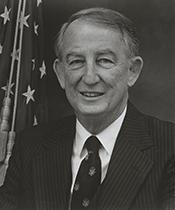
United States · United States Congress · 23 February 1983
Amends the Internal Revenue Code to allow, at the election of the taxpayer, an income tax deduction for foreign income, war profits, and excess profits taxes paid in connection with construction contract services rendered in the United States which are directly related to a construction project located in a foreign country. Requires that any amounts taken for such deduction shall not be taken into account for purposes of the foreign tax credit.
United States · United States Congress · 23 February 1983
Amends the Internal Revenue Code to provide for the recapture of overall foreign losses in the case of any loss sustained with respect to stock or debt of a corporation: (1) in which the taxpayer owned at least ten percent of the voting stock at the time the loss was sustained or within one year prior to such time; and (2) with respect to which the taxpayer's entire interest is terminated before the close of the third taxable year following the taxable year in which the loss was sustained.
United States · United States Congress · 22 February 1983
Reciprocal Trade and Investment Act of 1983 - Amends the Trade Act of 1974 to set forth provisions dealing with foreign trade barriers. Requires the United States Trade Representative (USTR) to submit an annual report to the appropriate congressional committees on foreign trade barriers of U.S. exports. Directs that such report contain a comprehensive inventory and an assessment of acts, policies, or practices which restrict market access for competitive U.S. exports of goods or services, or foreign direct investment by U.S. persons with implications for trade in goods or services. Requires such report to be developed and coordinated by the USTR through the interagency trade organization established pursuant to the Trade Expansion Act of 1962. Requires the head of each executive branch department or agency to furnish necessary information to the USTR. Authorizes such department or agency heads to detail personnel and to furnish services as the USTR may request. Requires the USTR to submit a report to Congress on factors not addressed in this Act which significantly affect the competitiveness of U.S. high technology industries. Sets forth conditions and limitations upon the President's authority to enforce U.S. rights under trade agreements and to respond to certain foreign trade practices. Authorizes the President to restrict or deny access to a foreign supplier of services to the U.S. service market concerned. Directs that such access restrictions only apply to specified trade authorizations pending on or after a certain petition is filed or the USTR makes a determination to initiate market access restrictions. Requires the USTR to consult with the head of any Federal agency which regulates the services of any foreign country before the President imposes fees or other restrictions on such services. Sets forth provisions for the review of petitions by the USTR. Requires the USTR to publish any determination to initiate an investigation in the Federal Register. Requires the USTR to consult with certain committees before making any such determinations. Requires the USTR to recommend to the President what action to take on the basis of investigations and consultations. Requires the USTR to make such recommendations within specified time periods. Sets forth provisions concerning the availability of certain business information and the use of such information by the USTR. Requires the USTR to publish notice in the Federal Register of any extensions of investigations or recommendations agreed to by the petitioner. Makes conforming amendments. Expresses the sense of Congress that the United States should seek: (1) negotiations with foreign governments to reduce or eliminate restrictions on fair access to foreign markets for U.S. exports; and (2) the agreement of the contracting parties to the General Agreement on Tariffs and Trade on certain international trade matters including trade restrictions and barriers. Sets forth the principal U.S. negotiating objectives with respect to trade in services, foreign direct investment, and high technology products. Directs the USTR to develop and coordinate the implementation of U.S. policies concerning trade in services. Requires Federal agencies responsible for regulating any service sector industry to advise and work with the USTR concerning: (1) the treatment afforded U.S. services sector interest in foreign markets; (2) allegations of unfair practices by foreign governments or companies in a service sector; (3) negotiations on service-related issues; and (4) domestic implementation of service-related agreements. Authorizes the Secretary of Commerce to establish a service industries development program. Sets forth the goals of the program. Expresses the policy of the Congress that the President shall: (1) consult with State governments on trade policy issues affecting the regulatory authority of non-Federal governments or their procurement of goods and services; (2) establish one or more intergovernmental policy advisory committee on trade; and (3) provide advice, assistance and information on U.S. policies on international trade in services to State and local governments. Authorizes the President to establish policy advisory committees representing non-Federal governmental interests to provide policy advice on trade negotiating objectives, bargaining positions, and the implementation of trade agreements.
United States · United States Congress · 8 February 1983
Expresses the sense of the House of Representatives that Anatoly Shcharansky should be released from prison and permitted to emigrate. Urges continued expression of U.S. opposition to the imprisonment of Anatoly Shcharansky.
United States · United States Congress · 27 January 1983
Coal Pipeline Act of 1983 - Amends the Mineral Leasing Act of 1920 to authorize the Secretary of the Interior to grant or renew rights-of-way over, under, upon, or through any Federal lands for the construction, operation, maintenance, or extension of coal pipelines, if the person seeking the right-of-way has been issued a certification that it is in the national interest to construct, operate, and maintain the pipeline (or extend the pipeline). Prohibits granting a right-of-way over, under, upon, or through an historic site unless there is no feasible alternative and planning is made to minimize damage to the site. Requires a right-of-way granted or renewed under this Act to be granted or renewed in accordance with the requirements of the Federal Land Policy and Management Act. Prohibits the provisions of this act from affecting an existing or pending right-of-way except that if a certification has been made any renewal or extension may only be made pursuant to this Act. Authorizes the Secretary to issue regulations necessary to carry out this Act. Prohibits the United States or its agents from reserving, using, or claiming water in any State for a pipeline for which a certification has been issued unless such action takes place pursuant to State law. Authorizes acquisition of private lands by eminent domain if a certification has been issued, except with respect to historic sites or wildlife refuges. Requires the Secretary, if he or she determines that it is in the national interest, to approve an application for certification. Authorizes the Secretary to modify such application before its approval. Requires the Secretary in making such application determination to consider the extent to which a pipeline would: (1) help meet national needs; (2) enhance competition and provide new market outlets and opportunities; (3) contribute to national security; and (4) affect the environment. Directs the Secretary to notify the Attorney General of any pending application prior to making certification so as to permit the Attorney General to conduct an antitrust review. Requires every coal pipeline carrier issued a certification to provide service on reasonable request. Permits the use of eminent domain to acquire any portion of a right-of-way acquired under this Act if the use of such right-of-way is consistent with the operation and maintenance of the pipeline. Requires pipelines to be underground to the maximum extent possible. Directs the Secretary to issue regulations establishing uniform Federal standards for the safe design, installation, inspection, and maintenance of coal pipeline facilities. Exempts facilities under construction. Sets forth civil and criminal penalties for violations of such regulations. Authorizes the Attorney General to institute a civil action for a restraining order or injunction to enforce any provision of this Act. Sets forth civil and criminal penalties for violations of this Act.
United States · United States Congress · 27 January 1983
High Technology Trade Act of 1983 - Authorizes the President to negotiate with foreign governments and instrumentalities to obtain and preserve maximum openness in international trade and investment in high technology goods and services and to strengthen the international trading system. Authorizes the President to enter into bilateral and multilateral agreements to achieve the objectivies of this Act. Authorizes the President, in order to carry out an agreement under this Act, to proclaim tariff changes and to use procedures contained in the Trade Act of 1974 if changes in U.S. law are required. Requires the President to determine whether or not a key country is providing national treatment for U.S. exports of high technology products and investments in high technology industries. Defines "key country" to mean Japan, the European Economic Community, Canada and any other foreign country so designated by the President. Defines "national treatment" to include treatment not less favorable than that accorded to any national in specified economic respects. Requires the President to enter into consultations with key countries not providing national treatment. Requires the President to consider taking necessary actions under trade agreements if such consultations do not establish national treatment. Directs the Secretary of Commerce to report annually to Congress on: (1) the extent to which any key country uses industrial policies or measures that distort international trade and have significant adverse effects on the U.S. high technology industry; and (2) the measures the United States is taking to remedy such adverse effects. Sets forth material to be analyzed in such report. Directs the President to take whatever steps are necessary to eliminate foreign industrial policies which: (1) significantly distort international trade or investment to the detriment of any U.S. high technology industry; and (2) may result in sales of articles at less than fair value in the U.S. market or subsidization of imports and cause material injury to any U.S. high technology industry. Directs the Secretary to analyze high technology trade and investment patterns, to evaluate the equivalency of competitive opportunities, and to further the objectives of this Act. Directs the Secretary to report annually to the President on such analysis. Directs the U.S. Trade Representative and the Secretary to report annually to the President concerning: (1) measures in violation of U.S. international agreements; or (2) unreasonable or discriminatory burdens or restrictions on U.S. high technology products, services, or investments. Directs the President to consider what action may be taken to reduce or eliminate such measures. Directs the Secretary and the United States Trade Representative (USTR) to establish a High Technology Industry Advisory committee. Requires the USTR and the Secretary to consult with the Committee on negotiating positions, concluding agreements, imposing restrictions under this Act, and monitoring the results of any such agreement or restriction. Amends the Trade Act of 1974 to add to the actions the President may take to enforce U.S. trade rights and respond to foreign trade practices. Authorizes the President to impose restrictions on direct investment by foreigners in the United States.
United States · United States Congress · 27 January 1983
Amends the Bail Reform Act of 1966 to authorize a judicial officer, when making a pretrial release determination, to consider whether a person charged with possession or transfer of a controlled substance will pose a danger to any other person or the community. Requires the judicial officer to hold a hearing for such persons to determine whether surety resources have been obtained by noncriminal means.
United States · United States Congress · 26 January 1983
Law Enforcement Officers Protection Act of 1982 - Establishes criminal penalties applicable to licensees under the Gun Control Act of 1968 who import, manufacture, or sell a "restricted handgun bullet," except as authorized by the Secretary of the Treasury. Establishes additional criminal penalties, including a mandatory minimum sentence of one year's imprisonment, for: (1) using a restricted handgun bullet to commit a Federal felony; or (2) carrying a restricted handgun bullet unlawfully during commission of a Federal felony.
United States · United States Congress · 26 January 1983
International Sales and Services Corporation Tax Act of 1983 - Amends the Internal Revenue Code to repeal the tax deferral provisions relating to Domestic International Sales Corporations (DISC) and to allow U.S. corporations or citizens to establish an International Sales and Services Corporation (ISSC) in lieu of a DISC. Allows the transfer of assets from an existing DISC to an ISSC. Sets forth rules for such transfers. Provides that, for qualification as an ISSC, a corporation must: (1) have 95 percent or more of its gross receipts as qualified trading receipts; (2) have 95 percent or more of all assets as qualified trading assets; (3) have only one class of stock and have outstanding stock with a par or stated value of at least $2,500; (4) have a taxable year which is the same as that of any of its principal shareholders; (5) maintain a duplicate set of records and books in the United States; and (6) make an election to be treated as an ISSC. Defines "qualified export assets" and "qualified export receipts" for purposes of this Act. Makes ineligible for ISSC treatment any corporation which is: (1) incorporated in any State or Puerto Rico; (2) incorporated in a country which does not generally impose an income or similar tax; (3) a personal holding company; or (4) a member of a controlled group which includes a DISC. Sets forth inter-company pricing rules in the case of the sale of trading property to an ISSC by a person subject to allocation of income rules. Sets forth rules for the taxation of income to shareholders. Sets forth rules for the treatment of gains on the disposition of stock in an ISSC. Allows a foreign tax credit to shareholders of an ISSC for a proportionate share of taxes paid by an ISSC to a foreign country. Sets forth rules for the allocation of income to shareholders in the case of an actual distribution.
United States · United States Congress · 6 January 1983
Amends title II (Old Age, Survivors and Disability Insurance) of the Social Security Act to provide that disability insurance benefits for an individual having a terminal illness shall begin with the first month during which such individual has such illness.
United States · United States Congress · 3 January 1983
Florida Wilderness Act of 1983 - Designates the following lands in Florida as components of the National Wilderness Preservation System: (1) the Bradwell Bay Wilderness Addition in the Apalachicola National Forest; (2) the Mud Swamp/New River Wilderness in the Apalachicola National Forest; (3) the Big Gum Swamp Wilderness in the Osceola National Forest; (4) the Alexander Springs Wilderness in the Ocala National Forest; (5) the Juniper Prairie Wilderness in the Ocala National Forest; (6) the Little Lake George Wilderness in the Ocala National Forest; and (7) the Billies Bay Wilderness in the Ocala National Forest. Prohibits the Department of the Interior from issuing phosphate leases in the Osceola National Forest until the President recommends to Congress that such leases be permitted in a specified area of the forest, based upon a national need for phosphate. Requires the President to submit the basis for such recommendation, a statement of conditions governing the activity, and the required environmental impact statements. Makes a Presidential recommendation effective within 90 days after its submission to Congress unless Congress passes a concurrent resolution disapproving it. Requires the Secretary of the Interior, within 60 days after enactment of this Act, to determine if specified phosphate preference right lease applicants have discovered valuable deposits of phosphate. Requires the Secretary, within one year of the enactment of this Act, to determine the fair market value of phosphate leases which would be issued to such lease applicants absent the leasing ban under this Act. Directs the Secretary to acquire by exchange, monetary credit, lease issuance suspension, or purchase any valuable phosphate lease rights from such lease applicants within three years after enactment of this Act. Provides that the designation of the Big Gum Swamp Wilderness will not alter phosphate lease rights applicable to lands within the wilderness. Allows waivers of the time deadlines under this Act. Authorizes appropriations.
United States · United States Congress · 3 January 1983
Amends the Foreign Assistance Act of 1961 to prohibit assistance to any country which is a known source of illicit drugs, unless the President has certified to Congress during the fiscal year that the governing authorities of that country are fully cooperating with the United States in its efforts to reduce the flow of illicit drugs from that country. Amends the Arms Export Control Act to prohibit issuing letters of offer and export licenses and to prohibit extending credits or guarantees to any country which is a known source of illicit drugs, unless the President has certified to Congress during the fiscal year that the governing authorities of that country are fully cooperating with the United States in its efforts to reduce the flow of illicit drugs from that country.
United States · United States Congress · 9 December 1982
Caribbean Basin Economic Recovery Act - Title I: Duty-Free Treatment - Authorizes the President to proclaim duty-free treatment for all eligible articles from Caribbean countries that the President designates as beneficiary countries. Requires the President to notify Congress before making such a designation. Prohibits the President from terminating such a designation unless both Houses of Congress are notified 60 days before the termination. Requires the President to consider only specified countries and territories as beneficiary countries. Prohibits the President from designating a country as a beneficiary country: (1) if it is a Communist country; (2) if it has nationalized or seized control, or effectively nationalized or seized control, of U.S. property, unless the President determines that a good faith effort is being made to compensate for such seizure; (3) if it fails to act in good faith in recognizing as binding or in enforcing arbitral awards in favor of U.S. citizens or corporations; (4) if it grants preferential treatment to the products of a developed country other than the United States which may have a significant adverse effect on U.S. commerce, unless the President reports to Congress that certain assurances have been made; (5) it has a government-owned entity engaged in broadcasting copyrighted material belonging to U.S. copyrighted owners without their express consent; or (6) unless an extradition treaty exists between the United States and such country. Permits the President to designate as a beneficiary country a Communist country, an expropriating country or a country that fails to act in good faith with respect to an arbitral award if the President determines and reports to Congress that such designation will be in the national interest. Lists factors the President should consider in determining whether to grant beneficiary designation. Amends the Tariff Schedules of the United States to grant to imports from U.S. insular possessions, subject to specified provisions of this Act, duty treatment no less favorable than the treatment afforded such imports from a beneficiary country. Directs the President to withdraw or suspend a country's beneficiary designation, if the President determines that changed circumstances in such country would prohibit such designation under the guidelines in this title. Requires duty-free treatment to apply to any article imported from a beneficiary country, unless otherwise excluded from eligibility, if: (1) the article is imported directly from such country into U.S. customs territory; and (2) the sum of specified costs of the article is not less than 35 percent of its appraised value at the time of its entry. Directs the Secretary of the Treasury to prescribe regulations governing articles eligible for such duty-free treatment, including the requirement that such articles must be wholly the product of a beneficiary country or must be a new or different article of commerce which has been produced in the beneficiary country. Prohibits this duty-free treatment from applying to: (1) textile and apparel articles which are subject to tariff agreements; (2) certain footwear, handbags, luggage, flat goods, work gloves, and leather wearing apparel; or (3) petroleum or certain petroleum products. Directs the President to suspend duty-free treatment of sugar and beef products that are the products of a beneficiary country if: (1) the beneficiary country, within 90 days of its designation as a beneficiary country, does not submit a Stable Food Production Plan to the President for evaluation; (2) the President determines that the Plan of a beneficiary country does not meet specified criteria; or (3) as a result of the monitoring of the operation of the Plan, the President determines that a beneficiary country is not making a good faith effort to implement its Plan, or that the Plan, although being implemented, is not achieving its purposes. Requires the President, before suspending such duty-free treatment, to offer to consult with the country to formulate appropriate remedial action. Requires the President, biennially, to monitor the operation of the Plans implemented by beneficiary countries and to report to Congress. Sets forth the manner of governing the importation and duty-free treatment of certain sugars, sirups, and molasses. Authorizes the President to suspend the duty-free treatment provided by this title and to proclaim a duty for an eligible article if such action is taken pursuant to certain import relief or national security provisions. Requires the International Trade Commission (ITC), in any report on a petition for import relief under the Trade Act of 1974, to state how its findings and recommendations apply to any duty-free article imported from beneficiary countries. Authorizes the President to reduce or end the application of import relief measures which apply to articles imported from beneficiary countries earlier than otherwise scheduled. Requires the suspension of duty-free treatment provided by this title to be treated as an increase in duty for purposes of the import relief section of the Trade Act of 1974. Prohibits such a suspension of duty-free treatment unless the ITC finds that the harm caused by the imports results from its duty-free treatment by this title. Authorizes the filing of petitions for import relief with the Secretary of Agriculture (the "Secretary"), as well as with the ITC, for injury from imports of perishable products from beneficiary countries. Directs the Secretary to recommend the granting or denying of such petition within 14 days of its filing. Requires the President to take emergency action or to publish a notice of determination not to take emergency action within seven days of receiving the Secretary's recommendation. Sets forth the limits on the duration of the emergency action. Defines perishable products to include certain live plants, certain fresh or chilled vegetables, fresh mushrooms, fresh fruit, and fresh cut flowers. Exempts from proclamations under this title certain fees imposed pursuant to the Agricultural Adjustment Act. Provides for duty-free treatment of articles imported directly from Puerto Rico and the U.S. insular possessions, so long as foreign materials do not account for more than 70 percent of the total value of the articles (or more than 50 percent of the total value with respect to petroleum and certain petroleum products). Amends the Tariff Schedules of the United States to increase to five liters (currently, four liters) the amount of duty-free liquor that may be brought into the United States. Requires that not more than four liters, of such five liter limit, may have been produced outside American Samoa, Guam, or the U.S. Virgin Islands. Authorizes the President to withdraw duty-free treatment on rum if the amount of excise taxes on rum that is paid into the treasuries of Puerto Rico and the Virgin Islands falls below the amount that would have been paid if the rum had been produced in Puerto Rico or the Virgin Islands. Amends the Trade Agreements Act of 1979 to repeal the provision for protecting U.S. possessions against revenue losses caused by concessions granted by the United States in the Tokyo Round of the Multilateral Trade Negotiations. Prohibits any action under this title from affecting a tariff imposed by Puerto Rico on coffee imported into Puerto Rico. Exempts from specified sections of the Federal Water Pollution Control Act certain discharges from sources in the U.S. Virgin Islands which are attributable to the manufacture of rum. Requires the ITC to report to Congress and the President on the economic impact of this Act on U.S. industries and consumers during: (1) two year period beginning with January, 1983; and (2) each year afterward, until duty-free treatment under this title is terminated. Sets forth assessments that the ITC shall make and factors to be considered in making those assessments. Terminates duty-free treatment to beneficiary countries under this title after September 30, 1994. Title II: Tax Provisions - Amends the Internal Revenue Code to require excise taxes on rum imported into the United States to be paid to Puerto Rico and the U.S. Virgin Islands. Authorizes the Secretary of the Treasury to negotiate and conclude an agreement for the exchange of information with any beneficiary country. Requires such exchange to consist of such information as may be necessary to carry out and enforce the tax laws of both the United States and the beneficiary country. Provides that such agreements shall be treated as income tax conventions for purposes of disclosures of tax return information. Allows a tax deduction for attending a convention held in a beneficiary country, if such beneficiary country has a tax information exchange agreement in effect with the United States.
United States · United States Congress · 29 November 1982
International Sales and Services Corporation Tax Act of 1982 - Amends the Internal Revenue Code to repeal the tax deferral provisions relating to Domestic International Sales Corporation (DISC) and to allow U.S. corporations or citizens to establish an International Sales and Services Corporation (ISSC) in lieu of a DISC. Allows the transfer of assets from an existing DISC to an ISSC. Sets forth rules for such transfers. Provides that, for qualification as an ISSC, a corporation must: (1) have 95 percent or more of its gross receipts as qualified trading receipts; (2) have 95 percent or more of all assets as qualified trading assets; (3) have only one class of stock and have outstanding stock with a par or stated value of at least $2,500; (4) have a taxable year which is the same as that of any of its principal shareholders; (5) maintain a duplicate set of records and books in the United States; and (6) make an election to be treated as an ISSC. Defines "qualified export assets" and "qualified export receipts" for purposes of this Act. Makes ineligible for ISSC treatment any corporation which is: (1) incorporated in any State or Puerto Rico; (2) incorporated in a country which does not generally impose an income or similar tax; (3) a personal holding company; or (4) a member of a controlled group which includes a DISC. Sets forth inter-company pricing rules in the case of the sale of trading property to an ISSC by a person subject to allocation of income rules. Sets forth rules for the taxation of income to shareholders. Sets forth rules for the treatment of gains on the disposition of stock in an ISSC. Allows a foreign tax credit to shareholders of an ISSC for a proportionate share of taxes paid by an ISSC to a foreign country. Sets forth rules for the allocation of income to shareholders in the case of an actual distribution.
United States · United States Congress · 18 August 1982
Establishes the Commission on Capital Markets to evaluate the regulation of financial intermediaries by the Federal and State governments and the functioning of such intermediaries in the accumulation and allocation of capital within the U.S. economy. Requires the Commission, not later than one year after its initial meeting, to submit to Congress a report on the results of its evaluation. Terminates the Commission 90 days after the submission of its final report to Congress. Authorizes appropriations as necessary to carry out this Act.
United States · United States Congress · 11 August 1982
Missing Children Act - Authorizes the Attorney General to collect and exchange information which would assist in the identification of unidentified deceased individuals and the location of missing persons, including missing children.
United States · United States Congress · 27 July 1982
Title I: Tariff Schedules Amendments - Subtitle A: Permanent Changes in Tariff Treatment - Amends the Tariff Schedules of the United States to permit imports of furs from the People's Republic of China. Lowers the column one duty on certain fish netting and fish nets to 17 percent ad valorem. Grants duty-free treatment to: (1) p-Hydroxybenzoic acid; (2) triphenyl phosphate; (3) fourdrinier wires suitable for use in capacitor papermaking machines; (4) casein button blanks; and (5) certain materials that the National Aeronautics and Space Administration intends to use in connection with a space launch. Changes the definitions of certain dolls, doll skins, and toy figures for purposes of the Tariff Schedules. Subtitle B: Temporary Changes in Tariff Treatment - Suspends the duty on imports of: (1) fresh cantaloupes imported between January 1 and May 15 of certain years; (2) hatters' fur; (3) needlecraft display models which are replicas of needlecraft kits; (4) certain disposable gowns and surgical drapes; (5) 1, 6-Hexanediol; (6) isomeric mixtures of ethylbiphenyl; (7) uncompounded allyl resins; (8) caffeine; (9) copper scale; (10) certain clock radios; (11) heat-set stretch texturing machines; (12) hosiery knitting machines; (13) double-headed latch needles; (14) certain externally-powered electric prosthetic devices; (15) certain small toy and novelty items; and (16) certain doll clothing, doll skins, dolls, and toy figures. Extends the suspension of duty on: (1) Bis (4-aminobenzoate)-1, 3 propanediol (trimethylene glycol di-p-aminobenzoate) until June 30, 1984; (2) natural graphite until December 31, 1984; and (3) certain bicycle parts until June 30, 1986. Sets forth a schedule for temporarily reducing both the column one rate of duty on imports of dicofol and the tariff rate applicable to imports of dicofol from least developed developing countries. Subtitle C: Taking Effect of Amendments to Tariff Schedules - Sets forth the effective date of the amendments made by Subtitles A and B. Title II: Miscellaneous Customs Provisions - Allows certain records concerning business, engineering, or exploration conducted outside the United States to enter the United States as "intangibles" which are not subject to the Tariff Schedules. Repeals the provision which made such records duty-free. Amends the Tariff Act of 1930 to repeal the provision that deemed the nominal consignee of merchandise entering the United States to be the owner of the merchandise. Provides that the required documentation for the entry of merchandise into the United States must be filed by either the owner, purchaser, or a person holding a valid license as a customshouse broker. Requires that the importer of record must be one of the parties eligible to file the required documentation. Authorizes the carrier of the merchandise to certify any person to be the owner, purchaser, or consignee of the merchandise. Authorizes the customs officer to accept such certification. Allows articles withdrawn from a bonded warehouse to be delivered into successive bonded warehouses located anywhere in the United States for export. (Current law requires the successive bonded warehouses to be located at an exterior port and requires the articles to be exported immediately.) Amends the Tariff Schedules of the United States to change the dutiable status of watches and watch movements imported from insular possessions of the United States. Defines the insular possessions as the Virgin Islands, Guam, and American Samoa. Authorizes duty-free importation of watches and watch movements built in the insular possessions without regard to the value of the foreign materials they contain if they meet specified conditions. Imposes a quota on the number of such watches and watch movements that may be imported duty-free during calendar year 1983. Directs the Secretaries of Commerce and of the Interior to establish quotas for subsequent calendar years. Sets forth guidelines for determining such quotas. Allocates the number of duty-free imports of watches and watch movements among the three possessions for calendar year 1983. Authorizes the Secretaries to establish new shares for each insular possession for subsequent calendar years. Directs the Secretaries to allocate the duty exemptions among producers located in the insular possessions. Directs the Secretaries to verify the wages paid by producers to permanent residents of the insular possessions in the preceding calendar year. Directs the Secretaries to issue a certificate for a portion of such amount to each producer. Sets forth a formula for determining the value of a producer's certificate. States that such certificates entitle the certificate holder to a refund of duties equal to the face value of the certificate on imported watches, watch movements, and parts. Makes such certificates negotiable. Requires such certificates to expire one year after issuance. Permits the certificates to be applied against duties on articles imported within two years before their issuance.
United States · United States Congress · 23 July 1982
Expresses the sense of Congress that: (1) national efforts to reduce malnutrition should continue; (2) Federal involvement in nutrition programs should be maintained; and (3) responsibility for Federal child nutrition programs should not be turned back to the States.
United States · United States Congress · 14 July 1982
Amends the Home Owners' Loan Act of 1933 to declare that State law shall apply to the enforcement of any due-on-sale clause, or other similar provision, contained in: (1) any mortgage which secures sums borrowed from a Federal savings and loan association or national bank; or (2) any promissory note which serves as evidence of sums borrowed from a savings and loan association or national bank.
United States · United States Congress · 10 June 1982
Prohibition of Mandatory Retirement and Employment Rights Act of 1982 - Amends the Age Discrimination in Employment Act of 1967 to eliminate the upper age limitation of the class of persons to whom such Act applies.
United States · United States Congress · 25 May 1982
Amends the Trade Act of 1974 to require the Secretary of Labor to determine that increased imports "contributed importantly to" (currently, substantially caused) worker separations and sales or production reductions in order to certify such workers as eligible for trade adjustment assistance. Directs the Secretary of Labor to approve job training assistance for workers adversely affected by imports (currently the Secretary is authorized to approve such training). Directs the Secretary to pay a daily supplemental assistance benefit to any worker who begins approved job training after enactment of this Act and who is not eligible for trade adjustment allowances. Provides for the reimbursement of persons who participated in a job training program between specified dates and who personally financed all or part of the tuition costs of such training. Increases the maximum job search and relocation allowances to $800. Authorizes any adversely affected worker to apply for a job search allowance, relocation allowance, or both if the worker: (1) was covered by an adjustment assistance certification issued between specified dates; and (2) as of the date of enactment of this Act is not eligible for either job search allowances or relocation allowances because of failure to file an application on time. Establishes an Adjustment Assistance Trust Fund in the Treasury. Authorizes appropriations to the Trust Fund, payable out of the general fund of the Treasury attributable to the collection of customs duties, to carry out provisions for adjustment assistance for workers. Amends the Federal-State Extended Unemployment Compensation Act of 1970 to amend the definition of "suitable work" for a worker who would be eligible for a trade readjustment allowance if the worker were not eligible for extended compensation.
United States · United States Congress · 25 May 1982
Amends the Internal Revenue Code to allow disclosure of returns or return information to an officer or employee of any Federal agency for use in preparing any administrative, judicial, or grand jury proceeding involving the enforcement of a specific Federal criminal statute (but not involving tax administration) or in an investigation which may result in such a proceeding. Authorizes such disclosure only by ex parte order of a Federal district court judge or magistrate. Sets forth grounds for the granting of such order. Requires the Secretary of the Treasury to disclose return information upon written request of the Head or the Inspector General of a Federal agency or the Attorney General or his designee, to such officers and employees as are directly engaged in, and solely for use in or preparation for, any administrative, judicial, grand jury proceeding involving the enforcement of a specific Federal criminal statute (but not involving tax administration) or in an investigation which may result in such a proceeding. Disallows the disclosure of returns or return information which would identify a confidential informant or seriously impair a tax investigation. Authorizes the Secretary to disclose return information (other than information which would identify a confidential informant or seriously impair a tax investigation) which may constitute evidence of a violation of Federal criminal laws to the extent necessary to apprise the head of the appropriate Federal agency responsible for enforcing such laws. Permits the Secretary or his designee, in specified emergency circumstances, to disclose information to the extent necessary to apprise the appropriate Federal agency of such emergency. Allows information disclosed pursuant to this Act to be entered into evidence in a proceeding not involving tax administration or in an ancillary proceeding to which the United States is a party. Limits such disclosure to the extent required by applicable discovery requirements. Prohibits admission of such information into evidence if the Secretary determines that it would identify a confidential informant or seriously impair a tax investigation. Permits the disclosure of returns and return information to Federal agencies by order of a Federal district judge if necessary to locate fugitives from justice. Permits an individual to bring an action for civil damages for the unauthorized disclosure of returns or return information by Federal officers or employees or others. Provides that an individual shall not be liable for a disclosure that results from a good faith but erroneous interpretation of the law. Limits the amount of recoverable damages. Allows the disclosure of returns or return information by Federal agencies or by the Secretary for use in certain audits by the General Accounting Office.
United States · United States Congress · 21 May 1982
Professional Sports Stabilization Act of 1982 - Declares that it shall not be unlawful under any antitrust law for a professional sports league and its member clubs to enforce rules: (1) requiring approval by the league membership for the relocation of a member club; or (2) providing for the division of league or member club revenues that promote comparable economic opportunities for member clubs. Prohibits State and local governments from imposing limitations on the collective conduct of sports leagues or member teams authorized by this Act. Specifies the applicability of this Act to actions commenced under the antitrust laws before its enactment.
United States · United States Congress · 19 May 1982
High Technology Trade Act of 1982 - Authorizes the President to enter into bilateral or multilateral agreements to obtain the maximum openness with respect to international trade in high technology and to strengthen the international trading system. Lists policies that may be included in such agreements. Authorizes the President to: (1) proclaim changes in tariffs on high technology products; and (2) use procedures contained in the Trade Act of 1974 to change U.S. laws in order to carry out such agreements. Directs the President to determine whether certain key countries are providing national treatment for U.S. exports of high technology products and U.S. investments in high technology industries. Directs the President to enter into consultations with countries that the President determines are not providing national treatment. Directs the President to consider taking other appropriate actions if such consultations are not effective. Directs the Secretary of Commerce, in consultation with the High Technology Industry Advisory Committee, to report annually to Congress on: (1) the extent to which a key country uses industrial policies or measures which significantly distort international trade or investment and which have or may have a substantial adverse effect on the U.S. high technology industry; and (2) the steps which the President is taking or proposes to take to remedy such adverse effects. Sets forth the scope of the analysis to be included in such report. Directs the President to take whatever steps are necessary to eliminate or offset the adverse effects of foreign industrial practices that: (1) significantly distort international trade or investment harmful to the U.S. high technology industry; or (2) may result in sales of articles at less than fair market value in the United States or subsidization of articles imported into the United States and cause, or threaten to cause, material injury to any U.S. high technology industry. Directs the Secretary to establish a mechanism to analyze high technology trade and investment patterns in key countries, to evaluate competitive opportunities offered in foreign markets, and to further the objectives of this Act. Directs the United States Trade Representative (USTR) and the Secretary, after consultation with the High Technology Industry Advisory Committee, to report annually to the President on the foreign trade practices which: (1) violate U.S. international agreements; or (2) are unjustifiable and a burden on U.S. high technology products, services, or investments. Directs the President to consider what action may be taken to reduce or eliminate such measures. Directs the Secretary and the USTR to establish a High Technology Industry Advisory Committee and to consult with the Committee on actions under this Act relating to: (1) preparing negotiating positions; (2) concluding agreements; (3) imposing restrictions; or (4) monitoring the results of any such agreement or restriction. Defines terms used in this Act. Amends the Trade Act of 1974 to authorize the President to impose import restrictions on foreign direct investments in the United States if the President determines such action is appropriate to enforce U.S. rights under trade agreements or to respond to certain foreign trade practices. Requires the USTR to provide for certain consultations before recommending such restrictions to the President.
United States · United States Congress · 19 May 1982
Retirement Savings Incentive Act of 1982 - Amends the Internal Revenue Code to allow a nondeductible $2,000 excess contribution to individual retirement accounts and individual retirement annuities and bonds.
United States · United States Congress · 10 May 1982
Expresses the sense of the House of Representatives that the President should provide sufficient borrowing authority to allow the Export-Import Bank to provide competitive financing for U.S. companies competing in world markets.
United States · United States Congress · 29 April 1982
Permits the President to appoint successors to cadets at the U.S. Military, Naval, and Air Force Academies who have been discharged, graduated, or whose class has graduated without them.
United States · United States Congress · 27 April 1982
Directs the Secretary of Transportation to make grants to States which adopt and implement programs to reduce traffic safety problems resulting from persons driving while under the influence of alcohol. Limits the receipt of such grants to three fiscal years and sets forth the Federal share payable for each successive year. Requires the Secretary to establish criteria for the grants based on areas of consideration provided under this Act. Authorizes appropriations from the Highway Trust Fund for fiscal years 1983 through 1985. Directs the Secretary to issue regulations to implement such traffic safety programs after a period for public comment. Sets the effective date of such regulations, unless they are disapproved by either House of Congress.
United States · United States Congress · 27 April 1982
Amends the Internal Revenue Code to redefine a "holder" of patents to include an individual who acquires a patent from an institutional employer of the creator, for purposes of capital gains taxation. Redefines "patent" to include a certificate of plant variety protection.
United States · United States Congress · 22 April 1982
Expresses the sense of Congress that the Secretary of Commerce should establish standards and procedures, including an opportunity for public comment, before any weather station or weather service office of the National Weather Service is closed or its personnel reduced.
United States · United States Congress · 20 April 1982
Expresses the sense of the House of Representatives that neither the President nor Congress should impose import fees on crude oil or refined petroleum products.
United States · United States Congress · 6 April 1982
Amends the Tariff Act of 1930 to authorize appropriations for the International Trade Commission (ITC) for FY 1983. Authorizes the Chairman of the ITC to accept gifts, devises, and bequests for the use of the ITC. Amends the Customs Procedural Reform and Simplification Act of 1978 to authorize appropriations for the U.S. Customs Service for FY 1983. Earmarks a specified amount for enforcement of the alcohol and tobacco revenue laws. Prohibits using any of the authorized appropriations to: (1) pay Custom Service employees overtime pay in excess of a specified amount; or (2) implement procedures relating to the collection of estimated duties that shorten a specified deferment procedure. Authorizes appropriations to reflect pay rate changes for the Customs Service. Amends the Trade Act of 1974 to authorize appropriations for the Office of the United States Trade Representative (USTR). Limits the amount that may be used for entertainment and representation expenses. Authorizes appropriations to reflect pay rate changes for the USTR's Office. Authorizes the USTR to: (1) delegate USTR functions, powers, and duties to appropriate Office employees; (2) pay official travel expenses without regard to certain Federal travel and per diem regulations; (3) accept gifts, devises, and bequests for the use of the USTR's Office; and (4) buy up to two cars for use abroad.
United States · United States Congress · 6 April 1982
Educational, Scientific, and Cultural Materials Importation Act of 1982 - Declares that the purpose of this Act is to enable the United States to give effect to the Nairobi protocol to the Florence Agreement on the Importation of Educational, Scientific, and Cultural Materials. Directs the President to proclaim changes in the Tariff Schedules of the United States to implement temporarily the duty-free treatment provided under this Act for certain articles for the blind or other handicapped persons. Authorizes the President to implement temporarily the duty-free treatment provided under this Act for certain: (1) books, publications, and documents; (2) visual and auditory materials; and (3) tools for scientific instruments or apparatus. Authorizes the President to limit the duty-free treatment or temporary duty-free treatment accorded under this Act for certain tools for scientific instruments or for certain articles for the blind or other handicapped persons if the duty-free treatment of the article: (1) has significant adverse impact on a competing domestic industry; and (2) is not provided for in the Florence agreement or the Nairobi protocol. Authorizes the President to reinstate the duty-free treatment of such articles if it would no longer cause such adverse impact. Amends the Tariff Schedules of the United States to provide duty-free treatment for: (1) catalogs of educational, scientific, or cultural visual and auditory material; (2) architectural, engineering, industrial, or commercial drawings and plans; (3) certain illustrations and proofs used for the production of books; (4) developed photographic film and similar articles; (5) motion picture films on which pictures or sound and pictures have been recorded; (6) magnetic video tape on which pictures or pictures and sound have been recorded; (7) other sound recordings, combination sound and visual recordings, and magnetic recordings; (8) certain educational, scientific, or cultural models; (9) tools specially designed for maintaining certain scientific instruments or apparatus that are used by nonprofit institutions; and (10) articles specially designed or adapted for use by blind or other handicapped persons.
United States · United States Congress · 29 March 1982
Authorizes the President to designate April 4, 1982, as the National Day of Reflection. Notes that such date coincides with the 80th birthday of Rabbi Menachem Mendel Schneerson, head of the Lubavitch movement.
United States · United States Congress · 24 March 1982
States that the Federal Government should restore balance to the Department of Energy's FY 1983 budget by maintaining funding for energy conservation, renewable energy, and weatherization programs and by distributing information on conservation and renewable energy.
United States · United States Congress · 18 March 1982
Caribbean Basin Economic Recovery Act - Title I: Duty-Free Treatment - Authorizes the President to proclaim duty-free treatment for all eligible articles from Caribbean countries the President designates as beneficiary countries. Prohibits the President from terminating a country's beneficiary designation unless both Houses of Congress are notified 60 days before the termination. Requires the President to consider only specified countries and territories as beneficiary countries. Prohibits the President from designating as a beneficiary country any country that: (1) is a Communist country; (2) has nationalized or seized control, or effectively nationalized or seized control, of U.S. property, unless the President determines that a good faith effort is being made to compensate for such seizure; (3) fails to act in good faith in recognizing as binding or in enforcing arbitral awards in favor of U.S. citizens or corporations; or (4) grants preferential treatment to the products of a developed country other than the United States which may have a significant adverse effect on U.S. commerce, unless the President reports to Congress that certain assurances have been made. Permits the President to designate as a beneficiary country a Communist country, an expropriating country or a country that fails to act in good faith with respect to an arbitral award if the President determines and reports to Congress that such designation will be in the national interest. Lists factors the President should consider in determining whether to grant beneficiary designation. Amends the Tariff Schedules of the United States to grant to imports from U.S. insular possessions, subject to specified provisions of this Act, duty treatment no less favorable than the treatment afforded such imports from a beneficiary country. Directs the President to withdraw or suspend a country's beneficiary designation, if the President determines that changed circumstances in such country would prohibit such designation under the guidelines in this title. Requires duty-free treatment to apply to any article imported from a beneficiary country, unless otherwise excluded from eligibility, if: (1) the article is imported directly from such country into U.S. customs territory; and (2) the sum of specified costs of the article is not less than 25 percent of its appraised value at the time of its entry. Prohibits this duty-free treatment from applying to textile and apparel articles covered by textile agreements. Sets forth the manner of governing the importation and duty-free treatment of certain sugars, sirups, and molasses. Authorizes the President to suspend the duty-free treatment provided by this title and to proclaim a duty for an eligible article if such action is taken pursuant to certain import relief or national security provisions. Requires the International Trade Commission (ITC) in any report on a petition for import relief under the Trade Act of 1974 to state how its findings and recommendations apply to any duty-free article imported from beneficiary countries. Authorizes the President to reduce or end the application of import relief measures with respect to articles imported from beneficiary countries earlier than otherwise scheduled. Provides that suspension of duty-free treatment provided by this title shall be treated as an increase in duty for purposes of the import relief section of the Trade Act of 1974. Prohibits such a suspension of duty-free treatment unless the ITC finds that the harm caused by the imports results from its duty-free treatment by this title. Authorizes the filing of petitions for import relief with the Secretary of Agriculture, as well as with the ITC, for injury from imports of perishable products from beneficiary countries. Directs the Secretary to recommend the granting or denying of such petition within 14 days of its filing. Requires the President to take emergency action or to publish a notice of determination not to take emergency action within seven days of receiving the Secretary's recommendation. Sets forth the limits on the duration of the emergency action. Defines perishable products to include certain fresh or chilled vegetables, fresh mushrooms, fresh fruit, and fresh cut flowers. Exempts from proclamations under this title certain fees imposed pursuant to the Agricultural Adjustment Act. Amends the Tariff Schedules of the United States to increase to five liters (currently, four liters) the amount of duty-free liquor that may be brought into the United States. Requires that not more than four liters, of such five liter limit, may have been produced outside American Samoa, Guam, or the U.S. Virgin Islands. Authorizes the President to withdraw duty-free treatment on rum if the amount of excise taxes on rum that is paid into the treasuries of Puerto Rico and the Virgin Islands falls below the amount that would have been paid if the rum had been produced in Puerto Rico or the Virgin Islands. Amends the Trade Agreements Act of 1979 to repeal the provision for protecting U.S. possessions against revenue losses caused by concessions granted by the United States in the Tokyo Round of the Multilateral Trade Negotiations. Prohibits any action under this title from affecting a tariff imposed by Puerto Rico on coffee imported into Puerto Rico. Limits the duration of duty-free treatment under this Act to 12 years. Title II: Emergency Economic Assistance - Authorizes FY 1982 appropriations for economic support funds for countries in the Caribbean Basin. Title III: Tax Provisions - Amends the Internal Revenue Code to require excise taxes on rum imported into the United States to be paid to Puerto Rico and the U.S. Virgin Islands. Limits the amount paid to Puerto Rico and the U.S. Virgin Islands to the amount those possessions would have received if the rum had been produced in Puerto Rico or the Virgin Islands and transported to the United States. Provides an investment tax credit for investments in Caribbean Basin property placed in service within five years after enactment. Defines Caribbean Basin property as new investment credit property used predominantly in a country that is: (1) a beneficiary country, as defined under this Act; and (2) a party to a bilateral agreement providing for exchange of information between the United States and the beneficiary country. Authorizes the Secretary of the Treasury to conclude an agreement with a beneficiary country to provide information to carry out the tax laws of the United States and the beneficiary country. Prohibits allowing an investment tax credit to foreign corporations for Caribbean Basin property. Allows an investment tax credit to a U.S. shareholder of a foreign corporation that invests in Caribbean Basin property if the shareholder holds five percent of the foreign corporation's stock. Requires recapture of the investment credit if, during any taxable year, the Caribbean Basin property is used predominantly outside a qualifying country or the United States. Extends an investment tax credit and accelerated cost recovery deduction to property owned or used by U.S. corporations or citizens engaged in trade or business in Puerto Rico or other U.S. possessions. (Current law excludes such corporations and citizens from obtaining such credit and deduction.) Authorizes certain corporations that own stock in corporations doing business in Puerto Rico or another U.S. possession to receive a portion of the investment tax credit and accelerated cost recovery deduction available to corporations doing business in Puerto Rico or another U.S. possession. Authorizes certain corporations that own stock in corporations doing business in the Virgin Islands to receive a portion of the investment tax credit and the accelerated cost recovery deduction available to the corporations doing business in the Virgin Islands. Excludes from the definition of qualified leased property for purposes of the accelerated cost recovery deduction Caribbean Basin property and property in Puerto Rico or U.S. possessions owned by certain U.S. corporations or citizens.