Bill· HRH.R. 3811 (119th)referred
Elder Pride Protection Act of 2025
United States · United States Congress · 6 June 2025
The world's political record
Person
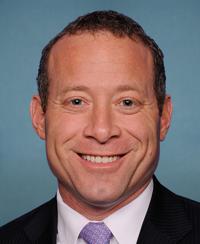
United States · Official source
3,533 records where Rep. Gottheimer, Josh [D-NJ-5] is listed as a sponsor, author, or other actor. Search with topics and years
United States · United States Congress · 6 June 2025
United States · United States Congress · 6 June 2025
United States · United States Congress · 5 June 2025
Accelerating Access to Dementia and Alzheimer’s Provider Training Act or the AADAPT Act This bill reauthorizes through FY2031 and revises the Technology-enabled Collaborative Learning Program, which is administered by the Health Resources and Services Administration. This program provides grants to support the use of technology that connects different health care professionals to improve access to health care, including specialty care, for certain rural and medically underserved populations. The bill explicitly adds dementia care to the types of specialty care that the program may address.
United States · United States Congress · 5 June 2025
United States · United States Congress · 5 June 2025
United States · United States Congress · 5 June 2025
This resolution condemns the June 1, 2025, targeted act of terror in Boulder, Colorado, as an act of ideologically motivated violence and reaffirms the House of Representatives' commitment to protecting the rights of all Americans to assemble peacefully and practice their faith without fear of violence.
United States · United States Congress · 5 June 2025
United States · United States Congress · 5 June 2025
United States · United States Congress · 4 June 2025
Complete Streets Act of 2025 This bill supports the development of safe and accessible roads through complete streets design and construction grants, policies, and design standards. Under the bill, a complete street means a public road that provides safe and accessible travel options for multiple travel modes (e.g., walking, cycling, transit, mobility devices, automobiles, and freight) for people of all ages, abilities, and disabilities. In general, each state must establish a competitive grant program that provides a portion of its federal highway funds to eligible entities for complete streets grants and technical assistance. Eligible entities include local and tribal governments, local agencies, metropolitan planning organizations (MPOs), and nonprofit organizations. An eligible entity must develop a complete streets policy and a prioritization plan. The state or an MPO must approve the policy and plan. The Department of Transportation (DOT) must develop complete streets benchmarks and guidance for states and eligible entities. In addition, DOT and the Department of Justice must update and adopt certain accessibility standards (e.g., by including provisions for cognitive ability and language access). Further, DOT must require each state and MPO to adopt and implement design standards for the safe and adequate accommodation of all surface transportation network users. DOT must also establish complete streets design standards for federal projects and phase in their adoption, with exemptions for certain roadways, facilities, and projects. The standards must include (1) dedicated, protected bike lanes; (2) requirements for sidewalks and crosswalks; and (3) guidelines for lighting and signalization to promote safety.
United States · United States Congress · 4 June 2025
Supporting American Allies Act This bill exempts articles imported into the United States from Israel or Ukraine from additional tariffs imposed by an April 2, 2025, executive order . On April 2, 2025, President Donald J. Trump signed an executive order imposing an additional 10% tariff on most imports to the United States and additional country-specific tariffs on 57 trading partners (including a 17% tariff on Israel). Therefore, this executive order imposes an additional 10% tariff on imports from Ukraine and an additional 17% tariff on imports from Israel. This bill exempts articles from Israel or Ukraine from these additional tariffs.
United States · United States Congress · 3 June 2025
Small Business Artificial Intelligence Advancement Act This bill directs the National Institute of Standards and Technology (NIST) to develop or identify resources for small businesses to address concerns relating to the use of artificial intelligence (AI). Resources must be generally applicable, technology neutral, and based on relevant voluntary international standards, among other requirements. NIST must coordinate with the Small Business Administration with respect to the distribution of these resources. NIST must also review and update the resources at least biennially.
United States · United States Congress · 3 June 2025
United States · United States Congress · 3 June 2025
Financial Stability Oversight Council Improvement Act of 2025 This bill requires the Financial Stability Oversight Council, prior to determining that a U.S. nonbank financial company shall be supervised by the Federal Reserve Board and therefore subject to certain prudential standards, to first determine that certain alternative actions would not mitigate the threat the company may pose to U.S. financial stability.
United States · United States Congress · 3 June 2025
United States · United States Congress · 2 June 2025
United States · United States Congress · 29 May 2025
United States · United States Congress · 29 May 2025
United States · United States Congress · 29 May 2025
Menstrual Equity For All Act of 2025 This bill expands access to menstrual products (e.g., tampons) in certain locations and for particular groups, such as in schools and for low-income individuals, through federal programs and requirements. It also prohibits state or local sales taxes for these products. The bill expands access to menstrual products through federal programs by requiring Medicaid to cover such products, establishing grants within the Temporary Assistance for Needy Families (TANF) program to provide benefits to ensure access to such products, authorizing the Emergency Food and Shelter Program to provide menstrual products to homeless individuals, and increasing Social Services Block Grant funding to provide such products to low-income individuals. Also, the bill sets out requirements to make free menstrual products available in federal and state correctional facilities (including Department of Homeland Security detention facilities) and restrooms in federal buildings that are open to the public. Further, the bill (1) establishes grants to provide free menstrual products to students at institutions of higher education, and (2) permits elementary and secondary schools to use certain grant funds to provide menstrual products to students. In addition, the bill requires employers with at least 100 employees to provide free menstrual products for employees. Finally, the bill prohibits states and local governments from taxing retail sales of menstrual products.
United States · United States Congress · 29 May 2025
Digital Asset Market Clarity Act of 2025 or the CLARITY Act of 2025 This bill establishes a regulatory framework for digital commodities, defined by the bill as digital assets that rely upon a blockchain for their value. The Commodity Futures Trading Commission must generally regulate digital commodities transactions, including digital commodity exchanges, brokers, and dealers. To qualify for trade on an exchange (1) a digital commodity’s blockchain must be mature, or on a blockchain system that has achieved decentralized control as defined by the bill; or (2) the issuer of the digital commodity must file certain reports. The bill establishes requirements for trade monitoring, recordkeeping, and the commingling of customer assets. The bill exempts digital commodities on mature blockchains (and digital commodities on blockchains expected to mature within certain timeframes) from Securities and Exchange Commission (SEC) registration requirements if annual sales fall under a certain amount and other requirements are met. The bill provides the SEC with jurisdiction over digital commodity activities and transactions engaged in by certain brokers and dealers on alternative trading systems and by national securities exchanges. Digital commodity exchanges, brokers, and dealers are subject to the Bank Secrecy Act for anti-money laundering and related purposes. The bill also sets forth requirements for alternative trading systems, previously issued digital commodities, and provisional registration until the bill is implemented. For more information on this bill, see CRS Insight IN12583, Crypto Legislation: An Overview of H.R. 3633, the CLARITY Act .
United States · United States Congress · 29 May 2025
Veterans Exposed to Toxic PFAS Act or the VET PFAS Act This bill provides eligibility for Department of Veterans Affairs (VA) hospital care and medical services to veterans and their family members (including those in utero) who have specified conditions and resided at a military installation where individuals were exposed to perfluoroalkyl and polyfluoroalkyl substances, commonly known as PFAS. PFAS are man-made and may have adverse human health effects. Hospital care and medical services may not be furnished for a condition that is found to have resulted from a cause other than the exposure to PFAS at a military installation. The VA may provide reimbursement for hospital care or medical services provided to a family member only after the family member or provider has exhausted all claims and remedies otherwise available for payment of such care. For disability compensation purposes, the bill establishes a presumption of service-connection for specified conditions in veterans who served at a military installation at which individuals were exposed to PFAS. Under a presumption of service-connection, specific conditions diagnosed in certain veterans are presumed to have been caused by the circumstances of their military service. Health care benefits and disability compensation may then be awarded.
United States · United States Congress · 29 May 2025
United States · United States Congress · 29 May 2025
United States · United States Congress · 23 May 2025
United States · United States Congress · 23 May 2025
United States · United States Congress · 21 May 2025
United States · United States Congress · 21 May 2025
Disrupt Explicit Forged Images And Non-Consensual Edits Act of 2025 or the DEFIANCE Act of 2025 This bill expands civil remedies for the nonconsensual disclosure of intimate images (i.e., nonconsensual pornography). The bill also establishes a new federal civil action for nonconsensual conduct involving intimate digital forgeries (i.e., deepfakes). The term intimate digital forgery means any intimate visual depiction of an identifiable individual created using software, machine learning, artificial intelligence, or other computer-generated or technological means that looks authentic. With respect to the nonconsensual disclosure of intimate images, current law allows an identifiable individual to recover civil remedies, including litigation costs, damages, and injunctive relief. This bill increases the available damages by allowing the individual to recover punitive damages and by including, as part of actual damages, profits of the defendant that are attributable to the conduct at issue. The bill also allows an identifiable individual who is the subject of an intimate digital forgery to file a federal civil action against anyone who knowingly discloses, produces or possesses with intent to disclose, or solicits and receives the intimate digital forgery without the individual's consent. Under the bill, the identifiable individual may recover the same expanded civil remedies that are available for the nonconsensual disclosure of intimate images. Finally, the bill establishes a 10-year statute of limitations for filing civil actions involving nonconsensual intimate digital forgeries or nonconsensual disclosure of intimate images. The statute begins to run when the individual discovers the violation or turns 18, whichever is later.
United States · United States Congress · 21 May 2025
United States · United States Congress · 21 May 2025
This resolution declares mental health a national priority and supports the designation of Mental Health Awareness Month.
United States · United States Congress · 21 May 2025
United States · United States Congress · 21 May 2025
United States · United States Congress · 20 May 2025
Improving Seniors' Timely Access to Care Act of 2025 This bill establishes several requirements and standards relating to prior authorization processes under Medicare Advantage (MA) plans. Specifically, MA plans must (1) establish an electronic prior authorization program that meets specified standards; (2) annually submit to the CMS for publication specified prior authorization information, including the percentage of requests approved and the average response time; and (3) meet other standards, as set by the Centers for Medicare & Medicaid Services (CMS), relating to the quality and timeliness of prior authorization determinations. The CMS and the Office of the National Coordinator for Health Information Technology must publish on the CMS' website a report that analyzes the information received from MA plans, the feasibility of implementing real-time decision making with respect to prior authorization requests, and the impact of decisions that are made using artificial intelligence on patient access.
United States · United States Congress · 20 May 2025
United States · United States Congress · 20 May 2025
Healthy Food Financing Initiative Reauthorization Act of 2025 This bill reauthorizes and provides specified funds for the Department of Agriculture's Healthy Food Financing Initiative (HFFI) through FY2030 and for each fiscal year thereafter. As background, HFFI provides loans, grants, and technical assistance resources to eligible healthy food retailers and food supply chain enterprises to improve and support access to fresh, healthy, and affordable food in urban and rural underserved communities.
United States · United States Congress · 20 May 2025
United States · United States Congress · 19 May 2025
United States · United States Congress · 19 May 2025
United States · United States Congress · 17 May 2025
United States · United States Congress · 15 May 2025
Accelerating the Growth of Rural Innovation and Tourism Opportunities to Uphold Rural Industries and Sustainable Marketplaces Act or the AGRITOURISM Act This bill establishes an Office of Agritourism within the Department of Agriculture to encourage and promote agritourism activities and businesses in each state. Under the bill, agritourism activities and agritourism businesses include educational experiences, outdoor recreation, entertainment and special events, direct sales, and accommodations.
United States · United States Congress · 15 May 2025
Chip Security Act This bill requires covered integrated circuit products (e.g., advanced computing chips) to incorporate certain security mechanisms. Specifically, the bill directs the Department of Commerce to require any covered integrated circuit product to have chip security mechanisms that implement location verification before the product is exported, reexported, or in-country transferred to or in a foreign country. Commerce must require any person that has received a license or other authorization under the Export Control Reform Act of 2018 to export, reexport, or in-country transfer a covered product to promptly report to Commerce's Bureau of Industry and Security if the person obtains credible information that the product has been diverted away from its intended location or has been subjected to tampering. Additionally, Commerce must conduct an assessment and report to Congress on whether additional chip security mechanisms should be adopted. If Commerce determines additional security measures are necessary, then Commerce must require any covered product to include the secondary chip security mechanisms before the product is exported, reexported, or in-country transferred to or in a foreign country. The bill authorizes Commerce to take certain enforcement actions, such as verifying the ownership and location of a covered product that has been exported, reexported, or in-country transferred to or in a foreign country. Commerce must, within two years of the bill's enactment and annually thereafter for three years, assess new chip security mechanisms and report to Congress.
United States · United States Congress · 15 May 2025
United States · United States Congress · 15 May 2025
United States · United States Congress · 15 May 2025
United States · United States Congress · 15 May 2025
Stronger Communities through Better Transit Act This bill requires the Department of Transportation (DOT) to establish a grant program to support operating projects for public transportation and related service improvements, particularly in underserved communities and areas of persistent poverty. Specifically, the bill requires DOT to allocate funding under the program for urbanized areas, states, and Indian tribes that are recipients of funds under either the Federal Transit Administration's (FTA's) Urbanized Area Formula Funding program or Formula Grants for Rural Areas program. Eligible recipients may use funding for operating costs associated with projects that improve public transportation service for transit-dependent populations and support increased transit ridership (e.g., service expansion, information technology enhancements, and workforce development). DOT must apportion the funding so that recipients receive funds that are proportional to their share of operating costs. The bill also provides for an increased federal cost share for operating assistance for projects or programs carried out in areas of persistent poverty or underserved communities. DOT must set up a multimodal access measurement interface for public agencies to aid transit agencies in determining and reporting on access to jobs and essential services. A grant recipient must (1) report specific information to the FTA for inclusion in the National Transit Database, and (2) survey transit riders and non-riding residents regarding transit service improvements. Further, the bill expands the purposes of the public transportation programs to include supporting public transportation's role in combating climate change through growing/retaining transit ridership.
United States · United States Congress · 14 May 2025
United States · United States Congress · 14 May 2025
United States · United States Congress · 14 May 2025
United States · United States Congress · 14 May 2025
United States · United States Congress · 13 May 2025
United States · United States Congress · 13 May 2025
Improving Access to Small Business Information Act This bill excludes from the Paperwork Reduction Act actions taken by the Office of the Advocate for Small Business Capital Formation within the Securities and Exchange Commission. Under the Paperwork Reduction Act, agencies must comply with specific procedures when gathering information from the public. The bill establishes several exceptions. For example, the office must inform the person receiving the collection of information the reasons the information is being collected, as required under current law.
United States · United States Congress · 13 May 2025