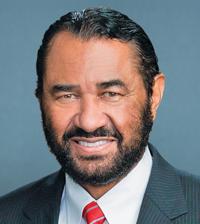
United States · United States Congress · 2 February 2012
Emergency Medic Transition Act of 2012 or the EMT Act of 2012 - Amends the Public Health Service Act to require the Secretary of Health and Human Services (HHS) to establish a program of awarding grants to states to assist veterans who received and completed military emergency medical training while serving in the United States Armed Forces to become, upon their discharge or release from active duty service, state-licensed or certified emergency medical technicians. Allows such funds to be used to: (1) provide such veterans required course work and training (that takes into account, and is not duplicative of, medical course work and training already received) to satisfy emergency medical services personnel certification requirements in the civilian sector; (2) provide reimbursement for costs associated with such course work and training and with applying for licensure or certification; (3) expedite the licensing or certification process; and (4) enter into an agreement with an educational institution to provide course work and training under this Act. Requires a state, to be eligible for a grant under this Act, to demonstrate that it has a shortage of emergency medical technicians. Directs the Comptroller General to: (1) study the barriers experienced by such veterans seeking to become licensed or certified in a state as civilian health professionals; and (2) report on the results of such study, including recommendations on whether the program under this Act should be expanded to assist veterans seeking to become licensed or certified in a state as health providers other than emergency medical technicians.
United States · United States Congress · 1 February 2012
Authorizes the award of a single gold medal to John H. Johnson (creator of Ebony magazine) in recognition of his outstanding work, leadership, and service. Permits the Secretary of the Treasury to strike and sell duplicates in bronze of the gold medal, at a price sufficient to cover the costs of the medals.
United States · United States Congress · 1 February 2012
Requires the Speaker of the House of Representatives and the President pro tempore of the Senate to make arrangements for the award of a Congressional Gold Medal to collectively honor the pioneers and participants of the civil rights movement in recognition of their personal sacrifice and service to their country. Directs that the Medal be given to the Smithsonian Institution, where it shall be displayed. Expresses the sense of Congress that the Smithsonian should make the Medal available for display elsewhere, particularly at other locations associated with the civil rights movement.
United States · United States Congress · 25 January 2012
Amends title IV (Student Assistance) of the Higher Education Act of 1965 to make the 3.4% interest rate on Direct Stafford loans first disbursed to undergraduate students between July 1, 2011, and July 1, 2012, applicable to Direct Stafford loans first disbursed to undergraduate students on or after July 1, 2012.
United States · United States Congress · 23 January 2012
Egg Products Inspection Act Amendments of 2012 - Amends the Egg Products Inspection Act to revise housing and treatment of egg-laying hens and related enforcement provisions. Directs the Secretary of Agriculture (USDA) to delegate to the California Department of Food and Agriculture certain enforcement authority with respect to eggs produced, shipped, handled, transported or received in California prior to the date that is 18 years after the date of enactment of this Act.
United States · United States Congress · 23 January 2012
Sympathizes with the families of women and children victimized by sexual and other forms of gender-based violence in Haiti. Urges treatment of the issue of violence against women and children as a priority for U.S. humanitarian and reconstruction efforts in Haiti. Supports passage of Haiti's first comprehensive law on the prevention, punishment, and elimination of gender-based violence.
United States · United States Congress · 13 January 2012
Honors: (1) those who lost their lives due to the tragic earthquake of January 12, 2010; and (2) the sacrifice of the men and women of the government of Haiti, the U.S. government, the United Nations (U.N.), and the international community for their response to the calamity. Expresses solidarity with the people of Haiti as they work to rebuild their neighborhoods, livelihoods, and country. Reaffirms the commitment of the House of Representatives to support long-term Haitian reconstruction. Supports the Administration's efforts to prevent the spread of cholera, treat persons who contract the disease, provide technical assistance to the Haitian Ministry of Public Health, and improve water, sanitation, and health systems. Urges the President and the international community to: (1) focus assistance on Haiti's public sector capacity to provide basic services, (2) develop and improve communications and participatory mechanisms to more substantially involve Haitian civil society at all stages of the cholera and post-earthquake responses, and (3) give priority to programs that protect vulnerable populations. Urges the President to: (1) make necessary resources available to U.S. and U.N. agencies, nongovernmental organizations, private volunteer organizations, and regional institutions; (2) assess long-term needs for investing in public health and building water and sanitation infrastructure, particularly in relation to the cholera epidemic; (3) lead humanitarian and development efforts with the government of Haiti, the Haitian Diaspora, and international actors; and (4) work with Haitian authorities and private landowners to prevent the forced eviction of internally displaced person communities.
United States · United States Congress · 20 December 2011
Temporary Payroll Tax Cut Continuation Act of 2011 - Title I: Temporary Payroll Tax Relief - Amends the Tax Relief, Unemployment Insurance Reauthorization, and Job Creation Act of 2010 to: (1) extend through 2012 the 2% reduction in the self-employment tax rate for self-employment income not exceeding the excess of $18,350 over any wages and compensation paid to a self-employed taxpayer, and (2) extend through February 29, 2012, the 2% reduction in employment tax rates for employee wages and compensation not exceeding $18,350. Title II: Temporary Extension of Unemployment Compensation Provisions - Amends the Supplemental Appropriations Act, 2008 with respect to the state-established individual emergency unemployment compensation account (EUCA). Extends the final date for entering a federal-state agreement under the Emergency Unemployment Compensation (EUC) program through March 6, 2012. Postpones the termination of the program until August 15, 2012. Amends the Assistance for Unemployed Workers and Struggling Families Act to extend until March 7, 2012, requirements that federal payments to states cover 100% of EUC. Amends the Unemployment Compensation Extension Act of 2008 to exempt weeks of unemployment between enactment of this Act and August 15, 2012, from the prohibition in the Federal-State Extended Unemployment Compensation Act of 1970 (FSEUCA of 1970) against federal matching payments to a state for the first week in an individual's eligibility period for which extended compensation or sharable regular compensation is paid if the state law provides for payment of regular compensation to an individual for his or her first week of otherwise compensable unemployment. (Thus allows temporary federal matching for the first week of extended benefits for states with no waiting period.) Amends the FSEUCA of 1970 to postpone similarly from December 31, 2011, to February 29, 2012, termination of the period during which a state may determine its "on" and "off" indicators according to specified temporary substitutions in its formula. Amends the Railroad Unemployment Insurance Act, as amended by the American Recovery and Reinvestment Act of 2009, the Worker, Homeownership, and Business Assistance Act of 2009, and the Tax Relief, Unemployment Insurance Reauthorization, and Job Creation Act of 2010, to extend through February 29, 2012, the temporary increase in extended unemployment benefits for employees with 10 or more years of service as well as for those with less than 10 years. Title III: Temporary Extension of Health Provisions -Amends title XVIII (Medicare) of the Social Security Act (SSA) to set the update to the single conversion factor in the formula for the physicians' fee schedules for the first two months of 2012 at zero (thus freezing the physician payment update for the first two months of 2012). Requires the conversion factor for the remaining portion of 2012 and subsequent years to be computed as if the zero update for the first two months of 2012 had never applied. Amends the Tax Relief and Health Care Act of 2006, as modified by other federal law, to extend section 508 hospital reclassifications for two months through November 30, 2011. ("Section 508" refers to Section 508 of the Medicare Modernization Act of 2003 [MMA], which allows the temporary reclassification of a hospital with a low Medicare area wage index, for reimbursement purposes, to a nearby location with a higher Medicare area wage index, so that the "Section 508 hospital" will receive the higher Medicare reimbursement rate.) Extends through February 29, 2012, the 1.0 floor on geographic indexing adjustments to the work portion of the physician fee schedule. Extends through February 29, 2012, the process allowing exceptions to limitations on medically necessary therapy caps. Amends the Medicare, Medicaid, and SCHIP Benefits Improvement and Protection Act of 2000 to extend until February 29, 2012, an exception to a payment rule that permits laboratories to receive direct Medicare reimbursement when providing the technical component of certain physician pathology services that had been outsourced by certain (rural) hospitals. Amends SSA title XVIII to extend the bonus and increased payments for ground ambulance services until March 1, 2012. Amends the Medicare Improvements for Patients and Providers Act of 2008 (MIPPA) to extend the payment of certain urban air ambulance services until February 29, 2012. Extends increased payments for super rural ambulance services until March 1, 2012. Amends MIPPA to extend the physician fee schedule mental health add-on payment provision through February 29, 2012. Extends through February 29, 2012, hold harmless provisions under the prospective payment system (PPS) for hospital outpatient department (OPD) services. Extends the minimum payment for bone mass measurement through the first two months of 2012. Amends SSA title XIX (Medicaid) to extend the Qualifying Individual (QI) Program through February 29, 2012, at specified allocations. xtends the Transitional Medical Assistance (TMA) Program through February 29, 2012. Amends part A (Temporary Assistance for Needy Families) (TANF) of SSA title IV to extend the TANF program through February 29, 2012. Title IV: Mortgage Fees and Premiums - Amends the Housing and Community Development Act of 1992 to require the Director of the Federal Housing Finance Agency (FHFA) to require each government-sponsored enterprise (GSE) (the Federal National Mortgage Association [Fannie Mae] and the Federal Home Loan Mortgage Corporation [Freddie Mac]) to charge a guarantee fee in connection with any guarantee of the timely payment of principal and interest on securities, notes, and other obligations based on or backed by mortgages on residential real properties designed principally for the occupancy of from one to four families. Requires the FHFA Director to prohibit a GSE from consummating any offer for a guarantee to a lender for mortgage-backed securities if: (1) the guarantee is inconsistent with the requirements of this Act; or (2) the risk of loss is allowed to increase, through the lowering of the underwriting standards or other means, for the primary purpose of meeting the requirements of this Act. Requires direct deposit into the Treasury of any amounts received from fee increases imposed by this Act that are necessary to comply with the minimum increase required by this Act. Requires the Director to require each GSE, as part of its annual report, to: (1) describe changes made to up-front fees and annual fees as part of the guarantee fees negotiated with lenders, changes to the riskiness of the new borrowers compared to previous origination years or book years, and any adjustments required to improve for future origination years or book years, in order to be in complete compliance with guarantee fee requirements; and (2) assess how the changes in such guarantee fees met the requirements of this title. Amends the National Housing Act with respect to requirements for each mortgage secured by a 1- to 4-family dwelling that is an obligation of the Mutual Mortgage Insurance Fund. Directs the Secretary of Housing and Urban Development (HUD), in addition to other required or authorized premiums, to establish and collect through FY2021 annual premium payments of up to 10 basis points of the remaining insured principal balance for any mortgage for which the Secretary collects an annual premium on the remaining insured principal balance. Title V: Other Provisions - Subtitle A: Keystone XL Pipeline - Directs the President, acting through the Secretary of State, to grant a permit for the Keystone XL pipeline project application filed on September 19, 2008. Waives such requirement if the President determines that the Keystone XL pipeline would not serve the national interest. Requires the President, in that case, to report to certain congressional committees and officials a justification for his determination, including consideration of economic, employment, energy security, foreign policy, trade, and environmental factors. Declares that a permit for such pipeline shall take effect by operation of law if after 60 days following enactment of this Act the President fails to: (1) determine that the Keystone XL pipeline would not serve the national interest, or (2) grant the permit. Subtitle B: Budgetary Provisions - Amends the Congressional Budget Act of 1974 to make it out of order in the Senate to consider a bill, resolution, amendment, motion, or conference report that includes an emergency designation. Permits waiver or suspension of such prohibition, or successful appeals from a ruling of the Chair, only by an affirmative vote of three-fifths (60 votes) of the Senate. Prohibits the budgetary effects of this Act from being entered on either PAYGO scorecard maintained pursuant to the Statutory Pay-As-You-Go Act of 2010.
United States · United States Congress · 20 December 2011
Riya Wilson Act - Amends title IV (Grants to States for Aid and Services to Needy Families with Children and for Child-Welfare Services) of the Social Security Act to require an approved state plan that is required in order to be eligible for federal payments for foster care and adoption assistance to provide that such state has in effect procedures that require the state child welfare agency to promptly report information on missing or abducted children to law enforcement authorities for entry into the National Crime Information Center (NCIC) database. Amends the Crime Control Act of 1990 to require a state reporting a missing child under the age of 21 to the NCIC to: (1) require the state law enforcement agency that entered the report to include a recent photograph in information updating a record, and (2) notify the National Center for Missing and Exploited Children of each report received relating to a child reported missing from a foster care family home or childcare institution.
United States · United States Congress · 16 December 2011
Deficit Reduction, Job Creation, and Energy Security Act - Requires the Secretary of the Interior to conduct oil and gas lease sales under the Outer Continental Shelf Lands Act for an additional 10% of acreage of the outer Continental Shelf proposed to be leased under the Proposed Outer Continental Shelf Oil and Gas Leasing Program for 2012-2017. Requires: (1) such additional acreage to be known as the Deficit Reduction Acreage, and (2) the Secretary to lease at least 20% of such Deficit Reduction Acreage in each such year. Establishes the Deficit Reduction Energy Security Fund. Requires all sums due under Deficit Reduction Acreage lease sales during the 15 fiscal years beginning when sums are first received from such sales to be deposited into such Fund. Establishes the Coastal and Ocean Sustainability and Health Fund to be administered by the National Oceanic and Atmospheric Administration (NOAA) for: (1) the Coastal and Ocean Disaster Grant Program for restoring, mitigating, monitoring, or otherwise managing coastal and ocean natural resources in Texas, Louisiana, Mississippi, Alabama, and Florida impacted by coastal or ocean disasters; and (2) the National Grant Program for Coastal and Ocean Sustainability and Health for restoring, protecting, maintaining, managing, or understanding marine resources and their habitats and resources in coastal and ocean water. Amends the Outer Continental Shelf Lands Act to authorize the Secretary of the Interior to reinstate expired producible leases in the offshore Gulf or Mexico upon the petition of a prior leaseholder if such reinstatement furthers the purposes and objectives of such Act. Requires the Secretary to establish: (1) an Office of Energy Employment and Training to oversee the efforts of the Department of the Interior's energy planning, permitting, and regulatory activities to carry out the purposes, objectives, and requirements of this Act; and (2) an Office of Minority and Women Inclusion to be responsible for all matters of the Department of the Interior relating to diversity in management, employment, and business activities. Requires the Secretary to take affirmative steps to seek diversity in all levels of such Department.
United States · United States Congress · 14 December 2011
Amends the Internal Revenue Code to: (1) make permanent the low-income housing tax rate for new buildings that are not federally subsidized, and (2) establish a minimum 4% low-income tax credit rate for existing buildings that are not federally subsidized.
United States · United States Congress · 13 December 2011
Protect our Kids Act of 2011 - Establishes the Commission to Eliminate Child Abuse and Neglect Fatalities to conduct a thorough study on reducing fatalities from child abuse and neglect.
United States · United States Congress · 8 December 2011
End Racial Profiling Act of 2011 - Prohibits any law enforcement agent or agency from engaging in racial profiling. Defines "racial profiling" to mean the practice of a law enforcement agent or agency relying, to any degree, on race, ethnicity, national origin, gender, or religion in selecting which individual to subject to routine or spontaneous investigatory activities, or in deciding upon the scope and substance of law enforcement activity following the initial investigatory activity, except when there is trustworthy information relevant to the locality and timeframe that links a person of a particular race, ethnicity, national origin, gender, or religion to an identified criminal incident or scheme. Authorizes the United States or an individual injured by racial profiling to enforce this Act in a civil action for declaratory or injunctive relief. Requires: (1) federal law enforcement agencies to maintain adequate policies and procedures to eliminate racial profiling and to cease existing practices that permit racial profiling; and (2) state or local governmental entities or state, local, or tribal law enforcement agencies that apply for grants under the Edward Byrne Memorial Justice Assistance Grant Program and the Cops on the Beat Program to certify that they maintain adequate policies and procedures for eliminating racial profiling and have eliminated any existing practices that permit or encourage racial profiling. Requires the Attorney General to issue regulations to ensure that administrative complaint procedures and independent audit programs provide an appropriate response to allegations of racial profiling by law enforcement agents or agencies. Authorizes the Attorney General to award grants and contracts for the collection of data relating to racial profiling and for the development of best practices and systems to eliminate racial profiling. Requires: (1) the Attorney General to issue regulations for the collection and compilation of data on racial profiling, and (2) the Department of Justice Bureau of Justice Statistics to analyze the data collected for any statistically significant disparities. Requires the Attorney General to submit annual reports on racial profiling by law enforcement agencies.
United States · United States Congress · 8 December 2011
Blue Water Navy Vietnam Veterans Act of 2011- Includes as part of the Republic of Vietnam its territorial seas for purposes of the presumption of service connection for diseases associated with exposure by veterans to certain herbicide agents while in Vietnam.
United States · United States Congress · 7 December 2011
United States Call Center Worker and Consumer Protection Act - Requires a business enterprise that employs 50 or more employees, excluding part-time employees, or 50 or more employees who in the aggregate work at least 1,500 hours per week, exclusive of overtime, in a call center to notify the Secretary of Labor at least 120 days before relocating such center outside of the United States. Subjects violators to a civil penalty of up to $10,000 a day. Directs the Secretary to maintain and make publicly available a list of all such employers that relocate a call center. Requires such an employer to remain on the list for up to three years after each relocation. Makes such an employer ineligible for federal grants or federal guaranteed loans for five years after being added to the list, except where the employer demonstrates that a lack of such loan or grant would threaten national security, result in substantial job loss in the United States, or harm the environment. Requires the head of federal or state executive agency or military department, when awarding a civilian or defense-related contract, to give preference to a U.S. employer that does not appear on the list. Requires a business entity that initiates or receives a customer service communication to require each of its employees or agents participating in the communication to disclose their physical location at the beginning of each such communication unless all involved employees or agents are located in the United States. Exempts any communication: (1) initiated by a consumer if the consumer knows or reasonably should know that the employee or agent is located outside the United States, or (2) related to the provision of emergency services. Requires such a business entity, upon request, to transfer a customer to a customer service agent who is physically located in the United States. Authorizes the Federal Trade Commission (FTC) to exclude certain classes or types of business entities or customer services communications from the requirements of this Act under exceptionally compelling circumstances. Sets forth enforcement provisions.
United States · United States Congress · 6 December 2011
Native Culture, Language, and Access for Success in Schools Act - Amends part A of title I of the Elementary and Secondary Education Act of 1965 (ESEA) to facilitate the inclusion of Indian tribes in the school improvement process. Establishes an Indian School Turn Around grant program to assist tribes in implementing transformation, restart, or turnaround school intervention models at low-performing Indian schools. Requires states to develop standards-based assessments and classroom lessons that accommodate diverse learning styles. Excepts Native language teachers from the requirement that teachers be highly qualified. Requires states to develop alternative licensure or certification requirements for those teachers. Amends part D (Prevention and Intervention Programs for Children and Youth Who Are Neglected, Delinquent, or At-Risk) of title I of the ESEA to facilitate the participation of Indian tribes in part D programs. Establishes: (1) an Indian Children and Youth At-Risk Education grant program to assist tribes in providing education and other services to Indian youth in correctional facilities, and (2) a grant program to assist tribes in providing educational alternatives for Indian youth who have been sentenced to incarceration or juvenile detention. Amends part A (Teacher and Principal Training and Recruiting Fund) of title II of the ESEA to enhance teacher and principal training and recruiting for Indian schools. Establishes an Indian Educator Scholarship program for Indians who are studying to be elementary or secondary school teachers and agree to serve in an Indian school or public school serving a significant number of Indian students. Includes Indian schools in the program to recruit and train mathematics and science teachers under part B and in the Troops-to-Teachers program under part C of title II. Amends title III (Language Instruction for Limited English Proficient and Immigrant Students) of the ESEA to require the Secretary of Education (Secretary) to award grants to Indian and educational organizations for Native American language programs. Authorizes tribes to enter into agreements with states to assume state responsibilities and receive a portion of their funding for administering and implementing specified education programs on tribal lands. Requires the Secretary to establish a Safe and Healthy Schools for Native American Students program under title IV (21st Century Schools) of the ESEA. Amends part A (Indian Education) of title VII (Indian, Native Hawaiian, and Alaska Native Education) of the ESEA to facilitate the participation of Indian tribes in Indian elementary and secondary education grant programs and fund Native American Language programs. Authorizes tribes to enter into a cooperative agreement with a state or local educational agency (LEA) to assume the role of the state or LEA with respect to schools on Indian land. Establishes the Tribal Education Agency Pilot Project that provides selected Indian tribes with federal funding, and allows them to administer all state functions authorized under the ESEA, for Indian schools, or schools on Indian lands or serving Indian students. Establishes a program awarding grants to LEAs, institutions of higher education (IHEs), or nonprofit organizations to create or expand teacher and administrator pipelines for teachers and administrators of Native American students. Establishes the National Board Certification Incentive Demonstration program to cover the costs teachers of Indians incur in obtaining such certification and boost their compensation. Establishes the Tribal Language Immersion Schools program to assist elementary and secondary schools and Tribal Colleges or Universities in using an American Indian, Alaska Native, or Native Hawaiian language as the primary language of instruction at the schools. Establishes a grant program to improve the collection, coordination, and electronic exchange of Indian student records between states, LEAs, and Indian schools. Reauthorizes appropriations under part A through FY2017. Amends the Impact Aid program to require the Secretary to complete Impact Aid payments to eligible LEAs that claim children residing on Indian lands within three fiscal years of their appropriation. Considers teachers of Native American language, history, or culture in a state or any Indian school to be highly qualified for purposes of the ESEA if they are certified by a tribe as highly qualified to teach those subjects. Gives Indian schools the same eligibility and consideration for any competitive program under the ESEA as LEAs are given. Requires all ESEA public school assistance programs to reserve 1% of their funding to provide Indian schools with the technical expertise and capacity to compete for such assistance. Amends the American Recovery and Reinvestment Act of 2009 to require the Secretary to reserve for Indian schools a portion of the amounts appropriated for the State Incentive Grants and Innovation Fund programs. Requires states to ensure that high-quality early learning services are provided to Indian children. Amends the Internal Revenue Code to exclude certain educational benefits provided to members of Indian tribes from gross income. Amends the Education Amendments of 1978 to require the Secretary of the Interior to establish the Tribal Education Policy Advisory Group. Amends the Indian Self-Determination and Education Assistance Act to require the Secretary of the Interior to establish a qualified school construction bond escrow account. Amends the Equity in Educational Land-Grant Status Act of 1994 to make Keweenaw Bay Ojibwa Community College a 1994 Land Grant Institution. Amends the Workforce Investment Act of 1998 to establish an American Indian Tribal College or University Adult Education and Family Literacy program. Directs the Secretary to: (1) expand programs for Native American school children that support learning in their Native language and culture and provide English language instruction, and (2) conduct research on culture- and language-based education. Directs the Secretary of the Interior to establish: (1) a grant program to assist Native Americans in ensuring the survival and continuing vitality of Native American languages, and (2) an in-school facility innovation program contest to encourage IHEs to solve the problem of how to improve Indian school facilities for problem-based learning. Requires the Secretary and the Secretary of the Interior to establish a Department of the Interior and Department of Education Joint Oversight Board to coordinate Indian education policies and assistance. Directs the Government Accountability Office (GAO) to study the feasibility of transferring the Bureau of Indian Education from the Department of the Interior to the Department of Education. Requires the Secretary of Education to study the feasibility of entering into self-governance compacts and contracts with Indian tribal governments that wish to operate public schools on their lands. Establishes the Center for Indigenous Excellence to support the development and demonstration of Native American language and culture-based education.
United States · United States Congress · 6 December 2011
Condemns the crackdown in the Socialist Republic of Vietnam against community organizers, bloggers, and democracy activists. Calls on the government of Vietnam to: (1) repeal articles 79 and 88 of the Vietnamese penal code and similar vague national security measures used to persecute peaceful political dissent; and (2) release all political prisoners, especially activists, writers, and bloggers who have been detained or sentenced under articles 79 and 88. Urges the Department of State to monitor rule of law developments in Vietnam.
United States · United States Congress · 1 December 2011
Stop AIDS in Prison Act of 2011 - Directs the Bureau of Prisons to develop a comprehensive policy to provide HIV testing, treatment, and prevention for inmates in federal prisons and upon reentry into the community. Requires such policy to include provisions for: (1) testing of inmates upon intake and counseling; (2) HIV/AIDS prevention education; (3) HIV testing of prisoners annually upon request or upon exposure to HIV; (4) HIV testing of pregnant inmates; (5) comprehensive medical treatment of inmates who test positive for HIV and confidential counseling on managing their medical condition and preventing its transmission to other persons; (6) protection of confidentiality; (7) testing, counseling, and referral prior to reentry into the community; (8) allowing inmates the right to refuse routine HIV testing; (9) excluding as "routine" the testing of an inmate who may have transmitted HIV to any U.S. officer or employee or to any person lawfully present but not incarcerated in a correctional facility; and (10) timely notification of test results. Amends the federal criminal code to: (1) require HIV testing for all federal prison inmates upon intake regardless of length of sentence or risk factors, (2) allow inmates to decline testing prior to release from incarceration, and (3) make HIV testing part of the routine health screening conducted at intake. Requires the Bureau to report on: (1) testing, treatment, and prevention education programs for hepatitis and other diseases transmitted through sexual activity and intravenous drug use; and (2) the incidence among prison inmates of diseases transmitted through sexual activity and intravenous drug use.
United States · United States Congress · 30 November 2011
Family Act of 2011 - Amends the Internal Revenue Code to allow an income-based tax credit for 50% of qualified infertility treatment expenses. Allows $26,720 of such expenses to be taken into account for purposes of such credit for all taxable years. Defines "qualified infertility treatment expenses" as amounts paid for the treatment of infertility via in vitro fertilization if such treatment is provided by a licensed physician, surgeon, or other medical practitioner and is administered with respect to a diagnosis of infertility by a physician licensed in the United States.
United States · United States Congress · 18 November 2011
Designates the facility of the United States Postal Service located at 133 Hare Road in Crosby, Texas, as the "Army First Sergeant David McNerney Post Office Building."
United States · United States Congress · 18 November 2011
Speak Out to Stop Child Abuse Act or SOS Child Abuse Act - Amends the Child Abuse Prevention and Treatment Act to require the state plan under a grant from the Secretary of Health and Human Services (HHS) for child abuse and neglect prevention and treatment programs to contain an assurance in the form of a certification by the state governor that the state has in effect and is enforcing a state law prescribing a criminal penalty against an individual age 18 or older who fails to report to a state or local law enforcement official or child protective services that the individual has witnessed another individual in the state engaging in sexual abuse of a child.
United States · United States Congress · 18 November 2011
Veterans Education Equity Act of 2011 - Revises the formula for the payment by the Department of Veterans Affairs (VA) of tuition and fees for individuals entitled to educational assistance under the Post-9/11 Educational Assistance Program and pursuing programs of education at public institutions of higher learning to include, as an additional payment formula, the greater of: (1) the actual net costs for in-state tuition after applying the receipt of any tuition waivers, reductions, scholarships, or other assistance; or (2) $17,500 for the academic year beginning on August 1, 2011 (such amount to be increased each subsequent year by the average percentage increase in undergraduate tuition costs).
United States · United States Congress · 18 November 2011
Project Rebuild Act of 2011 - Appropriates funds for assistance to eligible entities including state and local governments, and qualified nonprofit organizations, businesses or eligible consortia for the redevelopment of abandoned and foreclosed-upon properties and for stabilization of affected neighborhoods (Project Rebuild). Allows the use of funds to: (1) establish financing mechanisms for the purchase and redevelopment of abandoned and foreclosed-upon properties; (2) purchase and rehabilitate such properties; (3) establish and operate land banks for them; (4) demolish blighted structures (except public housing); and (5) redevelop abandoned, foreclosed, demolished, or vacant properties. Requires each state to receive at least $20 million of formula funds, all of which shall be used with respect to low and moderate-income individuals and families. Requires each state and local government grantee to establish procedures to create preferences for development of affordable rental housing. Allows a grantee to use up to 10% to create jobs by establishing and operating a program to maintain eligible neighborhood properties. Sets forth Buy American requirements. Requires all laborers and mechanics employed by contractors and subcontractors on federally-assisted projects to be paid wages at the locally prevailing rates (Davis-Bacon Act).
United States · United States Congress · 16 November 2011
Sexual Assault Training Oversight and Prevention Act or STOP Act - Establishes a Sexual Assault Oversight and Response Council, composed mainly of civilians, as an independent entity from the chain of command of the Department of Defense (DOD). Directs the Council to: (1) appoint personnel to the Sexual Assault Oversight and Response Office, and advise such Office; (2) appoint the Director of Military Prosecutions (Director); (3) review each request of the Director with respect to a case stemming from a sexual-related offense that has been referred to a military appellate court or to the Department of Justice (DOJ); and (4) submit to the Secretary of Defense, Congress, and the Attorney General a report on each Director request for referral to a higher court. Requires the Council to advise on the development of sexual assault reporting protocols, risk-reduction and response training, and policy. Establishes within DOD the Sexual Assault Oversight and Response Office, headed by an Executive Director, to undertake specified duties and responsibilities relating to the investigation, prevention, and reduction of sexual assault incidents within the Armed Forces. Requires the Office to establish protocols to ensure that all reports of sexual assault are taken out of the chain of command and reported directly to the Office. Establishes the position of Director of Military Prosecutions, appointed by the Council, to have independent and final authority to oversee the prosecution of all sexual-related offenses committed by a member of the Armed Forces, and to refer such cases to trial by courts-martial. Amends the Duncan Hunter National Defense Authorization Act for Fiscal Year 2009 to require the Secretary to implement a centralized database, known as the Military Sexual Registry, for the collection of information regarding sexual assaults within the military, including the nature of the assault, the victim, the offender, and the outcome of associated legal proceedings. Requires the Registry to be housed and maintained within the Office.
United States · United States Congress · 16 November 2011
Eva M. Clayton Fellows Program Act - Amends the National Agricultural Research, Extension, and Teaching Policy Act of 1977 to require the Secretary of Agriculture (USDA) to establish the Eva M. Clayton Fellows Program to provide for fellowships to conduct research and education on the eradication of world hunger and malnutrition. Requires the President to use U.S. influence at the United Nations (U.N.) to urge the creation within the Food and Agriculture Organization of fellowship positions for Clayton Fellows to conduct research and education programs on the eradication of world hunger and malnutrition.
United States · United States Congress · 14 November 2011
Fallen Heroes of 9/11 Act - Directs the Speaker of the House of Representatives and the President pro tempore of the Senate to arrange for the award of congressional gold medals in honor of the men and women who perished as a result of the September 11, 2001, terrorist attacks on the United States to the Flight 93 National Memorial in Pennsylvania, the National September 11 Memorial and Museum in New York, and the Pentagon Memorial at the Pentagon. Authorizes the Secretary of the Treasury to strike and sell bronze duplicates of such medals, with amounts received from the sale to be deposited in the United States Mint Public Enterprise Fund.
United States · United States Congress · 10 November 2011
Hiring Our Veterans Act of 2011 - Amends the Internal Revenue Code to: (1) increase the amount of wages eligible for the work opportunity tax credit for veterans who are hired after being unemployed for six months or more during the one-year period ending on the hiring date ($14,000 of first-year wages) or disabled veterans who are either hired within one year after discharge from active duty ($12,000 of first-year wages) or who are hired after being unemployed for six months or more during the one-year period ending on the hiring date ($24,000 of first-year wages), and (2) allow tax-exempt organizations to claim the lesser of the amount of the work opportunity tax credit for hiring veterans or the amount of the payroll taxes paid by such organizations during the calendar year.
United States · United States Congress · 4 November 2011
Recognizes the importance of empowering girls to lead with courage, confidence, and character. Congratulates Girl Scouts of the USA on its 100th anniversary. Expresses support for the Year of the Girl.
United States · United States Congress · 3 November 2011
Emergency Unemployment Compensation Extension Act of 2011 - Amends the Supplemental Appropriations Act, 2008 with respect to the state-established individual emergency unemployment compensation account (EUCA). Extends the final date for entering a federal-state agreement under the Emergency Unemployment Compensation (EUC) program through January 3, 2013. Postpones the termination of the program until June 8, 2013. Amends the Assistance for Unemployed Workers and Struggling Families Act to extend until January 4, 2013, requirements that federal payments to states cover 100% of EUC. Amends the Unemployment Compensation Extension Act of 2008 to exempt weeks of unemployment between enactment of this Act and June 10, 2013, from the prohibition in the Federal-State Extended Unemployment Compensation Act of 1970 against federal matching payments to a state for the first week in an individual's eligibility period for which extended compensation or sharable regular compensation is paid if the state law provides for payment of regular compensation to an individual for his or her first week of otherwise compensable unemployment. (Thus allows temporary federal matching for the first week of extended benefits for states with no waiting period.) Amends the Federal-State Extended Unemployment Compensation Act of 1970 to authorize a state by law to apply certain requirements of the Act, with specified substitutions, for determining an extended unemployment compensation period. Requires the state's "on" and "off" indicators to be based on its rate of insured unemployment and rate of total unemployment for the period between enactment of this Act (or, if later, the date established pursuant to state law), and ending on or before December 31, 2012. Amends the Railroad Unemployment Insurance Act to extend through December 31, 2012, the temporary increase in extended unemployment benefits for employees with 10 or more years of service and for those with less than 10. Amends title XII (Advances to State Unemployment Funds) of the Social Security Act (SSA) to extend through FY2012 the waiver on payment of interest by a state in repayment to the federal Unemployment Trust Fund (UTF) of advances from it. Denies this extension, however, to any state that has not entered a voluntary agreement with the Secretary of Labor to refrain from modifying state unemployment compensation law to lower its unemployment compensation benefits. Amends the Internal Revenue Code with respect to reductions in credits against the federal unemployment tax for an employer's contributions to a state unemployment fund in a state which has received advances from the UTF. Postpones the commencement of such reductions until January 1, 2013, for any state entering such an agreement with the Secretary. Amends SSA title IX (Employment Security Administrative Financing) to require the payment of a solvency bonus for any quarter to the book account in the UTF of the state unemployment compensation agency of a solvent state (whose outstanding balance of advances from the UTF is zero). Makes the bonus equal to two percentage points above the average rate of interest of special obligations of the United States in which the UTF is invested.
United States · United States Congress · 2 November 2011
Livable Communities Act of 2011 - Establishes in the Department of Housing and Urban Development (HUD) an Office of Sustainable Housing and Communities (OSHC). Requires the OSHC Director to establish a program to make comprehensive planning grants to eligible entities (partnerships between a consortium of units of general local government and an eligible partner or an Indian tribe that meets specified requirements). Defines "eligible partner" as a metropolitan planning organization, a rural planning organization, or a regional council, or one of these and a state, an Indian tribe, a state and an Indian tribe, or an institution of higher education. Requires the use of a comprehensive planning grant to carry out a project to: (1) coordinate locally defined planning processes, across jurisdictions and agencies; (2) identify regional partnerships for developing and implementing a comprehensive regional plan; (3) conduct or update assessments to determine regional needs and promote economic and community development; (4) develop or update a comprehensive regional plan or goals and strategies to implement an existing comprehensive regional plan and other related activities; and (5) identify local zoning and other code changes necessary to implement a comprehensive regional plan and promote sustainable development. Requires the use of a community challenge grant to: (1) promote integrated planning and investments across policy and governmental jurisdictions, and (2) implement projects identified in a comprehensive regional plan. Authorizes the Secretary of HUD to make or guarantee (up to 75% of) loans to eligible governmental, corporate, or partnership borrowers for infrastructure development projects used to support transit-oriented development. Requires the Director of the Office of Healthy Homes and Lead Hazard Control to lead the federal initiative to support healthy housing and eradicate housing-related health hazards. Requires the Secretary to study how sustainable building features in housing, such as energy efficiency, affect: (1) the quality of the indoor environment, (2) the prevalence of housing-related health hazards, and (3) the health of such occupants. States that no housing assisted using a grant under this Act may be made available to an individual who is not lawfully present in the United States.
United States · United States Congress · 2 November 2011
Same Day Voter Registration Act of 2011 - Amends the Help America Vote Act of 2002 to require states with a voter registration requirement to make same-day voter registration available at the polling place on the date of election itself (or on the day of voting under early voting).
United States · United States Congress · 2 November 2011
Voter Access Protection Act of 2011 - Amends the Help America Vote Act of 2002 to prohibit a state or local election official from requiring an individual to: (1) present a photo identification (or a copy if voting by mail) as a condition for receiving or casting a ballot in any election for federal office, or (2) cast a provisional ballot solely on the grounds that the individual does not present a photo identification at the polling place. Prohibits a state or local election election official from requiring an individual to provide a photo identification (or a copy if registering by mail) as a condition of registering to vote in an election for federal office.
United States · United States Congress · 1 November 2011
Homes for Heroes Act of 2011 - Amends the Department of Housing and Urban Development Act to establish in the Department of Housing and Urban Development (HUD) a Special Assistant for Veterans Affairs to: (1) ensure veterans fair access to HUD housing and homeless assistance programs, (2) coordinate all HUD programs and activities relating to veterans, and (3) serve as a HUD liaison with the Department of Veterans Affairs (VA). Directs the Secretaries of HUD and VA to report annually to Congress with respect to veterans homelessness and housing assistance.
United States · United States Congress · 1 November 2011
Recognizes the importance labor unions play in ensuring a strong middle class by advocating for more equitable wages, humane working conditions, improved benefits, and increased civic engagement by everyday workers.
United States · United States Congress · 27 October 2011
Revises the Department of Veterans Affairs (VA) program which guarantees veterans' loans for the purchase of residential cooperative housing to remove a provision which limits to five years after a loan is guaranteed the use of loan proceeds to purchase stock or membership in a cooperative housing corporation. Directs the Secretary of Veterans Affairs to ensure that a loan used for such purchase in a corporation that has been reviewed and approved by a lender approved by the Federal National Mortgage Association (Fannie Mae) is not denied. Authorizes the Secretary to advertise the availability of such loan guarantees.
United States · United States Congress · 13 October 2011
March of Dimes Commemorative Coin Act of 2011- Directs the Secretary of the Treasury to mint and issue up to 500,000 $1 coins emblematic of the mission and programs of the March of Dimes. Permits issuance of such coins only during the one-year period beginning on January 1, 2014. Requires all surcharges received by the Secretary from the sale of such coins to be promptly paid to the March of Dimes to help finance research, education, and services aimed at improving the health of women, infants, and children. Subjects the March of Dimes to federal audit requirements.
United States · United States Congress · 13 October 2011
Fairness and Transparency in Contracting Act of 2011 - Amends the Small Business Act to exclude as a small business, for purposes of meeting federal agency contracting goals with small businesses, any small business (or subsidiary thereof) that is publicly traded, or any business (or subsidiary thereof) with more than 50% non-U.S. citizen ownership. Requires the Administrator of the Small Business Administration (SBA) to notify the head of each federal department or agency regarding this Act and its amendments, and the department or agency head to then notify its contractors. Directs the Administrator to: (1) publish a report regarding federal prime contracts awarded to businesses identified as small businesses for purposes of achieving small business contracting goals; and (2) establish procedures to ensure that the Central Contractor Registration database provides an adequate warning regarding criminal penalties for misrepresenting the status of a small business or person in order to obtain federal contracts. Provides for enforcement of complaints about the classification of a business for such purposes.
United States · United States Congress · 13 October 2011
Local Flexibility for Transit Assistance Act - Authorizes the Secretary of Transportation (DOT) to make urbanized area formula grants for the operating costs of equipment and facilities for use in public transportation in an urbanized area with a population over 200,000 to a designated recipient, direct recipient, or subrecipient that provides public transportation in the area operating less than 100 buses in fixed-route service in the area during peak service hours. Authorizes a designated recipient or direct recipient that operates at least 100 buses in fixed-route service during peak service hours in an urbanized area with a population of more than 200,000 to use grant funds for the operating costs of public transportation equipment and facilities in such projects if: (1) the recipients are certified by the Secretary as being in a crisis period; and (2) the recipients' percentage of revenue for the operating costs of public transportation equipment and facilities from non-federal sources (excluding system-generated revenue) is equal to the previous fiscal year's revenue, or the revenue is derived from dedicated sources. Specifies percentage limitations on the use of funds for urbanized areas with populations between 200,000 and 500,000, between 500,000 and 1 million, and over 1 million. Defines "crisis period" to mean that: (1) the unemployment rate within the recipients' service area is 7% or higher for the preceding month, or (2) the national average retail price of regular gasoline during a quarter has increased by more than 10%.
United States · United States Congress · 4 October 2011
Fair Wages for Workers with Disabilities Act of 2011 - Directs the Secretary of Labor to discontinue issuing to any new profit or non-profit or governmental entity special wage certificates (which permit individuals with disabilities, including individuals employed in agriculture, to be paid at lower than minimum wages). Prescribes requirements for a three-year phase-out of all certificates. Amends the Fair Labor Standards Act of 1938 to repeal authority and requirements for the issuance of such certificates three years after enactment of this Act. Requires revocation of any certificates remaining at that time.
United States · United States Congress · 3 October 2011
Amends the Internal Revenue Code to qualify low-income building units that provide housing for a student who previously was a homeless child or youth for the low-income housing tax credit.
United States · United States Congress · 26 September 2011
Accelerating the End of Breast Cancer Act of 2011 - Directs the President to establish the Commission to Accelerate the End of Breast Cancer to help end breast cancer by January 1, 2020. Directs the Commission to: (1) identify opportunities and ideas within government and the private sector that are key components in achieving the end of breast cancer and which have been overlooked, yet are ripe for collaboration and investment; (2) recommend projects to leverage such opportunities and ideas in the areas of the primary prevention of breast cancer and the causes and prevention of breast cancer metastasis; and (3) ensure that its activities are coordinated with, and do not duplicate the efforts of, programs and laboratories of other government agencies. Directs the President to enter into an agreement with the Institute of Medicine for an evaluation of the Commission's progress. Terminates the Commission on June 1, 2020.
United States · United States Congress · 23 September 2011
Creating Hope Act of 2011 - Amends the Federal Food, Drug, and Cosmetic Act to revise the priority review voucher program for tropical diseases to: (1) include rare pediatric diseases; (2) allow unlimited transfers of vouchers under the program; and (3) require a sponsor intending to use a voucher to notify the Secretary of Health and Human Services (HHS) at least 90 days (currently, 365 days) before submission of the application. Revises provisions regarding the priority review user fee, including to make it payable upon notification of the Secretary of intent to use the voucher. Authorizes the Secretary, upon request of the manufacturer or sponsor of a new drug, to designate that a new drug is: (1) for a rare pediatric disease, and (2) an eligible treatment. Requires the Secretary to deem a rare pediatric disease product application to be incomplete if it does not contain a description of the sponsor's plan to market the product in the United States. Authorizes the Secretary to refuse to issue a priority review voucher upon the approval of a rare pediatric disease application if the Secretary finds that the sponsor lacks a good faith intention to market the product in the United States. Directs the Secretary to issue a guidance document setting forth the evidentiary support necessary to demonstrate such a good faith intention. Requires sponsors of applications under the priority review voucher program to report to the Secretary within five years after the approval of the application on the demand and distribution of the product within the United States.
United States · United States Congress · 23 September 2011
Military Spouse Job Continuity Act of 2011 - Amends the Internal Revenue Code to allow the spouse of a member of the Armed Forces (military spouse) who moves with such member to another state under a permanent change of station order a tax credit for up to $500 of qualified relicensing costs incurred by such spouse. Defines "qualified relicensing costs" as costs for a state license or certification to engage in the profession that such military spouse engaged in while residing in the former state.
United States · United States Congress · 22 September 2011
Housing Opportunities Made Equal Act of 2011 or HOME Act of 2011 - Amends the Fair Housing Act, with respect to prohibited discrimination in housing sales and rentals, residential real estate-related transactions, and brokerage services, to specify that the race, color, religion, sex, familial status, or national origin basis of discrimination may be actual or perceived. Adds to the list of prohibited actual or perceived bases sexual orientation, gender identity, marital status, and source of income. Amends the Civil Rights Act of 1968, with respect to prohibited intimidation, interference, or injury of individuals, to specify that the race, color, religion, sex, familial status, or national origin basis of discrimination may be actual or perceived. Adds also to the list of prohibited actual or perceived bases sexual orientation, gender identity, marital status, or source of income. Redefines "discriminatory housing practice" to specify that the definition: (1) applies regardless of whether the discriminatory practices occur pre- or post-acquisition; and (2) includes a failure to comply with administrative requirements of the Secretary of Housing and Urban Development (HUD), including related regulations, in a manner affirmatively to further nondiscrimination policies. Redefines "familial status" to include individuals (under age 18) residing with: (1) a foster parent or another person having lawful physical custody of such individuals; or (2) anyone standing in loco parentis of such individuals (currently, the designee of such parent or other person having such custody, with the parent's or other person's written permission). Amends the Equal Credit Opportunity Act and the Fair Housing Act to grant the Attorney General pre-litigation subpoena power if there is reason to believe that any person may be in possession, custody, or control of any documentary material or information relevant to an investigation under the respective Act. Amends the Equal Credit Opportunity Act to prohibit discrimination against credit applicants on the basis of actual or perceived race or color, sex, sexual orientation, or gender identity. States that discrimination against a person because of a handicap includes the failure, in connection with a real estate-related transaction, to make reasonable accommodations for such persons. Revises the limitations on filing complaints and commencing civil actions by certain individuals alleging discriminatory housing practices to deem that the failure to design and construct a dwelling that meets requirements for reasonable modifications for handicapped persons shall continue (and with it the alleged discriminatory housing practice) until such time as the dwelling conforms to them.
United States · United States Congress · 22 September 2011
Modernizing Public Transit Act of 2011 - Revises project justification criteria the Secretary of Transportation (DOT) must use in approving capital investment grants for new fixed-guideway capital projects under the Federal Transit Administration (FTA) New Starts and Small Starts programs. Adds to the criteria that must be considered: (1) the costs and impacts of urban sprawl; (2) population density, land use, proposed land use, and local development goals along the project corridor and along transit corridors connecting with the project, including bus, bus rapid transit, and rail; and (3) estimated reductions in transit times for passengers of the existing transit system as the result of the project.
United States · United States Congress · 21 September 2011
Raoul Wallenberg Centennial Celebration Act - Directs the Speaker of the House of Representatives and the President pro tempore of the Senate to arrange for the presentation on behalf of Congress of a gold medal of appropriate design to the next of kin or personal representative of Raoul Wallenberg in recognition of his achievements and heroic actions during the Holocaust.
United States · United States Congress · 21 September 2011
Veteran's I.D. Card Act - Directs the Secretary of Veterans Affairs (VA) to issue a veteran's identification card to any veteran who requests such card and is neither entitled to military retired pay nor enrolled in the VA system of patient enrollment. Requires such card, among other things, to: (1) display their name and photograph, and (2) serve as proof that the veteran honorably served in the Armed Forces and has a DD-214 form or other official document in their personnel file that describes their military service. Directs the Secretary to charge a card fee. States that such card shall not serve as proof of entitlement to any benefits.
United States · United States Congress · 21 September 2011
Ethical Shipping Inspections Act of 2011 - Amends federal shipping inspection laws to prohibit the Secretary of the department in which the Coast Guard is operating from delegating (and to require revocation of an existing delegation of) certain inspection, certification, and related services to a foreign classification society if the Secretary of State determines that such society provides comparable services: (1) in Iran, North Korea, North Sudan, or Syria; or (2) for the government of such countries.
United States · United States Congress · 21 September 2011
American Jobs Act of 2011 - Prohibits the use of funds made available by this Act for a project for the construction, alteration, maintenance, or repair of a public building or public work unless all of the iron, steel, and manufactured goods used in such project are produced in the United States (Buy American). Waives such prohibition in cases where: (1) the prohibition would be inconsistent with the public interest; (2) iron, steel, and the relevant manufactured goods are not produced in the United States in sufficient and reasonably available quantities of a satisfactory quality; or (3) inclusion of iron, steel, and manufactured goods produced in the United States will increase the cost of the overall project by more than 25%. Requires all laborers and mechanics employed by contractors and subcontractors on federally-assisted projects to be paid wages at the locally prevailing rates (Davis-Bacon Act). Amends the Internal Revenue Code to: (1) reduce employment and self-employment tax rates in 2012 to 3.1%; (2) allow employers a tax credit for payroll increases in the last quarter of 2011 and in 2012; (3) extend the 100% bonus depreciation allowance through 2012; (4) delay until 2014 the 3% withholding requirement on payments due to vendors who provide services to federal, state, and local governmental entities; and (5) increase the work opportunity tax credit for hiring unemployed veterans. Amends the Small Business Investment Act of 1958 to increase from $2 million to $5 million the limit on the guarantee for contract surety bonds and on the liability for bonds obtained by fraud or misrepresentation. Directs the Secretary of Education to allocate grants to states and, through them, subgrants to local educational agencies (LEAs) for the costs of retaining, recalling, rehiring, or hiring employees to provide early childhood, elementary, or secondary education and related services. Requires LEAs and state-funded early learning programs to obligate such funding by September 30, 2013. Prohibits the use of such grants to supplant state funding for education. Directs the Attorney General to carry out a competitive grant program pursuant to the Omnibus Crime Control and Safe Streets Act of 1968 for the hiring, rehiring, or retention of career law enforcement officers. Makes appropriations to the Community Oriented Policing Stabilization Fund to carry out such program and for transfer to a First Responder Stabilization Fund from which the Secretary of Homeland Security (DHS) shall make competitive grants for hiring additional firefighters pursuant to the Federal Fire Prevention Control Act of 1974. Directs the Secretary of Education to allocate grants to states and, through them, subgrants to local educational agencies (LEAs) to modernize, renovate, or repair early learning or elementary or secondary education facilities. Requires the Secretary to allocate grants directly to the 100 LEAs with the largest numbers of children aged 5-17 living in poverty. Requires states to give subgrant priority to projects that comply with certain green building standards. Prohibits the use of such grants for new construction, routine maintenance costs, or on facilities used for events for which the public is charged admission. Allows private, nonprofit elementary or secondary schools with a rate of child poverty of at least 40% to participate in the program on a limited basis. Directs the Secretary to allocate grants to states to modernize, renovate, or repair existing facilities at community colleges. Prohibits the use of such grants: (1) for routine maintenance costs, (2) on facilities used for events for which the public is charged admission, or (3) on facilities which are used for sectarian purposes. Requires states, in providing assistance to community college projects, to consider the extent to which the project complies with certain green building standards. Makes specified funds available to the Secretary of Transportation (DOT) for: (1) grants-in-aid for airport planning and development and noise compatibility planning projects under the airport improvement program (AIP); (2) Federal Aviation Administration (FAA) Next Generation air traffic control system advancements; (3) highway and bridge restoration, repair, and construction projects and for passenger and freight rail transportation and port infrastructure projects; (4) grants for high-speed rail projects, capital investment grants for intercity passenger rail service, and grants to reduce congestion on intercity rail passenger transportation; (5) capital grants to the National Railroad Passenger Corporation (Amtrak); (6) transit capital assistance grants; (7) capital projects for existing fixed guideway system modernization, replacement and repair of buses and bus-related equipment, and construction of bus-related facilities; and (8) discretionary capital investment grants for surface transportation infrastructure. Authorizes the Secretary to establish standards under which contracts for construction projects contain requirements for the local hiring of individuals to perform construction work under such contracts. Requires projects to comply with Buy American requirements. Building and Upgrading Infrastructure for Long-Term Development Act - Establishes the American Infrastructure Financing Authority (AIFA) as a wholly-owned government corporation to make direct loans and loan guarantees to facilitate transportation, water, or energy infrastructure projects. Requires infrastructure projects assisted under this Act to have costs that are reasonably anticipated to equal or exceed $100 million ($25 million for rural infrastructure projects). Sets forth special requirements for infrastructure projects in rural areas. Requires the AIFA Chief Lending Officer to establish: (1) an Office of Rural Assistance to provide technical assistance in the development and financing of rural infrastructure projects, and (2) a Center for Excellence to provide such assistance to public sector borrowers for the same purpose. Establishes an Office of Special Inspector General to audit and investigate the business activities of AIFA. Makes private projects for which no public benefit is created ineligible for financial assistance. Sets forth terms for loans or loan guarantees for infrastructure projects. Requires the Chief Executive Officer of AIFA to establish and collect fees sufficient to cover AIFA administrative costs. Amends the Internal Revenue Code to extend through 2012 the exemption from the alternative minimum tax (AMT) for certain tax-exempt private activity bonds. Appropriates funds for assistance to eligible entities including state and local governments, and qualified nonprofit organizations, businesses or eligible consortia for the redevelopment of abandoned and foreclosed-upon properties and for stabilization of affected neighborhoods (Project Rebuild). Allows the use of funds to: (1) establish financing mechanisms for the purchase and redevelopment of abandoned and foreclosed-upon properties; (2) purchase and rehabilitate such properties; (3) establish and operate land banks for them; (4) demolish blighted structures (except public housing); and (5) redevelop abandoned, foreclosed, demolished, or vacant properties. Requires each state to receive at least $20 million of formula funds, all of which shall be used with respect to low and moderate-income individuals and families. Requires each state and local government grantee to establish procedures to create preferences for development of affordable rental housing. Allows a grantee to use up to 10% to create jobs by establishing and operating a program to maintain eligible neighborhood properties. Amends the National Telecommunications and Information Administration Organization Act to permit: (1) payments from the Spectrum Relocation Fund to reimburse certain federal entities for relocation or sharing costs incurred by planning for a potential or planned auction of spectrum frequencies or the reallocation of spectrum from federal use to exclusive nonfederal (currently, required) or shared federal and nonfederal use, and (2) federal entities to allow nonfederal entities access to frequency assignments with National Telecommunications and Information Administration (NTIA) approval. Revises the categories of relocation and sharing costs. Authorizes the Federal Communications Commission (FCC), if it is consistent with the public interest in spectrum utilization for a licensee to voluntarily relinquish licensed spectrum usage rights in order to permit the assignment of new initial licenses through a competitive bidding process subject to new service rules, or to permit the designation of new spectrum for unlicensed use, to pay to such licensee a portion of any auction proceeds attributable to the licensee's relinquished spectrum usage rights. Permits the FCC, if it is in the public interest to modify the spectrum usage rights of any incumbent licensee to facilitate such new assignments and designations, to pay a portion of auction proceeds to incumbent licensees relocating to designated alternative frequencies or locations. Requires the FCC to: (1) notify Congress of the methodology (considering the value of spectrum vacated in its current use and the timeliness of clearing) for calculating such payments to licensees at least three months before the relevant auction, and (2) assign at least the first 84 megahertz from certain specified bands through a competitive bidding process. Extends permanently (currently, expires on September 30, 2012) the FCC's authority to grant a license or permit under applicable competitive bidding provisions. Sets forth requirements concerning: (1) terrestrial broadband rights on spectrum primarily licensed for mobile satellite services, and (2) domestic satellite communications services licenses. Directs: (1) the Assistant Secretary of Commerce for Communications and Information and the FCC or the President to identify specified frequencies for competitive bidding or other reallocation or sharing, and (2) the FCC to auction specified frequency ranges. Modifies competitive bidding system design requirements. Amends the Communications Act of 1934 to authorize the FCC to establish and collect annual user fees for: (1) initial spectrum licenses or construction permits that are not granted through competitive bidding; and (2) renewals or modifications of initial licenses or other authorizations, whether or not granted through competitive bidding. Sets forth required minimum collection amounts for FY2012-FY2021. Requires that all such proceeds be deposited in the general fund of the Treasury. Directs the FCC to: (1) establish, by regulation, a fee-collection methodology and schedule; and (2) exempt broadcast television and public safety services licensees from such fees. Increases the allocation of electromagnetic spectrum for public safety entities by: (1) directing the FCC to reallocate to such entities specified frequencies of the 700 MHz D block spectrum; and (2) amending the Communications Act of 1934 to increase public safety services allocation and reduce commercial use allocation by 10 megahertz within a specified range. Authorizes flexible use of narrowband spectrum, including for public safety broadband communications, subject to exceptions. Establishes the Public Safety Broadband Corporation as a private, nonprofit corporation required to: (1) hold the single public safety wireless license (a license to be reallocated and granted by the FCC for an initial 10-year term renewable, upon application, for subsequent terms, each term a maximum of 15 years) for the 700 MHz D block and existing public safety broadband spectrums; and (2) build, deploy, and operate a nationwide public safety interoperable broadband network. Supporting Unemployed Workers Act of 2011 - Amends the Supplemental Appropriations Act, 2008 (SSA, 2008) with respect to the state-established individual emergency unemployment compensation account (EUCA). Extends the final date for entering a federal-state agreement under the Emergency Unemployment Compensation (EUC) program through January 3, 2013. Postpones the termination of the program until June 8, 2013. Amends the Assistance for Unemployed Workers and Struggling Families Act to extend until January 4, 2013, requirements that federal payments to states cover 100% of EUC. Amends the Unemployment Compensation Extension Act of 2008 to exempt weeks of unemployment between enactment of this Act and June 9, 2013, from the prohibition in the Federal-State Extended Unemployment Compensation Act of 1970 (FSEUCA of 1970) against federal matching payments to a state for the first week in an individual's eligibility period for which extended compensation or sharable regular compensation is paid if the state law provides for payment of regular compensation to an individual for his or her first week of otherwise compensable unemployment. (Thus allows temporary federal matching for the first week of extended benefits for states with no waiting period.) Amends the Tax Relief, Unemployment Insurance Reauthorization, and Job Creation Act of 2010 with respect to a state's authority to apply certain requirements of the FSEUCA of 1970, with specified substitutions, for determining an extended unemployment compensation period. Requires the state's "on" and "off" indicators to be based on its rate of insured unemployment and rate of total unemployment for the period beginning on the enactment of the FSEUCA of 1970 (or, if later, the date established pursuant to state law) and ending on or before December 31, 2012 (currently, December 31, 2011). Amends the SSA, 2008 to include in a federal-state agreement under the EUC program a requirement that a state provide reemployment services and reemployment eligibility assessment activities to certain recipients of EUC. Conditions an individual's continuing eligibility for EUC for any week on whether such individual has been referred to such services or activities and participated, or has completed such participation, unless there is justifiable cause for failure to do so. Authorizes the federal-state agreement to require that a state agency administering EUC establish a self-employment assistance program to provide for the payment of EUC for up to 26 weeks as self-employment assistance allowances to individuals who meet specified eligibility criteria. Allows a participant in a self-employment assistance program to opt to discontinue such participation. Requires any state that establishes a Bridge to Work program under the Supporting Unemployment Workers Act of 2011 to deduct from an individual's EUC account necessary sums to pay wages for such individual. Amends the Railroad Unemployment Insurance Act, as amended by the American Recovery and Reinvestment Act of 2009, and as amended by the Worker, Homeownership, and Business Assistance Act of 2009, to extend through December 31, 2012, the temporary increase in extended unemployment benefits for employees with 10 or more years of service as well as for those with less than 10. Establishes the Reemployment NOW program to facilitate the reemployment of individuals receiving emergency unemployment compensation (EUC claimants). Requires a state to submit for approval by the Secretary of Labor a state plan meeting certain minimum requirements in order to be eligible for an allotment of federal funds under the program. Authorizes a state to use its allotted funds to establish a Bridge to Work program to provide EUC claimants with short-term work experience placements with eligible employers to increase opportunities for such individuals to move to permanent employment. Authorizes a state to use its allotted funds to provide a wage insurance program to pay, for up to two years, an EUC claimant who obtains reemployment up to 50% of the difference between the wages received by the worker at the time of work separation and the wages the worker received for reemployment. Authorizes a state to its allotted funds to provide: (1) a program of enhanced reemployment services to EUC claimants, including unemployed individuals who have exhausted their EUC rights; (2) for the administrative costs associated with starting up certain self-employment assistance programs; and (3) for additional innovative programs designed to facilitate the reemployment of EUC claimants. Amends the Internal Revenue Code to set forth requirements relating to short-time compensation programs to allow employers to reduce the workweek of their employees in lieu of layoffs. Provides for federal financing of state short-time compensation programs. Requires the Secretary of Labor to: (1) award grants to states that enact such programs; (2) develop model legislative language for use by states in developing, enacting, and implementing such programs; and (3) report to Congress and the President on the implementation of such programs. Allows an increased work opportunity tax credit for long-term unemployed individuals (individuals who are unemployed and receiving unemployment compensation for six months or more). Pathways Back to Work Act of 2011 - Establishes the Pathways Back to Work Fund, with an initial appropriation of $5 billion. Requires the Secretary of Labor to make certain Fund allocations to states with approved plans, qualifying outlying areas (U.S. Virgin Islands, Guam, American Samoa, the Commonwealth of the Northern Mariana Islands, and the Republic of Palau), and Native American program grantees to provide: (1) subsidized employment to unemployed, low-income adults; and (2) summer and year-round employment opportunities to low-income youth. Requires the Secretary to award competitive grants to local entities for work-based training and other work-related and educational strategies and activities of demonstrated effectiveness to provide unemployed, low-income adults and low-income youths with skills that will lead to employment. Subjects activities funded under this Act to federal labor standards and nondiscrimination protections. Fair Employment Opportunity Act of 2011 - Makes it an unlawful practice for certain employers to: (1) publish an advertisement or announcement for a job with provisions indicating that an individual's status as unemployed disqualifies the individual for employment, or that the employer will not consider or hire an individual for employment based on such status; (2) fail or refuse to consider or hire an individual because of such status; or (3) direct or request that an employment agency take an individual's status into account to disqualify an applicant for consideration for employment, or when screening or referring employees. Makes it an unlawful practice for an employment agency to commit similar acts, including to: (1) screen, or fail or refuse to consider or refer, an individual for employment because of the individual's unemployed status; or (2) limit, segregate, or classify any individual in any manner that would limit access to job information, or consideration, screening, or referral for jobs. Makes it unlawful for any employer or employment agency to: (1) interfere with, restrain, or deny the exercise of any right provided under this Act; or (2) fail or refuse to hire, discharge, or otherwise discriminate against an employee because such individual opposed any practice made unlawful by this Act or asserted any right under it. Prescribes enforcement authorities with respect to violations of this Act. Authorizes an individual, or any person acting on the individual's behalf, who files a claim in the appropriate U.S. court alleging violation of the prohibitions of this Act to receive: (1) an order enjoining the unlawful employment practice, (2) the reimbursement of costs expended as a result of such practice, (3) liquidated damages of at least $1,000 for each day of the violation, and (4) reasonable attorney's fees (including expert fees) and court costs. Amends the Internal Revenue Code to: (1) limit tax deductions and other tax exclusions for taxpayers whose adjusted gross income exceeds $200,000 ($250,000 for married taxpayers filing a joint return), (2) treat income received by a partner from an investment services partnership interest as ordinary income for income tax purposes, and (3) treat all general aviation aircraft (including corporate jets) as seven-year property for depreciation purposes. Repeals, after 2012, certain tax expenditures for the oil and gas industry, including: (1) the tax deduction for intangible drilling and development costs for oil and gas wells; (2) the tax deduction for tertiary injectant expenditures; (3) percentage depletion for oil and gas wells; (4) the tax deduction for income from activities relating to oil, natural gas, or any primary product thereof; (5) the exemption from limitations on passive activity losses; and (6) the tax credits for enhanced oil recovery and for producing oil and gas from marginal wells. Increases the amortization period for geological and geophysical expenditures. Denies the foreign tax credit for amounts paid or accrued by a dual capacity taxpayer to a foreign country or U.S. possession. Defines "dual capacity taxpayer" as a person who is subject to a levy of a foreign country or U.S. possession and who receives a specific economic benefit from such country or possession. Sets forth a special rule for the treatment of taxes paid on foreign oil and gas income for purposes of the foreign tax credit. Amends the Budget Control Act of 2011 to: (1) increase the deficit reduction target of the Joint Select Committee on Deficit Reduction from $1.5 trillion to $1.95 trillion, and (2) provide that the revenue enhancement provisions of this Act will not take effect if a Committee bill achieving greater than $1.65 trillion in deficit reduction is enacted by January 15, 2012. Amends the Budget Control Act of 2011 to increase the Joint Select Committee on Deficit Reduction's targeted deficit reduction goal from $1.5 trillion to $1.95 trillion or more over FY2012-FY2021. States that if a joint committee bill achieving an amount greater than $1.65 trillion in deficit reduction (as provided for in the Act) is enacted by January 15, 2012, then the amendments to the Internal Revenue Code made by subtitles A through E of title IV of this Act, shall not be in effect for any taxable year.
United States · United States Congress · 15 September 2011
Health Equity and Accountability Act of 2011 - Amends the Public Health Service Act, the Social Security Act, and the Federal Food, Drug, and Cosmetic Act to expand the collection and analysis of data in programs of the Department of Health and Human Services (HHS). Sets forth provisions to improve cultural competence in federal health care programs and services, including by establishing the Robert T. Matsui Center for Cultural and Linguistic Competence in Health Care. Requires the Secretary of Health and Human Services (Secretary) to engage in activities to improve health workforce diversity, including by: (1) establishing a working group, a technical clearinghouse, and an advisory committee; (2) awarding grants to academic institutions, (3) establishing a health and health care disparities education program, and (4) providing for scholarships, loan repayment and loan forgiveness, and research fellowships. Health Empowerment Zone Act of 2011 - Provides for the establishment of health empowerment zones in communities that experience disproportionate disparities in health status and health care. Requires the Secretary to engage in activities to improve the quality of and access to health care, including by expanding access to health care and health care insurance for immigrants, increasing Medicaid payments to territories and to Native Hawaiian health centers, and providing for border health grants. Sets forth programs to reduce health disparities affecting minorities and rural residents. Establishes an Office of Minority Health in the Department of Veterans Affairs Sets forth provisions to improve health for women and children, including by expanding access to federal programs for immigrant women and children, creating public awareness campaigns, engaging in activities to eliminate disparities in maternal health outcomes, and establishing programs to reduce teenage pregnancies. Expands Medicare coverage of marriage and family therapist services and mental health counselor services. Provides for community mental health services to be offered through federally-qualified behavioral health centers. Lung Cancer Mortality Reduction Act of 2011 - Requires the Secretary to implement the Lung Cancer Mortality Reduction Program to achieve a reduction of at least 25% in the mortality rate of lung cancer by 2017. Prostate Research, Outreach, Screening, Testing, Access, and Treatment Effectiveness Act of 2011 or the PROSTATE Act - Requires the Secretary of Veterans Affairs (VA) to take action to address prostate cancer, including by establishing the Interagency Prostate Cancer Coordination and Education Task Force. Viral Hepatitis and Liver Cancer Control and Prevention Act of 2011 - Requires the Secretary to implement programs to address hepatitis B and hepatitis C. Bone Marrow Failure Disease Research and Treatment Act of 2011 - Requires the Secretary to establish the National Acquired Bone Marrow Failure Disease Registry. Requires the Secretary to carry out activities to expand the Minority HIV/AIDS Initiative. National Black Clergy for the Elimination of HIV/AIDS Act of 2011 - Provides for a program of grants to public health agencies and faith-based organizations to address HIV/AIDS in the African-American community. Justice for the Unprotected Against Sexually Transmitted Infections among the Confined and Exposed Act or the JUSTICE Act - Permits community organizations to distribute sexual barrier protection devices (e.g., condoms) and to engage in sexually transmitted infection counseling and prevention education in federal correctional facilities. Stop AIDS in Prison Act of 2011 - Requires the Bureau of Prisons to develop a comprehensive policy to provide HIV testing, treatment, and prevention for inmates. Minority Diabetes Initiative Act - Requires the Secretary to conduct research and other activities with respect to diabetes in minority populations. Sets forth provisions regarding the use of health information technology to reduce health disparities. Prohibits discrimination in federal health programs or activities. Requires the Secretary to establish the Office of Health Disparities in the Office for Civil Rights and to establish civil rights compliance offices in each HHS agency that administers health programs. Directs the President to enforce Executive Order 12898 (requires federal agencies to take actions to achieve environmental justice) as federal law. Amends the Department of Agriculture Reorganization Act of 1994 to establish in the Department of Agriculture (USDA) a Healthy Food Financing Initiative.