Bill· HRH.R. 3513 (119th)referred
Supreme Court Ethics, Recusal, and Transparency Act of 2025
United States · United States Congress · 20 May 2025
The world's political record
Person
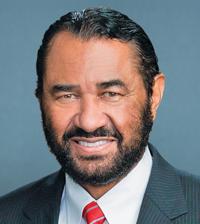
United States · Official source
4,362 records where Rep. Green, Al [D-TX-9] is listed as a sponsor, author, or other actor. Search with topics and years
United States · United States Congress · 20 May 2025
United States · United States Congress · 20 May 2025
United States · United States Congress · 15 May 2025
United States · United States Congress · 15 May 2025
United States · United States Congress · 14 May 2025
United States · United States Congress · 14 May 2025
United States · United States Congress · 13 May 2025
United States · United States Congress · 13 May 2025
United States · United States Congress · 9 May 2025
United States · United States Congress · 8 May 2025
This resolution recognizes the significance of Asian American, Native Hawaiian, and Pacific Islander Heritage Month as an important time to celebrate the significant contributions of Asian Americans, Native Hawaiians, and Pacific Islanders to the history of the United States.
United States · United States Congress · 7 May 2025
United States · United States Congress · 30 April 2025
Assault Weapons Ban of 2025 This bill makes it a crime to knowingly import, sell, manufacture, transfer, or possess a semiautomatic assault weapon (SAW) or large capacity ammunition feeding device (LCAFD). The prohibition does not apply to a firearm that is (1) manually operated by bolt, pump, lever, or slide action, except for certain shotguns; (2) permanently inoperable; (3) an antique; (4) only capable of firing rimfire ammunition; or (5) a rifle or shotgun specifically identified by make and model. The bill also exempts from the prohibition the following, with respect to a SAW or LCAFD: importation, sale, manufacture, transfer, or possession related to certain law enforcement efforts, or authorized tests or experiments; importation, sale, transfer, or possession related to securing nuclear materials; and possession by a retired law enforcement officer. The bill permits continued possession, sale, or transfer of a grandfathered SAW, which must be securely stored. A licensed gun dealer must conduct a background check prior to the sale or transfer of a grandfathered SAW between private parties. The bill permits continued possession of, but prohibits sale or transfer of, a grandfathered LCAFD. Newly manufactured LCAFDs must display serial number identification. Newly manufactured SAWs and LCAFDs must display the date of manufacture. The bill also allows a state or local government to use Edward Byrne Memorial Justice Assistance Grant Program funds to compensate individuals who surrender a SAW or LCAFD under a buy-back program.
United States · United States Congress · 30 April 2025
Fairness for Victims of SNAP Skimming Act of 2025 This bill requires the Supplemental Nutrition Assistance Program (SNAP) to provide for the replacement of the full amount of a household's stolen benefits. Specifically, using funds provided by the Department of Agriculture, a state agency must provide a household with replacement SNAP benefits equal to the amount of benefits stolen through card skimming, card cloning, or similar fraudulent methods. This requirement applies if the state agency determines that the benefits were stolen and meets certain requirements. Under current law, a state agency may only replace SNAP benefits that were stolen between the period beginning on October 1, 2022, and ending on December 20, 2024. Further, the replacement amount is limited to the lesser of the amount of (1) the benefits stolen, or (2) two months of the household's monthly allotment immediately prior to the date on which the benefits were stolen. Thus, this bill permanently extends the provision and provides for the replacement of the full amount of the benefits stolen.
United States · United States Congress · 29 April 2025
Equality Act This bill prohibits discrimination based on sex, sexual orientation, or gender identity with respect to businesses, employment, housing, federally funded programs, and other settings. Specifically, the bill expands Title II and Title VI of the Civil Rights Act of 1964 to prohibit public accommodations and federally funded programs, respectively, from discriminating based on sex, sexual orientation, or gender identity. It also includes stores, transit services, recreational facilities, and establishments that provide health care, accounting, or legal services as public accommodations under Title II. The bill also expands Title IV (desegregation of public schools) and Title VII (employment discrimination) to specifically include sexual orientation and gender identity. (The Supreme Court held in Bostock v. Clayton County that Title VII's prohibition of employment discrimination based on sex also prohibits employment discrimination based on sexual orientation or gender identity.) The bill similarly expands the Fair Housing Act (discrimination in public and private housing) to include sexual orientation and gender identity. It also prohibits discrimination based on sexual orientation or gender identity by creditors and with respect to jury selection. The bill defines sex for purposes of the aforementioned provisions to include sex stereotypes, pregnancy, childbirth, sexual orientation, gender identity, and sex characteristics.
United States · United States Congress · 29 April 2025
Medicare for All Act This bill establishes a national health insurance program that is administered by the Department of Health and Human Services (HHS). Among other requirements, the program must (1) cover all U.S. residents; (2) provide for automatic enrollment of individuals upon birth or residency in the United States; and (3) cover items and services that are medically necessary or appropriate to maintain health or to diagnose, treat, or rehabilitate a health condition, including hospital services, prescription drugs, mental health and substance abuse treatment, dental and vision services, long-term care, gender affirming care, and reproductive care, including contraception and abortions. The bill prohibits cost-sharing (e.g., deductibles, coinsurance, and copayments) and other charges for covered services. Additionally, private health insurers and employers may only offer coverage that is supplemental to, and not duplicative of, benefits provided under the program. Health insurance exchanges and specified federal health programs terminate upon program implementation. However, the program does not affect coverage provided through the Department of Veterans Affairs or the Indian Health Service. The bill also establishes a series of implementing provisions relating to (1) health care provider participation; (2) HHS administration; and (3) payments and costs, including the requirement that HHS negotiate prices for prescription drugs. Individuals who are age 18 or younger, age 55 or older, or already enrolled in Medicare may enroll in the program starting one year after enactment of this bill; other individuals may buy into the program at this time. The program must be fully implemented two years after enactment.
United States · United States Congress · 28 April 2025
This resolution impeaches President Donald Trump for high crimes and misdemeanors. The resolution sets forth seven articles of impeachment of the President: (1) obstruction of justice, violation of due process, and a breach of the duty to faithfully execute laws; (2) usurpation of Congress' appropriations power; (3) abuse of trade powers and international aggression; (4) violation of First Amendment rights; (5) creation of an unlawful office; (6) bribery and corruption; and (7) tyranny.
United States · United States Congress · 28 April 2025
United States · United States Congress · 28 April 2025
United States · United States Congress · 24 April 2025
United States · United States Congress · 24 April 2025
United States · United States Congress · 17 April 2025
United States · United States Congress · 10 April 2025
United States · United States Congress · 10 April 2025
United States · United States Congress · 10 April 2025
United States · United States Congress · 10 April 2025
Climate Change Financial Risk Act of 2025 This bill addresses climate change risk and its potential impact on the financial system. The Federal Reserve Board must develop financial risk analyses relating to climate change for certain large nonbank financial companies and bank holding companies. Specifically, these entities must be evaluated every two years on whether they have the capital necessary to absorb financial losses that would arise under several different climate change risk scenarios. In response to the results of the evaluation, entities must develop and submit for approval a climate risk resolution plan. The plan must include a capital policy with respect to climate risk planning and targets to remedy identified vulnerabilities. If the plan is not approved, the entity’s ability to make capital distributions is restricted. The bill also establishes the Climate Risk Scenario Technical Development Group to provide recommendations to the board regarding climate change risk scenarios, and determine the financial and economic risks of these scenarios. The board must develop a survey to assess (1) the ability of other large financial institutions to withstand each scenario, (2) which surveyed entities have activities in geographical areas or industries that are significantly exposed to the impacts of climate change, and (3) how these surveyed entities plan to adapt to risks presented in each scenario.
United States · United States Congress · 10 April 2025
United States · United States Congress · 9 April 2025
Protecting Election Administration from Interference Act of 2025 This bill revises preservation and retention requirements for federal election records. It also revises criminal penalties related to election records and the voting process. Under current law, election officials must, for a period of 22 months from the federal election, retain and preserve all election-related records and papers. This bill extends the requirement to electronic records and election equipment. Next, the bill directs the Cybersecurity and Infrastructure Security Agency to issue minimum standards and best practices for retaining and preserving records (including electronic records), papers, and election equipment, including protocols for observing their preservation, security, and transfer by the Department of Justice (DOJ) and a representative of each political party. In addition, the bill revises the federal criminal offense related to election records or papers to include reckless disregard of election record requirements resulting in the theft, destruction, concealment, mutilation, or alteration of a record, paper, or election equipment. Further, the bill allows DOJ to demand electronic records and election equipment be made available for inspection and generally prohibits DOJ from disclosing this information. The bill allows DOJ and candidates for federal office to bring an action in a district court to compel compliance with election record requirements. Finally, the bill extends criminal penalties related to voting interference to include intimidating, threatening, or coercing (or attempting to do so) an individual for processing or scanning ballots, tabulating, canvassing, or certifying voting results.
United States · United States Congress · 9 April 2025
United States · United States Congress · 9 April 2025
Medicare Audiology Access Improvement Act of 2025 This bill provides for Medicare coverage of certain audiology services. Specifically, the bill expands coverage to include diagnostic and treatment services that are furnished by audiologists and that would otherwise be covered if provided by a physician, including incidental services, regardless of whether such services are provided pursuant to a referral from, or under the supervision of, a physician or other health care practitioner.
United States · United States Congress · 8 April 2025
United States · United States Congress · 8 April 2025
United States · United States Congress · 7 April 2025
No Tax Breaks for Union Busting (NTBUB) Act This bill excludes from the tax deduction for ordinary and necessary business expenses amounts paid or incurred to influence employees with respect to labor organizations or labor organization activities. The bill also imposes information reporting requirements related to such expenses and imposes penalties for failure to comply. Under the bill, amounts paid to influence employees with respect to labor organizations include amounts paid (including wages and other costs) in connection with an action that results in a complaint or settlement related to an unfair labor practice or a finding of interference, influence, or coercion related to railway employees’ rights to organize and bargain collectively; for any meeting or training attended by employees and at which labor organizations are discussed; and that require certain employer disclosures and financial reporting. (Some exceptions apply.) The bill requires employers to file a return reporting certain information related to expenses paid to influence employees with respect to labor organizations and imposes a penalty for noncompliance. The amount of the penalty is the greater of (1) $10,000, or (2) $1,000 multiplied by the number full-time equivalent employees. Additional penalties apply for violations that continue for more than 90 days. The bill also imposes information reporting requirements on persons conducting activities on behalf of another person to influence employees with respect to labor organizations. The bill allows certain penalties for noncompliance with the reporting requirements to be waived if noncompliance is due to reasonable cause and not willful neglect.
United States · United States Congress · 7 April 2025
United States · United States Congress · 1 April 2025
Protect America's Workforce Act This bill nullifies the Executive Order titled Exclusions from Federal Labor-Management Relations Programs (issued on March 27, 2025), which excludes specified executive agencies and subdivisions from the Federal Service Labor-Management Relations Statute. The statute authorizes federal employees' participation in collective bargaining and enforces collective bargaining rights. The bill also specifies that a covered collective bargaining agreement in place as of March 26, 2025, shall have full force and effect through the stated term of the agreement.
United States · United States Congress · 31 March 2025
This joint resolution prohibits a proposed foreign military sale of certain defense articles and services to Israel.
United States · United States Congress · 31 March 2025
This joint resolution prohibits a proposed foreign military sale of certain defense articles and services to Israel.
United States · United States Congress · 31 March 2025
This joint resolution prohibits a proposed foreign military sale of certain defense articles and services to Israel.
United States · United States Congress · 31 March 2025
Hot Foods Act of 2025 This bill expands the Supplemental Nutrition Assistance Program (SNAP) to permit the use of SNAP benefits to purchase hot foods or hot food products ready for immediate consumption.
United States · United States Congress · 31 March 2025
United States · United States Congress · 31 March 2025
This joint resolution prohibits a proposed foreign military sale of certain defense articles and services to Israel.
United States · United States Congress · 27 March 2025
United States · United States Congress · 27 March 2025
United States · United States Congress · 26 March 2025
United States · United States Congress · 26 March 2025
United States · United States Congress · 26 March 2025
Raise the Age Act of 2025 This bill establishes new restrictions on the sale or transfer of certain semiautomatic firearms to individuals under 21 years of age. Specifically, this bill makes it unlawful for a licensed gun dealer, importer, manufacturer, or collector to sell or deliver a semiautomatic center-fire rifle or semiautomatic center-fire shotgun that has (or has the capacity to accept) an ammunition feeding device with a capacity of more than five rounds to an individual who the licensee knows or has reasonable cause to believe is under age 21. The prohibition does not apply if the individual under age 21 is a full-time law enforcement officer or active-duty member of the Armed Forces. The bill also requires the Federal Bureau of Investigation to report on the operation of its public access line, including a description of information sharing protocols and recommendations for improving such protocols.
United States · United States Congress · 26 March 2025
American Families United Act This bill authorizes the Department of Homeland Security (DHS) or the Department of Justice (DOJ) to exercise discretion in certain immigration cases. Under this bill, DOJ or DHS may, on a case-by-case basis, exercise discretion by declining to remove a non-U.S. national ( alien under federal law) or bar an alien from entering the United States to prevent hardship for the alien's U.S. citizen spouse, parent, or child. This discretion may also be exercised if the alien is the spouse or child of a deceased U.S. citizen. For the purposes of this bill, it shall be presumed that family separation constitutes hardship. However, DOJ or DHS may not exercise this discretion if the alien is removable or inadmissible due to certain grounds, including specified crime- and security-related grounds. This exercise of discretion may be applied to an alien who was ordered removed or denied entry prior to this bill's enactment if the alien files a motion to reopen or reconsider within two years of this bill's enactment.
United States · United States Congress · 25 March 2025
United States · United States Congress · 25 March 2025
United States · United States Congress · 24 March 2025
This joint resolution provides that the Equal Rights Amendment, which prohibits discrimination on the basis of sex, was ratified by three-fourths of the states and is therefore a valid constitutional amendment, regardless of any time limit that was in the original proposal. The Equal Rights Amendment was originally proposed to the states in 1972. The original proposal included a deadline for ratification of March 22, 1979; Congress subsequently extended the deadline to June 30, 1982. Although the requisite 38 states have ratified the amendment, three of these states did so after the deadlines, and five states subsequently rescinded their ratifications. The status of the amendment has been the subject of litigation.
United States · United States Congress · 18 March 2025