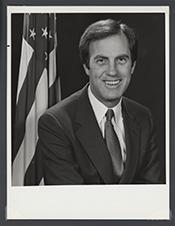
United States · United States Congress · 19 May 1983
People Protection Act - Encourages the President to implement the following measures related to strategic defenses: (1) consolidate all directed-energy activities in a new agency; (2) consolidate the space and strategic defense activities into a unified space command within the armed forces; (3) establish and place under the space command a command for ground-based strategic air defenses and ballistic missile defense; (4) transfer space-launch vehicles as necessary for the space-based defense systems to the Department of Defense; (5) develop a manned space station to support national security and other activities; (6) assess the role of strategic defenses within current and prospective arms control agreements; (7) assess the consistency of specified treaties with existing international legal conventions for the regulation of armed conflict; and (8) assess other organizational changes within the Government needed to implement the President's strategic recommendations.
United States · United States Congress · 19 May 1983
Expresses the support of the House of Representatives for Lebanon's and Israel's agreement on arrangements for the withdrawal of Israeli forces from Lebanon. Calls upon other nations to work toward the withdrawal of all foreign forces from Lebanon. Emphasizes the need of all nations to recognize the sovereignty of Lebanon. Urges Syria and the Palestine Liberation Organization to agree to the arrangements for the withdrawal of their forces from Lebanon.
United States · United States Congress · 18 May 1983
Rural Electrification and Telephone Revolving Fund Self-Sufficiency Act of 1983 - Amends the Rural Electrification Act of 1936 (REA) to eliminate the requirement for a State certificate of convenience and necessity before the Administrator may make loans to provide rural telephone service. Revises the liabilities and uses of the Rural Electrification and Telephone Revolving Fund established under the REA to provide that notes of the Administrator to the Secretary of the Treasury to obtain funds for loans shall be equity capital of the Fund. States that assets of the Fund shall be available only for: (1) payment of interest and principal on loans to the Administrator from the Secretary of the Treasury; and (2) for certificates of beneficial ownership issued to such Secretary or in the private market. Requires the Administrator to maintain two separate accounts within the fund: (1) the Electrification Account; and (2) the Telephone Account. Lists the items that shall be accounted for in each Account respectively, and restricts the purposes for which the assets of each Account shall be available. Authorizes the Administrator to repurchase specified certificates of beneficial ownership under certain conditions affecting their interest rates. Establishes guidelines for interest-bearing insured loans made by the Administrator to electric and telephone borrowers. Requires the Secretary of Agriculture to request in each annual supplemental budget estimate the amount needed to replenish the Fund for anticipated and actual costs resulting from loans made at less than a specified rate during the preceding fiscal year. Directs the Administrator to guarantee loans to specified borrowers or to accommodate or subordinate liens or mortgages held in the Fund, according to prescribed rules and regulations. Directs the Administration to promulgate such rules and regulations within 90 days after the effective date of this Act. Prescribes guidelines under which certain lenders are authorized to adjust interest rates on loans guaranteed by the Administrator. Requires rural electrification borrowers to obtain concurrent supplemental financing according to prescribed guidelines in any fiscal year in which the minimum loan level for insured rural electrification loans is less than $1,000,000,000. Repeals the loan-making authority of the Governor of the Rural Telephone Bank which require approval by the Secretary of Agriculture of facilities or lines to be acquired with such loans. Eliminates loan restrictions placed upon potential borrowers whose net worth exceed their assets by twenty percent.
United States · United States Congress · 17 May 1983
Amends the Federal Election Campaign Act (FECA) to declare that contributions, gifts, or payments by union members to a separate fund which is used by the union for political purposes must be voluntary and unrelated to moneys required as a condition of employment. Declares it to be unlawful to use moneys paid to an organization as a condition of employment for any type of election or campaign activities by such organization.
United States · United States Congress · 11 May 1983
Church Audit Procedures Act of 1983 - Amends the Internal Revenue Code to restrict the Secretary of the Treasury from investigating or auditing churches unless the Secretary possesses evidence causing him to believe that a church: (1) is carrying on an unrelated trade or business; or (2) should not be granted tax-exempt status. Restricts the Secretary from beginning any investigation unless he has first provided the church with written notice that an investigation is being commenced. Sets forth the requirements of such notice. Requires that the Secretary must first approve an application by the regional counsel of the internal revenue region for examination of church records and religious activities before beginning any such examination. Requires the Secretary, prior to the approval of any such application, to offer in writing an opportunity for a conference to discuss facts, evidence, and issues relevant to the investigation. Requires the Secretary to notify the church in writing of the approval of the application for examination at least 15 days prior to the commencement of such examination. Limits the examination of religious activities to that necessary to determine whether an organization is a church or convention or association of churches. Limits the examination of church records to that necessary to determine the amount of tax imposed. Allows an organization which claims that the Secretary has violated the provisions of this Act to bring a civil action for injunctive relief against the Secretary. Reduces the statute of limitations for collection after assessment of tax to three years in the case of any organization which is a church or convention or association of churches.
United States · United States Congress · 11 May 1983
Amends the Internal Revenue Code to provide that certain married individuals are eligible for the deduction for retirement savings on the basis of the earnings of their spouse.
United States · United States Congress · 9 May 1983
Ocean Freight Competition Act of 1983 - Amends the Merchant Marine Act, 1936, to exclude federally financed agricultural commodities from the requirement that cargoes procured, furnished, or financed by the United States be transported on privately owned U.S.-flag commercial vessels and vessels of the United States.
United States · United States Congress · 5 May 1983
Home Ownership Incentive Act of 1983 - Amends the Internal Revenue Code to allow an income tax deduction for contributions of cash, stocks, bond, or other securities tradeable on an established exchange to a tax-exempt trust account established for the exclusive purpose of purchasing the taxpayer's first principal residence. Limits the maximum annual deduction to $1,000 with a maximum lifetime deduction of $10,000. Excludes distributions from such account from gross income if they are used exclusively for the purchase of a first principal residence. Imposes a ten percent surtax on distributions from an individual housing account which are not used for the purchase of a principal residence. Requires the trustee of an individual housing account to report on the maintenance of the account. Imposes a penalty for failure to file required reports.
United States · United States Congress · 3 May 1983
Directs the Secretary of the department in which the Coast Guard is operating to cause two named vessels to be documented as vessels of the United States entitled to engage in the coastwise trade.
United States · United States Congress · 2 May 1983
Repurchase Agreements Bankruptcy Amendments of 1983 - Amends the Bankruptcy Code to define 'repo participant' to mean an entity that, on any day during the period beginning 90 days before the date of the filing of the bankruptcy petition, has an outstanding repurchase agreement with the debtor. Defines 'repurchase agreement' to mean any agreement which provides for the transfer of certificates of deposit, eligible bankers' acceptances or securities that are direct obligations or loan guarantees of the United States against the transfer of funds with a simultaneous agreement by the transferee to return such certificates of deposit, eligible bankers' acceptances, or securities to the transferor no more than one year later, or on demand, in exchange for funds. States that the filing of a bankruptcy petition does not automatically stay the setoff by a repo participant of any mutual debt and claim against the debtor for a margin or a settlement payment arising out of a repurchase agreement. Prohibits the trustee from avoiding a transfer that is a margin or a settlement payment made before commencement of the case by or to a repo participant in connection with a repurchase agreement. Provides that all margin or settlement payments made in connection with a repurchase agreement are taken for value to their full extent. Sets forth provisions concerning the exercise of a contractual right of a repo participant to cause the liquidation of a repurchase agreement.
United States · United States Congress · 28 April 1983
National Outdoor Recreation Resources Review Act of 1983 - Establishes a National Outdoor Recreation Resources Review Commission to evaluate existing and potential public outdoor recreation policies, programs, and opportunities and to recommend outdoor recreation policies and activities which should be instituted at the Federal, State, and local levels and by the private sector in order to protect existing recreation resources and to meet future recreation needs. Requires the Commission to report its findings and recommendations to the President and Congress within 18 months after its establishment. Terminates the Commission six months after submission of its report. Authorizes appropriations.
United States · United States Congress · 27 April 1983
Amends the judicial code to: (1) terminate judicial annuities for surviving spouses only upon such surviving spouse's death or upon remarriage prior to age 60; and (2) provide for cost-of-living adjustments to such annuities according to formulae used for the Civil Service Retirement and Disability Fund.
United States · United States Congress · 26 April 1983
Repeals the Davis-Bacon Act (an Act which requires that the locally prevailing wage rate be paid to various classes of laborers and mechanics working under federally-financed or federally-assisted contracts for construction, alteration, and repair of public buildings or public works).
United States · United States Congress · 25 April 1983
Product Liability Act of 1983 - Sets forth uniform national standards for products liability cases. Preempts inconsistent Federal and State laws. Permits actions under this Act to be brought in State court or Federal court if the United States is a party or diversity jurisdiction exists. Prohibits recovery for other than commercial loss or damage to the product itself, except as otherwise provided in this Act. Sets forth basic standards of responsibility for manufacturers and product sellers other than manufacturers including wholesalers, distributors, retailers, lessors, packagers, and repairers. Establishes rules relating to proof in products liability cases with respect to Federal Government standards and contract specifications. Prohibits admission of postmanufacturing improvements except for the purpose of impeaching a witness for the product seller who denies the feasibility of such improvements. Allows a manufacturer to introduce certain precautionary measures. Provides that all product liability actions shall be governed by the principles of comparative responsibility. Specifies the manner in which damages are to be apportioned. Provides that comparative damages apply only to compensatory damages. Requires the reduction of any damage award by the amount of workers' compensation benefits which are paid. Makes a product seller who acted with flagrant indifference to consumer safety, where the act was an extreme departure from accepted practice, liable for punitive damages. Establishes a two-year statute of limitations and a ten-year statute of repose.
United States · United States Congress · 21 April 1983
Amends the Civilian Health and Medical Program of the Uniformed Services (CHAMPUS) to extend medical benefits to a former spouse who was married at least 20 years to a member with at least 20 years of service when a minimum of ten years rather than 20 years of such marriage and service coincide. Repeals the requirements that the former spouse be unmarried and have no medical coverage under an employee-sponsored health plan. Grants medical benefits to a former spouse who has a disease or disability attributable to the nature or location of a member's or former member's military service. Limits the health care available to such former spouses to that necessary for the treatment of such a disease or disability. Applies this Act to all eligible former spouses, regardless of the date of divorce.
United States · United States Congress · 21 April 1983
Expresses the sense of the Congress that the income tax reductions scheduled for July 1, 1983, and the inflation adjustment of the income tax brackets scheduled for after 1984, should not be repealed or postponed.
United States · United States Congress · 20 April 1983
Constitutional Amendment - Requires Congress, prior to each fiscal year, to adopt a statement of receipts and outlays for that year in which total outlays are no greater than total receipts. Permits Congress in such statement to provide for a specific excess of outlays over receipts by a three-fifths vote directed solely to that subject. Prohibits total receipts for any fiscal year set forth in such statement from increasing by a rate greater than the rate of increase in national income in the last calendar year ending before such fiscal year, unless Congress passes a bill directed solely to approving specific additional receipts and such bill has become law. Permits Congress to waive the provisions of this Act with respect to any fiscal year in which a declaration of war is in effect. Declares that total receipts shall include all receipts of the United States, except those derived from borrowing and total outlays shall include all outlays of the United States except those for repayment of debt principal.
United States · United States Congress · 19 April 1983
Amends the Internal Revenue Code to exempt holdings in an independent local newspaper business from the tax on excess business holdings of private foundations. Defines an "independent local newspaper business" as: (1) a proprietorship which publishes an independent local newspaper; (2) a partnership which publishes such a newspaper and which has none of its outstanding partnership interests traded in an established securities market; and (3) a corporation which publishes such a newspaper and which has none of its outstanding capital stock traded in an established securities market.
United States · United States Congress · 14 April 1983
Directs the Secretary of the Treasury to study and report to specified congressional committees on the advisability of replacing only the Federal individual income tax or replacing both the Federal individual income tax and the Federal corporate income tax with a simplified income tax on gross income.
United States · United States Congress · 13 April 1983
Amends the Internal Revenue Code to increase the maximum allowable income tax deduction for contributions to retirement savings plans from $2,000 to $2,500. Increases the deduction levels for contributions to spousal IRA's and for contributions by divorced individuals.
United States · United States Congress · 13 April 1983
Authorizes the erection of a memorial on public grounds in the District of Columbia, or its environs, in honor and commemoration of members of the armed forces who served in the Korean war. Directs the Secretary of the Interior to select, with the approval of the National Commission of Fine Arts and the National Capital Planning Commission, a suitable site on public grounds for such memorial. Subjects the design and any plans for the memorial to the approval of the Secretary, the National Commission of Fine Arts, and the National Capital Planning Commission. Declares that no moneys belonging to the United States or the District of Columbia shall be expended for the erection of such memorial. Authorizes appropriations for site acquisition and preparation in the event nonpublic land is selected for the memorial.
United States · United States Congress · 12 April 1983
Amends the Internal Revenue Code to provide that a taxpayer whose spouse earns less than $250 of compensation shall not be disqualified from having a spousal individual retirement account.
United States · United States Congress · 7 April 1983
Title I: Amendments to Title 18, United States Code (18 U.S.C. 921-928) - Amends the Gun Control Act of 1968 to redefine: (1) "manufacturer" to mean any person engaged in the "business of manufacturing" (instead of "manufacture" of) firearms or ammunition; and (2) "dealer" to exclude dealers in ammunition. Adds a new definition, "engaged in the business," with respect to manufacturers, dealers, and importers. Defines as a manufacturer, dealer, or importer of firearms a person who manufactures or deals in a regular course of trade or business with the principal objective of livelihood and profit. Excludes as dealers persons making occasional sales or repairs of firearms. Eliminates certain activities involving ammunition from the coverage of the current prohibitions. Makes it unlawful for any person to transfer any firearm to a person who does not reside in the same State if the transferor has reasonable cause to believe that acquisition of the firearm by such person would violate any State or local law or ordinance. Requires such transfer to be face to face. Presumes a licensee to have actual knowledge of the published laws of the State. Revises the current prohibition against certain classes of persons transporting a firearm or ammunition in interstate commerce to extend such prohibition to possession or receipt in commerce or affecting commerce of any firearm or ammunition. Includes as additional categories illegal aliens, dishonorably discharged members of the Armed Forces, and U.S. citizens who renounce their citizenship. Excludes ammunition dealers from the current licensing requirements. Declares that a licensed dealer's personal collection of firearms shall not be subject to recordkeeping requirements, under specific circumstances. Permits the Secretary of the Treasury to revoke a license only where the holder "willfully" violates a provision of the Act. Bars the Secretary from denying or revoking a license on the basis of violations which are alleged in criminal proceedings instituted against a licensee where such individual is not convicted of such charges. Allows the government to voluntarily dismiss criminal charges prior to trial and still proceed with revocation. Imposes as a condition for the inspection or examination of records, documents, firearms, or ammunition that the Secretary has reasonable cause to believe that a violation has occurred and that evidence may be found on the premises. Requires a warrant to be issued for such search. Restricts the firearms information obtained from licensees which the Secretary may make available to State or local governments. Establishes a limited recordkeeping requirement for firearms collectors. Establishes a "willful" scienter (knowledge) requirement with respect to general violations of the Act. Revises the current offense of using or carrying a firearm during commission of a Federal felony to: (1) include use of a destructive device; (2) delete the act of "carrying" a firearm to commit a felony; and (3) limit such offense to felonies over which the Federal courts have exclusive jurisdiction. Retains the current penalty (one to ten years) for first offenses. Increases the penalty for second or subsequent offenses to five to 25 years imprisonment (currently, two to 25 years). Extends to first offenders the requirement, currently applicable only to second offenders, that the court not suspend any sentence or grant probation. Prohibits the granting of parole to first and subsequent offenders. Declares that no person shall be subject to the additional, mandatory penalties if use of the firearm or destructive device was to protect persons or property. Amends the forfeiture provision to subject to seizure any firearm or ammunition "involved in or used" in any violation of the Gun Control Act (instead of "involved in or used or intended to be used"). Directs the court to award attorney fees to the prevailing party (other than the United States) in a proceeding for the return of seized firearms or ammunition. Requires the court to award such fees in any other action upon a finding that the action was without foundation or was initiated in bad faith. Limits seizure to firearms individually identified as involved in the violation. Revises the current procedure allowing persons who have been convicted of a crime to apply to the Secretary for relief from the firearms prohibitions to make the following changes. Permits any person prohibited from possessing, shipping, transporting, or receiving firearms or ammunition to apply for relief. Requires (instead of permits) the Secretary to grant release unless the applicant will be likely to act in a manner dangerous to public safety. Permits any person who is denied relief to seek de novo judicial review in Federal court. Imposes on the applicant the burden of proof. Makes the authority of the Secretary to permit importation of certain types of firearms and ammunition nondiscretionary. Extends the types of sporting firearms which may be imported. Amends the rulemaking authority of the Secretary to provide that no regulation may require the transfer of records required under this Act to a facility owned, managed, or controlled by the United States or any State or the establishment of any system of registration of firearms, firearms owners, or firearms transactions. Requires a 90-day public comment period for proposed regulations (no period is currently specified). Prohibits the Secretary from prescribing regulations which require purchasers of black powder to complete affidavits or forms attesting to their exemption from certain provisions of the Federal criminal code. Declares any law or regulation promulgated by any State prohibiting the transfer of an unloaded and not readily accessible firearm or ammunition null and void. Title II: Amendments to Title VII of the Omnibus Crime Control and Safe Streets Act of 1968 - Repeals title VII of the Omnibus Crime Control and Safe Streets Act (relating to the receipt, possession, or transportation of firearms by felons, veterans dishonorably discharged, mental incompetents, illegal aliens, and persons renouncing their United States citizenship).
United States · United States Congress · 5 April 1983
Deep-Draft Navigation Act of 1983 - Title I: Findings and Purposes; Definitions - Declares the findings of Congress and the purposes of this Act. Title II: Creation of Trust Fund to Administer Accounts for Operations and Maintenance, Improvement Projects, and Local-Share Credits - Establishes the Deep-Draft Navigation Trust Fund in the Treasury, consisting of: (1) the Operations and Maintenance Account; (2) the Navigation Improvement Account; and (3) the Special Credit Account. Requires the Secretary of the Treasury to be the trustee of the Trust Fund and to make an annual report to Congress on the operation and status of the Fund. Sets forth the certain and the authorized uses for each Fund account. Title III: Tax on Deep-Draft Commercial Vessels Using Deep-Draft Commercial Channels, Harbors, and Navigational Facilities; Saint Lawrence Seaway Development Corporation - Amends the Internal Revenue Code to impose a tax on the use of any deep-draft commercial channel or harbor within the United States by a deep-draft commercial vessel (vessel). States the rate of such tax. Declares that such tax shall not apply to intraport transfers. Imposes a tax on any vessel using any Great Lakes navigation improvement which is operated or maintained by the United States. States the rate of such tax. Imposes a tax on the use of any deep-draft commercial channel or harbor within the United States for a purpose other than the loading or unloading of commercial cargo (including convenience, bunkering, refitting, or repair). States the rate (including the maximum rate) of such tax. Requires the master of a vessel to report the value of all qualified commercial cargo loaded onto, unloaded from, or contained in such vessel to the U.S. Customs Service upon the loading or unloading of any such cargo or upon passage through any Great Lakes navigation improvement, operated or maintained by the United States. States the powers of the Secretary of the Treasury, with regard to making investigations and requiring record keeping, for determining whether any person is in violation of this Act. Authorizes the Secretary, acting through the U.S. Customs Service or any other designated agency, to assess and collect the taxes imposed under this title. Requires that the liability for the payment of such taxes shall be imposed on the owner of such vessel and shall constitute a valid lien against said vessel in favor of the United States until paid. Sets forth provisions concerning violations and enforcement of this title, including: (1) findings of violations by the Secretary; (2) actions by the Attorney General; (3) jurisdiction and venue of actions under this title; (4) unlawful departure of vessels without paying all taxes; and (5) the unlawful diversion of taxable cargo for tax avoidance purposes. Grants the consent of Congress to the levying by the States of taxes on cargo to be exported from a State's deep-draft commercial channels and harbors. States conditions concerning the imposition of such taxes, and the rates of the taxes. Directs the Comptroller General to audit the deep-draft commercial harbor operations of States that have not authorized the U.S. Customs Service to accept payment of the tax levied under this title. Requires the Comptroller General to report to Congress concerning such audits. Amends the Act establishing the Saint Lawrence Seaway Development Corporation to authorize the Corporation to accept certain amounts for the operation and maintenance of authorized deep-water navigation works in the Saint Lawrence Seaway. Waives that portion of the toll levied on a vessel for use of the Seaway to the extent that such toll exceeds the deep-draft commercial vessel tax imposed under this Act. Requires the Corporation to remit to the Treasury all revenues derived from the collection of charges from providing services to vessels using the Seaway and from toll bridge charges. Requires the Secretary of State, in consultation with the Secretary of Transportation, to initiate discussions with the Government of Canada concerning the reduction or elimination of all tolls on the international Great Lakes and/or the Saint Lawrence Seaway. Requires the Secretary of Transportation to report to Congress on the progress of such discussions and the economic effects to U.S. waterborne commerce of any proposed reduction or elimination in tolls. Title IV: Establishment of Federal/Local Partnership for Deep-Draft Navigation Improvement Projects - Requires the Secretary of the Army to enter into a memorandum of agreement with the port authority sponsoring any deep-draft navigation project, prior to submitting recommendations to Congress for the authorization or reauthorization of such projects. Requires the memorandum to establish the responsibilities of each party with respect to the construction and operation of the project, including a formula (determined in a specified manner) for the allocation of project costs. Grants the consent of Congress to the imposition of a duty or tax upon any vessel engaged in foreign commerce by any State, political subdivision or agency thereof, for the purpose of recovering the local share of any deep-draft navigation improvement project. Requires all revenue derived from such duty or tax to be paid into the Treasury for credit against local share of the project costs. States that Congress reserves the right to withdraw such consent upon certain circumstances. Authorizes port authorities to construct and operate a deep-draft navigation project upon entering into a memorandum of agreement with the Secretary. Sets forth certain provisions to be contained in such memoranda. Requires the Secretary to order persons or port authorities in violation of any provision of the memorandum to comply with such memorandum within 90 days. Authorizes the Attorney General to bring a civil action as may be necessary to bring such persons or port authorities into compliance with the memorandum. Requires the National Academy of Sciences to study the economic effects of the taxes imposed and the funding mechanisms established under this Act. Requires the Academy to report the results of such study to the Congress and the President within a specified period. Title V: Expedited Procedure for Authorization and Review of Deep-Draft Navigation Improvement Projects - Authorizes port authorities to submit to the Secretary of the Army proposals for the construction of deep-draft navigation improvement projects. States the required contents of such proposals. Requires the Secretary to direct the Corps of Engineers to prepare and submit, on an expedited basis, certain reports and an environmental impact assessment of the proposed project. States procedures to be followed for consolidated environmental review of proposed projects. Requires the Corps of Engineers to be the lead agency in the consolidated environmental review process. Requires the Secretary to evaluate such reports and assessments and to submit recommendations for the construction of such projects (together with a lst of all proposals submitted) to the appropriate congressional committees. Requires such recommendations to be cost effective, and to reflect a mix of differing depths and scope and to be from each of the standard coastal and Great Lakes ranges. Prohibits the Secretary from recommending to Congress any projects or combination of projects for which the total Federal share of projected annual outlays will exceed the amounts available for the Deep-Draft Navigation Trust Fund in such fiscal year. Requires the congressional committee to which the recommendations were submitted to report a joint resolution approving or disapproving such recommendations, in whole or in part, within 90 days of their submission. Requires the Secretary to establish and publish in the Federal Register a schedule (the permit schedule) for the issuance or nonissuance of all necessary federal permits for the construction of such projects. States the procedures to be followed for the permit schedule. Requires the Secretary to monitor compliance with the permit schedule by all agencies subject to such schedule. Provides a procedure to be followed in the event of any threatened delay or failure to meet any deadline imposed under the schedule. Declares that nothing in this title shall be construed to relieve any agency of any legal requirements or to affect the application of any law or regulation to a deep-draft navigation improvement project or related landslide facilities. Describes procedures concerning judicial review of final agency decisions concerning deep-draft navigation improvement projects authorized under this Act. Declares that if any part of this Act is held invalid then all of this Act shall be invalid.
United States · United States Congress · 24 March 1983
Amends the Communications Act of 1934 to prohibit the Federal Communications Commission from restricting the hours of operation or reducing the operating power of any AM broadcast station if: (1) such restriction or reduction would prevent the station from operating at full daytime power from two hours before sunrise until two hours after sunset; and (2) operation during such period would not interfere with the protected signal of an existing station. Prohibits the Commission from denying an application for a license to operate a new AM station or an application to expand the hours of operation of an existing station solely on the grounds that: (1) the area has adequate broadcasting service; or (2) an FM channel is available for the area. Prohibits the Commission from placing an applicant for a station license or construction permit at a disadvantage because that applicant is licensed to operate a station with restricted hours in the area if such applicant certifies that it will relinquish the restricted license if its application is approved. Exempts any application to alter the hours of operation of a standard broadcast station from public notice and comment requirements.
United States · United States Congress · 24 March 1983
Broadcast Licensing, Renewal, and Deregulation Act of 1983 - Amends the Communications Act of 1934 to establish new procedures for reviewing petitions to deny broadcast license applications. Requires the Federal Communications Commission (FCC) to grant a license renewal application by a radio or television broadcast station licensee unless the actions of the licensee evidences such serious disregard for the Communications Act and for the rules and policies of the FCC that denial of the application is justified. Prohibits the FCC from considering the applications of other persons for a broadcast station's facilities when the FCC is acting upon a license renewal application by a radio or television broadcast station. Permits persons holding construction permits or station licenses to transfer the permit or license without first obtaining an FCC finding that the transfer serves the public interest. Requires the FCC to be notified of such transfer. Provides for public notice of the transfer. Provides for disposition by the FCC of objections to such transfer. Prohibits the FCC from considering whether the public interest would be served by the transfer of the permit or license involved to a different person. Repeals certain provisions relating to the application of the antitrust laws. Prohibits the FCC from imposing requirements on radio or television licensees relating to: (1) programs; (2) programming formats; (3) ascertainment; (4) commercialization; and (5) maintenance of program logs.
United States · United States Congress · 24 March 1983
Expresses the sense of the Congress that the President should express U.S. opposition to the Soviet Union's policies of forced labor. Declares that the Soviet Union should cease such practices and honor their international commitments.
United States · United States Congress · 23 March 1983
Malt Beverage Interbrand Competition Act - Declares that no antitrust law shall prohibit the importer, brewer, or trademark licensee of a trademarked malt beverage, when such beverage has substantial competition from other malt beverages in an area, from: (1) entering into an agreement granting a wholesale distributor the exclusive right to sell such beverage within any defined geographic area within a State; or (2) limiting such distributor to the sale of such beverage for ultimate resale to consumers in such area. Declares that this Act shall not affect any provision of State law.
United States · United States Congress · 22 March 1983
Amends the Federal criminal code to establish procedures for the imposition of the death penalty for Presidential assassination. Requires a separate sentencing hearing before a jury, or the court upon motion by the defendant, when the defendant is found guilty or pleads guilty to an offense punishable by death. Provides that no presentence report shall be prepared in such cases. Allows the defendant and the Government to present any information relevant to sentencing, without regard to the rules of evidence, but permits information to be excluded where its probative value is substantially outweighed by the danger of unfair prejudice, confusion of the issues, or misleading the jury. Specifies mitigating factors which the defendant must establish by a preponderance of the information and aggravating factors which the Government must prove beyond a reasonable doubt. Conditions imposition of the death penalty on a unanimous finding by the jury (or finding by the court) that: (1) some aggravating factor exists; and (2) the aggravating factors sufficiently outweigh any mitigating factor found to exist. Directs the court to impose the death penalty upon a finding that such sentence is justified. Establishes procedures for appeal from the death sentence.
United States · United States Congress · 21 March 1983
Expresses the sense of the House of Representatives that the President should resume negotiations with the Soviet Union to reach a new long-term grain sales agreement that would require the Soviet Union to purchase a minimum amount of grain annually.
United States · United States Congress · 16 March 1983
Comprehensive Crime Control Act of 1983 - Title 1: Bail - Bail Reform Act of 1983 - Repeals the Bail Reform Act of 1966 and sets forth new bail procedures. Retains execution of a money bond as a condition for pretrial release. Authorizes a judicial officer to consider the safety of any person or the community when making a pretrial release determination. Establishes as a mandatory release condition that the person not commit a Federal, State, or local crime during release. Expands the discretionary release conditions to include that the defendant: (1) maintain employment or an educational program; (2) avoid contact with an alleged victim or potential witness; (3) report to a law enforcement or pretrial service agency; (4) comply with a curfew; (5) refrain from possessing a firearm or using alcohol or narcotic drugs; (6) undergo medical treatment; (7) agree to forfeit designated property, including money, upon failure to appear; and (8) return to custody at specified hours. Prohibits a judicial officer from imposing financial conditions that result in the pretrial detention of a person. Authorizes a judicial officer to order detention for up to ten days: (1) if a person who is presently on pretrial release for a felony under Federal, State, or local law or on probation or parole or release pending sentencing or appeal for any offense, upon a determination that such person may flee or pose a danger to any person or the community; or (2) if such person is not a U.S. citizen. Requires that a detention hearing be held in any case involving: (1) a crime of violence; (2) any offense punishable by life imprisonment or death; (3) a narcotics offense punishable by at least ten years' imprisonment; (4) a serious risk of flight or obstruction of justice; or (5) any felony committed after the person has been convicted of two or more offenses for which a hearing is mandated. Authorizes a judicial officer after such a hearing to order the pretrial detention of a person upon finding that no condition will reasonably assure such person's appearance and the safety of any other person and the community. Enumerates additional factors to be considered by the judicial officer in making a release determination, including the defendant's past conduct, history of drug or alcohol abuse, criminal history, and the nature and seriousness of the danger to the community or any person. Requires the detention of a person who has appealed his conviction unless the judicial officer finds by clear and convincing evidence that: (1) such person is not likely to flee or pose a danger to another person or property; and (2) the appeal raises a substantial question of law or fact. Requires the detention of a person awaiting sentencing unless the officer finds by clear and convincing evidence that the person is not likely to flee or pose a danger to any other person or the community. Authorizes a U.S. attorney to appeal a release order. Makes a person guilty of an offense for failing to appear after having been released. Provides increased penalties for persons charged with more serious offenses. Makes it an affirmative defense to such crime that uncontrollable circumstances prevented the person from appearing. Establishes mandatory additional penalties for commission of an offense while on pretrial release. Subjects a person who has been conditionally released and violates a condition of release to revocation of release and prosecution for contempt of court. Authorizes a surety to arrest a person charged with an offense who is released upon execution of an appearance bond with such surety. Requires such person to be delivered promptly to a judicial officer for a revocation determination. Grants new authority to law enforcement officers to arrest a person who violates pretrial release conditions. Title II: Sentencing Reform - Sentencing Reform Act of 1983 - Sets forth a new sentencing structure applicable to a defendant who is found guilty of an offense under any Federal statute. Permits an individual to be sentenced to a term of imprisonment or probation and a fine, and to receive additional sanctions, including: (1) forfeiture for certain racketeering crimes and drug-related offenses; (2) an order of notice to victims of crimes in cases involving fraud or deceptive practices; or (3) an order of restitution in cases involving bodily injury or property damage. Permits an organization to receive these penalties, with the exception of imprisonment. Creates the United States Sentencing Commission. Specifies factors to be considered by a sentencing court, including the guidelines and policy statements issued by the United States Sentencing Commission. Requires the court to impose a sentence within the range set forth by the Commission unless aggravating or mitigating circumstances exist that were not adequately considered by the Commission in formulating the guidelines. Requires the court to state in open court at the time of sentencing the reason for imposing a sentence at a point within the prescribed range, or the specific reason for imposing a sentence outside of such range. Authorizes the imposition of a term of probation, unless specifically prohibited, for all but the most serious class of felonies. Requires as a mandatory condition of probation that a defendant not commit another crime. Enumerates 20 discretionary conditions. Sets forth a fine schedule for the categories of offenses generally at higher levels than current law. Includes higher maximums for organizational defendants. Directs the court to consider the defendant's financial status in determining the amount of a fine and the method of payment. Sets maximum terms of imprisonment for five classes of felonies (A to E), three classes of misdemeanors (A to C), and an infraction (five day maximum). Allows the court, in imposing a sentence of imprisonment for a felony or misdemeanor, to include a term of supervised release after imprisonment. Eliminates the special sentencing provisions under current law for dangerous special offenders, youth offenders, young adult offenders, and drug addicts, but provides for these categories of offenders under the proposed sentencing guidelines. Excludes capital punishment as an authorized penalty, but leaves unaffected the current death penalty and procedures for aircraft hijacking. Eliminates the parole system. Permits a defendant to petition for a sentence reduction upon a showing of extraordinary and compelling reasons. Limits this motion for defendants who are sentenced to six or more years of imprisonment. Allows the defendant or the government to file a notice of appeal in the district court for review of a final sentence. Provides for congressional review of the operation of the sentencing system after receipt of a study by the General Accounting Office. Title III: Limitation of the Exclusionary Rule - Exclusionary Rule Limitation Act of 1982. Amends the Federal criminal code to provide that evidence obtained by a search or seizure shall not be excluded in a Federal proceeding if the seizure was undertaken in a reasonable good faith belief in its conformity with the Fourth Amendment to the Constitution. Provides that evidence obtained in accordance with a warrant is prima facie evidence of good faith, absent intentional and material misrepresentation. Title IV: Forfeiture - Comprehensive Criminal Forfeiture Act of 1983 - Amends the Racketeer Influenced and Corrupt Organizations Statute (RICO) to specify that property subject to forfeiture for racketeering activity includes: (1) all proceeds obtained directly or indirectly from racketeering activity; (2) real and tangible and intangible personal property; and (3) positions, offices, appointments, and benefits obtained through illegal activity. Makes property forfeitable to the United States upon the commission of the act giving rise to forfeiture. Permits the forfeiture of property which has been transferred to a third party, but includes a provision protecting innocent bona fide purchasers. Authorizes a court to order the forfeiture of substitute assets of the defendant where the original property cannot be located or traced. Authorizes a court to take appropriate action preserving the availability of property during the pre-indictment period effective for up to 90 days. Specifies the circumstances under which a temporary restraining order may be issued without notice to the affected party. Authorizes the Attorney General to grant petitions for remission or mitigation of forfeiture. Directs the Attorney General to establish regulations governing the restitution and disposition of forfeited property. Amends the Comprehensive Drug Abuse Prevention and Control Act of 1970 to establish general criminal forfeiture provisions for felony violations under titles II and III. Includes provisions similar to the RICO amendments of this Act, relating to property subject to forfeiture, third party transfers, asset substitution, pre-indictment orders, and remission. Authorizes a court to issue a warrant authorizing the seizure of property subject to forfeiture in the same manner provided for a search warrant, if other injunctive relief would not assure the availability of the property. Provides that a criminal forfeiture proceeding shall stay any civil forfeiture proceeding with respect to the same property. Establishes in the Treasury of the United States, the "Drug Assets Forfeiture Fund" and the "Customs Forfeiture Fund." Transfers the proceeds from the sale or other disposition of the forfeited property into these accounts. Grants law enforcement authority to customs agents. Title V: Offenders with Mental Disease or Defect - Insanity Defense Reform Act of 1983 - Amends the Federal criminal code to make it an affirmative defense to a Federal prosecution, that at the time of the commission of the acts constituting the offense, the defendant, as a result of mental disease or defect, was unable to appreciate the nature and quality or the wrongfulness of his acts. Authorizes a special verdict of "not guilty only by reason of insanity" for any criminal defendant who raises the issue of insanity by notice as currently provided. Establishes a new civil commitment procedure for persons found not guilty only by reason of insanity. Title VI: Reform of Federal Intervention in State Proceedings - Reform of Federal Intervention in State Proceedings Act of 1983 - Conditions consideration of a habeas corpus claim by a State prisoner on a showing of actual prejudice resulting from the Federal right violated and a showing that: (1) State action precluded assertion of the right; (2) the Federal right did not previously exist; or (3) the factual basis of the claim could not have been discovered by reasonable diligence. Establishes a one-year statute of limitation for habeas corpus actions brought by State prisoners. Vests authority to issue certificates for probable cause for appeal or habeas corpus orders exclusively in the courts of appeals. Permits denial on the merits of habeas corpus writs notwithstanding the failure to exhaust State remedies. Prohibits the granting of a habeas corpus writ with respect to any claim which has been fully and fairly adjudicated in State proceedings. Title VII: Drug Enforcement Amendments - Controlled Substances Penalties Amendments Act of 1983 - Increases the fine levels for drug trafficking. Increases the penalties for trafficking in large amounts of controlled substances. Amends the Controlled Substances Act to allow the Attorney General to place an uncontrolled substance under temporary controls which provide for registration, recordkeeping and criminal penalties. Provides for administrative charges in the registration of practitioners. Title VIII: Justice Assistance - Amends title I of the Omnibus Crime Control and Safe Streets Act of 1968 (Justice System Improvement) to eliminate the Law Enforcement Assistance Administration, including the Office of Community Anti-Crime Programs and the Office of Justice Assistance, Research, and Statistics. Retains the Bureau of Justice Statistics and the National Institute of Justice. Establishes a new Office of Justice Assistance (OJA), to be headed by an Assistant Attorney General. Places the National Institute of Justice and the Bureau of Justice Statistics within the new Office of Justice Assistance. Establishes a Justice Assistance Board to: (1) advise and make recommendations to the Assistant Attorney General on research, statistics and program priorities; (2) review and evaluate demonstration programs; and (3) undertake additional tasks the board deems necessary. Authorizes grants to States for programs that address critical problems of violent and serious crime and for programs which have been certified successful. Enumerates 12 criteria for the awarding of these grants. Limits the Federal share of the grant programs to a period of three years and includes a cash match requirement. Eliminates the current national priority grant programs. Retains the discretionary grant program. Limits the purposes of discretionary grants to: (1) educational and training programs for criminal justice personnel; (2) the provision of technical assistance; and (3) national demonstration programs which are likely to be successful but unlikely to be funded. Authorizes a State to apply for emergency Federal law enforcement assistance in the event that a crime problem of serious and epidemic proportions exists. Authorizes appropriations for law enforcement assistance for each of FY 1984 through 1987. Title IX: Surplus Federal Property Amendments - Amends the Federal Property and Administrative Services Act of 1949 to authorize the Administrator of the General Services Administration to transfer to any State or local government surplus property determined by the Attorney General to be required for correctional facility use. Requires the Administrator to report annually to Congress on the acquisition cost of all donated personal property and real property disposed of during the preceding fiscal year. Title X: Reinstitution of Capital Punishment - Establishes procedures for imposition of the death penalty in certain homicide, treason and espionage cases. Title XI: Labor Racketeering Amendments - Amends the Labor Management Relations Act, 1947 (Taft-Hartley Act) to increase penalties for specified violations of restrictions on financial transactions. Makes violations involving more than $1,000 felonies punishable by up to $15,000 fines and/or five years' imprisonment. Adds intent to benefit a person not permitted to receive payments, loans, or delivery of money or other thing of value to a labor organization in payment of membership dues, to a joint labor-management trust fund, or to a plant, area, or industry-wide labor-management committee as an element of violations involving those transactions. Grants civil jurisdiction to U.S. district courts over suits brought by: (1) the United States alleging a violation involving those transactions; or (2) any person directly affected by violations by restrictions on financial transactions under such Act. Amends the Employee Retirement Income Security Act of 1974 (ERISA) and the Labor-Management Reporting and Disclosure Act of 1959 to revise prohibitions against persons guilty of criminal offenses holding specified offices or positions involving employee benefit plans, labor organizations, or labor relations consultation to employer organizations. Increases the types of positions from which an individual is barred upon conviction of enumerated crimes. Requires immediate removal of such individual upon conviction (rather than after appeal) of enumerated crimes and crimes relating to the position. Increases, from five years to ten years, the time during which a convicted individual is prohibited from holding such offices or positions, but permits a lesser period to be set by the sentencing court under specified circumstances. Prohibits any person from knowingly hiring, retaining, employing, or otherwise placing any other person to serve in a capacity in violation of such prohibitions. Raises, from one year to five years, the maximum time of imprisonment for violations of such prohibitions. Provides that any salary payable but for such prohibitions shall be placed in escrow pending final disposition of any appeal. Title XII: Currency and Foreign Transactions Reporting Act Amendments - Increases penalties for currency violations and authorizes payments of rewards for information leading to the recovery of a criminal fine, civil penalty or forfeiture. Allows U.S. Customs agents to conduct border searches relating to currency offenses. Title XIII: Federal Tort Claims Act Amendments - Amends the Federal Tort Claims Act to make the United States rather than the individual Federal employee civilly liable for common law and constitutional torts involving injury to property or persons. Title XIV: Miscellaneous Violent Crime Amendments - Provides Federal jurisdiction over murder-for-hire and crimes in aid of racketeering activity. Makes it a Federal offense to solicit an individual to commit a crime of violence. Revises the felony-murder rule. Provides minimum mandatory sentences for the use of firearms during a Federal crime of violence. Allows an additional mandatory sentence for the use of armor piercing bullets in the course of Federal crimes. Makes it a Federal offense to kidnap or assault Federal officers or employees, in the performance of their duties or to commit a crime against any family member of Federal officials. Amends the Major Crimes Act to include the crimes of mamming and sodomy. Includes trucks in the definition of "motor vehicle" for purposes of the prohibition against destruction of motor vehicles. Makes it a Federal offense to knowingly and willfully damage the property of an energy facility. Provides for criminal penalties for any individual who escapes from civil commitment. Makes changes in the procedure governing interstate rendition and extradition of foreign criminals found in the United States. Title XV: Serious Nonviolent Offenses - Amends the Federal criminal code to make it a Federal offense to cause injury or death to any person by adulterating a food, drug, cosmetic or other product. Establishes separate offenses for any person who conveys false information concerning an attempt at such adulteration. Amends the Sexual Exploitation of Children Act of 1977 to prohibit the transfer of any materials involving the sexual exploitation of minors, even if they are found not to be obscene. Makes it a Federal offense for any person to give warning of an impending execution of a search warrant. Establishes a Federal offense regarding fraud or bribery in programs receiving Federal funds. Makes it a Federal crime to counterfeit or forge state or corporate securities. Revises provisions relating to receipt of stolen bank property, bribery and fraud. Provides penalties for any inmate in a Federal penal or correctional institution who possesses any contraband article. Title XVI: Procedural Amendments - Makes certain procedural amendments which allow certain juveniles to be prosecuted as adults. Amends the Omnibus Crime Control and Safe Streets Act to provide for emergency interception of wire or oral communications before an order authorizing such interception can be obtained. Modifies the venue statutes for threat offenses, and certain tax offenses. Authorizes the Attorney General to initiate a civil proceeding in a district court to enjoin a violation of the mail fraud statutes. Authorizes a government appeal after any decision, judgment or order in a district court granting a new trial. Amends the provisions dealing with witness relocation and protection.
United States · United States Congress · 16 March 1983
Amends the Internal Revenue Code to repeal the highway use tax on heavy trucks. Increases the excise tax on diesel fuel from nine cents per gallon to 12 cents per gallon in 1983 and from 12 cents per gallon to 14 cents per gallon in 1984. Requires the Secretary of the Treasury to prescribe regulations exempting from such increases diesel fuel used in automobiles and light trucks.
United States · United States Congress · 15 March 1983
Expresses the sense of the Congress that provisions of the Internal Revenue Code requiring cost-of-living adjustments for income tax rates should not be repealed and that the effective date of such provisions should not be postponed.
United States · United States Congress · 14 March 1983
Little Hoover Commission - Establishes the Commission on the Centennial Review of the Civil Service. Directs the Commission to study the history and development of the civil service system over the last 100 years and to recommend methods for continuing or improving its performance. Requires the Commission to consider the retirement and disability system, employee pay and benefits, personnel practices, and labor-management relations under the civil service system. Requires the Commission to submit a final report containing its findings, conclusions, and recommendations for legislation or administrative action to the President and Congress within the first ten days of the Ninety-nineth Congress. Directs the President, within 90 days after receiving the report, to transmit to Congress an evaluation of the report's findings and conclusions together with any recommendations for modifying the proposed legislation. Terminates the Commission 90 days after it submits such report. Authorizes appropriations.
United States · United States Congress · 11 March 1983
Individual Housing Account Act - Amends the Internal Revenue Code to allow an income tax deduction for cash contributions to a trust account established for the exclusive purpose of purchasing the taxpayer's first principal residence. Limits the maximum annual deduction to $5,000, with a maximum lifetime deduction of $20,000. Excludes distributions from such account from gross income if they are used exclusively for the purchase of a first principal residence. Imposes a ten percent surtax on distributions from an individual housing account which are not used for the purchase of a principal residence. Requires the trustee of an individual housing account to report on the maintenance of the account. Imposes a penalty for failure to file required reports.
United States · United States Congress · 9 March 1983
United States Olympic Checkoff Act of 1983 - Amends the Internal Revenue Code to allow taxpayers to designate on their income tax returns a contribution of one dollar of their income tax refunds or any cash amount voluntarily forwarded with their returns to support the U.S. Olympic Trust Fund. Establishes in the Treasury a U.S. Olympic Trust Fund (trust fund). Appropriates to such trust fund an amount equal to the amount designated on tax returns. Directs the Secretary of the Treasury to pay amounts so transferred to the U.S. Olympic Committee. Allows specified administrative expenses to be paid from such trust fund.