Law· HJRESH.J.Res. 587 (98th)enacted
A joint resolution designating the month of August 1984 as "Ostomy Awareness Month".
United States · United States Congress · 6 June 1984
Designates the month of August 1984 as Ostomy Awareness Month.
The world's political record
Person
United States · Official source
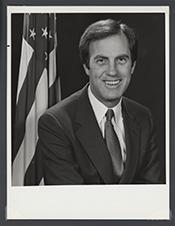
870 records where Rep. Hartnett, Thomas F. [R-SC-1] is listed as a sponsor, author, or other actor. Search with topics and years
United States · United States Congress · 6 June 1984
Designates the month of August 1984 as Ostomy Awareness Month.
United States · United States Congress · 6 June 1984
Sunshine Resolution of 1984 - Amends Rule XXVIII of the Rules of the House of Representatives to provide that, after the approval of any matter, House conferees shall be entitled to three days in which to file supplemental, minority, or additional views. Establishes Rule LI which requires the Speaker of the House to provide for printing of the floor schedule in the Congressional Record at least two legislative days in advance. Amends Rule XXVII to require the printing in the Record of the names of Members who have signed, or withdrawn a signature to, a motion to discharge a committee from consideration of a bill or resolution, whenever 100 Members have signed such a motion. Amends Rule I to require the broadcasting system to include frequent, wide-angle visual coverage of the chamber when the House is in session. Amends Rule X to provide for the compilation of an oversight agenda resolution. Requires the House to complete action on such resolution within 100 days after the Congress convenes. Amends Rule XI to prohibit proxy voting in committees. Establishes Rule LII which requires the body of the Congressional Record for the House to contain an accurate and verbatim account of remarks actually delivered on the floor. Limits extension and revision of remarks delivered on the floor to the correction of grammatical and typographical errors. Authorizes Members, by unanimous consent, to make insertions of remarks not actually delivered on the floor and requires such insertions to be clearly distinguished from verbatim remarks. Amends Rule X to require committee ratios to reflect the majority to minority party ratio in the House.
United States · United States Congress · 5 June 1984
Designates January 27, 1985, as National Jerome Kern Day.
United States · United States Congress · 30 May 1984
Deauthorizes the project to construct an annex to the U.S. Post Office and Courthouse Building in Charleston, South Carolina.
United States · United States Congress · 24 May 1984
Amends the Sikes Act to prohibit the sale of land or logs by the President and the leasing of land by a military department on a military reservation which is subject to a cooperative plan providing for the development, maintenance, and coordination of wildlife, fish, and games conservation and rehabilitaion on such reservation unless the effects of such sale or lease will improve wildlife, fish, and game conservation and rehabilitation in a manner consistent with such plan. Provides that contracts for services to implement and enforce cooperative plans for military reservations may be made only with Federal and State agencies having responsibility for fish or wildlife conservation or management. Requires that the commanding officers of military reservations ensure that implementation and enforcement services for such plans are provided by Department of Defense personnel with professional training in those services. Revises the requirements for the distribution of profits from the sale of lands or logs from a military installation or facility.
United States · United States Congress · 24 May 1984
Designates August 1984 as Polish American Heritage Month.
United States · United States Congress · 23 May 1984
Designates the week beginning on September 9, 1984, as National Community Leadership Week.
United States · United States Congress · 17 May 1984
American Passbook Savings Act of 1984 - Amends the Internal Revenue Code to exclude from gross income up to $5,000 ($10,000 for joint returns) of the interest earned on a passbook savings account.
United States · United States Congress · 10 May 1984
Textile Fiber and Wool Products Identification Improvement Act - Amends the Textile Fiber Products Identification Act and the Wool Products Labeling Act of 1939 to require a textile fiber or wool product to be so labeled if it has been processed or manufactured in the United States. Requires the product, as well as the package in which it is contained, to be labeled as to country of origin. Provides that such requirement shall not be construed as requiring such labeling on each hosiery product contained in a package as long as such package is labeled. Requires catalog sales descriptions and other advertisements for textile and wool products to contain country of origin information. Requires that the identification label on imported textile fiber or wool products be affixed to the most conspicuous place on the inner side of the product.
United States · United States Congress · 10 May 1984
Designates 1984 as Year of the St. Lawrence Seaway and June 27, 1984, as St. Lawrence Seaway Day.
United States · United States Congress · 10 May 1984
Designates the week beginning on October 7, 1984, as National Neighborhood Housing Services Week.
United States · United States Congress · 10 May 1984
Expresses the sense of the Congress that the President should support the efforts of the Catholic Bishops of Nicaragua to bring about a national reconciliation between the struggling factions in that country in order to establish democratic harmony.
United States · United States Congress · 9 May 1984
Public Housing Rental Stabilization Act - Amends the United States Housing Act of 1937 to authorize any public housing agency to require tenants of one of its projects to pay monthly rent based on the unsubsidized rents for comparable dwelling units in the area, the average monthly amount of debt service and operating expenses attributable to similar units of its other projects, or other relevant factors. Limits such rent to the amount payable under current provisions of such Act and the maximum amount that is approved by the Secretary of Housing and Urban Development.
United States · United States Congress · 26 April 1984
Fair and Simple Tax Act of 1984 - Title I: Reduction of Individual and Corporate Tax Rates - Subtitle A: Reduction of Rates - Amends the Internal Revenue Code to revise individual tax rates. Imposes a tax rate of 25 percent on the taxable income of every individual. Imposes a tax rate of 15 percent on corporate income which does not exceed $50,000 and a tax rate of 30 percent on corporate income exceeding $50,000. Subtitle B: Increase in Amount of Personal Exemption and Zero Bracket Amount - Increases the amount of the personal exemption to $2,000. Increases the "zero bracket amount" to $2,700 for single taxpayers and $3,500 for a joint return or surviving spouse. Provides for an annual adjustment in the "zero bracket amount" by a cost-of-living adjustment based on the Consumer Price Index. Subtitle C: Employment Income Exclusion Established - Allows an individual taxpayer to exclude 20 percent of the amount received during the taxable year by such individual as employment income. Provides that the exclusion is phased out when the individual's wages and salaries exceed the Federal Insurance Contributions Act maximum wage base for the calendar year. Excludes all of an individual's employment income where the employment income for the taxable year is $10,000 or less ($20,000 or less in the case of a joint return). Subtitle D: Repeals Related to Reduction in Rates - Repeals provisions relating to: (1) tax tables for individuals; (2) personal service corporations; (3) special averaging rules for lump-sum distributions; (4) accumulated corporate surplus; (5) personal holding companies; (6) income averaging; and (7) graduated corporate tax rates. Applies the trust throwback rules only to amounts distributed from a foreign trust. Title II: Base Broadening - Subtitle A: Credits - Repeals the general tax credit, the investment tax credit, and the income tax credits relating to: (1) the elderly and the permanently and totally disabled; (2) investments in certain depreciable property; (3) work incentive expenses; (4) contributions to candidates for public office; (5) home purchases; (6) expenses for household and dependent care services necessary for gainful employment; (7) employment of certain new employees; (8) residential energy credit; (9) producing fuel from a nonconventional source; (10) alcohol used as fuel; (11) research activities; (12) employee stock ownership credit; and (13) clinical testing for certain drugs. Subtitle B: Exclusions - Repeals the tax exclusion for: (1) compensation for injuries or sickness; (2) amounts received under accident and health plans; (3) partial exclusion of dividends received by individuals; (4) amounts received under qualified group legal service plans; (5) qualified transportation furnished by an employer; (6) dividend reinvestment in public utilities; (7) partial exclusion of interest as in effect in 1985; and (8) payments to encourage exploration, development, and mining for defense purposes. Reduces the maximum amount of the earned income credit from $5,000 to $4,000. Treats as taxable income: (1) unemployment compensation; (2) the annual increase in the cash surrender value of life insurance policies; and (3) interest on industrial development bonds and mortgage subsidy bonds. Provides that the transfer of a corporation's stock in satisfaction of indebtedness will be treated as having satisfied the indebtedness with money equal to the fair market value of the stock. Provides a limited exclusion from income for scholarships and fellowships. Amends the Merchant Marine Act to repeal the tax exemption for deposits into, and withdrawals from, a capital construction fund. Subtitle C: Deductions - Repeals the tax deductions for: (1) the additional exemption for the elderly and the blind; (2) unused investment credits; (3) two-earner married couples; and (4) adoption expenses. Provides that the deduction for losses shall be limited to capital losses. Increases the floor on the deduction for medical and dental expenses from five to 10 percent. Subtitle D: Adjustment to Basis; Changes in Certain Special Capital Gains Treatment Provisions - Allows an inflation adjustment, based on the gross national product deflator, to the adjusted basis of capital assets which have been held for more than one year at the time of sale or exchange solely for the purpose of determining gain or loss on such assets. Excludes from such treatment: (1) creditor's interest; (2) options; (3) net lease property in the case of the lessor; (4) preferred stock with fixed dividends; and (5) stock in small business corporations and certain foreign corporations. Allows the Secretary of the Treasury to disallow all or part of an adjustment where there was a transfer to increase the inflation adjustment or depreciation allowance. Reduces the alternative tax rate for corporations from 28 to 20 percent. Repeals the deduction for individuals for capital gains. Repeals the limitation on the deduction of capital losses by individuals. Permits the carryover of the excess of capital losses over gross income by individuals. Applies the rules for capital gains and losses only to corporations relating to: (1) the sale of land with an unharvested crop; (2) the disposal of coal or domestic iron ore; (3) the gain or loss in the case of timber, coal, or domestic iron ore; (4) the distribution of property; (5) collapsible partnerships; (6) property used in the trade or business and involuntary conversions; (7) the sale or exchange of patents; (8) amortization in excess of depreciation; (9) gain from the sale of depreciable property between certain related taxpayers; (10) gain from dispositions of certain depreciable property; (11) gain on foreign investment company stock; (12) an election by foreign investment companies to distribute income currently; (13) gain from certain sales or exchanges of stock in certain foreign corporations; (14) gain from certain sales or exchanges of patents, etc., to foreign corporations; (15) gain from disposition of certain depreciable realty; (16) gain from disposition of property used in farming where farm losses offset nonfarm income; (17) gain from disposition of farm land; (18) gain from disposition of interest in oil, gas, or geothermal property; and (19) gain from disposition of property acquired with certain cost-sharing payments. Provides a transition period of ten years beginning January 1, 1985, in which a taxpayer may elect to not apply the inflation adjustment to the basis of capital assets for purposes of determining capital gain or loss. Provides that when such election is made, 25 percent of any gain from the sale or disposition of such asset shall be excludible from gross income, or 25 percent of any loss shall not be deductible. Title III: Capital Cost Recovery - Subtitle A: Simplified Cost Recovery System for Depletable Property - Allows individuals and corporations a depletion deduction for qualified depletable property equal to an applicable percentage determined by the cost recovery tables for cost recovery property. Requires qualified depletable property be assigned to one class of recovery property. Uses the anticipated productive life of such depletable property, rather than the present class life, for making the assignment. Assigns oil, gas wells, or wells drilled for any geothermal deposit to the class of three year property. Provides that these rules shall not deny any deduction allowable for loss sustained by reason of the abandonment of a nonproductive well or mine. Subtitle B: Other Changes - Repeals the income tax deductions for: (1) research and experimental expenditures; (2) soil and water conservation expenditures; (3) depreciation or amortization of improvements made by a lessee on a lessor's property; (4) expenditures by farmers for clearing land; (5) amortization of reforestation expenditures; (6) start-up expenditures; (7) intangible drilling and development costs in the case of oil and gas wells and geothermal wells; (8) percentage depletion; (9) development expenditures; and (10) deduction and recapture of certain mining exploration expenditures. Allows a ten year period for the amortization of construction period interest and taxes. Allows a deduction for circulation expenses for a newspaper, magazine, or other periodical ratably over a five-year period. Excludes amounts chargable to a capital account from such treatment. Title IV: Miscellaneous Provisions - Subtitle A: Foreign Income - Repeals the domestic international sales corporations (DISC) provisions for taxable years beginning after December 31, 1984. Subtitle B: Other Miscellaneous Provisions - Requires farmers to compute their taxable income using the accrual method of accounting with the capitalization of preproduction expenses. Exempts taxpayers who do not have gross receipts of $1,000,000. Requires farming syndicates to use the accrual method of accounting without regard to gross receipts. Requires the recognition of the gain or loss on distributions of property by corporations. Eliminates the special bad debt reserves of financial institutions. Title V: Effective Dates - Sets forth the effective dates of the provisions of this Act.
United States · United States Congress · 26 April 1984
Expresses the sense of the Congress that the President should express to the Soviet Union the U.S. disapproval of the Soviet Union's: (1) systematic nondelivery of U.S. mail addressed to persons in the Soviet Union; and (2) violation of specified treaties governing international mail. States that at the meeting of the Congress of the Universal Postal Union in Hamburg, Germany, U.S. representatives should; (1) bring such violations to the attention of the Union; (2) request that an investigation of such violations be conducted by the Union; and (3) consider possible sanctions against the Soviet Union for such violations.
United States · United States Congress · 12 April 1984
Federal Reserve Reform Act of 1984 - Amends the Federal Reserve Act to place the Secretary of the Treasury on the Federal Open Market Committee. Changes the term of office of the Chairman of the Board of Governors of the Federal Reserve System from four years to the period ending on January 31 of the first calendar year beginning after the calendar year during which the term of the President who appointed the Chairman is scheduled to expire. Provides that in the event of the absence or unavailability of the chairman, the vice chairman (or in the vice chairman's absence another member of the Board) may be designated acting chairman. Provides that the vice chairman shall perform the duties of the chairman until a successor is appointed in the event of the chairman's death or resignation. Provides that in the case of the death or resignation of the chairman and the vice chairman or a vacancy in both offices, the member of the Board with the most years of service shall perform the duties of the chairman until a successor is appointed. Changes from 14 years to seven years the term of office of members of the Federal Reserve Board. Requires each change, of any nature whatsoever, in the intermediate targets for monetary policy that is adopted by the Federal Open Market Committee to be disclosed to the public on the date of adoption. Defines "intermediate targets" as any policy objectives regarding monetary aggregates, credit aggregates, prices, interest rates, or bank reserves.
United States · United States Congress · 12 April 1984
Balanced Monetary Policy and Price Stability Act of 1984 - Amends the Federal Reserve Act to make it the policy of the Federal Open Market Committee to maintain low interest rates and stable exchange rates, and to encourage strong economic growth, to the extent that such policy is consistent with long-term price stability. Requires the Chairman of the Board of Governors of the Federal Reserve System and the Secretary of the Treasury to develop a price index to assist the Committee in establishing intermediate targets for the conduct of monetary policy. Requires the Chairman and the Secretary to establish a target range for such price index which will not result in a decline in the general level of prices. Requires the Committee, if the price index rises above such target range, to restrict the availability of bank reserves, or raise their cost, or both, and if the index falls below the target to increase the availability of bank reserves, or reduce their cost, or both. Permits a new target range to be set after a declaration of the existence of extraordinary circumstances by the Chairman and the Secretary. Repeals the requirements of such Act concerning the targeting of monetary aggregates. Directs the Secretary to seek the establishment of an international advisory task force, and ultimately an international monetary conference, consisting of representatives of the major industrial nations. Declares the purposes of such task force and conference to be: (1) the improvement of price stability throughout the world; (2) the improvement of the stability of currency exchange rates; and (3) the improvement of the prospects for liberal trade and strong noninflationary economic growth.
United States · United States Congress · 12 April 1984
Designates the week beginning on November 11, 1984, as National Blood Pressure Awareness Week.
United States · United States Congress · 12 April 1984
Designates the week of May 13 through May 19, 1984, as Smokey Bear Week.
United States · United States Congress · 11 April 1984
Ten Percent Flat Tax Rate Act - Title I: Ten Percent Tax Rate For All Individuals And Unincorporated Associations - Amends the Internal Revenue Code to impose a flat rate tax of ten percent on the adjusted gross income of individuals and unincorporated associations. Defines "unincorporated association" as any taxable entity which is not incorporated pursuant to the laws of any State, the United States, or any foreign nation. Repeals the income tax credits for: (1) the elderly; (2) contributions to candidates for public office; (3) the purchase of a new principal residence; (4) dependent care expenses; (5) earned income; and (6) residential energy conservation expenses. Repeals the alternative minimum tax for taxpayers other than corporations. Provides that specified income tax credits shall not be available to individuals and unincorporated associations. Excludes from the gross income of individuals or unincorporated associations: (1) alimony and separate maintenance payments; (2) scholarship payments and fellowship grants; (3) social security payments; (4) excess social security tax payments; (5) payments received for disability; (6) payments received pursuant to the Railroad Retirement Act; (7) certain civil service retirement benefits; and (8) interest payments received on State and municipal bonds. Defines "adjusted gross income" in the case of an individual or unincorporated association as gross income minus: (1) trade or business deductions; (2) trade and business deductions of employees; and (3) expenses relating to income production. Disallows certain exclusions from the gross income of individuals and unincorporated associations, including exclusions for: (1) certain death payments; (2) gifts and inheritances; (3) injury or sickness compensation; (4) employer contributions to accident and health plans; (5) partial dividends; (6) contributions to corporation capital; and (7) dependent care assistance. Allows deductions from the adjusted gross income of individuals for personal exemptions. Sets the amounts of such exemptions at: (1) $2,000 for the taxpayer and spouse; and (2) $2,000 for each dependent of the taxpayer. Provides for cost-of-living adjustments for such amounts. Disallows all itemized deductions for individuals and unincorporated associations except those for interest, taxes, charitable contributions, and certain retirement savings. Repeals the income tax deductions for: (1) medical and dental expenses; (2) alimony payments; (3) taxes, interest, and business depreciation by cooperative housing tenant-stockholders; (4) two-earner married couples; and (5) adoption expenses. Imposes a flat rate tax of ten percent on the gross income of estates and trusts. Repeals special rules, income tax deductions, and income tax credits applicable to estates and trusts. Revises rules for determining the income tax of a partner to provide that each partner shall take into account separately his or her distributive share of the partnership's: (1) gains and losses; (2) taxes; and (3) taxable income or loss. Provides that the foreign tax credit shall not apply to unincorporated associations. Repeals the estate tax. Title II: Tax Amnesty - Provides for a one-time amnesty from criminal and civil tax penalties for taxpayers who: (1) file a written statement with specified information concerning any underpayment of tax; (2) pay the amount of such underpayment when filing the statement; and (3) within 30 days of notification of the amount of interest payable on any tax delinquent amount, pays the full amount of such interest or delinquency. Permits installment payments of tax due in certain cases. Disallows an amnesty period for taxpayers against whom a tax deficiency has already been assessed, who have committed fraud in seeking amnesty, or against whom a criminal investigation is pending. Establishes a special fund in the Treasury for taxes recovered under such amnesty program. Requires that revenues from such fund be used to offset possible revenue losses.
United States · United States Congress · 11 April 1984
Designates the week of September 16 through September 22, 1984, as Emergency Medicine Week.
United States · United States Congress · 11 April 1984
Designates the week of November 19 through November 25, 1984, as National Adoption Week.
United States · United States Congress · 27 March 1984
Designates the week of September 23 through September 29, 1984, as National Drug Abuse Education and Prevention Week.
United States · United States Congress · 26 March 1984
Declares that it is the sense of the House of Representatives to urge the various House committees to apply an across-the-board budget-freeze approach to their formulation of the FY 1985 budget.
United States · United States Congress · 21 March 1984
Authorizes and requests the President to designate the week of May 27 through June 2, 1984, as National Animal Health Week.
United States · United States Congress · 8 March 1984
National Dividend Act of 1984 - Establishes a program for the distribution of corporate income tax, capital gains tax, and insurance company income tax revenues to the registered voters of each State in the form of dividend payments. Directs the Secretary of the Treasury to pay to the chief financial officer of each State an amount equal to the National Dividend Payment, as computed under this Act, multiplied by the number of registered voters in such State. Establishes the National Dividend Payment Trust Fund. Directs the payment of specified amounts to the Trust Fund between FY 1985 and 1988. Establishes a National Dividend Review Board to review the manner in which payments are made from the Trust Fund and to make investments of trust funds which are not required to meet current expenses. Amends the Internal Revenue Code to exclude from gross income all dividend income, including dividends received under this Act, received by a taxpayer from a domestic corporation. Increases the income tax deduction to corporations for dividends received on the preferred stock of a public utility. Prohibits an increase of corporate income tax rates above 46 percent. Limits increases in Federal expenditures during the five year period beginning after the date of the enactment of this Act to an amount which is attributable to inflation.
United States · United States Congress · 8 March 1984
Employee Stock Ownership Act of 1984 - Amends the Internal Revenue Code to provide for the nonrecognition of gain on stock sold to: (1) an employee stock ownership plan; (2) a tax credit employee stock ownership plan; or (3) an eligible worker-owned cooperative, if within a specified period of time qualified replacement property is purchased by the taxpayer. Defines "qualified replacement property" as any security issued by a domestic corporation: (1) which does not have passive investment income in excess of a specified limitation; and (2) the equity capital of which does not exceed $10,000,000. Allows an income tax deduction for cash dividends paid with respect to employer stock which is held by a tax credit employee stock ownership plan or an employee stock ownership plan which is a stock bonus plan. Extends the partial exclusion for dividends received to such amounts. Excludes from gross income 50 percent of interest received by a bank, an insurance company, or other lender on loans used by an employee stock ownership plan to acquire employer securities. Provides for a reduction in the capital gains tax with respect to sales of stock in employee-owned corporations. Sets forth special rules for the calculation of such reduction. Relieves an estate of liability for payment of the estate tax to the extent that amounts of the tax are attributable to employer securities transferred to an employee stock ownership plan pursuant to a written agreement guaranteeing that the tax will be paid by the plan in an amount equal to the lesser of: (1) the amount of the tax imposed upon the acquired employer securities; or (2) the amount of the tax imposed on the gross estate reduced by the sum of allowable credits. Permits the payment of such tax in installments. Exempts such transfers from the tax on prohibited transactions. Treats as charitable contributions eligible for a tax deduction certain contributions to an employee stock ownership plan. Specifies a qualification test for contributions to receive such treatment. Allows certain small business corporations (subchapter S corporations) to maintain a tax credit employee stock ownership plan or an employee stock ownership plan. Permits recaptured employee stock ownership plan investment tax credits to be used to reduce contributions to payroll based tax credit employee stock ownership plans.
United States · United States Congress · 8 March 1984
Authorizes and requests the President to designate the month of May 1984 as National Physical Fitness and Sports Month.
United States · United States Congress · 7 March 1984
Amends the Internal Revenue Code to repeal the requirement for filing informational returns regarding remuneration for services and direct sales. Repeals the requirement for backup withholding on payments of remuneration for services.
United States · United States Congress · 5 March 1984
Petroleum Marketing Practices Act Amendments of 1984 - Amends the Petroleum Marketing Practices Act to: (1) redefine the term "failure"; and (2) define the terms "constructive termination" and "similar motor fuel marketing operations." Defines "constructive termination" to mean: (1) the failure by the franchisor to supply the franchisee with motor fuel in an amount equal to the minimum specified in the franchise agreement; (2) the failure by the franchisor to make motor fuel available to the franchisee such minimum amount at a price which enables the franchisee to compete with similar motor fuel marketing operations of the franchisor; or (3) any adjustment in the quantity of fuel a franchisee is required or entitled to receive unless the franchisor can show that either the adjustment is applied equally to all franchisees and marketing operations of the franchisor within the relevant geographic area, or, if it is a downward adjustment, the franchisor can show that it is reasonable. Prohibits a motor fuel franchisor from constructively terminating a franchise. Requires a franchisor, in certain circumstances prior to terminating a franchise, to make a bona fide reasonable offer to transfer the franchise to the franchisee. Permits nonrenewal of a franchise relationship if the franchisor and franchisee cannot agree to changes or additions to the provisions of the franchise which are fair and reasonable. Prohibits nonrenewal because of the failure of the franchisor and franchisee to agree to changes or additions to the provisions of the franchise which relate to materially altering, adding to, or replacing the marketing premises. Permits nonrenewal, in a situation where renewal is presently permitted, when it would be uneconomical to the franchisor despite any reasonable changes acceptable to the franchisee, only if the franchisor demonstrates that the nonrenewal is not being made with the intent of avoiding competition with the franchisee. Requires a franchisor to notify a franchisee, 90 days prior to the franchisor's final opportunity to exercise an option to buy or to continue leasing the land where the franchise is located, of the name, address, and phone number of the owner or holder of the underlying lease. Provides that if a franchisee enters into an agreement with the owner or lessor to maintain possession of the premises, then the franchise agreement may continue, at the option of the franchisee. Requires any franchisor who competes with its own franchisees to supply motor fuel to its franchisees at a price and on terms which reasonably enable the franchisee to compete with the franchisor. States that the burden of proof is on the franchisor to show lack of competition. Revises the definition of "trial franchise." Permits a franchisee to maintain a civil action against a franchisor if the franchisor constructively terminates the franchise. States that the death, retirement, or disability of a franchisee shall not be grounds for termination or nonrenewal of the franchise if, prior the franchisee's death, retirement, or disability, the franchisee provides the franchisor with a succession plan. Permits termination or nonrenewal if: (1) the franchisor notifies the franchisee in writing, within 30 days of receipt of the plan, of the franchisor's rejection of the plan; (2) the rejection notice includes reasons for the rejection; and (3) the rejection is reasonable. Provides a franchisee with the right to sell or otherwise transfer the franchise subject to the approval of the franchisor. Prohibits approval from being withheld unreasonably.
United States · United States Congress · 5 March 1984
Amends the Internal Revenue Code to authorize the Secretary of the Treasury to prescribe regulations exempting retirees or individuals over age 65 from interest penalties with respect to any underpayment of estimated tax. Requires that such underpayment be due to reasonable cause (defined to include mistake or ignorance of the law) and not to willful neglect.
United States · United States Congress · 5 March 1984
Declares that Congress asks the American people to take cognizance of the commemoration of the 40th anniversary of the liberation of Rome on June 2 through June 3, 1984.
United States · United States Congress · 29 February 1984
Repeals the provisions of the Internal Revenue Code which would include one-half of social security and tier 1 railroad retirement benefits in the gross income of the taxpayer. Provides that one-half of social security benefits paid to nonresident aliens is includible in gross income of the nonresident alien.
United States · United States Congress · 29 February 1984
Authorizes and requests the President to designate the week beginning on November 18, 1984, as National Family Week.
United States · United States Congress · 28 February 1984
Grants a Federal charter to the Women's Army Corps Veterans' Association.
United States · United States Congress · 28 February 1984
Designates the month of June 1984 as Veterans' Preference Month.
United States · United States Congress · 28 February 1984
Balanced Budget Constitutional Convention Convening Resolution - Requires that, within 30 days of the receipt of any additional application of a State legislature calling for the convening of a constitutional convention on a balanced budget amendment, the Vice President in his capacity as President of the Senate determine whether or not the application is made in the manner described by this resolution. Requires each such determination to be published in the Congressional Record. Requires the Vice President to convene such a convention in Philadelphia, Pennsylvania, not later than 180 days after the date of the publication of a second additional State application. Requires each State to appoint delegates to the constitutional convention in a number equal to the number of Representatives and Senators to which the State is entitled in Congress. Sets forth procedures for the proceedings of the convention and adoption of amendments. Requires the presiding officer of the convention, within 30 days after the termination of proceedings, to transmit all records of official proceedings of the convention to the Archivist of the United States.
United States · United States Congress · 27 February 1984
Designates the month of September 1984 as National Sewing Month.
United States · United States Congress · 23 February 1984
Amends the Federal criminal code to establish criteria for the imposition of the death penalty for Federal crimes. Requires the Government, for any offense punishable by death, to serve notice upon the defendant a reasonable time before trial or acceptance of a plea that it intends to seek the death penalty and the aggravating factors upon which it will rely. Requires a separate sentencing hearing before a jury, or the court upon motion by the defendant, when the defendant is found guilty or pleads guilty to an offense punishable by death. Allows the defendant and the Government to present any information relevant to sentencing, without regard to the rules of evidence, but permits information to be excluded where its probative value is substantially outweighed by the danger of unfair prejudice, confusion of the issues, or misleading the jury. Specifies mitigating factors which the defendant must establish by a preponderance of the information and aggravating factors which the Government must prove beyond a reasonable doubt. Includes as threshold, aggravating factors for homicide that the defendant: (1) intentionally killed the victim; (2) intentionally inflicted serious bodily injury which resulted in the death of the victim; (3) intentionally participated in an act which he reasonably should have known would create grave risk of death to a person and the victim did die as a direct result of the act; or (4) attempted to kill the President of the United States. Sets forth special aggravating factors with respect to the crimes of treason, espionage, homicide, and attempted murder of the President. Includes among the mitigating factors that the defendant was less than 18 years old at the time of the crime. Directs the court, or the jury by unanimous vote, to impose the death penalty upon a finding that such sentence is justified based on consideration of both the aggravating and mitigating factors. Requires the court to instruct the jury not to consider the race, color, national origin, creed, or sex of the defendant in its consideration of the sentence. Limits the circumstances under which the offense of delivering defense information to aid foreign governments is punishable by death. Allows the death penalty to be imposed for the murder of foreign officials and for an offense of kidnapping resulting in the death of any person. Eliminates the death penalty for the crime of rape. Authorizes the death penalty for the crime of attempting to kill the President of the United States if the attempt results in bodily injury to the President or otherwise comes dangerously close to causing his death. Establishes procedures for appeal from a death sentence. Requires the Court of Appeals, upon considering the record and the information and procedures of the sentencing hearing, to affirm the decision if: (1) the sentence was not imposed under influence of passion, prejudice, or arbitrariness; and (2) the information supports the finding of aggravating factors or the absence of mitigating factors. Requires the court to provide a written explanation of its determination. Provides for the death penalty for murders committed by prisoners in Federal correctional institutions.
United States · United States Congress · 23 February 1984
Directs the President to: (1) secure from the Indochina nations a full accounting of Americans captured or missing as a result of the Vietnam conflict; and (2) work for the release of captive Americans and the return of the remains of those American servicemen and civilians who died in Southeast Asia. Requires the President to submit two reports to Congress on American POW/MIAs in Southeast Asia.
United States · United States Congress · 22 February 1984
Designates the week of October 21 through October 27, 1984, as Lupus Awareness Week.
United States · United States Congress · 9 February 1984
Federal Money Management Act of 1984 - Requires custodians of public money, including a disbursing official having public money not for current expenditure, to deposit funds not later than three business days after the date of receipt.
United States · United States Congress · 9 February 1984
Authorizes the Law Enforcement Officers Memorial Fund, Incorporated to erect a National Law Enforcement Heroes Memorial on public grounds in the District of Columbia or its environs in honor and recognition of law enforcement officials in the United States who died in the line of duty. Directs the Secretary of the Interior, in consultation with the Fund, to select with the approval of the Commission of Fine Arts and the National Capital Planning Commission, a suitable site on public grounds for such memorial. Subjects the design and any plans for the memorial to the approval of the Secretary of the Interior, the Commission of Fine Arts, and the National Capital Planning Commission. Declares that no moneys belonging to the United States or the District of Columbia shall be expended for the erection of such memorial other than expenses incurred in the process of site selection and approval of design and plans.
United States · United States Congress · 9 February 1984
Authorizes and requests the President to designate May 6 through May 13, 1984, as Jewish Heritage Week.
United States · United States Congress · 8 February 1984
Designates the week of April 29 through May 5, 1984, as National Week of the Ocean.
United States · United States Congress · 8 February 1984
Designates 1984 as the Year of the Secretary.
United States · United States Congress · 8 February 1984
Designates 1984 as the Year of the Secretary.
United States · United States Congress · 8 February 1984
Authorizes and requests the President to designate the month of January as National Eye Health Care Month.
United States · United States Congress · 8 February 1984
Declares that Congress reaffirms its commitment to the principle that funds for the support of scientific research projects and facilities should be awarded solely on the basis of scientific merit as determined in a fair and open competition review by peers. Urges interested parties to refrain from action that would bypass such a process.
United States · United States Congress · 7 February 1984
Declares two named individuals to have been lawfully admitted to the United States for permanent residence under the Immigration and Nationality Act.