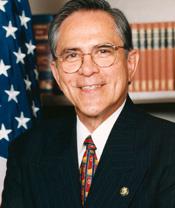
United States · United States Congress · 21 September 2000
School and Day-Care Lead-Based Paint Reduction Act of 2000 - Authorizes the Secretary of Housing and Urban Development to make matching grants to States, local governments, and local educational agencies to evaluate and reduce lead-based paint hazards at public elementary schools and licensed child day-care facilities. Authorizes appropriations.
United States · United States Congress · 21 September 2000
Lance Armstrong Congressional Gold Medal Act - Authorizes the President to present a congressional gold medal to Lance Armstrong, in recognition of his outstanding performance as two-time winner of the Tour de France and his courageous spirit in overcoming cancer. Authorizes the Secretary of the Treasury to strike and sell bronze duplicates. Requires deposit of sale proceeds in the United States Mint Public Enterprise Fund.
United States · United States Congress · 19 September 2000
Veterans' Oral History Project Act - Requires the Director of the American Folklife Center at the Library of Congress to establish an oral history program to collect video and audio recordings of personal histories and testimonials of American war veterans.
United States · United States Congress · 14 September 2000
Needlestick Safety and Prevention Act - Revises the bloodborne pathogens standard, in effect under the Occupational Safety and Health Act of 1970 (OSHA), to include safer medical devices, such as sharps with engineered sharps injury protections and needleless systems, as examples of engineering controls designed to eliminate or minimize occupational exposure to bloodborne pathogens through needlestick and other percutaneous injuries. Requires certain employers to: (1) review and update exposure control plans to reflect changes in technology that eliminate or reduce such exposure, and document their consideration and implementation of appropriate commercially available and effective safer medical devices for such purpose; (2) maintain a sharps injury log, noting the type and brand of device used, where the injury occurred, and an explanation of the incident (exempting employers who are not required to maintain specified OSHA logs); and (3) seek input on such engineering and work practice controls from the affected health care workers (exempting employers who are not required to establish exposure control plans). Requires such modifications of the standard to: (1) be in force until superseded by regulations promulgated by the Secretary of Labor under OSHA; and (2) take effect without regard to specified procedural requirements.
United States · United States Congress · 6 September 2000
Department of Veterans Affairs Health Care Personnel Act of 2000 - Title I: Personnel Matters - Revises pay adjustment authority for nurses employed by the Department of Veterans Affairs to require the director of such Department health-care facility to use third-party industry wage surveys in making such adjustments. Prohibits any adjustment from reducing the rate of basic pay applicable to any nurse grade. Prohibits a director, in determining whether to carry out an adjustment, from considering the absence of a current recruitment or retention problem for personnel in that position. Requires a director to make such determination based on whether there is a significant pay-related staffing problem for such position at that facility. Authorizes the Department's Under Secretary for Health to modify any adjustment determination made by a facility director. Requires each director to report annually to the Secretary of Veterans Affairs on staffing for covered positions at that facility. Requires the Secretary to report annually on such staffing to the congressional veterans' committees. Makes annual (currently terminated in 1993) a reporting requirement from the Secretary to the veterans' committees regarding pay adjustments. Requires the Under Secretary to ensure that: (1) the director of a geographic service area, in formulating policy for the provision of patient care, consult regularly with a senior nurse executive(s); and (2) the director of a health-care facility include a registered nurse on any committee providing recommendations or decisions on medical center operations or policies affecting clinical services, clinical outcomes, budget, or resources. (Sec. 102) Increases the special pay for dentists for: (1) full-time status; (2) completing a post-graduate year of accredited hospital-based training; (3) length-of-service pay; (4) scarce specialty pay; (5) service in a geographic location in which there exists extraordinary difficulties in the recruitment and retention of qualified dentists; and (6) service in certain executive positions. Credits toward civil service retirement calculations 25 percent of the special pay for length-of-service pay for each two years that the dentist completes as a dentist in the Veterans Health Administration (VHA). (Sec. 103) Exempts VHA pharmacists from a required ceiling on special salary rates for certain VHA health professionals. (Sec. 104) Requires a physician assistant with appropriate experience to advise the Under Secretary on all matters relating to the utilization and employment of VHA physician assistants. (Sec. 105) Revises generally provisions regarding the temporary appointment of graduates of physician assistant training programs. Provides a three-year term for temporary full-time appointments of certain medical support personnel (with authorized renewals for additional three-year periods). (Sec. 106) Requires VHA social workers to be licensed or certified to independently practice social work in a State (with an authorized waiver on an individual basis for a reasonable period). (Sec. 107) Amends the Department of Veterans Affairs Employment Reduction Assistance Act of 1999 to: (1) revise the number of authorized participants in a plan for voluntary separation incentive payments; (2) revise the percentage of required agency contributions to the Civil Service Retirement and Disability Fund to cover such payments; and (3) extend payment authority through 2002. Title II: Construction Authorization - Authorizes the Secretary to carry out major medical facility projects at Department medical centers in Palo Alto, California, Miami, Florida, and Long Beach, California. Authorizes the Secretary to carry out a renovation project at the Department medical center in Murfreesboro, Tennessee. (Sec. 202) Authorizes appropriations for FY 2001 and 2002 for the Construction, Major Projects, account for such projects. Title III: Military Service Issues - Directs the Secretary to ensure that: (1) a protocol is used during at least one clinical evaluation of a patient to identify pertinent military experiences and exposures that may contribute to the health of the patient; and (2) such information is included in the patient's medical records. Requires a report from the Secretary to the veterans' committees on the feasibility and desirability of using a computer-based system in conducting such evaluations. (Sec. 302) Directs the Secretary to contract with an appropriate entity to conduct a follow-up study on post-traumatic stress disorder in Vietnam veterans. Requires a report to the veterans' committees. Title IV: Medical Administration - Authorizes the Secretary to carry out a pilot program in not more than four geographically dispersed areas to improve access to and coordination of inpatient care of eligible veterans. Terminates the pilot program on September 30, 2005. Authorizes the Secretary, under such program to pay the cost of hospital care and medical services furnished on an inpatient basis in a non-Department hospital to a veteran participant. Directs the Secretary to limit program care and services to general medical and surgical services, and to require that such services be provided only upon preauthorization by the Secretary. Makes eligible for the program a veteran who: (1) is enrolled to receive medical services from a nearby Department outpatient clinic; (2) has received care within 24 months preceding the veteran's application for program enrollment (3) requires such care and services for a non-service-connected condition and could not receive such care and services from a Department clinic; and (4) elects to receive such care and services under an entitled health plan. Directs the Secretary to ensure that at least 15 percent of program participants are veterans without a health care plan. Requires two reports from the Secretary to the veterans' committees on program implementation and operation. Limits to $50 million the total authorized program expenditure for any fiscal year. (Sec. 402) Authorizes the payment of veterans' disability compensation for veterans who are disabled during participation in a compensated work therapy program. (Sec. 403) Extends through December 31, 2005, the authority of the Secretary to establish nonprofit research and education corporations. (Sec. 404) Authorizes the Secretary to furnish temporary lodging in Fisher houses (guest houses) or other appropriate facilities, in connection with the examination, care, and treatment of a veteran, to: (1) a veteran who must travel a significant distance to receive such care and treatment; and (2) a family member and others who accompany such veteran and provide familial support. Authorizes the Secretary to establish charges for such lodging. (Sec. 405) Extends through 2004 an annual reporting requirement describing activities of the Committee on Care of Severely Chronically Mentally Ill Veterans. (Sec. 406) Excludes from the right of the Department to recover certain costs from a State for veterans' care facilities not so used for at least 20 years the establishment and operation of an outpatient clinic at such a facility. (Sec. 407) Prohibits the Secretary from entering into an enhanced-use lease of Department property until 90 days after notifying the veterans' committees of the intention to designate property for such use. (Sec. 409) Authorizes the Secretary to employ veterans claims examiners (also known as veterans service representatives) on a fee basis. Requires two reports on the implementation of such authority. (Sec. 410) Directs the Secretary to release a reversionary interest in certain real property in Johnson City, Tennessee, previously transferred to the State of Tennessee.
United States · United States Congress · 26 July 2000
Access to Capital for Individuals With Disabilities Act of 2000 - Amends the Small Business Investment Act of 1958 to include the expansion of business development by individuals with disabilities among the public policy goals of State development companies.
United States · United States Congress · 24 July 2000
Requires the Speaker of the House of Representatives and the President Pro Tempore of the Senate to make arrangements for the presentation, on behalf of Congress, of a gold medal to Tiger Woods in recognition of his service to the Nation in promoting excellence and good sportsmanship, and in breaking barriers with grace and dignity by showing that golf is a sport for all people. Authorizes funding.
United States · United States Congress · 19 July 2000
Equity in Contracting for Women Act of 2000 - Amends the Small Business Act to authorize a Federal contracting officer to set aside to be awarded only to a small business owned and controlled by women any contract for the procurement of goods or services by the Federal Government if: (1) such business is a responsible contractor with respect to performance; (2) the contracting officer expects that two or more of such businesses will submit contract offers; (3) the contract is for the procurement of goods or services with respect to industries in which women- owned small businesses are under-represented in Federal procurement contracting; (4) the anticipated award does not exceed $3 million (with a $5 million exception); (5) the contract award can be made at a fair and reasonable price; and (6) the business is certified as a small business owned and controlled by women or the business certifies to the contracting officer that it is so and provides adequate documentation. Provides for the verification of eligibility requirements, including authorized random investigations by the Administrator of the Small Business Administration. Provides penalties for small businesses misrepresenting such status.
United States · United States Congress · 19 July 2000
Small Business Contract Equity Act of 2000 - Sets forth procedures for the bundling of procurement contracts that would result in the displacement of small business concerns. Permits waivers for unusual or unexpected exigencies. Amends the Small Business Act to prohibit agencies that fail to attain small business procurement participation goals from awarding or soliciting offers for bundled contracts.
United States · United States Congress · 17 July 2000
Veterans Claims Assistance Act of 2000 - Amends Federal veterans benefits provisions to require the Secretary of Veterans Affairs to take specified steps to assist claimants. Requires the Secretary: (1) to notify a claimant whose application is incomplete of the evidence necessary to complete the application (existing law), including the information and medical and lay evidence necessary to substantiate the claim and, as part of such notice, to indicate which portion of such evidence is to be provided by the claimant and which portion the Secretary will attempt to obtain on behalf of the claimant; (2) to make reasonable efforts to assist in obtaining evidence necessary to establish a claimant's eligibility for a benefit (but allows the Secretary to decide a claim without providing such assistance when no reasonable possibility exists that such assistance will aid in the establishment of eligibility) and to obtain relevant records that the claimant adequately identifies to the Secretary and authorizes the Secretary to obtain; and (3) to inform the claimant whenever the Secretary is unable to obtain such records and to request the claimant to notify the Secretary if the claimant intends to obtain such records independently. Requires, in the case of a veteran's claim for disability compensation, the Secretary to: (1) obtain the claimant's existing service medical records and, if the claimant has furnished sufficient information, other relevant service records, existing records of relevant medical treatment or examination of the veteran at Department of Veterans Affairs health care facilities or at the expense of the Department, and specified information to be furnished by other agencies; and (2) provide a medical examination or obtain a medical opinion when the evidence of record before the Secretary establishes that the claimant has a current disability or has current symptoms and that there was an event, injury, or disease (or combination thereof) during the claimant's active military, naval, or air service capable of causing or aggravating the claimant's current disability or symptoms, but is insufficient to establish service-connection. (Sec. 4) Places on the claimant the burden of proving entitlement to benefits (currently, of submitting evidence sufficient to justify a belief by a fair and impartial individual that the claim is well grounded). (Sec. 5) Prohibits any Federal department or agency from imposing any charge for providing to the Secretary information for purposes of determining benefit eligibility. (Sec. 6) Provides for: (1) the applicability of provisions of this Act concerning the burden of proof to claims filed before, and not final as of, the date of enactment of this Act; and (2) the readjudication of claims for benefits that were denied, because the claims were not well grounded, during the period between July 14, 1999, and this Act's enactment date.
United States · United States Congress · 13 July 2000
Violence Against Women Office Act - Establishes within the Department of Justice (DOJ) a Violence Against Women Office, headed by a Director. Specifies the duties of the Director, including serving as special counsel to the Attorney General on the subject of, and carrying out DOJ functions under the Violence Against Women Act of 1994 and on matters relating to, violence against women.
United States · United States Congress · 29 June 2000
Ryan White CARE Act Amendments of 2000 - Title I: Emergency Relief for Areas with Substantial Need for Services - Subtitle A: HIV Health Services Planning Councils - Amends the Public Health Service Act to require that an HIV (human immunodeficiency virus) planning council reflect the demographics of the population of individuals with HIV disease (currently, the demographics of the epidemic) in the eligible area involved. Modifies requirements regarding council composition, including requiring representatives of former prisoners. Requires that at least 33 percent of the council be people who: (1) are receiving HIV-related services pursuant to a grant under provisions relating to emergency relief for areas with a substantial need for services (substantial need grant); and (2) are not officers, employees, consultants, or representatives of any entity that receives substantial need grant amounts. (Sec. 102) Modifies council duties, including regarding: (1) determining the size, demographics, and needs of the HIV disease population; (2) council establishment of fund allocation priorities; and (3) coordination with Federal grantees that provide HIV-related services in the area. Directs the Secretary of Health and Human Services to: (1) develop epidemiologic measures for establishing the number of individuals with HIV disease who are not receiving HIV-related health services and for carrying out council duties; and (2) provide to the chief elected official receiving a substantial need grant guidelines and materials for training council members regarding council duties. (Sec. 103) Requires that council meetings and records be open to the public, subject to exception. Subtitle B: Type and Distribution of Grants - Makes permanent provisions requiring expedited disbursement of certain substantial need grant amounts. Requires, after fiscal year 2004, that the substantial need grant amount formula use the number of cases of HIV disease in the most recent year rather than the number of cases of acquired immune deficiency syndrome (AIDS) in the most recent ten years, but until FY 2007 conditions that change on the Secretary's determination that there is sufficiently accurate and reliable data on HIV disease cases from all eligible areas, requiring the Secretary to consider: (1) the findings of a study mandated by title V of this Act; (2) the fiscal impact of using or of not using that data; and (3) the impact of the use of that data on the organization and delivery of HIV-related services. Modifies requirements regarding increases in the amount of a substantial need grant under expedited disbursement provisions. (Sec. 112) Requires that the amount of supplemental substantial need grants be determined by the Secretary based on a weighting of specified factors, with severe need counting one-third. Includes the current HIV disease prevalence, an increasing need for services, and unmet need for services as factors the Secretary must consider in determining severe need. Directs the Secretary, in determining the required factors, to develop a mechanism to use national, quantitative incidence data by 18 months after enactment of this Act (currently, by May 20, 1998). Requires mechanism modification based on the findings of a study mandated by title V of this Act. Removes provisions basing the amount of substantial need grants on substantial need grant applications. Subtitle C: Other Provisions - Requires that substantial need grant funds be used, among other purposes, for: (1) outreach to identify individuals with HIV disease who are not receiving HIV-related services; and (2) early intervention services. Requires that substantial need grants be used to provide health and support services to infants, children, youth, and women (currently, infants, children, and women) with HIV disease in the same ratio as those groups with HIV disease bear to those groups in the general population. Requires that the chief elected official of a substantial need grant-receiving area establish a quality management program to assess whether HIV health services under the substantial need grant are consistent with the most recent Public Health Service guidelines. (Sec. 123) Requires that official to ensure that the area's planning council: (1) reviews existing, available data on expenditures by substantial need grant recipient entities from their overall budget for administrative costs; and (2) makes a determination whether the financial compensation of any of those entity's officers or employees exceeds that of the official. Title II: Care Grant Program - Subtitle A: General Grant Provisions - Requires that grants to States to improve the quality, availability and organization of health care and support services for individuals with HIV disease (care grants) be used to provide health and support services to infants, children, youth, and women (currently, infants, children, and women) with HIV disease in the same ratio as those groups with HIV disease bear to those groups in the general population. (Sec. 202) Allows care grants to be used for support services, outreach activities, early intervention, and quality management. (Sec. 203) Modifies requirements regarding grants to establish HIV care consortia. (Sec. 204) Allows a State to meet a requirement to use a portion of its care grant to provide therapeutics to treat HIV disease or prevent related health deterioration (including prevention and treatment of opportunistic infections) by paying for health insurance or plans whose coverage includes a full range of such therapeutics and primary care. (Sec. 205) Requires care grant applications to contain determinations of the size, demographics, and needs of the population of individuals with HIV disease in the State. Modifies requirements regarding the comprehensive plan. Requires the public health agency that administers care grants for a State to engage in a public advisory planning process. (Sec. 206) Doubles, subject to appropriations, the minimum care grant allotment to each State and U.S. territory. Requires, after fiscal year 2004, that the care grant amount formula use the number of cases of HIV disease in the most recent year rather than the number of cases of acquired immune deficiency syndrome (AIDS) in the most recent ten years, but until FY 2007 conditions that change on the Secretary's determination that there is sufficiently accurate and reliable data on HIV disease cases. Provides for increases in the formula amount. Requires, if an appropriations Act provides an amount exclusively for treatment drug grants, that two percent of that exclusive amount be reserved for supplemental grants to States whose HIV population's need is greater than the quantities available under treatment drug grants from the remaining unreserved 98 percent. Adds the Federated States of Micronesia and the Republic of Palau to the list of U.S. territories. Adds the Commonwealth of Puerto Rico to the list of territories for minimum allotment provisions but keeps it in the list of States for other care grant provisions. (Sec. 207) Replaces provisions mandating coordination by specified Federal agencies of Federal HIV programs with provisions directing the Secretary to make grants to States to supplement care grants for comprehensive services for communities that have a severe need for supplemental financial assistance to combat the HIV epidemic. Provides for funding for the supplemental grants. Subtitle B: Provisions Concerning Pregnancy and Perinatal Transmission of HIV - Removes provisions prohibiting (after testing of pregnant women and newborns has become a routine practice in U.S. health care) care grants to a State unless the State meets certain requirements regarding such testing. (Sec. 212) Adds HIV disease treatment services to the uses for which the Secretary may make a grant to a State that is following the recommendations of the Centers for Disease Control and Prevention (CDC) regarding HIV counseling and voluntary testing for pregnant women. Authorizes appropriations. Prohibits using care grant appropriations for grants under this section. (Sec. 213) Directs the Secretary to provide for a study and report to appropriate congressional committees regarding: (1) the number of newborns with HIV born in the United States in the most recent year for which the information is available; (2) barriers that prevent or discourage an obstetrician from routinely offering pregnant women an HIV test and routinely testing newborns when the mother's HIV status is unknown; and (3) recommendations for each State for reducing perinatal HIV transmission. Requires States to make reasonable progress toward meeting the recommendations. Subtitle C: Certain Partner Notification Programs - Authorizes the Secretary to make grants to States for partner counseling and referral services, provided the State meets certain requirements regarding: (1) partner notification and (for the partner and the infected individual) testing, counseling, and referral; (2) health entity reporting of positive test results to the State; (3) reporting to the CDC regarding partner notification; and (4) State cooperation with the CDC national partner notification. Prohibits grants to a State after fiscal year 2003 unless the State's reporting system for HIV cases produces sufficiently accurate and reliable data. Authorizes appropriations. Title III: Early Intervention Services - Subtitle A: Formula Grants for States - Repeals provisions mandating formula grants to States for outpatient early intervention services regarding HIV disease. Subtitle B: Categorical Grants - Requires giving preference to rural or underserved areas in making currently-authorized categorical grants for outpatient early intervention services. Allows planning grants to be used, subject to limitation, to assist the recipients to expand their capacity to provide services, including early intervention services, in low income communities and affected subpopulations that are underserved. Subtitle C: General Provisions - Requires that the counseling that categorical grant recipients are required to provide to HIV-infected individuals emphasize that it is the duty of infected individuals to disclose their status to their sexual and needle-sharing partners, provide advice on how to make the disclosures and emphasize that it is the infected individual's continuing duty to avoid behaviors that expose others to HIV. (Sec. 322) Increases the percentage limit on administrative expenses. Requires recipients to establish a quality management program to assess the extent to which medical services are consistent with Public Health Service guidelines for treatment of HIV disease and related opportunistic infections. Title IV: Other Programs and Activities - Subtitle A: Certain Programs for Research, Demonstrations, or Training - Replaces a requirement that, with regard to grants for providing opportunities for women, infants, children, and youth to participate in HIV research and for providing to those groups outpatient health care and additional services, that a significant number of individuals in those groups be participating in research with a requirement that the grant applicant demonstrate linkages to research and how access to research is being offered to patients. Directs the Secretary to examine the distribution and availability of research regarding grantees to enhance and expand HIV-related research, especially in underrepresented communities. Requires grantees to implement a quality management program. Authorizes appropriations. (Sec. 402) Includes, as a use of currently-authorized grants and contracts for training health personnel: (1) training in prenatal and other gynecological care for women with HIV disease; and (2) developing protocols for the medical care of such women. Directs the Secretary to implement a strategy for the dissemination of HIV treatment information to care providers and patients. Adds accredited dental hygiene programs as possible recipients of currently-authorized grants with respect to oral health care to (sic) patients with HIV disease. Authorizes appropriations. Authorizes grants to dental schools, post-doctoral dental education programs, and accredited dental hygiene programs that partner with community-based dentists to provide care to HIV patients in underserved areas. Authorizes appropriations. Authorizes appropriations for grants and contracts to assist public and nonprofit private entities and schools and academic health science centers to train health personnel, train faculty, and develop and disseminate curricula and resource materials regarding the care of HIV patients and prevention of HIV infection among at risk individuals. Subtitle B: General Provisions in Title XXVI - Extends the authorization of appropriations for grants and contracts to evaluate programs carried out under title XXVI of the Public Health Service Act (HIV Health Care Services Program). (Sec. 412) Authorizes appropriations for collecting and providing data for program planning and evaluation under title XXVI. (Sec. 413) Adds the Substance Abuse and Mental Health Services Administration and the Health Care Financing Administration to the list of agencies (currently, the Health Resources and Services Administration and the Centers for Disease Control and Prevention) charged with coordinating the planning, funding, and implementation (currently, coordinating the planning of the funding) of Federal HIV programs to enhance continuity of care and prevention services (currently, continuity of care). Requires that State, local, or private entities receiving title XXVI funds enhance continuity of care and prevention services (currently, continuity of care). (Sec. 414) Directs the Secretary to develop and submit to Congress a plan for the medical case management of and the provision of support services to individuals who had HIV disease on their date of release from the Federal or State penal system. (Sec. 415) Authorizes the Secretary to reduce title XXVI grants to a State or political subdivision if the State or subdivision fails to prepare audits. (Sec. 416) Directs the Secretary to: (1) develop and submit to Congress a plan for coordinating the disbursement of appropriations for substantial need grants with the disbursement for care grants; (2) within two years after enactment of this Act, implement the disbursement plan, notwithstanding any title XXVI provision inconsistent with the plan; (3) determine whether administration of those grants by the Secretary and grantee compliance efficiency would be improved by requiring biennial rather than annual applications; (4) develop and submit to Congress a plan for simplifying the application process for those grants; and (5) within two years after enactment of this Act, implement the simplified application plan, notwithstanding any title XXVI provision inconsistent with the plan. (Sec. 417) Removes provisions directing the Secretary to develop and implement a method for adjusting the percentages allocated to substantial need grants and care grants to account for substantial need grants to new areas and other relevant factors. Authorizes appropriations for substantial need and care grants. Title V: General Provisions - Directs the Secretary to provide for studies, and report to the appropriate congressional committees, on: (1) whether the surveillance system of each State provides for the reporting of HIV infection cases in a way that provides information on the number and demographic characteristics of the cases that is sufficiently accurate for the formula grants under substantial need and care grant provisions and, if not, recommendations for improvements; and (2) the appropriate epidemiological measures and their relationship to the financing and delivery of primary care and health related support services for low income, uninsured, and underinsured individuals with HIV disease. (Sec. 502) Requires the Director of the National Institutes of Health (NIH) to expand, intensify, and coordinate research and other NIH activities regarding development of reliable and affordable HIV tests that can be rapidly administered and whose results can be rapidly obtained (rapid HIV tests). Authorizes appropriations. Directs the Secretary: (1) to report to appropriate congressional committees on the progress made toward, and barriers to, the premarket review and commercial distribution of rapid HIV tests; and (2) promptly after rapid HIV test commercial distribution begins, to establish or update guidelines for States, hospitals, and other entities regarding the availability of those tests for administration to pregnant women in labor or late stage pregnancy and whose HIV status is unknown. (Sec. 503) Directs the Secretary, of the amounts available to the Secretary for program management at the Health Resources and Services Administration, to spend amounts necessary to ensure at least a 20 percent increase in fiscal year 2001 over fiscal year 2000 of full- time-equivalent staff of the Bureau of HIV/AIDS who administer programs under title XXVI. Title VI: Effective Date - Sets forth the effective dates for this Act and its amendments.
United States · United States Congress · 26 June 2000
Department of Veterans Affairs Health Care Personnel Act of 2000 - Title I: Personnel Matters - Revises pay adjustment authority for nurses employed by the Department of Veterans Affairs to require the director of such Department health-care facility to use third-party industry wage surveys in making such adjustments. Prohibits any adjustment from reducing the rate of basic pay applicable to any nurse grade. Prohibits a director, in determining whether to carry out an adjustment, from considering the absence of a current recruitment or retention problem for personnel in that position. Authorizes the Department's Under Secretary for Health to modify any adjustment determination made by a facility director. Makes annual (currently terminated in 1993) a reporting requirement from the Secretary of Veterans Affairs to the congressional veterans' committees regarding such pay adjustments. Requires the Under Secretary to ensure that: (1) the director of a geographic service area, in formulating policy for the provision of patient care, consult regularly with a senior nurse executive(s); and (2) the director of a health-care facility include a registered nurse on any committee providing recommendations or decisions on medical center operations or policies affecting clinical services, clinical outcomes, budget, or resources. (Sec. 102) Increases the special pay for dentists for: (1) full-time status; (2) completing a post-graduate year of accredited hospital-based training; (3) length-of-service pay; (4) scarce specialty pay; (5) service in a geographic location in which there exists extraordinary difficulties in the recruitment and retention of qualified dentists; and (6) service in certain executive positions. Credits toward civil service retirement calculations 25 percent of the special pay for length-of-service pay for each two years that the dentist completes as a dentist in the Veterans Health Administration (VHA). (Sec. 103) Exempts VHA pharmacists from a required ceiling on special salary rates for certain VHA health professionals. (Sec. 104) Requires a physician assistant with appropriate experience to advise the Under Secretary on all matters relating to the utilization and employment of VHA physician assistants. (Sec. 105) Revises generally provisions regarding the temporary appointment of graduates of physician assistant training programs. Title II: Construction Authorization - Authorizes the Secretary to carry out major medical facility projects at Department medical centers in Palo Alto, California, Miami, Florida, and Long Beach, California. (Sec. 202) Authorizes appropriations for FY 2001 and 2002 for the Construction, Major Projects, account for such projects. Title III: Military Service Issues - Directs the Secretary to ensure that: (1) a protocol is used in any clinical evaluation of a patient to identify pertinent military experiences and exposures that may contribute to the health of the patient; and (2) such information is included in the patient's medical records. Requires a report from the Secretary to the veterans' committees on the feasibility and desirability of using a computer-based system in conducting such evaluations. (Sec. 302) Directs the Secretary to contract with an appropriate entity to conduct a follow-up study on post-traumatic stress disorder in Vietnam veterans. Requires a report to the veterans' committees. Title IV: Medical Administration Matters - Authorizes the Secretary to carry out a program in not more than four geographically dispersed areas to improve access to and coordination of inpatient care of eligible veterans. Authorizes the Secretary, under such program to pay the cost of hospital care and medical services furnished on an inpatient basis in a non-Department hospital to a veteran participant. Makes eligible for the program a veteran who: (1) is enrolled to receive medical services from a nearby Department outpatient clinic; (2) requires such care and services for a non-service-connected condition and could not receive such care and services from a Department clinic; and (3) elects to receive such care and services under an entitled health plan. Requires two report from the Secretary to the veterans' committees on program implementation and operation. (Sec. 402) Authorizes the payment of veterans' disability compensation for veterans who are disabled during participation in a compensated work therapy program. (Sec. 403) Extends through December 31, 2005, the authority of the Secretary to establish nonprofit research and education corporations. (Sec. 404) Authorizes the Secretary to furnish temporary lodging in Fisher houses (guest houses) or other appropriate facilities, in connection with the examination, care, and treatment of a veteran, to: (1) a veteran who must travel a significant distance to receive such care and treatment; and (2) a family member and others who accompany such veteran and provide familial support. Authorizes the Secretary to establish charges for such lodging. (Sec. 405) Extends through 2004 an annual reporting requirement describing activities of the Committee on Care of Severely Chronically Mentally Ill Veterans. (Sec. 406) Excludes from the right of the Department to recover certain costs from a State for veterans' care facilities not so used for at least 20 years the establishment and operation of an outpatient clinic at such a facility. (Sec. 407) Prohibits the Secretary from entering into an enhanced-use lease of Department property until 90 days after notifying the veterans' committees of the intention to designate property for such use. (Sec. 409) Designates the outpatient clinic in Rome, New York, as the Donald J. Mitchell Department of Veterans Affairs Outpatient Clinic. (Sec. 410) Directs the Secretary to release a reversionary interest in certain real property in Johnson City, Tennessee, previously transferred to the State of Tennessee.
United States · United States Congress · 23 June 2000
National and Community Service Amendments Act of 2000 - Title I: Amendments to National and Community Service Act of 1990 - Amends the National and Community Service Act of 1990 (NCSA) to reauthorize and revise various programs. (Sec. 103) Revises provisions for school-based and community-based service-learning programs to: (1) include Indian tribes as qualified organizations for program participation; and (2) eliminate a requirement that the Corporation for National and Community Service (CNCS) give priority to grant applications containing specified proposals. (Sec. 104) Revises provisions for the national service trust program to: (1) eliminate provisions authorizing CNCS to transfer funds to another Federal agency to support a national service program; (2) limit the CNCS's share of the aggregate cost of national service positions, through a formula based on a specified amount per participant; (3) eliminate Federal agency positions from eligibility for approval for national service positions or educational awards; (4) establish a State minimum for national service grant awards; (5) provide for grants to increase the participation of individuals with disabilities, and for demonstration programs of outreach to such individuals; (6) reserve certain funds to support programs reducing CNCS costs; and (7) modify provisions relating to participant performance, selection, terms of service, and living allowances. (Sec. 105) Revises provisions for the national service trust to include, as an allowable use of trust funds, national service scholarships (under the program established by this Act). Makes expenditures from the trust available for interest payments during forbearance on loan repayment and for national service scholarship awards. Provides that a prohibition against using the educational award to pay off loans made to parents also applies to loans made to parents under the direct student loan program. Allows educational awards to be used to pay off private or State loans. Permits the trust to be used to support a national service scholarship program to recognize secondary school juniors and seniors engaged in community service activities. (Sec. 106)Authorizes the Director of the Civilian Community Corps (CCC) to select individuals with prior supervisory or service experience to be team leaders. Requires team leaders to be selected without regard to a specified age limitation. Revises authorized benefits for CCC members. (Sec. 107) Repeals the authority of State commissions and any division of CNCS to enter into agreements for coordinating functions. (Sec. 108) Eliminates a provision relating to staggered terms for CNS board members. Allows appointed board members whose terms have expired to continue to serve for a specified limited period. Authorizes the chief executive officer (CEO) of CNCS to enter into agreements with other agencies to carry out activities to implement national service laws. (Sec. 109) Authorizes the CEO of CNCS to serve as an ex officio, nonvoting member of the board of directors of the Points of Light Foundation. (Sec. 110) Extends through FY 2005 the authorization of appropriations for programs under NCSA. Title II: Amendments to the Domestic Volunteer Service Act of 1973 - Amends the Domestic Volunteer Service Act of 1973 (DVSA) to reauthorize and revise: (1) title I National Volunteer Antipoverty Programs, part A Volunteers in Service to America (VISTA) including VISTA Literacy Corps, part B University Year for VISTA, part C Special Volunteer Programs including literacy challenge grants; and (2) title II National Senior Service Corps (currently National Senior Volunteer Corps), part A Retired and Senior Volunteer Program (RSVP), part B Foster Grandparent Program (FGP), and part C Senior Companion Program (SCP). (Sec. 203) Includes as a VISTA objective the encouragement of supportive efforts by local agencies and organizations to achieve long-term sustainability of programs in the absence of Federal assistance. Encourages the VISTA Director to enter into agreements under which public agencies and private organizations pay all or part of the direct cost of supporting volunteers. Authorizes the VISTA Director to provide a stipend of a maximum of $200 per month to individuals designated as volunteer leaders. (Sec. 204) Renames the National Senior Volunteer Corps as the National Senior Service Corps (NSSC). Eliminates the priority for enrolling individuals age 60 and older (but continues to allow individuals age 55 and older to enroll). Allows individuals age 55 (currently 60) or older to enroll in FGP, but gives priority to enrolling individuals age 60 or older. Requires any stipend under FGP to be at least $2.55 per hour and be adjusted for inflation once prior September 30, 2005. Allows individuals age 55 (currently 60) or older to enroll in SCP, but gives priority to enrolling individuals age 60 or older. Requires the SCP Director spend certain amounts each year to promote SCP. Prohibits awarding national significance grants for RSVP, FGP, or SCP unless the appropriated allocation for each program exceeds the appropriated allocations for each of the two preceding years. (Sec. 206) Extends through 2005 the authorization of appropriations for programs under DVSA. Title III: Technical Amendments to Other Laws - Revises references and makes other technical and conforming amendments to various other Federal laws.
United States · United States Congress · 22 June 2000
Equal Access to Medicare Home Health Care Act of 2000 - Amends title XVIII (Medicare) of the Social Security Act with respect to payments made under the prospective payment system (PPS) for Medicare home health services: (1) eliminating the 15 percent reduction in payment rates under such PPS; (2) requiring repayment with interest of Medicare overpayments by home health agencies after a 36-month grace period during which no interest shall accrue; and (3) providing for ten percent additional payments under the PPS for services in rural areas and security services. Directs the Secretary of Health and Human Services to report to Congress on the feasibility and advisability of including home health services furnished by telecommunications systems as a home health service for purposes of payment for such services under the PPS, and of requirements with respect to physician certification of the need for home health services.
United States · United States Congress · 21 June 2000
Veterans Travel Fairness Act - Makes the rate of reimbursement for private vehicle travel under the beneficiary travel program of the Department of Veterans Affairs equal to the rate for private vehicle reimbursement for Federal employees.
United States · United States Congress · 21 June 2000
Community Economic Adjustment Act of 2000 - Authorizes the Secretary of Commerce to establish in the Economic Development Administration (EDA) an Office of Community Economic Adjustment to coordinate the Federal Government's response to communities experiencing sudden economic distress caused by a loss of jobs due to plant closures, significant layoffs, or significant relocation of jobs to other communities for any reason, including shifting patterns in international trade, natural disasters, or other problems, by: (1) identifying relevant programs and resources to ensure that communities are aware of all available Federal resources that complement or support state and local resources and programs; (2) working with specified departments and agencies to ensure that communities receive Federal assistance in a targeted, integrated manner; and (3) assigning a project manager to work with an affected community. Directs such Office to: (1) provide technical assistance, planning grants, and other assistance to help communities organize themselves, develop, and carry out economic adjustment strategies for replacing industry and jobs that have been lost or are threatened by the economic downturn; and (2) help eligible applicants in completing applications for other assistance that may be useful in alleviating the economic distress in such communities. Authorizes appropriations for FY 2001 through 2005 for community adjustment assistance under the economic adjustment program of the EDA, including specified amounts for such Office and for communities successfully completing planning grants to implement their approved plans.
United States · United States Congress · 21 June 2000
Southwest Border Judgeship Act of 2000 - Directs the President to appoint, by and with the advice and consent of the Senate, specified: (1) permanent judgeships (three additional district judges for the southern district of California, one additional district judge for the district of New Mexico, and two additional district judges each for the southern and western districts of Texas); and (2) temporary judgeships (three additional district judges for the district of Arizona, one additional district judge for the southern district of California, and one additional district judge for the district of New Mexico). Authorizes appropriations.
United States · United States Congress · 21 June 2000
Legal Immigrant Children's Health Improvement Act of 2000 - Amends titles XIX (Medicaid) and XXI (Children's Health Insurance) (CHIP) of the Social Security Act (SSA) to grant States the option of covering certain categories of eligible women and child resident aliens under the Medicaid and CHIP programs.
United States · United States Congress · 6 June 2000
Young Immigrant Protection Act of 2000 - Amends the Immigration and Nationality Act to direct the Attorney General to establish special asylum and detention procedures for alien children unaccompanied by a parent or guardian, including (1) appointment of a non-Immigration and Naturalization Service guardian ad litem; (2) appointment of legal counsel; (3) custodial detention provisions; and (4) translation services.
United States · United States Congress · 25 May 2000
Veterans Service Improvement Act of 2000 - Authorizes the Secretary of Veterans Affairs to carry out a program in not more than four geographically dispersed areas of the United States to improve access to and coordination of inpatient care of eligible veterans. Allows the Secretary, under the program, to pay reasonable costs of hospital care and services furnished to a program participant in a non-Department of Veterans Affairs hospital. Requires the amount paid to be reduced by any copayment that the veteran would have been required to pay in a Department hospital for such care and services. Makes eligible for the program a veteran who: (1) is enrolled to receive medical services from a Department outpatient clinic; (2) requires such care and services for a non-service-connected condition and could not receive such services from a Department clinic; and (3) elects to receive such care under a health plan to which such individual is entitled. Requires at least 60 percent of the veterans residing in a designated area to reside at least two hours driving distance from the closest Department medical center that provides appropriate care. Directs the Secretary to submit to the congressional veterans' committees two reports on the implementation and operation of the program.
United States · United States Congress · 24 May 2000
New Markets Venture Capital Program Act of 2000 - Amends the Small Business Investment Act of 1958 to direct the Small Business Administration (SBA) to establish a New Markets Venture Capital Program, under which the SBA may: (1) enter into participation agreements with approved new market venture capital companies (companies) for the making of developmental venture capital investments in smaller enterprises in low or moderate income geographic areas; (2) guarantee debentures issued by companies; and (3) make operational assistance grants to such companies. Makes eligible as a participating company in the Program one which: (1) is a newly formed for-profit entity or newly formed for-profit subsidiary of an existing company; (2) has a management team with experience in community development financing or relevant venture capital financing; and (3) has a primary objective of economic development of low or moderate income geographic areas. Outlines application requirements and SBA selection criteria, requiring the SBA to ensure that companies are chosen so that investments under the Program will be made nationwide. Outlines conditions to be met by each company before final approval, including: (1) a capital investment requirement of at least $5 million from investors who meet SBA-established criteria; and (2) binding commitments with non-SBA sources for Program operational assistance. Authorizes the SBA to: (1) guarantee the timely payment of principal and interest on debentures issued by companies, not to exceed 150 percent of the company capital; (2) issue trust certificates representing ownership of all or a fractional part of SBA-guaranteed debentures; (3) make grants to companies and to other entities such as specialized small business investment companies to provide operational assistance for the benefit of smaller enterprises financed by such companies or other entities; and (4) charge fees with respect to any guarantee or grant issued. Authorizes any national bank, member bank of the Federal Reserve System, and any other insured bank to invest in any company or in any entity established to invest solely in such companies. Limits such investment to five percent of such bank's capital and surplus. Requires each company to provide the SBA with any required information. Subjects each company to examinations made at the direction of the Investment Division of the SBA. Authorizes the SBA to obtain injunctions and other relief against companies violating requirements of this Act, which shall include: (1) voiding an operative participation agreement; and (2) a finding of breach of fiduciary duty in unlawful acts and omissions by company officers, directors, employees, or agents. Authorizes appropriations for FY 2000 through 2005 to carry out this Act. (Sec. 4) Revises provisions concerning the determination of the maximum amount of outstanding leverage made available to a company after March 31, 1993, for purposes of the Small Business Investment Act of 1958 to direct the SBA Administrator, in calculating such amount, to exclude any equity investment made by a company in a smaller enterprise located in a low or moderate income geographic area, to the extent that such amount does not exceed 50 percent of the company's private capital. (Sec. 5) Exempts a company from debtor status under Federal bankruptcy law. (Sec. 6) Amends the Home Owners' Loan Act to authorize a Federal savings association to invest in company securities, with an investment limit of five percent of the association's capital and surplus.
United States · United States Congress · 23 May 2000
Family Business Preservation Act of 2000 - Amends the Internal Revenue Code to revise and reduce the interest rate on installment payments of the estate tax on closely held business interests.
United States · United States Congress · 18 May 2000
Immigration and Naturalization Service Data Management Improvement Act of 2000 - Amends the Illegal Immigration Reform and Immigrant Responsibility Act of 1996 respecting the automated entry-exit control system to: (1) replace the current requirement that information be collected on every entering and exiting alien with the requirement that such system be an integrated entry and exit data system using available data; (2) state that no additional data collection authority is authorized; (3) extend program implementation deadlines; (4) revise reporting provisions; and (5) authorize appropriations. Directs the Attorney General to determine which Department of Justice and other law enforcement personnel may have access to such data. Directs the Attorney General to establish a task force which shall evaluate specified program-related issues. Authorizes appropriations. Expresses the sense of Congress that the Attorney General, in consultation with the Secretaries of State, Commerce, and the Treasury should consult with affected foreign governments to improve border management.
United States · United States Congress · 17 May 2000
Dual Degree Achievement Act - Amends the Higher Education Act of 1965 to establish a Dual Degree Achievement program of assistance for partnerships between minority-serving institutions (MSIs) and other institutions of higher education (IHEs) that enable students attending MSIs to earn dual degrees and enter fields in which students from MSIs are underrepresented. Directs the Secretary of Education to make five-year grants to eligible partnerships to carry out the program activities. Requires such partnerships to include one or more MSIs that award baccalaureate degrees and one or more partner IHEs that offer baccalaureate or post-baccalaureate degrees not awarded by the MSIs with which they are partnered. Allows such partnerships also to include other public and private entities, including MSIs (such as community colleges) that do not award baccalaureate degrees, community-based organizations, and businesses. Sets forth application requirements, including assurances that each participating student: (1) is enrolled in an academic program that leads to a five-year baccalaureate or post-baccalaureate degree not awarded by the MSI; and (2) upon successful completion of the program, will be awarded a baccalaureate degree from the MSI and a baccalaureate degree or a master's degree from the partner IHE that the student attends. Directs the Secretary to publish an annual list of baccalaureate and post-baccalaureate degree fields of study associated with professions in which students attending MSIs are underrepresented. Requires grants to be used for: (1) support services for participating students, including tutoring, mentoring, academic and personal counseling, and transition services; (2) scholarships to students in their fourth and fifth years in the program; (3) reimbursement to MSIs for the amount of tuition that they would have received had participating students attended those MSIs during their fourth year of the program instead of the partner IHE; and (4) academic program enhancements at the MSI that increase program quality and the number of student participants in the dual degree program. Requires that such scholarships: (1) reflect any additional amount of tuition and fees charged the participating student by the partner IHE compared to that charged by the MSI during the student's third year in the program; and (2) not be considered for the purposes of awarding Federal Pell Grants. Requires a majority of funds received under this program to be expended for such scholarships to students and such reimbursement to MSIs. Authorizes appropriations.
United States · United States Congress · 11 May 2000
Redesignates the U.S. Postal Service facility located at 11831 Scaggsville Road in Fulton, Maryland, known as the Fulton Post Office, as the Alfred Rascon Post Office Building.
United States · United States Congress · 11 May 2000
Latina Adolescent Suicide Prevention Act - Amends the Public Health Service Act to direct the Secretary of Health and Human Services to award grants to, or enter into cooperative agreements or contracts with, public and nonprofit private entities for programs to reduce suicide attempts and deaths among Latina adolescents. Requires a preference for applicants that: (1) demonstrate a strong link with schools and are actually supported by and operated within a school facility or associated setting; and (2) involve direct services to Latina adolescents. Limits the program to five years. Requires the Secretary to disseminate information gathered under the program to State and local governmental agencies and private providers of mental health and substance abuse services.
United States · United States Congress · 11 May 2000
Expresses the sense of Congress that, among other things: (1) the recommendations in the report "The State of Hispanic Girls" by the National Alliance for Hispanic Health be endorsed; and (2) more resources should be provided through Federal grants and other mechanisms to community-based partnerships and innovative programs designed to promote the health and well-being of Hispanic adolescent girls at risk.
United States · United States Congress · 4 May 2000
Authorizes the President to present on behalf of Congress: (1) a gold medal to the family of Andrew Jackson Higgins in recognition of his contributions to the Nation and to the Allied victory in World War II; (2) an identical medal to the D-Day Museum in New Orleans, Louisiana, for public display; and (3) a gold medal to the Museum in honor of the World War II employees of Higgins Industries and in recognition of their contributions to the Nation and to the Allied victory in World War II. Authorizes the Secretary of the Treasury to strike and sell bronze duplicates. Authorizes appropriations.
United States · United States Congress · 2 May 2000
Federal Living Wage Responsibility Act - Requires any employer under a Federal contract or subcontract exceeding $10,000 to pay each employee working on or hired in conjunction with such contract or subcontract the greater of: (1) $8.20 an hour; or (2) an hourly wage necessary for such employee to earn, while working 40 hours a week on a full-time basis, the amount of the Federal poverty level for a family of four. Exempts employers that are: (1) small business concerns; or (2) nonprofit, tax-exempt organizations, if the ratio of the total compensation of the chief executive officer to that of the full-time equivalent of their lowest-paid employee is not greater than 25 to 1. Makes ineligible for such required living wage level any employee participating in: (1) an apprenticeship program; or (2) any other training program, which is not longer than six months and is offered to an employee while employed in productive work, that provides training, technical and other related skills, and personal skills essential to full and adequate job performance. Prohibits employers from avoiding paying the required living wage by laying off or otherwise terminating an employee with the intention of replacing that employee with one not eligible for such wage because of participation in an apprenticeship or training program. Requires all Federal contracts and subcontracts to require such living wage payment. Requires Federal contract and subcontract suspension and a five-year ineligibility period for employers who violate such requirement. Makes such employers liable for unpaid wages and an equal amount of liquidated damages. Directs the Secretary of Labor to pay the employees who were not paid such living wage the amount recovered from their employers.
United States · United States Congress · 2 May 2000
Bilingual Education and Technological Advancement Act of 2000 - Authorizes the Secretary of Education to make competitive grants to local educational agencies (LEAs) to provide financial assistance to elementary and secondary schools for obtaining computer software for bilingual education. Requires preference for grant awards to be given to LEAs that serve an elementary or secondary school in which: (1) a majority of the students are from families with incomes below the poverty line; or (2) there is a high concentration of students with low levels of English proficiency. Allows grants to be used to assist schools which meet such poverty or low English proficiency criteria. Requires the Secretary to study and report to Congress annually on the effectiveness of such grants program. Authorizes appropriations. (Sec. 3) Authorizes the Secretary to make competitive grants to LEAs to provide financial assistance to elementary and secondary schools for obtaining computers. Requires such grants to be awarded to any applicant LEA that serves elementary or secondary schools in which, cumulatively, a majority of the students are from families with incomes below the poverty line. Allows grants to be used only to assist schools in which: (1) a majority of students meet such poverty criteria; or (2) there are fewer computers than the greater of six or the number established by the Secretary for that type of school. Authorizes appropriations. (Sec. 4) Authorizes the Secretary, jointly with the Secretary of Labor, to make matching grants for: (1) information technology training programs for former participants in such programs who have not received information technology certification, minorities, women, older individuals, veterans, Native Americans, and dislocated workers; and (2) bilingual education programs. Requires a partnership, to be eligible for such a grant, to consist of: (1) an institution of higher education; and (2) a private organization, such as a certified commercial information technology training provider or an information technology trade or professional association. Sets the Federal share of program cost at 50 percent. Authorizes appropriations. (Sec. 5) Authorizes the Secretary to make grants to LEAs to assist them in awarding bonuses to teachers who achieve information technology certification. Limits the amount of such a grant to not more than $5,000 times the number of teachers described in the application. Authorizes appropriations. (Sec. 6) Authorizes the Secretary to make competitive grants to institutions of higher education to provide scholarships to students who: (1) are preparing to enter the teaching profession; and (2) meet criteria established by the Secretary that requires them to obtain both technological and bilingual education. Authorizes appropriations.
United States · United States Congress · 2 May 2000
Safe and Successful Schools Act - Amends the Elementary and Secondary Education Act of 1965 (ESEA) to reauthorize through FY 2005, and revise or establish requirements for, assistance for various programs, including: (1) reading and literacy; (2) technology for education; (3) safe and drug-free schools and communities; (4) class size reduction through hiring more teachers; (5) higher standards and higher pay for teachers and principals in public schools of low-income local educational agencies (LEAs); (6) the Fund for the Improvement of Education; (7) public charter schools; (8) arts in education; (9) civic education; (10) Ellender fellowships; (11) early learning; (12) Holocaust education; (13) 21st Century Learning Centers for after-school programs; (14) parental information and resource centers; (15) urban educational assistance; (16) coordinated services, including child opportunity zone family centers; (17) public school repair and renovation; and (18) support and assistance programs to improve education and establish America's educational goals. (Sec. 1) Prohibits any services under ESEA from being provided through voucher or certificate. (Sec. 2) Revises ESEA title I (Helping Disadvantaged Children Meet High Standards) part A (Improving Basic Programs Operated by Local Educational Agencies) (IA) to require State plans to describe: (1) specific steps the State educational agency (SEA) will take to assist schools and local educational agencies (LEAs) that receive IA funds (IA LEAs) to ensure that all their students reach a minimum proficient level of performance; (2) actions the State will take to ensure that critical education services and resources are available in IA LEAs to the extent that they are available in non-IA LEAs; and (3) annual measures and reports comparing IA LEAs and non-IA LEAs in terms of services, teachers, curricula, and instructional materials and resources. Requires each IA LEA to obtain SEA approval of a comprehensive plan to ensure comparability in use of State and local funds and educational services among its IA schools and its other schools with respect to: (1) teacher experience and qualifications; (2) curriculum range and opportunity to take rigorous courses, including advanced placement; and (3) quality and availability of instructional materials and resources including technology. Requires IA LEAs to update annually records relating to compliance with such comparability requirements. (Sec. 3) Extends the authorization of appropriations for the Reading and Literacy Grants program (part C of ESEA title II Dwight D. Eisenhower Professional Development Program). (Sec. 4) Revises, redesignates, and reauthorizes certain programs under ESEA title III (Technology for Education). Revises and renames part A as National Long-Range Technology Plans and Activities. Eliminates programs of: (1) national challenge grants for technology in education (but establishes a similar program, the Next-Generation Technology Innovation Awards program, as the new subpart 2 of part B); and (2) regional technical support and development (but establishes a similar program, Regional Technology in Education Consortium, as the new subpart 1 of part F). Redesignates as part B State and Local Programs for School Technology Resources (currently subpart 2 of part A). Eliminates the current part B Star Schools Program. Establishes the Technology Literacy Challenge Fund as a new subpart 1 of part B. Provides for grants to support State and local activities relating to education technology to improve student achievement, particularly in high-poverty, low-performing schools, and teachers' ability to integrate technology into the curriculum. Establishes the Next-Generation Technology Innovation Awards program as a new subpart 2 of part B. Authorizes the Secretary, through OET, to award competitive grants, contracts, or cooperative agreements for up to 50 percent of costs to eligible applicants, which are consortia that include: (1) at least one SEA or LEA; and (2) at least one institution of higher education (IHE), for-profit entity, museum, library, other public or private entity with appropriate expertise. Establishes a new part C, Preparing Tomorrow's Teachers to Use Technology. Authorizes the Secretary, through OET, to award competitive grants, contracts, or cooperative agreements to develop or redesign teacher preparation programs to enable prospective teachers to use technology effectively in their classrooms. Requires applicants to be consortia that include at least one IHE that offers a baccalaureate degree and prepares teachers for their initial entry into teaching, at least one SEA or LEA, and at least one other of specified types of entities with the capacity to contribute to the technology-related reform of teacher preparation programs. Establishes a new part D, Getting Our Girls Ready for the 21st Century Act (Go Girl). Authorizes the Secretary to make grants to, and contracts and cooperative agreements with, LEAs to provide subgrants to elementary and secondary schools for services that: (1) encourage the ongoing interest of girls in science, mathematics, and technology; and (2) prepare girls to pursue undergraduate and graduate degrees and careers in those fields. Establishes a new part E, Library Resources. Eliminates the current part E Elementary Mathematics and Science Equipment program. Directs the Secretary, under a part E subpart 1 Library Media Resources program, to make allotments to States for library media resources and discretionary grants for school library access during non-school hours. Requires SEAs to make allocations to applicant LEAs that have: (1) the greatest need for school library media improvement; and (2) the highest percentages of poverty. Authorizes the Secretary, under a part E subpart 2 School Library Access Program, to make grants to applicant LEAs to provide students with access to libraries in elementary schools and secondary schools during non-school hours, including the hours before and after school, weekends, and summer vacation periods. Requires that priority be given to LEAs that: (1) seek to provide activities that will increase reading skills and student achievement; (2) have effectively coordinated services and funding with entities involved in other Federal, State, and local efforts to provide programs and activities for students during non-school hours; and (3) have a high level of community support. Sets forth a new part F, Special Projects of National Significance, with a subpart 1 Regional Technology in Education Consortium which revises and replaces a similar regional technical support and development program currently under subpart 3 of part A. Establishes a program for Community Technology Centers, as subpart 2 of part F. Authorizes the Secretary, through OET, to award grants, contracts, or cooperative agreements to eligible applicants to create or expand community technology centers that expand access to information technology and related training for disadvantaged residents of distressed urban or rural communities or to provide technical assistance and support to such centers. Redesignates and renames as subpart 3 of part F, Ready-to-Learn-Digital-Television (currently part C, Ready-To-Learn Television), including provisions for Special Projects of National Significance. Redesignates and renames as subpart 4 part F, Telecommunications Project for Mathematics (currently part D, Telecommunications Demonstration Project for Mathematics). Establishes a program for Future Math and Science Teacher Recruitment, as subpart 5 of part F. Makes available 500 scholarship grants and stipends to outstanding students enrolled in nationally accredited teacher training graduate programs who are committed to pursuing teaching careers in secondary school mathematics and science teaching. Authorizes the Secretary to award funds for such National Math and Science Teacher Scholarships on a competitive basis to qualifying IHEs with graduate programs in teacher training. Makes an institution eligible for such funds only if it is ranked by the Secretary in the top 25 percent of schools in its State with the highest percentage of graduates passing the State teacher qualification assessment for new teachers. Directs the Secretary to give priority to eligible IHEs that have one or more of these: (1) a year-long internship program in a professional development school; (2) mentoring programs for novice teachers in their first three years; (3) a history of placing graduates in rural and urban schools; and (4) a high retention rate of teachers that the institution places in teaching positions. Requires scholarship recipients to agree to teach in an urban or rural public secondary school for at least three full academic years, or (with specified exceptions) repay the pro rata amount of awards received, plus interest, for any failure to fulfill such obligation. (Sec. 5) Safe and Drug-Free Schools and Communities Act - Revises ESEA title IV to change the short title (currently, Safe and Drug-Free Schools and Communities Act of 1994). Extends the authorization of appropriations for title IV Safe and Drug-Free Schools and Communities (SDFSC) programs. Eliminates provisions relating to a National Trust for Drug-Free Youth. Sets forth title IV part A subpart 1 provisions for State grants for drug and violence prevention programs. Establishes principles of effectiveness to be applied to title IV programs. Sets forth title IV part A subpart 2 provisions for National Programs. Directs the Secretary to carry out national programs to promote: (1) drug-free, safe, and orderly learning environments for students at all educational levels, from preschool through postsecondary; and (2) lifelong physical activity for such students. Requires the Secretary to reserve a specified amount of national program funds to make competitive grants to LEAS and community organizations for hate crime prevention activities. Establishes a title IV part B Technical Assistance program of comprehensive prevention technical assistance grants. Authorizes the Secretary to provide such grants to SEAs that meet specified requirements to implement prevention programs that meet a high scientific standard of program effectiveness. Establishes a title IV part C Alternative Education program to assist SEAs and LEAs in providing: (1) sound and equitable policies that ensure a safe, orderly, and drug-free learning environment for all children, while reducing the need to suspend or expel students and the number of such suspensions and expulsions; and (2) educational supports, services, and programs, using trained and qualified staff, for children aged five through 21 who have been suspended or expelled, so such children make continuing progress toward meeting the State's challenging academic standards. Establishes a title IV part D Resource Staff for Students program of establish a grants program to assist States and local educational agencies (LEAs) to recruit, train, and hire 100,000 school-based resource staff to work with students to: (1) reduce the student-to-counselor ratios nationally, in grades six through 12, to an average of one such staff for every 250 students; (2) help address the mental, emotional, and developmental needs of public school students; and (3) support other school staff and teachers in reaching students early before problems arise, conducting behavioral interventions to improve school discipline, and developing the awareness and skills to identify early warning signs of violence and the need for mental health services. Directs the Secretary to make such grants, for up to three years for each grant, to establish or expand the number of resource staff available for students' needs. Provides that resource staff means an individual with a specified kind of licensure, certification, or educational qualifications who has documented competence and training in mental health to be able to provide services to children and adolescents in a school setting. Establishes a title IV part E program, Project SERV (School Emergency Response to Violence) under which the Secretary to carry out Project SERV directly, or through contracts, grants, or cooperative agreements shall provide education-related services to LEAs in which the learning environment has been disrupted due to a violent or traumatic crisis, such as a shooting or major accident. Requires the establishment of a Federal Coordinating Committee on school crises, to coordinate Federal responses to crises that occur in schools or directly affect the learning environment in schools. Gun-Free Schools Act - Revises and transfers to title IV part F the provisions of the Gun-Free Schools Act (currently under title XIV part F). Requires each State receiving Federal funds under ESEA to have in effect a State law that: (1) requires LEAs to expel from school, for at least one year, any student determined to have possessed a firearm at school under the jurisdiction of the LEA in that State; and (2) allows the chief administering officer of that LEA to modify the expulsion requirement for a student on a case-by-case basis. Prohibits awarding ESEA funds to any LEA unless it has a policy ensuring that: (1) any student who possesses a firearm at a school served by such agency is referred to the criminal justice or juvenile delinquency system; (2) students who possess a firearm at school are referred to mental health professionals for assessment as to whether they pose an imminent threat of harm to themselves or others; and (2) any student determined to pose such a threat receives appropriate mental health services, in addition to other services, before being permitted to return to school. Requires each SEA and LEA that receives title IV funds to have a policy that prohibits cigarette vending machines, and the illegal possession or use of drugs and alcohol, in any form, at any time, and by any person, in school buildings, on school grounds, or at any school-sponsored event. (Sec. 6) Revises and reauthorizes ESEA title VI, Innovative Educational Strategies. Extends the authorization of appropriations for: (1) title VI programs; and (2) additional allotments to States of funds for LEAs demonstrating adequate yearly progress. Establishes, as a new part E under title VI, a Class Size Reduction program. Authorizes appropriations. Establishes, as a new part F of title VI, a Higher Standards, Higher Pay program. Authorizes the Secretary to make competitive grants to high-poverty LEAs to attract and retain fully qualified teachers and high-quality principals through better pay and benefits. Authorizes appropriations. (Sec. 7) Revises ESEA title X Programs of National Significance. Revises and reauthorizes title X part A (Fund for the Improvement of Education) (FIE). Includes among authorized uses of assistance: (1) senior mentoring of at-risk students; (2) student community service programs; (3) assisting all students to meet challenging State standards; (4) cultural education centers; (5) museum-operated Indian education programs in public schools; (6) improving academic achievement through innovative partnerships between LEAs and teachers unions; and (7) hiring and supporting school nurses. Extends the authorization of appropriations for FIE. Revises part A provisions for character education. Authorizes the Secretary to carry out programs of: (1) grants for State and local character education; and (2) grants, contracts, and cooperative agreements for character education research, dissemination, and evaluation. Authorizes appropriations. Extends the authorization of appropriations for the Smaller Learning Communities grants program under part A. Includes among authorized uses of such funds design and construction of improvements to the learning environment, including daylighting, energy conservation technologies, and renewable energy. Eliminates part A provisions for: (1) elementary school counseling demonstration programs; (2) Promoting Scholar Athlete Competitions; (3) National Student and Parent Mock Election; and (4) Model Projects. (Sec. 8) Extends the authorization of appropriations for title X part C, Public Charter Schools. (Sec. 9) Extends the authorization of appropriations for title X part D, Arts in Education, including: (1) Arts Education; and (2) Cultural Partnerships for At- Risk Children and Youth. Includes, among authorized uses of Arts Education funds, supporting model programs and projects in the performing arts for children and youth through arrangements with the Division of Cultural History of the Smithsonian Institution's National Museum of American History. (Sec. 9 (sic)) Education for Democracy Act - Revises ESEA title X, part F, Civic Education to provide for grants or contracts for the Center for Civic Education (CCE) to carry out civic education activities under: (1) (as under current law) (the We the People...) The Citizen and the Constitution program; and (2) (the We the People...) The Project Citizen program. Includes among program requirements: (1) civic education materials and services to address specific problems such as prevention of school violence and drug and alcohol abuse; and (2) optional simulated hearings of Congress (Citizen and Constitution) and State legislatures (Project Citizen). Extends the authorization of appropriations. (Sec. 10) Reauthorizes ESEA title X part G, the Allen J. Ellender Fellowship Program (which is administered by the Close Up Foundation, provides financial aid to enable economically disadvantaged middle and secondary students, their teachers, economically disadvantaged older Americans, recent immigrants, and students of migrant parents to come to Washington, D.C., to study the operations of the Federal Government). Extends the authorization of appropriations. (Sec. 11) Establishes a new ESEA title X part H, Early Learning Program to improve educational opportunities for young children, from birth through age five. Authorizes appropriations. Sets forth allowable program activities under categories of promoting: (1) children's learning at home, through parenting education; (2) quality teaching in child care settings; and (3) quality child care. (Sec. 12) Holocaust Education Assistance Act - Establishes a new ESEA title X part L, Holocaust Education. Authorizes the Secretary to make competitive grants to LEAs to carry out educational programs about the Holocaust. Authorizes appropriations. (Sec. 13) Revises ESEA title X part H, 21st Century Learning Centers program (known as the 21st Century Learning Centers Act) for program grants to SEAs for after-school center projects addressing educational, health, social service, cultural, and recreational needs of inner and small cities and rural and disadvantaged suburban communities. Extends the authorization of appropriations. (Sec. 14) Establishes a new ESEA title X part M for grants, contracts, or cooperative agreements for Parental Information and Resource Centers. Authorizes appropriations. Eliminating Educational Disparities and Promoting Learning for Urban Students Act of 1999 (sic) - Establishes a new ESEA title X part N, Urban Education Assistance, for urban school grants to eligible LEAs serving urban areas (or to SEAs which are LEAs) for activities to assist schools with high concentrations of students from racial and language minority groups to improve schoolwide academic achievement. Requires particular attention to be given to narrowing or overcoming disparities in achievement scores and school completion: (1) between minority and nonminority group students; and (2) between urban and nonurban public school students. Authorizes appropriations. (Sec. 15) Revises ESEA title XI, Coordinated Services, to: (1) continue certain coordinated services provisions; and (2) provide for coordinated services through child opportunity zone family centers (school-based or school-linked community service centers that provide and link children and their families with comprehensive information, support, services, and activities to improve the children's and families' education, health, mental health, safety, and economic well-being). Authorizes the Secretary to award competitive grants to eligible partnerships for the Federal share of costs of establishing and expanding such child opportunity zone family centers. Authorizes appropriations. (Sec. 15 (sic)) Establishes a new ESEA title XII, Public School Repair and Renovation, which authorizes Federal financial assistance for the urgent repair and renovation of public elementary and secondary schools in high-need areas. (Replaces the current title XII, School Facilities Infrastructure Improvement, which is also known as the Education Infrastructure Act of 1994.) Requires high-need LEAs to use the title XII grants or loans they receive for repairs and renovations to reduce health and safety problems, and to improve the learning environment. Authorizes appropriations. (Sec. 16) Revises and renames ESEA title XIII as Support and Assistance Programs to Improve Education and Establish America's Educational Goals (currently Support and Assistance Programs to Improve Education). Extends the authorization of appropriations for: (1) part A, Comprehensive Regional Assistance Centers; and (2) part B (currently part C), Eisenhower Regional Mathematics and Science Education Consortia. Eliminates the current part B, National Diffusion Network, and part D, Technology-Based Technical Assistance. Establishes a new part C, America's Educational Goals Panel and America's Educational Goals. Authorizes appropriations. (Sec. 17) Revises ESEA title XIV, General Provisions, to revise part E, Uniform Provisions, to prohibit any services under ESEA from being provided through voucher or certificate. Requires all SEAs that receive ESEA funds to have plans in place to have all teachers fully qualified by September 30, 2003. Prohibits any funds authorized under ESEA from being used to allow a third party to monitor, receive, gather, or obtain information intended for commercial purposes from any student under age 18 without prior, written, informed consent of the student's parent. Requires a school, LEA, or SEA, before entering into a contract with a third party, to inquire as to: (1) whether the third party intends to gather, collect, or store information on students; (2) the nature of the information to be gathered; (3) how the information will be used; (4) whether the information will be sold, distributed, or transferred to other parties; and (5) the amount of class time that will be consumed by such activity. Authorizes one-time grants to ESEA funds recipients to develop their data systems to help them make continuous program improvement. Authorizes the Secretary: (1) establish performance measures for each program under ESEA and subtitle B of title VII of the Stewart B. McKinney Homeless Assistance Act; and (2) require applicants for funds under such Acts to include information on how they will use such measures, and report data relating to such measures. Requires collaboration with SEAs, LEAs, and other ESEA funds recipients in establishing such measures. Revises part G, Sense of Congress, to eliminate provisions expressing the sense of Congress with respect to increasing the total share of Federal spending on education.
United States · United States Congress · 13 April 2000
Veterans' Higher Education Opportunities Act of 2000 - Amends Federal veterans' benefits provisions to change the amount of monthly veterans' educational assistance allowance under the Montgomery GI Bill from a fixed amount adjusted for inflation to an amount equal to the average monthly costs of tuition and expenses for commuter students at public institutions of higher education that award baccalaureate degrees (75 percent of such amount for veterans whose initial obligated period of active duty is two years). Requires the Secretary of Veterans Affairs to determine such average monthly costs each year and to publish such amounts in the Federal Register.
United States · United States Congress · 12 April 2000
Commends the African American, Hispanic American, Asian American, Native American, Native Hawaiian and Pacific Islander, Native Alaskan, and other minority veterans of the armed forces who served during World War II, especially those who gave their lives in such service. Expresses support for the goals and ideas of Day of Honor 2000 to celebrate and recognize such service. Authorizes and requests the President to issue a proclamation calling upon the people of the United States to honor such veterans with appropriate programs and activities.
United States · United States Congress · 12 April 2000
Safe Highways Resolution - Expresses the sense of Congress that certain statutory proscriptions and restrictions: (1) on longer combination vehicles should not be amended so as to weaken the current "freeze" on those vehicles or result in any less restrictive prohibition or restrictions upon them; and (2) should not be amended so as to permit operation of commercial motor vehicles with a gross vehicle weight greater than that currently allowed under Federal law.
United States · United States Congress · 4 April 2000
Keep the Colorado River Clean Act - Amends the Strom Thurmond National Defense Authorization Act for Fiscal Year 1999 to direct the United States to convey to the Ute Indian Tribe of the Uintah and Ouray Indian Reservation all Federal lands within the exterior boundaries of NOSR-2 (Oil Shale Reserve Numbered 2), both surface and mineral rights, without retaining any management authority over the conveyed lands or tribal activities thereon, but reserving to the United States: (1) a nine percent royalty interest in the value of any oil, gas, other hydrocarbons, and all other minerals produced, saved, and sold from such lands, the payments to be made by the Tribe to the Secretary of Energy (Secretary) when produced, saved, or sold during the period minerals are being extracted; (2) that portion of the bed of Green River contained entirely within NOSR-2; (3) the lands, including surface and mineral rights, to the west of the river within NOSR-2; and (4) a 1/4 mile scenic easement on the east side of the river within NOSR-2. Provides that such lands conveyed to the Tribe shall not revert to the United States for management in trust status. Revokes all existing withdrawals on NOSR-2. Directs the Secretary of the Interior to administer the lands and interests in lands reserved from such conveyance and to prepare and submit to Congress a land use plan for the management of these lands and interests in lands within three years after the enactment of this Act. Authorizes appropriations. Provides for the Tribe to pay the royalty interest reserved from conveyance free of all development, production, marketing, and operating expenses. Requires the United States to bear and pay gross production taxes, pipeline taxes, and allocation taxes assessed against the gross production. Requires the Tribe to: (1) report annually to the Secretary and Congress on its resource development and other activities concerning the property transferred; and (2) submit every five years to a financial audit of such activities, with the first audit taking place five years after the date of transfer and the results of each audit being included in the next annual report after completion. Requires the Tribe to: (1) manage its lands adjacent to and within a 1/4 mile of the Green River in a protected status and in a manner consistent with the provisions contained in a government-to-government agreement and a specified memorandum of understanding as agreed to by the Tribe and the Secretary of the Interior; (2) protect any plant species listed as endangered or threatened that is located on the NOSR-2 lands conveyed to the Tribe in a manner consistent with the then current levels of legal protection, and this protection to be performed fully under tribal jurisdiction and in accordance with a government-to-government agreement between the Tribe and the Secretary of the Interior; and (3) manage the horses not owned by the Tribe or tribal members that are located or found on such lands in a manner consistent with then current Federal protections granted such animals, provided that the management, control, and protection of such horses will be performed fully under tribal jurisdiction and in accordance with a government-to-government agreement between the Tribe and the Secretary of the Interior. Requires the Secretary to: (1) prepare a plan to commence, within one year following preparation of such plan, remedial action, including groundwater restoration, at the uranium milling site near Moab, Utah; and (2) retain the amounts received as royalties under this Act (and such amounts shall be available to carry out such remedial action). Requires upon completion of such remedial action all such royalty amounts to be deposited in the general fund of the Treasury. Authorizes appropriations. Amends the Uranium Mill Tailings Radiation Control Act of 1978 to designate the Moab uranium milling site as a processing site, with specified exceptions.
United States · United States Congress · 4 April 2000
Underground Campaign Disclosure Act of 2000 - Amends the Internal Revenue Code to require a political organization to file statements of organization and contributions and disbursements, which shall be available to the public for a three-year period. Establishes penalties for failure to file such statements or to provide public inspection.
United States · United States Congress · 29 March 2000
Palace of the Governors Expansion Act - Requires the Secretary of the Interior, subject to the availability of appropriations, to award a grant to the State of New Mexico to pay the Federal share of costs of the final design, construction, furnishing, and equipping of the Palace of the Governors Expansion Annex in Santa Fe. Conditions receipt of the grant on New Mexico, acting through the Office of Cultural Affairs: (1) submitting Annex architectural blueprints to the Secretary; (2) exercising due diligence to obtain an appropriation of at least $8 million from the New Mexico State Legislature; and (3) expeditiously executing a memorandum of understanding recognizing that time is of the essence for construction because 2010 marks the 400th anniversary of continuous use of the Palace.
United States · United States Congress · 28 March 2000
America's Better Classroom Act of 2000 - Amends the Internal Revenue Code to establish a limited credit for qualified public school modernization bonds (qualified school construction bonds and qualified zone academy bonds). Amends the General Education Provisions Act to provide for the application of certain labor standards to projects financed under this Act. Amends the Workforce Investment Act of 1998 to establish provisions concerning employment and training activities related to the construction or reconstruction of public school facilities.
United States · United States Congress · 23 March 2000
Urges all contracting parties to the Hague Convention: (1) particularly Austria, Germany and Sweden, to comply fully with their international obligations; (2) to ensure their compliance by enacting effective implementing legislation and educating their judicial and law enforcement authorities; (3) to honor their commitments and return abducted or wrongfully retained children to their place of habitual residence without reaching the merits of any underlying custody dispute and to remove obstacles to the exercise of parental access rights; and (4) to further educate their central authority and local law enforcement authorities regarding the Convention, the severity of the problem of international child abduction, and the need for immediate action when a parent of an abducted child seeks their assistance. Urges the Secretary of State to disseminate to all Federal and State courts the Department of State's annual report to Congress on Convention compliance and related matters.
United States · United States Congress · 22 March 2000
Stop Tuberculosis (TB) Now Act - Amends the Foreign Assistance Act of 1961 to declare that a major objective of the foreign assistance program of the United States is to control tuberculosis and that consequently Congress expects the agency primarily responsible for the administration of tuberculosis control health programs to focus upon implementation of Directly Observed Treatment, Short Course (DOTS), or other internationally accepted primary tuberculosis control strategies developed in consultation with the World Health Organization and other designated organizations. Authorizes appropriations.
United States · United States Congress · 22 March 2000
IDEA Full Funding Act of 2000 - Amends the Individuals with Disabilities Education Act (IDEA) to authorize funding to reach the Federal Government's goal of providing 40 percent of the national average per pupil expenditure to assist States and local educational agencies with the excess costs of educating children with disabilities. Authorizes appropriations for IDEA part B programs of assistance for education of all children with disabilities, in specified amounts for FY 2001 through 2010, and as necessary thereafter.
United States · United States Congress · 20 March 2000
Bulletproof Vest Partnership Grant Act of 2000 - Amends the matching grant program for law enforcement armor vests under the Omnibus Crime Control and Safe Streets Act of 1968 to direct that the matching portion equal 50 percent if: (1) such grant is to a unit of local government with fewer than 100,000 residents; (2) the Director of the Bureau of Justice Assistance determines that the quantity of vests to be purchased with such grant is reasonable; and (3) such portion does not cause such grant to violate certain maximum amount requirements. Directs that: (1) funds available be awarded, without regard to specified "preferential consideration" provisions, to each qualifying unit of local government with fewer than 100,000 residents; and (2) any remaining funds available be awarded to other qualifying applicants. Provides that if an application is submitted in conjunction with a transaction for the purchase of armor vests, grant amounts may not be used to fund any portion of that purchase unless, before the application is submitted, the applicant: (1) receives clear and conspicuous notice that receipt of the grant amounts requested in the application is uncertain; and (2) expressly assumes the obligation to carry out the transaction regardless of whether such amounts are received. Redefines "armor vest" to include body armor which has been tested through a specified voluntary compliance testing program, and found to meet or exceed the requirements of NIJ Standard 0115.00, or any subsequent revision of such standard. Authorizes appropriations.
United States · United States Congress · 16 March 2000
Veterans' Special Monthly Compensation Gender Equity Act - Amends Federal veterans' benefits provisions to provide a monthly rate of compensation for the service-connected loss of one or both breasts due to a radical or modified radical mastectomy.
United States · United States Congress · 16 March 2000
Civil Rights for International Travelers Act - Prohibits U.S. Customs Service inspectors or other officials from subjecting travelers to detentions and searches based on race, religion, gender, national origin, or sexual orientation of the traveler, except when acting upon specific information that a particular traveler suspected of engaging in specific illegal activity is described by one or more of such characteristics. Requires all Customs Service inspectors and other similar officials to undergo periodic training on the procedures for detention and searches of travelers, with particular emphasis on the prohibition against profiling of travelers based on such characteristics. Directs the Commissioner of the Customs Service to study and report annually to Congress on detentions and searches of travelers by the Service during the previous year, including the number of searches of travelers, their race, gender, and national origin, the type of searches conducted (including but not limited to pat down searches and intrusive nonroutine searches), and their results. Authorizes appropriations.
United States · United States Congress · 9 March 2000
Digital Empowerment Act - Title I: One-Stop Shop for Technology Education - Amends the Department of Education Organization Act to provide that the Office of Educational Technology (OET) shall be administered by an Assistant Secretary (currently a Director) of Educational Technology. (Sec. 101) Requires OET to: (1) be a one-stop shop for all technology education programs within the Department of Education; (2) provide schools and community groups with information on technology education programs and sources of funds; and (3) serve as a clearinghouse for information on public and private efforts to bring technology to areas underserved by technology. (Sec. 102) Amends the Elementary and Secondary Education Act of 1965 (ESEA) to include, among specified uses of Federal leadership funds for national programs of technology in education, the development of a national repository of information on the effective uses of educational technology and the dissemination of that information nationwide. Title II: Digital Education - Amends ESEA to require State educational agencies (SEAs), in awarding school technology resource grants under a program of national challenge grants for technology in education, to give priority to local educational agencies (LEAs) that have: (1) the highest numbers or percentages of children in poverty; and (2) a substantial need for assistance in acquiring and using technology. (Sec. 201) Authorizes appropriations for such grants program. (Sec. 202) Includes among required local uses of such grant funds: (1) providing intensive training in the use of technology to school librarians and library media specialists; and (2) providing technical support and services to assist schools in maintaining their educational technology. (Sec. 203) Requires local grant applications to describe how the LEA will ensure that school libraries and media centers possess equipment and trained personnel that enables them to provide access to information in formats made possible by new information and communication technologies. (Sec. 204) Authorizes the Secretary of Education to award: (1) formula grants to SEAs to establish Teacher Technology Preparation Academies for teachers, librarians, and library media specialists; (2) competitive grants to institutions of higher education to train students entering the teaching workforce to use technology effectively in the classroom; and (3) grants to SEAs to provide school library technology and training for school librarians and library media specialists. Authorizes appropriations for such grants. Title III: Expansion of Universal Service Assistance - Amends the Communications Act of 1934 to authorize additional uses of universal service assistance (the e-rate program) by educational providers. (Sec. 301) Includes structured after-school activities among the educational purposes for which schools and libraries are to receive discount rates (E-rates) on telecommunications services. Allows schools to use specified offset funds, which they may receive in lieu of such discount E-rates, for maintenance and repair of technology necessary to use such services. (Sec. 302) Makes eligible for universal service assistance E-rates Head Start agencies and organizations that receive Federal job training funds. Title IV: E-Corps Programs - Amends the National and Community Service Act of 1990 to provide for E-Corps programs. (Sec. 401) Includes, among types of national service programs eligible for program assistance, an E-Corps program that involves participants who are proficient in technology and who provide service in a community by developing and assisting in carrying out technology programs in elementary schools, secondary schools, and community centers. Requires the Corporation for National and Community Services to ensure that specified funds are used only for E-Corps programs. Authorizes appropriations in a specified amount to carry out E-Corps programs and provide national service educational awards to E-Corps program participants. Title V: Community Technology Centers - Amends ESEA to establish a program for Community Technology Centers (CTCs). (Sec. 501) Authorizes the Secretary, through OET, to award competitive grants, contracts, or cooperative agreements, of up to three-years' duration, for: (1) creating or expanding CTCs; or (2) providing technical assistance and support to CTCs. Sets forth provisions for eligibility, applications, matching share of costs, and required and permissible uses of funds. Authorizes appropriations for such CTC program. Title VI: Neighborhood Networks for Public Housing - Amends the United States Housing Act of 1937 to provide for onsite computer access and training resources for public housing residents. (Sec. 601) Authorizes computer centers in and around public housing, through a Neighborhood Networks initiative and related activities, to be established, operated, and assisted by the use of: (1) public housing capital and operating funds, and certain technical assistance; and (2) demolition, site revitalization, replacement housing, and tenant-based assistance grants for projects. Title VII: Incentives for Technology Assistance - Amends the Internal Revenue Code to revise provisions for a tax deduction for corporate donations of computer technology and equipment for educational purposes (currently for elementary and secondary school purposes). (Sec. 701) Includes Head Start centers, structured after-school programs, and certain public libraries and community centers (in addition to elementary and secondary schools) as eligible donees of such deductible donations. Allows such deductible donations to include training or maintenance services with respect to such computer technology or equipment. Extends such deduction to donations made on or before June 30, 2004. Title VIII: Demonstration Project in K-12 Education Technology - Directs the Secretary of Education to carry out a demonstration project that: (1) delivers a highly flexible educational system designed for grade three through grade 12, or a component thereof, that includes hardware, software, training, and ongoing support and professional development; (2) implements an Internet-based, one-to-one pilot project that specifically targets the educational needs of students in grade three through grade 12 who reside in low-income school districts; and (3) is conducted by an organization with proven expertise in the research and development of education technology designed for grade three through grade 12. (Sec. 801) Requires the demonstration project to provide for: (1) a laptop computer for every student participating in the project; (2) an infrared wireless connection to the school's local area network; (3) a low-cost, high-speed Internet connection; (4) customized, professional development for technical and instructional staff; (5) an academic information system that provides alignment between curricula, State standards, assessment, and teacher resources; and (6) a parental training component. Allows the Secretary to contract with a private company or organization to carry out such a demonstration. Requires the Secretary to coordinate project implementation and oversight with an LEA and a private company, if such a company is used in the project. Requires, to the extent practicable, the project to be conducted in a location where a similar program is already at least partially underway. Sets forth reporting requirements. Authorizes appropriations for such demonstration project.