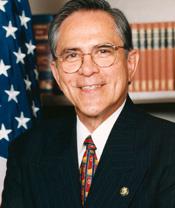
United States · United States Congress · 24 March 1999
Border Improvement and Immigration Act of 1999 - Amends the Illegal Immigration Reform and Immigrant Responsibility Act of 1996 with respect to the automated entry-exit control system to exempt from required recordkeeping: (1) land border and seaport crossings; and (2) aliens for whom certain documentation requirements have been waived by the Attorney General or the Secretary of State. Requires airport implementation of such system by a specified date. Requires the Attorney General to report on the feasibility of implementing an automated entry-exit control system that would include land border and seaport arrivals and departures. Provides for increased numbers of full-time Immigration and Naturalization and Customs inspectors at U.S. land borders, with such inspectors to be equally assigned to the northern and southern borders.
United States · United States Congress · 24 March 1999
Family-Owned Business Survival Act of 1999- Amends the Internal Revenue Code of 1986 to repeal the $675,000 limitation on the estate tax deduction for family-owned business interests.
United States · United States Congress · 24 March 1999
TABLE OF CONTENTS: Title I: Continuing the Commitment of the Violence Against Women Act Subtitle A: Law Enforcement and Prosecution Grants to Combat Violence Against Women Subtitle B: National Domestic Violence Hotline Subtitle C: Battered Women's Shelters and Services Subtitle D: Community Initiatives Subtitle E: Education and Training for Judges and Court Personnel Subtitle F: Grants to Encourage Arrest Policies Subtitle G: Rural Domestic Violence and Child Abuse Enforcement Subtitle H. National Stalker and Domestic Violence Reduction Subtitle I: Federal Victims' Counselors Subtitle J: Education and Prevention Grants to Reduce Sexual Abuse of Runaway, Homeless, and Street Youth Subtitle K: Victims of Child Abuse Programs Title II: Sexual Assault Prevention Violence Against Women Act of 1999 - Title I: Continuing the Commitment of the Violence Against Women Act - Subtitle A: Law Enforcement and Prosecution Grants to Combat Violence Against Women - Amends the Omnibus Crime Control and Safe Streets Act of 1968 (the Act) to authorize appropriations for grants to combat violent crimes against women. (Sec. 102) Revises grant allocation guidelines governing prosecution grants, victims' services and State court systems,. Expands grant purposes to include training that addresses sexual assault, domestic violence, and stalking for State, local, and tribal judicial personnel, as well as training of sexual assault forensic nurse examiners, and supporting the development of sexual assault response teams. Directs the Attorney General to deny State grant applications that fail to provide documentation of collaborative efforts with other agencies or organizations. Redefines "victims' services" to include advocacy and assistance for victims seeking legal, social, and health care services. Includes as a prerequisite for Federal reimbursement of forensic medical exams of victims of sexual assault that the participating governmental entity notify all victims that such reimbursement is neither contingent upon the victim's report to law enforcement officials, nor upon the victim's cooperation in the prosecution of the assault. (Sec. 103) Directs the Attorney General to make grants to State domestic violence and sexual assault coalitions for purposes of coordinating with: (1) victim services activities; and (2) Federal, State, and local entities engaged in violence-against-women activities. Subtitle B: National Domestic Violence Hotline - Amends the Family Violence Prevention and Services Act (FVPSA) to authorize increased appropriations for the national domestic violence hotline grant. Requires grantees to submit a grant evaluation report to the Secretary of Health and Human Services (the HHS Secretary) for publication and public comment as a prerequisite to a grant award or renewal. Subtitle C: Battered Women's Shelters and Services - Battered Women's Shelters and Services Act - Amends the FVPSA to authorize appropriations for State grants. Modifies guidelines governing: (1) allotment of appropriations; (2) grants for information and technical assistance centers; and (3) authorization of appropriations. (Sec. 123) Instructs the HHS Secretary to award grants for: (1) State domestic violence coalitions and local domestic violence programs providing shelter or related assistance, in order to develop model strategies to address domestic violence in underserved populations; (2) each State domestic violence coalition for an emergency assistance fund for domestic violence victims; (3) technical assistance and training for State and local domestic violence programs; and (4) private, nonprofit, tribal domestic violence coalitions with representatives from a majority of the programs for victims of domestic violence operating within Indian reservations, and programs whose primary focus is the populations of such Indian country. Subtitle D: Community Initiatives - Authorizes appropriations for demonstration grants for community initiatives. Subtitle E: Education and Training for Judges and Court Personnel - Amends the Equal Justice for Women in the Courts Act of 1994 to permit training grants for judges and court personnel to include: (1) child custody, visitation, and safety issues raised by domestic violence and child sexual assault; and (2) the extent to which addressing domestic violence and victim safety contributes to the efficient administration of justice. Authorizes appropriations. Subtitle F: Grants to Encourage Arrest Policies - Amends the Act to reauthorize appropriations to implement the functions of the Bureau of Justice Statistics. (Sec. 153) Mandates that at least five percent of appropriated funds be used for grants to Indian tribal governments to treat domestic violence as a serious violation of criminal law. Subtitle G: Rural Domestic Violence and Child Abuse Enforcement - Amends the Safe Homes for Women Act of 1994 to authorize appropriations for rural domestic violence and child abuse enforcement. Mandates that five percent of such funds be used for grants to Indian tribal governments. Subtitle H: National Stalker and Domestic Violence Reduction - Amends the Safe Homes for Women Act of 1994 to authorize appropriations for grants to enter stalking and domestic violence data into crime information databases. Subtitle I: Federal Victims' Counselors - Amends the Safe Streets for Women Act of 1994 to authorize appropriations for the United States Attorneys to appoint Victim-Witness counselors for the prosecution of domestic violence and sexual assault crimes. Subtitle J: Education and Prevention Grants to Reduce Sexual Abuse of Runaway, Homeless, and Street Youth - Amends the Runaway and Homeless Youth Act to authorize appropriations for street-based outreach and education to prevent sexual abuse and exploitation. Subtitle K: Victims of Child Abuse Programs - Amends the Victims of Child Abuse Act of 1990 to authorize appropriations for: (1) the court-appointed special advocate program; and (2) child abuse training programs for judicial personnel and practitioners. (Sec. 195) Amends the Act to authorize appropriations for grants for closed-circuit televising of testimony of child abuse victims. Title II: Sexual Assault Prevention - Amends the Public Health Service Act to require the use of certain State funds exclusively for rape prevention and education programs conducted by rape crisis centers and private nonprofit nongovernmental State and tribal sexual assault coalitions for specified programs. (Sec. 201) Instructs the HHS Secretary to establish a National Resource Center on Sexual Assault when appropriations reach a specified minimum level. Mandates that State grantors ensure that at least 25 percent of the funds are devoted to educational programs targeted for middle school, junior high, and high school aged students. Authorizes appropriations.
United States · United States Congress · 24 March 1999
Constitutional Amendment - Declares that equality of rights under the law shall not be denied or abridged by the United States or any State on account of sex.
United States · United States Congress · 24 March 1999
Expresses the sense of Congress that: (1) the United States Trade Representative (USTR) and the Secretary of the Treasury should initiate discussions with Mexican and Canadian Government officials to achieve parity in the duty-free allowance structure (personal allowance for duty-free merchandise purchased abroad by returning residents) of the respective North American Free Trade Agreement (NAFTA) countries and accelerate negotiations with the Government of Mexico to ensure that the expanded allowance enacted in 1995 for Mexican border zone residents will be implemented; (2) in the event that parity is not achieved within one year after enactment of this resolution, the USTR and the Secretary should submit recommendations to Congress on whether legislative changes are necessary to bring the United States duty-free allowance to a lower amount to conform to the allowance levels established by the other NAFTA countries.
United States · United States Congress · 23 March 1999
Poison Control Center Enhancement and Awareness Act - Directs the Secretary of Health and Human Services to provide coordination and assistance to regional poison control centers for the establishment of a nationwide toll-free phone number to be used to access such centers. Authorizes appropriations. Mandates a national media campaign to educate the public about poison prevention and the availability of local poison control resources and to conduct advertising campaigns concerning the nationwide toll-free number. Authorizes appropriations. Mandates grants for certified regional poison control centers to achieve financial stability and to prevent, and provide treatment recommendations for, poisoning. Mandates other grant uses. Sets forth center certification requirements. Authorizes appropriations.
United States · United States Congress · 18 March 1999
Medicare Medical Nutrition Therapy Act of 1999 - Amends title XVIII (Medicare) of the Social Security Act to provide for Medicare coverage of medical nutrition therapy services of registered dietitians and nutrition professionals.
United States · United States Congress · 18 March 1999
Newborn and Infant Hearing Screening and Intervention Act of 1999 - Mandates grants or cooperative agreements to: (1) develop statewide newborn and infant hearing screening, evaluation and intervention programs and systems; and (2) provide technical assistance to State agencies to complement an intramural program and to conduct applied research related to newborn and infant hearing screening, evaluation, and intervention programs and systems. Requires the National Institutes of Health to continue a program of research and development on the efficacy of new screening techniques and technology. Mandates Federal coordination and collaboration with State and local agencies, consumer groups, national medical, health, and education specialty organizations, deaf or hard-of-hearing individuals and their families, qualified professional personnel, and related commercial industries. Authorizes appropriations.
United States · United States Congress · 18 March 1999
Amends the Internal Revenue Code to repeal the 60-month limitation period on the allowance of the deduction for interest on loans for higher education expenses.
United States · United States Congress · 17 March 1999
Firefighter Investment and Response Enhancement (FIRE) Act - Authorizes the Director of the Federal Emergency Management Agency (FEMA) to make grants on a competitive basis to a variety of fire departments for any of a number of specified purposes, including: (1) hiring additional firefighting personnel; (2) training them; (3) funding creation of rapid intervention teams to protect firefighting personnel at the scenes of fires and other emergencies; (4) certifying fire inspectors; (5) establishing wellness and fitness programs for firefighting personnel; (6) funding emergency medical services; (7) acquiring additional firefighting vehicles and equipment, including personal protective equipment required by the Occupational Safety and Health Administration; (8) modifying fire stations, fire training facilities, and other facilities; (9) enforcing fire codes; (10) funding fire prevention programs; and (11) educating the public about arson prevention and detection. Requires the FEMA Director to establish an office to set specific criteria for the selection of grant recipients and administer the grants. Authorizes appropriations.
United States · United States Congress · 17 March 1999
Recognizes the importance of veterans to the United States. Expresses support for the goals of Veterans Educate Today's Students Day (programs that educate children about the service of veterans and the sacrifices made by them and their families).
United States · United States Congress · 16 March 1999
TABLE OF CONTENTS: Title I: Funding for Child Care Title II: Dependent Care Tax Credit Reform Title III: Grants to Business Consortia Subtitle A: Grant Program Subtitle B: General Provisions Title IV: After School Program Subtitle A: 21st Century Community Learning Centers Subtitle B: After School Snacks Title V: Model States Early Learning Program Title VI: Child Care Worker Incentives Title VII: Research and Demonstration Program Title VIII: Miscellaneous Subtitle A: Child and Adult Food Program Subtitle B: Mortgage Insurance for Child Care and Development Facilities Subtitle C: Sense of the Congress Affordable Child Care, Education, Security, and Safety Act - Title I: Funding for Child Care - Amends the Social Security Act (SSA) to make appropriations for FY 2000 through 2004 for child care subsidy funding under the title IV part A program of Block Grants to States for Temporary Assistance for Needy Families (TANF). (Sec. 101) Reserves specified portions of such funds for payments to Indian tribes and for quality assurance and quality improvement activities relating to programs under the Child Care and Development Block Grant Act of 1990 (CCDBGA). Provides for allotment of funds among the States and territories according to a specified formula, or for matching payments based on certain portions of their expenditures for specified purposes authorized under CCDBGA. Requires targeting of at least 70 percent of such subsidy for child care assistance funds to working non-welfare families, who are not TANF recipients under a State or territory program. Title II: Dependent Care Tax Credit Reform - Amends the Internal Revenue Code to increase the dependent care tax credit and to provide an equivalent benefit where one parent stays at home to provide child care for child under age one. (Sec. 202) Allows a business-related tax credit for employer expenses for employer-provided child care assistance. (Sec. 203) Allows the dependent care credit against the alternative minimum tax. Title III: Grants to Business Consortia - Subtitle A: Grant Program - Directs the Secretary of Health and Human Services (HHS) to make grants to States to provide grants to eligible entities to improve access to affordable, local, quality child care services. (Sec. 301) Makes eligible for such a grant a consortium that: (1) has not received a grant under this title; and (2) consists of representatives from at least five businesses (or a nonprofit organization that represents at least five businesses), each of which, to the maximum extent practicable, is located in the same geographic region. Requires States to give priority, in providing such grants, to eligible entities that consist of a majority of representatives from small businesses. Sets a maximum limit on the amount of any such grant provided to an eligible entity for any fiscal year. (Sec. 302) Sets forth requirements for grant applications, use of funds, and matching funds. Subtitle B: General Provisions - Authorizes appropriations for such child care services grants to business consortia. Title IV: After School Program - Subtitle A: 21st Century Community Learning Centers - Amends the 21st Century Community Learning Centers Act to require that discretionary grants be awarded to local educational agencies (LEAs) for supporting certain programs of public elementary schools or secondary schools, including middle schools, that serve communities with substantial needs for expanded learning opportunities for children and youth. (Sec. 401) Increases the maximum duration of such a grant from three to five years. (Sec. 402) Requires the LEA to demonstrate that it will provide specified portions of the annual costs of project activities from sources other than such grant funds. (Sec. 403) Requires the use of grant funds to establish or expand community learning centers that provide activities that offer expanded learning opportunities for children and youth in the community (such as activities conducted before or after school), and which may include any of the currently authorized activities. (Sec. 405) Extends through FY 2004 the authorization of appropriations for such Act. Authorizes continuation awards of FY 1998 grants. Subtitle B: After School Snacks - Amends the National School Lunch Act to provide for participation by certain additional institutions under the child and adult care food program. Allows such institutions to claim reimbursements for meal supplements which they serve without charge to children in afterschool care. (Sec. 411) Revises eligibility requirements for meal supplements for children in afterschool care. Title V: Model States Early Learning Program - Amends SSA title IV part A (TANF) to make appropriations for FY 2000 through 2004 for model States early learning programs. Provides for allotment of funds among the States, territories, and Indian tribes according to a specified formula, or for matching payments based on portions of their expenditures for an early learning program under CCDBGA. (Sec. 501) Amends CCDBGA to establish the Model States Early Learning Program. Sets forth program requirements for State participation and plans, allowable activities, and annual reports. Title VI: Child Care Worker Incentives - Child Care Worker Incentive Act of 1999 - Amends CCDBGA to establish a national child care provider scholarship program. (Sec. 602) Sets forth eligibility criteria for scholarship applicants, including: (1) demonstrated commitment to a child care career; (2) cost sharing by the applicant and employer; and (3) the employer's agreement to provide increased financial incentives to the employee upon completion of the education or training. Includes such program under requirements for State plans, allotments, payments, and annual reports. Authorizes appropriations. Title VII: Research and Demonstration Program - Amends CCDBGA to authorize the Secretary of Health and Human Services (HHS), directly or through grants, contracts, or other arrangements, to carry out research, demonstration projects, and other activities relating to child care, including activities designed to improve the quality and increase the availability of child care. (Sec. 701) Includes among allowable activities under such research and demonstrations program: (1) research on child care needs of low-income families, on good policies and practices, and on retention of child care provider staff; (2) demonstrations of technology-based education and training; (3) demonstration projects for new methods; (4) a National Center on Child Care Statistics; and (5) a hotline to locate local child care resources, and child care consumer education activities. Authorizes appropriations. Title VIII: Miscellaneous - Subtitle A: Child and Adult Food Program - Amends the National School Lunch Act to increase reimbursement rates for family or group day care homes under the child and adult care food program. Subtitle B: Mortgage Insurance for Child Care and Development Facilities - Children's Development Commission Act - Amends the National Housing Act to authorize the Secretary of Housing and Urban Development to insure mortgages for: (1) new or rehabilitated child care and development facilities, including mortgage insurance for fire safety equipment loans; and (2) purchase or refinance of existing child care and development facilities. (Sec. 855) Establishes the Children's Development Commission which shall: (1) issue facility standards and compliance certifications; and (2) make loans not in excess of $50,000 for facility rehabilitation or renovation. Directs the Commission to report to the Congress on: (1) a plan for establishing an independent foundation to support research on child care and development facilities, fund pilot programs to test innovative methods for improving child care, and assist persons interested in mortgage insurance and other Commission assistance; and (2) a study of capital needs of center-based child care in low-income communities. Authorizes appropriations. (Sec. 856) Directs the Secretary of the Treasury to study the availability of child care facility secondary mortgage markets. Subtitle C: Sense of the Congress - Expresses the sense of the Congress that funds should be appropriated under the amendments made by this Act to the maximum extent authorized and consistently with achieving a balanced Federal budget.
United States · United States Congress · 16 March 1999
Immunosuppressive Drug Coverage Extension Act of 1999 - Amends title XVIII (Medicare) of the Social Security Act to eliminate the time limitation on Medicare benefits for immunosuppressive drugs.
United States · United States Congress · 16 March 1999
Amends the Internal Revenue Code to repeal the 60-month limitation period on the allowance of the interest deduction on loans for higher education expenses.
United States · United States Congress · 11 March 1999
Hate Crimes Prevention Act of 1999 - Amends the Federal criminal code to set penalties for persons who, whether or not acting under color of law, willfully cause bodily injury to any person or, through the use of fire, a firearm, or an explosive device, attempt to cause such injury, because of the actual or perceived: (1) race, color, religion, or national origin of any person; or (2) religion, gender, sexual orientation, or disability of any person, where in connection with the offense, the defendant or the victim travels in interstate or foreign commerce, uses a facility or instrumentality of interstate or foreign commerce, or engages in any activity affecting interstate or foreign commerce, or where the offense is in or affects interstate or foreign commerce. (Sec. 5) Directs the United States Sentencing Commission to study the issue of, and, if appropriate, amend the Federal sentencing guidelines to provide sentencing enhancements for, adult defendants who recruit juveniles to assist in the commission of hate crimes. (Sec. 6) Requires the Office of Justice Programs of the Department of Justice (DOJ) to make grants to State and local programs designed to combat hate crimes committed by juveniles. Authorizes appropriations, including programs to train local law enforcement officers in investigating, prosecuting, and preventing hate crimes. (Sec. 7) Authorizes appropriations to the Department of the Treasury and to DOJ to increase the number of personnel to prevent and respond to alleged violations of provisions regarding interference with specified federally protected activities, such as voting.
United States · United States Congress · 11 March 1999
Amends title XIX (Medicaid) of the Social Security Act to give States the option of making medical assistance for breast and cervical cancer-related treatment services available during a presumptive eligibility period to certain low-income women without creditable coverage who have already been screened for such cancers under the Centers for Disease Control and Prevention breast and cervical cancer early detection program and need treatment. Provides for an enhanced match with regard to such Medicaid treatment services.
United States · United States Congress · 11 March 1999
Public Safety Employer-Employee Cooperation Act of 1999 - Provides collective bargaining rights for public safety officers employed by States or local governments. Directs the Federal Labor Relations Authority (FLRA) to determine whether State law provides specified rights and responsibilities for public safety officers, including: (1) granting public safety employees the right to form and join a labor organization which excludes management and supervisory employees, and which is, or seeks to be, recognized as the exclusive bargaining agent for such employees; and (2) requiring public safety employers to recognize and agree to bargain with the employees' labor organization. (Sec. 5) Requires the FLRA to issue regulations establishing collective bargaining procedures for public safety employers and employees in States that do not substantially provide for such public safety employee rights and responsibilities. Directs the FLRA, in such cases, to: (1) determine the appropriateness of units for labor organization representation; (2) supervise or conduct elections to determine whether a labor organization has been selected as an exclusive representative by a majority of the employees in an appropriate unit; (3) resolve issues relating to the duty to bargain in good faith; (4) conduct hearings and resolve complaints of unfair labor practices; and (5) resolve exceptions to arbitrator's awards. Grants a public safety employer, employee, or labor organization the right to seek enforcement of such FLRA regulations and authority through appropriate State courts. (Sec. 6) Prohibits public safety employers, employees, and labor organizations from engaging in lockouts or strikes. (Sec. 7) Provides that existing collective bargaining units and agreements shall not be invalidated by this Act. (Sec. 9) Authorizes appropriations.
United States · United States Congress · 11 March 1999
Debt Relief for Poverty Reduction Act of 1999 - Amends the Foreign Assistance Act of 1961 to direct the President, subject to authorization of appropriations, to cancel or reduce all amounts owed to the United States by heavily indebted poor countries (HIPCs) as a result of concessional and nonconcessional loans made, guarantees issued, or credits extended prior to January 1, 1996, under any provision of law. Sets forth eligibility requirements for cancellation or reduction of debt for HIPCs. Directs the President, in canceling or reducing debt, to give priority to HIPCs that have demonstrated a sustained commitment to poverty alleviation or have recently suffered a major natural disaster. (Sec. 2) Provides that cancellation or reduction of debt shall not be considered to be assistance for purposes of any law limiting assistance to a country. Authorizes appropriations. Sets forth certain procedures for the making of new loans, extending new credits, or issuing new guarantees to the governments of developing countries. (Sec. 3) Amends the International Financial Institutions Act to urge the President, in order to accelerate multilateral debt relief and promote economic and human development and poverty alleviation in HIPCs, to commence diplomatic efforts within the Paris Club of Official Creditors, as well as the International Bank for Reconstruction and Development (World Bank), the International Monetary Fund (IMF), and other appropriate multilateral development institutions to make certain modifications in the Heavily Indebted Poor Countries (HIPC) Initiative, including: (1) the placing of a limit on maximum waiting period before a country receives debt relief; (2) the incorporation of poverty reduction and environmental protection as conditions for HIPC debt relief; (3) the revision of country eligibility requirements under the HIPC Initiative; (4) the adoption of a human development action plan and fund by HIPCs; (5) limits on the amount of debt reduction; (6) transparency and participation by HIPCs in HIPC decision making; and (7) the provision of HIPC review. Authorizes appropriations for the HIPC Trust Fund. Declares the sense of Congress that the amounts that would otherwise be provided by the United States for development aid or other debt relief should not be reduced on account of any such appropriations. Directs the President to work with the member countries of international financial institutions to ensure transparency and public participation in decisions to make new loans (including terms and conditions of such loans) to developing countries.
United States · United States Congress · 11 March 1999
Montgomery GI Bill Improvements Act of 1999 - Amends Federal basic educational assistance provisions (the Montgomery GI Bill) to authorize enhanced educational assistance to a member of the armed forces who, after September 30, 1999: (1) first enters on active duty; (2) reenlists or continues to serve on active duty; (3) serves a continuous period of active duty of four years; or (4) serves and is discharged or released for a service-connected disability, at the convenience of the Government (after serving at least 42 months of such duty), or due to a reduction in force. Limits to 36 months the period for such enhanced assistance, with a special rule for certain early separations. Requires the payment of educational expenses under such program, including tuition and fees, books, and other supplies. Provides: (1) a monthly stipend for approved programs of education, with different rates for programs pursued on a full-time, three quarter-time, or half-time basis; and (2) tutorial assistance. (Sec. 3) Increases the monthly rates of basic educational assistance. (Sec. 4) Repeals, with respect to such assistance: (1) a required monthly reduction in pay for individuals who do not elect to participate in such assistance program; (2) a provision authorizing individuals to elect not to receive such assistance; (3) the requirement that participants complete the requirements of a high school diploma or equivalency certificate prior to the end of their initial obligated period of service in order to be eligible to receive such assistance; and (4) provisions limiting an individual's opportunity to withdraw an election not to enroll in such assistance program. (Sec. 5) Authorizes an individual entitled to basic educational assistance to receive an accelerated payment of such allowance, beginning on March 1, 2000, under certain conditions. (Sec. 6) Authorizes the use of basic educational assistance for: (1) the payment of vocational or professional licensing or certification tests required under Federal, State, or local law; (2) preparatory courses for college and graduate school entrance exams; and (3) training for technological occupations offered by entities other than educational institutions. (Sec. 9) Authorizes enrollment in the basic educational assistance program for individuals who: (1) before October 10, 1996, were enrolled in the veterans' educational assistance program (VEAP); (2) had continuously served on active duty since October 9, 1996; and (3) if discharged or released from active duty after the date on which the individual elects to participate in the basic educational assistance program, were discharged or released with an honorable discharge. Discontinues, after the enactment of this Act, the required reduction in basic pay for VEAP participants.
United States · United States Congress · 10 March 1999
A Living Wage, Jobs for All Act - Declares that the Congress affirms the basic economic rights and responsibilities under the 1944 "Economic Bill of Rights," while updating and extending it to include: (1) certain rights to decent jobs, income security for individuals unable to work for pay, a decent living for farm families, freedom from monopolies, decent housing, adequate health services, social security in old age, sickness, accidental injury, and unemployment, and education and work training; and (2) certain other rights relating to collective bargaining, a safe working environment, information on trends in pollution sources and products and processes that affect the well-being of workers throughout the world, voting and campaigning, and personal security. Recognizes specified personal responsibilities of persons benefitting from such rights. (Sec. 3) Sets forth requirements relating to corporate responsibility. Requires each corporation registered with the Securities and Exchange Commission (SEC) to include in its annual reports to the SEC a full and fair disclosure of the impact of its activities in the United States and other countries on environmental quality and on the rights of other stakeholders, including employees, consumers, and communities. Requires each State, in order to be entitled to receive any Federal grants or enter into any Federal contracts, to have initiated a time-phased program to require that all State-chartered corporations submit annual reports including such disclosures of information. Requires the Secretary of Labor and the Director of the Environmental Protection Agency to: (1) identify corporations that have gone the furthest in managing their enterprises with responsible action toward environmental quality and the rights of other stakeholders, including employees, consumers, and communities; and (2) recommend to the President a special annual award to those chief executives and boards of directors that have made the greatest progress in this direction. Directs the Attorney General, with the assistance of business leaders and organizations, to establish an ongoing computerized registration program of all corporations found guilty of violating a Federal or State law. Authorizes the President, in the absence of clear and convincing evidence of rehabilitation, to deny Federal contracts, loans, or loan guarantees to non-compliant corporations. Makes it the responsibility of each Federal agency and commission, including the Board of Governors of the Federal Reserve System, to perform so as to help establish and maintain conditions under which all adult Americans may freely exercise the economic rights specified in 1944 and in this Act. Prohibits Federal agencies or commissions from directly or indirectly promoting recession, stagnation, or unemployment as a means of reducing wages and salaries or inflation. (Sec. 4) Directs the President to establish a framework for the annual budget submitted to the Congress that meets specified goals with respect to: (1) quality of life and environment; (2) responsible and sustainable growth; (3) reduction of officially measured unemployment; and (4) support for international human rights declarations. Requires such framework also to include specific legislative proposals, budgets, and executive policies and initiatives such as: (1) conversion from military to civilian economy; (2) truth in budgets; (3) improved indicators of progress and regress; (4) anti-inflation policies; (5) lower real interest rates; (6) public works and services; (7) international economic policy; (8) international conferences on reducing unemployment and underemployment; (9) reductions in work hours; (10) part-time employment with social benefits; (11) insurance protection for pension fund investments; and (12) other specified matters. (Sec. 5) Mandates Joint Economic Committee oversight of actions under this Act. Requires the Joint Economic Committee to submit an annual Concurrent Resolution on Economic Policy setting forth its proposed goals for employment by type of employment, with special attention to hours, wages, and social benefits, and for reducing unemployment, underemployment, and poverty in urban, suburban and rural areas. Requires these goals to serve as the framework for any concurrent resolutions on the Federal budget. (Sec. 6) Authorizes appropriations.
United States · United States Congress · 4 March 1999
Directs the President to impose quotas, tariff surcharges, or negotiate enforceable voluntary export restraint agreements in order to ensure that the volume of imported steel products (semifinished, plates, sheets and strips, wire rods, wire and wire products, rail type products, bars, structural shapes and units, pipes and tubes, iron ore, and coke products) during any month does not exceed the average volume of imported steel for the 36-month period preceding July 1997. Directs the Secretaries of the Treasury and of Commerce to implement a program for administering and enforcing the restraints on such imports. Authorizes the Customs Service to refuse entry into the U.S. customs territory for a three year period of any steel products that exceed the allowable levels of such products. Directs the Secretary of Commerce to establish and implement a steel import notification and monitoring program. Requires any person who intends to import steel products into the United States to first obtain an import notification certificate. Sets forth specified import notification certificate requirements. Directs the Secretary of Commerce to publish on a weekly basis through the Internet certain information obtained from steel import notification certificate applications regarding imported steel, including country of origin, the port of entry, quantity, value of steel imported, single producer or exporter countries, and whether such imports are entered into a bonded warehouse or foreign trade zone. Authorizes the Secretary of Commerce to charge reasonable fees to defray the costs of carrying out this Act.
United States · United States Congress · 4 March 1999
TABLE OF CONTENTS: Title I: United States-Caribbean Trade Partnership Title II: Foreign Assistance For Central America and the Caribbean Subtitle A: Microcredit and Agricultural Assistance Subtitle B: Overseas Private Investment Corporation Subtitle C: Economic Support Fund Assistance Title III: Department of Defense Title IV: Immigration and Naturalization Service Title V: Debt Rescheduling and Reduction for Honduras and Nicaragua; Funding for the Central American Emergency Trust Fund of the International Bank for Reconstruction and Development Subtitle A: Debt Rescheduling and Reduction for Honduras and Nicaragua Subtitle B: Authorization of Funding for the Central American Emergency Trust Fund of the International Bank for Reconstruction and Development Caribbean and Central America Relief and Economic Stabilization Act - Title I: United States-Caribbean Trade Partnership - United States-Caribbean Trade Partnership Act -Amends the Caribbean Basin Economic Recovery Act (CBERA) to accord, for a specified period, the same tariff and quota treatment (duty-free or reduced duty treatment, free of any quantitative limitations) given certain textile and apparel articles (including those imported from North American Free Trade Agreement (NAFTA) countries) to such articles from CBERA partnership countries, or beneficiary countries (other than Central American countries) planning to become parties to NAFTA, or a comparable free trade agreement. Subjects to certain penalties exporters that engage in the transshipment of such articles (preferential treatment claimed on the basis of material false information concerning the country of origin, manufacture, processing, or assembly of the article or any of its components). (Sec. 104) Directs the Commissioner of Customs to analyze and report to Congress on the extent to which partnership countries have cooperated with the United States with respect to the circumvention of existing quotas on imports of textile and apparel goods, and taken appropriate measures against circumvention violators (including exporters and importers involved in false information declarations relating to such goods). (Sec. 105) Directs the President to: (1) monitor the effects, if any, that implementation of NAFTA has on the access of beneficiary countries to the U.S. market for sugars, syrups, and molasses; and (2) in the event such implementation is adversely affecting such countries' access to the U.S. market, to take specified action to ameliorate such adverse effect. (Sec. 106) Grants duty-free treatment to rum liqueurs and spirituous beverages from Canada if certain conditions are met. (Sec. 107) Directs the President to convene a meeting with the trade ministers of the partnership countries in order to reach agreement for initiating negotiations for partnership countries to accede to the NAFTA. (Sec. 108) Directs the United States Trade Representative (USTR) to assess, and report to specified congressional committees on, the economic development efforts and market oriented reforms in each partnership country, and the ability of each country, on the basis of such efforts and reforms, to undertake the obligations of the NAFTA. Title II: Foreign Assistance for Central America and the Caribbean - Subtitle A: Microcredit and Agricultural Assistance - Directs the Administrator of the U.S. Agency for International Development (AID) to use credit and microcredit assistance to provide disaster assistance to rehabilitate agriculture production in the hurricane-affected areas of Central America and the Caribbean. (Sec. 203) Authorizes the Administrator of AID to utilize relevant foreign assistance programs and initiatives for the Central America and Caribbean region to support private producer-owned cooperative marketing associations there, including rural business associations owned and controlled by farmer shareholders. (Sec. 204) Directs the Administrator of AID to develop a comprehensive plan to coordinate and build on the research and extension activities of U.S. land-grant universities, international agricultural research centers, and national agricultural research and extension centers in Central America and the Caribbean. (Sec. 205) Provides assistance through the nonemergency food assistance programs of the Agriculture Trade Development and Assistance Act of 1954 to the hurricane-affected Central American and Caribbean areas. Subtitle B: Overseas Private Investment Corporation - Expresses the sense of Congress that the Overseas Private Investment Corporation (OPIC) should foster U.S. private investment and enhance the ability of private enterprise to make its full contribution in the hurricane- affected areas of Central America and the Caribbean. Subtitle C: Economic Support Fund Assistance - Authorizes appropriations for reconstruction and disaster mitigation assistance for the areas of Central America and the Caribbean affected by Hurricane Mitch and Hurricane Georges. Earmarks specified amounts for operating expenses of AID. (Sec. 222) Authorizes appropriations to reimburse the international disaster assistance account for expenses incurred with respect to such assistance provided to the affected areas of Central America and the Caribbean. Title III: Department of Defense - Authorizes appropriations for: (1) replenishment of the Department of Defense (DOD) accounts used in providing disaster relief and reconstruction to the hurricane- affected areas of Central America and the Caribbean (earmarking amounts for replenishment of operation and maintenance and military personal accounts, the Overseas Humanitarian Disaster and Civic Aid account, and the Commanders in Chief (CINC) Initiative Fund); and (2) the New Horizons Program (earmarking amounts for expanding National Guard and Reserve exercises in Central American countries and the Dominican Republic). Title IV: Immigration and Naturalization Service - Authorizes appropriations for Enforcement and Border Affairs within the Immigration and Naturalization Service (INS) to: (1) support increased detention requirements for Central American criminal aliens held in detention by the INS; and (2) address the expected influx of illegal immigrants from Central America. Title V: Debt Rescheduling and Reduction for Honduras and Nicaragua; Funding for Central American Emergency trust Fund of the International Bank for Reconstruction and Development - Subtitle A: Debt Rescheduling and Reduction for Honduras and Nicaragua - Authorizes the President to reschedule the repayment of interest on, and (subject to specific appropriations) reduce the amount of, the indebtedness owed by the Honduran and Nicaraguan governments to the United States. Authorizes appropriations. Subtitle B: Authorization of Funding for the Central American Emergency Trust Fund of the International Bank for Reconstruction and Development - Amends the Bretton Woods Agreements Act to authorize the U.S. Governor of the International Bank for Reconstruction and Development (World Bank), subject to specific appropriations, to contribute $25 million on behalf of the United States to the Central American Emergency Trust Fund.
United States · United States Congress · 4 March 1999
School Construction Act of 1999 - Amends the Internal Revenue Code to: (1) allow a limited tax credit to holders of qualified public school construction bonds as an incentive for public school construction; (2) include in gross income the amount of such credit, which shall be treated as interest income; and (3) establish a national qualified school construction bond limitation for each calendar year, to be allocated among the States with projected enrollment increases.
United States · United States Congress · 3 March 1999
Ovarian Cancer Research and Information Amendments of 1999 - Amends the Public Health Service Act to authorize appropriations for ovarian cancer research. Specifies material to be included in ovarian cancer information and education programs. Requires the National Cancer Advisory Board to include at least one member who is at high risk for developing ovarian cancer.
United States · United States Congress · 3 March 1999
Farm and Ranch Risk Management Act - Amends the Internal Revenue Code to allow an individual engaged in an eligible farming business to deduct a limited amount from gross income for amounts paid into an interest-bearing Farm and Ranch Risk Management (FARRM) Account, created for the taxpayer's exclusive benefit. Requires withdrawal of contributions within five years, upon which they are taxable as ordinary income in the year of withdrawal. Prescribes penalties on amounts not distributed within five years.
United States · United States Congress · 2 March 1999
United Nations Population Fund (UNFPA) Funding Act of 1999 - Authorizes appropriations for FY 2000 and 2001 for U.S. voluntary contributions to the United Nations Population Fund. Withholds from the U.S. voluntary contribution to the UNFPA amounts allocated by the UNFPA for the country program in China, unless the President certifies to the appropriate congressional committees that the UNFPA country program in China: (1) focuses on improving the delivery of voluntary family planning information and services; (2) is in conformity with the human rights principles affirmed at the International Conference on Population and Development with the support of 180 nations including the United States; (3) is implemented only in counties of China where all quotas and targets for the recruitment of program participants have been abolished and the use of coercive measures has been eliminated; (4) is carried out in consultation with and under the oversight and approval of the UNFPA executive board, including the U.S. representative; (5) is subject to regular, independent monitoring to ensure compliance with the principles of informed consent and voluntary participation; and (6) suspends operations in project counties found to be in violation of program guidelines.
United States · United States Congress · 2 March 1999
Consumer Credit Card Protection Amendments of 1999 - Amends the Consumer Credit Protection Act to require the following disclosures by a creditor of open-end consumer credit plans: (1) the method of determining the required minimum payment amount and the charges for failure to pay either such amount or its attendant finance charge; (2) certain repayment information applicable to the outstanding balance; (3) the method for determining the required minimum payment amount and the charge for failure to pay it; and (4) the amount and deadline for late payment penalties. (Sec. 4) Extends the Act's disclosure requirements to World Wide Web-based applications and solicitations for a credit card account under an open-end consumer credit plan. (Sec. 5) Mandates additional disclosures for credit card applications or solicitations whose annual percentage rates of interest are applicable for an introductory period of less than one year. (Sec. 6) Proscribes the imposition of inactivity fees under an open-end consumer credit plan if the obligor maintains an outstanding balance and is charged an attendant finance charge. (Sec. 7) Sets forth application requirements for credit cards issued to underage consumers. (Sec. 8) Prohibits the imposition of penalties for on-time payments under an open-end consumer credit plan. (Sec. 9) Mandates: (1) advance notice of any interest rate increase applicable to an outstanding credit balance, accompanied by notice of the debtor's right to cancel before the effective date of such increase; and (2) disclosure of interest rates and fees upon credit advances through third-party checks. (Sec. 11) Proscribes the imposition of fees for any extension of credit in excess of the authorized amount if such extension was made in connection with a creditor-approved transaction. (Sec. 12) Encompasses within the term "credit card" specified dual-purpose or multifunction cards connected with an open-end credit plan and that can be used to obtain credit directly or indirectly. Repeals the limitation of card-issuer liability only to fee-paying or credit- or charge-card-using cardholders in connection with specified disclosures required of a creditor pertaining to: (1) open-end consumer credit plans; and (2) credit and charge card applications and solicitations.
United States · United States Congress · 25 February 1999
State and Local Investment Opportunity Act of 1999 - Amends the Internal Revenue Code to increase the State ceiling on private activity bonds. Provides for inflation adjustment.
United States · United States Congress · 24 February 1999
Improved Maternal and Children's Health Coverage Act of 1999 - Amends titles XIX (Medicaid) and XXI (Children's Health Insurance Program) (CHIP) of the Social Security Act (SSA) to mandate: (1) development and use of a uniform, simplified application form for establishing eligibility for Medicaid and CHIP benefits; (2) coordinated enrollment processes; and (3) timely response to inquiries received through a national toll-free telephone number for information on children's coverage under such programs. Requires the Secretary of Health and Human Services to establish such number. (Sec. 2) Provides for the expanded availability of funding for administrative costs related to certain outreach and eligibility determinations under Medicaid and CHIP with regard to children and pregnant women. Directs the Secretary to establish a procedure with regard to the participation of local and community-based public or nonprofit organizations in outreach and enrollment activities if States do not otherwise obligate the amounts made available under this Act. Sets forth a special rule for certain enrollment and outreach activities providing for use of three percent of CHIP funds at 90 percent Federal match for such activities. Amends SSA title XIX to provide for additional entities (including elementary and secondary schools, child support enforcement agencies, and child care resource and referral agencies) that are qualified to determine Medicaid presumptive eligibility for low-income children. (Sec. 3) Amends SSA title XXI to require, to the extent a State child health plan provides coverage other than through providing benefits under the State's Medicaid plan, a State child health plan to: (1) specify methods to ensure coordination of pediatric care within a family; (2) make the State and its contractors, and not beneficiaries and families, responsible for applying limitations on cost-sharing; (3) impose, at its option, a flat limit (of up to $500) on out-of-pocket expenditures for certain low-income children (as an alternative to the current five percent of family income); and (4) provide a grace period and prior notice before disenrollment for nonpayment of premiums, if the State child health plan requires the payment of a premium and such premium is not paid on a timely notice, as well as an opportunity for a hearing on the matter. Prohibits State child health plan eligibility standards from permitting the use of mandatory waiting periods, unless the Secretary finds that such a period would not be contrary to title XXI. (Sec. 4) Amends SSA title XIX to provide for, among other changes: (1) automatic reassessment of eligibility for CHIP and Medicaid benefits for children losing Medicaid or CHIP eligibility; (2) optional CHIP coverage of low-income, uninsured pregnant women; (3) State option to cover qualified alien children under the Medicaid and CHIP programs; (4) elimination of the funding offset for exercise of the presumptive eligibility option; (5) automatic enrollment of children born to targeted low-income pregnant women receiving pregnancy-related assistance under such programs; and (6) CHIP and Medicaid program coordination with the Maternal and Child Health Services program under SSA title V.
United States · United States Congress · 23 February 1999
Women's Business Center Amendments Act of 1999 - Amends the Small Business Act, with respect to the women's business center program, to: (1) revise the non-Federal contributions requirement for the fifth year of program participation; and (2) increase the annual authorization of appropriations under such program.
United States · United States Congress · 23 February 1999
Amends the Older Americans Act of 1965 to extend through FY 2002 the authorization of appropriations for: (1) the Federal Council on the Aging; (2) administration; (3) grants for State and community programs on aging; (4) the availability of surplus commodities; (5) training, research, and discretionary projects and programs; (6) community service employment for older Americans; (7) grants for Native Americans; (8) allotments for Vulnerable Elder Rights Protection activities; and (9) the Native American program.
United States · United States Congress · 23 February 1999
Anesthesia Services Preservation Act of 1999 - Directs the Secretary of Health and Human Services to revise any regulations establishing Medicare (title XVIII of the Social Security Act) conditions of participation for hospitals and ambulatory surgical centers relating to anesthesia services under Medicare to prohibit such regulations from imposing supervisory or related requirements on the performance of such services by certified registered nurse anesthetists.
United States · United States Congress · 12 February 1999
TABLE OF CONTENTS: Title I: Research on Lupus Title II: Delivery of Services Regarding Lupus Lupus Research and Care Amendments of 1999 - Title I: Research on Lupus - Amends the Public Health Service Act to require the Director of the National Institute of Arthritis and Musculoskeletal and Skin Diseases to expand and intensify research and related activities of the Institute regarding lupus. Requires the Director to: (1) coordinate such activities with similar activities conducted by other national research institutes and agencies of the National Institutes of Health; and (2) conduct or support research to expand the understanding of the causes of, and to find a cure for, lupus, including research to determine the reasons underlying the elevated prevalence of the disease among African-American and other women. Authorizes appropriations. Title II: Delivery of Services Regarding Lupus - Mandates grants for the establishment, operation, and coordination of effective and cost-efficient systems for the delivery of essential services to individuals with lupus and their families. Regulates charges (whether they are characterized as enrollment fees, premiums, deductibles, cost sharing, copayments, coinsurance, or other charges) imposed by grantees on service recipients. Authorizes technical assistance. Authorizes appropriations.
United States · United States Congress · 12 February 1999
Amends the Poultry Products Inspection Act to include within the definition of poultry birds of the order Ratitae (ostriches, emus, rheas) that are raised for commercial distribution as human food.
United States · United States Congress · 11 February 1999
Small Watershed Rehabilitation Amendments of 1999 - Amends the Watershed Protection and Flood Prevention Act to authorize the Secretary of Agriculture to provide financial assistance to an eligible local organization to cover a portion of the total costs incurred for the rehabilitation of structural measures originally constructed as part of a covered water resource project (except that the local organization shall be responsible for securing all land, easements, or rights-of-ways necessary for the project). Limits the amount of Federal funds that may be made available to such an organization for construction of a particular rehabilitation project to 65 percent of the total rehabilitation costs, but not exceed 100 percent of actual construction costs incurred, and makes the local organization responsible for resource rights costs and all Federal, State, and local permits. Authorizes the Secretary, acting through the Natural Resources Conservation Service, to provide technical assistance to a requesting organization in planning, designing, and implementing rehabilitation projects. Prohibits any assistance authorized under this Act from being used to perform operation and maintenance activities. Outlines assistance application requirements. Directs the Secretary to establish a system of approving rehabilitation assistance requests from eligible organizations equitably. Authorizes appropriations for FY 2000 through 2009 to provide financial and technical assistance. Earmarks funds authorized for the first two fiscal years for an assessment by the Secretary of the rehabilitation needs of covered projects. Requires: (1) the Secretary to maintain a database to track the benefits derived from rehabilitation projects and expenditures and report annually to the Congress on the status of activities conducted; and (2) eligible local organizations that received assistance to report to the Secretary on the status of rehabilitation efforts undertaken using financial assistance after the completion of the specific projects for which assistance was provided.
United States · United States Congress · 10 February 1999
TABLE OF CONTENTS: Title I: Outer Continental Shelf Impact Assistance Title II: State, Local, and Urban Conservation and Recreation Title III: Wildlife Conservation and Restoration Conservation and Reinvestment Act of 1999 - Title I: Outer Continental Shelf Impact Assistance - Establishes the Outer Continental Shelf Impact Assistance Fund (OCSIAF) to provide impact assistance to coastal States from a portion (27 percent) of allocable new OCS revenues (payments received by the United States as royalties, net profit share payments, and related late-payment interest from natural gas and oil leases under the Outer Continental Shelf Lands Act). Prohibits placement in the Fund of OCS revenues from a leased tract (or portion) located in a geographic area subject to a leasing moratorium on January 1, 1999, unless the lease was issued before the moratorium and was in production on such date. (Sec. 103) Sets forth a formula for use by the Secretary of the Interior to determine the portion of the allocable share of new revenues attributable to each coastal State and county eligible to receive impact assistance payments. Mandates that such OCS funds be expended by the eligible coastal States and counties for certain environmental projects and activities. Requires: (1) the Governor of every OCSIAF recipient State to develop (and certify to the Secretary) a State plan for the use of such funds; (2) an eligible county to submit for the Governor's approval a plan setting forth the projects and activities for which it proposes to expend OCSIA funds; and (3) the Governor of each recipient State to account to the Congress for all OCSIAF monies received for the previous fiscal year. Title II: State, Local, and Urban Conservation and Recreation - Amends the Land and Water Conservation Fund Act of 1965 (LWCFA) to require an amount equal to 23 percent of specified Outer Continental Shelf revenues to be credited to a separate account in the Land and Water Conservation Fund (LWCF) in the Treasury in each fiscal year through September 30, 2015. (Sec. 202) Makes such funds available, without further appropriation, to carry out LWCFA in the next succeeding fiscal year. Provides that, if such revenues in a fiscal year exceed $900 million, such excess shall be available, without further appropriation, in the next succeeding fiscal year for obligation or expenditure as payments in lieu of taxes. Authorizes appropriations to maintain a certain minimum total annual income of the LWCF. Makes certain amounts covered into the LWCF available for expenditure without appropriation. Sets forth formulae for allocation of such funds for: (1) Federal acquisition of certain lands, waters, or interests; (2) financial assistance to the States for land acquisition, urban conservation, and recreation projects; and (3) local governments through the Urban Parks and Recreation Recovery Program of the Department of the Interior. Provides for an LWCFA allocation of funds to Indian tribes and Alaska Native Village Corporations. Requires States to make at least 50 percent of the annual State apportionment under LWCFA available as grants to local governments. Replaces, within a five-year period, LWCFA requirements for comprehensive State plans with requirements for State action agendas. Allows each State to define its own priorities and criteria for selection of outdoor recreation and conservation acquisition and development projects eligible for LWCFA grants so long as it provides for public involvement in this process and publishes an accurate and current State Action Agenda for Community Recreation and Conservation. Requires such Agendas to: (1) be strategic, originating in broad-based and long-term needs, but focused on actions that can be funded over the next four years, and be updated every four years; (2) consider all providers of recreation and conservation lands, and correlate with other State, regional and local plans for parks, recreation, open space, and wetlands conservation; (3) address wetlands as important outdoor recreation and conservation resources, and incorporate a State wetlands priority conservation plan consistent with the national plan developed under the Emergency Wetlands Resources Act; and (4) be guided in part by recovery action programs developed by urban localities under the Urban Park and Recreation Recovery Act. Revises LWCFA conditions for approval of conversions. (Sec. 203) Amends the Urban Park and Recreation Recovery Act (UPRRA) to provide (in addition to the current types of at-risk recreation grants and recovery action program grants) for matching capital grants to local governments in the form of: (1) development grants for development and construction on existing or new neighborhood recreation sites, including indoor and outdoor recreation facilities, support facilities, and landscaping, but excluding routine maintenance and upkeep activities; and (2) acquisition grants for purchasing new parkland to be permanently dedicated and made accessible for public recreation use. Revises UPRRA requirements for: (1) eligibility; (2) matching grants; (3) coordination; and (4) conversion approval. Repeals the limitation on the use of UPRRA funds for acquisition of land or interests in land. (Sec. 205) Establishes a Habitat Reserve Program (HRP) within the Department of the Interior to be administered by the Secretary of the Interior in association with the applicable State fish and wildlife department in the State where the affected land is located. Requires lands eligible for enrollment in the HRP to be privately owned and designated by the State agency as necessary to preserve the existence of one or more species listed under the Endangered Species Act, and their owners and operators to have voluntarily entered into partnership agreements with the Secretary and the State agency. Prescribes: (1) limitations on lands eligible for enrollment in the HRP; (2) HRP contract requirements; (3) HRP management plans; (4) HRP contract duration; and (5) payments to owners or operators of lands included in the HRP. Title III: Wildlife Conservation and Restoration - Amends the Federal Aid in Wildlife Restoration Act (FAWRA) to require an amount equal to ten percent of specified Outer Continental Shelf revenues to be deposited in a new subaccount in the Federal aid to wildlife restoration fund (FAWRF), to be invested and to be made available without further appropriation, for apportionment in the next succeeding fiscal year for State wildlife conservation and restoration programs. Provides that all interest on such amounts shall be available without further appropriations, for obligation or expenditure for purposes of the North American Wetlands Conservation Act of 1989. (Sec. 305) Sets forth requirements for: (1) allocation of such subaccount receipts; (2) applications for approval of, and development grants for, State wildlife conservation and restoration programs; and (3) coordination. (Sec. 306) Allows certain subaccount funds for such a State wildlife conservation and restoration program to be used for law enforcement and education. (Sec. 307) Prohibits a State from receiving FAWRA matching funds if it diverts any funds from wildlife conservation purposes.
United States · United States Congress · 10 February 1999
Prescription Drug Fairness for Seniors Act of 1999 - Requires each participating manufacturer of a covered outpatient drug to make available for purchase by each pharmacy such covered outpatient drug in the described amount (an amount equal to the aggregate amount of the covered outpatient drug sold or distributed by the pharmacy to Medicare beneficiaries) and at the described price (the price equal to the lower of either the lowest price paid for the drug by the Federal Government or the manufacturer's best price for the drug). Sets forth special provisions with respect to hospice programs.
United States · United States Congress · 10 February 1999
Designates the U.S. courthouse located at the corner of Seventh Street and East Jackson Street in Brownsville, Texas, as the Garza-Vela United States Courthouse.
United States · United States Congress · 4 February 1999
Cash Consumer Protection Act - Amends the Consumer Credit Protection Act to prohibit any person, in the course of a sale or lease business transaction, from: (1) refusing to make the transaction because the lessee or purchaser does not possess a credit card; or (2) demanding an unreasonable deposit in cash. Provides for injunctions and orders to reimburse for money or property acquired in violation of this Act.
United States · United States Congress · 4 February 1999
Homeowners' Emergency Mortgage Assistance Act - Directs the Secretary of Housing and Urban Development to establish a mortgage emergency assistance program for qualifying homeowners with National Housing Act-insured mortgages who are temporarily unable to meet their obligations due to financial hardship beyond their control. Requires homeowner repayment of such assistance and interest.
United States · United States Congress · 4 February 1999
Assistant United States Attorneys Retirement Benefit Equity Act of 1998 - Makes applicable to Assistant United States Attorneys the provisions of the Civil Service Retirement System and the Federal Employees Retirement System that apply to Federal law enforcement officers. Directs the Department of Justice to provide notice to incumbent Assistant U.S. Attorneys as to their election rights under this Act and the consequences of making or not making a timely election under this Act. Allows such incumbents to elect the option to be treated either: (1) in accordance with the amendments made by this Act; or (2) as if this Act had never been enacted.
United States · United States Congress · 3 February 1999
Fairness and Voluntary Arbitration Act - Requires each party to a sales and service contract that provides for the use of arbitration in resolving controversies to have the option to reject arbitration as the means of settling a controversy. Requires the arbitrator, whenever arbitration is elected to settle a dispute under such a contract, to provide the parties with a written explanation of the factual and legal basis for the award.
United States · United States Congress · 3 February 1999
Equal Protection School Finance Act - Provides for a system to help equalize funding for education within States. Makes a State ineligible for Federal funds administered by the Department of Education to support elementary and secondary education unless the coefficient of variation of per pupil expenditures in local educational agencies statewide for elementary and secondary education is greater than ten percent. Authorizes the Secretary of Education to provide such funding to a noncompliant State if that State submits a plan which the Secretary determines will bring the State into compliance within five years. Sets forth procedures for compliance reporting, certification, and challenges. Directs the Secretary to reallocate to compliant States, and States developing or implementing compliance plans, any funds that are not distributed to noncompliant States.
United States · United States Congress · 3 February 1999
Amends provisions relating to the census to eliminate the exception that prevents the use of sampling in determining the population for purposes of the apportionment of Representatives in the Congress among the several States.
United States · United States Congress · 3 February 1999
Honors Cesar E. Chavez for his commitment to improve the plight of farm workers and the poor. Urges that a Federal holiday be recognized throughout the United States in his honor. Encourages all Americans to commit themselves to working for justice through nonviolence in their communities.