Bill· HJRESH.J.Res. 317 (103rd)open
To proclaim March 20, 1994, as "National Agriculture Day".
United States · United States Congress · 3 February 1994
Designates March 20, 1994, as National Agriculture Day.
The world's political record
Person
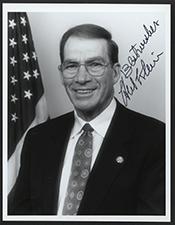
United States · Official source
300 records where Rep. Klein, Herbert C. [D-NJ-8] is listed as a sponsor, author, or other actor. Search with topics and years
United States · United States Congress · 3 February 1994
Designates March 20, 1994, as National Agriculture Day.
United States · United States Congress · 3 February 1994
Condemns: (1) the speech given by Khalid Abdul Muhammad as outrageous hate mongering of the most vicious and vile kind; and (2) all manifestations and expressions of racism, anti-Catholicism, anti-Semitism, and ethnic or religious intolerance.
United States · United States Congress · 2 February 1994
Designates May 30 through June 6, 1994, as a Time for the National Observance of the Fiftieth Anniversary of World War II.
United States · United States Congress · 2 February 1994
Designates March 8, 1994, as International Women's Day.
United States · United States Congress · 1 February 1994
Designates the week beginning October 2, 1994, as Chemical Dependency Nurses Week.
United States · United States Congress · 1 February 1994
Designates October 1994 as National Breast Cancer Awareness Month.
United States · United States Congress · 26 January 1994
TABLE OF CONTENTS: Title I: Programs to Exchange Vouchers for Firearms Title II: Tax Deduction for Taxpayers Who Donate Merchandise Vouchers National Firearms Exchange Act - Title I: Programs to Exchange Vouchers for Firearms - Amends the Omnibus Crime Control and Safe Streets Act of 1968 (Omnibus Act) to require the Director of the Bureau of Justice Assistance to establish procedures under which any unit of local government may apply for approval of a program to exchange merchandise vouchers for firearms. Requires the Director to establish criteria and procedures to determine whether any such program should be approved under this title. Prohibits the Director from approving any program that does not provide that all firearms surrendered to the program will be destroyed, but does not require the destruction of a firearm until it is no longer needed for investigatory or evidentiary purposes. Sets forth provisions regarding the timing of the approval process and the duration of approval status. Requires the Director to make every effort to secure from State governments amnesty for certain offenses for persons surrendering firearms. Authorizes the Director to make grants to approved programs. Requires the Director to establish grant application and award procedures for local governments whose programs are approved. Requires the Director to submit to the Congress an assessment of the effectiveness of this title regarding programs to exchange merchandise vouchers for firearms and of approved programs and to establish criteria for evaluating such effectiveness. Authorizes appropriations. Amends the Federal criminal code to grant amnesty to an individual surrendering, or in the process of surrendering, a firearm to an approved program (thus making specified provisions of the Omnibus Act and the National Firearms Act inapplicable with respect to such individual), with exceptions. Title II: Tax Deduction for Taxpayers Who Donate Merchandise Vouchers - Amends the Internal Revenue Code to allow a deduction for the fair market value of certain contributions of property or vouchers to be transferred to individuals surrendering firearms under a qualified gun exchange program.
United States · United States Congress · 25 January 1994
Designates April 28, 1994, as Exercise Tiger Day.
United States · United States Congress · 25 January 1994
Designates May 1994 as Older Americans Month.
United States · United States Congress · 25 January 1994
Expresses the sense of the Congress that a postage stamp should be issued to honor the 100th anniversary of the Jewish War Veterans of the United States and that the Citizens' Stamp Advisory Committee of the U.S. Postal Service should make such recommendation to the Postmaster General.
United States · United States Congress · 22 November 1993
Cancels the Space Station program. Authorizes appropriations to carry out such cancellation.
United States · United States Congress · 22 November 1993
Designates June 6, 1994, as D-Day National Remembrance Day.
United States · United States Congress · 22 November 1993
Designates 1994 through 1999 as the Years of the Girl Child.
United States · United States Congress · 22 November 1993
Expresses the sense of the Congress that the national policy of the United States should be to: (1) increase energy efficiency, as specified; (2) increase renewable energy technologies to 20 percent of the overall national energy mix by 2010; and (3) achieve these goals by adopting a specified national strategy.
United States · United States Congress · 21 November 1993
TABLE OF CONTENTS Title I: General Provisions Title II: Policy Coordination and Technology Programs Subtitle A: Policy Coordination and Program Planning Subtitle B: Environmental Technology Title III: Education Title IV: Standards Title V: International Programs Title VI: Financial and Regulatory Incentives Title VII: Authorization of Appropriations Title I: General Provisions - Environmental Technologies Act of 1993 - Sets forth congressional findings and purposes. Title II: Policy Coordination and Technology Programs - Subtitle A: Policy Coordination and Program Planning - Requires the Director of the Office of Science and Technology Policy to: (1) ensure the coordinated, interagency promotion of the research, development, and adoption of environmental technologies; and (2) develop priorities for Federal environmental technology research, development, and adoption efforts. (Sec. 202) Requires the Director to coordinate Federal activities and resources that are applied to life-cycle assessment in order to maximize the contribution of such assessments to sustainable economic development. (Sec. 203) Amends the Stevenson-Wydler Technology Innovation Act of 1980 to include goals for sustainable economic development within technology innovation programs. Includes such goals in other existing programs under specified Acts. Subtitle B: Environmental Technology - Establishes an Environmental Technologies Development and Integration Program, to be administered by the Administrator of the Environmental Protection Agency (EPA), to promote the research, development, and integration of technologies that will contribute to sustainable economic development. Makes eligible for assistance projects that: (1) develop advanced, precommercial environmental technologies, with emphasis on technologies that will contribute to sustainable economic development; and (2) develop the integration of multiple steps in the conversion of materials that are involved in the manufacture, reuse, or recycling of a product, the recycling of process wastes, or the provision of a service. (Sec. 211) Prohibits intellectual property owned and developed by a business receiving financial assistance from being disclosed by the Federal Government except in accordance with an agreement. Provides that title to such property arising from assistance shall vest in a company incorporated in the United States or an institution of higher education in the United States. (Sec. 212) Directs the Administrator and the Secretaries of Energy and Defense to submit a strategic plan for interagency coordination of programs for the development, demonstration, and deployment of innovative environmental control and remediation technologies. (Sec. 213) Establishes the President's Total Environmental Quality Award to be awarded periodically to companies and other organizations which have benefited the United States through the development and deployment of environmental technologies. Establishes a National Environmentally Sound Technology Award for individuals who have pioneered the development and use of a highly innovative environmental technology. (Sec. 214) Directs the Administrator, acting through the EPA Office of Research and Development, to use existing information network capabilities to provide access to data on environmental technologies developed, tested, or verified by programs under this Act and by other appropriate sources. Authorizes the Administrator to enter into partnership agreements ("alliances") with State or local government agencies and other specified entities to: (1) facilitate access to information incorporated in the networks; and (2) transfer to such entities other information that would enhance the development and adoption of environmental technologies. Encourages alliances to disseminate information, and provide technical assistance, to U.S. companies on opportunities for the more efficient use of materials and energy and for waste minimization, materials conversion, and recycling. Authorizes the Administrator to provide financial assistance to alliances under certain conditions. (Sec. 215) Directs the Administrator to establish a program to demonstrate the performance of environmental technologies at Federal laboratories and other Federal facilities. Makes U.S. companies and small businesses, nonprofit organizations, and institutions of higher education eligible to carry out demonstration projects. (Sec. 216) Directs the Administrator to establish a three-year pilot program to promote research on, and development of, environmentally efficient building materials through use of such materials in new and existing Federal facilities and buildings. Directs the Administrator to promulgate guidelines for Federal agencies on minimizing the creation of solid waste and maximizing the use of environmentally efficient building materials. Title III: Education - Requires the Director of the National Science Foundation to support undergraduate and graduate activities in the development of coursework materials and curricula in all scientific, engineering, and technical disciplines to incorporate environmental soundness and total cost accounting into the corresponding curricula. (Sec. 302) Requires the Director of the EPA Office of Research and Development to develop and support programs to improve understanding of the relationships between technology and the environment. Title IV: Standards - Directs the Secretary of Commerce to establish: (1) a program to support the clarification of standards of performance for environmental technologies to clarify quality, performance, and substitutability for conventional products; and (2) a mechanism for recognizing non-Federal organizations engaged in environmental standards setting and associated product performance verification activities for purposes of ensuring quality and enhancing consumer confidence and international recognition. (Sec. 402) Authorizes the Administrator to enter into joint agreements with State and local governments and private sector representatives to support Environmental Technology Verification Centers that verify, evaluate, and disseminate information on the performance and cost of environmental technologies. Authorizes financial assistance to such Centers. Authorizes the Administrator to engage directly with private sector organizations through verification partnerships if the Centers cannot verify the performance of technologies because of scale or complexity. (Sec. 403) Directs the Federal Trade Commission to: (1) conduct a study of scientific and technological information needed for the fair evaluation of commercial performance claims regarding environmental technologies; and (2) develop a plan for collaboration with Federal agencies that have expertise in such technologies to ensure the use of the best available scientific and technological information in evaluating such claims. Title V: International Programs - Encourages the Administrator to support programs in other nations for purposes of enhancing U.S. exports of environmental technologies and promoting the contribution of such technologies to international sustainable economic development. (Sec. 503) Directs the Secretary of Commerce to support activities to promote the export of U.S. environmental technologies. (Sec. 504) Establishes the Environmental Technologies Export Revolving Fund for purposes of providing financial assistance for the adaption and demonstration of U.S. environmental technologies to enhance exports to major international markets. Authorizes the Secretary to use the Fund for financial assistance to U.S. companies, research centers, institutions of higher education, and other appropriate organizations. Sets forth priority projects and conditions for financial assistance. Title VI: Financial and Regulatory Incentives - Directs the President to establish a program for evaluating and approving Federal purchases of environmental technology products. (Sec. 602) Requires the Administrator to study and report to the Congress on current environmental regulations and their effect upon innovation in environmental technologies and the introduction of new environmental products. (Sec. 603) Requires the President to study the potential for efficiently encouraging the development and use of environmental technologies through tax incentives. Title VII: Authorization of Appropriations - Authorizes appropriations.
United States · United States Congress · 19 November 1993
Propane Education and Research Act of 1993 - Directs the Secretary of Energy (the Secretary) to conduct a referendum among producers and retail marketers to authorize the creation of the Propane Education and Research Council and the levying of an assessment on odorized propane. Makes it the Council's mission to develop programs and enter into contracts for: (1) propane research and development; (2) consumer education; (3) propane market development; and (4) payment for program costs with funds collected under this Act. Prescribes guidelines under which the Council shall set annual assessments to cover program costs. Authorizes the Secretary to establish a program to coordinate Council operations with any State propane education and research council. Proscribes the use of Council funds for lobbying activities. Directs the Secretary to issue implementation regulations.
United States · United States Congress · 19 November 1993
TABLE OF CONTENTS: Title I: Consolidation of Information on Technologies Title II: Technology Transfer and Commercialization Financing Corporation Title III: Commercialization Financing Title IV: Alternative Minimum Tax on Corporations Importing Products Into the United States Title V: Miscellaneous Provisions Federal Technology Commercialization and Credit Enhancement Act of 1993 - Title I: Consolidation of Information on Technologies - Directs the Secretary of Commerce to establish a standardized, accessible data base describing all patents, licenses, technologies, and processes owned in whole or in part by the Federal Government. Provides for data base access by: (1) the Technology Transfer and Commercialization Financing Corporation (established by this Act); and (2) the public. Directs the Secretary to review current Federal technology transfer efforts. Title II: Technology Transfer and Commercialization Financing Corporation - Establishes a public/private Technology Transfer and Commercialization Financing Corporation (Corporation) to foster U.S. economic growth by providing credit for businesses and facilitating the transfer and commercialization of federally owned or developed patents, licenses, processes, and technologies. Title III: Commercialization Financing - Establishes in the Treasury the Technology Transfer Investment Fund. Authorizes appropriations. Directs the Corporation to provide outreach activities to areas that: (1) have a depressed economy or chronically high unemployment; (2) have been adversely affected by the North American Free Trade Agreement; or (3) are designated as Federal empowerment zones or enterprise communities. Title IV: Alternative Minimum Tax on Corporation's Importing Products into the United States - Amends the Internal Revenue Code to impose an alternative minimum tax on certain corporations importing products into the United States. Title V: Miscellaneous Provisions - Sets forth effective date and separability provisions.
United States · United States Congress · 19 November 1993
Designates 1994 as The Year of Gospel Music.
United States · United States Congress · 19 November 1993
Expresses the sense of the Congress that: (1) the President should seek a decision by the United Nations to immediately and completely cut off the delivery of natural gas to Serbia; and (2) such cutoff should continue until the regular and unimpeded flow of natural gas to Sarajevo and other areas of Bosnia-Herzegovina is fully restored.
United States · United States Congress · 18 November 1993
Environmentally Advanced Technologies Research and Development Act - Establishes the Environmental Technology Export Revolving Fund to provide financial assistance for the adaptation and demonstration of U.S. environmental technologies to enhance exports to major international markets.
United States · United States Congress · 17 November 1993
Voter Protection Act of 1993 - Amends the Federal criminal code to provide that whoever gives a person anything of value with the intent to influence such person to withhold his or her vote in an election for Federal, State, or local political office, shall be fined, imprisoned not more than two years, or both.
United States · United States Congress · 17 November 1993
Prohibits the shipment in interstate or foreign commerce of steel jaw leghold traps and of articles of fur derived from animals trapped in such traps. Prescribes criminal penalties for violations of this Act. Directs the Secretary of the Interior to reward nongovernment informers for information leading to a conviction under this Act. Empowers enforcement officials to detain, search, and seize suspected merchandise or documents and to make arrests with and without warrants. Subjects seized merchandise to forfeiture.
United States · United States Congress · 16 November 1993
Yellowstone National Park 125th Anniversary Commemorative Coin Act - Directs the Secretary of the Treasury to: (1) mint and issue coins to commemorate the 125th anniversary of Yellowstone National Park; and (2) distribute 25 percent of the surcharges received from coin sales to the Secretary of the Interior for the Park, 25 percent to the Secretary for the National Park Service, and 50 percent to the Treasury for the sole purpose of reducing the national debt.
United States · United States Congress · 16 November 1993
Directs the Secretary of Energy to terminate the gas turbine-modular helium reactor program of the Department of Energy. Transfers funds appropriated for such program to the Deficit Reduction Fund.
United States · United States Congress · 10 November 1993
Great Falls Preservation and Redevelopment Act of 1993 - Establishes the Great Falls Historic District in Paterson, New Jersey, to be administered by the Secretary of the Interior. Authorizes the Secretary to enter into cooperative agreements with: (1) nonprofit entities for the purchase of property or easements, emergency stabilization, and the establishment of a coordinated fund to carry out this Act; (2) property owners for the preservation and interpretation of properties of historical or cultural significance; and (3) the State of New Jersey for rescue, firefighting, and law enforcement services in the District. Authorizes appropriations.
United States · United States Congress · 10 November 1993
United States Military Academy Bicentennial Commemorative Coin Act of 1993 - Directs the Secretary of the Treasury to issue five-dollar gold coins, one-dollar silver coins, and half dollar clad coins emblematic of the U.S. Military Academy. Mandates that surcharges collected from coin sales be paid to the Association of Graduates, U.S. Military Academy, to assist its efforts to provide direct support to the Corps of Cadets, U.S. Military Academy.
United States · United States Congress · 10 November 1993
Designates March 20 through 26, 1994, as Small Family Farm Week.
United States · United States Congress · 9 November 1993
Apollo 11 Moon Landing 25th Anniversary Commemorative Coin Act - Directs the Secretary of the Treasury to: (1) issue coins emblematic of humans first landing on the moon 25 years ago; and (2) pay surcharges received from coin sales to the Aerospace Education Alliance to develop and implement a math and science skills program for America's teachers in grades kindergarten through eight.
United States · United States Congress · 9 November 1993
Designates June 17, 1994, as African-American Men Positive Role Model Day.
United States · United States Congress · 9 November 1993
Designates May 6, 1994, as African-American Women Positive Role Model Day.
United States · United States Congress · 3 November 1993
Directs the President to declare June 7 through 14, 1994, as National Flag Celebration Week.
United States · United States Congress · 26 October 1993
Guam and the Northern Marianas Commemorative Coin Act - Directs the Secretary of the Treasury to issue one-dollar coins emblematic of the American forces that liberated Guam and the Northern Mariana Islands in World War II. Requires payment of surcharges received from the coin sales to the Secretary of the Interior to construct a visitors center and museum at: (1) the War in the Pacific National Historical Park on Guam; and (2) the American Memorial Park on Saipan.
United States · United States Congress · 20 October 1993
Low-Income Housing Preservation Act of 1993 - Amends the Internal Revenue Code to provide a 15-year recovery period for the depreciation deduction for new investments to rehabilitate qualified low-income housing projects. Exempts a specified amount of such rehabilitation costs from the passive loss limitations.
United States · United States Congress · 19 October 1993
American Shipyard Worker Protection Act - Prohibits the Secretary of the Navy from contracting with a shipyard outside the United States for long-term scheduled maintenance work on a naval vessel unless the Secretary of Defense certifies to the appropriate congressional committees in advance that there is a compelling economic reason for doing so.
United States · United States Congress · 15 October 1993
Designates March 21 through 27, 1994, as National Long-Term Care Administrators Week.
United States · United States Congress · 13 October 1993
1995 Franklin Delano Roosevelt Commemorative Coin Act - Directs the Secretary of the Treasury to issue commemorative one-dollar silver coins bearing a likeness of Franklin Delano Roosevelt. Requires the Secretary to distribute proceeds from surcharges ($10 per coin) in equal allocations to: (1) the National Park Foundation Restricted Account for the Franklin Delano Roosevelt Memorial; and (2) the National Park Service Restricted Construction Account for the Franklin Delano Roosevelt Memorial.
United States · United States Congress · 12 October 1993
Gun Safety Act of 1993 - Amends the Consumer Product Safety Act to allow the Consumer Product Safety Commission to regulate the risk of injury associated with firearms. Prohibits the Commission from banning firearms as hazardous products.
United States · United States Congress · 12 October 1993
Designates May 1 through 7, 1994, as National Walking Week.
United States · United States Congress · 7 October 1993
Antimoney Laundering Act of 1993 - Amends Federal law to prescribe guidelines for both mandatory and discretionary exemptions from monetary transaction reporting requirements for depository institutions. Directs the Secretary of the Treasury (the Secretary) to: (1) submit an annual status report to the Congress on the consequent reduction in the overall number of currency transaction reports; (2) streamline currency transaction reports to eliminate information of little value for law enforcement purposes; and (3) assign a single designee to receive reports of suspicious transactions. Directs the Comptroller of the Currency and the Board of Governors of the Federal Reserve System to each establish a pilot program to test the feasibility of using their own examiners to identify money laundering schemes involving depository institutions under their purview. Includes negotiable instruments drawn on foreign banks within the purview of monetary transactions subject to Federal recordkeeping and reporting requirements. Empowers Federal banking agencies to assess civil money penalties. Expresses the sense of the Congress that the States should: (1) establish uniform laws for licensing and regulating businesses which, although not depository institutions, engage in currency transactions; (2) provide sufficient resources for regulatory enforcement; and (3) develop a model statute to implement the regulatory scheme. Directs the Secretary to study and report to the Congress on the States' progress towards developing a model statute. Sets forth Federal registration requirements for money transmitting businesses. Establishes civil and criminal penalties for violation of such requirements. Includes certain casinos and gaming establishments within the purview of monetary transactions subject to Federal recordkeeping and reporting requirements. Denies exemption from Federal recordkeeping and reporting requirements for monetary instruments transactions to: (1) any State or its political subdivisions; and (2) financial institutions already subject to State regulation. Revokes prior recordkeeping exemptions granted prior to the date of enactment of this Act. Requires the Secretary to study and report to the Congress on cashiers' checks in association with: (1) money laundering schemes; and (2) the need for additional recordkeeping requirements.
United States · United States Congress · 6 October 1993
TABLE OF CONTENTS: Title I: Grants to States to Provide Worker Adjustment Assistance Benefits to Eligible Displaced Workers Title II: Worker Adjustment Assistance Benefits Subtitle A: Income Support Subtitle B: Wage Supplements Subtitle C: Training Subtitle D: Rapid Response Assistance, Basic Readjustment Services, Relocation Allowances, and Job Search Allowances Title III: General Provisions Displaced Worker Retraining Act of 1993 - Establishes a comprehensive program of adjustment assistance to workers displaced as a result of any program, project, or activity carried out under Federal law. Authorizes appropriations. Title I: Grants to States to Provide Worker Adjustment Assistance Benefits to Eligible Displaced Workers - Directs the Secretary of Labor to make grants to applicant States to provide worker adjustment assistance benefits to eligible dislocated workers. Title II: Worker Adjustment Assistance Benefits - Subtitle A: Income Support - Sets forth dislocated worker eligibility conditions. Requires a dislocated worker to be actively seeking employment or to be enrolled in training to be eligible for income support. Allows those eligible for income support to apply for training under subtitle C. Provides for weekly income support, including amount and duration, income support factors, additional weeks, adjustment of amount, wage supplement offsets, and application of State laws. Subtitle B: Wage Supplements - Provides for weekly wage supplements, in specified amounts for a maximum of 156 weeks, for eligible displaced workers. Makes dislocated workers who are eligible for such wage supplements also eligible to apply for part-time training under subtitle C. Offsets such wage supplement weeks by any income support weeks received under subtitle A. Subtitle C: Training - Sets forth conditions of State approval of training for displaced workers. Requires priority for training for occupations and industries that utilize new technologies. Sets forth requirements relating to State and Federal payment of training costs, as well as training costs paid from other sources. Lists types of training programs that may be approved. Sets certain restrictions on State approval. Makes 156 weeks of such training the maximum number which a dislocated worker may receive. Allows a State to authorize specified limited forms of supplemental assistance during such training. Directs a State to pay costs of any approved on-the-job training of a displaced worker, but only if certain conditions are met, such as nondisplacement of current workers, nonimpairment of collective bargaining agreements, and certification of continued employment for the trained worker. Prohibits declaring a displaced worker ineligible for State or Federal unemployment insurance or benefits under this Act because that individual is in or is entering approved training. Subtitle D: Rapid Response Assistance, Basic Readjustment Services, Relocation Allowances, and Job Search Allowances - Entitles to 13 weeks of rapid response assistance and 156 weeks of basic readjustment services: (1) any displaced worker, whether or not eligible for subtitle A or B benefits; or (2) any individual who has received notice of impending total or partial separation from employment and who had at least ten weeks of employment during the 52 weeks preceding such notice. Provides for State delivery of rapid response assistance, with oversight by the Secretary. Allows a displaced worker, whether or not eligible for subtitle A or B benefits, to apply to the State for: (1) a relocation allowance; and (2) a job search allowance. Sets forth conditions for approval of such allowances. Title III: General Provisions - Sets forth general provisions relating to fraud and recovery of overpayments, penalties, subpoena power, and regulations.
United States · United States Congress · 30 September 1993
Deficit Reduction Lock Box Act of 1993 - Establishes the Deficit Reduction Trust Fund consisting of amounts contained in deficit reduction lock box provisions of appropriation Acts. Reduces discretionary spending limits by amounts transferred to the Fund. Amends the Congressional Budget Act of 1974 to require that amounts resulting from reduced spending under general appropriation bills be placed in the Fund.
United States · United States Congress · 30 September 1993
Designates October 29, 1993, as National Firefighters Day.
United States · United States Congress · 28 September 1993
Home Equity Protection Act of 1993 - Amends the Truth in Lending Act to require the creditor of each high cost mortgage to provide certain clearly written, conspicuous disclosures regarding the risks associated with such mortgages. Prohibits such mortgages from containing: (1) a prepayment penalty for paying all or part of the principal prior to the date on which the balance is due; (2) certain refinancing fees; (3) balloon payments; (4) negative amortization; (5) certain prepared payments; and (6) specified unfair, deceptive, or evasive acts. Declares that State authority to regulate certain high rate mortgage loans is not preempted by specified Federal statutes. Includes within the creditor's liability for damages for noncompliance with this Act all finance charges and fees paid by the consumer. Empowers the appropriate State attorney general to bring an action to enforce this Act. Subjects an assignee of a high cost mortgage to all the claims and defenses that the consumer could assert against the creditor.
United States · United States Congress · 27 September 1993
Designates the week beginning October 25, 1993, as World Population Awareness Week.
United States · United States Congress · 23 September 1993
Designates October 19, 1993, as National Mammography Day.
United States · United States Congress · 23 September 1993
Calls on the President to direct the U.S. Representative to the United Nations (UN) to: (1) urge the UN to begin formal investigations into violations of international law that have been committed in the former Yugoslavia since 1991; (2) encourage the UN Commission of Experts to begin using funds earmarked for such investigations by immediately sending teams of investigators to locations in Germany, Austria, Denmark, France, Croatia, Kosovo, and Serbia, where thousands of victims of war crimes are residing; and (3) urge the UN, by October 6, 1993, to appoint a prosecutor for the International Tribunal to continue and expand such investigations and to prosecute persons responsible for such violations. Encourages the President to provide, on temporary assignment to the Commission or to the prosecutor, Federal personnel who have experience working with victims of rape and other heinous crimes to interview such victims and to gather legal evidence relating to such crimes. Requests the President to work with the UN to establish a time schedule for aggressive prosecution of persons responsible. Calls on the UN Security Council to withhold consideration of lifting the economic sanctions against the Federal Republic of Yugoslavia (Serbia and Montenegro) until all indictments against those persons ultimately responsible for such violations have been issued by the International Tribunal and such persons have surrendered for trial.
United States · United States Congress · 22 September 1993
Crime Victims' Bill of Rights Act - Amends Rule 32 of the Federal Rules of Criminal Procedure to require the court, before imposing sentence, to address personally any victim of the offense for which sentence is to be imposed (or a member of that victim's immediate family or, in the court's discretion, any other appropriate person representing the victim) who is present at the sentencing hearing and to afford such individual the opportunity to make a statement and present information in relation to the sentence. Permits the court, upon request by a victim, to hear in camera such a statement by that victim. Amends the Victims of Crime Act of 1984 to condition Federal grant eligibility of crime victim compensation programs on a State providing an effective system of notice to eligible victims of the existence of compensation and other programs to assist victims of crime. Amends the Omnibus Crime Control and Safe Streets Act of 1968 to: (1) authorize drug control and system improvement grants to States to be used for programs that allow for the physical and visual separation of a victim of crime from an alleged perpetrator of such crime while waiting in a judicial facility for a courtroom appearance; and (2) provide for a reduction of formula grants by 25 percent (for redistribution to other participating States) for States which fail to notify a crime victim of specified rights. Directs the Attorney General to assure that Federal prosecutors and law enforcement officials: (1) provide an effective system of notice to crime victims of the existence of compensation and other programs to assist victims who might be eligible to participate; (2) notify crime victims of the availability of, and provide such victims the opportunity for, visual and physical separation from alleged crime perpetrators while waiting in a judicial facility for a courtroom appearance; and (3) provide a crime victim with the earliest possible notice of the scheduling of each court proceeding or parole hearing that the witness is required or entitled to attend.
United States · United States Congress · 15 September 1993
General Aviation Revitalization Act of 1993 - Amends the Federal Aviation Act of 1958 to set forth a 15-year statute of limitations within which a person may bring a civil action against an aircraft manufacturer for damages for death or injury or damage to property arising from an aircraft accident.
United States · United States Congress · 15 September 1993
Designates October 3 through 10, 1993, as Great American Beer Week.
United States · United States Congress · 9 September 1993
Prohibits a label on a product stating that the product was made in America unless: (1) the product is registered with the Department of Commerce as required by this Act; (2) at least 60 percent of the product was manufactured in the United States; and (3) final assembly took place in this country. Amends the Tariff Act of 1930 to require products to provide additional information to consumers regarding the foreign content of imported articles. Requires any product manufactured in this country and which is assembled with a part from a foreign country to state on its label: (1) the country of origin of such part; and (2) the proportion of the cost of such product which is accounted for by such part. Sets forth penalties for violating provisions of this Act.