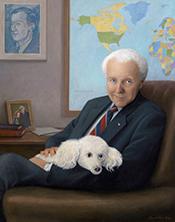
United States · United States Congress · 7 January 1997
Medicare Preventive Benefit Improvement Act of 1997 - Amends title XVIII (Medicare) of the Social Security Act to provide for expanded coverage of preventive benefits under part B (Supplementary Medical Insurance) of the Medicare program. Makes all women over age 49 eligible for annual screening mammography benefit coverage. Waives the deductible co-payment on such benefit. Makes women of childbearing age (if they have not had a negative result in such a test in each of the preceding three years), or at high risk of developing cervical cancer, eligible for yearly pap smears, by suspending in their cases a specified three-year frequency limitation on benefit coverage for screening pap smears. Makes such women eligible also for yearly screening pelvic exams, including a clinical breast exam. Makes other women eligible for triennial screening pelvic exams. Waives the deductible co-payment for such exams. Adds coverage of screening procedures, with specified payment and frequency limitations, for early detection of colorectal cancer, including fecal occult blood test, flexible sigmoidoscopy, and colonoscopy for high risk individuals, as well as a barium enema if the Secretary of Health and Human Services finds that to be an appropriate alternative to a sigmoidoscopy or a colonoscopy. Directs the Secretary to make a decision within two years about covering screening barium enemas as such an alternative. Adds biennial coverage of certain prostate cancer screening procedures for men over 50 years of age, including a digital rectal examination and a prostate-specific antigen (PSA) blood test. Adds coverage of the following diabetes screening benefits: (1) diabetes outpatient self-management training services; and (2) blood-testing strips (with payment based on inexpensive, routinely purchased durable medical equipment). Directs the Secretary to: (1) establish outcome measures to evaluate improvement of the health of Medicare beneficiaries with diabetes mellitus; and (2) submit recommendations to the Congress regarding modifications to the Medicare coverage of services for such beneficiaries.
United States · United States Congress · 7 January 1997
Stop Sweatshops Act of 1997 - Amends the Fair Labor Standards Act of 1938 to provide for the civil liability of manufacturers for sweatshop conditions maintained by their contractors in the garment industry. Sets forth civil penalties for violation of recordkeeping and payroll accounting requirements.
United States · United States Congress · 7 January 1997
Military Retirement Equity Act of 1997 - Permits retired members of the armed forces to be paid retirement pay concurrently with compensation for any service-connected disability if the person's entitlement to such retirement pay is based solely on age, length of service, or both. Reduces the retirement pay of individuals receiving both types of pay by a specified percentage of the disability compensation which decreases as the disability rating increases. Prohibits any reduction in the retirement pay of a disabled person when the disability rating is total. Declares that, once the Federal budget deficit has been reduced, the Congress should reexamine and eliminate any offset of retired pay by a veteran's disability compensation.
United States · United States Congress · 7 January 1997
Breast Cancer Patient Protection Act of 1997 - Amends the Public Health Service Act to prohibit group health plans and health insurance issuers offering group health insurance coverage, with regard to hospital stays in connection with breast cancer treatment, from: (1) covering less than 48 hours after mastectomies or less than 24 hours after lymph node dissections; or (2) requiring plan or issuer authorization for prescribing any length of stay. Prohibits: (1) denying eligibility, enrollment, or renewal to avoid these requirements; (2) providing payments or rebates to women; or (3) penalizing or providing incentives to providers. Applies the same requirements to issuers in the individual market.
United States · United States Congress · 7 January 1997
Voting Rights of Homeless Citizens Act of 1997 - Prohibits the imposition or application by any State or political subdivision of any standard, practice, procedure, voting qualification, or prerequisite to voting to deny or abridge the right of any U.S. citizen to vote because that citizen resides at or in a non-traditional abode. Authorizes the Attorney General to commence a civil action or an aggrieved citizen to institute a proceeding under this Act for injunctive relief against a violation of such prohibition.
United States · United States Congress · 7 January 1997
Medicare Diabetes Education and Supplies Amendments of 1997 - Amends title XVIII (Medicare) of the Social Security Act to provide for Medicare coverage of diabetes outpatient self-management training services and blood-testing strips for individuals with diabetes.
United States · United States Congress · 7 January 1997
Amends Federal law to exclude the Civil Service Retirement and Disability Fund from the Federal and congressional budgets, and exempt it from any general budget limitation imposed by statute on U.S. budget outlays and from certain orders issued under the Balanced Budget and Emergency Deficit Control Act of 1985 (Gramm-Rudman-Hollings Act).
United States · United States Congress · 7 January 1997
Employee Educational Assistance Act of 1997 - Amends the Internal Revenue Code to: (1) permanently extend the exclusion from gross income of employer-provided educational assistance; and (2) restore the exclusion for such assistance on the graduate level.
United States · United States Congress · 7 January 1997
Declares that the United States is fully committed to the goals enunciated in the General Framework Agreement for Peace in Bosnia and Herzegovina and associated annexes negotiated in Dayton, Ohio, and signed in Paris, France (Agreement), and to the unified state of Bosnia and Herzegovina. Commends the NATO-led Implementation Force (IFOR) for its work in establishing peace and stability in Bosnia and Herzegovina. Encourages the Organization for Security and Cooperation in Europe (OSCE), other institutions, and non-governmental organizations to promote further rebuilding of democratic institutions and civic society in Bosnia and Herzegovina and neighboring countries. Opposes admission to international organizations and fora of, and the receipt of certain loans and financial or technical assistance from international financial institutions by, the parties to the Agreement until such states have complied with their obligations under the Agreement and United Nations Security Council Resolutions to cooperate fully with the International Criminal Tribunal. Urges: (1) the United States and the international community to oppose secession by any entity from the unified state of Bosnia and Herzegovina, to actively support the work of the parties to establish democratic institutions and the rule of law in Bosnia and Herzegovina, to increase support for the efforts of the Tribunal, and to support the request of the Tribunal President for the High Representative to impose sanction on those who have not complied with their obligations to cooperate fully with the Tribunal; (2) the signatories to the Agreement and those nations and organizations participating in its implementation to ensure full implementation of the arms control and confidence-building agreements reached as part of the Agreement; (3) IFOR, the NATO-led Stabilization Force (SFOR), the International Police Task Force, and other designated missions to make it an urgent priority to detain and bring to justice persons indicted by the Tribunal; (4) IFOR and SFOR to take an active role in ensuring respect by the parties to the Agreement for freedom of movement throughout the country; and (5) the United States, OSCE, and the international community to press the Serbian Government to recognize the results of recent elections, facilitate installation of duly elected opposition candidates, undertake a dialogue with democratic forces working for reform, and act immediately to improve respect for human rights and fundamental freedoms.
United States · United States Congress · 30 September 1996
Prohibits the President, except in specified circumstances, from providing United States assistance to the government of any country that provides landing rights to aircraft owned or operated by the Government of Libya or by a Libyan national.
United States · United States Congress · 27 September 1996
Recognizes that payment by the United States of its assessment for the regular budget and the peacekeeping operations of the United Nations (UN) is a solemn treaty obligation, voluntarily undertaken through U.S. ratification of the UN Charter. Believes that resolution of financing and reform issues in the UN can lead to its capability to meet the challenges of the 21st century. Concludes that U.S. leadership in meeting financial obligations to, and working with other countries to achieve reform in, the UN is indispensable to its future viability. Commits to continuing U.S. leadership in the UN by honoring U.S. past and current legal financial obligations to it. Resolves to meet the financial obligations of the United States to the UN in a full and timely manner consistent with international law and the U.S. role as a founder and responsible UN Member.
United States · United States Congress · 26 September 1996
Declares that the United States is committed to the goals enunciated in the General Framework Agreement for Peace in Bosnia, Herzegovina, and associated annexes. Urges: (1) the United States and the international community to oppose efforts to advocate secession and to support the work of the parties to the Agreement to establish democratic institutions and the rule of law in Bosnia and Herzegovina; (2) the signatories to such Agreement and those nations and organizations participating in its implementation to make it an urgent priority to bring to justice persons indicted by the International Criminal Tribunal for the former Yugoslavia; and (3) the latter entities to ensure implementation of the arms control and confidence building agreements reached as part of the Agreement, including the Agreement on Sub-Regional Arms Control, and to undertake the destruction of those weapons above agreed ceilings. Commends the members of the NATO-led Peace Implementation Forces in Bosnia and Herzegovina for their work in carrying out their mandate and in ensuring a calm and orderly election process.
United States · United States Congress · 25 September 1996
Stop Sweatshops Act of 1996 - Amends the Fair Labor Standards Act of 1938 to provide for the civil liability of manufacturers for sweatshop conditions in the garment industry. Sets forth civil penalties for violation of recordkeeping and payroll accounting requirements.
United States · United States Congress · 25 September 1996
Commends the Governments of Hungary and Romania for reaching agreement on the Treaty of Understanding, Cooperation, and Good Neighborliness signed on September 16, 1996, and for their efforts to foster improved relations in all fields. Calls upon the President to support the implementation of the provisions of the Treaty and to promote the efforts of Romania and Hungary for regional cooperation as the best means of bringing these two countries into the North Atlantic Treaty Organization and to ensure lasting security in the region.
United States · United States Congress · 25 September 1996
Urges the Government of Croatia to properly preserve the memorial at the site of the Jasenovac concentration and death camp in Croatia in a way that maintains the fidelity of the site to its history. Condemns proposals which would vary from this history. Calls on the Secretary of State: (1) in conjunction with our allies, to condemn proposals which would undermine the accurate interpretation of the history of the Holocaust in Croatia; and (2) to monitor the development of proposals for the Jasenovac memorial. Calls on: (1) the Government of Croatia to work in concert with internationally recognized institutions of remembrance when developing plans for the preservation of the memorial; and (2) the Chairman of the Council to study the proposals for Jasenovac, to educate the public about the dangers of denial and revisionism relating to the Holocaust, and report to the Congress on such activities.
United States · United States Congress · 24 September 1996
TABLE OF CONTENTS: Title I: Amendments to Existing Land Management Laws Title II: Protection for Northwest Ancient Forests, Roadless Areas, and Special Areas Act to Save America's Forests - Title I: Amendments to Existing Land Management Laws - Amends the Forest and Rangeland Renewable Resources Planning Act of 1974 (National Forest System), the Federal Land Policy and Management Act of 1976 (public lands), the National Wildlife Refuge System Administration Act of 1966 (National Wildlife Refuge System), the National Indian Forest Resources Management Act (Indian lands), and Federal law relating to forest management on military lands to: (1) provide for native biodiversity conservation; and (2) restrict and prohibit certain logging practices. Title II: Protection for Northwest Ancient Forests, Roadless Areas, and Special Areas - Designates specified Special Areas which shall be subject to restrictions on road construction and logging in the following States: (1) Alabama; (2) Alaska; (3) Arizona; (4) Arkansas; (5) California; (6) Colorado; (7) Georgia; (8) Idaho; (9) Illinois; (10) Minnesota; (11) Montana; (12) New Mexico; (13) North Carolina; (14) Oregon; (15) South Carolina; (16) South Dakota; (17) Tennessee; (18) Texas; (19) Vermont; and (20) Wyoming. Restricts road construction and logging in Northwest Ancient Forests, Special Areas, and roadless areas on Federal lands.
United States · United States Congress · 24 September 1996
Calls for the United States to: (1) continue its leadership role within the international community in seeking a solution to the problems of the ethnic groups of the Federal Republic of Yugoslavia; (2) continue to oppose lifting the "outer wall of sanctions" against Yugoslavia until the situation of the Bosniac people of the Sanjak region (along with that of other ethnic groups) is substantially improved; and (3) raise the issue of human rights violations in the Sanjak region with Yugoslavia at every opportunity. Calls for the Yugoslav Government to: (1) restore political freedom in such region, end persecution of political leaders, and guarantee the safe return of those Bosniac people forced to leave the region; and (2) permit the return of a permanent mission of the Organization for Security and Cooperation in Europe to the Sanjak region to monitor and report on developments and to help establish the necessary conditions for observing elections.
United States · United States Congress · 19 September 1996
California Bay-Delta Environmental Enhancement and Water Security Act - Authorizes appropriations for FY 1998 through 2000 for the initial Federal share of the cost of developing and implementing: (1) a specified portion of an ecosystem protection plan for the San Francisco Bay Sacramento-San Joaquin Delta Watershed (Bay-Delta) in California; and (2) the ecosystem restoration elements of the long-term California-Federal Bay-Delta Program. Requires such appropriated funds to be administered in accordance with procedures established by such Program until the Congress authorizes an entity recommended by the Program to carry out this Act. Requires funds authorized to be appropriated to agencies that are currently or that subsequently become Program participants to be in addition to the baseline funding levels established in this Act for currently authorized projects and programs under the Central Valley Project Improvement Act and other currently authorized Federal programs for the purpose of Bay-Delta ecosystem protection and restoration. Authorizes agencies and departments that are or that become participants in the Program to undertake the activities and programs for which Federal cost sharing is provided by this Act. Requires the United States to immediately initiate coordinated consultations and negotiations with California to expeditiously execute a specified cost-sharing agreement signed by its Governor on July 11, 1996. Directs the Office of Management and Budget to submit to the House and Senate Committees on Appropriations, as part of the President's FY 1998 Budget, an interagency budget crosscut that displays Federal spending for FY 1993 through 1998 on ecosystem restoration and other purposes in the Bay-Delta Region, separately showing funding provided previously or requested under pre-existing authorities and new authorities granted by this Act.
United States · United States Congress · 19 September 1996
TABLE OF CONTENTS: Title I: Child Labor Free Labeling Standards Title II: Child Labor Free Commission Title III: Recognition of Exemplary Corporate Efforts Title IV: Definitions Child Labor Free Consumer Information Act of 1996 - Title I: Child Labor Free Labeling Standards - Directs the Secretary of Labor to issue regulations to ensure that a label using any term or symbol denying the use of child labor does not make a false statement or suggestion that the article or section of wearing apparel or sporting good was not made with child labor. Requires such standards to encourage the use of an easily identifiable symbol or term indicating that the article or section of wearing apparel or sporting good was not made with child labor. (Sec. 101) Requires a producer, importer, exporter, distributor, or other person intending to use any such label to notify the Child Labor Free Commission (CLFC, established under title II of this Act) within 60 days after the product bearing that label becomes available to the public for purchase. Requires the Commission to review the notification. Authorizes the Secretary to charge a fee to cover the expenses of the CLFC in reviewing a notification. Makes it a violation of the Federal Trade Commission Act (FTCA) for any producer, importer, exporter, distributor, or seller of any article of wearing apparel (or section of an article of wearing apparel) or sporting good that is exported from or offered for sale in the United States to: (1) falsely indicate on the label or the packaging of that item that the item was not made with child labor; or (2) otherwise falsely claim or suggest that the item was not made with child labor. Amends FTCA to prescribe civil penalties for such violations. Establishes in the Treasury the Free the Children Fund for receipt of such penalties. Authorizes annual appropriations of such amounts in the Fund for specified educational and other programs to eliminate child labor. (Sec. 102) Directs the CLFC to assist the Federal Trade Commission (FTC) by reviewing petitions alleging violations of the labeling standards under this Act. (Sec. 103) Directs the Secretary of Commerce, upon discovering a violation of this Act in the course of an investigation, to report it to the Secretary of Labor, who will review such report and, as appropriate, refer the violation to the FTC for enforcement under FTCA. Title II: Child Labor Free Commission - Establishes the Child Labor Free Commission (CLFC). (Sec. 202) Directs the CLFC to: (1) assist the Secretary of Labor in developing child free labor labeling standards, and in developing and implementing a compliance system; and (2) commence developing an easily identifiable labeling standard that the Secretary of Labor shall issue to encourage the use of voluntary labels assuring consumers that an article of wearing apparel or sporting good was made without the use of sweatshop or exploited adult labor. Title III: Recognition of Exemplary Corporate Efforts - Directs the Secretary of Labor to: (1) issue annual reports concerning companies making exemplary progress in ensuring that products they make, sell, or distribute are not made with abusive and exploitative child labor; and (2) develop and implement, with the CLFC, other methods of recognizing such exemplary company programs. Title IV: Definitions - Defines child as an individual who has not attained the age of: (1) 15 years, as measured by the Julian calendar; or (2) 14 such years, for a resident of a country that, by law, so defines a child.
United States · United States Congress · 12 September 1996
Prohibits the President from supporting the admission of China into the World Trade Organization (WTO) unless the Congress passes a joint resolution allowing the President to support such admission. Directs the President to: (1) notify the Congress if China becomes a member of the WTO without the support of the United States; and (2) submit notice of the withdrawal of the United States from the WTO Agreement. Makes a conforming amendment to the Uruguay Round Agreements Act.
United States · United States Congress · 5 September 1996
TABLE OF CONTENTS: Title I: Foreign Relations Provisions Title II: Foreign Assistance Provisions Human Rights Restoration Act of 1996 - Title I: Foreign Relations Provisions - Amends the Foreign Relations Authorization Act, Fiscal Years 1994 and 1995 to revise provisions authorizing the charging of fees for processing machine readable nonimmigrant visas and machine readable combined border crossing identification cards and nonimmigrant visas. Changes the use of such fees, for FY 1996 and 1997, from recovering the costs of consular services to recovering the costs of the Department of State's border security program. Repeals the prohibition against charging such fees to a citizen of a country signatory to the North American Free Trade Agreement (NAFTA). (Sec. 102) Directs the President to report semiannually to the appropriate congressional committees on: (1) methods employed by Cuba to enforce the United States-Cuba agreement of September 1994 to restrict Cuban immigration to the United States; and (2) the treatment of such people by Cuba who have returned there pursuant to the United States-Cuba agreement of 1995. (Sec. 103) Amends the Foreign Operations, Export Financing, and Related Programs Appropriations Act, 1990 to extend through FY 1997 the special allocation of 1,000 admissions into the United States per year of refugees from the independent states of the former Soviet Union, Estonia, Latvia, and Lithuania who have been persecuted for participation in the Ukrainian Catholic or Orthodox churches. Extends through FY 1997 the period for specified aliens from the former Soviet Union, Estonia, Latvia, Lithuania, Vietnam, Laos, and Cambodia to be paroled into the United States after denial of refugee status for purposes of qualifying for adjustment of status to permanent resident. (Sec. 104) Amends the Immigration and Nationality Act to revise the definition of "refugee" to declare that a person who has been forced to have an abortion or undergo involuntary sterilization, or who has been persecuted for refusing to do so, or for other resistance to a coercive population control program, shall be deemed to have been persecuted on account of political opinion. States that anyone with a well-founded fear that he or she will be forced to undergo such a procedure, or be subjected to persecution for such failure, refusal, or resistance, shall be deemed to have a well-founded fear of persecution on account of political opinion. (Sec. 105) Requires the Director of the United States Information Agency (USIA) to take steps to provide opportunities for participation in educational and cultural exchange programs to human rights and democracy leaders of countries whose people do not enjoy freedom and democracy, including but not limited to China, Vietnam, Cambodia, Tibet, and Burma. (Sec. 106) Directs the USIA Director to establish educational and cultural exchange programs between the United States and Tibet. Specifies the number of scholarships to be made available during FY 1997 to Tibetan and Burmese students and professionals who are outside their respective countries. (Sec. 107) Amends Federal law to authorize the Secretary of Transportation to make improvements to the Rio Grande Canalization Project, especially in the reach between the Percha Diversion Dam in New Mexico and the American Diversion Dam in El Paso, Texas. Title II: Foreign Assistance Provisions - Amends the Foreign Assistance Act of 1961 to require a certain human rights report to include: (1) the votes of each member of the United Nations Commission on Human Rights on all country-specific and thematic resolutions voted on at the Commission's annual session; and (2) the extent to which each country has extended protection to refugees, including the provision of first asylum and resettlement. (Sec. 202) Prohibits the President from providing economic or military assistance or arms transfers to the Government of Mauritania unless he certifies to the Congress that such government has taken action to eliminate chattel slavery, including the enactment and enforcement of anti-slavery laws that provide appropriate punishment for violators.
United States · United States Congress · 5 September 1996
International Child Labor Elimination Act of 1996 - Directs the Secretary of Labor to annually identify foreign countries that do not prohibit child labor, or that have laws prohibiting child labor but do not enforce them, and those industries in such countries in which child labor is used. Prohibits U.S. and multilateral assistance to identified countries, with specified exceptions. Authorizes appropriations for a U.S. contribution to the International Labor Organization for the activities of the International Program on the Elimination of Child Labor.
United States · United States Congress · 2 August 1996
Condemns human rights abuses and denials of religious liberty to Christians around the world and calls upon the responsible regimes to cease such abuses. Recommends that the President expand and invigorate U.S. international advocacy on behalf of persecuted Christians and initiate a thorough examination of all U.S. policies that affect persecuted Christians. Encourages the President to proceed expeditiously in appointing a White House special advisor on religious persecution. Applauds the actions of the World Evangelical Fellowship in declaring an annual international day of prayer on behalf of persecuted Christians.
United States · United States Congress · 30 July 1996
Calls for: (1) condemnation of the perpetrators of genocide and other crimes against humanity and violations of fundamental human rights in Rwanda; (2) the international community and the United States to provide the resources to avoid unnecessary and damaging delay in the justice process; (3) prosecution of those individuals who have been indicted by the International Criminal Tribunal for Rwanda; (4) coordination between the Tribunal and the Rwandan national justice system; (5) all countries to ensure that individuals indicted by the Tribunal who are in such countries be apprehended and turned over to the Tribunal for prosecution; and (6) the President to instruct the U.S. representative to the United Nations to vote in the United Nations Security Council to ensure that such indicted individuals are apprehended and prosecuted.
United States · United States Congress · 26 July 1996
Expresses the sense of the House of Representatives that Taiwan should be admitted to the World Trade Organization (WTO) as a separate customs territory without making such admission conditional on the admission of China, either as a developing or a developed country. Urges that it be U.S. policy to support Taiwan's unconditional admission to the WTO.
United States · United States Congress · 18 July 1996
Microenterprise Act - Amends the Foreign Assistance Act of 1961 to authorize the President to provide certain assistance to increase the availability of credit to micro- and small enterprises lacking full access to credit. Authorizes the Administrator of the United States Agency for International Development (AID) to provide grant assistance for programs of credit and other assistance for microenterprises in developing countries. Urges the Administrator to establish a monitoring system that establishes performance goals for such assistance.
United States · United States Congress · 17 July 1996
Sweatshop Product Ban Act of 1996 - Prohibits the Defense Commissary Agency (DCA) or any nonappropriated fund instrumentality (NFI) which operates a military commissary or exchange store from purchasing for resale at such store any consumer item imported into the United States if the DCA or NFI has reason to believe that such item was not procured in conformity with minimum labor standards. Directs the Secretary of Labor to: (1) develop the minimum labor standards to be applied; and (2) annually develop and submit to the Secretary of Defense a list of companies and manufacturers that are not in compliance with such standards. Requires the Secretary of Defense to annually certify to the Congress that the DCA and NFI have not purchased any consumer items from companies and manufacturers so listed.
United States · United States Congress · 17 July 1996
Aircraft Repair Station Safety Act of 1996 - Terminates the effectiveness of certain November 22, 1988, amendments to the foreign repair station rules of the Federal Aviation Administration (FAA). Declares that certain standards issued by the FAA that apply to domestic repair stations shall apply in the same manner to foreign repair stations. Amends Federal aviation safety law to require the FAA Administrator to issue an order revoking a repair station certificate if it is determined that the station knowingly used an uncertified or substandard airframe, engine, propeller, appliance, or any other part in the repair or overhaul of an aircraft.
United States · United States Congress · 12 July 1996
International Child Labor Elimination Act of 1996 - Directs the Secretary of Labor annually to identify foreign countries that do not prohibit child labor, or that have laws prohibiting child labor but do not enforce them, and those industries in such countries in which child labor is used. Prohibits: (1) the entry into the United States of any article that is a product of child labor; and (2) U.S. and multilateral assistance to identified countries, with specified exceptions. Sets forth both civil and criminal penalties for violations of this Act. Authorizes appropriations for a U.S. contribution to the International Labor Organization for the activities of the International Program on the Elimination of Child Labor.
United States · United States Congress · 11 July 1996
Background Security Records Act of 1996 - Amends the Presidential Records Act of 1978 to direct that any record provided by the Federal Bureau of Investigation (FBI) to the White House for providing background security information on any individual shall: (1) not be a presidential record; and (2) upon the conclusion of a President's term of office or upon conclusion of the last term, such record shall be returned to the FBI, subject to an exception. Requires the Secretary of the Treasury to maintain and periodically provide to the President and the FBI Director accurate lists of individuals who are employed in or detailed to the White House. Amends the Privacy Act to require that any record provided by the FBI to the White House for providing background security information on an individual shall be maintained at the White House as an FBI record. Prohibits disclosure of a record containing sensitive background information on an individual by the FBI to the White House, except as specified.
United States · United States Congress · 11 July 1996
Healthy Start Act of 1996 - Amends the Social Security Act (SSA) to add a new title XXI (Healthy Start), incorporating certain current SSA title XI peer review and fraud and abuse provisions. Establishes an entitlement program of health insurance for eligible children under age 13 and mothers-to-be who are not covered under a qualified health plan. Outlines the scope of benefits for such individuals, which generally consist of the same benefits that are available under SSA title XVIII (Medicare) to individuals entitled to benefits under Medicare part A (Hospital Insurance) and enrolled under Medicare part B (Supplementary Medical Insurance), including well child services and pre- and post-natal care provided to such children and women, respectively, without the application of deductibles, coinsurance, or copayments. Entitles to benefits as both a child and a pregnant woman any individual entitled to program benefits as either the one or the other. Creates in the Treasury the Children Health Insurance Trust Fund. Makes necessary appropriations to it out of the premium tax imposed by this Act for use in financing the Healthy Start program. Amends the Internal Revenue Code to impose: (1) a premium tax on certain individuals covered by the Healthy Start program, with exceptions for certain low-income families, in order to cover uninsured children and mothers-to-be; and (2) certain reporting requirements with regard to qualified health plans (and certain penalties to enforce them).
United States · United States Congress · 9 July 1996
Prohibits the President from providing economic assistance, military assistance, or arms transfers to Sudan (or to any foreign country involved in chattel slavery in Sudan) unless he certifies to the Congress that Sudan has taken action to eliminate chattel slavery, including: (1) enactment of antislavery laws that punish violators; and (2) rigorous enforcement of such laws. Directs the Secretary of State to designate an individual from the diplomatic mission in Khartoum, Sudan, for monitoring slavery there. Requires the President to report to the Congress on all forms of covert and overt forms of slavery in Sudan. Directs the President to instruct: (1) the U.S. representative to each international financial institution to oppose any assistance to Sudan until it has taken action to eliminate chattel slavery; and (2) the U.S. permanent representative to the United Nations to pursue passage of any U.N. Security Council resolution that enhances cooperation of other countries in applying sanctions against Sudan. Expresses the sense of the Congress that the President should work with foreign countries and appropriate international organizations to ensure that humanitarian assistance organizations have access to all parts of Sudan for the purpose of assisting individuals who have been enslaved to resettle in Sudan.
United States · United States Congress · 27 June 1996
Provides that when considering proposed welfare legislation the Congress should: (1) seriously evaluate whether it would exacerbate certain ramifications of domestic violence against women and children; (2) require that State-implemented or State-adopted welfare-to-work or education programs take domestic violence into account; (3) require the Comptroller General to study the incidence and effect of domestic violence on AFDC recipients; and (4) provide, in any such legislation, mechanisms identifying and aiding in specified ways recipients and their children victimized by or at risk of violence.
United States · United States Congress · 26 June 1996
Landmine Removal Assistance Act - Directs the President to carry out a humanitarian program (including technical and financial assistance to foreign governments, the United Nations, and specified kinds of humanitarian and international organizations) to improve awareness, detection, and clearance of antipersonnel landmines and explosive ordnance. Requires an annual joint report of the Secretary of State, Secretary of Defense, and the Administrator of the U.S. Agency for International Development to the Congress with respect to such program. Prohibits the use of U.S. armed forces in: (1) the detection, lifting, or destruction of antipersonnel landmines or explosive ordnance (unless it is done to support a U.S. military operation); or (2) providing such assistance as part of a military operation that does not involve U.S. armed forces. Authorizes appropriations.
United States · United States Congress · 25 June 1996
Women Veterans Health Equity Act of 1996 - Directs the Secretary of Veterans Affairs to ensure that each Department of Veterans Affairs health-care facility is able to provide timely and appropriate women's health services. Requires such services to be provided directly (rather than by contract or other agreement) when cost-effective. Requires the Secretary to ensure that each such facility is provided appropriate equipment, facilities, and staff for such services and that the quality of such care meets professional standards. (Sec. 4) Specifies the services to be included as women's health services in the Department. Allows such services provided on an ambulatory or outpatient basis to be procured by contract when Department facilities are not capable of furnishing economical hospital care or medical services because of geographical inaccessibility or are not capable of furnishing the care or services required. (Sec. 5) Directs the Secretary to ensure that Department primary care physicians are trained and prepared to appropriately question a woman patient who may have experienced sexual assault or trauma while in active military service. Requires pregnancy care to be provided to any pregnant veteran who has a service-connected disability. (Sec. 6) Directs the Secretary to ensure that homeless women veterans are included in homeless veterans' outreach programs, and that such programs include specified counseling and outreach assistance and follow-up and after-care treatment. (Sec. 7) Requires women veterans to receive safe Department psychiatric treatment which recognizes their privacy needs. Requires strict confidentiality concerning such treatment. Requires such services to include private counseling and a comprehensive medical examination and evaluation. Directs the Secretary to establish partnerships with nonprofit entities to provide temporary housing for homeless women veterans until their mental condition is stabilized. (Sec. 8) Prohibits a mammogram from being performed at a Department facility unless such facility is accredited for such purpose by a private nonprofit organization designated by the Secretary. Directs the Secretary to prescribe quality assurance standards for such mammograms as well as for mammogram equipment and facilities. Requires an annual inspection of such equipment and facilities. Requires contracted mammogram services to conform to such standards. Requires: (1) the standards to be prescribed within 120 days after the enactment of this Act; and (2) a report from the Secretary to the congressional veterans' committees on the implementation of this section. (Sec. 9) Amends the Women Veterans Health Programs Act of 1992 to require each coordinator of women's services established under such Act to serve in such capacity on a full-time basis. Directs the Secretary to ensure that sufficient resources are provided to coordinators to carry out their functions. (Sec. 10) Directs the Secretary to conduct a survey of, and report to the veterans' committees in each of 1997 through 2000 on, each Department medical center to identify deficiencies relating to patient privacy afforded to women patients which may interfere with appropriate treatment. Requires the correction of any deficiencies discovered. (Sec. 11) Directs the Secretary to carry out a program of advertising in mass media to inform women veterans of the health services available through the Department.
United States · United States Congress · 20 June 1996
Amends the Foreign Assistance Act of 1961 to revise certification standards for waiver of the requirement that the Secretary of the Treasury instruct the U.S. Executive Director of each multilateral development bank to vote against the provision of assistance to a major illicit drug producing or drug-transit country under the international narcotic control program. Allows waiver of such requirement if during the previous year such a country has taken substantial steps, but has been unable, to fully cooperate with the United States, or has taken substantial, but inadequate, steps on its own, to achieve full compliance with the objectives established by the United Nations Convention Against Illicit Traffic in Narcotic Drugs and Psychotropic Substances. Requires the Secretary of State, in addition to other reporting requirements, to report annually to specified congressional committees on the list of objectives that such countries and the United States agree on for purposes of certification.
United States · United States Congress · 20 June 1996
Prohibits the importation into the United States of goods manufactured or exported by the People's Liberation Army or Chinese defense industrial trading company.
United States · United States Congress · 19 June 1996
Demands that Syria: (1) declare its commitment to completely withdraw its armed forces from Lebanon and to set a firm timetable for such withdrawal to be completed by December 31, 1997; and (2) prevent Hizbollah and other terrorist groups from launching attacks on Israel from Lebanese areas under its occupation. Recognizes the public Israeli commitment to withdraw its armed forces from the "security zone" in southern Lebanon once security conditions permit. Declares that the Congress will not accept Syria's continued hegemony over Lebanon and rejects linking the Syrian presence there to Israeli-Syrian negotiations or to an Israeli-Syrian peace agreement. Urges the President to withhold U.S. assistance to Syria and to direct U.S. executive directors of all international financial institutions to oppose loans or assistance to Syria until Syria withdraws its armed forces from Lebanon. Calls for Syria to cooperate with ongoing international efforts to curb terrorism and holds it responsible for all terrorist acts planned, trained for, financed, or initiated in Syrian or Lebanese territories under its occupation. Calls on Lebanon to: (1) initiate negotiations with Syria for the withdrawal of Syrian armed forces from Lebanon, the disarming of all remaining nongovernment paramilitary groups, and the redeployment of Lebanese armed forces to all Lebanese areas in order to assert the sovereignty of the Lebanese state over all of its territory; (2) enter into bilateral negotiations with Israel in order to agree on mutual security arrangements and realize a full and permanent peace; (3) prosecute all individuals responsible for crimes against U.S. or foreign diplomats and citizens; and (4) hold the parliamentary elections on time and take specified measures to ensure that such elections are conducted in a free and fair manner. Requires the Secretary of State to report to congressional committees on the results of the Lebanese elections and, every six months thereafter, on Syrian efforts to withdraw its forces from Lebanon.
United States · United States Congress · 13 June 1996
Authorizes appropriations for FY 1997 and for each of the four succeeding fiscal years for awards to National Science Scholars. Authorizes the Secretary of Education to carry out a program of awarding scholarships to students for the study of the physical, life, or computer sciences, mathematics, or engineering. Deems students awarded such scholarships National Science Scholars. Sets forth the selection of scholars for initial awards and eligibility requirements for initial and continuation awards and directs the Secretary to notify all public and private secondary schools and all higher education institutions in each State annually of the availability of scholarships. Limits the amount of a scholarship awarded for any academic year to $5,000. Requires that students receiving scholarships shall be given priority consideration for federally financed summer employment in federally funded research and development centers that, to the maximum extent practicable, complements and reinforces the educational program of these students.
United States · United States Congress · 13 June 1996
Sexual Harassment Prevention Act of 1996 - Provides that anyone (including a government entity) who, in or affecting interstate or foreign commerce, engages in sexual harassment, or retaliates against any person for opposing sexual harassment or filing a complaint or otherwise participating in a civil action under this Act, shall be liable to the person injured by that harassment or retaliation for any appropriate relief, which may include money damages. Authorizes the court to award a prevailing plaintiff a reasonable attorney's fee and other litigation expenses (including expert witness fees) as part of the costs. Defines "sexual harassment" as an unwelcome sexual advance or request for sexual favors, or other unwelcome conduct of a sexual nature, where: (1) submission to such conduct is either explicitly or implicitly a term or condition of a specified relationship; (2) submission to or rejection of such conduct is the basis for decisions or actions regarding the person who submitted to or rejected that conduct; or (3) such conduct has the purpose or effect of unreasonably interfering with the relationship or creates an intimidating, hostile, or offensive environment within that relationship. Specifies that such relationship includes a relationship between: (1) a patient and a physician, psychotherapist, or dentist; (2) a client and an attorney, marriage, family, or child counselor, social worker, or accountant; (3) a beneficiary and an executor, trustee, or administrator of a trust or estate; (4) an employee and an employer if the employer has fewer than 15 employees for each working day in each of 33 or more calendar weeks in the current and in the preceding calendar year; or (5) the parties to a contract or persons negotiating a contract or seeking to enforce claimed rights under a contract. Authorizes additional funding for the Equal Employment Opportunity Commission for FY 1997 and thereafter.
United States · United States Congress · 13 June 1996
Condemns the burning of African-American churches. Sends condolences to affected individuals. Supports the activities of local law enforcement officials, the Department of Justice, and the Department of the Treasury in investigating these incidents. Urges: (1) the United States Attorney General and local prosecutors to seek the maximum penalty available under law to punish the perpetrators; and (2) the President to make the fullest possible use of all available law enforcement resources to bring the culprits to justice. Expresses the sense of the Congress that: (1) attacks on places of worship because of the race, color, denomination, or ethnicity of the congregation undermine fundamental American ideals; (2) these fires appear to be hate crimes and implicitly interfere with the First Amendment and other civil rights of the victims; (3) the arson of a place of worship is repulsive to us as a society; and (4) it is important that the Congress enact legislation to ensure that Federal law enforcement has the necessary tools to punish and deter such acts. Encourages: (1) the people of the United States to work within their own communities to prevent arson against African-American or any other house of worship; and (2) American citizens to observe a national week of prayer beginning June 16, and ending June 23, 1996, in their places of worship.
United States · United States Congress · 13 June 1996
Condemns the burning of African-American churches. Sends condolences to affected individuals. Supports the activities of local law enforcement officials, the Department of Justice, and the Department of the Treasury in investigating these incidents. Urges: (1) the United States Attorney General and local prosecutors to seek the maximum penalty available under law to punish the perpetrators; and (2) the President to make the fullest possible use of all available law enforcement resources to bring the culprits to justice. Expresses the sense of the Congress that: (1) attacks on places of worship because of the race, color, denomination, or ethnicity of the congregation undermine fundamental American ideals; (2) these fires appear to be hate crimes and implicitly interfere with the First Amendment and other civil rights of the victims; (3) the arson of a place of worship is repulsive to us as a society; and (4) it is important that the Congress enact legislation to ensure that Federal law enforcement has the necessary tools to punish and deter such acts. Encourages: (1) the people of the United States to work within their own communities to prevent arson against African-American or any other house of worship; and (2) the American people to use June 16th as a day of prayer concerning these tragedies.
United States · United States Congress · 12 June 1996
TABLE OF CONTENTS: Title I: Recognition of the Millennium Society Title II: Commemorative Coins Title III: Commemorative Postage Stamps Millennium Society Act of 1996 - Title I: Recognition of the Millennium Society - Recognizes the Millennium Society (a nonprofit U.S. corporation chartered and organized under the laws of the State of Illinois on November 21, 1983) and any other organization that is organized and operated by the corporation exclusively for charitable and educational purposes. (Sec. 105) Sets forth the goals and purposes of the Society, which include: (1) establishing national goals for commemoration and celebration of the millennium in the United States and U.S. participation in such international events; (2) exercising exclusive jurisdiction over all matters pertaining to U.S. participation in commemorations or celebrations of the millennium; (3) coordinating activities and holding forums and symposiums to promote educational and cross-cultural exchange; and (4) establishing, endowing, and administering the Millennium Scholars Program. (Sec. 114) Grants the Society the sole and exclusive right to the use of specified symbols, emblems, trademarks, and names to carry out its functions. Authorizes the Society to allow contributors and suppliers of goods and services to use the Society's trade name, trademarks, symbols, insignia, emblems, seals, descriptive or designating marks, and slogans in advertising under specified conditions. Subjects to a civil action by the Society for the remedies provided in the Trademark Act of 1946 any person who, without the Society's consent, uses its trademark, symbol, insignia, emblem, seal, descriptive or designating mark, or slogan: (1) for the purposes of trade; (2) to induce the sale of any goods or services; (3) or to promote any theatrical exhibition, performance, or competition. Exempts persons who lawfully used such a symbol or slogan before the enactment of this Act. Allows the individuals to continue such lawful use for the same purpose and for the same goods or services. Title II: Commemorative Coins - Directs the Secretary of the Treasury to mint five-dollar gold coins and one-dollar silver coins emblematic of the events of the second millennium and the advent of the third. (Sec. 204) Provides for the issuance of such coins beginning on July 1, 1999, and ending on January 1, 2001. (Sec. 207) Requires all surcharges received from coin sales to be promptly paid to the Society, under specified conditions, to be used only for the purpose of supporting the Millennium Scholars Program. Title III: Commemorative Postage Stamps - Urges the U.S. Postal Service to cooperate with the Secretary and the Society in the: (1) issuance of appropriate first day of issuance postage stamps commemorating the end of the second millennium and the advent of the third; and (2) production of a philatelic numismatic combination as a unique item to be made available to the public for such commemoration.
United States · United States Congress · 12 June 1996
Aviation Clear Air Act of 1996 - Directs the Administrator of the Federal Aviation Administration (FAA) to issue regulations which: (1) require domestic and foreign aircraft to have a ventilation system providing at least 20 cubic feet of fresh air per minute per person in the cabin; and (2) provide for monitoring recirculating air filters to ensure that they are changed when needed, maintaining a minimum standard of humidity in the aircraft's cabin, and monitoring cabin ozone levels to assure compliance with current regulations. Requires the Administrator of the FAA to establish a toll-free telephone number system for receiving telephone calls to report illnesses relating to passenger aircraft travel.
United States · United States Congress · 12 June 1996
Airline Passenger Safety Act of 1996 - Amends Federal aviation law to prohibit chemical oxygen generators from being transported as cargo on any passenger or cargo aircraft, regardless of whether the generator has been discharged. Sets forth smoke or fire detector system and fire extinguishing system requirements for air cargo compartment transportation of oxidizers and oxidizing materials (other than chemical oxygen generators). Directs the Administrator of the Federal Aviation Administration to modify existing regulations for aircraft airworthiness standards to require that each Class D cargo or baggage compartment be equipped with a separately approved smoke or fire detector and a separately approved built-in fire extinguishing system meeting certain criteria. Requires the Administrator to: (1) evaluate the practices of, and training provided by, all air carriers for accepting passenger baggage and freight shipments and for identifying undeclared or unauthorized hazardous materials; and (2) require all air carriers to revise, as necessary, their practices and training on the basis of such evaluation.
United States · United States Congress · 12 June 1996
Expresses the sense of the House of Representatives that preferential tariff treatment of Colombian fresh cut flowers is not in the U.S. interest and should be withdrawn.