Bill· HJRESH.J.Res. 179 (98th)open
A joint resolution designating November 1983 as "National Alzheimer's Disease Month".
United States · United States Congress · 3 March 1983
Designates November 1983 as National Alzheimer's Disease Month.
The world's political record
Person
United States · Official source
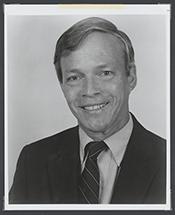
785 records where Rep. MacKay, Buddy [D-FL-6] is listed as a sponsor, author, or other actor. Search with topics and years
United States · United States Congress · 3 March 1983
Designates November 1983 as National Alzheimer's Disease Month.
United States · United States Congress · 3 March 1983
Designates May 21, 1983, as National Sakharov Day. Authorizes and requests the President to: (1) call upon all nations to designate May 21, 1983, as National Sakharov Day; (2) urge the Soviet Union to permit the Sakharovs to freely choose their place of residence; and (3) direct the American delegation to the United Nations to introduce a resolution in the General Assembly calling upon that body to designate May 21, 1983, as International Sakharov Day.
United States · United States Congress · 2 March 1983
Amends the Internal Revenue Code to exempt from the tax on unrelated business income any income received by a tax-exempt organization from the sale, exchange, or rental of names from donor lists or membership lists.
United States · United States Congress · 2 March 1983
Prohibits the shipment in interstate or foreign commerce of steel jaw leghold traps and articles of fur from animals that were caught in such traps. Sets forth penalties for violations of this Act.
United States · United States Congress · 2 March 1983
Title I: Consumer Credit - Consumer Debtor Bankruptcy Amendments Act of 1983 - Amends the Bankruptcy Code to permit a bankruptcy court to dismiss a case or suspend all proceedings if it determines that a debtor whose debts are primarily consumer debts does not need the provisions of the chapter under which relief has been sought and the granting of relief under such chapter would be a substantial abuse of its provisions. Requires the Clerk of each Federal judicial district to compile statistics regarding debtors where debts are primarily consumer debts. Requires the bankruptcy judge to convene, and permits such judge to preside at, any meeting of creditors and to perform such additional judicial duties as may be required. Declares that the value of the creditor's interest in the estate's interest in consumer goods property shall be determined in light of the purpose of the valuation and of the proposed disposition or use of such property, and in conjunction with any hearing on such disposition or use or on a plan effecting such creditor's interest. Declares that the value of consumer goods which the debtor seeks to redeem in liquidation shall be presumed to be the established resale market price, if such market exists. Permits the court to utilize other methods of valuation if no such market exists or if the court determines that resale value is inappropriate in light of the property's proposed use or disposition. Requires the debtor in bankruptcy cases to file a statement of estimated income and expenses for the year following filing of his petition. Requires the debtor, if the schedule of assets and liabilities include consumer debts secured by property of the estate, to file and serve upon each creditor holding such security and upon the trustee, a statement expressing the debtor's intention with respect to retention or surrender of the collateral. Requires the debtor, at or before the meeting of creditors provided for by such title, to perform his intention with regard to such secured creditors. Requires that the notice of meeting of the creditors be accompanied by a copy of the statement of estimated income and expenses and that the debtor supply the clerk of the court, upon the filing of the petition, with enough copies of such statement to accommodate the listed creditors. Requires individuals filing for bankruptcy in joint or consolidated cases to elect either the Federal or State exemptions. Places an aggregate limit of $3,000 on the value of the exemption with regard to household goods and personal effects. Prohibits the debtor from utilizing the unused dollar value of the homestead exemption to exempt additional property not explicitly provided for by such Act. Repeals the provisions of such Act which currently authorize the debtor to avoid nonpurchase money security interest in property. Presumes nondischargeable any debt incurred on or within 40 days before the date of the filing of a petition under such title. Allows for rebuttal of such presumption. Allows creditors to enforce liens which have not been avoided in bankruptcy. Permits reaffirmation of consumer debts subject to the debtor's right to rescind any such agreement within 60 days or until a discharge is received, whichever occurs later. Declares that at the meeting of creditors the court shall inform the debtor of the nature and effect of a discharge and of any reaffirmation of debt. Prohibits the custodian from being an assignee under a general assignment for the benefit of the debtor's creditors that was appointed or took possession more than 120 days before the date of the filing of the petition. Permits the trustee or the court, however, to require such an assignee to file an accounting. Limits the trustee's power to avoid liens or recover payments made within 90 days of the filing of the petition in bankruptcy (within one year in the case of an insider) unless the creditor had reasonable cause to believe the debtor was insolvent. Permits the court, upon notice and hearing, to require a creditor to accept payments in redemption of the value of a claim secured by a nonpossessory, nonpurchase money security interest in tangible personal property, over a reasonable period not to exceed five years, if such tangible personal property consists of specified household goods and tools of the debtor's trade. Permits the court, upon notice and hearing, to avoid any lien in whole or in part, if the court finds;: (1) that the debtor has no reasonable ability to pay the redemption value of such property out of anticipated future income; and (2) the enforcement of such lien would impose undue hardship on the debtor. Allows a creditor, upon 10 days notice to the debtor and codebtor, to collect any portion of a debt from the codebtor which is not being paid by the debtor through the adjustment of debts of such debtor with a regular income. Requires payments under an adjustment of debts payment plan to commence within thirty days after the filing of the plan. Provides for the return of such funds after deducting the costs of administration if no plan is confirmed. Provides for the separate classification of codebtor claims and non-dischargeable claims and authorizes payment of them under an adjustment of debts payment plan. Allows a debtor to choose such a repayment plan of up to five years. Bases such repayment upon the debtor's ability to repay out of future income after taking into account the basic living necessities for the debtor and dependents. Provides for an early discharge of debts where a reasonable portion of unsecured claims are paid. Permits a hardship discharge of otherwise non-dischargeable debts to the extent the debtor attempted to pay such debts under an adjustment of debts payment plan, but was prevented from so doing by unforeseen circumstances. Title II: Agricultural Produce - Agricultural Produce Bailment Bankruptcy Amendments Act of 1983 - Requires bankruptcy courts to give priority to allowed unsecured claims of farmers arising from the sale or conversion of farm produce to or by a debtor who operates a farm produce storage facility. Specifies that such sale or conversion must have occurred within 180 days before the filing of the petition or before the cessation of the debtor's business, whichever occurs first. Limits the payment of any such claim to $2,000 per individual. Permits a bankruptcy court to expedite the procedures for determining interests in and the disposition of grain and proceeds held by debtors who own or operate grain storage facilities. Requires the court to expedite such procedures if requested by a trustee or a claimant. Sets forth factors for the court to consider before deciding whether to shorten the time periods for procedures. Lists the procedures which may be expedited. Specifies administration details. Title III: Miscellaneous - Declares that if any provision of this Act or the application thereof to any person or circumstances is held invalid the provisions of every other part and their application shall not be affected thereby. Makes the provisions of this Act effective 90 days after enactment. Declares that the amendments made by this Act shall not apply to cases pending before the date of enactment.
United States · United States Congress · 23 February 1983
Increases from 26 to 30 the number of members of the Advisory Commission on Intergovernmental Relations, by adding: (1) one elected officer of a local government of an area with a population of less than 10,000 and one elected school board member, to be appointed by the President; and (2) one judge of a U.S. court of appeals or district court and one chief justice or judge of a State court of last resort, to be appointed by the Chief Justice of the United States.
United States · United States Congress · 23 February 1983
Solar Energy National Security and Employment (SENSE) Act of 1983 - Title I: Use of Solar and Other Renewable Forms of Energy Developed By Private Sector - Renewable Energy Small Business Development Act of 1983 - Amends the Internal Revenue Code to increase the energy percentage for energy property which is used in determining the qualified investment tax credit. Treats biomass recycling equipment as biomass property and includes biomass property as "energy property" for purposes of the energy percentage. Eliminates the requirement that the primary energy sources for a facility producing alcohol for fuel purposes not be oil or natural gas or a product of either one in order for such alcohol to be treated as "qualified fuel" for purposes of the energy percentage. Amends the Export-Import Bank Act of 1945 to require that a minimum of 12 percent of the loan authority of the Export-Import Bank in any fiscal year be made available only to businesses with $25,000,000 or less in previous-year sales and include an amount of loan authority for renewable energy transactions that is appropriate to the demand for such loans. Amends the Public Utility Regulatory Policies Act of 1978 to require that the rates for purchases by an electric utility of electric energy from any qualifying cogeneration facility or qualifying small power production facility be established at the incremental cost of alternative electric energy of such utility, unless the State regulatory authority or a nonregulated electric utility determines that a different rate would encourage cogeneration and small power production, would not discriminate against cogenerators and small power producers, and would be in the consumers' and the public's interest. (Currently, such rates must be just and reasonable to the consumers and in the public interest and must not discriminate against cogenerators and small power producers.) Requires a cogeneration facility or small power production facility to pay reasonable interconnection costs incurred by an electric utility which is required to offer to interconnect with such facility. Requires the U.S. Trade Representative to issue policy guidance to departments and agencies with respect to international trade issues involving renewable energy. Amends the Small Business Innovation Development Act of 1982 to require that a reasonable portion of the funds appropriated for nonnuclear programs of the Department of Energy be set aside for renewable energy and energy conservation businesses. Title II: Renewable Energy National Security - Renewable Energy National Security Act of 1983 - Requires the Secretary of a military department, when procuring energy systems, to procure systems that include energy-conserving equipment. Includes biofuels as a renewable form of energy for purposes of energy systems procurement by a military department. Requires the Secretary of Defense to provide for the use of biofuels in meeting Department of Defense energy needs to the extent feasible and consistent with overall defense needs. Requires the Secretary of Defense to encourage the use of energy-conserving devices and equipment in military construction projects, including family housing projects, where practical and economically feasible. Amends the Agricultural Act of 1949 to include spoilt and contaminated grains among the accumulated stocks of agricultural commodities which the Commodity Credit Corporation may process into liquid fuels. Authorizes the Corporation to provide for the storage of liquid fuels so processed for use by the agricultural sector during periods of fuel shortages. Requires the Corporation to provide for the processing of spoilt and contaminated commodities into liquid fuels before the processing of stocks of usable feedstock. Amends the Energy Policy and Conservation Act to require the Secretary of Energy to maintain a data base on the location of all stockpiles of renewable energy supplies and biofuels and of all renewable energy production facilities in the United States. Requires that such data be made available to Government departments and agencies upon request. Requires the Secretary of Defense to assess and report to the Armed Services Committees of the House of Representatives and the Senate on the feasibility of using mobile energy systems that use renewable energy as emergency backup energy systems at military installations. Title III: Federal Training and Economic Development Programs to Create Jobs in Energy Conservation Industries - Part A: Short Title; Findings - Renewable Energy Employment Act - Sets forth the short title of this title and congressional findings. Part B: Job Training in Renewable Energy - Requires the Secretary of Labor to review all Federal job training or placement programs and to implement policies, procedures, and programs to develop a labor force skilled in energy conservation, weatherization of homes, and the use of renewable energy technologies. Part C: Housing and Community Development Programs - Amends the Energy Conservation in Existing Buildings Act of 1976 to require the Secretary of Energy to maintain information on: (1) the areas to be served under the weatherization assistance program; (2) methods for providing priority assistance to elderly and severely handicapped low-income persons; (3) outreach activities with respect to such program; (4) labor plans; (5) policies to ensure that owners and renters are treated equitably; and (6) plans to ensure participation by Native Americans under such program. Requires the Secretary and the Director of the Community Services Administration to include in the annual report to the President and Congress on the weatherization program an evaluation of the effect of such program on energy conservation and employment. Authorizes appropriations for the weatherization program for FY 1984 and succeeding fiscal years. Amends the Housing and Community Development Act of 1974 to include the potential for local energy development, including energy conservation and renewable energy use, among the factors which must be taken into account by the standards issued by the Secretary of Housing and Urban Development for determining the eligibility of cities and urban counties for urban development action grants. Includes among the activities of Community Development Programs which are eligible for assistance under such Act those amounts spent for energy needs. Amends the Housing Act of 1949 to authorize the Secretary of Housing and Urban Development to make loans for energy conservation and renewable energy development or retrofit for housing in rural areas. Requires Federal agencies administering financial assistance programs for economic development or job creation to consider the development of energy conservation and renewable energy as significant criteria for the provision of such assistance. Part D: Promotion of Sustainable Agriculture - Amends the Consolidated Farm and Rural Development Act to include as non-fossil energy systems windmills, anaerobic digesters, alcohol distilleries, microhydroelectric generators, gasifiers, and solar heating systems. Requires the Secretary of Agriculture, in making loans to farmers and ranchers, to promote sustainable agriculture (a set of agricultural production practices which are designed to produce long term, sustainable yields of agricultural products, involve the use of renewable resources, and avoid the use of chemical products). Amends the Rural Development Act of 1972 to require that small farm extension programs assist small farm families in carrying out sustainable agriculture. Provides that sustainable agriculture extension programs shall consist of extension programs to provide farmers with assistance and current information with respect to sustainable agriculture. Permits all other persons in a State, in addition to universities and colleges in such State, to participate in agricultural research and extension programs. (Under current law, only universities and colleges in a State may participate in such programs.) Requires the Secretary of Agriculture, in carrying out the National Agricultural Research, Extension, and Teaching Policy Act of 1977, to ensure that adequate national support of extension, teaching, and agricultural research is provided to establish integrated multidisciplinary organic farming research projects. Requires the Secretary of Agriculture to report annually to Congress on sustainable agriculture in the United States. Title IV: Renewable Energy Consumer Incentives - Renewable Energy Consumer Incentives Act of 1983 - Amends the Solar Energy and Energy Conservation Act of 1980 to extend the life of the Solar Energy and Energy Conservation Bank until September 30, 1990. (Under current law, the Bank will not exist after September 30, 1987.) Requires that a portion of the payments by the Bank to financial institutions to provide financial assistance for the installation of solar energy systems in residential, commercial, and agricultural buildings be allocated for active solar energy. Provides that there shall be no Federal preference with respect to financial assistance between single-family and multifamily residences. Permits all financial institutions to apply directly to the Bank for financial assistance. Authorizes appropriations for FY 1985 through 1990 for the financial assistance program under the Solar Energy and Energy Conservation Act of 1980 for the purchase and installation of residential and commercial energy conserving improvements and solar energy systems. Amends the Internal Revenue Code to include passive solar energy property which uses convective, conductive, or radiant energy transfer and which has significant impact on home energy savings as a "renewable energy source property" which is eligible for the residential energy credit. Makes the residential energy credit inapplicable to energy conservation and renewable energy source expenditures made after December 31, 1990. (Under current law, such credit is inapplicable to expenditures made after December 31, 1985.) Amends the Low- Income Home Energy Assistance Act of 1981 to permit a State to transfer up to ten percent of its allotment under the low-income home energy assistance program for States to block grants for support of energy related information systems. Requires the Secretary of Energy to develop a formalized information exchange on the Federal, State, and local levels with respect to conservation and renewable energy. Authorizes appropriations to provide financial assistance to States and local governments to coordinate such program. Amends the Solar Energy Research, Development, and Demonstration Act of 1974 to require the Secretary of Energy to maintain a renewable energy and energy conservation information program. (This program replaces the solar energy information program required to be established under current law.) Requires the Secretary to establish a National Appropriate Technology Service to provide individualized technical assistance to anyone interested in renewable energy and energy efficient technologies. Amends the Motor Vehicle Information and Cost Savings Act to require the Secretary of Transportation to consider the use or integration of renewable fuels and any approaches which maximize conservation and renewable energy applications in determining maximum feasible average fuel economy. Amends the Energy Policy and Conservation Act to require the Federal Trade Commission to prescribe labeling requirements for consumer goods particularly in cases where there is a direct consumer benefit to save energy or utilize renewable energy. Amends the Small Business Act to authorize the Small Business Administration to provide reduced-rate loans to small businesses for acquisition of system performance ratings from testing laboratories for energy conservation and renewable energy systems and technologies. Amends the Public Utility Regulatory Policies Act of 1978 to require State regulatory authorities to adopt and publish standard contracts with respect to: (1) the sale of electric energy by utilities to small power production facilities of not more than 100 kilowatts capacity; and (2) the purchase of electric energy produced by such facilities by utilities. Requires the Secretary of Energy to include renewable energy as a discrete energy sector in all publications of "The Monthly Energy Review." Requires Federal agencies with renewable energy programs to submit annual reports on such programs to Congress. Sets forth reporting requirements which apply to specified Federal agencies.
United States · United States Congress · 22 February 1983
Expresses the sense of the Congress that: (1) the Soviet Union should comply with certain international agreements relating to human rights by pursuing a more humane emigration policy and by ceasing harassment of Jews and others seeking to emigrate; (2) Soviet compliance with internationally recognized emigration rights would significantly promote improved relations with the United States; (3) the President should convey these concerns of Congress to the Soviet Union at every appropriate opportunity; and (4) the President should also convey these concerns to U.S. allies.
United States · United States Congress · 15 February 1983
Authorizes and requests the President to designate May 1983 as National Physical Fitness and Sports Month.
United States · United States Congress · 10 February 1983
Amends the Automobile Dealers Day in Court Act to prohibit a manufacturer from selling, leasing, or offering to sell or lease any passenger car, truck, or stationwagon to any person (or any other dealer) at a price lower than the price at which the same model is sold to its franchised dealers. Prohibits a manufacturer from imposing restrictions on some purchasers of automobiles, but not others. Requires that all rebates, discounts, refunds or other promotional inducement or benefit be provided to all ultimate purchasers of the same model of motor vehicle during the same period of time. Establishes an exception to the Act for the sale of automobiles to Federal, State or local governmental units. Applies this Act to importers of covered motor vehicles who import directly or through distributorships. Allows an automobile dealer to recover reasonable attorneys fees resulting from an action under this Act. Limits standing for a cause of action for termination of an agreement under this Act to dealers who comply with all reasonable provisions of the franchise agreement in question.
United States · United States Congress · 8 February 1983
Directs the Administrator of Veterans Affairs to acquire the necessary land and establish a national cemetery in Florida.
United States · United States Congress · 8 February 1983
Requires the Administrator of Veterans Affairs to consider the current and projected number of veterans residing in each State when deciding where medical facilities should be constructed or acquired. Directs the Chief Medical Director to determine, at the end of each fiscal year, the current and projected number of veterans residing in each State. Requires the Director to report such information to the appropriate committees and to consider it when making recommendations for the apportionment of funds.
United States · United States Congress · 8 February 1983
Directs the Administrator of Veterans affairs to construct a hospital in Florida. Authorizes appropriations.
United States · United States Congress · 8 February 1983
Designates the week beginning September 25, 1983, as National Adult Day Care Center Week.
United States · United States Congress · 8 February 1983
Expresses the sense of the House of Representatives that Anatoly Shcharansky should be released from prison and permitted to emigrate. Urges continued expression of U.S. opposition to the imprisonment of Anatoly Shcharansky.
United States · United States Congress · 8 February 1983
States that the Administrator of Veterans Affairs should implement as quickly as possible the recommendations of "A Thirty Year Study of the Needs of Veterans in Florida" concerning the health needs of veterans.
United States · United States Congress · 2 February 1983
Housing Finance Opportunity Act of 1983 - Amends the Internal Revenue Code of 1954 to permit the continued issuance of tax-exempt (interest excluded from gross income) mortgage revenue bonds after December 31, 1983.
United States · United States Congress · 1 February 1983
Directs the Administrator of Veterans Affairs to establish an Advisory Committee on Women Veterans to advise the Administrator or on the administration of benefits for and needs of women veterans. Directs Committee to report annually to the Administrator on the activities of the Veterans Administration pertaining to women, together with assessments of needs and recommendations for future action. Directs the Administrator to submit such report to Congress.
United States · United States Congress · 31 January 1983
Federal Computer Systems Protection Act of 1983 - Amends the Federal criminal code to establish penalties for using or attempting to use certain computers with intent to defraud, obtain property by false pretenses, embezzle, steal, or knowingly convert the property of another. Limits the kinds of computers covered by this Act to those operating in interstate commerce, or operating on behalf of the Federal Government or of a financial institution (where the prohibited conduct directly affects the computer operation). Specifies factors which Federal law enforcement officers must consider in determining whether to exercise jurisdiction over such offense, where concurrent jurisdiction exists with a State or local government. Directs the Attorney General to report annually to Congress on the extent of the exercise of such Federal jurisdiction.
United States · United States Congress · 27 January 1983
Transfers methaqualone from Schedule II (abuse potential, but with accepted U.S. medical use) to Schedule I (abuse potential, with no accepted U.S. medical use) of the Controlled Substances Act. Makes this Act effective within 30 days.
United States · United States Congress · 27 January 1983
Prohibits any cooperation with South Africa with respect to atomic energy. Prohibits the Nuclear Regulatory Commission from issuing any license or authorization for the export of any nuclear materials, equipment, or technology to South Africa. States that the authority of the Atomic Energy Act of 1954 may not be used to distribute any nuclear material, source material, or byproduct material to South Africa. Prohibits any U.S. agency or official from permitting the transfer to, or use by, South Africa of nuclear material, equipment, or technology. Prohibits the Secretary of Energy from authorizing any activity which would constitute engaging in the production of special nuclear material in South Africa. Prohibits the Secretary of Commerce from issuing an export license for any goods or technology which: (1) are intended for a nuclear related end use or end user; (2) have been identified as items which could be of significance for nuclear explosive purposes; or (3) are otherwise subject to certain procedures of the Nuclear Non-Proliferation Act of 1978. Requires the Nuclear Regulatory Commission and the Secretaries of Commerce, Energy, and State to prepare lists of goods and technology transferable to South Africa notwithstanding the provisions of this Act which could help that country develop a nuclear capability. Directs the Secretary of Commerce to prohibit the export of such goods and technology. Prohibits any officer or employee of the executive branch from making available to South Africa any technology or other information which could increase that country's nuclear capability. Terminates any license or authorization described in this Act which was issued before enactment of this Act.
United States · United States Congress · 27 January 1983
Amends the Bail Reform Act of 1966 to authorize a judicial officer, when making a pretrial release determination, to consider whether a person charged with possession or transfer of a controlled substance will pose a danger to any other person or the community. Requires the judicial officer to hold a hearing for such persons to determine whether surety resources have been obtained by noncriminal means.
United States · United States Congress · 26 January 1983
Designates September 22, 1983, as American Businesswomen's Day.
United States · United States Congress · 26 January 1983
Designates the week beginning March 20, 1983, as National Mental Health Counselors Week.
United States · United States Congress · 25 January 1983
Declares it to be the policy of the Government that: (1) Federal procurement should be accomplished on a competitive basis wherever possible through the General Services Administration (GSA); (2) the use of multiple award schedules should be restricted to cases where competitive single awards are not feasible, sales volume justifies centralized procurement, and a valid need exists for functionally similar items with different prices and features; and (3) where the volume of products purchased is too low to provide a price advantage and commercial "off-the-shelf" products can be substituted for products designed to Government specifications, individual agencies should purchase items locally subject to review by GSA. Directs the Administrator of GSA to implement such policy, the recommendations on procurement contained in the Comptroller General's report of May 2, 1979, and the policy statement prepared by the Office of Acquisition Policy in response to such report. Directs the Administrator, within 60 days after enactment, to issue transitional regulations governing purchases from any multiple award schedule. Requires that such regulations: (1) include the requirement that whenever any agency procurement officer or employee determines that an item in such a schedule is available from a commercial source in the area at a lower cost and under conditions which are no less favorable to the Government than is the case under the schedule, the item shall be purchased from that source; and (2) establish procedures for the audit and review of any such purchase and the enforcement of such regulations by GSA. Repeals such regulations on the effective date of the regulations which are issued to implement the procurement policy declared by this Act and which apply to any item on a multiple award schedule. Requires the Administrator to submit to Congress periodic reports on actions taken, and legislation needed, to carry out this Act.
United States · United States Congress · 6 January 1983
Shared Housing Resident Assistance Act - Amends the United States Housing Act of 1937 and the Housing Act of 1949 to prohibit the Secretary of Housing and Urban Development and the Secretary of Agriculture from requiring that a dwelling unit in a shared housing project for the elderly or handicapped contain more than one sanitary facility or item of equipment for food preparation or storage for all residents as a condition of eligibility for low-income housing assistance.
United States · United States Congress · 6 January 1983
Construction Work in Progress Policy Act of 1983 - Amends the Federal Power Act to authorize the Federal Energy Regulatory Commission to approve, upon application by a public utility, the inclusion of the costs of construction work in progress (defined as construction of a facility used to generate electric energy) in the rate base of such public utility with respect to: (1) any pollution control facility; and (2) the conversion of oil or natural gas-fired facilities to the use of other fuels. Requires the Commission to hold an evidentiary hearing upon application by a public utility for approval of such a rate increase. Sets forth the items required in any such application. Requires the Commission to approve the rate increase applied for or to order a lesser rate increase if, after the hearing, the Commission finds that: (1) the utility will be in severe financial difficulty unless construction work in progress costs are included in the rate base; (2) the facility being constructed is reasonably necessary to meet energy demands; (3) any mismanagement involved will not affect the utility's future financial situation; (4) the long-term benefits justify short-run rate increases in the case of customers purchasing electric energy for resale; (5) such wholesale customers have been offered an ownership interest in the facility under construction; (6) the rate increase will not unreasonably impair the ability of wholesale customers to sell electric energy to their retail customers at the least cost; and (7) the applicant utility will discontinue the capitalization of allowance for funds used during construction for those construction work in progress costs included in the rate base. Provides that no rate increase approved or ordered under this Act may: (1) be charged for electric energy sold before the date of such approval or order; (2) exceed the amount needed to alleviate the utility's financial difficulties; (3) have an anticompetitive effect; (4) be applied to any customer who holds an ownership interest in the facility being constructed (with limited exceptions); or (5) be unduly discriminatory or preferential or exceed a just and reasonable amount.
United States · United States Congress · 6 January 1983
Authorizes and requests the President to designate the last Friday of April each year as National Arbor Day.
United States · United States Congress · 3 January 1983
Florida Wilderness Act of 1983 - Designates the following lands in Florida as components of the National Wilderness Preservation System: (1) the Bradwell Bay Wilderness Addition in the Apalachicola National Forest; (2) the Mud Swamp/New River Wilderness in the Apalachicola National Forest; (3) the Big Gum Swamp Wilderness in the Osceola National Forest; (4) the Alexander Springs Wilderness in the Ocala National Forest; (5) the Juniper Prairie Wilderness in the Ocala National Forest; (6) the Little Lake George Wilderness in the Ocala National Forest; and (7) the Billies Bay Wilderness in the Ocala National Forest. Prohibits the Department of the Interior from issuing phosphate leases in the Osceola National Forest until the President recommends to Congress that such leases be permitted in a specified area of the forest, based upon a national need for phosphate. Requires the President to submit the basis for such recommendation, a statement of conditions governing the activity, and the required environmental impact statements. Makes a Presidential recommendation effective within 90 days after its submission to Congress unless Congress passes a concurrent resolution disapproving it. Requires the Secretary of the Interior, within 60 days after enactment of this Act, to determine if specified phosphate preference right lease applicants have discovered valuable deposits of phosphate. Requires the Secretary, within one year of the enactment of this Act, to determine the fair market value of phosphate leases which would be issued to such lease applicants absent the leasing ban under this Act. Directs the Secretary to acquire by exchange, monetary credit, lease issuance suspension, or purchase any valuable phosphate lease rights from such lease applicants within three years after enactment of this Act. Provides that the designation of the Big Gum Swamp Wilderness will not alter phosphate lease rights applicable to lands within the wilderness. Allows waivers of the time deadlines under this Act. Authorizes appropriations.
United States · United States Congress · 3 January 1983
Amends the Foreign Assistance Act of 1961 to prohibit assistance to any country which is a known source of illicit drugs, unless the President has certified to Congress during the fiscal year that the governing authorities of that country are fully cooperating with the United States in its efforts to reduce the flow of illicit drugs from that country. Amends the Arms Export Control Act to prohibit issuing letters of offer and export licenses and to prohibit extending credits or guarantees to any country which is a known source of illicit drugs, unless the President has certified to Congress during the fiscal year that the governing authorities of that country are fully cooperating with the United States in its efforts to reduce the flow of illicit drugs from that country.
United States · United States Congress · 3 January 1983
Sunset Review Act of 1983 - Requires the House Committee on Rules and the Senate Committee on Rules and Administration to jointly develop and maintain an inventory of all Federal programs and tax expenditures. Requires such inventory to classify all such programs and expenditures according to the jurisdiction of the various legislative committees of the two Houses. Requires the General Accounting Office (GAO), before the beginning of the 99th Congress, after consultation with the appropriate legislative committees and the Congressional Budget Office, to submit a draft inventory to the House Committee on Rules and the Senate Committee on Rules and Administration. Requires such Committees to notify each legislative committee of the programs and tax expenditures which are classified within its jurisdiction. Allows any legislative committee to propose revisions of such inventory within 30 days after notification. Requires that such inventory be published in a single document. Requires that an update be made of such inventory at the beginning of every Congress. Specifies information to be contained in such an inventory. Directs the GAO to publish a supplement to such inventory which includes certain budget information. Requires each legislative committee of the House of Representatives and the Senate, by a specified date in the first session of every Congress beginning with the 100th Congress, to report a resolution setting forth an agenda for the sunset review of selected Federal programs within its jurisdiction, or, in the case of the House Committee on Ways and Means and the Senate Committee on Finance, of selected tax expenditures. Directs the committees of each House to develop their sunset review agenda in consultation with any other committee which has concurrent jurisdiction over any programs or tax expenditures involved. Requires, where practicable, that related programs and expenditures be reviewed during the same Congress. Requires the report accompanying any agenda reported in the 105th Congress and every fifth Congress thereafter to summarize the programs and expenditures reviewed and not reviewed during the five previous Congresses. Prohibits either the House or the Senate from considering a primary expense resolution for any legislative committee in any Congress until that committee has developed and submitted its sunset review agenda. Requires the House Committee on Rules and the Senate Committee on Rules and Administration to incorporate such agendas into a consolidated sunset review agenda and to report such consolidated agenda to its House in the form of a concurrent resolution, within seven legislative days after all committee sunset review agendas have been submitted. Requires the consolidated sunset review agenda to be adopted in the House and in the Senate no later than March 30 in the first session of each Congress. Sets forth the procedures for the consideration and adoption of such agenda. Requires each committee of the House or the Senate, not later than May 15 in the second session of each Congress, to report a bill or bills modifying, continuing, or terminating each program or tax expenditure which it has been directed to review under the consolidated sunset review agenda adopted during the first session. Requires such bill to be accompanied by a report. Requires each department, agency, and instrumentality in the executive branch of the Government which is responsible for the administration of a Federal program or tax expenditure selected for sunset review to provide the appropriate congressional committees with its views, information, and assistance. Directs the Comptroller General to supply specified information on audits. Directs the Comptroller General, the Director of the Congressional Budget Office, the Director of the Office of Technology Assessment, and the Director of the Congressional Research Service to furnish congressional committees such information as requested to assist in conducting sunset review of programs or tax expenditures under this Act. Exempts foreign intelligence or counterintelligence programs designated by the President as requiring protection from unauthorized disclosure. Directs the Permanent Select Committee on Intelligence of the House and the Select Committee on Intelligence of the Senate to review such programs pursuant to the spirit of this Act. Amends rule X of the Rules of the House of Representatives to accord with this Act.
United States · United States Congress · 3 January 1983
Requires written consent of the parties before Federal magistrates may conduct evidentiary hearings in habeas corpus proceedings attacking State custody of petitioners under State court judgments. Limits the circumstances under which Federal courts may consider petitions for habeas corpus in State court cases. Creates a three-year statute of limitations for filing habeas corpus petitions. Revises standards governing Federal court review of State court judgments.
United States · United States Congress · 3 January 1983
Constitutional Amendment - Declares that equality of rights under the law shall not be denied or abridged by the United States or any State on account of sex.
United States · United States Congress · 3 January 1983
Designates November 14, 1982, as National Retired Teachers Day.
United States · United States Congress · 3 January 1983
Establishes in the House of Representatives the Select Committee on Hunger to conduct a continuing comprehensive study of the problems of hunger and malnutrition.