Bill· HRH.R. 1522 (119th)passed
Federal Retirement Fairness Act
United States · United States Congress · 24 February 2025
The world's political record
Person
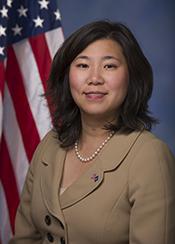
United States · Official source
3,961 records where Rep. Meng, Grace [D-NY-6] is listed as a sponsor, author, or other actor. Search with topics and years
United States · United States Congress · 24 February 2025
United States · United States Congress · 24 February 2025
Dentist and Optometric Care Access Act of 2025 or the DOC Access Act of 20 25 This bill prohibits private health insurance plans from setting rates for items and services, except for dental cleanings, provided by a doctor of optometry, of dental surgery, or of dental medicine (or an employer of such a doctor) for which the plan does not pay a substantial amount. Additionally, an agreement between a plan and such a doctor for limited scope dental or vision benefits may last longer than two years only with the prior acceptance of the doctor for each term extension. Plans also may not restrict such a doctor's choice of laboratories or suppliers. Such doctors may elect to waive the application of the payment amount and choice of laboratories provisions of this bill. The bill does not supersede state laws regarding health insurers and dental or vision benefit plans.
United States · United States Congress · 24 February 2025
This resolution supports the designation of Public Schools Week.
United States · United States Congress · 24 February 2025
United States · United States Congress · 21 February 2025
United States · United States Congress · 21 February 2025
United States · United States Congress · 21 February 2025
More Options to Develop and Enhance Remote Nutrition in WIC Act of 2025 or the MODERN WIC Act of 2025 This bill permanently allows individuals to remotely certify their eligibility for, and receive benefits through, the Special Supplemental Nutrition Program for Women, Infants, and Children (WIC). Specifically, the bill requires that a state agency allow an individual seeking a WIC certification, recertification, or a nutritional risk evaluation to do so by phone or through video teleconference, in addition to the in-person option. A state agency has 90 days to collect data for a nutritional risk evaluation for a remotely certified individual. Further, a state agency may consider an applicant who meets the income eligibility standards to be temporarily eligible on an interim basis to participate in the program and may certify the individual for immediate participation without waiting for a nutritional risk evaluation. The bill also allows states to provide benefits on WIC electronic benefit transfer cards through mail or remote issuance instead of requiring participants to pick up or reload benefits in person at a WIC office. Further, the Department of Agriculture must report to Congress about the use of remote technologies and other digital tools in the WIC program. Currently, individuals are generally required to be physically present to certify their WIC eligibility and receive benefits, with exceptions. The Food and Nutrition Service has temporarily waived these requirements and allowed remote certification and benefits using authorities that were provided by laws that were enacted to address COVID-19.
United States · United States Congress · 21 February 2025
Air Traffic Noise and Pollution Expert Consensus Act of 2025 This bill requires the Federal Aviation Administration to enter into an arrangement with the National Academies of Sciences, Engineering, and Medicine to examine and report on the various health impacts of air traffic noise and pollution.
United States · United States Congress · 18 February 2025
Kids' Access to Primary Care Act of 2025 This bill modifies payments for Medicaid primary care services. Specifically, the bill applies a Medicare payment rate floor to Medicaid primary care services that are provided after the date of enactment of the bill and extends the payment rate to additional types of practitioners (e.g., obstetricians). The Centers for Medicare & Medicaid Services must conduct a study on the number of children enrolled in Medicaid, the number of providers receiving payment for primary care services, and associated payment rates before and after the bill's implementation.
United States · United States Congress · 18 February 2025
Enhanced Iran Sanctions Act of 2025 This bill imposes sanctions on certain foreign persons (individuals and entities) that are involved in Iran's petroleum sector as well as certain associated persons. The bill also requires or authorizes actions to facilitate the enforcement of sanctions on Iran. Specifically, the bill requires the President to impose visa- and property-blocking sanctions on any foreign person that, after the bill's enactment, knowingly engages in any transaction related to the processing, export, or sale of oil, condensates, gas, liquefied natural gas, or other petrochemical products in whole or in part from Iran. The President must also impose sanctions on certain foreign persons associated with a sanctioned individual or entity. For example, the President must sanction the subsidiaries and corporate officers of a sanctioned business. The bill provides certain exceptions to these sanctions, including specifying that sanctions do not apply to the importation of goods or to conducting or facilitating transactions for humanitarian assistance. The Department of State must establish an interagency working group that shall seek to establish a multilateral contact group to coordinate international efforts to enforce sanctions on Iran. The bill expands the State Department rewards program to authorize a reward payment to any individual who furnishes information leading to the identification of a person (1) subject to sanctions under this bill, or (2) that has attempted or is attempting to evade sanctions under this bill.
United States · United States Congress · 18 February 2025
9/11 Responder and Survivor Health Funding Correction Act of 2025 This bill modifies the World Trade Center Health Program (WTCHP), including by updating the formula for determining the program’s annual funding amounts and authorizing mental health providers to provide certain evaluations under the program. The WTCHP is a federal health care program (terminating in FY2090) providing responders and survivors with monitoring and treatment of certified medical conditions related to the terrorist attacks that occurred on September 11, 2001. Under current law, the program’s annual federal funding is determined based on the amount specifically appropriated in the previous fiscal year, adjusted for inflation. The bill establishes a new federal funding formula for FY2026-FY2090 that is generally based on annual changes in the number of enrollees. The bill also increases the amounts the program may spend annually on medical research and activities relating to data collection. The bill requires the National Institute for Occupational Safety and Health (NIOSH), which administers the program, to submit a report to Congress on the program’s projected budgetary needs and expenditures. In addition, the bill authorizes licensed mental health providers to perform initial health evaluations with respect to mental health conditions for purposes of determining eligibility under the WTCHP. NIOSH must issue regulations specifying the categories of mental health providers that may perform these activities.
United States · United States Congress · 18 February 2025
Korematsu-Takai Civil Liberties Protection Act of 2025 This bill prohibits the detention or imprisonment of an individual based solely on an actual or perceived protected characteristic of the individual. The term protected characteristic includes each of the following: race, ethnicity, national origin, religion, sex, gender identity, sexual orientation, disability, and any additional characteristic that the Department of Justice determines to be a protected characteristic.
United States · United States Congress · 14 February 2025
United States · United States Congress · 13 February 2025
Smithsonian American Women’s History Museum Act This bill authorizes the Smithsonian American Women's History Museum to be located on a particular site within the Reserve of the National Mall in Washington, DC. Specifically, the bill designates the South Monument site as the location for the museum; however, the President may designate an alternative site within 180 days of the bill's enactment. (The site is the undeveloped land across the National Mall from the National Museum of African American History and Culture.) Administrative jurisdiction of the site must be transferred to the Smithsonian Institution. The Board of Regents of the Smithsonian Institution must have the approval of specified federal entities (e.g., the Commission of Fine Arts) to plan, design, and construct a museum building. The bill (1) outlines the criteria for considering site and design proposals, and (2) requires the Smithsonian Institution to reimburse for costs resulting from the building approval process. The bill directs the museum to be dedicated to preserving, researching, and presenting the history, achievements, and lived experiences of biological women in the United States. Under this bill, the museum may not identify, present, describe, or depict any biological male as a female. In carrying out its duties, the museum's advisory council must (1) seek and utilize guidance from a broad array of knowledgeable and respected sources reflecting the diversity of the political viewpoints and authentic experiences held by women in the United States, and (2) seek guidance for the creation and substantial revision of exhibits and programs.
United States · United States Congress · 13 February 2025
Collision Avoidance Systems Act of 2025 This bill allows for the use of a pulsating light system for vehicle braking. Specifically, Federal Motor Vehicle Safety Standard Number 108 (Standard 108) must be deemed to allow for the use of a pulsating light system on covered vehicles (i.e., passenger cars, multipurpose passenger vehicles, trucks, buses, trailers, and motorcycles). The Department of Transportation must issue regulations to update Standard 108 to (1) include performance-based standards for pulsating light systems, and (2) allow for the use of the systems on motor vehicles. As background, Standard 108 regulates all automotive lighting, signaling, and reflective devices. Under the bill, a pulsating light system includes a system for a high-mounted stop lamp in which the lamp pulses rapidly no more than four times and for no more than 1.2 seconds when the brake of the vehicle is applied and then converts to a continuous light (as a normal stop lamp) until the brake is released.
United States · United States Congress · 13 February 2025
This resolution supports the designation of Hawaiian Language Month or 'Ōlelo Hawai'i Month.
United States · United States Congress · 13 February 2025
United States · United States Congress · 13 February 2025
United States · United States Congress · 13 February 2025
United States · United States Congress · 12 February 2025
United States-Israel Defense Partnership Act of 2025 This bill requires or authorizes certain actions to increase defense-related cooperation between the United States and Israel. Specifically, the bill requires the Department of Defense (DOD) to establish a cooperative program, with the concurrence of Israel's Ministry of Defense (MOD), to develop and deploy advanced technologies for countering unmanned systems that threaten the United States and Israel; establish in Israel an office of the Defense Innovation Unit (an organization that focuses on rapidly fielding and scaling commercial technology across the U.S. military); and seek to engage Israel's MOD on the ascension of Israel into the national technology and industrial base (currently defined in law as the persons and organizations engaged in research, development, production, integration, services, or information technology activities conducted within the United States, the United Kingdom, Australia, New Zealand, and Canada). The bill authorizes DOD, upon request of Israel's MOD, to jointly conduct research, development, test, and evaluation (RDT&E) of emerging technologies such as artificial intelligence and robotics to meet defense challenges. Additionally, the bill extends the authority for DOD to (1) carry out RDT&E on a joint basis with Israel to establish anti-tunnel and counter unmanned aerial systems capabilities through 2028, and (2) transfer defense articles intended for use as reserve stocks for Israel through January 1, 2029.
United States · United States Congress · 12 February 2025
Korean American Divided Families National Registry Act This bill establishes a national registry of Korean American families who wish to be reunited with family members living in North Korea. The bill also requires the Department of State to include reunions of such families in any direct dialogue with North Korea. Specifically, the bill requires the State Department to (1) collect information on Korean American families, divided from North Korean family members after the Korean War armistice, who wish to be reunited with such family members; and (2) establish a national registry of information on those families to facilitate future reunions. The State Department must ensure that any direct dialogue with North Korea includes progress towards holding such reunions. The State Department must report to Congress periodically on the registry, previous reunions, and on certain North Korean actions related to reunions.
United States · United States Congress · 12 February 2025
Give Kids a Chance Act of 2025 This bill expands the Food and Drug Administration’s (FDA’s) authority with respect to research on rare pediatric diseases, including by permitting the FDA to take enforcement action against drug sponsors that fail to satisfy pediatric study requirements and by reauthorizing programs that support pediatric research. Specifically, the bill modifies requirements relating to molecularly targeted pediatric cancer investigations to permit research on new drugs in combination with active ingredients that have already been approved, provided certain conditions are met; permits the FDA to take enforcement action against drug sponsors that fail to comply with pediatric study requirements, if such sponsors demonstrated a lack of due diligence in satisfying the requirement; renews the FDA’s authority to award priority review vouchers to sponsors of new products intended to treat rare pediatric diseases through September 30, 2029; and reauthorizes through FY2027 certain funding for the National Institutes of Health to support priority pediatric research. The bill also provides statutory authority for the FDA’s interpretation of the orphan drug exclusivity period. The bill specifies, consistent with FDA regulations, that the seven-year market exclusivity period for drugs for rare diseases or conditions (i.e., orphan drugs) prohibits the approval of the same drug for the same approved use or indication with respect to the disease or condition. (In Catalyst Pharmaceuticals, Inc. v. Becerra , a court rejected the FDA’s interpretation and held that orphan drug exclusivity extends to all uses or indications for the disease or condition.)
United States · United States Congress · 10 February 2025
Honoring Our Fallen TSA Officers Act This bill includes Transportation Security Administration (TSA) employees in the Public Safety Officers' Benefits (PSOB) program under certain conditions. Specifically, the bill extends PSOB program death and disability benefits to TSA employees performing official duties related to protecting the nation's transportation systems. As background, the PSOB program provides cash benefits to federal, state, and local law enforcement officers; firefighters; employees of emergency management agencies; and members of emergency medical services agencies who are killed or permanently and totally disabled as the result of personal injuries sustained in the line of duty. PSOB death benefits are payable to the eligible spouse and children of a public safety officer. Further, the Public Safety Officers’ Educational Assistance program, a component of the PSOB program, provides higher-education assistance to the children and spouses of public safety officers who are eligible for PSOB death or disability benefits.
United States · United States Congress · 7 February 2025
No DeepSeek on Government Devices Act This bill directs the Office of Management and Budget to develop standards and guidance requiring removal of the DeepSeek application from federal agency information technology. Such standards and guidance also apply to any successor application developed or provided by High Flyer or entities owned by High Flyer. DeepSeek is an artificial intelligence start-up founded in 2023 and based in Hangzhou, China. DeepSeek's chief executive officer also created High Flyer, a hedge fund that is reportedly the sole funder of DeepSeek.
United States · United States Congress · 6 February 2025
Protecting Sensitive Locations Act This bill prohibits immigration enforcement actions within 1,000 feet of a sensitive location except in exigent circumstances, such as the imminent risk of death, violence, or physical harm to any person. Sensitive locations include health care facilities; schools and school bus stops; places that provide assistance for people such as children, pregnant women, and abuse victims; child care facilities; places that provide disaster or emergency services; places of worship; courthouses and lawyers’ offices; facilities used as polling places; certain labor union facilities; and public assistance offices. The prohibition shall apply to Department of Homeland Security officers and agents, as well as state employees pursuing immigration enforcement actions. If an enforcement action is carried out in violation of this prohibition (1) no information resulting from the action may be entered into the record in a resulting removal proceeding, and (2) the affected individual may move to immediately terminate such a proceeding. U.S. Immigration and Customs Enforcement and U.S. Customs and Border Protection shall annually report to Congress about enforcement actions taken at sensitive locations in the preceding year.
United States · United States Congress · 6 February 2025
Protect Our Letter Carriers Act of 2025 This bill requires or authorizes certain actions related to the U.S. Postal Service (USPS). The bill requires the Department of Justice to appoint an assistant U.S. attorney in each judicial district to coordinate and supervise the investigation and prosecution of various crimes related to postal services (for example, assault on a postal service employee, breaking into a post office, or obstruction of mails). The bill also requires the U.S. Sentencing Commission to amend sentencing guidelines to provide that the assault or robbery of a postal employee shall be treated the same as the assault of a law enforcement officer. Additionally, the bill authorizes appropriations for the USPS to install high security collection boxes and replace older versions of the universal mailbox key with electronic versions.
United States · United States Congress · 6 February 2025
Scientific Integrity Act This bill requires each federal agency that funds, conducts, or oversees scientific research to adopt and enforce a scientific integrity policy. Under the bill, among other parameters, such policies must (1) ensure that scientific conclusions are not based on political considerations, (2) prohibit the suppression or alteration of findings, and (3) permit researchers to disseminate their findings and engage with the scientific community as appropriate. Scientific integrity policies must also include a mechanism through which stakeholders may report violations of the policy. Agencies are required to submit their scientific integrity policies to the Office of Science and Technology Policy (OSTP) for approval. Approved policies must be made public, submitted to Congress, and periodically updated. Agencies may use their existing policies provided they satisfy the requirements of the bill. The Government Accountability Office must review implementation of the policies. Each agency is also required to (1) appoint a Scientific Integrity Officer, (2) establish a process for dispute resolution consistent with the scientific integrity policy, and (3) establish a specified training program for current and new employees.
United States · United States Congress · 6 February 2025
Taxpayer Data Protection Act This bill restricts access to any public money receipt or payment system belonging to the Department of the Treasury. Specifically, access is limited to authorized Treasury officers, employees, or contractors meeting certain performance standards who have held a qualified position for at least a year, or who hold other qualifications as provided by the bill. The bill specifically prohibits special government employees (i.e., temporary appointees hired to perform specific tasks) from having access to such systems. The bill also provides that an individual accessing such systems shall be treated as an executive branch employee for purposes of federal criminal conflict of interest laws. Treasury's Office of Inspector General must investigate and report on each instance of unauthorized use or other access of such payment systems.
United States · United States Congress · 6 February 2025
This resolution condemns Azerbaijan for its treatment of Dr. Gubad Ibadoghlu, practice of wrongful detention, and suppression of academic freedom. The resolution also calls for Dr. Ibadoghlu's immediate and unconditional release and for the Department of State to prioritize his well-being and release in all engagements with Azerbaijan.
United States · United States Congress · 5 February 2025
Love Lives On Act of 2025 This bill extends entitlement for various benefit programs and services for surviving spouses of deceased members of the Armed Forces or veterans. The bill provides that the remarriage of a surviving spouse must not bar the furnishing of dependency and indemnity compensation or special pension benefits to such spouse. Additionally, the Department of Defense may not terminate the payment of an annuity for a surviving spouse under the Survivor Benefit Plan solely because the surviving spouse remarries. The bill also expands the definition of a dependent under TRICARE to include a remarried widow or widower whose subsequent marriage has ended due to death, divorce, or annulment.
United States · United States Congress · 5 February 2025
AM Radio for Every Vehicle Act of 2025 This bill requires the Department of Transportation (DOT) to issue a rule requiring AM radio capabilities to be standard in all new passenger vehicles. (AM radio is often used to deliver emergency alerts and news and entertainment programming; some newer vehicles do not include AM equipment.) Specifically, this bill applies to passenger vehicles (1) manufactured in the United States for sale in the United States, imported into the United States, or shipped in interstate commerce; and (2) manufactured after the rule's effective date. The rule must require all such vehicles to have devices that can receive signals and play content transmitted by AM stations or digital audio AM stations installed as standard equipment and made easily accessible to drivers. Prior to the rule's effective date, manufacturers that do not include devices that can access AM radio as standard equipment (1) must inform purchasers of this fact through clear and conspicuous labeling, and (2) may not charge an additional or separate fee for AM radio access. DOT may assess civil penalties for any violation of the rule. The Department of Justice may also bring a civil action to enjoin a violation. The rule, including DOT’s authority to enforce it, must expire 10 years after the bill’s enactment. Further, the Government Accountability Office must study and report on the dissemination of emergency alerts to the public, including by conducting an assessment of AM radio relative to other Integrated Public Alert and Warning System communication technologies.
United States · United States Congress · 5 February 2025
United States · United States Congress · 5 February 2025
United States · United States Congress · 5 February 2025
This resolution disapproves of pardons for individuals who were found guilty of assaulting U.S. Capitol Police officers.
United States · United States Congress · 5 February 2025
This bill designates the facility of the U.S. Postal Service located at 86 Main Street in Haverstraw, New York, as the Paul Piperato Post Office Building.
United States · United States Congress · 5 February 2025
This bill designates the facility of the U.S. Postal Service located at 298 Route 292 in Holmes, New York, as the Sheriff Adrian "Butch" Anderson Post Office Building.
United States · United States Congress · 5 February 2025
Antisemitism Awareness Act of 2025 This bill provides statutory authority for the requirement that the Department of Education’s Office for Civil Rights take into consideration the International Holocaust Remembrance Alliance's (IHRA's) working definition of antisemitism when reviewing or investigating complaints of discrimination based on race, color, or national origin in programs or activities that receive federal financial assistance. According to the IHRA's working definition, antisemitism is a certain perception of Jews, which may be expressed as hatred toward Jews.
United States · United States Congress · 5 February 2025
United States · United States Congress · 4 February 2025
Crime Victims Fund Stabilization Act of 2025 This bill adds a new source of revenue for the Crime Victims Fund (CVF). Specifically, the bill requires certain civil monetary penalties collected from settlements and judgments in cases involving fraud and false claims against the federal government to be deposited into the CVF through FY2029. The CVF supports federal, state, and local programs and activities to compensate and assist victims of crimes. Currently, the CVF is funded by deposits from a variety of sources, including federal criminal fines, penalties, and assessments; forfeited bail bonds; and certain other gifts, donations, and bequests.
United States · United States Congress · 4 February 2025
Setting Consumer Standards for Lithium-Ion Batteries Act This bill requires the Consumer Product Safety Commission to issue a final consumer product safety rule for rechargeable lithium-ion batteries used in micromobility devices, such as electric bikes and electric scooters. Specifically, the rule must require manufacturers and distributors of such products to comply with the applicable safety standards jointly established by the American National Standards Institute, the Standards Council of Canada, and UL Solutions Inc.
United States · United States Congress · 4 February 2025
Stop the Wait Act of 2025 This bill phases out the initial waiting period for Social Security Disability Insurance (SSDI) benefits and eliminates the waiting period for certain disabled individuals to become eligible for Medicare. Under current law, individuals generally must wait five months after the onset of disability to begin receiving SSDI benefits. The bill would gradually reduce this waiting period before eliminating it entirely in the year 2030. Further, the bill would eliminate the 24-month waiting period for certain disabled workers and other individuals to become eligible for Medicare. Under current law, individuals under the age of 65 may generally enroll in Medicare after they have been eligible for SSDI or Social Security child’s, widow’s, or widower’s benefits by reason of disability for 24 months. The bill would eliminate this waiting period for individuals for whom the annual cost of certain medical insurance would exceed a specified percentage of their household income (i.e., those who cannot afford minimum essential coverage). Medicare eligibility for these individuals must be available retroactively to the first month that an individual qualified for SSDI or Social Security child’s, widow’s, or widower’s benefits by reason of disability.
United States · United States Congress · 4 February 2025
National Origin-Based Antidiscrimination for Nonimmigrants Act or the NO BAN Act This bill imposes limitations on the President's authority to suspend or restrict aliens from entering the United States. It also prohibits religious discrimination in various immigration-related decisions, such as whether to issue an immigrant or nonimmigrant visa, unless there is a statutory basis for such discrimination. The President may temporarily restrict the entry of any aliens or class of aliens after the Department of State determines that the restriction would address specific and credible facts that threaten U.S. interests such as public safety. The bill also imposes limitations on such restrictions, such as requiring the President, State Department, and the Department of Homeland Security (DHS) to (1) only issue a restriction when required to address a compelling government interest, and (2) narrowly tailor the suspension to use the least restrictive means to achieve such an interest. Before imposing a restriction, the State Department and DHS shall consult with Congress. The State Department and DHS shall report to Congress about the restriction within 48 hours of the restriction's imposition. If such a report is not made, the restriction shall immediately terminate. Individuals or entities present in the United States and unlawfully harmed by such a restriction may sue in federal court. The bill transfers the authority to suspend the entry of aliens traveling to the United States on a commercial airline that failed to comply with regulations related to detecting fraudulent travel documents from the Department of Justice to DHS.
United States · United States Congress · 4 February 2025
United States · United States Congress · 4 February 2025
Access to Counsel Act This bill provides various protections for covered individuals subject to secondary or deferred inspections when seeking admission into the United States. Covered individuals include U.S. nationals, lawful permanent residents, non-U.S. nationals ( aliens under federal law) in possession of a visa, returning asylees, and refugees. The Department of Homeland Security must ensure that a covered individual subject to secondary or deferred inspection has a meaningful opportunity to consult with counsel and certain related parties, such as a relative, within an hour of the start of the secondary inspection and as necessary during the inspection process. The counsel and related party must be allowed to advocate on behalf of the covered individual, including by providing evidence and information to the examining immigration officer. A lawful permanent resident subject to secondary or deferred inspection may not abandon lawful permanent resident status until the individual has had a meaningful opportunity to seek advice from counsel, unless the individual voluntarily and knowingly waives in writing this opportunity to seek counsel's advice.
United States · United States Congress · 31 January 2025
Nancy Gardner Sewell Medicare Multi-Cancer Early Detection Screening Coverage Act This bill allows, beginning in 2028, for Medicare coverage and payment for multi-cancer early detection screening tests that are approved by the Food and Drug Administration and that are used to screen for cancer across many cancer types, if the Centers for Medicare & Medicaid Services determines such coverage is appropriate. Coverage is limited to those under a certain age (age 68 in 2028, increased by one year every year thereafter) and to one test every 11 months.
United States · United States Congress · 31 January 2025
Expanded Food Safety Investigation Act of 2025 This bill provides that the Food and Drug Administration (FDA) may, under specified circumstances, request access to a concentrated animal-feeding operation (i.e., a stabled or confined animal-feeding operation of a specified size) to conduct microbial sampling. Specifically, the bill allows the FDA to request access if the FDA determines that sampling is necessary to facilitate an investigation of a foodborne-illness outbreak, determine the cause of an outbreak, or address other public health needs. Concentrated animal-feeding operations must provide reasonable access for sampling, including sampling of plants, animals, water, and the environment. The bill imposes penalties on operations that refuse to provide reasonable access. Data collected in sampling efforts under this bill must be shared with the Department of Agriculture and state and federal public health agencies to facilitate the detection, investigation, and prevention of foodborne illness.
United States · United States Congress · 31 January 2025
This resolution calls on the people of the United States to remember the innocent victims murdered at Auschwitz, the Jews killed during the Holocaust, and all the victims of the Nazi reign of terror. The resolution also (1) calls on the people of the United States to continue working to end all genocide and persecution, and (2) recommits to combating all forms of anti-Semitism.
United States · United States Congress · 31 January 2025
United States · United States Congress · 31 January 2025
Black History is American History Act This bill requires entities (e.g., institutions of higher education, libraries, and museums), in order to be eligible for certain grants administered by the Department of Education (ED), to include Black history in their teaching of American history. It also requires Black history to be included in tests administered by the National Assessment of Educational Progress (NAEP). Specifically, the bill mandates the inclusion of Black history as a required component of American history for such entities to be eligible for American History and Civics Academies' competitive grants. These grants support the establishment of (1) Presidential Academies for Teachers of American History and Civics, which offer workshops to teachers of American history and civics to strengthen their knowledge and prepare them to teach in these subjects; and (2) Congressional Academies for Students of American History and Civics, which support high school students in developing an understanding of these subjects. (Currently, Black history is not a required component of American history for either academy.) In addition, ED must give priority to grant applicants that align their activities with programs and resources of the Smithsonian Institution's National Museum of African American History and Culture. The bill also requires the inclusion of Black history in tests administered by the NAEP, which measures student academic achievement in various subjects.
United States · United States Congress · 28 January 2025
Holocaust Education and Antisemitism Lessons Act This bill directs the U.S. Holocaust Memorial Museum to study and report on Holocaust education efforts in states, local educational agencies (LEAs), and public elementary and secondary schools. Among other elements, the study must (1) determine whether states and LEAs require Holocaust education as part of the curriculum taught in public elementary and secondary schools, (2) identify the standards and requirements relating to Holocaust education, and (3) identify the types of instructional material used to teach students about the Holocaust.