Bill· HRH.R. 4475 (119th)referred
Medicare Orthotics and Prosthetics Patient-Centered Care Act
United States · United States Congress · 17 July 2025
The world's political record
Person
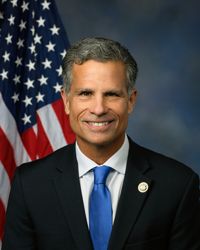
United States · Official source
1,331 records where Rep. Meuser, Daniel [R-PA-9] is listed as a sponsor, author, or other actor. Search with topics and years
United States · United States Congress · 17 July 2025
United States · United States Congress · 16 July 2025
This bill reduces the required aggregate market value of voting and non-voting common equity shares for an issuer of securities to qualify as a well-known seasoned issuer. A well-known seasoned issuer is allowed to make expedited public offerings of securities through automatic shelf registrations.
United States · United States Congress · 16 July 2025
United States · United States Congress · 16 July 2025
United States · United States Congress · 15 July 2025
United States · United States Congress · 15 July 2025
United States · United States Congress · 14 July 2025
United States · United States Congress · 10 July 2025
United States · United States Congress · 10 July 2025
United States · United States Congress · 27 June 2025
Disaster Loan Accountability and Reform Act or the DLARA This bill modifies the Small Business Administration (SBA) disaster loan program to require additional oversight and reports regarding the program. First, the bill requires the SBA to report monthly on the operation of the disaster loan program. (Currently, the SBA must report only during the applicable period for a major disaster.) The report must estimate the date on which available funding for such loans will reach 10% of the most recent appropriation and the date on which the funds will be depleted. If a report is not submitted by the required date, no funds may be obligated for official travel by the SBA Administrator until the report is submitted. Second, the President's annual budget must include separate statements regarding the appropriations request for SBA disaster loans and COVID-19 Economic Injury Disaster Loans (EIDL), including explanations for any difference between the amount requested and the 10-year average cost for such loans. Third, the SBA must notify Congress when the unobligated balance of amounts available for disaster loans is less than 10% of the 10-year average annual cost provided in the most recent presidential budget. Finally, the bill requires additional oversight of the disaster loan program, including Government Accountability Office reports on the disbursement of disaster loans and the cost of specified SBA rules that modified the loan program; and an SBA report on its actions to improve forecasting, data quality, and budget assumptions for the cost of disaster loans.
United States · United States Congress · 26 June 2025
Veterans Border Patrol Training Act This bill requires the Department of Homeland Security (DHS) to collaborate with the Department of Defense (DOD) and Department of Veterans Affairs to establish a five-year interdepartmental pilot program, under which DHS must use the DOD SkillBridge Program to train and hire transitioning servicemembers as border patrol agents for U.S. Customs and Border Protection.
United States · United States Congress · 26 June 2025
United States · United States Congress · 26 June 2025
United States · United States Congress · 24 June 2025
United States · United States Congress · 23 June 2025
Optimizing Postpartum Outcomes Act of 2025 This bill requires (1) the Centers for Medicare & Medicaid Services to issue guidance to support coverage of prenatal and postpartum pelvic health services under Medicaid and the Children's Health Insurance Program (CHIP), (2) the Government Accountability Office to study gaps in Medicaid coverage of these and other services for postpartum women, and (3) the Centers for Disease Control and Prevention to educate health professionals and postpartum women on pelvic health services.
United States · United States Congress · 12 June 2025
United States · United States Congress · 12 June 2025
Improving Access to Medicare Coverage Act of 2025 This bill deems an individual receiving outpatient observation services in a hospital as an inpatient for purposes of satisfying the three-day inpatient hospital-stay requirement with respect to Medicare coverage of skilled nursing facility (SNF) services. (Generally, individuals must have been an inpatient at a hospital for at least three days in order to qualify for SNF services. An individual's time spent under observation at a hospital for purposes of determining whether the individual should be admitted does not count towards this requirement.)
United States · United States Congress · 10 June 2025
United States · United States Congress · 10 June 2025
United States · United States Congress · 5 June 2025
This resolution condemns the June 1, 2025, targeted act of terror in Boulder, Colorado, as an act of ideologically motivated violence and reaffirms the House of Representatives' commitment to protecting the rights of all Americans to assemble peacefully and practice their faith without fear of violence.
United States · United States Congress · 4 June 2025
United States · United States Congress · 3 June 2025
Financial Stability Oversight Council Improvement Act of 2025 This bill requires the Financial Stability Oversight Council, prior to determining that a U.S. nonbank financial company shall be supervised by the Federal Reserve Board and therefore subject to certain prudential standards, to first determine that certain alternative actions would not mitigate the threat the company may pose to U.S. financial stability.
United States · United States Congress · 29 May 2025
Amendment for Crowdfunding Capital Enhancement and Small-business Support Act of 2025 or the ACCESS Act of 2025 This bill expands the exemption from certain disclosures applicable to crowdfunding issuers with specified target offering amounts. (Crowdfunding is used to raise capital through a large number of individuals investing potentially small amounts of money.) Under current law, crowdfunding issuers that have target offering amounts of $100,000 or less are not required to make available financial statements reviewed by an independent public accountant. The bill increases that amount to $250,000 and allows the Securities and Exchange Commission to increase this amount to no more than $400,000 upon recommendation of the Office of the Advocate for Small Business Capital Formation and the Office of the Investor Advocate.
United States · United States Congress · 29 May 2025
Digital Asset Market Clarity Act of 2025 or the CLARITY Act of 2025 This bill establishes a regulatory framework for digital commodities, defined by the bill as digital assets that rely upon a blockchain for their value. The Commodity Futures Trading Commission must generally regulate digital commodities transactions, including digital commodity exchanges, brokers, and dealers. To qualify for trade on an exchange (1) a digital commodity’s blockchain must be mature, or on a blockchain system that has achieved decentralized control as defined by the bill; or (2) the issuer of the digital commodity must file certain reports. The bill establishes requirements for trade monitoring, recordkeeping, and the commingling of customer assets. The bill exempts digital commodities on mature blockchains (and digital commodities on blockchains expected to mature within certain timeframes) from Securities and Exchange Commission (SEC) registration requirements if annual sales fall under a certain amount and other requirements are met. The bill provides the SEC with jurisdiction over digital commodity activities and transactions engaged in by certain brokers and dealers on alternative trading systems and by national securities exchanges. Digital commodity exchanges, brokers, and dealers are subject to the Bank Secrecy Act for anti-money laundering and related purposes. The bill also sets forth requirements for alternative trading systems, previously issued digital commodities, and provisional registration until the bill is implemented. For more information on this bill, see CRS Insight IN12583, Crypto Legislation: An Overview of H.R. 3633, the CLARITY Act .
United States · United States Congress · 29 May 2025
Reliable Power Act This bill directs the electric reliability organization (i.e., the North American Electric Reliability Corporation) to conduct annual long-term assessments of the reliability of electric power in the bulk-power system. It also establishes a process for the Federal Energy Regulatory Commission (FERC) to review federal regulations before they are finalized if the electric reliability organization finds that the system is at risk of not having sufficient electric generation to maintain reliability. If the electric reliability organization finds that the system does not have sufficient generation to maintain reliability, it must notify FERC that the bulk-power system is in a state of generation inadequacy. FERC must then notify the Department of Energy, the Environmental Protection Agency, and any other appropriate federal agencies of the generation inadequacy. Upon receiving the notice, the federal agency must provide proposed regulations that affect any generation resource in the bulk-power system to FERC for review and comment. If applicable, FERC must provide recommendations to modify the regulations. Federal agencies may not finalize such a regulation until FERC finds that it will not be likely to have a significant negative impact on the ability of the bulk-power system to supply sufficient electric energy necessary to maintain an adequate level of reliability.
United States · United States Congress · 20 May 2025
Improving Seniors' Timely Access to Care Act of 2025 This bill establishes several requirements and standards relating to prior authorization processes under Medicare Advantage (MA) plans. Specifically, MA plans must (1) establish an electronic prior authorization program that meets specified standards; (2) annually submit to the CMS for publication specified prior authorization information, including the percentage of requests approved and the average response time; and (3) meet other standards, as set by the Centers for Medicare & Medicaid Services (CMS), relating to the quality and timeliness of prior authorization determinations. The CMS and the Office of the National Coordinator for Health Information Technology must publish on the CMS' website a report that analyzes the information received from MA plans, the feasibility of implementing real-time decision making with respect to prior authorization requests, and the impact of decisions that are made using artificial intelligence on patient access.
United States · United States Congress · 15 May 2025
United States · United States Congress · 15 May 2025
Insurance Data Protection Act This bill limits the ability of federal entities to compel insurance companies to share information. Specifically, the bill eliminates the subpoena power of the Federal Insurance Office. Under current law, the office has the power to subpoena information from insurers to, among other purposes, identify issues that could contribute to a systemic crisis in the insurance industry or the U.S. financial system. The bill also eliminates the ability of the Office of Financial Research to subpoena insurance companies. When seeking to collect insurance company data under specified consumer protection laws, a financial regulator must obtain the data from other regulators or from publicly available sources if possible. Otherwise, the financial regulator may only collect this data directly from the insurance company if the regulator complies with the Paperwork Reduction Act.
United States · United States Congress · 15 May 2025
Empower Charter School Educators to Lead Act This bill makes changes to the Charter Schools Program (CSP), which authorizes competitive grants to state entities (e.g., state educational agencies and state charter school boards) to support high-quality charter schools. Specifically, the bill allows state entities to use up to 5% of their CSP grant funds to make pre-charter planning subgrants to certain prospective charter applicants. The bill specifies that state entities may also (1) fund a revolving loan fund or similar mechanisms for the expenses of eligible applicants prior to receiving CSP subgrants, and (2) provide assistance to eligible applicants in locating and accessing a charter school facility. Under the current CSP, state entities must use at least 7% of their CSP grant funds to provide technical assistance to eligible applicants and authorized public chartering agencies. The bill instead allows state entities to use not more than 10% of these funds for technical assistance.
United States · United States Congress · 15 May 2025
Bureau of Consumer Financial Protection Commission Act This bill restructures the Consumer Financial Protection Bureau (CFPB) and creates a five-member commission to manage the bureau. Currently, the CFPB is an autonomous bureau within the Federal Reserve System and is led by a director who is appointed by the President with the advice and consent of the Senate. The bill removes the CFPB from the Federal Reserve System and reestablishes it as an independent agency. The commission established by this bill is composed of five members appointed by the President with the advice and consent of the Senate, with one member selected by the President to serve as chair of the commission. No more than three commissioners may be members of the same political party. The bill also sets forth provisions regarding terms, quorums, and vacancies. The bill specifies that the President may a remove a commissioner for inefficiency, neglect of duty, or malfeasance in office. The bill also revises the membership requirements of the Consumer Advisory Board. The board advises and consults with the CFPB regarding relevant consumer financial laws and provides information on emerging practices in the consumer financial products and services industry. Currently, at least six members must be appointed upon recommendation of the regional Federal Reserve Bank presidents. The bill removes this requirement and requires at least half of all members to have private sector experience.
United States · United States Congress · 14 May 2025
Bringing the Discount Window into the 21st Century Act This bill requires the Board of Governors of the Federal Reserve System to review and develop a remediation plan for its discount window lending program, which provides loans to depository institutions to support an institution’s security and liquidity. The review must consider topics such as the sufficiency of the technology infrastructure, the effectiveness of the existing operating hours of the discount window, and how the discount window interacts with other liquidity providers during normal operations and in times of financial distress. The remediation plan must address any identified deficiencies, establish timelines and milestones for implementation, and be approved by the board. The bill requires annual reports to Congress regarding the plan.
United States · United States Congress · 14 May 2025
United States · United States Congress · 13 May 2025
Lieutenant Osvaldo Albarati Stopping Prison Contraband Act This bill increases federal criminal penalties for providing or attempting to provide a cell phone to an individual who is incarcerated at a prison.
United States · United States Congress · 8 May 2025
United States · United States Congress · 8 May 2025
United States · United States Congress · 7 May 2025
United States · United States Congress · 7 May 2025
This bill increases the amount insured depository institutions may accept as reciprocal deposits. (Reciprocal deposits are used by institutions to increase the availability of deposit insurance by splitting large deposits using a reciprocal network of institutions.) The bill creates a tiered system so that the allowable amount is based on the institution's total liabilities. Additionally, the bill changes certain qualifications insured depository institutions may be required to have to accept reciprocal deposits. Under current law, institutions may qualify by having a composite rating of outstanding or good, among other requirements. The bill allows institutions with a 1, 2, or 3 rating under the CAMELS scale to qualify. (The Uniform Financial Institutions Rating System uses the characteristics of capital adequacy, asset quality, management, earnings, liquidity, and sensitivity to market risk (i.e., CAMELS ratings) to rate the health of financial institutions, with a 1 indicating the highest rating and least degree of supervisory concern and a 5 indicating the lowest rating and highest degree of supervisory concern.)
United States · United States Congress · 7 May 2025
United States · United States Congress · 7 May 2025
United States · United States Congress · 6 May 2025
United States · United States Congress · 6 May 2025
Protecting America's Property Rights Act This bill directs the government-sponsored enterprises—Fannie Mae and Freddie Mac—to establish standards for the use of products such as title insurance. (The enterprises facilitate liquidity in the mortgage market by purchasing mortgages and issuing mortgage-backed securities.) Specifically, the enterprises must establish regulations or guidelines for risk management related to loss or damage from liens upon, encumbrances on, or defects in the title to property, or the invalidity or unenforceability of any liens or encumbrances on property by using third party products subject to state regulation. Further, the enterprises must hold an additional 1% of the unpaid principal of any mortgage that does not meet the above regulations or guidelines as part of each enterprise’s minimum capital levels.
United States · United States Congress · 1 May 2025
Made in America Manufacturing Finance Act This bill increases the maximum loan amounts available to small manufacturers under the Small Business Administration's 7(a) and 504 loan programs. In particular, the bill generally doubles the maximum loan amount for small manufacturers under the 7(a) program and the bill increases the maximum loan amount for small manufacturers under the 504 program from $5.5 million to $10 million. Generally, 7(a) loans provide short- and long-term working capital which can be used for expenses such as operational needs. 504 loans provide financing for major fixed assets such as new facilities.
United States · United States Congress · 1 May 2025
United States · United States Congress · 1 May 2025
United States · United States Congress · 30 April 2025
United States · United States Congress · 30 April 2025
This resolution encourages local communities throughout the United States to support nonprofit organizations that provide resources to Gold Shield Families during their time of need. Gold Shield Families consist of the families of fallen police officers, firefighters, emergency medical technicians, correction officers, emergency dispatch officers, and emergency service providers.
United States · United States Congress · 21 April 2025
Guarding Unprotected Aging Retirees from Deception Act of 2026 or the GUARD Act of 2026 This bill allows state, local, and tribal law enforcement agencies and grantees that receive funds from certain law enforcement grant programs to use the funds to investigate general financial fraud, elder financial fraud, and pig butchering. Pig butchering refers to a confidence and investment fraud in which a victim is gradually lured into transferring increasing amounts of money, generally in the form of cryptocurrency, into a fake virtual investment. The bill allows federal law enforcement agencies to assist state, local, and tribal law enforcement agencies and fusion centers in the use of tracing tools for blockchain and related technology tools. Finally, the bill requires the Financial Crimes Enforcement Network (FinCEN) to report on efforts to combat general financial fraud, elder financial fraud, pig butchering, and scams, including an evaluation of any legislative recommendations to improve the efforts. The bill also requires FinCEN to report on the state of general financial fraud, elder financial fraud, pig butchering, and scams in the United States, including trends in the crimes.
United States · United States Congress · 17 April 2025
Small Business Regulatory Reduction Act of 2025 This bill requires the Small Business Administration (SBA) to ensure the annual small business regulatory budget for the SBA in each fiscal year is no greater than zero. The small business regulatory budget is the cost to a small business of a federal rulemaking, including the cost resulting from the issuance of any new rule and the cost resulting from the modification or repeal of an existing rule.
United States · United States Congress · 17 April 2025
United States · United States Congress · 14 April 2025