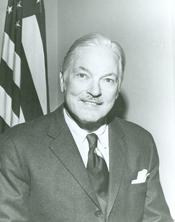
United States · United States Congress · 21 February 1973
Authorizes the Smithsonian Institution to plan museum support facilities, to be located upon federally owned land within the District of Columbia. Authorizes to be appropriated such sums as may be necessary to accomplish the purposes of this Act.
United States · United States Congress · 7 February 1973
Act for Freedom of Emigration in East-West Trade - States that after October 15, 1972, products from any nonmarket economy country shall not be eligible to receive most-favored-nation treatment, such country shall not participate in any program of the Government of the United States which extends credits or credit guarantees or investment guarantees, directly or indirectly, and the President of the United States shall not conclude any commercial agreement with any such country during the period beginning with the date on which the President determines that such country: (1) denies its citizens the right or opportunity to emigrate; (2) imposes more than a nominal tax on emigration or on the visas or other documents required for emigration, for any purpose or cause whatsoever; or (3) imposes more than a nominal tax, levy, fine, fee, or other charge on any citizen as a consequence of the desire of such citizen to emigrate to the country of his choice. Provides that, before any of the aforementioned commercial agreements are entered into with any foreign country, the President shall submit to the Congress a report indicating that such country is not in violation of any of the requirements of the preceding paragraph.
United States · United States Congress · 30 January 1973
Includes amounts spent for the use of communications media for purposes of opposing a candidate for Federal elective office within the campaign expenditure limitations of the Federal Election Campaign Act of 1971. Provides that no person or broadcasting station licensee may make any charge for use of any newspaper, station use, or outdoor advertising facility for the purpose of opposing a candidate for Federal elective office, unless another legally qualified candidate certifies in writing to such person or licensee that he authorizes such use and that the payment of such charge will not violate any expenditure limitation applicable to such other candidate. (Amends Pub. Law 92-225)
United States · United States Congress · 18 January 1973
Includes privately owned property within the provisions of the Act relating to Federal participation in the cost of protecting the shores of the United States, its territories and possessions. (Amends 33 U.S.C. 426e(b))
United States · United States Congress · 18 January 1973
Health Care Insurance Act - Provides, under the Social Security Act, for medical, dental, and hospital care through a system of voluntary health insurance financed in whole for low-income groups through issuance of certificates, and in part for all other persons through allowance of tax credits. Adds to the Social Security Act a new title entitled Federal Financing of Voluntary Health Insurance. Provides that, for the purpose of providing assistance on behalf of the individuals and their dependents whose income and resources are insufficient to meet the costs of necessary medical, dental, and hospital services, there is established a program of hospital, dental, and medical benefits for any eligible beneficiary and his dependents through the issuance of health insurance certificates, in full payment of allowable premium on a qualified health care insurance policy of his choice. Asserts that health insurance certificiates of entitlement will be redeemable by the carrier by payment from the Federal Health Insurance Redemption Fund. Includes as eligible beneficiaries under this title any husband and wife both under age 65 and living together and any unmarried person under age 65 who is not a dependent beneficiary. Defines a dependent beneficiary as any child of an eligible beneficiary receiving more than 50 percent of his support from the eligible beneficiary, which child is under 21, or if a student, under age 23. Provides that every individual who is an eligible beneficiary whose income results in no individual income tax liability during his base year, whose dependent beneficiaries have no such liability for their taxable years which end during his base year, and who is not eligible to receive military medical care, shall be eligible to receive a health insurance certificate of entitlement. Asserts that such certificates shall be applicable in full payment of allowable premiums for a qualified health care insurance policy or plan. Requires that such policy or plan shall provide protection for the eligible beneficiary and his dependent beneficiaries for a 12-month period beginning during his benefit year against the expenses of health care, including catastrophic expenses of illness. Allows tax credits for health care insurance. Asserts that every individual who is an eligible beneficiary who has not elected, where eligible, to receive benefits under the provisions for fully-paid health care insurance for the low-income group and who is not eligible to receive military medical care, shall be allowed at his election a credit against his income tax liability for his taxable year which ends during his base year; or a health insurance certificate of entitlement acceptable by a qualified carrier in payment toward a premium, under a qualified health care insurance policy. Specifies the amount of the tax credit or the value to be assigned to the health insurance certificate on the basis of allowable premiums. Provides that a health insurance certificate of entitlement means a certificate issued by the Secretary of Health, Education and Welfare upon application to him by an eligible beneficiary to apply toward payment of premium on a qualified health care insurance policy or plan. Specifies that a qualified health care insurance policy or plan shall be a contractual agreement specifying benefits under a program offered by a qualified carrier which has been registered by a State Agency and which provides basic institutional and medical coverage and catastrophic expense coverage. Declares that each such qualified health care insurance policy or plan shall be noncancellable and guaranteed renewable so long as the carrier continues to offer to the public one or more qualified health care insurance policies or plans, shall provide protection against the expense of health care without regard to any pre-existing conditions, and shall provide for payment under this title of usual and customary charges for services covered under the policy or plan. Stipulates what costs shall be included under basic coverage and under catastrophic expense coverage. Establishes deductibles for each of the two types of coverage. Creates a Health Insurance Advisory Board which shall consist of eleven persons including the Secretary of Health, Education, and Welfare and the Commissioner of the Internal Revenue Service. Directs that the remaining members, not otherwise in the employ of the Government, shall be appointed by the President, with the advice and consent of the Senate, without regard to the provisions of title 5, United States Code, governing appointment in the competitive service. Asserts that the Secretary of HEW shall serve as Chairman. Provides that the members shall be selected from persons who are specifically qualified to serve on such Board by virtue of their education, training, or experience. Provides that the Health Insurance Advisory Board shall perform such functions as: (1) prescribe such regulations as may be necessary to carry out the purposes and provisions of this Act; (2) establish minimum Federal standards for the use of State insurance departments in determining whether an insurance company and plan are qualified under this Act; (3) in consultation with carriers, providers of services, and consumers, plan and develop programs whose purposes are to provide for maintaining the quality of medical care; and (4) review the effectiveness of the tax credit program and file an annual report. Grants the States the power to decide which carriers are qualified. Forbids any Federal officer or employee to exercise any supervision or control over the practice of medicine or dentistry or the manner in which medical or dental services are provided, or over the selection, tenure, or compensation of any officer or employee or any institution, agency, or person providing health services; or to exercise any supervision or control over the administration or operation of any such institution, agency, or person. Creates in the Treasury a trust fund to be known as the Federal Health Insurance Redemption Fund to consist in part of an amount equal to the aggregate amount of premiums paid under this title through the redemption of health insurance certificates.
United States · United States Congress · 3 January 1973
Establishes a comprehensive outpatient drug insurance program under title XVIII (Medicare) of the Social Security Act. Provides that such program will be financed under part A of this title (which presently provides hospital and health benefits for the aged). Establishes a Formulary Committee within the Department of Health, Education, and Welfare supported by an advisory group and directs such committee to: (1) determine which drugs and biologicals shall constitute qualified drugs for purposes of the benefits provided under this Act; (2) determine, with the approval of the Secretary, the allowable benefit of the various quantities, strengths, or dosage forms of any drug or biological determined by the Committee to constitute a qualified drug; and (3) publish and disseminate at least once each calendar year among physicians, pharmacists, and other interested persons, in accordance with directives of the Secretary; (A) an alphabetical list naming each drug or biological by its established name and such other information as the Secretary deems necessary; and (B) an indexed representative listing of such trade or other names by which each such drug or biological is commonly known, together with the allowable benefit for various quantities, strengths, or dosage forms thereof, together with the names of the supplier of such drugs upon which the allowable benefit is based. Directs the Committee to aid the Secretary of HEW in arriving at the reasonable costs, which the program would pay toward covered drugs. Provides that payments would be made directly to the vendors of pharmaceutical services whose obligation would involve a $1 copayment on each prescription filled at participating pharmacies. Defines the term "qualified drug" as a drug or biological which: (1) can be self-administered; (2) is furnished to an individual when not an inpatient in a hospital or extended care facility pursuant to a physician's prescription or a physician's certification that it is a lifesaving drug which is medically required by such individual; (3) is included by strength and dosage forms among the drugs and biologicals approved by the Formulary Committee; and (4) is dispensed by a pharmacist from a licensed pharmacy. Makes this Act effective on the first day of January 1973.
United States · United States Congress · 3 January 1973
Allows an incentive tax credit under the Internal Revenue Code equal to 20 percent for a part of the cost of constructing or otherwise providing facilities or equipment for the control of water or air pollution or for the processing of solid waste. Permits the amortization of such cost within a period of from 1 to 5 years. (Amends 26 U.S.C. 40) (Adds 26 U.S.C. 188)
United States · United States Congress · 3 January 1973
Allows an income tax deduction under the Internal Revenue Code for amounts paid by the taxpayer during the taxable year for educational expenses which are incurred in connection with the education at an institution of higher education of the taxpayer, his spouse, or any individual with repsect to whom the taxpayer is entitled to an exemption. Reduces the deduction allowable by the amounts of any scholarships and/or education and training allowances from the Veterans' Administration. Amends 26 U.S.C. 218)
United States · United States Congress · 3 January 1973
Establishes a twelve member Federal Judiciary Council to advise the Congress, the Executive and the Judicial Conference of the United States on matters affecting the administration of the courts of the United States. Provides that it shall be the duty of the Council to report to the Congress from time to time, but not less than once each year, with respect to: (1) the impact of proposed legislation on the administration of justice in the courts of the United States; (2) the desirability of legislation to modernize court procedures and thereby to ease court congestion; (3) the necessity for additional personnel and facilities to handle, in a prompt and efficient manner, the increasing number of judicial proceedings; and (4) the appropriate allocation of judicial functions to the Federal courts. Authorizes the Council to: (1) request from any department, agency, or independent instrumentality of the Government any information it deems necessary to perform its duties under this chapter, and each such department, agency, or instrumentality is directed to cooperate with the Council and to furnish such information, to the extent permitted by law, upon request of the Council and (2) make expenditures and to contract with and compensate government and private agencies and persons for research projects and other services.
United States · United States Congress · 3 January 1973
Provides, under the Internal Revenue Code, that gross income does not include amounts received as compensation for service as a full-time law enforcement officer in the employ of the United States, the District of Columbia, a State or political subdivision thereof, to the extent that the aggregate of such amounts does not exceed $5,000 in the taxable year. (Amends 26 U.S.C. 124)
United States · United States Congress · 3 January 1973
Extends Federal injury and death benefits to all eligible public safety officers and their survivors. Defines eligible officer for the purposes of this Act as a person who is determined by the Secretary of Labor to have fireman by a State or a political subdivision of a State; (2) an officially recognized or designated member of a legally organized volunteer fire department; (3) serving without compensation as an officially recognized or designated member of a legally organized law enforcement agency of a State or political subdivision of a State; and (4) injured in the performance of such duties. (Amends 5 U.S.C. 8191)
United States · United States Congress · 3 January 1973
Allows an individual a tax credit under the Internal Revenue Code for the amount of tuition paid by him to any qualified private nonprofit elementary or secondary school during the taxable year for the elementary or secondary education of any dependent with respect to whom the taxpayer is allowed an exemption for the taxable year. Provides that such amount for the taxable year with respect to any dependent shall not exceed the lesser of: (1) 50 percent of the tuition paid by the taxpayer during the taxable year for the elementary or secondary education of such dependent; or (2) $400.
United States · United States Congress · 3 January 1973
Prohibits justices of the Supreme Court and Federal judges from receiving compensation other than for the performance of their judicial duties. Requires the disclosure of financial information relating to a justices' or judge's assets and investments, together with a report of income derived from all sources. Provides that such disclosures and reports shall be submitted annually to the Judicial Conference of the United States. Makes failure to comply with the terms of this Act a high misdemeanor. (Amends 28 U.S.C. 454)
United States · United States Congress · 3 January 1973
Provides that whoever uses a firearm to commit any felony which may be prosecuted in a court of the United States, or carries a firearm unlawfully during the commission of any felony which may be prosecuted in a court of the United States, shall be sentenced to a term of imprisonment for not less than five years nor more than twenty-five years. States that the execution or imposition of any term of imprisonment imposed under this Act may not be suspended and probation may not be granted. Provides that any term of imprisonment imposed under this Act may not be imposed to run concurrently with any term of imprisonment imposed for the commission of such felony. (Amends 18 U.S.C. 924(c))
United States · United States Congress · 3 January 1973
Provides that no licensee under the Communications Act of 1934 may broadcast any program which contains a filmed or video-taped sequence purporting to be factual reporting if the event shown has been staged, edited, or altered in any way, or if interviews have been rearranged, edited, or altered so that questions and answers are no longer in their original context, unless such sequence is explicitly labeled throughout its entire showing as having been staged, edited, rearranged, or altered as the case may be. Provides that no such licensee may broadcast by radio any recorded, audio-taped or otherwise audio-transcribed sequence purporting to be factual reporting if the event has been staged, edited, or altered in any way, or if interviews have been rearranged, edited, or altered so that questions and answers are no longer in their original context, unless such sequence is explicitly described by an announcer both before and following the broadcast of the sequence as having been staged, edited, rearranged, or altered. Provides that any live sequence, whether for television or radio broadcast, that is staged or is a dramatization purporting to be factual reporting must be clearly identified as a staged or dramatized sequence in accordance with the methods described in this Act. Provides that whenever a broadcast station presents one side of a controversial issue of public importance, such station shall afford reasonable opportunity for the presentation of contrasting views.
United States · United States Congress · 3 January 1973
Health Care Insurance Act - Provides for, under the Social Security Act, medical and hospital care through a system of voluntary health insurance financed in whole for low-income groups through issuances of certificates, and in part for all other persons through allowance of tax credits. Adds to the Social Security Act a new title entitled Federal Financing of Voluntary Health Insurance. Provides that, for the purpose of providing assistance on behalf of the individuals and their dependents whose income and resources are insufficient to meet the costs of necessary medical and hospital services, there is established a program of hospital and medical benefits for any eligible beneficiary and his dependents through the issuance of health insurance certificates of entitlement which will be redeemable by the carrier by payment from the Federal Health Insurance Redemption Fund. Asserts that benefits claimed under this provision shall not be duplicated under any other programs financed in whole or in part by the Federal Government. Includes as eligible beneficiaries under this title any husband and wife both under age 65 and living together and any married person under age 65 who is not a dependent beneficiary. Defines a dependent beneficiary as any child of an eligible beneficiary receiving more than 50 percent of his support from the eligible beneficiary, which child is under 21, or if a student, under age 23. Provides that every individual who is an eligible beneficiary whose income results in no individual income tax liability during his base year, whose dependent beneficiaries have no such liability for their taxable years which end during his base year, and who is not eligible to receive military medical care, shall be eligible to receive a health insurance certificate of entitlement. Asserts that such certificates shall be applicable in full payment of allowable premiums for a qualified health care insurance policy or plan. Requires that such policy or plan shall provide protection for the eligible beneficiary and his dependent beneficiaries for a 12- month period beginning during his benefit year against the expenses of health care, including catastrophic expenses of illness. Defines the base year of an eligible beneficiary as his taxable year in respect to which is his entitlement to an insurance certificate is determined. Allows tax credits for health care insurance. Asserts that every individual who is an eligible beneficiary who has not elected, where eligible, to receive benefits under the provisions for fully-paid health care insurance for the low-income group and who is not eligible to receive military medical care, shall be allowed at his election: a credit against his income tax liability for his taxable year which ends during his base year; or a health insurance certificate on the basis of allowable premiums. Provides that a health insurance certificate of entitlement means a certificate issued by the Secretary of Health, Education and Welfare upon application to him by an eligible beneficiary to apply toward payment of the premium on a qualified health care insurance policy or plan. Specifies that a qualified health care insurance policy or plan shall be a contractual agreement specifying benefits under a program offered by a qualified carrier which has been registered by a State Agency and which provides basic institutional and medical coverage and catastrophic expense coverage. Declares that each such qualified health care insurance policy or plan shall be noncancellable and guaranteed renewable so long as the carrier continues to offer to the public one or more qualified health care insurance policies or plans, shall provide protection against the expense of health care without regard to any pre-existing conditions, and shall provide for payment under this title of usual and customary charges for services covered under the policy or plan. Stipulates what costs shall be included under basic institutional and medical coverage and under catastrophic expense coverage. Establishes deductibles for each of the two types of coverage. Creates a Health Insurance Advisory Board which shall consist of eleven persons including the Secretary of Health, Education, and Welfare and the Commissioner of the Internal Revenue Service, or their delegates. Directs that the remaining members, not otherwise in the employ of the Government, shall be appointed by the President, with the advice and consent of the Senate, without regard to the provisions of title 5, United States Code, governing appointment in the competitive service. Asserts that the Secretary of HEW shall serve as Chairman. Provides that the members shall be selected from persons who are specifically qualified to serve on such Board by virtue of their education, training, or experience. Provides that the Health Insurance Advisory Board shall perform such functions as: (1) prescribe such regulations as may be necessary to carry out the purposes and provisions of this Act; (2) establish minimum Federal standards for the use of State insurance departments in determining whether an insurance company and plan are qualified under this Act; (3) in consultation with carriers, providers of services, and consumers, plan and develop programs whose purposes are to provide for maintaining the quality of medical care; and (4) review the effectiveness of the tax credit program and file an annual report. Grants the States the power to decide which carriers are qualified. Forbids any Federal officer or employee to exercise any supervision or control over the practice of medicine or the manner in which medical services are provided, or over the selection, tenure, or compensation of any officer or employee or any institution, agency, or person providing health services; or to exercise any supervision control over the administration or operation of any such institution, agency, or person. Creates in the Treasury a trust fund to be known as the Federal Health Insurance Redemption Fund to consist in part of an amount equal to the aggregate amount of premiums paid under this title through the redemption of health insurance certificates.
United States · United States Congress · 3 January 1973
Allows Consumer Pollution Control Tax Credit Act - Allows a tax credit under the Internal Revenue Code for homewowners, apartment owners, small businessmen, and car owners who purchase and install certified pollution control devices. Limits the tax credit to 25 percent of all amounts paid by the taxpayer during the taxable year to acquire or install any certified pollution control device. (Amends 26 U.S.C. 40)
United States · United States Congress · 3 January 1973
Increases, under the Internal Revenue Code, from 13 to 16 the maximum age of a dependent child with respect to whom the deduction for child-care expenses may be allowed a taxpayer. (Amends 26 U.S.C. 214(b)(i)(A))
United States · United States Congress · 3 January 1973
Prohibits the transportation or use in interstate or foreign commerce, with unlawful or fraudulent intent, of counterfeit, fictitious, altered, lost, stolen, wrongfully appropriated, unauthorized, revoked, or canceled credit cards. Prescribes penalties for violation of such provision, not to exceed a $10,000 fine, 10 years imprisonment or both. (Amends 18 U.S.C. 2314)
United States · United States Congress · 3 January 1973
Provides an income tax deduction under the Internal Revenue Code for the following amounts, not compensated for by insurance or otherwise, for persons under 65: (1) the medical expenses for a parent over 65; (2) the amount by which other medical expenses exceeds 3 percent of the adjusted gross income, and (3) up to $150 or one half the cost for medical insurance for the individual or dependents other than parents over 65. Provides that if either taxpayer or spouse is over 65 they may deduct: (1) medical expenses paid for the taxpayer, spouse or parent over 65; (2) the amount by which other medical expenses exceed 3 percent of the adjusted gross income; and (3) up to $150 or half of the medical insurance costs for the taxpayer and his dependents other than parents over 65. Directs that the deduction limitation for medicine and drugs shall not apply to amounts paid for the taxpayer and his spouse, if either is over 65, or for amounts paid for the parents over 65. (Amends 26 U.S.C. 213(a))
United States · United States Congress · 3 January 1973
Makes it a Federal crime to kill or assault a fireman or law enforcement officer engaged in the performance of his duties when the offender travels in interstate commerce or uses any facility of interstate commerce for such purpose. Prescribes a penalty of up to 10 years imprisonment or a $10,000 fine, or both for an assault, and imprisonment for any term of years or the death penalty for killing a fireman or lawenforcement officer. Provides similar penalties for a conspiracy to kill or feloniously assault such persons. (Adds 18 U.S.C. 1116)
United States · United States Congress · 3 January 1973
Allows a tax deduction, under the Internal Revenue Code of 1954, for expenses incurred by a taxpayer in making repairs and improvements to his residence. Limits such tax deduction to $1,000. (Amends 26 U.S.C. 218)
United States · United States Congress · 3 January 1973
Increases to $1500 under the Internal Revenue Code: (1) deductions for personal exemptions, (2) deductions for estates, (3) the gross income necessary to be required to file a return; and (4) the amount an individual can earn and still have his or her spouse's separate return deemed to be a joint return. (Amends 26 U.S.C. 151,642(b), 6012(a), 6013(b)(3)(A)) Increases to $3000 the amount an individual over the age of sixty-five can earn and still have his or her spouse's separate return deemed to be a joint return. (Amends 26 U.S.C. 6013(b)(3)(A))
United States · United States Congress · 3 January 1973
Provides that, beginning one year after enactment of this Act, no law enforcement grants under the Omnibus Crime Control and Safe Streets Act of 1968 will be made to State and local governments unless these units of government have instituted a law enforcement officer's grievance system and have enacted into law a "Law Enforcement Officers' Bill of Rights" which will cover all law enforcement officers in the States. Declares that this Bill of Rights shall provide law enforcement officers statutory protection for certain rights enjoyed by other citizens. Requires the bill of rights to provide, at a minimum, the following: (1) law enforcement officers shall not be prohibited from engaging in political activity, except when on duty or acting in an official capacity; (2) when an officer is subject to an investigation that could lead to disciplinary action or criminal charges: (a) the investigation shall be conducted at a reasonable hour, preferably while the officer is on duty, (b) the investigation shall occur at the office of the investigating officer or at the precinct where the incident occurred, (c) there shall be one interrogator asking all questions to the officer and the names of all investigating officers shall be known by him, (d) the officer shall know the nature of the investigation and the names of complainants, (e) all civilian complaints must be duly sworn to before an official authorized to administer oaths, (f) interrogating sessions shall be of reasonable length, (g) the officer under investigation shall not be subject to abuse or threats, (h) all interrogations shall be recorded, (i) if the officer is to be placed under arrest, he shall be fully informed of his rights before interrogation, and (j) the officer shall have a right to counsel who shall be present during any interrogations dealing with the officer's continued fitness for law enforcement service; (3) citizen review boards having porportionate police representation; (r) law enforcement officers shall have recourse to civil actions for damages suffered or for abridgement of their civil rights arising out of the performance of official duties; (5) financial disclosures shall not be required unless obtained under legal procedures or there is evidence of a conflict of interests; (6) notice of and reasons for all disciplinary action is required; and (7) no officer shall be disciplined or discriminated against in any way by reason of his exercise of these rights. Establishes in each State and unit of local government a law enforcement officers grievance commission composed of an equal number of governmental representatives, law enforcement officers, and members of the general public which shall have the authority to receive, investigate, and determine complaints and grievances arising from claimed infringement of rights of any law enforcement officer. Allows employee organizations to act on the officer's behalf, at his request, regarding any complaint before the commission. Permits certified employee organizations to initiate actions on behalf of their members. Provides that, in addition to this grievance procedure, law enforcement officers may institute a civil action for redress of the grievances.
United States · United States Congress · 3 January 1973
National Blood Bank Act - Establishes a National Blood Bank Program in the Department of Health, Education, and Welfare. Prescribes standards by which the Director of such program shall designate a group or organization as a national blood bank system, including the requirement that all member blood banks maintain a program for the recruitment of voluntary blood donors, and a system of accreditation for member blood banks. Provides that the Director shall, in order to assure an adequate supply of pure and safe blood throughout the Nation: (1) develop new procedures, materials, and techniques to inform the public of the need to voluntarily donate blood; (2) provide direct assistance to establish an adequate supply of voluntary blood in those parts of the country where it is presently unavailable; (3) develop a national program to honor and recognize all voluntary donors; and (4) establish yearly goals of voluntary donors for each blood bank. Provides that the Director shall maintain a registry of all persons who give blood after July 1, 1972, to a licensed blood bank. Provides that blood banks affected by this Act must be licensed by the Director subject to a fee of not more than $125 per annum and subject to periodic inspection by the Director. Requires the Director to issue such license when such blood bank agrees to require identification of each blood donor, agrees to transmit to the Director such information as the Director may require and when the application therefor contains or is accompanied by such information as the Director finds necessary and the applicant agrees and the Director determines the blood bank will be operated in accordance with standards the Director issues to carry out the purposes of this Act. Authorizes the Director to sue in the United States district court to enjoin any activity by a blood bank licensed under this Act which would constitute an imminent hazard to the public health. Provides for appeal from, and review of, such proceedings. Provides that a willful violation of the provisions of this Act shall be a misdemeanor punishable by imprisonment for not more than one year or a fine of not more than $1,000, or both. Establishes an Advisory Council to the Director appointed by the President to make recommendations to the Director on means of attaining the goals of the program. Provides that, notwithstanding any antitrust law, a national blood bank system may exclude or reject from membership in such system any blood bank which does not qualify for tax-exempt status under the Internal Revenue Code. Requires the United States to contract for, or pay for, the provision of blood from a Class A Blood Bank, defined under this Act as part of a national blood bank system. Authorizes to be appropriated $10,000,000 for fiscal year 1973, $10,000,000 for fiscal year 1974, and $10,000,000 for fiscal year 1975, to carry out the provisions of this Act.
United States · United States Congress · 3 January 1973
Establishes the Joint Committee on Aging consisting of 11 Members of the Senate and 11 Members of the House of Representatives which shall study problems of older Americans and methods of encouraging the development of public and private programs to assist older Americans in taking a full part in national life; to develop policies to encourage coordination of programs dealing with problems of aging; and to review recommendations made by the President or the White House Conference on Aging relating to older Americans problems. Requires the committee to maintain a complete record of all committee actions. Provides that no legislative measure shall be referred to the committee nor reported to the House or Senate by such committee. Requires an annual report on or before the last day of December on the studies, reviews, and projects undertaken by the committee. Gives the committee specified powers to carry out the purposes of this Act. Authorizes necessary appropriations each fiscal year to carry out this Act.
United States · United States Congress · 3 January 1973
Constitutional Amendment - Provides that no public school student shall, because of his race, creed, or color, be assigned to or required to attend a particular school. Grants Congress the power to enforce this article by appropriate legislation.
United States · United States Congress · 3 January 1973
Authorizes the President to issue a proclamation designating May 3 of each year as "Polish Constitution Day", and invites the people of the United States to observe such day with appropriate ceremonies.
United States · United States Congress · 3 January 1973
Creates a Select Committee in the House of Representatives to be composed of eleven Members to be appointed by the Speaker to conduct a full and complete investigation and study of the effect of Federal laws on the quality of education in the United States. Grants the Committee necessary powers.
United States · United States Congress · 3 January 1973
Authorizes the President to issue a proclamation designating January 22 of each year as "Ukrainian Independence Day". Requests that the President invite the people of the United States to observe the day with appropriate ceremonies.
United States · United States Congress · 3 January 1973
Establishes a Committee on Environment in the House of Representatives, consisting of 25 members. Provides that such Committee shall deal with all measures relating to the quality of the physical environment of the United States and its possessions, including: (1) water quality; (2) air quality; (3) weather modification; (4) waste disposal and management; (5) pesticides and herbicides; and (6) acoustic problems.
United States · United States Congress · 3 January 1973
Establishes a nonpermanent committee of the House which shall be known as the Special Committee on the Captive Nations. Provides that the committee shall be composed of ten members of the House with not more than six of the same political party. Directs the committee to conduct an inquiry into the captive non-Russian nations with particular reference to the moral and legal status of Red totalitarian control over them. Provides that a study be conducted in regard to the fact concerning the conditions existing in these nations and the means by which the United States can assist them by peaceful processes in their present plight. Requires the committee to make interim reports to the House of Representatives on the results of its inquiry. Grants the necessary powers to the committee to sit and act at such times and places and to require the attendance of witnesses. Allows the committee to employ and fix the compensation of consultants as it deems necessary.
United States · United States Congress · 3 January 1973
Establishes a Committee on Environment in the House of Representatives, consisting of 25 members. Provides that such Committee shall deal with all measures relating to the quality of the physical environment of the United States and its possessions, including: (1) water quality; (2) air quality; (3) weather modification; (4) waste disposal and management; (5) pesticides and herbicides; and (6) acoustic problems.
United States · United States Congress · 3 January 1973
Expresses the sense of Congress that the Holy Crown of Saint Stephen should remain in the safekeeping of the United States Government until Hungary once again functions as a constitutional government established by the Hungarian people through free choice.
United States · United States Congress · 3 January 1973
Authorizes the President to instruct the United States Ambassador to the United Nations to insist on fulfillment of charter provisions based on self-determination of all peoples, and that the Soviet Union be asked to abide by its United Nations membership obligations concerning colonialism and interference with soverignty of other nations.
United States · United States Congress · 3 January 1973
Makes it the sense of Congress that the President of the United States of America shall take immediate and determined steps to: (1) call upon the Government of the Union of Soviet Socialist Republics to permit the concrete resurrection of both the Ukrainian Orthodox and Catholic Churches in the largest non-Russian nation both within the Union of Soviet Socialist Republics and in Eastern Europe; and (2) utilize formal and informal contracts with Union of Soviet Socialist Republics officials in an effort to secure the freedom of religious worship in places of both churches that their own constitution provides for; and (3) raise in the General Assembly of the United Nations the issue of Stalin's liquidation of the two churches and its perpetuated effect on the posture of the Union of Soviet Socialist Republics in the light of the United Nations Charter and the Declaration of Human Rights.