Resolution· HCONRESH.Con.Res. 78 (119th)referred
Expressing support for the recognition of March 10, 2026, as "Abortion Provider Appreciation Day".
United States · United States Congress · 12 March 2026
The world's political record
Person
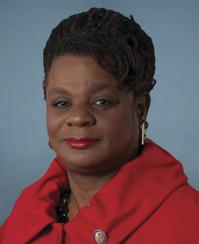
United States · Official source
6,523 records where Rep. Moore, Gwen [D-WI-4] is listed as a sponsor, author, or other actor. Search with topics and years
United States · United States Congress · 12 March 2026
United States · United States Congress · 5 March 2026
United States · United States Congress · 5 March 2026
United States · United States Congress · 5 March 2026
United States · United States Congress · 5 March 2026
United States · United States Congress · 4 March 2026
School Social Workers Improving Student Success Act This bill provides certain resources to increase the number of social workers in elementary and secondary schools. Specifically, the bill directs the Department of Education to award grants to high-need local educational agencies to retain or hire school social workers. The bill also establishes a national technical assistance center for school social work to, among other duties, develop strategies for improving the effectiveness of the school social work workforce.
United States · United States Congress · 4 March 2026
United States · United States Congress · 4 March 2026
United States · United States Congress · 4 March 2026
United States · United States Congress · 3 March 2026
United States · United States Congress · 26 February 2026
United States · United States Congress · 26 February 2026
United States · United States Congress · 26 February 2026
This resolution supports the designation of Hawaiian Language Month or 'Ōlelo Hawai'i Month.
United States · United States Congress · 25 February 2026
United States · United States Congress · 25 February 2026
United States · United States Congress · 25 February 2026
United States · United States Congress · 25 February 2026
United States · United States Congress · 25 February 2026
United States · United States Congress · 25 February 2026
United States · United States Congress · 20 February 2026
United States · United States Congress · 20 February 2026
United States · United States Congress · 17 February 2026
Federal Extreme Risk Protection Order Act of 2026 This bill authorizes and establishes procedures for federal courts to issue federal extreme risk protection orders. Additionally, the bill establishes grants to support the implementation of extreme risk protection order laws at the state and local levels, extends federal firearms restrictions to individuals who are subject to extreme risk protection orders, and expands related data collection. Extreme risk protection order laws, or red flag laws, generally allow certain individuals (e.g., law enforcement officers or family members) to petition a court for a temporary order that prohibits an at-risk individual from purchasing and possessing firearms. Among its provisions, the bill authorizes a family or household member, or a law enforcement officer, to petition for a federal extreme risk protection order with respect to an individual who poses a risk to themselves or others; directs the Department of Justice to establish a grant program to help states, local governments, Indian tribes, and other entities implement extreme risk protection order laws; extends federal restrictions on the receipt, possession, shipment, and transportation of firearms and ammunition to individuals who are subject to extreme risk protection orders; and requires the Federal Bureau of Investigation to compile records from federal, tribal, and state courts and other agencies that identify individuals who are subject to extreme risk protection orders.
United States · United States Congress · 12 February 2026
United States · United States Congress · 12 February 2026
United States · United States Congress · 12 February 2026
United States-Cuba Trade Act of 2026 This bill repeals the trade embargo on Cuba and other provisions restricting trade and travel to Cuba. Specifically, the bill (1) removes restrictions on certain transactions related to trademarks used in connection with a confiscated business or asset, (2) extends nondiscriminatory treatment (i.e., normal trade relations treatment) to Cuban products, and (3) prohibits and rescinds limits on remittances to Cuba. The bill authorizes common carriers to provide telecommunications services between the United States and Cuba. In addition, travel by U.S. citizens and residents to Cuba may not be regulated or prohibited if such travel would be lawful in the United States. The President shall take all necessary steps to engage with Cuba to (1) negotiate settlements relating to claims that Cuba had taken the property of U.S. nationals, and (2) secure the protection of internationally recognized human rights. The President may, with respect to Cuba, impose new export controls and exercise powers related to declared national emergencies. The President must submit a specified determination about a foreign country to Congress prior to denying an income tax credit for taxes paid to the foreign country.
United States · United States Congress · 12 February 2026
United States · United States Congress · 11 February 2026
United States · United States Congress · 11 February 2026
United States · United States Congress · 11 February 2026
United States · United States Congress · 10 February 2026
This resolution supports the designation of National Teen Dating Violence Awareness and Prevention Month.
United States · United States Congress · 9 February 2026
United States · United States Congress · 9 February 2026
United States · United States Congress · 9 February 2026
Foster Youth Housing Opportunity Act This bill expands states' permissible uses of federal funds under the John H. Chafee Foster Care Program for Successful Transition to Adulthood (Chafee program) to include supportive housing services. The Chafee program is administered by the Department of Health and Human Services (HHS) Children's Bureau and provides funding to support youth and young adults who are in, or were formerly in, foster care with their transition to adulthood. The program is funded through formula grants awarded to child welfare agencies in states, certain territories, and participating tribes. The bill allows states to use such funds to provide supportive services (e.g., financial counseling) for youth up to the age of 26 who are seeking to obtain or retain housing and who have experienced foster care and receive assistance under the Department of Housing and Urban Development (HUD) Section 8 Family Unification Program. Additionally, HHS and HUD must jointly develop and issue guidance to state public child welfare agencies and public housing authorities to improve alignment and coordination of housing supportive services. HHS, in consultation with HUD, also must report information about foster youth who are receiving federal housing assistance and the outcomes for such youth, including the extent to which such youth are able to access stable housing and the rates of homelessness. The report must include findings from any evaluations of state programs and recommendations for improving coordination between public child welfare agencies and federal housing programs.
United States · United States Congress · 9 February 2026
This resolution recognizes National Mentoring Month.
United States · United States Congress · 9 February 2026
United States · United States Congress · 4 February 2026
United States · United States Congress · 4 February 2026
United States · United States Congress · 4 February 2026
United States · United States Congress · 4 February 2026
End Prison Gerrymandering Act This bill requires the Bureau of the Census, beginning with the 2030 decennial census, to attribute an individual incarcerated in a correctional facility or detention center to the individual's last place of residence before incarceration. Further, a state must treat such an individual's last place of residence in the state before incarceration as the individual's place of residence for purposes of congressional redistricting.
United States · United States Congress · 4 February 2026
Rebuild America's Schools Act of 2026 This bill provides support for long-term improvements to public elementary and secondary school facilities. First, the bill sets forth allocations to states and establishes a need-based grant program for local educational agencies (LEAs) to improve school facilities. Further, the bill specifies allowable uses of grant funds, including carrying out major repairs, improving indoor air quality, and making facilities accessible to individuals with disabilities. Additionally, the bill requires LEAs that receive funds for new construction, modernization, or renovation projects to comply with hazard-resistance building codes and performance criteria under the WaterSense program of the Environmental Protection Agency. Further, the bill requires such LEAs to adopt certain green practices (environmental standards) and requires the use of iron, steel, and manufactured products that are made in the United States (Buy America). The bill restores school infrastructure tax credit bonds. The bill also sets forth reporting requirements, including annual reports on grant program projects and a report by the Government Accountability Office that requires a study of the geographic distribution of projects, the impact of selected projects on student and staff health and safety, and the accessibility of projects to high-needs schools. The bill also establishes the Office of School Infrastructure and Sustainability within the Department of Education. Next, the bill extends through FY2031 the Impact Aid Construction program. Finally, the bill establishes a grant program to assist LEAs with repairing or replacing concrete foundations affected by pyrrhotite (an iron sulfide material linked to crumbling foundations).
United States · United States Congress · 3 February 2026
United States · United States Congress · 3 February 2026
United States · United States Congress · 2 February 2026
United States · United States Congress · 27 January 2026
United States · United States Congress · 27 January 2026
United States · United States Congress · 22 January 2026
United States · United States Congress · 22 January 2026
United States · United States Congress · 22 January 2026
United States · United States Congress · 15 January 2026
Ending Importation of Laundered Russian Oil Act This bill prohibits the importation of energy products that were produced at any refinery that uses crude oil originating in Russia. Current law prohibits the importation of Russian products that are classified under Chapter 27 of the Harmonized Tariff Schedule of the United States (which includes mineral fuels, mineral oils and products of their distillation, bituminous substances, and mineral waxes) unless the President terminates the prohibition after meeting certain requirements. The bill extends this prohibition and the termination provisions to products that were produced at any refinery that uses crude oil originating in Russia. Under the termination provisions, the President may terminate this prohibition, subject to congressional disapproval, if the President certifies that Russia (1) has reached an agreement with Ukraine to withdraw Russian forces and cease military hostilities in Ukraine, (2) poses no immediate military threat of aggression to any North Atlantic Treaty Organization member, and (3) recognizes the right of the Ukrainian people to independently and freely choose their own government.
United States · United States Congress · 14 January 2026