Bill· HRH.R. 4007 (119th)referred
PHARA Act of 2025
United States · United States Congress · 12 June 2025
The world's political record
Person
United States · Official source
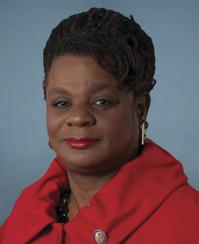
6,523 records where Rep. Moore, Gwen [D-WI-4] is listed as a sponsor, author, or other actor. Search with topics and years
United States · United States Congress · 12 June 2025
United States · United States Congress · 12 June 2025
United States · United States Congress · 12 June 2025
United States · United States Congress · 11 June 2025
United States · United States Congress · 11 June 2025
United States · United States Congress · 11 June 2025
United States · United States Congress · 10 June 2025
Bipartisan Background Checks Act of 2025 This bill establishes new background check requirements for firearm transfers between private parties (i.e., unlicensed individuals). Specifically, it prohibits a firearm transfer between private parties unless a licensed gun dealer, manufacturer, or importer first takes possession of the firearm to conduct a background check. The prohibition does not apply to certain firearm transfers or exchanges, such as a gift between spouses.
United States · United States Congress · 10 June 2025
Enhanced Background Checks Act of 2025 This bill establishes more stringent background check requirements for proposed firearm transfers from a federal firearms licensee (e.g., a licensed gun dealer) to an unlicensed person. Specifically, it increases the amount of time, from 3 business days to a minimum of 10 business days, that a federal firearms licensee must wait to receive a completed background check prior to transferring a firearm to an unlicensed person. (This type of transaction is often referred to as a default proceed transaction.) If a submitted background check remains incomplete after 10 business days, then the prospective purchaser may submit a petition for a final firearms eligibility determination. If an additional 10 days elapse without a final determination, then the federal firearms licensee may transfer the firearm to the prospective purchaser. The Government Accountability Office must report on the extent to which the changes have prevented firearms transfers to prohibited persons. The Federal Bureau of Investigation must report on the number of petitions it receives for final federal firearms determinations. The Department of Justice, in consultation with the National Resource Center on Domestic Violence and Firearms, must report on further amendments to the background check process that would likely reduce the risk of death or great bodily harm to victims of domestic violence, domestic abuse, dating partner violence, sexual assault, and stalking.
United States · United States Congress · 10 June 2025
United States · United States Congress · 10 June 2025
United States · United States Congress · 6 June 2025
United States · United States Congress · 6 June 2025
This bill designates the women’s health clinic of the Clement J. Zablocki Veterans' Administration Medical Center in Milwaukee, Wisconsin, as the Anna Mae Robertson VA Well Woman Clinic.
United States · United States Congress · 5 June 2025
Accelerating Access to Dementia and Alzheimer’s Provider Training Act or the AADAPT Act This bill reauthorizes through FY2031 and revises the Technology-enabled Collaborative Learning Program, which is administered by the Health Resources and Services Administration. This program provides grants to support the use of technology that connects different health care professionals to improve access to health care, including specialty care, for certain rural and medically underserved populations. The bill explicitly adds dementia care to the types of specialty care that the program may address.
United States · United States Congress · 5 June 2025
United States · United States Congress · 5 June 2025
Dependent Income Exclusion Act of 2025 This bill excludes the wages and net earnings from self-employment of a dependent of a taxpayer from the calculation of total household income for purposes of determining eligibility for and the amount of the refundable premium tax credit, subject to limitations. Under current law, eligible taxpayers may be able to claim the premium tax credit, which applies toward the cost of obtaining health insurance through health insurance exchanges. To be eligible for the credit, a taxpayer’s household income must meet or exceed 100% of the federal poverty level (FPL). For tax years before 2021 and after 2025, taxpayers must have a household income that meets or exceeds 100% but is less than 400% of the FPL to be eligible for the tax credit. Further, under current law, the calculation of the premium tax credit is based, in part, on taxpayers’ household income such that taxpayers with lower household incomes are eligible for a higher premium tax credit. The bill excludes from household income the wages and net earnings from self-employment of a dependent of the taxpayer who (1) is under 18 years old; or (2) is under 24 years old and is, during any five calendar months of the year, a full- or part-time student in an educational organization (excluding for-profit educational institutions), is in an apprentice program, or is participating in a job training program. The amount that may be excluded is limited to 15% of the taxpayer’s modified adjusted gross income.
United States · United States Congress · 5 June 2025
United States · United States Congress · 4 June 2025
United States · United States Congress · 4 June 2025
This resolution expresses the House of Representatives' grave concern with (1) the humanitarian crisis and acute suffering of Palestinian civilians in Gaza, and (2) the suffering of the hostages and hostage families. The resolution also calls on the White House, the Department of State, and other relevant federal agencies to use all available diplomatic tools to bring about the release of the hostages, the disbursement of food and humanitarian aid to Palestinian civilians, and a durable end to the Gaza conflict.
United States · United States Congress · 4 June 2025
Equal Access to Justice for Victims of Gun Violence Act of 2025 This bill removes limitations on the civil liability of gun manufacturers and the disclosure of gun trace data in civil actions. Specifically, the bill repeals the Protection of Lawful Commerce in Arms Act, which prohibits civil actions against a firearm or ammunition manufacturer, seller, importer, dealer, or trade association for damages resulting from the criminal or unlawful misuse of a firearm. Additionally, the bill states that firearms trace data maintained by the Bureau of Alcohol, Tobacco, Firearms and Explosives is not immune from legal process. Such data is subject to discovery; is admissible as evidence; and may be used, relied on, or disclosed in a civil action or administrative proceeding.
United States · United States Congress · 3 June 2025
United States · United States Congress · 2 June 2025
United States · United States Congress · 29 May 2025
United States · United States Congress · 21 May 2025
United States · United States Congress · 21 May 2025
United States · United States Congress · 21 May 2025
United States · United States Congress · 20 May 2025
Improving Seniors' Timely Access to Care Act of 2025 This bill establishes several requirements and standards relating to prior authorization processes under Medicare Advantage (MA) plans. Specifically, MA plans must (1) establish an electronic prior authorization program that meets specified standards; (2) annually submit to the CMS for publication specified prior authorization information, including the percentage of requests approved and the average response time; and (3) meet other standards, as set by the Centers for Medicare & Medicaid Services (CMS), relating to the quality and timeliness of prior authorization determinations. The CMS and the Office of the National Coordinator for Health Information Technology must publish on the CMS' website a report that analyzes the information received from MA plans, the feasibility of implementing real-time decision making with respect to prior authorization requests, and the impact of decisions that are made using artificial intelligence on patient access.
United States · United States Congress · 20 May 2025
Social Security Enhancement and Protection Act of 2025 This bill increases certain Social Security benefits, expands Social Security payroll taxes, and makes other changes to the Social Security program. Under current law, Social Security has a taxable maximum , which refers to the maximum amount of a worker's earnings that are subject to Social Security payroll taxes (set at $176,100 in 2025). Additionally, the taxable maximum serves as the maximum amount of earnings used to calculate a worker's Social Security benefits. This bill phases out the taxable maximum so as to apply payroll taxes to all earnings by 2035, and it revises the method used to calculate a worker’s Social Security benefits to account for earnings in excess of the taxable maximum. The bill also gradually increases the Social Security payroll tax applicable to workers and employers from 6.2% to 6.5% over six years. Other changes to benefits include establishing a new method to calculate benefits for lifetime low earners and increasing benefits for certain beneficiaries on account of long-term eligibility. In addition, an eligible child of a retired, disabled, or deceased worker may continue to receive benefits through age 26, provided the child is a full-time student in postsecondary school. An increase in Social Security benefits under these provisions may not be treated as income for purposes of determining eligibility for benefits, or the amount of any benefits, under a federal program or a state or local program financed with federal funds.
United States · United States Congress · 20 May 2025
United States · United States Congress · 19 May 2025
United States · United States Congress · 15 May 2025
United States · United States Congress · 15 May 2025
Stronger Communities through Better Transit Act This bill requires the Department of Transportation (DOT) to establish a grant program to support operating projects for public transportation and related service improvements, particularly in underserved communities and areas of persistent poverty. Specifically, the bill requires DOT to allocate funding under the program for urbanized areas, states, and Indian tribes that are recipients of funds under either the Federal Transit Administration's (FTA's) Urbanized Area Formula Funding program or Formula Grants for Rural Areas program. Eligible recipients may use funding for operating costs associated with projects that improve public transportation service for transit-dependent populations and support increased transit ridership (e.g., service expansion, information technology enhancements, and workforce development). DOT must apportion the funding so that recipients receive funds that are proportional to their share of operating costs. The bill also provides for an increased federal cost share for operating assistance for projects or programs carried out in areas of persistent poverty or underserved communities. DOT must set up a multimodal access measurement interface for public agencies to aid transit agencies in determining and reporting on access to jobs and essential services. A grant recipient must (1) report specific information to the FTA for inclusion in the National Transit Database, and (2) survey transit riders and non-riding residents regarding transit service improvements. Further, the bill expands the purposes of the public transportation programs to include supporting public transportation's role in combating climate change through growing/retaining transit ridership.
United States · United States Congress · 13 May 2025
United States · United States Congress · 13 May 2025
United States · United States Congress · 13 May 2025
United States · United States Congress · 13 May 2025
United States · United States Congress · 8 May 2025
United States · United States Congress · 8 May 2025
United States · United States Congress · 8 May 2025
United States · United States Congress · 7 May 2025
United States · United States Congress · 7 May 2025
United States · United States Congress · 7 May 2025
United States · United States Congress · 7 May 2025
This bill increases the amount insured depository institutions may accept as reciprocal deposits. (Reciprocal deposits are used by institutions to increase the availability of deposit insurance by splitting large deposits using a reciprocal network of institutions.) The bill creates a tiered system so that the allowable amount is based on the institution's total liabilities. Additionally, the bill changes certain qualifications insured depository institutions may be required to have to accept reciprocal deposits. Under current law, institutions may qualify by having a composite rating of outstanding or good, among other requirements. The bill allows institutions with a 1, 2, or 3 rating under the CAMELS scale to qualify. (The Uniform Financial Institutions Rating System uses the characteristics of capital adequacy, asset quality, management, earnings, liquidity, and sensitivity to market risk (i.e., CAMELS ratings) to rate the health of financial institutions, with a 1 indicating the highest rating and least degree of supervisory concern and a 5 indicating the lowest rating and highest degree of supervisory concern.)
United States · United States Congress · 6 May 2025
Stop Child Hunger Act of 2025 This bill expands the Department of Agriculture's (USDA's) Summer Electronic Benefit Transfer Program for Children (Summer EBT) to include coverage during a school closure period. (Summer EBT provides grocery-buying benefits to low-income families with school-aged children when schools are closed for the summer.) Under the bill, a school closure period means a period in which an elementary school or secondary school is closed, operating remotely, or operating in a hybrid manner for five or more consecutive weekdays during a calendar year. The bill also increases the daily value of the benefit to cover the cost of breakfast, lunch, and a snack for every day school is closed. For FY2026, USDA must pay each state agency and covered tribal organization 100% of the administrative expenses (currently 50%) incurred in operating the program. The rate that USDA must pay for administrative expenses decreases each fiscal year until it reaches 50% of the expenses for FY2031 and each fiscal year thereafter. USDA must also provide grants to states to support the development or upgrading of data systems that are necessary to implement Summer EBT.
United States · United States Congress · 6 May 2025
United States · United States Congress · 5 May 2025
United States · United States Congress · 5 May 2025
United States · United States Congress · 5 May 2025
United States · United States Congress · 1 May 2025
This resolution supports the designation of National Menstrual Health Awareness Month to educate people about menstrual health and eliminate period stigma.
United States · United States Congress · 1 May 2025
United States · United States Congress · 30 April 2025