United States · United States Congress · 8 June 2016
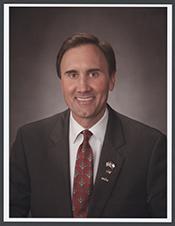
Health Coverage State Flexibility Act of 2016 This bill amends the Patient Protection and Affordable Care Act to revise the grace period that health insurers must provide to recipients of premium subsidies before discontinuing health coverage for nonpayment of premiums. The grace period is shortened from 3 months to 30 days unless state law includes an applicable grace period.
United States · United States Congress · 26 May 2016
This bill prohibits U.S. agency funds from being used until the earlier of the enactment date of an Act authorizing FY2017 appropriations for military activities of the Department of Defense (DOD) or January 1, 2017, for the transfer or release to or within the United States, its territories, or possessions or to any foreign country or entity of an individual detained at Naval Station, Guantanamo Bay, Cuba. "Individual detained at Guantanamo" means an individual located at Guantanamo as of October 1, 2009, who: (1) is not a U.S. national or a member of the Armed Forces, and (2) is in the custody or under the control of DOD or otherwise detained at Guantanamo.
United States · United States Congress · 19 May 2016
Student Privacy Protection and Safety Act of 2016 This bill invalidates the Dear Colleague Letter on Transgender Students, dated May 13, 2016, that was issued by the Department of Justice and the Department of Education to provide guidance to schools receiving federal financial assistance about the treatment of transgender students under the prohibitions against sex discrimination in title IX of the Education Amendments of 1972. The invalidation applies until superseded by an Act of Congress that directs federal departments to issue guidance on transgender issues.
United States · United States Congress · 19 May 2016
Air Traffic Controller Hiring Improvement Act of 2016 This bill directs the Federal Aviation Administration (FAA), in appointing air traffic controllers, to give preferential consideration to qualified individuals maintaining 52 consecutive weeks of experience involving the active separation of air traffic after receipt of an air traffic certification or facility rating within 5 years of application while serving at an FAA air traffic control facility, a civilian or military air traffic control facility of the Department of Defense, or a tower operating under contract with the FAA. The FAA shall consider additional applicants by referring an approximately equal number of employees for appointment among two applicant pools. The number referred from each group shall not differ by more than 10%. Pool one shall consist of applicants who: have successfully completed air traffic controller training and graduated from an institution participating in the Collegiate Training Initiative program and have received an appropriate recommendation or endorsement from such institution, are eligible for a veterans recruitment appointment and provide a Certificate of Release or Discharge from Active Duty within 120 days of the announcement closing, are veterans eligible for veterans' benefits who maintain aviation experience obtained in the course of the individual's military experience, or are preference eligible veterans. Pool two shall consist of applicants who apply under a vacancy announcement recruiting from all U.S. citizens. The FAA: (1) may not use a biographical assessment when hiring, (2) must provide an individual who applied in response to a specified 2014 vacancy announcement and was disqualified as the result of a biographical assessment an opportunity to reapply under the revised hiring practices, and (3) must waive any maximum age limit for such reapplying applicants who met such requirement when they applied under such announcement. Otherwise, the maximum age limit for an original appointment as an air traffic controller under this bill shall be 35 years of age. The FAA shall consider directly notifying secondary schools and institutes of higher learning of a vacancy announcement for pool one applicants.
United States · United States Congress · 18 May 2016
Prohibiting the Usurpation of Bathroom Laws through Independent Choice School Act (PUBLIC School Act) of 2016 This bill declares that it shall not be unlawful under federal law for a state or local government to enact or enforce a policy regarding the use of sex-segregated bathrooms or locker rooms of educational institutions on the basis of gender identity. The bill prohibits the reduction or denial of federal financial assistance on the basis that a state or local government enacts or enforces such a policy.
United States · United States Congress · 17 May 2016
Certainty for States and Tribes Act This bill directs the Department of the Interior to reestablish the Royalty Policy Committee, which should include members representing states and Indian tribes who produce minerals on federal or tribal land. In addition, Interior must establish a State and Tribal Resources Board, a subcommittee to the Royalty Policy Committee. The board and committee must advise Interior as it formulates policies and regulations regarding mineral production on federal and tribal lands. The board can delay the issuance of a final regulation by Interior if the board determines that such regulation will have a negative state or Tribal budgetary or economic impact. The Bureau of Land Management (BLM) must complete by January 15, 2019, its programmatic review of the federal coal leasing program as described in Secretarial Order 3338. Secretarial Order 3338 directed the BLM to prepare a discretionary review of the federal coal program. (Interior issued Secretarial Order 3338 on January 15, 2016.) The moratorium on the issuance of new federal coal leases by the BLM shall terminate on January 16, 2019. Additionally, the bill allows leases and modifications to be issued by the BLM for any coal leasing application currently under review. Secretarial Order 3338 prohibited approval of such leases and modifications. The bill also directs the BLM to conduct federal coal lease sales and modifications within one year after it completes an analysis of an application.
United States · United States Congress · 17 May 2016
Care Veterans Deserve Act of 2016 This bill amends the Veterans Access, Choice, and Accountability Act of 2014 to make the Veterans Choice Program permanent. Program eligibility is expanded to include veterans with a 50% service-connected disability. The VA shall contract with a national chain of walk-in clinics to provide hospital care and medical services in such clinics to veterans who are in the annual patient enrollment system. A veteran shall not be required to: (1) obtain pre-authorization for such care, or (2) pay a copayment to the clinic or to the VA. Such national chain shall establish an automated system to provide the VA with weekly information on veterans receiving hospital care or medical services. A covered health care professional may practice his or her health care profession at any location in any state, regardless of where such health care professional or the patient is located, if the health care professional is using telemedicine to treat an individual. Such treatment is permitted regardless of whether the professional or patient is located in a federally-owned facility. "Covered health care professional" means a health care professional who is: (1) authorized by the VA to provide health care, including a private health care professional who provides such care under a VA contract or agreement; and (2) licensed, registered, or certified in a state to practice his or her health care profession. The VA shall: extend the operating hours for each VA pharmacy to include weekday evenings until until 8:00 p.m., weekends, and federal holidays; and contract with qualifying physicians and nurses to work at VA medical facilities during nights and weekends. The VA may: (1) hire support staff in connection with such extended operating hours, and (2) provide for a a nongovernmental hospital organization best-practices peer review of each VA medical center.
United States · United States Congress · 13 May 2016
Reaffirms: that Israel is a major U.S. strategic partner, that it is U.S. policy and law to ensure that Israel maintains its qualitative military edge and self-defense capacity, and support of an Israeli tiered missile defense program. Urges finalization of a new Memorandum of Understanding between the United States and Israel. Supports a long-term Memorandum of Understanding between the United States and Israel that increases the amount of aid from previous agreements and enhances Israel's military capabilities.
United States · United States Congress · 13 May 2016
Criminal Alien Deportation Enforcement Act of 2016 This bill amends the Foreign Assistance Act of 1961 to prohibit financial assistance to a foreign country that refuses or unreasonably delays the acceptance of an alien who: (1) is a citizen, subject, national, or resident of such country; and (2) has received a final order of removal from the United States. A country shall be deemed to have refused or unreasonably delayed acceptance of an alien if it does not accept such alien within 90 days of receiving an authorized repatriation request. The Department of Homeland Security shall submit a report to Congress every three months that: (1) lists the countries that refuse or unreasonably delay repatriation; and (2) includes the total number of aliens who were refused repatriation, organized by country, detention status, and criminal status. A listed country shall be subject to U.S. entry and financial assistance prohibitions unless it issues appropriate travel documents: (1) within 100 days after such report's submission for aliens convicted of a crime committed in the United States, and (2) within 200 days after such report's submission for all other aliens. A victim (or an immediate family member thereof) of a crime committed by any alien who has been issued a final order of removal shall have standing in federal district court to enforce entry and financial prohibitions. The Immigration and Nationality Act is amended to: (1) discontinue granting visas to a subject, national, or resident of a listed country unless the country has issued the appropriate travel documents pursuant to this bill; and (2) grant standing to enforce such provision in federal district court to a victim (or an immediate family member thereof) of a crime committed by any alien who has been issued a final order of removal.
United States · United States Congress · 13 May 2016
Corps' Obligation to Assist in Safeguarding Texas Act or the COAST Act This bill requires the U.S. Army Corps of Engineers to expedite the: (1) completion of the Coastal Texas Protection and Restoration Study by taking into consideration information developed by the Gulf Coast Community Protection and Recovery District, (2) completion of the reports for the study, and (3) congressional approval process of coastal protection projects along the Texas coast by allowing projects that are justified by the Corps of Engineers in the reports to proceed directly to project preconstruction, engineering, and design. (The study will evaluate the feasibility of developing a comprehensive plan for flood risk management, hurricane and storm risk management, and ecosystem restoration for Texas coastal areas.)
United States · United States Congress · 10 May 2016
Food and Fuel Consumer Protection Act of 2016 This bill amends the Clean Air Act by revising the renewable fuel program, which requires transportation fuel to contain a minimum volume of renewable fuel. The Environmental Protection Agency (EPA) must cap the total volume of ethanol blended into the transportation fuel supply at 9.7% of projected gasoline demand as determined by the Energy Information Administration.
United States · United States Congress · 6 May 2016
Christa McAuliffe Commemorative Coin Act of 2016 This bill directs the Department of the Treasury to mint and issue not more than 350,000 $1 silver coins in commemoration of Christa McAuliffe. The design of the coins shall bear an image of and the name of Christa McAuliffe on the obverse side and a design on the reverse side that depicts the legacy of McAuliffe as a teacher. Treasury may issue the coins from January 1-December 31, 2018. All surcharges received by Treasury from the sale of the coins shall be paid to the FIRST robotics program for the purpose of engaging and inspiring young people, through mentor-based programs, to become leaders in the fields of science, technology, engineering, and mathematics.
United States · United States Congress · 3 May 2016
Working to Integrate Networks Guaranteeing Member Access Now Act or the WINGMAN Act This bill directs the Department of Veterans Affairs (VA) to provide an accredited, permanent congressional employee with read-only remote access to the electronic Veterans Benefits Administration (VBA) claims records system of a represented veteran, regardless of whether the employee is acting under a power of attorney executed by the veteran. The VA shall ensure that access does not allow the employee to modify system data. An employee must complete the VA certification process required of agents or attorneys in order to have system access. Each Member of Congress who elects to have an employee participate in the system shall bear the certification cost, which shall be paid from the Member's representational allowance. Information access by an employee shall be deemed: (1) a covered disclosure requiring prior consent, with specified exceptions; and (2) a permitted disclosure relating to the privacy of individually identifiable health information. The VA may not recognize an employee for purposes of preparation, presentation, and prosecution of VA claims by reason of such system access. "Accredited, permanent congressional employee" means an employee of a Member of Congress who assists constituents with issues regarding federal departments or agencies. "Electronic VBA claims records system" means the VA system that provides claim status information, including information about medical records, compensation and pension exams records, rating decisions, a statement of the case and a supplementary statement of the case, a notice of disagreement, and Form-9.
United States · United States Congress · 28 April 2016
Consumer Review Fairness Act of 2016 This bill makes a provision of a form contract void from the inception if it is used in the course of selling or leasing goods or services to: (1) prohibit or restrict an individual who is a party to such a contract from engaging in written, oral, or pictorial reviews, or other similar performance assessments or analyses of, including by electronic means, the goods, services, or conduct of a person that is also a party to the contract; (2) impose penalties or fees against individuals who engage in such communications; or (3) transfer or require the individual to transfer intellectual property rights in review or feedback content (with the exception of a nonexclusive license to use the content) in any otherwise lawful communications about such person or the goods or services provided by such person. The bill does not apply to an employer-employee or independent contractor contract. The standards under which provisions of a form contract are considered void under this bill shall not be construed to affect: legal duties of confidentiality; civil actions for defamation, libel, or slander; or a party's right to establish terms and conditions for the creation of photographs or video of such party's property when those photographs or video are created by an employee or independent contractor of a commercial entity and are solely intended to be used for commercial purposes by that entity. Such standards also shall not be construed to affect any party's right to remove or refuse to display on its Internet website content that: (1) contains the personal information or likeness of another person or is libelous, harassing, abusive, obscene, vulgar, sexually explicit, inappropriate with respect to race, gender, sexuality, ethnicity, or other intrinsic characteristic; (2) is unrelated to the goods or services offered by or available at such party's website; or (3) is clearly false or misleading. A provision shall not be considered void under this bill to the extent that it prohibits disclosure or submission of, or reserves the right of a person or business that hosts online consumer reviews or comments to remove, certain: (1) trade secrets or commercial or financial information; (2) personnel and medical files; (3) law enforcement records; (4) content that is unlawful or that a party has a right to remove or refuse to display; or (5) computer viruses or other potentially damaging computer code, processes, applications, or files. A person is prohibited from offering form contracts containing a provision that is considered void under this bill. Enforcement authority is provided to the Federal Trade Commission (FTC) and states. The FTC must provide businesses with nonbinding best practices for compliance.
United States · United States Congress · 28 April 2016
No 2H2O from Iran Act This bill prohibits funds available to any federal department or agency for any fiscal year from being obligated or expended to purchase or issue a license to purchase heavy water produced in Iran.
United States · United States Congress · 28 April 2016
This bill bars the Department of Transportation (DOT) from issuing a foreign air carrier permit, or an exemption from certain economic regulations, to furnish foreign air transportation under the United States-European Union-Norway-Iceland Air Transport Agreement of June 21, 2011, unless DOT: finds that issuing the permit or exemption would be consistent with the intent of the parties, set forth in article 17 bis of the agreement, that opportunities created by the agreement do not undermine labor standards or the labor-related rights and principles contained in the parties' respective laws; and imposes conditions on the permit or exemption necessary to ensure that the foreign air transportation furnished complies with the intent of article 17 bis .
United States · United States Congress · 28 April 2016
Freeing Responsible and Effective Exchanges Act or the FREE Act This bill amends the Federal Trade Commission Act to permit a bipartisan majority of Federal Trade Commission (FTC) commissioners to hold a nonpublic meeting to discuss official business if: (1) no votes or actions are taken, (2) each person at the meeting is an FTC commissioner or employee, and (3) an attorney from the FTC's Office of General Counsel is present. "Bipartisan majority" means a group of at least three commissioners that includes, for each political party of which any commissioner is a member, at least one commissioner who is a member of such political party and, if any commissioner has no political party affiliation, at least one unaffiliated commissioner. Within two business days after such a nonpublic meeting, the FTC must disclose on its website: (1) a list of persons who attended such meeting; and (2) a summary of discussed matters, except for matters that are classified or otherwise exempt from disclosure.
United States · United States Congress · 28 April 2016
Start Taking Action on Lingering Liabilities Act or the STALL Act This bill amends the Federal Trade Commission Act to require certain Federal Trade Commission (FTC) investigations involving civil investigative demands to terminate six months after the FTC sends a verifiable written communication to notify the subject of the investigation. The bill also provides an exception that allows such an investigation to continue beyond that six-month period if, before the period expires, the FTC: (1) sends an additional verifiable written communication, or (2) votes to extend the investigation.
United States · United States Congress · 21 April 2016
This bill amends the Immigration and Nationality Act to reauthorize the State Criminal Alien Assistance Program (SCAAP) through FY2020. SCAAP provides payments to state, local, and tribal governments to offset the costs of incarcerating certain undocumented criminal aliens. It expands the definition of “undocumented criminal alien” to include an alien who has been charged with a felony or two or more misdemeanors. Additionally, the bill directs the Department of Justice to reimburse a state, local, or tribal government for costs to incarcerate a criminal alien whose immigration status cannot be verified by the Department of Homeland Security. (Currently, a criminal alien with lawful immigration status does not meet the criteria for SCAAP reimbursement.)
United States · United States Congress · 21 April 2016
2016 Tax Day Floods Supplemental Funding Act This bill makes supplemental appropriations for FY2016 for the Army Corps of Engineers for construction for flood control and storm damage reduction projects in areas affected by flooding in Houston, Texas, that have received a major disaster declaration pursuant to the Robert T. Stafford Disaster Relief and Emergency Assistance Act. Appropriated funds shall remain available through FY2026 and shall be designated as being for disaster relief under the Balanced Budget and Emergency Deficit Control Act of 1985.
United States · United States Congress · 20 April 2016
Financial Literacy for Financial Aid Act This bill amends title IV (Student Assistance) of the Higher Education Act of 1965 to direct the Department of Education to maintain a consumer-tested online counseling tool that provides required entrance counseling to a student who is a first-time federal student loan borrower.
United States · United States Congress · 20 April 2016
Stop Animal Fat Tax Credits Act of 2016 This bill amends the Internal Revenue Code to make fuels derived from animal fats ineligible for the tax credits for: (1) biodiesel and renewable diesel, and (2) alternative fuels.
United States · United States Congress · 18 April 2016
Advanced Nuclear Technology Development Act of 2016 This bill requires the Department of Energy (DOE) and the Nuclear Regulatory Commission (NRC) to enter into a memorandum of understanding to: ensure that DOE has sufficient technical expertise to support the civilian nuclear industry's timely development and commercial deployment of safe, innovative advanced reactor technology; ensure that the NRC has sufficient technical expertise to support the evaluation of requests for regulatory approval for advanced reactors; use computers and software codes to calculate the behavior and performance of advanced reactors based on mathematical models of their physical behavior; and ensure that the DOE maintains and develops the facilities to support the civilian nuclear industry's timely development and commercial deployment of safe, innovative reactor technology and ensuring that the NRC has access to such facilities, as needed. DOE must submit a report to Congress within 180 days evaluating activities intended to facilitate the testing and demonstration of advanced reactors on DOE land and facilities and the potential for DOE to test and demonstrate on private land. In addition, the NRC is required to develop a regulatory framework for licensing advanced nuclear reactors. This bill amends the Omnibus Budget Reconciliation Act of 1990 to require that the aggregate amount of fees collected by the NRC from licensees and certificate holders in a fiscal year be decreased by the amount of appropriations for activities related to the development of regulatory infrastructure for advanced nuclear reactor technologies.
United States · United States Congress · 18 April 2016
Firearm Due Process Protection Act This bill amends the Brady Handgun Violence Protection Act to establish a 60-day time limit for the Department of Justice to make a final disposition of a request to correct a record in the National Instant Criminal Background Check System. With respect to violations of that limit, the bill establishes a private right to action.
United States · United States Congress · 15 April 2016
End Executive Overreach Act This bill prohibits, until January 21, 2017, the use of federal funds, fees, or resources to implement an executive order issued on or after the enactment of this bill. The bill prohibits any agency, until such date, from making or finalizing: a major rule (a rule that is likely to result in an annual effect on the economy of $100 million or more); a rule that may raise novel legal or policy issues arising out of legal mandates, the President's priorities, or the principles set forth in Executive Order 12866 (which requires that significant regulatory actions be submitted for review by the Office of Information and Regulatory Affairs of the Office of Management and Budget); or a rule that may create a serious inconsistency or otherwise interfere with an action taken or planned by another agency.
United States · United States Congress · 14 April 2016
Free File Act of 2016 This bill requires the Department of the Treasury to continue to operate the Internal Revenue Service (IRS) Free File Program. The program must work with state government agencies to enhance and expand the use of the program, while continuing to: provide free commercial-type online individual income tax preparation and electronic filing services to the lowest 70% of taxpayers by income; provide all taxpayers (regardless of income) with a basic, online electronic fillable forms utility; and work with the private sector to provide the free tax preparation and electronic filing services. Treasury must work with the private sector through the program to identify and implement innovative new program features to improve and simplify the taxpayer's experience with completing and filing individual income tax returns. The IRS and members of the tax software and electronic industry involved in the program must support and promote improvements within the program by mutually testing, piloting, and offering innovative solutions to: simplify the tax system, reduce compliance and reporting burdens, increase tax return accuracy through financial data authentication, strengthen the tax system against fraud through cybersecurity collaboration, avoid duplication, and maximize the use of electronic technology.
United States · United States Congress · 13 April 2016
Prenatal Nondiscrimination Act (PRENDA) of 2016 This bill imposes criminal penalties on anyone who knowingly or knowingly attempts to: (1) perform an abortion knowing that the abortion is sought based on the sex, gender, color or race of the child, or the race of a parent; (2) use force or the threat of force to intentionally injure or intimidate any person for the purpose of coercing a sex-selection or race-selection abortion; (3) solicit or accept funds for the performance of such an abortion; or (4) transport a woman into the United States or across a state line for the purpose of obtaining such an abortion. Violations or attempted violations shall result in fines and/or imprisonment for up to five years. The bill authorizes civil actions (for verifiable money damages for injuries and punitive damages) by: (1) fathers, or maternal grandparents if the mother is an unemancipated minor, of unborn children who are the subject of an abortion performed or attempted through any of the above violations; or (2) women upon whom an abortion has been performed or attempted with a knowing or attempted use of force or threat of force to intentionally injure or intimidate any person for the purpose of coercing a sex-selection or race-selection abortion. To prevent an abortion provider from performing or attempting further abortions in violation of this bill, the bill authorizes injunctive relief to be obtained by: (1) the women upon whom such an abortion is performed or attempted, (2) a maternal grandparent of the unborn child if the woman is an unemancipated minor, (3) the father of such an unborn child, or (4) the Department of Justice. Violations of this bill are deemed to be prohibited discrimination under title VI (Federally Assisted Programs) of the Civil Rights Act of 1964. (Violators of title VI lose federal funding.) Medical or mental health professionals must report known or suspected violations to law enforcement authorities. Criminal penalties are established for a failure to so report. A woman having such an abortion may not be prosecuted or held civilly liable. Courts must make such orders as necessary to protect the anonymity of any woman upon whom an abortion has been performed or attempted if she does not give her written consent to such disclosure. In the absence of such a woman's written consent, any party, other than a public official, who brings an action must use a pseudonym. For purposes of this bill, "abortion" is defined as the act of using or prescribing any instrument, medicine, drug, or any other substance, device, or means with the intent to terminate the clinically diagnosable pregnancy of a woman, with knowledge that the termination by those means will, with reasonable likelihood, cause the death of the unborn child, unless the act is intended to: (1) save the life or preserve the health of the unborn child, (2) remove a dead unborn child caused by spontaneous abortion, or (3) remove an ectopic pregnancy.
United States · United States Congress · 23 March 2016
Designates the facility of the United States Postal Service located at 3130 Grants Lake Boulevard in Sugar Land, Texas, as the "LCpl Garrett W. Gamble, USMC Post Office Building."
United States · United States Congress · 23 March 2016
Comprehensive Strategy to Destroy ISIL Act of 2016 This bill directs the Department of Defense and the Department of State to jointly develop and submit to Congress a strategy to destroy the Islamic State of Iraq and the Levant (ISIL) and its affiliates. The Director of National Intelligence shall assess for Congress: the willingness and capabilities of coalition members and allies to defeat ISIL and its affiliates; the presence of ISIL or its affiliates in countries other than Syria, Iraq, Libya, Egypt, and Afghanistan; prevention of radicalization of citizens of regional countries by ISIL and its affiliates; the number of foreign fighters joining ISIL and its affiliates and tactics to prevent further recruitment; and significant U.S. intelligence gaps concerning ISIL and its affiliates and the ability of the United States to carry out a regional strategy to defeat ISIL and its affiliates.
United States · United States Congress · 23 March 2016
Protecting Lives Using Surplus Equipment Act of 2016 This bill invalidates any regulation, rule, guidance, recommendation, or policy issued after May 15, 2015, that limits the sale or donation of excess federal property to state and local law enforcement agencies unless enacted by Congress. Additionally, it prohibits the use of federal funds to implement such regulation, rule, guidance, recommendation, or policy. Property that was recalled or seized on or after May 15, 2015, must be returned, replaced, or reissued to the state or local law enforcement agency.
United States · United States Congress · 23 March 2016
This bill amends the Immigration and Nationality Act to define "criminal gang." An alien who is or was a member of a criminal gang, or who participated in gang activity knowing that such participation will promote the gang's illegal activity, shall be inadmissible and deportable. The Department of Homeland Security may designate a group or association as a criminal gang. Detention shall be mandatory for anyone found inadmissible or deportable for criminal street gang membership. Individuals found inadmissible or deportable for criminal gang membership shall be barred from: asylum; withholding of removal; temporary protected status; special immigrant juvenile status; deferred action; and parole, unless assisting the United States in a law enforcement matter and required by the government to be present with respect to such assistance. An alien found at a U.S. land border or port of entry who is determined to be inadmissible and a threat to public safety (certain criminals, terrorists, street gang members) shall be subject to expedited removal.
United States · United States Congress · 23 March 2016
Correcting Unfair Benefits for Aliens Act of 2016 or the CUBA Act of 2016 This bill expresses the sense of Congress that Cuban nationals should be treated under the same immigration rules as nationals of other countries with which the United States has diplomatic relations and should not receive preferential treatment. The bill repeals P.L. 89-732, which provides for the adjustment of Cuban citizens or nationals to lawful permanent resident status in the United States. No funds, resources, or fees made available to the Department of Homeland Security, the Department of State, or to any other federal agency, including deposits into the Immigration Examinations Fee Account, may be used to implement or administer any of the policy changes set forth in the 2007 memorandum from U.S. Immigration and Customs Enforcement entitled "Cuban Family Reunification Parole Program." Cuban nationals who enter the United States on or after the date of enactment of this Act shall be ineligible for refugee/parolee assistance under the Refugee Education Assistance Act of 1980. Conforming amendments are made to the Personal Responsibility and Work Opportunity Reconciliation Act of 1996 and the Immigration and Nationality Act. The Inspector General of the Social Security Administration shall report to Congress describing methods for enforcing the loss of Supplemental Security Income eligibility by persons who are absent from the United States for at least one month.
United States · United States Congress · 22 March 2016
Conscience Protection Act of 2016 This bill amends the Public Health Service Act to codify the prohibition against the federal government and state and local governments that receive federal financial assistance for health-related activities penalizing or discriminating against a health care provider based on the provider's refusal to be involved in, or provide coverage for, abortion. Health care providers include health care professionals, health care facilities, social services providers, health care professional training programs, and health insurers. The Office for Civil Rights of the Department of Health and Human Services, in coordination with the Department of Justice (DOJ), must investigate complaints alleging discrimination based on an individual's religious belief, moral conviction, or refusal to be involved in an abortion. DOJ or any entity adversely affected by such discrimination may obtain equitable or legal relief in a civil action. Administrative remedies do not need to be sought or exhausted prior to commencing an action or granting relief. Such an action may be brought against a governmental entity.
United States · United States Congress · 22 March 2016
Energy and American Security Act This bill expresses the sense of Congress that: (1) the United States should take appropriate actions to prohibit energy production by the Islamic State and its ability to profit from energy production revenues, and (2) U.S. national energy policy should include consideration of national security. The Department of Energy may provide technical assistance to the Armed Forces regarding Armed Forces activities to address Islamic State energy resources. Such assistance may include identifying: (1) energy resources and related revenue streams; and (2) methods to hinder, destroy, or discourage the development, transportation, and sale of such energy resources. "Islamic State" means the Islamic State, any affiliate, or any immediate successor organization.
United States · United States Congress · 17 March 2016
Ozone Standards Implementation Act of 2016 This bill amends the Clean Air Act by revising the National Ambient Air Quality Standards (NAAQS) program. The bill delays the implementation of the ozone NAAQS that were published in 2015. The bill extends until: (1) October 26, 2024, the deadline for states to submit designations to implement the 2015 ozone NAAQS; and (2) October 26, 2025, the deadline for the Environmental Protection Agency (EPA) to designate state areas as attainment, nonattainment, or unclassifiable areas with respect to the 2015 ozone NAAQS. States must submit a state implementation plan (SIP) by October 26, 2026, to implement, maintain, and enforce the 2015 ozone NAAQS. The bill also changes the review cycle for criteria pollutant NAAQS from a 5-year review cycle to a 10-year review cycle. The EPA may not complete its next review of ozone NAAQS before October 26, 2025. The EPA may consider, as a secondary consideration, likely technological feasibility in establishing and revising NAAQS for a pollutant if a range of air quality levels for such pollutant are requisite to protect public health with an adequate margin of safety. Prior to establishing or revising NAAQS, the EPA must obtain advice from its scientific advisory committee regarding potential adverse public health, welfare, social, economic, or energy effects which may result from attaining and maintaining NAAQS. The EPA must publish regulations and guidance for implementing NAAQS concurrently with the issuance of a new or revised standard. New or revised NAAQS shall not apply to preconstruction permits for constructing or modifying a major emitting facility or major stationary source of air pollutants until those regulations and guidance have been published. The bill provides that in Extreme Ozone Nonattainment Areas, contingency measures are not required to be included in nonattainment plans. Technological achievability and economic feasibility must be taken into consideration in plan revisions for milestones for particulate matter nonattainment areas.
United States · United States Congress · 17 March 2016
Condemns the attacks against the residents of Camp Liberty/Hurriya in Iraq. Urges the government of Iraq to: (1) bring to justice those responsible for the attacks; and (2) ensure access to food, clean water, medical assistance, electricity and other necessary supplies and equipment. Calls on the United States to work with Iraq to: (1) bring Camp Liberty/Hurriya to the same level of protection as that of the Baghdad International Airport to ensure the security of the residents, and (2) facilitate the residents' ability to sell their property and assets in order to fund their costs of living and resettlement out of Iraq. Urges the United States to work with Iraq and the United Nations High Commissioner for Refugees (UNHCR) to ensure that Camp Liberty/Hurriya residents, without exception, are safely resettled outside of Iraq and Iran according to the terms of the December 2011 Memorandum of Understanding. Calls on the United States to work with Albania and UNHCR to provide suitable housing for the remaining Camp Liberty/Hurriya residents in Albania.
United States · United States Congress · 17 March 2016
Protecting Workplace Advancement and Opportunity Act This bill declares that the proposed or the final rule of the Department of Labor entitled "Defining and Delimiting the Exemptions for Executive, Administrative, Professional, Outside Sales and Computer Employees" shall cease to have any force or effect. The rule revises the "white collar" exemption of executive, administrative, professional, outside sales, and computer employees from minimum wage and maximum hour, or overtime, requirements of the Fair Labor Standards Act of 1938 (FLSA). If the proposed rule is a final rule on the date of enactment of this bill: Labor shall not enforce it based on conduct occurring before that enactment date, an employee shall not have any right of action against an employer for the employer's failure to comply with the final rule at any time before that enactment date, any regulations that were amended by the final rule shall be restored and revived as if the final rule had never taken effect, and nothing in this bill shall be construed to create a right of action for an employer against an employee for the recoupment of any payments made to the employee before the enactment of this bill that were in compliance with that final rule. Labor may promulgate any substantially similar rule only if it has completed certain required actions; but the rule shall not contain any automatic updates to the salary threshold for purposes of exemptions to minimum wage and maximum hour requirements under the FLSA. The requirement that definitions applicable for such exemptions be defined and delimited from time to time by Labor regulations shall be construed to: require Labor to issue a new rule through notice and comment rulemaking for each change in any salary threshold it has proposed; and exclude any rule that would result in changes to any salary threshold for multiple time periods, including through any automatic updating procedure. Labor may not promulgate any final rule that includes any revision to duties tests for exemption from minimum wage and maximum hours requirements unless specific regulatory text for the provision was proposed in the proposed rule.
United States · United States Congress · 16 March 2016
Separation of Powers Restoration Act of 2016 This bill modifies the scope of judicial review of agency actions to authorize courts reviewing agency actions to decide de novo all relevant questions of law, including the interpretation of constitutional and statutory provisions and rules.
United States · United States Congress · 16 March 2016
Blue Lives Matter Act of 2016 This bill amends the federal criminal code by expanding hate crimes to include an offense for knowingly causing, or attempting to cause, bodily injuries to individuals because they are police officers or perceived to be police officers. The bill subjects an individual convicted of such an offense to a prison term of up to 10 years, a fine, or both. If death results, or the offense includes kidnapping, aggravated sexual abuse, or an attempt to commit such crimes, or an attempt to kill, the offender is subject to a prison term for life, a fine, or both.
United States · United States Congress · 16 March 2016
Puppies Assisting Wounded Servicemembers (PAWS) Act of 2016 This bill directs the Department of Veterans Affairs (VA), through the Office of Patient Centered Care and Cultural Transformation, to carry out a five-year pilot program under which the VA shall provide service dogs and veterinary health insurance to certain veterans who: (1) served on active duty on or after September 11, 2001; and (2) were diagnosed with, and continue to suffer from, post-traumatic stress disorder. The provision of a service dog shall be done in addition to other types of treatment for post-traumatic stress disorder and shall not replace established treatment modalities.
United States · United States Congress · 14 March 2016
Refugee Program Integrity Restoration Act of 2016 This bill amends the Immigration and Nationality Act to: (1) establish the number of annual refugee admissions at 60,000, (2) authorize the President to submit an adjustment recommendation to Congress for approval based upon humanitarian or national interest concerns, and (3) provide that the President must submit emergency refugee admission recommendations to Congress for approval. The President shall (currently, may) terminate the refugee status of a person not entitled to such status. Refugee status is terminated for an individual who applied for such status because of persecution or a well-founded fear of persecution in the country from which he or she sought refuge on account of race, religion, nationality, membership in a particular social group, or political opinion, but who has returned to such country absent changed conditions. The Department of Homeland Security (DHS) shall, when processing refugee applications from individuals seeking refuge from a "country of particular concern," grant priority to minority religion applicants whose claims are based on persecution because of their religion. DHS may conduct recurrent background security checks of an admitted refugee until the refugee adjusts to permanent resident status. Waiver authorities are limited with respect to refugee inadmissibility and permanent resident status adjustment. With respect to refugee status adjustment to permanent resident: (1) required U.S. residency is increased to three years; (2) an in-person DHS interview is required; (3) five-year reexaminations are required for a refugee whose status adjustment is refused; and (4) deportability grounds, with an exception for public charge grounds, shall be grounds for refusal of status adjustment. Resettlement of any refugee may not be provided for in any state or locality where the governor, chief executive, or legislature has taken action disapproving such resettlement. U.S. Citizenship and Immigration Services (USCIS) shall complete a refugee processing fraud study. DHS shall: (1) establish a program to detect the use of fraudulent documents in refugee admissions applications, which shall include placement of fraud detection officers at screening locations; and (2) use digital recording technology to record USCIS refugee interviews. A person may not be considered a refugee if such person fled from violence in his or her country of nationality (or of last habitual residence for a person with no nationality) if the violence: (1) was not specifically directed at the person; or (2) was specifically directed at the person but not because of that person's race, religion, nationality, membership in a particular social group, or political opinion. Prior to U.S. refugee admission, DHS shall ensure that an alien is not a threat to U.S. national security based on a background check that includes a review of the alien's open source Internet interactions, including social media services.
United States · United States Congress · 14 March 2016
Unauthorized Spending Accountability Act This bill establishes a three-year reauthorization, rescission, and termination schedule for unauthorized programs funded through the annual appropriations process. The schedule applies to programs included in the Congressional Budget Office's annual report listing programs that are funded through the appropriations process and have an authorization of appropriations that has either expired or will expire during the year. After a program's authorization has expired, the bill limits the program's funding in the first year to 90% of the funds provided in the expiring year, reduces the limit to 85% for the second and third years, and terminates the program at the end of the third year. The bill enforces the limits by rescinding any funds that exceed the limit. The Office of Management and Budget must reduce discretionary spending limits by the amount of any rescissions. Programs that are reauthorized during the three-year period are exempt from the limits, rescissions, and termination if the reauthorization includes a provision limiting the authorization of appropriations period to no more than three years. The bill establishes the Spending and Accountability Commission to recommend a reauthorization schedule for discretionary spending programs and review all mandatory spending programs. The commission may recommend legislation to replace the funding limits and rescissions required by this bill with reductions in mandatory spending. The commission's reauthorization schedule must limit reauthorizations to three years, include the funding limits and rescissions established by this bill, and establish a mechanism for replacing the limitations and rescissions with reductions to mandatory spending programs. The House of Representatives must consider the proposal using expedited legislative procedures.
United States · United States Congress · 2 March 2016
School-Based Asthma Management Program Act This bill amends the Public Health Service Act to add requirements that states must meet to receive a preference for asthma grants. (Currently, the preference is given to states that meet requirements regarding administration of epinephrine to students having severe allergic reactions.) To receive the preference, states must additionally: (1) provide civil liability protection to trained school personnel who administer asthma-related rescue medication to a student with asthma; and (2) require schools to permit trained school personnel to administer asthma-related rescue medication to students with asthma, maintain a supply of asthma-related rescue medication, and have a comprehensive asthma management program.
United States · United States Congress · 2 March 2016
Jobs for Veterans Act of 2016 This bill amends the Internal Revenue Code to allow an increased work opportunity tax credit for employers who hire veterans who have been certified as discharged or released from active duty in the U.S. Armed Forces after September 11, 2001, and who begin work for the employer after December 31, 2015, and before January 1, 2020. This increased credit is in addition to any work opportunity tax credit allowed to a veteran with a service-connected disability.
United States · United States Congress · 1 March 2016
This bill amends the Internal Revenue Code to provide for a 90-day minimum automatic extension of tax deadlines applicable to individuals and businesses affected by a federally-declared disaster.
United States · United States Congress · 26 February 2016
This bill requires the Department of Health and Human Services to convene a Pain Management Best Practices Inter-Agency Task Force to review, modify, and update best practices for pain management and prescribing pain medication. The task force must submit a report that includes: (1) a strategy for disseminating such best practices; (2) the feasibility of linking such best practices to Drug Enforcement Administration registration of manufacturers, distributors, and dispensers of controlled substances; and (3) recommendations for effectively applying such best practices at medical facilities.
United States · United States Congress · 26 February 2016
Veteran Suicide Prevention Act This bill directs the Department of Veterans Affairs (VA) to complete a publicly available review of the deaths of all covered veterans who died by suicide during the preceding five-year period. Such review shall include: the total number of veterans who died by suicide during the five-year period; a summary that includes age, gender, and race; a list of the medications prescribed to, and found in the systems of, such veterans at the time of their deaths, and a summary of medical diagnoses by VA physicians which led to the prescribing of such medications; the number of instances in which the veteran was concurrently on multiple medications prescribed by VA physicians; the percentage of veterans who were not taking any medication prescribed by a VA physician; the percentage of veterans with combat experience or trauma; Veterans Health Administration facilities with markedly high prescription and patient suicide rates; a description of VA policies governing the prescribing of medications; and recommendations to improve the safety and well-being of veterans. "Covered veteran" means any veteran who received VA hospital care or medical services during the five-year period preceding the veteran's death.
United States · United States Congress · 25 February 2016
Help Extract Animals from Red Tape Act of 2016 or the HEART Act of 2016 This bill amends the federal criminal code to modify the general rules that govern civil forfeiture proceedings. Specifically, it adds requirements with respect to the seizure of an animal involved in animal fighting.
United States · United States Congress · 25 February 2016
Medicare Access to Radiology Care Act of 2016 This bill amends title XVIII (Medicare) of the Social Security Act to revise physician supervision requirements under the Medicare program for radiology services performed by advanced level radiographers. Specifically, with respect to a state that has established such requirements for those services, the bill aligns Medicare's requirements with state requirements. An "advanced level radiographer" is a radiographer who has obtained specified certification from either the American Registry of Radiologic Technologists or the Certification Board for Radiology Practitioner Assistants.