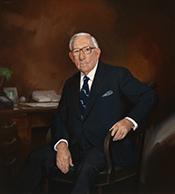
United States · United States Congress · 29 April 1977
Declares it the sense of the House of Representatives: (1) that the Soviet Union permit free emigration of Soviet Jews and others, (2) that the Soviet Union permit the free exercise of religious beliefs and cultural expression, and (3) that the Congress supports "Solidarity Sunday."
United States · United States Congress · 28 April 1977
Exempts courses which lead to a standard college degree from the "85-15" rule under which the Administrator of Veterans' Affairs is required to disapprove enrollment of any eligible veteran, not already enrolled, in any course where more than 85 percent of the students enrolled have their fees paid by either the Federal Government or the educational institution itself.
United States · United States Congress · 28 April 1977
Amends the Omnibus Crime Control and Safe Streets Act of 1968 to condition certain assistance to States, local governments, and agencies thereunder on the adoption of a law enforcement officers' bill of rights to include as a minimum the following: (1) allowing off-duty officers' to engage in political activities; (2) granting officers specified procedural rights in connection with investigations of their conduct on duty which may lead to a personnel action; (3) requiring officer representation on any police complaint review board established in the jurisdiction; (4) prohibiting mandatory disclosure of officers' finances; and (5) establishing a law enforcement officers' grievance commission in the jurisdiction to determine officer grievances.
United States · United States Congress · 26 April 1977
Wildlife on Federal Lands Trapping Act - Requires the Secretary of the Interior to issue such regulations, relating to trapping, as are necessary to carry out the purposes of this Act. Prohibits the Secretary from approving any type of trap unless such trap utilizes the most humane capture method available for the species concerned, and minimizes the probability of capturing species for which such trap was not intended. Directs the Secretary to undertake a research program to develop such types of traps. Establishes an advisory commission to make recommendations to the Secretary with respect to traps designed or intended for use. Prohibits the Secretary from permitting trapping on Federal lands where such trapping may reduce any species below specified levels. Sets forth a procedure for the application and issuance of trapping permits. Requires the attachment of a shipping certificate to any package containing the fur, hide, skin, horn, or feathers of any mammal or bird captured by any trap within any State or the District of Columbia if such package is transported in interstate or foreign commerce. Establishes criminal penalties for: (1) engaging in trapping without a permit issued pursuant to this Act; (2) violating any condition of such permit; (3) violating any regulation of the Secretary relating to trapping; (4) selling or transporting in interstate commerce an unapproved trap; or (5) falsifying the shipping certificate. Authorizes the Secretary to enter into cooperative agreements with States with respect to the imposition of trapping regulations consistent with those prescribed under this Act. Authorizes such appropriations as may be necessary to carry out the purposes of this Act.
United States · United States Congress · 25 April 1977
Amends the Community Service Act to permit the Director of the Community Services Administration to furnish assistance for the installation of security devices in the residences of elderly persons.
United States · United States Congress · 25 April 1977
Amends Title XX (Grants to States for Services) of the Social Security Act to include among the services provided under that Title the installation of security devices in the homes of the elderly.
United States · United States Congress · 25 April 1977
Amends the Older Americans Act of 1965 to provide assistance for the installation of security devices in the residences of elderly persons. Includes projects to assist older person to install security devices in the list of projects eligible for grants from the Department of Housing and Urban Development.
United States · United States Congress · 25 April 1977
Amends the Railroad Retirement Act of 1974 to stipulate that whenever a retired employee who is receiving a larger annuity under such Act than would be payable to the spouse of such employee, the amount payable to the surviving spouse of such an individual shall be the same amount which would have been payable to the retired employee but for his or her death.
United States · United States Congress · 25 April 1977
Elderly Victims of Crime Act - Directs the Attorney General to make grants to qualified State programs for the compensation of elderly victims of crime. Specifies requirements for program certification, including that the program: (1) offer compensation for personal injuries suffered as a result of certain State and Federal crimes; (2) offer compensation to surviving dependents of persons whose deaths resulted from being victim to such a crime; (3) require cooperation with law enforcement agencies as a condition for recovery; and (4) grant claimants certain emergency assistance.
United States · United States Congress · 25 April 1977
Declares it the sense of the House of Representatives that should import relief actions taken by the President not provide limits on footwear imported into the United States which would maintain a viable domestic nonrubber footwear industry, then the House should disapprove the President's import relief action on nonrubber footwear of April 1, 1977.
United States · United States Congress · 22 April 1977
Adds Title X - "Special Demonstration Programs in the Biomedical Sciences for Secondary School Students from Disadvantaged Backgrounds" to the Elementary and Secondary Education Act of 1965. Authorizes the Commissioner of Education to make grants to, and enter into contracts with, institutions of higher education for the purpose of offering five-year demonstration programs to encourage disadvantaged secondary education students to pursue professional training in the biomedical sciences. Directs the Commissioner to appoint an advisory committee to advise on the approval of applications for assistance under this title. Stipulates that the amount of assistance for any one five-year demonstration program shall not exceed a specified sum. Sets forth the activities each demonstration program must provide and the criteria which each applicant must meet in order to be eligible for assistance under this title. Requires each demonstration project to have an advisory committee of at least nine members. Sets forth the authorized uses of funds made available under this title. Authorizes the appropriation of $12,000,000 for fiscal year 1978. Stipulates that such sum shall remain available for expenditure or obligation through fiscal year 1983.
United States · United States Congress · 21 April 1977
National Consumer Cooperative Bank Act - Title I: National Consumer Cooperative Bank - Establishes the National Consumer Cooperative Bank to: (1) encourage the development of cooperatives eligible for its assistance by providing specialized credit and technical assistance; (2) maintain broad-based control of the Bank by its voting stockholders; (3) encourage broad-based ownership control and active participation by members in eligible cooperatives; (4) assure that the net savings from operations and the operations of borrowers from the Bank are made available or accounted for to the stockholders or members; and (5) assist in improving the quality and availability of goods and services to consumers. Authorizes the creation of no less than four nor more than twelve corporate regional banks. States that the Bank shall have the power to make and service loans, commitments for credit, guarantees, furnish financially related services, technical assistance, and issue obligations. Enumerates additional powers necessary to carry out its powers and duties. Requires the Bank to hold an annual meeting of stockholders. Permits the Bank to obtain funds through the public or private sale of its bonds, debentures, notes, and other evidences of indebtedness. Authorizes the Bank to make loans to eligible organizations which shall be repayable in not more than 40 years. States that the objective of the Bank shall be to provide the type of credit needed by eligible borrowers, at the lowest reasonable cost on a sound business basis, taking into account the cost of money to the Bank. Defines "eligible cooperatives" for purposes of assistance under this title. Title II: Self-Help Development Fund - Establishes in the Treasury a Consumer Cooperative Self-Help Development Fund. Permits the Cooperative Bank and Assistance Administration to make a capital investment advance out of the Fund to any eligible cooperative if the Administration determines that the applicant's initial or supplemental capital requirements exceed its ability to obtain a Title I loan from the Bank or other sources, and the membership of the applicant consists substantially of low-income persons. Title III: Cooperative Technical Assistance - Directs the Cooperative Bank and Assistance Administration to make available information and services concerning the organization or reorganization of cooperatives to best achieve the objectives of this Act and to best provide the means through which various types of goods, services, and facilities can be made available to members and patrons. States that such assistance may include investigations, surveys, and director and management training and assistance. Title IV: The Cooperative Bank and Assistance Administration and General Provisions - Establishes the Cooperative Bank and Assistance Administration. Directs the Administration to assure that the objectives of this Act are carried out. States that until the stock of the Bank held by the United States has been fully retired the Bank shall be exempt from any form of taxation. Requires the Administration and the Board to report annually to the appropriate committees of Congress on the activities of the Administration and on the Bank's capital, operations, financial condition, the self-help development fund, and to make recommendations for legislation to improve its services.
United States · United States Congress · 21 April 1977
Postal Reorganization Act Amendments - Changes the organizational structure of the United States Postal Service by: (1) naming the Postmaster General chief executive officer and vesting in the Postmaster General the powers formerly held by the Board of Governors; (2) revising the procedures for adjustment of rates and services whereby the Postal Service is authorized to request the Congress to authorize appropriations to defray the estimated costs of the Postal Service for the fiscal year, to request a recommended decision of the Postal Rate Commission, or to propose a change in the nature of postal services; (3) requiring that all proposed capital investments by the Postal Service be reviewed by the Post Office and Civil Service Committees of the Senate and the House of Representatives; and (4) requiring the Postal Rate Commission to submit to the President annually a separate budget for its operating expenses. Prohibits reducing the frequency of mail delivery service below the frequency which was in effect on April 21, 1977.
United States · United States Congress · 20 April 1977
Declares that specified persons previously appointed as temporary hearing examiner's under the Supplemental Security Income program of the Social Security Act shall be considered appointed to career-absolute positions as hearing examiners.
United States · United States Congress · 6 April 1977
Voting Rights for the Elderly and the Handicapped Act - Directs the Attorney General in consultation with the Secretary for Health, Education, and Welfare to prescribe standards for polling and registration facilities which will assure ready access by the handicapped and the aged. Permits designation of facilities for Federal elections which do not comply with such standards only where conforming facilities are unavailable. Requires States to provide alternative registration and voting methods for aged and handicapped persons assigned to inaccessible registration facilities or polling places. Requires that a paper ballot be made available or a voting assistant be permitted to a person unable to operate a voting machine.
United States · United States Congress · 4 April 1977
Authorizes the Secretary of the Interior to designate lands in Hyde Park, New York, as the Eleanor Roosevelt National Historic Site and to acquire such lands. Directs the Secretary to manage the site and to arrange studies, lectures, and seminars to be conducted at the site through agreements with qualified public or private entities. Authorizes the appropriation of such sums as may be necessary to carry out the provisions of this Act.
United States · United States Congress · 31 March 1977
Title I: Small Business Act Amendments - Amends the Small Business Act to authorize the Small Business Administration to make loans to assist small business concerns in financing plant construction and the acquisition of equipment and supplies for the producing of solar energy or other energy conserving equipment. Authorizes the appropriation of $75,000,000 for such purpose. Authorizes the Administration to provide additional assistance to small businesses in the area of training seminars and technical manuals on the design, installation, and maintenance of solar energy equipment. Title II: Federal Nonnuclear Energy Research and Development Act of 1974 Amendments - Amends the Federal Nonnuclear Energy Research and Development Act of 1974 to establish an Office of Invention and Innovation in the Energy Research and Development Administration. Authorizes the Office to evaluate proposals for the development of energy-related inventions and to provide financial assistance for the development of such inventions. Stipulates that not less than 20 percent of the funds appropriated to the Energy Research and Development Administration for solar energy programs shall be expended for the benefit of small business concerns and individual inventors. Directs the Administrator of the Energy Research and Development Administration to encourage the participation of individuals and small businesses in the research, development, and advancement of energy-conserving technologies.
United States · United States Congress · 31 March 1977
Solar and Energy Conservation Commercialization Act - Amends the National Housing Act to specify additional types of Solar energy systems eligible for financial assistance under such Act. Stipulates that such systems shall include solar heating and cooling and hot water systems, geothermal and wind energy systems, and other energy conservation measures and equipment such as insulation, heat pumps and devices to improve furnace efficiency. Authorizes the Secretary of Housing and Urban Development to make grants and loans to individuals and families to assist in the purchase of solar, renewable source, and energy conservation measures and equipment. Authorizes grants and loans for similar purposes to neighborhood, community, or nonprofit groups. Amends the Small Business Act to authorize the Administrator of the Small Business Administration to make loans to small businesses to assist in the purchase and installation of solar, renewable source, and energy conservation improvements and equipment. Directs the Secretary of Housing and Urban Development, the Administrator of the Small Business Administration, and the Federal Energy Administrator to cooperate in carrying out the provisions of this Act and to jointly submit an annual report to the President and the Congress on activities carried out under this Act. Authorizes appropriations for fiscal years 1978 through 1981.
United States · United States Congress · 31 March 1977
Renewable Energy and Energy Conservation Act - Allows an income tax credit for 30 percent of the expenditures not exceeding $750 which the taxpayer paid or incurred during the taxable year for installation of insulation or energy-conserving components which improve heating plant efficiency in his principal residence. Limits the application of this credit to expenditures paid or incurred for installations made between 1976 and 1982 in pre-existing dwellings. Reduces the allowable credit, on a graduated scale, for individuals with adjusted gross incomes greater than $10,000. Allows an income tax credit for 40 percent of the first $1,500, and a secondary credit for 25 percent of the next $7,600 paid or incurred by the taxpayer during the taxable year for the installation of qualified solar, wind and geothermal energy equipment in his principal residence. Allows an income tax credit for 20 percent of the first $1,500, and a secondary credit for 12.5 percent of the next $7,600 paid or incurred for the installation of wood stove, heat pump, or burner equipment in connection with new solar, wind or geothermal energy equipment which will be the principal source of space heat in the taxpayer's principal residence. Reduces these limitations in subsequent tax years by subtracting the amounts taken into account for these credits in previous tax years. Limits these credits to equipment installed between 1976 and 1982. Prorates each of the above credits for residential improvements among joint owners and cooperative shareholders according to their proportionate interests in the residential property. Provides for the carryover of any allowable credit which exceeds the taxpayer's current income tax liability. Reduces the allowable credits, on a graduated scale for and Conservation Act. persons with adjusted gross incomes greater than $15,000. Allows an investment tax credit for 25 percent of the qualified investment cost of depreciable geothermal, solar or wind energy equipment placed in service. Allows such a credit for 12 percent of the qualified costs of ventilation, heating, water and other components primarily designed to reduce the heat loss or gain of a structure, and origin ally used by the taxpayer. Prohibits these credits for property originally funded with Federal grants, or located in States which take these energy conserving measures into account for property assessment, or which don't enforce the thermal design requirements of the Energy Policy
United States · United States Congress · 31 March 1977
Directs the Federal Energy Administrator to establish methods of determining the life cycle cost effectiveness for buildings, considering the life cycle fuel and energy requirements for such buildings. Requires that all Federal buildings be life cycle cost effective and that such determination serve as a basis for the awarding of contracts in the procurement and leasing of new Federal buildings. Directs the Administrator to promote the use of life cycle cost effective methods in all buildings. Directs the Administrator to establish energy performance targets for existing buildings which are compatible with new building performance standards developed by the Secretary of Housing and Urban Development. Requires all Federal agencies to conduct an energy audit of existing buildings within their jurisdiction. Requires that a specified percentage of the gross square footage of building space be selected by each agency for retrofitting with appropriate energy conservation measures. Authorizes the appropriation of $500,000 to the Administrator to perform the functions as authorized or required under this Act. Authorizes the appropriation of additional sums as necessary to carry out this Act.
United States · United States Congress · 31 March 1977
Amends the Federal Nonnuclear Energy Research and Development Act of 1974 to direct the Administrator of the Energy Research and Development Administration to assist less developed countries in the development and utilization of unconventional, nonnuclear energy technologies. Authorizes the Administrator, in cooperation with the Agency for International Development, to conduct studies on the energy needs, uses, and resources in other countries. Stipulates that such studies should be designed to result in the establishment of an information system permitting transfers of unconventional, nonnuclear energy technologies to impoverished areas of the world. Requires that results of such studies and recommendations for cooperative projects be reported to Congress by July 1, 1978. Authorizes the appropriation of $5,000,000 to the Energy Research and Development Administration for fiscal year 1978 for such purposes.
United States · United States Congress · 31 March 1977
Agricultural Solar Energy Research, Development, and Demonstration Act - Title I: Existing Programs - Amends the Bankhead-Jones Act of 1935 to direct the Secretary of Agriculture to conduct and to stimulate research and development relating to uses of solar energy with respect to farm buildings, farm homes and farm machinery. Authorizes the appropriation of $25,000,000 each fiscal year to carry out such research and development. Includes the agricultural uses of solar energy in the agricultural extension programs. Directs that loans, under the Consolidated Farm and Rural Development Act, be made for the purchase of farm equipment which utilizes solar energy and for the acquisition and installation of any qualified solar energy thermal conversion system in any residential structure located on a family farm. Title II: Solar Demonstration Farms - Establishes within the Department of Agriculture the Research and Demonstration Planning Committee which shall be responsible for compiling a list of solar energy research projects and for meeting with regional representatives of the State departments of agriculture to determine which projects will be useful and beneficial to the several States. Requires each State department of agriculture to establish one large model farm and within one year to establish not less than ten demonstrations of solar energy research projects using the most efficient or practicable research projects demonstrated on such model farm. Stipulates the terms of any agreement entered into between selected farmowners and the State departments of agriculture for the establishment of such demonstration projects. Authorizes the appropriation of $20,000,000 for the purposes of this title, of which 80 percent is to be used by State departments of agriculture for the model farm and demonstration projects.
United States · United States Congress · 31 March 1977
Amends the Foreign Assistance Act of 1961 to authorize the President to furnish energy production and conservation assistance to developing countries, including solar, wind, and water projects. Authorizes consultative visits by the Energy Research and Development Administration to design such projects. Authorizes the President to carry out studies to identify the energy needs, uses, and resources of various countries and regions, with special emphasis on the transfer of energy technology. Requires that $10,000,000 of appropriations for development assistance for fiscal year 1978 be spent only for these purposes.
United States · United States Congress · 31 March 1977
Directs the Architect of the Capitol to study the feasibility of using solar energy in connection with the operation of House Office Buildings and related structures and to report to the House of Representatives within one year of the adoption of this resolution. Authorizes the appropriation of $50,000 to be expended by the Architect under the direction of the House Office Building Commission.
United States · United States Congress · 30 March 1977
Drug Enforcement Act - Directs the Attorney General to establish Special Drug Forces in the Department of Justice composed of law enforcement personnel and special United States attorneys. Declares the duty of the drug forces to be to assist States and local governments in which there is an unusually large amount of drug trafficking and whose law enforcement and criminal justice system is unable to effectively prosecute violators of the Controlled Substances Act.
United States · United States Congress · 29 March 1977
National Conference on Learning Disabilities and Juvenile Delinquency Act - Directs the Coordinating Council on Juvenile Justice and Delinquency Prevention to organize and convene a National Conference on Learning Disabilities and Juvenile Delinquency. Directs the Conference to formulate methods of disseminating extant knowledge and the results of ongoing research related to learning disabilities and handicaps to appropriate agencies and individuals. Makes it a goal of such Conference to develop coordinated plans of cooperation among disciplines to deliver all services feasible to the learning disabled. Sets forth the procedures under which the Conference shall operate and the qualifications for membership in it. Calls for the convening of meetings related to the Conference in each State or Region in preparation for the National Conference.
United States · United States Congress · 29 March 1977
Food Additive Safety Amendments - States that a food additive shall be deemed safe if the Secretary of Health, Education, and Welfare (1) makes a finding, based on recommendations of an advisory committee, that the public benefit from permitting the use of such additive would exceed the public risk which might result from such use; (2) gives notice in the Federal Register of such a finding and invites public comment thereon; and (3) issues a final order not earlier than 120 days of such publication in the Federal Register of such findings. Specifies factors the Secretary must take into consideration when evaluating a food additive. Deems saccharin a safe food additive unless the Secretary declares it unsafe under the provisions of this Act.
United States · United States Congress · 28 March 1977
Title I: Survey and Certification, Rate-Setting and Audit, and General Regulation of Long Term Care Facilities Under Medicaid Programs - Directs that State plans under Title XIX (Medicaid) of the Social Security Act must provide that no skilled nursing facility may receive payments under such plan unless and until it is approved to receive payments under Title XVIII (Medicare) of the Social Security Act. Requires the State plan to give the State agency the power to terminate reimbursement to a skilled nursing or intermediate care facility which such agency has found has violated its provider agreement. States that payment of the skilled nursing facility and intermediate care facility services shall be based upon a prospective cost based method of computation in which the audited costs of rendering service in such facilities in a prior year is updated through the use of economic indices to the year in which payment is made. Requires that any skilled nursing facility or intermediate care facility receiving payments under such plan be required to maintain with the State agency a bond in such amount, under such terms, and in such form as the State agency may direct. Title II: Medical, Psychological, and Social Assessment of Patients In Need of Long Term Care under Medicare and Medicaid Programs - Directs that payments for services furnished an individual may be made only to eligible providers of services and only if a physician certifies that such services are necessary, based on such patient assessment criteria as the Secretary may require.
United States · United States Congress · 28 March 1977
National Home Health Care Act - Broadens the coverage of home health services under Title XVIII (Medicare) of the Social Security Act and removes the 100-visit limitation presently applicable to the home health service program. Extends the coverage of posthospital home health services to include payment for items and services which the individual could otherwise obtain in a skilled nursing facility. Amends Title XIX (Medicaid) of the Social Security Act to require the inclusion of home health services in a State's Medicaid program and permit the payment of rent under such program for elderly and handicapped persons who would otherwise require nursing home care. Provides expanded Federal funding for congregate housing for the displaced and the elderly by increasing the amount available for such housing under the low-income housing program. Establishes, in the Department of Health, Education, and Welfare, a Home Health Patient Ombudsman, who shall be appointed and provided with adequate staff and facilities by the Secretary. Makes it the duty and responsibility of the ombudsman to monitor specified programs under the Social Security and the various medical assistance programs under the State plans approved pursuant to such Act, and to maintain such oversight of those programs and their operation and administration as may be necessary to: (1) assure that home health patients under such programs are receiving the care to which they are entitled: (2) provide safeguards against over-charging for home health services; (3) identify abuses against home health patients; (4) receive, handle, and expedite complaints by home health patients; (5) recommend to the Secretary any changes in the regulations affecting home health services which may appear necessary or desirable; and (6) take appropriate action (including the transmission of findings to the Attorney General) with respect to abuses and violations of law affecting the provision or receipt of home health services under such programs. Requires the Secretary of Health, Education, and Welfare to conduct a study and report to the Congress on the feasibility of extending to the Medicare program the prospective cost-related method of computing payments to nursing homes and home health agencies which is currently provided under the Medicaid program.
United States · United States Congress · 28 March 1977
Title I: Survey and Certification, Rate-Setting and Audit, and General Regulation of Long Term Care Facilities Under Medicaid Programs - Directs that State plans under Title XIX (Medicaid) of the Social Security Act must provide that no skilled nursing facility may receive payments under such plan unless and until it is approved to receive payments under Title XVIII (Medicare) of the Social Security Act. Requires the State plan to give the State agency the power to terminate reimbursement to a skilled nursing or intermediate care facility which such agency has found has violated its provider agreement. States that payment of the skilled nursing facility and intermediate care facility services shall be based upon a prospective cost based method of computation in which the audited costs of rendering service in such facilities in a prior year is updated through the use of economic indices to the year in which payment is made. Requires that any skilled nursing facility or intermediate care facility receiving payments under such plan be required to maintain with the State agency a bond in such amount, under such terms, and in such form as the State agency may direct. Title II: Medical, Psychological, and Social Assessment of Patients In Need of Long Term Care under Medicare and Medicaid Programs - Directs that payments for services furnished an individual may be made only to eligible providers of services and only if a physician certifies that such services are necessary, based on such patient assessment criteria as the Secretary may require.
United States · United States Congress · 28 March 1977
Permits any Federal employee or Member of Congress who, at the time of retirement, does not elect a reduced annuity in order to provide a survivor annuity to a spouse or other person to make such an election within one year after retiring. Requires such employee to refund to the Government an amount equal to the amount such employee's annuity would have been reduced during the period from the date of retirement to the date of election plus interest. (Amends 5 U.S.C. 8339)
United States · United States Congress · 28 March 1977
Title I: Survey and Certification, Rate-Setting and Audit, and General Regulation of Long Term Care Facilities Under Medicaid Programs - Directs that State plans under Title XIX (Medicaid) of the Social Security Act must provide that no skilled nursing facility may receive payments under such plan unless and until it is approved to receive payments under Title XVIII (Medicare) of the Social Security Act. Requires the State plan to give the State agency the power to terminate reimbursement to a skilled nursing or intermediate care facility which such agency has found has violated its provider agreement. States that payment of the skilled nursing facility and intermediate care facility services shall be based upon a prospective cost based method of computation in which the audited costs of rendering service in such facilities in a prior year is updated through the use of economic indices to the year in which payment is made. Requires that any skilled nursing facility or intermediate care facility receiving payments under such plan be required to maintain with the State agency a bond in such amount, under such terms, and in such form as the State agency may direct. Title II: Medical, Psychological, and Social Assessment of Patients In Need of Long Term Care under Medicare and Medicaid Programs - Directs that payments for services furnished an individual may be made only to eligible providers of services and only if a physician certifies that such services are necessary, based on such patient assessment criteria as the Secretary may require.
United States · United States Congress · 24 March 1977
Prohibits rules promulgated by any Federal agency (except an emergency rule which must become immediately effective to prevent serious injury or the substantial frustration of legislative policies or intent) from becoming effective until such proposed rules have been submitted to Congress and a 60-day period has lapsed thereafter. Prevents such rules from becoming effective if disapproved by either House of Congress within such 60-day period. Permits disapproved of emergency rules. Prohibits the submission to Congress of any rule identical to one which has been disapproved unless submitted pursuant to new legislative authority which has been enacted affecting the agency's powers with respect to the subject matter of such rule. Renders agency rules dealing with emergency or routine matters or which will have an insignificant impact effective without publication of advance/notice of proposed rule making proceedings in the Federal Register as is currently required. Renders any rule granting an exemption to another rule or which is exempt from public notice and comment requirements effective immediately.
United States · United States Congress · 23 March 1977
Permits any Federal employee or Member of Congress who, at the time of retirement, does not elect a reduced annuity in order to provide a survivor annuity to a spouse or other person to make such an election within one year after retiring. Requires such employee to refund to the Government an amount equal to the amount such employee's annuity would have been reduced during the period from the date of retirement to the date of election plus interest. (Amends 5 U.S.C. 8339)
United States · United States Congress · 23 March 1977
Declares it the sense of Congress that the President should urge the Soviet Union to allow Dr. Sergei Kovalev to accept the invitation of Cornell University.
United States · United States Congress · 22 March 1977
Long-Term Care Services Act - Amends Title XI (General Provisions) of the Social Security Act to authorize the establishment of an experimental program to provide in-home care for elderly individuals. Authorizes the Secretary of Health, Education, and Welfare to subsidize families who agree to care for their dependents who are 65 years of age or older and who would otherwise require, because of physical or mental infirmities, the services of a skilled nursing facility or intermediate care facility, in their own homes. Amends Title XVIII (Medicare) of the Social Security Act to provide payment for elderly day care center services under the supplementary medical insurance program. Directs the Secretary to institute a program under which qualified organizations, public and private, will submit plans for the development of carefully conceived and innovative projects to meet the special health care, housing, and related needs of elderly persons in a campus-type setting. Authorizes the Secretary to make interest subsidy payments to holders of mortgages covering such projects. Amends the National Housing Act to authorize the Secretary of Housing and Urban Development to insure mortgages secured by properties in projects built pursuant to this Act. Amends Title XVIII to provide payment for extended and intermediate care services under the supplementary medical insurance program. Amends Title XVIII to provide for the creation of an alternative reimbursement formula which will allow participating hospitals with less than 100 beds and less than 60 percent average occupancy to provide long-term care without applying proportional allocation of overhead costs to all patients in such facilities.
United States · United States Congress · 22 March 1977
Geriatric Health Personnel Training Act - Amends the Public Health Service Act (Health Research and Teaching Facilities and Training of Professional Health Personnel) to authorize the Secretary of Health, Education, and Welfare to grant $500,000 for each of six schools of medicine to assist in the establishment and operation of departments of geriatrics. Authorizes the Secretary to make grants to assist schools of medicine in the establishment and operation of continuing education programs in geriatrics for physicians. Authorizes the appropriation of $2,500,000 for fiscal year 1978, and $5,000,000 for each of the next three fiscal years to enable the Secretary to make grants to schools of medicine to assist in developing and conducting training programs designed to prepare armed forces veterans, with appropriate experience as paramedical personnel, to serve as medical assistants in long-term health care facilities. Authorizes the Secretary to make grants and enter into contracts with public or nonprofit colleges and universities for the development of graduate programs for nurses in geriatrics and gerontology. Amends the National Labor Relations Act to make it an unfair labor practice for an employer to discharge or otherwise discriminate against an employee who has testified before any congressional committee or any governmental agency or department.
United States · United States Congress · 22 March 1977
Nursing Home Reform Act - Amends the Internal Revenue Code to authorize a deduction for amounts paid during the taxable year by the taxpayer for nursing home expenses for an individual if such individual is a dependent of the taxpayer in all respects except the receipt of at least half of his support from such taxpayer. Permits the payment of supplemental security income to residents in nonmedical shelter care facilities in any State if such State certifies that the residents are ambulatory, needing only minimum supervision, and that the amount of State supplementation is not less than $100 per resident per month. Amends Title XVIII (Medicare) of the Social Security Act to redefine the term "skilled nursing facility" to require that such facilities, in order to qualify under Title XVIII, provide the services set forth in this Act. Requires the Secretary of Health, Education, and Welfare to conduct a review of State plans approved under Title XIX (Medicaid) of the Social Security Act at least once a year to determine each State's compliance with and the quality of the administration of its plan. Directs the Secretary to establish a rating system for nursing homes participating in the programs under titles XVIII and XIX of the Social Security Act. States that whoever shall offer, solicit, receive, or accept any consideration as compensation or inducement for referring patients, clients, or customers to any person for purposes of Titles XVIII and XIX shall be guilty of a misdemeanor. Requires nursing facilities to provide a program to insure the integrity of patients' accounts, moneys, or valuables and to insure that they are not mingled with those belonging to the facility. Specifies that the Secretary shall pay to the States an amount equal to 100 percent of the sums expended in the enactment of, conversion to, and enforcement of, new enforcement tools short of nursing home licensure revocation. Allows beneficiaries to bring suit for specific performance in any Federal district court without reference to the $10,000 jurisdictional amount. Authorizes the Secretary to make loans to any nonprofit organization, church, or association of churches to meet all or a part of the cost of construction or rehabilitation of a home which will be owned and operated by such church, organization, or association. Authorizes the Secretary to make interest reduction payments under specified circumstances with respect to a mortgage covering repair or rehabilitation of a nursing home in order to correct physical deficiencies and comply with Federal minimum standards. Establishes a program of grants to any church, association of churches, or other nonprofit organization to meet all or part of the cost of planning, developing, constructing, or rehabilitating a nursing home owned by such entity in black and other minority areas where there is a demonstrated shortage of nursing home beds. Expresses the sense of the Congress that the President submit to the Congress an action plan which would provide a suitable multiagency plan for dealing with nursing home abuses. Authorizes the President to call a White House Conference on Long-Term Care in 1978, in order to develop recommendations for action in establishing a national policy with respect to the needs of disabled Americans with primary emphasis on the physically and mentally impaired aged.
United States · United States Congress · 22 March 1977
Removes the limitation on the amount of outside income which an individual may earn while receiving benefits under title II (Old-Age, Survivors, and Disability Insurance) of the Social Security Act.
United States · United States Congress · 22 March 1977
Amends the Internal Revenue Code to provide that the charitable deduction allowed for expenses incurred in the operation of a motor vehicle shall include the depreciation, operation and maintenance costs allocable to such operation and shall be determined in the same manner as for a business related deduction.
United States · United States Congress · 22 March 1977
Amends the Internal Revenue Code to exempt from the excise tax, buses purchased by tax exempt organizations or by other persons for exclusive use in furnishing transportation for a State or local government or a tax exempt organization (currently, transportation must be limited to students and employees of schools).
United States · United States Congress · 22 March 1977
Medicare Long-Term Care Act - Repeals existing provisions for post-hospital home health services under Title XVIII (Medicare) of the Social Security Act. Establishes, within the hospital insurance program of such Title, a program of long-term care benefits to be provided for aged and disabled individuals including all recipients of supplemental security income benefits and to be financed without additional cost to such individuals, through the Federal Hospital Insurance Trust Fund, from funds appropriated by the Federal Government. States that the benefits provided to an individual by such program shall consist of: (1) home health services; (2) homemaker services; (3) nutrition services; (4) long-term institutional care services; (5) day care and foster home services; and (6) community mental health center outpatient services. Requires that, to the maximum extent possible, such benefits shall be provided by or through community long-term care centers, as defined in this Act; and, in any case where a State has an agency which performs the functions of planning and developing such centers and overseeing their operation the Secretary of Health, Education, and Welfare shall make grants to the State or State agency to reimburse it for expenses incurred in the performance of such functions. Directs the Secretary to pay 75 percent of the amount expended by a State for the operation of a State long-term care agency. Enumerates the functions of such an agency. Declares that a community long-term care center shall: (1) provide the items and services listed in this Act to each individual (i) who is eligible for benefits under this part, (ii) who resides in the area served by such center and (iii) who is certified as requiring such services; (2) evaluate and certify the long-term care needs of an individual for whom such care may be required in order to maintain such individual in an independent living arrangement which is reasonable given such individual's state of health and other circumstances (but not including such individual's economic circumstances); (3) maintain a continuous relationship with (and periodically evaluate not less than annually) each individual who is receiving any of the items and services listed in this Act; (4) provide full opportunity for such individual and his family to participate in the determinations and functions under this Act; (5) provide an organized system for making its existence and location known to all individuals in its service area who are eligible for benefits under this part, and for making known to such individuals the method or methods by which they may most efficiently obtain and use the services which it makes available; and (6) perform such other functions as the Secretary of Health, Education, and Welfare may by regulation prescribe in order to have such center most effectively carry out the purposes of this Act. Defines terms used in this Act, including the services to be provided by community long-term care centers. Directs the Secretary to develop and promulgate to community long-term care centers one or more methods of obtaining payment for the benefits covered under this Act. Requires the Secretary to prescribe regulations setting forth the standards of care for homemaker and nutritional services. Establishes the Federal Advisory Council on Long-Term Care. Sets forth the qualifications of the five members of such Council. States that it shall be the duty and function of the Council to provide advice and recommendations for the consideration of the Secretary on regulations under this Act and on matters of general policy with respect to this Act. States that no regulations of the Secretary under this Act shall become effective unless they have first been approved by the Council. States that the determination of whether an individual is entitled to benefits under this shall be made by the Secretary in accordance with regulations prescribed by him. Authorizes the appropriation to the Federal Hospital Insurance Trust Fund of such sums as the Secretary considers necessary for any fiscal year for the purposes of the program created by this Act. Authorizes the Secretary to make grants and enter into contracts with institutions to meet the cost of training programs in the techniques and methods of providing long-term health care.
United States · United States Congress · 22 March 1977
Long-Term Care Services Act - Amends Title XI (General Provisions) of the Social Security Act to authorize the establishment of an experimental program to provide in-home care for elderly individuals. Authorizes the Secretary of Health, Education, and Welfare to subsidize families who agree to care for their dependents who are 65 years of age or older and who would otherwise require, because of physical or mental infirmities, the services of a skilled nursing facility or intermediate care facility, in their own homes. Amends Title XVIII (Medicare) of the Social Security Act to provide payment for elderly day care center services under the supplementary medical insurance program. Directs the Secretary to institute a program under which qualified organizations, public and private, will submit plans for the development of carefully conceived and innovative projects to meet the special health care, housing, and related needs of elderly persons in a campus-type setting. Authorizes the Secretary to make interest subsidy payments to holders of mortgages covering such projects. Amends the National Housing Act to authorize the Secretary of Housing and Urban Development to insure mortgages secured by properties in projects built pursuant to this Act. Amends Title XVIII to provide payment for extended and intermediate care services under the supplementary medical insurance program. Amends Title XVIII to provide for the creation of an alternative reimbursement formula which will allow participating hospitals with less than 100 beds and less than 60 percent average occupancy to provide long-term care without applying proportional allocation of overhead costs to all patients in such facilities.