Resolution· HRESH.Res. 614 (114th)referred
Honoring the Denver Broncos on their victory in Super Bowl 50.
United States · United States Congress · 11 February 2016
Honors the Denver Broncos on their Super Bowl 50 victory.
The world's political record
Person
United States · Official source
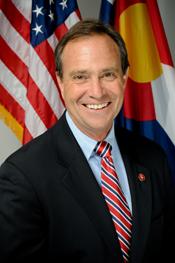
2,641 records where Rep. Perlmutter, Ed [D-CO-7] is listed as a sponsor, author, or other actor. Search with topics and years
United States · United States Congress · 11 February 2016
Honors the Denver Broncos on their Super Bowl 50 victory.
United States · United States Congress · 10 February 2016
Lake Berryessa Recreation Enhancement Act of 2016 This bill establishes as the Lake Berryessa Recreation Area specified land administered by the Bureau of Reclamation that is underlying or adjacent to Lake Berryessa in California, including any improvements. The bill transfers the administrative jurisdiction over the area from the Bureau of Reclamation to the Bureau of Land Management (BLM) of the Department of the Interior. Interior shall develop a management plan for the area and may establish guidelines and restrictions on recreational uses to ensure the safety and security of recreational users. Interior may also issue recreation concession permits, including at the area, to allow a third party to provide facilities and services to visitors on lands and waters managed by the BLM in support of outdoor recreational opportunities. Reclamation shall continue to administer and operate the Monticello Dam and any related facility, including any power facility.
United States · United States Congress · 8 February 2016
Rights for Transportation Security Officers Act of 2016 This bill repeals: (1) provisions authorizing the Department of Homeland Security (DHS) to establish a human resources management system for some or all of its organizational units, and (2) the authority granted to the Transportation Security Administration (TSA) to establish or modify a personnel management system for TSA employees engaged in airport security screening. Within 60 days after the enactment date of this bill: (1) any such human resources management system and all TSA personnel management policies, directives, letters, and guidelines shall cease to be effective, and (2) all TSA positions and DHS positions that provide transportation security in furtherance of the purposes of the Aviation and Transportation Security Act shall become subject to general civil service provisions. This bill sets forth transition rules that protect the pay rates and other rights of such employees. DHS shall consult with the labor organization certified by the Federal Labor Relations Authority to carry out the conversion of such positions. The provisions of this bill do not affect the prohibitions against disloyalty and asserting the right to strike against the federal government.
United States · United States Congress · 4 February 2016
Families of Flint Act This bill provides support for Flint, Michigan in addressing lead in the city's drinking water and related issues. The bill amends the Safe Drinking Water Act by establishing a 10-year grant program to ensure that Flint's drinking water does not contain: (1) lead levels that threaten public health or the environment, or (2) other drinking water contaminants and pathogens that threaten public health. The bill also establishes specified grant programs for assisting Flint that are established within the Department of Labor, the Department of Health and Human Services (HHS), the Department of Education, the Department of Commerce, the Department of Justice, and the Department of Housing and Urban Development. The bill amends the Consolidated Appropriations Act, 2016, by allowing states to use more than 20% of funds from Drinking Water State Revolving Fund capitalization grants for addressing a threat to public health from heightened exposure to lead in a municipal drinking water supply if a federal or state emergency declaration has been issued for that threat. HHS must establish in Flint a Center of Excellence on Lead Exposure. The bill amends the Child Nutrition Act of 1966 to increase the allowable participation period in the Special Supplemental Nutrition Program for Women, Infants, and Children for children residing in areas that are in a state of emergency. A state may elect to allow those children to participate in the program for a period that ends on the earlier of: (1) the child's tenth birthday (currently fifth), or (2) five years after the emergency (currently children may participate for a one-year period).
United States · United States Congress · 4 February 2016
Commemorates Representatives Sam Johnson and John Lewis for their patriotic service and sacrifice to the country they love and for becoming the first ever recipients of the Congressional Patriot Award.
United States · United States Congress · 3 February 2016
Opioid and Heroin Epidemic Emergency Supplemental Appropriations Act This bill provides FY2016 supplemental appropriations for the Department of Justice (DOJ) and the Department of Health and Human Services (HHS) to address heroin and opioid drug abuse. The funds are designated as an emergency requirement, which exempts the funds from discretionary spending limits and other budget enforcement rules. For DOJ, the bill provides funds for State and Local Law Enforcement Assistance and Community Oriented Policing Services (COPS) programs. For HHS, the bill provides funds for: the Substance Abuse and Mental Health Services Administration, the Centers for Disease Control and Prevention, the National Institutes of Health, and the Public Health and Social Services Emergency Fund.
United States · United States Congress · 25 January 2016
Establishes the House Select Committee on POW and MIA Affairs.
United States · United States Congress · 16 December 2015
Assault Weapons Ban of 2015 This bill amends the federal criminal code to make it a crime to knowingly import, sell, manufacture, transfer, or possess a semiautomatic assault weapon (SAW) or large capacity ammunition feeding device (LCAFD). The prohibition does not apply to a firearm that is: (1) manually operated by bolt, pump, lever, or slide action; (2) permanently inoperable; (3) an antique; or (4) a rifle or shotgun specifically identified by make and model. Additionally, the bill does not prohibit, with respect to a SAW or LCAFD: importation, sale, manufacture, transfer, or possession related to certain law enforcement efforts, or authorized tests or experiments; importation, sale, transfer, or possession related to securing nuclear materials; and possession by a retired law enforcement officer. The bill permits continued possession, sale, or transfer of a grandfathered SAW, which must be securely stored. A licensed gun dealer must conduct a background check prior to the sale or transfer of a grandfathered SAW between private parties. The bill permits continued possession of, but prohibits sale or transfer of, a grandfathered LCAFD. Newly manufactured LCAFDs must display serial number identification. Newly manufactured SAWs and LCAFDs must display the date of manufacture. The legislation amends the NICS Improvement Amendments Act of 2007 to require law enforcement agencies to be notified when a prohibited person attempts to purchase a grandfathered SAW. It also amends the Omnibus Crime Control and Safe Streets Act of 1968 to allow a state or local government to use Edward Byrne Memorial Justice Assistance Grant Program funds to compensate individuals who surrender a SAW or LCAFD under a buy-back program.
United States · United States Congress · 11 December 2015
This bill amends: (1) the Department of Energy Organization Act to revise the definition of "minority" to mean any U.S. citizen who is an Asian American, Native Hawaiian, Pacific Islander, African American, Hispanic, Puerto Rican, Native American, or Alaska Native; and (2) the Local Public Works Capital Development and Investment Act of 1976 to revise the definition of "minority group members" (who own minority group enterprises) to mean U.S. citizens who are Asian American, Native Hawaiian, Pacific Islanders, African American, Hispanic, Native American, or Alaska Natives.
United States · United States Congress · 8 December 2015
Denounces the attacks on health care centers for women, providers of health care for women, and patients. Affirms that all women have the right to access reproductive health care services without fear of violence, intimidation, or harassment.
United States · United States Congress · 3 December 2015
Expresses support for: (1) equal rights and protections for all people, regardless of actual or perceived sexual orientation or gender identity; and (2) the designation of LGBT Equality Day. Acknowledges the need for further legislation to ensure that people in the United States are free from all forms of discrimination on the basis of actual or perceived sexual orientation or gender identity.
United States · United States Congress · 3 December 2015
Expresses support for the designation of National Health and Wellness Coach Recognition Week and for the efforts of health and wellness coaches.
United States · United States Congress · 30 November 2015
Visa Waiver Program Firearms Clarification Act of 2015 The bill amends the federal criminal code to modify the eligibility of certain foreign nationals to purchase and possess firearms in the United States. Current law prohibits firearm sale or transfer to or possession by a foreign national (i.e., alien) who is: (1) unlawfully present in the United States, or (2) lawfully present under a nonimmigrant visa (e.g., tourist visa). The prohibitions do not apply in certain circumstances. This bill expands the prohibition to bar firearm sale or transfer to or possession by a foreign national who was lawfully admitted to the United States without a visa under the Visa Waiver Program. The prohibitions do not apply to a foreign national lawfully admitted under the Visa Waiver Program if that foreign national is a government official or law enforcement officer, or possesses a hunting license. Additionally, such foreign national may apply for a Department of Justice waiver to allow firearm possession.
United States · United States Congress · 19 November 2015
Nuclear Energy Innovation Capabilities Act This bill amends the Energy Policy Act of 2005 to revise the objectives of the civilian nuclear energy research, development, demonstration, and commercial application programs of the Department of Energy (DOE) to emphasize: providing research infrastructure to promote scientific progress and enable users from academia, the National Laboratories, and the private sector to make scientific discoveries relevant for nuclear, chemical, and materials science engineering; and enabling the private sector to partner with the National Laboratories to demonstrate novel reactor concepts for the purpose of resolving technical uncertainty associated with the aforementioned objectives. This bill directs DOE to carry out a program for enhancing the U.S. capability to develop new reactor technologies through high-performance computation modeling and simulation techniques. Such program shall coordinate with relevant federal agencies through the National Strategic Computing Initiative while taking into account specified objectives. By December 31, 2016, DOE shall determine the mission need for a versatile reactor-based fast neutron source, which shall operate as a national user facility and, upon determining such a mission need, give Congress a plan to establish such a facility. DOE shall also carry out a program to: enable the testing and demonstration of reactor concepts proposed and funded by the private sector, and leverage the technical expertise of relevant federal agencies and national laboratories to minimize the time required to enable construction and operation of privately funded experimental reactors at national laboratories or other DOE-owned sites. These reactors shall operate to: enable physical validation of novel reactor concepts; resolve technical uncertainty and increase practical knowledge relevant to safety, resilience, security, and functionality of first-of-a-kind reactor concepts; and generate research and development to improve nascent technologies. Within 12 months of this Act's enactment, DOE must submit to Congress 3 specified alternative 10-year budget plans for civilian nuclear energy research and development by the DOE.
United States · United States Congress · 18 November 2015
Child Protection Improvements Act of 2015 This bill amends the National Child Protection Act of 1993 to direct the Department of Justice to: (1) establish policies and procedures to streamline the process of obtaining national criminal history background checks on covered individuals, and (2) establish a criminal history review program to provide covered entities with reliable and accurate information on the criminal history of a covered individual. It defines "covered entity" as any business or organization that provides, or licenses, certifies, or coordinates individuals or organizations to provide care, care placement, supervision, treatment, education, training, instruction, or recreation to vulnerable populations including elderly persons, disabled persons, and children. It defines "covered individual" as an individual who: (1) has, seeks to have, or may have unsupervised access to vulnerable populations served by a covered entity; (2) is employed by or volunteers with, or seeks to be employed by or volunteer with, a covered entity; or (3) owns or operates, or seeks to own or operate, a covered entity.
United States · United States Congress · 16 November 2015
This bill amends the Moving Ahead for Progress in the 21st Century Act (MAP-21) to require that at least 10% of the funds made available for federal-aid highways and highway safety construction programs, including highway safety research and development, and for the Federal Public Transportation Act of 2012 be expended through small business concerns owned and controlled by veterans.
United States · United States Congress · 5 November 2015
Military and Veterans Education Protection Act This bill amends title IV (Student Assistance) of the Higher Education Act of 1965 to require proprietary institutions of higher education to derive at least 10% of their revenue from sources other than federal educational assistance, or risk becoming ineligible for title IV funding. Federal educational assistance includes title IV federal student aid and federal educational assistance for military personnel and veterans. Currently, this so-called 90/10 rule requires proprietary institutions to derive at least 10% of their revenue from sources other than title IV federal student aid, but it allows federal educational assistance for military personnel and veterans to count toward the 10%.
United States · United States Congress · 4 November 2015
Gun Violence Research Act This bill amends the Public Health Service Act to specifically include injuries from gun violence as a research subject for the Centers for Disease Control and Prevention (CDC). Nothing in the CDC's research authorization may be construed to authorize support for advocacy or promotion of gun control. The CDC must improve the National Violent Death Reporting System, particularly through the voluntary participation of additional states. Nothing in the Patient Protection and Affordable Care Act may be construed to prohibit a health care provider from discussing guns or gun safety with a patient or reporting a patient's threat of violence.
United States · United States Congress · 4 November 2015
Office of Strategic Services Congressional Gold Medal Act This bill requires the Speaker of the House of Representatives and the President pro tempore of the Senate to arrange for the presentation of a Congressional Gold Medal to the members of the Office of Strategic Services in recognition of their service and contributions during World War II.
United States · United States Congress · 3 November 2015
Early Childhood Nutrition Improvement Act This bill amends the Richard B. Russell National School Lunch Act to revise several provisions related to the child and adult care food program. Under current law: (1) an institution that provides child or day care under the program may be reimbursed for up to two meals and one supplement per day per child; and (2) a family or group day care home sponsoring organization may receive the same maximum reimbursement, but only with respect to a child maintained in a child care setting for at least eight hours per day. The bill eliminates this distinction between institutions and sponsoring organizations, and increases maximum reimbursement for both to: (1) two meals and one supplement or one meal and two supplements per day per child; or (2) three meals and one supplement or two meals and two supplements per day per child, for each child maintained in a child care setting for at least eight hours per day. A determination of a for-profit day care center's eligibility to participate in the program shall be in effect for six months. The Department of Agriculture (USDA) must issue guidance and, as appropriate, regulations to assist in ensuring a fair and effective process for the identification, review, and correction of serious program deficiencies. USDA shall establish an advisory committee to examine the feasibility of reducing unnecessary or duplicative paperwork for those participating or seeking to participate in the program.
United States · United States Congress · 2 November 2015
Atomic Veterans Healthcare Parity Act This bill includes veterans who participated in the cleanup of Enewetak Atoll in the Marshall Islands during the period January 1, 1977-December 31, 1980, as radiation exposed veterans for purposes of the Department of Veterans Affairs presumption of service-connection for specified cancers.
United States · United States Congress · 29 October 2015
Honors the 50th anniversary of the Higher Education Act of 1965. Acknowledges those whose support and efforts led to passage of the Higher Education Act of 1965. Recognizes the significant investment the Higher Education Act of 1965 has made in the lives of American students, families, and this nation as a whole. Encourages all Americans to recognize and celebrate the important historical milestone represented by the passage of the Higher Education Act of 1965 and its ideals of improving educational access and affordability.
United States · United States Congress · 23 October 2015
Improving School Nutrition Training Act This bill amends the Child Nutrition Act of 1966 to add requirements regarding the availability of training that the Department of Agriculture provides under current law for local food service personnel. The training must be scheduled primarily during paid working hours, offered in-person when appropriate, and incorporate hands-on training techniques. If the training is scheduled outside of working hours, food service personnel must be informed about the necessity of scheduling the program and compensated for attending the program. Personnel may not be penalized for failing to attend a program outside of working hours.
United States · United States Congress · 21 October 2015
Correcting Hurtful and Alienating Names in Government Expression (CHANGE) Act This bill prohibits an executive agency from using the following terms in any rule, regulation, interpretation, publication, other document, display, or sign issued by the agency except to the extent that the term is used in quoting or reproducing text written by a source other than an officer or employee of the agency: "alien" when used to refer to an individual who is not a U.S. citizen or national, and "illegal alien" when used to refer to an individual who is unlawfully present in the United States or who lacks a lawful U.S. immigration status. In determining the meaning of any Act of Congress, or of any ruling, regulation, or interpretation of various U.S. administrative bureaus and agencies, the term "foreign national" in federal law means any individual other than an individual who: (1) is a U.S. citizen; or (2) though not a U.S. citizen, owes permanent allegiance to the United States. Any reference in any federal statute, rule, regulation, executive order, publication, or other U.S. document to the term: "alien" when used to refer to an individual who is not a U.S. citizen or national is deemed to refer to the term "foreign national," and "illegal alien" when used to refer to an individual who is unlawfully present in the United States or who lacks a lawful U.S. immigration status is deemed to refer to the term "undocumented foreign national." Conforming amendments are made to specified Acts.
United States · United States Congress · 21 October 2015
Nonprofit Property Protection Act This bill: amends the Liability Risk Retention Act of 1986 to rename it the Risk Retention Act of 1986; and exclude from "commercial insurance" covered by the Act any health, life, or disability insurance or workers compensation insurance or express contractual obligations owed to a consumer as a result of a personal, family, or household transaction, where the consumer pays a separate consideration for the express contractual obligation. The bill expands the kinds of state laws pertaining to business insurance from which a risk retention group shall be exempt to include laws pertaining to other lines of commercial insurance offered by a risk retention group to an entity organized and operated exclusively as a federal tax-exempt nonprofit charitable or educational institution, as long as the group meets specified criteria.
United States · United States Congress · 16 October 2015
Seniors Deserve A Raise Act This bill requires cost-of-living increases in any benefit under title II (Old-Age, Survivors, and Disability Insurance) (OASDI) of the Social Security Act as well as military retirement and survivor benefits by any increase in the Consumer Price Index for the Elderly. In addition to any such increase, each such benefit shall be further increased by 2.9% on January 1, 2016, and shall remain in effect every year thereafter.
United States · United States Congress · 9 October 2015
Mining Schools Enhancement Act This bill amends the Surface Mining Control and Reclamation Act of 1977 to require the Office of Surface Mining Reclamation and Enforcement of the Department of the Interior to ensure that at least 70% of specified amounts available for projects relating to the environmental impacts of surface coal mining is expended to fund activities of mining and mineral engineering programs at mining schools in the United States. The Office of Surface Mining Reclamation and Enforcement shall ensure that such activities relate to conventional fuel resource development and production.
United States · United States Congress · 9 October 2015
State Marihuana And Regulatory Tolerance Enforcement Act This bill amends the Controlled Substances Act to prohibit federal enforcement of marijuana offenses in a state that: (1) requests a waiver from the Department of Justice (DOJ) certifying that it legalized marijuana; (2) demonstrates a regulatory scheme sufficient to protect federal interests (e.g., preventing marijuana distribution to minors); and (3) agrees to study and report on certain outcomes. DOJ may revoke the waiver of a state that fails to meets the conditions.
United States · United States Congress · 9 October 2015
Encourages the observance of National Wildlife Refuge Week. Acknowledges the importance of national wildlife refuges for their recreational opportunities and contribution to local economies. Reaffirms the support of the House of Representatives for wildlife conservation and the National Wildlife Refuge System.
United States · United States Congress · 9 October 2015
Prioritizing Energy-Efficient Renewables Act of 2015 This bill amends the Internal Revenue Code to: (1) make permanent the tax credit for producing electricity from wind, geothermal and solar energy, hydropower, and marine and hydrokinetic renewable energy facilities; (2) repeal the tax deduction for intangible drilling and development costs for oil and gas wells; (3) repeal the tax deduction for income attributable to the production, refining, transportation, or distribution of oil, natural gas, or any primary product thereof; and (4) repeal the percentage depletion allowance for oil and gas wells.
United States · United States Congress · 8 October 2015
Water Advanced Technologies for Efficient Resource Use Act of 2015 This bill codifies the Environmental Protection Agency's (EPA) WaterSense program, which identifies, labels, and promotes water efficient products, buildings, landscapes, and services. This bill also establishes a program to provide financial incentives for consumers to purchase and install residential water efficient products and services labeled under the WaterSense program. In order to meet procurement requirements for a water consuming product or service, federal agencies must purchase a WaterSense product or service, or a Federal Energy Management Program designated product. Agencies do not have to procure those products or services if they are not cost-effective, or not reasonably available. The bill amends the Internal Revenue Code to exclude from the gross income of individual taxpayers any amount received under an incentive program for the purchase and installation of residential water efficient products and services.
United States · United States Congress · 8 October 2015
Supports the designation of Earth Science Week. Expresses strong support for the goals and ideals of Earth Science Week and its aims to increase understanding of and interest in earth science at the local, state, national, and international levels. Recognizes the importance of education and public outreach efforts to ensure the U.S. public gains a better understanding and appreciation for the impact of the earth sciences on their daily lives. Encourages K-12 students to participate in local, state, and national events in connection with Earth Science Week and to get involved in the celebration by exploring artistic and academic applications of earth science.
United States · United States Congress · 8 October 2015
Establishes the House Select Committee on Gun Violence Prevention to investigate and report on: the causes of mass shootings, methods to improve the federal firearms purchaser background check system, connections between access to firearms and dangerously mentally ill individuals, strengthening federal penalties for trafficking and straw purchasing of firearms, closing loopholes that allow some domestic abusers continued access to firearms, linkages between firearms and suicide, gun violence's effect on public health, the correlation between state gun violence prevention laws and the incidence of gun violence, the importance of having reliable and accurate information on gun violence and its toll on our nation, the implementation of effective gun violence prevention laws in accordance with the Second Amendment to the Constitution, and rates of gun violence in large metropolitan areas.
United States · United States Congress · 7 October 2015
Medicare Premium Fairness Act of 2015 This bill amends title XVIII (Medicare) of the Social Security Act to: (1) prevent 2016 increases to Medicare Part B premiums and deductibles for enrollees, and (2) authorize federal funding to offset the corresponding reduction in aggregate monthly premiums. Under current law, the Centers for Medicare & Medicaid Services must annually determine the monthly actuarial rate upon which Part B premiums and deductibles are based. The bill temporarily freezes that rate at the 2015 level for enrollees, effectively preventing increases to premiums and deductibles for those enrollees in 2016. (Current law already protects Part B enrollees whose benefits are deducted from their Social Security benefits from premium increases that would result in a smaller Social Security check.)
United States · United States Congress · 1 October 2015
Scleroderma and Fibrosis Research Enhancement Act of 2015 This bill requires the National Institute of Arthritis and Musculoskeletal and Skin Diseases (NIAMS) to establish the National Commission on Scleroderma and Fibrosis Research. (Scleroderma and fibrosis are connective tissue conditions that cause hardening or scarring of skin and organs.) The commission must develop a long-term, comprehensive plan for scleroderma and fibrosis research. The plan must: (1) prioritize research that has cross-cutting value and requires coordination across NIH, and (2) include specific steps for implementation of the research. The commission must establish working groups to make research recommendations for the various organs and systems impacted by fibrotic illness. The commission must be terminated not later than two years after establishment. The NIAMS must create the Scleroderma and Fibrosis Working Group to oversee and assist with implementation of the long-term plan.
United States · United States Congress · 29 September 2015
Mental Health Awareness Semipostal Stamp Act This bill directs the United States Postal Service to issue and sell, at a premium, a Mental Health Awareness Semipostal Stamp. Use of this stamp must be voluntary for postal patrons. Proceeds from the sale of this stamp must be transferred to the National Institute of Mental Health to help fund mental illness research and suicide prevention programs. The stamp must be available to the public for at least six years.
United States · United States Congress · 29 September 2015
Federal Employee Retroactive Pay Fairness Act This bill requires federal employees furloughed due to a lapse in appropriations that begins on or about October 1, 2015, to be compensated at their standard rate of compensation for the period of such lapse as soon as practicable after such lapse ends.
United States · United States Congress · 24 September 2015
Gold King Mine Spill Recovery Act of 2015 This bill entitles persons to compensation for allowable damages (i.e., property, business, or financial losses) under the Federal Tort Claims Act if they were injured by the spill into Cement Creek from the Gold King Mine near Silverton, Colorado. The spill occurred on August 5, 2015. The bill establishes an Office of Gold King Mine Spill Claims within the Environmental Protection Agency (EPA) to process and pay compensation claims. The EPA must work with affected states and Indian tribes to develop, fund, and implement a long-term monitoring program for water quality of the Animas and San Juan Rivers in response to the spill. The bill amends the Comprehensive Environmental Response, Compensation, and Liability Act of 1980 by requiring certain agencies to work with affected states as well as research universities to: (1) identify the most dangerous abandoned and inactive mines, (2) establish a priority plan for cleaning up those mines, (3) update the plan as new information becomes available, and (4) develop a long-term research initiative. That initiative must evaluate the physical, chemical, and geological attributes of closed, abandoned, and inactive mines and pursue technological developments to aid in the cleanup of those mines. Prior to carrying out mine remediation activities, agencies must: (1) provide affected tribal, state, and local governments notice of such activities; and (2) develop a spill prevention, control, and countermeasures plan for avoiding and mitigating the impacts of a spill.
United States · United States Congress · 16 September 2015
Workplace Action for a Growing Economy Act or the WAGE Act This bill amends the National Labor Relations Act to require the National Labor Relations Board (NLRB) to award back pay and additional liquidated damages equal to double the back pay, without any reduction, to any employee against whom an employer has discriminated with regard to hiring or because the employee has filed charges or given testimony or if the employer has committed an unfair labor practice resulting in the employee's discharge or other serious economic loss. Civil penalties are established for violations of posting requirements and any violations causing serious economic loss to employees. Whenever it is charged that an employer has engaged in an unfair labor practice that significantly interferes with, restrains, or coerces employees in the exercise of guaranteed rights and involves discharge or other serious harm to an employee, the preliminary investigation of the charge shall be made forthwith and given priority generally over all other cases. The U.S. district court shall: (1) have jurisdiction to grant injunctive relief or a temporary restraining order to protect the rights guaranteed, and (2) shall grant the relief requested unless the court concludes that there is no reasonable likelihood that the NLRB will succeed on the merits of the NLRB's claim. A person injured by an unfair labor practice may bring a civil action in the appropriate district court. Unauthorized aliens may be paid back pay under a court order directing reinstatement of an employee. In any case where the NLRB finds that an election to determine a collective bargaining representative should be set aside because the employer committed a violation or otherwise interfered with a fair election, it shall issue an order requiring the employer to collectively bargain with the labor organization. The NLRB shall dismiss any petition to represent a unit if in an election a majority of the valid votes cast in an appropriate unit have not been cast in favor of representation by the labor organization. The NLRB shall promulgate regulations requiring each employer to post and maintain, in conspicuous places, a notice setting forth the rights and protections afforded employees under such Act. Each order of the NLRB shall take effect 30 days after notice of an NLRB order is given, unless the NLRB directs otherwise. The NLRB shall apply to the district court in which an unfair labor practice or other subject of the order occurred for the enforcement of an order if any person or entity fails or neglects to obey it.
United States · United States Congress · 16 September 2015
Honoring Our Fallen TSA Officers Act This bill amends the Omnibus Crime Control and Safe Streets Act of 1968 to extend public safety officers' death benefits to Transportation Security Administration employees who are responsible for protecting the nation's transportation systems.
United States · United States Congress · 16 September 2015
Pre-Registration of Voters Everywhere Act or the PROVE Act This bill amends the National Voter Registration Act of 1993 to require each state to implement a pre-registration process under which individuals age 16 may apply to register to vote in federal elections in the state, which shall ensure that the individual is registered to vote in elections held on or after the date the individual turns age 18. The Election Assistance Commission shall make grants to enable eligible states to carry out a plan to increase the involvement of individuals under age 18 in public election activities in the state.
United States · United States Congress · 9 September 2015
Connected Transportation Research and Innovation Act of 2015 This bill reauthorizes through FY2021 highway research and development, including highway safety, technology and innovation deployment, training and education, and intelligent transportation systems. After receiving a 5.9 GHz Unlicensed National Information Infrastructure device, the Department of Transportation (DOT) shall test it to examine the possibility of interference with safety-related vehicle-to-vehicle and vehicle-to-infrastructure applications. DOT shall: research, develop, and test automated vehicle systems; promote the research, development, and demonstration of user-based alternative revenue mechanisms that preserve a user fee structure to maintain the long-term solvency of the Highway Trust Fund; and establish and lead a Surface Transportation Revenue Alternatives Advisory Council to inform the selection and evaluation of such mechanisms. The bill reauthorizes through FY2021 the university transportation centers program, the Bureau of Transportation Statistics, the National Cooperative Rail Research Program, hazardous materials research and development, the advanced transportation research and innovation program, the National Cooperative Freight Transportation Research Program, and the rail cooperative research program. The bill also increases the amount of grants for national, regional university, and tier 1 university transportation centers. DOT shall: examine opportunities for federal and state participation and investment in international transportation research collaborations, and establish the Advanced Transportation Research and Innovation Program. The bill cites eligible public transportation workforce development programs. DOT shall establish: a hazardous materials transport cooperative research program, and a multimodal national cooperative freight transportation research program. The Office of the Assistant Secretary of Transportation for Research and Technology shall study digital technologies and information technologies (smart cities transportation planning), including shared mobility, data, transportation network companies, and on-demand transportation services.
United States · United States Congress · 29 July 2015
Childhood Cancer Survivorship, Treatment, Access, and Research Act of 2015 or the Childhood Cancer STAR Act This bill amends the Public Health Service Act to permit the National Institutes of Health (NIH) to provide support to collect the medical specimens and information of children, adolescents, and young adults with cancer to improve the understanding of these cancers and of the effects of treatment. The national childhood cancer registry is reauthorized through FY2020 and revised to require the Centers for Disease Control and Prevention to award grants to states to improve tracking of childhood cancers. This bill amends the Federal Food, Drug, and Cosmetic Act to require manufacturers and distributors of investigational drugs to publish policies for compassionate use of the drugs. The Department of Health and Human Services must: (1) support pilot programs to develop or study models for monitoring and caring for childhood cancer survivors throughout their lives, (2) convene a Workforce Development Collaborative on Medical and Psychosocial Care for Pediatric Cancer Survivors, (3) establish a task force on standards for high-quality childhood cancer survivorship care, and (4) carry out a demonstration project to improve care coordination as childhood cancer survivors transition to adult care. The NIH must support research on: (1) outcomes for, and barriers faced by, pediatric cancer survivors within minority or medically underserved populations; and (2) follow-up care for pediatric cancer survivors, including research on the late effects of cancer treatment and long-term complications. The Government Accountability Office must make recommendations to address barriers to childhood cancer survivors obtaining and paying for adequate medical care.
United States · United States Congress · 29 July 2015
Fix Gun Checks Act of 2015 This bill amends the NICS Improvement Amendments Act of 2007 to revise an eligibility condition for a state to receive a grant under the NICS Act Record Improvement Program and a waiver of the grant match requirement under the National Criminal History Improvement Program. Specifically, it directs the Department of Justice (DOJ) to establish a four-year state implementation plan, including benchmarks, to maximize the automation and submission of mental health and criminal history records to the National Instant Criminal Back Check System (NICS). DOJ must reduce the Edward Byrne Memorial Justice Assistance (JAG) Program funding for a state that fails to comply with benchmarks. The bill amends the Brady Handgun Violence Prevention Act to require each federal agency and department, including a federal court, to certify whether it has provided to the Federal Bureau of Investigation disqualifying records of persons prohibited from receiving or possessing a firearm. It amends the federal criminal code and the NICS Improvement Amendments Act of 2007 to define the terms "adjudicated as a mental defective" and "committed to a mental institution." The bill extends the Brady Handgun Violence Prevention Act background check requirements to a transfer of a firearm between private parties by prohibiting such a transfer unless a licensed importer, manufacturer, or dealer has first taken possession of the firearm for the purpose of submitting a background check. A gun owner must report a lost or stolen firearm to DOJ and local law enforcement authorities within 48 hours of discovery.
United States · United States Congress · 29 July 2015
Foreign Manufacturers Legal Accountability Act of 2015 Expresses the sense of Congress with respect to jurisdiction of courts in the United States over foreign manufacturers that import products into the United States. Directs the Food and Drug Administration (FDA) (with respect to drugs, devices, cosmetics, and biological products), the Consumer Product Safety Commission (with respect to consumer products), and the Environmental Protection Agency (with respect to chemical substances, new chemical substances, and pesticides) to require foreign manufacturers and producers of such products (or components used to manufacture them), in excess of a minimum value or quantity, to establish a registered agent in the United States authorized to accept service of process on their behalf for the purpose of any state or federal regulatory proceeding or civil action in state or federal court. Deems a foreign manufacturer or producer of products covered under this Act that registers an agent to consent to the personal jurisdiction of the state or federal courts of the state in which the agent is located for the purpose of any civil or regulatory proceeding. Requires any person who imports into the United States a covered product manufactured or produced outside the United States to provide to the U.S. Customs and Border Protection (CBP) a declaration that to the best of the person's knowledge, with respect to the importation of each covered product, the foreign manufacturer or producer of the product has registered an agent in the United States. Directs the CBP Commissioner to prescribe related regulations. Subjects an importer who fails to provide or files a false declaration to certain penalties. Requires the Department of Agriculture and the FDA jointly to study the feasibility and advisability of requiring foreign producers of food distributed in commerce to establish a registered agent in the United States who is authorized to accept service of process on behalf of such producers for the purpose of all civil and regulatory actions in state and federal courts. Requires the head of each agency cited in this Act similarly to study feasible and advisable methods of requiring foreign manufacturers or producers of component parts of covered products distributed in U.S. commerce to establish registered agents in the United States for purposes of such service of process.
United States · United States Congress · 29 July 2015
Seniors Have Eyes, Ears, and Teeth Act This bill amends title XVIII (Medicare) of the Social Security Act to expand Medicare coverage to include eyeglasses, hearing aids, and dental care.
United States · United States Congress · 29 July 2015
Expresses the sense of the House of Representatives that: all efforts to improve Medicare and Medicaid under titles XVIII and XIX of the Social Security Act must support and build upon President Johnson's vision "to assure the availability of and accessibility to the best health care to all Americans, regardless of age or geography or economic status"; Medicare should not be transformed into a voucher program, leaving seniors and people with disabilities vulnerable to higher out-of-pocket costs; and Medicaid should not be dismantled by policies that slash funding, shift costs to states, reduce benefits, and erode the safety net relied on by over millions of individuals.
United States · United States Congress · 29 July 2015
Supports policies to protect and expand Social Security and secure its long-term future in a fair and responsible manner.
United States · United States Congress · 28 July 2015
Cuba Trade Act of 2015 This bill repeals or amends current laws restricting trade with Cuba. The prohibition on assistance to Cuba, and the President's authority for the embargo on Cuba, under the Foreign Assistance Act of 1961 are eliminated. The Cuban Democracy Act of 1992 is amended to eliminate: presidential authority to impose sanctions against Cuban trading partners, restrictions on transactions between U.S.-owned or controlled firms and Cuba, limitations on direct shipping between Cuban and U.S. ports, and restrictions on remittances. The Cuban Liberty and Democratic Solidarity (LIBERTAD) Act of 1996 is amended to eliminate: the enforcement of an economic embargo of Cuban provisions, and the prohibition on indirect financing of Cuba. The Trade Sanctions Reform and Export Enhancement Act of 2000 is amended to: remove Cuba from the list of state sponsors of terrorism subject to agricultural and medical export restrictions; eliminate the prohibition on U.S. assistance, including foreign assistance, export assistance, and any credit or guarantees being made available for exports to Cuba; eliminate the prohibition against a U.S. person's providing payment or financing terms for sales of agricultural commodities or products to Cuba; prohibit the United States from providing any foreign assistance to Cuba or any financial assistance, loans, loan guarantees, extension of credit, or other financing for exports to Cuba; and eliminate the prohibition on the U.S. entry of merchandise that is of Cuban origin, is or has been located in or transported from or through Cuba, or is made or derived in whole or in part of any article which is the growth, produce, or manufacture of Cuba. The federal government may not obligate or expend any funds to promote trade with or develop markets in Cuba, except through certain commodity promotion programs.
United States · United States Congress · 28 July 2015
Prevent All Soring Tactics Act of 2015 or the PAST Act This bill amends the Horse Protection Act to establish a new system for inspecting horses for soring, revise penalties for violations of the Act, and modify enforcement procedures. The soring of horses is any of various actions taken on a horse's limb to produce a higher gait that may cause pain, distress, inflammation, or lameness. The Department of Agriculture (USDA) must establish requirements to license, train, assign, and oversee persons hired by the management of horse shows, exhibitions, sales, or auctions to detect and diagnose sore horses. A license may not be issued to a person with conflicts of interest, and USDA must give preference to veterinarians. USDA may revoke a license for unsatisfactory performance. USDA must assign licensed inspectors after receiving notice that management intends to hire the inspectors. An inspector must issue a citation for violations and notify USDA of violations. USDA must publish information on violations of this bill and disqualify a horse that is sore. The bill prohibits a person in any horse show, exhibition, sale, or auction from causing or directing a horse to become sore for the purpose of showing, exhibiting, selling, or auctioning the horse. The bill prohibits the use of specified devices on a Tennessee Walking, a Racking, or a Spotted Saddle horse at a show, exhibition, sale, or auction. The bill increases the maximum criminal and civil liability penalties for certain violations. USDA may disqualify violators from specified activities related to horse shows, exhibitions, sales, and auctions.