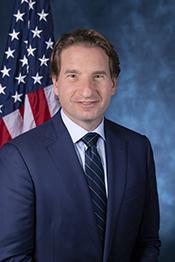
United States · United States Congress · 3 September 2021
United States–Israel Artificial Intelligence Center Act This bill requires the Department of State to establish the United States–Israel Artificial Intelligence Center to leverage the experience, knowledge, and expertise of institutions of higher education and private sector entities in the United States and Israel to develop more robust research and development cooperation in specified areas (e.g., machine learning, object detection, and speech recognition).
United States · United States Congress · 3 September 2021
Improving Medicare Coverage Act This bill temporarily expands eligibility for Medicare. It also temporarily establishes a premium and cost-sharing assistance program for low-income beneficiaries. Specifically, the bill lowers the age of eligibility for Medicare from 65 to 60. The Centers for Medicare & Medicaid Services must establish procedures to provide for automatic enrollment of qualifying individuals. Enrollment must be completed within 11 months of the bill's enactment. The bill also establishes a program under Medicare to assist low-income Medicare beneficiaries with premiums, coinsurance, deductibles, and other costs. Currently, such assistance is provided through Medicare Savings Programs, which are administered by state Medicaid programs. The bill also establishes a related special enrollment period under Medicare, expands eligibility for assistance to beneficiaries with income up to 200% of the federal poverty line, and provides for joint eligibility determinations with respect to the bill's program and the low-income subsidy program under the Medicare prescription drug benefit. The bill's provisions generally take effect six months after the bill's enactment and terminate five years later.
United States · United States Congress · 31 August 2021
Supreme Court Term Limits and Regular Appointments Act of 2021 This bill establishes staggered, 18-year terms for Supreme Court Justices and limits the Senate's advice and consent authority in relation to the appointment of Justices. Specifically, the bill requires the President to appoint a Supreme Court Justice every two years. If the appointment of a Justice would result in more than nine Justices on the Court, then the nine most junior Justices shall make up the panel of Justices exercising judicial power in cases and controversies. Further, any Justice who has served a total of 18 years is deemed retired from regular service and may continue to serve as a Senior Justice. Senior Justices may continue to perform judicial duties assigned to them by the Chief Justice. However, no Justice appointed before the date of enactment shall be counted towards such panel, nor shall they be required to retire from regular active service. In the event of a vacancy on the Court, the Chief Justice must assign the Justice most recently designated as a Senior Justice to serve on the Court until the appointment of a new Justice. Additionally, the Senate's advice and consent authority is waived if the Senate does not act within 120 days of a Justice's nomination.
United States · United States Congress · 31 August 2021
Maximizing Outcomes through Better Investments in Lifesaving Equipment for (MOBILE) Health Care Act This bill expands and otherwise modifies the allowable uses of New Access Point grant funds. These grants help health centers establish new delivery sites to provide comprehensive primary care to medically underserved populations. Specifically, health centers may use funds to construct or renovate buildings or to set up mobile medical clinics. In addition, a mobile clinic may qualify for grant funding as a new delivery site regardless of whether it is associated with a permanent, full-time site.
United States · United States Congress · 31 August 2021
This bill posthumously provides for the award of a Congressional Gold Medal in commemoration of the 13 service members who died on August 26, 2021, while stationed at Hamid Karzai International Airport in Afghanistan.
United States · United States Congress · 17 August 2021
This concurrent resolution recognizes the importance of startups to the U.S. economy, supports assisting startups throughout the economic downturn caused by the COVID-19 pandemic, and commits to promoting equal economic opportunity for underrepresented entrepreneurs of all backgrounds.
United States · United States Congress · 17 August 2021
John R. Lewis Voting Rights Advancement Act of 2021 This bill establishes new criteria for determining which states and political subdivisions must obtain preclearance before changes to voting practices may take effect. Preclearance is the process of receiving preapproval from the Department of Justice (DOJ) or the U.S. District Court for the District of Columbia before making legal changes that would affect voting rights. A state and all of its political subdivisions shall be subject to preclearance of voting practice changes for a 10-year period if 15 or more voting rights violations occurred in the state during the previous 25 years; 10 or more violations occurred during the previous 25 years, at least 1 of which was committed by the state itself; or 3 or more violations occurred during the previous 25 years and the state administers the elections. A political subdivision as a separate unit shall also be subject to preclearance for a 10-year period if three or more voting rights violations occurred there during the previous 25 years. States and political subdivisions that meet certain thresholds regarding minority groups must preclear covered practices before implementation, such as changes to methods of election and redistricting. Further, states and political subdivisions must notify the public of changes to voting practices. Next, the bill authorizes DOJ to require states or political subdivisions to provide certain documents or answers to questions for enforcing voting rights. The bill also outlines factors courts must consider when hearing challenges to voting practices, such as the history of official voting discrimination in the state or political subdivision.
United States · United States Congress · 13 August 2021
Frank Harrison, Elizabeth Peratrovich, and Miguel Trujillo Native American Voting Rights Act of 2021 This bill addresses the voting rights of Native American and Alaska Native voters and voting access on tribal lands. The bill includes provisions expanding the types of facilities that can be used as voter registration agencies; increasing polling site accessibility, including by expanding early in-person voting and providing ballot drop boxes; providing enforcement power to citizens and attorneys general; requiring approval for actions like moving a polling place; validating certain tribal identification for voting or registering to vote; permitting voters to designate another individual to return a ballot on their behalf; and expanding requirements for bilingual voting accessibility. In addition, the bill establishes a Native American voting task force grant program for the purpose of increasing voter outreach, education, registration, turnout, and accessibility for Native American communities. The bill also directs the Government Accountability Office to study and report on (1) the prevalence of nontraditional or nonexistent mailing addresses among Indians, members of tribes, and individuals residing on Indian lands; and (2) the alternatives for removing barriers to voter registration, receipt of voter information and materials, and receipt of ballots.
United States · United States Congress · 13 August 2021
Information Sharing And Advanced Communication Alerting Act or the ISAAC Alerting Act This bill requires the Technological Advisory Council of the Federal Communications Commission, in consultation with relevant stakeholders, to submit a report that identifies measures, barriers, and recommendations for implementing a 9–1–1 disability alerting system. The alerting system must allow an individual to register and create a profile associated with an individual who has a disability that includes information such as whether the individual is a wandering risk, nonverbal, or physically limited. The alerting system then transmits such information to public safety answering points to be conveyed to first responders.
United States · United States Congress · 13 August 2021
Fiscal Analysis by Income and Race Scoring Act or the FAIR Scoring Act This bill requires the Congressional Budget Office's (CBO's) cost estimates for legislation to include a distributional analysis by race and income if the legislation will have a gross budgetary effect of at least 0.1% of gross domestic product in any fiscal year during the 10-year budget window. CBO's analysis must show the transfers that would result by race and income level, and the effects must be shown both in dollars and as a percent change in after-tax-and-transfer-income. The bill also requires CBO to report to Congress on methods for conducting such a distributional analysis by gender.
United States · United States Congress · 13 August 2021
Shift Back to Society Act of 2021 This bill directs the Department of Education to establish a pilot program that awards matching grants to historically Black colleges and universities to provide educational programs for eligible offenders to facilitate reentry into the community. An eligible offender is a convicted criminal offender who has been released from incarceration for not longer than one year or who is scheduled to be released from incarceration within one year. The Government Accountability Office must report to Congress on the results of the pilot program.
United States · United States Congress · 10 August 2021
This bill prohibits congressional budget resolutions from including reconciliation instructions that would cause a net increase in the deficit for the period of fiscal years covered by the resolution. (Reconciliation instructions generally direct congressional committees to report legislation to achieve certain budgetary goals by changing laws that affect spending, revenue, or the debt limit. The legislation is then considered by Congress using expedited legislative procedures, which limit debate and amendments.)
United States · United States Congress · 10 August 2021
Ocean Shipping Reform Act of 2021 This bill revises provisions related to ocean shipping policies and is designed to support the growth and development of U.S. exports and promote reciprocal trade in the foreign commerce of the United States. Among other provisions, the bill sets forth requirements for operating a shipping exchange involving ocean transportation in the foreign commerce of the United States; prohibits ocean common carriers and marine terminal operators from retaliating or discriminating against shippers because such shippers have patronized another carrier, or filed a complaint; requires the Federal Maritime Commission (FMC) to publish and annually update all its findings of false certifications by ocean common carriers or marine terminal operators and all penalties assessed against such carriers or operators; requires ocean common carriers to adhere to minimum service standards that meet the public interest; directs the FMC to establish rules prohibiting ocean common carriers and marine terminal operators from adopting and applying unjust and unreasonable demurrage and detention fees; requires ocean common carriers to report to the FMC each calendar quarter on total import and export tonnage and the total loaded and empty 20-foot equivalent units per vessel that makes port in the United States; authorizes the FMC to initiate investigations of an ocean common carrier's fees or charges and apply enforcement measures, as appropriate; and revises annual reporting requirements for the FMC on foreign laws and practices to include practices by ocean common carriers.
United States · United States Congress · 6 August 2021
Manatee Protection Act of 2021 This bill requires the Department of the Interior to include the West Indian manatee ( Trichechus manatus ) in the endangered species list and give the species protections provided to endangered species.
United States · United States Congress · 6 August 2021
State Public Option Act This bill allows residents who are not already eligible for Medicaid and not concurrently enrolled in other health insurance coverage to buy into a state Medicaid plan beginning January 1, 2022, at the option of the state. State Medicaid programs may set premiums and cost-sharing requirements for such coverage in accordance with specified limitations. The bill also (1) provides the enhanced Federal Medical Assistance Percentage (i.e., federal matching rate) to every state that expands Medicaid coverage for individuals who are newly eligible under the Patient Protection and Affordable Care Act, regardless of when such expansion takes place; and (2) requires state Medicaid programs to cover comprehensive reproductive health care services, including abortion services.
United States · United States Congress · 30 July 2021
Designates the facility of the United States Postal Service located at 10 Broadway Street West, in Akeley, Minnesota, as the "Neal Kenneth Todd Post Office."
United States · United States Congress · 30 July 2021
Registration for Index-Linked Annuities Act This bill requires the Securities and Exchange Commission (SEC) to create a new form for the registration of index-linked annuities to ensure that a purchaser can make a knowledgeable decision. The bill defines a registered index-linked annuity as an annuity that is deemed a security, that must be registered with the SEC, and that is issued by an insurance company subject to state supervision. Furthermore, the returns of these annuities (1) are based on the performance of a specified benchmark index or rate, and (2) may be subject to a market value adjustment if amounts are withdrawn early.
United States · United States Congress · 30 July 2021
Support Recovery from Addiction Act of 2021 This bill requires states to expend at least 10% of their Substance Abuse Prevention and Treatment Block Grants on recovery support services for individuals with substance use disorders.
United States · United States Congress · 30 July 2021
Data Centers and Government Records Oversight Act This bill directs the chief information officer (CIO) of each federal agency to take specified steps with respect to the management of data centers. Specifically, each CIO shall (1) develop and publish a strategic plan to consolidate and optimize data centers at the agency, and (2) update the plan not later than two years after the plan was published. Each agency, in coordination with the Office of the Archivist of the United States, shall create copies of all records controlled by the agency and transfer such copies to a records center maintained and operated by such office. By three months after this bill's enactment, such office shall (1) develop standards for each agency to create copies of the records, (2) develop guidelines for each agency to store metadata with respect to such records and transfer such copies, and (3) make exemptions to the standards developed. The bill requires each agency to designate a senior official to manage records and lists such official's duties.
United States · United States Congress · 29 July 2021
Uyghur Policy Act of 2021 This bill addresses human rights issues concerning the Uyghurs and other minority groups in the Xinjiang Uyghur Autonomous Region in China. The bill authorizes the establishment of a Special Coordinator for Uyghur Issues position within the Department of State. The State Department's Bureau of Educational and Cultural Affairs may, subject to appropriations, make certain funds available to human rights advocates working on behalf of Uyghurs and members of other minority groups. The funds, if made available, shall be used to facilitate the presence of such human rights advocates at public diplomacy forums to speak on issues related to the human rights and religious freedoms of minority groups in Xinjiang. The State Department must ensure that Uyghur language training is available to Foreign Service officers. It must also ensure that a Uyghur-speaking member of the Foreign Service is assigned to U.S. diplomatic and consular missions in China.
United States · United States Congress · 29 July 2021
Transnational Repression Accountability and Prevention Act of 2021 or the TRAP Act of 2021 This bill establishes requirements related to U.S. cooperation with International Criminal Police Organization (INTERPOL) communications. Specifically, no U.S. agency or department may extradite an individual based solely on an INTERPOL notice. In addition, the Department of Justice and the Department of State must take certain actions to support reforms to increase transparency of INTERPOL, including with respect to its communications. The bill also requires reports on countries that abuse INTERPOL communications for political motives and other unlawful purposes.
United States · United States Congress · 29 July 2021
Customs Business Fairness Act of 2021 This bill modifies the treatment of claims by customs brokers for unpaid customs duties in chapter 11 (reorganization) bankruptcy proceedings.
United States · United States Congress · 29 July 2021
National Nuclear University Research Infrastructure Reinvestment Act of 2021 This bill reauthorizes through FY2026 and expands a Department of Energy program designed to strengthen university research and training in nuclear science and engineering. For example, the bill expands the program to provide support to universities for revitalizing and upgrading existing nuclear science and engineering infrastructure that support the development of advanced nuclear technologies and applications.
United States · United States Congress · 29 July 2021
Fiscal State of the Nation Resolution This concurrent resolution requires the congressional budget committees to conduct an annual joint hearing to receive a presentation from the Comptroller General regarding (1) the Government Accountability Office's audit of the financial statement of the executive branch, and (2) the financial position and condition of the federal government.
United States · United States Congress · 29 July 2021
Youth, Peace, and Security Act of 2021 This bill requires the Department of State to coordinate the development and implementation of a whole-of-government strategy to promote the inclusive and meaningful participation of youth in peace building and conflict prevention, management, and resolution, as well as post-conflict and recovery efforts. The President must appoint a coordinator who, in addition to being responsible for leading the implementation of such strategy, is authorized to provide grants, emergency assistance, and technical assistance to eligible youth-led civil society organizations and youth peace-building implementers. The bill also authorizes the President to provide development assistance to expand training, technical assistance, and grants managed and controlled by youth leaders.
United States · United States Congress · 28 July 2021
Supreme Court Ethics Act This bill establishes a new statutory requirement for the Judicial Conference of the United States to issue a judicial code of conduct for judges and justices of U.S. courts, including Justices of the Supreme Court. Currently, the Judicial Conference issues a code of conduct for judges of U.S. courts (but not for Justices of the Supreme Court).
United States · United States Congress · 28 July 2021
Foreign Extortion Prevention Act This bill establishes a federal criminal offense involving bribery by foreign officials. Specifically, the bill makes it a crime for foreign officials to demand or accept anything of value personally or for another person or a nongovernmental entity to influence the performance of an official act or otherwise confer an improper advantage. The bill explicitly grants extraterritorial jurisdiction over the offense. A violation is subject to criminal penalties—a fine, a prison term of up to 15 years, or both. Finally, the bill establishes a Victims of Kleptocracy Fund in the Treasury and directs fines and penalties for violations to be deposited into the fund for anti-corruption initiatives.
United States · United States Congress · 28 July 2021
Onward to Opportunity Act This bill requires the Department of Defense to implement a pilot grant program at five military installations to provide enhanced support and funding to eligible entities to supplement the Transition Assistance Program (TAP) in providing job opportunities for industry-recognized certifications, job placement assistance, and related employment services to service members participating in TAP and their spouses.
United States · United States Congress · 26 July 2021
Global Malnutrition Prevention and Treatment Act of 2021 This bill sets out programs and otherwise directs the U.S. Agency for International Development (USAID) to carry out activities to prevent and treat malnutrition globally. Specifically, the USAID must leverage resources to address malnutrition through the Global Nutrition Coordination Plan (an interagency effort to strengthen the impact of U.S. investments in nutrition) and its role on the board of directors of the International Development Finance Corporation. The USAID must also select countries based on specified malnutrition-related indicators for purposes of targeting malnutrition prevention and treatment programs and update the selection within five years. Additionally, the USAID may establish the Nutrition Leadership Council to coordinate activities to prevent and treat malnutrition across the agency; target resources and nutrition interventions to the populations most susceptible to severe malnutrition and otherwise support efforts to prevent and treat malnutrition globally; and coordinate activities among partner countries, United Nations agencies, civil society, private sector actors, and others to, for example, build capacity in partner countries to sustain nutrition interventions. The bill also requires the USAID to provide to Congress an implementation plan and annual reports concerning its programs for treating and preventing malnutrition. The bill's provisions terminate seven years after its enactment.
United States · United States Congress · 22 July 2021
Rebuilding Economies and Creating Opportunities for More People Everywhere To Excel Act or the RECOMPETE Act This bill establishes a grant program to assist economically distressed local communities and labor markets that meet specified economic criteria, including employment criteria. The Economic Development Administration (EDA) must award 10-year grants to a local government, tribal government, economic development district, or consortium of local government units located in such areas. Each grant recipient must develop and implement a comprehensive strategy to address the economic challenges specific to the area. The grants may be used to increase employment opportunities, increase local per capita income, support economic development, and develop infrastructure and housing. Additionally, the EDA must periodically evaluate each grant recipient based on certain benchmark criteria and annually report on the implementation of the program. The bill specifies formulas for determining the grant amount for each community or market and the federal share of the cost of each program or activity conducted under the program.
United States · United States Congress · 22 July 2021
This bill permits state, tribal, and territorial governments to use designated COVID-19 relief funding to support mental and behavioral health programs. Currently, this funding is available to eligible governments through December 31, 2024, for responding to the COVID-19 public health emergency or its negative economic impacts; supporting essential workers and businesses; maintaining government services; and investing in water, sewer, or broadband infrastructure.
United States · United States Congress · 21 July 2021
Commitment to Veteran Support and Outreach Act This bill authorizes the Department of Veterans Affairs (VA) to provide grants to states to implement programs that improve outreach and assistance to veterans and their families to ensure that such individuals are fully informed about veterans' benefits and programs. Specifically, the VA may provide grants to states to (1) implement or enhance outreach activities or activities to assist in the development and submittal of claims for veterans, or (2) increase the number of county or tribal veterans service officers in the state. The VA must prioritize awarding grants in areas with a critical shortage of county or tribal veterans service officers, areas with high rates of suicide among veterans, and areas with high rates of referrals to the Veterans Crisis Line.
United States · United States Congress · 21 July 2021
Diversity and Inclusion at the Department of State Act This bill establishes a new position and requires other activities to promote diversity and inclusion in the Department of State. The bill creates the presidentially-appointed position of Chief Diversity and Inclusion Officer in the Office of the Deputy Secretary of State to, among other activities, develop a strategic plan to guide implementation of diversity and inclusion efforts and support State Department personnel from traditionally underrepresented groups. The officer reports directly to the Secretary of State. Additionally, the State Department must establish a Diversity and Inclusion Leadership Council to coordinate applicable strategic plans, initiatives, and policies. The bill also modifies merit selection processes for promotions, performance pay, and related matters to promote diversity and inclusion in the Foreign Service. Specifically, it adds factors (e.g., testimony from peers and subordinates or demonstrated support for diversity and inclusion) that may be considered in recommendations and rankings related to a Foreign Service officer's performance. The State Department must also establish a mentorship program for entry- and mid-level members of the Foreign Service and periodically offer a Senior Executive Service development program to members of the civil service in the top two pay grades. Senior Executive Service members serve as high-level managers within federal agencies. The bill requires the State Department to report on its diversity and inclusion efforts, as well as demographic information about members of boards that make personnel decisions and candidates for the Senior Executive Service.
United States · United States Congress · 20 July 2021
Protecting First Responders from Secondary Exposure Act of 2021 This bill expands the allowable uses of grant funds under the Comprehensive Opioid, Stimulant, and Substance Abuse Program administered by the Department of Justice. Specifically, the bill allows grants to be used for purchasing containment devices for first responders and training first responders on the use of containment devices to prevent secondary exposure to fentanyl and other potentially lethal substances.
United States · United States Congress · 20 July 2021
Revealing and Explaining Visa Exclusions for Accountability and Legitimacy Act or the REVEAL Act This bill authorizes the Department of State to publicly disclose the identity of an alien who has been denied admission into the United States because that alien's entry would pose potentially serious adverse foreign policy consequences. The State Department may also reveal the grounds that it relied on to make such a determination. The President must annually report to Congress a list of individuals denied a visa on such foreign policy grounds and another list of the instances when the State Department chose to not publicly disclose the identity of such an individual.
United States · United States Congress · 20 July 2021
Everyday Philanthropist Act This bill allows employers to offer certain employees a tax-advantaged flexible giving account as a fringe benefit. Flexible giving accounts allow employees to set aside up to $2,700 of their annual pretax earnings to make tax-deductible charitable contributions without having to itemize tax deductions.
United States · United States Congress · 19 July 2021
Small Business Development Center Cyber Training Act of 2021 This bill requires the Small Business Administration to establish a program for certifying at least 5 or 10% of the total number of employees of a small business development center to provide cybersecurity planning assistance to small businesses.
United States · United States Congress · 19 July 2021
7(a) Loan Agent Oversight Act This bill requires the Small Business Administration (SBA) to submit an annual report containing specified information related to 7(a) loan agents. These agents provide fee-based referral and loan application services related to the SBA's 7(a) Program. Under the 7(a) Program, the SBA provides loans and loan guarantees to small business borrowers who cannot obtain credit elsewhere on reasonable terms and conditions. The required report must include (1) the number and type of agents assisting applicants for 7(a) loans, (2) the number of fraudulent loans made for which an applicant used the services of a 7(a) agent, and (3) the number and aggregate dollar value of referral fees paid to 7(a) agents.
United States · United States Congress · 19 July 2021
Small Business Advanced Cybersecurity Enhancements Act of 2021 This bill requires the Small Business Administration (SBA) to establish a central small business cybersecurity-assistance unit within the SBA and a regional cybersecurity-assistance unit within each small business development center. These units shall serve as the primary means for a small business to communicate cyber threats and defensive measures with the federal government, and the bill prohibits any cause of action against a small business for such communication or for any conduct in response to such communication.
United States · United States Congress · 16 July 2021
Small Business 7(a) Loan Agent Transparency Act This bill provides oversight of 7(a) loan agents, including by requiring the Small Business Administration (SBA) to establish a registration system for such agents whereby certain data may be collected and by mandating that such agents register with the system and pay an annual registration fee. These agents provide referral and loan application services related to the SBA's 7(a) Program. Under the 7(a) Program, the SBA provides loans and loan guarantees to small business borrowers who cannot obtain credit elsewhere on reasonable terms and conditions.
United States · United States Congress · 16 July 2021
Access to Infertility Treatment and Care Act This bill requires private health insurance plans to cover (1) specified infertility treatments (e.g., in vitro fertilization), if the plan also covers obstetrical services; and (2) fertility preservation services for individuals who undergo medically necessary treatment that may cause impairment of fertility. Private health insurance plans must apply cost sharing for such services that does not exceed the amount for similar services covered by the plan. Further, plans are prohibited from (1) providing incentives for plan holders to forego infertility treatment, or (2) reducing the reimbursement rate to providers of such treatments. The bill also extends infertility treatment and fertility preservation coverage to Medicaid enrollees, federal employees, members of the military, and veterans.
United States · United States Congress · 16 July 2021
Facilitating Innovative Nuclear Diagnostics Act of 2021 This bill establishes separate payment requirements for diagnostic radiopharmaceuticals under the Medicare prospective payment system for hospital outpatient department services. The bill's requirements apply to diagnostic radiopharmaceuticals that have an average daily cost of $500 or more in 2022 and as adjusted based on a specified fee schedule factor in each year thereafter.
United States · United States Congress · 16 July 2021
Telehealth Coverage and Payment Parity Act This bill requires private health insurance plans to cover certain services provided via telecommunications systems (i.e., telehealth). Specifically, the telehealth services must be deemed medically necessary by a health care provider and covered under the plan if provided in person. Plans must apply the same cost-sharing and reimbursement amounts that would otherwise apply to such services and may waive cost-sharing requirements for any services to diagnose or treat COVID-19, including via telehealth.
United States · United States Congress · 13 July 2021
United States Commitment to Peacekeeping Act of 2021 This bill repeals a limit on U.S. funding for, details U.S. policy objectives for, and revises reporting requirements related to United Nations (U.N.) peacekeeping operations. Under current law, the United States may contribute no more than 25% of the assessed costs for a U.N. peacekeeping operation; the bill eliminates that funding restriction. The Department of State must instruct the U.S. Permanent Representative to the United Nations to advance the U.S. policy objectives outlined in the bill for standardizing performance assessments of, diversifying the funding base for, and other aspects of U.N. peacekeeping operations. The bill modifies annual reports about U.S. participation in U.N. activities by eliminating a requirement to report on costs of U.N. peacekeeping operations in the prior fiscal year and by adding a requirement to report on U.S. efforts to implement reforms of U.N. peacekeeping. Additionally, the State Department must report on (1) strengthening the role of conflict prevention in U.N. missions, and (2) transitioning U.N. peacekeeping operations to host-country security forces.
United States · United States Congress · 13 July 2021
Year-Round Fuel Choice Act of 2021 This bill amends the Clean Air Act to address the limitations on Reid vapor pressure (a measure of gasoline's volatility) that are placed on gasoline during the summer ozone season. The bill applies the Reid vapor pressure requirements that are applicable to gasoline blended with 10% ethanol (E10) to gasoline blended with more than 10% ethanol. Thus, the waiver given to E10 gasoline, which allows an increase in the Reid Vapor Pressure volatility, is extended to gasoline blended with more than 10% ethanol.
United States · United States Congress · 9 July 2021
Preserving Rules Ordered for The Entities Covered Through 340B Act of 2021 or the PROTECT 340B Act of 2021 This bill prohibits pharmacy benefit managers (PBMs) and health insurance plans from discriminating against health providers participating in the 340B drug pricing program, including pharmacies contracted with such providers to dispense 340B drugs. The 340B program allows certain providers to receive covered outpatient drugs at reduced prices from manufacturers. Specifically, PBMs and insurance plans may not reimburse 340B participants at a lower rate than other entities not participating in the program; impose differing terms (such as fees, charge-backs, or audits) on 340B participants; interfere with an individual's choice to receive drugs from a 340B participant; require 340B participants to identify which drugs fall within the program; or refuse to contract with a 340B participant on the basis that they utilize the program. Violations of this bill are subject to a civil penalty of not more than $5,000 per violation per day. These prohibitions also apply to prescription drug (Part D) sponsors under Medicare. The bill also provides for a process to prevent duplicate 340B drug discounts to states under Medicaid.
United States · United States Congress · 9 July 2021
This resolution expresses support for the designation of Journeyman Lineworkers Recognition Day. (A journeyman lineworker is a person who builds and maintains electrical power systems.)
United States · United States Congress · 9 July 2021
Safe Schools Improvement Act of 2021 This bill requires states to direct their local educational agencies (LEAs) to establish policies that prevent and prohibit bullying and harassment of elementary and secondary school students. In particular, these policies must prohibit bullying and harassment based on race, color, national origin, sex, sexual orientation, gender identity, disability, or religion. Further, LEAs must provide (1) students, parents, and educational professionals with annual notice of the conduct prohibited in their disciplinary policies; (2) students and parents with grievance procedures that target such conduct; and (3) the public with annual data on the incidence and frequency of that conduct at the school and LEA level. The Department of Education must conduct and report on an independent biennial evaluation of programs and policies to combat bullying and harassment in elementary and secondary schools. The National Center for Education Statistics must collect state data to determine the incidence and frequency of the conduct prohibited by LEA disciplinary policies.
United States · United States Congress · 1 July 2021
Combating Global Corruption Act of 2021 This bill requires the Department of State to address corruption, including related to the Nord Stream 2 pipeline (a national gas pipeline expected to increase Russia's natural gas export capacity). The State Department must annually publish a ranking of foreign countries based on their government's efforts to eliminate corruption. The bill outlines the minimum standards that the State Department must consider when creating the ranking. These considerations include, for example, whether a country has criminalized corruption, adopted measures to prevent corruption, and complied with the United Nations Convention Against Corruption and other relevant international agreements. Tier one countries meet the standards; tier two countries make some efforts to meet the standards; tier three countries make de minimis or no efforts to meet the standards. If a country is ranked in the second or third tier, the State Department must designate an anti-corruption contact at the U.S. diplomatic post in that country to promote good governance and combat corruption. The bill also requires the State Department, in coordination with the Department of the Treasury, to evaluate whether to impose asset- and visa-blocking sanctions against foreign persons engaged in significant corruption (1) in tier three countries, or (2) related to the Nord Stream 2 pipeline. The State Department must report to Congress about any sanctions imposed under this bill. The evaluation and reporting requirements concerning the Nord Stream 2 pipeline terminate after five years.