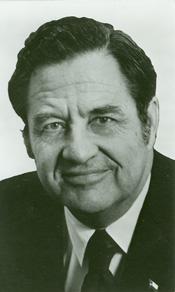
United States · United States Congress · 21 December 1982
Social Security Miscellaneous and Technical Improvements Act of 1982 - Title I: Cash Management - Amends title II (Old Age, Survivors and Disability Insurance) of the Social Security Act to direct the Secretary of the Treasury to implement procedures for identifying social security benefit checks issued under title II which have not been negotiated within 12 months and to credit the appropriate social security trust fund on a monthly basis for the amount of all unnegotiated benefit checks drawn on such trust fund. Requires the Secretary to pay a benefit check presented for payment after it has been credited to one of the trust funds, if it is otherwise proper. Authorizes appropriations to reimburse the Federal Old-Age and Survivors Insurance Trust Fund and the Federal Disability Trust Fund for the total amount of unnegotiated benefit checks. Requires the Secretary of Health and Human Services and the Secretary of the Treasury to jointly undertake a study on the maintenance and adjustment of the float periods (time periods) between the issuance of title II benefit checks from the general fund in the Treasury and the transfer of amounts to reimburse the general fund from the Federal Old-Age and Survivors Insurance Trust Fund or the Federal Disability Insurance Trust Fund, whichever is appropriate. Requires the Secretaries to report their findings to the President and Congress. Provides for the Secretary of the Treasury to adjust procedures with respect to the float periods based upon the study. Amends title II of the Social Security Act to provide that the interest rate on late payments by States pursuant to State agreements for coverage of State and local employees under the old age, survivors and disability insurance program shall be at a rate equal to the coupon equivalent of the average yield in the 91-day Treasury bill auction most recently preceding the due date of the payments involved. (Currently, the interest rate on such late payments is six percent per annum.) Title II: Elimination of Gender-Based Distinctions - Enables a divorced man to qualify for husband's insurance benefits under title II on the same basis as a divorced woman may qualify for wife's benefits. (Currently, a man's entitlement to husband's benefits ceases upon his divorce.) Enables a widower to qualify for survivor's benefits based upon a deceased first wife's earnings if he remarries before age 60 but is widowed or divorced from his second wife when he applies for benefits. (Currently, a widower cannot qualify for widower's benefits based on a first wife's earnings if he has remarried.) Permits methods used to establish paternity to be used to establish maternity in order to determine whether an applicant for benefits qualifies as a child of the insured. Enables husbands and widowers of women who have transitional insured status to receive benefits based on their wives' records. (Currently, only wives and widows of men who have such status may receive such benefits.) Equalizes benefit amounts for husbands and wives who both qualify for the special benefits for individuals who reached age 72 before 1968. Extends benefits to a widowed or surviving divorced father while caring for a child. Repeals the requirement that an individual's wife's, child's, widow's, mother's, or parent's insurance benefit entitlement be terminated if such individual marries a person entitled to child's insurance benefits and such person ceases to be so entitled. Permits widowers of veterans to waive payment of a civil service survivor's annuity based on credit for military service which may be used to enable such widowers to qualify for survivor's benefits. (Currently, only widows may waive such payment.) Requires deductions from old age and survivors insurance benefits in the case of husbands or widowers who do not have children in their care. (Currently, deductions from benefits are made only in the case of wives or widows who do not have children in their care.) Title III: Coverage - Amends the Internal Revenue Code and title II of the Social Security Act to permit domestic corporations to enter into agreements with the Secretary of Health and Human Services to extend social security coverage to U.S. citizens employed by foreign affiliates of such corporations. (Currently, such social security coverage may be extended only to U.S. citizens employed by foreign subsidiaries of domestic corporations.) Reduces the stock ownership requirement which qualifies a foreign trade or business as a foreign affiliate for purposes of such Act. Includes as "employment" for purposes of title II any service which is designated as employment or recognized as the equivalent of employment under an international social security agreement pursuant to which an individual may be entitled to social security benefits based on periods of coverage under both the U.S. social security system and under the social security of a foreign country. Provides social security coverage for non-resident aliens who are covered under such an agreement. Makes the foreign earned income exclusion from gross income inapplicable in the determination of the net earnings from self-employment with respect to a U.S. citizen or resident whose tax home is in a foreign country and who is present in a foreign country or countries for at least 330 full days of a 12-month period. (Currently, such exclusion does not apply in the case of an individual who has been a resident of the United States during the entire taxable year.) Includes as "wages" for purposes of title II coverage: (1) payments to a trust which are part of a qualified cash or deferred arrangement; and (2) payments made to an employee after he or she reaches age 62. Excludes from "wages" for purposes of title II coverage payments under a simplified employee pension if, at the time of the payments, the employee will be entitled to a deduction for retirement contributions. Prohibits the social security coverage of State and local employees in Utah from being affected by any change in the name of an employee group. Revises the effective date for international social security agreements. Title IV: Miscellaneous and Technical Amendments - Amends title II of the Social Security Act to revise the method for computing maximum insurance benefits. Amends the Covenant to Establish a Commonwealth of the Northern Mariana Islands in Political Union with the United States of America to revise the date upon which the social security program shall apply to the Northern Mariana Islands. Amends title II of the Social Security Act to require exclusion from the trust fund reimbursement computation of amounts attributable to benefits paid during the fiscal year to an individual who also received benefits attributable to wage credits for military service. Reduces from 72 to 70 the age beyond which no increases in old age insurance benefits on account of delayed retirement shall be made. Revises the insured status requirements for disability insurance benefit applications. Provides that an acknowledgment, court decree, or court order with respect to illegitimate children of disabled beneficiaries shall be treated as occurring on the first day of the month in which it actually occurs for purposes of determining eligibility for disability benefits. Provides for the continued payment of widow's or widower's benefits to a widow or widower who marries an individual entitled to old age or disability insurance benefits. Permits entitlement to widow's and widower's benefits for the month immediately preceding the month of application if the insured individual died in that preceding month. Authorizes the Secretary of Health and Human Services to establish a program under which States voluntarily contract with the Secretary to periodically furnish the Secretary with information on the death certificates filed with them so that necessary corrections may be made to the beneficiary records maintained under the social security program. Permits the Secretary, in the case of individuals whose benefits are provided by a Federal or State agency other than under the Social Security Act, to provide such agency with the corrected beneficiary records from the social security program.
United States · United States Congress · 30 November 1982
Social Security Miscellaneous and Technical Improvements Act of 1982 - Title I: Cash Management - Amends title II (Old Age, Survivors and Disability Insurance) of the Social Security Act to direct the Secretary of the Treasury to implement procedures for identifying social security benefit checks issued under title II which have not been negotiated within 12 months and to credit the appropriate social security trust fund on a monthly basis for the amount of all unnegotiated benefit checks drawn on such trust fund. Requires the Secretary to pay a benefit check presented for payment after it has been credited to one of the trust funds, if it is otherwise proper. Authorizes appropriations to reimburse the Federal Old-Age and Survivors Insurance Trust Fund and the Federal Disability Trust Fund for the total amount of unnegotiated benefit checks. Requires the Secretary of Health and Human Services and the Secretary of the Treasury to jointly undertake a study on the maintenance and adjustment of the float periods (time periods) between the issuance of title II benefit checks from the general fund in the Treasury and the transfer of amounts to reimburse the general fund from the Federal Old-Age and Survivors Insurance Trust Fund or the Federal Disability Insurance Trust Fund, whichever is appropriate. Requires the Secretaries to report their findings to the President and Congress. Provides for the Secretary of the Treasury to adjust procedures with respect to the float periods based upon the study. Amends titles II and XVIII (Medicare) of the Social Security Act to revise the requirements with respect to investment of trust fund assets in the Federal Old-Age and Survivors Insurance Trust Fund, the Federal Disability Insurance Trust Fund, the Federal Hospital Insurance Trust Fund, and the Federal Supplementary Medical Insurance Trust Fund. Amends title II of the Social Security Act to provide that the interest rate on late payments by States pursuant to State agreements for coverage of State and local employees under the old age, survivors and disability insurance program shall be at the annual rate established by the Secretary of the Treasury for overpayments of taxes. (Currently, the interest rate on such late payments by States is six percent per annum.) Title II: Elimination of Gender-Based Distinctions - Enables a divorced man to qualify for husband's insurance benefits under title II on the same basis as a divorced woman may qualify for wife's benefits. (Currently, a man's entitlement to husband's benefits ceases upon his divorce.) Enables a widower to qualify for survivor's benefits based upon a deceased first wife's earnings if he remarries before age 60 but is widowed or divorced from his second wife when he applies for benefits. (Currently, a widower cannot qualify for widower's benefits based on a first wife's earnings if he has remarried.) Permits methods used to establish paternity to be used to establish maternity in order to determine whether an applicant for benefits qualifies as a child of the insured. Enables husbands and widowers of women who have transitional insured status to receive benefits based on their wives' records. (Currently, only wives and widows of men who have such status may receive such benefits.) Equalizes benefit amounts for husbands and wives who both qualify for the special benefits for individuals who reached age 72 before 1968. Extends benefits to a widowed or surviving divorced father while caring for a child. Terminates child's insurance benefit entitlement in the case of a man who marries an individual who is entitled to disability insurance benefits unless such individual dies or is entitled to old age and survivors insurance benefits following the month in which her disability benefits cease. (Currently such benefits are terminated in the case of women who marry.) Provides that the gross income and deductions attributable to a trade or business in a community property State shall be treated for purposes of social security taxes as the gross income and deductions of the spouse who is carrying on the trade or business without regard to whether the income is community income. (Currently, such income and deductions are treated as the income and deductions of the husband unless the wife is substantially in control of the trade or business, in which case they are treated as the wife's.) Permits widowers of veterans to waive payment of a civil service survivor's annuity based on credit for military service which may be used to enable such widowers to qualify for survivor's benefits. (Currently, only widows may waive such payment.) Requires deductions from old age and survivors insurance benefits in the case of husbands or widowers who do not have children in their care. (Currently, deductions from benefits are made only in the case of wives or widows who do not have children in their care.) Title III: Coverage - Amends the Internal Revenue Code and title II of the Social Security Act to permit domestic corporations to enter into agreements with the Secretary of Health and Human Services to extend social security coverage to U.S. citizens employed by foreign affiliates of such corporations. (Currently, such social security coverage may be extended only to U.S. citizens employed by foreign subsidiaries of domestic corporations.) Reduces the stock ownership requirement which qualifies a foreign trade or business as a foreign affiliate for purposes of such Act. Includes as "employment" for purposes of title II any service which is designated as employment or recognized as the equivalent of employment under an international social security agreement pursuant to which an individual may be entitled to social security benefits based on periods of coverage under both the U.S. social security system and under the social security of a foreign country. Provides social security coverage for non-resident aliens who are covered under such an agreement. Makes the foreign earned income exclusion from gross income inapplicable in the determination of the net earnings from self-employment with respect to a U.S. citizen or resident whose tax home is in a foreign country and who is present in a foreign country or countries for at least 330 full days of a 12-month period. (Currently, such exclusion does not apply in the case of an individual who has been a resident of the United States during the entire taxable year.) Includes as "wages" for purposes of title II coverage: (1) payments to a trust which are part of a qualified cash or deferred arrangement; and (2) payments made to an employee after he or she reaches age 62. Excludes from "wages" for purposes of title II coverage payments under a simplified employee pension if, at the time of the payments, the employee will be entitled to a deduction for retirement contributions. Prohibits the social security coverage of State and local employees in Utah from being affected by any change in the name of an employee group. Title IV: Miscellaneous and Technical Amendments - Amends title II of the Social Security Act to revise the method for computing maximum insurance benefits. Amends the Covenant to Establish a Commonwealth of the Northern Mariana Islands in Political Union with the United States of America to revise the date upon which the social security program shall apply to the Northern Mariana Islands. Amends title II of the Social Security Act to require the exclusion from the trust fund reimbursement computation of amounts attributable to benefits paid during the fiscal year to an individual who also received benefits attributable to wage credits for military service. Reduces from 72 to 70 the age beyond which no increases in old age insurance benefits on account of delayed retirement shall be made. Revises the insured status requirements for disability insurance benefit applications. Provides that an acknowledgment, court decree, or court order with respect to illegitimate children of disabled beneficiaries shall be treated as occurring on the first day of the month in which it actually occurs for purposes of determining eligibility for disability benefits. Provides for the continued payment of widow's or widower's benefits to a widow or widower who marries an individual entitled to old age or disability insurance benefits. Permits entitlement to widow's and widower's benefits for the month immediately preceding the month of application if the insured individual died in that preceding month. Entitles an individual who is an alien outside the United States to wife's, husband's, widow's, widower's, or mother's insurance benefits only if such individual has resided in the United States and has had a spousal relationship for at least five years with the person upon whose wages or self-employment income such entitlement is based. Entitles an individual who is an alien outside the United States to child's insurance benefits only if: (1) such individual has resided in the United States for at least five years as the child of the person upon whose wages and self-employment income such entitlement is based; or (2) the person upon whose wages and self-employment income such entitlement is based and the individual's other parent, if any, have each resided in the United States for at least five years. Provides that an adopted child who is an alien outside the United States may receive child's insurance benefits only if such child: (1) was adopted within the United States by the person upon whose wages and self-employment income such entitlement is based; and (2) has lived in the United States with such person and received at least one-half of his or her support from such person for a specified period of time. Entitles an individual who is an alien outside the United States to parent's insurance benefits only if such individual has resided in the United States for at least five years as a parent of the person upon whose wages and self-employment income such entitlement is based.
United States · United States Congress · 1 October 1982
Renewable Energy Incentive Act of 1982 - Amends the Internal Revenue Code to extend for five years from 1985 to 1990 the investment tax credit for: (1) solar, wind, or geothermal property; (2) ocean thermal property; (3) qualified hydroelectric generating property; and (4) biomass property. Increases the energy percentage for solar, wind or geothermal property and ocean thermal property from 15 percent to 30 percent for FY 1983 through December 31, 1987. Reduces such percentage to 15 percent thereafter. Increases the energy percentage for qualified hydroelectric generating property from 11 percent to 15 percent. Increases the energy percentage for biomass property from ten percent to 15 percent. Sets forth special rules for certain long-term projects and biomass property.
United States · United States Congress · 14 September 1982
Amends the Internal Revenue Code to impose a tax penalty on failures to adhere to the conditions of determination letters relating to independent management of the assets of multiemployer pension plans. Imposes such penalty if the trustee or plan administrator with respect to such plan: (1) takes any action which he knows (or should know) will result in a violation of a condition; or (2) fails to take all reasonable action to prevent or correct any such violation. Sets the amount of such penalty at the lesser of: (1) one-half of one percent of the fair market value of the plan assets involved in the violation; or (2) $400,000 for any calendar month a violation is in effect.
United States · United States Congress · 14 September 1982
Amends the Employee Retirement Income Security Act of 1974 to treat as a prohibited transaction the failure to adhere to conditions of a determination letter relating to the independent management of assets by a trustee or administrator of a multiemployer employee benefit plan.
United States · United States Congress · 14 September 1982
Amends title II (Old Age, Survivors and Disability Insurance) of the Social Security Act to extend from five to ten years the period during which a spouse or mother becoming eligible for a Government pension may qualify for an exemption from title II provisions requiring a reduction in such spouse's or mother's OASDI benefits based on receipt of a Government pension. Makes the duration-of-marriage requirements for spouses applicable to such exemption.
United States · United States Congress · 19 August 1982
Designates September 21, 1982, as a time of special tribute to muralist Allyn Cox, N.A., D.F.A., and the art program sponsored by the United States Capitol Historical Society. Provides for a special program in the Old Senate Chamber on such date in recognition of the efforts of the Society, the artistic achievements of Allyn Cox, and the generosity of the National Society Daughters of the American Revolution.
United States · United States Congress · 18 August 1982
Amends the Federal criminal code to impose mandatory minimum sentences for committing violent felonies against individuals aged 65 or older. Prohibits suspended, probationary, and concurrent sentences. Prohibits parole and any plea bargaining agreements that would result in the defendant's serving less than the minimum sentence.
United States · United States Congress · 9 August 1982
Requests the President to designate the week of August 29 through Septmber 4, 1982, as National Railroad Week and September 4, 1982, as National Railroad Day.
United States · United States Congress · 22 July 1982
Expresses the concern of the House of Representatives in the preservation and restoration of Rhodes Tavern in Washington, D.C. Encourages preservation and restoration efforts by the National Trust for Historic Preservation, the National Capitol Planning Commission, the Commission of Fine Arts, the mayor and city council, and other interested organizations.
United States · United States Congress · 15 July 1982
Residential Mortgage Investment Act of 1982 - Permits employee benefit plans, as defined under this Act, to engage in any qualified mortgage transaction involving any qualified residential mortgage loan, provided transactions between all parties are at arm's length. Permits such plans to participate in any mortgage pool, provided such pool conforms to specified requirements with regard to permitted investments. Authorizes the Secretary of the Treasury to prescribe regulations to carry out this Act. Provides that this Act shall supersede any and all contrary provisions of State law, the Employee Retirement Income Security Act of 1974, and the Internal Revenue Code. Prohibits the imposition of Federal excise tax on a plan or pool that engages in a transaction described under this Act.
United States · United States Congress · 14 July 1982
Constitutional Amendment - Declares that equality of rights under the law shall not be denied or abridged by the United States or any State on account of sex.
United States · United States Congress · 13 July 1982
National Commission on Neurofibromatosis Act - Directs the Secretary of Health and Human Services to establish a National Commission on Neurofibromatosis within 60 days. Sets forth operating and related provisions. Authorizes the Commission to transmit interim reports. Requires: (1) a final report to the President and to each House of Congress within one year; and (2) the Secretary to file a final report and a budget analysis for neurofibromatosis research with the appropriate congressional committees within 15 days after the President submits his budget to Congress. Terminates the Commission three months after submission of the final report. Authorizes appropriations.
United States · United States Congress · 25 May 1982
Amends the Internal Revenue Code to allow disclosure of returns or return information to an officer or employee of any Federal agency for use in preparing any administrative, judicial, or grand jury proceeding involving the enforcement of a specific Federal criminal statute (but not involving tax administration) or in an investigation which may result in such a proceeding. Authorizes such disclosure only by ex parte order of a Federal district court judge or magistrate. Sets forth grounds for the granting of such order. Requires the Secretary of the Treasury to disclose return information upon written request of the Head or the Inspector General of a Federal agency or the Attorney General or his designee, to such officers and employees as are directly engaged in, and solely for use in or preparation for, any administrative, judicial, grand jury proceeding involving the enforcement of a specific Federal criminal statute (but not involving tax administration) or in an investigation which may result in such a proceeding. Disallows the disclosure of returns or return information which would identify a confidential informant or seriously impair a tax investigation. Authorizes the Secretary to disclose return information (other than information which would identify a confidential informant or seriously impair a tax investigation) which may constitute evidence of a violation of Federal criminal laws to the extent necessary to apprise the head of the appropriate Federal agency responsible for enforcing such laws. Permits the Secretary or his designee, in specified emergency circumstances, to disclose information to the extent necessary to apprise the appropriate Federal agency of such emergency. Allows information disclosed pursuant to this Act to be entered into evidence in a proceeding not involving tax administration or in an ancillary proceeding to which the United States is a party. Limits such disclosure to the extent required by applicable discovery requirements. Prohibits admission of such information into evidence if the Secretary determines that it would identify a confidential informant or seriously impair a tax investigation. Permits the disclosure of returns and return information to Federal agencies by order of a Federal district judge if necessary to locate fugitives from justice. Permits an individual to bring an action for civil damages for the unauthorized disclosure of returns or return information by Federal officers or employees or others. Provides that an individual shall not be liable for a disclosure that results from a good faith but erroneous interpretation of the law. Limits the amount of recoverable damages. Allows the disclosure of returns or return information by Federal agencies or by the Secretary for use in certain audits by the General Accounting Office.
United States · United States Congress · 12 May 1982
Amends title II (Old Age, Survivors and Disability Insurance) of the Social Security Act and the Internal Revenue Code to prohibit termination of coverage under the old age, survivors and disability insurance program for: (1) State and local employees covered by a voluntary agreement between the State and the Secretary of Health and Human Services; and (2) employees of tax-exempt, nonprofit organizations established on or after January 1, 1983. Requires the Secretary of the Treasury to make available to the Secretary of Health and Human Services, upon request, information relating to notices of termination of certificates filed by tax-exempt, nonprofit organizations to provide title II coverage for their employees and information relating to dissolution of such organizations. Provides that the amendments made by this Act shall cease to be effective January 1, 1988, and the Social Security Act and Internal Revenue Code provisions so amended shall read on and after such date as if this Act had not been enacted. Requires the Secretary of Health and Human Services to submit to Congress by January 1, 1987, recommendations as to whether the amendments should be extended beyond their termination date.
United States · United States Congress · 6 May 1982
Authorizes the transfer of the following original documents of the House of Representatives to the Lyndon Baines Johnson Library: (1) the appointment form of Lyndon B. Johnson as a clerk dated December 10, 1931; and (2) the salary card of Lyndon B. Johnson during his period as a House employee.
United States · United States Congress · 29 April 1982
Amends the Internal Revenue Code to exempt holdings in an independent local newspaper business from the tax on excess business holdings of private foundations. Defines an "independent local newspaper business" as: (1) a proprietorship which publishes an independent local newspaper; (2) a partnership which publishes such a newspaper and which has none of its outstanding partnership interests traded in an established securities market; and (3) a corporation which publishes such a newspaper and which has none of its outstanding capital stock traded in an established securities market.
United States · United States Congress · 28 April 1982
Disability Amendments of 1982 - Amends title II (Old Age, Survivors and Disability Insurance) of the Social Security Act to permit an individual who has been found to be no longer eligible for disability benefits and who has requested reconsideration of such determination to elect to have the payment of such benefits continued during the period of reconsideration. Provides that if the decision upon such reconsideration affirms the determination that the individual is not entitled to such benefits, any benefits paid pending such reconsideration shall be considered overpayments, except for benefits which are adjustment benefits. Amends titles II and XVI (Supplemental Security Income) of the Social Security Act to entitle an individual who has received disability benefits for a period of not less than 36 consecutive months and who has been determined to be no longer eligible for such benefits on or after the enactment of this Act and before January 1, 1985, to adjustment benefits for four additional months after his or her entitlement ceases. Prohibits the payment of such benefits under certain circumstances. Provides that no benefit paid in any month before notification of a determination, on or after the enactment of this Act and before January 1, 1985, of ineligibility for disability benefits shall be considered an overpayment. Amends title II of the Social Security Act to provide that an application for disability benefits shall be valid if it is filed before a request for reconsideration of a disability determination or a decision on a reconsideration is made. Requires that an initial disability determination by the Secretary of Health and Human Services which is unfavorable to the disability benefit applicant contain a statement of the case with a discussion of the evidence and the basis for the Secretary's decision. Entitles the applicant or the applicant's spouse, surviving spouse, former spouse, surviving divorced mother, child, or parent to reconsideration of such an initial determination upon request and upon a showing that his or her rights may be prejudiced by the determination. Authorizes a State agency to make an initial disability determination after notification to the Secretary and in accordance with the rules governing such determinations. Provides that State agency disability determinations shall be made after opportunity for an evidentiary hearing. Requires that a reconsideration by the Secretary which is unfavorable to the individual requesting the reconsideration contain a statement of the case with a discussion of the evidence and the basis for the Secretary's decision. Requires that an individual who requests a reconsideration be informed of the procedure for the reconsideration and of his or her right to retain an attorney or representative during the reconsideration. Provides for reasonable notice and opportunity for a hearing for disability benefit applicants who show that their rights may be prejudiced by a decision on reconsideration. Requires the Secretary to decide on such an individual's entitlement to benefits at such a hearing and to include in the decision findings of fact, conclusions, and their bases. Provides that the hearing decision may affirm, modify, or reverse the Secretary's findings of fact and the decision on reconsideration. Sets forth procedural requirements with respect to the submission of additional documentary evidence relating to disability on or after the date of the decision on reconsideration and before the commencement of the hearing on such decision. Requires the Secretary to prescribe a period of time after hearing decisions during which the Secretary, upon his or her own motion or at the request of the individual who requested the hearing, may review the hearing decision and affirm, modify, or reverse it. Makes such a review the final review of the decision. Provides that the decision shall be considered final if it is not so reviewed. Entitles any individual who is dissatisfied with the final hearing decision to judicial review of that decision. Provides that disability determinations by the Secretary in the course of a reconsideration of a decision by the Secretary to terminate benefits shall be made after opportunity for an evidentiary hearing. Entitles an individual who shows that his or her rights may be prejudiced by a determination with respect to his or her continuing eligibility for disability benefits to the same type of reconsideration and hearing as is permitted in the case of an initial disability determination. Amends title XVI of the Social Security Act to require the Secretary to provide reasonable notice and opportunity for a hearing to a disability benefit claimant who disagrees with a disability determination if the claimant requests a hearing within 180 days after notice of the determination is received. (Currently, such an individual has 60 days after notice of the determination is received within which to request such a hearing.) Requires the Office of Personnel Management to treat the experience of attorneys employed by the Social Security Administration to adjudicate social security claims as qualifying experience for appointment by the Secretary to administrative law judge positions. Requires the Secretary to review a specified percentage of all disability determinations made by administrative law judges in FY 1982 and after FY 1982 and before FY 1988. Requires the Secretary to review a specified percentage of disability determinations made by State agencies pursuant to title II after FY 1982 and before FY 1988. Sets forth guidelines and evidentiary rules which shall govern disability determinations under title II. Amends titles II and XVI of the Social Security Act to provide that no individual shall be regarded as having demonstrated an ability to engage in substantial gainful activity on the basis of earnings that do not exceed the exempt amount (the amount of outside income a title II beneficiary may earn without a reduction of benefits) for purposes of determining disability. States the minimum amount of remuneration required for trial work performed by an individual entitled to disability, child's insurance, widow's insurance, or widower's insurance benefits for purposes of vocational rehabilitation. Prohibits the payment of title II benefits to any benefit applicant until a final determination of his or her entitlement has been made. Amends the Omnibus Budget Reconciliation Act of 1981 to reduce disability benefits in the case of individuals who receive other periodic disability benefits (under any Federal, State, or local plans) and who reach age 62 after the enactment of this Act. Amends title II of the Social Security Act to require the Commissioner of Social Security to determine: (1) whether State vocational rehabilitation services meet the requirements for reimbursement of costs to the State by the Secretary of Health and Human Services under title II of the Social Security Act; and (2) what the amount to be paid to a State for such services should be. (Currently, the amount of funds available for such reimbursement is limited to a specified percentage of benefits available under title II.) States the requirements which State plans for vocational rehabilitation services must meet in order for a State to be reimbursed. Authorizes the Commissioner (currently the Secretary) to provide vocational rehabilitation services in States through public or private agencies, organizations, or individuals, in the absence of an approved State plan. Authorizes the transfer of funds from the Federal Old-Age and Survivors Insurance Trust Fund and the Federal Disability Insurance Trust Fund to pay the costs of vocational rehabilitation services provided through public or private agencies, organizations, or individuals (subject to the requirements which apply to State plans). Requires each State, public, or private recipient of vocational rehabilitation service payments to report periodically to the Commissioner on their program operation. Authorizes the transfer of funds for FY 1983 and 1984 from the Federal Old-Age and Survivors Insurance Trust Fund to enable the Commissioner of the Rehabilitation Services Administration to pay the States for the costs of furnishing vocational evaluation and job placement services to individuals who were disabled but whose entitlement to benefits was terminated because of their recovery from the disability or a finding that the impairment has not existed. Sets a ceiling on the amount which may be paid to each State for each year. Requires the Commissioner of the Rehabilitation Services Administration to determine the amount to be paid to a State. Requires each State agency receiving such payments to report periodically to such Commissioner on the operation of its program. Amends title XVI of the Social Security Act to require the Commissioner of Social Security to determine: (1) whether State vocational rehabilitation services meet the requirements for reimbursement of costs to the State by the Secretary under title XVI of the Social Security Act; and (2) what amount should be paid to a State for such services. States the requirements which State plans for vocational rehabilitation services must meet in order for a State to be reimbursed. Requires that payments to States be made in advance with necessary adjustments for overpayments and underpayments. Permits, alternatively, State agencies to elect to be reimbursed for their costs for such services. Authorizes the Secretary to provide vocational rehabilitation services to individuals age 16 or over by contract with other public or private agencies, organizations, or individuals (instead of referring such individuals to a designated State agency for such services). Amends the Social Security Disability Amendments of 1980 to require the Secretary, not later than 18 months after the enactment of this Act, to start at least ten demonstration projects dealing with the treatment of the work activity of disabled beneficiaries under the old age, survivors and disability insurance program. Requires that at least five States participate in such projects. Requires the Secretary to report to Congress on such projects by the end of the 18-month period.
United States · United States Congress · 1 April 1982
Amends the Internal Revenue Code to set forth special temporary rules for the taxation of life insurance companies for 1982 and 1983. Revises provisions relating to policies reinsured under modified coinsurance contracts. Specifies that prescribed policy and other contract liability requirements shall not include interest payable after enactment of this Act by a reinsured to a reinsurer in connection with a coinsurance contract. Revises the method of computing the tax deductions for: (1) dividends to policyholders; (2) certain nonparticipating contracts; and (3) certain accident, health insurance, and group life insurance plans. Revises the method of determining adjusted life insurance reserves. Revises the method of computing the policyholder's share of investment yield, life insurance company taxable income, and net capital gain for companies filing consolidated returns. Specifies that the above method shall not apply to certain contract computations in effect before 1982. States that the determination for taxable years before 1982 as to whether a contract is a coinsurance contract shall be made solely by reference to the terms of the contract.
United States · United States Congress · 31 March 1982
Research and Development Tax Incentive Act - Amends the Internal Revenue Code to make permanent the income tax credit for increased research activities.
United States · United States Congress · 31 March 1982
Domestic Research and Development Tax Incentive Act - Amends the Internal Revenue Code to treat amounts allowed as deductions for research and experimental expenditures attributable to activities conducted in the United States as allocable to income from sources within the United States and deductible from such income.
United States · United States Congress · 29 March 1982
Authorizes the President to designate April 4, 1982, as the National Day of Reflection. Notes that such date coincides with the 80th birthday of Rabbi Menachem Mendel Schneerson, head of the Lubavitch movement.
United States · United States Congress · 25 March 1982
Mortgage Interest Rate Reduction Act of 1982 - Amends the Internal Revenue Code to exclude from the gross income of qualified lenders 25 percent of the interest received on certain mortgage loans. Requires that the effective rate of interest on such financing not exceed 90 percent of the prevailing conventional mortgage rate. Specifies that such exclusion is not limited to the lender who originated the loan. Provides that for purposes of the bad debt deduction for commercial banks, qualified mortgage loans shall be included in computing the percentage of outstanding loans.
United States · United States Congress · 22 March 1982
Amends title XVI (Supplemental Security Income) of the Social Security Act to exclude burial plots and burial insurance policies from the determination of an SSI applicant's resources.
United States · United States Congress · 17 March 1982
Directs the Secretary of the Treasury to study and report to specified congressional committees on the advisability of replacing the Federal individual income tax or such income tax and the Federal corporate income tax with a simplified income tax on gross income.
United States · United States Congress · 3 March 1982
Disability Amendments of 1982 - Amends title II (Old Age, Survivors and Disability Insurance) of the Social Security Act to permit an individual who has been found to be no longer eligible for disability benefits and who has requested reconsideration of such determination to elect to have the payment of such benefits continued during the period of reconsideration. Provides that if the decision upon such reconsideration affirms the determination that the individual is not entitled to such benefits, any benefits paid pending such reconsideration shall be considered overpayments, except for benefits which are adjustment benefits. Entitles an individual who has received disability benefits for a period of not less than 36 consecutive months and who has been determined to be no longer eligible for such benefits on or after the enactment of this Act and before January 1, 1985, to adjustment benefits for four additional months after his or her entitlement ceases. Prohibits the payment of such benefits under certain circumstances. Provides that no benefit paid in any month before notification of a determination, on or after the enactment of this Act and before January 1, 1985, of ineligibility for disability benefits shall be considered an overpayment, unless such determination was delayed by the willful neglect of the individual to report his or her medical condition. Provides that an application for disability benefits shall be valid if it is filed before a request for reconsideration of a disability determination or a decision on a reconsideration is made. Sets forth procedural requirements with respect to disability determinations and reconsideration of such determinations by the Secretary of Health and Human Services. Requires the Secretary to review a specified percentage of all disability determinations by administrative law judges in and after FY 1982. Sets forth guidelines and evidentiary rules which shall govern disability determinations under title II. Increases to eight (currently six) the minimum number of quarters of coverage required for an individual to be insured for disability benefits. Provides that no individual shall be regarded as having demonstrated an ability to engage in substantial gainful activity on the basis of earnings that do not exceed the exempt amount (the amount of outside income a title II beneficiary may earn without a reduction of benefits) for purposes of determining disability. States the minimum amount of remuneration required for trial work performed by an individual entitled to disability, child's insurance, widow's insurance, or widower's insurance benefits for purposes of vocational rehabilitation. Amends title VII (Administration) of the Social Security Act to: (1) reimburse medical schools and schools of osteopathy for the costs of providing courses in the evaluation of medical impairments in connection with disability determinations under title II; and (2) direct the Secretary to pay the costs of continuing education relevant to disability claims for physicians and osteopaths employed by the Social Security Administration or by State agencies in connection with disability determinations. Authorizes the payment of such costs from funds out of the Federal Disability Insurance Trust Fund. Creates an Advisory Council on the Medical Aspects of Disability to: (1) assist in the development of courses in the evaluation of medical impairments in connection with disability determinations; (2) evaluate continuing education programs in the medical aspects of disability; (3) evaluate the process of procuring medical evidence; (4) advise the Secretary on the level of medical documentation needed for adjudication of disability claims; (5) advise the Secretary on the listing of impairments in regulations; (6) examine the feasibility of making disability awards on a time-limited basis and the rehabilitation potential of specified diseases; and (7) advise the Secretary on policy matters with respect to disability determinations. Requires the Council to report to Congress on its activities every two years. Permits an individual to obtain review by a civil action brought in the Social Security Court (established by this Act) of any final decision by the Secretary after a hearing pursuant to review of a disability determination to which such individual was a party. Sets forth the evidentiary and procedural rules for review of a disability determination by the Social Security Court. Amends Part A (General Provisions) of title XI of such Act to establish the Social Security Court which shall have jurisdiction to review decisions rendered pursuant to benefit entitlement hearings under titles II and XVI (Supplemental Security Income) of such Act. Permits the Court to be divided into divisions of one or more judges so that cases may be heard throughout the United States. Requires that Social Security Court proceedings be conducted according to practice and procedural rules prescribed by the Court. Sets forth notice requirements. Authorizes the Court to appoint commissioners and to punish persons in contempt of court. Provides that a decision of a division shall become a decision of the Court within 30 days unless the chief judge directs that such decision be reviewed by the Court. Requires that all proceedings, decisions, and orders of the Court be open to public inspection. Grants the U.S. Court of Appeals for the District of Columbia exclusive jurisdiction to review decisions of the Social Security Court upon appeal by either the Secretary or the claimant. Limits its review and any further review by the U.S. Supreme Court to questions of statutory interpretation and constitutional issues. Establishes the retirement system for judges of the Social Security Court. Prohibits the expenditure of funds appropriated for administrative expenses under title II or title XVI of the Social Security Act for purposes related to the fixing of reasonable attorneys' fees. Prohibits the certification of funds from the Federal Old-Age and Survivors Insurance Trust Fund or the Federal Disability Insurance Trust Fund for compensating an attorney who represents a claimant before the Secretary or any court. Prohibits the application of provisions of the Equal Access to Justice Act relating to awards of fees and expenses in agency actions and judicial proceedings to adjudications or actions under title II. Prohibits the payment of title II benefits to any benefit applicant until a final determination of his or her entitlement has been made. Amends the Omnibus Budget Reconciliation Act of 1981 to reduce disability benefits in the case of individuals who receive other periodic disability benefits (under any Federal, State, or local plans) and who reach age 62 after the enactment of this Act. Revises provisions of title II of the Social Security Act to provide for a reduction of disability benefits for individuals entitled to old-age benefits for each month of continuous receipt of such disability benefits. Requires the Secretary to contract with a fiscal agent to pay for medical examinations provided in the process of making disability determinations under titles II and XVI of the Social Security Act. Requires the Commissioner of Social Security to determine: (1) whether State vocational rehabilitation services meet the requirements for reimbursement of costs to the State by the Secretary of Health and Human Services under title II of the Social Security Act; and (2) what the amount to be paid to a State for such services should be. (Currently, the amount of funds for such reimbursement is limited to a specific percentage of benefits available under title II.) States the requirements which State plans for vocational rehabilitation services must meet in order for a State to be reimbursed. Authorizes the Commissioner (currently the Secretary) to provide vocational rehabilitation services in States through public or private agencies, organizations, or individuals, in the absence of an approved State plan. Authorizes the transfer of funds from the Federal Old-Age and Survivors Insurance Trust Fund and the Federal Disability Insurance Trust Fund to pay the costs of vocational rehabilitation services provided through public or private agencies, organizations, or individuals (subject to the requirements which apply to State plans). Requires each State, public, or private recipient of vocational rehabilitation service payments to report periodically to the Commissioner on its program operation. Authorizes the transfer of funds for FY 1983 and 1984 from the Federal Old-Age and Survivors Insurance Trust Fund to enable the Commissioner of the Rehabilitation Services Administration to pay the States for the costs of furnishing vocational evaluation and job placement services to individuals who were disabled but whose entitlement to benefits was terminated because of their recovery from the disability or a finding that the impairment has not existed. Sets a ceiling on the amount which may be paid to each State for each year. Requires the Commissioner of the Rehabilitation Services Administration to determine the amount to be paid to a State. Requires each State agency receiving such payments to report periodically to such Commissioner on the operation of its program. Amends the Social Security Disability Amendments of 1980 to require the Secretary, not later than 18 months after the enactment of this Act, to start at least ten demonstration projects dealing with the treatment of the work activity of disabled beneficiaries under the old age, survivors and disability insurance program. Requires that at least five States participate in such projects. Requires the Secretary to report to Congress on such projects by the end of the 18-month period.
United States · United States Congress · 25 February 1982
Amends the Internal Revenue Code to exempt compensation received under certain State retirement plans for the exclusive benefit of judges or their beneficiaries from the tax treatment of compensation received under ineligible State deferred compensation plans.
United States · United States Congress · 3 February 1982
Authorizes the Speaker of the House of Representatives and the President pro tempore of the Senate to present, on behalf of Congress, a gold medal to Admiral Hyman George Rickover in recognition of his distinguished service and for his contributions to the development of safe nuclear energy and to the defense of the United States. Directs the Secretary of the Treasury to provide for a gold medal with suitable emblems, devices, and inscriptions. Authorizes appropriations to carry out such provision. Authorizes the Secretary to make available bronze duplicates of such medal for sale under regulations he prescribes and in accordance with provisions of this Act.
United States · United States Congress · 2 February 1982
Expresses the gratitude of the Congress to the Italian Government and the Italian police for the rescue of Brigadier General James L. Dozier. Commends General Dozier for his bravery and patriotism throughout the ordeal. Declares congressional support for the Italian Government's efforts to end terrorism.
United States · United States Congress · 26 January 1982
Expresses the sense of the Congress that the President should commemorate the contributions of the pilots of the United States Air Force Aerial Demonstration Squadron, known as the Thunderbirds, who have lost their lives in the course of duty. Expresses congressional support for the continuation of the Thunderbird program.
United States · United States Congress · 25 January 1982
Long-Range Research and Development Tax Planning Act of 1982 - Amends the Internal Revenue Code to make permanent the income tax credit for increased research activities. Requires the allocation of all expenditures made for research and experimentation conducted in the United States to United States source income, for income tax purposes.
United States · United States Congress · 11 December 1981
Expands the membership of the Advisory Commission on Intergovernmental Relations to include three elected school board officials from different States.
United States · United States Congress · 23 November 1981
Requires a two-thirds vote in each House of Congress to pass a joint resolution to continue appropriations for Federal departments, agencies, and other entities pending the passage of appropriation Acts for such entities. Exempts the Congress from such requirement when the President declares a state of emergency in the operation of the Federal Government.
United States · United States Congress · 21 November 1981
Expresses the sense of the House of Representatives that the President and the Secretary of Housing and Urban Development should not restrict the Federal Housing Administration's mortgage insurance programs or the Government National Mortgage Association's mortgage-backed securities program below the levels authorized by Congress.
United States · United States Congress · 12 November 1981
Expresses the sense of the House of Representatives that guidelines relating to title IX of the Education Amendments of 1972 (concerning sex discrimination in education) should not be repealed or altered.
United States · United States Congress · 5 November 1981
Expresses the sense of the Congress that no limitation should be placed on the Federal income tax deduction for interest paid on a residential mortgage.
United States · United States Congress · 4 November 1981
Amends the Internal Revenue Code to exempt compensation received under certain State retirement plans for the exclusive benefit of elected judges or their beneficiaries from the tax treatment of compensation received under ineligible State deferred compensation plans.