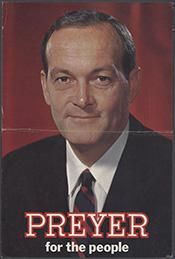
United States · United States Congress · 23 June 1976
Provides, under the Occupational Safety and Health Act of 1970, that whenever an employer's failure to comply with any provision of that Act or any State requirement relating to industrial safety causes or contributes to an accident resulting in bodily injury, no provision of any workers' compensation law or similar statute shall be construed to bar an action at law for contribution, indemnification, or other relief against the employer by a person alleged liable for such injury.
United States · United States Congress · 23 June 1976
Expresses the sense of the House of Representatives that the Federal Communications Commission be encouraged to recognize and exercise its full legal authority over the communications space on utility poles in those States where the rates for pole attachments are not already so regulated. Directs the Commission in exercising its jurisdiction to insure that reasonable rates reflecting actual costs are charged for pole attachment services.
United States · United States Congress · 18 June 1976
Authorizes the Administrator of General Services, under the Federal Property and Administrative Services Act of 1949, to donate, without cost, any surplus personal property under the control of any executive agency to the State agency in each State designated as the body responsible for the distribution of such property. States that such property may be donated for distribution to public agencies for promoting public health or safety, education, parks and recreation, conservation, and other public services. Includes within the definition of "State" Indian tribes or groups. Permits the donation of such property to an institution or organization which is a public agency or is nonprofit and tax exempt if such property is to be used in connection with federally sponsored project grants. Sets forth regulations governing such donation and distribution. Prohibits discrimination against anyone on the basis of sex in connection with the distribution of property under this Act or by recipients of property under this Act.
United States · United States Congress · 14 June 1976
Expresses the sense of the House of Representatives that the United States Postal Service shall not close or suspend the operation of any post offices, unless there is a clear and compelling need to do so. Encourages the service to continue cost-cutting programs which do not affect levels of service.
United States · United States Congress · 11 June 1976
Authorizes the Architect of the Capitol to perform such work as may be necessary to prevent further deterioration of historically significant sections of the Congressional Cemetery. Directs the Secretary of the Interior to conduct a study of the purpose of formulating proposals for the renovation and maintenance of such areas by the United States.
United States · United States Congress · 10 June 1976
Clinical Laboratory Improvement Act - Amends the Public Health Service Act to require the licensing of clinical laboratories. Sets forth the standards that must be met to receive and maintain such a license. Directs the Secretary of Health, Education, and Welfare to publish, administer, and enforce national standards for clinical laboratories to assure consistent performance by the laboratories of accurate tests and other procedures. Authorizes the Secretary to delegate regulation and licensing authority to a State if the Secretary determines that such State: (1) has adopted standards for such laboratories and a system of licensure which are no less stringent than the national standards and licensing system; (2) has adopted and is implementing adequate enforcement procedures; (3) will keep records and make reports as the Secretary may require; (4) permits exemptions from the requirements which are no less stringent than exemptions from national standards; and (5) has adopted and can implement adequate procedures for the control of health hazards which may result from an activity of a clinical laboratory. Enumerates conditions under which the Secretary may suspend or revoke the license of a clinical laboratory. Authorizes anyone aggrieved by suspension or revocation of a clinical laboratory license to file a petition for review with the appropriate United States court of appeals. Makes all consequent judgments of such courts subject to review by the Supreme Court. Stipulates that any unlicensed person, requred to be licensed under this Act who solicits or accepts directly or indirectly any specimen for laboratory examination shall be fined not more than $10,000, imprisoned for not more than one year, or both. Stipulates that any owner, operator, or employee of a clinical laboratory who willfully engages in any false, fictitious, or fraudulent billing practice for the purpose of obtaining payment for laboratory services provided under specified Federal health assistance programs shall be fined not more than $10,000, imprisoned for not more than three years, or both. Stipulates that no unlicensed clinical laboratory required to be licensed by this Act may receive a grant, contract, or other form of financial assistance under the Public Health Service Act, or charge or collect for laboratory services for any entity which receives a grant, contract, or financial assistance under such Act. Prohibits discrimination by an employer against an employee who has commenced, participated in, or testified in any proceeding authorized by this Act. Allows employees so discriminated against to file a complaint with the Secretary. Directs the Secretary to investigate such complaints and provide relief or deny the complaint within 90 days of its receipt. Permits persons aggrieved by the Secretary's final action on such complaints to obtain review in the appropriate United States court of appeals. Authorizes agents of the Secretary to enter at reasonable times any clincial laboratory for inspection purposes. Authorizes the Secretary to make grants to States with primary enforcement responsibility to assist in meeting the cost of administering programs for the regulation of clinical laboratories, such grants not to exceed 75% of the State's cost. Authorizes the appropriation of specified amounts in fiscal years 1979 through 1981 for the purpose of making such grants. Establishes in the Department of Health, Education, and Welfare an advisory council on clinical laboratories to advise the Secretary with respect to: (1) regulations promulgated under this Act; and (2) coordination between the Federal and State laboratory regulatory programs to avoid duplicate enforcement. Directs the Secretary to establish within the Department an administrative unit to be responsible for the coordination of the regulatory functions authorized by this Act and for specified laboratory regulatory functions under the Social Security Act. Requires the Secretary to make an annual report to Congress on the accuracy of tests and procedures performed by clincial laboratores. Amends the Social Security Act to set forth procedures for determining costs and charges for clinical laboratory services and prohibits reimbursement to the extent that any cost or charge is found to be unreasonable. Directs the Secretary to conduct a study of: (1) existing voluntary certification standards and State licensure laws for clinical laboratory supervisors, technologists, and technicians; and (2) qualifications of entities that certify such personnel as qualified to perform clinical laboratory services. Requires the Secretary to submit to Congress a summary of information received through license exemption applications during the three-year period after national standards for clinical laboratories are promulagated. Directs the Secretary, on the basis of such information, to make recommendations on possible revision of clinical laboratory licensing exemptions.
United States · United States Congress · 1 June 1976
Estate and Gift Tax Reform Act - Amends the Internal Revenue Code to provide a single unified rate schedule for estate and gift taxes. Establishes progressive rates based on cumulative lifetime transfers and transfers at death. Determines the amount of estate tax by applying the unified rates to such cumulative transfers and then subtracting the taxes payable on lifetime transfers. Provides that for purposes of determining the amount of the gross estate, the amount of gift tax paid with respect to transfers made within three years of death shall be included in the decedent's gross estate. Provides, as a transitional rule, that the lifetime transfers taken into account in determining cumulative transfers at death, for purposes of imposing the estate tax under the unified schedule, shall only include taxable gifts made after December 31, 1976. Repeals the estate and gift tax exemptions. Substitutes for such exemptions a credit against estate and gift taxes in the amount of $29,800. Provides for an additional credit against the estate tax for specified farms and closely held businesses passing to a qualified heir. Defines "qualified heir" as a member of the decedent's family, including his spouse, lineal decendents, parents, and aunts and uncles of the decedent and their decendants. Makes such credit available where the value of a farm or closely held business included in a decedent's gross estate equals or exceeds 65 percent of the value of the gross estate. Stipulates that such credit shall be available only if the farm or closely held business has been owned by the decedent or his family for at least five out of the preceding eight years. Provides that the amount of such credit shall be $25,000 multiplied by a percentage representing the portion of the decedent's estate consisting of the farm or other closely held business. Phases out such credit after the value of the gross estate exceeds $1,000,000. Provides for the recapture of the estate tax benefit of such credit where there is a disposition of the business by the qualified heir to nonfamily members prior to the qualified heir's death or within 25 years of the death of the decedent. Provides for a lien on the qualified interest in a farm or closely held business with respect to which an election of such credit has been made. Increases the estate tax marital deduction to $250,000 or one-half of the decedent's gross estate, whichever is greater. Increases the gift tax marital deduction in the case of lifetime gifts to a spouse. Allows an unlimited marital deduction for the first $100,000 of lifetime gifts made to a spouse and, thereafter, a deduction for one-half of the aggregate lifetime gifts made to a spouse in excess of $200,000. Imposes a tax on the unrealized appreciation of property transferred by a decedent. Provides that the basis of such property shall be its fair market value on December 31, 1976. Allows an election to carry over the decedent's basis in any property instead of having the appreciation taxed. Exempts the first $50,000 of appreciation from taxation. Excludes the appreciation of assets valued at less than $10,000 and which are not held for use in a trade or business or for the production of income from such tax. Allows the deduction of the appreciation tax in computing the value of the taxable estate for estate tax purposes. Exempts from the appreciation tax any property transferred from the decedent if the income tax carries over to the recipient (income in respect of a decedent and survivor annuities). Provides that if an election to carry over the decedent's basis in lieu of paying the appreciation tax is made, the basis of the property is to be increased by the Federal and State estate taxes attributable to the net appreciation in value for the property. Allows the executor of an estate which includes real farm property to value the property as a farm, rather than its fair market value determined on the basis of its highest and best use. Imposes special qualifying conditions for such valuation, including: (1) the farm assets in the decedent's estate including both farm real property and personal property must be at least 50 percent of the decedent's gross estate (reduced by debts and expenses); (2) at least 25 percent of the adjusted value of the gross estate must be qualified farm real property; (3) the real property must pass to a qualified heir; (4) the real property must have been used or held for use as a farm for five of the last eight years prior to the decedent's death; and (5) there must have been material participation in the operation of the farm by the decedent or a member of his family in five years out of the eight years immediately preceding the decedent's death. Provides for recapture of any tax benefits obtained by use of the reduced valuation if, prior to the death of the qualified heir or within 25 years of the death of the decedent, the property is disposed of to nonfamily members or ceases to be used for farming purposes. Provides for a lien on all such real property with respect to which the farm valuation is elected. Provides for a 15-year period for the payment of the estate tax attributable to the decedent's interest in a farm or closely held business, with a deferral of the tax for five years and installment payments over the next ten years. Requires, as a qualification for such deferral and installment treatment, the value of the closely held business or farm in the decedent's estate to be at least 65 percent of the gross estate. Allows discretionary extensions of up to ten years to pay the estate tax for reasonable cause (rather than for "undue hardship" as under present law). Provides for a lien for payment of the deferred taxes attributable to a closely held business or farm. Imposes a tax, in the case of generation skipping transfers under a trust, upon a distribution of the trust assets to a generation skipping heir, or upon the termination of an intervening interest in the trust. Determines the tax by adding the value of the distributed property, or terminated interest, to the heir's taxable transfers and applying the heir's marginal transfer tax rate to the value of such interest. Extends from nine months to 12 months the period after the decedent's death in which an estate tax return must be filed. Requires gift tax returns to be filed for any quarter only when the total cumulative gifts made during the taxable year exceed $25,000, or during the last quarter if the total does not reach $25,000. Provides that if the Internal Revenue Service proposes a deficiency in the estate tax because of a higher valuation of the assets included in the decedent's gross estate, it must disclose to the executor during the settlement process the basis on which the higher valuation was determined.
United States · United States Congress · 1 June 1976
Recommends that the Board on Geographic Names approve a proposal to name two mountains in Alaska after the later Congressmen Hale Boggs and Nick Begich.
United States · United States Congress · 27 May 1976
Natural Gas Act Amendments - Amends the Natural Gas Act to terminate Federal Power Commission authority to directly regulate sales prices of new natural gas except for new natural gas produced from offshore Federal lands. Stipulates that prices for onshore sales of new natural gas shall not exceed the ceiling price for sales of new natural gas produced from offshore Federal lands. Stipulates that prices paid for natural gas in transactions between a natural gas company and its affiliates shall not exceed prices paid in comparable sales by persons not affiliated with any natural gas company. Directs the Federal Power Commission to conduct studies and make reports regarding the nature and availability of natural gas reserves. Requires that the Commission keep current information available relating to the estimated natural gas reserves for individual fields. Establishes procedures for the establishment of ceiling prices for new natural gas produced from offshore Federal lands. Authorizes the Commission to grant exemptions to price ceilings within high-cost production areas. Establishes procedures for adjustments to price ceilings established pursuant to this Act. Directs the Commission to prohibit the curtailment of adequate supplies of natural gas for essential agricultural purposes. Stipulates that the provisions of the Natural Gas Act shall extend to synthetic natural gas. Directs the Commission to prohibit the use of natural gas as boiler fuel where adequate alternatives are available. Authorizes exemptions from such prohibition where necessary to comply with pollution control or environmental protection and safety standards. Establishes procedures for the establishment and periodic revision of national ceiling prices for the sale of old natural gas in interstate commerce.
United States · United States Congress · 26 May 1976
National Educational Opportunities Act - Title I: Definition and Guarantee of a Unitary School System and Equal Educational Opportunity - Provides that each State and its local educational agencies shall establish and maintain desegregated, unitary school systems which offer equal educational opportunities to all students, regardless of race, color, or national origin. States that a desegregrated unitary school system shall be presumed to exist unless a State or local educational agency denies equal educational opportunities to an individual on account of race, color, or national origin by specified acts which have the natural, probable, foreseeable, or actual effect of segregating students on the basis of race, color or national origin. Prohibits local educational agencies from denying equal educational opportunity to an individual on account of race, color, or national origin by maintenance of practices or provision of resources in schools in which minority students are concentrated that are less favorable for educational success and advancement than in schools attended primarily by students of any other race, color, or national origin. Gives examples of such denials of equal educational opportunity. Authorizes the Attorney General to bring a civil action in Federal court for equitable relief in any case where he has reasonable cause to believe that the provisions of this Act are being violated. Title II: State Equal Educational Opportunities Plans - Requires each State to prepare and submit to the Secretary of Health, Education, and Welfare for his approval a plan to carry out the purpose of this Act. Requires that such plan shall provide for the establishment of State and local advisory bodies to advise State and local educational agencies on development and participation in such plans. Requires such plans to provide a viable mechanism for States and local educational systems to implement a policy of equal educational opportunities that delineates the fundamental prerequisites for a desegregated, unitary school system. Provides that such State plans shall include specific means for implementing some or all of the following components: (1) a majority transfer plan on both an intradistrict and interdistrict basis; (2) a school district reorganization plan; and (3) an approved, concentrated compensatory education program for basic instructional programs, supportive services, and vocational guidance and for programs having potential for improving the achievement performance of educationally deprived students. Authorizes to be appropriated for carrying out this title not in excess of $200,000,000 for fiscal year 1977, $500,000,000 for fiscal year 1978, and $500,000,000 for each fiscal year for the next three fiscal years. Provides a formula for allotment of such funds to the States and for allocation among various programs and agencies. States that whenever the Secretary, after reasonable notice and opportunity for a hearing: (1) disapproves such a plan; or (2) finds that no plan has been submitted by a State, that a State plan approved under this Act has been so changed that it no longer complies with the requirements of this Act, that plan administration fails to comply substantially with any such provisions, or that a grantee is in violation of title II of this Act, the Secretary shall notify the grantee that further payments will not be made to the grantee under this title or any other educational assistance program until he is satisfied that there will no longer be any failure to comply. Provides that, until he is so satisfied, the Secretary shall make no further payments under such titles. Provides for review of the Secretary's action in such cases by the United States Court of Appeals for the circuit in which the claimant State is located. Title III: General Provisions and Definitions - Defines the terms used in this Act.
United States · United States Congress · 20 May 1976
Authorizes the American Legion to place in the District of Columbia on land of the national park system the bell which is known as the American Legion's Freedom Bell. Provides that all costs which are necessary for the placement of the Freedom Bell shall be borne by the American Legion. Provides that the Bell shall be maintained by the Secretary of the Interior.
United States · United States Congress · 13 May 1976
Joint Committee on Intelligence Operations Act - Establishes a Congressional Joint Committee on Intelligence Operations to conduct continuing oversight of, and to exercise exclusive legislative jurisdiction over, the foreign intelligence activities of: (1) the Central Intelligence Agency; (2) the Defense Intelligence Agency; (3) the National Security Agency; (4) the Bureau of Intelligence and Research; (5) Army, Navy, and Air Force Intelligence; and (6) other agencies to the extent that such agencies engage in foreign intelligence activities. Requires that the Director of Central Intelligence must keep the joint committee fully informed with respect to all foreign intelligence activities of the United States. Sets forth the administrative powers of the joint committee. Charges the joint committee with the establishment of guidelines for the classification of information originating with the joint committee. Prescribes penalties for the public release of classified materials by any congressional officer, employee of the joint committee, or former congressional officer or employee of the joint committee. Requires that no nonintelligence gathering operation, under the Foreign Assistance Act of 1961, may be conducted until 30 days after the President reports such operation to the joint committee, unless it is essential to national security that such operation begin immediately. Ceases all such operations which at any time are disapproved by the joint committee.
United States · United States Congress · 13 May 1976
Consumer Communications Reform Act - States that Congress finds that the revenues from integrated interstate and foreign common carrier telecommunications services helped maintain a level of charges for telephone exchange service which is lower than otherwise would be required. Expresses the sense of Congress that the authorization of lines, facilities, or services of specialized carriers which duplicate the lines, facilities, or services of other telecommunications common carriers is contrary to the public interest. Reaffirms the intent of Congress that the complete authority to regulate terminal and station equipment used for telephone exchange service shall rest with the States even though such terminal and station equipment also may be used in connection with interstate services. Amends the Communications Act of 1934 to provide that no compensatory charges for or in connection with such communication service may be found to be unjust or unreasonable on the ground that it is too low. Prohibits the Federal Communications Commission from holding the charge of a carrier up to a particular level to protect the traffic or revenues from a communication service offered or provided by another carrier if such charge proposed by the carrier is compensatory. Provides that the Commission shall not grant or authorize any construction permit, station, license, or certificate for the construction, acquisition, or operation of any communication or transmission line or facility, or extension thereof, or any modification or renewal thereof, unless the Commission shall find, after full opportunity for evidentiary hearing on the record, that such permit, license, or certificate, will not result in increased charges or unnecessary duplication of communication lines.
United States · United States Congress · 12 May 1976
Amends Title XIX (Medicaid) of the Social Security Act to include podiatrist's services as physician services for the purposes of the medical assistance program of that Title.
United States · United States Congress · 11 May 1976
Horse Protection Act Amendments - Amends the Horse Protection Act of 1970 to redefine "sore" when used to describe a horse. Disqualifies a sore horse from any horse show or exhibition. Prohibits the sale of a sore horse at a public sale or auction. Directs the Secretary of Agriculture to prescribe regulations requiring: (1) appointment of persons to inspect horses for any horse show, exhibition, sale, or auction; and (2) recordkeeping by the management of any horse show, exhibition, sale, or auction. Authorizes the Secretary to make certain inspections for enforcement of this Act. Prohibits: (1) the transportation of a sore horse for show or sale; (2) the showing or selling of such a horse by its owner; (3) the failure to disqualify such a horse from a show or sale; (4) the failure to retain inspection personnel; (5) the failure to keep required records; and (6) interference with specified enforcement measures taken by the Secretary. Imposes a fine of not more than $3,000 or imprisonment for not more than one year or both for knowing violation of this Act. Increases the penalty to a fine of not more than $5,000 or imprisonment for not more than two years or both for subsequent convictions. Imposes a fine of not more than $5,000 or imprisonment for not more than three years or both for: (1) falsifying records; or (2) interference with official duties, under this Act. Imposes a fine of $10,000 or imprisonment for not more than ten years or both for use of a deadly weapon in such interference. Declares any person who violates such prohibitions liable for a civil penalty of not more than $2,000 for each violation. Sets forth procedures with respect to enforcement and adjudication under this Act. Requires annual, rather than biennial, reports from the Secretary to the Congress with respect to this Act. Authorizes the appropriation of up to $500,000 for fiscal years beginning after September 30, 1976, to carry out this Act.
United States · United States Congress · 10 May 1976
Consumer Communications Reform Act - States that Congress finds that the revenues from integrated interstate and foreign common carrier telecommunications services helped maintain a level of charges for telephone exchange service which is lower than otherwise would be required. Expresses the sense of Congress that the authorization of lines, facilities, or services of specialized carriers which duplicate the lines, facilities, or services of other telecommunications common carriers is contrary to the public interest. Reaffirms the intent of Congress that the complete authority to regulate terminal and station equipment used for telephone exchange service shall rest with the States even though such terminal and station equipment also may be used in connection with interstate services. Amends the Communications Act of 1934 to provide that no compensatory charges for or in connection with such communication service may be found to be unjust or unreasonable on the ground that it is too low. Prohibits the Federal Communications Commission from holding the charge of a carrier up to a particular level to protect the traffic or revenues from a communication service offered or provided by another carrier if such charge proposed by the carrier is compensatory. Provides that the Commission shall not grant or authorize any construction permit, station, license, or certificate for the construction, acquisition, or operation of any communication or transmission line or facility, or extension thereof, or any modification or renewal thereof, unless the Commission shall find, after full opportunity for evidentiary hearing on the record, that such permit, license, or certificate, will not result in increased charges or unnecessary duplication of communication lines.
United States · United States Congress · 7 May 1976
Authorizes a taxpayer, under the Internal Revenue Code, to elect to treat qualified architectural and transportational barrier removal expenses which are paid or incurred during the taxable year as expenses which are not chargeable to capital account. Deems such expenses so treated as allowable tax deductible expenditures.
United States · United States Congress · 6 May 1976
National Educational Opportunities Act - Title I: Definition and Guarantee of a Unitary School System and Equal Educational Opportunity - Provides that each State and its local educational agencies shall establish and maintain desegregated, unitary school systems which offer equal educational opportunities to all students, regardless of race, color, or national origin. States that a desegregrated unitary school system shall be presumed to exist unless a State or local educational agency denies equal educational opportunities to an individual on account of race, color, or national origin by specified acts which have the natural, probable, foreseeable, or actual effect of segregating students on the basis of race, color or national origin. Prohibits local educational agencies from denying equal educational opportunity to an individual on account of race, color, or national origin by maintenance of practices or provision of resources in schools in which minority students are concentrated that are less favorable for educational success and advancement than in schools attended primarily by students of any other race, color, or national origin. Gives examples of such denials of equal educational opportunity. Authorizes the Attorney General to bring a civil action in Federal court for equitable relief in any case where he has reasonable cause to believe that the provisions of this Act are being violated. Title II: State Equal Educational Opportunities Plans - Requires each State to prepare and submit to the Secretary of Health, Education, and Welfare for his approval a plan to carry out the purpose of this Act. Requires that such plan shall provide for the establishment of State and local advisory bodies to advise State and local educational agencies on development and participation in such plans. Requires such plans to provide a viable mechanism for States and local educational systems to implement a policy of equal educational opportunities that delineates the fundamental prerequisites for a desegregated, unitary school system. Provides that such State plans shall include specific means for implementing some or all of the following components: (1) a majority transfer plan on both an intradistrict and interdistrict basis; (2) a school district reorganization plan; and (3) an approved, concentrated compensatory education program for basic instructional programs, supportive services, and vocational guidance and for programs having potential for improving the achievement performance of educationally deprived students. Authorizes to be appropriated for carrying out this title not in excess of $200,000,000 for fiscal year 1977, $500,000,000 for fiscal year 1978, and $500,000,000 for each fiscal year for the next three fiscal years. Provides a formula for allotment of such funds to the States and for allocation among various programs and agencies. States that whenever the Secretary, after reasonable notice and opportunity for a hearing: (1) disapproves such a plan; or (2) finds that no plan has been submitted by a State, that a State plan approved under this Act has been so changed that it no longer complies with the requirements of this Act, that plan administration fails to comply substantially with any such provisions, or that a grantee is in violation of title II of this Act, the Secretary shall notify the grantee that further payments will not be made to the grantee under this title or any other educational assistance program until he is satisfied that there will no longer be any failure to comply. Provides that, until he is so satisfied, the Secretary shall make no further payments under such titles. Provides for review of the Secretary's action in such cases by the United States Court of Appeals for the circuit in which the claimant State is located. Title III: General Provisions and Definitions - Defines the terms used in this Act.
United States · United States Congress · 30 April 1976
Olympic Winter Games Authorization Act - Directs the Secretary of Commerce to provide grants to the Lake Placid 1980 Olympic Games, Incorporated, at such times, and under such conditions as he considers necessary and appropriate, for assisting in the planning, design, and construction of the necessary winter sports and supporting facilities in connection with the XIII international Olympic winter games. Requires the Secretary to take necessary action to assure that the facilities constructed with Federal assistance will be designed to provide maximum continued public use and benefit following the completion of the 1980 Olympic winter games. Requires the Secretary to submit interim reports to the Congress on the progress of the design and construction of facilities pursuant to this Act, together with any recommendations for further Federal Government involvement to assure a successful staging of such games. Specifies that a final report shall be submitted following completion of the 1980 games. Authorizes appropriations to the Secretary of $49,040,000 for grants and $250,000 for the administration of this Act.
United States · United States Congress · 28 April 1976
Instructs the Secretary of the Interior to designate a specified segment of the New River, North Carolina, as a component of the Wild and Scenic Rivers System upon application of the Governor of North Carolina. Prohibits the Federal Power Commission from issuing any license for any undertaking which would adversely affect such segment.
United States · United States Congress · 31 March 1976
Provides that small farm extension and research and development programs under the Rural Development Act of 1972 shall consist of: (1) a comprehensive study and survey with procedures for updating such survey to identify small farmers and determine their resources, abilities, education, experience and willingness to upgrade their farm operations through improved agricultural production techniques, farm machinery, products and cooperative agricultural marketing practices; (2) the development and implementation of a program for improving the operations of such farmers; (3) procedures to evaluate the social and economic consequences of such program; (4) research and development for updating small farm operations; and (5) an annual report by the Secretary of Agriculture to specified Congressional committees regarding the extent and effectiveness of the objectives of such program. Defines "small farmer" as anyone who depends on farming as their primary source of income, and whose gross annual sales from farming operations is less than $20,000 and whose nonfarm income is less than $5,000.
United States · United States Congress · 31 March 1976
Authorizes and requests the President to issue annually a proclamation designating the first week of May of each year as "Clean Air Week," and inviting the Governors and Mayors of State and local governments to issue similar proclamations. Requests the President to consider including in such a proclamation an invitation calling upon the communications media and all organizations and individuals concerned with programs to improve the quality of the atmosphere to participate in "Clean Air Week."
United States · United States Congress · 18 March 1976
Emergency Medical Services Amendments - Extends the authorization for appropriations through fiscal year 1979 for emergency medical service systems under the Public Health Service Act. Revises provisions related to grants and contracts for the establishment, initial operation, expansion, and improvement of such systems and grants and contracts for research in emergency medical techniques. Authorizes the Secretary of Health, Education, and Welfare to conduct and support programs designed to aid in the treatment and rehabilitation of individuals injured by burns. Directs the Secretary to conduct studies of: (1) the categories of patients which should be included in a uniform reporting system to evaluate the effectiveness of emergency medical service systems in reducing death and disability; and (2) the effectiveness of Federal assistance for communication systems of public safety agencies.
United States · United States Congress · 18 March 1976
Amends the Public Health Service Act to authorize the appropriation of specified sums in fiscal years 1976 through 1979 for the purpose of continuing Federal assistance programs for health services research and statistics and Federal programs for assistance to medical libraries. Directs the Secretary of Health, Education, and Welfare to use and permit use of Department resources, provide technical assistance and advice, make grants, and enter into contracts for the provision of health services research and health statistics training for the purpose of aiding federally funded projects for health research experiments.
United States · United States Congress · 18 March 1976
Amends the Comprehensive Alcohol Abuse and Alcoholism Prevention, Treatment, and Rehabilitation Act of 1970 to authorize the appropriation of specified amounts in fiscal years 1976 through 1979 to carry out the purposes of such Act. Authorizes the Secretary of Health, Education, and Welfare to designate National Alcohol Research Centers for the purpose of interdisciplinary research relating to alcoholism and other alcohol problems. Directs the Secretary to make annual grants to such centers, not in excess of $1,000,000. Requires State alcohol abuse programs and the Secretary to give special consideration to alcohol abuse treatment and prevention for women and juveniles. Entitles alcohol abusers and alcoholics to be treated at outpatient facilities receiving Federal funds for treatment of alcoholism. Requires State alcohol abuse programs to include assurance that there will be some means of evaluating the effectiveness of treatment and rehabilitation programs funded under the Act. Requires that the National Advisory Council on Alcohol Abuse and Alcoholism approve applications for grants under such Act. Amends the Drug Abuse Office and Treatment Act of 1972 to require State drug abuse programs and the Secretary to give special consideration to drug abuse treatment and prevention for women and juveniles.
United States · United States Congress · 18 March 1976
National Health Promotion and Disease Prevention Act - Title I: Health Information and Health Promotion - National Health Information and Health Promotion Act - Amends the Public Health Service Act to add title XVII (Health Information and Health Promotion). Directs the Secretary of Health, Education, and Welfare to formulate national goals with respect to health information and health promotion, preventive health services, and education in the appropriate use of health care. Directs the Secretary to undertake and support activities necessary to achieve such goals. Authorizes the appropriation of specified sums for fiscal years 1977 through 1979 to carry out such purposes. Directs the Secretary to monitor proposed Federal legislation and Federal programs, making recommendations on any changes necessary in the interest of public health. Directs the Secretary to conduct research programs in health information and health promotion, preventive health services, and education in the appropriate use of health care, and to determine the best methods of disseminating information about such area. Directs the Secretary to study environmental, occupational, social, and behavioral factors which affect health. Directs the Secretary to formulate methods of evaluating the costs and effectiveness of activities funded under this title. Directs the Secretary to make a continuing survey of needs, interest, attitudes, knowledge, and behavior of the American public regarding health and health care. Directs the Secretary to conduct and support, by grant or contract, new and innovative programs in health information and health promotion, preventive health services, and education in the appropriate use of health care. Authorizes the Secretary to make grants to States and other public and nonprofit private entities for the purposes of demonstration and evaluation programs which provide information respecting the costs and quality of health care or information respecting health insurance policies and prepaid health plans. Directs the Secretary to conduct and support, by grant or contract, such activities as are necessary to make health information and health promotion information available to the consumers of medical care, providers of such care, and schools. Requires the Secretary to submit an annual report to Congress on the status of health concerns reflected by this title, each such report to include a description and evaluation of activities carried out under this title and relevant legislative recommendations. Directs the Secretary to conduct a study of health education services and preventive health services to determine the coverage of such services under public and private health insurance programs. Establishes a committee to provide for the communication and exchange of information necessary to effectively coordinate Federal programs and health activities which relate to health information and health promotion, preventive health services, and education in the appropriate use of health care. Directs the Secretary to establish within the Department of Health, Education, and Welfare an Office of Health Information and Health Promotion to establish a national information clearinghouse to facilitate the exchange of information on health concerns under this title. Authorizes the establishment of a nonprofit corporation to be known as the Center for Health Promotion, such Center to be responsible for advancing health programs under this title. Directs the Center to serve as a forum for the involvement of entities involved in health care and education and to assist in accelerating the incorporation of proven methods of achieving the purposes of this title by establishing a system of technical assistance, training, and consultation. Requires the Center to report annually to Congress on its operation, activities, and financial condition. Authorizes the appropriation of specified sums for the expenses of the Center in fiscal years 1977 through 1979. Title II: Disease Prevention and Control - Disease Prevention and Control Amendments - Authorizes the Secretary to make grants to States and public and nonprofit private entities to assist them in meeting the costs of disease prevention and control programs. Directs the Secretary to give special consideration to programs to increse the immunization rates of any population identified as not having received the generally recognized disease immunizations. Authorizes the appropriation of specified amounts to carry out the purposes of this title in fiscal years 1976 through 1978. Requires the Secretary to submit to the President for submission to Congress an annual report on the effectiveness of all Federal, public, and private activities in preventing and controlling specified diseases. Directs the Secretary to develop a plan under which resources of the Public Health Service and other agencies under the Secretary's jurisdiction could be effectively used to control epidemics of specified diseases and other health emergencies. Permits the Secretary to extend temporary assistance to States or localities in meeting health emergencies. Extends programs to combat venereal disease through fiscal year 1978 and authorize specified sums to carry out such programs. Amends the Lead-Based Paint Poisoning Prevention Act to require federally funded follow-up programs to include measures to eliminate lead-based paint hazards from surfaces in and around residential dwelling units. Directs the Consumer Product Safety Commission to take such steps as are necessary to prohibit the application of lead-based paint to any toy or furniture article. Directs the Commission to determine whether or not a level of lead in paint greater than six one-hundredths of one percent but not in excess of five-tenths of one percent is safe, the definition of "lead-based paint" under such Act to be revised in accordance with the Commission's findings. Authorizes the appropriation of specified sums for fiscal years 1976 through 1978 to carry out the purposes of such Act. Title III: Miscellaneous Amendment - Amends the Public Health Service Act to redefine "State" as, in addition to the several States, the District of Columbia, Guam, the Commonwealth of Puerto Rico, the Virgin Islands, American Samoa, and the Trust Territory of the Pacific Islands.
United States · United States Congress · 18 March 1976
Title I: Amends the Land and Water Conservation Fund Act of 1965 to increase the amount of appropriations authorized under such Act to $300,000,000 for fiscal year 1977, $450,000,000 for fiscal year 1978, $625,000,000 for fiscal year 1979, and $800,000,000 for each fiscal year thereafter through fiscal year 1989. Revises procedures for the apportionment of land and water conservation fund moneys to States by the Secretary of the Interior. Imposes public participation requirements with respect to the preparation of comprehensive statewide outdoor recreation plans. Authorizes Federal financial assistance for the planning and development of sheltered facilities for swimming pools and ice skating rinks, provided specified conditions are met. Title II: Amends the National Historic Preservation Act of 1966 to establish a historic preservation fund in the United States Treasury. Stipulates that $24,400,000 for fiscal year 1977, $75,000,000 annually for fiscal years 1978 and 1979 and $100,000,000 annually for each fiscal year thereafter until fiscal year 1989 be covered into the fund from revenues due and payable to the United States under the Outer Continental Shelf Lands Act and other Federal Mining laws. Stipulates that such moneys shall remain available until appropriated to carry out the purposes of the National Historic Preservation Act of 1966. Authorizes the appropriation of $175,000 per year for fiscal years 1977,1978, and 1979 for the International Center for the Preservation and Restoration of Cultural Property.
United States · United States Congress · 18 March 1976
Directs the President to express the request of the United States Government that the Government of the Union of Soviet Socialist Republics provide Valentyn Moroz with the opportunity to accept the invitation of Harvard University to join the Harvard Ukrainian Research Institute for the 1976-77 academic year.
United States · United States Congress · 16 March 1976
National Educational Opportunities Act - Title I: Definition and Guarantee of a Unitary School System and Equal Educational Opportunity - Provides that each State and its local educational agencies shall establish and maintain desegregated, unitary school systems which offer equal educational opportunities to all students, regardless of race, color, or national origin. States that a desegregrated unitary school system shall be presumed to exist unless a State or local educational agency denies equal educational opportunities to an individual on account of race, color, or national origin by specified acts which have the natural, probable, foreseeable, or actual effect of segregating students on the basis of race, color or national origin. Prohibits local educational agencies from denying equal educational opportunity to an individual on account of race, color, or national origin by maintenance of practices or provision of resources in schools in which minority students are concentrated that are less favorable for educational success and advancement than in schools attended primarily by students of any other race, color, or national origin. Gives examples of such denials of equal educational opportunity. Authorizes the Attorney General to bring a civil action in Federal court for equitable relief in any case where he has reasonable cause to believe that the provisions of this Act are being violated. Title II: State Equal Educational Opportunities Plans - Requires each State to prepare and submit to the Secretary of Health, Education, and Welfare for his approval a plan to carry out the purpose of this Act. Requires that such plan shall provide for the establishment of State and local advisory bodies to advise State and local educational agencies on development and participation in such plans. Requires such plans to provide a viable mechanism for States and local educational systems to implement a policy of equal educational opportunities that delineates the fundamental prerequisites for a desegregated, unitary school system. Provides that such State plans shall include specific means for implementing some or all of the following components: (1) a majority transfer plan on both an intradistrict and interdistrict basis; (2) a school district reorganization plan; and (3) an approved, concentrated compensatory education program for basic instructional programs, supportive services, and vocational guidance and for programs having potential for improving the achievement performance of educationally deprived students. Authorizes to be appropriated for carrying out this title not in excess of $200,000,000 for fiscal year 1977, $500,000,000 for fiscal year 1978, and $500,000,000 for each fiscal year for the next three fiscal years. Provides a formula for allotment of such funds to the States and for allocation among various programs and agencies. States that whenever the Secretary, after reasonable notice and opportunity for a hearing: (1) disapproves such a plan; or (2) finds that no plan has been submitted by a State, that a State plan approved under this Act has been so changed that it no longer complies with the requirements of this Act, that plan administration fails to comply substantially with any such provisions, or that a grantee is in violation of title II of this Act, the Secretary shall notify the grantee that further payments will not be made to the grantee under this title or any other educational assistance program until he is satisfied that there will no longer be any failure to comply. Provides that, until he is so satisfied, the Secretary shall make no further payments under such titles. Provides for review of the Secretary's action in such cases by the United States Court of Appeals for the circuit in which the claimant State is located. Title III: General Provisions and Definitions - Defines the terms used in this Act.
United States · United States Congress · 15 March 1976
Amends the Housing Act of 1949 to expand the definitions of "rural" and "rural areas" to include places not part of or associated with an urban area which have a population of between 10,000 and 20,000 people and which have a serious lack of mortgage credit for lower- and moderate-income families.
United States · United States Congress · 9 March 1976
Title I: Drug Safety Amendments - Requires, under the Federal Food, Drug, and Cosmetic Act, the insertion on packages of any drug which may be sold only upon prescription, the name and place of business of the manufacturer of the final dosage form of the drug and, if different, the name and place of business of the packer or distributor and, in the case of any other drug or device, the name and place of business of the manufacturer, packer, or distributor. Requires reports on, and recordkeeping pertaining to, clinical and preclinical investigation of drugs or substances intended for use as a drug. Provides that if the Secretary of Health, Education, and Welfare determines that any information obtained or received by him reasonably supports a conclusion that such a drug introduced for commercial distribution may present a significant hazard to human health, or may cause cancer in animals, he shall mail or cause to be mailed to all practitioners licensed by law to administer drugs, a summary of such information. Provides for the conditional approval of new drugs by the Secretary. Authorizes the Secretary to immediately suspend approval of a drug application upon the finding that a condition has not been met. Authorizes the Secretary, acting through the National Institutes of Health and in consultation with the Commissioner of the Food and Drug Administration, to support studies of the short-term or long-term use of any drug and of drugs with alternative forms of therapy and studies involving the comparison of drugs. Authorizes the appropriation of $10,000,000 for each fiscal year for such studies. Requires the Secretary to make an annual report to the Congress respecting the activities undertaken or supported under this title. Title II: Food and Drug Administration - Food and Administration Act - Establishes a Food and Drug Administration within the Department of Health, Education, and Welfare. Directs the President to appoint, with the advice and consent the Senate, a Commissioner of the Administration. Directs the Commissioner to: (1) attempt to eliminate products presenting unreasonable risk of disease, injury, or death; (2) establish a capability within the Commission to engage in risk-based analysis; (3) establish an interdisciplinary epidemiology capability and undertake investigations to facilitate regulation-making and to assist in risk-based analysis; (4) establish a scientific capability within the Administration to assist in hazard detection, test method development, and quality control requirements; and (5) utilize field operations to conduct product evaluation, facilitate detection of conditions associated with products subject to his jurisdiction which might lead to disease, injury, or death, to monitor compliance with required levels of safety performance, to report violations, and to assist in enforcement actions.
United States · United States Congress · 23 February 1976
National Diabetes Advisory Board Act - Directs the Secretary of Health, Education, and Welfare to establish a National Diabetes Advisory Board to insure the implementation of the long-range plan formulated by the National Commission on Diabetes to combat diabetes. Specifies seven Federal health officers as members of the Board, in addition to seven health professionals and five members of the general public to be appointed by the Secretary. Makes provision for staffing and compensation. Authorizes the Board to enter into contracts or other arrangements, or to take such other action as may be necessary to carry out its functions. Authorizes the Board to engage in and sponsor activities, collect data, and provide technical assistance as it deems necessary and advisable in the performance of its functions. Requires the Board to submit simultaneously to the President and Congress an Annual Diabetes Report describing Board activities in the prior year and progress made in diabetes research, treatment, and education with specific reference to the long-range plan to combat diabetes mellitus and suggesting recommended future expenditures and legislation. Authorizes the appropriation of $500,000 for fiscal year 1976 and such sums as are necessary for each of the four fiscal years thereafter. Authorizes the Secretary to make distinguished scientist awards to individual scientists who have shown continuous and outstanding productivity in diabetes research for the purpose of continuing such research. Limits the amount of each grant to no more than $35,000 per year. Authorizes the appropriation of specified amounts for the purpose of making such grants in fiscal years 1976-1980. Authorizes, under the Public Health Service Act, the appropriation of specified sums in fiscal years 1977-1981 for the purpose of making grants to centers for research and training in diabetes mellitus and related endocrine and metabolic disorders.
United States · United States Congress · 23 February 1976
Government in the Sunshine Act - Declares that it is the policy of Congress that the public is entitled to the fullest practicable information regarding the decision-making process of the Federal Government and that providing such information is the purpose of this Act. Requires that Federal agency proceedings be open to the public unless in the agency's opinion an open meeting would likely disclose information that would be in violation of an individual's rights, would hamper enforcement of the law, or would lead to instability of a financial institution. Requires transcripts or electronic recordings to be prepared of any agency meeting closed to the public. States that such transcripts or recordings with the detrimental information deleted must be made available to the public. Directs that open meetings be recorded in written minutes. Requires that all agency meetings be announced at least one week before such meeting; such announcement must state the time, place, subject matter of such meeting and whether it will be open to the public. Gives jurisdiction to enforce this Act to the United States district courts and authorizes any person to bring a suit to enforce this Act. Sets procedures for the review of agency action by the Court. Allows attorney's fees to be awarded to the party winning a suit brought under this Act. Requires all agencies to report to Congress annually regarding compliance with this Act. States that nothing in this Act authorizes an agency to withhold information it is otherwise required to provide to an individual, the public, or Congress. (Adds 5 U.S.C. 552b) Prohibits ex parte communication with any individual who is or is reasonably expected to be involved in a decision-making proceeding by anyone interested in such proceeding. (Amends 5 U.S.C. 551, 556, and 557) Sets forth conforming amendments. Makes this Act effective 180 days after its enactment.
United States · United States Congress · 29 January 1976
Authorizes and requests the President to issue a proclamation: (1) designating the week beginning April 4, 1976, as "National Rural Health Week"; (2) urging an intensification in efforts to disseminate health information; and (3) urging all persons concerned with the rural population to consider ways in which they can promote improved health services for rural America.
United States · United States Congress · 27 January 1976
Pollution Control Act - Permits taxpayers, under the Internal Revenue Code, to elect to deduct ratably over a period of three years any certified pollution control expenditure paid or incurred within the taxable year. States that such deduction shall be in lieu of any depreciation deduction otherwise allowable. Defines "certified pollution control expenditure" as meaning any amount paid or incurred by the taxpayer before January 1, 1980, for the construction, reconstruction, erection, or acquisition of a new identifiable treatment facility which is used in connection with a plant or other property in operation before January 1, 1974, to abate or control water or atmospheric pollution or contaminants.
United States · United States Congress · 18 December 1975
Employment Statistics Commission Act - Establishes the Employment Statistics Commission composed of seven members appointed by the President. Requires the Commission to review the present method of collecting and analyzing employment and unemployment information and statistics, to identify weaknesses in such method, and to formulate any necessary or appropriate new methods of collecting and analyzing such information and statistics. Requires the Commission to transmit a report to the President, with copies to the Speaker of the House of Representatives, the President pro tempore of the Senate, the Committee on Education and Labor of the House of Representatives, and the Committee on Labor and Public Welfare of the Senate, within one year after the final appointment is made by the President. Terminates the Commission three months after the transmission of such report. Authorizes to be appropriated such sums as may be necessary to carry out the provisions of this Act.
United States · United States Congress · 11 December 1975
Medical Device Amendments - Provides for the classification of medical devices intended for human use based upon their safety and effectiveness. Describes such classification as follows: (1) Class I includes devices not purported to be for a use which is of substantial importance in supporting, sustaining, or preventing impairment of human life or health and do not present a potential unreasonable risk of illness or injury, and for which general controls, as defined are sufficient; (2) Class II includes devices for which it is necessary to establish a performance standard to provide reasonable assurance of their safety and effectiveness; and (3) Class III includes devices for which there is insufficient information for the establishment of a performance standard to provide reasonable assurance of their safety and effectiveness, are purported to be for a use which is of substantial importance in supporting, sustaining, or preventing impairment of human life or health, or present a potential unreasonable risk of illness or injury. Gives the Secretary of Health, Education, and Welfare responsibility for classifying all such devices. Authorizes the Secretary to establish panels of experts for the purpose of securing recommendations with respect to such classifications. Provides that any such recommendation shall contain a summary of the data upon which the recommendation is based, and an identification of the risks to health presented by the device. Provides that, based on new information respecting a device, the Secretary may, upon his own initiative or upon petition of any interested person, by regulation: (1) change the classification of such device; and (2) revoke, because of the change, any regulation in effect with respect to such device. Authorizes the Secretary, by regulation, to establish a performance standard for a Class II device. Sets forth criteria to be followed in such standard which will assure that the device is safe and effective. Directs the Secretary to provide for periodic evaluation of performance standards established under this Act. Establishes procedures to be followed by the Secretary in developing and changing such standards. Provides that the Secretary shall publish in the Federal Register a notice inviting any person, including any Federal agency, to submit an existing standard or an offer to develop such a standard. Requires the Secretary to obtain from the offeror such information concerning the offeror as the Secretary determines is necessary to disclose potential conflicts of interests and the reliability of the offeror. States that if a standard or offer to create a standard is submitted to the Secretary which he does not accept, he shall publish in the Federal Register notice of that fact together with the reasons therefor. Authorizes the Secretary to accept offers to develop a proposed standard for a device. Allows the Secretary to contribute to the offeror's costs in developing a proposed standard. Provides for the development of performance standards by the Secretary when no other means are available. Requires premarket approval for Class III devices. Establishes procedures for such approval. Sets forth criteria upon which the approval or disapproval of such devices shall be based, including a lack of reasonable assurances by the applicant that such device is safe for use under the conditions prescribed in the proposed labeling. Allows the Secretary to withdraw his premarket approval of a device in specified circumstances. Sets forth procedures to be followed for the withdrawal of such approval. States that in the case of a class III device which is required to have an approval of an application submitted, such device shall be considered as having such an approval if a notice of completion of testing conducted in accordance with a product development protocol has been completed as required in the Act. Authorizes the Secretary to ban devices intended for human use if he finds that: (1) they present a substantial deception or a substantial risk of illness or human injury; and (2) such deception or risk could be eliminated by corrective labeling but the manufactuer does not do so. Sets forth procedures governing the banning of such devices. Provides that the United States Court of Appeals for the District of Columbia shall hear appeals by any person adversely affected by a decision, rule, or order, of the Secretary under this Act. Provides that if the Secretary determines that a device intended for human use presents an unreasonable risk of substantial harm to the public health, and that notification of such risk is necessary, he may issue such order as may be necessary to assure that adequate notification is provided by the persons and means best suited under the circumstances, to all persons who should receive such notification in order to eliminate such risk. Authorizes the Secretary to require a manufacturer of a medical device intended for human use which: (1) presents a substantial risk of harm to the public health; and (2) was not properly designed or manufactured, to repair, replace, or refund the purchase price of such device at no cost to the person using it. Requires every person who is a manufacturer, importer, or distributor of a medical device intended for human use to establish and maintain such records as the Secretary may by regulation direct. Authorizes the Secretary to require that a device be limited to sale or distribution by prescription of a licensed medical practioner. Authorizes the Secretary to establish mandatory manufacturing methods for medical devices. Directs the Secretary to prescribe procedures under which devices intended for human use may be granted an exemption from the requirements of this Act to permit the investigational use of such devices by experts qualified by scientific training and experience to investigate the safety and effectiveness of such devices. Requires the Secretary to promulgate regulations under which a detailed summary of information respecting the safety and effectiveness of a device shall be made available to the public. States that such summaries shall include information respecting adverse effects of the device on health. Makes conforming amendments to the Federal Food, Drug, and Cosmetic Act. Extends specified sections of such Act relating to labeling, inspection, and seizures to medical devices. Requires manufacturers of medical devices intended for human use to register with the Secretary of Health, Education, and Welfare and to provide specified information concerning such devices. Directs the Secretary to establish within the Department of Health, Education, and Welfare an identifiable office to provide technical and other nonfinancial assistance to small manufacturers of medical devices to assist them in complying with the requirements of the Food, Drug, and Cosmetic Act.
United States · United States Congress · 11 December 1975
Allows foreign countries and agencies thereof and foreign companies to purchase and store United States agricultural commodities or the products thereof in the United States. Provides that such agricultural commodities or products, if so purchased and stored as a reserve for a period of twelve months or longer upon approval by the Secretary of Agriculture, may be exported without regard to any export restraints or controls.
United States · United States Congress · 10 December 1975
Energy Extension Service Act - Establishes in the Energy Research and Development Administration the Energy Extension Service. Directs the Service to develop and implement a comprehensive program for the identification, development, and demonstration of energy conserving practices, techniques, materials, and equipment for: (1) agricultural, commercial, and small business operations, and (2) new and existing residential, commercial, or agricultural buildings or structures. States that such programs shall provide for technical assistance, instruction, and practical demonstrations in energy conservation opportunities. Authorizes the Service to establish energy extension service offices consisting of city offices, county agents, and technical staff assistants in order to accomplish the objectives of this Act. Provides for dissemination of advice and assistance by local offices by means of (1) specific studies and recommendations, (2) demonstration projects, (3) distribution of studies and instructional materials, (4) seminars, and (5) other outreach programs.
United States · United States Congress · 10 December 1975
Grants temporary authority to the Secretary of Agriculture to sell timber from United States Forest Service lands, consistent with the provisions of the National Environmental Policy Act and the Multiple-Use Sustained Yield Act.
United States · United States Congress · 2 December 1975
National Educational Opportunities Act - Title I: Definition and Guarantee of a Unitary School System and Equal Educational Opportunity - Provides that each State and its local educational agencies shall establish and maintain desegregated, unitary school systems which offer equal educational opportunities to all students, regardless of race, color, or national origin. States that a desegregrated unitary school system shall be presumed to exist unless a State or local educational agency denies equal educational opportunities to an individual on account of race, color, or national origin by specified acts which have the natural, probable, foreseeable, or actual effect of segregating students on the basis of race, color or national origin. Prohibits local educational agencies from denying equal educational opportunity to an individual on account of race, color, or national origin by maintenance of practices or provision of resources in schools in which minority students are concentrated that are less favorable for educational success and advancement than in schools attended primarily by students of any other race, color, or national origin. Gives examples of such denials of equal educational opportunity. Authorizes the Attorney General to bring a civil action in Federal court for equitable relief in any case where he has reasonable cause to believe that the provisions of this Act are being violated. Title II: State Equal Educational Opportunities Plans - Requires each State to prepare and submit to the Secretary of Health, Education, and Welfare for his approval a plan to carry out the purpose of this Act. Requires that such plan shall provide for the establishment of State and local advisory bodies to advise State and local educational agencies on development and participation in such plans. Requires such plans to provide a viable mechanism for States and local educational systems to implement a policy of equal educational opportunities that delineates the fundamental prerequisites for a desegregated, unitary school system. Provides that such State plans shall include specific means for implementing some or all of the following components: (1) a majority transfer plan on both an intradistrict and interdistrict basis; (2) an open communities educational resources compensation program which shall provide for payments to any school district in which students from minority families comprised not more than 10 percent of total school enrollment during the school year 1976-1977, or in which students from low-income families comprised not more than 10 percent of total enrollment in such district during such year; (3) a school district reorganization plan; and (4) an approved, concentrated compensatory education program for basic instructional programs, supportive services, and vocational guidance and for programs having potential for improving the achievement performance of educationally deprived students. Authorizes to be appropriated for carrying out this title not in excess of $200,000,000 for fiscal year 1977, $500,000,000 for fiscal year 1978, and $500,000,000 for each fiscal year for the next three fiscal years. Provides a formula for allotment of such funds to the States and for allocation among various programs and agencies. States that whenever the Secretary, after reasonable notice and opportunity for a hearing: (1) disapproves such a plan; or (2) finds that no plan has been submitted by a State, that a State plan approved under this Act has been so changed that it no longer complies with the requirements of this Act, that plan administration fails to comply substantially with any such provisions, or that a grantee is in violation of title II of this Act, the Secretary shall notify the grantee that further payments will not be made to the grantee under this title or any other educational enrichment of desegregation assistance program until he is satisfied that there will no longer be any failure to comply. Provides that, until he is so satisfied, the Secretary shall make no further payments under such titles. Provides for review of the Secretary's action in such cases by the United States Court of Appeals for the circuit in which the claimant State is located. Title III: General Provisions and Definitions - Defines the terms used in this Act.
United States · United States Congress · 20 November 1975
National Educational Opportunities Act - Title I: Definition and Guarantee of a Unitary School System and Equal Educational Opportunity - Provides that each State and its local educational agencies shall establish and maintain desegregated, unitary school systems which offer equal educational opportunities to all students, regardless of race, color, or national origin. States that a desegregrated unitary school system shall be presumed to exist unless a State or local educational agency denies equal educational opportunities to an individual on account of race, color, or national origin by specified acts which have the natural, probable, foreseeable, or actual effect of segregating students on the basis of race, color or national origin. Prohibits local educational agencies from denying equal educational opportunity to an individual on account of race, color, or national origin by maintenance of practices or provision of resources in schools in which minority students are concentrated that are less favorable for educational success and advancement than in schools attended primarily by students of any other race, color, or national origin. Gives examples of such denials of equal educational opportunity. Authorizes the Attorney General to bring a civil action in Federal court for equitable relief in any case where he has reasonable cause to believe that the provisions of this Act are being violated. Title II: State Equal Educational Opportunities Plans - Requires each State to prepare and submit to the Secretary of Health, Education, and Welfare for his approval a plan to carry out the purpose of this Act. Requires that such plan shall provide for the establishment of State and local advisory bodies to advise State and local educational agencies on development and participation in such plans. Requires such plans to provide a viable mechanism for States and local educational systems to implement a policy of equal educational opportunities that delineates the fundamental prerequisites for a desegregated, unitary school system. Provides that such State plans shall include specific means for implementing some or all of the following components: (1) a majority transfer plan on both an intradistrict and interdistrict basis; (2) an open communities educational resources compensation program which shall provide for payments to any school district in which students from minority families comprised not more than 10 percent of total school enrollment during the school year 1976-1977, or in which students from low-income families comprised not more than 10 percent of total enrollment in such district during such year; (3) a school district reorganization plan; and (4) an approved, concentrated compensatory education program for basic instructional programs, supportive services, and vocational guidance and for programs having potential for improving the achievement performance of educationally deprived students. Authorizes to be appropriated for carrying out this title not in excess of $200,000,000 for fiscal year 1977, $500,000,000 for fiscal year 1978, and $500,000,000 for each fiscal year for the next three fiscal years. Provides a formula for allotment of such funds to the States and for allocation among various programs and agencies. States that whenever the Secretary, after reasonable notice and opportunity for a hearing: (1) disapproves such a plan; or (2) finds that no plan has been submitted by a State, that a State plan approved under this Act has been so changed that it no longer complies with the requirements of this Act, that plan administration fails to comply substantially with any such provisions, or that a grantee is in violation of title II of this Act, the Secretary shall notify the grantee that further payments will not be made to the grantee under this title or any other educational enrichment of desegregation assistance program until he is satisfied that there will no longer be any failure to comply. Provides that, until he is so satisfied, the Secretary shall make no further payments under such titles. Provides for review of the Secretary's action in such cases by the United States Court of Appeals for the circuit in which the claimant State is located. Title III: General Provisions and Definitions - Defines the terms used in this Act.
United States · United States Congress · 12 November 1975
National Educational Opportunities Act - Title I: Definition and Guarantee of a Unitary School System and Equal Educational Opportunity - Provides that each State and its local educational agencies shall establish and maintain desegregated, unitary school systems which offer equal educational opportunities to all students, regardless of race, color, or national origin. States that a desegregrated unitary school system shall be presumed to exist unless a State or local educational agency denies equal educational opportunities to an individual on account of race, color, or national origin by specified acts which have the natural, probable, foreseeable, or actual effect of segregating students on the basis of race, color or national origin. Prohibits local educational agencies from denying equal educational opportunity to an individual on account of race, color, or national origin by maintenance of practices or provision of resources in schools in which minority students are concentrated that are less favorable for educational success and advancement than in schools attended primarily by students of any other race, color, or national origin. Gives examples of such denials of equal educational opportunity. Authorizes the Attorney General to bring a civil action in Federal court for equitable relief in any case where he has reasonable cause to believe that the provisions of this Act are being violated. Title II: State Equal Educational Opportunities Plans - Requires each State to prepare and submit to the Secretary of Health, Education, and Welfare for his approval a plan to carry out the purpose of this Act. Requires that such plan shall provide for the establishment of State and local advisory bodies to advise State and local educational agencies on development and participation in such plans. Requires such plans to provide a viable mechanism for States and local educational systems to implement a policy of equal educational opportunities that delineates the fundamental prerequisites for a desegregated, unitary school system. Provides that such State plans shall include specific means for implementing some or all of the following components: (1) a majority transfer plan on both an intradistrict and interdistrict basis; (2) an open communities educational resources compensation program which shall provide for payments to any school district in which students from minority families comprised not more than 10 percent of total school enrollment during the school year 1976-1977, or in which students from low-income families comprised not more than 10 percent of total enrollment in such district during such year; (3) a school district reorganization plan; and (4) an approved, concentrated compensatory education program for basic instructional programs, supportive services, and vocational guidance and for programs having potential for improving the achievement performance of educationally deprived students. Authorizes to be appropriated for carrying out this title not in excess of $200,000,000 for fiscal year 1977, $500,000,000 for fiscal year 1978, and $500,000,000 for each fiscal year for the next three fiscal years. Provides a formula for allotment of such funds to the States and for allocation among various programs and agencies. States that whenever the Secretary, after reasonable notice and opportunity for a hearing: (1) disapproves such a plan; or (2) finds that no plan has been submitted by a State, that a State plan approved under this Act has been so changed that it no longer complies with the requirements of this Act, that plan administration fails to comply substantially with any such provisions, or that a grantee is in violation of title II of this Act, the Secretary shall notify the grantee that further payments will not be made to the grantee under this title or any other educational enrichment of desegregation assistance program until he is satisfied that there will no longer be any failure to comply. Provides that, until he is so satisfied, the Secretary shall make no further payments under such titles. Provides for review of the Secretary's action in such cases by the United States Court of Appeals for the circuit in which the claimant State is located. Title III: General Provisions and Definitions - Defines the terms used in this Act.
United States · United States Congress · 31 October 1975
Clean Air Act Amendments - Authorizes the appropriation of specified sums for fiscal years 1976 through 1978 for Federal enforcement procedures, vehicle and other equipment procurement, and other programs for air pollution control under the Clean Air Act. Title I: Amendments Relating Primarily to Stationary Sources - Provides for the regulation of air pollution caused by vinyl chloride, cadmium, arsenic, and polycyclic organic matter found to be causes of or contributing to endangering public health. Directs the Administrator of the Environmental Protection Agency to promulgate a national primary ambient air quality standard for specified gas concentrations. Requires a study of the effect on the public health and welfare of sulfates, vinyl chloride, and other matter present in the ambient air. Stipulates the basis for administrattive standards under the Clean Air Act. Defines terms under such Act. Defines "hazardous air pollutant" for purposes of such Act as meaning an air pollutant to which no ambient air quality standard is applicable and which in the judgment of the Administrator causes, or contributes to, air pollution which may reasonably be anticipated to result in an increase in mortality or an increase in serious irreversible, or incapacitating reversible, illnesss. Authorizes extensions of Federal compliance dates for State plans under the Clean Air Act. Authorizes the collection of excess emission fees under the Clean Air Act. Directs the Administrator, at the time a compliance date extension is granted or approved under such Act to any major stationary source of air pollution, to determine whether or not the circumstances which made such source eligible for such extension were primarily beyond the control of the owner or operator of such source. Provides for major stationary sources granted compliance date extensions under such Act to pay fees based on the amount of any air pollutant emitted by such sources in excess of the requirement with respect to which such extensions are granted if the circumstances which made such sources eligible for such extensions were not primarily beyond the control of the owners or operators of such sources. Provides for compliance date extensions for purposes of converting fuel burners to coal use through 1980. Provides under the Clean Air Act for measures designed to protect the stratrosphere, and the ozone in the stratosphere. Requires the Administrator to conduct a study of the cumulative effect of all substances and activities which may affect the stratosphere. Directs the Administrator to establish a Coordinating Committee for the coordination of the efforts of other Federal agencies carrying out research and studies related to research on stratospheric protection. Repaires a report to the Congress on the work of such Committee. Title II: Amendments Relating Primarily to Mobile Sources - Directs the Administrator to conduct a study on the necessity and effectiveness of indirect source review programs which are contained in State implementation plans in reducing or preventing any projected increase in emissions of any mobile source-related air pollutant. Requires a report to the Congress on the results of such study. Sets limitations upon controls of indirect pollution sources promulgated by the Administrator. Provides for test procedures for the measurement of evaporative emissions of hydrocarbons from vehicles and engines manufactured during or after model year 1978. Requires the establishment of emission standards under the Clean Air Act for pollutants from railroad locomotives, locomotive engines, and secondary power sources on railroad rolling stock. Requires that any such standards shall take effect after such period as the Administrator finds necessary, upon consultation with the Secretary of Transportation, to permit the development and application of the requisite technology which is found to be feasible for controlling such emissions. Stipulates that regulations under the Clean Air Act governing vapor recovery for mobile source fuels at the retail outlets of such fuels shall provide that the cost of vapor recovery equipment procurement and installation shall be borne by the distributor and that no part of such shall be transferred to any retail outlet. Title III: Miscellaneous Amendments - Provides for the redesignation of the air quality control regions within the States under the Clean Air Act. Requires the Administrator to conduct continuing evaluations of potential loss or shifts of employment which may result from the issuance of requiremtnts under this Act. Authorizes the employees discharged, laid-off, or threatened with layoffs, due to such requirements to request of the Administrator a full investigation of the matter. Authorizes the Administrator to conduct public hearings following such requests wherein he may require parties, including the employers involved, to report on the effect of such requirements. Prohibits employers from discharging any employee who makes such a request or who commences any proceeding under this title.
United States · United States Congress · 31 October 1975
Title I: Emergency Natural Gas Authority - Natural Gas Emergency Standby Act - Declares the finding of the Congress that the Nation will suffer severe shortages of natural gas during the heating season from November 1975 through March 1976. Grants the Federal Power Commission authority to allow natural gas companies which transport natural gas in interstate commerce with inadequate quantities of natural gas to meet the requirements of their high priority consumers of natural gas, to purchase natural gas from sources not in interstate commerce and from other such companies on an emergency basis free from specified requirements of the Natural Gas Act. Grants the Federal Energy Administration the authority to prohibit the use of natural gas as boiler fuel. Grants the President the standby authority to allocate propane gas during periods of actual or threatened severe shortages of natural gas. Authorizes civil penalties of not more than $2,500 for each violation or violations of orders or regulations issued by the President under such standby authority. Provides that this title shall expire on midnight April 4, 1976. Title II: Natural Gas Act Amendments - Provides for the termination of the regulation by the Federal Power Commission of the sale of new natural gas to natural gas companies for resale in interstate commerce pursuant to the Natural Gas Act. Directs the Commission to conduct studies of the production, gathering, shortage, distribution, and sale of natural, artificial, or synthetic gas throughout the United States and its possessions. Requires the Commission to secure and keep information regarding the ownership, management, and control of all facilities for production and distribution of such gas. Requires a report by the Commission to the President and the Congress. Directs the Commission to establish a national ceiling for rates and charges for the sale or transfer in interstate commerce by any person of new natural gas produced from offshore Federal lands on or after January 1, 1975, through December 31, 1980.