Bill· HRH.R. 4445 (93rd)referred
For the relief of Diana L. Ortiz.
United States · United States Congress · 20 February 1973
Provides for the relief of Diana L. Ortiz.
The world's political record
Person
United States · Official source
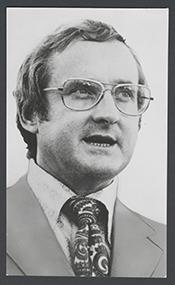
715 records where Rep. Rees, Thomas M. [D-CA-23] is listed as a sponsor, author, or other actor. Search with topics and years
United States · United States Congress · 20 February 1973
Provides for the relief of Diana L. Ortiz.
United States · United States Congress · 20 February 1973
Grants the States, under the Clean Air Act the right to enforce their own stringent motor vehicle emission standards.
United States · United States Congress · 8 February 1973
Extends for 5 years, the period within which specified project grants may be made under title V of the Social Security Act (Maternal and Child Health and Crippled Children's Services). Increases to $630,000,000 (presently $350,000,000) for fiscal year 1973 the authorization to enable States to extend and improve programs under title V of the Social Security Act. (Amends 42 U.S.C. 701)
United States · United States Congress · 8 February 1973
Extends to all unmarried individuals the tax treatment of income splitting now utilized by married individuals filing joint returns under the Internal Revenue Code. Directs the Secretary of the Treasury to prescribe and publish tables reflecting the amendments made by this Act which shall apply in lieu of the tables set forth in the Internal Revenue Code with respect to wages paid on or after the first day of the first month which begins more than 20 days after the date of the enactment of this Act.
United States · United States Congress · 8 February 1973
Provides that no law providing for the punishment of persons evading or refusing registration for the military service of the United States, or of persons evading or refusing induction into the Armed Forces of the United States, shall apply to any person who has evaded or refused such registration or induction since August 4, 1964, if not later than one year after the date of the enactment of this Act, such person presents himself to the Attorney General and agrees to serve two years in the Armed Forces or in the Volunteers in Service to America, a Veterans' Administration or Public Health Service hospital, or other eligible service. Provides for the release from prison of any person convicted of such evasion or refusal to register if such person agrees to perform the above military or alternate public service. Provides for the dismissal of proceedings against any person for such evasion or failure to register if such person agrees to perform the above military or alternate public service. Declares it to be the sense of the Congress that the President grant a pardon to any person convicted of such evasion or refusal to register who completes a period of military or alternate public service. (Adds 18 U.S.C. 2610-2614)
United States · United States Congress · 8 February 1973
National Legal Services Corporation Act - Declares that Congress should create a private, nonprofit corporation to encourage the availability of legal services and legal institutions to all citizens of the United States, free from extraneous interference and control. Establishes, under the Economic Opportunity Act of 1964, a National Legal Services Corporation, subject to the corporate laws of the District of Columbia, which shall not be an agency or establishment of the Federal Government. Establishes an incorporating trusteeship composed of: (a) the President and President-elect of the American Bar Association; (b) the Presidents of the National Legal Aid and Defenders Association; (c) the President of the American Association of Law schools; (d) the President of the American Trial Lawyers Association; and (e) the President of the National Bar Association. Directs the trustees to, within sixty days after enactment, establish an eleven member Clients Advisory Council from among persons recommended by the Boards of Directors of existing Legal Services Programs and who are representative of the client community. Directs the trustees, additionally, to establish a Project Attorneys Advisory Council to assist in carrying out the purposes of this Act. Directs the Clients and Project Attorneys Advisory Council to select three representatives to serve on the Corporation's Board of Directors. Establishes a nineteen-member Board of Directors. Enumerates the method of appointment of the Directors and their terms of office. Authorizes the Board to establish a Clients Advisory Council and a Project Attorneys Advisory Council subsequent to the original Councils constituted by this Act. Provides that each Council shall be composed of eleven-members whose duty it shall be to advise the President on, respectively, the needs of the members of the client community and on general policy relating to the furnishing of legal services to that community. Prescribes the activities and powers of the Corporation, includes among those functions an authorization to: (1) provide financial assistance to programs furnishing legal services to the client community; (2) carry out programs, including research, training, technical assistance, and law school clinical assistance, to improve the provision of services to the client community; (3) increase opportunity for legal education for individuals who are economically disadvantaged or members of minority groups; (4) coordinate activities in various parts of the country through information collection and dissemination; (5) assist and coordinate all Federal programs for the provision of legal services to the client community by reviewing and making recommendations upon grants and contracts concerning legal services and proposed legislative or executive action; (6) assure that attorneys paid in whole or in part by funds from the Corporation owe the same duty to clients and enjoy the same protection from interference as if the attorney was directly employed by the client; (7) establish policies which assure the professional quality of the attorneys and adherence to the Canons of Ethics; and (8) establish eligibility standards for clients with first priority on those whose means are least adequate to obtain private legal services. Prohibits the Corporation from making contributions to or supporting any political party or candidate for public office. Assures full access to Corporation records pursuant to the Freedom of Information Act. Authorizes an annual audit by the General Accounting Office and requires the Comptroller General to make a report to Congress on any such audit. Prohibits Federal control over the Corporation or its employees. Provides for the orderly continuation of the existing Legal Services Program. Reserves and makes available to the Legal Services Corporation amounts, appropriated to the Office of Economic Opportunity for carrying out the Economic Opportunity Act of 1964, not less than $80 million for fiscal year 1974, and $80 million for fiscal year 1975.
United States · United States Congress · 7 February 1973
Provides that any resident of the Republic of the Philippines may be a dependent for purposes of the income tax deduction for personal exemptions under the Internal Revenue Code. (Amends 26 U.S.C. 152(b)(3))
United States · United States Congress · 7 February 1973
Comprehensive Child Development Act - States that it is the purpose of this Act to provide a variety of quality child development and family services in order to assist parents who request such services in providing their children with an opportunity for a healthful and stimulating development, with priority to those preschool children and families with the greatest economic or social needs, in a manner designed to strengthen family life and to insure decisionmaking at the community level through a partnership of parents, State and local governments and the Federal Government, building upon the experience and success of Headstart and other existing programs. Authorizes to be appropriated to carry out this Act $2,000,000,000 for fiscal year 1975. Authorizes to be appropriated $150,000,000 for fiscal year 1974 for the purpose of providing training, technical assistance, planning, and such other activities as the Secretary deems necessary. Sets forth definitions of terms used in this Act. Title I: Headstart, Child Development and Family Services Programs - Provides that the Secretary of Health, Education, and Welfare shall provide financial assistance to prime sponsors and to other public and private nonprofit agencies and organizations for the purpose of carrying out child development and family service programs for children and their families, including comprehensive child development services and programs designed to meet individual needs of children, to assist children in attaining their full potential and to prepare them for school. Provides that the Secretary may designate as a prime sponsor for the purpose of entering into arrangements directly with the Secretary to carry out programs under this title within a State the following: (1) any State; (2) a unit of general local government or any combination of such units; (3) any Indian tribal organization; and (4) certain other public or private nonprofit agencies. Sets forth the requirements of a prime sponsorship plan for assistance under this Act, including provision for establishing and maintaining a child and family services council, and assurances that the Council will provide: (1) child-related family, social, and rehabilitative services; (2) coordination with educational agencies and providers of educational services; (3) health and mental health services; (4) nutrition services; (5) training of professional and paraprofessional personnel; and (6) where necessary, full-time administrative personnel to conduct the program. Provides for review in the courts of appeal of the United States of adverse determinations on applications for sponsorship under this title by the Secretary. Provides that each prime sponsor shall establish and maintain a Child and Family Services Council. Provides that at least one-third of the total membership of the Council shall be persons who are economically disadvantaged. Provides that financial assistance under this Act shall be provided to prime sponsors pursuant to a program statement, submitted by the prime sponsor. Sets forth standards for financial assistance under this title to be provided to a project applicant for any fiscal year. Authorizes additional assistance under this title to a State for services under this title upon a determination by the Secretary that there is an adequate agreement between State and local prime sponsors for maximum coordination of child development and family services within the State. Authorizes assistance to educational agencies and institutions in cooperation with other project applicants pursuant to program statements for the purpose of planning, carrying out, and evaluating cooperative programs and activities designed to provide continuity between preschool programs, after-school programs and educational and related programs conducted by such agencies and institutions, and to maximize community involvement in child development and family services programs. Provides a formula for the allocation of funds authorized to be appropriated under this Act. Provides that applications for financial assistance for projects including construction or acquisition may be approved only if the Secretary determines that construction or acquisition of such facilities is essential to the provision of adequate child care services, and that rental, lease, or lease-purchase, remodeling, or renovation of adequate facilities is not practicable. Provides that the Secretary shall pay an amount not in excess of 90 percent of the cost of carrying out programs, services, and activities under this title. Provides that the Secretary shall pay an amount equal to 100 percent of the costs of providing child development and family services programs for children of migrant agricultural workers and their families under this title, and for children in Indian tribal organizations under this title. Title II: Training, Technical Assistance, Planning, and Evaluation - Authorizes the Secretary to provide financial assistance to enable individuals employed or preparing for employment in child development and family services programs assisted under this Act, including volunteers, to participate in programs of preservice or inservice training for professional and nonprofessional personnel, to be conducted by public or private nonprofit organizations including institutions of higher education, State and local child development and family service agencies, State and local educational agencies, agencies carrying out child development and family service programs, organizations engaged in teacher training, teacher training institutions, national child development and family service organizations. Authorizes the Secretary to make technical assistance available to prime sponsors and to project applicants participating or seeking to participate in programs assisted under this Act on a continuing basis, to assist them in planning, developing, and carrying out child development and family services programs. Title III: Supportive Services and Special Activities - Authorizes the Secretary to make an evaluation of Federal involvement in activities and services for children and families. Authorizes the Secretary to carry out a program of research and demonstration projects. Authorizes the Secretary to provide financial assistance for the purpose of establishing and operating child care programs for the children of employees of the Federal Government. Provides that, within six months after the enactment of this Act, the Secretary shall promulgate a common set of program standards which shall be applicable to all programs providing child development and family services under this Act. Directs the Secretary to appoint a Special Committee on Federal Standards for Child Development and Family Services to advise him on the formulation of such standards. Directs the Secretary to appoint a special committee to develop a uniform minimum code for facilities, to be used in licensing child development and family services facilities receiving assistance under this Act or in which programs receiving assistance under this Act are operated. Authorizes the Secretary to provide mortgage insurance for child development facilities under this Act on mortgages not exceeding $250,000. Directs the Secretary to establish an office of Child Development in the Department of Health, Education, and Welfare to coordinate child development and family service programs under his jurisdiction. Establishes a Child Development Research Council consisting of representatives of various agencies to assure coordination of child development and related family service activities under their respective jurisdictions. Authorizes the Secretary to withhold payments under this Act for failure to comply with certain requirements of this Act.
United States · United States Congress · 7 February 1973
Designates lands in the Mendocino National Forest, California, as the "Snow Mountain Wilderness" for inclusion in the national wilderness preservation system.
United States · United States Congress · 7 February 1973
Public Service Employment Act - Declares it to be the purpose of this Act to provide unemployed and underemployed person with employment in jobs providing needed public services and appropriate training and related services. Authorizes to be appropriated to carry out this Act $3,000,000,000 for fiscal year 1972, $7,000,000,000 for fiscal year 1973, and $10,000,000,000 for fiscal year 1974, and for each fiscal year therafter. Provides that the Secretary of Labor shall enter into arrangements with applicants for the purpose of providing financial assistance to public and private nonprofit agencies and institutions for the creation of jobs providing employment for unemployed or underemployed persons in carrying out need public services. Provides that such eligible applicants shall be: (1) States, counties, cities, and other units or combinations of units of general local government which have established public service employment councils; and (2) other public and private agencies and institutions when government units of service are inadequate or nonexistent. Authorizes the Secretary to enter into agreements with eligible applicants, using 25 percent of the funds authorized under this Act, for the purpose of providing employment, for unemployed and underemployed persons residing in areas of substantial unemployment, in jobs providing needed public services, which shall be carried out to the maximum practicable extent within such areas. Provides for the establishment of public service employment council, which shall: (1) be representative of community organizations, job and service providers, and organizations, job and service providers, and organizations representing persons intended to be served by this Act; (2) set forth plans for conducting serveys and analyses of umemployment and underemployment and needs for public services in the area served by the council; and (3) set forth arrangements assuring that community action agencies, model cities programs, and other appropriate community organizations, will be involved in the development of applications for financial assistance under this Act. Provides that an application for financial assistance under this Act shall set forth: (1) a description of the geographical area to be served by such program; (2) a description of unmet public service needs; (3) a description of jobs to be filled; (4) wages and salaries to be paid; (5) the education, training, and supportive services which complement and enhance the work performed; (6) a description of career opportunities and job advancement potentialities for participants; (7) assurances that all persons employed under any such program will be selected form among unemployed and underemployed persons; and (8) assurances that special consideration will be given to employing persons who have become unemployed as a result of technological changes or as a result of shifts in the pattern of Federal expenditures. Provides that the Secretary shall not provide financial assistance for any program or activity under this Act unless he determines that: (1) the program will result in an increase in employment opportunities over those which would otherwise be available, will not substitute public service jobs for other federally assisted jobs; (2) persons employed in public service jobs assisted under this Act shall be paid wages which shall not be lower than whichever is the highest of the minimum wage which would be applicable to the employee under the Fair Labor Standards Act of 1938, the State or local minimum wage for the most nearly comparable covered employment, or the prevailing rates of pay for persons employed in similar public occupations by the same employer; (3) funds under this Act will not be used to pay persons employed in public service jobs under this Act at a rate in excess of $12,000 per year; (4) all persons employed in public service jobs assisted under this Act will be assured of workmen's compensation, health insurance, unemployment insurance, and other benefits at the same level and to the same extent as other employees of the employer and to the same working conditions and promotional opportunities as such other employees enjoy; (5) provisions of law relating to health and safety conditions shall apply to such program or activity; (6) the program will, to the maximum extent feasible, contribute to the occupational development or upward mobility of individual participants; (7) not to exceed 10 percent of the funds available for any program under this Act will be used or the acquisition or the rental or leasing of supplies, equipment, materials, or real property; and (8) every participant shall be advised, prior to entering upon employment, of his rights and benefits in connection with such employment. Provides that the Secretary shall transmit at least annually a detailed report setting forth the activities conducted under this Act. Provides that the Secretary shall carry out a program of research and pilot projects into alternative ways and means to research full employment. Provides that the Secretary shall gather by survey, and publish on a regular basis, data on unemployment, underemployment, and job vacancies by State, labor market areas, rural areas, and city and poverty neighborhoods.
United States · United States Congress · 7 February 1973
Act for Freedom of Emigration in East-West Trade - States that after October 15, 1972, products from any nonmarket economy country shall not be eligible to receive most-favored-nation treatment, such country shall not participate in any program of the Government of the United States which extends credits or credit guarantees or investment guarantees, directly or indirectly, and the President of the United States shall not conclude any commercial agreement with any such country during the period beginning with the date on which the President determines that such country: (1) denies its citizens the right or opportunity to emigrate; (2) imposes more than a nominal tax on emigration or on the visas or other documents required for emigration, for any purpose or cause whatsoever; or (3) imposes more than a nominal tax, levy, fine, fee, or other charge on any citizen as a consequence of the desire of such citizen to emigrate to the country of his choice. Provides that, before any of the aforementioned commercial agreements are entered into with any foreign country, the President shall submit to the Congress a report indicating that such country is not in violation of any of the requirements of the preceding paragraph.
United States · United States Congress · 7 February 1973
Permits the use of highway funds for any transportation improvements necessary to avoid air pollution dangerous to public health, and to prohibit highway projects which may create air pollution dangerous to public health. (Amends 23 U.S.C. 103)
United States · United States Congress · 5 February 1973
Congressional Oversight Act - Establishes within the General Accounting Office an Office of Budget and Expenditure Oversight which shall exercise oversight over the Executive with respect to the preparation and administration of the Federal budget, the raising of revenues, the expenditures of moneys, the preparation and presentation of legislative proposals, and the implementation of legislative programs enacted by Congress. Makes the General Accounting Office an agency of the Congress. Eliminates the position of Assistant Comptroller General and replaces it with a Deputy Comptroller General. Requires the Comptroller General and the Deputy Comptroller General to be nominated by the Speaker of the House of Representatives and the President pro tempore of the Senate respectively and for each to be appointed by a concurrent resolution of both Houses of Congress. Reduces the term of office of the Comptroller General and his Deputy from fifteen years to five years. Sets forth the functions of the Office of Budget and Expenditure Oversight. Sets forth requirements for any officer or employee of the United States, including the President, regarding the impoundment of any appropriation. Requires the head of each department and establishment in the executive to submit to the Office of Budget and Expenditure Oversight a duplicate copy of all legislative and budgetary requests submitted by him to the Office of Management and Budget. Authorizes to be appropriated such sums as may be necessary to carry out the purpose of this Act.
United States · United States Congress · 5 February 1973
Permits cattlehides and skins to be included within the export control provisions of the Export Administration Act. (Amends 50 U.S.C. App. 2403(e))
United States · United States Congress · 5 February 1973
Provides, under the Rural Electrification Act, that the Administrator of the Rural Electrification Administration is directed (presently "empowered") to fully obligate funds made available for each fiscal year for rural electrification programs provided for in such Act. (Amends 7 U.S.C. 901, 902, 904, 922)
United States · United States Congress · 5 February 1973
Provides for the preservation of historical and archeological data. Extends coverage to all Federal and federally assisted or licensed programs which alter the terrain and potentially cause loss of scientific, prehistorical, historical or archeological data. Directs Federal agencies to notify the Secretary of the Interior if in their operations archeological or other scientific data is revealed or threatened. Provides that whenever any Federal agency finds or is made aware by a responsible authority that its operations in connection with any Federal, federally assisted, or federally licensed activity or program affects or may affect adversely significant scientific, prehistorical, historical, or archeological data, such agency may request the Secretary to undertake protection measures, or may itself expend program or activity funds for the recovery, protection, and preservation of such data (including preliminary survey, analysis, and publication) and shall provide the Secretary with appropriate information concerning the project and the investigation. Provides that the Secretary shall keep the responsible agency notified at all times of the progress of any survey or other investigation made under this Act, or of any work undertaken as a result of such survey, in order that there will be as little disruption or delay as possible in the carrying out of the functions of such agency. Provides that the Secretary in the administration of this Act shall: (1) accept and utilize funds transferred to him by any Federal agency; (2) enter into contracts or make cooperative agreements with any Federal or State agency, any educational or scientific organization, or any institution, corporation, association, or qualified individual; (3) obtain the services of experts and consultants or organizations thereof; and (4) accept and utilize funds made available for salvage archeological purposes by any private person or corporation. Authorizes such appropriations as necessary to carry out the purposes of this Act.
United States · United States Congress · 31 January 1973
Prohibits any court, legislature, or administrative body from requiring persons connected with or employed by the news media or press to disclose before the Congress or any Federal court or agency any information or the source of any information procured for publication or broadcast.
United States · United States Congress · 31 January 1973
Authorizes appropriations for construction of facilities and equipment for public mass transportation projects, including preferential bus lanes, highway traffic loading and parking facilities, construction of fixed rail facilities, and the purchase of passenger equipment, including rolling stock for fixed rail. (Amends 23 U.S.C. 142(b))
United States · United States Congress · 30 January 1973
Requires the advice and consent of the Senate for appointments to Director of the Office of Management and Budget under the Budget and Accounting Act of 1921. (Amends 31 U.S.C. 16)
United States · United States Congress · 24 January 1973
Creates in the Executive Office of the President a Council on Energy Policy. Requires the Council to develop a long range, comprehensive plan for energy utilization, and to provide assistance to any executive agency concerned with energy and power in the United States. Sets forth the administrative powers and functions of the Council. Provides for an annual Energy Report by the President to the Congress, including: (1) an estimate of energy needs for the ensuing ten year period; (2) an estimate of the domestic and foreign energy supply on which the United States will be expected to rely to meet such needs in an economical manner; (3) current and foreseeable trends in the quality, management, and utilization of energy resources; and (4) recommendations for the development and application of new technologics and practices required to meet these objectives. Authorizes to be appropriated $300,000 for fiscal year 1974, $750,000 for fiscal year 1975, and $1,000,000 for each fiscal year thereafter for purposes of this Act.
United States · United States Congress · 24 January 1973
Directs the Secretary of the Treasury to make payments, out of any money in the Treasury not otherwise appropriated, to any citizen of the United States or any individual who has been admitted to the United States for permanent residence who establishes to the satisfaction of the Director of the Office of Emergency Preparedness that he suffered a physical injury that is directly attributable to the explosions of either of the two atomic bombs dropped by the United States on Hiroshima and Nagasaki, Japan, in August 1945 or to the radioactive fallout from such explosions.
United States · United States Congress · 24 January 1973
Authorizes the Commissioner of Education to make grants during the period beginning with the date of enactment of this Act, and ending June 30, 1977, to the Deganawidah-Quetzalcoatl University to be used for its development and improvement. States that such grants shall be subject to such terms and conditions as the Commissioner may prescribe. Authorizes to be appropriated $35,000,000 in the aggregate for making grants under this Act during the period ending June 30, 1977.
United States · United States Congress · 24 January 1973
Provides that any resident of the Republic of the Philippines may be a dependent for purposes of the income tax deduction for personal exemptions under the Internal Revenue Code. (Amends 26 U.S.C. 152(b)(3))
United States · United States Congress · 23 January 1973
Urban Mass Transportation Assistance Act - Authorizes the Secretary of Transportation, under the Urban Mass Transportation Act, to make grants or loans to assist States and local public bodies and agencies thereof in the payment of operating expenses incurred in connection with the provision of mass transportation service in urban areas. Requires a State or public body or agency to submit a comprehensive mass transportation service improvement plan to qualify for such assistance. Authorizes to be appropriated for such grants $400,000,000 for each of the fiscal years 1974 and 1975. Increases to 80 percent the Federal share of projects other than projects for the paying of operating expenses. Increases to $6,100,000,000 the obligations the Secretary may incur to finance urban mass transportation projects under the Act. Authorizes the Secretary to make grants and loans under the Act to private nonprofit corporations and associations for the specific purpose of assisting them in providing transportation services meeting the special needs of elderly and handicapped persons for whom mass transportation services, planned, designed, and carried out under the Act are unavailable, insufficient, or inappropriate. Provides that no financial assistance shall be provided under the Act to any State or local public body or agency thereof which engages directly or indirectly in the transporting of schoolchildren and school personnel to and from school and school-authorized functions, or proposes to expand present routes, schedules, service, or facilities for the purpose of providing transportation for schoolchildren and school personnel to and from school and school-authorized functions, in competition with or supplementary to the service currently provided by a private transportation company, or other person, engaged in so transporting such schoolchildren and school personnel.
United States · United States Congress · 23 January 1973
Fiscal Responsibility Act - Title I: Modification of the Fiscal Year - Provides that the fiscal year of all departments, agencies, and instrumentalities of the United States shall be the calendar year. Title II: Establishing Congressional Expenditures Limitations - Provides that the expenditures and net lending of the Federal Government during any fiscal year shall not exceed that amount which the Congress shall fix by concurrent resolution no later than forty-five legislative days after the latest day set by law for the budget message of the President with respect to such fiscal year. Provides for modification of such amount under specified circumstances. Title III: Establishing a Federal Impoundment Procedure - Provides that whenever the President impounds any funds appropriated by law out of the Treasury for a specific purpose or project, or approves the impounding of such funds by an officer or employee of the United States, he shall, within ten days thereafter, transmit to the House of Representatives and the Senate a special message specifying: (1) the amount of funds impounded; (2) the specific projects or governmental functions affected thereby; and (3) the reasons for the impounding of such funds. Provides that the President shall cease the impounding of funds specified in each special message within sixty calendar days of continuous session after the message is received if such impounding shall have been disapproved by either House of Congress by passage of a resolution stating in substance that that House does not favor the impounding. Provides that the President shall not impound any funds from appropriations made by the Congress for any appropriations categories of any department or agency of the Federal Government unless such impoundment is made in all appropriations categories of that department or agency on the basis of equal percentage impoundment among appropriations categories.
United States · United States Congress · 22 January 1973
Authorizes the Commissioner of Education to make grants to State education agencies to enable them to develop and carry out program to provide, through the use of students to institutions of higher education, tutoring and instructional assistance, under the supervision of a qualified teacher, for homebound handicapped children who, though able to benefit from preschool, elementary, or secondary education, are prevented by their handicaps from attending school. Requires local educational institutions that apply for funds under this program to give special consideration to veterans qualified for vocational financial need. Requires that the compensation for participating college students shall be between the Federal minimum wage set by the Commissioner and the maximum wage set by the Commissioner. Requires that the aim of such program shall be to integrate the handicapped into society, and to avoid the development of a segregated, permanent system of educcation for the handicapped. Provides that the Commissioner shall make grants under this Act to State educational agencies on the merits of their proporsal to him which shall be submitted on such application forms and under such guidelines as he shall prescribe. Authorizes $55,000,000 for fiscal year 1974, and necessary funds for fiscal years 1975 and 1976, to carry out the purposes of this Act. Requires the Commissioner to allocate the first 25 percent of such funds to each State in proporation to the ratio that the number of children aged three to twenty-one in the State bears to the number of such children in all the States. Authorizes the Commissioner of Education to make grants to State education agencies to enable them to develop and carry out programs to provide, through the use of students in institutions of higher education, tutoring and instructional assistance, under the supervision of a qualified teacher, for homebound handicapped children who, though able to benefit from preschool, elementary, or secondary education, are prevented by their handicaps from attending school. Requires local educational institutions that apply for funds under this program to give special consideration to veterans qualified for vocational rehabilitation, and to students with greater financial need. Requires that the compensation for participating college students shall be between the Federal minimum wage set by the Commissioner and the maximum wage set by the Commissioner. Requires that the aim of such program shall be to integrate the handicapped into society, and to avoid the development of a segregated, permanent system of education for the handicapped. Provides that the Commissioner shall make grants under this Act to State educational agencies on the merits of their proposals to him which shall be submitted on such application forms and under such guidelines as he shall prescribe. Authorizes $55,000,000 for fiscal year 1974, and necessary funds for fiscal years 1975, and 1976, to carry out the purposes of this Act. Requires the Commissioner to allocate the first 25 percent of such funds to each State in proportion to the ratio that the number of children aged three to twenty-one in the State bears to the number of such children in all the States.
United States · United States Congress · 20 January 1973
Environmental Protection and Enhancement Act - States that it is the purpose of this Act to provide for participation by the Federal Government with State and local governments, private individuals, and other interested persons in a comprehensive program to prevent further damage to the lands, waters, and natural resources of the Nation from unregulated or inadequately regulated surface and underground coal mining operations, to stabilize lands damaged by surface coal mining, to promote an effective continuing conservation land-use and management program for the coal mining industry, and to assist any worker adversely affected by this Act. Provides that this Act shall be administered by the Administrator of the Environmental Protection Agency. Provides that each coal mining operation, the products of which enter interstate commerce, or the operations or products of which indirectly or directly affect interstate commerce, and each operator of such mining operation, shall be subject to this Act. Title I: Environmental Protection Coal Mining Limitation - Provides that no surface coal mining shall hereafter be conducted in any area of the national wildlife refuge system, the national park system, or the national forest system. States that no underground coal mining shall be permitted in any designated wilderness area or in any area under study as a wilderness area. Provides that no operator shall begin or renew any surface coal mining operation in any State on or after the effective date of this Act. States that no operator shall conduct contour surface coal mining operations in any State on and after the effective date of this Act. Provides that any operator who, on the effective date of this Act, is actively carrying out surface coal mining operations, other than contour surface coal mining, may continue to do so as provided in this Act if such operator obtains a permit under this title within six months after such date, and if the Administrator determines that such mining is not in violation of, or will not result in any violation of, any provision of the Clean Air Act, and does not cause, or will not result in, irrevocable or lasting injury to the public health or welfare, or damaging, flooding, or destruction of agricultural land, or dislocation or disturbance of surface or subsurface streams, or destruction of, or damange to, historic values, or destruction or damage to valuable recreational or wildlife areas, or destruction or damage of contiguous areas. States that, within two months after the effective date of this Act, no operator shall engage in surface or underground coal mining operations if he has not applied for a permit under the provisions of this Act. Sets forth the requirements for obtaining such permits. Provides that no permit application shall be approved unless the Administrator finds that the applicable requirements of this title and the rules and regulations adopted thereunder will be observed, and that, in the case of a surface coal mining application, there is probable cause to believe that the stabilization of the area of affected land can be achieved. Provides that a stabilization plan shall accompany every application for a permit for surface coal mining and be made available to the public and be approved in the same manner as a permit. Provides that after a permit application has been approved for surface coal mining but before such a permit is issued, the applicant shall file with the Administrator a bond for performance payable to the United States and conditioned on the operator faithfully performing all the requirements of this Act. Creates in the Department of the Treasury a revolving fund to be known as the Coal Mine Lands Stabilization Fund. Authorizes to be appropriated to the fund initially the sum of $100,000,000, and such other sums as may thereafter be appropriated by the Congress. Provides that moneys in the fund may be expended by the Chief of the Corps of Engineers to acquire by purchase, donation, exchange, or otherwise land which has been affected by surface coal mining operations, has not been fully stabilized prior to the effective date of this Act, and has been abandoned or is declared inactive as determined by him. Authorizes the Chief of the Corps of Engineers to stabilize directly or by contract the lands so acquired. Provides for renewal of licenses issued under this Act. Requires every surface coal mining operator to stabilize the land affected by his mining. Sets forth the required standards for such stabilization. Restricts dumping and the use of explosives on operations authorized under this Act. Requires each mining operator to report to the Administrator on the amount of coal produced, the number of employees, the days worked, the number and location of acres of land mined, number and location of acres of the land stabilized, and a description of the progress made toward the completion of the reclamation plan. Sets forth conditions for the release of bonds filed under this Act. Provides for the periodic inspection of operations authorized under this Act. Allows any person to commence a civil action on his own behalf: (1) against any person, including the United States, and any other governmental instrumentality or agency, who is alleged to be in violation of this title; or (2) against the Administrator and the Chief of the Corps of Engineers where there is alleged a failure of the Administrator or the Chief to perform any act or duty under this title which is not discretionary with the Administrator or the Chief. Provides that no Federal agency may enter into any contract for the procurement of goods, materials, and services with any operator who is convicted of any offense under this title to perform such contract at any coal mining operation at which the violation which gave rise to such conviction occurred. States that no person shall discharge or in any other way discriminate against or cause to be discharged or discriminated against any employee of a surface mine or any authorized representative thereof by reason of the fact that such employee or representative has: (1) notified the Administrator or his authorized representative of any alleged violation or danger, (2) has filed instituted, or caused to be filed, or (2) instituted, any proceeding under this Act, or (3) testified or is about to testify in any proceeding resulting from the administration or enforcement of the provisions of this Act. Authorizes the Attorney General to apply to the appropriate United States district court for injunctions restraining or enforcing compliance with the provisions of this title. Authorizes actions for damages (including attorney fees) by persons injured by violations of this title. Provides for a civil penalty of not to exceed $10,000 for each violation of this title. Prohibits States from enacting mining standards that are less stringent than those established by this Act. Authorizes necessary appropriations to carry out this title. Title II: Assistance to Workers - Provides that payment of a readjustment allowance shall be made to a worker adversely affected by this Act who applies for such allowance for any week of unemployment which begins after the thirtieth day after the date of the enactment of this Act. Provides that such allowance shall be an amount equal to 90 percent of his average weekly wage or to 90 percent of the average weekly manufacturing wage, whichever is greater. Provides for a diminishing of such allowance to the extent that it is supplied through other provisions of law. States that adversely affected workers shall be afforded, where appropriate, the testing, counseling, training, and placement services provided for under any Federal law. Provides for a relocation allowance for any adversely affected worker who is the head of a family and who has been totally separated. Authorizes to be appropriated such sums as may be necessary to carry out this title.
United States · United States Congress · 18 January 1973
Provides for the relief of Raphael Gidharry.
United States · United States Congress · 18 January 1973
Provides for the relief of Mrs. Rose Thomas.
United States · United States Congress · 18 January 1973
Provides for the relief of Stephanie Kahn and Barbara Heyman.
United States · United States Congress · 18 January 1973
Provides for the relief of Mrs. Sheila L. C. Tompkins.
United States · United States Congress · 18 January 1973
Provides that daylight saving time shall be observed on a year-round basis.
United States · United States Congress · 18 January 1973
Vietnam War Ecological Assessment Act - Directs the President to arrange with the National Academy of Sciences to conduct a study and investigation to assess the extent of the damage done to the environment of South Vietnam, Laos, and Cambodia as the result of the operations of the Armed Forces of the United States in such countries and to determine plans for effectively rectifying such damage. Authorizes the appropriation of up to $10,000,000 for the purpose of carrying out this Act.
United States · United States Congress · 18 January 1973
Designates the birthday (January 15) of Martin Luther Luther King, Junior, as a legal public holiday. (Amends 5 U.S.C. 6103)
United States · United States Congress · 18 January 1973
Provides that a person connected with or employed by the news media or press, or who is independently engaged in gathering information for publication or broadcast, shall not be required to disclose before the Congress or any Federal court, grand jury, or administrative entity any information, written or oral, or pictorial material or the source of that information or material procured for publication or broadcast. Provides that the above provisions shall not apply with respect to the source of any allegedly defamatory information in any case where the defendant in a civil action for defamation asserts a defense based on the source of such information.
United States · United States Congress · 18 January 1973
Creates an Atlantic Union delegation, composed of 18 eminent citizens, which is authorized to organize and participate in a convention made up of similar delegations from such North Atlantic Treaty parliamentary democracies as desire to join in the enterprise, and other parliamentary democracies the convention may invite, to explore the possibility of agreement on: (1) a declaration that the goal of their peoples is to transform their present relationship into a more effective unity based on Federal principles; (2) a timetable for the transition by stages to this goal; and (3) a commission to facilitate advancement toward such stages. Requires the convention's recommendations to be submitted to the Congress. Provides that not more than half of the delegation's members shall be from one political party, and that 6 of the delegates shall be appointed by the Speaker of the House of Representatives, after consultation with the House Committee on Foreign Affairs, 6 by the President of the Senate, after consultation with the Senate Committee on Foreign Relations, and 6 by the President of the United States. Allows all members of the delegation to speak and vote individually in the convention. Authorizes the delegation in carrying out the purposes of this Act: (1) to seek to arrange an international convention and such other meetings and conferences as it may deem necessary; (2) to employ and fix the compensation within prescribed limits of such temporary professional and clerical staff as it deems necessary; and (3) to pay not in excess of $100,000 toward such expenses as may be involved as a consequence of holding any meetings or conferences authorized by this joint resolution. Authorizes not to exceed $200,000 to be appropriated to the Department of State to carry out the purposes of this resolution, payments to be made upon vouchers approved by the Chairman of the delegation subject to the laws, rules, and regulations applicable to the obligation and expenditure of appropriated funds. Requires the delegation to make semiannual reports to Congress accounting for all expenditures and such other information as it deems appropriate. Provides that the delegation shall cease to exist at the expiration of the three-year period beginning on the date of the approval of this resolution.
United States · United States Congress · 18 January 1973
Establishes the Tule Elk National Wildlife Refuge in Inyo County, California. Authorizes to be appropriated such sums as may be necessary to purchase lands authorized to be acquired by this Act.
United States · United States Congress · 15 January 1973
Establishes in the Executive Office of the President the Commission on the Capability of the National Guard to Control Civil Distrubances: (1) to establish minimum training, doctrine, and equipment standards for the National Guard with respect to its use in civil disturbances; (2) to perform annual inspection of all National Guard units to determine whether or not such standards are being implemented and adhered to at the unit level and on a statewide basis; (3) to take such action as is authorized under this Act in order to insure that such standards are met; (4) to perform comprehensive reviews and critiques of the operations of any National Guard unit when used in civil disturbance control duty; (5) to contract for studies and for research and development for the purpose of devising effective nonlethal weapons and devices suitable for civil disturbance control use; (6) to act as principal coordinator between State National Guards and State and local law enforcement agencies with respect to the formulation of contingency plans and preparations for the control of civil disturbances and the exchange of relevant information and technology; and (7) to report at least annually to Congress with respect to the administration of this Act and the readiness and capability (including the availability and sufficiency of recommended protective clothing and devices, communications equipment, and nonlethal weapons) of the National Guard of each State to perform civil disturbance functions in accordance with the prescribed standards. Provides that, if the Commission finds that any unit of a State National Guard has refused to implement any of the standards prescribed by the Commission under this Act does not routinely meet or enforce any such standards, or, when deployed in civil disturbance, violates any such standards, the Commission shall bar the National Guard unit concerned from receiving money or any other aid, benefit, or privilege authorized by law until such time as the Commission determines that the unit has taken such actions as the Commission deems appropriate and necessary to insure that such unit will thereafter comply with this Act.
United States · United States Congress · 11 January 1973
Antihijacking Act - Provides that whenever the President determines that a foreign nation is acting in a manner inconsistent with the Convention for the Suppression of Unlawful Seizure of Aircraft, he may suspend the right of any air carrier and foreign air carrier to engage in foreign air transportation, and any persons to operate aircraft in foreign air commerce, to and from that foreign nation as well as between the United States and any foreign nation which maintains air service between itself and that foreign nation. Provides that after June 30, 1973, no air carrier or foreign air carrier shall operate an aircraft in air transportation unless all passengers boarding that aircraft in the United States, and all baggage carried aboard the aircraft, shall have been inspected by means of a metal detection device or by an X-ray device immediately prior to boarding and have not been found to carry or contain an unauthorized device or weapon of any kind. Prescribes criminal penalties for violation of this Act. (Amends 49 U.S.C. 1514, 1421)
United States · United States Congress · 11 January 1973
Directs the Secretary of Defense to furnish the House of Representatives with data relating to the extent of the bombing of North Vietnam from December 17, 1972, through January 10, 1973.
United States · United States Congress · 9 January 1973
Longshoremen's and Harbor Workers' Compensation Act Amendments - Provides, under the Longshoreman's and Harbor Workers' Compensation Act, that any agreement by a stevedore, or any other person who supplies work of the ship's service to indemnify a vessel for damages for injury to an employee as a result of unseaworthiness or negligence attributable to the vessel is prohibited and is void and unenforceable. Provides that such agreement shall not prevent the stevedore or any person who supplies work of the ship's service from contributing to a settlement of any third-party suit brought under the Act. States that, upon payment of any judgment or settlement paid in satisfaction of any third-party suit brought because of injury of any employee in work of the ship's service, the vessel may sue any other person who may have caused or contributed in whole or in part to the vessel's liability for such injury to the employee. Provides that, in any such suit, damages shall be apportioned between the vessel and any other person who shall have caused or contributed to the vessel's liability. Provides that nothing in this Act shall reduce any rights of any injured person under the doctrime of warranty of seaworthiness, negligence, comparative negligence, General Maritime Law, or other compensation law which existed prior to the enactment of Public Law 92-576 or subject to any injured party to any apportionment. (Amends 33 U.S.C. 905)
United States · United States Congress · 9 January 1973
Comprehensive Older Americans Services Amendments - Title I: Declaration of Objectives - States that the general purpose of this Act is to make available comprehensive health, education, and social service programs to our older citizens. Title II: Administration on Aging - Establishes in the office of the Secretary of Health, Education, and Welfare, an Administration on Aging to carry out this Act. Declares that the Commissioner on Aging shall be the principal officer of the Administration. Establishes within the Administration on Aging a National Information and Resource Clearing House for the Aging to collect, review, operate, publish, and disseminate information and data related to the particular problems caused by aging, including information describing measures which are or may be employed for meeting such problems. Establishes the Federal Council on the Aging to advise and assist the President as he may direct on matters relating to the special needs of Older Americans: to assist the Commissioner on Aging in carrying out his functions under this Act; to review and evaluate programs of the Federal Government; and to make recommendations to the President, the Secretary of Health, Education, and Welfare, the Commissioner, and Congress on policies and programs for the aged. Provides that, not later than one hundred and twenty days after the close of each fiscal year, the Commissioner shall prepare and submit to the President for transmittal to the Congress a complete report on the activities carried out under this Act. Title III: Grants for State and Community Programs on Aging - Prescribes standards and procedures for the establishment by the several States of State and area social service programs to concentrate resources in order to develop a greater capacity and foster development or comprehensive systems to serve older persons, to include services designed to assist older Americans in avoiding institutionalization. Authorizes appropriations totalling $600,000,000 for such programs for fiscal years 1973, 1974, and 1975. Provides that the Commissioner shall not finally disapprove any State plan, or any modification thereof, without first affording the State reasonable notice and opportunity for a hearing. Title IV: Training and Research - Directs the Commissioner to make grants to State agencies and educational institutions for the purpose of: (1) publicizing available opportunities for careers in the field of aging; (2) encouraging qualified persons to enter or re-enter the field of aging; (3) encouraging persons from other professions to undertake assignments on a parttime bais in the field of aging; and (4) assisting in covering the cost of courses of training or study. Authorizes the Commissioner to conduct a study of the transportation problems of older Americans, with emphasis upon solutions that are practicable and can be implemented in a timely fashion. Authorizes the appropriation of $7,500,000 for fiscal year 1973, $15,000,000 for fiscal year 1974, and $20,000,000 for fiscal year 1975 for purposes of such transportation studies and demonstration projects. Authorizes the Commissioner to make grants for the purpose of: (1) establishing multidisciplinary centers of gerontology to recruit and train personnel; (2) conducting basic research on the problem of the aged; (3) providing consultation to public and voluntary organizations; and (4) creating opportunities for research projects with respect to aging. Authorizes appropriations of $15,000,000 for fiscal year 1973, $20,000,000 for fiscal year 1974, and $25,000,000 for fiscal year 1975, for the purposes of attracting personnel to, and training personnel in, the field of aging; and for research and development projects. Authorizes appropriations for $20,000,000 for the fiscal year 1973, $30,000,000 for fiscal year 1974, and $40,000,000 for fiscal year 1975, for establishing multidisciplinary centers of gerontology. Title V: Multipurpose Senior Centers - Authorizes the Commissioner to make grants to units of general purpose local government or other public or nonprofit private agencies to pay not to exceed 75 percent of the cost of leasing, altering, or renovating existing facilities to serve as multipurpose senior centers. Establishes standards to be followed by the Commissioner in making such grants and authorizes appropriations of $35,000,000 annually for fiscal years 1973-1975 to carry out the provisions of this section. Creates a Multipurpose Senior Center Insurance Fund to be administered by the Secretary of Health, Education, and Welfare to insure mortgages on multipurpose senior centers. Authorizes appropriations of $10,000,000 for fiscal year 1973, and for each of the next two succeeding fiscal years for the purpose of making grants to meet the costs of compensation of professional and technical personnel for the initial operation of multipurpose senior centers. Title VI: National Older Americans Volunteer Program - Provides that no compensation paid to individual volunteers under the Retired Senior Volunteer Program under the Older Americans Act shall be considered income for any purposes. Authorizes appropriations for such program in the amount of $20,000,000 for fiscal year 1973, $30,000,000 for fiscal year 1974, and $40,000,000 for fiscal year 1975. Authorizes appropriations of $35,000,000 for fiscal year 1973, $45,000,000 for fiscal year 1974, and $55,000,000 for fiscal year 1975, for the continuation of the Foster Grandparent Program under the Older Americans Act. Title VII: Nutrition Programs - Provides, under the Older Americans Act of 1965, that the Secretary of Agriculture and the Commodity Credit Corporation may donate specified products acquired by them to a recipient of a grant or contract for providing nutritional services for the elderly. Title VIII: Amendments to Other Acts - Authorizes the Commissioner to make grants to States which have submitted a long-range program and an annual program for library services for older persons. Authorizes the Commissioner to make grants to institutions in planning, developing, and carrying out programs specifically designed to apply the resources of higher education to the problems of the elderly. Directs the Commissioner to make grants to State and local educational agencies or other public or private nonprofit agencies for educational programs for elderly persons whose ability to speak and read the English language is limited and who live in an area with a culture different from their own. Title IX: Community Service Employment for Older Americans - Older Americans Community Service Employment Act - Authorizes the Secretary of Labor to establish an older American community service program in order to promote useful part-time work opportunities in community service activities for unemployed low-income persons 55 years old or older who have poor employment prospects. Makes provisions for allotment of funds to State, local, and private organizations to further the purposes of the program. Authorizes appropriations of $100,000,000 for fiscal year 1973 and $150,000,000 for fiscal year 1974 to carry out this title. Title X: Middle-Aged and Older Workers Training - Middle-Aged and Older Workers Training Act - Authorizes the Secretary of Labor, through the Manpower Administration, to make loans and grants for manpower training, including on-the-job, institutional, residential, and other training, designed to upgrade the work skills and capabilities of middle-aged and older persons. Authorizes the Secretary to make such studies, rules and provisions as necessary to carry out this title. Authorizes the Secretary to carry out this title in fiscal year 1973 from funds otherwise available for similar programs. Authorizes appropriations in fiscal year 1974 of $100,000,000 for the purposes of this title.
United States · United States Congress · 6 January 1973
Public Service Employment Act - Directs the Secretary of Labor to enter into arrangements with eligible applicants in order to make financial assistance available for the purposes of providing, during each of the fiscal years 1974 and 1975, employment for five hundred thousand unemployed and underemployed persons in jobs providing needed public services. Requires at least eighty-five percent of the funds appropriated pursuant to this Act to be expended only for wages and employment benefits. Provides that programs assisted under this Act shall be designed with a view toward: (1) developing new careers; (2) providing opportunities for career advancement; (3) providing opportunities for continued training, including on the job training; or (4) providing transitional public service employment which will enable the individuals so employed to move into public or private employment. Requires applications for financial assistance for a public service employment program under this Act to include provisions enumerated in this Act. Directs that the amounts authorized to be appropriated for any fiscal year be allocated by the Secretary among the States on the basis of the proportion which the total number of unemployed persons in each such State bears to the total number of such persons in the United States, determined on the basis of the monthly average for the fourth calendar quarter of the fiscal year immediately preceding the one for which the apportionment is made. States that the Secretary shall not provide financial assistance for any program or activity under this Act unless he determines that specified goals and requirements will be met by such program or activity. Requires the Secretary to transmit to the Congress at least annually a detailed report setting forth the activities conducted under this Act. Authorizes to be appropriated during each of fiscal years 1974 and 1975 such sums as may be necessary to carry out the provisions of this Act.
United States · United States Congress · 3 January 1973
Prohibits any court, legislature, or administrative body from requiring persons connected with or employed by the news media or press to disclose before the Congress or any Federal court or agency any information or the source of any information procured for publication or broadcast.
United States · United States Congress · 3 January 1973
Authorizes the Commissioner of Education to make grants during the period beginning with the date of enactment of this Act and ending June 30, 1978, to the Deganawidah-Quetzalcoatl University to be used for its development and improvement. States that such grants shall be subject to such terms and conditions as the Commissioner may prescribe. Authorizes to be appropriated $35,000,000 in the aggregate for making grants under this Act during the period ending June 30, 1978.
United States · United States Congress · 3 January 1973
Provides that any resident of the Republic of the Philippines may be a dependent for purposes of the income tax deduction for personal exemptions under the Internal Revenue Code. (Amends 26 U.S.C. 152(b)(3))
United States · United States Congress · 3 January 1973
Tax Equity Act - Title I: Capital Gains and Losses - Disallows the alternative tax on capital gains. Excludes from gross income so much of the gain on the sale or exchange of property held for more than twelve months as does not exceed the smaller of: (1) an amount equal to one-third of one percent of the adjusted basis of such property times the number of full months the property was held after the date it was held for twelve months; or (2) an amount equal to sixty percent of such adjusted basis of the property. States that capital losses with respect to a corporation shall be allowed only to the extent of gains for the taxable year from the sale or exchange of capital assets and property used in the trade or business. Provides that capital losses in the case of other taxpayers shall be allowed only to the extent of gains from the sale or exchange of capital assets and property used in a trade or business plus the taxable income of the taxpayer or $1000 ($500 in the case of a separate return of a married individual), whichever is smaller. Establishes criteria for determining capital loss carrybacks and carryovers. Defines the terms "capital gain", "capital loss", "net capital gain", and "net capital loss". Provides that if carryover basis property is acquired from a decedent dying after June 30, 1973, then the basis of such property in the hands of the person so acquiring it shall be the adjusted basis of the property immediately before the death of the decedent. Creates methods for adjusting such basis. Requires every executor to furnish information to the Secretary of the Treasury or his delegate regarding: (1) the name and last address of the decedent; (2) the name and address of each person acquiring property from the decedent; and (3) the adjusted basis of each such item in the hands of the decedent immediately before his death. States that amounts received by a seller as transferor of a patent shall be treated as royalties from such patent and not as gain from the sale or exchange of property. Title II: Income Derived from Extraction of Minerals - Terminates the depletion allowance for minerals effective after the taxable year ending December 31, 1973. Allows a taxpayer a deduction for income expenditures paid or incurred during the taxable year for the exploration or development of any mineral property. Removes the imposition of a maximum tax relating to the sale of oil or gas properties. Establishes criteria for determining income from mineral properties located outside the United States. Title III: Reform Measures Affecting Primarily Individuals - Imposes a fifty percent maximum tax rate on the income of individuals whose income exceeds $44,000. Allows a twenty-four percent tax credit for personal exemptions and nonbusiness deduction. Permits the President to adjust this percentage if he deems it to be in the public interest. Provides that income received during the taxable year by a child from a trust or dividends, interest, and royalties shall be included in the gross income of the parent and not the child of the parent who claims the child as an exemption. Eliminates the $100 dividend exclusion. Reduces from $25,000 to $5,000 the limitation on the deduction of interest on investment indebtedness. Disallows deductions in specified instances for expenses incurred while attending conventions outside the United States. Limits deductions for an individual engaged in farming. Provides that, in computing dividends, a distribution by a common parent corporation of a controlled group of corporations, the earnings and profits of the common parent corporation for the taxable year shall not be less than its share of the earnings and profits of the controlled group computed on a consolidated basis. Repeals the provision granting an exemption for earned income from foreign sources. Title IV: Reform Measures Affecting Primarily Corporations - Provides that the reasonable allowance for depreciation shall be computed on the basis of the expected useful life of property in the hands of the taxpayers. States that the depreciation deduction is not to exceed book depreciation and is to be limited to the amount recorded on books. Establishes criteria for computing limitations on dividends received deductions. Denies tax-free exchanges in the case of investment companies. Requires shareholders of any corporation to hold at least twenty percent of the total combined voting power of all classes of stock entitled to vote of the surviving, controlling, or acquiring corporation in order for the transaction to qualify as a reorganization. Provides that if a foreign corporation is a controlled foreign corporation for an uninterrupted period of thirty days or more during any taxable year, every person who is s United States shareholder of such corporation who owns stock in such corporation on the last day in such year on which such corporation is a controlled foreign corporation shall include in his gross income, for his taxable year in which or with which such taxable year of the corporation ends, his pro rata share of the corporation's earnings and profits for such year. Title V: Reforms Affecting Individuals and Corporations - Imposes, generally, in addition to other taxes, with respect to the income of every person, a tax of 10 percent of the amount (if any) by which the sum of the items of tax preference exceeds $12,000. Disallows, in the case of depreciable realty, the deduction for depreciation to the extent it would reduce the adjusted basis of the property at the end of the year below an amount equal to any mortgage indebtedness at the end of the year on the property minus the adjusted basis of the land allocable to such property. Makes provision for the treatment of charitable gifts of appreciated property and capital expenditures incurred in planting and developing fruit and nut groves. Repeals the tax exemption for ships under foreign flag. Title VI: Estate Tax Amendments - Imposes a tax on the transfer of the taxable estate of every decedent who was a citizen or resident of the United States at the time of his death. Provides that in the case of an estate of a decedent who made taxable gifts before death, a tax shall be imposed in an amount equal to the excess of: (1) a tax computed in accordance with the rate schedule set forth on the amount of the taxable estate increased by the amount of the adjusted inter vivos gifts; (2) a tax computed in accordance with such rate schedule on the amount of such adjusted inter vivos gifts as if the taxable estate were equal to such amount. Includes life insurance policies in the gross estate of a decedent. Title VII: State and Local Obligations - Repeals the exemption for interest on issues of State and local banks occurring after December 31, 1973. Provides that the United States shall pay fifty percent of the interest yield on each issue of State and local banks occurring after December 31, 1973.
United States · United States Congress · 3 January 1973
Establishes an Institute for Continuing Studies of Juvenile Justice to serve as a coordinating center for the collection and dissemination of information in the field of juvenile delinquency and control, including comparisons and analysis of State and Federal laws and model laws and recommendations designed to promote effective and efficient systems of juvenile justice; and as a training center for representatives of all levels of government who are connected with the treatment and control of juvenile offenders. Provides that the Institute shall be under the supervision of a Director, appointed by the President by and with the advice and consent of the Senate, who will supervise the staff, faculty, and administrative personnel necessary to the Institute's functioning. Gives the Institute powers to carry out the objectives of this Act. Creates an Advisory Commission to design a curriculum for the Institutes enrollees and to supervise the overall policy and operations of the Institute. Authorizes the appropriation of such sums as may be necessary for the purposes of this Act. (Adds 18 U.S.C. 5041-5048)
United States · United States Congress · 3 January 1973
Tax Reform Act - Title I: Capital Gains of Individuals and Corporations - Eliminates the twenty-five percent capital gain rate on the first $50,000 of an individual's capital gains. Increases to thirty-five percent (thirty percent in the case of a taxable year beginning after December 31, 1970, and before July 1, 1973) the alternative rate of taxation on capital gains for corporations. Title II: Gain on Certain Property Transferred at Death or by Gift - Provides that in the case of the death of a taxpayer there shall be included in computing taxable income for the taxable period in which falls the date of his death, the gains and losses which would be taken into account if the taxpayer has sold all property, which is considered to have been acquired from or to have passed from the decedent taxpayer, at a selling price equal to its fair market value at death. Makes exceptions to this provision for household or personal items whose total value is less than $2000, and for property which passes or was passed to a surviving spouse. Sets forth rules applicable in determining the the basis for computing gain or loss. Makes provisions and rules for including gains and losses on lifetime property gifts in computing taxable income for the taxable period in which the transfer was made. Requires the filing of a final income tax return for a decendent by April 15 of the year following the taxable year, or 9 months after the date of death, whichever is later. Makes provisions for extension of time for the paying of tax. Title III: Depreciation Revision - Eliminates the provision permitting a variance from any class life for depreciation allowance purposes of up to 20 percent of such life. Title IV: State and Local Bonds - Allows a State or local government to elect to issue obligations without excluding their interest from gross income. Authorizes necessary appropriations to pay a fixed percentage of interest yield on taxable issues, and sets forth procedures for such payment. Title V: Foreign Corporations - Provides that if a foreign corporation is a controlled foreign corporation for an uninterrupted period of 30 days or more during any taxable year, every United States shareholder of such corporation who owns stock in such corporation on the last day in such year or which such corporation is a controlled foreign corporation, shall include in its gross income for its taxable year its pro rata share of the corporation's anyyyyyyy and profits for such year. Excludes from such shareholder's gross income any previously taxed earnings or profits from a foreign corporation. Provides that such shareholders in foreign corporations may be required to maintain records and accounts for purposes of this Act. Makes conforming amendments for this section. Title VI: Income Derived From Extraction of Oil and Gas - Reduces to fifteen percent the depletion rate for oil and gas wells (presently twenty-two percent). Eliminates the granting of an option to deduct as expenses intangible drilling and development costs in the case of oil and gas wells. Title VII: Farm Losses - Provides that, in the case of a taxpayer engaged in the business of farming, the deductions attributable to such business which would be allowable for the taxable year shall not exceed the sum of: (1) the adjusted farm gross income for the taxable year, and (2) the higher of the amount of the special deductions allowable for the taxable year, or $15,000 ($7,500 in the case of a married individual filing a separate return), reduced by the amount by which the taxpayer's adjusted gross income (taxable income in the case of a corporation) for the taxable year attributable to all sources other than the business of farming exceeds $15,000 ($7,500 in the case of a married individual filing a separate return). Provides for a disallowable farm operating loss carryback to each of the three taxable years preceding the loss year and a disallowed farm loss carryover to each of the five taxable years following the loss year. Defines the various terms of this title. States that a taxpayer shall be treated as engaged in the business of farming for any taxable year if: (1) any deduction is allowable for any expense paid or incurred by the taxpayer with respect to farming, or with respect to any farm property held by the taxpayer, or (2) any deduction would otherwise be allowable to the taxpayer for any expense paid or incurred with respect to farming, or with respect to property held for the production of income, which is used in farming. Excludes the raising of timber from the definition of farming. Establishes a formula limiting the amount of deduction, regarding the business of farming, to a controlled group of corporations. Directs that, under regulations prescribed by the Secretary or his delegate, an electing small business corporation which is engaged in the business of farming during its taxable year, and the shareholders of such corporation, shall apply the provisions of the Internal Revenue Code dealing with certain corporation payments to shareholders separately with respect to: (1) income derived from the business of farming by such corporation and deductions attributable to such business, and (2) all other income and deductions of such corporation. Title VIII: Minimum Tax for Tax Preferences - Imposes for each taxable year, with respect to the income of every person, a tax equal to 20 percent (previously 10 percent) of the amount by which the sum of the items of tax preference exceeds $12,000. Repeals the provision allowing tax carry-overs for 7 taxable years for excess taxes.
United States · United States Congress · 3 January 1973
Prohibits funds authorized or appropriated for United States forces and military actions in Indochina to be used for any purpose other than the withdrawal from protection of forces in Vietnam, Laos and Cambodia. Requires such withdrawal of forces within 30 days after the date of enactment of this Act, provided there is a release of all prisoners of war by the Government of North Vietnam and its allies within that period. Requires an accounting of United States servicemen missing in action by the Government of North Vietnam and its allies before the completion of withdrawal. Provides that no air bombing operations by United States forces shall be carried out in or over North Vietnam, South Vietnam, Cambodia, or Laos after the date of the enactment of this Act.