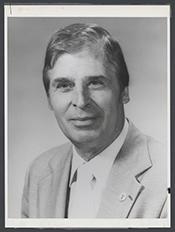
United States · United States Congress · 10 September 1985
Amends the Impoundment Control Act of 1974 to provide that budget authority proposed to be rescinded or reserved in a special message transmitted to the Congress by the President shall be made available for obligation unless the Congress completes action within a specified period on a rescission bill disapproving the rescission of such authority.
United States · United States Congress · 4 September 1985
Amends the Fair Labor Standards Act of 1938 to exclude the employees of States and local governments from the provisions of that Act relating to maximum hours. Revises the definition of "employee" under that Act to exclude any volunteer for a State, local, or interstate public agency, even if such volunteer is paid expenses or a nominal fee to perform the voluntary services.
United States · United States Congress · 31 July 1985
Expresses the sense of the Congress that the Internal Revenue Code provisions dealing with the Puerto Rico and possession tax credit (allowing domestic corporations a tax credit if certain percentages of gross income are derived from sources within a possession or from the active conduct of a trade or business within a possession) should not be revised and should be allowed to continue to operate in their present form.
United States · United States Congress · 30 July 1985
Amends title XVIII (Medicare) of the Social Security Act to direct the Director of the Office of Technology Assessment to annually review changes affecting the cost of surgical procedures for the implantation of artificial devices and organs for which Medicare makes payments: (1) in medical technology, skill, and procedures; and (2) in the costs of artificial devices and organs. Directs the Director to recommend to the Secretary of Health and Human Services changes in the amounts that should be recognized as reasonable for purposes of Medicare payments.
United States · United States Congress · 23 July 1985
Directs the Secretary of Health and Human Services to provide, with respect to Medicare (title XVIII of the Social Security Act) payment for lens implantation procedures, that the amount recognized as reasonable may not exceed a percentage (specified by the Secretary and which must be less than 100 percent) of the applicable adjusted DRG prospective payment rate with respect to discharges classified under the diagnosis-related group for lens implantation. Requires a report to the Congress.
United States · United States Congress · 23 July 1985
Amends the Trade Act of 1974 to repeal the provisions which permit the President to waive the denial of nondiscriminatory treatment (most-favored-nation treatment) to nonmarket economy countries. Permits any extension of a waiver to continue in effect for the duration of the extension period.
United States · United States Congress · 23 July 1985
Disapproves the President's recommendation to extend the President's authority to waive the freedom of emigration requirements under the Trade Act of 1974 in order to extend the most-favored nation status of Romania.
United States · United States Congress · 18 July 1985
Amends the State Department Basic Authorities Act of 1956 to authorize regulating the activities of U.N. employees (including employees of the U.N. Secretariat) outside the United Nations Headquarters District in a manner determined to be in the best interests of the United States and pursuant to the United Nations Headquarters Agreement Act. Exempts U.S. nationals from such regulations. Requires the Secretary of State to report periodically to the Congress on plans to implement this Act.
United States · United States Congress · 9 July 1985
Amends the Fair Labor Standards Act of 1938 to exempt from overtime coverage public employees engaged in fire protection activities or law enforcement activities.
United States · United States Congress · 27 June 1985
United Nations Termination Act - Directs the President to terminate all U.S. participation in the United Nations and in any U.N. affiliate. Prohibits appropriating funds for the United Nations or a U.N. affiliate. Makes the privileges, exemptions, and immunities of a specified Act relating to international organizations inapplicable to the United Nations or any U.N. affiliate. Repeals the United Nations Participation Act of 1945. Amends the Federal provisions relating to loans to the United Nations to prohibit this Act from being construed to affect the U.N. obligation to repay its loan from the United States. Repeals specified laws relating to U.S. participation in and aid to U.N. organizations and programs.
United States · United States Congress · 27 June 1985
Tax Exemption Equity Act of 1985 - Amends the Internal Revenue Code to deny status as a tax-exempt organization to organizations which directly or indirectly perform or finance abortions. Denies the income, estate, and gift tax charitable contribution deductions for amounts contributed to such organizations.
United States · United States Congress · 26 June 1985
Expresses the sense of the House of Representatives that the President should negotiate a treaty with other democratic nations to prevent and respond to terrorist attacks. Provides that such treaty should incorporate: (1) an operative definition of terrorism; (2) integrated intelligence operations; (3) joint counterterrorist efforts; and (4) uniform laws on asylum, extradition and punishment.
United States · United States Congress · 18 June 1985
Makes permanent the formula for determining fees for the grazing of livestock on public lands. Provides that the annual increase or decrease in such fee for any given year shall be limited to not more than plus or minus 25 percentum of the previous year's fee.
United States · United States Congress · 23 May 1985
Authorizes and directs the Secretary of Health and Human Services (Secretary) to formulate a program known as the Indian Juvenile Treatment Program for the treatment of Indian juvenile drug and alcohol abuse, including post-treatment counseling, and to coordinate such program within existing general programs for the treatment and control of alcoholism and drug abuse. Authorizes the Secretary to enter into an agreement with the Secretary of the Interior to share resources, including field facilities. Authorizes the Secretary to allocate existing funds or personnel of an existing or new program to designated "crisis areas" on an emergency basis. Requires the Secretary to establish an Office of Indian Juvenile Alcohol and Drug Abuse within the Alcohol, Drug Abuse, and Mental Health Administration which shall integrate the Program with the programs and authorities of the Department of Health and Human Services in the field of alcohol and drug abuse. Directs the Secretary to enter into an agreement with the Secretaries of the Interior and of Education to coordinate their departmental efforts and programs related to Indian juvenile alcohol and drug abuse. Requires the Secretary, in consultation with the Secretaries of the Interior and of Education, to develop a program of training in: (1) the identification of juvenile alcohol and drug abusers; (2) preventive education, health promotion, and disease prevention; and (3) counseling techniques on juvenile alcohol and drug abuse. Requires such training to be made available to elementary and secondary teachers and counselors at specified schools. Authorizes appropriations for FY 1986 through 1989 for such program. Requires the Secretary of the Interior, in consultation with the Secretaries of Education and of Health and Human Services, to review existing materials on juvenile alcohol and drug abuse, including studies and school curricula relating to such problems, and to make available the results of such review to such schools. Directs the Secretary of the Interior to require Bureau of Indian Affairs Schools and schools operated under the Indian Self-Determination and Education Assistance Act to provide alcohol and drug abuse instruction to students in kindergarten and grades one through 12. Requires any training program for community health representatives funded under the Bureau of Indian Affairs to include training on the problems of alcohol and drug abuse, including instruction in crisis intervention, family relations, and the causes and effects of fetal alcohol syndrome. Directs the Secretary, in consultation with the Secretary of the Interior, to make available training on such problems to: (1) specified agency and school personnel; and (2) other specified groups upon request. Provides for the certification, by the Secretary, of any person who completes such training for purposes of obtaining academic credit or certification at any post-secondary schools. Requires the Secretary to conduct a study to determine: (1) the size of the juvenile population in need of residential alcohol and drug abuse treatment; (2) the definition of a "crisis area" in which the need is critical; (3) where other programs for emergency and long-term treatment should be located; and (4) the cost of such treatment. Authorizes the Secretary to enter into an agreement for the operation of any program authorized under this Act with a "participating" tribe or tribal organization. Defines "participating" tribe or tribal organization.
United States · United States Congress · 23 May 1985
Amends part A (General Provisions) of title XI of the Social Security Act to extend the income and eligibility verification system so as to require an applicant or benefit recipient, as a condition of eligibility for or receipt of benefits under part A (Aid to Families with Dependent Children) of title IV of such Act, title XVI (Supplemental Security Income) of such Act, title XIX (Medicaid) of such Act, the food stamp program, or the unemployment insurance compensation program, to declare in writing whether or not he or she is a U.S. citizen, and, if a U.S. citizen his or her immigration status and file number. Requires the Commissioner of Immigration and Naturalization to implement a verification system of immigration status to be made available to all States by October 1, 1985.
United States · United States Congress · 23 May 1985
Deplores and condemns the murder of Major Arthur D. Nicholson, Jr., and calls on the Soviet Union to apologize for his murder and to indemnify his family. Calls on the President to rename Checkpoint Charlie in honor of Major Nicholson.
United States · United States Congress · 22 May 1985
Foreign Investment Disclosure and Reciprocity Act - Requires registration of an investment by a foreign person if the investment results in acquisition, ownership, or control by the foreign person of a cumulative interest of: (1) five percent or more in a U.S. person or in other property in the United States; (2) $10,000 or more in a bank deposit; or (3) $10,000 or more in U.S. securities. Prohibits a foreign person from making such an investment unless the foreign person first registers the investment with the Secretary of Commerce. Sets forth information to be provided in the registration, including a certification by the foreign person that it would be possible for the Federal Government, a U.S. citizen or a U.S. resident to make an investment of the same type and size in the same industry in the country or countries where the owners of the foreign person are located. Requires foreign persons who, at the time of enactment of this Act, hold such investments in the United States to register those investments within 180 days and to include the date on which such investments were made. Declares that certification need not be made for such investments, but prohibits increasing the cumulative interest of such investments unless the foreign person makes such certification. Requires foreign persons to report certain information to the Secretary if they transfer interest in such investments. Requires a foreign persons who have investments in the United States to report certain information to the Secretary if another person acquires a cumulative interest of five percent or more in such foreign person. Requires registration if they have certain investments in the United States, by persons who become foreign persons and by foreign persons who become foreign persons of other countries. Requires foreign persons to give annual updates of their registration information to the Secretary. Sets forth the method of determining whether a person acquires indirectly a cumulative interest of five percent or more in another person. Authorizes a person who is unable to make the required certification to make an investment in the United States only if: (1) the President determines that the investment is in the national interest; (2) the President submits a report containing specified information on the investment and investor to the Congress; and (3) the proposed investment is approved by an enactment of the Congress. Sets forth civil and criminal penalties for violations of this Act. Authorizes the Secretary to monitor compliance with this Act. Directs the Secretary to issue regulations to carry out this Act. Directs the Secretary to report annually to the Congress and the President on: (1) the extent and effects of foreign investment in the United States; (2) the effectiveness and efficiency of the registration and reporting requirements of this Act; and (3) the progress in removing the restrictions imposed by foreign countries on investments made by U.S. persons in those countries. Directs the Secretary to compile an inventory of foreign investments in the United States which shall be available to the public.
United States · United States Congress · 16 May 1985
Children's Protection Act of 1985 - Amends the Racketeer Influenced and Corrupt Organizations Statute to extend the Act's coverage to the sexual exploitation of children. Authorizes a civil suit for treble damages for any person injured personally or in his or her business or property. Amends the Federal criminal code with regard to the sexual exploitation of children. Makes it a Federal offense to print or publish any statement or advertisement to receive, buy, produce, display, photograph, film, print or publish any statement or advertisement to receive, buy, produce, display, photograph, film, print or record any visual depiction of a minor engaging in sexually explicit conduct. Prohibits offering participation in sexually explicit conduct with a minor. Lists factors that may be considered in determining whether a person engaged in such conduct has attained the age of 18. Provides that the Government need not establish the identify of the alleged minor in a prosecution under this section. Increases the penalties for offenses involving the transportation of minors for prohibited sexual conduct.
United States · United States Congress · 16 May 1985
Expresses the sense of the Congress that U.S. national security policy should reflect a national strategy of peace through strength. Sets forth the principles and goals of such policy.
United States · United States Congress · 15 May 1985
Amends the Tariff Schedules of the United States to add Afghanistan to the list of communist countries the imports from which are subject to the column two rate of duty. Prohibits granting nondiscriminatory (most-favored-nation) treatment to the products of Afghanistan. Prohibits entering into a commercial agreement with Afghanistan pursuant to the Trade Act of 1974. Prohibits Afghanistan from participating in any program under which the United States extends credit, credit guarantees, or investment guarantees.
United States · United States Congress · 9 May 1985
Amends the Tariff Act of 1930 to include in the definition of "subsidy" (for countervailing duty purposes) any resource input subsidy as provided for under the provisions of this Act. States that a "resource input subsidy" is found to exist if: (1) (a) a product is provided or sold by a government-regulated or controlled entity within a country for input use within such country at a domestic price that is lower than the fair market value of the input product and is not freely available to U.S. producers; and (b) a product would, if sold at the fair market value, constitute a significant portion of the total cost of the manufacture or production of the merchandise in or for which the input product is used; or (2) under specified circumstances, the right to remove or extract such product is provided or sold by a government or a government-regulated or controlled entity within a country. Sets forth the method of calculation for the amount of a resource input subsidy. Defines "fair market value" and "input use" for purposes of this Act. Requires injury determinations by the U.S. International Trade Commission to be made in all countervailing duty investigations relating to the existence of resource input subsidies.
United States · United States Congress · 9 May 1985
Condemns specified actions of the Sandinistas and the action of Nicaraguan President Ortega in traveling to Moscow as evidence of an effort by the Sandinistas to strengthen ties with the Soviet Union.
United States · United States Congress · 8 May 1985
Expedited Funds Availability Act - Requires the Board of Governors of the Federal Reserve System to begin to develop a system to provide that: (1) funds deposited by checks drawn on a local depository institution shall be available for withdrawal the next business day following the day of deposit; and (2) for all other checks, not more than three business days shall pass between the day of deposit and the day on which the funds become available. Requires such system to be implemented no later than five years after the date of enactment of this Act. Requires the Board, not later than six months after the date of enactment of this Act and annually thereafter until such goal is achieved, to report to the Congress concerning the actions it has taken. Sets forth time standards for expedited check clearing in any case in which funds are deposited by check in an account at a depository institution. Requires cash deposits to be available on the next business day. Makes exceptions to such standards with respect to: (1) checks drawn on a depository institution or an office of a depository institution located outside of the United States; (2) deposits of checks aggregating more than $5,000 in any account on any business day, excluding cashier's and certified checks beginning two years after enactment of this Act; (3) deposits made by new depositors within the first 30 days after opening an account, excluding cashier's and certified checks beginning two years after enactment of this Act; (4) any account that is overdrawn three times in six months; and (5) emergencies beyond the control of the depository institution. Permits a State to require, or a depository institution to provide for, shorter time periods for deposit availability. Requires interest to accrue on funds deposited in interest-bearing accounts beginning on the business day of deposit. Requires a depository institution to meet specified disclosure requirements concerning its general policy on the availability for withdrawal of funds deposited by check. Authorizes the Board to publish model disclosure forms and clauses for common transactions. Directs the Board to establish a Payments System Advisory Council to advise and consult with it in the exercise of its functions under this Act. Sets forth provisions governing: (1) the administrative enforcement of this Act; and (2) the civil liability of institutions that fail to comply with this title.
United States · United States Congress · 8 May 1985
Expresses the sense of the House of Representatives that the administration should comply with the automatic appropriation and earmarking provisions of the Wallop/Breaux Sport Fish Restoration Trust Fund. States that funds owed to the States from such Fund should not be withheld or delayed.
United States · United States Congress · 7 May 1985
Constitutional Amendment - Declares that nothing in the Constitution shall abridge the right of persons to participate in voluntary prayer in public schools or institutions. States that no person shall be required by the United States or by any State to participate in prayer. Prohibits the United States or any State from composing words of prayer to be said in the public schools.
United States · United States Congress · 7 May 1985
Expresses the sense of the Congress and the American people that May 8, 1985, VE Day, is a special day to pay tribute to those who brought the war in Europe to a successful conclusion, and to renew our commitment to freedom.
United States · United States Congress · 2 May 1985
Amends the Clean Air Act to prohibit the Administrator of the Environmental Protection Agency from requiring less lead in gasoline than is required as of January 1, 1985.
United States · United States Congress · 29 April 1985
Illegal Immigration Control Act of 1985 - Title I: Control of Illegal Immigration - Part A: Employment - Amends the Immigration and Nationality Act to make it unlawful for any person to knowingly hire, recruit, or refer any alien not authorized to work in the United States. Makes it unlawful for an employer of two or more persons to hire anyone without complying with the verification procedure set forth in this Act. Directs the Attorney General, in cooperation with the Secretaries of Labor and Health and Human Services, to establish a social security account validation system as part of such verification procedure. Sets forth a verification procedure which requires an employer to attest, under penalty of perjury, that he has examined an employee's identification papers, and requires an employee to attest to his or her citizenship or legal work status. Requires employers to keep such records for three years or one year after an employee leaves, whichever is longer. Makes following such procedure an affirmative employer defense. States that nothing in this Act shall directly or indirectly authorize the creation of a national identification card system. Prohibits employers from requiring employees to post indemnity bonds. Subjects violators of such verification procedure or hiring provisions to civil penalties. Requires notice and a hearing opportunity. Authorizes the Attorney General to: (1) seek injunctive relief for pattern or practice violations; and (2) sue to collect outstanding penalties. Directs the President to monitor such program and consult with the Congress every six months. States that no penalties shall be imposed for the first six months after enactment of this Act. Amends the Migrant and Seasonal Agricultural Worker Protection Act to subject farm labor contractors to the requirements of this Act, beginning seven months after enactment. Makes it illegal to fraudulently misuse or manufacture entry or work documents. Sets forth penalties. Part B: Improvement of Enforcement and Services - Directs the Attorney General to develop and transmit to the Congress an Immigration and Naturalization Service (INS) personnel and funding plan for FY 1986 and 1987. Authorizes FY 1986 and 1987 INS appropriations. Makes it unlawful to knowingly, or in reckless disregard of the fact that an alien is not authorized to enter the United States, bring such person into the country. Sets forth penalties. Directs the Attorney General: (1) in consultation with experts and State and local governments, to develop an INS immigration emergency contingency plan; and (2) to submit such plan to the congressional judiciary committees within four months. Authorizes appropriations. Directs the Attorney General: (1) jointly with the Secretary of State, to initiate discussions with Mexico and Canada on programs to prevent alien smuggling into the United States; and (2) report to the Congress within one year. Part C: Denial of Immigration Benefits to Illegal Aliens - Prohibits out-of-status aliens from adjusting to permanent resident (immigrant status). Denies immediate relative status to certain relatives of illegal aliens or Cuban/Haitian entrants. Title II: Temporary Agricultural Labor - Separates temporary agricultural labor from other temporary labor for purposes of nonimmigrant (H-2 visas) worker provisions. States that such agricultural workers' stay shall be determined by the Attorney General. Prohibits entry to temporary workers who have violated entry conditions within the previous five years. Requires the Attorney General to provide for necessary entry and exit documents. Requires an employer H-2 visa petition to certify that: (1) there are not enough local U.S. workers for the job; and (2) similarly employed U.S. workers' wages and working conditions will not be adversely affected. Authorizes the Secretary of Labor to charge application fees. Prohibits the Secretary from approving such petition if: (1) the job is open because of a strike or lock-out; (2) the employer violated temporary worker admissions terms; or (3) in a case where such workers are not covered by State workers' compensation laws, the employer has not provided equivalent protection at no cost to such workers. Directs the Secretary to establish expedited review of such denied certificates. Provides with regard to agricultural worker applications that: (1) the Secretary may not require such an application to be filed more than 50 days before needed; (2) the employer shall be notified in writing within seven days if such an application requires perfecting; and (3) the Secretary shall approve an acceptable application not later than 20 days before needed. Authorizes producer associations to file such petitions. Requires the Secretary, in consultation with the Attorney General and the Secretary of Agriculture, to report to the Congress annually regarding such certification program. Authorizes appropriations beginning with FY 1986 to: (1) recruit domestic workers; (2) monitor the nonimmigrant work program; (3) make determinations and certifications; and (4) permit the Secretary of Agriculture to carry out duties under such Act. Directs the Attorney General, in consultation with the Secretaries of Labor and Agriculture, to establish a three-year transitional agricultural labor program to implement the H-2 temporary agricultural worker program. Requires employer registration during the first year of the program. Provides that the number of undocumented agricultural workers be reduced by one-third for each of the three years. Provides such transitional workers with the same benefits and protections as H-2 workers. Sets forth employer participation requirements. Requires a report to the Congress within 18 months regarding temporary alien worker program improvements. Authorizes the Attorney General to prohibit an employer from participating in the program for up to three years for specified hiring violations. Expresses the sense of the Congress that the President should establish an advisory commission to consult with Mexico and other appropriate countries and advise the Attorney General regarding the temporary worker and transitional worker programs. Prohibits such aliens from adjusting to immigrant or other nonimmigrant status. Adds to the classification of nonimmigrant aliens those foreign workers who have no intention of abandoning a foreign residence, but come to the United States for seasonal agricultural employment for a maximum of eight consecutive months. Prohibits the admission of an alien as a nonimmigrant if such alien has violated the terms or conditions of a previous admission nonimmigrant within the past five years. Directs the Attorney General, in consultation with the Secretaries of Agriculture and Labor, to establish an admissions program for such workers. Requires such program to impose monthly and annual quotas upon nonimmigrant visas by agricultural employment region. Subjects the availability of such visas to a specified preference system, based upon a specified allotment formula. States that: (1) the availability of a nonimmigrant visa is not predicated upon petitions from prospective employers within the United States; and (2) nonimmigrant visas shall neither limit the type of agricultural work, nor the geographical area within which aliens may be employed. Provides for up to ten U.S. agricultural employment regions. Permits employers of agricultural workers to submit petitions to the Attorney General which specify the month and agricultural employment region concerned, as well as a breakdown of the type of work needed and the availability of domestic and foreign workers to do such work. Requires the Attorney General to prescribe quotas for nonimmigrant visas based upon such petitions and other specified factors. Permits agricultural employers to apply for an increase in nonimmigration visa quotas if they can establish an emergency need based upon specified factors. Requires the Attorney General to decide such applications within 72 hours of the completion of such application. Requires employers to: (1) make a good faith effort to recruit domestic workers; (2) provide wages and working conditions that do not adversely affect similarly-employed U.S. workers; (3) provide benefits similar to State compensation benefits in areas where such benefits are unavailable; (4) not employ such workers in cases of a strike or lockout; (5) not employ such workers for other than seasonal agricultural work; and (6) substitute a housing allowance payment for actual housing under specified circumstances. Disqualifies an employer for up to three years for violations of such requirements. Makes it unlawful to hire, recruit, or refer for U.S. employment a nonimmigrant alien in the absence of an approved employment application. Sets forth penalties. Denies such alien workers any Federal assistance based on financial need. Directs the Secretary of State to expand and establish consulates in countries from which such aliens are likely to come. Directs the Attorney General to provide the Congress with a semiannual program report. Directs the Attorney General to establish a trust fund (from employer and employee wage-based contributions) to: (1) administer and enforce such program; and (2) provide a monetary incentive for alien workers to return to their country. Expresses the sense of the Congress that the President should negotiate with representatives of labor source countries to establish bilateral advisory commissions to advise the Attorney General regarding problems arising under this Act. Excludes from admission into the United States any such alien workers who are not: (1) continuously employed; or (2) actively seeking employment in the agricultural labor market. Precludes the time spent by aliens in a nonimmigrant status under this Act from being counted as part of the continuous residence requirement for purposes of suspending deportation. Bars such aliens from having their status adjusted to permanent resident.