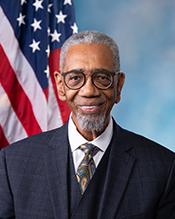
United States · United States Congress · 27 March 2014
Expresses support for the goals and ideals of National Public Health Week. Recognizes the efforts of public health professionals, governments, tribes, and individuals in preventing disease and injury. Encourages increased efforts and resources to improve the health of people in the United States to create the healthiest nation in one generation through greater opportunities to improve community health and prevent disease and injury and through the strengthening of the public health system.
United States · United States Congress · 26 March 2014
Medical Evaluation Parity for Servicemembers Act of 2014 or the MEPS Act - Directs the Secretary of the military department concerned to: (1) provide an individual with a mental health assessment before such individual enlists or is commissioned as an officer in an Armed Force, and (2) use such results as a baseline for any subsequent mental health examinations. Prohibits the Secretary from considering the results of such assessment in determining the assignment or promotion of a member of the Armed Forces. Directs the Secretary to treat such assessment in the same manner as medical records with respect to laws and regulations relating to the privacy of information. Requires the National Institute of Mental Health of the National Institutes of Health (NIH) to submit to Congress and the Secretary of Defense (DOD) a report on preliminary mental health assessments of members of the Armed Forces, including recommendations regarding: (1) establishing a preliminary mental health assessment of members of the Armed Forces to establish parity with physical screenings; and (2) the composition of the mental health assessment, best practices, and how to track assessment changes relating to traumatic brain injuries, post-traumatic stress disorder, and other conditions.
United States · United States Congress · 14 March 2014
Stop Foreclosures Due to Congressional Dysfunction Act of 2014 - Requires the Director of the Federal Housing Finance Agency (FHFA) to prohibit mortgagees of certain eligible mortgages from initiating a foreclosure during a specified six-month moratorium with respect to any of those mortgages owned, held, securitized, or guaranteed by the Federal National Mortgage Association (Fannie Mae) or the Federal Home Loan Mortgage Corporation (Freddie Mac). Tolls the term of such mortgages during the moratorium, and requires deferral of any principal and interest payments due. Qualifies for this mortatorium only Fannie Mae or Freddie Mac mortgages on a 1- to 4-family residence that is the principal residence of a mortgagor who: (1) was current on principal, interest, tax, and insurance payments at the start of the moratorium; (2) has received unemployment compensation during a certain period but exhausted all rights to it; and (3) as of the beginning of the moratorium has a ratio of debt to income on the mortgage greater than 40%.
United States · United States Congress · 13 March 2014
Fair Employment Protection Act of 2014 - Sets forth employer liability standards to be applied in employee harassment claims under specified provisions of the Civil Rights Act of 1964, the Age Discrimination in Employment Act of 1967, the Americans with Disabilities Act, the Rehabilitation Act of 1973, the Revised Statutes, the Genetic Information Nondiscrimination Act of 2008, the Government Employee Rights Act of 1991, employment discrimination laws relating to certain executive branch employees, and the Congressional Accountability Act of 1995. Declares employers under such Acts liable for the acts of any individual whose harassment of an employee has created or continued an unlawful hostile work environment if, at the time of the harassment: (1) such individual was authorized by that employer to undertake or recommend tangible employment actions affecting the employee or to direct the employee's daily work activities, or (2) the negligence of the employer led to the creation or continuation of that hostile work environment (thus modifies the liability standards provided by the Supreme Court in Vance v. Ball State University , which limited the category of supervisors for whom an employer may be held vicariously liable to those individuals who have authority to take tangible employment actions).
United States · United States Congress · 13 March 2014
Ensuring Veterans' Resiliency Act - Directs the Secretary of Veterans Affairs to carry out a three-year pilot program to repay loans used to finance education regarding psychiatric medicine that are obtained from a governmental entity, private financial institution, school, or other authorized entity. Requires an individual, to be eligible to obtain such a loan repayment, to: (1) be either licensed (or eligible for licensure) to practice psychiatric medicine in the Veterans Health Administration (VHA) of the Department of Veterans Affairs (VA) or enrolled in the final year of a residency program leading to a specialty qualification in psychiatric medicine that is approved by the Accreditation Council for Graduate Medical Education; and (2) demonstrate a commitment to a long-term career as a psychiatrist in the VHA, including through a period of obligated service. Directs the Secretary to select at least 10 individuals to participate in each year of the program. Allows a loan repayment to consist of payment of the principal, interest, and related expenses of such a loan. Prohibits the Secretary from paying more than $60,000 on behalf of the individual for each year of obligated service the individual agrees to serve. Makes an individual who participates in the pilot program who fails to satisfy the service commitment liable for prorated loan repayment. Prohibits an individual who is participating in any other federal program that repays his or her educational loans from participating in the program under this Act. Directs the Comptroller General (GAO) to conduct a study of pay disparities among VHA psychiatrists.
United States · United States Congress · 12 March 2014
Honors Thomas Jennings as the first African-American to be granted a patent by the U.S. Patent and Trademark Office (USPTO) and commends his economic contributions to the United States through use of the patent system. Acknowledges that his inventive contributions encourage Americans to continue with innovations in science, technology, engineering, and math.
United States · United States Congress · 11 March 2014
Establishing Beneficiary Equity in the Hospital Readmission Program Act - Amends title XVIII (Medicare) of the Social Security Act (SSA) with respect to the hospital readmission reduction program to exclude from the program admissions related to transplants, end-stage renal disease (ESRD), burns, trauma, psychosis, or substance abuse. Requires the Secretary of Health and Human Services (HHS), in applying requirements for the excess readmission ratio, to provide for a risk adjustment that will take into account a hospital's proportion of inpatients who are full-benefit dual eligible individuals (eligible for both Medicare and Medicaid under SSA title XIX) in order to ensure that hospitals that treat the most vulnerable populations are not unfairly penalized. Directs the Medicare Payment Advisory Commission (MEDPAC) to study the appropriateness of using a threshold of 30 days for readmissions under the program. Directs the Secretary, in promulgating regulations for the hospital readmission reduction program, to consider the use of V codes for potential exclusions of cases involving noncompliant patients in promulgating applicable regulations.
United States · United States Congress · 6 March 2014
Lake Berryessa Recreation Enhancement Act of 2014 - Transfers the administrative jurisdiction over specified water and land that is within or adjacent to Lake Berryessa in California from the Bureau of Reclamation to the Bureau of Land Management (BLM) for administration as the Lake Berryessa Recreation Area. Directs the Secretary of the Interior to act in accordance with any existing agreement with any organization for the management of campgrounds and marinas located in the Area. Authorizes the Secretary to develop a management plan for the Area as a new document or by adopting the recreational use plan adopted by the Bureau of Reclamation on June 2, 2006. Declares that, nothing in this Act or any subsequent management plan shall impair the ability of the Bureau of Reclamation and its managing partners to operate, maintain, or manage Monticello Dam, Lake Berryessa, and other Solano Project facilities in accordance with that project's authorized purposes. Requires the Commissioner of Reclamation to continue to administer and operate the Dam and any power facility related to it. Authorizes the Secretary to establish, modify, charge, and collect recreation or concession fees at the Area in accordance with the Federal Lands Recreation Enhancement Act. Permits the Secretary to retain such fees for purposes of managing the Area.
United States · United States Congress · 6 March 2014
Stop Overdose Stat Act or the S.O.S. Act - Requires the Secretary of Health and Human Services (HHS), acting through the Director of the Centers for Disease Control and Prevention (CDC), to: (1) award grants or enter into cooperative agreements to enable eligible entities to reduce deaths occurring from drug overdoses, and (2) give priority to eligible public health agencies or community-based organizations that have expertise in preventing deaths occurring from overdoses in high risk populations. Conditions receipt of a grant or agreement on an entity agreeing to: (1) use it for purchasing and distributing the drug naloxone, (2) report to the Secretary and the coordinating center (established under this Act) on the results of the activities supported, and (3) make available non-federal contributions of at least 50% of the federal funds provided. Requires a recipient to use such grant or agreement for: (1) educating prescribers and pharmacists about overdose prevention and naloxone prescription; (2) training first responders, other individuals in a position to respond to an overdose, and law enforcement and corrections officials on the effective response to individuals who have overdosed on drugs; (3) implementing and enhancing programs to provide overdose prevention, recognition, treatment, and response; and/or (4) expanding such activities. Requires the Director to establish and provide for the operation of a coordinating center responsible for: (1) collecting, compiling, disseminating, and evaluating data on such activities; (2) developing best practices for preventing deaths occurring from drug overdoses; and (3) making such best practices specific to the type of community involved. Requires the Director to award grants or cooperative agreements to improve drug overdose surveillance and reporting capabilities. Amends the Public Health Service Act to require the Secretary to develop and submit to Congress a plan to reduce the number of deaths occurring from overdoses, to include implementation of a campaign to educate prescribers and the public about overdose prevention and naloxone prescription. Requires the Director of the National Institute on Drug Abuse to: (1) prioritize and conduct or support research on drug overdose and overdose prevention, and (2) support research on the development of formulations of naloxone and dosage delivery devices specifically intended to be used for the prehospital treatment of unintentional drug overdose.
United States · United States Congress · 6 March 2014
Trauma Relief Access for Urgent Medical Assistance of 2014 - Appropriates amounts for FY2014-FY2018 to carry out the following programs under the Public Health Service Act: grants for regionalized systems for emergency care response, grants for certain trauma care centers, grants to promote access to trauma care services provided by trauma centers and trauma-related physician specialties, support for research in emergency medical care systems and emergency medicine, and grants for demonstration projects for the expansion and improvement of emergency medical services for children.
United States · United States Congress · 6 March 2014
Women's Economic Bill of Rights Resolution of 2014 - Expresses the sense of the House of Representatives that Congress should support efforts that guarantee: (1) equal pay for equal work; and (2) fair treatment in the workplace, including reasonable accommodations for pregnant workers. Declares that Congress should support efforts that guarantee, for women and men: (1) access to paid family and medical leave; (2) economic and retirement security; and (3) fair access to business capital, federal contracts, and a marketplace conducive to small business growth.
United States · United States Congress · 6 March 2014
Recognizes the significance of North Korea's willingness to resume family reunions between North and South Korea. Encourages North Korea to allow Korean Americans to meet with their divided families in North Korea. Calls on North Korea to continue building goodwill that is conducive to peace on the Korean Peninsula.
United States · United States Congress · 5 March 2014
Congratulates the Minority Business Development Agency on its 45th anniversary. Commends the Agency for its achievements in fostering the establishment and growth of minority businesses. Encourages the Agency to continue its efforts to assist such businesses as they continue to strengthen communities, create jobs, and contribute to the health of the U.S. economy.
United States · United States Congress · 4 March 2014
Children in Families First Act of 2014 - Establishes within the Department of State the Bureau of Vulnerable Children and Family Security which shall: (1) support the implementation in foreign countries of child welfare laws and policies; and (2) establish within the Bureau a Senior Coordinator for Permanence who shall lead the implementation of policies to ensure permanent family care for children living without families, including refugee and stateless children. States that the Bureau shall be headed by an Assistant Secretary and have lead responsibility for representing the U.S. government in diplomatic contacts pertaining to intercountry adoptions. Amends the Intercountry Adoption Act of 2000 to direct the Secretary of Homeland Security (DHS), through U.S. Citizenship and Immigration Services (USCIS), to carry out the functions prescribed by the Convention regarding the accreditation of U.S. adoption services providers. Establishes data bases for: (1) internationally adopted children, and (2) adoption service providers. Transfers from the Secretary of State to the Field Operations Directorate of USCIS specified adoption-related functions, including accreditation of agencies and approval of persons to provide adoption services and oversight of provider investigations. Requires the Secretary of Homeland Security (DHS), through USCIS, to: (1) be responsible for processing and case-specific decision making on all intercountry adoption cases, (2) ensure that all intercountry adoption suitability and eligibility determinations of prospective adoptive parents are made in accordance with criteria that comply with the Hague Adoption Convention, (3) ensure that all non-Convention adoption cases undergo specified preprocessing, and (4) be responsible for all case processing steps in Convention and non-Convention adoption petitions on behalf of children whom U.S. parents propose to immigrate to the United States. Establishes within the U.S. Agency for International Development (USAID) a Center of Excellence on Children in Adversity. Authorizes the President to provide assistance for programs in developing countries for nutrition, education, care, and protection of children. Requires USAID to carry out a priority country demonstration program implementing the (December 2012) Action Plan for Children in Adversity over a period of five years in at least six countries. Prohibits: (1) the authorization of appropriations to carry out this Act, and (2) funds from being awarded to the United Nations (U.N.) or any of its subsidiaries.
United States · United States Congress · 28 February 2014
West Hunter Street Baptist Church Study Act - Directs the Secretary of the Interior to conduct a special resource study of the historic West Hunter Street Baptist Church located at 775 Martin Luther King Jr. Drive, S.W., Atlanta, Georgia, to evaluate the national significance of the Church and to determine the suitability and feasibility of designating such area as a unit of the National Park System.
United States · United States Congress · 28 February 2014
Small Business Tax Credit Accessibility Act - Expresses the sense of Congress that the Obama Administration should work to make the small employer health care insurance tax credit more accessible for small employers. Amends the Internal Revenue Code, with respect to the small employer health care insurance tax credit, to: (1) revise the definition of "eligible small employer" to mean an employer with not more than 50 (currently, 25) full-time employees; (2) modify the phaseout formula for such credit to base such phaseout on number of employees and average annual wages; (3) allow a 35% credit in 2014 to small employers who purchase health care coverage outside of the Small Business Health Option Program (SHOP exchange); (4) extend from two to three consecutive taxable years the period during which an employer may claim such credit; (5) eliminate the requirement that employers contribute the same percentage of cost of each employee's health insurance and the cap limiting eligible employer contributions to average premiums paid to a state health insurance exchange; and (6) make such credit available to dependents of a small employer.
United States · United States Congress · 28 February 2014
Reaffirms the commitment of the House of Representatives to: (1) the Taiwan Relations Act as the cornerstone of U.S.-Taiwan relations; and (2) deepening U.S.-Taiwan trade and investment relations, including support for Taiwan's inclusion in bilateral and regional trade agreements. Reaffirms: (1) support for Taiwan's democratic institutions, and (2) that peace in the Taiwan Strait should be maintained to the benefit of the free people of Taiwan. Supports the commitment to Taiwan's security, including the sale of sophisticated defensive weapons to Taiwan.
United States · United States Congress · 27 February 2014
Breath of Fresh Air Act - Amends the Elementary and Secondary Education Act of 1965 to direct the Secretary of Education to award matching grants to local educational agencies (LEAs) to: (1) purchase nebulizers for use in their schools, and/or (2) train school personnel to use nebulizers. Requires LEA grant applicants to demonstrate that for each of their schools that are to use the nebulizers: (1) a full-time certified nurse is on staff, (2) trained personnel and other resources necessary for nebulizer use are in place, (3) emergency services personnel are notified of nebulizer locations, (4) nebulizers are integrated into the school's emergency response procedures, and (5) procedures are in place to notify parents of the availability of nebulizers and to inform them how to provide the school with their child's prescription asthma medication and authorization to use a nebulizer to assist their child. Gives grant priority to LEAs that: (1) serve areas where the prevalence of asthma is at least 10% higher than the national average; (2) do not already have at least one nebulizer in each of their schools; (3) serve schools that typically have a significant number of students, staff, and visitors present during the day; and (4) have not received funds under the Rural Access to Emergency Devices Act.
United States · United States Congress · 25 February 2014
Trauma Systems and Regionalization of Emergency Care Reauthorization Act - Amends the Public Health Service Act to authorize appropriations for trauma care programs through FY2019. Requires that not more than 50% of amounts remaining for a fiscal year after FY2014 (after allocation for administrative purposes or for improvement of emergency medical services in rural areas) be allocated for competitive grants to support pilot projects for emergency care and trauma systems. Requires the inclusion of standards and requirements of the American Burn Association in trauma care modifications of a state plan for providing emergency medical services.
United States · United States Congress · 11 February 2014
First Rhode Island Regiment Congressional Gold Medal Act - Requires the Speaker of the House of Representatives and the President pro tempore of the Senate to award a congressional gold medal to the First Rhode Island Regiment, collectively, in recognition of their dedicated service during the Revolutionary War. Authorizes the Secretary of the Treasury to strike and sell bronze duplicates of such medal at a price sufficient to cover the costs of such medals.
United States · United States Congress · 11 February 2014
Directs the Speaker of the House of Representatives and the President pro tempore of the Senate to arrange for the presentation, on behalf of Congress, of a gold medal to the Freedom Riders in recognition of their contribution to civil rights, which inspired a movement to equality in interstate travel. Requires such medal to be given to the Smithsonian Institution, where it will be available for display and research. Expresses the sense of Congress that the medal should be made available for display elsewhere, particularly at locations associated with the Freedom Riders.
United States · United States Congress · 11 February 2014
Recognizes the significance of Black History Month as an important time to acknowledge and celebrate the contributions of African-Americans in the nation's history. Encourages the continued celebration of this month to provide an opportunity for all peoples of the United States to learn more about the past and to better understand the experiences that have shaped the nation. Recognizes that the ethnic and racial diversity of the United States enriches and strengthens the nation. Encourages states to include in their year-round educational curriculum the history and contributions of African-Americans in the United States and around the world.
United States · United States Congress · 11 February 2014
Recognizes the 105th anniversary of the founding of the National Association for the Advancement of Colored People (NAACP). Honors the NAACP for its work to ensure the political, educational, social, and economic rights of all persons.
United States · United States Congress · 6 February 2014
SGR Repeal and Medicare Provider Payment Modernization Act of 2014 - Amends title XVIII (Medicare) of the Social Security Act (SSA) to: (1) end and remove sustainable growth rate (SGR) methodology from the determination of annual conversion factors in the formula for payment for physicians' services, (2) establish an update to the single conversion factor for 2014 through 2018 of 0.5%, (3) freeze the update to the single conversion factor at 0.00% for 2019 through 2023, and (4) establish an update of 1% for health professionals participating in alternative payment models (APMs) and an update of 0.5% for all other health professionals after 2023. Directs the Medicare Payment Advisory Commission (MEDPAC) to report to Congress on the relationship between: (1) physician and other health professional utilization and expenditures (and their rate of increase) of items and services for which Medicare payment is made; and (2) total utilization and expenditures (and their rate of increase) under Medicare parts A (Hospital Insurance), B (Supplementary Medical Insurance), and D (Voluntary Prescription Drug Benefit Program). Directs MEDPAC to report to Congress on: (1) the payment update for professional services applied under Medicare for 2014 through 2018; (2) the effect of such update on the efficiency, economy, and quality of care provided under such program; (3) the effect of such update on ensuring a sufficient number of providers to maintain access to care by Medicare beneficiaries; and (4) recommendations for any future payment updates for professional services under such program to ensure adequate access to care is maintained for Medicare beneficiaries Revises and consolidates components of the three specified existing performance incentive programs into a merit-based incentive payment system (MIPS) the Secretary of Health and Human Services (HHS) is directed to establish, under which MIPS-eligible professionals (excluding most Alternative Payment Model [APM] participants) receive annual payment increases or decreases based on their performance. Applies the MIPS program to payments for items and services furnished on or after January 1, 2018. Requires specified incentive payments to be made to eligible partial qualifying APM participants. Directs the Secretary to make available on the Physician Compare website of the Centers for Medicare & Medicaid Services (CMS) certain information, including information regarding the performance of MIPS-eligible professionals. Requires the Comptroller General (GAO) to evaluate the MIPS program. Requires GAO to submit to Congress a report that: (1) compares the similarities and differences in the use of quality measures under the original Medicare fee-for-service programs, the Medicare Advantage (MA) program under Medicare part C (Medicare+Choice), selected state Medicaid programs, and private payer arrangements; and (2) make recommendations on how to reduce the administrative burden involved in applying such quality measures. Directs GAO to report to Congress on: (1) whether entities that pool financial risk for physician services can play a role in supporting physician practices in assuming financial risk for treatment of patients; and (2) the transition to an APM of professionals in rural areas, health professional shortage areas, or medically underserved areas. Establishes the Payment Model Technical Advisory Committee to make recommendations to the Secretary on physician-focused payment models. Requires the Secretary to study: (1) the application of federal fraud prevention laws related to APMs; (2) the effect of individuals' socioeconomic status on quality and resource use outcome measures for individuals under Medicare; and (3) the impact of risk factors, race, health literacy, limited English proficiency (LEP), and patient activation, on quality and resource use outcome measures under Medicare. Directs the Secretary to: (1) post on the CMS Internet website a draft plan for the development of quality measures to assess professionals, (2) establish new Healthcare Common Procedure Coding System (HCPCS) codes for chronic care management services, and (3) conduct an education and outreach campaign to inform professionals who furnish items and services under Medicare part B and Medicare part B enrollees of the benefits of chronic care management services. Authorizes the Secretary to: (1) collect and use information on the resources directly or indirectly related to physicians' services in the determination of relative values under the Medicare physician fee schedule; and (2) establish or adjust practice expense relative values using cost, charge, or other data from suppliers or service providers. Revises and expands factors for identification of potentially misvalued codes. Sets an annual target for relative value adjustments for misvalued services. Phases-in of significant relative value unit (RVU) reductions. Directs GAO to study the processes used by the Relative Value Scale Update Committee (RUC) to make recommendations to the Secretary regarding relative values for specific services under the Medicare physician fee schedule. Makes Metropolitan Statistical Areas in California fee schedule areas for Medicare payments. Directs the Secretary to: (1) establish a program to promote the use of appropriate use criteria for certain imaging services furnished by ordering professionals and furnishing professionals, and (2) make publicly available on the CMS Physician Compare website specified information with respect to eligible professionals. Expands the kinds and uses of data available to qualified entities for quality improvement activities. Directs the Secretary to provide Medicare data to qualified clinical data registries to facilitate quality improvement or patient safety. Permits continuing automatic extensions of a Medicare physician and practitioner election to opt-out of the Medicare physician payment system into private contracts. Directs the Secretary to: (1) make publicly available through an appropriate publicly accessible website information on the number and characteristics of opt-out physicians and practitioners; and (2) report to Congress recommendations to amend existing fraud and abuse laws, through exceptions, safe harbors, or other narrowly targeted provisions, to permit gainsharing or similar arrangements between physicians and hospitals that improve care while reducing waste and increasing efficiency. Declares it a national objective to achieve widespread exchange of health information through interoperable certified electronic health record (EHR) technology nationwide by December 31, 2017, as a consequence of a significant federal investment in the implementation of health information technology through the Medicare and Medicaid EHR programs. Directs the Secretary to study the feasibility of establishing mechanisms that includes aggregated results of surveys of meaningful EHR users on the functionality of certified EHR products to enable such users to compare directly the functionality and other features of such products. Requires GAO studies on the use of telehealth under federal programs and on remote patient monitoring services.
United States · United States Congress · 5 February 2014
Social Security Administration Accountability Act of 2014 - Amends title VII (Administration) of the Social Security Act to require the Commissioner of Social Security to submit an annual budget estimate of the Social Security Administration (SSA) (instead of a budget) directly to Congress and the President (instead of first to the President, who would submit it to Congress). Revises requirements for the general contents of the SSA budget, requiring inclusion of the number of cases pending at each hearing office and the average processing time. Prohibits the Commissioner from closing or consolidating SSA field or hearing offices, or otherwise limiting public access to one, until 180 days after submitting to specified congressional committees a detailed report outlining and justifying the process for selecting field offices to be closed, consolidated, or otherwise have limited access. Prohibits the Commissioner from closing an SSA field or hearing office, consolidating two or more such offices, or otherwise imposing any new limitation on public access to any such office unless the Commissioner follows certain administrative procedures.
United States · United States Congress · 5 February 2014
Government By the People Act of 2014 - Amends the Internal Revenue Code (IRC) to allow a refundable credit of 50% of qualified congressional House campaign contributions paid or incurred during the taxable year (contributions of cash by an individual to a House candidate or a political committee established and maintained by a national political party if the contribution is not prohibited under the Federal Election Campaign Act of 1971 [FECA], to be known as "My Voice Federal" contributions). Directs the Government by the People Oversight Commission, established by this Act, to launch a pilot program under which it shall select three eligible states to operate a voucher pilot program. Requires a state under a voucher pilot program to provide each qualified individual during the election cycle, upon his or her request, with a "My Voice Voucher" worth $50 (in either paper or electronic form), which will be assigned a routing number. Authorizes the individual, using the assigned routing number, to submit the My Voice Voucher, in either electronic or paper form, to qualified federal election candidates, allocating a portion of its value in $5 increments. Requires the Commission to pay any candidate who transmits a My Voice Voucher that portion of its value which the individual allocated to the candidate. Considers this transaction a contribution by the individual to the candidate for purposes of FECA. Requires a state operating a voucher pilot program also to permit an individual to revoke a My Voice Voucher within two days after submitting it to a candidate. Requires such a state to establish a commission or designate an existing entity to oversee and implement the program in the state, except that no such commission or entity may be composed of elected officials. Amends FECA with respect to: benefits for participating House of Representatives candidates; Federal Election Commission (FEC) payments to such candidates; candidate use of payments; qualified small dollar contributions, expenditures, and fundraising requirements; certification of participating candidates; campaign administration; prevention of the unnecessary spending of public funds; establishment of the Freedom From Influence Fund in the Treasury and of a Government by the People Oversight Commission in the FEC; remittal of unspent funds to the Freedom From Influence Fund after an election; eligibility of participating candidates for additional payments; civil penalties for violation of contribution and expenditure requirements; a Commission action appeals process; and contributions and expenditures by multicandidate and political party political committees on behalf of participating candidates. Prohibits a certified participating candidate's authorized committee from establishing a joint fundraising committee with any political committee other than another authorized committee of the candidate. Prohibits a certified participating candidate from establishing, financing, maintaining, or controlling a leadership PAC (political action committee). Prohibits use of contributions by a participating candidate for any purposes other than an election campaign. Revises bundler disclosure requirements to repeal a specified exception and so require disclosure of persons who provided bundled contributions to the reporting committee. Amends FECA to empower the FEC to petition the U.S. Supreme Court for a writ of certiorari to appeal a civil action to enforce the Act. Requires all political committee designations, statements, and reports required to be filed under FECA to be filed: (1) directly with the FEC; and (2) in electronic form accessible by computers. Reduces from 48 hours to 24 hours after their receipt the deadline for the FEC to make designations, statements, reports, or notifications available to the public in the FEC office and on the Internet. Amends the Communications Act of 1934 to set a station's lowest unit price for preemptible use as the charge for a broadcast by the national committee of a political party for an affiliated candidate. Authorizes the FEC to revoke a broadcast station license or construction permit only for at least three willful failures to allow reasonable access to, or to permit purchase of reasonable amounts of time for the use of, a broadcasting station or cable system by a legally qualified candidate for federal office. Amends the IRC to allow tax payers to designate that a specified portion of any overpayment of tax be contributed to the Freedom From Influence Fund.
United States · United States Congress · 29 January 2014
Stop Subsidizing Multimillion Dollar Corporate Bonuses Act - Amends the Internal Revenue Code, with respect to the $1 million limitation on the deductibility of employee compensation, to: (1) extend such limitation to any individual who is a current or former officer, director, or employee of a publicly-held corporation; (2) eliminate the exemption from such limitation for compensation payable on a commission basis or upon the attainment of a performance goal; and (3) make such limitation applicable to all publicly-held corporations that are required by the Securities and Exchange Commission (SEC) to register securities and provide periodic reports to their investors.
United States · United States Congress · 29 January 2014
Expresses the sense of the House of Representatives that: (1) gun violence is a public health issue; and (2) Congress should enact, by the end of the 113th Congress, comprehensive legislation that protects the Second Amendment and keeps communities safe and healthy, including by expanding enforceable background checks for all commercial gun sales, improving the mental health system, and making gun trafficking and straw purchasing a federal crime.
United States · United States Congress · 28 January 2014
Concussion Awareness and Education Act of 2014 - Amends the Public Health Service Act to require the Director of the Centers for Disease Control and Prevention (CDC) to: (1) establish and oversee a national system to accurately determine the incidence of sports-related concussions, and (2) begin implementation of such system within one year of this Act's enactment. Requires the data collected to include: the incidence of sports related concussions in individuals 5 through 21 years of age; demographic information of the injured individuals; pre-existing conditions of the injured individuals; the concussion history of the injured individuals; the use of protective equipment and impact monitoring devices; the qualifications of personnel diagnosing the concussions; and the cause, nature, and extent of the concussive injury. Requires the Director of the National Institutes of Health (NIH) and the Secretary of Defense (DOD), acting in coordination, to conduct or support: (1) research designed to establish metrics and markers of concussion diagnosis, prognosis, and recovery in youth and to inform the creation of guidelines for the management of short- and long-term sequelae of concussion in youth; (2) studies to assess short- and long-term cognitive, emotional, behavioral, neurobiological, and neuropathological consequences of concussions and repetitive head impacts over a life span; and (3) research on age- and sex-related biomechanical determinants of injury risk for concussion in youth. Directs the Secretary of Defense to conduct a scientific evaluation of the effectiveness of techniques, rules, and playing, practice, and training standards in reducing concussions and sequelae for sports and physical training at military service academies and for military personnel. Calls for the National Collegiate Athletic Association to undertake a scientific evaluation of the effectiveness of age-appropriate techniques, rules, and playing and practice standards in reducing sports-related concussions and sequelae. Requires: (1) the Director of NIH to maintain a national brain tissue and biological sample repository to collect, archive, and distribute material for research on concussions; (2) such Director and the Secretary of Defense to develop standards, best practices, and guidelines for the rules of play and training, respectively, for sports, athletic, and military training and engagement that are designed to prevent or reduce the incidence of concussions and that include standards for effective protective equipment and recommendations on impact-monitoring systems; and (3) the Director of CDC to develop and disseminate to the public information regarding concussions. Establishes a Concussion Research Commission, which shall study the programs and activities conducted pursuant to this Act and formulate systemic recommendations to increase knowledge about, and change the culture surrounding, concussions.
United States · United States Congress · 27 January 2014
National Commission on the Structure of the Army Act of 2014 - Establishes the National Commission on the Structure of the Army to undertake a comprehensive study of the structure of the Army to determine: (1) the proper force mixture of the active component and reserve component, and (2) how the structure should be modified to best fulfill mission requirements in a manner consistent with available resources. Directs the Commission to give particular consideration to evaluating a structure that: (1) meets current and anticipated requirements of the combatant commands; (3) achieves a cost-efficiency balance between the regular and reserve components, with a focus on fully burdened and lifecycle cost of Army personnel; (3) ensures that the regular and reserve components have the capacity needed to support homeland defense and disaster assistance missions in the United States; (4) provides for sufficient numbers of regular members of the Army to provide a base of trained personnel from which the personnel of the reserve components could be recruited; (5) maintains a peacetime rotation force to support operational tempo goals of 1:2 for regular members and 1:5 for members of the reserve components; and (6) maximizes and appropriately balances affordability, efficiency, effectiveness, capability, and readiness. Prohibits the use of any funds made available for FY2015 for the Army to: (1) divest, retire, or transfer, or prepare to divest, retire, or transfer, any aircraft of the Army assigned to units of the Army National Guard as of January 15, 2014; or (2) reduce personnel below the authorized end strength levels of 350,000 for the Army National Guard as of September 30, 2014.
United States · United States Congress · 27 January 2014
Pullman National Historical Park Act - Establishes the Pullman National Historical Park in Illinois as a unit of the National Park System to: (1) preserve and interpret for the benefit of future generations the significant labor, industrial, civil rights, and social history of the Park, the significant architectural structures in the Park, and the role of the Pullman community in the creation of the first national Labor Day holiday in the world; (2) coordinate preservation, protection, and interpretation efforts of the Park by the federal government, the state of Illinois, units of local government, and private and nonprofit organizations; and (3) coordinate appropriate management options necessary to ensure the protection, preservation, and interpretation of the many significant aspects of the Park. Requires the Secretary of the Interior to complete a general management plan for the Park.
United States · United States Congress · 27 January 2014
Recognizes the difficult challenges Black veterans faced when returning home after serving in the Armed Forces, their heroic military sacrifices, and their patriotism in fighting for equal rights and for the dignity of a people and a nation. Recognizes the need for the Department of Veterans Affairs (VA) to continue to work to eliminate any health and benefit disparities for minority veterans.
United States · United States Congress · 16 January 2014
Amends the Missing Children's Assistance Act to require the Office of Juvenile Justice and Delinquency Prevention's annual grant to the National Center for Missing and Exploited Children to be used (among other things) to operate a cyber tipline to provide online users and electronic service providers an effective means of reporting Internet-related child sexual exploitation in the area of child sex trafficking (currently, child prostitution). Amends the Crime Control Act of 1990 to require each state reporting on missing children to: (1) provide, with respect to each missing child report, a recent photograph of the child, if available; (2) direct the law enforcement agency that entered the report into the National Crime Information Center (NCIC) to verify and update such record with any additional information no later than 30 days after the original entry of the record into the state law enforcement system and NCIC computer networks and to maintain close liaison with state and local child welfare systems for the exchange of information and technical assistance; and (3) grant permission to the NCIC Terminal Contractor for the state to update the missing person record in the NCIC computer networks with additional information learned during the investigation relating to the missing person.
United States · United States Congress · 16 January 2014
Child Protection Improvements Act of 2013 - Amends the National Child Protection Act of 1993 to direct the Attorney General to: (1) establish policies and procedures to streamline the process of obtaining state and national criminal history background checks on covered individuals, and (2) establish a criminal history review program to provide covered entities with reliable and accurate information on the criminal history of a covered individual. Defines "covered entity" as any business or organization that provides, or licenses, certifies, or coordinates individuals or organizations to provide, care, care placement, supervision, treatment, education, training, instruction, or recreation to children. Defines "covered individual" as an individual who: (1) has, seeks to have, or may have unsupervised access to vulnerable populations (i.e., elderly, disabled, and children) served by a covered entity; (2) is employed by or volunteers with, or seeks to be employed by or volunteer with, a covered entity; or (3) owns or operates, or seeks to own or operate, a covered entity.
United States · United States Congress · 16 January 2014
Voting Rights Amendment Act of 2014 - Amends the Voting Rights Act of 1965 with respect to the requirement that a federal court retain jurisdiction for an appropriate period to prevent commencement of new devices to deny or abridge the right to vote. Expands the types of violations triggering the authority of a court to retain such jurisdiction to include certain violations of the Act as well as violations of any federal voting rights law that prohibits discrimination on the basis of race, color, or membership in a language minority group. Excludes from the list of violations triggering jurisdiction retention authority any voting qualification or prerequisite which results in a denial or abridgement of the right to vote that is based on the imposition of a requirement that an individual provide a photo identification as a condition of receiving a ballot for voting in a federal, state, or local election. Revises requirements for determining which states and political subdivisions are covered or not covered by criteria for declaratory judgments that they have not used devices to deny or abridge the right to vote. Subjects to the requirements for making such a determination any state (and all of its political subdivisions) during a calendar if 5 or more voting rights violations occurred in the state during the previous 15 years, at least one of which was committed by the state itself (as opposed to a political subdivision within it). Specifies application of such new coverage requirements to any specific political subdivision if: (1) 3 or more voting rights violations occurred in it during the previous 15 calendar years; or (2) 1 or more voting rights violations occurred in it during the previous 15 calendar years and the subdivision had persistent, extremely low minority turnout during that period. Provides that, if a state obtains a declaratory judgment that it has not used a device to deny or abridge the right to vote, the requirements for a new declaratory judgment generally will not apply, unless the new coverage requirements of this Act apply to the state solely on the basis of voting rights violations occurring after the declaratory judgment was issued. Prescribes transparency requirements, including reasonable public notice, regarding any changes to: (1) voting prerequisites, standards, or procedures; (2) polling place resources; or (3) demographics and electoral districts. Modifies authority to assign observers, including authorizing the assignment of observers to enforce bilingual election requirements. Revises requirements for injunctive relief, including its scope and the persons authorized to seek relief as well as the grounds for granting it.
United States · United States Congress · 15 January 2014
Student Loan Borrowers' Bill of Rights Act of 2013 - Removes educational loans from the list of debts that are non-dischargeable in bankruptcy. Amends title IV (Student Assistance) of the Higher Education Act of 1965 (HEA) to reinstate the six-year statute of limitations on the recovery by: institutions of higher education (IHEs) of refund amounts owed by students on grants made, or work assistance awarded, under title IV; guaranty agencies of amounts owed on loans made under the Federal Family Education Loan (FFEL) program; IHEs that have program participation agreements with the Secretary of Education of amounts owed under the William D. Ford Federal Direct Loan program or Federal Perkins Loans program; and the federal government of amounts owed by students on grants made under title IV or amounts owed by borrowers on loans made under title IV that have been assigned to the Secretary. Prohibits the collection of amounts individuals owe the Department of Education under title IV of the HEA through: (1) offsets of social security, railroad retirement, or black lung benefits; (2) offsets of tax refunds; or (3) wage garnishment. Amends the Internal Revenue Code to exclude discharged student loan debt from an individual's gross income. Excludes from gross income distributions from qualified tuition plans that are use to pay the interest or principal on student loans. Amends the HEA to make borrowers of PLUS loans made on behalf of dependent students under: the Direct Loan program eligible for income-contingent repayment plans, including plans based on the President's Pay As You Earn repayment initiative; the Direct Loan or FFEL programs eligible for income-based repayment plans that enable borrowers who have a partial financial hardship to make lower monthly payments; and the Direct Loan or FFEL programs eligible for loan forgiveness for service in areas of national need. Specifies the regulation to be used in determining whether individuals have an adverse credit history that disqualifies them from borrowing a Direct Plus loan (provided to graduate or professional students or the parents of dependent students). Prohibits evidence of an individual's default on a loan made, insured, or guaranteed under title IV of the HEA from being used in a federal or state proceeding involving the individual's professional or vocational license. Prohibits an IHE from blocking students' access to their student records at the IHE due to such students being in default on such loans. Directs the Secretary to cancel 50% of the balance of the interest and principal due on Direct loans that are not in default for borrowers who are employed in a public service job and make 60 monthly payments on such loans after October 1, 2013.
United States · United States Congress · 15 January 2014
Hate Crime Reporting Act of 2014 - Directs the National Telecommunications and Information Administration (NTIA) to update a report for Congress concerning the role of telecommunications in the commission of hate crimes. Requires such report to include: (1) an analysis of the use of telecommunications (including the Internet, broadcast television and radio, cable television, public access television, commercial mobile services, and other electronic media) to advocate and encourage violent acts and the commission of hate crimes as specified in the Hate Crime Statistics Act; (2) NTIA recommendations; and (3) updates concerning the role of telecommunications in crimes of hate and violent acts against ethnic, religious, and racial minorities.
United States · United States Congress · 15 January 2014
Lymphedema Treatment Act - Amends title XVIII (Medicare) of the Social Security Act (SSA) to cover certain lymphedema compression treatment items as durable medical equipment.
United States · United States Congress · 13 January 2014
Intelligence Budget Transparency Act of 2014 - Requires the President's annual federal budget submission to include the total dollar amount proposed for intelligence or intelligence related activities of each element of the government engaged in such activities in the fiscal year for which the budget is submitted and the estimated appropriation required for each of the ensuing four fiscal years.
United States · United States Congress · 9 January 2014
Emergency Unemployment Compensation Extension Act - Amends the Supplemental Appropriations Act, 2008 to extend emergency unemployment compensation (EUC) payments for eligible individuals to weeks of employment ending on or before April 1, 2014. Amends the Assistance for Unemployed Workers and Struggling Families Act to extend until March 31, 2014, requirements that federal payments to states cover 100% of EUC. Amends the Unemployment Compensation Extension Act of 2008 to exempt weeks of unemployment between enactment of this Act and September 30, 2014, from the prohibition in the Federal-State Extended Unemployment Compensation Act of 1970 (FSEUCA of 1970) against federal matching payments to a state for the first week in an individual's eligibility period for which extended compensation or sharable regular compensation is paid if the state law provides for payment of regular compensation to an individual for his or her first week of otherwise compensable unemployment. (Thus allows temporary federal matching for the first week of extended benefits for states with no waiting period.) Amends the FSEUCA of 1970 to postpone similarly from December 31, 2013, to March 31, 2014, termination of the period during which a state may determine its "on" and "off" indicators according to specified temporary substitutions in its formula. Amends the Supplemental Appropriations Act, 2008 to appropriate funds out of the employment security administration account through the first quarter of FY2015 to assist states in providing reemployment and eligibility assessment activities. Amends the Railroad Unemployment Insurance Act to extend through March 31, 2014, the temporary increase in extended unemployment benefits. Makes a change in application of a certain requirement (nonreduction rule) to a state that has: (1) entered a federal-state EUC agreement, under which the federal government would reimburse the state's unemployment compensation agency making EUC payments to individuals who have exhausted all rights to regular unemployment compensation under state or federal law and meet specified other criteria; and (2) enacted a law before December 1, 2013, that, upon taking effect, would violate the nonreduction rule. (Under the nonreduction rule such an agreement does not apply with respect to a state whose method for computing regular unemployment compensation under state law has been modified to make the average weekly unemployment compensation benefit paid on or after June 2, 2010, less than what would have been paid before June 2, 2010.) Declares that the nonreduction rule shall not apply to a state which has enacted a law before December 1, 2013, that, upon taking effect, would violate the nonreduction rule. Allows such a state, however, to enter into a subsequent federal-state EUC agreement on or after enactment of this Act if, taking into account this inapplicability of the nonreduction rule, it would otherwise meet the requirements for an EUC agreement. (Thus allows such a subsequent EUC agreement to permit payment of less than the average weekly unemployment compensation benefit paid on or after June 2, 2010.)
United States · United States Congress · 12 December 2013
Helping Families in Mental Health Crisis Act of 2013 - Creates in the Department of Health and Human Services (HHS) an Assistant Secretary for Mental Health and Substance Use Disorders, who shall supervise and direct the Administrator of the Substance Abuse and Mental Health Services Administration (SAMHSA). Directs the Assistant Secretary to establish a National Mental Health Policy Laboratory to: (1) identify and implement policy changes and other trends likely to have the most significant impact on mental health services; (2) collect information from grantees; and (3) evaluate and disseminate to such grantees evidence-based practices and services delivery models, using the best available science shown to reduce program expenditures while enhancing the quality of care furnished to individuals by other such grantees. Amends the Public Health Service Act (PHSA) to require the Assistant Secretary to establish: (1) an Interagency Serious Mental Illness Coordinating Committee; and (2) a four-year pilot program to award up to 50 grants each year to counties, cities, mental health systems, mental health courts, and any other entities with authority under state law to implement, monitor, and oversee assisted outpatient treatment programs. Directs the Assistant Secretary to establish a program of tele-psychiatry and primary care physician training grants to states to promote the use of qualified telehealth technology for the identification, diagnosis, mitigation, or treatment of a mental health disorder. Directs the HHS Secretary (Secretary), in coordination with the Assistant Secretary, to award planning grants to enable up to 10 states to carry out 5-year demonstration programs to improve the provision of behavioral health services by federally qualified community behavioral health clinics. Requires the Assistant Secretary to certify federally qualified community behavioral health clinics that meet specified criteria. Requires the caregiver of an individual with a serious mental illness to be treated as the individual's personal representative with respect to protected health information, even though the individual has not consented to disclosure of such information to the caregiver, when the individual's service provider reasonably believes it is necessary for protected health information to be made available to the caregiver in order to protect the individual's health, safety, or welfare or the safety of one or more other individuals. Amends the General Education Provisions Act to allow an educational agency or institution to disclose to such a caregiver the individual's education record in certain related circumstances. Amends the Omnibus Crime Control and Safe Streets Act of 1968 to make available: (1) Edward Byrne Memorial Justice Assistance Grants for mental health programs and operations by law enforcement or corrections officers, and (2) public safety and community policing grants to provide specialized training to law enforcement officers to recognize and intervene properly with individuals who have mental illness. Reauthorizes and revises requirements for the Mentally Ill Offender Treatment and Crime Reduction Act of 2004. Authorizes the Attorney General to award grants to: (1) establish or expand veterans treatment court programs; and (2) enhance the capabilities of a correctional facility to identify, screen, and treat inmates with a mental illness, as well as develop and implement post-release transition plans for them. Requires any data prepared by or submitted to the Attorney General or the Director of the Federal Bureau of Investigation (FBI) with respect to homicides, law enforcement officers killed and assaulted, or individuals killed by law enforcement officers to include data about the involvement of mental illness in such incidences, if any. Directs the Comptroller General (GAO) to detail the cost of federal. state, or local imprisonment for persons who have serious mental illness. Amends title XIX (Medicaid) of the Social Security Act (SSA) to prohibit a state medical assistance plan from prohibiting payment for a same-day qualifying mental health service or primary care service furnished to an individual at a federally qualified community behavioral health center or a federally qualified health center on the same day as the other kind of service. Allows states the option to provide medical assistance for inpatient psychiatric hospital services and psychiatric residential treatment facility services for individuals age 21-65. Amends both SSA titles XIX and XVIII (Medicare) to cover prescription drugs used to treat mental health disorders. Amends the PHSA to increase funding for the brain initiative at the National Institute of Mental Health. Transfers responsibility for the administration of community mental health block grants to the Assistant Secretary from the Director of the Center for Mental Health Services (CMHS). Revises requirements for the funding agreement under a formula block grant to a state for community mental health services to prescribe the general standard under state law for court ordered inpatient or outpatient mental health treatment as well as assisted outpatient treatment. Requires the Assistant Secretary to evaluate the combined paperwork burden of certain community mental health centers as well as of certified federally qualified community mental health clinics. Directs the Secretary of Education, along with the Assistant Secretary, to organize a national awareness campaign to assist secondary school students and postsecondary students in: (1) reducing the stigma associated with serious mental illness; (2) understanding how to assist an individual demonstrating signs of a serious mental illness; and (3) understanding the importance of seeking treatment from a physician, clinical psychologist, or licensed mental health professional when a student believes the student may be suffering from a serious mental illness or behavioral health disorder. Amends the PHSA to include as health care providers any behavioral and mental health professionals, substance abuse professionals, psychiatric hospitals, certain community mental health centers (including one operated by a county behavioral health agency), and residential or outpatient mental health or substance abuse treatment facilities. Amends SSA title XVIII (Medicare), with respect to incentives for meaningful use of certified electronic health records (EHR) technology under the pay schedule for physician's services, to include as additional eligible professionals clinical psychologists providing qualified psychologist services and clinical social workers. Subjects any additional eligible professionals, including those under a MedicareAdvantage (MA) plan, to reductions in incentive payments after a certain date for failure to be a meaningful EHR user. Amends SSA title XIX (Medicaid) to treat as Medicaid providers the following additional Medicaid providers: (1) public and certain private hospitals that are principally psychiatric hospitals, (2) certain community mental health centers, and (3) certain residential or outpatient mental health or substance abuse treatment facilities. Makes eligible Medicaid professionals certain clinical psychologists providing qualified psychologist services and certain clinical social workers. Amends the PHSA to accord health care professional volunteers at community mental health centers and federally qualified community behavioral health clinics the liability protections of Public Health Service employees. Requires the Assistant Secretary to transfer all functions and responsibilities of the Center for Behavioral Health Statistics and Quality to the National Mental Health Policy Laboratory. Revises the duties of the CMHS Director. Reauthorizes the Secretary's authority to address priority mental health needs of regional and national significance. Amends the PHSA to reauthorize and revise requirements for a youth interagency research, training, and technical assistance center to prevent suicides (the Suicide Prevention Technical Assistance Center). Expands the program's focus from youth suicides to suicides among all ages, particularly among groups that are at high risk for suicide. Repeals authority for grants to establish research, training, and technical assistance centers related to mental health, substance abuse and the justice system. Reauthorizes a program of grants for the development of state or tribal youth suicide early intervention and prevention strategies. Reauthorizes and revises a grant program to enhance services for students with mental health or substance use disorders at institutions of higher education. Requires the Secretary (who currently is merely authorized), acting through the CMHS Director, to award grants to enhance such services and to develop best practices for the delivery of such services. Permits grant funds to be used for the provision of such services to students and to employ appropriately trained staff. Requires the Secretary to give special consideration to applications for grants that describe programs that demonstrate the greatest need for new or additional mental and substance use disorder services and the greatest potential for replication. Requires the Assistant Secretary, before making a grant to a public entity for comprehensive community mental health services to children with a serious emotional disturbance, to consult with the Director of the National Institutes of Health (NIH) to ensure that the grant recipient will use evidence-based practices. Reauthorizes funding for such grants. Repeals current authority of the Secretary to carry out directly or through grants, contracts or cooperative agreements with public entities a program to assist local communities in developing ways to assist children in dealing with violence. Reauthorizes the National Child Traumatic Stress Network. Amends the Protection and Advocacy for Individuals with Mental Illness Act to reduce corresponding funding for protection and advocacy systems for mentally ill individuals. Prohibits lobbying by any such systems accepting federal funds to protect and advocate the rights of individuals with mental illness. Prohibits the SAMHSA Administrator from hosting or sponsoring any conference that will not be primarily administered by SAMHSA without giving at least 90 days prior notice to specified congressional committees. Prohibits the SAMHSA Administrator also from establishing (and the Secretary from delegating to the Administrator responsibility for) any program or project not explicitly authorized or required by statute. Terminates by the end of FY2014 any SAMHSA program or project not so explicitly authorized or required.
United States · United States Congress · 12 December 2013
Antibiotic Development to Advance Patient Treatment Act of 2013 - Amends the Federal Food, Drug, and Cosmetic Act (FFDCA) to authorize the Secretary of Health and Human Services (HHS) to approve the use of an antibacterial or antifungal drug that is intended for treatment of a serious or life-threatening disease or condition to treat a limited population of patients for which there is an unmet medical need. Requires the labeling of such drugs to prominently include in the prescribing information the statement that the drug is indicated for use in a limited and specific population of patients. Amends the Public Health Service Act to authorize the Secretary to license those antibacterial or antifungal drugs as biological products. Requires the Secretary, acting through the Director of the Centers for Disease Control and Prevention (CDC), to: (1) monitor the use of antibacterial and antifungal drugs, (2) monitor changes in bacterial and fungal resistance to drugs, and (3) make the information derived from such monitoring available to the public. Amends the FFDCA to direct the Secretary: (1) to identify upon approval, and subsequently update, susceptibility test interpretive criteria for antibacterial drugs by relying upon preclinical and clinical data, Bayesian and pharmacometric statistical methodologies, and such other confirmatory evidence the Secretary deems necessary; (2) on a quarterly basis, to evaluate new or updated criteria published by a nationally or internationally recognized standard development organization; and (3) to publish on the Food and Drug Administration's (FDA's) website a notice adopting, declining to adopt, or partially adopting such new or updated criteria.
United States · United States Congress · 12 December 2013
Viral Hepatitis Testing Act of 2013 - Amends the Public Health Service Act to require the Secretary of Health and Human Services (HHS) to carry out surveillance, education, and testing programs with respect to hepatitis B (HBV) and hepatitis C (HCV) virus infections. Requires the Secretary to establish a national system with respect to HBV and HCV to: (1) determine the prevalence of such infections; (2) carry out testing programs to increase the number of individuals who are aware of their infection; (3) disseminate public information and education programs for the detection and control of such infections; (4) improve the training of health professionals in the detection, control, and treatment of such infections; and (5) provide referrals for counseling and medical treatment and ensure the provision of follow-up services. Directs the Secretary to determine the populations that are considered at high risk. Directs the Secretary to establish and support public-private partnerships that facilitate such HBV and HCV surveillance, education, screening, testing, and linkage to care programs. Requires the Director of the Agency for Healthcare Research and Quality (AHRQ) to convene the Preventive Services Task Force every three years to review its recommendation for HBV and HCV screening. Directs the Secretary of Veterans Affairs (VA) to establish and carry out a plan to provide veterans who were born between 1945 and 1965 with an HBC risk assessment and, if they are diagnosed with such virus, a thorough evaluation of, and information regarding, their need for treatment, vaccination, or other therapy. Requires the VA to use compliance with such plan as a key performance measure under the VA Handbook Performance Management System or its successor, including by giving the director of a VA medical facility that is not fully compliant a less than fully successful performance appraisal.
United States · United States Congress · 12 December 2013
Long-Term Unemployed Hiring Incentive Act - Amends the Internal Revenue Code to allow through December 31, 2016, a work opportunity tax credit for hiring a qualified long-term unemployed individual. Defines "qualified long-term unemployed individual" as any individual certified by the designated local agency as: (1) having exhausted, as of the hiring date, all rights to regular compensation under federal or state law; (2) having no rights to regular compensation with respect to the most recent week ending before the hiring date; and (3) not receiving compensation under the unemployment compensation law of Canada.
United States · United States Congress · 11 December 2013
Protecting Consumer Access to Generic Drugs Act of 2013 - Prohibits, as an unfair and deceptive act or practice and an unfair method of competition in or affecting interstate commerce, any person from being a party to any agreement resolving or settling a patent infringement claim in which: (1) an abbreviated new drug (generic) application filer receives anything of value; and (2) such filer agrees not to research, develop, manufacture, market or sell the generic drug. Excludes a resolution or settlement that includes no more than: (1) the right to market the generic drug before the expiration of the patent or other exclusivity period, or (2) the waiver of a patent infringement claim for damages. Authorizes the Federal Trade Commission (FTC) to exempt agreements in furtherance of market competition and for the benefit of consumers. Amends the Federal Food, Drug, and Cosmetic Act to deem an applicant to have forfeited market exclusivity if the applicant enters into an agreement that violates this Act. Amends the Medicare Prescription Drug, Improvement, and Modernization Act of 2003 to revise reporting requirements related to agreements between a generic drug applicant and a brand name drug company to include: (1) a description of the subject matter of other agreements between the parties; and (2) a certification that the materials filed represent the complete, final, and exclusive agreement between the parties.
United States · United States Congress · 11 December 2013
Directs the United States to: (1) take all necessary and appropriate steps to ensure the safety of the residents of Camp Liberty/Hurriya in Iraq; (2) provide all necessary and appropriate assistance to the United Nations (U.N.) High Commissioner for Refugees to process refugee applications by the residents of Camp Liberty/Hurriya and to secure their safe resettlement outside of Iraq; and (3) admit the residents of Camp Liberty/Hurriya as refugees in the United States and not delay or bar such resettlement because any such resident is or has been a member of, or supports or has supported, organizations or groups that were subject to the Secretary of State's decision of September 21, 2012. Directs the Secretary and the Secretary of the Department of Homeland Security (DHS) to report to Congress on U.S. efforts to guard the safety of Camp Liberty/Hurriya residents and secure their orderly resettlement.
United States · United States Congress · 11 December 2013
Two-Midnight Rule Delay Act of 2013 - Prohibits the Secretary of Health and Human Services (HHS) from enforcing the two-midnight rule to a hospital for which payment is made under title XVIII (Medicare) of the Social Security Act for admissions occurring before October 1, 2014. (The two-midnight rule allows Medicare coverage of only hospital stays for which a physician admits to a hospital a beneficiary expected to require care that crosses two midnights, but generally denies coverage of care expected to require less than a two-midnight stay.) Applies such prohibition to Medicare review contracts. Prohibits Medicare review contractors from denying a claim for inpartient hospital services furnished by a hospital, or inpatient critical access hospital services furnished by a critical access hospital, for discharges occurring before October 1, 2014: (1) for medical necessity due to the length of an inpatient stay in such hospital or due to a determination that the services could have been provided on an outpatient basis; or (2) for requirements for orders, certifications, or recertifications, and associated documentation relating to such matters. Prohibits the Secretary from increasing the sample of claims selected for prepayment review under the Medicare Probe and Educate program above the number and type established by the Secretary as of November 4, 2013. Directs the Secretary to develop: (1) a Medicare hospital payment methodology for short inpatient hospital stays; (2) general equivalency maps to link the relevant International Statistical Classification of Diseases and Related Health Problems (ICD)-10 codes (used to report medical diagnoses and inpatient procedures) to relevant Current Procedural Terminology (CPT) codes, and the relevant CPT codes to relevant ICD-10 codes, in order to permit comparison of inpatient hospital services and hospital outpatient department servives; and (3) a second crosswalk between Diagnosis-Related Group (DRG) codes for inpatient hospital services and Ambulatory Payment Class codes for outpatient hospital services.