Law· HJRESH.J.Res. 409 (102nd)enacted
Designating January 16, 1993, as "National Good Teen Day".
United States · United States Congress · 5 February 1992
Designates January 16, 1993, as National Good Teen Day.
The world's political record
Person
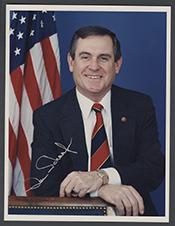
United States · Official source
1,723 records where Rep. Schaefer, Dan [R-CO-6] is listed as a sponsor, author, or other actor. Search with topics and years
United States · United States Congress · 5 February 1992
Designates January 16, 1993, as National Good Teen Day.
United States · United States Congress · 30 January 1992
Designates February 6, 1992, as National Women and Girls in Sports Day.
United States · United States Congress · 3 January 1992
Designates February 6, 1992, as National Women in Sports Day.
United States · United States Congress · 22 November 1991
Commends: (1) the people of Guam for their patriotism, bravery, loyalty to the United States, and many sacrifices during World War II, particularly during the invasion and occupation of the Guam territory; (2) the members of the Navy Insular Force and U.S. Navy and Marine Corps for the efforts and sacrifices they made in defense of the U.S.; (3) the Hawaiians for their sacrifices and contributions to the U.S. war effort during the attack on Pearl Harbor on December 7, 1941; and (4) the Hawaii Territorial Guard members, Varsity Victory Volunteers, the civilian workers at the Pearl Harbor Naval Ship Yard and other Hawaiian military installations, 100th Infantry Battalion, Military Intelligence Service, and 442nd Regimental Combat Team for their sacrifices and contributions to the U.S. war effort during such attack.
United States · United States Congress · 21 November 1991
Taxpayer Bill of Rights Act of 1991 - Title I: Additional Safeguards to Protect Taxpayers' Rights - Subtitle A: Taxpayers' Advocate - Amends the Internal Revenue Code to establish in the Internal Revenue Service (IRS) the Office of Taxpayers' Advocate, headed by the Taxpayers' Advocate, appointed by the President, by and with the advice and consent of the Senate. Requires the Office to: (1) assist taxpayers in resolving problems with the IRS; (2) identify areas in which taxpayers have problems in dealings with the IRS; (3) propose changes in the administrative practices of the IRS to mitigate such problems; and (4) identify potential legislative changes which may be appropriate to mitigate such problems. Requires the Taxpayers' Advocate to annually report to specified congressional committees on Office activities. Requires the Commissioner of Internal Revenue to establish procedures requiring a formal response to all recommendations submitted to the Commissioner by the Taxpayers' Advocate. Authorizes the terms of a Taxpayer Assistance Order to require the Secretary of the Treasury to take certain actions (currently, only to cease or refrain from taking such actions). Subtitle B: Modifications to Installment Agreement Provisions - Requires prior notification to taxpayers under an installment agreement to pay tax liability before altering, modifying, or terminating such an agreement. Provides for administrative review of denials of requests for installment agreements. Suspends the failure to pay penalty during any period an installment agreement is in effect. Subtitle C: Interest - Extends from ten days to 21 days the period for which interest will not be imposed after notice and demand for payment, if such payment is less than $100,000. Provides for the abatement of interest in the case of an assessment due to the error or delay of an IRS managerial act. Increases the interest rate for overpayment of tax from two percent to three percent (making such rate equal to the interest rate for underpayment of tax). Waives interest on all overpayments refunded within 45 days after a return is filed. Subtitle D: Joint Returns - Requires separate deficiency notices in the case of a joint income tax return if the most recent data available to the IRS shows that such spouses did not file a joint return with each other. Allows the disclosure of collection activities to an individual requesting such information in the case of a joint return where such individual is no longer married to or resides in the same household as the other joint filer. Removes limitations on filing a joint return after filing separate returns. Subtitle E: Collection Activities - Authorizes the Secretary, if it is determined to be in the best interest of the taxpayer and the United States, to: (1) withdraw a notice of a lien; (2) return property that has been levied upon; and (3) offer compromises in civil or criminal cases. Requires the Secretary, at the request of the taxpayer, to make reasonable efforts to notify credit reporting agencies and financial institutions of such withdrawal notice. Subtitle E (sic): Erroneous and Fraudulent Information Returns - Requires payee statements to provide the phone number of the person providing payment. Establishes civil damages for the fraudulent filing of information returns. Requires the Secretary to take reasonable steps to corroborate the accuracy of an information return when making a determination of a deficiency by a third party, when such return is disputed by the taxpayer. Subtitle F: Modifications to Penalty for Failure to Collect and Pay Over Tax - Declares that a person shall not be liable for any penalty for failure to collect and pay over tax if such person: (1) is not a significant owner, or highly compensated employee of the trade or business; (2) notifies the Secretary within ten days after such failure; and (3) such notification was before any notice by the Secretary with respect to such failure. Requires the Secretary to disclose certain information where more than one person is liable for a penalty. Subtitle G: Awarding of Costs and Certain Fees - Repeals the "substantially justified" test for determining whether a taxpayer may recover costs and fees incurred as part of an administrative or court proceeding. Provides for the awarding of reasonable litigation or administrative costs to a prevailing party who represents himself in an administrative or court proceeding. Makes IRS employees personally liable in certain cases. Provides that any failure to agree to an extension of time for the assessment of any tax shall not be taken into account in determining whether a prevailing party has exhausted all administrative remedies. Subtitle H: Other Provisions - Revises provisions on the required content of tax due, deficiency, and other notices. Provides for the treatment of returns prepared for or executed by the Secretary for purposes of certain tax penalties. Provides protection for taxpayers who rely on certain guidance published by the IRS. Title II: Form Modifications, Studies - Subtitle A: Form Modifications - Directs the Secretary to: (1) ensure that taxpayers are aware of permission to pay tax in installments, extensions of time for payment of tax, and compromises of tax liability; (2) improve procedures for taxpayers to notify the Secretary of changes in names and addresses; (3) include in a specified publication a section on the rights and responsibilities of divorced individuals; (4) ensure that employees are aware of their responsibilities under the Federal tax system and that the public is aware of penalties for failure to collect and pay over tax; and (5) notify taxpayers any payments that cannot be associated with any outstanding tax liability. Subtitle B: Studies - Requires the Secretary to report to the tax-writing committees on: (1) a pilot program for appeals of certain enforcement actions (including lien, levy, and seizure actions; (2) a study on ways to assist the elderly, physically impaired, foreign-language speaking, and other taxpayers with special needs to comply with IRS laws; (3) the scope and content of the IRS taxpayer-rights education program for its officers and employees; and (4) cases involving complaints about misconduct of IRS employees and the disposition of such complaints. Requires the Comptroller General to report to the tax-writing committees on: (1) a study of notices of deficiency; (2) the accuracy and clarity of 25 of the most commonly used IRS forms, notices, and publications; and (3) a study of IRS employee-suggestion programs.
United States · United States Congress · 19 November 1991
Second National Blue Ribbon Commission to Eliminate Waste in Government Act - Establishes the Second National Blue Ribbon Commission to Eliminate Waste in Government to: (1) conduct a private sector survey on management and cost control in the Federal Government; (2) review executive agency operations and existing General Accounting Office, Congressional Budget Office, Inspector General Reports, and other existing governmental and nongovernmental recommendations for reducing waste; and (3) submit to the President and the Congress a list of those recommendations with estimated savings that the Commission determines are most significant and recommendations for improving the budget process, management, and reducing waste and costs in the Government. Requires the Commission to identify, address, and to report to the President and the Congress on: (1) opportunities for increased efficiency and reduced costs in the Government that can be realized by executive action or legislation; (2) areas in the Government where managerial accountability can be enhanced and administrative control can be improved; (3) specific Federal programs that have accomplished their objectives and ought to be terminated; (4) specific Federal program services that could be provided at a lower cost by the private sector; (5) specific reforms of the budget process that would yield savings, increase accountability and efficiency, and enhance public confidence in the budget process; (6) specific areas in the Government where further study can be justified by potential savings; and (7) specific recommendations for legislative and administrative actions. Requires the Commission to be funded, staffed, and equipped, to the extent practicable and permitted by law, by the private sector without cost to the Government.
United States · United States Congress · 7 November 1991
Repeals a Federal provision requiring a two-dollar copayment for each 30-day supply of medication furnished to a veteran on an outpatient basis by the Department of Veterans Affairs for the treatment of a non-service-connected disability or condition.
United States · United States Congress · 7 November 1991
Designates May 31, 1992, through June 6, 1992, as a Week for the National Observance of the 50th Anniversary of World War II.
United States · United States Congress · 7 November 1991
Calls upon the President not to proceed toward the normalization of diplomatic and economic relations with the Socialist Republic of Vietnam until the Senate Select Committee on POW/MIA Affairs has reported its findings on the accounting of missing American servicemen in Southeast Asia.
United States · United States Congress · 29 October 1991
Federal Prison Industries Competition in Contracting Act - Amends the Federal criminal code to require that: (1) a decision by Federal Prison Industries (FPI) to produce a new prison-made product or to expand the production of an existing product be made by the Board of Directors of FPI (the Board) in conformance with the public notice and comment requirements of the Administrative Procedure Act; and (2) the corporation prepare and furnish to the Board a detailed analysis of the probable impact on industry and free labor of any proposal to authorize the production and sale of a new prison-made product or to expand production of a currently authorized product (such proposal). Requires such analysis to identify and consider factors including: (1) the number of vendors that currently meet Federal requirements for the specific product; (2) the proportion of the Federal market for the product currently furnished by small and disadvantaged businesses and businesses in labor surplus areas during the previous three fiscal years; (3) the share of the Federal market for the product projected for FPI for the fiscal year in which production will commence (or expand) and the subsequent three fiscal years; (4) whether the industry producing the product in the private sector has an unemployment rate higher than the national average, a rate of employment for production workers that has consistently shown an increase during the previous five years, or an import to domestic production ratio of 25 percent or greater; (5) whether the specific product is an import-sensitive product; (6) the projected growth in the Government for the specific product and the capability of such demand to sustain both FPI and private vendors; and (7) whether authorizing the production of the new product will provide inmates with the maximum opportunity to acquire knowledge and skill in trades and occupations that will provide them with a means of earning a livelihood upon release. Bars the Board from approving such proposal if the product is: (1) produced in the private sector by an industry which has reflected during the previous year an unemployment rate above the national average; or (2) an import-sensitive product. Directs the Board to: (1) give additional notice of such proposal in a publication designed to most effectively provide notice to private vendors and labor unions representing private sector workers who could reasonably be expected to be affected by approval of such proposal; (2) solicit comments on the analysis required under this Act from trade associations representing private sector workers who could reasonably be expected to be affected by its approval; (3) afford an opportunity, upon request, for a representative of private industry to present comments on such proposal directly to the Board. Requires the corporation to provide the Board with its recommendations regarding action on the proposal, taking into consideration the comments received. Requires: (1) the various Federal departments and agencies (agencies) to offer to purchase from FPI any product authorized to be offered for sale and listed in the UNICOR Schedule of Products (whenever it has a requirement for an FPI product); and (2) FPI to publish and periodically revise such Schedule. Sets forth provisions with respect to the solicitation of offers from FPI and contract awards to FPI on either a competitive or sole source basis. Prohibits the cancellation or withdrawal of a solicitation solely for the purpose of affording an agency buying activity the opportunity to enter into noncompetitive negotiation with FPI unless the Attorney General determines that FPI cannot reasonably expect to receive the contract award on a competitive basis and that such award is necessary to: (1) maintain work opportunities otherwise unavailable at the penal facility at which the contract is to be performed to prevent circumstances that could reasonably be expected to significantly endanger the safe and effective administration of such facility; or (2) permit diversification into the labor-intensive manufacture of a specific product that has been approved by the Board. Specifies that: (1) a timely offer received from FPI shall be considered eligible for award (even if the competition is restricted); and (2) FPI shall be required to perform its contractual obligations to the same extent as any other contractor. Repeals a provisions under which any dispute relating to the price, quality, character, or suitability of FPI products shall be arbitrated by a board consisting of the Comptroller General of the United States, the Administrator of General Services, and the President, or their representatives. Specifies that: (1) a decision by a contracting officer regarding the award of a contract to FPI or relating to the performance of such contract shall be final, unless reversed on appeal (but authorizes the Director of FPI to appeal to the head of a Federal agency an adverse determination made by a contracting officer, in which case the decision of such agency head shall be final); and (2) a dispute between FPI and a buying activity regarding contract performance shall be subject to final resolution by the board of contract appeals having jurisdiction over the buying activity's contract performance disputes under the Contract Disputes Act of 1978. Requires that the amendments made by this Act be implemented through modifications to the Federal Acquisition Regulation (FAR) within 180 days. Makes the FAR subject to provisions of the Office of Federal Procurement Policy Act (which assure publication in the Federal Register and the opportunity for public comment before the promulgation of a final regulation). Requires each Federal agency reporting to the Federal Procurement Data System through the General Services Administration to report all acquisitions from FPI. Amends the Federal criminal code to require the Board, in its annual report to the Congress, to include: (1) an analysis of the corporation's total sales for each specific product sold to Federal agencies, the total purchases by each agency of each specific product, the corporation's share of such total Government purchases by specific product, and the number and disposition of disputes submitted to agency heads; (2) an analysis of the inmate workforce, including the number of inmates employed, the number and percentage of employed inmates by the term of their incarceration, and the various hourly wages paid to inmates employed with respect to the production of the various specific products authorized for production and sale; and (3) data concerning employment obtained by former inmates upon release to determine whether the employment provided by FPI during incarceration provided such inmates with knowledge and skill in a trade or occupation that enabled such former inmate to earn a livelihood upon release. Directs that copies of such annual report be made available to the public at a price not to exceed the cost of printing. Authorizes the Department of Defense (DOD) to count toward the attainment of the goal set out in the National Defense Authorization Act for Fiscal Year 1987 for participation by small disadvantaged businesses, historically Black colleges and universities, and minority institutions in DOD contracting opportunities, the value of any purchase of supplies or services made by FPI from an entity described in such Act for the performance of a contract with DOD.
United States · United States Congress · 29 October 1991
1996 Atlanta Centennial Olympic Games Commemorative Coin Act - Provides for the minting and sale of commemorative gold and silver coins to support the 1996 Atlanta Centennial Olympic Games and the programs of the United States Olympic Committee.
United States · United States Congress · 24 October 1991
Authorizes the Air Force Association to establish a memorial on Federal land in the District of Columbia or its environs to honor the men and women who have served in the U.S. Air Force.
United States · United States Congress · 22 October 1991
Designates December 1991 as Bicentennial of the District of Columbia Month.
United States · United States Congress · 22 October 1991
Expresses the sense of the Congress that the President should: (1) condemn the use of force in Yugoslavia; (2) recognize the independence of the Republics of Croatia and Slovenia; and (3) work for the cessation of hostilities leading to a negotiated settlement and peace in the region.
United States · United States Congress · 8 October 1991
Telecommunications Act of 1991 - Title I: Infrastructure Development - Amends the Communications Act of 1934 to provide for the establishment of a Federal-State Joint Board to impose and enforce network quality standards upon common carriers (CC) to ensure the continued maintenance and evolution of CC facilities and services. Directs the Board to initiate a rulemaking proceeding to establish standards, to be enforced by the Federal Communications Commission (FCC) and the State commissions as to matters within their respective jurisdictions, for measuring CC network quality. Requires each CC to submit to the Board a quarterly data report regarding compliance with the prescribed standards. Authorizes the Board to require periodic independent audits of CC compliance with such standards. Directs the FCC to establish enforcement penalties and procedures, including expedited customer complaint mechanisms, to ensure CC compliance with such standards. Requires each local exchange carrier (LEC) to provide interconnection, on a reasonable and nondiscriminatory basis, to CCs and other providers of telecommunications and information services who request it, and to provide the interconnecting party with physical colocation, unless it demonstrates by clear and convincing evidence that physical colocation is not technically practicable, in which case virtual colocation is required. Specifies that a rural exchange carrier (REC) shall not be required to provide interconnection to another LEC. Directs the FCC to: (1) adopt and make effective rules to enforce the obligations imposed by such Act; and (2) initiate a rulemaking to require that the interconnection offered by an LEC pursuant to such Act provide for the portability of telephone numbers. Requires the FCC to revise its order entitled "Filing and Review of Open Network Architecture Plans" to require that: (1) the plans for compliance with such order offer unbundled features and functions; (2) such features and functions are made available on a reasonably uniform basis by all of the CCs subject to such order, and are accessible throughout the service territory of each such carrier; (3) such plans include a schedule for timely offering of new features and functions; and (4) CCs subject to such order not unreasonably discriminate between affiliated and unaffiliated providers of information services in offering tariffed and non-tariffed features, functions, and capabilities. Directs the FCC, at least once every three years, to: (1) conduct a proceeding in which interested parties shall have an opportunity to comment on whether the order, as further revised, and the plans filed pursuant to it, have opened the networks of the carriers subject to such order to reasonable and non-discriminatory access by providers of telecommunications and information services; and (2) revise such order as necessary or appropriate and require the CCs subject to the order to file new plans consistent with such revisions, which shall also be subject to public comment and FCC review prior to their becoming effective. Restricts the release of personally identifiable customer information obtained or collected by an LEC in the course of providing telephone exchange information. Requires: (1) an LEC to prepare and file tariffs in accordance with such Act with respect to the interconnection and network access services required under such Act; (2) the costs that an LEC incurs in providing such services to be borne solely by the users of the features and functions comprising such services; and (3) the FCC to review such tariffs to ensure that the charges for such services are cost-based and the terms and conditions contained in such tariffs do not bundle together any separable elements, features, or functions. Requires: (1) an LEC to submit supporting information with its tariffs for interconnection and network access services that is sufficient to enable the FCC and the public to determine the relationship between the proposed changes and the costs of providing such services; and (2) the submission of such information to be pursuant to rules adopted by the FCC to ensure that similarly situated carriers provide such information in a uniform fashion. Authorizes an LEC to include in its tariffs for interconnection services an element intended to recover the amount necessary to preclude any substantial increases in the rates for telephone exchange service (service) that would otherwise result from the offering of interconnection services, subject to specified requirements. Directs the FCC to adopt and make effective rules governing the calculating of such element. Specifies that any amounts recovered by the LEC through the imposition of this additional element shall be used to defray the costs of providing service. Specifies that the resale of service in conjunction with the furnishing of an interstate telecommunications or any information service shall not be prohibited or subject to unreasonable conditions by the FCC, any State, or any LEC. Requires the FCC to: (1) adopt and make effective rules for the conduct of coordinated network planning by CCs; and (2) initiate an inquiry to examine the effects of competition in the provision of telephone exchange access and service on the availability and rates for service furnished by RECs. Directs the FCC to provide for expedited: (1) review of complaints alleging violations of service, quality, network access, and interconnection rules; and (2) licensing of new technologies or services related to the furnishing of telecommunications or information services determined to be in the public interest. Title II: Provisions Affecting Divested Operating Companies - Authorizes a divested operating company or affiliate (DOC) to provide information services, subject to specified requirements. Bars a DOC from offering electronic publishing services in any State in which it provides service until the FCC, after notice and opportunity for public comment, determines that: (1) at least 50 percent of all businesses and residences within the areas in each State in which such DOC provides service have access to transmission and switching facilities (other than those owned or controlled by a DOC) that are comparable to those offered by the DOC for the delivery of electronic publishing services; (2) at least ten percent of all businesses and residences within the areas in each State in which such DOC provides service subscribe to services delivered over such alternative facilities; and (3) the DOC seeking to provide such services has demonstrated that there is no substantial possibility that the DOC could use its position as an LEC to impede competition in the provision of electronic publishing services or impose additional costs upon service subscribers. Permits a DOC to petition the FCC for a waiver of restrictions on electronic publishing imposed under such Act. Requires such petition to be granted if the DOC can demonstrate by clear and convincing evidence that: (1) electronic publishing service would not exist unless offered by such DOC; and (2) the provision of such DOC would not impose additional costs upon service subscribers. Sets forth additional requirements. Permits a DOC to provide information services after October 1, 1991, only through a subsidiary that is separated from the service operations of the divested company, with exceptions. Provides for a minimum number of outside directors. Specifies that any transaction between a DOC and any other affiliate of such DOC (including the subsidiary): (1) shall not be based upon any preference or discrimination arising out of the affiliation, or have the effect of permitting any violation of the requirements of such Act; and (2) shall be carried out in the same manner as such company or affiliate conducts such business with unaffiliated persons, shall be pursuant to contract or tariff reported to the FCC and made available for public inspection, and shall be fully auditable and reflect all costs associated with the conduct of such business. Bars such subsidiary from: (1) entering into any joint venture or partnership with the DOC; (2) having employees or a financial structure in common with the DOC, except as provided in such Act; (3) owning any property in common with a DOC; or (4) establishing any other subsidiary or affiliate except after notice to the FCC in such form and containing such information as the FCC may require. Requires such subsidiary to: (1) carry out directly its own marketing, sales, accounting, hiring and training of personnel, purchasing, and maintenance; and (2) maintain books, records, and accounts, prepare its own financial statements, and prepare and file with the FCC the annual and periodic reports required of publicly traded companies by the Securities and Exchange Commission. Sets forth additional provisions with respect to: (1) advertising; (2) securities information; (3) outside ownership; (4) transmission capacity; (5) preservation of separate subsidiary requirements for grandfathered functions; (6) provision of services and information to others on the same terms and conditions as provided to the subsidiary; and (7) a cost allocation system requirement to prohibit any cost of providing information services from being subsidized by revenue from service or access services. Requires the FCC to establish cost assignment and allocation regulations, under which joint and common costs shall be allocated to unregulated services under a formula that ensures that the rates for service are no greater than they would have been in the absence of such investment, or based upon the highest forecast unregulated usage of the investment over the life of the investment, whichever method results in the lesser allocation of such costs to service. Directs the FCC, by regulation, to ensure that the economic risks associated with the provision of information services by DOCs are not borne by service customers in the event of a business loss or failure. Prohibits: (1) investments or other expenditures assigned to information services from being reassigned to service or access service; and (2) any DOC affiliate which is providing information services and is required to be, or is, structurally separate from an affiliate engaged in the provision of service from obtaining credit under any arrangement that would permit a creditor, upon default, to have recourse to the assets of the DOC, or would induce a creditor to rely on the tangible or intangible assets of the DOC in extending credit. Requires the FCC to prescribe regulations governing the accounting for the transfer of assets between a DOC and its affiliates which protect the interests of service ratepayers and meet specified requirements. Establishes an annual auditing requirement for each DOC that engages in, or has a financial or management interest in an entity that provides, information services. Sets forth provisions with respect to the conduct of the audit, submission and certification of audit results, and access to documents. Requires the FCC and a State commission, within their respective jurisdictions, to require a DOC to assess any affiliate providing information services a charge for the reasonable value of any intangible assets used in the provision of such services and to credit the amount of such charge to the provision of service. Bars a DOC from providing electronic publishing services, other than those it provided on or before October 1, 1991, in any State in which such DOC provides service, unless and until all entry barriers to the competitive provision of telecommunications services imposed by each State or State commission in which such DOC service have been removed with respect to such DOC. Requires any DOC that offers a gateway service to make such service available concurrently to all of its subscribers at the same rates, terms, and conditions. Sets forth enforcement provisions with respect to persons injured by a violation of requirements under such Act. Directs the FCC to take such actions as necessary to: (1) prevent anticompetitive practices between a DOC and any affiliate of the DOC; (2) protect ratepayers of DOCs from subsidizing the provision of information services by such DOCs; and (3) prevent any DOC from imposing any unjust or unreasonable rates or charges for any CC services provided in connection with the provision of information services. Authorizes appropriations. Title III: Miscellaneous Provisions - Authorizes a State to regulate the rates, terms, or conditions for the offering of information services, subject to specified requirements. Bars a State from imposing regulations upon an LEC with respect to the intrastate provision of information services by such carrier or affiliate if such regulations: (1) are necessary and appropriate to separate the provision of information services from the provision of service by such carrier or affiliate; (2) are intended to protect the privacy rights of service customers; (3) do not affect the rates, terms, or conditions for the provision of such information services or the types of such services offered by such carrier or affiliate; and (4) are not inconsistent with the purposes, or do not significantly impede the enforcement, of this Act or any regulation or order prescribed by the FCC pursuant to this Act. Specifies that: (1) nothing in this Act shall be construed to limit State authority to take actions, consistent with this Act, to ensure the availability of service at reasonable rates in areas served by RECs, to relieve a DOC of any obligations, limitations, or responsibilities imposed by any other provision of such Act, or to create any antitrust immunity to any civil or criminal action under Federal or State antitrust law, or alter or restrict the applicability of any Federal or State law to the actions of a DOC; and (2) a DOC shall remain fully subject to the order entered on August 24, 1982, in United States v. Western Electric Company .
United States · United States Congress · 8 October 1991
Designates October 15, 1991, as Up With People Day.
United States · United States Congress · 2 October 1991
Designates the week of October 19 through 27, 1991, as National Red Ribbon Week for a Drug Free America.
United States · United States Congress · 1 October 1991
Prohibits direct Federal financial benefits and unemployment assistance for illegal aliens.
United States · United States Congress · 1 October 1991
Freedom of Speech on Campus Act of 1991 - Expresses the sense of the Congress that students attending universities or other institutions of higher education that receive Federal funds should be able to exercise full rights to freedom of speech on campus free from official intrusion. Amends the Education Amendments of 1972 to prohibit discrimination by an institution of higher education against a student based on protected speech in any education program or activity receiving Federal financial assistance under the Higher Education Act of 1965. Makes such prohibition inapplicable to religious or military institutions. Provides that such prohibition shall not be construed to prevent: (1) imposition of an official sanction on a student determined to have willfully participated in the disruption or attempted disruption of a lecture, class, speech, presentation, or performance made or scheduled to be made under the auspices of the institution of higher education; or (2) actions by such institution that are necessary to ensure the safety of individuals, protection of property, and continuation of the academic and administrative process without interference.
United States · United States Congress · 1 October 1991
Urges the President to call upon the President of the Union of Soviet Socialist Republics to begin negotiations with leaders of Lithuania, Latvia, and Estonia for the prompt withdrawal of Soviet troops from the Baltic States.
United States · United States Congress · 1 October 1991
Expresses the sense of the Congress that the President should: (1) recognize Ukraine's independence and take steps toward the establishment of full diplomatic relations with Ukraine should the December 1, 1991, referendum confirm the Ukrainian parliament's independence declaration; and (2) use U.S. assistance, trade, and other programs to support the Government of Ukraine and encourage the further development of democracy and a free-market.
United States · United States Congress · 24 September 1991
Medicare EKG Payment Restoration Act of 1991 - Amends part B (Supplementary Medical Insurance) of title XVIII (Medicare) of the Social Security Act to: (1) reestablish separate payment for the interpretation of electrocardiograms (EKGs) that are ordered or performed during an office visit or consultation with a physician; and (2) require the Secretary of Health and Human Services to establish separate fee schedule amounts for EKG interpretations and to adjust the relative values established for office visits to or consultations with a physician to reflect the establishment of such separate fee schedule amounts. Directs the Secretary to: (1) establish practice guidelines for the use of EKGs for dissemination along with other educational information relating to the use of EKGs to physicians; (2) develop a profile of the use of EKGs by physicians; and (3) conduct a study and report to the Congress on the utilization and costs of EKGs.
United States · United States Congress · 17 September 1991
Amends Federal provisions with respect to the veterans' home loan guaranty program to provide that the Secretary of Veterans Affairs: (1) may not report for income purposes to any department or agency outside of the Department of Veterans Affairs the waiver of an indebtedness or of recovery of a payment or overpayment made under such program, or the acceptance of a compromise or the forgoing of collection in settlement of a claim with respect to any veterans' benefit under any law administered by the Department; and (2) shall not notify the veteran or other eligible person of any potential liability regarding the income status of any such waiver or forgone amount.
United States · United States Congress · 17 September 1991
Designates November 1991 as National Accessible Housing Month.
United States · United States Congress · 16 September 1991
1992 White House Commemorative Coin Act - Directs the Secretary of the Treasury to issue one dollar silver coins emblematic of the White House. Mandates that the total surcharges received from the sale of such coins shall be promptly paid to the White House Endowment Fund to assist its efforts to raise an endowment as a permanent source of support for the White House Collection of fine art and historic furnishings, and for the maintenance of the historic public rooms of the White House.
United States · United States Congress · 16 September 1991
Designates the week of September 22 through 28, 1991, and September 20 through 26, 1992, as Religious Freedom Week.
United States · United States Congress · 2 August 1991
National Air and Space Museum Expansion Site Selection Act of 1991 - Establishes the National Air and Space Museum Expansion Site Advisory Panel to conduct a national competition for the evaluation of possible expansion sites for the National Air and Space Museum. Authorizes appropriations. Directs the Board of Regents of the Smithsonian Institution to select the site after considering the recommendation of the Panel. Terminates the Panel 30 days after such selection. Requires the General Accounting Office to review and evaluate the selection by the Board of Regents and report to the Congress.
United States · United States Congress · 2 August 1991
United States Flag Cruise Ship Competitiveness Act of 1991 - Amends Federal law (commonly referred to as the Johnson Act) relating to transportation of gambling devices to exclude from the definition of interstate commerce, transportation from a State to the same State through a place outside that State when such commerce may only be conducted through points not in that State. Repeals all of a specified Federal law (commonly referred to as the Gambling Ship Act) except provisions relating to the transmission of wagering information. Makes unlawful certain actions in connection with a vessel which has any gaming establishment aboard unless in compliance with certain regulations, including registration with the Attorney General and licensing by a State. Provides for certification by the Attorney General of State procedures.
United States · United States Congress · 2 August 1991
Foreign Capital and Securities Markets Study Act of 1991 -Directs the Secretary of the Treasury to study and report to the Congress on the capital and securities markets of Japan and their implications for and economic effects on the United States.
United States · United States Congress · 2 August 1991
Amends the Internal Revenue Code to expand current provisions concerning civil damages for certain unauthorized collection actions to allow taxpayers to sue for civil damages if in the determination of tax the Internal Revenue Service carelessly disregards tax law. Repeals the "substantially justified" test for determining whether a taxpayer may recover costs and fees incurred as part of an administrative or court proceeding. Amends the Internal Revenue Code to increase the interest rate for overpayment of tax from two percent to three percent (making such rate equal to the interest rate for underpayment of tax).
United States · United States Congress · 2 August 1991
Audio Home Recording Act of 1991 - Amends Federal copyright law to: (1) set forth definitions relating to digital audio recording devices and media; and (2) prohibit certain copyright infringement actions based on the manufacture, importation, or distribution of a digital or analog audio recording device or medium, or the use of such device or medium for making phonorecords, except when done for commercial advantage. Sets forth a mandatory recordation and filing procedure for the importation, manufacture, or distribution in the United States of digital audio recording devices or media. Requires importers and manufacturers to file quarterly and annual statements of account with the Register of Copyrights (the Register). Mandates Register verification of such statements. Sets forth verification guidelines. States that verification audit costs shall be borne by interested copyright parties. Sets forth confidentiality guidelines with respect to such mandatory statements of accounts. Prescribes royalty payment guidelines for digital audio recording devices and media imported, manufactured, or distributed in the United States. Requires that royalty payments be deposited into the Treasury. Identifies interested copyright parties entitled to royalty payments. Prescribes royalty payment allocation and distribution procedures. Permits alternative royalty collection and distribution arrangements to be negotiated among interested copyright and manufacturing parties. Maintains the Copyright Tribunal jurisdiction over such negotiated arrangements insofar as nonparticipant interests are affected. Prohibits: (1) the importation, manufacture, and distribution of any digital audio recording device or audio interface device that does not conform to certain standards and specifications to implement the Serial Copy Management System; and (2) the circumvention of such System. Directs the Secretary of Commerce to publish in the Federal Register a certain Technical Reference Document which sets forth the standards and specifications pertinent to the Serial Copy Management System. Authorizes the Secretary to implement such System according to the prescribed guidelines. Sets forth civil remedies for violations of this Act, including impoundment, remedial modification and destruction of non-complying devices, and binding arbitration.
United States · United States Congress · 1 August 1991
Military Retirement Equity Act of 1991 - Permits retired members of the armed forces to be paid retirement pay concurrently with compensation for any service-connected disability if the person's entitlement to such retirement pay is based solely on: (1) age; (2) length of service; or (3) both. Reduces the amount of retirement pay, in the case of individuals receiving both types of pay, by a specified percentage of the disability compensation which decreases as the disability rating increases. Prohibits any reduction in the retirement pay of a disabled person when the disability rating is total. Expresses the sense of the Congress that, once the Federal budget deficit has been reduced, the Congress should reexamine and eliminate any offset of retired pay by a veteran's disability compensation.
United States · United States Congress · 1 August 1991
Police Corps and Law Enforcement Training and Education Act - Establishes within the Department of Justice (DOJ) an Office of the Police Corps and Law Enforcement Education to be headed by a Director. Requires a State that desires to participate in the Police Corps program to designate a lead agency and submit a State plan containing assurances with respect to: (1) lead agency cooperation with other State and local agencies; (2) the State advertising of the assistance available; (3) State screening and selection of law enforcement personnel for participation in the program; and (4) compliance with other specified requirements. Authorizes the Director to award college scholarships (including direct payments to institutions and reimbursement of educational costs) to participants who agree to work for four years in a State or local police force after completion of a baccalaureate program and police corps training, subject to specified conditions. Sets forth provisions with respect to: (1) scholarship assistance for dependent children of law enforcement officers killed in the line of duty; (2) the selection of participants; (3) minority recruitment; and (4) leaves of absence. Requires the Director to establish programs to provide basic law enforcement training to State Police Corps program participants. Authorizes such programs to be carried out: (1) at up to three training centers established and administered by the Director; or (2) by contracting with existing State training facilities. Requires participants to attend two eight-week training sessions at such training centers and to meet certain performance standards in order to remain in the Police Corps program. Requires the Director to pay participants a weekly stipend during training. Provides for the swearing in of participants as members of the police force to which they are assigned after completing Federal training and meeting the requirements of that police force. Authorizes the Director, upon a showing of good cause, to permit a participant to complete the service obligation in an equivalent alternative law enforcement service, if the police force of which the participant is a member subjects the participant to discipline which would preclude completion of four years of service on that force. Requires a State, in order to participate in the Police Corps program, to submit a plan for implementing such program to the Director for approval. Requires such plan to: (1) include assurances that participants will receive effective training and leadership; (2) provide that program participants shall be assigned to community and preventive patrol in geographic areas with the greatest need for additional law enforcement personnel; and (3) prohibit participant assignment to any local police force whose size has declined by a specified portion or which has members who have been laid off but not retired. Requires the Director to report annually on the Police Corps program to the Attorney General, the President, and specified congressional officials. Authorizes appropriations.
United States · United States Congress · 31 July 1991
Provides that each party to a sales and service contract that provides for the use of arbitration to resolve controversies shall have the option to reject arbitration as the means of settling a controversy. Requires the arbitrator, in making an award in any controversy arising out of or relating to such a contract, to provide the parties with a written explanation of the reasons for the award. Allows any such award to be vacated by a court order whenever the court finds that the arbitrator disregarded, misapplied, or misinterpreted State law.
United States · United States Congress · 31 July 1991
Economic Growth Act of 1991 - Title I: Investment and Job Creation Incentives - Subtitle A: Reduction in Capital Gains Tax for Individuals - Amends the Internal Revenue Code to allow a capital gains deduction for individuals for assets held from one to three years. Provides special rules for the gain or loss from the sale or exchange of collectibles and sales of interest in partnerships. Disallows such deduction in computing the alternative minimum tax. Revises the formula for determining gain from the dispositions of certain depreciable realty to take into account depreciation adjustments (adjustments allowed or allowable for exhaustion, wear and tear, obsolescence, or certain amortization). Subtitle B: Inflation Adjustment for Investments - Requires indexing, based on the consumer price index, of the adjusted basis of certain assets (corporate stock and tangible property that is a capital asset of property used in a trade or business after April 15, 1991) that have been held for more than one year at the time of sale or other transfer, solely for the purpose of determining gain or loss. Provides for the inflation adjustment treatment of: (1) short sales; (2) regulated investment companies and real estate investment trusts; and (3) partnerships, S corporations, and common trust funds. Prohibits gain from the sale or other disposition of an indexed asset from being taken into account under the limitation on investment interest. Subtitle C: Enterprise Zones - Part I: Designation - Authorizes the Secretary of Housing and Urban Development (Secretary) to designate enterprise zones for purposes of providing tax and regulatory relief and improving local services. Limits choices to areas nominated by States and local governments. Limits the total number of areas that may be designated, and the time period of the designation. Authorizes the Secretary to designate a zone only if the area meets certain locational, demographic, unemployment, and poverty criteria. Requires nominating local governments, as a condition of the Secretary's designation, to agree in writing to follow a course of action that may include reducing tax rates, improving local services, simplifying or streamlining regulation of business, and providing job training to area residents. Describes areas to which the Secretary must give preference in selecting areas for designation. Requires the Secretary to report to the Congress every two years on the effects of such enterprise zones' designation in accomplishing the purposes of this Act. Part II: Federal Income Tax Incentives - Allows a nonrefundable income tax credit to enterprise zone employees for five percent of any wages earned as do not exceed a specified amount. Phases out such credit. Provides for the nonrecognition of capital gain on the sale of enterprise zone property. Allows a taxpayer a deduction on the aggregate amount paid for the purchase of enterprise stock on its original issue by a qualified issuer. Requires any gain from the disposition of the stock to be treated as ordinary income. Excludes enterprise zone capital gains from income computation of alternative minimum taxes. Part III: Regulatory Flexibility - Amends Federal law to revise the definition of "small entity" for purposes of the analysis of regulatory functions to include qualified business, government, and nonprofit enterprises operating within enterprise zones. Authorizes Federal agencies, upon request by a designating government, to waive or modify rules and regulations pertaining to the implementation of projects or activities within an enterprise zone. Requires agencies to approve the request if the resulting benefits of job creation, community development, or economic revitalization outweigh the public interest in retaining the rule unchanged. Disallows waiver or modification of a rule that would directly violate a statutory requirement or present a danger to the public health and safety. Part IV: Establishment of Foreign-Trade Zones in Enterprise Zones - Requires the Foreign-Trade Zone Board to consider on a priority basis and to expedite the processing of applications for the establishment of foreign-trade zones within enterprise zones. Requires the Secretary of the Treasury to give priority to, and expedite applications for, the establishment of ports of entry necessary to establish such zones. Part V: Repeal of Title VII of the Housing and Community Development Act of 1987 - Repeals title VII (enterprise zone development) of the Housing and Community Development Act of 1987. Subtitle D: Research and Experimentation Credit Made Permanent - Makes permanent the tax credit for increasing research activities and the tax credit for clinical testing expenses. Title II: Savings Incentives - Allows individuals to establish individual retirement plus accounts with tax treatment similar to that for individual retirement plans. Makes contributions to such accounts nondeductible. Allows existing individual retirement accounts (IRA) to be rolled over into individual retirement plus accounts with payment of tax on the amount rolled over for which a deduction was once allowable, but no tax when withdrawn. Title III: Homeownership Incentives - Subtitle A: First-Time Homebuyers - Allows a tax credit for the first-time purchase of a principal residence by individuals with incomes of $31,000 or less (phased-out to incomes of up to $41,000). Limits such credit to $1,000. Subtitle B: Penalty-Free IRA Plus Withdrawal for Home Purchase, Higher Education, and Health Costs - Allows penalty-free distributions from IRA Plus accounts of up to 25 percent of the account limit for: (1) first-time homebuyers; (2) medical expenses; and (3) higher education expenses. Title IV: Work Incentives - Subtitle A: Reduction in Social Security Penalty on Working Elderly - Amends title II of the Social Security Act (Federal Old-Age, Survivors, and Disability Insurance Benefits) to raise the earnings limit for retirees. Appropriates to each payor fund amounts equivalent to the aggregate increase in social security benefits payable from such fund which is attributable to such amendment. Directs the Secretary of Health and Human Services to study during 1997 whether further amendments relating to deductions on account of work and the exempt amount under the earnings limit are necessary or appropriate. Subtitle B: Economic Growth Dividend - Requires any economic growth dividend (as determined by the Secretary of the Treasury) to be used to increase the personal exemption amount. Requires, after 1995, all revenues resulting from real growth in the gross national product greater than three percent to fund an increased personal exemption. Requires, for fiscal years beginning on or after October 1, 1992, and before October 1, 1995, that 50 percent of such dividend be used to increase the personal exemption amount and the other 50 percent be used to make a downward adjustment in the maximum deficit amount.
United States · United States Congress · 31 July 1991
Tax Fairness and Accountability Act of 1991 - Amends the Congressional Budget Act of 1974 to require any legislation that increases the tax rate, the tax base, or the amount of income subject to tax, or decreases a deduction, exclusion, or credit to be approved in the House of Representatives and the Senate by an affirmative vote of three-fifths of its Members.
United States · United States Congress · 31 July 1991
All-Americans Savings and Investment Incentive Act of 1991 - Amends the Internal Revenue Code to provide individuals a deduction for capital gains based on the period the asset is held (up to three years). Excludes collectibles from such assets. Makes such deduction an item of tax preferences. Excludes from gross income interest received during a taxable year up to $350 ($700 in the case of a joint return). Provides a phaseout of such exclusion for incomes over $50,000. Makes such exclusion applicable to distributions from regulated investment companies and real estate investment trusts. Makes certain nonresident aliens ineligible for such exclusion.
United States · United States Congress · 29 July 1991
Medicare Physician Payment Reform Amendments of 1991 - Amends title XVIII (Medicare) of the Social Security Act to revise the transition rules for phasing in the resource-based relative value scale (RB RVS) method of payment for physician services to prohibit adjustments for asymmetry in the transition and for behavioral responses. Declares spending under this Act to be an emergency requirement under the Balanced Budget and Emergency Deficit Control Act of 1985 (Gramm-Rudman-Hollings Act) and exempt from sequestration.
United States · United States Congress · 29 July 1991
Recognizes and grants a Federal charter to the Military Order of the World Wars, a nonprofit corporation organized under the laws of the District of Columbia.
United States · United States Congress · 25 July 1991
Judicial Naturalization Amendments of 1991 - Amends the Immigration and Nationality Act to confer naturalization authority upon the Attorney General and eligible naturalization courts under specified conditions. (Current law provides the Attorney General with sole naturalization authority.)
United States · United States Congress · 25 July 1991
Fairness in Product Liability Act of 1991 - Governs any product liability action brought in either State or Federal court against a manufacturer or product seller on any theory for harm caused by a product, superseding State law in specified ways and degrees. Makes a product seller liable only if the seller: (1) failed to exercise reasonable care regarding the product, and the failure was the proximate cause of the harm; (2) made an express warranty, independent of any express warranty by the manufacturer, the product failed to conform to the warranty and the failure caused the harm; or (3) engaged in international wrongdoing which was a proximate cause of the harm. Makes a product seller liable as if the seller were the manufacturer if: (1) the manufacturer is not subject to service of process under State laws; or (2) a court determines the claimant would be unable to enforce a judgment against the manufacturer. Allows, in certain circumstances, a complete defense of alcohol or controlled substance use. Reduces damages by the percentage of harm attributable to misuse or alteration of a product by any person, subject to exception involving misuse or alteration by the claimant's employer or coemployees. Allows punitive damages against a manufacturer or seller for conscious, flagrant indifference to user safety. Prohibits, in certain circumstances, punitive damages regarding a drug or device, as defined in the Federal Food, Drug, and Cosmetic Act, unless packaging of a drug is substantially out of compliance with tamper-resistant packaging regulations. Declares manufacturer or seller liability to be several and not joint for noneconomic damages. Requires a product liability action to be brought within two years after the harm and its cause is, or with reasonable diligence should have been, discovered. Sets the time limit at 25 years for products which are capital goods. Requires offset of workers' compensation benefits. Sets forth rules regarding subrogation, contribution, indemnity, and liens. Provides for tort actions against employers. Prohibits U.S. district courts from having jurisdiction under specified provisions of Federal law over any civil action arising under this Act.
United States · United States Congress · 25 July 1991
Designates November 1991 as National Red Ribbon Month.
United States · United States Congress · 24 July 1991
Directs the Committee on Appropriations to establish a new Subcommittee on Veterans' Affairs with exclusive subcommittee jurisdiction over the Department of Veterans Affairs and its programs.
United States · United States Congress · 23 July 1991
Public Telecommunications Act of 1991 - Amends the Communications Act of 1934 to authorize appropriations for the public telecommunications facilities program for FY 1992 through 1994 and for the Corporation for Public Broadcasting (CPB) for FY 1994 through 1996. Reduces from ten to nine the number of CPB board members, lengthens the term of each member from five to six years, and staggers the terms of the members. Requires CPB, in recognition of the importance of educational programs and services and the expansion of public radio services to unserved and underserved audiences, to prepare and submit to the Congress an annual report for FY 1994 through 1996 on its activities and expenditures relating to those programs and services.
United States · United States Congress · 23 July 1991
Amends the Federal judicial code to increase the number of bankruptcy judgeships in the district of Colorado.
United States · United States Congress · 23 July 1991
Expresses the sense of the House of Representatives that the people of the United States should recognize: (1) the tenth anniversary of "An Artistic Discovery" (the Congressional High School Art Competition); and (2) its success in encouraging the creative endeavors of our Nation's young artists and forging strong working relationships among the Congress, businesses, and the arts community towards the ultimate goal of providing opportunities for high school students to express their artistic talents.
United States · United States Congress · 18 July 1991
Provides that, for purposes of a reduction in force affecting Federal civilian employees, a military retiree shall not be denied military preference on account of having performed 20 or more years of active service in the armed forces.
United States · United States Congress · 16 July 1991
Workers' Political Rights Act of 1991 - Amends the Federal Election Campaign Act of 1971 to permit a labor organization to make political communications and establish and solicit contributions for a separate segregated political fund if it provides the employees it represents with written notification of specified information.
United States · United States Congress · 16 July 1991
Designates October 1991 as Crime Prevention Month.
United States · United States Congress · 15 July 1991
Colorado Metropolitan National Wildlife Refuge Act of 1991 - Directs the Secretary of the Army, without reimbursement and not later than October 1, 1993, to transfer jurisdiction of the lands comprising the Rocky Mountain Arsenal, Colorado, to the Secretary of the Interior (Secretary). Requires the Secretary of the Army to retain control over the management of such property with respect to environmental cleanup and remediation activities. Directs the Secretary to establish the Colorado Metropolitan National Wildlife Refuge on the conveyed property. Sets forth the purposes for which the Refuge is established. Prohibits the annexation of lands within the Refuge by any unit of local government. Establishes an advisory committee to advise the Secretary on management of the Refuge. Requires the Secretary to convey to the State or to the appropriate unit of local government sufficient property along the perimeter of the Refuge to allow for the widening of public roads. Prohibits the construction of any public through road through the interior of the Refuge. Directs the Secretary to convey any property that is not part of the Refuge for purposes of annexation by the City of Commerce, Colorado, for use for public or commercial purposes. Requires the Secretary, in conveying such property, to: (1) retain a reversionary interest for the United States if the property is not annexed by the city; (2) place restrictions on the deed that prohibit the use of the property for residential or industrial purposes, the use of water on the property as a source of potable water, and the use of the property for hunting and fishing or for agricultural purposes; and (3) include specified covenants in the deed with respect to remedial environmental actions by the United States.