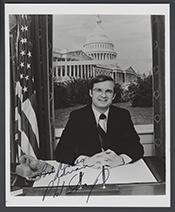
United States · United States Congress · 9 April 1986
Prohibits the issuance of a letter of offer with respect to specified proposed sales of Sidewinder, Stinger, and Harpoon missiles and services to Saudi Arabia, as described in the April 8, 1986, certifications from the President to the Congress under the Arms Export Control Act.
United States · United States Congress · 8 April 1986
Expresses the sense of the Congress that the Farm Credit Administration and its associated agencies and institutions should take additional actions to alleviate the agricultural financial situation, including restructuring, rather than foreclosing, loans.
United States · United States Congress · 18 March 1986
Telephone Decency Act of 1986 - Amends the Communications Act of 1934 to prohibit any obscene or indecent telephone communication for commercial purposes to any person in the District of Columbia or in interstate or foreign communication. (Current law prohibits such communication to any person without his or her consent or to any person under 18 years of age.)
United States · United States Congress · 17 March 1986
Amends the Natural Gas Pipeline Safety Act of 1968 to authorize grants and appropriations for FY 1987 for natural gas pipeline safety programs. Amends the Hazardous Liquid Pipeline Safety Act of 1979 to authorize appropriations for FY 1987 for hazardous liquid pipeline safety programs. Directs the Secretary of Transportation to establish a pipeline safety user fee schedule.
United States · United States Congress · 17 March 1986
Amends the Low-Income Home Energy Assistance Act of 1981 to authorize home energy grants for FY 1987 through 1989. Deems the full amount of home energy assistance payments, regardless of whether made directly to a household or indirectly for its benefit, to be heating or cooling expenses for purposes of the excess shelter expense deduction under the Food Stamp Act of 1977.
United States · United States Congress · 30 January 1986
Expresses the sense of the House of Representatives that the President should award the Presidential Medal of Freedom posthumously to Michael J. Smith, Francis R. Scobee, Ronald E. McNair, Ellison S. Onizuka, Sharon Christa McAuliffe, Gregory B. Jarvis, and Judith A. Resnik, all of whom died in the explosion of the space shuttle Challenger.
United States · United States Congress · 28 January 1986
Prohibits any benefits payable from the Civil Service Retirement and Disability Fund, including cost-of-living increases, during calendar year 1987 from being subject to reduction or suspension by statute or presidential order.
United States · United States Congress · 23 January 1986
Revises the boundary of the Indiana Dunes National Lakeshore. Redefines the term "improved property" for Lakeshore purposes. Increases the authorization of appropriations for such Lakeshore. Requires the Secretary of the Interior to study and report to the Congress within two years of enactment on the feasibility of establishing U.S. Highway 12 as the Indiana Dunes Parkway. Increases the authorization of appropriations for the development of the Lakeshore.
United States · United States Congress · 19 December 1985
Pharmaceutical Export Amendments of 1986 - Amends the Federal Food, Drug, and Cosmetic Act to permit the export of certain drugs (including biological products) intended for human or animal use even though such drugs have not been approved or licensed for use in the United States. Directs the Secretary of Health and Human Services to establish and update a two-tiered list of countries with adequate governmental health authorities which in the first tier includes developed regulatory procedures and tests with experienced scientific personnel and in the second tier includes sufficient ability to assure consistency of labeling information. Permits shipments to nonlist countries if differing health conditions there make such shipments desirable, e. g. tropical diseases. Permits the export of an unapproved drug to a second tier country if such drug is approved for use in any first-tier country and not banned for use in any first-tier country. Prohibits the export of drugs denied approval on the basis of safety and efficacy or whose manufacture in the United States has been determined to be contrary to U.S. health and safety. Sets forth other criteria and restrictions on the export of such drugs, including notice requirements on shipments and notice of and opportunity to cure deficiencies in such shipments. Permits the Secretaries of Agriculture and Health and Human Services to prohibit noncomplying shipments and shipments otherwise permitted if either Secretary determines a shipment would present an imminent hazard to the public health of the recipient country. Requires the Comptroller General to report biennially to the Secretary of Health and Human Services and the Congress on the extent to which drugs unauthorized for a country are being received by such country and the extent to which labeling is consistent. Directs the Secretary to contract for a study to be submitted to the Congress within five years on the economic and international health impact of this Act. Includes conditions prevalent in a developing country among the criteria for orphan drugs.
United States · United States Congress · 10 December 1985
Calls upon the President to direct the Agency for International Development to work in a global effort to provide universal access to childhood immunization by 1990 by: (1) assisting in the delivery, distribution, and use of vaccines; and (2) performing and supporting research and development activities that will be targeted at developing new vaccines and at modifying existing vaccines to make them more appropriate for use in developing countries. Declares that the President should appeal to the public to provide the necessary resources to achieve universal access to childhood immunization by 1990. Amends the Foreign Assistance Act of 1961 to increase the authorization of appropriations for FY 1987 for the Child Survival Fund.
United States · United States Congress · 20 November 1985
Telecommunications Equipment and Information Services Act of 1985 - Authorizes the Bell operating companies to provide information services (excluding electronic publishing) and to manufacture telecommunications equipment, subject to such regulations as the Federal Communications Commission may prescribe. Conditions such authority on the Commission's determination that no Bell operating company could impede competition in the information services or telecommunications equipment manufacturing businesses. Requires the Commission to include in its annual report to the Congress an assessment, providing for public comment, of the impact of this Act on employment in such businesses.
United States · United States Congress · 20 November 1985
Designates May 25, 1986, as Hands Across America Day. Authorizes and requests the President to commend: (1) United Support of Artists for Africa for their Hands Across America project; and (2) the American people for their commitment to helping people help themselves.
United States · United States Congress · 19 November 1985
Trade Law Modernization Act - Title I: National Trade Policy and Negotiating Objectives; Negotiation Authority - Sets forth national trade policy objectives that shall guide U.S. trade policy and domestic economic policy. Directs the Secretary of Commerce (the Secretary), within one year of enactment of this Act, to report to the Congress on bilateral trade issues between the United States and Mexico. Directs the Secretary in such report to: (1) identify and analyze the barriers to trade between the United States and Mexico; (2) recommend actions to reduce or eliminate such barriers; (3) identify and analyze the potential effects on bilateral trade of a United States-Mexico development bank; and (4) identify and analyze the potential effects on bilateral trade of a United States-Mexico Bilateral Commission which would monitor and evaluate actions taken to strengthen ties between the two countries. Directs the Administering Authority (usually the U.S. Trade Representative) to submit by March 1 of each year to specified congressional committees a statement of the actions the Administering Authority proposes to take during such year to achieve such objectives. Requires the committees to hold hearings on such proposals and to advise the Administering Authority on such proposals. Declares that U.S. objectives in any trade negotiations shall be: (1) to obtain more open and equitable market access abroad for U.S. products and services, the reduction and elimination of the adverse effects of certain foreign trade practices, and improved effectiveness of the rules governing international trade; (2) to develop internationally accepted rules which meet certain needs; (3) to promote international cooperation in trade and monetary policies; (4) to obtain internationally agreed upon rules to evaluate and respond to government owned or controlled enterprises which engage in international trade; and (5) to establish procedures governing the sale of goods and services by such enterprises and the operation of such enterprises. Amends the Trade Act of 1974 to transfer from the President to the Secretary the authority to take action in cases of market disruption. Transfers from the President to the Administering Authority the authority to extend tariff preferences under the Generalized System of Preferences. Amends the Tariff Act of 1930 to transfer from the President to the Administering Authority the authority to make the final review of actions to prevent unfair practices in the importation of articles into the United States. Authorizes the President to impose a temporary import surcharge of 25 percent in order to restore equilibrium in the balance of payments in certain circumstances. (Currently such surcharge may not exceed 15 percent). Limits the duration of such surcharge or limits imposed on imports to improve the balance of payments to two years. (Currently such measures may be imposed for only 150 days.) Deletes certain restrictions on imposing import limitations for such purposes. Authorizes one year extensions of such measures. Directs the President to begin negotiations with foreign countries to achieve an agreement to eliminate the harmful effects on U.S. trade of balance of payments disequilibrium. Prohibits the President from: (1) beginning negotiations under the GATT on the reduction or elimination of tariffs and nontariff trade barriers until negotiations are started to eliminate the effects of balance of payments disequilibrium; or (2) concluding any GATT negotiations before the first anniversary of the date on which negotiations are commenced to eliminate the effects of balance of payments disequilibrium. Directs the Secretary of the Treasury to notify the Congress, within 30 days of enactment of this Act, of the necessary changes that must be made to restore equilibrium in the U.S. current account deficits by 1990. Title II: Foreign Commerce Competitiveness Enhancement - Amends the Department of Commerce Organic Act to direct the Secretary to establish within the Department of Commerce the Foreign Commerce Development Program which shall: (1) analyze Federal, State, and local regulations of both foreign and U.S. industries and their effect on interstate and foreign commerce; (2) evaluate and propose responses to certain trade barriers; (3) compile a comprehensive inventory of foreign acts, policies, and practices which may constitute trade barriers or which may limit the access of U.S. industries to such foreign countries; and (4) identify and analyze all foreign programs that direct resources to a particular foreign industry to create international competitive advantage and evaluate the effect of such programs on the international competitiveness of U.S. industries, including a description of the nature and extent of government intervention. Directs the Secretary, on the basis of the information gathered through such program, to formulate strategies and policies to increase the competitiveness of U.S. industries. Directs the Secretary to report annually to the Congress and the President on: (1) the analyses and studies and inventory prepared by the Foreign Commerce Development Program; (2) the strategies and policies formulated by the Secretary to increase U.S. competitiveness, respond to foreign trade practices, and ensure reciprocity for U.S. products, services, and investment in foreign markets; (3) assessments of foreign industrial and trade policies on U.S. industries, trade, and employment, and an evaluation of economic and technological development affecting the competitive position of U.S. industry; (4) developments which are significantly likely to present a competitive challenge to, or substantial dislocation in, an established U.S. industry, which present significant new opportunities for U.S. industries, or which create a significant risk to the future competitiveness of U.S. industries; and (5) the industry sectors affected by the developments that create a significant likelihood of competition to or substantial dislocation in an established U.S. industry. Requires the Secretary, in implementing the Foreign Commerce Development Program, to give priority to those countries and product sectors in which the United States has significant economic and commercial interests. Provides a method of changing discriminatory foreign procurement practices and regulatory requirements. Authorizes the Secretary to investigate whether: (1) a foreign government is engaging in a discriminatory procurement practice or imposing a discriminatory regulatory requirement; and (2) that practice or requirement is harming U.S. trade. Sets forth the deadlines for: (1) a determination of whether to investigate the allegations in the petition; (2) preliminary findings if the Secretary decides to undertake the investigation; and (3) the final determination of the Secretary. Directs the Secretary to initiate such an investigation if the Secretary: (1) determines to do so on the basis of a petition; (2) determines to do so on the Secretary's own initiative; or (3) has reason to believe, based on information collected under the Foreign Commerce Development Program, that discriminatory foreign procurement practices exist and are harming U.S. trade. Directs the Secretary to establish a program to evaluate the industrial and trade policies of other countries and the effects of such policies on U.S. industries, trade, and employment. Requires the Secretary to provide sufficient information to the Congress, Federal agencies and Federal courts to ensure their consideration of the competitive impact of pending decisions that could enlarge the access of foreign products and services to the U.S. markets. Requires the Secretary to consult with foreign governments to ensure that market access conditions subject to such pending decisions are equivalent to those existing in the United States. Directs the Secretary to report to the Congress on such consultations. Directs the Secretary to establish special industry sector advisory panels to assess the actual or potential dislocation, challenge, or opportunity for the industry sectors identified in any report submitted under the Foreign Commerce Development Program that is of national significance because of: (1) its employment or capital resources; (2) its impact on national defense; or (3) its importance as a supplier to, or customer of, other U.S. industries. Authorizes the Secretary to establish industry sector advisory panels for other industries. Requires the panels to formulate recommendations for responses to such dislocation, challenge, or opportunity. Directs the Secretary, after the International Trade Commission (ITC) begins an import relief investigation under the Trade Act of 1974 based on a petition, to establish, upon request, an industry advisory group. Requires such an advisory group to prepare for the industry concerned an assessment of current problems and a strategy to enhance competitiveness. Directs the Secretary to try to obtain, on a confidential basis, information from the individual members of such advisory group on: (1) how such members intend to act upon the recommendations in such assessment and strategy; and (2) any other actions such members intend to take which will foster the objectives of the strategy. Requires the ITC, the Secretary of Labor, and the Secretary to consider such assessment and strategy in making any import relief determination or taking any import relief actions. Amends the Trade Act of 1974 to require the Administering Authority, if it determines to provide import relief and if an industry assessment and competitiveness strategy was submitted to the Administering Authority, to publish notice of the availability of, and a summary of, such assessment and strategy. Requires a review committee, if such summary is published, to: (1) monitor actions taken by the petitioners to improve the competitive position of the industry; (2) make recommendations for administrative action; and (3) submit recommended legislation to the Congress. Requires the review committee to consult with the advisory group members if the review committee determines that the firms or workers are not implementing or are implementing unsatisfactorily: (1) the recommended objectives and actions in the industry assessment and competitiveness strategy; or (2) the actions declared in the confidential information obtained by the advisory group. Requires the Administering Authority to request the ITC to issue a report on the probable economic effect on the industry of import relief if, after consultations with the advisory group members, the review committee determines that the failure to implement or failure to implement satisfactorily such actions is not justified by changed circumstances and has adversely affected overall implementation of the objectives of the industry assessment and competitiveness strategy. Title III: Fair Competition in Foreign Commerce - Directs the Secretary to prohibit for three years any multiple customs law offender from: (1) introducing or trying to introduce foreign goods or services into U.S. commerce; and (2) engaging or trying to engage any other person to introduce, on such offender's behalf, foreign goods or services into U.S. commerce. Provides for identifying such multiple offenders. Sets the penalty for violations of such prohibition. Establishes in the Treasury a fund to be known as the Commerce Development and Adjustment Fund which shall consist of all countervailing and antidumping duties collected under title VII of the Tariff Act of 1930 and of all additional duties imposed by the Administering Authority under titles II and III of the Trade Act of 1974. Requires the Secretary (with respect to firms and communities) and the Secretary of Labor (with respect to workers) to use the fund to assist firms, communities, and workers in adjusting to adverse effects caused by import penetration. Title IV: Relief from Injurious Industrial Targeting and Unfair Trade Practices - Provides that foreign acts, policies, or practices that constitute injurious industrial targeting or that circumvent or facilitate the circumvention of a trade agreement may trigger import relief actions. Defines injurious industrial targeting to mean any combination of coordinated government actions: (1) which are bestowed on a specific enterprise, industry, or group thereof; (2) which assist such enterprise, industry, or group to become more competitive in the export of any class or kind of merchandise; and (3) which cause or threaten to cause material injury. Transfers from the President to the Administering Authority the authority to take certain actions to enforce U.S. rights under trade agreements and to respond to certain foreign trade practices. Authorizes the Administering Authority to: (1) suspend, withdraw, or prevent application of the benefit of trade agreement concessions with the foreign country or instrumentality involved; (2) direct customs officers to assess duties or impose other import restrictions on the products of such country or instrumentality or to assess fees or impose restrictions on the services of such country or instrumentality for such time, in such amount, and to such degree as the Administering Authority deems appropriate; (3) negotiate agreements to offset the burden or restrictions on U.S. commerce; (4) submit proposed administrative actions and legislation to implement any other government action which would restore or improve the international competitive position of the injured or threatened industry; (5) recommend action by the President; or (6) any combination of such actions. Includes unfair and inequitable natural resource input pricing with the definition of unfair or inequitable trade practice. Declares that unfair and inequitable natural resource input pricing occurs if: (1) an input product is provided by a foreign government for input use within that country at a domestic price that is lower than fair market value and is not freely available to U.S. producers and the input product would, if sold at fair market value, constitute a significant portion of the total cost of the merchandise in or for which it is used; or (2) the right to remove an input product (removal right) is provided or sold by a foreign government within an exporting country and that product is for input use within the exporting country, the removal right is provided at a domestic price that is lower than its fair market value, and the product to which the removal right applies, if the right was sold at fair market value, constitute a significant portion of the total cost of the merchandise in or for which the product is used. Defines fair market value. Requires the Secretary of the Treasury, if the Administering Authority takes any action to enforce U.S. trade rights with respect to capital goods to withdraw temporarily any Federal subsidy with certain exceptions that is designed to encourage the acquisition of capital goods for use expanding or modernizing industrial capacity. Directs the Administering Authority to consult with representatives of domestic firms and workers that may be affected by any import relief investigation which is initiated by petition filed with the Administering Authority regarding any determination which is required to be made by the Administering Authority. Directs the Administering Authority, upon written request, to make confidential business information obtained by it in connection with an import relief investigation available under a protective order. Prohibits release of information classified for national security reasons. Requires the Administering Authority to act upon requests for such information within ten days of the request. Requires the Administering Authority, in conducting an import relief investigation initiated by petition to the Administering Authority, to present detailed questionnaires to the foreign government or enterprise involved in order to obtain information concerning the allegations in the petition. Directs the Administering Authority to verify any such information which the Administering Authority relied upon in making any determinations. Provides for relying on the best information available, which may be the information contained in the petition, if the foreign government fails to provide information or provides insufficient or unsatisfactory information. Requires the Administering Authority to make a preliminary determination within five months of the start of such an import relief investigation on whether there is reason to believe that import relief is warranted. Authorizes the Administering Authority to take certain actions based on the preliminary finding. Requires the final determination to be made within 11 months of the start of the investigation. Requires the Administering Authority to determine what actions to take if the final determination is that import relief is warranted except that specific actions are required if injurious industrial targeting is found to exist. Requires the Administering Authority to consult with the petitioner and representatives of the affected domestic firms and workers if the final determination is affirmative. Requires the Administering Authority to report to the Congress if the final determination is affirmative and the Administering Authority declines to take any action. Terminates any preliminary import relief if the final determination is negative. Requires publication in the Federal Register of such preliminary and final determinations. Requires the Administering Authority, if it makes a preliminary finding that injurious industrial targeting exists, to: (1) establish an advisory committee; and (2) formulate, in consultation with such advisory committee, proposals which would restore or improve the competitive position of affected domestic industries. Requires the Administering Authority to notify the ITC when it initiates an investigation of injurious industrial targeting. Requires the ITC to make a preliminary determination within 60 days of receiving such notice of whether there is a reasonable indication that because of sales or likely sales of the merchandise which is the subject of the investigation: (1) an industry in the United States is materially injured or is threatened with material injury; or (2) the establishment or growth of an industry in the United States is materially retarded. Requires the ITC to make a final determination of whether such circumstances exist by: (1) 45 days after the affirmative final determination of the Administering Authority if the Administering Authority's preliminary determination is affirmative; or (2) 75 days after an affirmative final determination of the Administering Authority if the Administering Authority's preliminary determination is negative. Makes the ITC's determination subject to review by the U.S. Court of International Trade if such determinations were made under the countervailing or antidumping duty provisions of the Tariff Act of 1930. Defines material injury and threat of material injury. Requires the Administering Authority to submit to the President any proposed administrative action and any proposed legislation to restore or improve the competitive position of the injured industry if the preliminary and final determinations are that injurious industrial targeting has occurred. Provides for expedited consideration of such legislation. Requires the Administering Authority to report to the Congress on the actions the Administering Authority will take to offset the material injury or threat of material injury from the injurious industrial targeting. Authorizes the Administering Authority to enter into a settlement agreement with the foreign country or entity involved in lieu of taking other actions if: (1) such agreement completely eliminates the material injury or threat of material injury from the injurious industrial targeting; and (2) such agreement is approved by the petitioner if the investigation began because of a petition. Authorizes the Administering Authority to take actions to compensate a foreign country or entity if the contracting parties to the GATT disapprove of actions taken in response to injurious industrial targeting. Directs the Administering Authority to consult with the petitioner and the representatives of affected domestic firms and workers if, in the course of an investigation, the Administering Authority has reason to believe that a foreign government engaged in dumping or other actions for which relief is available under specified provisions of the Tariff Act of 1930. Amends the Trade Expansion Act of 1962 to require the President to take action within 90 days of receiving information that an article is being imported under such circumstances or in such quantities as to threaten national security. Amends the Tariff Act of 1930 to provide that certain unfair methods of competition that destroy or substantially injure a U.S. industry are unlawful. (Currently such methods of competition are only unlawful if they destroy or substantially injure an efficiently and economically operated industry.) Provides that the following acts are unlawful if the ITC first determines that an industry consisting of the U.S. operations of the owner of the intellectual property at issue and its licensees exists or is likely to be established: (1) unauthorized importation, sale or offer for sale of an article that infringes on a valid U.S. patent; (2) unauthorized importation, sale, or offer for sale of an article that was made by a process covered by a valid U.S. patent and if made in the United States would infringe a valid U.S. patent; (3) unauthorized importation, sale, or offer for sale of an article which infringes a valid U.S. copyright; (4) importation, sale, or offer for sale of an article which infringes a valid U.S. trademark; and (5) unauthorized importation, sale, or offer for sale of an article that infringes a valid U.S. maskwork. Decreases the length of time available to the ITC to investigate a case of unfair methods of competition from one year (18 months in complicated cases) to six months (nine months in complicated cases.) Title V: Relief from Injury Caused by Import Competition - Amends the Trade Act of 1974 to transfer from the President to the Administering Authority the authority to take certain actions following import relief investigations by the ITC. Authorizes a petition for import relief to include within its statement of reasons for requesting import relief the desire to facilitate the orderly transfer of resources to enhance competitiveness. Changes the scope of the ITC's import relief investigation to include determining whether an article is being imported into the United States in such increased quantities as to be a cause (currently substantial cause) of serious injury or threat of serious injury to any domestic industry that produces an article like or directly competitive with the imported article or that produces materials, parts, components, or subassemblies which, due to inherent characteristics, are intended for incorporation in an article like or directly competitive with the imported article. Changes one of the factors that must be considered in making such determination with respect to serious injury in order to cover the inability of a significant number of firms to operate domestic production facilities at a reasonable profit. (Current law refers to the inability of firms to operate at a reasonable profit.) Changes the factors that must be considered in making such determination with respect to the threat of serious injury in order to cover: (1) a decline in sales or market share in the domestic industry; (2) a higher and growing inventory in the domestic industry; (3) a downward trend in production, profits, wages, or employment (or increasing underemployment) in the domestic industry; (4) any combination of coordinated government actions that are bestowed on a specific enterprise, industry, or group thereof the effect of which is to assist the beneficiary to become more competitive in the export of any class or kind of merchandise and that causes or threatens to cause serious injury to the domestic industry; (5) the extent to which the U.S. market is the focal point for diversion of exports of the article concerned because of restraints on exports of such article to, or imports of such articles into, third country markets; and (6) in the case of an industry that has developed an industry assessment and competitiveness strategy, the inability of producers in the domestic industry to generate adequate capital to finance the modernization of plant and equipment or to otherwise enhance competitiveness. Requires (currently authorizes) the ITC to make certain determinations with respect to determining the domestic industry producing an article like or directly competitive with an imported article. Defines "cause" for purposes of determining whether imports are a cause of injury to mean a cause which is important. Declares that a cause may be important even though other causes are of equal or greater importance. Requires the ITC, if it finds that serious injury or the threat of serious injury exists for a domestic industry, to: (1) find the amount of the increase in, or imposition of, any duty or import restriction necessary to prevent or remedy such injury; and (2) if it determines that adjustment assistance can assist in remedying such injury, recommend the provision of such assistance. Directs the Administering Authority, if during an import relief investigation it finds that critical circumstances exist, to impose provisional measures (increase in tariff, tariff-rate quotas, quantitative restrictions, orderly marketing agreements or a combination of such actions). Requires such measures to remain in effect until the later of the date: (1) on which the President revokes such measures; (2) on which the ITC makes a negative determination of injury; or (3) which is 60 days after the date on which the ITC makes an affirmative determination of injury. Declares that critical circumstances exist if a significant increase in imports over a short time has led to circumstances in which delay in relief would cause damage that would be difficult to repair. Requires the ITC, if it finds that serious injury has resulted from imports, to determine: (1) whether trade in the article concerned has been affected by coordinated government actions that are bestowed on a specific enterprise, industry, or group and that assist the beneficiary in becoming more competitive in exporting a class or kind of merchandise; and (2) the extent to which the U.S. market is the focal point for diversion of exports of such article because of restraints on exports of such article to, or on imports of such article into, third country markets. Directs the Administering Authority, if it determines to provide import relief and the ITC has found that trade in the article has been affected by such coordinated government actions, to consult and negotiate with other countries that produce or consume such article to seek the establishment of a multilateral framework to maintain and develop fair, equitable, and nondisruptive patterns of trade in such article. Requires the Administering Authority, if it decides to provide import relief, to consult with petitioners and representatives of workers and firms in the affected industry on the advisability and desirability of taking appropriate action under countervailing or antidumping duty provisions of the Tariff Act of 1930 or under title III of the Trade Act of 1974 if the Administering Authority has reason to believe that a foreign government or firm is engaged in any action or practice for which such relief is available. Provides that an import relief investigation may be initiated for good cause shown with respect to an article that has already received import relief. (Currently two years must elapse after import relief is granted before another investigation may begin.) Requires the Secretary of the Treasury, if the Administering Authority takes any action under title II of the Trade Act of 1974 with respect to capital goods, to withdraw temporarily any Federal subsidy with certain exceptions that is designed to encourage the acquisition of capital goods for use in expanding or modernizing industrial capacity. Title VI: Countervailing and Antidumping Duties - Amends the Tariff Act of 1930 to add requirements for a country to be considered a "country under the Agreement" for purposes of the countervailing duty provisions of such Act. Requires such a country to have made a commitment under the GATT to: (1) eliminate its export subsidies within one year (five for least developed countries); (2) not increase, extend, or add export subsidies; and (3) eliminate immediately export subsidies on those products in which such country is competitive. Requires the ITC, upon request, to investigate whether the merchandise is already competitive in the U.S. market and whether the merchandise would be competitive in the absence of export subsidies. Directs the Administering authority to review the status of, and compliance with, specified agreements at least once during each 12-month period. Directs the Administering Authority to publish such determinations. Imposes penalties for failure of a foreign country to honor any term of such agreements. Directs the Administering Authority, if a countervailing duty investigation is initiated based upon a petition or upon the Administering Authority's initiative, to: (1) notify the Customs Service to collect and forward information on the volume and value of entries of the class or kind of merchandise subject to the investigation; (2) order the suspension of liquidation of all entries of such merchandise; and (3) begin monitoring the volume of such imports to determine whether it has significantly increased. Prohibits making the determination of whether the volume of such imports has significantly increased until 60 days after the filing of the petition or the start of the investigation. Terminates the suspension of liquidation if the volume of such imports has not significantly increased. Requires the Administering Authority, if the preliminary determination in a countervailing duty investigation is that critical circumstances exist, to order the posting of a cash deposit, bond, or other security for, and to apply any suspension of liquidation ordered under the countervailing duty subtitle to, unliquidated entries of such merchandise entered or withdrawn from warehouse on or after the date that is 90 days before the notice of such preliminary determination is published. Provides for the termination of any suspension of liquidation and release of any required security if a countervailing duty investigation is terminated or suspended. Requires the Administering Authority to determine whether critical circumstances exist if its final determination is that a subsidy does exist and the Administering Authority has determined that there has been a surge of imports of the article subject to the investigation. Requires the Administering Authority, if the Administering Authority determines that critical circumstances do not exist or the ITC determines that there is no material injury but that there is a threat of material injury or that the establishment of an industry in the United States is materially retarded, the Administering Authority shall: (1) terminate any suspension of liquidation ordered under the countervailing duty provisions; and (2) release any security and refund any cash deposit which has been made. Directs the Administering Authority, if an antidumping investigation is initiated by petition or upon the Administering Authority's own initiative, to: (1) notify the Customs Service to collect and forward information on the volume and value of entries of the class or kind of merchandise subject to the investigation; (2) begin monitoring the volume of such imports to determine whether it has significantly increased. Prohibits making the determination of whether the volume of such imports has significantly increased until 60 days after the filing of the petition or the start of the investigation. Terminates the suspension of liquidation if the volume of such imports has not significantly increased. Requires a specified amount of security to be posted for articles subject to an antidumping investigation which are imported on or after the date of publication of the notice of the decision to start the investigation. Requires the Administering Authority to make specified determinations if the Administering Authority determines that the volume of imports of the articles subject to an antidumping investigation have recently increased significantly. (Current law requires the Administering Authority to make such determinations if the petitioner alleges critical circumstances.) Requires the suspension of liquidation or the bond requirement to apply to all such articles that were imported 90 days before the publication of the notice of investigation if the Administering Authority makes certain affirmative findings about a history of dumping such articles or the knowledge of the importer of the fair value of the imports. Provides for the termination of any suspension of liquidation and release of any required security if an antidumping duty investigation is terminated or suspended. Requires the Administering Authority's final determination on whether dumping exists to include a finding on whether critical circumstances exist if such final determination is affirmative and the Administering Authority found that imports of the article under investigation had significantly increased. Requires the Administering Authority, if the Administering Authority determines not to extend the time for making a final determination of the existence of dumping or the ITC determines that there is no material injury but that there is threat of material injury or that the establishment of an industry in the United States is materially retarded, to: (1) terminate any suspension of liquidation ordered under the antidumping provisions; and (2) release any security and refund any cash deposit which has been made. Waives the requirement that the ITC make a preliminary determination of injury in a countervailing duty investigation if the ITC has found injury in an antidumping or countervailing duty investigation with respect to the same merchandise during the year preceding the start of the new investigation. Authorizes the Administering Authority to suspend countervailing duty investigations if the government of the subsidizing country or the chief exporter of the merchandise agrees to eliminate the subsidy after the date on which the investigation is suspended. (Current law permits the government or exporter to offset the subsidy as an alternative to eliminating it.) Adds conditions which must be met before the Administering Authority is allowed to permit the posting of security in lieu of the deposit of estimated antidumping duties. Allows the Administering Authority to permit such action if: (1) the investigation is not extraordinarily complicated; (2) the final determination in the investigation has not been postponed; (3) the manufacturer, producer, or exporter of the merchandise provides credible evidence that the difference between the foreign market value and the U.S. price of the merchandise is significantly less than the amount specified in the antidumping duty order; and (4) the data concerning the foreign market value and the U.S. price apply to sales in the usual commercial quantities and in the ordinary course of trade. Requires the Administering Authority to make certain confidential information available to interested parties and to afford them as opportunity for comment before deciding whether to permit the posting of bond or other security. Prohibits treating countervailing and antidumping duties as any other customs duties for purposes of any law relating to the drawback of customs duties. Prohibits granting any exception to the labeling requirements applied to imports for imported silver jewelry. Requires the ITC, in determining whether a U.S. industry is threatened with material injury because of imports, to consider: (1) any combination of coordinated government actions that are bestowed on a specific enterprise, industry, or group thereof the effect of which is to assist the beneficiary to become more competitive in the export of any merchandise and to cause or threaten to cause material injury to the United States; and (2) the extent to which the United States is the focal point for exports of the merchandise by reason of restraints on exports of their merchandise to, or on imports of the merchandise into, third country markets. Includes within the definition of "interested party" for purposes of antidumping and countervailing duty investigations a manufacturer, producer, or wholesaler of major parts, materials, components, or assemblies or subassemblies which are intended to be incorporated into a like product. Authorizes the Administering Authority to waive the requirement that the merchandise subject to investigation be produced by the same person if a government agency follows or has followed a practice of allocating contracts for, or establishing quotas for the merchandise among users in that country. Requires such government actions to be considered in ascertaining the foreign market value of the merchandise. Defines diversionary dumping as dumping of any material or component which is incorporated into the merchandise under investigation and which has been the subject of a previous investigation. Requires the Administering Authority to determine whether an increase in imports of the merchandise under investigation has occurred if: (1) a countervailing duty order is in effect with respect to an input product or an input product is subject to an agreement between the United States and a foreign country or foreign customs union; and (2) a subsidy continues to be paid on such input product after a countervailing duty order was issued. Requires the Administering Authority to include in calculating the cost of producing the merchandise the value of any benefit the producer or manufacturer has received from government research and development programs. Sets forth special rules for determining cost of production and constructed value if imports of the merchandise into the home market have been unreasonably restrained. Sets forth general rules governing the disclosure of confidential information to interested parties.
United States · United States Congress · 19 November 1985
Small Contribution Tax Credit Reform Act of 1985 - Amends the the Internal Revenue Code to repeal the income tax credit for contributions to presidential, state, and local candidates, political action committees, and newsletter fund contributions. Allows an income tax credit for congressional candidate contributions. Limits the amount of such credit to $100 for a taxable year ($200 in the case of a joint return).
United States · United States Congress · 18 November 1985
Federal Trust Fund Restoration and Protection Act of 1985 - Requires the Secretary of the Treasury to: (1) reissue to the Federal Old-Age and Survivors Insurance Trust Fund, the Federal Disability Insurance Trust Fund, the Federal Hospital Insurance Trust Fund, the Federal Supplementary Medical Insurance Trust Fund, the Railroad Retirement Account, the Civil Service Retirement and Disability Fund, the Department of Defense Military Retirement Fund, and other Government trust funds obligations at interest rates that will ensure annual interest income equal to the projected annual income that each such trust fund would have earned from public debt obligations that were redeemed on or after October 1, 1984, to avoid a violation of the public debt limit; and (2) pay to each fund the net amount of interest that would have accrued to each fund but for any noninvestments, redemptions, and disinvestments of such fund between October 1, 1984, and the date of enactment of this Act to avoid violating the public debt limit.
United States · United States Congress · 14 November 1985
Amends title XVIII (Medicare) of the Social Security Act to permit certain rural hospitals located within 75 miles of an urban area to request increased payments for inpatient hospital services so that the portion of such services paid for by Medicare approximates the portion covered for hospitals in the nearest urban area. Authorizes the Secretary of Health and Human Services to require hospitals making a request for increased payments to submit an audit of its costs. Entitles the hospital to an evidentiary hearing before an appeals board if the Secretary disapproves the hospital's request. Requires the Secretary to appoint an appeals board composed of specified members of the health care community. Specifies the board's powers and duties of review. Sets deadlines for the publication of, comment on, and finalization of regulations implementing this Act.
United States · United States Congress · 8 November 1985
Expresses the sense of the House of Representatives that interstate natural gas pipelines should transport natural gas for any person, including residential and commercial users, and should do so on a nondiscriminatory basis.
United States · United States Congress · 24 October 1985
Expresses the sense of the Senate that the United States: (1) should not sell advanced weapons to Jordan; (2) should ensure that Israel retains its qualitative military edge in the Middle East; and (3) should focus its efforts on bringing Jordan into direct peace negotiations with Israel.
United States · United States Congress · 26 September 1985
Congressional Foreign Travel Accountability Act of 1985 - Prohibits the use of Federal funds for the expenses of foreign travel by Members of Congress or congressional officers or employees unless such expenses are paid out of a specific appropriation included in the Legislative Branch Appropriation Act or any supplement thereto. Requires such travel to be accomplished by the most economical means possible. Requires congressional committees to establish guidelines to avoid duplicative and unnecessary travel and to file quarterly reports on such travel for public inspection. Sets forth civil penalties for persons who use such reports for unlawful, commercial, or solicitation purposes.
United States · United States Congress · 18 September 1985
Methanol Energy Policy Act of 1985 - Amends the Energy Policy and Conservation Act to direct the Secretary of Energy (the Secretary) to: (1) ensure that of the total number of passenger automobiles and light duty trucks acquired for Federal use during FY 1987 through 1990, at least 5,000 shall be methanol-powered vehicles; and (2) conduct studies related to methanol-powered vehicles in cooperation with the Administrator of the Environmental Protection Agency (the Administrator). Sets guidelines for such studies. Requires that methanol be offered for sale to the public at locations where Federal vehicles are supplied with methanol. Terminates such requirement as of September 30, 1990. Requires the Secretary to provide methanol-powered vehicles to any requesting Federal agency. Requires such agencies to cooperate with the Secretary in studies about such vehicles. Requires the Secretary to report to the Congress regarding the Federal use of methanol-powered vehicles. Exempts such vehicles from: (1) inclusion in any Fleet Average Fuel Economy calculation under specified law; and (2) any limitation on the maximum cost of individual vehicles obtained by the United States. Authorizes appropriations for FY 1987 through FY 1990. Directs the Secretary to: (1) establish a demonstration program for the operation of methanol-fueled diesel trucks on a long-haul, high density interstate truck route; and (2) report to the Congress regarding such program. Authorizes appropriations for such program for FY 1987 through FY 1990. Requires the Administrator to: (1) purchase a minimum of five methanol-powered buses during FY 1987 for use in urban settings to determine emissions and fuel economy tests; and (2) report to the Congress regarding such tests. Authorizes appropriations for FY 1987 through FY 1990. Requires any State which receives Federal mass transportation assistance after January 1, 1991, for the acquisition of motor vehicles transporting 30 or more persons in a nonattainment area to acquire methanol-powered buses with such assistance. Directs the Secretary to provide such States with supplemental grants to cover the amount by which methanol-powered buses exceed the costs of comparable diesel-powered buses. Authorizes appropriations for FY 1991 through FY 1993. Establishes the Interagency Commission on Methanol to develop and coordinate implementation of a national methanol energy policy. Requires the Commission to: (1) perform various studies with respect to the production, use, and promotion of methanol as a fuel; (2) develop a plan for the commercialization of methanol; (3) develop a public-awareness program on methanol as a transportation fuel; (4) coordinate Federal efforts with respect to methanol research and commercialization; and (5) ensure communication between Federal agencies involved in methanol demonstration projects and establish an information clearinghouse for parties working with or interested in methanol and related projects. Requires the Chairman of the Commission to establish a private sector advisory panel to inform the Commission about methanol-related matters. Sets forth reporting requirements which apply to the Commission. Terminates the Commission upon the submission of its last report. Directs the Secretary to report to the Congress regarding a study of the comparative costs of methanol based on natural gas, coal, and other resources. Sets guidelines for such study. Directs the Administrator to prepare a comprehensive air quality and health study regarding specified aspects of methanol as a transportation fuel compared to existing gasoline and diesel fuels. Authorizes appropriations for both studies. Amends the Motor Vehicle Information and Cost Savings Act to set fuel economy determinations for methanol-powered automobiles. Requires all passenger automobiles and light-duty trucks acquired by the United States after October 1, 1986, to be suitable for operation on all fuels for which Environmental Protection Agency waivers are in effect.
United States · United States Congress · 11 July 1985
Military Real Property Disposal Act of 1985 - Alters the criteria for triggering the notice requirements before a proposed closure or realignment of any military installation may take place. Repeals the current criterion regarding any closure and any realignment involving a reduction of more than 1,000 or more than 50 percent of the civilian personnel authorized at the installation in question. Establishes as a new criterion any closure or realignment which increases the rate of unemployment in the economic region in question by one percent or more. Requires the Secretary of Defense or the military department concerned to include a socio-economic impact statement in any justification to the Armed Services Committees concerning a closing or realignment. Reduces the waiting period following the justification from 60 to 30 days. Removes the requirement that at least 300 civilian personnel be employed at a military installation before it is considered a military installation for purposes of such closures or realignments.
United States · United States Congress · 10 July 1985
Amends the Racketeer Influenced and Corrupt Organizations Statute (RICO) to allow a civil action to be brought by a plaintiff only when the private suit rests on an injury caused by conduct that led to the defendant's conviction of one of the predicate offenses listed in the statute or of a criminal violation of RICO itself. Requires the plaintiff to bring such action within one year of the defendant's conviction.
United States · United States Congress · 18 June 1985
Directs the Administrator of the Environmental Protection Agency and the Secretary of Agriculture to jointly conduct a study of the use of unleaded fuel in agricultural machinery and to report to the Congress on such study. Prohibits any reduction in the permitted lead level in gasoline below a specified level until after the Congress receives such report. Authorizes appropriations
United States · United States Congress · 12 June 1985
Fair Insurance Coverage Act - Prohibits any insurer from discriminating in an insurance contract against any person because of blindness. Includes within the prohibition refusing to make or negotiate a contract for insurance or giving different treatment with respect to terms, conditions, rates, or benefits because of blindness. Establishes a preference for State actions prior to judicial enforcement under this Act. Authorizes any aggrieved person, in the absence of State actions or jurisdiction, to bring an action under this Act for individual relief. Authorizes the Attorney General of the United States to bring an action for injunctive relief whenever there is reasonable cause to believe a person is engaged in a pattern or practice of discrimination or when an individual is aggrieved and an issue of general public importance is raised. Grants the Federal district courts jurisdiction of such actions regardless of the amount in controversy. Allows a court to order monetary, equitable, or other appropriate relief, including punitive damages.
United States · United States Congress · 12 June 1985
Clean Coal Technology Authorization Act of 1985 - Directs the Secretary of Energy to establish a financial assistance program from the Clean Coal Technology Reserve in order to determine the commercial feasibility of clean coal technologies on a commercial scale. Limits the total funding supplied by the United states to 50 percent of the aggregate cost of all projects funded under such program. Limits the funding supplied by the United States to 70 percent of the total cost of any one project. Sets guidelines for the project selection criteria to be developed by the Secretary. Requires the Secretary to: (1) report such criteria to the Congress; (2) conduct a competitive solicitation of project proposals; and (3) submit an annual report to the Congress detailing the status of ongoing projects funded under this Act.
United States · United States Congress · 11 June 1985
Amends the Tariff Schedules of the United States to permit, until September 30, 1987, duty-free entry of the personal effects and the game equipment of foreign participants, officials, and their immediate families who are involved in the Tenth Pan American Games.
United States · United States Congress · 5 June 1985
Designates the period of October 1, 1985, through September 30, 1986, as the time to reflect on the achievements of the Peace Corps during its 25 years and on ways such programs might be used in the future. Authorizes and requests the President to proclaim this period as a time to honor Peace Corps volunteers and reaffirm the Nation's commitment to such programs.
United States · United States Congress · 23 May 1985
Interstate Compact - Grants congressional approval to the Midwest Interstate Low-Level Radioactive Waste Compact which provides for cooperation among the States of Indiana, Iowa, Michigan, Minnesota, Missouri, Ohio, and Wisconsin regarding the management of low-level radioactive waste.
United States · United States Congress · 23 May 1985
College Athlete Education and Protection Act of 1985 - Amends the Internal Revenue Code to deny the deduction for a charitable contribution to an institution of higher education for use in the athletic program of such institution or to any other organization for use in supporting the athletic program of such institution unless for the 5-calendar-year period ending with the calendar year preceding the calendar year in which the contribution is made at least 75 percent of the scholarship athletes ceasing to be students at such school during such period receive a bachelor's degree after the completion of not more than five academic years.
United States · United States Congress · 9 May 1985
Expresses the sense of the Congress that the executive branch should release appropriations for the Special Supplemental Food Program for Women, Infants, and Children (WIC).
United States · United States Congress · 7 May 1985
Railroad Safety Improvement Act of 1985 - Directs the Secretary of Transportation, within 30 days of enactment of this Act, to issue a final rule or regulation to ensure the prevention of alcohol and drug use in railroad operations. Amends the Federal Railroad Safety Act of 1970 to direct the Secretary, within 180 days of enactment of this Act, to issue such rules, regulations, orders, and standards as necessary to: (1) ensure the safe maintenance, inspection, and testing of signal systems at rail-highway crossings; and (2) define qualification standards for employees who conduct railroad power brake and freight car inspections. Requires an inquiry into whether training standards are necessary for train dispatchers, with a report to the Congress, along with any recommendations. Requires the National Railroad Adjustment Board to resolve any dispute, grievance, or claim within 180 days after its filing with such Board. Authorizes the Board to award an aggrieved employee compensation equivalent to one year's pay, if the violation is a certain form of discrimination. Prohibits the Secretary from disclosing the name of any railroad employee who has provided information regarding alleged violations of railroad safety law. Exempts from this proscription disclosures made to the Attorney General for enforcement purposes. Authorizes a railroad employee to commence a civil action to compel the Secretary to perform an act related to enforcement under the Federal railroad safety laws, if such act is not discretionary, and if the failure to perform such act creates a danger of serious injury or death to such employee. Requires such action to be brought in the U.S. District Court for the District of Columbia, or the U.S. district court for the judicial district where the alleged violation occurred. Authorizes appropriations for FY 1986 and 1987 for: (1) Federal railroad safety provisions; (2) State safety programs; (3) research and development activities; and (4) rail planning for Toledo, Ohio. Directs the Secretary to evaluate the employee assistance program related to drug and alcohol abuse operated by the Consolidated Rail Corporation and report to the Congress on its effectiveness. Directs the Secretary to encourage the establishment of a private, nonprofit corporation, financially supported by individual railroad employees and companies, to support and promote specified items relating to alcohol and drug abuse assistance. Authorizes the Secretary to provide certain materials and office space if such corporation is established within 90 days after enactment of this Act.
United States · United States Congress · 6 May 1985
Uniformed Services Former Spouses' Equity Act - Provides that a former spouse of a member of the uniformed services shall be entitled, unless expressly provided by a spousal agreement or court order, to an annuity: (1) equal to 50 percent of the retired or retainer pay of the member if married to the member throughout the creditable service of the member; or (2) equal to a pro rata share of 50 percent of such pay if not married to the member throughout the entire creditable service of the member. Requires that an election by a member not to participate, or to participate at a reduced level, in the Survivor Benefit Plan or to provide an annuity for a dependent child only must be made jointly with the member's spouse. Provides that such an election must be in writing. Allows a member who has a former spouse to jointly elect by a spousal agreement with such former spouse or as provided under a court order to provide a survivor to the former spouse or to waive such an annuity. Treats a former spouse as a spouse for purposes of eligibility as a beneficiary, computation of annuities, and reductions in retired or retainer pay under the Survivor Benefit Plan if the member elects such treatment. (Present law treats a former spouse as a person with an "insurable interest" subject to certain restrictions and requiring larger reductions in retired or retainer pay.) Establishes a 24-month period during which members who were already divorced before the effective date of this Act may elect to have a former spouse covered under the Survivor Benefit Plan. Provides that a former spouse's share of retired or retainer pay shall be based on the gross amount of such pay. (Present law bases such share on the net amount of such pay after specified deductions.)