Bill· HJRESH.J.Res. 618 (101st)referred
Designating August 13 through 19, 1990, as "Home Health Aide Week".
United States · United States Congress · 10 July 1990
Designates the week of August 13 through 19, 1990, as Home Health Aide Week.
The world's political record
Person
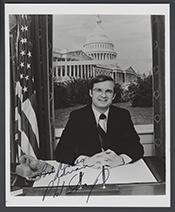
United States · Official source
1,180 records where Rep. Sharp, Philip R. [D-IN-2] is listed as a sponsor, author, or other actor. Search with topics and years
United States · United States Congress · 10 July 1990
Designates the week of August 13 through 19, 1990, as Home Health Aide Week.
United States · United States Congress · 21 June 1990
Title I: National Writing Program - Authorizes the Secretary of Education to enter into a contract with the National Writing Project (a nonprofit educational organization) to support costs of programs of teacher training and classroom research to improve the teaching of writing and the quality of student writing and learning. Directs the Project to establish a National Advisory Board. Title II: Research and Development - Directs the Secretary, through the Office of Educational Research and Improvement, to make grants to individuals and higher education institutions for research on the teaching of writing. Title III: Authorization of Appropriations - Authorizes appropriations for FY 1991 through 1996.
United States · United States Congress · 21 June 1990
Designates May 1991 as National Trauma Awareness Month.
United States · United States Congress · 19 June 1990
Amtrak Reauthorization and Improvement Act of 1990 - Amends the Rail Passenger Service Act to authorize appropriations through FY 1992 for the National Railroad Passenger Corporation (Amtrak). Limits the liability for certain rail accidents occurring in the District of Columbia to no more than the limits of coverage maintained by a publicly funded commuter transportation authority established under Virginia law to indemnify Amtrak or any railroad over which the authority conducts its operations. Authorizes the use of proceeds from the sale of railroad lines that were acquired and rehabilitated with funds under the Rail Safety and Service Improvement Act of 1982 for similar purposes with respect to railroad lines connected with such a line for the purpose of continued rail service on them. Requires Amtrak to cooperate with the efforts of the Washington State Department of Transportation in designing a study of the feasibility of reestablishing rail service between Seattle, Washington, and Vancouver, British Columbia. Directs Amtrak to study and report to the Congress on the revenue and cost implications of separating the California Zephyr-Desert Wind-Pioneer train into two service routes serving a southern and a control route through Iowa. Prohibits the compensation of any rail or motor carrier employee who works in more than one State from being subject to State income taxes in any State but the State in which the employee resides. Amends the Railroad Unemployment Insurance Act to treat Amtrak as a publicly funded rail carrier with respect to its contribution toward employees' unemployment compensation benefits. Directs the Secretary of Transportation to study and report to the Congress on the potential need among Class II and Class III railroads for Federal guarantees of obligations for funding rehabilitation and improvement of facilities and equipment, acquisition of new railroad facilities, or refinancing of existing debt. Directs Amtrak to report to the Congress on its plan to eliminate its need for Federal operating support by the year 2000. Requires Amtrak to study the economic feasibility of providing new service to areas not served by it as of the enactment of this Act.
United States · United States Congress · 19 June 1990
Economic and Budgeting Commission Act of 1990 - Title I: Economic and Budgeting Commission - Establishes the Economic and Budgeting Commission to report to the President and the Congress on which budget baseline shall be used for purposes of: (1) the Balanced Budget and Emergency Deficit Control Act of 1985 (Gramm-Rudman-Hollings Act); (2) the Congressional Budget Act of 1974; and (3) the Federal budget process. Requires the Commission to choose the budget baseline set forth in either the report issued by the Office of Management and Budget or the report issued by the Congressional Budget Office. Title II: Conforming Amendments; Effective Date - Amends the Balanced Budget and Emergency Deficit Control Act of 1985, the Congressional Budget Act of 1974, and Federal law to make revisions as required by this Act.
United States · United States Congress · 14 June 1990
Financial Crimes Prosecution and Recovery Act of 1990 - Title I: National Commission on Financial Crimes - Establishes the National Commission on Financial Crimes to investigate fraud and abuse in the financial services industry and to recommend procedures for improving interagency cooperation and tactics for law enforcement officers in the investigation and prosecution of financial crimes. Sets forth provisions with respect to the membership, powers, pay, reporting requirements, and termination of the Commission. Title II: Improvements in Administration of the Department of Justice - Directs the Attorney General to establish a financial crimes strike force in each Federal judicial district which is in the top quartile of such districts with respect to the total number of criminal referrals filed with the Attorney General by the appropriate Federal banking agencies relating to residents of, or persons located in, such district. Provides for local control of each such strike force, through the U.S. Attorney for such district, except as otherwise provided by the Attorney General. Sets forth provisions regarding pay for attorneys on financial crimes strike forces. Directs the Attorney General to: (1) establish a merit system to recognize and reward outstanding efforts of individuals engaged in the investigation and prosecution of financial crimes; (2) prohibit any U.S. attorney or any other attorney employed by the Department of Justice from taking into account the dollar amount of any loss incurred in connection with any financial crime in making a determination with respect to the investigation or prosecution of such crime; and (3) prescribe by regulation that the investigation of any referral from an appropriate Federal banking agency related to a financial crime involving an insured depository institution in default or in danger of default, or of any troubled institution, be given priority in case management. Amends the Financial Institutions Reform, Recovery, and Enforcement Act of 1989 to make specified civil money penalties collected under such Act available to the Attorney General to carry out any provision of law. Amends the Federal criminal code to grant specified officials of the Federal Bureau of Investigation administrative subpoena authority regarding specified financial crimes. Sets forth provisions: (1) with respect to standards governing production of items subpoenaed; and (2) granting persons complying in good faith with a summons or order issued under this Act and producing the materials sought immunity from civil liability to the consumer for such production or nondisclosure of such production. Title III: Improvements in the Administration of the FDIC and the RTC - Amends the Federal Deposit Insurance Act (FDIA) to grant subpoena authority to the Federal Deposit Insurance Corporation (FDIC) and the Resolution Trust Corporation (RTC) as a conservator or receiver or for carrying out authority with respect to an insured depository institution. Amends the Internal Revenue Code to grant the FDIC and the RTC access to Internal Revenue Service returns and return information upon written requests by the respective Board of Directors and upon certification by the Board that it has a substantial need for such returns or return information. Amends the FDIA to authorize Federal banking agencies, in conducting any investigation, examination, or enforcement action under such Act, to: (1) request the assistance of any foreign banking authority; (2) maintain an office outside the United States for such purposes; (3) provide assistance to a foreign banking authority, upon request, if the requesting authority is conducting an investigation involving a violation of laws or regulations relating to banking matters that the requesting authority administers or enforces; and (4) conduct such an investigation as is necessary to collect information and evidence pertinent to such a request without regard to whether the facts stated in the request also constitute a violation of U.S. law. Authorizes the FDIC and the RTC, as conservator or receiver of any insured depository institution, to request the assistance of any foreign banking authority and provide assistance to any such authority in accordance with this Act. Requires the FDIC and the RTC to each maintain a permanent office to coordinate foreign investigations or investigations on behalf of foreign banking authorities. Authorizes the Board of Directors of the FDIC to act in its own name and through its own attorneys in any action or proceeding in which the FDIC is an interested party, whether in its corporate capacity or as conservator or receiver for any insured depository institution. Grants priority to the FDIC over certain claims or actions filed or begun against an affiliated party of the insured depository institution by depositors, creditors, or shareholders of the institution after enactment of this Act. Authorizes the FDIC, as conservator or receiver for any insured depository institution, to avoid any transfer of interest of an institution-affiliated party or any transfer of interest or obligation of person determined to be a debtor of the institution that was made within five years of appointment of the FDIC as conservator or receiver, if such party made such transfer or incurred such liability with intent to hinder, delay, or defraud the insured depository institution. Specifies circumstances under which the FDIC may recover the property transferred or the value of such property. Sets forth provisions regarding prejudgment attachments of assets where an institution-affiliated party may be required to provide restitution to the institution or where the party is a debtor of the institution, and where the assets will be dissipated or otherwise placed beyond the jurisdiction of the court or FDIC before any recovery may be completed unless a trustee is appointed. Establishes criminal penalties for knowingly concealing assets or property from the FDIC or the RTC as a conservator or receiver for any insured depository institution. Requires each Federal banking agency to require directors of depository institutions to complete an educational course on their duties as directors every three years. Authorizes a court or the Attorney General to direct disclosures of matters occurring before a grand jury during an investigation of a banking law violation to identified personnel of a financial institution regulatory agency upon a finding of substantial need, subject to specified conditions. Excludes the payment of restitution under specified Acts including the FDIA from discharge under bankruptcy provisions. Amends the Federal criminal code to subject to civil forfeiture property which constitutes or is derived from proceeds traceable to mail fraud, or fraud by wire, radio, or television, affecting a financial institution. Amends the FDIA, the Federal Credit Union Act, the Revised Statutes, the Federal Reserve Act, the Bank Holding Company Acts of 1956 and 1970, and the Home Owners' Loan Act to permit the appropriate Federal banking agency, the FDIC, or, in the case of the latter statute, the Director, to apply to specified courts to recover from a depository institution administrative costs arising out of actions taken to recover a civil penalty. Title IV: Taxpayer Recovery Act - Taxpayer Recovery Act of 1990 - Makes an exception to a discharge in bankruptcy for: (1) restitution that the debtor has been ordered to pay by a State or Federal court in any criminal proceeding arising from an act that caused a loss to any bank, savings association, or credit union (bank); or (2) damages provided in any judgment, order, or consent decree entered in any State or Federal court, or in any settlement agreement entered into by the debtor, arising from any act involving fraud or reckless disregard for the law committed with respect to any such institution. Requires that any individual acting as a director, officer, or institution-affiliated party of a bank be considered to be acting in a fiduciary capacity with respect to such institution for purposes of a provision making an exception to a discharge from bankruptcy involving fraud or defalcation while acting in such capacity. Specifies that reliance by a creditor will not be required to establish an exception to discharge if the creditor is a financial regulatory agency that is a successor to a bank. Sets forth time limits for the filing of a complaint objecting to the discharge of a debt owed to: (1) a bank that is closed, is in receivership or conservatorship, or is sold to another bank in a transaction assisted by a financial regulatory agency; or (2) such an agency. Specifies that an individual debtor who has committed an act involving fraud or reckless disregard for the law or is subsequently adjudicated to have committed such an act during the pendency of his bankruptcy proceeding with respect to any bank that is in receivership or conservatorship or that is sold to another bank assisted by a financial regulatory agency shall not be exempt from: (1) more than $7,500 in value of the debtor's aggregate interest in any real property that the debtor uses as a residence: and (2) the debtor's interest in any insurance policy or annuity.
United States · United States Congress · 12 June 1990
Designates July 22, 1990, as Rose Fitzgerald Kennedy Family Appreciation Day.
United States · United States Congress · 6 June 1990
Urges the President to instruct the Attorney General to appoint an independent counsel to investigate the involvement of Government officials in the savings and loan scandal.
United States · United States Congress · 5 June 1990
1992 Olympic Commemorative Coin Act - Directs the Secretary of the Treasury to issue 1992 Olympic Games commemorative five-dollar gold coins and one-dollar silver coins. Prescribes guidelines for the sale and pricing of such coins and directs the Secretary to ensure that their issuance will not result in any net cost to the United States. Mandates that surcharges be paid to the U.S. Olympic Committee.
United States · United States Congress · 24 May 1990
Consumer Product Safety Improvement Act of 1990 - Title I: Amendments to Acts - Amends the Consumer Product Safety Act (CPSA) to set a 12-month deadline, subject to extension, on the issuance of any proposed consumer product safety rule after the date of publication of an advance notice of proposed rulemaking. Requires a feasibility study on requiring entities subject to the CPSA to pay amounts to the Consumer Product Safety Commission to defray the costs of Commission services to the entities. Amends the CPSA, the Federal Hazardous Substances Act (FHSA), and the Flammable Fabrics Act (FFA) (the Acts) to: (1) allow the Commission to terminate a rulemaking or regulation proceeding and rely on a voluntary standard only if such standard is in existence; (2) allow (in some circumstances require) the Commission to devise procedures to monitor voluntary standards compliance; and (3) require the Commission to grant or deny a petition to initiate a rulemaking within a reasonable time after the petition is filed, with the Commission prohibited from denying a petition on the basis of a voluntary standard unless the standard is in existence and other requirements are met. Amends the CPSA to direct the President, in making appointments to the Commission, to at least consider individuals with experience in the safety of consumer products or in related fields. Revises quorum requirements applicable to periods in which there are vacancies on the Commission. Creates the position of Director of Compliance, makes the Director an officer of the Commission, and requires the Director to be an attorney. Makes certain existing positions officers of the Commission and removes the pay cap on those positions. Allows the Chairman, with the approval of the Commission, to remove officers. Amends the FHSA and the FFA to empower an attorney general of a State who alleges a violation under those Acts to bring a civil action for enforcement. Amends the CPSA to add to the list of reasons a manufacturer is required to notify the Commission that of: (1) apparent failure to comply with a voluntary standard; and (2) the product being the subject of a civil action. Prohibits the Commission from disclosing information about a civil action. Amends the CPSA to increase, and the FHSA and the FFA to establish, basic and maximum civil monetary penalties for prohibited acts. Requires increases in the maximum penalties for inflation. Amends the CPSA to require the Commission to annually establish an agenda and priorities for Commission action under the Acts under its jurisdiction. Requires, subject to exception, a presiding hearing officer to transmit any settlement offer to the Commission. Authorizes appropriations. Title II: Related Provisions - Directs the Commission to: (1) study and report to the Congress on whether a special flammability standard is needed for sleepwear (other than for children); and (2) pursue its pending proceedings to establish a safety standard for cigarette lighters. Revises the CPSA definition of "amusement ride." Includes amusement rides expressly within the framework of such Act, subjecting them to public disclosure and inspection requirements and to notification and remedy provisions applicable to substantial product hazards when serious injury occurs. Directs the Commission to issue rules in this regard by July 1, 1991. Directs the Commission to: (1) report to the Congress on its activities to reduce exposure of individuals to an enumerated list of indoor air pollutants; (2) issue a consumer product safety standard to require cautionary labeling in connection with certain toys intended for use by children at least three years old; (3) submit to the Congress a report including specified information about particular products that pose a major hazard to children; and (4) conduct a survey to determine compliance with voluntary industry manufacturing guidelines designed to reduce the entrapment of children in reclining chairs and report the results to the Congress. Requires the Commission to initiate proceedings to establish a safety standard for reclining chairs if a substantial lack of compliance is found.
United States · United States Congress · 24 May 1990
Designates the week of October 14 through 20, 1990, as National Radon Action Week.
United States · United States Congress · 23 May 1990
Requires the Secretary of Commerce to take appropriate measures for the 1990 census to ensure that: (1) no member of the armed forces shall be excluded based on being assigned to a post outside of the United States; and (2) each such member is enumerated at such member's home of record.
United States · United States Congress · 22 May 1990
Designates June 3 through June 9, 1990, as Week for the National Observance of the 50th Anniversary of World War II.
United States · United States Congress · 17 May 1990
Peanut Program Modernization Act of 1990 - Amends the Agricultural Adjustment Act of 1938 to repeal peanut marketing quota provisions. Amends the Agricultural Act of 1949 to replace existing peanut price support provisions with price supports as determined by the Secretary of Agriculture based upon specified factors, including production costs and domestic and foreign demand.
United States · United States Congress · 14 May 1990
Solar, Wind, and Geothermal Power Production Incentives Act of 1990 - Amends the Public Utility and Regulatory Policies Act of 1978 (PURPA) and the Federal Power Act to remove the size limitations placed upon solar, wind, and geothermal facilities eligible for PURPA regulatory benefits.
United States · United States Congress · 26 April 1990
Expresses the sense of the Congress that Israel should take immediate steps to reopen universities in the West Bank and Gaza Strip.
United States · United States Congress · 26 April 1990
Urges the United States Trade Representative (USTR) to: (1) use "Super 301" under the Trade Act of 1974 to identify Japan as a priority country for purposes of negotiating the elimination of barriers to U.S. exports; (2) identify as trade-liberalization priorities under "Super 301" Japanese practices that are most costly in terms of lost U.S. exports and most resistant to change through market adjustment or prior negotiations; and (3) in determining such practices, give substantial weight to the worsening bilateral trade deficit in any sector where they prevail. Declares that the Congress considers that: (1) the identification of the trade-liberalization priorities in the 1990 "Super 301" report would reinforce other bilateral trade discussions such as the Structural Impediments Initiative talks and the negotiations regarding priorities in the 1989 "Super 301" report; and (2) use of the "Super 301" trade-liberalization incentive would improve prospects for reducing the U.S.-Japanese trade imbalance.
United States · United States Congress · 25 April 1990
Designates the month of October 1990 as Crime Prevention Month.
United States · United States Congress · 18 April 1990
Foreign Investment Policy Improvements Act - Requires the Secretary of Commerce to issue a report on foreign direct investment in the United States. Requires the General Accounting Office to submit to a specified congressional committee a report analyzing and making recommendations with respect to the Secretary's report. Requires the Bureau of Economic Analysis to use certain business information relating to foreign-owned businesses in the United States (ten percent or more of whose voting securities are owned by foreign persons) when implementing the International Investment and Trade in Services Survey Act. Requires the Bureau, in a specified report, to include information on international investment in property in the United States by foreign persons, with separate tables listing businesses (50 percent or more, and 50 percent or less, of whose voting securities are owned or controlled by foreign persons). Amends such Act to authorize and provide for the collection and use of information on direct investments owned or controlled directly or indirectly by foreign governments. Increases, and makes mandatory, the civil penalties for failure to provide information under such Act.
United States · United States Congress · 4 April 1990
Amends the Comprehensive Environmental Response, Compensation, and Liability Act of 1980 to provide that the definition of "owner or operator" (for purposes of liability) does not include: (1) a designated lending institution which acquires control of a facility pursuant to the terms of a security interest held by the person in such facility or in connection with a lease subject to Federal or State banking authorities; (2) a corporate fiduciary which operates or has legal title to a facility pursuant to the terms of an estate or trust; (3) an individual or institution that serves as an indenture trustee and acquires control of a facility as the result of default on a financing document between the trustee and the issuing entity; and (4) an individual fiduciary who has legal title to a facility for purposes of administering an estate or trust.
United States · United States Congress · 4 April 1990
Designates the week of August 19 through August 25, 1990, as National Agricultural Research Week.
United States · United States Congress · 4 April 1990
Designates May 13, 1990, as Infant Mortality Awareness Day.
United States · United States Congress · 3 April 1990
Amends the Clean Air Act to add, as a new title, the Relief for Terminated Workers Act. Requires the Secretary of Labor to establish the following benefits for employees terminated as a result of revisions of the Clean Air Act: (1) readjustment allowances similar to trade readjustment allowances under the Trade Act of 1974; and (2) programs for employment services, job search, and relocation allowances similar to programs under such Act. Authorizes appropriations.
United States · United States Congress · 29 March 1990
Designates September 13, 1990, as National DARE (Drug Abuse Resistance Education) Day.
United States · United States Congress · 22 March 1990
World War II 50th Anniversary Commemorative Coin Act - Expresses the sense of the Congress that the United States should recognize the 50th anniversary of World War II by minting and issuing commemorative coins. Directs the Secretary of the Treasury to issue and mint such coins in five dollar, one dollar, and half dollar denominations. Mandates that surcharges received from the sale of such coins be deposited in a coinage profit fund and allocated, upon separate congressional authorization, to the American Battle Monuments Commission to establish a World War II memorial. Directs the Secretary to report semiannually to the Congress regarding implementation of this Act.
United States · United States Congress · 14 March 1990
Financial Incentives Going to Help Towns Fighting Drugs Act - Amends the Internal Revenue Code to allow taxpayers to designate that one dollar of their tax liability be paid to the Local Anti-Drug Program Trust Fund. Establishes such Fund for grants to counties for: (1) law enforcement activities regarding drug-related crimes; (2) education, prevention, treatment, and rehabilitation programs regarding drug abuse; and (3) grants to units of general local government.
United States · United States Congress · 14 March 1990
Designates April 16, 1990, as National Sarcoidosis Awareness Day.
United States · United States Congress · 14 March 1990
Designates November 16, 1990, as National Philanthropy Day.
United States · United States Congress · 13 March 1990
Amends the Internal Revenue Code to exclude from gross income the value of any subsidy provided by a public utility to a customer for the purchase or installation of energy or water conservation measures.
United States · United States Congress · 8 March 1990
ESOP Promotion and Improvement Act of 1990 - Amends the Internal Revenue Code to allow S corporations (certain small business corporations) to participate in employee stock ownership plans (ESOPs). Extends the ESOP exception to the ten percent early withdrawal penalty tax to certain ESOP distributions to employees made at any time. (Currently the exception applies only to distributions made before January 1, 1990.) Permits ESOP participants whose compensation does not exceed a certain amount to contribute up to 50 percent of it to the plan. Amends the Federal Election Campaign Act of 1971 to permit payroll deductions for ESOP participants to make certain political contributions.
United States · United States Congress · 7 March 1990
Designates May 1990 as Take Pride in America Month.
United States · United States Congress · 1 March 1990
Amends the Energy Policy and Conservation Act to extend to August 15, 1990, authorities granted under the Act regarding domestic energy supply availability, including: (1) the Strategic Petroleum Reserve; and (2) the antitrust exemption allowing the major oil companies to coordinate use of oil supplies during times of oil shortages.
United States · United States Congress · 27 February 1990
Commemorates May 18, 1990, as the 25th anniversary of Head Start.
United States · United States Congress · 22 February 1990
Benjamin Franklin Memorial Fire Service Bill of Rights Act - Title I: Minting of Benjamin Franklin National Memorial Commemorative Coin - Benjamin Franklin National Memorial Commemorative Coin Act - Provides for the sale of Benjamin Franklin commemorative coins at a surcharge of which 25 percent shall be paid to the Benjamin Franklin National Memorial and the remainder be distributed in specified percentages to the National Fire Center and Museum Account, the National Hero Scholarship Account, the Firefighter Tuition Assistance Account, the Hazardous Materials Response Computer Account, the Research and Education Account, and the Burn Research Grant Account of the Firefighter Assistance Trust Fund (Fund). Prohibits the issuance of such coins from resulting in any net cost to the Federal government. Title II: Fire Service Bill of Rights - Fire Service Bill of Rights Act - Amends the Federal Fire Prevention and Control Act of 1974 to establish a fire service bill of rights. Establishes the National Fire Center and Museum in the District of Columbia to provide information about the fire service and safety to the public and fire services. Establishes a National Hero Scholarship to fund the higher education of a child, spouse, or dependent parent of a deceased firefighter. Establishes a scholarship providing tuition assistance to firefighters for higher education in fire safety or protection. Authorizes the Administrator of the United States Fire Administration to use amounts in the Research and Education Account of the Fund to fund other specified programs under the Fire Prevention and Control Act of 1974 and the provision of information concerning surplus Federal property and infectious diseases pursuant to this Act. Establishes the Firefighter Assistance Trust Fund. Places the National Academy for Fire Prevention and Control within the United States Fire Administration. Directs the Administrator to provide States with funds from the Hazardous Materials Response Computer Account of the fund for distribution to local fire services that wish to purchase computer equipment. Directs the Administrator to make a grant from the Burn Research Grant Account of the Fund to one national firefighter's burn foundation dedicated to reducing burn injuries. Requires the Administrator to prepare and make available to fire services, upon request, a manual describing Federal procedures for disposing of surplus property and highlighting how fire services could obtain such property. Directs the Administrator to distribute to such marshals information on the infectious diseases to which firefighters are particularly vulnerable. Permits the Administrator, in certain circumstances, to award to a domestic firm a contract that, under the use of competitive procedures, would be awarded to a foreign firm.
United States · United States Congress · 21 February 1990
Foreign Investment Policy Improvements Act - Requires the Bureau of Economic Analysis to use certain business information relating to foreign-owned businesses in the United States (ten percent or more of whose voting securities are owned by foreign persons) when implementing the International Investment and Trade in Services Survey Act. Amends such Act to authorize and provide for the collection and use of information on direct investments owned or controlled directly or indirectly by foreign governments.
United States · United States Congress · 21 February 1990
Designates the second Sunday in October 1990 as National Children's Day.
United States · United States Congress · 20 February 1990
Commercial Activities Contracting Procedures Act of 1990 - Directs executive agencies, including the U.S. Postal Service, to prepare and make public an annual inventory of all commercial activities performed by their employees or by a commercial source under contract. Excludes from such an inventory: (1) commercial activities requiring less than ten full-time equivalent work years annually; (2) governmental functions; and (3) certain preferential procurement programs relating to small disadvantaged business or sheltered workshops for the blind or severely handicapped. Allows labor organizations representing agency employees to petition agency heads to include or exclude a commercial activity from an inventory. Requires the performance of commercial activities included in an inventory to be procured from commercial sources unless the agency head determines that: (1) no commercial source can perform the activity; (2) use of such source would unacceptably delay or disrupt an agency program or activity; (3) the activity affects patient care at a Government-operated hospital and performance of the activity by Government employees would be in the best interest of patient care; (4) the activity is a governmental function; (5) with respect to commercial activities presently being performed by contract, Government employees can perform the work at a lower cost; or (6) with respect to activities presently being performed by Government employees, Government employees can perform the work at a cost no more than ten percent higher than the anticipated cost of contracting out. Requires agencies, before converting the performance of any commercial activity, to conduct a cost comparison analysis that computes all costs on the basis of the final performance work statement. Sets forth exceptions for the preferential procurement programs excluded from the inventory. Directs the Federal Acquisition Regulatory Council to amend the Federal Acquisition Regulation to establish requirements for conducting such analyses that contain provisions governing the calculation of all relevant costs of performing a commercial activity, the exclusion of certain costs, and the consideration of the use of government property. Requires Federal agency heads to establish a board to review the adequacy of cost comparison analyses and the performance work statements for accuracy and completeness and to consider employee appeals regarding an agency decision not to incorporate their comments and recommendations into a performance work statement. Allows interested parties to appeal a review board decision to an agency head. Prohibits a conversion to contract or in-house performance of any commercial activity within 30 days after a review board decision or while an appeal of a review board decision is pending. Requires Federal agency heads to notify all agency employees performing a commercial activity of each cost comparison analysis initiated with respect to that commercial activity and to keep those employees informed of the progress of each such analysis. Prohibits disclosure of any cost comparison analysis before the agency issues a public notice that the commercial activity will either be converted to contract or to in-house performance or will be performed by Government employees. Requires Federal agency heads to prepare a performance work statement for each commercial activity for which a cost comparison analysis is conducted. Requires such statement to define the scope of work for a commercial activity. Allows commercial activities to be combined for the preparation of such statements under certain circumstances. Requires each agency to provide agency employees who may be adversely affected 60 days to submit comments and recommendations regarding each performance work statement before it is submitted to the review board. Grants an employee the right to appeal to the appropriate review board an agency decision not to incorporate such comments and recommendations into a performance work statement. Requires the review board to sustain the appeal and require the agency to incorporate such recommendation into the performance work statement if the board determines that an agency decision is not substantially justified by the facts of the case or is contrary to law or regulation. Requires agencies to make performance work statements available for public review. Sets forth the duties of the Government and private sector contractors regarding reemployment of employees adversely affected by a conversion to contract performance. Directs the Administrator of Federal Procurement Policy to issue regulations requiring agency heads to report annually to the Office of Federal Procurement Policy on the number and dollar value of agency commercial activities converted to contract or to in-house performance each year and on anticipated savings resulting from such conversions. Directs the Administrator to report annually to the Congress on: (1) such savings and whether the conversions actually resulted in the savings anticipated; (2) the number of Federal and non-Federal employees performing commercial activities for the Government; and (3) the contract number and value for each commercial activity procured by an agency under contract. Provides that General Accounting Office bid protest procedures are not applicable to conversions to contract or to in-house performance. Declares that this Act shall not apply: (1) in any case in which its application would be contrary to a treaty or other lawful agreement between the United States and any other nation; (2) to the Department of Defense in time of a declared war or a military mobilization or other emergency declared, without delegation, by the President or by the Secretary of Defense; or (3) to research or development activities.
United States · United States Congress · 7 February 1990
Civil Rights Act of 1990 - Amends the Civil Rights Act of 1964 to provide that: (1) once a complainant has demonstrated that an employment practice results in a disparate impact on the basis of race, color, religion, sex, or national origin, the respondent has the burden of proving that the practice is justified by business necessity; (2) a complainant need not demonstrate which of a group of practices results in the demonstrated disparate impact; and (3) a respondent need not show business necessity for a specific practice within a group of practices if the respondent shows that that practice does not contribute to the disparate impact. Declares that an unlawful employment practice is established on a demonstration that race, color, religion, sex, or national origin was a motivating factor for any employment practice, even though such practice was also motivated by other factors, but bars certain types of relief if the respondent establishes that it would have taken the same action in the absence of any discrimination. Prohibits a challenge to an employment practice that implements a litigated or consent judgment or order resolving a claim of employment discrimination: (1) by a person who had certain types of notice and opportunity; (2) by a person whose interests were adequately represented by another person who challenged the judgment or order; or (3) if reasonable efforts were made to provide notice to interested persons. Increases to two years the time limit within which a charge of an unlawful employment practice must be filed. Removes provisions setting a separate time limit for charges initially filed with a State or local agency. Declares that a seniority system or practice which is part of a collective bargaining agreement is an unlawful employment practice if it was included in the agreement with the intent to discriminate. Allows, except for disparate impact cases, for compensatory damages (but not back pay) and, where there is malice or reckless or callous indifference, for punitive damages. Allows any party, where compensatory or punitive damages are sought, to demand a jury trial. Includes expert fees and other litigation expenses in any attorney's fees awarded. Prohibits a consent order or judgment settling a claim unless the parties and their counsel attest that a waiver of attorneys' fees was not compelled as a condition of the settlement. Allows to the prevailing party in the original action an award of attorney's fees and costs in defending a challenged judgment or order. Increases to 90 days after final action by a Federal agency the time limit for a Federal employee to bring a civil action. Allows to Federal employees the same interest to compensate for delay in payment as in cases involving non-public parties. Requires Federal civil rights laws to be broadly construed to effect their purpose to eliminate discrimination and provide effective remedies. Prohibits, except as expressly provided, any Federal civil rights law from being construed to restrict or limit the rights, procedures, or remedies available under any other Federal civil rights law. Declares that, for purposes of provisions relating to equal rights under the law, the right to make and enforce contracts includes the making, performance, modification, and termination of contracts, and the enjoyment of all benefits, privileges, terms, and conditions of the contractual relationship.
United States · United States Congress · 7 February 1990
Designates March 20, 1990, as National Agriculture Day.
United States · United States Congress · 6 February 1990
Designates August 7, 1990, as National Neighborhood Crime Watch Day.
United States · United States Congress · 30 January 1990
Designates July 3, 1990, as Idaho Centennial Day.
United States · United States Congress · 24 January 1990
Makes it unlawful to ship or transport any solid waste generated in a State into another State for treatment or disposal if such shipment or transportation is in violation of the laws of the recipient State. Authorizes States to enact and enforce laws regulating the treatment and disposition of solid waste, including laws regulating the importation of such wastes into States. Prescribes penalties for violations of this Act, including up to ten years' imprisonment for subsequent violations. Requires the Administrator of the Environmental Protection Agency, by regulation, to require persons transporting or shipping more than 100 pounds of solid waste in interstate commerce to submit annual registration statements. Directs the Administrator, upon request, to make such statements available to the public.
United States · United States Congress · 23 January 1990
Dire Energy Emergency Supplemental Appropriations Act - Makes FY 1990 supplemental appropriations to the Department of Health and Human Services for payments under the low-income home energy assistance program.
United States · United States Congress · 21 November 1989
Expedited Consideration of Proposed Rescissions Act of 1990 - Amends the Congressional Budget and Impoundment Control Act of 1974 to require a special message, in the case of budget authority proposed to be rescinded or reserved, to include language amending the law authorizing such programs to allow them to continue to function at the proposed new level of budget authority. Allows the President to transmit to both Houses of the Congress, for expedited consideration, one or more special messages proposing to rescind all or part of any item of budget authority provided in an appropriation bill. Requires that such special message be transmitted not later than three days after the President approves the appropriation bill and be accompanied by a draft bill or joint resolution that would, if enacted, rescind the budget authority proposed to be rescinded. Sets forth House and Senate procedures for the expedited consideration of such a proposal.
United States · United States Congress · 21 November 1989
Export Development Task Force Act of 1990 - Establishes the Bipartisan Task Force on Export Development and Promotion to review all Federal activities and programs that assist U.S. businesses in export development or promotion of nonagricultural goods and services, including financing programs. Establishes the Interagency Working Group on Export Development to develop export markets for U.S. nonagricultural goods and services.
United States · United States Congress · 21 November 1989
Designates the week of June 10 through June 16, 1990, as State-Supported Homes for Veterans Week.
United States · United States Congress · 21 November 1989
Expresses the sense of the House of Representatives that States and State regulatory State regulatory commissions should: (1) encourage their utilities to compare all feasible supply- and demand-side alternatives, taking into consideration the impact upon all ratepayers of utility investments in those alternatives; (2) consider the loss of earnings potential associated with utility investments in demand-side resources; and (3) adjust their regulatory systems to ensure that a utility's least-cost investment alternative is its most profitable course of action.
United States · United States Congress · 20 November 1989
Super Savings Bond Act - Provides for the issuance of 12-year super savings bonds, through payroll deduction or regular monthly purchase plans, to increase national savings and reduce the Federal debt owed to foreign creditors.
United States · United States Congress · 19 November 1989
Waste Materials Management Act of 1989 - Authorizes appropriations for FY 1990 through 1993 to carry out the Solid Waste Disposal Act. Title I: Provisions Relating Primarily to Subtitles A and B of the Solid Waste Disposal Act - Amends the Solid Waste Disposal Act to revise provisions concerning congressional findings and objectives. Declares it to be U.S. national policy that: (1) the creation of surplus and remnant material from production processes shall be reduced and residuals from post-consumer products shall be managed as material resources; (2) materials are to be managed at Federal, State, and local levels using specified waste reduction and management strategies; and (3) the Administrator of the Environmental Protection Agency (EPA) and the States shall not differentiate in the enforcement of this Act on the basis of whether an owner or person engaged in waste disposal activities is a public or private person, whether a facility is located on or off the premises where waste is generated, or whether an activity is carried out on or off the premises where the waste is generated. Requires the Inspector General of the EPA to report annually to the Congress on the implementation of, and compliance with, the Solid Waste Disposal Act. Adds specified annual reporting requirements. Directs the Administrator, for five years following the date of enactment of this Act, to identify five of the most toxic and common constituents of municipal waste. Requires the Administrator to consider, with respect to each of the constituents, imposing the following: (1) a ban on the use of such a constituent in production; (2) a ban on disposal in landfills or treatment in incinerators of any product containing such a constituent; (3) a requirement for special management standards for such products after discard; and (4) a requirement for the use of a substitute constituent. Permits the Administrator to impose such bans or requirements only by promulgating regulations. Requires the Administrator to publish annually in the Federal Register any information on such actions. Prohibits the disposal of used lead-acid batteries other than by recycling in accordance with this Act. Requires persons to dispose of such batteries only by delivery to: (1) battery retailers or wholesalers; or (2) secondary lead smelters or collection or recycling facilities permitted by a State or the Administrator. Sets forth battery disposal requirements for retailers, wholesalers, and manufacturers. Makes violators of such requirements subject to fines under the Federal criminal code. Requires battery retailers, wholesalers, and manufacturers to accept from customers used batteries of the same type as the batteries sold. Directs retailers to post a notice for customers containing information about the illegality of improperly disposed batteries, the requirements for accepting and disposing of batteries, and the merits of conservation. Permits the Administrator to inspect any establishment pursuant to this Act and to issue warnings and citations for noncompliance. Subjects persons who fail to post notices after receiving a warning to penalties of up to $1,000 per day. Requires battery wholesalers who sell batteries to retailers to provide for removal of batteries from the retailers' place of business. Prohibits the charging of fees for accepting batteries from customers. Considers violations of battery collection requirements to be misdemeanors. Requires the Administrator to study and report to the Congress on the disposal and potential recyclability of household dry-cell batteries and the need for legislation, regulation, or further study on the disposal and recyclability of such batteries. Title II: Provisions Relating Primarily to Subtitle C of the Solid Waste Disposal Act - Identifies as a hazardous waste a waste containing more than .1 percent of any constituent listed in appendix VIII to part 261 of title 40 of the Code of Federal Regulations, unless the Administrator establishes another level for such constituent. Provides that: (1) the mixing of a hazardous waste with any other matter constitutes treatment requiring a permit; and (2) dilution of a hazardous waste through such mixing, such that the resulting mixture does not exceed the established concentration levels, does not alter the character of the material as a hazardous waste. Authorizes the granting of petitions to remove from the list a hazardous waste for periods of up to five years. Permits subsequent renewals of such petitions. Requires the Administrator to charge fees for the submission of such petitions. Directs the Administrator to promulgate regulations on the following characteristics of hazardous waste: (1) acute and aquatic toxicity; (2) persistence and bioaccumulation potential; (3) radioactivity; (4) carcinogenicity; (5) mutagenicity; and (6) phytotoxicity. Directs the Administrator to promulgate regulations requiring: (1) owners or operators of facilities which use materials containing hazardous constituents listed in the Code of Federal Regulations in a manufacturing process to test the waste generated for the presence of such constituents; and (2) owners or operators of facilities generating hazardous waste subject to land disposal prohibitions to test the waste to determine if it meets applicable treatment standards. Provides for routine testing at least every two years and additional testing when a significant change in generation or waste management processes occurs. Requires the Administrator to carry out hazardous waste programs directly in States unless a State is authorized to administer such requirements. Requires the Administrator, if a State's program is equivalent, to grant interim authorization to such State to administer such program in lieu of direct administration by the Administrator. Directs States with hazardous waste programs to report annually to the Administrator on such programs. Prohibits the Administrator from identifying used oil as a hazardous waste under the Solid Waste Disposal Act. Provides that any fuel derived from used oil that does not meet used oil specifications established by the Administrator and would otherwise be identified as a hazardous waste shall be deemed to be a hazardous waste. Directs the Administrator to promulgate regulations for persons who generate, transport, recycle, or dispose of used oil. Requires the Administrator, in developing such regulations, to conduct an analysis of the economic impact of such regulations on the used oil recycling industry. Provides that regulations for used oil generators shall: (1) prohibit the storage of used oil in an underground storage tank unless such tank meets requirements under this Act; (2) prohibit the storage of used oil for more than 12 months; (3) require generators to transfer such oil to specified permitted used oil recycling or disposal facilities or transporters; and (4) require generators to keep specified records on such oil. Requires used oil transporter regulations to provide that such transporters: (1) acquire identification numbers from EPA; (2) meet applicable financial responsibility requirements; and (3) keep specified records. Provides that used oil recycler regulations shall require recyclers to: (1) keep specified records; (2) test fuel produced from the recycling process before departure from the facility; and (3) obtain certain permits. Requires used oil disposal regulations to prohibit mixing used oil with any hazardous waste identified under the Solid Waste Disposal Act unless the resulting mixture does not exhibit hazardous waste characteristics or the mixture is burned to recover useful energy in a device designed such that protection of human health and the environment is assured. Directs the Administrator to promulgate regulations requiring owners or operators of new and existing recycling facilities to have class permits. Provides for annual inspections of such facilities to assure permit compliance. Sets forth requirements for interim class permits. Exempts from permit requirements: (1) facilities which refine at least 10,000 barrels daily of crude oil into petroleum products, are classified as S.I.C. number 2911 (pursuant to the Office of Management and Budget Standard Classification Manual) facilities, and whose volume of refined used oil is less than one percent of the total crude oil refined into lubricant base stock annually; and (2) facilities which compound or blend lubricating base oil into finished lubricant products as their principal activity, are classified as S.I.C. number 2899 or 2992 facilities, and whose volume of used oil compounded or blended into such products is no more than ten percent of the lubricating base oil compounded or blended annually. Exempts from used oil regulation requirements on-site activities at facilities classified as S.I.C. number 4911 facilities. Directs the Administrator to promulgate regulations governing such facilities. Requires the Administrator to promulgate regulations establishing specification standards for fuel derived from used oil to be burned in furnaces and boilers. Sets forth requirements to be effective if the Administrator fails to promulgate used oil regulations by the applicable deadline. Requires the Administrator to implement education programs to inform the public and small businesses about the environmental and safety hazards associated with improper handling and disposal of used oil and the benefits derived from used oil recycling. Authorizes appropriations. Requires producers or importers of lubricating oil to recycle for a period of ten years an amount of used oil equal to at least the amount determined by multiplying the amount of lubricating oil produced or imported that year by such persons by the recycling percentage established by the Administrator. Authorizes such individuals to comply with this Act by: (1) recycling (through re-refining) used oil or purchasing re-refined oil for purposes of producing lubricating oil; or (2) purchasing recycling credits under this Act. Requires producers and importers to report annually to the Administrator on the amount of oil produced or imported by such persons. Directs the Administrator to establish a recycling percentage that is two points higher than the existing recycling rate for lubricating oil. Provides for increases in such percentage of two points annually for ten years. Requires the Administrator to promulgate regulations allowing recyclers to create credits for used oil recycling and producers or importers of lubricating oil to purchase such credits. Provides that such regulations shall require: (1) owners or operators of used oil collection centers to keep receipts issued by transporters who take delivery of such oil and copies of agreements under which the transporter agrees to take such oil to a recycling facility; (2) such owners or operators to certify that oil taken by transporters is not mixed with hazardous wastes; (3) owners or operators of recycling facilities to be the only persons to create a recycling credit for the recycling credit system; (4) recyclers to certify that the substance being recycled is used oil that has not been mixed with hazardous wastes; (5) oil proposed to be recycled to have come from a used oil collection place or a transporter with an identification number; (6) specified records to be kept by recyclers and by importers or producers; and (7) recyclers to sell or distribute in commerce such oil as specification used oil, off-specification used oil, industrial specification used oil, or re-refined oil. Directs the Administrator to report to the Congress on such regulations and to include: (1) a discussion of the effects of such regulations on the oil industry and the environment; and (2) an evaluation of the level of the recycling percentage and whether such percentage should be increased in future years. Requires an updated version of such report to be submitted within ten years of this Act's enactment. Applies recycling requirements to persons who import or produce more than 100,000 gallons of lubricating oil annually. Sets the recycling percentage at 40 percent if the Administrator fails to promulgate such regulations. Directs the Administrator to promulgate regulations requiring owners or operators of existing and new hazardous waste facilities to have class permits. Requires such permits to include provisions for: (1) public notice and comment; (2) environmental monitoring; (3) closure and post closure requirements; (4) financial responsibility; (5) annual on-site inspections; and (6) penalties for noncompliance. Requires the Administrator to impose additional requirements, as necessary. Requires the following facilities, unless excluded from regulation, to have such permits: (1) recycling facilities; (2) facilities engaged in precious metal recovery; (3) facilities engaged in spent lead-acid battery reclamation; and (4) hazardous waste storage facilities. Title III: Provisions Relating Primarily to Subtitle D of the Solid Waste Disposal Act - Subtitle A: Provisions Relating to Solid Waste Management Plans - Revises requirements for State solid waste management plans. Requires such plans to include: (1) an estimate of the capacity of the State to manage such waste; (2) permit programs; (3) solid waste recycling, reduction, incineration, and land disposal elements; (4) an overall waste materials strategy to cover one of two specified planning periods; (5) waste inventories; (6) personnel training and public education; (7) requirements for the management of household hazardous waste, tires, yard waste, and large household appliances; and (8) annual reporting requirements. Sets forth submission, approval, and implementation procedures for State plans. Authorizes a State with an approved plan and certification of compliance to: (1) prohibit the transportation of solid waste generated from another State into such State for disposal, storage, or incineration purposes; (2) prohibit the incineration, disposal, or storage of such waste; and (3) levy fees on solid waste or solid waste transporters that differentiate rates or other aspects of payment on the basis of waste origin. Requires such State, prior to exercising such authority, to certify to the Administrator that it has: (1) completed construction on facilities that will provide at least 70 percent of the capacity for solid waste management needed to implement the State plan; and (2) completed siting approval on facilities that will provide 100 percent of such capacity. Prohibits the interstate transport of solid waste in any State: (1) that does not have an approved plan within a specified time period; (2) that cannot certify continuing compliance; or (3) for which that the Administrator has withdrawn approval of the State plan. Permits the Administrator to develop a plan for, and charge, any State that has not submitted a plan. Requires States to establish permit programs and issue permits to solid waste management facilities in compliance with this Act. Prohibits the incineration, storage, or disposal of such waste at, or the transportation of such waste to, facilities without permits. Sets forth transitional permit requirements and deadlines. Limits permit terms to ten years and provides for permit modifications, as appropriate. Authorizes States to grant variances from permit requirements if demonstrated that no adverse effects to human health or the environment will result from such variances. Subtitle B: Provisions Relating to Federal Requirements - Directs the Administrator to promulgate standards, guidelines, and regulations for: (1) municipal solid waste landfills; (2) municipal solid waste incinerators; (3) industrial waste; (4) above-ground storage tanks; and (5) other waste categories, as appropriate. Permits State Governors to petition the Administrator for the promulgation of additional standards, guidelines, and regulations. Sets forth requirements for municipal solid waste landfills, to include: (1) specified detection and monitoring controls; (2) daily cover; (3) closure and postclosure requirements; (4) financial responsibility and corrective action requirements; (5) groundwater monitoring; (6) liners and leachate collection and removal systems, as appropriate; (7) construction quality assurance plans; and (8) prohibitions on landfills being located within the 100-year flood plain, within specified distances of faults, or within seismic impact zones or other unstable areas, unless certain conditions have been met. Requires the Administrator to publish guidelines for identifying materials which should be removed from solid waste before its incineration in a municipal solid waste incinerator. Directs the Administrator to promulgate regulations applicable to the operation and management of municipal solid waste incinerators and to the disposal or recycling and reuse of municipal solid waste incinerator ash. Prohibits the disposal of ash in units that are created as a result of vertical expansion of an existing waste disposal facility unless it is demonstrated that there will be no settling of waste that would impair the integrity of the liners. Requires that landfills into which such ashes are disposed provide for groundwater monitoring and: (1) place such ashes in a monofill having a leachate collection system and a single liner designed and operated to prevent the migration of any constituent into such liner; or (2) have two or more liners and a leachate collection system above and between such liners. Provides that landfill design requirements shall not apply to alternatively-designed units if demonstrated that such designs prevent such migration. Directs the Administrator to prescribe criteria and testing procedures for identifying the hazardous properties of municipal incinerator ash so that ash which does not exhibit such properties may be placed in sanitary landfills meeting current criteria under specified conditions. Requires ash which is hazardous to human health or the environment to be treated prior to recycling or reuse. Prohibits, four years after this Act's enactment, the operation of incinerators and the receipt of ash for treatment, storage, disposal, reuse, or recycling without a permit or prior approval under a State program. Requires civil penalties imposed against local governments for violations of this Act to be deposited into a trust fund for programs that serve to enhance the protection of human health and the environment. Sets forth transitional provisions. Requires the Administrator to identify, classify, and report to the Congress and States on specified types of industrial waste. Directs generators or transporters of such waste and owners or operators of facilities handling such waste to file notifications with the State concerning facility locations and descriptions of activities and wastes handled. Sets forth requirements for industrial waste management, to include: (1) authorizations to operate; (2) monitoring, recordkeeping, and reporting requirements; (3) performance standards; (4) financial responsibility assurances; (5) design, operating, closure, and postclosure criteria; and (6) corrective action requirements. Applies such requirements to the following facilities: (1) industrial waste facilities that produce such waste and are not implementing closure or postclosure plans; and (2) inactive or abandoned facilities that are reactivated. Requires the Administrator to study the adverse effects on human health and the environment of the disposal of other nonhazardous waste. Directs the Administrator to promulgate solid waste storage regulations. Excludes from such regulations storage at transportation-related facilities. Requires State plans and permits to include requirements for municipal solid waste landfills and incinerators and for industrial wastes. Subtitle C: Other Provisions - Directs the Administrator to compile and periodically update a non-hazardous solid waste inventory to determine, by State or region: (1) an estimate of the amount of such waste to be generated annually and likely to be generated in each of the next 20 years; and (2) the capacity of existing and proposed waste management facilities. Sets forth Federal enforcement provisions. Prescribes civil and criminal penalties for violations of solid waste management requirements. Title IV: Provisions Relating Primarily to Subtitle H of the Solid Waste Disposal Act - Requires the Administrator to: (1) develop model recycling programs for States and localities; and (2) carry out a continuing program to evaluate demonstrated waste management technologies that could be used by municipalities and report periodically on such program. Prohibits the Administrator from funding the development or demonstration of such technologies. Title V: Provisions Relating Primarily to Subtitle I of the Solid Waste Disposal Act - Directs the Administrator to promulgate regulations applicable to above-ground storage tanks. Applies such requirements to all tanks except those subject to the requirements of subtitle C of the Solid Waste Disposal Act. Exempts from this Act's requirements releases of small quantities of regulated substances which will not endanger human health and the environment and particular tanks, as appropriate. Requires such regulations to include requirements for field-erected tanks. Directs owners and operators of such tanks to implement release prevention plans which provide for release prevention systems capable of: (1) catching and holding 110 percent of the full capacity of the tank and preventing releases beyond tank boundaries; and (2) restraining drainage and preventing contamination of soil and water. Requires the plan and system to be inspected by a registered engineer who is not employed by the owner or operator. Directs the engineer, if the system does not reflect good engineering practices or the tank does not comply with the regulations, to notify the Administrator or the State. Provides for amendments of release prevention plans whenever there is a major modification in the tank which affects the tank's potential to release substances. Sets forth recordkeeping and reporting requirements for field-operated tanks. Prohibits the operation of such tanks after a release unless the Administrator determines that such prohibition is not necessary. Requires the regulations to include requirements for shop-fabricated tanks. Directs the Administrator to: (1) establish an inspection program for such tanks in the factory when construction is complete and before the tanks enter interstate commerce; and (2) require such tanks to bear labels with specified manufacturing, capacity, and use information. Provides for requirements relating to the installation of such tanks. Directs the Administrator, as necessary, to promulgate financial responsibility requirements for taking corrective action and compensating third parties for bodily injury and property damage caused by accidental releases from above-ground storage tanks. Permits the establishment of financial responsibility for a spill by any means the Administrator deems appropriate. Authorizes the assertion of claims against guarantors providing evidence of financial responsibility for claims against insolvent owners or operators of tanks. Limits guarantor liability to the aggregate amount which the guarantor has provided as evidence of financial responsibility to the owner or operator. Authorizes the Administrator to establish coverage requirements which may vary among particular classes or categories of above-ground storage tanks. Permits the Administrator to make grants to States for carrying out enforcement requirements. Authorizes a State to submit for the Administrator's review and approval a program under which such State would assume primary responsibility for the enforcement of regulations pertaining to above-ground storage tanks. Requires that State regulation and enforcement procedures be at least as stringent as those used by the Administrator. Requires the Administrator to: (1) monitor State programs for compliance with this Act's requirements; and (2) provide technical assistance to assist States, local governments, and owners and operators in complying with this title. Authorizes the Administrator to issue compliance orders or commence civil actions against violators of this Act's requirements, but requires that prior notification be given to States operating their own programs. Imposes criminal and civil monetary penalties for violations of this Act's requirements. Makes tank owners and operators liable for the Administrator's corrective action costs and damages. Authorizes the Administrator to require a tank owner or operator to undertake corrective action in response to any release of a regulated substance from the tank when such action will be done properly and promptly. Permits the Administrator, upon notification of a release, to prohibit operations in a facility until such action has been taken. Authorizes the Administrator to take corrective action where the owner or operator fails to take prompt and effective action and human health and the environment are endangered. Prohibits indemnification agreements from transferring liability under this title. Prohibits States or political subdivisions from enforcing requirements for shop-fabricated tanks that are more stringent than those imposed under this title. Authorizes appropriations. Prohibits the Administrator from enforcing financial responsibility regulations with respect to an owner or operator of an underground storage tank if such owner or operator has applied for insurance. Revises provisions concerning financial responsibility for such tanks. Requires the Administrator to evaluate and report to the Congress on the effects of financial responsibility regulations on the cost and availability of insurance used to demonstrate financial responsibility. Title VI: Waste Materials Reduction - Authorizes any person to petition a Federal agency to undertake a waste reduction action if such action would bring about at least a ten percent increase in recycling of the petitioned item, reduce by at least ten percent the total volume or toxic constituents of a waste described in the petition, or would bring about a net savings in true cost to the Federal Government or be neutral in effect or cost. Requires each Federal agency to designate a waste reduction officer to oversee compliance with Federal agency waste reduction requirements, prepare agency waste reduction plans, and report annually to the Administrator on the implementation of such plans. Directs the Administrator to establish a clearinghouse within EPA to collect and disseminate information on waste reduction and recycling. Makes such information available to the public. Requires the Administrator to establish a commission to study and report to the President and the Congress on waste reduction with respect to consumer products and packaging. Provides for the submission of periodic reports by the commission on the status of waste reduction efforts by the Federal Government and industry. Terminates the commission five years after the date of its establishment. Title VII: Procurement and Marketing of Recycled Materials - Applies Federal procurement requirements concerning recycled goods to States or other entities if such entities use funds appropriated to a Federal agency to which such procurement requirements apply. Directs the Administrator for Federal Procurement Policy to report to the Congress on the effect of a certain price preference concerning the procurement of recycled paper products. Requires affirmative procurement programs to include: (1) programs for monitoring compliance by States, political subdivisions, and contractors with recovered materials procurement requirements; and (2) a requirement that paper procured for uses which have enduring value be permanent paper. Requires such agencies to report annually to the Administrator on such programs and on the amount and value of recovered materials procured. Makes such report available to the public. Directs the EPA Administrator to: (1) report biennially to the Congress on the progress made by Federal agencies in implementing recovered materials procurement programs; and (2) review and revise, if necessary, guidelines concerning such programs which were prepared before this Act's enactment. Prohibits Federal agencies from entering into procurement contracts with any persons convicted of specified offenses of the Solid Waste Disposal Act if such a contract is to be performed at the facility at which the violation occurred. Authorizes the President to make exemptions to such prohibition. Requires the President to report annually to the Congress on the implementation of such prohibition. Directs the Secretary of Commerce to conduct a biennial survey that: (1) identifies the major domestic uses for, and users of, recovered and recycled materials; (2) documents or estimates the amounts of such materials used, exported, and imported annually; and (3) identifies the markets for such materials and the products made from such materials. Requires the Secretary and the Administrator to establish an interagency working group to: (1) promote markets in recovered and recycled materials and link sources of such materials with potential markets; (2) work cooperatively with generators, collectors, transporters, users, and regulators of such materials and with manufacturers of products containing such materials; (3) link businesses dealing in such materials with potential sources of capital; (4) educate government and business officials about potential commerce in such materials; (5) coordinate efforts to promote lawful commerce in such materials; (6) encourage reuse and recycling of solid waste; and (7) identify the institutional, economic, and technical barriers to the use of such materials. Directs the Secretary to take such actions as may be necessary to stimulate the development of new domestic markets for such materials. Requires the Secretary and the U.S. Trade Representative to: (1) identify foreign markets for recovered materials and products containing a high content of recycled materials; and (2) assist exporters in selling such materials and products in foreign markets. Title VIII: Financial Assistance - Authorizes the Administrator to provide financial assistance to States with approved solid waste management plans to develop programs to encourage and facilitate recycling. Permits the Administrator to: (1) provide financial assistance to States and local authorities for solid waste management planning; (2) make bonus grants to municipalities or other agencies that demonstrate achievement of a recycling rate greater than 25 percent; (3) make loans to States for waste reduction activities and programs in rural areas to collect household hazardous waste and waste from small quantity generators. Title IX: Other Provisions - Permits Government agencies to retain any amounts received from sales of materials or energy recovered from solid waste. Requires the Administrator to promulgate regulations for the use and composition of compost made from yard waste. Revises oil labeling requirements to direct the Administrator to promulgate regulations requiring packages of lubricating oil (of less than five gallons) sold in commerce to bear a label stating that used oil should be taken to collection centers. Directs the Administrator to promulgate regulations requiring rigid and semi-rigid plastic packaging and products sold in commerce to bear a label identifying the plastic resin used in such packaging and products. Authorizes the Administrator, subject to certain conditions, to: (1) treat Indian tribes as States under the Solid Waste Disposal Act; (2) delegate to such tribes primary enforcement responsibility for programs under such Act; and (3) provide such tribes grant and contract assistance to carry out such functions. Permits States and Indian tribes, subject to the Administrator's approval, to enter into cooperative agreements to administer such Act. Requires the Administrator to report to the Congress on measures for addressing hazardous and solid wastes and underground storage tanks in Indian country. Directs the Administrator to undertake a continuing program to establish an inventory of hazardous waste sites and solid waste open dumps in Indian country. Requires the Administrator to assist Indian tribes that operate such dumps in upgrading such facilities.
United States · United States Congress · 15 November 1989
Designates the week beginning March 5, 1990, as Federal Employees Recognition Week.