Law· HJRESH.J.Res. 492 (102nd)enacted
Designating September 1992 as "Childhood Cancer Month".
United States · United States Congress · 21 May 1992
Designates September 1992 as Childhood Cancer Month.
The world's political record
Person
United States · Official source
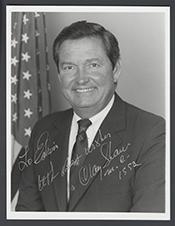
3,161 records where Rep. Shaw, E. Clay, Jr. [R-FL-22] is listed as a sponsor, author, or other actor. Search with topics and years
United States · United States Congress · 21 May 1992
Designates September 1992 as Childhood Cancer Month.
United States · United States Congress · 19 May 1992
Designates September 10, 1992, as National DARE (Drug Abuse Resistance Education) Day.
United States · United States Congress · 7 May 1992
Civil War Battlefield Commemorative Coin Act of 1992 - Directs the Secretary of the Treasury to issue a specified number of five-dollar gold coins, one-dollar silver coins, and half-dollar clad coins to commemorate the 100th anniversary of Civil War battlefield preservation. Sets forth certain features of such coins and provides for their design, issuance, and sale. Requires that all sales include a surcharge of $35 per coin for the five-dollar coins, $7 per coin for the one-dollar coins, and $1 per coin for the half-dollar coins. Requires that all surcharges be paid to the Civil War Battlefield Foundation for the preservation of historically significant Civil War battlefields.
United States · United States Congress · 6 May 1992
Designates November 13, 1992, as Vietnam Veterans Memorial 10th Anniversary Day.
United States · United States Congress · 29 April 1992
Designates October 4 through 10, 1992, as Mental Illness Awareness Week.
United States · United States Congress · 9 April 1992
Servicemembers Education Conversion Act of 1992 - Title I: Enhanced Voluntary Separation Programs - Directs the Secretary of Defense, in administering the special separation benefits program and the voluntary separation program and in order to provide an incentive for members of the armed forces to become elementary and secondary school teachers, to modify those programs in accordance with this Act. Entitles such modifications as the teacher training enhancement program. Authorizes a member of the armed forces who is offered participation in either of the separation programs to apply to the Secretary for the training program. Allows the Secretary to accept applications only in the case of a member who could become certified as a teacher after pursuit of a program of one year or less. Prohibits the acceptance of any applications after September 30, 1997. Modifies the separation programs to: (1) continue to provide for 12 months after separation from service the full amount of the member's basic pay paid before such separation; and (2) pay such benefit or incentive as computed by using half the member's years of service (currently, all) payable at the end of the 12-month period in which the member received full basic pay. Directs the Secretary to provide information about the training program to all members of the armed forces on active duty before they enter preseparation counseling as required under Federal law. Title II: Elements of Teacher Training Enhancement Program - Requires a former member of the armed forces who is accepted into the training program to enter into a written agreement with the Secretary to: (1) accept modification of the separation programs; (2) obtain teacher certification within one year after separation; and (3) teach, within seven years from receiving certification, for at least five years in a public or private nonprofit elementary or secondary school in the United States. Requires an individual who fails to comply fully with the agreement requirements to reimburse the United States on a pro rata basis for the benefits provided under the training program. Allows an individual to make any required reimbursement through a reduction in the amount of voluntary separation incentive payments due to such individual for his or her period of service. Provides instances in which such repayment or teaching obligations shall be waived. Title III: Role of Department of Education in Teacher Training Enhancement Program - Directs the Secretary of Education to: (1) collect information regarding States and local educational agencies that have a shortage of elementary and secondary school teachers and the applicable teacher certification requirements; and (2) provide such information to the Secretary of Defense for dissemination to members of the armed forces as part of their information package. Directs the Secretary of Education to: (1) assist individuals selected for the program in selecting an appropriate teacher certification to pursue and in obtaining appropriate employment after certification; (2) provide information to States, local educational agencies, and accredited private nonprofit elementary and secondary schools regarding the existence of the program and the availability of program participants as teachers; (3) assist States and local educational agencies in developing alternative certification procedures for former members of the armed forces; and (4) submit an annual report on program effectiveness to the Congress.
United States · United States Congress · 9 April 1992
Amends the Harmonized Tariff Schedule of the United States to include parts and accessories of handicapped aids for tariff treatment under the Schedule.
United States · United States Congress · 9 April 1992
Designates September 1992 as National Spina Bifida Awareness Month.
United States · United States Congress · 9 April 1992
Designates the second Sunday in October 1992 as National Children's Day.
United States · United States Congress · 8 April 1992
Amends the Harmonized Tariff Schedule of the United States to extend, through December 31, 1997, the suspension of duty on metal oxide varistors.
United States · United States Congress · 8 April 1992
Designates October 24 through November 1, 1992, as National Red Ribbon Week for a Drug Free America. Recognize the hard work and dedication of those involved in combatting substance abuse.
United States · United States Congress · 8 April 1992
Designates April 26 through May 2, 1992, as National Crime Victims' Rights Week.
United States · United States Congress · 3 April 1992
Minor Crop Protection Assistance Act of 1992 - Amends the Federal Insecticide, Fungicide, and Rodenticide Act (FIFRA) to define "minor use" as the use of a pesticide on a commercial agricultural crop or site where: (1) the total U.S. acreage for the crop is less than 300,000 acres; (2) the acreage expected to be treated as a result of that use is less than 300,000 acres annually or the agricultural crop represents production from less than 300,000 acres annually; (3) the use does not provide sufficient economic incentive to support initial or continuing registration; and (4) the Administrator of the Environmental Protection Agency (EPA) has not determined that the use presents an unreasonable adverse environmental effect. Permits the Administrator, in handling the registration of a pesticide for a minor use, to waive applicable data requirements if it is determined that the absence of data will not prevent the Administrator from determining the incremental risk presented by the minor use and that such risk would have an unreasonable adverse environmental effect. Prohibits data that relates solely to a minor use, without the permission of the original data submitter, from being considered by the Administrator to support a minor use application by another person for ten years following the submission of the data. Terminates the exclusive use of such data if the registration is voluntarily cancelled, or if the data are used to support a nonminor use. Provides for expedited review (within six months of submission) of applications to support minor use pesticide registrations. Grants registrants who make good faith requests for minor use waivers regarding required data, and whose requests are denied, a full time period for providing such data. Requires the Administrator, upon the request of a registrant, to extend the deadline for the production of data required solely to support a minor use pesticide up to four years if the registrant provides data to support other uses of the pesticide and a schedule to assure that the data production will be completed before the expiration of the extension. Applies the same extension conditions to data for reregistrations. Requires the Administrator to conditionally amend a registration to permit additional minor uses even if data is insufficient if the applicant has submitted satisfactory data pertaining to the proposed minor use and amending such registration would not increase environmental risks. Prohibits amendments if the pesticide meets or exceeds risk criteria associated with human dietary exposure and other specified conditions. Provides for extensions of minor use registration and data submission deadlines in cases where a registrant is not providing data to support a minor use but is providing data in a timely fashion to support other uses. Requires the Administrator, when a minor use registration application is filed no later than two years after another registrant voluntarily cancels registration for a similar use, to evaluate such application as if the voluntary cancellation had not yet taken place for purposes of data use, subject to environmental risk considerations. Directs EPA to assure coordination of minor use issues through the establishment of a minor use program within the Office of Pesticide Programs. Establishes and authorizes funding for a Department of Agriculture matching fund minor use program. Requires the program to be utilized to ensure the continued availability of minor use crop protection chemicals, including the data to support minor use pesticide registrations.
United States · United States Congress · 3 April 1992
Title I: Chief Financial Officer, General Counsel, and Certain Other Reforms - Subtitle A: Chief Financial Officer Amendments to the Rules of the House and Related Provisions - Amends rule II of the Rules of the House of Representatives to eliminate the election of a Doorkeeper or Postmaster in the House. Requires the individual chosen for election as the Sergeant-at-Arms to be a nationally-respected law enforcement professional. Amends rules III and IV to revise the duties of the Clerk of the House and the Sergeant-at-Arms. Amends rules V and VI to: (1) eliminate the positions of Doorkeeper and Postmaster; and (2) create a position of Chief Financial Officer. Sets forth qualifications for the elected Chief Financial Officer. Outlines his or her duties. Prohibits the Chief Financial Officer from disclosing the identity of a complaining employee without the employee's consent unless such disclosure is unavoidable. Makes any intimidation of, or reprisal against, an employee of the House by an employing authority because of a complaint made by the employee a violation of rule LI. Transfers the duties of the Postmaster of the House to the Chief Financial Officer. Amends rule XIV to eliminate the duties of the Doorkeeper with respect to decorum and debate in the House. Amends rule XI to require each committee, by March 1 of the first session of any Congress, to adopt an oversight plan for that Congress and to submit it to the Committee on House Administration. Prohibits the consideration in the House of a primary expense resolution for a committee unless and until such committee has adopted and submitted the plan. Requires the Committee on House Administration to report such plan to the House. Authorizes the Speaker to appoint ad hoc oversight committees for specific tasks from the membership of committees with shared legislative jurisdictions. Requires each committee to include an oversight section in its final activity report at the end of a Congress. Amends rule X to require one-half of the members of the Committee on House Administration to be from the majority party and one-half to be from the minority. Allows the chairman or ranking minority party member of the Committee on House Administration to authorize and issue subpoenas. Requires the membership of the Subcommittee on Legislative Appropriations of the Committee on Appropriations to be divided equally between the majority and minority parties. Divides the staff positions for the subcommittee in the same manner. Directs the Speaker to appoint a task force to: (1) recommend institutional reforms necessary to restore public confidence in the House; and (2) report on its recommendations to the House by the end of the 102d Congress. Requires the written approval of the Speaker and the minority leader of the House before funds may be reprogrammed or transferred between House appropriation accounts. Makes it out of order to consider any measure in the House, in the second session of the 102d Congress, containing an appropriation for any period after March 31, 1993. Directs the Speaker, upon the recommendation of the majority and minority leader, acting jointly, to appoint an Inspector General for the House. Subtitle B: Office of the General Counsel - Establishes the Office of the General Counsel (Office) in the House to: (1) be accountable to a specified Leadership Group; and (2) provide legal assistance to Members, officers, and employees of the House on matters directly related to their duties, with specified exceptions. Lists certain actions of the Office that must be approved either by a resolution of the House or the Leadership Group. Requires such Office, in the case of any matter that affects an area of responsibility committed to another office, officer, or employee under this Act, to consult the party involved and coordinate such action with them. Vests management, supervision, and administration of the Office in the General Counsel to be appointed by the Speaker, upon the recommendation of the majority and minority leaders of the House, acting jointly, without regard for political affiliation and solely on the basis of fitness to perform the duties of the position. Requires the General Counsel to serve at the pleasure of the Leadership Group. Authorizes the General Counsel to make appropriate expenditures for the functioning of the Office. Requires the attorneys and professional staff in the Office to maintain regular, written records of the time expended on legal matters, consistent with generally accepted practices in private law firms. Makes such time records reviewable by the Leadership Group. Prohibits public disclosure of them unless by direction of the Leadership Group or resolution of the House. Title II: Legislative Process Reforms - Amends rule I of the Rules of the House of Representatives to require the Speaker to announce a specified legislative program at the beginning of each session of the Congress. Requires the Speaker to ensure that the minority leader is fully consulted in developing the legislative program for the House each week. Directs the Speaker to state the question on reconsideration of a bill, immediately after its return from the President, without an intervening motion. Requires the House to proceed to vote on the reconsideration of such measure. Amends rule X to require the Speaker to refer legislation initially to one committee as the committee of principal jurisdiction (currently, such legislation may initially be referred simultaneously to two or more committees for concurrent consideration). Requires a bill originating in the House to be presented to the President by the tenth calendar day after it has passed the House and the Senate in identical form. Requires the membership of each committee (except the Committee on Standards of Official Conduct), subcommittee, task force, or other subunit, to reflect the ratio of majority to minority party Members of the House at the beginning of the Congress. Exempts the Resident Commissioner from Puerto Rico and the Delegates to the House from the count in determining such party ratio. Requires the membership of each select committee, subcommittee, task force, subunit, or conference committee to reflect the ratio of the majority to minority party Members of the House at the time of its appointment. Prohibits any standing committee of the House (except the Committee on Appropriations) from establishing more than six subcommittees. Prevents any member from serving on more than four House subcommittees at any one time. Amends rule XI to repeal the general permission, subject to certain conditions, for proxy voting by a member of any committee or subcommittee with respect to any measure or matter. Allows committees and subcommittees to close their meetings in circumstances where disclosure of matters to be considered would: (1) endanger national security; (2) tend to defame, degrade, or incriminate any person; (3) violate any law or rule of the House; or (4) involve committee personnel matters. Provides that a majority of the members of each committee or subcommittee shall constitute a quorum for the transaction of any business, including the markup of legislation (currently, all committees but the Committees on Appropriations, Budget, and Ways and Means are permitted to fix the number establishing quorum). Requires the names of those Members voting for and against any motion to report a public bill or resolution to be included in the committee report of such measure (currently, only the number of votes cast for or against reporting such measure is included). Requires the names of those members of the committees actually present at the time the bill or resolution is ordered reported to be included in the committee report relating to each nonrecord vote on a motion to report such public bill or resolution. Requires that a committee or subcommittee print, document, or other material, except under certain circumstances, prepared for public distribution, shall either: (1) be approved by the committee or subcommittee prior to such public distribution, with opportunity afforded for the inclusion of supplemental, minority, or additional views; or (2) contain a specified disclaimer on its cover. Prohibits any such print, document, or other material not approved by the committee or subcommittee from including the names of its members, other than the name of the chairman releasing such document. Lists material excepted from such requirements. Prohibits a measure reported from the Committee on Rules from being considered on the same calendar day it is presented to the House, nor on the subsequent calendar day of the same legislative day, except in certain circumstances. (Currently it can not be considered on the same day.) Prohibits the Committee on Rules from reporting any rule or order that would prevent a motion to recommit that has amendatory instructions (except in the case of a Senate measure for which the language of a House passed measure has been substituted). Prohibits the consideration of any rule providing for the consideration of a bill or resolution otherwise subject to amendment under House rules if such resolution limits the right of Members to offer germane amendments to such measure, unless the chairman of the Rules Committee has announced, within a specified period of time, that less than an open amendment process might be recommended by the Committee for the consideration of such measure. Makes it out of order to consider any order of business resolution which provides that, upon adoption, the House shall be considered to have automatically adopted a motion, amendment, or resolution, or to have passed a bill, joint resolution, or conference report, unless consideration of such resolution is agreed to by at least two-thirds of the Members voting. Requires any report accompanying a resolution for consideration of a budget waiver measure to include: (1) an explanation and justification for the waiver; (2) an estimated cost of the provisions to which the waiver applies; and (3) a summary or text of any written comments on the waiver received by the committee from the Committee on the Budget. Sets forth procedures for the consideration of such resolution. Prohibits the consideration of a resolution that waives all House rules, except by a two-thirds vote of the Members voting. Makes it out of order to consider any primary expense resolution unless the Committee on House Administration has reported and the House has adopted a resolution establishing an overall ceiling for House committee staff personnel for that year. Makes such a resolution privileged. Establishes guidelines for developing and considering primary and supplemental expense resolutions. Provides that the overall ceiling for committee staff in a resolution reported by the committee or contained in any amendment for the 103d Congress shall not exceed 50 percent of the total committee staff personnel employed at the end of the 102d Congress. Amends rule XIII of the Rules of the House of Representatives to establish a Commemorative Calendar comprised of unreported bills and resolutions respecting commemorative holidays and celebrations that have been: (1) referred to the Committee on Post Office and Civil Service; and (2) requested by the chairman and ranking minority member of such committee to be placed on such calendar. Outlines procedures for the consideration of such measures. Amends rules XV of the Rules of the House of Representatives to provide for an automatic roll call vote when the Speaker puts the question upon final passage of: (1) any bill, joint resolution, or conference report making general appropriations, providing revenue, or adjusting the statutory congressional pay rate; or (2) any budgetary concurrent resolution or conference report that provides an increase in the statutory debt limit. Amends rule XXI of the Rules of the House of Representatives to repeal the declaration that no amendment shall be in order during consideration of a general appropriation bill if it proposes a limitation not specifically contained or authorized in existing law for the period of such limitations. Defines a "general appropriation bill" to include any bill or joint resolution making continuing appropriations in a fiscal year for a period in excess of 30 days. Describes the contents of such bill. Reserves all points of order against any general appropriation bill at the time it is reported. Prohibits the consideration of any bill or joint resolution making appropriations for a period of 30 days or less unless it only provides appropriations in the lesser amount and under the more restrictive authority of each pertinent appropriations measure: (1) as passed by the House; (2) as passed by the Senate; (3) as agreed to by a committee of conference; or (4) as enacted for the preceding fiscal year. Requires a report from the Committee on Appropriations accompanying any appropriation bill to list all appropriations contained in the bill for any expenditure not previously authorized by law. Requires a three-fifths vote of the Members of the whole House to consider any rule or order from the Rules Committee that waives certain rules governing consideration of any short- or long-term continuing appropriations measures. Amends rule XXI to establish certain guidelines for reporting and considering reconciliation measures in the House. Exempts Senate amendments and conference reports from such guidelines. Reserves all points of order against a reconciliation bill at the time it is reported. Prohibits the consideration in the House of any bill or joint resolution which directly or indirectly authorizes enactment of new budget authority for a fiscal year unless such measure is reported in the House on or before May 15 preceding the beginning of such fiscal year. Amends rule XXIV of the rules of the House of Representatives to revise the daily order of business for the House to include the pledge of allegiance to the flag. Amends rule XXVII to establish additional criteria for entertaining motions to suspend the rules and pass a measure in the House. Requires the Clerk of the House, after 100 Members have signed a motion to discharge a committee from the consideration of a measure, to: (1) cause the name of each Member who has signed or withdrawn a signature to such motion to be printed in the Congressional Record; and (2) publish an updated list in the Record at the end of each succeeding week the House is in session. Amends rule XXVIII to require inclusion of supplemental, minority, or additional views of a House conferee in the same published volume of the conference committee's report, if specified conditions are met. Amends rule XLVIII to require a specified oath to be administered to: (1) a newly appointed Member of the Permanent Select Committee on Intelligence; (2) each committee's employee; and (3) any person engaged by contract or to perform services for or at the request of the committee who is required to subscribe to the agreement in writing. Requires the Clerk of the House to provide for the printing of such oaths for: (1) filing in the records of the House; and (2) recording in the House Journal and in the Congressional Record. Directs the Committee on Standards of Official Conduct to investigate and report to the House on any violation of such oath. Authorizes the Permanent Select Committee on Intelligence to refer cases of unauthorized disclosure and violations of the required oaths to such committee for investigation. Authorizes the committee by a majority vote to deny a member access to classified information if he or she is subject to a pending investigation. Directs the House Committees on Rules and on Government Operations by a certain date to report legislation granting the President enhanced rescission authority with respect to any budget authority not authorized by law. Sets forth procedures for considering such legislation if it is not reported out of such committees by the stated deadline. Directs the Committee on Rules to study and report to the House on the feasibility of converting to a biennial budget-appropriations process and corresponding multiyear authorizations. Declares that it is the policy of the House of Representatives that the following Federal laws should be amended to apply them to the House in the same or similar manner as they apply to the Executive Branch: (1) the National Labor Relations Act; (2) the Occupational Safety and Health Act of 1970; (3) the Equal Pay Act of 1963; (4) the Age Discrimination in Employment Act of 1967; (5) the Freedom of Information Act; (6) the Privacy Act of 1974; (7) Title VII of the Civil Rights Act of 1964; and (8) specified provisions of the Federal judicial code relating to an independent counsel. Directs the standing committees of the House with subject jurisdiction over such Federal laws to report legislation to the House to implement such policy. Provides for consideration of such legislation. Requires the ratio of majority party to minority party staff positions, consultants, details, and funding for House committees to be the same ratio as that of Members of the House. Eliminates the following Select Committees in the House: (1) Aging; (2) Hunger; (3) Children, Youth, and Families; and (4) Narcotics Abuse and Control. Transfers the records, files, and materials of such select committees to the Clerk of the House. Applies the Freedom of Information Act to the Congress. Exempts information related to casework or constituent correspondence from such Act with respect to Members of the Congress. Provides that the period for which expenses of the former Speakers of the House may be paid shall end three years after the expiration date of such term of office, except that in the case of a former Speaker who is receiving such expenses on the date of the enactment of this Act, the period shall end three years after such date. Amends Federal law to prohibit a Member of the House from sending any franked mass mailing outside the Member's congressional district. Authorizes a Member of Congress to mail franked mail with a simplified form of address for delivery within his or her congressional district or State only. (Current law permits such mailings in areas proposed to become a part of such Member's congressional district by legislative or judicial proceedings but not in effect.) Prohibits the Committee on House Administration from approving any payment for, and a Member from making any expenditure from, any allowance of the House or any other official funds if any portion is for any cost related to a mass mailing by a Member of the House outside his or her congressional district. Amends the Federal Salary Act of 1967 to make it out of order to consider any bill or resolution that would adjust, or have the effect of adjusting, the salaries of Members of Congress if such measure contains any item which does not relate to adjusting Members' salaries. Prohibits consideration of any measure in the House appropriating amounts for the legislative branch of the Government if it permits such amount to remain available for obligation beyond the end of the fiscal year for which the amount is appropriated. Requires at least one attorney in the Office of the Parliamentarian in the House to be appointed upon the recommendation of the minority leader. Permits the chairman of the Committee on Standards of Official Conduct to serve for the first session of a Congress only. Requires the House to elect a member of such committee to serve as chairman from nominations submitted by the minority party caucus or conference, at the beginning of a second session of a Congress. Provides that in adopting the Rules of the House of Representatives in the 103d Congress and any subsequent Congress, each rule shall be agreed to by separate resolution of the House.
United States · United States Congress · 2 April 1992
Directs the Attorney General to hire as border patrol agents 2000 military personnel discharged under honorable conditions.
United States · United States Congress · 1 April 1992
Designates the week beginning July 26, 1992, as Lyme Disease Awareness Week.
United States · United States Congress · 31 March 1992
Designates the week beginning October 25, 1992, as World Population Awareness Week.
United States · United States Congress · 31 March 1992
Designates January 16, 1993, as Religious Freedom Day.
United States · United States Congress · 26 March 1992
Amends the Federal judicial code to include Members of Congress among the Government officials with respect to whom independent counsel provisions apply.
United States · United States Congress · 24 March 1992
Expresses the sense of the Congress that the Vatican should grant recognition to and establish diplomatic relations with Israel.
United States · United States Congress · 20 March 1992
Coral Reef Environmental Act - Establishes a joint program between the Environmental Protection Agency (EPA) and the National Oceanic and Atmospheric Administration to conduct environmental research, monitoring, and public education relating to coral reef ecosystems. Directs the EPA Administrator and the Undersecretary of Commerce for Oceans and Atmosphere to jointly develop guidelines for assessing quality of coastal and marine waters in which coral reef ecosystems are found to ensure the sustainable use and conservation of such ecosystems. Requires the President to direct the Secretary of State to work with other nations and international organizations to: (1) implement an international research program to monitor the status of coral reef and related ecosystems; (2) implement a global strategy for the sustainable use of coral reef ecosystems and to encourage multilateral research efforts on sustainable management of such ecosystems; and (3) promote public education on the conservation of such ecosystems. Directs the President to convene conferences of the parties to the Convention for the Protection and Development of the Marine Environment of the Wider Caribbean Region (Cartagena Convention) and the South Pacific Regional Environment Program (SPREP) for purposes of identifying research and management needs in coral reef ecology and their sustainable use and the implementation of such programs in the Caribbean and South Pacific. Authorizes appropriations.
United States · United States Congress · 20 March 1992
Amends rule XXI of the Rules of the House of Representatives to prohibit consideration of any measure appropriating amounts for the Office Mail Allowance of the House unless it: (1) prohibits availability of any such amount for obligation after the end of the fiscal year for which the amount is appropriated; and (2) requires any amount not obligated before the end of the fiscal year to revert to the Treasury.
United States · United States Congress · 20 March 1992
Condemns the March 17, 1992, bombing of the Israeli embassy in Buenos Aires, Argentina. Declares that the U.S. Government should fully cooperate with the Governments of Argentina and Israel in identifying and bringing to justice all of the individuals responsible.
United States · United States Congress · 18 March 1992
Nuclear Reactor Licensing Act of 1992 - Amends the Atomic Energy Act of 1954 to prescribe guidelines for: (1) issuance by the Nuclear Regulatory Commission of nuclear reactor combined construction and operating licenses; and (2) post-construction hearings on such licenses. Provides for judicial review of final Commission orders affecting such licenses.
United States · United States Congress · 18 March 1992
Amends title XVIII (Medicare) of the Social Security Act to repeal provisions providing reduced Medicare reimbursements for new physicians.
United States · United States Congress · 17 March 1992
Designates May 16 through 22, 1992, as National Awareness Week for Life-Saving Techniques.
United States · United States Congress · 5 March 1992
District of Columbia Omnibus Anti-Crime Act of 1992 - Title I: Expanded Penalties for Crimes of Violence - Amends the District of Columbia Code (DC Code) to provide for mandatory life imprisonment (as under current law) without parole for first degree murder. Subjects persons convicted of assault with intent to commit bodily injury to up to ten years' imprisonment. Provides that whoever in the commission of specified acts of assault on a member of a police force or fire department does not employ force likely to cause serious bodily harm or death or does not use a deadly or dangerous weapon shall be fined up to $500, imprisoned for up to 90 days, or both. Title II: Penalties for Activities Relating to Criminal Drug Enterprises and Distributing Drugs in Vicinity of Schools - Amends the District of Columbia Uniform Controlled Substances Act of 1981 (Uniform Act), to provide for an enhanced penalty (imprisonment, fine, or both, up to twice that authorized) for distribution or manufacturing controlled substances in or near schools, colleges, youth centers, public swimming pools, or video arcades. Sets a mandatory minimum sentence, except with respect to offenses involving five grams or less of marijuana. Provides for an enhanced penalty and a mandatory minimum sentence for distribution of a controlled substance to a pregnant woman. Amends: (1) the Dangerous Weapons Act to provide for an enhanced penalty for crimes involving dangerous weapons committed in or near schools and colleges; (2) the Firearms Control Regulation Act to provide for a fine of up to $10,000, imprisonment of up to ten years, or both, for persons over age 21 who illegally sell, transfer, or distribute a firearm, destructive device, or ammunition to anyone under age 18; and (3) the Uniform Act to subject those who attempt or conspire to commit serious drug-related crimes to the same penalties as those who commit the crimes which were the objects of such attempt or conspiracy (currently, punishable by imprisonment, fine, or both, which may not exceed the maximum authorized for the underlying offense). Revises DC Code provisions concerning victim impact statements and the rights of crime victims. Specifies that each victim of a crime of violence shall have the right to: (1) be present at the defendant's trial, sentencing, and parole hearings; (2) submit, prior to the imposition of sentence, a written victim impact statement (as under current law); (3) offer at the time of sentencing an oral or written statement of the victim's opinion of the sentence that should be imposed on the defendant and have such statement entered into the record; and (4) offer, at the defendant's parole hearings, an oral or written statement of the victim's opinion of whether or not the defendant should be granted parole. Sets forth additional provisions, including notification to the victim of the right to submit and offer statements and any changes in the defendant's status. Permits individuals 14 years of age or older (currently, 16) to be tried as adults for certain serious crimes. Title III: Revision of Standards for Bail and Pretrial Detention - Revises DC Code provisions with respect to release prior to trial and pretrial detention. Provides that, upon the appearance before a judicial officer (officer) of a person charged with an offense (other than first-degree murder), the officer shall issue an order that, pending trial, the person be: (1) released on personal recognizance or upon execution of an unsecured bond; (2) released on a condition or combination of specified conditions (condition); (3) temporarily detained to permit revocation of conditional release, deportation, or exclusion; or (4) detained. Requires the officer to order the pretrial release of the person on personal recognizance, or upon execution of an unsecured appearance bond in an amount specified by the court, subject to the condition that the person not commit a crime during the period of release, unless the officer determines that such release will not reasonably assure the appearance of the person as required or will endanger the safety of another person or the community (in which case such officer shall order the person's pretrial release, subject to such condition, and subject to the least restrictive further condition that the officer determines will reasonably assure such person's appearance and the safety of any other person and the community). Authorizes the officer to conduct an inquiry into the source of the property to be designated for potential forfeiture or offered as collateral to secure a bond and requires such officer to decline to accept the designation or the use as collateral of property that, because of its source, will not reasonably assure the person's appearance. Bars the officer from imposing a financial condition that results in the pretrial detention of the person. Entitles a person for whom conditions of release are imposed and who, after 24 hours from the time of the release hearing, continues to be detained as a result of inability to meet the conditions of release, upon application, to have the conditions reviewed by the officer who imposed them. Sets forth additional provisions with respect to such review. Authorizes the officer to impose additional or different conditions of release. Requires the officer, in determining whether there are conditions of release that will reasonably assure the appearance of the person as required and the safety of any other person and the community, to take into account available information concerning the nature and circumstances of the offense charged, the weight of the evidence against the person, the history and characteristics of such person, and the nature and seriousness of the danger to any person or the community that would be posed by such person's release. Directs the officer, when ordering the pretrial release of the person on personal recognizance or upon execution of an unsecured appearance bond, to: (1) include a written statement that sets forth all the conditions to which the release is subject in a manner sufficiently clear and specific to serve as a guide for the person's conduct; and (2) advise the person of the penalties for, and consequences of, violating a condition of release, and of provisions of the District of Columbia Theft and White Collar Crimes Act of 1982 (relating to intimidation of witnesses, jurors, and officers of the court, obstruction of criminal investigations, and retaliation against a witness, victim, or informant). Requires the officer, upon a determination that a person charged with an offense (other than first-degree murder) is, and was at the time the offense was committed, on release pending trial for a felony or pending imposition or execution of sentence, appeal of sentence or conviction, or completion of sentence, or on probation or parole, or not a U.S. citizen or resident alien, and may flee or pose a danger to any person or the community, to: (1) order the detention of the person for a period of not more than ten days (excluding weekends and holidays); and (2) direct the attorney for the Government to notify the appropriate court, probation, or parole official, local or State law enforcement official, or official of the Immigration and Naturalization Service. Specifies that, if the official fails or declines to take the person into custody during that period, the person shall be treated in accordance with this title, notwithstanding the applicability of other provisions of law governing release pending trial or deportation or exclusion proceedings. Sets forth additional provisions with respect to: (1) burdens of proof and presumptions; (2) the holding of a hearing to determine whether any conditions will reasonably assure the appearance of the person as required and the safety of any other person and the community; (3) the initiation by the attorney for the Government of a pretrial detention hearing by ex parte motion and the holding of such hearing; (4) detention of the person pending completion of the hearing; and (5) review and appeal of a release or detention order. Title IV: Superior Court of the District of Columbia - Increases the number of associate judges of the D.C. Superior Court from 58 to 60, effective October 1, 1992, and to 62, effective October 1, 1993. Authorizes appropriations for the operation of such Court during FY 1993. Revises DC Code provisions to expand the authority of hearing commissioners to make findings and enter final orders or judgments with respect to specified proceedings, including certain landlord-tenant disputes, small claims proceedings, criminal misdemeanors, and uncontested probate and fiduciary proceedings. Increases the maximum amount in controversy permitted for cases under the jurisdiction of the Small Claims and Conciliation Branch of the D.C. Superior Court. Title V: Dealth Penalty for Murders - Provides for the imposition of the death penalty for murders (where a person intentionally, knowingly, or through recklessness manifesting extreme indifference to human life, or through the intentional infliction of serious bodily injury, caused the death of a person) in the District of Columbia, with respect to offenses committed after the expiration of the six-month period beginning on the date of the enactment of this Act, unless during such period the registered electors of the District of Columbia vote to reject such amendment by referendum. Title VI: Repeal of Youth Rehabilitation Amendment Act of 1985 - Repeals the Youth Rehabilitation Amendment Act of 1985.
United States · United States Congress · 5 March 1992
Medicare Geographic Data Accuracy Act of 1992 - Amends title XVIII (Medicare) of the Social Security Act to require the Secretary of Health and Human Services to consult with State medical societies in revising the geographic adjustment factors used to determine reimbursements for physician services under part B (Supplementary Medical Insurance) of Medicare. Requires the Secretary to base geographic-cost-of-practice indices under Medicare upon the most recent available data.
United States · United States Congress · 27 February 1992
Designates March 17, 1992, as Irish Brigade Day.
United States · United States Congress · 27 February 1992
Designates the week beginning April 19, 1992, as National Credit Education Week.
United States · United States Congress · 26 February 1992
Designates May 10, 1992, as Infant Mortality Awareness Day.
United States · United States Congress · 19 February 1992
Designates September 13, 1992, as Commodore John Barry Day.
United States · United States Congress · 11 February 1992
Designates April 14, 1992, as Education and Sharing Day, U.S.A., the birthday and the start of the 91st year of Rabbi Menachem Mendel Schneerson, leader of the worldwide Lubavitch movement.
United States · United States Congress · 5 February 1992
DES Education and Research Amendments of 1992 - Amends the Public Health Service Act to establish a program for the conduct and support of research and training, the dissemination of health information, and other measures with respect to the diagnosis and treatment of conditions associated with exposure to the drug diethylstilbestrol (DES). Mandates: (1) programs to educate health professionals and the public; and (2) longitudinal studies. Authorizes appropriations.
United States · United States Congress · 5 February 1992
Cuban Democracy Act of 1992 - Sets forth U.S. policy with respect to Cuba. Requires the President to direct the U.S. Trade Representative to enter into negotiations with governments that conduct trade with Cuba for purposes of securing the agreement of such countries to restrict trade and credit relations with Cuba in a manner consistent with U.S. policy. Makes countries that provide assistance to Cuba ineligible for: (1) assistance under the Foreign Assistance Act of 1961 or the Arms Export Control Act; (2) agreements with the United States for the establishment of free trade areas; (3) participation in the Enterprise for the Americas Initiative; and (4) forgiveness or reduction of debt owed to the U.S. Government. Terminates such sanctions if the President reports to the Congress that Cuba has established democratic institutions through free and fair elections. Prohibits restrictions on the export to Cuba of medicines for humanitarian purposes. Permits telecommunications services between the United States and Cuba. Requires the U.S. Postal Service to provide direct mail service to and from Cuba. Authorizes the President to provide assistance to promote nonviolent democratic change in Cuba. Prohibits the issuance of licenses for certain transactions between U.S.-controlled firms in third countries and Cuba. Bars domestic concerns from receiving a tax deduction for the portion of the deductible expenses of such concerns which are allocated or apportioned to income derived from Cuba. Prohibits vessels which enter Cuba to engage in trade from loading or unloading any freight in the United States within 180 days after departure from Cuba. Directs the President to establish strict limits on remittances to Cuba by U.S. persons for purposes of financing the travel of Cubans to the United States to assure that such remittances are not used by the Castro regime as a means of gaining access to U.S. currency. Authorizes food, medicine, and medical supplies for humanitarian purposes to be made available to Cuba under the Foreign Assistance Act of 1961 and the Agricultural Trade Development and Assistance Act of 1954 if the President certifies to the House Foreign Affairs Committee and the Senate Foreign Relations Committee that the Government of Cuba: (1) has made a commitment to hold free and fair elections for a new government within six months and is proceeding to implement that decision; (2) has made a commitment to respect and is respecting human rights and basic democratic freedoms; and (3) is not providing weapons or funds to any group in any other country that seeks the violent overthrow of the government of such country. Waives sanctions against Cuba under this Act if the President reports to the Congress that Cuba has established democratic institutions through free and fair elections. Declares that it shall be U.S. policy to take the following actions with respect to a freely-elected Cuban Government: (1) grant full diplomatic recognition to such government and encourage the admission of such government to international organizations and financial institutions; (2) provide emergency relief during Cuba's transition to a viable economic system; (3) encourage rescheduling or cancellation of Cuba's external debt; (4) end the U.S. trade embargo of Cuba; and (5) enter into negotiations for a trade agreement with Cuba. Requires the Secretary of the Treasury to exercise the authorities of the Trading With the Enemy Act in enforcing this Act. Authorizes appropriations. Amends the Trading With the Enemy Act to authorize the Secretary to impose a civil penalty on violators of such Act. Requires the Department of the Treasury to establish a branch of the Office of Foreign Assets Control in Miami, Florida.
United States · United States Congress · 5 February 1992
Amends the Harmonized Tariff Schedule of the United States to suspend, through December 31, 1997, the duty on metal oxide varistors.
United States · United States Congress · 5 February 1992
Designates May 1992 as National Huntington's Disease Awareness Month.
United States · United States Congress · 4 February 1992
Designates the week beginning November 1, 1992, as National Medical Staff Services Awareness Week.
United States · United States Congress · 30 January 1992
Designates October 1992 as National Breast Cancer Awareness Month.
United States · United States Congress · 30 January 1992
Designates February 6, 1992, as National Women and Girls in Sports Day.
United States · United States Congress · 22 January 1992
Designates March 25, 1992, as Greek Independence Day: A National Day of Celebration of Greek and American Democracy.
United States · United States Congress · 26 November 1991
Save, America Passbook Savings Act of 1991 - Amends the Internal Revenue Code to exclude from gross income interest earned ($5,000 individual, $10,000 joint return) on certain passbook savings accounts in federally insured institutions.
United States · United States Congress · 22 November 1991
Commends: (1) the people of Guam for their patriotism, bravery, loyalty to the United States, and many sacrifices during World War II, particularly during the invasion and occupation of the Guam territory; (2) the members of the Navy Insular Force and U.S. Navy and Marine Corps for the efforts and sacrifices they made in defense of the U.S.; (3) the Hawaiians for their sacrifices and contributions to the U.S. war effort during the attack on Pearl Harbor on December 7, 1941; and (4) the Hawaii Territorial Guard members, Varsity Victory Volunteers, the civilian workers at the Pearl Harbor Naval Ship Yard and other Hawaiian military installations, 100th Infantry Battalion, Military Intelligence Service, and 442nd Regimental Combat Team for their sacrifices and contributions to the U.S. war effort during such attack.
United States · United States Congress · 21 November 1991
Federal Program Improvement Act of 1991 - Title I: Provisions Relating To The Medicare Program - Subtitle A: Durable Medical Equipment - Amends the Social Security Act to: (1) prohibit unsolicited telephone contacts from suppliers of items of durable medical equipment to Medicare (title XVIII of the Social Security Act) beneficiaries; (2) require suppliers to provide information to the Secretary of Health and Human Services (HHS) on sales and billing practices; (3) prohibit carrier forum shopping; (4) prohibit issuance of multiple provider numbers; (5) require a description of such items in forms explaining benefits; (6) require the Secretary to develop a standardized prescription for such items; (7) mandate adjustments to final payments amounts which the Secretary determines are not inherently reasonable; (8) require an advanced determination for decubitus care mattresses; (9) require the Secretary to report to specified congressional committees on implementation of advanced determination requirements; and (10) set forth miscellaneous study and reporting requirements respecting item definitions and quality standards, supplier costs, and items treated as prosthetics devices. Subtitle B: Secondary Payer Identification and Enforcement - Amends the Social Security Act to: (1) make changes to aid the identification of Medicare secondary payer situations and the recovery of erroneous payments from primary payers; and (2) set forth miscellaneous study and reporting requirements respecting carrier recovery efforts and contractor eligibility requirements. Title II: Customs Overtime Pay Reform - Revises the overtime pay system for U.S. Customs Service inspectors. Amends the Customs Procedural Reform and Simplification Act of 1978 to require the authorization for the Customs Service to specify the maximum amount available for payment of overtime. Amends the Consolidated Omnibus Budget Reconciliation Act of 1985 to terminate reimbursement of appropriations for overtime costs. Requires a General Accounting office study and report to specified congressional committees on overtime costs. Title III: Availability And Use of Death Information Under The Old-Age, Survivors, And Disability Insurance Program - Amends title II (Old Age, Survivors and Disability Insurance) (OASDI) of the Social Security Act to: (1) eliminate State restrictions on the use of death certificates to correct OASDI and other Federal benefit program information; (2) provide for the provision of Social Security Administration death information to States free of charge; and (3) restrict the use of social security account numbers by States which have not contracted to participate in the program providing for the exchange of death information. Requires an HHS study and report to specified congressional committees on improvements in gathering and reporting such information. Title IV: PBGC Report On Employers With Underfunded Plans - Requires the Pension Benefit Guaranty Corporation to submit an annual report to the Congress on employers with underfunded pension plans.
United States · United States Congress · 21 November 1991
Taxpayer Bill of Rights Act of 1991 - Title I: Additional Safeguards to Protect Taxpayers' Rights - Subtitle A: Taxpayers' Advocate - Amends the Internal Revenue Code to establish in the Internal Revenue Service (IRS) the Office of Taxpayers' Advocate, headed by the Taxpayers' Advocate, appointed by the President, by and with the advice and consent of the Senate. Requires the Office to: (1) assist taxpayers in resolving problems with the IRS; (2) identify areas in which taxpayers have problems in dealings with the IRS; (3) propose changes in the administrative practices of the IRS to mitigate such problems; and (4) identify potential legislative changes which may be appropriate to mitigate such problems. Requires the Taxpayers' Advocate to annually report to specified congressional committees on Office activities. Requires the Commissioner of Internal Revenue to establish procedures requiring a formal response to all recommendations submitted to the Commissioner by the Taxpayers' Advocate. Authorizes the terms of a Taxpayer Assistance Order to require the Secretary of the Treasury to take certain actions (currently, only to cease or refrain from taking such actions). Subtitle B: Modifications to Installment Agreement Provisions - Requires prior notification to taxpayers under an installment agreement to pay tax liability before altering, modifying, or terminating such an agreement. Provides for administrative review of denials of requests for installment agreements. Suspends the failure to pay penalty during any period an installment agreement is in effect. Subtitle C: Interest - Extends from ten days to 21 days the period for which interest will not be imposed after notice and demand for payment, if such payment is less than $100,000. Provides for the abatement of interest in the case of an assessment due to the error or delay of an IRS managerial act. Increases the interest rate for overpayment of tax from two percent to three percent (making such rate equal to the interest rate for underpayment of tax). Waives interest on all overpayments refunded within 45 days after a return is filed. Subtitle D: Joint Returns - Requires separate deficiency notices in the case of a joint income tax return if the most recent data available to the IRS shows that such spouses did not file a joint return with each other. Allows the disclosure of collection activities to an individual requesting such information in the case of a joint return where such individual is no longer married to or resides in the same household as the other joint filer. Removes limitations on filing a joint return after filing separate returns. Subtitle E: Collection Activities - Authorizes the Secretary, if it is determined to be in the best interest of the taxpayer and the United States, to: (1) withdraw a notice of a lien; (2) return property that has been levied upon; and (3) offer compromises in civil or criminal cases. Requires the Secretary, at the request of the taxpayer, to make reasonable efforts to notify credit reporting agencies and financial institutions of such withdrawal notice. Subtitle E (sic): Erroneous and Fraudulent Information Returns - Requires payee statements to provide the phone number of the person providing payment. Establishes civil damages for the fraudulent filing of information returns. Requires the Secretary to take reasonable steps to corroborate the accuracy of an information return when making a determination of a deficiency by a third party, when such return is disputed by the taxpayer. Subtitle F: Modifications to Penalty for Failure to Collect and Pay Over Tax - Declares that a person shall not be liable for any penalty for failure to collect and pay over tax if such person: (1) is not a significant owner, or highly compensated employee of the trade or business; (2) notifies the Secretary within ten days after such failure; and (3) such notification was before any notice by the Secretary with respect to such failure. Requires the Secretary to disclose certain information where more than one person is liable for a penalty. Subtitle G: Awarding of Costs and Certain Fees - Repeals the "substantially justified" test for determining whether a taxpayer may recover costs and fees incurred as part of an administrative or court proceeding. Provides for the awarding of reasonable litigation or administrative costs to a prevailing party who represents himself in an administrative or court proceeding. Makes IRS employees personally liable in certain cases. Provides that any failure to agree to an extension of time for the assessment of any tax shall not be taken into account in determining whether a prevailing party has exhausted all administrative remedies. Subtitle H: Other Provisions - Revises provisions on the required content of tax due, deficiency, and other notices. Provides for the treatment of returns prepared for or executed by the Secretary for purposes of certain tax penalties. Provides protection for taxpayers who rely on certain guidance published by the IRS. Title II: Form Modifications, Studies - Subtitle A: Form Modifications - Directs the Secretary to: (1) ensure that taxpayers are aware of permission to pay tax in installments, extensions of time for payment of tax, and compromises of tax liability; (2) improve procedures for taxpayers to notify the Secretary of changes in names and addresses; (3) include in a specified publication a section on the rights and responsibilities of divorced individuals; (4) ensure that employees are aware of their responsibilities under the Federal tax system and that the public is aware of penalties for failure to collect and pay over tax; and (5) notify taxpayers any payments that cannot be associated with any outstanding tax liability. Subtitle B: Studies - Requires the Secretary to report to the tax-writing committees on: (1) a pilot program for appeals of certain enforcement actions (including lien, levy, and seizure actions; (2) a study on ways to assist the elderly, physically impaired, foreign-language speaking, and other taxpayers with special needs to comply with IRS laws; (3) the scope and content of the IRS taxpayer-rights education program for its officers and employees; and (4) cases involving complaints about misconduct of IRS employees and the disposition of such complaints. Requires the Comptroller General to report to the tax-writing committees on: (1) a study of notices of deficiency; (2) the accuracy and clarity of 25 of the most commonly used IRS forms, notices, and publications; and (3) a study of IRS employee-suggestion programs.
United States · United States Congress · 19 November 1991
Second National Blue Ribbon Commission to Eliminate Waste in Government Act - Establishes the Second National Blue Ribbon Commission to Eliminate Waste in Government to: (1) conduct a private sector survey on management and cost control in the Federal Government; (2) review executive agency operations and existing General Accounting Office, Congressional Budget Office, Inspector General Reports, and other existing governmental and nongovernmental recommendations for reducing waste; and (3) submit to the President and the Congress a list of those recommendations with estimated savings that the Commission determines are most significant and recommendations for improving the budget process, management, and reducing waste and costs in the Government. Requires the Commission to identify, address, and to report to the President and the Congress on: (1) opportunities for increased efficiency and reduced costs in the Government that can be realized by executive action or legislation; (2) areas in the Government where managerial accountability can be enhanced and administrative control can be improved; (3) specific Federal programs that have accomplished their objectives and ought to be terminated; (4) specific Federal program services that could be provided at a lower cost by the private sector; (5) specific reforms of the budget process that would yield savings, increase accountability and efficiency, and enhance public confidence in the budget process; (6) specific areas in the Government where further study can be justified by potential savings; and (7) specific recommendations for legislative and administrative actions. Requires the Commission to be funded, staffed, and equipped, to the extent practicable and permitted by law, by the private sector without cost to the Government.
United States · United States Congress · 14 November 1991
Gulf of Mexico Protection and Restoration Act of 1991 - Amends the Federal Water Pollution Control Act to direct the Administrator of the Environmental Protection Agency to implement a comprehensive plan for improving and protecting the water quality of the Gulf of Mexico. Requires the Administrator to award grants for research to develop baseline scientific data regarding the environmental quality of the Gulf for use in preparing and evaluating the plan. Makes State agencies, nonprofit research organizations, and universities eligible for grants. Directs the Administrator, at the request of the Governor of a Gulf State affected by the plan, to make a grant for implementing the plan to the State if the State commits to implement the plan and has an approved proposal. Sets forth State proposal requirements. Limits: (1) the Federal share of State grants to 50 percent of the total cost of implementing the proposal; and (2) administrative costs supported by a grant to ten percent of the portion of the grant expended per fiscal year. Defines a "Gulf State" as Alabama, Florida, Louisiana, Mississippi, Texas, Puerto Rico, and the Virgin Islands. Authorizes and allocates appropriations.
United States · United States Congress · 14 November 1991
Amends the Federal Election Campaign Act of 1971 to prohibit candidates for the House of Representatives from accepting contributions from persons other than local individual residents totaling in excess of the total contributions accepted from local individual residents. Limits contributions to candidates for Federal office by nonparty multicandidate political committees to $1,000. Subjects to limitation and reporting requirements payments by a national committee of a political party or a State committee of a political party for a mixed political activity. Repeals the office facility exception (building fund) from the definition of contribution. Requires the deposit of excess funds of candidates for the House of Representatives into a separate account to be used for any lawful purpose other than for such candidate's election.
United States · United States Congress · 12 November 1991
Amends the Internal Revenue Code to extend for one year the following expiring provisions: (1) the credit for increasing research activities; (2) the targeted jobs credit; (3) the tax exclusion for employer-provided educational assistance; (4) the authority to issue qualified small issue bonds to finance manufacturing facilities and farm property; (5) the itemized deduction for health insurance costs of self-employed individuals; (6) the authority to issue mortgage revenue bonds and mortgage credit certificates; (7) the rules on allocating research and experimental expenditures in determining income from sources within or without the United States; (8) the low-income housing credit; (9) the energy investment credit for solar and geothermal property; (10) the credit for clinical testing expenses for certain drugs for rare diseases or conditions; (11) the minimum tax exception for gifts of appreciated tangible property; and (12) the tax exclusion for employer-provided group legal services plans.
United States · United States Congress · 12 November 1991
Melaleuca Control Act of 1991 - Treats melaleuca quinquenervia as a noxious weed for quarantine and control purposes under the Federal Noxious Weed Act. Directs the Secretary of Agriculture to propose regulations to add melaleuca, the Brazilian pepper, and the Australian pine to the Federal Noxious Weed List. Directs the Secretary of the Army to construct a research and quarantine facility in Broward County, Florida, to deal with melaleuca and other exotic plants that threaten native Florida ecosystems. Authorizes FY 1993 appropriations.