Law· HJRESH.J.Res. 603 (101st)enacted
To designate the month of October 1990 as "Country Music Month".
United States · United States Congress · 14 June 1990
Designates October 1990 as Country Music Month.
The world's political record
Person
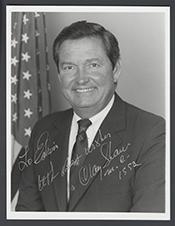
United States · Official source
3,161 records where Rep. Shaw, E. Clay, Jr. [R-FL-22] is listed as a sponsor, author, or other actor. Search with topics and years
United States · United States Congress · 14 June 1990
Designates October 1990 as Country Music Month.
United States · United States Congress · 13 June 1990
Drug Abuse Treatment Improvement Act of 1990 - Amends the Public Health Service Act to prohibit the Secretary of Health and Human Services from making payments to a State, under existing alcohol and drug abuse and mental health services block grant provisions, unless the State establishes mechanisms to promptly inform individuals seeking drug abuse treatment of the most appropriate facilities. Directs the Secretary of Education to develop and disseminate to medical schools a model curriculum regarding drug addiction treatment. Authorizes appropriations.
United States · United States Congress · 13 June 1990
Sets forth standards for the establishment of congressional districts.
United States · United States Congress · 13 June 1990
Amends the Federal Election Campaign Act of 1971 to revise the definition of a "contribution or expenditure" by a national bank, corporation, or labor organization to: (1) include communications to influence any election for Federal office by a corporation to its stockholders and executive or administrative personnel and their families or by a labor organization to its members and their families; and (2) repeal provisions excluding non-partisan registration and get-out-the-vote campaigns. Requires any payments by corporations or labor organizations for all other communications and for the establishment of, and solicitation of contributions for, a separate segregated fund for purposes relating to any such election to be disclosed to the Federal Election Commission in the same manner as for contributions or expenditures. Amends the Federal Election Campaign Act of 1971 to subject to the limitations and reporting requirements for expenditures any payment for a mixed political activity (an activity, such as a voter registration program, for both influencing an election for Federal office and for other purposes) by a national or State committee of a political party. Requires such a payment to be made only from an account subject to the requirements of that Act.
United States · United States Congress · 13 June 1990
Amends the Federal Election Campaign Act of 1971 to: (1) require unauthorized political advertising that advocates the election or defeat of a clearly identified candidate or solicits any contribution to contain a statement at the beginning and end that is easily readable or audible which identifies the person who paid for such advertising and specifies that the advertising is not authorized by any candidate; (2) allow House candidates to certify to the Federal Election Commission (FEC) their intention to limit to $100,000 their total expenditures from personal funds and the personal funds of their immediate family; (3) provide that the opponent of a candidate who spends more than such amount or who does not make such a certification shall no longer be subject to the limitations on contributions; and (4) direct the FEC to prescribe regulations for making such certifications.
United States · United States Congress · 13 June 1990
Amends the Federal Election Campaign Act of 1971 to prohibit candidates for the House of Representatives from accepting contributions from persons other than local individual residents totaling in excess of the total contributions accepted from local individual residents.
United States · United States Congress · 13 June 1990
Amends the Federal Election Campaign Act of 1971 to: (1) require any individual required to file a statement of independent expenditures in an aggregate amount or value in excess of $250 during a calendar year to certify that such expenditures are from personal funds and to identify the financial institution from which any instrument is drawn to make such expenditures; (2) prohibit States from making any contribution or expenditure with respect to a Federal election or acting as an intermediary or conduit with respect to such contribution; (3) require disclosure of debt settlement and loan security agreements; (4) include as contributions any gift, subscription, loan, or deposit of money or anything of value made by any person to draft or encourage a clearly identified individual as a candidate for Federal office; and (5) treat such a contribution as a contribution to a candidate whether or not the individual actually becomes a candidate, for purposes of the limitations on contributions to any candidate for Federal office. Requires Members of, or Members-elect to, the House of Representatives to account for all franked mail excluding franked mail with a simplified form of address for delivery within the Member's congressional district.
United States · United States Congress · 13 June 1990
Amends rule XLVI of the Rules of the House of Representatives to exempt a notice of appearance or a scheduled itinerary from the franked mailing limitations only if: (1) it is in the form of a post card; (2) it is sent to addresses within specified travel distance from the event which the Member will attend; (3) the Member attends the event; and (4) an advisory opinion is obtained from the House Commission on Congressional Mailing Standards. Establishes an Official Mail Allowance for franked mailing by Members of the House of Representatives within specified guidelines and limitations. Amends rule XLVI of the Rules of the House of Representatives to: (1) reduce from six to two the number of franked mailings per year per addressee to which a Member after December 31, 1990, is entitled; (2) reduce from six to two, after such date, the number of franked mailings per year per addressee relating solely to a notice of appearance of a scheduled itinerary of a Member; (3) require a Member, before making any mass mailing (including direct response to communications from constituents), to submit a sample or description of the mail matter involved to the House Commission on Congressional Mailing Standards for a statutory compliance advisory opinion; (4) require the Clerk of the House of Representatives to make available for public inspection, semi-annually, a mass mailing report compiled from data provided by the House Committee on Administration; and (5) require that a mass mailing by a Member contain a specified notice on the cover page of the document.
United States · United States Congress · 13 June 1990
Amends the Federal Election Campaign Act of 1971 to: (1) exclude from the annual limitation on total individual contributions those contributions to national, State, and local committees of political parties that, in the aggregate, do not exceed $25,000 in a calendar year; (2) remove the limitations on contributions by the national or State committee of a political party or by a House or Senate campaign committee of a political party to candidates in general elections for Federal office; (3) allow national and State committees of a political party to match the total amount of independent expenditures made against their respective candidates in congressional elections; (4) establish guidelines for determining the Federal election portion of amounts paid by national and State committees of a political party for a mixed political activity (an activity, such as a voter registration program, for both influencing an election for Federal office and for other purposes); (5) subject such payments to the limitations and reporting requirements for expenditures; (6) require such payments to be made only from an account subject to the requirements of that Act; (7) repeal provisions excluding funds for constructing or purchasing office facilities from the definition of a "contribution"; (8) define "local committee" as an organization that is responsible for the daily operation of a political party at the local level; and (9) allow such local committees to make contributions and expenditures without limitation to any candidate who is affiliated with the party the committee represents and who is a candidate for Senator or Representative in the State involved. Amends the Internal Revenue Code to allow a tax credit for qualified political contributions to candidates for State or Federal office. Limits such credit to $250 for a taxable year.
United States · United States Congress · 13 June 1990
Amends the Federal Election Campaign Act of 1971 to: (1) establish a separate limitation of $1,000 with respect to nonparty multicandidate political committee contributions to any candidate for Federal office (currently, all multicandidate political committee contributions to such candidates are subject to a $5,000 limitation); (2) prohibit separate segregated funds established by corporations or labor organizations for political purposes from acting as intermediaries or conduits with respect to contributions to such a candidate; (3) prohibit a political committee that is not an authorized committee of such a candidate and is not a political committee of a political party from transferring funds to any other such political committee; (4) prohibit such a candidate from establishing, maintaining, financing, or controlling a political committee, other than the principal campaign committee of the candidate; and (5) prohibit a principal campaign committee of such a candidate from making any contribution to any other principal campaign committee (other than the principal campaign committee of the same individual as a candidate for another Federal office).
United States · United States Congress · 13 June 1990
Amends the Federal Election Campaign Act of 1971 to prohibit labor organizations from using dues or agency fees for political purposes, unless the employee paying the dues or fees approves of such use. Permits employees to revoke their approval. Requires labor organizations using such dues or fees to notify annually the employees paying dues or agency fees of such prohibition and of their right to revoke their approval.
United States · United States Congress · 13 June 1990
Amends the Federal Election Campaign Act of 1971 to: (1) remove the Secretary of the Senate and the Clerk of the House of Representatives as ex officio members of the Federal Election Commission; and (2) require all designations, statements, and reports required to be filed under that Act to be filed with the Commission.
United States · United States Congress · 12 June 1990
Designates the post office building in Carpentersville, Illinois, as the Robert McClory Post Office.
United States · United States Congress · 12 June 1990
Amends part E (Foster Care and Adoption Assistance) of title IV of the Social Security Act to require the Secretary of Health and Human Services to make grants to up to ten States for the conduct of demonstration projects for at least five years designed to: (1) provide extensive assistance to families which have problems that may lead to the removal of a child from the family; (2) promote the treatment of family problems so that children who have been temporarily removed from their family may be reunified with their family within two years of such removal; (3) facilitate the timely and permanent placement of abandoned babies and children who are in foster care; or (4) address any combination of such matters and other child welfare services issues. Details the information and assurances required to be included in State applications to conduct such projects. Authorizes each State which receives project grants to use such funds to improve the provision of child welfare, foster care, and adoption assistance services in any manner it deems appropriate. Provides for the evaluation of such demonstration projects. Makes part B (Child-Welfare Services) and the section of part E of title IV not added by this Act inapplicable to a State while it is conducting such a demonstration project.
United States · United States Congress · 12 June 1990
Designates July 1, 1990, as National Ducks and Wetlands Day.
United States · United States Congress · 12 June 1990
Designates July 22, 1990, as Rose Fitzgerald Kennedy Family Appreciation Day.
United States · United States Congress · 11 June 1990
Designates October 20 through 28, 1990, as National Red Ribbon Week for a Drug-Free America.
United States · United States Congress · 7 June 1990
Enterprise Zone Jobs-Creation Act of 1990 - Title I: Designation of Enterprise Zones - Authorizes the Secretary of Housing and Urban Development (Secretary) to designate enterprise zones for purposes of providing tax and regulatory relief and improving local services. Limits choices to areas nominated by States and local governments. Limits the total number of areas that may be designated, and the time period of the designation. Authorizes the Secretary to designate a zone only if the area meets certain locational, demographic, unemployment, and poverty criteria. Requires nominating local governments, as a condition of the Secretary's designation, to agree in writing to follow a course of action that may include reducing tax rates, improving local services, simplifying or streamlining regulation of business, and providing job training to area residents. Describes areas to which the Secretary must give preference in selecting areas for designation. Requires the Secretary to report to the Congress every four years on the effects of such enterprise zones' designation in accomplishing the purposes of this Act. Title II: Federal Income Tax Incentives - Allows a nonrefundable income tax credit to enterprise zone employees for five percent of any wages earned as do not exceed a specified amount. Phases out such credit. Provides for the nonrecognition of capital gain on the sale of enterprise zone property. Allows a taxpayer a deduction on the aggregate amount paid for the purchase of enterprise stock on its original issue by a qualified issuer. Requires any gain from the disposition of the stock to be treated as ordinary income. Title III: Regulatory Flexibility - Amends Federal law to revise the definition of "small entity" for purposes of the analysis of regulatory functions to include qualified business, government, and nonprofit enterprises operating within enterprise zones. Authorizes Federal agencies, upon request by a designating government, to waive or modify rules and regulations pertaining to the implementation of projects or activities within an enterprise zone. Requires agencies to approve the request if the resulting benefits of job creation, community development, or economic revitalization outweigh the public interest in retaining the rule unchanged. Disallows waiver or modification of a rule that would directly violate a statutory requirement or present a danger to the public health and safety. Title IV: Establishment of Foreign-Trade Zones in Enterprise Zones - Requires the Foreign-Trade Zone Board to consider on a priority basis and to expedite the processing of applications for the establishment of foreign-trade zones within enterprise zones. Requires the Secretary of the Treasury to give priority to, and expedite applications for, the establishment of ports of entry necessary to establish such zones. Title V: Repeal of Title VII of the Housing and Community Development Act of 1987 - Repeals Title VII (enterprise zone development) of the Housing and Community Development Act of 1987.
United States · United States Congress · 7 June 1990
Designates the third Sunday in August 1990 as National Senior Citizens Day.
United States · United States Congress · 6 June 1990
Urges the President to instruct the Attorney General to appoint an independent counsel to investigate the involvement of Government officials in the savings and loan scandal.
United States · United States Congress · 6 June 1990
Amends rule X of the Rules of the House of Representatives to prohibit a Member of the House from serving on any particular committee for more than 12 years. Disregards service performed on such committee for less than a full session of Congress and service performed prior to the beginning of the 102nd Congress.
United States · United States Congress · 5 June 1990
1992 Olympic Commemorative Coin Act - Directs the Secretary of the Treasury to issue 1992 Olympic Games commemorative five-dollar gold coins and one-dollar silver coins. Prescribes guidelines for the sale and pricing of such coins and directs the Secretary to ensure that their issuance will not result in any net cost to the United States. Mandates that surcharges be paid to the U.S. Olympic Committee.
United States · United States Congress · 24 May 1990
Economic Opportunity Act of 1990 - Amends part F (Job Opportunities and Basic Skills Training Program) of title IV of the Social Security Act to authorize States to assign participants in work supplementation programs to existing unfilled jobs and to use sums that would otherwise be used to provide such participants with food stamp benefits under the Food Stamp Act of 1977 to subsidize jobs for such participants. Establishes a required minimum employer contribution to the wages paid to program participants. Provides financial incentives for State participation in work supplementation programs.
United States · United States Congress · 24 May 1990
Designates October 28, 1990, as Statue of Liberty Day.
United States · United States Congress · 24 May 1990
Designates October 3, 1990, as National Teacher Appreciation Day.
United States · United States Congress · 24 May 1990
Designates: (1) the House of Representatives office building at C Street and New Jersey Avenue, Southeast, District of Columbia, known as House of Representatives Office Building Annex No. 1, as the Thomas P. O'Neill, Jr. House of Representatives Office Building; and (2) the House office building at 3d and D Streets, Southwest, District of Columbia, known as House of Representatives Office Building Annex No. 2, as the Gerald R. Ford House of Representatives Office Building.
United States · United States Congress · 23 May 1990
Offshore Lease Buyback Act of 1990 - Amends the Outer Continental Shelf Lands Act to provide that compensation a lessee is entitled to receive as a result of a lease cancellation may be made in the form of a credit bonus, rent, royalty, or permit fee payments.
United States · United States Congress · 23 May 1990
Expresses the sense of the Congress that the President should call for a 1991 White House Conference on Aging.
United States · United States Congress · 22 May 1990
Amends the Federal Water Pollution Control Act to require the Administrator of the Environmental Protection Agency to give priority consideration to the inclusion of the lower St. Johns River, Florida, in the National Estuary Program.
United States · United States Congress · 22 May 1990
Entitles any individual who is involuntarily separated from the armed forces under honorable conditions after July 1, 1990, after having served on active duty for at least six consecutive years to have five additional points added to any passing grade earned on a civil service examination if such individual is not otherwise eligible for any veterans' preference.
United States · United States Congress · 17 May 1990
Peanut Program Modernization Act of 1990 - Amends the Agricultural Adjustment Act of 1938 to repeal peanut marketing quota provisions. Amends the Agricultural Act of 1949 to replace existing peanut price support provisions with price supports as determined by the Secretary of Agriculture based upon specified factors, including production costs and domestic and foreign demand.
United States · United States Congress · 17 May 1990
Transportation Employee Alcohol and Drug Testing Act of 1990 - Amends the Federal Aviation Act of 1958 to require the Administrator of the Federal Aviation Administration (FAA) to prescribe regulations which require air carriers and foreign air carriers to conduct preemployment, reasonable suspicion, random, periodic recurring, and post accident testing for illegal use of alcohol or controlled substance by airmen, crewmembers, airport security screening contract personnel, and other air carrier employees responsible for safety-sensitive functions. Requires the Administrator to require the suspension or revocation of any certificate issued to such an individual, or his or her dismissal, where the individual has used alcohol or a controlled substance in violation of Federal law or regulations. Prohibits such persons from using alcohol or a controlled substance in violation of Federal law or regulations and serving in their capacity as an air carrier employee. Prohibits violators from serving in such capacity unless they have completed a program of rehabilitation. Sets forth specified requirements for such rehabilitation programs. Amends the Federal Railroad Safety Act of 1970 to require the Secretary of Transportation (Secretary) to issue regulations which require railroads to conduct preemployment, reasonable suspicion, random, periodic recurring, and post accident testing of all railroad employees responsible for safety-sensitive functions for illegal use of alcohol or a controlled substance. Directs the Secretary to disqualify for an established period of time, or dismiss, a railroad employee found to have used or to have been impaired by alcohol while on duty, or a controlled substance whether or not on duty. Requires the Secretary to issue regulations for rehabilitation programs which provide for treatment for railroad employees responsible for safety-sensitive functions in need of assistance in resolving problems with the use of alcohol or a controlled substance. Amends the Commercial Motor Vehicle Safety Act of 1986 to require the Secretary to issue regulations which require motor carriers to conduct preemployment, reasonable suspicion, random, periodic recurring, and post accident testing of operaters of commercial motor vehicles for illegal use of alcohol or a controlled substance. Requires the Secretary to issue regulations for rehabilitation programs which provide treatment for operators of motor vehicles who have been found to have used alcohol or a controlled substance in violation of Federal law or regulations. Requires the Secretary to determine appropriate sanctions for violations of this Act. Amends the Urban Mass Transportation Act of 1964 to require the Secretary to issue regulations which require recipients of assistance under this Act to conduct preemployment, reasonable suspicion, random, periodic recurring, and post accident testing of operators of mass transportation vehicles for use of alcohol or a controlled substance in violation of Federal law or regulations. Requires the Secretary to issue regulations for rehabilitation programs for treatment of operators of mass transportation vehicles who have been found to have illegally used alcohol or a controlled substance. Requires the Secretary to determine appropriate sanctions for violations of this Act. Directs the Secretary to design a pilot test program for the testing of operators of commercial motor vehicles on a random basis to determine whether an operator has illegally used alcohol or a controlled substance. Requires such program to be administered as part of the Motor Carrier Safety Assistance Program. Provides that such program shall last for one year.
United States · United States Congress · 17 May 1990
Substance Abuse Treatment Corps Act - Amends the Public Health Service Act to establish within the Public Health Service the Substance Abuse Treatment Corps to increase the availability of treatment for alcohol and drug abuse in geographic areas with a significant incidence of abuse and an inadequate availability of services. Allows the Secretary of Health and Human Services to carry out such purpose only through assigning Corps members to provide services for such areas. Allows the Secretary to assign a Corps member to an entity only if the entity, among other requirements, enters into an agreement with the Secretary regarding the allocation, between the Secretary and the entity, of costs relating to the assignment. Directs the Secretary to establish a program of entering into contracts with students in specified fields under which the students agree to serve in the Corps upon obtaining their degree in consideration of the Federal Government agreeing to pay tuition, other expenses, and a stipend. Applies, except as inconsistent, provisions relating to the National Health Service Corps Loan Repayment Program to this program. Directs the Secretary to establish a program of entering into contracts with individuals who have been licensed or certified in certain fields, or who are students in such fields, under which the individuals agree to serve in the Corps in consideration of the Federal Government agreeing to repay up to a specified sum of educational loans of the individuals. Applies, except as inconsistent, provisions relating to the National Health Service Corps Loan Repayment Program to this program. Authorizes appropriations for the scholarship and loan repayment programs established by this Act.
United States · United States Congress · 17 May 1990
Designates 1991 as Year of the Lifetime Reader.
United States · United States Congress · 16 May 1990
Police Protection Act of 1990 - Amends the Omnibus Crime Control and Safe Streets Act of 1968 to direct the National Institute of Justice (NIJ) to promulgate regulations to establish mandatory Federal standards and test protocols for body armor in consultation with Federal, State, and local law enforcement agencies, law enforcement organizations and associations, and representatives of major manufacturers of body armor to ensure that law enforcement officers are protected by effective body armor. Establishes NIJ Ballistic Resistance of Police Body Armor standard number 0101.03 as the interim standard for the manufacture, sale, or distribution in commerce of body armor until the Federal standards are established. Requires manufacturers of body armor subject to the Federal standards to: (1) submit representative samples of body armor on a periodic basis to NIJ to be tested for compliance with the Federal standards; and (2) affix labels to body armor manufactured in compliance with such standards. Establishes criminal and civil penalties for manufacturing, offering for sale, or distributing in commerce any body armor not complying with the interim standard or mandatory Federal standards. Directs the General Accounting Office to complete a study of all body armor standards and test protocols for body armor for submission to NIJ and the House and Senate Judiciary Committees.
United States · United States Congress · 9 May 1990
SSI Independence Act for Disabled Americans - Amends title XVI (Supplemental Security Income) (SSI) of the Social Security Act to exclude from an SSI recipient's income in SSI eligibility and benefit determinations, contributions of clothing and other contributions, other than cash paid directly to the recipient, which are for the purchase of social services, vocational rehabilitation services, medical care, transportation, educational services, personal assistance or attendant care services, and certain services or equipment related to the quality and livability of his or her shelter. Excludes a trust created for an SSI recipient's benefit from such recipient's resources if such recipient does not have access to the trust's assets. Excludes funds or property placed in a trust for an SSI recipient's benefit from such recipient's income. Directs the Secretary of Health and Human Services to provide notices and pamphlets to SSI applicants and recipients informing them of the consequences various actions affecting their income and resources will have on their SSI and Medicaid (title XIX of the Social Security Act) eligibility. Deems SSI applicants who lost disability benefits under title II (Old Age, Survivors and Disability Insurance) (OASDI) of the Social Security Act after their trial work period to have received SSI benefits while still eligible for OASDI disability benefits and therefore qualify for participation in the SSI work incentive program (providing Medicaid and special SSI cash benefits to disabled individuals whose earnings otherwise make them ineligible for SSI and Medicaid benefits) if they meet SSI income, resource, and disability tests. Provides that reviews to determine the continuing disability of participants in the SSI work incentive program need to be conducted no more frequently than once every 12 months. Excludes spousal income in determining a disabled and working individual's eligibility for participation in the SSI work incentive program. Precludes the attainment of age 65 from serving as a basis for the termination of Medicaid eligibility under the SSI work incentive program. Requires that State supplementary cash payments to the needy include participants in the SSI work incentive program. Excludes impairment-related work expenses from the income of an individual who is eligible for SSI and OASDI disability benefits but receives only State supplementary payments. Treats royalties from the publication of an individual's work and scholarships which have not been used for education expenses as earned income.
United States · United States Congress · 9 May 1990
Declares that the Congress acknowledges and appreciates the commitment, devotion, and sacrifices of present and former military families. Designates November 19, 1990, as National Military Families Recognition Day.
United States · United States Congress · 7 May 1990
Constitutional Amendment - Prohibits the Supreme Court or any inferior court of the United States from ordering a State or political subdivision, or an official of such State or subdivision, from laying or increasing taxes.
United States · United States Congress · 2 May 1990
Condemns the role of the Government of Cuba in international drug trafficking. Calls on the President to condemn Cuba's role in all appropriate international fora.
United States · United States Congress · 1 May 1990
Amends the Harmonized Tariff Schedule of the United States to suspend, through December 31, 1996, the duty on metal oxide varistors.
United States · United States Congress · 1 May 1990
Judicial Taxation Prohibition Act - Amends the Federal judicial code to deny to inferior Federal courts jurisdiction to issue any remedy, order, writ, or other judicial decree requiring the Federal Government or any State or local government to impose any new tax or to increase any existing tax or tax rate.
United States · United States Congress · 1 May 1990
Amends the Internal Revenue Code to treat all siblings as one shareholder for purposes of determining whether a corporation may elect to be an S corporation.
United States · United States Congress · 25 April 1990
Amends the Internal Revenue Code to impose an excise tax on the sale of any disposable polystyrene packaging by the manufacturer, producer, or importer. Establishes a Polystyrene Recycling Trust Fund to carry out research and development of technologies to recycle polystyrene.
United States · United States Congress · 25 April 1990
Designates the month of October 1990 as Crime Prevention Month.
United States · United States Congress · 24 April 1990
Prohibits the shipment in interstate or foreign commerce of steel jaw leghold traps and of articles of fur derived from animals trapped in such traps. Prescribes criminal penalties for violations of this Act. Directs the Secretary of the Interior to reward nongovernment informers for information leading to a conviction under this Act. Empowers enforcement officials to detain, search, and seize suspected merchandise or documents and to make arrests with and without warrants. Subjects seized merchandise to forfeiture.
United States · United States Congress · 4 April 1990
Amends the Comprehensive Environmental Response, Compensation, and Liability Act of 1980 to provide that the definition of "owner or operator" (for purposes of liability) does not include: (1) a designated lending institution which acquires control of a facility pursuant to the terms of a security interest held by the person in such facility or in connection with a lease subject to Federal or State banking authorities; (2) a corporate fiduciary which operates or has legal title to a facility pursuant to the terms of an estate or trust; (3) an individual or institution that serves as an indenture trustee and acquires control of a facility as the result of default on a financing document between the trustee and the issuing entity; and (4) an individual fiduciary who has legal title to a facility for purposes of administering an estate or trust.
United States · United States Congress · 4 April 1990
Medicare Physician Regulation Relief Amendments of 1990 - Amends title XVIII (Medicare) of the Social Security Act to require carriers and peer review organizations to release the medical review screen or the associated screening parameter to a physician before notifying such physician that payment for his or her service has been denied. Permits Medicare reimbursement of a patient's regular physician for services provided to such patient by another physician who occasionally covers for the regular physician. Requires Medicare carriers to provide physicians, upon request and without charge, with carrier-generated information which physicians need to submit a payment claim or respond to a carrier inquiry. Allows a medical society or other professional organization representing physicians to represent a group or class of physicians in Medicare payment determinations, reconsiderations, or appeals. Directs the Secretary of Health and Human Services to appoint, based on nominations submitted by national medical organizations representing physicians, a Practicing Physicians Advisory Council with which the Secretary must consult concerning changes in the Medicare program and proposed changes in regulations and carrier operation policies.
United States · United States Congress · 4 April 1990
Authorizes appropriations to provide for a specified personnel level for the border patrol of the Immigration and Naturalization Service by October 1, 1992. Makes funds available from the Department of Justice Assets Forfeiture Fund to provide for such personnel level.
United States · United States Congress · 4 April 1990
Designates May 13, 1990, as Infant Mortality Awareness Day.
United States · United States Congress · 4 April 1990
Designates the week of November 11 through 17, 1990, as National Women Veterans Recognition Week.