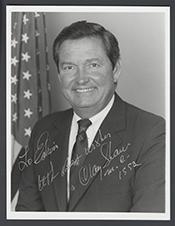
United States · United States Congress · 3 January 1989
Establishes the Joint Committee on Intelligence. Declares that such committee has exclusive legislative jurisdiction with respect to any intelligence activity of the Federal Government and authorizations for appropriations for specified agencies and intelligence-related activities. Directs the joint committee to review and study on a continuing basis any intelligence or counterintelligence activity conducted by any Federal agency or department. Directs the joint committee to classify its information and records according to standards used generally by the executive branch. Directs the joint committee to establish and carry out rules and procedures necessary to prevent the unauthorized disclosure of information. Prohibits any Member of Congress from disclosing information received from the joint committee without proper authorization, except in a closed session of the House of Representatives or the Senate.
United States · United States Congress · 3 January 1989
Establishes the Joint Committee on Intelligence. Declares that such committee has exclusive legislative jurisdiction with respect to any intelligence activity of the Federal Government and authorizations for appropriations for specified agencies and intelligence-related activities. Directs the joint committee to classify its information and records and to establish guidelines for their maintenance, use, and availability. Sets forth procedures for the disclosure of such information. Directs the joint committee to establish and carry out rules and procedures necessary to prevent the unauthorized disclosure of information. Makes conforming amendments to the National Security Act of 1947 and the Rules of the House of Representatives, including abolishing the Permanent Select Committee on Intelligence.
United States · United States Congress · 20 October 1988
Veterans Entrepreneurship Promotion Act of 1988 - Title I: Findings, Purposes, and Definitions - Sets forth congressional findings and purposes with respect to small businesses owned and controlled by veterans. Amends the Small Business Act to add veteran-related definitions used in this Act. Title II: Procurement Assistance - Amends the Small Business Act to include small business concerns owned and controlled by veterans as a discrete group with respect to which the head of each Federal agency must establish goals for participation in procurement contracts. Requires annual reports to the Congress on the extent of participation by such businesses in agency procurement contracts. Includes veteran-owned businesses as a targeted group for purposes of Government contracts and subcontracts. Directs Federal agencies, in their procurement activities, to engage in affirmative action to identify and solicit offers from small businesses owned and controlled by veterans, by socially and economically disadvantaged individuals, and by veterans with service-connected disabilities. Title III: National Veterans Business Council - Establishes the National Veterans' Business Council to review the status of veteran-owned businesses nationwide and to develop detailed multiyear plans in connection with both private and public sector actions to assist and promote such businesses. Requires annual reporting to both the President and the Congress. Title IV: Statistical Data - Directs: (1) the Bureau of Labor Statistics to include in its census reports on veterans businesses specified information on sole proprietorships, partnerships, and corporations; (2) the Bureau of the Census to include in its Business Census data the number of corporations that are 51 percent or more owned by veterans; (3) the Small Business Administration's Office of the Chief Counsel for Advocacy to report on the most cost-effective and accurate ways to gather and present the statistics required in these census reports; and (4) Federal agencies to report to the Office of Federal Procurement Policy the number of first-time contract recipients that are small businesses owned and controlled by veterans, by socially and economically disadvantaged individuals, and by veterans with service-connected disabilities. Requires the President's annual Report on Small Business and Competition to include in separate detail information relevant to small businesses owned and controlled by veterans, by socially and economically disadvantaged individuals, and by veterans with service-connected disabilities.
United States · United States Congress · 13 October 1988
Fair Credit Reporting Amendments of 1988 - Amends the Fair Credit Reporting Act to require prompt disclosure by any consumer reporting agency to any consumer of adverse information about such consumer the agency receives. Directs the Board of Governors of the Federal Reserve System to prescribe regulations defining the term "adverse information" for purposes of such Act.
United States · United States Congress · 12 October 1988
Local Television Service Act of 1988 - Amends the Communications Act of 1934 to mandate a policy under which the Federal Communications Commission (FCC) allocates VHF (very high frequency) commercial television broadcasting channels in ways that assure no fewer than one such channel to each Principal Metropolitan Statistical Area (PMSA) of more than 1,000,000 persons, if technically feasible. Directs the FCC to: (1) order reallocation of a channel or the hyphenation of a community of license within such a PMSA if a VHF commercial television broadcast station licensee notifies the FCC that it wishes such action; (2) issue a license to the licensee under the changed conditions for a term equal to the term remaining on the existing license; and (3) permit the license to be renewed for another term without considering other applications for the same channel, if certain findings are made. Requires the FCC to initiate rulemaking to ensure primary program service from at least one VHF commercial television station to any PMSA in question that is not receiving such service. Directs the FCC to report to the Congress on these proceedings and on recommendations to achieve the expressed policy.
United States · United States Congress · 27 September 1988
Chemical Warfare Control Act - Amends the Export Administration Act of 1979 to set forth as U.S. policy the use of export controls to curtail transfers of material and technology used in producing chemical weapons. Requires the President to prepare a list of materials and technology which would assist a country's chemical warfare capability. Prohibits the export of such materials and technology to Iran, Iraq, Libya, or Syria or, at the President's discretion and upon notification to the Congress, to additional countries. Authorizes the President to waive such prohibition upon determining that an export will not assist a country's chemical warfare capability. Authorizes the exclusion of any country from such prohibition beginning 30 days after the President submits the name of such country to the Congress. Requires the President, no later than 90 days after enactment of this Act and every 180 days thereafter, to submit to specified House and Senate members and committees a report on: (1) the efforts by Iran, Libya, and Syria to acquire the materials to produce chemical weapons; and (2) the present and future capability of such countries to produce such weapons. Requires the report to: (1) assess whether Communist-bloc countries have aided such countries in acquiring such materials; (2) list companies in non-Communist countries which have exported items on the President's list to such countries; and (3) provide credible information that any non-Communist country has aided such countries. Directs the President to apply sanctions to any foreign person who exports any item on the list to any such country. Requires that such sanctions prohibit: (1) contracting with and procuring products and services from a sanctioned person by the U.S. Government; and (2) importing products produced by such person into the United States. Declares that the President shall not apply sanctions in the case of procurement of defense articles and services if: (1) the articles and services are under existing contracts; (2) the President determines that the person to whom sanctions would apply is the sole supplier of essential defense articles or services; or (3) the President determines that such articles or services are essential to national security. Prohibits the application of sanctions to: (1) contracts entered into before the President notifies the Congress of the intention to impose sanctions; (2) spare parts; (3) component parts; (4) routine servicing and maintenance of products; or (5) information and technology.
United States · United States Congress · 16 September 1988
Declares that the Air Force should continue to fly WC-130 aircraft for the purpose of collecting scientific data on hurricanes until satellites that can provide similar data are in place and functioning properly.
United States · United States Congress · 9 September 1988
Amends the Omnibus Crime Control and Safe Streets Act of 1968 to require applications of States and local governments for block and discretionary grants under such Act to include a certification that individuals who are convicted of first degree murder under the law of the State and sentenced under such law to imprisonment for life without possibility of parole are not granted any unescorted release from imprisonment.
United States · United States Congress · 9 September 1988
Recognizes the 100th anniversary of the Loyal Order of Moose and commends the accomplishments of its members in providing service in the spirit of voluntarism.
United States · United States Congress · 7 September 1988
Moderate Income Housing Accessibility Act - Amends the Stewart B. McKinney Homeless Assistance Act to make title V of such Act (use of surplus Federal property) inapplicable to specified real or personal property of the Departments of Housing and Urban Development (including the Government National Mortgage Association) and of Agriculture, or of the Veterans Administration, in connection with mortgage or loan insurance or guarantee programs.
United States · United States Congress · 10 August 1988
Degradable Plastics Act of 1988 - Directs the Administrator of the Environmental Protection Agency to issue rules, within two years of this Act's enactment, requiring that plastic articles which are produced, distributed, or sold in a State be made of naturally degradable material which will begin reduction to environmentally benign subunits within a specified period of time after being discarded that is not to exceed 180 days and complete such reduction within a specified period of time that is not to exceed two years. Provides that this Act does not preclude States or localities from adopting more stringent rules. Imposes civil and criminal penalties against persons who violate such rules. Requires producers of plastic articles to make records regarding the development and production of such articles available to the Administrator for inspection and copying. Makes the rules issued pursuant to this Act inapplicable to any plastic article produced before the end of the five-year period beginning after the issuance of such rules.
United States · United States Congress · 10 August 1988
States the sense of the Congress that the President or the Congress should immediately abrogate the Panama Canal Treaties of 1977 and the Treaty Concerning the Permanent Neutrality and Operation of the Panama Canal and that the Congress should repeal the Panama Canal Act of 1979.
United States · United States Congress · 27 July 1988
Designates September 13, 1989, as Uncle Sam Day in honor of Samuel Wilson of the city of Troy, New York, on the occasion of the 200th anniversary of the city. (Samuel Wilson was the progenitor of the national symbol, Uncle Sam.)
United States · United States Congress · 26 July 1988
Amends rule XXIV and rule I of the Rules of the House of Representatives to require the rendering of the Pledge of Allegiance in the House at the start of each legislative day.
United States · United States Congress · 14 July 1988
Women's Business Ownership Act of 1988 - Title I: Congressional Findings and Purposes - Sets forth congressional findings and purposes with respect to small businesses owned and controlled by women. Title II: Demonstration Projects - Amends the Small Business Act to direct the Small Business Administration (SBA) to provide financial assistance to private organizations to conduct demonstration projects giving financial, management, and marketing assistance to small businesses, including start-up businesses, owned and controlled by women. Describes application criteria. Requires the SBA to report to the congressional Small Business Committees on the projects. Terminates authority for this pilot program on October 1, 1991. Authorizes appropriations. Title III: Procurement Assistance - Amends the Small Business Act to include small business concerns owned and operated by women as a discrete group for purposes of Government contracts and subcontracts and procurement programs. (Current law governing these programs refers expressly only to small business concerns and small business concerns owned and controlled by socially and economically disadvantaged individuals as groups targeted for assistance.) Instructs the Director of Small and Disadvantaged Business Utilization of each Federal agency to designate a Women-in-Business Specialist to be responsible for programs designed to assist concerns owned and controlled by women. Directs Federal agencies, in their procurement activities, to engage in affirmative action to identify and solicit offers from small businesses owned and controlled by either women or socially and economically disadvantaged individuals. Title IV: Access to Capital - Amends the Consumer Credit Protection Act to prohibit the Federal Reserve Board, except under limited circumstances, from exempting from such Act's provisions any class of transactions that are primarily for personal, family, or household purposes, or business or commercial loans made available by a financial institution. Limits to five years any exemption authorized under the circumstances specified in this Act, unless a subsequent determination is made that the exemption remains appropriate. Requires lenders to keep records relating to loans and to provide written notice to applicants of their right to receive notice of reasons for a loan denial. Authorizes the SBA to establish a certified loan program for lenders that display knowledge and proficiency with respect to SBA regulations and programs. Directs the SBA to encourage small business loans of $50,000 or less under both this new program and the preferred lenders program in FY 1989 through 1991 by permitting participating lenders to: (1) use their own forms without regard to SBA paperwork; and (2) retain one-half of the loan guarantee fee. Requires SBA reporting to specified congressional committees in connection with the certified loan program. Directs the Federal Reserve Board, the Comptroller of the Currency, the Department of Commerce, and the SBA jointly to study levels of availability of and demand for debt and equity capital by small businesses, as well as innovative financing techniques to meet any unmet demand. Requires reporting to the congressional Small Business Committees. Title V: National Women's Business Council - Establishes the National Women's Business Council to review the status of women-owned businesses nationwide and to develop detailed multiyear plans in connection with both private and public sector actions to assist and promote such businesses. Requires annual reporting to both the President and the Congress. Title VI: Statistical Data and Effect on Other Programs - Directs: (1) the Bureau of Labor Statistics to include in its census reports on women-owned businesses specified information on sole proprietorships, partnerships, and corporations; (2) the Bureau of the Census to include in its Business Census data the number of corporations that are 51 percent or more owned by women; (3) the SBA's Office of the Chief Counsel for Advocacy to report on the most cost-effective and accurate ways to gather and present the statistics required in these census reports; and (4) Federal agencies to report to the Office of Federal Procurement Policy the number of first-time contract recipients that are small businesses owned and controlled either by women or by socially and economically disadvantaged individuals. Requires the President's annual Report on Small Business and Competition to include in separate detail information relevant to small businesses owned and controlled either by women or by socially and economically disadvantaged individuals.
United States · United States Congress · 14 July 1988
Post-Employment Restrictions Act of 1988 - Amends the Federal criminal code to revise provisions regarding former Federal employees attempting to influence the Government. Prohibits a former officer or employee of the executive branch, for one year after Federal service ends, from representing or aiding and advising any person, with the intent to influence, regarding any trade negotiation: (1) which was actually pending under the official's responsibility within one year before the termination of Federal employment; or (2) in which the official participated personally and substantially within a period of one year before termination of employment. Prohibits senior officials in the executive branch (including the President) for one year after such service ends, from representing any persons with the intent to influence the Government. Prohibits former Members of Congress and elected officers of the Congress from representing others before or attempting to influence any Member, officer, or employee of the House in which the individual served for one year after that individual leaves office regarding any matter pending before the Congress or any matter on which such former Member or elected officer seeks action by the Congress or by a Member in the Member's official capacity. Exempts public speeches from such prohibition. Prohibits a former employee of a Senator or Representative, within one year after that employment terminates, from representing others before or attempting to influence any of the following persons in connection with any matter pending before the Congress or any matter on which such former employee seeks action by the Congress or by a Member in the Member's official capacity: (1) the Member of whom that person was an employee; or (2) any employee of such Member. Prohibits a former employee of a congressional committee, within one year after termination of such employment, from representing others before or attempting to influence any current employee of such committee with respect to any matter in connection with any matter pending before the Congress or any matter on which such former employee seeks action by the Congress or by a Member in the Member's official capacity. Establishes a one-year ban for former employees of the leadership staff of the House and Senate on representing others before or attempting to influence certain parties in the Congress. Declares that the prohibitions set forth in this Act apply only to acts done for compensation. Sets forth penalties for violations of such Act. Sets forth general exceptions to the prohibitions under this Act if the former employee or official is carrying out official duties as an elected official of a State or local government or as an employee of: (1) a State or local government; (2) an institution of higher learning; (3) a tax-exempt hospital or medical research organization; or (4) an international organization of which the United States is a member. Revises the authority of the Director of the Office of Government Ethics in designating separate agencies and bureaus. Authorizes the Attorney General, if it is reasonably believed that a person is engaging or is about to engage in conduct in violation of this Act, to petition an appropriate U.S. district court for an order prohibiting that person from engaging in such conduct. Amends the United States Synthetic Fuels Corporation Act of 1980 to make a technical and conforming amendment.
United States · United States Congress · 14 July 1988
Resolves that the Congress should implement policies under which: (1) the Bell operating companies would be permitted to provide information services, conduct research, design and market software, and design, manufacture, and market telecommunications equipment and customer premises equipment; and (2) statutory safeguards would ensure that these Bell activities would not harm telephone service customers or competition in the information services or manufacturing industries and would prevent cross subsidies between regulated and unregulated service offerings.
United States · United States Congress · 12 July 1988
President's Pro-Life Act of 1988 - Prohibits the use of Federal funds for abortions, except when continuing the pregnancy would endanger the mother's life.
United States · United States Congress · 30 June 1988
Black Lung Benefits Check Delivery Assurance Act of 1988 - Amends the Federal Mine Safety and Health Act of 1977 to provide that if the regularly scheduled delivery date for black lung benefit checks falls on a weekend or a legal public holiday, then such checks shall be mailed for delivery on the first day preceding the weekend or holiday, even if the delivery would be made before the end of the month for which such checks are issued. Provides that if, as a consequence of such modified delivery date, the payment is more than the correct authorized amount, no action shall be taken to recover the incorrect portion.
United States · United States Congress · 30 June 1988
Military Retirement Benefits Check Delivery Assurance Act of 1988 - Requires the early mailing of benefit checks for military retired and retainer pay, Retired Serviceman's Family Protection Plan annuities, and military Survivor Benefit Plan annuities if the day regularly designated for the delivery of such checks falls on a Saturday, Sunday, or legal holiday.
United States · United States Congress · 30 June 1988
Civil Service and Federal Employee Retirement Check Delivery Assurance Act of 1988 - Provides that if the usual delivery date for civil service retirement checks falls on a Saturday, Sunday, or legal public holiday, then such checks shall be mailed a day earlier than usual.
United States · United States Congress · 30 June 1988
Railroad Retirement Benefits Check Delivery Assurance Act of 1988 - Amends the Railroad Retirement Act of 1974 to provide that if the regularly scheduled delivery date for certain railroad benefits checks falls on a weekend or a legal public holiday, then such checks shall be mailed for delivery on the first day preceding the weekend or holiday, even if the delivery would be made before the end of the month for which such checks are issued. Provides that if, as a consequence of such modified delivery date, the payment is more than the correct authorized amount, no action shall be taken to recover the incorrect portion.
United States · United States Congress · 30 June 1988
Expresses the sense of the Congress that the Government of Nicaragua should: (1) fulfill its pledge in the Esquipulas II agreement to grant a general amnesty to all political prisoners; (2) cease inhumane torture and holding prisoners incommunicado; (3) end random arrests for purposes of political intimidation; (4) allow human rights observers in all parts of prison facilities; (5) compensate former political prisoners; and (6) cease human rights violations.
United States · United States Congress · 27 June 1988
Anti-Drug Abuse Amendments Act of 1988 - Title I: Chemical Diversion and Trafficking, Clandestine Laboratories and Manufacturing of Controlled Substances - Subtitle A: Chemical Diversion and Trafficking - Chemical Diversion and Trafficking Act of 1988 - Amends the Controlled Substances Act (CSA) to establish recordkeeping and reporting requirements for persons who manufacture, distribute, import, or export a listed precursor or essential chemical. Prohibits transactions involving these items unless the recipient provides both a certificate of lawful use and proper identification. Requires the Attorney General to report annually, not later than December 31, on the number and types of these certificates during the preceding fiscal year, along with an analysis of the law enforcement effectiveness of their issuance. Includes confidentiality provisions with respect to records, authorizing an aggrieved person to bring a civil action against violators. Authorizes the Attorney General to prescribe necessary regulations to govern reporting and recordkeeping. Lists criteria to be met by any such regulations, including a one-year limitation on any regulation's effectiveness. Amends the Controlled Substances Import and Export Act to require importers and exporters of listed chemicals to notify the Attorney General of importations or exportations within 15 days before the transaction in question. Provides for exceptions with respect to transactions with regular business customers of the regulated person, if the relationship is reported to the Attorney General. Authorizes the Attorney General to order the suspension of a transaction. Requires written notice justifying such an order. Entitles the affected regulated person to a hearing, if requested. Imposes criminal penalties upon persons who knowingly or intentionally import or export a listed chemical with intent to manufacture a controlled substance or with reasonable cause to believe that the chemical will be used for such a purpose. Applies civil penalties to persons who fail to meet notification requirements, unless the failure is intentional, in which case criminal penalties apply. Lists the precursor chemicals and essential chemicals regulated under this Act. Describes transactions exempted from reporting and recordkeeping requirements, including certain lawful distributions in the usual course of business between agents or employees of a single regulated person and transactions involving listed chemicals contained in a drug lawfully marketable under the Federal Food, Drug, and Cosmetic Act. Amends the Controlled Substances Act to apply criminal penalties to persons who knowingly or intentionally: (1) possess a listed chemical with intent to manufacture a controlled substance; (2) possess or distribute a chemical having reasonable cause to believe that it will be used for such a purpose; (3) distribute a listed chemical unlawfully; or (4) possess listed chemicals with knowledge that recordkeeping or reporting requirements have not been met and fail to remedy the violation. Authorizes as an additional penalty an injunction preventing any person convicted of a felony violation of controlled substances laws regarding listed chemicals from engaging in any regulated transaction involving a listed chemical for up to ten years. Amends sections of the Controlled Substances Act that describe prohibited acts and penalties to account expressly for new violations instituted in this subtitle. Grants the Attorney General subpoena power with respect to precursor and essential chemicals. Subjects all listed precursor and essential chemicals, drug manufacturing equipment, tableting and encapsulating machines, and gelatin capsules that have been imported, exported, manufactured, possessed, or distributed in violation of such Act (as well as all conveyances and equipment) to forfeiture to the United States. Subtitle B: Task Force on Clandestine Drug Laboratories - Joint Federal Task Force on Clandestine Drug Laboratories Establishment Act of 1988 - Establishes the Joint Federal Task Force on Clandestine Drug Laboratories to implement a program for the cleanup and disposal of hazardous wastes produced by clandestine drug laboratories. Directs the Task Force to transmit reports to the President and to each House of the Congress on the program and its progress. Subtitle C: Criminal Penalty for Endangering Human Life While Manufacturing a Controlled Substance - Amends the CSA to establish crminal penalties for creating a substantial risk of harm to human life while manufacturing (or attempting to manufacture) a controlled substance, except as authorized by such Act. Title II: Asset Forfeiture Amendments - Asset Forfeiture Amendments Act of 1988 - Amends the Federal judicial code to require annual Comptroller General audits of the Department of Justice Assets Forfeiture Fund. Directs the Attorney General to deposit in the Treasury at the end of each fiscal year up to $5,000,000 of Fund amounts in excess of its obligations. Repeals provisions authorizing transfers of excess Fund monies to the Building and Facilities Account of the Federal Prison System. Authorizes the Attorney General to exempt certain contract services from specified advertising and procurement requirements if necessary to maintain the security and confidentiality of an investigation. Decreases the percentage of program related use required in connection with automatic data processing equipment purchased or leased with Fund monies. Amends the Controlled Substances Act to exempt conveyances from forfeiture for drug abuse violations, to the extent of the interest of an owner who did not know of or consent to the relevant unlawful act or omission. Directs the Attorney General to assure that equitable sharing principles are applied with respect to property transferred to a State or local law enforcement agency that participated directly in the seizure or forfeiture. Instructs the Attorney General and the Secretary of the Treasury to develop and maintain a joint plan to coordinate and consolidate post-seizure administration of property seized under controlled substances laws. Sets forth procedures governing the seizure, return, and civil forfeiture of property under the CSA. Title III: State and Local Assistance - State and Local Law Enforcement Assistance Act of 1988 - Amends the Omnibus Crime Control and Safe Streets Act of 1968 to earmark five percent of funds appropriated to the Bureau of Justice Statistics for grants to States and to local governments to improve the accuracy and completeness of criminal history information. Transfers responsibility for the appointment of the Director of the Bureau of Justice Assistance (Bureau) from the Attorney General to the President, requiring the advice and consent of the Senate. Authorizes the Bureau to make grants to States for the purpose of developing and implementing antiterrorism plans for deep draft ports, international airports, and other facilities. Revises application requirements for drug law enforcement grants to States to require certification that the State is undertaking specified types of activities to reduce the demand for controlled substances. Adds provisions to: (1) govern State distribution of funds to local governments under formula grants for drug law enforcement programs; and (2) permit local governments to apply directly to the Bureau Director for grants. Describes application procedures, the review process, allocation and distribution criteria, and recordkeeping and reporting requirements in connection with these grants. Decreases the Federal percentage of expenditures under the grants. Revises the allocation of funds for discretionary grants to public agencies and private nonprofit organizations for drug law enforcement programs. Authorizes discretionary grants to States and local governments for a special discretionary fund to finance drug law enforcement officer incentives, training, and recruitment programs. Earmarks amounts for these grants. Authorizes FY 1989 through 1992 appropriations for the Bureau of Justice Statistics, the National Institute of Justice, the Bureau of Justice Assistance, and for grants to States and local governments for criminal justice facility construction under a pilot program. Increases the FY 1989 authorization for grants to States and local governments for drug law enforcement programs and authorizes FY 1990 through 1992 appropriations for such grants. Includes programs for alcohol-dependent offenders and provision of automated fingerprint identification systems among activities authorized under the block grant program of the Bureau of Justice Assistance. Title IV: Drug Enforcement Enhancement Act of 1988 - Drug Enforcement Enhancement Act of 1988 - Authorizes appropriations to DOJ for the Drug Enforcement Administration for FY 1988 and 1989 and for Organized Crime Drug Enforcement and the Immigration and Naturalization Service for FY 1989. Title V: Common Carrier Operation Under the Influence of Alcohol or Drugs - Presumes an individual operating a common carrier to be under the influence of alcohol with a blood content of or above .10 percent. Title VI: Money Laundering - Money Laundering Prosecution Improvements Act of 1988 - Amends the Federal criminal code to authorize expressly the Internal Revenue Service and the U.S. Postal Service to investigate certain violations concerning the laundering of monetary instruments and monetary transactions in property derived from various unlawful activities. Excludes monetary transactions involving bona fide attorney fees from consideration as unlawful activity for particular racketeering law purposes. Revises the definition of "monetary instrument" for money laundering purposes. Establishes criminal penalties for knowingly conducting or attempting to conduct a financial transaction involving proceeds of specified unlawful activity with intent either to evade or defeat tax or to make fraudulent and false statements. Amends the Right to Financial Privacy Act of 1978 to permit the transfer of financial records from an agency to the Attorney General upon certification by an agency official that the records are relevant to a violation of Federal criminal law. Permits use of such records for criminal investigative or prosecutional purposes only. Title VII: Drug Czar - Establishes in the Executive Office of the President the Office of Anti-Drug Operations and Policy. Requires the Director of the Office to serve as the principal director and coordinator of U.S. operations and policy on drug control and abuse. Requires the Director to submit to the Congress at specified intervals a National and International Drug Control Strategy, including a complete list of goals and priorities, and an assessment of how budget priorities reflect and implement such strategy. Terminates the National Drug Enforcement Policy Board 90 days after the appointment of the Director. Provides for the transfer of all records and property of the Board to the Office. Repeals certain provisions of the Comprehensive Crime Control Act of 1984 and the Drug Abuse Prevention, Treatment, and Rehabilitation Act. Authorizes appropriations for FY 1989. Provides for a coordinated budget submission for Federal drug control and enforcement agencies. Title VIII: Postal Inspection Service Drug Enforcement Authority - Amends the Federal criminal code to permit certain Postal Service personnel to carry firearms and make seizures of property under specified circumstances. Amends the Controlled Substances Act to allow the Postal Service to carry out the Attorney General's civil forfeiture activities with respect to controlled substances and related articles and conveyances. Directs that proceeds of forfeitures conducted by the Postal Service be deposited in the Postal Service Fund. Title IX: Benefits for Drug Enforcement Agents Overseas - Authorizes the payment of benefits to overseas personnel out of DOJ appropriations. Requires the Attorney General to report to the Congress within 120 days on the implementation of this section. Title X: Drug Aftercare Enhancement - Amends the Contract Services for Drug Dependent Federal Offenders Act of 1978 to increase amounts authorized for FY 1988 and 1989 for the drug aftercare program of the Administrative Office of the U.S. Courts. Title XI: Study of Alternative Judicial System - Directs the Attorney General to study the feasibility of prosecuting Federal drug-related offenses in a manner alternative or supplemental to the current criminal justice system and to report the results to the Congress within 180 days of enactment of this Act. Title XII: Increased Penalties for Crack Violations - Amends the CSA to provide for increased penalties for possession of certain mixtures or substances containing a cocaine base Title XIII: Sense of Congress With Respect to Legalization of Drugs - Expresses the sense of the Congress opposing any proposal to legalize illicit drugs. Title XIV: User Accountability - Makes individuals convicted of certain drug offenses ineligible for Federal benefits. Title XV: Interdiction of Supply of Firearms to Drug Traffickers - Amends the Federal criminal code to establish penalties for: (1) travelling from one State to another and acquiring or transferring a firearm with the intent to violate controlled substance laws; or (2) transferring a firearm with the knowledge that it will be used to commit a violent crime or a drug trafficking crime. Title XVI: National Training Center for Prison Drug Rehabilitation Program Personnel - Requires the Director of the National Institute of Corrections to establish and operate a national training center for training Federal, State, and local prison officials to conduct drug rehabilitation programs for criminals convicted of drug-related crimes and for drug-dependent criminals. Authorizes appropriations for FY 1989 through 1991.
United States · United States Congress · 20 June 1988
Drug Free Mothers and Babies Act of 1988 - Directs the Secretary of Health and Human Services to: (1) carry out a program to research drug and alcohol abuse among pregnant women and its effects on their infants; and (2) establish demonstration projects for prevention, education, and treatment regarding drug and alcohol abuse relating to pregnant and postpartum women and their infants. Authorizes the Secretary, through the Directors of the National Institute on Drug Abuse and the National Institute on Alcohol Abuse and Alcoholism, to make grants to health research facilities for such research, giving priority to projects researching widely available drugs about which exist insufficient information, including cocaine and crack. Authorizes the Secretary, through the Director of the Office of Substance Abuse Prevention, to make grants to medical facilities for such demonstration projects, giving priority to projects for low-income women and their infants and projects designed to develop innovative approaches. Requires grants to be distributed among projects that provide inpatient, outpatient, and residential treatment. Sets forth reporting requirements. Authorizes appropriations for FY 1989 through 1991.
United States · United States Congress · 16 June 1988
Comprehensive Anti-Drugs Act of 1988 - Title I: Demand Reduction and User Accountability - Subtitle A: User Accountability Act of 1988 - Makes any individual who is convicted of two or more drug or narcotic offenses, or any offense consisting of the distribution of a controlled substance, ineligible for Federal benefits for a specified period. Authorizes the Attorney General to assess a civil penalty on any person who violates the Controlled Substances Act (CSA), the Controlled Substances Import and Export Act (CSIEA), or the Maritime Drug Law Enforcement Act. Directs that the proceeds from any penalty be allocated equally to drug education, treatment, and State and local narcotics assistance as the Attorney General shall prescribe. Limits the amount of such penalty. Directs the Attorney General to study the feasibility of prosecuting Federal drug-related offenses in a manner alternative or supplemental to the current criminal justice system and to report the results of such study to the Congress. Provides for the withholding of Federal highway funds to States which do not have in effect and enforce a law which revokes or suspends for a period of not less than: (1) six months the driver's license of a person who is convicted after the date of the enactment of this Act of a violation of the CSA, or for any drug or narcotic offense chargeable under the law of such State or any other State; and (2) one year the driver's license of a person who, in a five-year period, is convicted of more than one of certain offenses. Provides for the apportionment of withheld funds after compliance and for the use of such funds for other projects in the event of noncompliance. Subtitle B: Drug-Free Schools and Businesses Act of 1988 - Requires, as a condition of receiving any Federal contract or assistance, that the recipient maintain a drug-free workplace or activity. Requires the Federal agency administering such contract or assistance to make the recipient aware of such requirement. Requires the agency to terminate the contract or assistance and not to enter into any further contract or assistance with the recipient until such recipient demonstrates effective compliance if the agency, after an opportunity for an agency hearing on the record, determines that a recipient has not complied with such requirement. Specifies that a good faith effort to maintain a drug-free workplace or activity is sufficient to satisfy the requirement. Subtitle C: Drug Testing in the Federal Criminal Justice System - Requires the Attorney General to provide for the mandatory drug testing and retesting of all arrestees for Federal drug-related offenses. Makes it a mandatory condition of release that the individual refrain from the illegal use of any controlled substance. Makes it a mandatory condition of parole that: (1) the parolee submit to regular drug tests administered under the authority of the person supervising the parolee; and (2) the parolee refrain from the use of any controlled substance without a prescription. Makes the latter requirement a mandatory condition of probation. Provides for the random testing of probationers by each probation officer. Subtitle D: Increased and Expanded Treatment of Drug Abuse - Amends the Public Health Service Act (PHSA) to provide for the reduction of the waiting period for drug abuse treatment. Directs the Secretary of Health and Human Services to make grants to public and nonprofit private entities for the purpose of expanding the capacity of grantees to carry out drug abuse treatment programs. Prohibits the Secretary from making a grant to an applicant unless such applicant: (1) is experienced in the delivery of drug abuse treatment services; (2) is, on the date the application is submitted, carrying out a program for the delivery of such services; (3) as a result of the number of requests for admission into the program, is unable to admit any individual any earlier than one month after the date on which the individual makes a request for such admission; and (4) provides satisfactory assurances to the Secretary that, after funding is no longer available under this Act, the applicant will have access to financial resources sufficient to continue the program. Sets forth further conditions on the making of grants under this Act. Requires independent evaluations of federally-funded drug treatment programs and research into methods of such treatment. Requires the Secretary, in carrying out such evaluations, to: (1) assess the comparative effectiveness and costs of the various methods of treatment utilized for specific patient groups; (2) clarify research and treatment objectives and methodologies; and (3) determine whether entities carrying out such programs have organizational biases with respect to such treatment and the extent to which they are contributing to progress in the development of effective methods of treatment. Directs the Secretary to complete the required evaluation and submit a report of the findings to the Congress within one year. Requires the Director of the Office for Substance Abuse Prevention of the Public Health Service to make grants and enter into contracts to establish: (1) support groups for parents and families of individuals who abuse drugs; and (2) counseling and referral services for such parents and families. Authorizes appropriations. Authorizes appropriations for prevention, treatment, and rehabilitation model projects for high risk groups. Authorizes appropriations for a preventive health services block grant. Authorizes appropriations for emergency substance abuse treatment and preventive rehabilitation. Provides for increased State grants for demonstration projects for the provision to expectant mothers of outpatient residential treatment services. Amends the Rehabilitation Act of 1973 to exclude from the definition of the term "individual with handicaps" any individual who uses, or is addicted to, illegal drugs, with exceptions. Subtitle E: Drug Education Amendments - Amends the Drug-Free Schools and Communities Act of 1986 to authorize appropriations and require that local applications for grants under such Act describe: (1) the extent and nature of the current illegal drug and alcohol problem in each school of the applicant; (2) the applicant's drug and alcohol policy; and (3) how the applicant will monitor the effectiveness of its program. Requires an applicant to submit to the State educational agency a progress report on the first two fiscal years of its plan in order to receive the third year's funding. Prohibits such agency from awarding funds for the third year unless it determines that such report shows reasonable progress toward accomplishing the objectives of its plan and of this Act. Requires each State to submit an annual report containing specified information on State or local programs. Restricts the amount of funds allocated for use by a State for the administrative costs of the chief executive officer of such State. Allows a small number of individuals who are not high risk youth to participate in programs for high risk youth if their participation does not significantly diminish the amount or quality of services provided. Subtitle F: Drug-Free Public Housing Act of 1988 - Drug-Free Public Housing Act of 1988 - Directs the Secretary of the Department of Housing and Urban Development (HUD) to establish a clearinghouse to collect information regarding drug abuse in public housing projects in order to respond to public inquiries for assistance and provide referrals. Directs the Secretary to establish a regional program for the training of public housing officials to educate them to the widespread abuse of controlled substances in the communities in which they work. Requires that such program be conducted within 12 months after enactment of this Act by a national training unit established by the Secretary. Title II: Drug Law Enforcement - Subtitle A: Death Penalty for Drug Kingpins - Drug Kingpin Act of 1988 - Amends the CSA to subject to the death penalty any individual who intentionally engages in conduct during the course of a continuing criminal enterprise that results in the death of another individual and who is the principal organizer of the enterprise, if the violation involves a specified quantity of a controlled substance. Sets forth procedural safeguards, such as the right of the accused to reasonable notice that the Government will seek the death penalty. Requires the Government to set forth the aggravating factors which it will seek to prove as the basis for such sentence. Authorizes the court to permit the Government attorney to amend such notice upon a showing of good cause. Provides for a separate sentencing hearing to determine punishment in cases where the Government has filed such a notice and the defendant is found or pleads guilty to an offense which might subject him to the death penalty. Permits information to be presented at the sentencing hearing as to any matter relevant to the sentence or to mitigating or aggravating factors, regardless of its admissibility as evidence at criminal trials, unless its probative value is substantially outweighed by the danger of prejudice, confusion of the issues, or misleading the jury. Grants the Government and the defendant the opportunity to present and rebut information. Specifies the order and burden of proof. Establishes guidelines for the jury or court to follow in considering the information and returning its findings. Directs the court to sentence the defendant to death upon a finding that such a sentence is justified. Specifies mitigating and aggravating factors to be considered. Directs the judge to instruct the jury that it shall not consider the defendant's race, color, national origin, creed, or sex in reaching its decision. Authorizes the court to impose a sentence of life imprisonment without the possibility of parole. Sets forth procedures and standards of review for appeals of the death sentence. Subtitle B: Exclusionary Rule Reform - Amends the Federal criminal code to permit otherwise admissible evidence obtained as a result of a search or seizure to be admitted into evidence if such search or seizure was undertaken in an objective, reasonable, good faith belief that it was in conformity with the Fourth Amendment to the Constitution. Specifies that a showing that evidence was obtained pursuant to, and within the scope of, a warrant constitutes prima facie evidence of such good faith belief, unless obtained through intentional and material misrepresentation. Subtitle C: Authorization of Appropriations for Prisons and Prosecutors - Authorizes appropriations for FY 1989 and 1990 of such sums (and for such purposes) as are specified in the respective budgets transmitted by the President to the Congress for the Federal prison system and U.S. attorneys. Authorizes the Bureau of Prisons to lease prison facilities subject to approval in advance in appropriations Acts. Authorizes the Attorney General to issue debt instruments for purchase by the Secretary of the Treasury to finance the acquisition or construction of a facility to be used for penal or correctional purposes by the Bureau. Subtitle D: Elimination of Diversity Jurisdiction - Eliminates district court jurisdiction based on diversity of citizenship. Subtitle E: State and Local Narcotics Control Assistance - Amends the Omnibus Crime Control and Safe Streets Act to expand the purposes of the grant program to include: (1) introducing innovations in penalties for possession of a controlled substance, such as revocation or suspension of drivers' licenses, ineligibility for State grants, increased criminal and civil fines, and cost recovery of governmental expenses incurred in rehabilitation programs; (2) reducing delays in time between arrest, prosecution, adjudication, and detention of persons accused of violating State or local drug laws, including the development of an alternative or supplemental judicial system for drug-related offenses; and (3) increasing participation in multi-jurisdictional task forces for enforcing drug laws. Prohibits the use of any such grant to provide counsel to assist defendants accused of violations of the CSA or of State or local laws that establish offenses similar to those established in the CSA. Restricts expenditures of drug law enforcement grants to no more than 50% (currently, 75%) of the cost of the identified uses for which such grants are received. Authorizes appropriations. Subtitle F: Drug Enforcement Agency Personnel Support Act of 1988 - Authorizes the Attorney General to use Department of Justice (DOJ) appropriations to pay benefits to Drug Enforcement Agency (DEA) overseas personnel. Directs the Attorney General to report to the Congress within 120 days on the implementation of this subtitle. Subtitle G: Anti-Drug Manufacturing Act of 1988 - Establishes criminal penalties for: (1) polluting U.S. lands while manufacturing, distributing, or dispensing a controlled substance; and (2) creating a substantial risk of harm to human life while possessing or manufacturing a controlled substance. Subtitle H: Chemical Diversion and Trafficking Act of 1988 - Chemical Diversion and Trafficking Act of 1988 - Amends the CSA to establish recordkeeping and reporting requirements for the distribution, receipt, sale, importation, and exportation of listed precursor and essential chemicals. Prohibits the distribution of such chemicals unless the recipient provides a certification of lawful use and proper identification. Establishes exemptions from such requirements: (1) for the distribution of such chemicals between agents or employees within a single facility; (2) for the delivery of such chemicals to or by common carriers; (3) where the Attorney General determines that such requirements are not necessary for the enforcement of this Act; and (4) where products containing such chemicals are lawfully marketed under the Federal Food, Drug, and Cosmetic Act. Establishes an import-export notice and declaration requirement for listed precursors and essential chemicals. Includes as precursor chemicals: (1) N-Acetylanthranilic acid; (2) Anthranilic acid; (3) Ergotamine tartrate; (4) Ergonovine maleate; (5) Phenylacetic acid; (6) Ephedrine; (7) Pseudoephedrine; (8) Benzyl cyanide; (9) Benzyl chloride; and (10) Piperidine. Includes as essential chemicals: (1) Potassium permanganate; (2) Acetic anhydride; (3) Acetone; and (4) Ethyl ether. Establishes a mechanism and criteria for adding or deleting chemicals from such lists. Prohibits the transfer of commercial tableting and encapsulating machines unless a certification of lawful use and proper identification are provided. Establishes reporting requirements for such transfers. Establishes criminal penalties for the unlawful: (1) possession, manufacture, distribution, sale, importation, or exportation of a precursor or essential chemical; and (2) possession, manufacture, distribution, or importation of drug manufacturing equipment, tableting or encapsulating machines, and gelatin capsules. Subjects all listed precursor and essential chemicals, drug manufacturing equipment, tableting and encapsulating machines, and gelatin capsules which have been imported, exported, manufactured, possessed, or distributed in violation of such Act (as well as all conveyances and equipment) to forfeiture to the United States. Directs the Attorney General to maintain an active program, both domestic and international, to curtail the diversion of precursor and essential chemicals. Grants the Attorney General subpoena power with respect to precursor and essential chemicals. Subtitle I: Law Enforcement Officer Protection Act of 1988 - Provides a mandatory penalty (ten years imprisonment, to run concurrently with any other term, and/or a fine) for using a firearm in committing assaults on Federal officers. Establishes penalties for the possession of firearms or dangerous weapons in a Federal courthouse. Permits the court to consider pretrial detention for certain firearms and explosives offenses. Extends the possession of explosives offense to certain airports and increases penalties for possessing explosives in such airports and in Federal buildings. Increases penalties for using an explosive in the commission of a Federal felony. Makes it unlawful for any person to transfer a firearm to any business that does not maintain a place of business in the State in which the transferor resides. Deletes the requirement that stolen firearms and ammunition be in interstate commerce to be a Federal offense. Makes trafficking in firearms without serial numbers unlawful. Authorizes the Attorney General to: (1) make payments from DOJ appropriations for expenses necessary for hosting the General Assembly of INTERPOL's annual meeting and for the periodic sponsorship of INTERPOL conferences relating to international crime; and (2) solicit, accept, and make gifts in connection with certain INTERPOL activities, with specified restrictions. Requires the Attorney General to: (1) promulgate rules for such soliciting, accepting, and giving gifts to avoid creating a conflict of interest; and (2) report annually to the Congress regarding all such gifts. Authorizes electronic communications providers to disclose specified information to a governmental entity under certain circumstances. Subtitle J: Anti-Public Corruption Act of 1988 - Anti-Public Corruption Act of 1988 - Establishes the offense of public corruption and sets penalties for individuals who endeavor by scheme or artifice to deprive the inhabitants of a a State (or political subdivision thereof): (1) of the honest services of a State official or employee; or (2) of a fair and impartial election through fraud. Specifies that, in the case of a conviction under this subtitle for which the motive was to facilitate or further a violation of the CSA or CSIEA, if the maximum imprisonment otherwise provided is less than 20 years, such maximum imprisonment shall be 20 years. Adds public corruption as a predicate offense under the Racketeer Influenced and Corrupt Organizations Act (RICO) and as a basis for authorizing a wiretap. Subtitle K: Increased Penalties - Amends the CSA to provide increased penalties for crack violations. Amends the CSA and CSIEA to provide civil penalties for certain violations involving heroin or cocaine. Subtitle L: Amendments to the Money Laundering Control Act - Amends the Money Laundering Control Act to: (1) include electronic fund transfers in the definition of "monetary instruments"; and (2) encompass property that has been represented to be the proceeds of unlawful activity. Subtitle M: National Forest System Drug Control - Amends the National Forest System Drug Control Act to grant certain powers to special agents and law enforcement officers within and outside the boundaries of the National Forest System if in hot pursuit. Directs the U.S. Forest Service to: (1) oversee investigations and enforcement activities and prepare national and regional strategy plans in coordination with the DEA and the Federal Bureau of Investigation (FBI); and (2) cooperate with the Attorney General in carrying out the seizure and forfeiture provisions of the CSA as such activity relates to the manufacture, distribution, or dispensing of marijuana or other controlled substances within the National Forest System. Subtitle N: United States Postal Service Authority Expansion - Amends the Comprehensive Drug Abuse Prevention and Control Act of 1970 to grant: (1) the U.S. Postal Service authority to subject to forfeiture specified drugs and drug-related contraband articles; and (2) certain Postal Service officers and employees authority to perform enforcement functions performed by DEA officers or employees. Subtitle O: United States Marshals Service Act of 1988 - United States Marshals Service Act of 1988 - Establishes the United States Marshals Service as a bureau within the Department of Justice. Directs the President to appoint a United States marshal for each judicial district of the United States and for the Superior Court of the District of Columbia. Sets forth procedures for filling vacancies in the office of a U.S. marshal. Specifies the powers and duties of the Service. Allows the Attorney General to exempt the procurement of contract services under the Department of Justice Assets Forfeiture Fund from certain procurement guidelines if necessary to maintain the security and confidentiality of related criminal investigations. Prescribes a schedule of fees that the Service may collect. Authorizes the Attorney General to use funds appropriated to the Service for the support of U.S. prisoners in non-Federal institutions. Subtitle P: Assimilative Crimes Act Amendments of 1988 - Amends the Federal criminal code to provide that the criminal penalty for operating a motor vehicle under the influence of a drug or alcohol in a special maritime or territorial jurisdiction of the United States shall be the punishment provided under the law of that State, territory, possession, or district. States that whoever operates a motor vehicle in such a jurisdiction consents to certain tests if arrested for driving under the influence of a drug or alcohol. States that any person refusing to submit to such tests shall be denied the privilege of operating a motor vehicle for one year. Subtitle Q: National Guard Drug Law Enforcement Assistance Act of 1988 - Provides that the consent of a Governor may not be withheld with regard to the provision of National Guard assistance to civilian law enforcement officials. Subtitle R: Drug Law Enforcement in Public Housing Projects - Authorizes the Secretary of HUD to establish a demonstration project providing grants to public housing agencies to permit such agencies to prevent drug-related crimes in public housing projects through: (1) the establishment and operation of public housing security and protective services for such projects; or (2) the reimbursement of local law enforcement agencies for additional security and protective services for such projects. Subtitle S: Study of Improvements to Monetary Rewards - Directs the Attorney General to study and report to the Congress concerning: (1) ways to increase cooperation and assistance for drug law enforcement from informants eligible for rewards from the Asset Forfeiture Fund; and (2) the feasibility of establishing a bounty system for alternative rewards. Subtitle T: Deportation of Aliens Amendment - Allows a court, on motion of the Government, to exempt from deportation provisions of the Immigration and Nationality Act an alien who has provided substantial assistance in the investigation or prosecution of a person who has committed a drug offense under the CSA. Subtitle U: Steroid Control Act - Amends the CSA to include methandrosterolone as a Schedule I substance (a drug or substance with a high potential for abuse, which has no currently accepted medical use in treatment in the United States, and which lacks any accepted safety use under medical supervision). Subtitle V: Task Force on Clandestine Drug Laboratories - Joint Federal Task Force on Clandestine Drug Laboratories Establishment Act of 1988 - Establishes the Joint Federal Task Force on Clandestine Drug Laboratories. Directs the Task Force to formulate, establish, and implement a program for the cleanup and disposal of hazardous waste produced by clandestine drug laboratories. Provides for periodic reports by the Task Force to the President and to each House of the Congress. Subtitle W: Additional Penalties for Operation of a Locomotive or Common Carrier While Under the Influence of Alcohol or Drugs - Provides penalties for the operation of a locomotive common carrier while under the influence of alcohol or drugs. Subtitle X: Miscellaneous Technical Amendments - Sets a mandatory minimum penalty for trafficking in a specified quantity of methamphetamine. Prohibits and establishes penalties for conducting a financial transaction involving the proceeds of specified unlawful activity with the intent to violate the Internal Revenue Code. Title III: International Drug Control - Subtitle A: Multinational Anti-Drug Strike Force - Directs the President to develop a plan to establish a multinational strike force to combat illicit narcotics production and trafficking in the Americas and in Asia. Encourages the President to enter into negotiations with other nations to implement such strike forces. Requires the President to submit to the Congress a report describing such plan and detailing actions taken to implement such strike forces. Subtitle B: Amendments to the Foreign Assistance Act - Amends the Foreign Assistance Act of 1961 (FAA) to provide for exemptions from the prohibition on using international narcotics control assistance to procure weapons or train foreign police forces if the President determines that such assistance or training is necessary to combat illicit drug production or trafficking. Subtitle C: Sense of Congress on the Convening of a Summit of Western Hemisphere Nations Concerning Drug Abuse - Urges the President to convene a meeting of the heads of government of countries in the Western Hemisphere in which illicit drug production, transit, or use is a problem to reach agreement on enhancing international cooperation and information sharing. Subtitle D: Sense of Congress on Suppression of International Narcotics Trafficking - Expresses the sense of the Congress that the suppression of international narcotics trafficking is the most important national security objective within the Western Hemisphere. Subtitle E: Authorization of Appropriations for Assisting Law Enforcement Authorities in Certain Foreign Countries - Authorizes appropriations for FY 1989 for: (1) education and training of law enforcement authorities in certain foreign countries to enhance drug interdiction and eradication efforts; and (2) military assistance for such efforts, especially with respect to rapid deployment capabilities. Subtitle F: Extradition and Mutual Legal Assistance Treaties - Directs the Secretary of State to place greater emphasis on updating extradition treaties and on negotiating mutual legal assistance treaties with major illicit drug producing and drug-transit countries. Subtitle G: Export-Import Bank Financing for Defense Against Narco-Terrorists - Authorizes the Export-Import Bank of the United States to guarantee, insure, and extend credit in connection with a credit sale of defense articles or services to a major illicit drug producing or drug-transit country if the President certifies to the Congress that such country needs such articles or services in combatting illicit drug production or trafficking. Subtitle H: Increased Intelligence Capabilities - Amends the National Security Act of 1947 to provide that a special activity directed at illicit international drug trafficking shall be deemed to be important to national security for purposes of requirements for presidential approval. Amends the Foreign Intelligence Surveillance Act of 1978 to authorize the use of information concerning illicit drug trafficking obtained by electronic surveillance conducted for foreign intelligence purposes to combat such trafficking. Subtitle I: Mexico-United States Intergovernmental Commission - Amends the International Narcotics Control Act of 1986 to provide for the appointment of Members of Congress to and funding, reporting requirements, and the initial meeting of the Mexico-United States Intergovernmental Commission on Narcotics and Psychotropic Drug Abuse and Control. Title IV: Interdiction Improvement - Subtitle A: Use of Armed Forces for Interdiction of Narcotics at United States Borders - Requires the President to use the U.S. armed forces to locate, pursue, and seize aircraft and vessels carrying narcotics, deploy radar and pursuit aircraft, and use the National Guard and Reserves to halt the unlawful penetration of U.S. borders within 45 days after the enactment of this Act. Directs the President to: (1) report to the Congress on the impact and costs of this Act and recommendations for changes in existing law; and (2) submit to the Congress a request for the amount of funds spent and the amount needed to continue the program through FY 1988 and 1989. Provides for a separate budget request, beginning with FY 1990, for funds for the drug interdiction program. Subtitle B: Department of Transportation Study of Establishing Flight Corridors - Directs the Secretary of Transportation to: (1) study the feasibility of establishing flight corridors across the sourthern borders of the United States, including the policy of interdicting aircraft which deviate from such corridors; and (2) report the results of such study to the Congress within 180 days. Subtitle C: Maritime Drug Law Enforcement and Enhancement Act of 1988 - Maritime Drug Law Enforcement and Enhancement Act of 1988 - Chapter 1: Drug Enforcement Budget Improvement - Requires: (1) the President to submit annual reports on Federal drug enforcement expenditures; and (2) each congressional committee to issue a report, by March 15 of each year, describing estimates of the budget required by each agency for the following fiscal year to effectively implement illegal drug enforcement programs within such committee's jurisdiction. Chapter 2: Coast Guard Drug Interdiction Enhancement - Expands the Coast Guard's maritime air surveillance and interdiction authority. Authorizes the Secretary of the department in which the Coast Guard is operating (currently, the Coast Guard) to make inquiries, examinations, inspections, searches, and seizures of aircraft subject to U.S. jurisdiction or law (current law applies only to vessels), order such aircraft to a landing area, and take any other lawful action. Amends the Tariff Act of 1930, as amended, to make moneys from the Customs Forfeiture Fund available to the Coast Guard. Authorizes the commanding officer of a Coast Guard vessel or aircraft, or of a surface naval vessel on which a Coast Guard member is assigned, to fire upon a vessel which does not stop upon being ordered to do so or on being chased. Provides for indemnification of: (1) all persons acting under such commanding officer from any penalties or actions for damages for firing upon such vessel; and (2) Coast Guard members and employees against any claim or judgment which arises out of an act committed within the scope of their official duties in carrying out drug enforcement activities. Authorizes appropriations for the Coast Guard. Directs the Secretary of Transportation to submit to the Congress a draft of legislation relating to special restrictions and inspections for vessels arriving from drug producing countries. Amends the CSA to prohibit the forfeiture of specified vessels under such Act unless it appears that the owner was a consenting party to a violation of such Act. Chapter 3: Great Lakes Drug Interdiction - Directs the Secretary of Transportation and the Commissioner of Customs to enter into an agreement to increase the effectiveness of maritime drug interdiction activities in the Great Lakes area. Provides for increased use of long-range surveillance aircraft in such area. Directs the Secretary of State to enter into negotiations with the Government of Canada to establish an agreement for increased cooperation and information sharing with respect to illegal drug interdiction efforts along the U.S.-Canadian border. Chapter 4: Vessel Identification - Defines "United States vessel" and "documented vessel." Requires the identification of the individual designated as the agent of the owner of the vessel on the certificate of documentation for such vessel. Directs the Secretary of Transportation to establish and maintain a central depository of information relating to the ownership of U.S. vessels. Chapter 5: Reorganization to Coordinate Maritime Law Enforcement Programs - Federal Maritime Administration Act - Establishes the Federal Maritime Administration (FMA) with the Department of Transportation, consisting of the Coast Guard and the National Maritime Service and headed by the Under Secretary for Maritime Affairs and Readiness. Specifies the duties of the Under Secretary. Provides for an Office of Drug Interdiction Coordination within the FMA. Renames the existing Maritime Administration. Transfers certain maritime functions of the National Ocean Service and National Weather Service. Redesignates the Commissioned Officer Corps of the National Oceanic and Atmospheric Administration as the Commissioned Officer Corps of FMA. Provides for incidental transfers, terminations, and miscellaneous provisions. Establishes the Merchant Marine Reserve within the Coast Guard Reserve. Directs the Secretary of Transportation to: (1) issue final regulations to implement this chapter within one year; and (2) make recommendations to the Congress regarding the consolidation of budget authority. Subtitle D: Prohibition on Reissuance of Airman Certificates - Amends the Federal Aviation Act of 1958 to prohibit the issuance of an airman certificate to any person whose certificate has been revoked.
United States · United States Congress · 16 June 1988
Federal Aviation Administration Drug Enforcement Assistance Act of 1988 - Amends the Federal Aviation Act of 1958 to direct the Federal Aviation Administrator to modify systems relating to aircraft registration, airman's certification, and fuel system alterations in order to make such systems more responsive to the needs of drug law enforcement authorities. Cites the areas to be modified. Requires the Administrator to issue final regulations implementing such modifications within ten months after the date of enactment of this Act. Authorizes the Administrator to establish and collect user fees to cover the costs associated with such modifications. Prescribes user fee guidelines. Requires the Administrator to report annually to the Congress for a five-year period on the progress being made under this Act. Establishes civil and criminal penalties for violations under this Act. Cites conditions under which an aircraft used in connection with such violations may be seized by or forfeited to drug law enforcement authorities. Requires the Administrator to report annually to the Congress for a three-year period on progress regarding: (1) informational assistance provided to drug law enforcement authorities; (2) registration and certification suspensions; and (3) the training of Federal Aviation Administration personnel with respect to controlled substances traffic. Requires the Administrator to report to the Congress on the funding resources needed annually to implement this Act during a five-year period. Requires concurrent submission of budget requests under this Act to the President, the Secretary of Transportation, and certain congressional committees and officials. Requires the Office of Personnel Management to report to the Congress within 120 days after enactment of this Act on the results of its review of the position classification within the Airmen and Aircraft Registry of the FAA and the Law Enforcement Assistance Unit of the Aeronautical Center of the FAA. Requires the Secretary of Transportation to report to the Congress the results of a feasibility study relating to the cost/benefit ratio (with respect to drug interdiction) of requiring aircraft entering the continental United States to: (1) have an operating transponder installed; and (2) have a flight plan filed with the Federal Aviation Administration before such entry. Requires the Secretary of Transportation to report to the Congress the results of a feasibility study pertaining to: (1) the interception of aircraft deviating from established flight corridors across the borders of the continental United States; and (2) the impact of the establishment of such corridors on safe and efficient aircraft movement and upon drug interdiction. Declares that this Act applies only to aircraft which are not used to provide specified air transportation.
United States · United States Congress · 16 June 1988
Designates the Labor Day Weekend beginning on September 3, 1988, as National Drive for Life Weekend. Calls on people to observe that weekend with a pledge to not drink and drive.
United States · United States Congress · 14 June 1988
Postal Service Drug Control Act of 1988 - Amends the Comprehensive Drug Abuse Prevention and Control Act of 1970 to authorize the Postal Service to exercise forfeiture authority and to perform enforcement functions under such Act. Provides that amounts deposited in the Postal Service Fund from civil administrative forfeiture may be withdrawn and paid into the Department of Justice Assets Forfeiture Fund.
United States · United States Congress · 14 June 1988
National Forest System Drug Control Act of 1988 - Amends the National Forest System Drug Control Act of 1986 to provide additional law enforcement authority for the Forest Service in dealing with Controlled Substances Act violations by: (1) removing the limitation on the number of Service personnel who may exercise specified law enforcement powers; and (2) permitting the exercise of such powers by Service personnel outside of the boundaries of the National Forest System. Grants the Service authority, with respect to the specified law enforcement powers, to: (1) coordinate investigations and enforcement activities and prepare national and regional strategy plans in coordination with the Drug Enforcement Administration and the Federal Bureau of Investigation; and (2) cooperate with the Attorney General in carrying out the seizure and forfeiture provisions of the Controlled Substances Act as such activities relate to the manufacture, distribution, or dispensing of controlled substances within the System. Establishes criminal penalties for polluting Federal lands while manufacturing, distributing, or dispensing a controlled substance.
United States · United States Congress · 14 June 1988
Expresses the grave concern of the Congress regarding the apparent discriminatory treatment of Federal Express by the Government of Japan. Urges Japan to honor its obligations under the 1985 Memorandum of Understanding and allow Federal Express to compete in the U.S.-Japan market with maximum flexibility.
United States · United States Congress · 14 June 1988
Expresses the sense of the Congress urging Government agencies to avoid actions that would reduce amateur radio frequency allocations used for emergency communications and encouraging support for the Amateur Radio Service in its emergency communications efforts.
United States · United States Congress · 8 June 1988
Choices in Child Care Act of 1988 - Title I: Tax Credit for Families with Young Children - Amends the Internal Revenue Code to allow an individual a refundable income tax credit for each dependent under age six who resides in the household. Sets a maximum credit of $400 per qualified dependent child. Reduces the credit for taxpayers whose adjusted gross income exceeds $20,000. Disallows the credit with respect to a dependent claimed under the dependent care income tax credit. Directs the Secretary of the Treasury to prescribe tables to be used to determine the credit amount. Provides for advance credit payments by employers to employees who provide certification of eligibility. Requires taxpayers to file information returns to reflect such payments. Revises the dependent care credit to: (1) disqualify children six years old or older from credit determinations (current law permits the credit with respect to dependents up to age 15); and (2) disallow the credit to taxpayers whose adjusted gross income exceeds $30,000. Permits businesses a ten percent investment tax credit in connection with certain depreciable property used as part of a child care facility operated by the employer on or near the work site for the care of enrollees, at least 30 percent of whom must be dependents of the employer's employees. Provides for recapture of the credit amount if the facility ceases to be a qualified child care property. Limits to $200,000 the annual qualified investment subject to the credit. Sets reduced self-employment tax rates in connection with income earned from child care services in either a family-based (at the home of the taxpayer) or in-home (at the home of the recipient child) child care facility. Amends the Social Security Act to reflect this provision. Excludes income earned from child care services from wage withholding requirements and from the surtax imposed for failure to pay estimated income tax. Title II: Supplemental Child Care Assistance for Low-Income Working Parents - Authorizes the Secretary of Health and Human Services to make grants to the States to provide certificates to eligible individuals for child care services. Sets out eligibility criteria, including a requirement that a State submit a plan detailing its program for child care services for low-income children under 14 to enable family members to work or to participate in employment training programs. Prescribes the process for review of applications, reimbursement procedures, and reporting requirements in connection with the program. Authorizes appropriations. Title III: Block Grants to States for Activities Relating to Dependent Care Services - Amends the State Dependent Care Development Grants Act to increase the FY 1989 amount authorized for grants to States for dependent care services and to authorize FY 1990 through 1993 appropriations. Restructures the block grants program for dependent care services, enumerating a wide range of permissible uses for allotments paid to States under the program. Includes such activities as loans to establish child care services to school-age children before or after school, training programs for child care providers, scholarships to low-income individuals for child care training, activities designed to make liability insurance more available and affordable for care providers, and projects to meet the care needs of special populations. Decreases the permissible Federal share of the cost of projects under the program. Revises reporting requirements in connection with the program to require State reporting. Applies nondiscrimination provisions to the program, but permits the refusal of a fund recipient to provide services to a child on the basis of handicap under limited circumstances when other care is reasonably available. Title IV: Miscellaneous - Directs the Secretary of Labor to study and report to specified congressional committees concerning barriers to employer provision of child care services for their employees. Repeals the Child Development Associate Scholarship Assistance Act of 1985 (a grant program providing scholarships to low-income candidates for the Child Development Associate credential).