Law· HJRESH.J.Res. 178 (100th)enacted
A joint resolution designating April 4, 1987 as "National Catfish Day".
United States · United States Congress · 10 March 1987
Designates April 4, 1987, as National Catfish Day.
The world's political record
Person
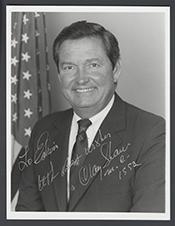
United States · Official source
3,161 records where Rep. Shaw, E. Clay, Jr. [R-FL-22] is listed as a sponsor, author, or other actor. Search with topics and years
United States · United States Congress · 10 March 1987
Designates April 4, 1987, as National Catfish Day.
United States · United States Congress · 5 March 1987
Amends specified provisions of Federal law relating to the refinancing of veterans' home loans to remove the requirement that a veteran must actually occupy the home in order to qualify for such refinancing.
United States · United States Congress · 5 March 1987
Directs the President to designate May 1987 as Older Americans Month.
United States · United States Congress · 5 March 1987
Expresses the sense of the Congress that: (1) the promotion of unrestricted family visits between related people of the United States and the Soviet Union is an essential part of American policy toward the Soviet Union; and (2) the President, the Secretary of State, and other administration members should raise the issue of family visitation at all appropriate opportunities in discussions with leaders of the Communist Party and the Government of the Soviet Union.
United States · United States Congress · 4 March 1987
Amends the Tariff Schedules of the United States to provide a duty on fresh and concentrated grapefruit juice.
United States · United States Congress · 4 March 1987
Amends the Rehabilitation Act of 1973 to exclude individuals with contagious diseases from the definition of "handicapped individuals" for purposes of certain laws relating to employment under Federal contracts and to employment-related nondiscrimination under Federal grants and programs.
United States · United States Congress · 2 March 1987
Amends the Federal criminal code to provide that evidence obtained by a search or seizure shall not be excluded in a Federal proceeding if the seizure was undertaken in a reasonable, good faith belief in its conformity with the fourth amendment to the Constitution. Provides that evidence obtained in accordance with a warrant is prima facie evidence of good faith, absent intentional and material misrepresentation.
United States · United States Congress · 2 March 1987
Habeas Corpus Reform Act of 1987 - Amends the Federal criminal code to condition consideration of a habeas corpus claim by a State prisoner on a showing of actual prejudice resulting from the denial of a Federal right, and that: (1) State action precluded assertion of the right; (2) the Federal right asserted was not recognized prior to the procedural default; (3) the factual basis of the claim could not have been discovered through the exercise of reasonable diligence prior to the procedural default; or (4) a constitutional violation asserted in the claim probably resulted in a factually erroneous conviction or sentencing determination. Establishes a one-year statute of limitations for habeas corpus actions brought by State prisoners. Vests authority to issue certificates for probable cause for appeal of habeas corpus orders exclusively in the courts of appeals. Permits denial on the merits of habeas corpus writs notwithstanding the failure to exhaust State remedies. Prohibits the granting of a habeas corpus writ with respect to any claim which has been fully and fairly adjudicated in State proceedings.
United States · United States Congress · 2 March 1987
Amends the Federal criminal code to establish procedures for the imposition of the death penalty for presidential assassination. Requires a separate sentencing hearing before a jury, or the court upon motion by the defendant, when the defendant is found guilty or pleads guilty to an offense punishable by death. Provides that no presentence report shall be prepared in such cases. Allows the defendant and the Government to present any information relevant to sentencing, without regard to the rules of evidence, but permits information to be excluded where its probative value is substantially outweighed by the danger of unfair prejudice, confusion of the issues, or misleading of the jury. Specifies mitigating factors which the defendant must establish by a preponderance of the information and aggravating factors which the Government must prove beyond a reasonable doubt. Conditions imposition of the death penalty on a unanimous finding by the jury (or finding by the court) that: (1) some aggravating factor exists; and (2) the aggravating factor sufficiently outweighs any mitigating factor found to exist. Directs the court to impose the death penalty upon a finding that such sentence is justified. Establishes procedures for appeal from the death sentence.
United States · United States Congress · 26 February 1987
Omnibus Taxpayers' Bill of Rights Act - Requires the Secretary of the Treasury (Secretary) to prepare a statement setting forth in nontechnical terms: (1) the rights and obligations of a taxpayer and of the Internal Revenue Service (IRS) during a tax audit; (2) the procedures by which a taxpayer may appeal adverse decisions, prosecute refund claims, and file complaints; and (3) the procedures that the IRS may use in enforcing revenue laws. Directs the Secretary to transmit drafts of such statement to specified congressional committees and to distribute the final statement to all taxpayers with tax forms sent by the IRS. Amends the Inspector General Act of 1978 and other Federal law to establish within the Department of the Treasury (Department) an Office of Inspector General (Inspector). Transfers to such Office the existing audit and investigation units of the Department. Prohibits the Inspector from reviewing: (1) monetary, fiscal, and tax policy; and (2) the exercise of legal judgment in the investigation and litigation of cases. Authorizes the Secretary to: (1) withhold from the Inspector requested information that the Secretary determines will jeopardize the success of an ongoing investigation or litigation, confidential sources, or the national security; and (2) prohibit the Inspector from undertaking or continuing an audit or investigation under limited circumstances described in this Act. Requires the IRS, upon taxpayer request, to conduct any interview regarding a deficiency assessment at a reasonable time and place convenient to the taxpayer and to the IRS, and to permit the taxpayer, at his or her own expense, to record the interview. Authorizes the IRS interviewer to record such interview if the taxpayer has been given prior notice and is provided, upon request and payment of reproduction costs, with a transcript of the recording. Requires the interview to warn the taxpayer that: (1) he or she has a right to remain silent; (2) any statement the taxpayer makes may be used against him or her; and (3) he or she has the right to the presence of an attorney, certified public accountant, enrolled agent, or enrolled actuary. Permits a waiver of such rights if voluntarily and knowingly made. Amends Federal law to require the Comptroller General (Comptroller) of the General Accounting Office to: (1) conduct audits of the IRS with respect to the efficiency, uniformity, and equity of the internal revenue laws (current law specifies no particular focus for such audits); and (2) conduct special audits or investigations of internal revenue law administration upon the request of any congressional committee or Member of Congress. Requires the Comptroller's annual report to the Congress to include specified findings concerning IRS management, efficiency, procedures, and structure. Divests of its finality a vote of the Joint Committee on Taxation to disapprove a Comptroller General audit of the IRS. Designates such vote as a recommendation to disapprove an audit and makes such recommendation subject to congressional approval. Prohibits evaluations of IRS personnel based on revenue collected from taxpayers as a result of audits or investigations involving such personnel. Amends the Internal Revenue Code to prescribe criminal penalties for: (1) any investigation by an officer or employee of the United States in connection with Federal tax laws that inquires into the beliefs, associations, or activities of any individual or organization; or (2) the maintenance of any records containing information derived from such an investigation. Creates a civil cause of action in Federal court (regardless of the amount in controversy) for any taxpayer aggrieved by such prohibited investigation or recordkeeping. Authorizes both equitable remedies and awards of damages, including punitive damages, litigation costs and reasonable attorney fees, in such cases. Extends from ten to 30 days the period between the required notice to a person who neglects or refuses to pay tax liability and a levy on such person's salary, wages, or other property. Specifies information that must be incorporated in such notice, including possible alternative actions and the appropriate appeals procedures. Adds to the circumstances triggering termination of such a levy: (1) an agreement between the taxpayer and the Secretary for payment of the liability; and (2) the Secretary's determination that the taxpayer's financial condition precludes enforceability of the liability. Revises the list of property exempt from levy to: (1) increase the exempt amount permitted for certain personal effects, the property of a business, and wages; (2) add an exemption for certain deposits in qualified institutions; and (3) provide an express exemption, except under limited circumstances specified in this Act, for the taxpayer's principal residence, a motor vehicle used by the taxpayer as the primary means of transportation to work, and any tangible personal property essential to the operation of the taxpayer's business in cases when a levy would prevent the taxpayer from carrying on such business. Prohibits a levy on any property when levy and sales expenses would exceed either the liability for which the levy is made or the fair market value of the levied property. Sets forth situations in which the Secretary must release a levy. Applies to jeopardy levies the administrative and judicial review procedures currently applicable to jeopardy assessments. Authorizes the Secretary, in certain cases, to enter into a binding agreement with a taxpayer under which such taxpayer may pay tax liability in installments. Requires the Secretary to offer in writing to enter such an agreement with any individual: (1) whose tax liability is $20,000 or less; and (2) who has not been delinquent in installment tax payments under similar agreements during a specified period. Permits the Secretary, after proper notice and a hearing, to modify or annul such an agreement upon the finding that the financial condition of the affected taxpayer has significantly changed. Requires the Secretary to abate in full any deficiency, including penalty or interest, completely attributable to erroneous advice in writing given to a taxpayer by an IRS officer or employee in response to such taxpayer's specific inquiry. Directs IRS officers and employees, when giving oral advice to a person, to inform such person that the contents of such communication are not binding on the IRS. Authorizes the IRS Ombudsman, upon application filed by a taxpayer, to issue a Taxpayer Assistance Order if, in the determination of the Ombudsman: (1) the taxpayer is suffering or is about to suffer from an unusual or irreparable loss as a result of the manner in which the internal revenue laws are being administered by the Secretary; and (2) the Secretary has failed to carry out any of his or her duties or has violated any provision of law. Allows the terms of a Taxpayer Assistance Order to require the Secretary to release property of the taxpayer levied upon or to cease or refrain from certain actions. Requires the Secretary to obey any Taxpayer Assistance Order issued by the Ombudsman. Allows an administrative appeal of tax liens. Revises the criteria according to which the Secretary determines a minimum sale price for property seized by levy and subject to a tax sale. Prohibits the Secretary from authorizing a class audit of taxpayers in a particular business or trade until each group member is given proper notice and the opportunity either to file an amended return or to challenge the Secretary's findings at a hearing. Places upon the IRS the burden of proof on all issues in all administrative and judicial proceedings between the IRS and a taxpayer. Applies the rulemaking provisions of the Administrative Procedure Act to all IRS rules and regulations prescribed by the Secretary.
United States · United States Congress · 26 February 1987
Designates the month of May 1987 as National Home Remodeling Month.
United States · United States Congress · 25 February 1987
Grants a Federal charter to the National Association of State Directors of Veterans Affairs, Incorporated.
United States · United States Congress · 25 February 1987
Medicare Catastrophic Illness Coverage Act - Amends part A (Hospital Insurance) of title XVIII (Medicare) of the Social Security Act to remove durational limitations on the coverage of inpatient hospital services. Provides coverage of post-hospital extended care services for up to 100 days each year. (Currently such services are provided for up to 100 days during a "spell of illness".) Requires a beneficiary to pay a deductible for each of the first two inpatient hospital admissions in a year. (Currently an inpatient hospital deductible is required for each "spell of illness.") Eliminates the coinsurance requirement for inpatient hospital services and outpatient hospital extended care services. Amends part B (Supplementary Medical Insurance) of the Medicare program to cover the amount by which a part B enrollee's out-of-pocket expenses exceed $2,000 in 1988, adjusting such ceiling thereafter to reflect changes in total Medicare per capita expenses. Excludes from the computation of a beneficiary's out-of-pocket expenses amounts above the full part B payment to physicians and others who do not accept assignment. Includes in the computation of the part B premium an amount equal to the Secretary of Health and Human Services' estimate of a part B enrollee's share of the benefits and administrative costs which result from this Act's catastrophic care coverage and beneficiary expense ceiling. Provides for the transfer to the Federal Hospital Insurance Trust Fund of part B premium revenues which are attributable to the catastrophic care coverage this Act establishes under part A of the Medicare program.
United States · United States Congress · 25 February 1987
Federal Financial Management Improvement Act - Establishes: (1) the Office of the Chief Financial Officer of the United States in the Executive Office of the President; (2) an Assistant Secretary for Financial Management in each executive department; and (3) a Controller in each executive agency. Requires officers to be appointed to such positions by the President, by and with the advice and consent of the Senate. Requires the Chief Financial Officer (CFO) to: (1) provide central direction and monitoring of the executive agencies in the management of their financial activities; (2) ensure that the President and the Congress are fully informed of the Government's financial management condition; and (3) maintain the central accounting and reporting records of the Government. Requires each Assistant Secretary and Controller to: (1) maintain a strategic financial management plan for the department or agency; and (2) participate in the appointment, development, and evaluation of financial managers of such department or agency. Requires the budget of each department and agency to contain a line item for its Assistant Secretary or Controller based on its strategic financial management plan. Establishes in the executive branch the Federal Finance Council, which shall consist of the CFO and the Assistant Secretaries, as an advisory body on financial management objectives, information requirements, plans, operations, and activities. Directs the President to transfer to the Office of the CFO: (1) such functions of the executive agencies as the President determines are properly related to the functions of the Office; and (2) such personnel, property, and records of such agencies as are related to the transferred functions.
United States · United States Congress · 25 February 1987
Designates June 14, 1987, as Baltic Freedom Day. Expresses disapproval of the refusal of the U.S.S.R. to recognize the sovereignty of the Baltic Republics.
United States · United States Congress · 25 February 1987
Designates the month of May 1987 as National Asthma and Allergy Awareness Month.
United States · United States Congress · 24 February 1987
Amends the National Housing Act to make authority permanent for: (1) title I financial institution insurance for housing renovation and modernization; (2) general mortgage insurance; (3) low and moderate income and displaced families mortgage insurance; (4) mortgage co-insurance, including rental rehabilitation and development projects; (5) mortgage insurance for armed forces' civilian employees and defense housing for impacted areas; (6) mortgage insurance for land development; (7) mortgage insurance for medical and dental group practice facilities; (8) mortgage insurance commitment limitations; and (9) graduated payment and indexed mortgage insurance. Amends the Housing Act of 1964 to make authority permanent for urban rehabilitation loan authority. Amends the Housing Act of 1949 to make authority permanent for: (1) insured loans for rental and cooperative housing and related facilities for elderly persons and families in rural areas; and (2) mutual and self-help housing grant and loan authority. Amends the National Flood Insurance Act of 1986 to make national flood insurance authority, including emergency implementation provisions, permanent.
United States · United States Congress · 24 February 1987
Public Building Code Compliance Amendments of 1987 - Amends the Public Buildings Act of 1959 to require that public buildings constructed or altered under such Act shall, to the maximum extent feasible, be in compliance with: (1) one of the nationally recognized model building codes; (2) State and local zoning laws; and (3) State and local laws relating to landscaping, open space, parking, minimum distance from a property line, maximum height, historic preservation, and other similar laws. Requires the Federal Government to: (1) consult with State and local officials about the plans for buildings constructed or altered under such Act; (2) submit plans to State and local officials for review for a period not exceeding two months; and (3) permit inspection by State and local officials. Permits State and local officials to make recommendations to the Federal Government. Provides that no action may be brought against the United States for failure to meet the requirements of this Act.
United States · United States Congress · 24 February 1987
Designates April 9, 1987, as National Prisoner of War Recognition Day.
United States · United States Congress · 19 February 1987
Amends the Federal criminal code to provide criminal penalties for certain Federal Aviation Act reporting and recordkeeping violations by air carriers.
United States · United States Congress · 19 February 1987
Designates March 11, 1987, as National Operation Prom/Graduation Kickoff Day, marking the start of planning of drug- and alcohol-free activities for students during the commencement season.
United States · United States Congress · 18 February 1987
Uniform Product Safety Act of 1987 - States that this Act governs any civil action brought against a manufacturer or product seller for personal injury or damage caused by a product. Supersedes any inconsistent State law regarding recovery in such such actions. Lists specific laws not superseded, including: (1) defenses of sovereign immunity asserted by the United States or any State; (2) any Federal law (except the Federal Employees Compensation Act); (3) the Foreign Sovereign Immunities Act of 1976; (4) State choice-of-law rules; and (5) the right of any court to transfer venue. Allows any State to develop and implement expedited product liability claims procedures. Establishes uniform national standards for product liability actions. Subjects a product manufacturer to liability if the claimant establishes that: (1) the manufacturer manufactured an unreasonably dangerous product; (2) the product failed to conform to an express warranty made by the manufacturer; (3) the manufacturer was negligent in designing the product; or (4) the manufacturer failed to provide appropriate warnings or instructions. Treats a product seller as a manufacturer where: (1) the manufacturer is not subject to a service of process in any State where the action might be brought; or (2) the court determines that the claimant would be unable to enforce a judgment against the manufacturer. Subjects a product seller to liability if the claimant establishes that: (1) the product failed to conform to an express warranty made by the product seller; (2) the product seller did not exercise reasonable care in assembling, inspecting, or maintaining such product; or (3) the product seller did not exercise reasonable care in passing on the manufacturer's warnings or instructions. Establishes defenses in such actions with respect to: (1) manufacturing practices in light of existing technology; and (2) compliance with Government standards and contract specifications; and (3) claimant's intoxication. Holds each defendant found responsible for the harm jointly and severally liable. Makes a product seller or manufacturer liable for punitive damages if such seller or manufacturer: (1) knowingly destroyed or failed to make available evidence whose production is required; or (2) manifested a conscious and flagrant indifference to consumer safety. Lists factors to be considered in setting the amount of punitive damages. Limits punitive damages to treble damages plus costs. Provides that punitive damages may not be awarded where: (1) a drug or medical device complied with certain Government standards; or (2) an aircraft was certified by the Secretary of Transportation under the Federal Aviation Act of 1958. Establishes a 25-year statute of repose. Requires any damage award to be reduced by the amount of workers' compensation benefits paid. Establishes a Federal Product Liability Study Panel to study: (1) existing and proposed expedited product liability claims procedures; (2) Federal and State workers' compensation systems; and (3) nonjudicial methods for resolving product liability claims. Requires the Panel to report to specified congressional committees within two years of enactment of this Act.
United States · United States Congress · 11 February 1987
Drug Kingpin Act of 1987 - Amends the Controlled Substances Act to establish criteria for the imposition of the death penalty where, as a result of a continuing criminal enterprise, an individual (other than a participant in such conduct) dies. Requires the Government, for such offense, to serve notice upon the defendant a reasonable time before trial or acceptance of a plea, disclosing that it intends to seek the death penalty and the aggravating factors upon which it will rely. Requires a separate sentencing hearing before a jury, or the court upon motion by the defendant, when the defendant is found guilty or pleads guilty to such offense. Allows the defendant and the Government to present any information relevant to sentencing, without regard to the rules of evidence, but permits information to be excluded where its probative value is substantially outweighed by the danger of unfair prejudice, confusion of the issues, or misleading of the jury. Directs the court, or the jury by unanimous vote, to impose the death penalty upon finding that such sentence is justified based on consideration of both aggravating and mitigating factors. Sets forth some mitigating factors to be considered by the jury or the court when imposing its sentence. Includes as aggravating factors to be considered by the jury or the court: (1) the intentional nature of the act which resulted in the victim's death; (2) previous convictions for offenses for which life imprisonment or death is authorized; (3) the especially heinous, cruel, or depraved nature of the offense; (4) the defendant committed such offense in consideration for pay; and (5) the offense was committed against a judge, a law enforcement officer, or an employee of a penal of correctional institution. Requires the court to instruct the jury not to consider the race, color, national origin, creed, or sex of the defendant in its consideration of the sentence. Allows the court to impose a sentence of life imprisonment without the possibility of parole for such offenses when the death penalty is not imposed. Establishes procedures for appeal from a death sentence. Requires the Court of Appeals, upon consideration of the record and the information and procedures of the sentencing hearing, to affirm the decision if: (1) the sentence was not imposed under the influence of passion, prejudice, or arbitrariness; and (2) the information supports the finding of aggravating factors or the absence of mitigating factors. Requires the court to provide a written explanation of its determination.
United States · United States Congress · 11 February 1987
Arctic Coastal Plain Leasing Act of 1987 - Directs the Secretary of the Interior to implement a competitive oil and gas leasing program for the Coastal Plain of the Arctic National Wildlife Refuge. States that this Act shall be considered the primary land management authorization for all exploration and production activities on the Coastal Plain. Provides that no land management review shall be required except as specifically authorized by this Act. Mandates that all receipts from sales, rentals, bonuses, and royalties on leases under this Act be deposited into the Treasury. Directs the Secretary to promulgate regulations to ensure that oil and gas exploration and transportation activities are conducted to achieve the reasonable protection of animal and environmental resources (including subsistence uses of the Coastal Plain). States that the "Arctic National Wildlife Refuge, Alaska, Coastal Plain Resource Assessment," prepared by the Secretary, satisfies all legal requirements for the promulgation of such regulations, and that no further studies or assessments shall be required prior to Federal action. Directs the Secretary to provide impact aid and other assistance to communities on the North Slope and elsewhere in Alaska in order to ensure the public services needed to accommodate oil and gas production and transportation activities on the Coastal Plain.
United States · United States Congress · 11 February 1987
Amends the Internal Revenue Code to allow a charitable contribution income tax deduction for amounts paid to or for the benefit of an institution of higher education in cases where the taxpayer receives the right to seating or the right to purchase seating for athletic events at such institution.
United States · United States Congress · 11 February 1987
Designates the month of May 1987 as National Digestive Diseases Awareness Month.
United States · United States Congress · 10 February 1987
Amends the Federal Aviation act of 1958 to prohibit smoking on passenger-carrying aircraft in interstate or intrastate transportation. Directs the Secretary of Transportation to promulgate regulations to implement this Act.
United States · United States Congress · 10 February 1987
Amends the Federal criminal code to provide for the forfeiture of media royalties (profits from depiction of a crime in a movie, book, newspaper, magazine, radio or television production, or live entertainment) by those convicted of any offense involving national security.
United States · United States Congress · 10 February 1987
Authorizes and requests the President to designate the first Sunday in June of each year as National Shut-In Day.
United States · United States Congress · 10 February 1987
Designates the week beginning on October 4, 1987, as Mental Illness Awareness Week.
United States · United States Congress · 5 February 1987
H.U.D. Income Verification Act of 1987 - Authorizes the Secretary of Housing and Urban Development to require Department of Housing and Urban Development (HUD) program applicants or participants to: (1) disclose their social security or employer identification numbers; and (2) consent to wage information verification. Amends the Social Security Act to provide HUD with access to State employment records. Requires Federal, State, local, or public housing administering agencies to independently verify such information before terminating or reducing any housing benefits. Establishes criminal and civil penalties for misuse of such information.
United States · United States Congress · 5 February 1987
Congressional Pay For Performance Act - Provides that if the Congress has not passed all general appropriation bills before the beginning of a fiscal year, then the permanent appropriation for the compensation of Members of Congress shall not be effective for such fiscal year. Prohibits the House of Representatives and the Senate from considering the legislative branch appropriation bill for any fiscal year until other general appropriation bills for such fiscal year have been presented to the President.
United States · United States Congress · 4 February 1987
Public Safety Officers' Death Benefits Amendments of 1987 - Amends the Omnibus Crime Control and Safe Streets Act of 1968 to increase from $50,000 to $100,000 the benefits paid to survivors of public safety officers (law enforcement officers and fire fighters) who died as a result of injury sustained in the line of duty. Directs the Bureau of Justice Assistance to adjust public safety officer death benefits to reflect the annual change in the Consumer Price Index. Makes the date of death the determining date with respect to the amount payable to beneficiaries.
United States · United States Congress · 4 February 1987
Home Equity Conversion Mortgage Insurance Act - Amends the National Housing Act to authorize the Secretary of Housing and Urban Development to insure a home equity conversion mortgage and to make commitments for the insurance of such mortgages prior to the date of their execution or disbursement if such mortgages: (1) may improve the financial situation or otherwise meet the needs of elderly homeowners; (2) can be developed to include safeguards for mortgagors to offset the special risks of such mortgages; and (3) have a potential for acceptance in the private market. Includes among insurance eligibility requirements that the mortgage shall: (1) have been made and held by a mortgagee approved by the Secretary; (2) have been executed by an elderly homeowner; (3) be secured by a one-family residential dwelling occupied by the mortgagor; (4) able to be prepaid without penalty; and (5) have a capped interest rate. Sets forth required mortgage disclosure and mortgagor information service provisions, including the provision of alternate home equity conversion options and related tax and financial information. Prohibits the Secretary from insuring a mortgage pursuant to this Act after September 30, 1991. Sets the total number of insurable mortgages under this Act at 2,000. Permits the Secretary to take any action necessary to provide a mortgagor with funds due pursuant to an insured mortgage or ancillary contract which have not been paid by the party responsible and to obtain reimbursement of such payments from any source. Prohibits the Secretary from insuring a home equity conversion mortgage that does not provide specified safeguards to prevent the displacement of the homeowner. Requires the Secretary to provide the Congress with two specified interim program reports.
United States · United States Congress · 4 February 1987
Authorizes and requests the President to designate annually the third Sunday of August as National Senior Citizens Day.
United States · United States Congress · 4 February 1987
Designates the week of September 20 through September 26, 1987, as Emergency Medical Services Week.
United States · United States Congress · 3 February 1987
Deceptive Mailings Prevention Act of 1987 - Declares as nonmailable matter, matter which constitutes a solicitation by a non-governmental entity: (1) for the purchase of products or services which are provided free of charge or at a lower price by the Federal Government; (2) for the purchase of products or services and contains a seal, insignia, trade or brand name, or any other term or symbol implying Federal Government connection, approval, or endorsement; and (3) for the contribution of funds and contains a seal, insignia, trade or brand name, or any other term implying Federal Government connection, approval, or endorsement. Allows the mailing of such matter if it contains a conspicuous disclaimer that it is not a Government document. Establishes penalties for violations of this Act.
United States · United States Congress · 2 February 1987
Self-Sufficiency for the Poor Act of 1987 - Amends the Foreign Assistance Act of 1961 to require the President to use the foreign currencies paid by the government of a developing country (pursuant to the low interest loan program established by this Act) to make grants to intermediaries that provide credit and other assistance directly to the poorest people in that country for locally chosen self-help investment activities and small-scale private enterprise activities. Sets forth the types of assistance that may be provided by such intermediaries, including limited amounts of credit for individuals, training, and grants for small-scale projects. Describes the types of locally chosen self-help investment activities and small scale enterprises to be supported by such grants. Provides that organizations that have demonstrated effectiveness in providing assistance to the poorest people are eligible for such grants. Requires the local currencies to be disbursed as grants to the intermediaries as quickly as possible. Provides for the administration of the grants. Authorizes the President, in order to provide such grants, to use economic assistance funds to provide economic assistance to developing countries on a loan basis. Requires that a specified minimum amount of the economic assistance funds shall be used for such loans each year. Sets forth the terms of the loans. Provides for notification of the Congress of the reprogramming of economic assistance funds for such loans.
United States · United States Congress · 2 February 1987
Volunteer Protection Act of 1987 - Prescribes circumstances under which volunteers working for nonprofit organizations or government entities shall be immune from personal civil liability. Requires each State to certify to the Secretary of Health and Human Services before the beginning of each fiscal year (commencing with FY 1989) that it has enacted or has in effect a State law which provides such immunity. Requires the Secretary to reduce by one percent the fiscal year allotment which would otherwise be made to such State to carry out the Social Services Block Grant Program under title XX of the Social Security Act if such law is not in effect.
United States · United States Congress · 29 January 1987
Designates the week beginning July 13, 1987, as Snow White Week.
United States · United States Congress · 29 January 1987
Authorizes and requests the President to designate June 1 through June 7, 1987, as National Fishing Week.
United States · United States Congress · 28 January 1987
Title I: Authorization - Authorizes the Secretary of the Interior to undertake research, investigations, appraisals, surveys, and related activities of the Nation's water resources. Authorizes the Secretary to cooperate with other government agencies and to perform such activities on a reimbursable basis, as specified. Authorizes appropriations for FY 1988 through 1990. Title II: National Ground Water Contamination Research - National Ground Water Contamination Research Act of 1987 - Makes the Secretary of the Interior primarily responsible at the Federal level for collecting, analyzing, and disseminating information concerning the state of the Nation's groundwater. Requires the Secretary to report within two years to specified congressional committees and the States on the condition of the Nation's groundwater. Requires that such report be accompanied by an independent evaluation by State individuals charged with responsibility for water pollution control matters. Directs the Secretary to establish a national groundwater quality assessment program within three years of enactment. Requires such program to coordinate government efforts in such area, seek to achieve uniform data collection, and provide information and assistance as required. Directs the Secretary to establish a national groundwater clearinghouse. Requires the Secretary to establish a technical assistance program to serve other Federal and governmental agencies. Amends the Water Resources Research Act of 1974 to make conforming changes. Authorizes appropriations for such programs.
United States · United States Congress · 28 January 1987
Designates the week beginning August 2, 1987, as National Podiatric Medicine Week.
United States · United States Congress · 27 January 1987
Authorizes the Secretary of Education to provide financial assistance to the Bethune-Cookman College in Volusia County, Florida, to establish the Mary McLeod Bethune Memorial Fine Arts Center. Authorizes appropriations for such purpose.
United States · United States Congress · 27 January 1987
Directs the President to designate the week of May 17 through May 23, 1987, as Just Say No to Drugs Week.
United States · United States Congress · 22 January 1987
Northern Ireland Fair Employment Practices Act - Prohibits an article from being imported into the United States from Northern Ireland unless documentation is presented at the time of entry indicating that the enterprise which manufactured or assembled such article was in compliance at the time of manufacture with certain fair employment principles (such as freedom from religious discrimination). Provides that such principles are based on the MacBride Principles, a nine point set of guidelines for fair employment in Northern Ireland. Requires that any U.S. person who has a branch or office in Northern Ireland or who controls an enterprise in Northern Ireland in which more than 20 people are employed shall take the necessary steps to insure implementation of such employment principles and compliance with this Act. Requires each such U.S. person to report to the Secretary of Commerce on compliance with this Act. Sets forth the fair employment principles. Authorizes the President to waive the requirements of this Act in the interest of national security. Requires such waiver to become effective 90 days after the President submits a justification of such waiver to the Congress unless the Congress adopts a joint resolution disapproving the waiver. Provides for expedited consideration of such resolution.
United States · United States Congress · 22 January 1987
Tax Exemption Equity Act of 1987 - Amends the Internal Revenue Code to deny status as a tax-exempt organization to organizations which directly or indirectly perform or finance abortions. Denies the income, estate, and gift tax charitable contribution deductions for amounts contributed to such organizations.
United States · United States Congress · 22 January 1987
Expresses the sense of the Congress that: (1) no Medicare (title XVIII of the Social Security Act) physician payment methodology should be implemented which is based on hospital discharge classifications or requires mandatory assignment; and (2) no drastic change in the Medicare physician payment methodology should be undertaken without the receipt of reports required by legislation enacted in the 99th Congress and a detailed analysis of the long-range impact of such change on the provision of health care.
United States · United States Congress · 21 January 1987
Amends the Federal Railroad Safety Act of 1970 to direct the Secretary of Transportation to review existing regulations governing alcohol and drug use in railroad operations for the purpose of determining whether they are adequate to ensure safety. Sets forth the criteria for such review. Amends the Federal Aviation Act of 1958 to direct the Administrator of the Federal Aviation Administration (FAA) to prescribe regulations establishing a program which requires air carriers, contract carriers, and foreign air carriers to conduct pre-employment testing (as well as periodic recurring and post-accident testing) of airmen and crewmembers upon a reasonable suspicion that they have used alcohol or a controlled substance without lawful authorization. Requires the Administrator to establish such a program applicable to FAA employees whose duties include direct responsibility for flight safety operations. Directs the Administrator to require random testing as part of the testing program for air carriers. Prohibits any air carrier from permitting any individual determined to have used alcohol or a controlled substance without lawful authorization from serving as an airman or crewmember unless such individual has completed a substance abuse rehabilitation program. Requires air carriers to establish and maintain such a rehabilitation program for the identification and opportunity for treatment of airmen and crewmembers who need assistance in resolving substance abuse problems. Requires the Administrator to establish and maintain such a rehabilitation program for FAA employees whose duties include direct responsibility for flight safety operations, and who need assistance in resolving substance abuse problems.
United States · United States Congress · 21 January 1987
Authorizes any State to have a maximum speed limit up to 65 miles per hour on portions of the National System of Interstate and Defense Highways if such portions are located in specified rural areas, and the State governor determines that: (1) such increased speed limit is unlikely to have a significant adverse effect upon highway safety; and (2) specified physical characteristics of such highway portions meet current Federal safety standards. Directs the Secretary of Transportation to issue regulations establishing criteria for highway locations and highway safety with respect to the increased speed limit. Requires the Secretary to report to the Congress within four years after enactment of this Act regarding its implementation. Terminates the increased speed limit program five years after the date of enactment of this Act.