Resolution· HRESH.Res. 815 (117th)referred
Supporting the goals and ideals of National Rural Health Day.
United States · United States Congress · 18 November 2021
This resolution expresses support for National Rural Health Day.
The world's political record
Person
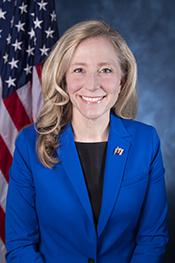
United States · Official source
1,560 records where Rep. Spanberger, Abigail Davis [D-VA-7] is listed as a sponsor, author, or other actor. Search with topics and years
United States · United States Congress · 18 November 2021
This resolution expresses support for National Rural Health Day.
United States · United States Congress · 16 November 2021
IDEA Full Funding Act This bill provides permanent, mandatory funding for the grant program that assists states and outlying areas in providing special education and related services to children with disabilities.
United States · United States Congress · 12 November 2021
Provider Relief Fund Improvement Act This bill extends deadlines, expands the uses of, and makes other changes pertaining to the Provider Relief Fund. The fund reimburses health care providers for increased expenses or lost revenue attributable to COVID-19. Specifically, the bill extends the deadline by which providers must use any reimbursements they received in 2020 from the fund to the end of the COVID-19 emergency. Providers must use reimbursements received in the first half of 2021 by the end of the emergency or June 30, 2022, whichever is later. Additionally, the Department of Health and Human Services must distribute the remaining provider relief funds by March 31, 2022. Providers must use these funds by June 30, 2023. The bill also allows the use of the funds for workplace safety activities, such as hiring additional security personnel.
United States · United States Congress · 9 November 2021
Veterans' Preference Parity Act This bill modifies the eligibility criteria for certain veterans to qualify for a preference in the federal hiring process. Specifically, an individual who is honorably discharged from active duty service is eligible for a veterans' preference, if the active duty service was performed for more than 180 total days (currently, consecutive days). Additionally, a retired member of the Armed Forces is eligible for a veterans' preference, even if the retiree (1) is not a disabled veteran and (2) retired at or above the rank of major or its equivalent.
United States · United States Congress · 5 November 2021
This resolution commemorates the 125th anniversary of the National Grain and Feed Association. It also recognizes the National Grain and Feed Association for 125 years of promoting the noble purpose of its members in transforming the American farmer's bounty into safe, nutritious, sustainable, and affordable human and animal food.
United States · United States Congress · 5 November 2021
This resolution expresses the House of Representatives' support for the goals and ideals of National Veterans Small Business Week, celebrates the millions of people in the United States—especially veterans and their spouses—who benefit from Small Business Administration programs, and expresses appreciation for the continued service to the United States by the nation's veterans through small business ownership and entrepreneurship.
United States · United States Congress · 4 November 2021
National Response to Exploitation and Sexual abuse of Children in Unaddressed Emergencies Act or the Child RESCUE Act This bill directs the Department of Justice to establish a national working group—the United States Working Group on Children in Imminent Danger—to study policing strategies and resource needs to rescue children who are victims of child sexual abuse material or victims of sexual abuse involving child sexual abuse material. The working group must report to Congress on its findings and conclusions, as well as recommendations for legislation.
United States · United States Congress · 1 November 2021
Help Ensure Lower Patient Copays Act or the HELP Copays Act This bill requires health insurance plans to apply certain payments made by, or on behalf of, a plan enrollee toward a plan's cost-sharing requirements. Specifically, plans must apply third-party payments, financial assistance, discounts, product vouchers, and other reductions in out-of-pocket expenses toward the requirements.
United States · United States Congress · 28 October 2021
This resolution expresses that the House of Representatives applauds the Biden administration for reaffirming the U.S. commitment to the Paris Agreement on climate change and to our collective responsibility to globally combat climate change; encourages the Biden administration to implement measures to ensure global climate change remains a top priority for this and future administrations and to cement the United States as a global leader in the fight to mitigate its most severe consequences; voices strong commitment as legislators toward achieving the climate goals of the Paris Agreement, fulfilling the forthcoming pledges from the COP26 in Glasgow, Scotland, and advancing other international efforts to keep global warming to no more than 1.5 degrees Celsius and realize global net-zero carbon emissions by 2050 using a whole-of-government approach; and recognizes the critical responsibility of the United States and other developed nations to ensure all societies have the capabilities to transition to a clean energy economy, the resources to protect against climate-induced disasters, and the necessary assistance to endure climate-related challenges to food security, regional migration, and public health.
United States · United States Congress · 26 October 2021
Original National Domestic Violence Awareness Month Resolution of 2021 This resolution supports the goals and ideals of National Domestic Violence Awareness Month. Further, it expresses the sense of the House of Representatives that Congress should continue to raise awareness of and support programs to end domestic violence.
United States · United States Congress · 21 October 2021
DHS Roles and Responsibilities in Cyber Space Act This bill requires the Department of Homeland Security (DHS) to report on its roles and responsibilities, as well as those of its components, for responding to cyber incidents. DHS must coordinate with the Cybersecurity and Infrastructure Security Agency on the report.
United States · United States Congress · 19 October 2021
Cattle Contract Library Act of 2021 This bill directs the Department of Agriculture (USDA) to establish and maintain a library or catalog of each type of contract offered by packers to producers for the purchase of all or part of the production of fed cattle (including cattle that are purchased or committed for delivery), including any schedules of premiums or discounts associated with the contract. USDA must make the library or catalog publicly available in a user-friendly format and provide weekly or monthly reports as applicable. The bill makes it unlawful for any packer to willfully fail or refuse to provide USDA with accurate contractual information or to comply with any other requirements under the bill. The Agricultural Marketing Service must provide competitive grants to state agricultural experiment stations, universities, national laboratories, and other entities for producer outreach and education efforts on best uses of cattle market information, including information made available through the livestock mandatory reporting program and the library or catalog.
United States · United States Congress · 19 October 2021
Tim Hart Wildland Firefighter Classification and Pay Parity Act or Tim's Act This bill addresses the pay and benefits of federal wildland firefighters and related issues. Federal wildland firefighter is defined as any temporary, seasonal, or permanent position at the Department of Agriculture (USDA) or the Department of the Interior that maintains certain group, emergency incident management, or fire qualifications and primarily engages in or supports wildland fire management activities. Specifically, (1) the Office of Personnel Management (OPM) must establish one or more classification series for federal wildland firefighter positions, and (2) USDA and the Department of the Interior shall determine each position within USDA and Interior that qualifies as a federal wildland firefighter position. The bill, among other requirements (1) establishes a pay scale for such positions, with annual adjustments; and (2) provides for hazardous duty pay. The OPM must establish guidelines for work schedules. The bill addresses issues regarding wages, unpaid leave to care for a family member, recruitment and retention bonuses, and housing allowances. USDA and Interior shall (1) establish, maintain, coordinate, and operate a voluntary tuition assistance program; (2) establish and maintain a publicly accessible, searchable Federal Wildland Firefighter Cancer and Cardiovascular Disease Database; and (3) establish and carry out a program for mental health awareness and support. Additionally, the bill provides for continuation of firefighters pension coverage in case of disability and pay parity for federal structural firefighters.
United States · United States Congress · 19 October 2021
Safeguarding Human Rights in Arms Exports Act of 2021 or the SAFEGUARD Act of 2021 This bill establishes specified measures to prevent the sale, export, or transfer of defense articles or defense services to foreign countries for use in violation of international humanitarian law or internationally recognized human rights. These measures include (1) prohibiting arms sales to countries committing genocide or war crimes, (2) requiring a consideration of human rights practices and democratization in any foreign country to which an arms sale is contemplated, and (3) providing for congressional oversight of arms exports to foreign countries wherein certain human rights violations have occurred.
United States · United States Congress · 12 October 2021
Designates the facility of the United States Postal Service located at 3900 Crown Road Southwest in Atlanta, Georgia, as the "John R. Lewis Post Office Building."
United States · United States Congress · 12 October 2021
Clean Cities Act This bill requires the Department of Energy (DOE) to carry out a Clean Cities Coalition Program. Under the program, DOE must make awards to clean city coalitions or nonprofit organizations for projects and activities that reduce petroleum consumption, improve air quality, promote energy and economic security, and encourage deployment of a diverse, domestic supply of alternative fuels in the transportation sector. DOE must also ensure that there are active coalitions working in all states, the District of Columbia, and the territories. In addition, DOE must provide technical assistance and training to the coalitions, provide opportunities for communication and sharing of best practices among the coalitions, and maintain and publish a centralized database of information about the activities and accomplishments of the coalitions.
United States · United States Congress · 8 October 2021
Veterans Census-Enabled National Treatment Equitable Resource Supplement for Mental Health Act of 2021 or the Vet CENTERS for Mental Health Act of 2021 This bill requires the Department of Veterans Affairs (VA) to ensure the number of Vet Centers in certain states is increased by at least one additional center if the VA determines the state meets specified requirements. The VA must also establish a community-based outpatient clinic in each state that does not share a land border with another state, is located at least 2,000 miles from the contiguous United States, and contains no such clinic.
United States · United States Congress · 8 October 2021
Establishing New Authorities for Businesses Laundering and Enabling Risks to Security Act or the ENABLERS Act This bill expands the definition of a financial institution for purposes of reporting suspicious transactions, anti-money laundering programs, and other related measures. Specifically, the bill expands this definition to include persons who provide investment advice for compensation; persons who trade in works of art, antiques, or collectibles; attorneys, law firms, or notaries involved in financial or related activity on behalf of another person; certain trusts and company service providers; certified public accountants and public accounting firms; persons engaged in the business of public relations, marketing, communications, or other similar services in such a manner as to provide another person anonymity or deniability; and persons engaged in the business of providing third-party payment services. Additionally, the Financial Crimes Enforcement Network must establish a task force to develop a strategy to impose anti-money laundering safeguards and enforce requirements on certain professions. Finally, domestic title insurance companies must obtain, maintain, and report to the Department of the Treasury information on the beneficial owners of entities that purchase or sell residential or commercial real estate in transactions involving the domestic title insurance company.
United States · United States Congress · 5 October 2021
Securing Systemically Important Critical Infrastructure Act This bill sets out a process to designate elements of critical infrastructure as systemically important. Critical infrastructure refers to the machinery, facilities, and information that enable vital functions of governance, public health, and the economy. Specifically, the Cybersecurity and Infrastructure Security Agency (CISA) must establish a methodology based on objective criteria to designate critical infrastructure as systemically important. In developing the criteria, CISA must consider, among other factors, the scale of the potential effects of a disruption to the infrastructure on domestic security, the economy, health, or safety. Using the methodology, CISA must make a preliminary designation and then provide an opportunity for the infrastructure's owner or operator to share additional information. A preliminary designation becomes final after 30 days unless, on the basis of additional information, CISA determines the infrastructure does not meet required criteria. The bill also requires CISA to maintain a list of systemically important critical infrastructure, prioritize systemically important critical infrastructure in its programs and activities, report on various matters related to the designation process, and assess processes for and benefits of enhanced risk management coordination between the federal government and the owners and operators of systemically important critical infrastructure. Additionally, the Department of Homeland Security must prioritize the security clearance applications of owners and operators of systemically important critical infrastructure.
United States · United States Congress · 30 September 2021
Prevent All Soring Tactics Act of 2021 or the PAST Act of 2021 This bill addresses the practice of soring horses. The soring of horses includes various actions taken on horses' limbs to produce higher gaits that may cause pain, distress, inflammation, or lameness. Specifically, the bill expands soring regulation and enforcement at horse shows, exhibitions, sales, and auctions, including by establishing a new system for inspecting horses for soring. In addition, the bill increases penalties for violations.
United States · United States Congress · 28 September 2021
This resolution supports the designation of National Voter Registration Day.
United States · United States Congress · 27 September 2021
Promoting Readiness and Ensuring Proper Active pharmaceutical ingredient Reserves of Essential medicines Act of 2021 or the PREPARE Act of 2021 This bill establishes the Strategic Active Pharmaceutical Ingredient Reserve. The Department of Health and Human Services (HHS) must annually publish a public list of essential generic medicines that are medically necessary to have available at all times. HHS must report and implement a plan to establish the reserve, which must be designed to minimize the impact of an interruption or reduction in imports of (1) key starting materials (including active pharmaceutical ingredients) for essential generic medicines, and (2) finished dosage forms of essential generic medicines for which key starting materials are not imported. The plan must also contain provisions to strengthen domestic capacity for active pharmaceutical ingredient production, storage, and conversion. Within one year of this bill's enactment, the plan must include at least 25 of the essential generic medicines on the required list. The plan must add at least 25 medicines each year until the full list is covered. HHS must prioritize domestically manufactured key starting materials for the reserve to the maximum extent possible. A manufacturer of an essential generic medicine that switches to an active pharmaceutical ingredient sourced through the reserve shall not have to update the approved application for that medicine. The Government Accountability Office must report to Congress on active pharmaceutical ingredient manufacturing, including the time and costs needed to develop domestic manufacturing capabilities.
United States · United States Congress · 22 September 2021
Radiation Exposure Compensation Act Amendments of 2021 This bill expands two programs that compensate individuals who were exposed to radiation during certain nuclear testing or uranium mining and subsequently developed medical conditions, including cancers. First, the bill expands and extends a program that compensates individuals who were exposed to radiation from atmospheric nuclear testing or other sources and subsequently developed specified cancers. Under current law, this program compensates individuals who were present in a designated geographic area during a period of nuclear testing and certain individuals employed in uranium mining. The bill expands the designated areas to include Colorado, Idaho, Montana, New Mexico, and Guam and additional areas in Arizona, Nevada, and Utah; makes more individuals who worked in uranium mining eligible for the program; increases the amount of compensation awarded to and provides medical benefits for eligible claimants; and extends for 19 years following the bill's enactment the fund that supports this program and the statute of limitations for filing claims (currently, the program terminates on July 10, 2022). Second, the bill makes certain individuals employed in uranium mines or mills eligible for a program that compensates workers, including Department of Energy employees and contractors, for illnesses caused by occupational exposure to radiation and hazardous substances during development and testing of the nation's nuclear weapons stockpile. The bill also establishes a grant program in the National Institute of Environmental Health Sciences for institutions of higher education to study the epidemiological impacts of uranium mining and milling among individuals without occupational exposure.
United States · United States Congress · 21 September 2021
This resolution supports the designation of National Clean Energy Week.
United States · United States Congress · 14 September 2021
This resolution recognizes and celebrates the 75th anniversary of the National Association of Conservation Districts.
United States · United States Congress · 14 September 2021
Directed Energy Threat Emergency Response Act This bill requires actions to address anomalous health incidents. The President must designate an appropriate senior official as the Anomalous Health Incidents Interagency Coordinator. The interagency coordinator must (1) coordinate the U.S. government's response to anomalous health incidents, (2) ensure that affected personnel and dependents get access to care, and (3) ensure adequate training and education for relevant U.S. government personnel. The President must also appoint an appropriate senior official as the Deputy Anomalous Health Incidents Interagency Coordinator. The bill also requires certain agencies, including the Department of Defense and the Office of the Director of National Intelligence, to designate an appropriate senior official to serve as the Anomalous Health Incident Agency Coordination Lead. These officials must work with the interagency coordinator to (1) achieve objectives related to anomalous health incidents, and (2) jointly provide quarterly briefings to Congress on its activities. Such agencies must also develop updated workplace guidance to address anomalous health incidents. The bill authorizes the Department of State to take certain actions, such as increasing staffing for the Health Incident Response Task Force and collecting data related to anomalous health incidents.
United States · United States Congress · 10 September 2021
Counter-Kleptocracy Act This bill addresses prevention and elimination of corruption globally. The Department of State must (1) annually rank, using specified standards, foreign countries based on their efforts to eliminate corruption; and (2) designate an anti-corruption contact in the diplomatic mission of any country that does not meet the standards. The State Department must also evaluate whether to sanction foreign persons engaged in significant corruption (1) in countries that make de minimis or no efforts to meet the standards, or (2) connected to a designated Russian pipeline project. The President may temporarily sanction foreign persons engaging in public corruption activities (e.g. bribery). The bill makes it a federal crime for foreign officials to demand or accept bribes to influence the performance of an official act or otherwise confer an improper advantage. Officials who engage in this conduct are subject to a fine, a prison term, or both. Funds recovered by prosecuting this crime shall be deposited into a new fund in the Treasury for anti-corruption initiatives. The Department of Justice must make publicly available an accounting of property relating to foreign government corruption that is forfeited to the United States. The bill addresses issues concerning U.S. visas, including related to (1) abuse of investor visas by corrupt foreign officials or criminals, and (2) foreign individuals denied admission to the United States because of adverse foreign policy consequences. The bill also prohibits extraditions based solely on, and otherwise addresses, International Criminal Police Organization communications.
United States · United States Congress · 10 September 2021
Preventing Overdoses and Saving Lives Act of 2021 This bill establishes a grant program for states, Indian tribes, and territories to respond to the opioid crisis. In awarding the grants, the Department of Health and Human Services (HHS) must give priority to recipients with the highest opioid dispensing rates. Recipients must use at least 20% of grant funds to implement a program that requires a prescription for an opioid overdose reversal drug along with an opioid prescription if (1) a patient is prescribed benzodiazepines, medication-assisted treatment, or high-dose opioids; or (2) the prescriber has reason to know of the patient's history with substance use disorders. As part of this program, recipients must also require continuing education on opioid-prescribing practices for prescribers and on recognizing opioid overdose fatalities for coroners. Recipients must use the remaining funds to develop a strategic plan for the jurisdiction's response to the opioid crisis.
United States · United States Congress · 10 September 2021
Linking Seniors to Needed Legal Services Act of 2021 This bill establishes a grant program within the Department of Health and Human Services for states to support linkages between health services, social services, and other supports for vulnerable older adults, including through senior legal hotlines and medical-legal partnerships. A medical-legal partnership means an arrangement in a health care or social services setting that integrates lawyers and social workers to address the needs of an individual patient related to social determinants of health (nonmedical factors such as income that influence health outcomes) and to help clinicians, case managers, and social workers address structural problems at the root of many health inequities.
United States · United States Congress · 10 September 2021
This resolution calls on all Americans to observe the 20th anniversary of the September 11 attacks and honor those who lost their lives.
United States · United States Congress · 31 August 2021
Maximizing Outcomes through Better Investments in Lifesaving Equipment for (MOBILE) Health Care Act This bill expands and otherwise modifies the allowable uses of New Access Point grant funds. These grants help health centers establish new delivery sites to provide comprehensive primary care to medically underserved populations. Specifically, health centers may use funds to construct or renovate buildings or to set up mobile medical clinics. In addition, a mobile clinic may qualify for grant funding as a new delivery site regardless of whether it is associated with a permanent, full-time site.
United States · United States Congress · 31 August 2021
This bill posthumously provides for the award of a Congressional Gold Medal in commemoration of the 13 service members who died on August 26, 2021, while stationed at Hamid Karzai International Airport in Afghanistan.
United States · United States Congress · 31 August 2021
This resolution expresses support for the 2021 National Recovery Month theme (Recovery is for Everyone: Every Person, Every Family, Every Community). National Recovery Month is an annual observance held in September to support the community of individuals in recovery from substance use, promote treatments and practices, and recognize service providers.
United States · United States Congress · 17 August 2021
John R. Lewis Voting Rights Advancement Act of 2021 This bill establishes new criteria for determining which states and political subdivisions must obtain preclearance before changes to voting practices may take effect. Preclearance is the process of receiving preapproval from the Department of Justice (DOJ) or the U.S. District Court for the District of Columbia before making legal changes that would affect voting rights. A state and all of its political subdivisions shall be subject to preclearance of voting practice changes for a 10-year period if 15 or more voting rights violations occurred in the state during the previous 25 years; 10 or more violations occurred during the previous 25 years, at least 1 of which was committed by the state itself; or 3 or more violations occurred during the previous 25 years and the state administers the elections. A political subdivision as a separate unit shall also be subject to preclearance for a 10-year period if three or more voting rights violations occurred there during the previous 25 years. States and political subdivisions that meet certain thresholds regarding minority groups must preclear covered practices before implementation, such as changes to methods of election and redistricting. Further, states and political subdivisions must notify the public of changes to voting practices. Next, the bill authorizes DOJ to require states or political subdivisions to provide certain documents or answers to questions for enforcing voting rights. The bill also outlines factors courts must consider when hearing challenges to voting practices, such as the history of official voting discrimination in the state or political subdivision.
United States · United States Congress · 13 August 2021
Frank Harrison, Elizabeth Peratrovich, and Miguel Trujillo Native American Voting Rights Act of 2021 This bill addresses the voting rights of Native American and Alaska Native voters and voting access on tribal lands. The bill includes provisions expanding the types of facilities that can be used as voter registration agencies; increasing polling site accessibility, including by expanding early in-person voting and providing ballot drop boxes; providing enforcement power to citizens and attorneys general; requiring approval for actions like moving a polling place; validating certain tribal identification for voting or registering to vote; permitting voters to designate another individual to return a ballot on their behalf; and expanding requirements for bilingual voting accessibility. In addition, the bill establishes a Native American voting task force grant program for the purpose of increasing voter outreach, education, registration, turnout, and accessibility for Native American communities. The bill also directs the Government Accountability Office to study and report on (1) the prevalence of nontraditional or nonexistent mailing addresses among Indians, members of tribes, and individuals residing on Indian lands; and (2) the alternatives for removing barriers to voter registration, receipt of voter information and materials, and receipt of ballots.
United States · United States Congress · 10 August 2021
Ocean Shipping Reform Act of 2021 This bill revises provisions related to ocean shipping policies and is designed to support the growth and development of U.S. exports and promote reciprocal trade in the foreign commerce of the United States. Among other provisions, the bill sets forth requirements for operating a shipping exchange involving ocean transportation in the foreign commerce of the United States; prohibits ocean common carriers and marine terminal operators from retaliating or discriminating against shippers because such shippers have patronized another carrier, or filed a complaint; requires the Federal Maritime Commission (FMC) to publish and annually update all its findings of false certifications by ocean common carriers or marine terminal operators and all penalties assessed against such carriers or operators; requires ocean common carriers to adhere to minimum service standards that meet the public interest; directs the FMC to establish rules prohibiting ocean common carriers and marine terminal operators from adopting and applying unjust and unreasonable demurrage and detention fees; requires ocean common carriers to report to the FMC each calendar quarter on total import and export tonnage and the total loaded and empty 20-foot equivalent units per vessel that makes port in the United States; authorizes the FMC to initiate investigations of an ocean common carrier's fees or charges and apply enforcement measures, as appropriate; and revises annual reporting requirements for the FMC on foreign laws and practices to include practices by ocean common carriers.
United States · United States Congress · 6 August 2021
Better Cybercrime Metrics Act This bill establishes various requirements to improve the collection of data related to cybercrime and cyber-enabled crime (cybercrime). Among the requirements the Department of Justice (DOJ) must enter into an agreement with the National Academy of Sciences to develop a taxonomy for categorizing different types of cybercrime faced by individuals and businesses; DOJ must establish a category in the National Incident-Based Reporting System for collecting cybercrime reports from federal, state, and local officials; DOJ's Bureau of Justice Statistics and the Bureau of the Census must include questions about cybercrime in the annual National Crime Victimization Survey; and the Government Accountability Office must assess the effectiveness of reporting mechanisms for cybercrime and disparities in reporting cybercrime data and other types of crime data.
United States · United States Congress · 6 August 2021
9/11 Responder and Survivor Health Funding Correction Act This bill increases funding for and otherwise modifies a federal program that provides medical monitoring and treatment to responders and survivors who suffer from health conditions related to the September 11, 2001, attacks on the World Trade Center. Among the changes, the bill allows certain health care providers other than physicians to determine whether an individual's health condition is related to the attacks, and it establishes a research program to study the impacts of the attacks on health and educational outcomes of individuals who were 21 years of age or younger when the attacks occurred.
United States · United States Congress · 3 August 2021
Havana Syndrome Attacks Response Act This bill requires the President to sanction foreign persons and governments for carrying out clandestine attacks on U.S. personnel that have caused brain injury. Specifically, the President must impose visa- and asset-blocking sanctions on any foreign person that has directed or carried out such an attack. If the President determines a foreign government carried out such an attack, the President must notify Congress and sanction that country by terminating any foreign assistance (except for humanitarian aid or food or agricultural commodities or products) and arms transactions, restricting commercial exports, and denying access to U.S. credit or other financial assistance. The President must remove these sanctions after 12 months, provided that (1) the country's government gives reliable assurances that it will not conduct future attacks, and (2) the executive branch does not have persuasive information indicating an attack occurred in the preceding six months. The bill also requires a congressional briefing and report about suspected clandestine attacks on U.S. personnel that have caused brain injury, including hypotheses concerning the identity of the perpetrators and the technical methods used to carry out the attacks.
United States · United States Congress · 30 July 2021
Support Recovery from Addiction Act of 2021 This bill requires states to expend at least 10% of their Substance Abuse Prevention and Treatment Block Grants on recovery support services for individuals with substance use disorders.
United States · United States Congress · 29 July 2021
Uyghur Policy Act of 2021 This bill addresses human rights issues concerning the Uyghurs and other minority groups in the Xinjiang Uyghur Autonomous Region in China. The bill authorizes the establishment of a Special Coordinator for Uyghur Issues position within the Department of State. The State Department's Bureau of Educational and Cultural Affairs may, subject to appropriations, make certain funds available to human rights advocates working on behalf of Uyghurs and members of other minority groups. The funds, if made available, shall be used to facilitate the presence of such human rights advocates at public diplomacy forums to speak on issues related to the human rights and religious freedoms of minority groups in Xinjiang. The State Department must ensure that Uyghur language training is available to Foreign Service officers. It must also ensure that a Uyghur-speaking member of the Foreign Service is assigned to U.S. diplomatic and consular missions in China.
United States · United States Congress · 29 July 2021
This resolution encourages law enforcement departments to use the National Night Out as an opportunity to improve relationships with the communities they serve.
United States · United States Congress · 29 July 2021
Fiscal State of the Nation Resolution This concurrent resolution requires the congressional budget committees to conduct an annual joint hearing to receive a presentation from the Comptroller General regarding (1) the Government Accountability Office's audit of the financial statement of the executive branch, and (2) the financial position and condition of the federal government.
United States · United States Congress · 28 July 2021
Foreign Extortion Prevention Act This bill establishes a federal criminal offense involving bribery by foreign officials. Specifically, the bill makes it a crime for foreign officials to demand or accept anything of value personally or for another person or a nongovernmental entity to influence the performance of an official act or otherwise confer an improper advantage. The bill explicitly grants extraterritorial jurisdiction over the offense. A violation is subject to criminal penalties—a fine, a prison term of up to 15 years, or both. Finally, the bill establishes a Victims of Kleptocracy Fund in the Treasury and directs fines and penalties for violations to be deposited into the fund for anti-corruption initiatives.
United States · United States Congress · 27 July 2021
Transition for Success Act This bill allows members of the reserve components of the Armed Forces to participate in the Department of Defense's Skillbridge program, which provides job training to service members who are transitioning into civilian life.
United States · United States Congress · 26 July 2021
Global Malnutrition Prevention and Treatment Act of 2021 This bill sets out programs and otherwise directs the U.S. Agency for International Development (USAID) to carry out activities to prevent and treat malnutrition globally. Specifically, the USAID must leverage resources to address malnutrition through the Global Nutrition Coordination Plan (an interagency effort to strengthen the impact of U.S. investments in nutrition) and its role on the board of directors of the International Development Finance Corporation. The USAID must also select countries based on specified malnutrition-related indicators for purposes of targeting malnutrition prevention and treatment programs and update the selection within five years. Additionally, the USAID may establish the Nutrition Leadership Council to coordinate activities to prevent and treat malnutrition across the agency; target resources and nutrition interventions to the populations most susceptible to severe malnutrition and otherwise support efforts to prevent and treat malnutrition globally; and coordinate activities among partner countries, United Nations agencies, civil society, private sector actors, and others to, for example, build capacity in partner countries to sustain nutrition interventions. The bill also requires the USAID to provide to Congress an implementation plan and annual reports concerning its programs for treating and preventing malnutrition. The bill's provisions terminate seven years after its enactment.
United States · United States Congress · 26 July 2021
Cambodia Democracy Act of 2021 This bill directs the President to impose sanctions on individuals responsible for acts to undermine democracy in Cambodia, including acts that constituted serious human rights violations. The sanctions shall be directed at senior Cambodian government, military, or security forces officials responsible for such actions, as well as entities controlled or owned by such individuals. The sanctions shall include blocking assets and restricting the entry of sanctioned individuals into the United States, and shall not apply to the importation of goods. The President may waive the sanctions with respect to a person or entity if it is in the national interest of the United States. The President may suspend the sanctions if Cambodia makes meaningful progress toward ending government efforts to undermine democracy or committing human rights violations.
United States · United States Congress · 22 July 2021
Solving an Overlooked Loophole in Votes for Executives (SOLVE) Act This bill establishes the Twentieth Amendment Section Four Panel, which must recommend to Congress model legislation to resolve any vacancy created by the death of a candidate in a contingent presidential or vice-presidential election. Such panel terminates 90 days after submitting its final report. (The Twelfth Amendment to the Constitution requires that presidential and vice-presidential candidates gain a majority of electoral votes to win an election. In the event that no candidate wins a majority of electoral votes, the Twelfth Amendment requires the House of Representatives to elect the President and the Senate to elect the Vice President, which is known as a contingent election. The Twentieth Amendment to the Constitution allows Congress to establish a process in the case of the death of a candidate in a contingent presidential or vice-presidential election.)
United States · United States Congress · 22 July 2021
Veterans' Culturally Competent Care Act This bill requires the Department of Veterans Affairs (VA) to establish standards and requirements for the provision of mental health care by non-VA providers in the Veterans Community Care Program (VCCP). The established standards must be the same as the standards applicable to VA employees who provide mental health care. The VA must require non-VA mental health care providers to complete training courses on military culture, core competencies for health care professionals, suicide evaluation and management, post-traumatic stress disorder, traumatic brain injury, and military sexual trauma after the provider becomes approved under the VCCP. The VA must also (1) identify additional training areas for which to develop courses, and (2) require the non-VA providers to complete such courses.
United States · United States Congress · 22 July 2021
Recognizing and Ensuring Taxpayer Access to Infrastructure Necessary for GPS and Satellite Communications Act of 2021 or the RETAIN GPS and Satellite Communications Act of 2021 This bill places conditions on entities that deploy commercial terrestrial operations in the 1525-1559 megahertz (MHz) band or the 1626.5-1660.6 MHz band of the electromagnetic spectrum. These frequency bands are traditionally used for satellite operations, including the global positioning system (GPS). On April 19, 2020, the Federal Communications Commission approved an application for a low-power 5G wireless network in such bands despite concerns about the network interfering with GPS and other operations on adjacent bands. In its application, the entity committed to update, repair, or replace federal devices, platforms, or systems affected by its operations. This bill requires an entity (including the previously approved entity) that deploys terrestrial operations in the designated bands to reimburse a federal agency or a person for certain costs if the entity's operations interfere with or otherwise affect the operations of the agency or person. These costs may include necessary upgrades, repairs, or replacements to satellite communication devices and related equipment, as well as expenses for engineering studies and labor. Reimbursable costs owed by the entity transfer to any assignee, successor, or purchaser of its license to deploy terrestrial operations in the designated bands. The bill also expressly authorizes federal agencies to directly accept from the entity reimbursements for incurred costs.