Bill· HRH.R. 6125 (94th)referred
A bill to suspend the duty on wood particle board.
United States · United States Congress · 17 April 1975
Suspends the import duty under the U.S. Tariff Schedules on wood particle board, whether or not face finished.
The world's political record
Person
United States · Official source
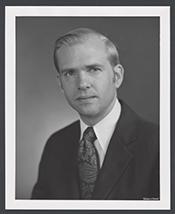
511 records where Rep. Steiger, William A. [R-WI-6] is listed as a sponsor, author, or other actor. Search with topics and years
United States · United States Congress · 17 April 1975
Suspends the import duty under the U.S. Tariff Schedules on wood particle board, whether or not face finished.
United States · United States Congress · 14 April 1975
Reduces the excise tax under the Internal Revenue Code for beer brewed or produced at a qualified brewery in the United States, which produces no more than 8,000,000 barrels, to $6 a barrel on the first 100,000 barrels removed for consumption.
United States · United States Congress · 10 April 1975
Urges the President to seek a treaty or other appropriate international agreement establishing a wildlife preserve for humpback whales in the West Indies.
United States · United States Congress · 10 April 1975
States that the United States should, as expeditiously as possible, take all necessary actions to effect a regional conservation treaty for the protection of northern hemisphere pinnipeds (includes seals and walruses).
United States · United States Congress · 9 April 1975
Prohibits, except as provided in this Act, the inspection of tax returns and the disclosure of information contained in such returns. Authorizes the inspection of returns by or disclosure to (1) the taxpayer or his representative; (2) employees of the Internal Revenue Service and Department of Justice solely for purposes of enforcement of the tax laws; (3) State agencies charged with administration of the tax laws only for that purpose; (4) the President of the United States in the performance of his official duties; and (5) the Joint Committee on Internal Revenue Taxation for statistical purposes only. Increases the criminal penalties for unauthorized disclosure or receipt of information under this Act.
United States · United States Congress · 26 March 1975
Authorizes the duty-free entry of binder twine and baler twine made of manmade fibers under the U.S. Tariff Schedules. (Amends 19 U.S.C. 1202)
United States · United States Congress · 26 March 1975
Provides that any grant funds under the Federal Water Pollution Control Act which were withheld from allotment by Presidential direction for fiscal years 1973, 1974, and 1975 shall be alloted among the States by the Administrator of the Environmental Protection Agency in accordance with a specified formula. Revises the distribution of such allotments to the States for fiscal years beginning with 1976.
United States · United States Congress · 26 March 1975
Designates a Federal building in Green Bay, Wisconsin, as the "John W. Byrnes Federal Building".
United States · United States Congress · 26 March 1975
Authorizes emergency loans to farmers, ranchers, and oyster producers who are unable to obtain sufficent credit elsewhere, to cover losses arising from natural disasters. States that such loans may be made in amounts exceeding actual losses, but that the interest on such excess shall increase from five percent to the prevailing market rate. Allows the Secretary of Agriculture to delegate such loan-making to the State directors of the Farmers' Home Administration. Allows such loans to be made on an annual basis for five additional years, at prevailing market rates.
United States · United States Congress · 20 March 1975
Directs the House Commission on Information and Facilities to provide for radio and television coverage of the proceedings in the House Chamber. Calls upon the Commission to provide for monitors to receive the television coverage to be located in such offices of the Capitol and the House and Senate office buildings as the Commission, after consultation with the Speaker of the House, considers desirable. States that the Commission shall initially provide for transmission of the audio portion of the coverage to offices of Members and officers of the House and Senate. Directs the Commission to provide a daily written summary of the proceedings of the House and other information pertaining to legislative activity. Requires that the Commission make available to the public and commercial broadcasting stations radio and television coverage of the proceedings in the House Chamber, videotapes of such coverage, and recordings of the audio portion of such coverage subject to requirements specifies under this Act. Specifies that such requirements do not include limitations or restrictions on the selection of materials for broadcast use. Authorizes the Commission to employ such persons and enter into such contracts as shall be necessary to carry out the provisions of this resolution. Provides that expenses of the Commission shall be paid from the contingent fund of the House. Directs the Commission, as soon as possible after the conclusion of the first session of the Ninety-fourth Congress, to report to the House on activities carried out under this resolution.
United States · United States Congress · 18 March 1975
Provides that the House of Representatives of the 95th Congress and each succeeding Congress shall consider and adopt the rules of its proceedings. Limits general debate on the resolution incorporating the proposed rules to 10 hours, to be equally divided and controlled by the majority leader and the minority leader.
United States · United States Congress · 18 March 1975
Provides, under the Rules of the House of Representatives, that any member in committee may demand a rollcall vote on any matter, and that a rollcall vote shall be required on any motion to report a bill or resolution of a public character from committee.
United States · United States Congress · 18 March 1975
Provides, under the Rules of the House of Representatives, that Members may not vote by proxy in committees.
United States · United States Congress · 18 March 1975
Prohibits, under the Rules of the House of Representatives, a party caucus or conference from issuing binding instructions on a Member's committee or floor votes. Permits any Member so bound to raise a point of order.
United States · United States Congress · 18 March 1975
Directs the Speaker of the House of Representatives to take immediate action to implement a plan for the audio and video broadcasting of House floor proceedings.
United States · United States Congress · 18 March 1975
Provides, under the Rules of the House of Representatives, that no rules shall be suspended for the purpose of considering any matter reported from a committee unless the chairman and ranking minority member of the committee, or a majority of the committee, in open session, with a quorum present, by a rollcall vote, requests that such matter be considered by a suspension of the rules.
United States · United States Congress · 18 March 1975
Requires, under the Rules of the House of Representatives, that all committee meetings, including the mark-up of legislation, shall be open to the public, except when the committee determines in open session by roll call vote that the disclosure of the matter to be considered would endanger national security or violate any law or rule of the House of Representatives.
United States · United States Congress · 18 March 1975
Requires, under the Rules of the House of Representatives, that records of committee actions be made available for public inspection, except for information relating to the national security or which violates any law or rule of the House of Representatives.
United States · United States Congress · 13 March 1975
Establishes a national adoption information exchange system in the Department of Health, Education and Welfare to aid in the placement of children for adoption. Authorizes $1,000,000 to be appropriated for fiscal year 1975 and such sums as may be necessary for succeeding fiscal years, to carry out the purposes of this Act.
United States · United States Congress · 13 March 1975
Permits the cancellation of the dollar checkoff to the Presidential Election Campaign Fund within 3 years after the time required for filing of the income tax return on which such checkoff was made under the Internal Revenue Code of 1954.
United States · United States Congress · 12 March 1975
Declares that the United States has a moral responsibility to share in the rebuilding of war-torn Indochina, and to attend to the needs of millions of innocent victims of the conflict which has left children and refugees badly in need of assistance during the postwar period. Establishes in the Peace Corps the Vietnam Assistance Volunteers Program. Authorizes the Director of the Peace Corps to enroll qualified citizens of the United States for voluntary civilian assistance in the Republic of Vietnam. Establishes the terms and conditions of employment, training, compensation, hours of work, benefits, leave, and termination of such volunteers. Provides that civilian assistance under the Act shall be: (1) refugee relocation assistance; (2) medical assistance to war victims; and (3) medical, educational, and material assistance to orphans. Authorizes the use of United States foreign aid materials for purposes of assistance under the Act. Authorizes the President, upon agreement with the potential host nation, to extend the Vietnam assistance volunteers program to any of the following: Loas, Cambodia, and the Democratic Republic of Vietnam.
United States · United States Congress · 12 March 1975
States the declaration of the Congress that thousands of children were fathered in Vietnam by United States citizens during the course of the Vietnam conflict. States that the United States has a special responsibility to assist in facilitating the care and adoption of those children in South Vietnam whose parent is a United States citizen no longer providing parental care to the child. Provides that children qualifying under this Act shall be citizens of the United States. Requires the Department of State to make arrangements necessary to inform properly accredited adoption agencies in the United States of children potentially eligible for the benefits of this Act. Provides for placing such children with suitable parents in the United States.
United States · United States Congress · 12 March 1975
Revises the Internal Revenue Code to limit to one year the period during which the balance of an employees share distributions from an employees' trust or annuity must be paid to him on account of a termination, or a complete discontinuance of contributions under the pension plan in order to be excluded from gross income.
United States · United States Congress · 12 March 1975
United States Court of Labor-Management Relations Act - Establishes a 5-man United States Court of Labor-Management Relations empowered to assume jurisdiction in dead-locked labor disputes which the President determines imperil the national interest. Requires such judges to be appointed by the President by and with the advice and consent of the Senate. Permits either the Attorney General or any party to the labor dispute to invoke the jurisdiction of the court, but only after procedures under the Labor-Management Relations Act of 1947 and the Railway Labor Act have been exhausted. Provides that the court may enjoin an actual or threatened strike for 80 days and issue whatever orders may be necessary during that time to require the parties to make every effort to settle their difference through negotiations. Provides that if the stalemate has not been broken during such 80 day period, and it is apparent that further bargaining will be futile, the court will continue the injunction and schedule immediate hearings for a final and binding judgment covering wages, hours, and other points of conflict. Provides that any final judgment, order, or decree of the court shall be the subject of a full written opinion in each case, containing a statement of the facts which the court finds and the legal principles and standards which the court uses as a basis for such judgment, order, or decree. Provides that a judgment, order, or decree of the court shall remain in effect until the expiration by its own terms occurs or when vacated by the court. Provides that whenever a matter before any agency or board established by the United States is the subject of a proceeding in the court, that agency or board, if also ordered by the court, shall suspend all proceedings in such matter pending further action by the court. Asserts that when proceedings in a matter are so suspended they may be resumed by the agency or board only if (and to the extent that) an order of the court so provides.
United States · United States Congress · 10 March 1975
Establishes weight restrictions for vehicles on the Interstate System. Provides that no funds authorized to be appropriated for any fiscal year under the Federal-Aid Highway Act shall be apportioned to any State within the boundaries of which the Interstate System may lawfully be used by vehicles in excess of the established weight limitation.
United States · United States Congress · 6 March 1975
Family Farm Inheritance Act - States that for purposes of the estate tax under the Internal Revenue Code the value of the taxable estate shall be determined by deducting the lesser of: (1) $200,000; or (2) the value of the decedent's interest in a family farming operation continuously owned by him or his spouse for five years prior to his death and which passes to a related individual. Disqualifies the individual to whom the estate passes from the tax benefit authorized by this Act if such individual, within five years after the decedent's death, sells or removes the family farming operation.
United States · United States Congress · 4 March 1975
Designates the Veterans' Administration hospital in Loma Linda, California, as the "Jerry L. Pettis Memorial Veterans' Hospital. Authorizes the Administrator of Veterans' Affairs to provide a memorial at such hospital in memory of the late Jerry L. Pettis.
United States · United States Congress · 20 February 1975
Federal Records Management Act - Defines terms used in this Act and declares that the purpose of this Act is to require the establishment of standards and procedures to assure efficient and effective records management in the Federal Government. States that such standards and procedures shall seek to effectuate specified goals, including: (1) accurate and complete documentation of the policies and transactions of the Federal Government; (2) control of the quantity and quality of records produced by the Federal Government; and (3) simplification of the processes through which records are created, stored, retrieved, and used. Directs that the Administrator of General Services shall provide guidance and assistance to Federal agencies with respect to records creation, records maintenance and use, and records disposition. Requires the Administrator to conduct inspections or paperwork studies of the records, records practices, and records management programs of every Federal agency. Authorizes and directs the Administrator to charge any Federal agency for the cost of any paperwork study. Directs the Administrator to transmit yearly reports to Congress. Enumerates the types of information that such report shall contain. Establishes the Records Review Board as an independent organization in the executive branch, such Board to consist of five members. Sets the rates of pay for Board members. Allows the Board to appoint and fix the pay of such personnel as it deems necessary to carry out its functions under this Act. Empowers any executive agency to appeal to the Board any order issued by the Administrator pursuant to this Act. Requires the head of each Federal agency to make and preserve records containing adequate and proper documentation of the organization, functions, policies, decisions, procedures, and essential transactions of such Agency. Grants the Administrator immediate custody and control of the National Archives Building and its contents. Directs the Administrator to establish standards for the selective retention of records of continuing value. Authorizes the Administrator to establish and operate records centers for specified purposes and centralized microfilming services for Federal agencies. States that the head of each Federal agency shall establish safeguards against the removal or loss of records he determines to be necessary and required by the rules of the Administrator. Authorizes the Administrator to prescribe such rules as he considers essential to carry out the provisions of this Act.
United States · United States Congress · 19 February 1975
Youth Council Act - Presents the finding of the Congress that the youth of America represents the primary resource of the Nation's future and that better communication with such youth is essential to national health and growth. Requires the President to transmit to Congress annually a report on youth, setting forth: (1) the developments in the interaction between youth and our society; (2) a review of activities as they relate to youth by governmental and nongovernmental entities; and (3) recommendations for remedying problems through improved programs and legislation. Establishes, in the Executive Office of the President, a Council on Youth to be composed of 5 members appointed by the President, with the advice and consent of the Senate. Specifies general qualifications for Council members. Imposes upon the Council the duties of gathering information on the interaction between youth and societal institutions, reviewing Federal programs in youth, making studies, recommending legislation, and making an annual report to the President and Congress. Directs the Council, in carrying out its duties, to consult with representatives of industry, education, the Government and various private institutions and to utilize facilities of agencies and institutions to avoid duplication of effort.
United States · United States Congress · 19 February 1975
Prohibits a petroleum refiner or distributor from cancelling, failing to renew, or otherwise terminating a franchise unless he furnishes notification in writing to each affected distributor or retailer by certified mail not less than ninety days prior to the date on which such franchise will be canceled, together with a statement of the reasons of such cancellation and of the remedies available. Provides that a petroleum refiner or distributor shall not cancel, fail to renew, or otherwise terminate a franchise unless the retailer or distributor whose franchise is terminated failed to comply substantially with any essential and reasonable requirement of such franchise or failed to act in good faith in carrying out the terms of such franchise. States that if a refiner or distributor engages in conduct prohibited under this Act, a retailer or distributor may maintain a suit against such refiner or distributor.
United States · United States Congress · 19 February 1975
Vocational Education Amendments - Declares the purposes of this Act in revising the Vocational Education Act of 1963. Provides that any State desiring to participate in the program authorized by this Act shall fulfill specified administrative requirements, including designating a State board as the sole agency for administration of a State plan for vocational education. Directs the Commissioner of Education to assure that adequate staffing is available to the Bureau of Occupational and Adult Education to make certain that the Bureau's responsibilities are accomplished. Enumerates such responsibilities, including to provide leadership to assist State vocational education agencies to expand and improve their programs. Requires that the President appoint, during 1978, a Panel of Consultants on Vocational Education to review the administration of vocational education programs. Establishes a National Advisory Council on Vocational Education to perform specified functions, including to advise the President, Congress, Secretary of Health, Education, and Welfare, and the Commissioner concerning vocational education programs supported under this Act and the Higher Education Act. Authorizes to be appropriated to carry out these provisions $500,000 for each fiscal year. Requires any State which desires to receive a grant under this Act to establish an independent State advisory council. Specifies the membership composition of such council. Authorizes to be appropriated to carry out these purposes $4,315,844 for each fiscal year. Provides that a State board shall have the primary responsibility for preparing statewide plans for vocational education, and shall designate a planning group to prepare such plans. Authorizes to be appropriated $20,000,000 for each fiscal year, from which the Commissioner shall make a grant to each participating State for purposes of preparing statewide plans. Defines the terms used in this Act. Declares that it is the purpose of this part of this Act to implement that portion to the career education concept in which vocational education plays an important role. Authorizes appropriations through fiscal year 1980 for carrying out such purpose and directs the Secretary to make grants to each State which has approved administrative arrangements for prevocational education programs. Enumerates the purposes for which such grants may be used. Authorizes appropriations for vocational education program support, providing for the allotment of such funds among the States. Authorizes appropriations for vocational education program services and empowers the Secretary to make grants to each State from such funds for programs of: (1) teacher education; (2) placement and followup services; and (3) student support. Directs the Commissioner to make available three-year leadership development grants to specified persons in order meet the need in all the States for qualified vocational education personnel with high potential to advance to policymaking and leadership positions. Authorizes appropriations for such purposes. Provides for grants for applied research, curriculum development, demonstration programs and leadership development. Authorizes appropriations for such programs.
United States · United States Congress · 19 February 1975
Requests that each of the several States, the District of Columbia, the Commonwealth of Puerto Rico, Guam, the Virgin Islands, the Canal Zone, American Samoa, and the Trust Territory of the Pacific Islands conduct a survey or study to determine the views of their citizens with respect to abortion laws.
United States · United States Congress · 6 February 1975
Provides price support for milk, under the Agricultural Act of 1949, at not less than 85 percent of the parity price therefor, beginning on the date of enactment and ending on March 31, 1977. Directs the Secretary of Agriculture to adjust the parity price at the beginning of each quarter to reflect the changes in the prices paid by farmers for production items, interest, taxes and wages in the preceeding quarter. States that it is the sense of the Congress that the President shall take appropriate action to limit the quantity of meat imports to an amount equal to the adjusted quantity estimate for the current calendar year. States that it is further the sense of Congress that the President issue a proclamation stating that import quotas on butter, butter oil, cheddar cheese, and nonfat dry milk not be increased above the levels prevailing as of June 1, 1971.
United States · United States Congress · 6 February 1975
Provides that the certificate of discharge issued to members of the armed forces may be characterized only as: (1) an Honorable Discharge, when separated from service, except where a lesser form of discharge certificate is expressly authorized under this Act; (2) a Discharge from Service; or (3) a Bad-Conduct Discharge or a Dishonorable Discharge, when issued according to an approved finding of a court-martial pursuant to this Act. Provides that a member of an armed force may be separated with a Discharge from Service as a result of: (1) an approved recommendation of a board of officers upon a finding based on preponderance of the evidence of record of misconduct, that the member's retention would not be clearly consistent with the interests of national security, or that the member's retention is not warranted for specified reasons; (2) resignation or request for discharge in lieu of board action or trial by court-martial, submitted after opportunity to consult counsel having the professional qualifications; and (3) absence without authority for one year. Authorizes the Secretary of the military department concerned to at any time convene a board of officers to review the record of any commissioned or warrant officer of the Regular Army, Regular Navy, Regular Air Force, or Regular Marine Corps, as the case may be, to determine whether he shall be required, because his performance of duty has fallen below standards prescribed by the Secretary, to show cause for his retention on active duty or whether action should be taken to remove him from active duty because of misconduct, moral or professional dereliction, or because his retention is not clearly consistent with the interests of national security. Provides that Boards of Inquiry, each composed of three or more officers, shall be convened, at such places as the Secretary of the military department concerned may prescribe, to receive evidence and make findings and recommendations whether an officer who is required to show cause for retention under this Act should be retained on active duty. Provides that Boards of Review, each composed of three or more officers shall be convened by the Secretary of the military department concerned, at such times as he may prescribe, to review the records of cases of regular commissioned or warrant officers recommended for removal by a Board of Inquiry.
United States · United States Congress · 5 February 1975
Expresses the sense of the House of Representatives that the President and the Secretary of the State should take the necessary steps, including the renewal of negotiations between the parties, signatory to the Paris agreement and the agreement with the Lao Patriotic Front, to finally determine the fate of all United States servicemen and civilians missing in Southeast Asia. Directs the Speaker of the House of Representatives to transmit a copy of this resolution to the President who is requested to report to the House in 90 days on steps taken to implement this Act.
United States · United States Congress · 4 February 1975
Dairy Import Sanitation Act - Provides for the inspection of imported dairy products in order to protect the public health and welfare. Requires that such products comply with minimum standards for sanitation established by the Secretary of Agriculture and that the dairy farms on which milk is produced and the plants in which such products are produced meet minimum standards of sanitation. States that such standards shall be comparable to the standards of purity, wholesomeness, and sanitation recommended by the Secretary for domestic dairy products. Authorizes appropriations of such sums as are necessary to carry out the administration and supervision of the provisions of this Act.
United States · United States Congress · 4 February 1975
Expands the membership of the Advisory Commission on Intergovernmental Relations to include elected school board officials.
United States · United States Congress · 3 February 1975
Provides that losses in excess of $500 from shoreline erosion incurred by the individual taxpayer shall be deductible for purposes of the income tax imposed under the Internal Revenue Code.
United States · United States Congress · 3 February 1975
Creates a body corporate by the name of "American Political Items Collectors Incorporated": (1) to encourage the collection, preservation, and study of Political Americana, and all types of items pertaining to the election of the President and other public officials of the United States; (2) to encourage research relating to the American political process, and to catalog artifacts; and (3) to encourage all members to work closely with historical societies, museums, and other organizations which have similar interests in Political Americana, so that Political Americana may attain its rightful place in our American heritage. Enumerates the powers of the corporation.
United States · United States Congress · 3 February 1975
Permits responsible local interests to contribute up to one-half the costs of constructing erosion protection works along the shorelines of the United States. (Amends 33 U.S.C. 426e(b))
United States · United States Congress · 3 February 1975
Permits employees of contractors engaged in the performance of public contracts pursuant to the Walsh- Healey Act to work a ten-hour day in the case of a four-day week. Provides that the overtime compensation provisions of the Contract Work Hours Standards Act shall apply only to hours worked in excess of ten hours in any calendary day or in excess of forty hours per workweek.
United States · United States Congress · 3 February 1975
Increases the per diem, transportation and travel expense allowance of Farmers Home Administration county committeemen pursuant to the Consolidated Farm and Rural Development Act.
United States · United States Congress · 3 February 1975
New Homestead Act - Provides that in the case of any farm purchase loan to any person who is (1) a nonowner-operator of a farm or (2) an owner-operator of a farm who is not reliant on such farm for his principal source of income, the Secretary of Agriculture may make or insure any such loan up to $100,000 or 90 percent of the value of the farm being purchased, whichever is greater. States that the repayment of any farm purchase loan by any person who was at the time of such loan a nonowner-operator of a farm or an owner-operator of a farm, but not reliant on such farm for his principal source of income, shall, upon the request of such person at the time the loan is made or insured, be made as follows: (1) during the first twelve-month period beginning on the first day of the first month after the loan is made and during each of the next fourteen twelve-month periods, one-eightieth of the total amount to be financed including interest; and (2) (A) during each of the next twenty-five twelve-month periods, one twenty-fifth of an amount equal to the total amount to be financed including interest minus the amount paid pursuant to paragraph (1); or (B) at the close of the fifteenth twelve-month period, the balance of the principal plus an amount of interest which would have been due and payable during the first fifteen twelve-month periods had the forty-year loan been paid in four hundred and eighty equal installments; except that the balance of the loan shall become due and payable if such farm or any interest therin is transferred without the approval of the Secretary to any person ineligible for a loan. Authorizes appropriations of such sums as may be necessary to carry out the purposes of this Act.
United States · United States Congress · 3 February 1975
Reduces the import duty under the Tariff Schedules of the United States on aspen wood particle board.
United States · United States Congress · 3 February 1975
Creates the Disabled Eagle passport program under which disabled persons are admitted free to admission fee areas in national parks and national recreation areas.
United States · United States Congress · 15 January 1975
Provides for the appointment of an additional district judge for the western district of Wisconsin.
United States · United States Congress · 14 January 1975
Provides for the relief of Jong Ho Lee.
United States · United States Congress · 14 January 1975
Revises the Occupational Health and Safety Act by providing that employees (or their representatives) of a State or political subdivision of a State, who believe that a pattern or practice of unsafe or unhealthful working conditions or imminent danger exists in their work environment may request an inspection by giving notice to the Secretary of Labor or his authorized representative of such violation or danger. Sets forth the procedure for handling such notices. Sets forth the procedure for correcting conditions determined by the Secretary to exist. Makes technical and conforming amendments to the Occupational Health and Safety Act.
United States · United States Congress · 14 January 1975
Directs the Secretary of Agriculture to establish a program for purposes of preventing and controlling Dutch elm disease in forest, urban, and other areas. States that such program shall include: (1) the conducting of surveys; (2) the providing of assistance in cooperation with State or local agencies; and (3) the acceleration of research. Authorizes to be appropriated, for the activities performed under (1) and (2), $5,000,000 for fiscal year 1976; $7,500,000 for fiscal year 1977; $10,000,000 for fiscal year 1978; and such sums as may be necessary for the succeeding fiscal years. Authorizes to be appropriated, for the research conducted under (3), $400,000 for each of the five fiscal years beginning with fiscal year 1976.
United States · United States Congress · 14 January 1975
Provides that the certificate of discharge issued to members of the armed forces may be characterized only as: (1) an Honorable Discharge, when separated from service, except where a lesser form of discharge certificate is expressly authorized under this Act; (2) a Discharge from Service; or (3) a Bad-Conduct Discharge or a Dishonorable Discharge, when issued according to an approved finding of a court-martial pursuant to this Act. Provides that a member of an armed force may be separated with a Discharge from Service as a result of: (1) an approved recommendation of a board of officers upon a finding based on preponderance of the evidence of record of misconduct, that the member's retention would not be clearly consistent with the interests of national security, or that the member's retention is not warranted for specified reasons; (2) resignation or request for discharge in lieu of board action or trial by court-martial, submitted after opportunity to consult counsel having the professional qualifications; and (3) absence without authority for one year. Authorizes the Secretary of the military department concerned to at any time convene a board of officers to review the record of any commissioned or warrant officer of the Regular Army, Regular Navy, Regular Air Force, or Regular Marine Corps, as the case may be, to determine whether he shall be required, because his performance of duty has fallen below standards prescribed by the Secretary, to show cause for his retention on active duty or whether action should be taken to remove him from active duty because of misconduct, moral or professional dereliction, or because his retention is not clearly consistent with the interests of national security. Provides that Boards of Inquiry, each composed of three or more officers, shall be convened, at such places as the Secretary of the military department concerned may prescribe, to receive evidence and make findings and recommendations whether an officer who is required to show cause for retention under this Act should be retained on active duty. Provides that Boards of Review, each composed of three or more officers shall be convened by the Secretary of the military department concerned, at such times as he may prescribe, to review the records of cases of regular commissioned or warrant officers recommended for removal by a Board of Inquiry.