Bill· HJRESH.J.Res. 492 (101st)referred
To designate March 30, 1990, as "National Doctor's Day".
United States · United States Congress · 27 February 1990
Designates March 30, 1990, as National Doctor's Day.
The world's political record
Person
United States · Official source
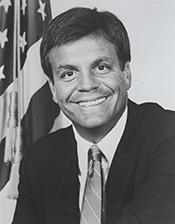
1,963 records where Rep. Synar, Mike [D-OK-2] is listed as a sponsor, author, or other actor. Search with topics and years
United States · United States Congress · 27 February 1990
Designates March 30, 1990, as National Doctor's Day.
United States · United States Congress · 22 February 1990
Calls for the retention of sanctions against South Africa under the Comprehensive Anti-Apartheid Act until all conditions for the termination of sanctions are fulfilled and a democratic political process is established.
United States · United States Congress · 7 February 1990
Civil Rights Act of 1990 - Amends the Civil Rights Act of 1964 to provide that: (1) once a complainant has demonstrated that an employment practice results in a disparate impact on the basis of race, color, religion, sex, or national origin, the respondent has the burden of proving that the practice is justified by business necessity; (2) a complainant need not demonstrate which of a group of practices results in the demonstrated disparate impact; and (3) a respondent need not show business necessity for a specific practice within a group of practices if the respondent shows that that practice does not contribute to the disparate impact. Declares that an unlawful employment practice is established on a demonstration that race, color, religion, sex, or national origin was a motivating factor for any employment practice, even though such practice was also motivated by other factors, but bars certain types of relief if the respondent establishes that it would have taken the same action in the absence of any discrimination. Prohibits a challenge to an employment practice that implements a litigated or consent judgment or order resolving a claim of employment discrimination: (1) by a person who had certain types of notice and opportunity; (2) by a person whose interests were adequately represented by another person who challenged the judgment or order; or (3) if reasonable efforts were made to provide notice to interested persons. Increases to two years the time limit within which a charge of an unlawful employment practice must be filed. Removes provisions setting a separate time limit for charges initially filed with a State or local agency. Declares that a seniority system or practice which is part of a collective bargaining agreement is an unlawful employment practice if it was included in the agreement with the intent to discriminate. Allows, except for disparate impact cases, for compensatory damages (but not back pay) and, where there is malice or reckless or callous indifference, for punitive damages. Allows any party, where compensatory or punitive damages are sought, to demand a jury trial. Includes expert fees and other litigation expenses in any attorney's fees awarded. Prohibits a consent order or judgment settling a claim unless the parties and their counsel attest that a waiver of attorneys' fees was not compelled as a condition of the settlement. Allows to the prevailing party in the original action an award of attorney's fees and costs in defending a challenged judgment or order. Increases to 90 days after final action by a Federal agency the time limit for a Federal employee to bring a civil action. Allows to Federal employees the same interest to compensate for delay in payment as in cases involving non-public parties. Requires Federal civil rights laws to be broadly construed to effect their purpose to eliminate discrimination and provide effective remedies. Prohibits, except as expressly provided, any Federal civil rights law from being construed to restrict or limit the rights, procedures, or remedies available under any other Federal civil rights law. Declares that, for purposes of provisions relating to equal rights under the law, the right to make and enforce contracts includes the making, performance, modification, and termination of contracts, and the enjoyment of all benefits, privileges, terms, and conditions of the contractual relationship.
United States · United States Congress · 7 February 1990
Calls upon the President to urge Soviet President Gorbachev to publicly condemn the emergence of popular anti-Semitism in the Soviet Union and to protect Soviet Jews from harassment and violence.
United States · United States Congress · 6 February 1990
Harvest of Peace Resolution - Expresses the sense of the Congress that the United States should establish as a primary foreign and domestic policy objective the achievement of common security by: (1) negotiating agreements with the Soviet Union and urging other nations to reduce military forces and spending with the goal of halving worldwide military spending by the year 2000; (2) reducing military assistance and arms sales to developing nations; (3) encouraging the peaceful settlement of conflicts; (4) providing increased assistance to developing nations to overcome hunger and poverty, reduce debt burdens, promote human rights, ensure sustainable development, and protect the environment; (5) increasing support domestically for programs that address human needs; (6) helping defense industries and their employees convert to productive nondefense work; and (7) reducing the Federal deficit.
United States · United States Congress · 5 February 1990
Designates September 21, 1990, as National POW/MIA Recognition Day. Recognizes the National League of Families POW/MIA flag as the official symbol of the United States' commitment to resolving the fates of Americans still prisoner or missing in action in Southeast Asia.
United States · United States Congress · 31 January 1990
Budget Process Reform Act of 1990 - Title I: Repeal of Part C of the Balanced Budget and Emergency Deficit Control Act of 1985 and Amendments Relating to the President's Budget - Amends the Balanced Budget and Emergency Deficit Control Act of 1985 (Gramm-Rudman-Hollings Act) to repeal provisions concerning: (1) emergency powers to eliminate deficits in excess of maximum deficit amounts, including sequestration; and (2) prohibitions against the Presidents budget exceeding the maximum deficit amount. Title II: Permanent Amendments to the Congressional Budget and Impoundment Control Act of 1974 - Amends the Congressional Budget and Impoundment Control Act of 1974 to revise the congressional budget process, including the budget timetable. Removes prohibitions against exceeding the maximum deficit amount through the concurrent resolution on the budget. Excludes from budget totals: (1) government-sponsored enterprises; and (2) changes in the level of new budget authority, new spending requirements, outlays, or revenues resulting from new timing shifts. Provides for credit and deposit insurance accounting. Amends the Congressional Budget Act of 1974 to revise provisions regarding fiscal procedures and to add procedures governing contract or borrowing authority, direct loan obligations or loan guarantee commitments, and offsetting collections. Requires the Congressional Budget Office to use revenue estimates prepared by the Joint Committee on Taxation, if timely received for purposes of providing information on legislation affecting income, payroll, excise, estate or gift taxes. Requires the Congressional Budget Office to include in its report to the Budget Committees five-year projections of fiscal spending, revenues, and tax expenditures. Title III: Debt Legislation - Requires conference reports on concurrent resolutions on the budget to be considered first in the House of Representatives. Title IV: Pay-As-You-Go - Pay-As-You-Go Act of 1990 - Provides for calculating the baseline (a projection of base-year levels of new budget authority, outlays, revenues, and the surplus or deficit into the budget year and the outyears based on laws enacted before the beginning of the budget year), the budget base during the deficit reduction period, and the budget base during the budget neutrality period. Establishes the budget year deficit requirement for FY 1991, 1992, and 1993. Sets forth multiyear requirements for the deficit reduction period. Requires the Congress to use baseline and budget base estimates prepared by the Congressional Budget Office. Requires the President's budget to meet deficit requirements set forth under this Act. Title V: Conforming Amendments - Makes amendments to Federal law, the Standing Rules of the Senate, and the Rules of the House of Representatives to conform to provisions of this Act.
United States · United States Congress · 30 January 1990
Provides for all Federal civilian and military retirees to receive the full cost-of-living adjustment in annuities payable under Federal retirement systems for FY 1991. (Includes benefits payable under the Civil Service Retirement and Disability System, military retirement and survivor benefit programs, the Foreign Service Retirement and Disability System, the Central Intelligence Agency Retirement and Disability System, and railroad retirement programs.)
United States · United States Congress · 30 January 1990
Designates July 3, 1990, as Idaho Centennial Day.
United States · United States Congress · 25 January 1990
Medicare Certified Registered Nurse Anesthetist Payment Amendments of 1990 - Amends part B (Supplementary Medical Insurance) of title XVIII (Medicare) of the Social Security Act to establish uniform national fee schedule payment rates for certified registered nurse anesthetist services.
United States · United States Congress · 25 January 1990
Designates April 22 through April 28, 1990, as National Crime Victims' Rights Week.
United States · United States Congress · 24 January 1990
Medicare Benefit Improvements Act of 1990 - Amends title XVIII (Medicare) of the Social Security Act to cover screening mammographies for women over age 34 at a frequency which varies on the basis of a woman's age and risk of developing breast cancer. Covers up to 80 hours of annual in-home respite care furnished to an individual who has incurred expenses equal to a specified Medicare Part B (Supplementary Medical Insurance) cost-sharing limit and, for the preceding three months, has been unable to perform at least two specified daily living activities without the assistance of an uncompensated primary caregiver with whom he or she resides. Covers nursing care and home health aide services as home health services if such services are needed less than seven days each week or are needed for up to 38 consecutive days. Amends part A (Hospital Insurance) of the Medicare program to create an extension period of hospice care for terminally ill beneficiaries which is to follow the two 90-day periods and the subsequent 30-day period of hospice care coverage currently provided in an individual's lifetime. Increases the Medicare part B premium.
United States · United States Congress · 23 January 1990
Department of Environmental Protection Act - Title I: Establishment of Department of Environmental Protection - Redesignates the Environmental Protection Agency as the Department of Environmental Protection, an executive department to be administered by a Secretary of Environmental Protection. Establishes within the Department: (1) an Office of International Environmental Affairs; (2) an Office of Enforcement; and (3) a Center for Environmental Statistics (Center). Encourages the Secretary to assist the Secretary of State in negotiating and administering international environmental protection agreements and participating in the work of international environmental protection organizations. Encourages the Secretary to continue the Department's role in conducting international environmental research and providing technical assistance to other nations to improve environmental quality. Requires the Secretary to establish an Advisory Committee on Environmental Statistics to advise the Center and the Congress on the collection and dissemination of statistical data. Directs the Secretary to maintain a comprehensive guide to the Department's environmental and public health information services. Requires the Secretary to establish an Advisory Committee on Public Access to provide recommendations on improving public access to departmental information. Directs the Secretary to: (1) study the use of computer telecommunications and other means to provide for access to such information; and (2) permit the reduction or waiver of user fees for such access. Title II: Commission on Environmental Administration - Establishes the Commission on Environmental Administration to analyze and make recommendations on specified reorganization and management issues in the Department. Authorizes appropriations.
United States · United States Congress · 23 January 1990
Designates September 1990 as International Visitors Month.
United States · United States Congress · 21 November 1989
Amends Federal law to authorize and request the President to designate May as Asian/Pacific American Heritage Month annually, beginning in 1990. (Current law designates a seven-day period beginning on May 4, 1979).
United States · United States Congress · 21 November 1989
Designates the week of June 10 through June 16, 1990, as State-Supported Homes for Veterans Week.
United States · United States Congress · 19 November 1989
Waste Materials Management Act of 1989 - Authorizes appropriations for FY 1990 through 1993 to carry out the Solid Waste Disposal Act. Title I: Provisions Relating Primarily to Subtitles A and B of the Solid Waste Disposal Act - Amends the Solid Waste Disposal Act to revise provisions concerning congressional findings and objectives. Declares it to be U.S. national policy that: (1) the creation of surplus and remnant material from production processes shall be reduced and residuals from post-consumer products shall be managed as material resources; (2) materials are to be managed at Federal, State, and local levels using specified waste reduction and management strategies; and (3) the Administrator of the Environmental Protection Agency (EPA) and the States shall not differentiate in the enforcement of this Act on the basis of whether an owner or person engaged in waste disposal activities is a public or private person, whether a facility is located on or off the premises where waste is generated, or whether an activity is carried out on or off the premises where the waste is generated. Requires the Inspector General of the EPA to report annually to the Congress on the implementation of, and compliance with, the Solid Waste Disposal Act. Adds specified annual reporting requirements. Directs the Administrator, for five years following the date of enactment of this Act, to identify five of the most toxic and common constituents of municipal waste. Requires the Administrator to consider, with respect to each of the constituents, imposing the following: (1) a ban on the use of such a constituent in production; (2) a ban on disposal in landfills or treatment in incinerators of any product containing such a constituent; (3) a requirement for special management standards for such products after discard; and (4) a requirement for the use of a substitute constituent. Permits the Administrator to impose such bans or requirements only by promulgating regulations. Requires the Administrator to publish annually in the Federal Register any information on such actions. Prohibits the disposal of used lead-acid batteries other than by recycling in accordance with this Act. Requires persons to dispose of such batteries only by delivery to: (1) battery retailers or wholesalers; or (2) secondary lead smelters or collection or recycling facilities permitted by a State or the Administrator. Sets forth battery disposal requirements for retailers, wholesalers, and manufacturers. Makes violators of such requirements subject to fines under the Federal criminal code. Requires battery retailers, wholesalers, and manufacturers to accept from customers used batteries of the same type as the batteries sold. Directs retailers to post a notice for customers containing information about the illegality of improperly disposed batteries, the requirements for accepting and disposing of batteries, and the merits of conservation. Permits the Administrator to inspect any establishment pursuant to this Act and to issue warnings and citations for noncompliance. Subjects persons who fail to post notices after receiving a warning to penalties of up to $1,000 per day. Requires battery wholesalers who sell batteries to retailers to provide for removal of batteries from the retailers' place of business. Prohibits the charging of fees for accepting batteries from customers. Considers violations of battery collection requirements to be misdemeanors. Requires the Administrator to study and report to the Congress on the disposal and potential recyclability of household dry-cell batteries and the need for legislation, regulation, or further study on the disposal and recyclability of such batteries. Title II: Provisions Relating Primarily to Subtitle C of the Solid Waste Disposal Act - Identifies as a hazardous waste a waste containing more than .1 percent of any constituent listed in appendix VIII to part 261 of title 40 of the Code of Federal Regulations, unless the Administrator establishes another level for such constituent. Provides that: (1) the mixing of a hazardous waste with any other matter constitutes treatment requiring a permit; and (2) dilution of a hazardous waste through such mixing, such that the resulting mixture does not exceed the established concentration levels, does not alter the character of the material as a hazardous waste. Authorizes the granting of petitions to remove from the list a hazardous waste for periods of up to five years. Permits subsequent renewals of such petitions. Requires the Administrator to charge fees for the submission of such petitions. Directs the Administrator to promulgate regulations on the following characteristics of hazardous waste: (1) acute and aquatic toxicity; (2) persistence and bioaccumulation potential; (3) radioactivity; (4) carcinogenicity; (5) mutagenicity; and (6) phytotoxicity. Directs the Administrator to promulgate regulations requiring: (1) owners or operators of facilities which use materials containing hazardous constituents listed in the Code of Federal Regulations in a manufacturing process to test the waste generated for the presence of such constituents; and (2) owners or operators of facilities generating hazardous waste subject to land disposal prohibitions to test the waste to determine if it meets applicable treatment standards. Provides for routine testing at least every two years and additional testing when a significant change in generation or waste management processes occurs. Requires the Administrator to carry out hazardous waste programs directly in States unless a State is authorized to administer such requirements. Requires the Administrator, if a State's program is equivalent, to grant interim authorization to such State to administer such program in lieu of direct administration by the Administrator. Directs States with hazardous waste programs to report annually to the Administrator on such programs. Prohibits the Administrator from identifying used oil as a hazardous waste under the Solid Waste Disposal Act. Provides that any fuel derived from used oil that does not meet used oil specifications established by the Administrator and would otherwise be identified as a hazardous waste shall be deemed to be a hazardous waste. Directs the Administrator to promulgate regulations for persons who generate, transport, recycle, or dispose of used oil. Requires the Administrator, in developing such regulations, to conduct an analysis of the economic impact of such regulations on the used oil recycling industry. Provides that regulations for used oil generators shall: (1) prohibit the storage of used oil in an underground storage tank unless such tank meets requirements under this Act; (2) prohibit the storage of used oil for more than 12 months; (3) require generators to transfer such oil to specified permitted used oil recycling or disposal facilities or transporters; and (4) require generators to keep specified records on such oil. Requires used oil transporter regulations to provide that such transporters: (1) acquire identification numbers from EPA; (2) meet applicable financial responsibility requirements; and (3) keep specified records. Provides that used oil recycler regulations shall require recyclers to: (1) keep specified records; (2) test fuel produced from the recycling process before departure from the facility; and (3) obtain certain permits. Requires used oil disposal regulations to prohibit mixing used oil with any hazardous waste identified under the Solid Waste Disposal Act unless the resulting mixture does not exhibit hazardous waste characteristics or the mixture is burned to recover useful energy in a device designed such that protection of human health and the environment is assured. Directs the Administrator to promulgate regulations requiring owners or operators of new and existing recycling facilities to have class permits. Provides for annual inspections of such facilities to assure permit compliance. Sets forth requirements for interim class permits. Exempts from permit requirements: (1) facilities which refine at least 10,000 barrels daily of crude oil into petroleum products, are classified as S.I.C. number 2911 (pursuant to the Office of Management and Budget Standard Classification Manual) facilities, and whose volume of refined used oil is less than one percent of the total crude oil refined into lubricant base stock annually; and (2) facilities which compound or blend lubricating base oil into finished lubricant products as their principal activity, are classified as S.I.C. number 2899 or 2992 facilities, and whose volume of used oil compounded or blended into such products is no more than ten percent of the lubricating base oil compounded or blended annually. Exempts from used oil regulation requirements on-site activities at facilities classified as S.I.C. number 4911 facilities. Directs the Administrator to promulgate regulations governing such facilities. Requires the Administrator to promulgate regulations establishing specification standards for fuel derived from used oil to be burned in furnaces and boilers. Sets forth requirements to be effective if the Administrator fails to promulgate used oil regulations by the applicable deadline. Requires the Administrator to implement education programs to inform the public and small businesses about the environmental and safety hazards associated with improper handling and disposal of used oil and the benefits derived from used oil recycling. Authorizes appropriations. Requires producers or importers of lubricating oil to recycle for a period of ten years an amount of used oil equal to at least the amount determined by multiplying the amount of lubricating oil produced or imported that year by such persons by the recycling percentage established by the Administrator. Authorizes such individuals to comply with this Act by: (1) recycling (through re-refining) used oil or purchasing re-refined oil for purposes of producing lubricating oil; or (2) purchasing recycling credits under this Act. Requires producers and importers to report annually to the Administrator on the amount of oil produced or imported by such persons. Directs the Administrator to establish a recycling percentage that is two points higher than the existing recycling rate for lubricating oil. Provides for increases in such percentage of two points annually for ten years. Requires the Administrator to promulgate regulations allowing recyclers to create credits for used oil recycling and producers or importers of lubricating oil to purchase such credits. Provides that such regulations shall require: (1) owners or operators of used oil collection centers to keep receipts issued by transporters who take delivery of such oil and copies of agreements under which the transporter agrees to take such oil to a recycling facility; (2) such owners or operators to certify that oil taken by transporters is not mixed with hazardous wastes; (3) owners or operators of recycling facilities to be the only persons to create a recycling credit for the recycling credit system; (4) recyclers to certify that the substance being recycled is used oil that has not been mixed with hazardous wastes; (5) oil proposed to be recycled to have come from a used oil collection place or a transporter with an identification number; (6) specified records to be kept by recyclers and by importers or producers; and (7) recyclers to sell or distribute in commerce such oil as specification used oil, off-specification used oil, industrial specification used oil, or re-refined oil. Directs the Administrator to report to the Congress on such regulations and to include: (1) a discussion of the effects of such regulations on the oil industry and the environment; and (2) an evaluation of the level of the recycling percentage and whether such percentage should be increased in future years. Requires an updated version of such report to be submitted within ten years of this Act's enactment. Applies recycling requirements to persons who import or produce more than 100,000 gallons of lubricating oil annually. Sets the recycling percentage at 40 percent if the Administrator fails to promulgate such regulations. Directs the Administrator to promulgate regulations requiring owners or operators of existing and new hazardous waste facilities to have class permits. Requires such permits to include provisions for: (1) public notice and comment; (2) environmental monitoring; (3) closure and post closure requirements; (4) financial responsibility; (5) annual on-site inspections; and (6) penalties for noncompliance. Requires the Administrator to impose additional requirements, as necessary. Requires the following facilities, unless excluded from regulation, to have such permits: (1) recycling facilities; (2) facilities engaged in precious metal recovery; (3) facilities engaged in spent lead-acid battery reclamation; and (4) hazardous waste storage facilities. Title III: Provisions Relating Primarily to Subtitle D of the Solid Waste Disposal Act - Subtitle A: Provisions Relating to Solid Waste Management Plans - Revises requirements for State solid waste management plans. Requires such plans to include: (1) an estimate of the capacity of the State to manage such waste; (2) permit programs; (3) solid waste recycling, reduction, incineration, and land disposal elements; (4) an overall waste materials strategy to cover one of two specified planning periods; (5) waste inventories; (6) personnel training and public education; (7) requirements for the management of household hazardous waste, tires, yard waste, and large household appliances; and (8) annual reporting requirements. Sets forth submission, approval, and implementation procedures for State plans. Authorizes a State with an approved plan and certification of compliance to: (1) prohibit the transportation of solid waste generated from another State into such State for disposal, storage, or incineration purposes; (2) prohibit the incineration, disposal, or storage of such waste; and (3) levy fees on solid waste or solid waste transporters that differentiate rates or other aspects of payment on the basis of waste origin. Requires such State, prior to exercising such authority, to certify to the Administrator that it has: (1) completed construction on facilities that will provide at least 70 percent of the capacity for solid waste management needed to implement the State plan; and (2) completed siting approval on facilities that will provide 100 percent of such capacity. Prohibits the interstate transport of solid waste in any State: (1) that does not have an approved plan within a specified time period; (2) that cannot certify continuing compliance; or (3) for which that the Administrator has withdrawn approval of the State plan. Permits the Administrator to develop a plan for, and charge, any State that has not submitted a plan. Requires States to establish permit programs and issue permits to solid waste management facilities in compliance with this Act. Prohibits the incineration, storage, or disposal of such waste at, or the transportation of such waste to, facilities without permits. Sets forth transitional permit requirements and deadlines. Limits permit terms to ten years and provides for permit modifications, as appropriate. Authorizes States to grant variances from permit requirements if demonstrated that no adverse effects to human health or the environment will result from such variances. Subtitle B: Provisions Relating to Federal Requirements - Directs the Administrator to promulgate standards, guidelines, and regulations for: (1) municipal solid waste landfills; (2) municipal solid waste incinerators; (3) industrial waste; (4) above-ground storage tanks; and (5) other waste categories, as appropriate. Permits State Governors to petition the Administrator for the promulgation of additional standards, guidelines, and regulations. Sets forth requirements for municipal solid waste landfills, to include: (1) specified detection and monitoring controls; (2) daily cover; (3) closure and postclosure requirements; (4) financial responsibility and corrective action requirements; (5) groundwater monitoring; (6) liners and leachate collection and removal systems, as appropriate; (7) construction quality assurance plans; and (8) prohibitions on landfills being located within the 100-year flood plain, within specified distances of faults, or within seismic impact zones or other unstable areas, unless certain conditions have been met. Requires the Administrator to publish guidelines for identifying materials which should be removed from solid waste before its incineration in a municipal solid waste incinerator. Directs the Administrator to promulgate regulations applicable to the operation and management of municipal solid waste incinerators and to the disposal or recycling and reuse of municipal solid waste incinerator ash. Prohibits the disposal of ash in units that are created as a result of vertical expansion of an existing waste disposal facility unless it is demonstrated that there will be no settling of waste that would impair the integrity of the liners. Requires that landfills into which such ashes are disposed provide for groundwater monitoring and: (1) place such ashes in a monofill having a leachate collection system and a single liner designed and operated to prevent the migration of any constituent into such liner; or (2) have two or more liners and a leachate collection system above and between such liners. Provides that landfill design requirements shall not apply to alternatively-designed units if demonstrated that such designs prevent such migration. Directs the Administrator to prescribe criteria and testing procedures for identifying the hazardous properties of municipal incinerator ash so that ash which does not exhibit such properties may be placed in sanitary landfills meeting current criteria under specified conditions. Requires ash which is hazardous to human health or the environment to be treated prior to recycling or reuse. Prohibits, four years after this Act's enactment, the operation of incinerators and the receipt of ash for treatment, storage, disposal, reuse, or recycling without a permit or prior approval under a State program. Requires civil penalties imposed against local governments for violations of this Act to be deposited into a trust fund for programs that serve to enhance the protection of human health and the environment. Sets forth transitional provisions. Requires the Administrator to identify, classify, and report to the Congress and States on specified types of industrial waste. Directs generators or transporters of such waste and owners or operators of facilities handling such waste to file notifications with the State concerning facility locations and descriptions of activities and wastes handled. Sets forth requirements for industrial waste management, to include: (1) authorizations to operate; (2) monitoring, recordkeeping, and reporting requirements; (3) performance standards; (4) financial responsibility assurances; (5) design, operating, closure, and postclosure criteria; and (6) corrective action requirements. Applies such requirements to the following facilities: (1) industrial waste facilities that produce such waste and are not implementing closure or postclosure plans; and (2) inactive or abandoned facilities that are reactivated. Requires the Administrator to study the adverse effects on human health and the environment of the disposal of other nonhazardous waste. Directs the Administrator to promulgate solid waste storage regulations. Excludes from such regulations storage at transportation-related facilities. Requires State plans and permits to include requirements for municipal solid waste landfills and incinerators and for industrial wastes. Subtitle C: Other Provisions - Directs the Administrator to compile and periodically update a non-hazardous solid waste inventory to determine, by State or region: (1) an estimate of the amount of such waste to be generated annually and likely to be generated in each of the next 20 years; and (2) the capacity of existing and proposed waste management facilities. Sets forth Federal enforcement provisions. Prescribes civil and criminal penalties for violations of solid waste management requirements. Title IV: Provisions Relating Primarily to Subtitle H of the Solid Waste Disposal Act - Requires the Administrator to: (1) develop model recycling programs for States and localities; and (2) carry out a continuing program to evaluate demonstrated waste management technologies that could be used by municipalities and report periodically on such program. Prohibits the Administrator from funding the development or demonstration of such technologies. Title V: Provisions Relating Primarily to Subtitle I of the Solid Waste Disposal Act - Directs the Administrator to promulgate regulations applicable to above-ground storage tanks. Applies such requirements to all tanks except those subject to the requirements of subtitle C of the Solid Waste Disposal Act. Exempts from this Act's requirements releases of small quantities of regulated substances which will not endanger human health and the environment and particular tanks, as appropriate. Requires such regulations to include requirements for field-erected tanks. Directs owners and operators of such tanks to implement release prevention plans which provide for release prevention systems capable of: (1) catching and holding 110 percent of the full capacity of the tank and preventing releases beyond tank boundaries; and (2) restraining drainage and preventing contamination of soil and water. Requires the plan and system to be inspected by a registered engineer who is not employed by the owner or operator. Directs the engineer, if the system does not reflect good engineering practices or the tank does not comply with the regulations, to notify the Administrator or the State. Provides for amendments of release prevention plans whenever there is a major modification in the tank which affects the tank's potential to release substances. Sets forth recordkeeping and reporting requirements for field-operated tanks. Prohibits the operation of such tanks after a release unless the Administrator determines that such prohibition is not necessary. Requires the regulations to include requirements for shop-fabricated tanks. Directs the Administrator to: (1) establish an inspection program for such tanks in the factory when construction is complete and before the tanks enter interstate commerce; and (2) require such tanks to bear labels with specified manufacturing, capacity, and use information. Provides for requirements relating to the installation of such tanks. Directs the Administrator, as necessary, to promulgate financial responsibility requirements for taking corrective action and compensating third parties for bodily injury and property damage caused by accidental releases from above-ground storage tanks. Permits the establishment of financial responsibility for a spill by any means the Administrator deems appropriate. Authorizes the assertion of claims against guarantors providing evidence of financial responsibility for claims against insolvent owners or operators of tanks. Limits guarantor liability to the aggregate amount which the guarantor has provided as evidence of financial responsibility to the owner or operator. Authorizes the Administrator to establish coverage requirements which may vary among particular classes or categories of above-ground storage tanks. Permits the Administrator to make grants to States for carrying out enforcement requirements. Authorizes a State to submit for the Administrator's review and approval a program under which such State would assume primary responsibility for the enforcement of regulations pertaining to above-ground storage tanks. Requires that State regulation and enforcement procedures be at least as stringent as those used by the Administrator. Requires the Administrator to: (1) monitor State programs for compliance with this Act's requirements; and (2) provide technical assistance to assist States, local governments, and owners and operators in complying with this title. Authorizes the Administrator to issue compliance orders or commence civil actions against violators of this Act's requirements, but requires that prior notification be given to States operating their own programs. Imposes criminal and civil monetary penalties for violations of this Act's requirements. Makes tank owners and operators liable for the Administrator's corrective action costs and damages. Authorizes the Administrator to require a tank owner or operator to undertake corrective action in response to any release of a regulated substance from the tank when such action will be done properly and promptly. Permits the Administrator, upon notification of a release, to prohibit operations in a facility until such action has been taken. Authorizes the Administrator to take corrective action where the owner or operator fails to take prompt and effective action and human health and the environment are endangered. Prohibits indemnification agreements from transferring liability under this title. Prohibits States or political subdivisions from enforcing requirements for shop-fabricated tanks that are more stringent than those imposed under this title. Authorizes appropriations. Prohibits the Administrator from enforcing financial responsibility regulations with respect to an owner or operator of an underground storage tank if such owner or operator has applied for insurance. Revises provisions concerning financial responsibility for such tanks. Requires the Administrator to evaluate and report to the Congress on the effects of financial responsibility regulations on the cost and availability of insurance used to demonstrate financial responsibility. Title VI: Waste Materials Reduction - Authorizes any person to petition a Federal agency to undertake a waste reduction action if such action would bring about at least a ten percent increase in recycling of the petitioned item, reduce by at least ten percent the total volume or toxic constituents of a waste described in the petition, or would bring about a net savings in true cost to the Federal Government or be neutral in effect or cost. Requires each Federal agency to designate a waste reduction officer to oversee compliance with Federal agency waste reduction requirements, prepare agency waste reduction plans, and report annually to the Administrator on the implementation of such plans. Directs the Administrator to establish a clearinghouse within EPA to collect and disseminate information on waste reduction and recycling. Makes such information available to the public. Requires the Administrator to establish a commission to study and report to the President and the Congress on waste reduction with respect to consumer products and packaging. Provides for the submission of periodic reports by the commission on the status of waste reduction efforts by the Federal Government and industry. Terminates the commission five years after the date of its establishment. Title VII: Procurement and Marketing of Recycled Materials - Applies Federal procurement requirements concerning recycled goods to States or other entities if such entities use funds appropriated to a Federal agency to which such procurement requirements apply. Directs the Administrator for Federal Procurement Policy to report to the Congress on the effect of a certain price preference concerning the procurement of recycled paper products. Requires affirmative procurement programs to include: (1) programs for monitoring compliance by States, political subdivisions, and contractors with recovered materials procurement requirements; and (2) a requirement that paper procured for uses which have enduring value be permanent paper. Requires such agencies to report annually to the Administrator on such programs and on the amount and value of recovered materials procured. Makes such report available to the public. Directs the EPA Administrator to: (1) report biennially to the Congress on the progress made by Federal agencies in implementing recovered materials procurement programs; and (2) review and revise, if necessary, guidelines concerning such programs which were prepared before this Act's enactment. Prohibits Federal agencies from entering into procurement contracts with any persons convicted of specified offenses of the Solid Waste Disposal Act if such a contract is to be performed at the facility at which the violation occurred. Authorizes the President to make exemptions to such prohibition. Requires the President to report annually to the Congress on the implementation of such prohibition. Directs the Secretary of Commerce to conduct a biennial survey that: (1) identifies the major domestic uses for, and users of, recovered and recycled materials; (2) documents or estimates the amounts of such materials used, exported, and imported annually; and (3) identifies the markets for such materials and the products made from such materials. Requires the Secretary and the Administrator to establish an interagency working group to: (1) promote markets in recovered and recycled materials and link sources of such materials with potential markets; (2) work cooperatively with generators, collectors, transporters, users, and regulators of such materials and with manufacturers of products containing such materials; (3) link businesses dealing in such materials with potential sources of capital; (4) educate government and business officials about potential commerce in such materials; (5) coordinate efforts to promote lawful commerce in such materials; (6) encourage reuse and recycling of solid waste; and (7) identify the institutional, economic, and technical barriers to the use of such materials. Directs the Secretary to take such actions as may be necessary to stimulate the development of new domestic markets for such materials. Requires the Secretary and the U.S. Trade Representative to: (1) identify foreign markets for recovered materials and products containing a high content of recycled materials; and (2) assist exporters in selling such materials and products in foreign markets. Title VIII: Financial Assistance - Authorizes the Administrator to provide financial assistance to States with approved solid waste management plans to develop programs to encourage and facilitate recycling. Permits the Administrator to: (1) provide financial assistance to States and local authorities for solid waste management planning; (2) make bonus grants to municipalities or other agencies that demonstrate achievement of a recycling rate greater than 25 percent; (3) make loans to States for waste reduction activities and programs in rural areas to collect household hazardous waste and waste from small quantity generators. Title IX: Other Provisions - Permits Government agencies to retain any amounts received from sales of materials or energy recovered from solid waste. Requires the Administrator to promulgate regulations for the use and composition of compost made from yard waste. Revises oil labeling requirements to direct the Administrator to promulgate regulations requiring packages of lubricating oil (of less than five gallons) sold in commerce to bear a label stating that used oil should be taken to collection centers. Directs the Administrator to promulgate regulations requiring rigid and semi-rigid plastic packaging and products sold in commerce to bear a label identifying the plastic resin used in such packaging and products. Authorizes the Administrator, subject to certain conditions, to: (1) treat Indian tribes as States under the Solid Waste Disposal Act; (2) delegate to such tribes primary enforcement responsibility for programs under such Act; and (3) provide such tribes grant and contract assistance to carry out such functions. Permits States and Indian tribes, subject to the Administrator's approval, to enter into cooperative agreements to administer such Act. Requires the Administrator to report to the Congress on measures for addressing hazardous and solid wastes and underground storage tanks in Indian country. Directs the Administrator to undertake a continuing program to establish an inventory of hazardous waste sites and solid waste open dumps in Indian country. Requires the Administrator to assist Indian tribes that operate such dumps in upgrading such facilities.
United States · United States Congress · 19 November 1989
Amends the Internal Revenue Code to impose an excise tax on the use of virgin materials in the manufacture or production of taxable products. Establishes the Recycling Assistance and Solid Waste Management Planning Trust Fund to support certain programs under the Solid Waste Disposal Act. Provides for financing the trust fund with the excise tax on the use of virgin materials.
United States · United States Congress · 19 November 1989
Waste Export Control Act - Amends the Solid Waste Disposal Act to incorporate requirements for the export of solid waste. Exempts from this Act's requirements waste paper, glass cullet, metal, or plastic that: (1) has been separated from solid waste before export; (2) is exported for incorporation into new products with recycled content; and (3) is not a hazardous waste under the Solid Waste Disposal Act. Authorizes persons to apply to the Administrator of the Environmental Protection Agency for the exemption of other recovered materials. Requires persons exporting exempted materials to notify the Administrator prior to such exporting. Prohibits the export of solid waste from the United States unless there is an agreement between the United States and the receiving country which provides for: (1) the exchange of information regarding such export and its management; (2) cooperation on compliance with, and enforcement of, such agreement; (3) biennial review and revision or suspension of such agreement under certain circumstances; and (4) a prohibition on further transport of such waste from the country of destination without the written consent of parties to the agreement. Deems any agreement concerning shipments of hazardous waste entered into by the United States and in force on this Act's enactment date to meet this Act's requirements for two years following such enactment date. Prohibits the export of solid waste from the United States unless the exporter has obtained a permit from the Administrator. Outlines information to be included in the permit application. Requires the Director of the National Enforcement Investigations Center to submit an investigative report on each applicant to the Administrator. Provides that permittees shall have the continuing duty to provide assistance or information requested by the Administrator or the Center and to cooperate in any inquiry conducted by the Center. Directs the Administrator, before issuing a permit under this Act, to determine that the solid waste will be managed in a manner protective of human health and the environment and which is no less strict than that which would be required if the waste were managed in the United States. Provides that such determination shall assure that certain facility operation and transportation requirements are met. Limits permit terms to a period of five years. Directs the Administrator to report annually to the Congress on all solid waste exports. Prohibits the issuance of any permit unless the Administrator determines that: (1) the waste generator has used reasonable efforts to eliminate or minimize waste generation prior to export; (2) the receiving facility is capable of treating, storing, and disposing of such waste in a manner protective of human health and the environment and no less strict than that which would be required if the waste were managed in the United States; and (3) the application meets the requirements of this Act. Directs the Administrator to make inspections of any permittee and of any facility handling waste subject to a permit, as necessary. Authorizes the Administrator to revoke a permit under specified circumstances. Directs the Administrator to establish a user fee to defray the cost of administering this Act. Requires such fee system to consist of a one-time permit application fee and a waste export permit fee to be paid over the life of the permit. Prescribes civil and criminal penalties for violations of this Act.
United States · United States Congress · 17 November 1989
Designates April 1990 as National Prevent-A-Litter Month.
United States · United States Congress · 9 November 1989
Emergency Drug Abuse Treatment Expansion Act of 1989 - Title I: Separate Authorizations of Appropriations for Block Grants with Respect to Substance Abuse and Mental Health - Amends the Public Health Service Act to authorize appropriations: (1) with respect to alcohol and drug abuse, under specified provisions; and (2) with respect to mental health, under specified provisions. Title II: Categorical Grants with Respect to Substance Abuse - Establishes in the Alcohol, Drug Abuse, and Mental Health Administration (ADAMHA) the Office for Treatment Improvement (Treatment Office) to: (1) collaborate with the Director of the Office for Substance Abuse Prevention and the Director of the National Institute on Drug Abuse (NIDA); (2) evaluate State plans and carry out programs under existing provisions; (3) train providers of prehospital emergency medical services; (4) conduct or support described programs; and (5) take other actions with regard to treatment. Authorizes appropriations. Directs the Secretary of Health and Human Services, through the treatment Office Director, to make a demonstration grant for the establishment, within the national capital area, of a model program for comprehensive treatment services for drug abuse. Requires local governmental participation. Directs the Secretary to reserve, from appropriations for FY 1990, amounts for programs administered by the Treatment Office. Authorizes appropriations for FY 1991. Transfers authority from the Administrator of ADAMHA to the Director of the Treatment Office for an existing grant program for reduction of the waiting period for drug abuse treatment. Removes provisions prohibiting more than one grant for any treatment program. Allows a grantee to spend not more than 50 percent of the grant for follow-up services. Increases the authorization of appropriations. Revises requirements and other matters relating to an existing program regarding drug and alcohol abuse model projects for pregnant and postpartum women and their infants. Authorizes appropriations. Transfers authority from the Administrator of ADAMHA to the Director of NIDA to make grants for drug abuse demonstration projects of national significance. Removes authority to make grants for drug abuse treatment for pregnant and postpartum women and their infants. Directs the Secretary to act through the Treatment Office Director in establishing demonstration projects that provide grants for treatment and referrals for treatment. Allows the grants to be made to public and nonprofit private entities as well as to States. Increases the authorization of appropriations. Title III: Separate Formulas in Block Grants with Respect to Substance Abuse and Mental Health - Establishes separate formulas for allotments with respect to: (1) alcohol and drug abuse; and (2) mental health. Requires States to: (1) use at least 25 percent (currently, at least ten percent) of allotments for alcohol and drug abuse residential treatment services for pregnant women; (2) ensure that treatment services are available to each pregnant woman who seeks and would benefit from such services; and (3) ensure that a newborn infant of any woman determined to be abusing alcohol or any drug be tested and evaluated for fetal alcohol syndrome, physical drug dependency, or other congenital condition caused by substance abuse, provide for the health and safety of the infant, and provide health care to the infant and mother. Directs the Secretary, of FY 1990 appropriations with respect to alcohol and drug abuse under specified provisions of the Public Health Service Act, to make available a specified amount, notwithstanding specified other provisions of this Act, for prevention and treatment of alcohol and drug abuse. Title IV: Statewide Substance Abuse Treatment Plan - Requires States to develop and submit to the Secretary annually for review and approval a statewide Substance Abuse Treatment Plan. Requires the Director of the Treatment Office to establish a model State treatment plan. Directs the Secretary to issue standards for plans.
United States · United States Congress · 31 October 1989
Sustainable Agricultural Adjustment Act of 1989 - Title I: General Provisions - Sets forth sustainable agricultural reporting requirements of the Secretary of Agriculture. Title II: Farm Program Flexibility Option - Directs the Secretary to establish a program (program) to assist farmers in adopting sustainable agricultural production systems aimed at: (1) enhancing profitability and productivity; (2) conservation; (3) protecting human and animal welfare; (4) minimizing chemical use; and (5) promoting diversification. Prohibits farm program payment yield reductions for program participants. Title III: Sustainable Agriculture Research and Extension Program - Establishes within the Extension Service a Sustainable Agriculture Extension Program. Title IV: Technical and Financial Assistance - Subtitle A: Technical Assistance and Training - Directs the Secretary to: (1) revise the Soil Conservation Service field office technical guides to incorporate sustainable agricultural practices; and (2) establish grants for such purpose. Authorizes appropriations. Directs the Secretary to provide related in-service training for the Extension Service and the Soil Conservation Service. Subtitle B: Financial Assistance - Authorizes the Secretary to enter into cost-sharing agreements with producers who implement farm management plans.
United States · United States Congress · 31 October 1989
Designates the week of December 10 through December 16, 1989, as National Drunk and Drugged Driving Awareness Week.
United States · United States Congress · 25 October 1989
Hazardous Materials Transportation Act Uniform Safety Amendments Act of 1989 - Amends the Hazardous Materials Transportation Act to direct the Secretary of Transportation to issue regulations for the safe transportation of hazardous materials in domestic and foreign commerce (including route designations). Cites the area in which Federal regulations preempt State hazardous materials transportation requirements. Authorizes the Secretary to promulgate regulations for dispute resolution among the States or Indian tribes regarding hazardous materials highway route designations. Permits States or Indian tribes to petition for judicial review of the dispute resolution decision. Grants the Secretary discretion to either adopt or reject hazardous materials transportation standards adopted by international bodies according to the Secretary's perception of the public interest. Requires a person who offers a hazardous material for transportation in commerce to disclose to the carrier specified information on such material. Prohibits a person from altering any required marking or packaging of hazardous materials. Prohibits a person who receives a package containing a hazardous material from removing any such markings from the package until the material has been removed. Directs the Secretary to issue regulations governing the number, content, and placement of documents with respect to the transportation of hazardous materials. Provides for: (1) filing of registration statements with the Secretary by persons who transport hazardous materials; (2) the issuance of safety permits to motor carriers who transport specified hazardous materials; and registration statements and safety permit fees. Increases the penalties for persons who commit violations in the transport of hazardous materials. Prescribes guidelines under which the preemption of State laws or Indian laws conflicting with this Act shall be determined. Authorizes appropriations for FY 1990 through 1992. Directs the Secretary to conduct a study on a State-by-State basis of the flow of hazardous materials in commerce and the capability of emergency response to unintentional releases of them in the United States. Requires the Secretary to issue guidelines for the preparation and submission of a hazardous materials transportation emergency preparedness assessment of each State. Requires the Secretary to issue regulations with respect to the safe transportation of high-level radioactive waste and spent nuclear fuel (including mode and route designations). Prohibits any railroad tank car constructed before a specified date from being used for the transportation of certain explosives or hazardous materials unless its air brake equipment support attachments comply with minimum Federal standards. Requires the Secretary to conduct a study of the present system of identifying hazardous materials and of means to improve such identification while in transit. Provides for State participation in the regulation of the transportation of hazardous materials by rail carriers. Requires the Secretary to issue regulations for the safe operation of trains that transport specified hazardous materials. Directs the Secretary to promulgate regulations to prohibit the transportation in commerce of hazardous materials or solid waste in any motor vehicle which is also used to transport any food, food additive, drug, cosmetic, or device, or any package containing such items. Requires the Secretary to issue regulations with respect to making safety ratings of motor carriers available to the public. Requires the Federal Railroad Administration, the Federal Highway Administration, and the Research and Special Programs Administration to employ an additional number of safety inspectors. Provides for State participation in the regulation of hazardous materials transported by rail carriers.
United States · United States Congress · 25 October 1989
Designates May 1990 as National Trauma Awareness Month.
United States · United States Congress · 24 October 1989
Designates February 4 through February 10, 1990, as National Burn Awareness Week.
United States · United States Congress · 23 October 1989
Designates the week of November 12 through November 18, 1989, as Community Foundation Week.
United States · United States Congress · 19 October 1989
Small Business Access Improvement Act of 1989 - Amends the Internal Revenue Code to allow a tax credit for small businesses for the expense of providing public accommodations access to the disabled. Reduces the tax deduction for expenditures to remove architectural and transportation barriers to the handicapped and elderly.
United States · United States Congress · 19 October 1989
Declares it is in the interests of the United States to support efforts to protect South Pacific marine resources (including albacore tuna, porpoises, whales, seals and other marine mammals, birds, sea turtles, and fish) from the slaughter of driftnet fishing. Supports the Tarawa Declaration and the South Pacific Commission resolution calling for an immediate ban on driftnet fishing in the South Pacific. Urges the Secretary of State to work toward an international convention banning driftnet fishing in the South Pacific. Urges Japan and Taiwan to immediately cease the use of driftnets in international South Pacific waters.
United States · United States Congress · 18 October 1989
Approves the location of a commemorative work to honor women who served in the armed forces of the United States in Vietnam during the Vietnam era on certain Federal land in the District of Columbia.
United States · United States Congress · 17 October 1989
Grants a Federal charter to the National Association of Women Veterans, Incorporated.
United States · United States Congress · 4 October 1989
Requires the U.S. Government to exhaust all reasonable possibilities to obtain proof of the death of a missing person in order to establish a reasonable presumption that a member of the armed forces in a missing status is dead. Requires the head of the Federal agency concerned to provide certain procedural rights to the primary next of kin of a missing person when an action is to be undertaken by such agency to review the status of such missing person, including the right to review all information obtained by such agency with regard to the missing person's status. Directs the Secretary of Defense to study and report to the Senate and House Armed Services Committees on current provisions of the Missing Persons Act.
United States · United States Congress · 4 October 1989
Polish and Hungarian Democracy Initiative of 1989 - Title I: Structural Adjustment - Requires the U.S. Government, to the extent that Poland and Hungary continue to evolve toward pluralism and democracy and develop and implement comprehensive economic reform programs, to: (1) take the leadership in mobilizing international financial institutions to provide timely and appropriate resources to help Poland and Hungary; (2) use the Exchange Stabilization Fund to support the implementation of a plan of the Polish Government to attack hyperinflation and other structural economic problems, address pressing social problems, and carry out comprehensive economic reform; (3) urge all members of the Paris Club of creditor governments and other creditor governments to adopt a generous and early rescheduling program for debts owed by the Polish Government, and reschedule payments due on the debt owed by such Government to the U.S. Government that is payable during FY 1990 through 1994; and (4) make available to Poland U.S. agricultural assistance and encourage parallel efforts by the European Community and other agricultural surplus nations. Sets a minimum level of agricultural assistance to Poland for FY 1990. Requires the President to submit a report to the Congress: (1) describing the steps taken by the U.S. Government under this Act; (2) assessing Poland's requirements for additional agricultural assistance during FY 1990 and for assistance during FY 1991 through 1992; and (3) specifying how much agricultural assistance the President proposes be provided by the United States to meet those requirements. Directs the President to provide to the Congress revised assessments of Poland's requirements for agricultural assistance during FY 1991 through 1992, as additional information becomes available. Title II: Private Sector Development - Authorizes appropriations for the three-year period beginning October 1, 1989, to support the Polish-American Enterprise Fund and the Hungarian-American Enterprise Funds (Enterprise Funds). Authorizes the President to designate two private, nonprofit organizations as eligible to receive funds and support (the Enterprise Funds). Sets forth provisions with respect to the management and administration of such funds, audits, recordkeeping, and reporting requirements. Requires each Enterprise Fund to take into account such considerations as internationally recognized worker and human rights, environmental factors, U.S. economic and employment effects, and the likelihood of commercial viability of the activity receiving assistance from the Enterprise Fund. Requires the Secretary of Labor to provide technical assistance to Poland and Hungary for the implementation of labor market reforms and to facilitate adjustment during the period of economic transition and reform. Specifies types of technical assistance authorized, including assistance pertaining to job training and retraining, labor-management relations, and worker rights. Requires the President to develop and implement a program for extending basic agribusiness, commercial, entrepreneurial, financial, scientific, and technical skills to the people of Poland and Hungary to enable them to better meet their needs and develop a market economy, including management training and agricultural extension activities. Specifies agencies, programs, and organizations participating in such program. Authorizes appropriations. Authorizes appropriations to carry out programs in Poland and Hungary under the Peace Corps Act. Directs that a portion of specified agricultural commodities be made available and sold or bartered to generate local currencies to be used to complement the assistance for Poland authorized by this Act. Title III: Trade and Investment - Amends: (1) the Trade Act of 1974 to make Poland eligible for the Generalized System of Preferences; and (2) the Foreign Assistance Act to make Poland and Hungary eligible for Overseas Private Investment Corporation (OPIC) programs. Directs the OPIC to support projects in Poland and Hungary which will result in enhancement of the nongovernmental sector and reduction of State involvement in the economy. Amends the Export-Import Bank Act of 1945 to remove Poland and Hungary from a list of Marxist-Leninist countries. Directs the Export-Import Bank and the Agency for International Development (AID) to work with certain international financial intermediaries which will facilitate trade between the United States and Poland which is eligible for financing from such Bank. Authorizes the President to provide guarantees to the Bank for liabilities incurred in connection with guarantees or insurance provided under the Export-Import Bank Act of 1945 for financing for transactions involving the export of goods and services for the use of the private sector in Poland and Hungary. Limits such guarantees to short-term guarantees and insurance extended by the Banks which shall be repayable within one year from the date of arrival at the port of importation of the goods and services covered by such guarantees or insurance. Provides that such guarantees or insurance shall: (1) be by the Administrator of AID and the Bank; and (2) provide for the establishment of a reserve fund by the administering agency. Sets forth provisions with respect to funding, the discharge of liabilities, reporting requirements, administrative and technical assistance, fees and premiums charged by the Bank, and congressional reporting requirements in connection with guarantees of insurance guaranteed by the administering agency. Authorizes appropriations. Urges the President to seek bilateral investment treaties with Poland and Hungary to establish a more stable legal framework for U.S. investment in those countries. Title IV: Educational, Cultural, and Scientific Activities - Urges the United States to: (1) expand its participation in educational and cultural exchange activities with Poland and Hungary; and (2) establish binational Fulbright commissions with Poland and Hungary to facilitate and enhance academic and scholarly exchanges with those countries. Encourages the establishment of "sister institution" programs between American and Polish, and American and Hungarian, organizations. Authorizes appropriations. Requires the Administrator to establish and administer a program to provide scholarships to enable students from Poland and Hungary to study in the United States. Authorizes the Administrator to make grants to States to provide scholarship assistance for undergraduate or graduate degree programs, and training programs of one year or longer, in study areas related to the critical development needs of Poland and Hungary. Authorizes appropriations to the Secretary of State to continue to implement the 1987 U.S.-Polish science and technology agreement for FY 1990 through 1992. Title V: Other Assistance - Authorizes appropriations to support democratic institutions and activities in Poland and Hungary. Authorizes appropriations to undertake such action (including educational, research, and technical and financial assistance) as the Administrator of the Environmental Protection Agency (EPA) deems appropriate in protecting the environment in Poland and Hungary. Authorizes the Administrator to cooperate with Polish officials and experts to: (1) establish an air quality monitoring network in the Krakow metropolitan area as part of Poland's national air monitoring network; and (2) improve both water quality and the availability of drinking water in such area. Requires the Administrator to work with the United States and Hungarian officials and private parties to establish a regional center in Budapest for facilitating cooperative environmental activities between governmental experts and public and private organizations from the United States and Europe. Authorizes appropriations for EPA activities for FY 1990 through 1992. Directs the Secretary of Energy to cooperate with Polish officials and experts to: (1) retrofit a coal-fired commercial powerplant in Krakow, Poland, with advanced clean coal technology; and (2) assess and develop the capability within Poland to manufacture boilers or other equipment that will enable industrial facilities within Poland to burn fossil fuels cleanly. Authorizes appropriations. Authorizes appropriations for medical supplies, hospital equipment, and training of Polish medical personnel. Title VI: Other Provisions - Requires: (1) the President to submit a report to the Congress on actions taken pursuant to this Act; and (2) the Secretary of State to coordinate the assistance for Poland and Hungary provided for in this Act.
United States · United States Congress · 4 October 1989
Designates December 3 through December 9, 1989, as National Cities Fight Back Against Drugs Week.
United States · United States Congress · 2 October 1989
Pecan Promotion and Research Act of 1989 - Establishes a Pecan Marketing Board to carry out a coordinated program of research and promotion to strengthen the pecan industry's domestic and foreign market position. Funds such program through: (1) assessment on all pecans produced in, or imported into and marketed in the United States; and (2) deductions from grower payments for sales to a first handler. Authorizes an additional special State assessment. Provides for a program referendum among growers, importers, and grower-shellers. Authorizes appropriations.
United States · United States Congress · 28 September 1989
Amends the Rail Passenger Service Act to repeal an exemption from specified communicable disease control requirements of the Public Health Service Act for waste disposal from railroads operating in intercity rail passenger service.
United States · United States Congress · 28 September 1989
Designates March 3, 1990, as United States Naval Reserve Day in recognition of the Reserve's 75th anniversary.
United States · United States Congress · 27 September 1989
Designates November 11, 1989, as Washington Centennial Day in recognition of the economic, social, and historic contributions of the State of Washington to the United States over the past century.
United States · United States Congress · 27 September 1989
Expresses the sense of the Congress that in recognition of several significant steps that Angola has taken toward peace, national reconciliation, and economic reform it is in the interest of the United States to take steps to normalize relations with the Government of Angola, including: (1) establishing a U.S. liaison office in Luanda; (2) supporting Angola's full participation in multilateral development institutions; and (3) providing humanitarian assistance.
United States · United States Congress · 26 September 1989
Requires the Secretary of Veterans Affairs, in any case in which there has been either a disallowance of a veterans benefits claim or a partially awarded claim, to provide to the claimant a written statement setting forth notice of procedural rights of the claimant and the rationale for the disallowance. Requires that such statement: (1) be provided at each procedural stage relating to the disposition of a claim; (2) include a summary of the evidence supporting the disallowance or the partial award; (3) be in such forms as the Secretary prescribes by regulation; (4) include a description of each subsequent procedural stage before the Department of Veterans Affairs; (5) include a description of all rights of the claimant expressly provided for in the veterans' benefits code, the claimant's right to a hearing, to reconsideration, to appeal, and to representation, and any specific procedures necessary to obtain the various forms of review available for consideration of the claim; and (6) include such other information as the Secretary determines would be useful and practical to assist the claimant in obtaining full consideration of the claim. Adds parallel requirements with respect to the Chairman of the Board of Veterans' Appeals.
United States · United States Congress · 14 September 1989
Congressional and Judicial Equal Employment Opportunity Act of 1989 - Amends the Civil Rights Act of 1964 to require that personnel actions affecting employees or applicants in the legislative and judicial branches of the Government be free from any discrimination based on race, color, national origin, religion, sex, handicap, or age. Allows Members of Congress to take into consideration an individual's domicile and political affiliation. Establishes within the judicial branch an Employment Review Board. Provides that members of the Board be appointed from the retired judges of the Supreme Court and Courts of Appeals. Authorizes an aggrieved individual to file a written complaint with the Board. Establishes procedures for the Board to investigate, settle, hear, and determine the claims alleged. Provides that if a violation is found an order for relief may compel the defendant to: (1) employ or reinstate such individual on such terms and conditions as may be appropriate, except that the Board may not compel any committee or Member of Congress to employ or reinstate, or modify the terms and conditions of employment of, any individual; (2) pay compensatory damages; and (3) pay fees and allowances of witnesses and reasonable attorneys' fees. Authorizes the U.S. Court of Appeals for the District of Columbia Circuit to review, enjoin, set aside, suspend, modify, or enforce orders of the Board. Requires members of the Board to submit written reports to the Committee on Standards of Official Conduct of the House of Representatives and the Senate Select Committee on Ethics describing complaints during the reporting period.
United States · United States Congress · 12 September 1989
Designates October 1989 as Country Music Month.
United States · United States Congress · 11 September 1989
Disadvantaged Minority Health Improvement Act of 1989 - Title I: Health Promotion and Disease Prevention for Minorities - Subtitle A: Programs for Minorities Generally - Amends the Public Health Service Act (PHSA) to provide for the establishment of an Office of Minority Health. Authorizes the Secretary of Health and Human Services to make grants and contracts for research, training, education, epidemiological studies, and data collection with respect to the prevention and control among minority groups of diseases or other adverse health conditions. Authorizes appropriations. Directs the Secretary to administer provisions of the PHSA in cooperation with specified types of individuals, agencies, and organizations. Directs the Secretary to make grants or contracts for new and innovative programs in health information and health promotion, preventive health services, and education in the appropriate use of health care, specifically targeted at improving the health status of disadvantaged minorities. Authorizes appropriations. Subtitle B: Programs for American Samoa - Directs the Secretary to make grants or contracts for health promotion and disease prevention services for American Samoans living in the continental United States and the State of Hawaii. Authorizes appropriations. Title II: Disadvantaged Minorities in Health Professions - Subtitle A: Health Professions Generally - Requires that the Federal capital contribution and the school contribution to a student loan fund under existing provisions be used only for making loans to individuals from disadvantaged backgrounds. Authorizes appropriations. Authorizes the Secretary to make grants to health professions schools for scholarships to full-time students who are members of underrepresented minority groups and are from disadvantaged backgrounds. Authorizes appropriations. Directs the Secretary to establish a loan repayment program to assure an adequate supply of health professionals who are members of underrepresented minority groups and from disadvantaged backgrounds. Requires that loan recipients agree to accept a full-time faculty appointment at certain schools for at least two years. Authorizes appropriations. Subtitle B: Nursing - Authorizes the Secretary to make grants to schools of nursing for scholarships for full-time students who are members of underrepresented minority groups and from disadvantaged backgrounds. Authorizes appropriations. Directs the Secretary to establish a loan repayment program for full-time students in their final year of study who are members of underrepresented minority groups and from disadvantaged backgrounds. Requires that loan recipients agree to accept a full-time faculty appointment at certain schools for at least two years. Authorizes appropriations. Title III: Coordination of Federal Expenditures for Health Programs of Trust Territories of the Pacific Islands - Directs the Secretary to establish the Pacific Basin Health Services Council to monitor the need for health services and health professions development in the Pacific Basin and to establish priorities for the expenditure of public health funds in the Pacific Basin. Defines Pacific Basin to mean the federated States of Micronesia, the Republic of Palau, the Republic of the Marshall Islands, the Commonwealth of the Northern Mariana Islands, Guam, and American Samoa. Requires the Council to give first priority in expending funds to continuing a specified medical officer training program. Authorizes appropriations.
United States · United States Congress · 4 August 1989
Amends Federal bankruptcy law to exclude from a debtor's estate any interest in liquid or gaseous hydrocarbons to the extent the debtor has transferred such interest pursuant to a lease or other written agreement.
United States · United States Congress · 4 August 1989
Radiation and Toxic Substances Research Reorganization Act of 1989 - Transfers to the Secretary of Health and Human Services (Health Secretary) the authority of the Secretary of Energy (Energy Secretary) to conduct, under specified provisions of the Energy Reorganization Act of 1974 and any other law, epidemiological studies of the effects of workplace and public exposure to radiation and toxic substances. Transfers related positions, property, records, obligations, commitments, and unexpended appropriations. Directs the Health Secretary to undertake a comprehensive program of epidemiological research into the health effects of workplace and public exposure to radiation and toxic substances with the aim of identifying the nature and magnitude of the risk to the public and to the workforce of Department of Energy (DOE) facilities resulting from activities of the DOE and its predecessors. Directs the Energy Secretary to submit to the Health Secretary and the Congress: (1) a complete listing of data and records held or maintained by the DOE and of potential use in the conduct and evaluation of epidemiological and related studies; and (2) a complete record of funds expended by that department on research related to the health effects of workplace and public exposure to radiation and toxic substances during each of the five years preceding enactment of this Act. Directs the Energy Secretary to provide to the Health Secretary access to all data and records not transferred to the Department of Health and Human Services (HHS) under other provisions of this Act if the records are deemed by the Health Secretary to be useful to epidemiological research, health risk assessments, and related studies, and if confidentiality requirements are met. Directs the Health Secretary to grant access to the public to data held or developed by HHS, including data obtained from DOE, in accordance with the established practices of HHS. Authorizes the Health Secretary to: (1) undertake such research into radiation releases, dose reconstruction, toxic substances exposures, and health risk assessments, as necessary to carry out the function transferred under specified provisions of this Act; and (2) review research conducted by DOE, after enactment of this Act, relating to such matters. Directs the Health Secretary to conduct a comprehensive review of: (1) existing epidemiological studies relating to health effects of exposure to such radiation and toxic substances as may present a threat to occupational or public health at DOE facilities; and (2) existing and ongoing health risk assessments and studies relating to such radiation releases, dose reconstruction, and toxic substance exposures as may present a threat to occupational or public health at DOE facilities. Establishes the Advisory Panel on Radiation and Toxic Substances Research to advise the Health Secretary in carrying out the function transferred from the Energy Secretary under this Act. Declares that it is the sense of the Congress that the funding level to be provided each fiscal year to HHS for carrying out the function transferred by this Act should be at least as much as the greatest of the annual amounts reported by the Energy Secretary under provisions of this Act. Directs the Energy Secretary to reimburse HHS for all costs of carrying out the transferred function out of funds appropriated to the Energy Secretary. Allows funds provided to HHS for the purposes of this Act to be used to support: (1) a program of epidemiological research into the health effects of workplace and public exposure to radiation and toxic substances, and for other uses as the Secretary considers appropriate; and (2) activities of State public health agencies that are compatible with the purposes of this Act.
United States · United States Congress · 4 August 1989
State Offices of Rural Health Act of 1989 - Amends title VII (Administration) of the Social Security Act to require the Director of the Office of Rural Health Policy to make matching grants to States to establish State Offices of Rural Health which shall: (1) coordinate their activities with the rural development activities of the Agricultural Extension Service; (2) make recommendations on improving the quality and cost-effectiveness of rural health care delivery; (3) report periodically to the Office of Rural Health Policy on their activities; (4) communicate and cooperate with five rural health research centers located in North Carolina, North Dakota, Washington, Wisconsin, and Arizona; and (5) provide rural health leadership and advocacy for rural residents. Specifies optional activities each State Office of Rural Health may undertake. Prohibits States from using more than 20 percent of their grant for research. Authorizes appropriations for such grant program from FY 1990 through 1992. Requires an annual meeting between representatives of each State Office of Rural Health and representatives from the Office of Rural Health Policy to share information and coordinate strategies for improving the quality and effectiveness of rural health care delivery.
United States · United States Congress · 4 August 1989
Amends the Rural Electrification Act of 1936 to permit prepayment and refinancing of Rural Electrification Administration guaranteed loans made to rural electrification and telephone systems if: (1) private capital is used for such prepayment; and (2) the borrower certifies that any savings incurred will be passed on to customers, used to improve the borrower's financial strength, or used to mitigate future rate increases. Sets forth the interest rate for such loans. Prohibits any additional loan charges.
United States · United States Congress · 4 August 1989
Designates November 12 through November 18, 1989, as National Glaucoma Awareness Week.
United States · United States Congress · 4 August 1989
Expresses sorrow to the family of Lieutenant Colonel William Higgins over his reported murder and to the families of hostages of all nationalities being held in Lebanon. Recognizes that Iran is both directly and indirectly responsible for the captivity of the American hostages and the reported murder of Lt. Col. Higgins. Commends the President and the Secretary of State for doing everything in their power to deter further threats to the American hostages. Urges: (1) the President to express to the Government of Iran that the United States holds Iran responsible for Lt. Col. Higgins' death, the captivity of the remaining hostages, and all Hezbollah-sponsored terrorism; and (2) the President and the Secretary of State to continue exploring all possible channels for freeing the hostages and bringing those responsible for such acts to justice.
United States · United States Congress · 3 August 1989
Tobacco-Free Schools Act of 1989 - Amends the Elementary and Secondary Education Act of 1965 to condition a local educational agency's eligibility to participate in specified Federal assistance programs upon: (1) its State having in effect a law prohibiting within the buildings and on the grounds of elementary and secondary schools both the sale of tobacco products and their use by students and others under 18 years of age during school hours and school-sponsored activities; and (2) its certifying that each of its elementary and secondary schools has such a tobacco sales and use prohibition policy. Provides for reallocation of funds in cases of ineligibility relating to such requirements.