Bill· HJRESH.J.Res. 596 (100th)referred
A joint resolution designating November 18, 1988, as "National Philanthropy Day".
United States · United States Congress · 22 June 1988
Designates November 18, 1988, as National Philanthropy Day.
The world's political record
Person
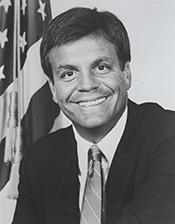
United States · Official source
1,963 records where Rep. Synar, Mike [D-OK-2] is listed as a sponsor, author, or other actor. Search with topics and years
United States · United States Congress · 22 June 1988
Designates November 18, 1988, as National Philanthropy Day.
United States · United States Congress · 15 June 1988
Amends the Federal Water Pollution Control Act to add Alaska natives and Oklahoma's Indians to the Indian tribes qualifying for waste water treatment assistance under the Water Quality Act of 1987.
United States · United States Congress · 15 June 1988
Requires the President to provide the House of Representatives with specified documents (with respect to the assistance for Central America provided for in Public Law 100-276) concerning: (1) interpretations of such Act by the Legal Advisor of the Department of State or the Office of the General Counsel of the Agency for International Development (AID); (2) standards, procedures, and controls for the accountability of funds which have been adopted by AID pursuant to such Act; (3) the procurement outside of the United States, the receipt, and the end-use of any equipment, supplies, or other goods for the Nicaraguan democratic resistance using the funds made available by such Act; (4) funds made available by such Act for the Verification Commission established by the Sapoa Agreement of March 23, 1988; (5) the selection of, and agreements with, organizations to distribute assistance under such Act for children who are victims of the Nicaraguan civil strife; and (6) compliance with the requirements for the distribution to and use of such assistance by children.
United States · United States Congress · 14 June 1988
Expresses the sense of the Congress urging Government agencies to avoid actions that would reduce amateur radio frequency allocations used for emergency communications and encouraging support for the Amateur Radio Service in its emergency communications efforts.
United States · United States Congress · 10 June 1988
Amends the Federal Cigarette Labeling and Advertising Act to require manufacturers and importers of cigarettes to place warnings on packages and in advertisements that the nicotine in cigarettes is an addictive drug.
United States · United States Congress · 9 June 1988
Designates August 1, 1988, as Helsinki Human Rights Day. Requests the President to: (1) reassert American commitment to the Helsinki Accords; (2) raise the issue of noncompliance with such Accords with the Soviet Union, Bulgaria, Czechoslovakia, the German Democratic Republic, Hungary, Poland, and Romania; (3) convey to all signatories of such Accords that respect for human rights and fundamental freedoms is vital to progress in the ongoing Helsinki process; (4) convey to U.S. allies the importance of unity regarding such Accords; (5) continue his efforts to achieve, before the end of the Vienna meeting, the release of all political prisoners of the Soviet Union, an increase in Soviet emigration, resolution of all family reunification cases, cessation of all radio transmission jamming, and the repeal of laws and practices which undermine human rights; (6) seek the inclusion, in any concluding document agreed to in Vienna, of a mechanism to sustain human rights progress after the Vienna meeting; and (7) convey to signatory states the insistence of the United States for a result at Vienna that will not favor military security at the expense of human rights.
United States · United States Congress · 8 June 1988
Public Safety Officers' Death Benefits Amendments of 1988 - Amends the Omnibus Crime Control and Safe Streets Act of 1968 to increase from $50,000 to $100,000 the benefits paid to survivors of public safety officers (law enforcement officers and fire fighters) who die as a result of injury sustained in the line of duty. Allows such benefits to be paid to nondependent parents as beneficiaries.
United States · United States Congress · 7 June 1988
Nursing Education and Incentives Act of 1988 - Title I: Special Projects - Amends title VIII (Nurse Education) of the Public Health Service Act to authorize appropriations for FY 1989 through 1991 for special project grants and contracts under specified provisions, setting forth certain priorities. Authorizes appropriations for FY 1989 through 1991 for not less than eight innovative demonstration projects each fiscal year to upgrade nursing skills, with projects distributed geographically proportionate to the need. Authorizes the Secretary of Health and Human Services to make grants to and enter into contracts with schools of nursing for projects relating to geriatrics. Requires peer review of applications. Prohibits approval or disapproval of an application unless the Secretary has received peer review recommendations and has consulted with the National Advisory Council on Nurse Training. Authorizes appropriations for FY 1989 through 1991. Title II: Assistance to Nursing Students - Directs the Secretary to make grants to schools of nursing for traineeships for students in the final academic year of nursing master's degree programs, giving priority to programs involving nurse practitioners, clinical specialists, nurse midwives, and specialties requiring advanced education. Authorizes appropriations for these and other nursing traineeships for FY 1989 through 1991. Includes, as qualifying for loan repayment under specified provisions, nursing service in an Indian Health Service health center, a Native Hawaiian health center, certain hospitals, a migrant health center, a community health center, a nursing facility, or other health facilities as the Secretary determines. Authorizes appropriations for loan repayments for FY 1989 through 1991. Title III: General Provisions of Title VIII - Amends title VIII (Nurse Education) of the Public Health Service Act to direct the Secretary to provide for evaluations of projects carried out under title VIII and for the dissemination of information developed as a result of the projects. Sets forth reporting requirements. Title IV: Effective Date - Sets forth the effective date of this Act.
United States · United States Congress · 1 June 1988
National Gleaning Clearinghouse Act of 1988 - Establishes in the Extension Service of the Department of Agriculture a National Gleaning Clearinghouse to promote the collection and distribution of gleaned agricultural products and crops to assist persons in need.
United States · United States Congress · 24 May 1988
Designates February 19 through February 25, 1989, as National Visiting Nurse Associations Week.
United States · United States Congress · 19 May 1988
Designates the week beginning November 13, 1988, as National Craniofacial Deformity Awareness Week.
United States · United States Congress · 19 May 1988
Condemns the disruption of food production and relief efforts by parties involved in armed conflicts in Ethiopia, Sudan, Mozambique, and Angola. Urges the President and the Secretary of State to: (1) support proposals made by international relief organizations to negotiate agreements to ensure safe transportation and distribution of emergency food assistance; (2) pursue negotiations leading to the cessation of hostilities in such countries, including efforts to include countries providing military assistance to parties involved in the conflicts in the negotiations; and (3) seek the involvement of other countries of Africa and the United Nations as mediators to facilitate peace negotiations. Urges that: (1) all U.S. humanitarian assistance be made available to noncombatants on the basis of need and without regard to political considerations or affiliation; and (2) all countries providing military assistance shift their emphasis from military assistance to diplomatic efforts.
United States · United States Congress · 17 May 1988
Older Americans Child Care Employment Amendments of 1988 - Amends the Older Americans Community Service Employment Act to require the Secretary of Labor to enter into agreements with public or private nonprofit agencies or organizations for the conduct of no more than 100 experimental projects employing individuals who are age 55 or older in providing day care to children. Requires that such agencies or organizations: (1) receive one-third of their funding from non-Federal sources; (2) charge families a day care fee which is proportional to their financial resources; (3) provide day care in facilities other than private residences; and (4) be subject to the most comprehensive State licensing requirements or regulatory standards applicable to similar day care providers in the State. Prohibits the making of grants pursuant to this Act to more than two agencies or organizations in each State in any fiscal year. Authorizes appropriations for such projects.
United States · United States Congress · 12 May 1988
Designates the period of July 25 through July 31, 1988, as National Week of Recognition and Remembrance for Those Who Served in the Korean War. Authorizes and requests the President to urge that the American flag be flown at half staff on July 27, 1988, in honor of those Americans who died as a result of their service in Korea.
United States · United States Congress · 11 May 1988
Debt for Development Act of 1988 - Amends the Foreign Assistance Act of 1961 to authorize the use of up to $75,000,000 in loan repayments from developing countries in FY 1989 for development activities in those countries.
United States · United States Congress · 11 May 1988
Congressional and Judicial Equal Employment Opportunity Act of 1988 - Amends the Civil Rights Act of 1964 to require that personnel actions affecting employees or applicants in the legislative and judicial branches of the Government be free from any discrimination based on race, color, national origin, religion, sex, handicap, or age. Allows Members of Congress to take into consideration an individual's domicile and political affiliation. Establishes within the judicial branch an Employment Review Board. Provides that members of the board be appointed from the retired judges of the Supreme Court and Courts of Appeals. Authorizes an aggrieved individual to file a written complaint with the Board. Establishes procedures for the Board to investigate, settle, hear, and determine the claims alleged. Provides that if a violation is found an order for relief may compel the defendant to: (1) employ or reinstate such individual on such terms and conditions as may be appropriate, except that the Board may not compel any committee or Member of Congress to employ or reinstate, or modify the terms and conditions of employment of, any individual; (2) pay compensatory damages; and (3) pay fees and allowances of witnesses and reasonable attorneys' fees. Authorizes the U.S. Court of Appeals for the District of Columbia Circuit to review, enjoin, set aside, suspend, modify, or enforce orders of the Board. Requires members of the Board to submit written reports to the Committee on Standards of Official Conduct of the House of Representatives and the Senate Select Committee on Ethics describing complaints during the reporting period involved.
United States · United States Congress · 10 May 1988
Designates 1989 as the Year of the Young Reader.
United States · United States Congress · 5 May 1988
Amends the Internal Revenue Code to permit cooperatives (farmers' cooperatives, cooperative banks, mutual insurance companies, and rural electric and telephone cooperatives) to: (1) elect to treat as ordinary income or loss any gain or loss from the sale or other disposition of any asset used by the organization to facilitate the conduct of business done with or for patrons; and (2) include such gain or loss in net earnings of the organization from business done with or for patrons.
United States · United States Congress · 4 May 1988
Designates specified land as the Manassas National Battlefield Addition. Directs the Secretary of the Interior to acquire land within the boundaries of the Addition and to administer such lands as part of the Manassas National Battlefield Park, Virginia. Authorizes appropriations.
United States · United States Congress · 4 May 1988
Designates October 16, 1988, as World Food Day.
United States · United States Congress · 27 April 1988
Designates January 20, 1989, as National Skiing Day.
United States · United States Congress · 26 April 1988
Designates the week beginning November 6, 1988, as National Watermen's Recognition Week.
United States · United States Congress · 21 April 1988
Amends the Internal Revenue Code to prohibit, with limited exceptions, the imposition of the excise tax on diesel and aviation fuels in connection with sales to a purchaser for use in public intercity, local, or school buses or for statutorily nontaxable uses (including off-highway business uses, State or local government uses, and shipping uses). Sets forth registration requirements for both sellers and purchasers participating in exempt sales. Establishes reporting requirements for producers and importers and penalties for failure to report. Permits expedited procedures for refunds or income tax credits with respect to retail sales of diesel and aviation fuel employed in nontaxable uses. Provides for the payment of interest in connection with such refunds. Treats marine retailers of taxable fuel as producers for purposes of the excise tax on diesel and aviation fuels.
United States · United States Congress · 20 April 1988
Immigration Exclusion and Deportation Amendments of 1988 - Amends the Immigration and Nationality Act to make only the following classes of aliens ineligible to receive visas for admission into the United States: (1) any alien with a communicable disease of public health significance; (2) any alien with a record of recent physical or mental disorder that poses a threat to property or safety; (3) any alien with a drug addiction; (4) any alien convicted of a crime involving moral turpitude, with specified exceptions; (5) any alien convicted of specified drug violations or involved in drug trafficking; (6) any alien who has engaged in prostitution, or procurement of prostitutes, within ten years of the date of application for U.S. entry; (7) any alien likely to be a security risk; (8) any alien who has engaged in terrorist activity; (9) any alien whose entry would endanger the lives or property of U.S. citizens living abroad; (10) any alien who participated in Nazi persecutions; (11) any alien who is likely to become a public charge, with admission on bond at the discretion of the Attorney General; (12) any alien seeking to enter the United States for the purpose of performing skilled or unskilled labor, with specified exceptions (teaching, postgraduate research, and science or arts), or in situations of insufficient U.S. workers; (13) any alien who is a graduate of a medical school not accredited by a body approved for such purpose by the Secretary of Education, with certain exceptions; (14) any excluded or deported alien who seeks readmission within one year of the excluding event, unless the Attorney General consents to such readmission; (15) any alien seeking to enter the United States by fraud or the willful misrepresentation of a material fact; (16) any stowaway alien; (17) any alien who aids any other alien in illegal entry; (18) any immigrant not in possession of a valid immigrant visa and passport at the time of admission; (19) any nonimmigrant without a valid passport authorizing the alien to return to the country from which he or she came or without a valid nonimmigrant visa or border crossing card (provides for a Guam visa waiver for pleasure or business entries of up to 15 days); and (20) any alien ineligible for U.S. citizenship, including a person who left or remained outside the United States to avoid U.S. military service in time of war or national emergency. Repeals the ideological grounds for exclusion. Directs the Attorney General and the Secretary of State to jointly develop guidelines for the review of exclusion lists and other mechanisms used to screen alien visa applicants. Requires the Attorney General and the Secretary to report jointly to the appropriate committees regarding the development of such guidelines (within one year) and the results of the review of such alien lists (within two years). Makes deportable by the Attorney General only those aliens within one of the following classes: (1) any alien who at the time of entry was within one or more of the classes of aliens excludable by then existing law; (2) any alien entering the United States without inspection or at a time and place other than as designated by the Attorney General; (3) any alien admitted as a nonimmigrant who has failed to maintain such status; (4) any alien admitted as a temporary agricultural worker (H-2A visa) whose status has been terminated (with family hardship exceptions); (5) any alien who within five years of entry knowingly and for gain has aided another alien to illegally enter the United States; (6) any alien admitted as an additional special agricultural worker who fails to show the necessary number of seasonal work days; (7) any alien who gained U.S. entry through marriage fraud; (8) any alien convicted of a crime involving moral turpitude committed within five years from the date of entry and who is either sentenced or confined for a term of one year or longer; (9) any alien who at any time after entry is convicted of two or more crimes involving moral turpitude; (10) any alien who at any time after entry is convicted of a violation of certain drug laws; (11) any alien who is a narcotic drug addict; (12) any alien who at any time after entry is convicted under weapons-possession laws; (13) any alien who at any time is convicted of violating any of various specified loyalty laws (e.g., sabotage, treason and sedition, selective service, etc.); (14) any alien who fails to comply with alien registration laws or foreign agent registration laws; (15) any alien convicted of fraud or misuse of visas or other entry documents; (16) any alien engaging in activity which endangers the public safety or national security, including terrorist activity; (17) any alien who within five years after entry has become a public economic burden; (18) any alien who has engaged in terrorist activity; or (19) any alien who participated in Nazi persecutions.
United States · United States Congress · 20 April 1988
Designates September 1988 as National Library Card Sign-Up Month.
United States · United States Congress · 19 April 1988
Ethics in Congress Act of 1988 - Prohibits a former Member of Congress, within two years after having been a Member, from representing any person by lobbying any employee of any standing committee upon which such Member served during the last term as a Member concerning any matter within the jurisdiction of such committee. Prohibits a former officer of Congress, within two years after such employment has ceased, from representing any person by lobbying any officer or employee of the House of Congress in which the officer was employed. Prohibits a former senior committee employee, within two years after such employment has ceased, from representing any person by lobbying any employee of such committee concerning any matter within the jurisdiction of such committee.
United States · United States Congress · 14 April 1988
Designates September 15, 1988, as National Drug Abuse Resistance Education Day.
United States · United States Congress · 13 April 1988
Amends the Internal Revenue Code to increase the excise tax on smokeless tobacco from: (1) 24 cents to $1.20 per pound for snuff; and (2) eight cents to 40 cents per pound for chewing tobacco. Establishes in the Treasury the Tobacco-Related Disease Research Trust Fund, to be available to finance research by the National Cancer Institute on cancer and other lung diseases related to tobacco products. Appropriates to the Trust Fund amounts equal to the revenue raised by the excise tax imposed on smokeless tobacco.
United States · United States Congress · 30 March 1988
Amends the Record Rental Amendment of 1984 to extend from five years to ten years the proscription against the rental, leasing, or lending of phonorecords for profit-making purposes.
United States · United States Congress · 30 March 1988
Amends title XVIII (Medicare) of the Social Security Act to cover, on a reasonable charge basis, the services of a clinical psychologist which would otherwise be covered if furnished by a physician or as incident to a physician's service.
United States · United States Congress · 30 March 1988
Designates the period of April 17 through April 24, 1988, as Jewish Heritage Week.
United States · United States Congress · 29 March 1988
Global Poverty Reduction Act - Amends the Foreign Assistance Act of 1961 to direct the President to develop a plan to ensure that U.S. development assistance contributes measurably toward eradicating the worst aspects of absolute poverty by the year 2000. Requires that such plan include target dates for reaching specific measurable goals whose attainment would contribute to direct improvements in the living standards of the poorest 40 percent of the population. Specifies that such goals shall include reducing the mortality rate of infants under age five, increasing the female literacy rate, and reducing the percentages of populations below the absolute poverty level by specified amounts by the year 2000. Directs that primary emphasis of development activities to restore the renewable natural resource base shall be on small-scale, affordable, low-risk local projects featuring close consultation with, and involvement of, local people at all stages of project design and implementation. Requires the President to submit the plan to the Congress by July 1, 1989. Requires all U.S. development assistance to be directed at attaining plan goals between October 1, 1989, and December 31, 2000. Requires the President to submit annual reports to the Congress detailing progress toward achieving plan goals. Directs the Comptroller General to review and comment on each report issued. Directs the President to host an international development conference for heads of governments of development assistance donor and recipient countries by October 16, 1989, to conclude an international agreement on eliminating the worst aspects of absolute poverty by the year 2000.
United States · United States Congress · 28 March 1988
Berne Convention Implementation Act of 1988 - Amends the copyright law to implement the Berne Convention, the Convention for the Protection of Literary and Artistic Works, signed at Berne on September 9, 1886. Extends copyright protection to architectural works in conformance with such Convention. Extends comparable copyright protection to protectable works of nationals of Berne Union members. Revises provisions concerning the licensing of coin-operated phonorecord players (jukeboxes). Permits copyright owners and operators of jukeboxes to directly negotiate the terms and royalty rates for performing copyrighted works if the Copyright Royalty Tribunal certifies that, over a one-year period after this Act's enactment, such process has resulted in authorizing the use of a not substantially smaller quantity of work. Suspends the ratemaking activities of the Tribunal while such conditions are being met. Permits the use of a notice of copyright on publicly distributed copies of protected works, including phonorecords of sound recordings (current law requires such notice). States that such a notice is a bar to a defense of innocent infringement if the defendant had access to copies with such notice. Requires the continued use of a copyright notice identifying works of the U.S. Government. Eliminates notice provisions for contributions to collective works. Retains deposit requirements. Continues permissive registration. Makes this Act effective the day after the Berne Convention enters into force with respect to the United States.
United States · United States Congress · 23 March 1988
Omnibus Antidrug Abuse Act of 1988 - Title I: Drug Enforcement and Personnel Enhancement - Subtitle A: Asset Forfeiture Fund Amendments Act of 1988 - Department of Justice and Department of Treasury Assets Forfeiture Fund Amendments Act of 1988 - States that expenditures out of the Department of Justice Assets Forfeiture Fund and the Customs Forfeiture Fund shall not be scored as outlays which either increase or decrease the Federal budget deficit. Amends the Tariff Act of 1930 to provide that the Customs Forfeiture Fund shall be available to the U.S. Customs Service permanently. Authorizes the transfer of funds from the Department of Justice Assets Forfeiture Fund to the Building and Facilities account of the Federal prison system for the construction of correctional institutions, and to the Support of United States Prisoners in non-Federal Institutions account of the Department of Justice. Allows the Attorney General, with respect to the DOJ Assets Forfeiture Fund, and the Commissioner of Customs, with respect to the Customs Forfeiture Fund, to exempt the procurement of supplies and services under such funds if necessary to maintain the security and confidentiality of related criminal or civil investigations. Amends the Controlled Substances Act to require the Attorney General to ensure the equitable transfer of forfeited property to the appropriate State and local law enforcement agency or prosecutor's office. Subtitle B: State and Local Narcotics Control Assistance Act of 1988 - Part A: Establishment of the Bureau of Justice Assistance - Amends the Omnibus Crime Control and Safe Streets Act of 1968 to require the Director of the Bureau of Justice Assistance to: (1) develop an annual State and Local Strategic Drug Control Plan; and (2) publish and disseminate information on the condition and progress of drug control activities. Requires the Bureau to: (1) coordinate Federal, State, and local government efforts toward a national drug control strategy; (2) serve as the coordinating Federal agency with respect to the submission of State and local applications for grant-in-aid programs under the Antidrug Abuse Act of 1986; and (3) maintain a liaison with Federal agencies having drug control authority. Part B: Drug Control Formula Grant Program - Authorizes the Bureau to make grants to States having approved statewide drug control strategies for: (1) Zero Tolerance Enforcement Programs that effect heightened public awareness of and support for local drug control enforcement projects; (2) Multi-Jurisdictional Task Force Programs; (3) Drug Control Law Enforcement Training Programs; (4) Multi-Jurisdictional Intelligence and Data Sharing Programs; (5) Judicial Drug Control Training Programs; (6) Prison Treatment Programs; (7) Drug Treatment for Youthful Offenders Programs; and (8) Statewide and National Intelligence Systems Programs. Requires the executive officer of each participating State to designate a State drug control office to: (1) prepare applications to obtain funds under this Program; and (2) administer such funds. Requires the chief executive officer of each participating State to maintain a State Drug Control Board to: (1) analyze the drug control problems within the State; (2) prepare a statewide drug control strategy; (3) receive, review, and approve (or disapprove) applications from State agencies and units of local governments; (4) prepare annual reports containing assessments of the State drug control program; and (5) assure fund accountability, auditing, and evaluation of programs and projects funded under the Program. Permits the establishment of local drug control offices to prepare and coordinate drug control strategies and implement the provisions of this Act at the local level. States that each jurisdiction which is eligible to have a local drug control office shall establish local drug control boards to: (1) analyze the drug control problem within that jurisdiction; (2) prepare a jurisdiction-wide drug control strategy; (3) receive, review, and approve (or disapprove) applications from units of local government; and (4) prepare annual reports containing assessments of the drug control program. Directs the Bureau to establish a National Drug Control Assistance Coordination Board to provide for the representation of drug control agencies at the Federal, State, and local levels for the purpose of articulating national drug control priorities, programs, and resource needs. Sets forth: (1) State application procedures under the Program; (2) certain limitations on the use of Program funds for administrative expenses; and (3) procedures for the allocation and distribution of Program funds. Part C: Drug Control Discretionary Grant Program - Authorizes the Bureau to develop programs and make grants to public agencies and private nonprofit organizations for technical assistance, training, and national scope and demonstration projects in support of any of the purposes specified in part B of this subsection (Drug Control Formula Grant Program), and any purpose specified in the strategic drug control plan developed by the Bureau. Sets forth application requirements with respect to such program and procedures for the allocation and distribution of program funds. Provides that grants under this program shall be for a period not to exceed three years (may be extended for up to two years under certain circumstances). Part D: Targeted State and Local Strategic Drug Control Plan - Requires the Bureau to complete an annual National Strategic Drug Control Plan which targets the most critical drug control problems that are most effectively resolved at the State and local levels. Part E: Miscellaneous Amendments to Justice Assistance Act of 1984 - Allows Criminal Justice Facility Construction grants to cover 80 percent of the estimated costs of approved construction. (Current law allows such grants to cover 20 percent of such costs.) Part F: Administrative Provisions - Authorizes the Bureau to establish such rules, regulations, and procedures as may be necessary to carry out the purposes of this subtitle. Directs the Bureau to prepare a "Program Brief" and an "Implementation Guide" for each of the programs and projects contained in the formula grant programs. States that the functions, powers, and duties specified in this subsection to be carried out by the Bureau shall not be transferred elsewhere in the Department of Justice unless specifically authorized by the Congress. Allows the Bureau to arrange with and reimburse other Federal departments and agencies for the performance of functions under this subtitle only if the funds are to benefit the units of State and local government. Sets forth program and project evaluation and reporting requirements. Part G: Funding - Authorizes appropriations for FY 1989 through 1991 to carry out the grant programs authorized under this subtitle. Authorizes appropriations for FY 1989 for salaries and expenses of the Bureau. Authorizes appropriations for FY 1989 through 1991 for grants to State and local governments for the construction of correctional facilities. Part H: Relationship with the Justice Assistance Act of 1984 - Directs the Bureau to administer any funds available to it under the Omnibus Crime Control and Safe Streets Act of 1968 in such a manner as to compensate for the increase in cases resulting from apprehensions and accelerated prosecutions of persons accused of drug trafficking, possession, and related offenses. Encourages State and local jurisdictions to participate in funding under this Act. Subtitle C: Chemical Diversion and Trafficking Act of 1988 - Chemical Diversion and Trafficking Act of 1988 - Amends the Controlled Substances Act to establish recordkeeping and reporting requirements for the manufacture, distribution, importation, and exportation of listed precursor and essential chemicals. Prohibits the distribution of such chemicals unless the recipient provides a certification of lawful use and proper identification. Establishes exemptions from such requirements: (1) for the distribution of such chemicals between agents or employees within a single facility; (2) for the delivery of such chemicals to or by common carriers; (3) where the Attorney General determines that such requirements are not necessary for the enforcement of this Act; and (4) where products containing such chemicals are lawfully marketed under the Federal Food, Drug, and Cosmetic Act. Establishes an import-export notice and declaration requirement for listed precursor and essential chemicals. Includes as precursor chemicals: (1) N-Acetylanthranilic acid; (2) Anthranilic acid; (3) Ergotamine tartrate; (4) Ergonovine maleate; (5) Phenylacetic acid; (6) Ephedrine; (7) Pseudoephedrine; (8) Benzyl cyanide; (9) Benzyl chloride; and (10) Piperidine. Includes as essential chemicals: (1) Potassium permanganate; (2) Acetic anhydride; (3) Acetone; and (4) Ethyl ether. Establishes a mechanism and criteria for adding or deleting chemicals from such lists. Prohibits the transfer of commercial tableting and encapsulating machines unless a certification of lawful use and proper identification are provided. Establishes reporting requirements for such transfers. Establishes criminal penalties for the unlawful: (1) possession, manufacture, distribution, sale, importation, or exportation of a precursor or essential chemical; and (2) possession, manufacture, distribution, or importation of drug manufacturing equipment, tableting or encapsulating machines, and gelatin capsules. Subjects all listed precursor and essential chemicals, drug manufacturing equipment, tableting and encapsulating machines, and gelatin capsules which have been imported, exported, manufactured, possessed, or distributed in violation of such Act (as well as all conveyances and equipment) to forfeiture to the United States. Directs the Attorney General to maintain an active program, both domestic and international, to curtail the diversion of precursor and essential chemicals. Grants the Attorney General subpoena power with respect to precursor and essential chemicals. Subtitle D: Comprehensive Federal Law Enforcement Officer Improvements Act of 1988 - Comprehensive Federal Law Enforcement Officer Improvements Act of 1988 - Amends the Omnibus Crime Control and Safe Streets Act of 1968 to increase the basic level of public safety officer death benefits. Removes the requirement that parent beneficiaries be dependents of the deceased officer. Establishes the National Advisory Commission on Law Enforcement to study the methods and rates of compensation of law enforcement officers. Requires the Commission to report the results of such study to the President and the Congress within six months of enactment of this Act. Subtitle E: Deportation of Convicted Foreign Drug Inmates - Violent Criminal Alien Deportation Act - Allows the Attorney General to order the deportation of any alien convicted of an aggravated violent felony. Allows the District Director of the Immigration and Naturalization Service for the district in which the alien was sentenced and convicted to issue the order of deportation on behalf of the Attorney General. Sets forth procedures for the appeal of such a deportation order. Subtitle F: Customs Enforcement Amendments Act of 1988 - Customs Enforcement Amendments Act of 1988 - Requires the pilot of any aircraft, prior to departing the United States, to comply with advance notification and reporting requirements prescribed by the Secretary of Commerce. Establishes civil penalties for violations of such requirements. Increases the penalties for failing to declare controlled substances brought into the United States. States that a declaration of forfeiture by a customs officer shall have the same force and effect as a final decree and order of forfeiture in a judicial forfeiture proceeding in a U.S. District Court. Provides that title in such forfeited property shall be deemed to vest in the United States free of any liens or encumbrances (with certain exceptions). Allows the Secretary of the Treasury to retain forfeited property for official use. Allows the Secretary to transfer forfeited property to any Federal agency, to any State or local law enforcement agency, or to any foreign government that cooperates with the U.S. Customs Service in joint enforcement operations. States that any person who is convicted of a criminal offense under any law administered or enforced by the Customs Service involving the Bank Secrecy Act, Money Laundering Act, or the Controlled Substances Act shall be fined the reasonable costs of the investigation and prosecution. Authorizes the Secretary of State to make regulations prescribing procedures for marking the passports of those convicted of controlled substances offenses. Provides for the revocation of the passports of those convicted of a controlled substances violation, or any criminal violation of the Bank Secrecy Act or the Money Laundering Act. Establishes procedures for the reissuance of such passports. Grants the Secretary of the Treasury certain powers (including the power to subpoena witnesses and compel their testimony) which are necessary to the enforcement of laws relating to the importation or exportation of prohibited merchandise. Amends the Racketeer Influenced and Corrupt Organizations (RICO) statute to include in the definition of "racketeering activity" acts relating to: (1) the illegal exportation of munitions; (2) the illegal exportation of merchandise; (3) criminal violations of the Trading With the Enemy Act; or (4) criminal sanctions under the International Emergency Economic Powers Act. Amends the Federal Aviation Act of 1958 to provide civil penalties for failing to report the transfer of ownership of an aircraft to the Secretary as required under such Act. Subjects such aircraft to seizure and forfeiture. Subtitle G: Authorization of Additional Appropriations for Drug Enforcement Personnel, Fiscal Year 1989 - Authorizes additional appropriations for FY 1989 for the: (1) Coast Guard for drug enforcement personnel; (2) U.S. Customs Service for drug enforcement personnel; (3) Immigration and Naturalization Service Border Patrol for drug interdiction personnel; (4) Immigration and Naturalization Service for criminal investigator personnel, and for the Organized Crime Drug Enforcement Task Force in New York City; (5) Bureau of Alcohol, Tobacco, and Firearms; (6) Drug Enforcement Administration; (7) Federal Bureau of Investigation (FBI) for drug enforcement personnel; (8) U.S. Marshals Service; and (9) Federal Prison System. Subtitle H: Miscellaneous Law Enforcement Provisions - Authorizes rewards to be paid for assisting in, or furnishing information which leads to, the capture of an escaped Federal prisoner or a person who has violated parole or probation or defaulted on bail bond. Makes it unlawful for any person to carry a dangerous weapon into a Federal courthouse. Authorizes the Attorney General to make payments for the support of U.S. prisoners in non-Federal institutions. Title II: International Narcotics Control and Assistance to Foreign Countries - Subtitle A: International Drug Eradication Improvement Program - Establishes within the Department of State, under the Office of International Narcotics Matters, an International Special Operations Drug Eradication Squadron to: (1) provide special assistance to drug source countries who request drug eradication assistance; and (2) participate in joint international drug eradication operations in drug source countries. Authorizes appropriations for FY 1989 for the International Narcotics Matters program at the Department of State for the procurement and maintenance of aircraft and for Squadron personnel. Directs the Secretary of State to establish guidelines and procedures to govern the deployment of the Squadron. Subtitle B: International Narcotics Matters Improvement and Special Assistance Programs - Establishes under the Agency for International Development (AID) a special economic assistance incentive grant program to provide assistance to drug source countries that meet specific eradication goals during FY 1989, 1990, and 1991. Sets forth grant eligibility requirements. Authorizes appropriations for FY 1989 through 1991 for AID. Requires the Comptroller General of the United States to monitor such program. Requires the Attorney General, the Director of AID, and representatives of the House and Senate to meet at the start of FY 1991 to consider whether such program should be continued beyond FY 1991. Subtitle C: Amendments to Foreign Assistance Act of 1961, as Amended - Amends the Foreign Assistance Act of 1961 to list additional factors to be considered by the President when determining whether to certify that a foreign country is cooperating with the United States in its international narcotics control efforts. Subtitle D: International Narcotics Matters Authorization of Appropriations - Authorizes appropriations for FY 1989 and 1990 for the economic assistance incentive grant program. Earmarks specified amounts of FY 1989 and 1990 appropriations for: (1) developing safe and effective herbicides for use in the aerial eradication of coca; (2) the procurement of weapons to defend aircraft involved in narcotics control efforts; and (3) pilot and aircraft maintenance training for narcotics control activity. Provides that funds withheld from countries which fail to take adequate steps to halt illicit drug production or trafficking may be reallocated to countries which take such steps. Lists additional requirements (regarding coca production, possession, and distribution) which must be met by Bolivia before receiving FY 1989 assistance. Limits FY 1989 and 1990 international narcotics control assistance for Mexico. Withholds $1,000,000 of such assistance until Mexico has fully investigated (and prosecuted those responsible for) the murder, detention, and torture of certain Drug Enforcement Administration (DEA) agents. Directs the Assistant Secretary of State for International Narcotics Matters to provide more narcotics control assistance to those drug-transit countries which are not "major drug-transit countries" and which are cooperating with the United States in its international narcotics control efforts. Authorizes additional funding for activities aimed at increasing awareness of the efforts of production and trafficking of illicit narcotics in source and transit countries. Directs the Secretary of State and the Attorney General to develop a model extradition treaty with respect to narcotics-related violations, a model legal assistance treaty, and model comprehensive anti-narcotics legislation. Subjects any transfer by the United States of property seized or forfeited in connection with narcotics-related activities to a foreign country for narcotics control purposes to the regular reprogramming procedures applicable under the Foreign Assistance Act of 1961. Requires that the annual narcotics control reports include: (1) a description of the assistance provided by the DEA and the Customs Service to each country; (2) a description of the assistance provided by each country to the DEA and Customs Service; (3) an expression, in numerical terms, of achievable reductions in illicit drug production; and (4) a description of U.S. assistance denied to each major illicit drug producing and drug-transit country. Subtitle E: Latin American Antidrug Strike Force - Expresses the sense of the Congress that: (1) the operations of international illegal drug smuggling organizations pose a threat to the national security of the member states of the Organization of American States (OAS); (2) illegal international drug smuggling organizations threaten to overwhelm small nations; (3) members of OAS should coordinate their efforts to fight the illegal drug trade; (4) the formation of a multinational strike force to conduct operations against illegal drug smuggling organizations is necessary; (5) the United States should initiate diplomatic discussions to achieve an agreement to establish and operate the Latin American Antidrug Strike Force; and (6) the United States stands ready to provide equipment, training, and financial resources to support the Strike Force, but believes that Strike Force personnel should be provided by those states facing the most serious threat. Establishes the position of Ambassador at Large and Coordinator for Western Hemisphere Antidrug Efforts to: (1) coordinate the efforts of all U.S. bureaus and agencies involved in antidrug efforts; (2) report to the Secretary and to the Chairman of the National Drug Policy Board on the effectiveness of the operations and level of cooperation of such bureaus and agencies; (3) be a member of all interagency groups with authority or oversight over U.S. international drug policy or operations; (4) undertake diplomatic discussions with OAS members regarding the formation of a multinational strike force intended to conduct operations against international illegal drug trafficking organizations in the Western Hemisphere; and (5) seek to secure participation in the strike force by those Western Hemisphere states most threatened by international illegal drug trafficking organizations. Directs the Secretary to report to specified congressional committees on the progress made toward establishing the multinational strike force. Requires the Secretary of Defense to develop a plan for the establishment, training, equipping, and operation of the multinational strike force. Title III: Drug Interdiction Asset Improvement and Enhancement - National Drug Interdiction Asset Improvement and Enhancement Act of 1988 - Subtitle A: Coast Guard - Authorizes appropriations for FY 1989 for the Coast Guard for the procurement of marine and air drug interdiction assets. Subtitle B: United States Customs Service - Authorizes appropriations for FY 1989 for the U.S. Customs Service for the procurement, operation, and maintenance of certain drug interdiction assets. Subtitle C: Department of Defense Drug Interdiction Assistance - Department of Defense Drug Interdiction Assistance Act of 1988 - Authorizes appropriations for FY 1989 for the Department of Defense for the enhancement of drug interdiction assistance activities. Subtitle D: Drug Enforcement Administration - Authorizes appropriations for FY 1989 for the DEA for the establishment of an International Drug Interdiction helicopter force and for the enhancement of the El Paso Intelligence Center. Subtitle E: Immigration and Naturalization Service/Border Patrol - Authorizes appropriations for FY 1989 for the Department of Justice for the procurement of drug interdiction-related equipment for Border Patrol drug enforcement personnel. Subtitle F: Establishment of Interagency Southwest Border Drug Interdiction Mobile Corridor Task Force - Establishes an Interagency Southwest Border Drug Interdiction Mobile Corridor Task Force to: (1) conduct a joint drug interdiction operation between ports of entry along the southwest border of the United States, from Texas to California; (2) assist and augment other law enforcement agencies along such border in the interdiction of illegal drugs and the arrest of narcotics traffickers; and (3) assist State and local law enforcement officials along such border in the interdiction of illegal drugs and the arrest of narcotics traffickers. Authorizes appropriations for FY 1989 for the Department of Justice for such task force. Subtitle G: United States-Bahamas Drug Interdiction Task Force - Authorizes appropriations for FY 1989 for the U.S.-Bahamas Drug Interdiction Task Force. Subtitle H: Special Drug Interdiction Support - Authorizes appropriations for FY 1989 for Puerto Rico, Jamaica, the Dominican Republic, and Hawaii for special drug interdiction support. Requires the recipients of special drug interdiction assistance to submit periodic reports to the Congress regarding the status of the procurement of resources and related operation and maintenance expenditures authorized under this subtitle. Title IV: Demand Reduction - Subtitle A: Treatment and Rehabilitation - Amends the Public Health Service Act to authorize the Secretary of Health and Human Services to establish drug abuse demonstration projects for the treatment and rehabilitation of drug dependent offenders who could otherwise be subject to incarceration. Authorizes appropriations for FY 1989 through 1991 to carry out such projects. Subtitle B: Alcohol and Drug Abuse Treatment and Rehabilitation - Alcohol and Drug Abuse Treatment and Rehabilitation Improvement Act of 1988 - Authorizes appropriations for FY 1989 through 1991 for the basic Alcohol, Drug Abuse and Mental Health Block Grant Program. Requires that at least 49 per cent of such appropriations be made available for alcohol and drug abuse programs. Authorizes appropriations for FY 1989 through 1991 for substance abuse emergency drug treatment programs to be targeted to those States and communities where the substance abuse problem is most acute. Requires that all States eligible to receive basic and emergency Alcohol, Drug Abuse, Mental Health Block Grants develop Statewide substance abuse treatment facilities plans. Allows such States to expend up to 1.5 percent of their grants to develop and prepare such plans, and up to 40 per cent of such grants to acquire, construct, or renovate such facilities. Subtitle C: Amendments to the Drug-Free Schools and Communities Act - Amends the Drug-Free Schools and Communities Act of 1986 to authorize appropriations for FY 1988 through 1991 to carry out the provisions of such Act. Makes technical amendments to such Act with respect to eligibility, application, and reporting requirements. Title V: National Drug Enforcement Agency Reorganization and Coordination - Subtitle A: Establishment of Office of Enforcement and Border Affairs in Department of Treasury - National Border Coordination and Reorganization Act of 1988 - Part A: Establishment and Officers - Establishes within the Department of the Treasury the Office of Enforcement and Border Affairs which shall consist of: (1) the Office of the Assistant Secretary of the Treasury for Enforcement; and (2) the Coast Guard. Provides that the Office of Enforcement and Border Affairs shall be headed by the Under Secretary of the Treasury for Enforcement and Border Affairs. Establishes within the Office of Enforcement and Border Affairs: (1) the Office of Border Management Affairs, which shall be headed by the Assistant Secretary of the Treasury for Border Management Affairs; and (2) the Office of Narcotics Interdiction, which shall be headed by the Assistant Secretary of the Treasury for Narcotics Interdiction. Part B: Transfer of the Coast Guard to Office of Enforcement and Border Affairs - Transfers the Coast Guard from the Department of Transportation to the Office of Enforcement and Border Affairs of the Department of the Treasury. Subtitle B: Department of Defense Drug Interdiction Reorganization - Establishes within the Office of the Assistant Secretary of Defense for International Security Affairs the position of Deputy Assistant Secretary of Defense for International Drug Interdiction and Enforcement to supervise Department of Defense drug interdiction and enforcement activities. Title VI: Research and Development for Law Enforcement Agencies - Subtitle A: Establishment of New Research and Development Programs to Assist Federal Law Enforcement Agencies - Directs the Attorney General to establish a Research and Technology Group under the National Drug Policy Board to review the research, development, technology, and evaluation programs of the Department of Defense and development programs of other nondefense Federal agencies to assist their applicability to the operations, programs, and missions of the Federal law enforcement agencies. Directs the Attorney General to establish a Research, Technology and Acquisition Advisory Board to make recommendations to the National Drug Policy Board through the Research and Technology Group. Requires the President to designate and establish within existing facilities of the Department of Defense, the Department of Justice, the Department of Energy, the National Security Agency, and the Central Intelligence Agency, at least eight new National Technology Centers to develop technologies for application to Federal law enforcement missions. Redesignates certain existing Government facilities as National Technology Development Centers. Requires the Comptroller General of the United States to monitor the establishment of such centers. Subtitle B: Cargo Container Drug Detection Research and Development - Authorizes appropriations for FY 1989 for the U.S. Customs Service for accelerating the development and availability of X-ray detection, nitrate detection, or other technologies to be utilized for the detection of illegal narcotics in cargo containers entering the United States. Title VII: Drug Enforcement Training Improvement - Subtitle A: The Federal Law Enforcement Training Center Improvement Act of 1988 - Federal Law Enforcement Training Center Improvement Act of 1988 - Authorizes appropriations for FY 1989 for the Federal Law Enforcement Training Center to increase the level of drug enforcement training. Authorizes appropriations for FY 1990 and 1991 for the Federal Law Enforcement Training Center. States that support for the State and local law enforcement training program and the training programs for drug enforcement officers from foreign countries shall be maintained at no less that the FY 1989 level during such years. Directs the Secretary of the Treasury to expand the advanced training programs for Federal law enforcement agencies at the Marana, Arizona, satellite facility of the Federal Law Enforcement Training Center. Requires the Secretary to submit reports to the appropriate congressional committees on such expansion. Subtitle B: Department of Justice Training Facilities Improvement Act of 1988 - Department of Justice Training Facilities Improvement Act of 1988 - Authorizes appropriations for FY 1989 for the Department of Justice for existing law enforcement training facilities. Authorizes appropriations for FY 1989 for the expansion of such facilities and for new Department training facilities. Directs the Attorney General to report to the appropriate congressional committees on plans for improving such facilities. Subtitle C: Federal Law Enforcement Language Training Improvement Act of 1988 - Authorizes the Department of Defense to provide foreign language training at the Defense Language Institute to special agents of Federal civilian agencies involved in drug law enforcement. Authorizes the Department of State to provide similar training at the Foreign Service Institute. Authorizes the Drug Enforcement Administration, the Customs Service, and the Immigration and Naturalization Service to: (1) detail investigative personnel to such Institutes; and (2) reimburse the Departments of Defense and State for the cost of such training. Authorizes appropriations for the Customs Service, the Drug Enforcement Administration, and the Immigration and Naturalization Service for such training. Subtitle D: Authorization of Appropriations for Special Training Centers - Requires the Director of the Bureau of Justice Assistance to establish a national training center in El Reno, Oklahoma, for the training of Federal, State, and local prison officials in drug rehabilitation programs. Establishes the National Advisory Panel on Prison Rehabilitation Programs to oversee the operation of such center. Authorizes appropriations for FY 1989 for such center. Title VIII: Drug Testing in the Private Sector - Prohibits any employer in interstate commerce, on the basis of a drug test administered to an applicant or employee (unless the drug test is conducted in a laboratory which meets specified requirements), from: (1) refusing to hire an applicant for employment; (2) taking adverse action against an employee; or (3) discharging an employee. Subjects any employer who takes such prohibited actions to civil penalties. Title IX: Congressional Policy Regarding Additional Funding for Fiscal Year 1989 for Antidrug Abuse Programs - States how the levels of new budget authority and outlays required to carry out the programs, activities, and initiatives contained in this Act shall be accommodated in the budget process.
United States · United States Congress · 23 March 1988
Includes incurred expenses for medical or remedial care that are not subject to payment by a third party within an individual's income when determining his or her eligibility or level of assistance under title XIX (Medicaid) of the Social Security Act.
United States · United States Congress · 23 March 1988
Designates the week beginning November 27, 1988, as National Home Care Week.
United States · United States Congress · 22 March 1988
Montgomery GI Bill Amendments of 1988 - Directs the Administrator of Veterans Affairs to make payments to veterans who are entitled to veterans' educational assistance but who have become so physically or mentally handicapped that such individuals are unable to utilize such educational assistance. Directs the Administrator to make such payments to a qualifying veteran's survivors in the event of a veteran's death while on active duty or within six years of such individual's discharge, according to a certain order of priority. Deducts the amount of educational assistance received by the veteran before enactment of this Act from the amount to be paid under this Act. Authorizes entitlement to basic educational assistance for veterans who are discharged or released from active duty for a disability that existed before becoming or entering into active duty as a member of the armed forces. (Currently, such entitlement is limited to those discharged or released for either a service-connected disability or for hardship.) Authorizes the same entitlement for members discharged or released from the Selected Reserve. Authorizes the Administrator to approve the pursuit of flight training by an individual entitled to basic educational assistance if such training meets conditions specified in this Act. Specifies the amount of flight assistance to be provided. Directs the Administrator to pay educational assistance for refresher courses in the individual's area of education, deficiency courses, or other preparatory or special educational assistance necessary to enable the individual to pursue an approved program of education. Limits the length of such payments for refresher courses. Allows an individual currently on active duty who originally chose not to receive basic educational assistance to enroll in such program within 60 days after the enactment of this Act. Outlines provisions relating to the implementation of such enrollment, including "catch-up" payments or deductions from pay in order to receive such educational assistance. Requires a certain minimum payment or pay deduction before an individual becomes so qualified. Directs the Secretary of each military department to inform individuals of the opportunity to enroll for such assistance under this Act. Prohibits the payment of any basic educational assistance to members of the Selected Reserve until such members have completed their initial periods of active duty for training required by the military department concerned. (Currently, such members must complete such training plus serve in the reserves for at least 180 days before being eligible.) Authorizes the Administrator to approve the pursuit of flight training by a member of the Selected Reserve who is entitled to basic educational assistance, if such training meets conditions specified in this Act. Specifies the amount of flight assistance to be provided. Provides that educational assistance may only be provided for an approved program of education for purposes of the All-Volunteer Force Educational Assistance Program. (Currently, such assistance may be provided for a program of education at an institution of higher learning and may not be provided for post-graduate study.) Limits the amount of monthly educational assistance to be provided to an individual pursuing a full-time program of apprenticeship or other on-the-job training. Reduces the amount of assistance provided in any month in which such individual fails to complete at least 120 hours of training. Provides a limited educational assistance payment as determined by the Administrator for individuals participating in a less-than-half-time pursuit of a program of education. Provides that an individual serving in the Selected Reserve may not receive credit for such service under both veterans' educational assistance provisions and the All-Volunteer Force Educational Assistance Program, but shall instead elect the program to which such service is to be credited. Revises provisions concerning the time limitation applicable for the use of basic educational assistance by a member of the Selected Reserve who is separated from such service because of a disability incurred on or after the date on which such person became entitled to educational assistance. Directs the Secretary of Defense, at the request of the Administrator, to transmit a notice of entitlement for each such person becoming eligible for educational assistance to the Administrator.
United States · United States Congress · 21 March 1988
Pesticide Monitoring Improvements Act - Directs the Secretary of Health and Human Services (Secretary) to implement computerized data management systems for the Food and Drug Administration (FDA) to evaluate and revise its programs for monitoring pesticide residues in food products. Requires the FDA to use such system to summarize information on: (1) the types, amounts, and origins of food products tested; (2) the types and amounts of pesticides detected; and (3) the rate of violations of the Federal Food, Drug, and Cosmetic Act and their disposition. Requires the Secretary to make summarized data from such system available to interested agencies and persons on an annual basis. Amends the Federal Food, Drug, and Cosmetic Act to require specified agricultural commodity importers to file with the Secretary and the Secretary of the Treasury an import document identifying the pesticide chemical used in the production of the commodity and the names and addresses of the producers. Requires the Secretary, if a sample of a specified agricultural commodity contains a pesticide chemical which is not reported in the import document, to require that subsequent shipments of such commodity from the same producer be accompanied by results of an analysis designed to detect the levels of such chemical and other chemicals used on, or in connection with the production of, such commodity. Makes such requirements inapplicable if the Secretary determines that the pesticide chemical is present in the commodity as a result of long-term environmental persistence and that the residue levels do not pose a risk to public health. Defines "special agricultural commodity" as a fresh fruit or vegetable, the juice or concentrate of a fruit or vegetable, and any other food included by the Secretary by regulation under this Act. Lists criteria by which the Secretary may determine food to be included in such definition. Directs the Secretary to keep current information on the contents and administrators of pesticide registration and monitoring programs of countries which export significant quantities of food to the United States. Requires the Secretary to keep the FDA and such countries informed of information compiled, including violations. Directs the Secretary to report annually to the appropriate congressional committees. Directs the Secretary and the Administrator of the Environmental Protection Agency to develop and report to the appropriate congressional committees on a research plan for pesticide analytical methods.
United States · United States Congress · 17 March 1988
Amends the Internal Revenue Code with respect to the excise tax on diesel and aviation fuels. Prohibits imposition of the tax on the sale of these fuels by a producer or importer for use by the purchaser in a nontaxable use (defined to include, among other uses, any off-highway business use, use as supplies for vessels or aircraft, State or local governmental use, and use by a nonprofit educational organization). Permits the exemption only if both the seller and purchaser have registered with the Secretary of the Treasury. Requires producers, importers, and purchasers taking part in reduced-tax sales to file with the Secretary information returns containing specified data. Requires producers and importers, in addition, to furnish corresponding statements to their purchasers. Establishes penalties for failure to file required returns.
United States · United States Congress · 17 March 1988
Amends title IV (National Research Institutes) of the Public Health Service Act to require the Director of the National Center for Nursing Research to acquire, construct, improve, or repair laboratories and other research facilities to increase the capacity of institutions of higher education to conduct nursing research. Authorizes the Secretary of Health and Human Services to make grants and enter into contracts for such purposes. Requires the Director, from amounts appropriated under this Act, to reserve 15 percent to carry out such purposes through grants to, and contracts with, institutions that received less than an aggregate of a specified amount in Federal financial assistance for research and development in the preceding two fiscal years. Requires matching funds, in cash or in kind, from non-Federal sources. Directs the Secretary to require technical and scientific peer review of applications for grants and contracts. Authorizes appropriations for FY 1989 through 1991.
United States · United States Congress · 16 March 1988
Designates the week of May 1 through May 7, 1988, as Students for Child Survival Week.
United States · United States Congress · 16 March 1988
Requests the President to issue a proclamation commemorating the 50th anniversary of the Javits-Wagner-O'Day Act, which occurs on June 25, 1988. (The Javits-Wagner-O'Day Act, formerly known as the Wagner-O'Day Act, provides employment and ancillary support services to blind and handicapped individuals.)
United States · United States Congress · 15 March 1988
Postal Reorganization Act of 1988 - Declares that the receipts and disbursements of the Postal Service Fund: (1) shall not be included in the totals of the Federal budget or the congressional budget; (2) shall be exempt from Federal budget limitations on expenditures and net lending; and (3) shall not be counted for purposes of calculating the Federal deficit. Repeals certain limitations on postal borrowing authority. Increases the limitations on postal borrowing authority.
United States · United States Congress · 15 March 1988
National Appliance Energy Conservation Amendments of 1988 - Amends the Energy Policy and Conservation Act to include fluorescent lamp ballasts within the list of products covered by the Act. Directs the Secretary of Energy to prescribe by July 1, 1989, test procedures for such ballasts manufactured on or after January 1, 1990. Directs the Federal Trade Commission to prescribe labeling rules for such ballasts according to specified guidelines. Sets forth energy efficiency standards for such ballasts. Preempts State energy conservation standards for such ballasts unless such standards were prescribed or enacted before the date of enactment of this Act.
United States · United States Congress · 15 March 1988
Designates the month of November 1988 as National Diabetes Month.
United States · United States Congress · 10 March 1988
Expresses the sense of the Congress that: (1) the Administration should pursue efforts to further liberalize the Japanese market for U.S. beef and encourage the elimination of the quota system; and (2) if a satisfactory solution is not reached with Japan when the current beef agreement expires, the U.S. Trade Representative should pursue appropriate measures in order to liberalize the Japanese beef market.
United States · United States Congress · 9 March 1988
American Heritage Trust Act of 1988 - Title I: American Heritage Trust - Establishes the American Heritage Trust, comprised of the Land and Water Conservation Fund and the Historic Preservation Fund, to provide funding for the preservation of America's natural, historical, cultural, and outdoor recreational areas. Title II: Land and Water Conservation Fund - Amends the Land and Water Conservation Fund Act to require the Secretary of the Treasury to invest a portion of the Land and Water Conservation Fund in public debt securities. Requires that the interest from such investments be used to provide for the preservation of the Nation's recreational areas. Sets forth a formula for the allocation of such interest income to the Federal Government and the States. Sets forth specified requirements with respect to the apportionment of such income to local and State governments. Repeals a specified section concerning publicity and signing provisions. Title III: Historic Preservation Fund - Amends the National Historic Preservation Act to extend the Historic Preservation Fund through 2015. Requires the Secretary of the Treasury to invest a portion of such Fund in public debt securities. Requires that the interest from such investments be used for the preservation of historic sites. Title IV: Miscellaneous Provisions - Requires the owner of any site that benefits from moneys derived from the American Heritage Trust to install a sign indicating that fact.
United States · United States Congress · 9 March 1988
Designates the week of November 6 through November 12, 1988, as National Women Veterans Recognition Week.
United States · United States Congress · 9 March 1988
Declares that the President should: (1) posthumously award the Presidential Medal of Freedom to Charles E. Thornton, Lee Shapiro, and Jim Lindelof in honor of their efforts to document the Afghan struggle for freedom; and (2) present the award to those individuals' families on March 21, 1988, the start of the new year in Afghanistan.
United States · United States Congress · 3 March 1988
Designates the week of June 26 through July 2, 1988, as National Safety Belt Use Week. Authorizes and requests the President to: (1) urge the people to wear safety belts and use child safety seats; and (2) encourage State and local governments and concerned organizations and officials to promote greater use of these safety devices.