Law· HJRESH.J.Res. 425 (102nd)enacted
Designating May 10, 1992, as "Infant Mortality Awareness Day".
United States · United States Congress · 26 February 1992
Designates May 10, 1992, as Infant Mortality Awareness Day.
The world's political record
Person
United States · Official source
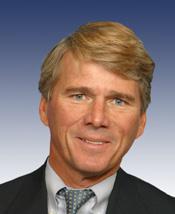
1,947 records where Rep. Taylor, Gene [D-MS-4] is listed as a sponsor, author, or other actor. Search with topics and years
United States · United States Congress · 26 February 1992
Designates May 10, 1992, as Infant Mortality Awareness Day.
United States · United States Congress · 25 February 1992
Designates May 1992 as Neurofibromatosis Awareness Month.
United States · United States Congress · 19 February 1992
Designates September 13, 1992, as Commodore John Barry Day.
United States · United States Congress · 19 February 1992
Designates July 4 through 11, 1992, as Buy American Week.
United States · United States Congress · 11 February 1992
Amends the Agricultural Trade Act of 1978 to repeal the market promotion program.
United States · United States Congress · 11 February 1992
Designates April 14, 1992, as Education and Sharing Day, U.S.A., the birthday and the start of the 91st year of Rabbi Menachem Mendel Schneerson, leader of the worldwide Lubavitch movement.
United States · United States Congress · 5 February 1992
Designates January 16, 1993, as National Good Teen Day.
United States · United States Congress · 4 February 1992
Designates May 3 through 9, 1992, as National Correctional Officers Week.
United States · United States Congress · 30 January 1992
Designates April 15, 1992, as National Recycling Day.
United States · United States Congress · 29 January 1992
Economic Revitalization and Federal Excess and Surplus Property Utilization Improvement Act of 1992 - Title I: Findings and Purposes - Sets forth the purposes of this Act involving the utilization of excess and surplus Government heavy equipment and construction materials infrastructure and development. Title II: Definitions - Sets forth the definitions of terms used in this Act. Title III: Disposal of Defense Articles - Amends the Federal Property and Administrative Services Act of 1949 to require the Secretary of Defense to: (1) evaluate inventories of heavy equipment and construction materials and ensure that those items which are not needed for an identifiable military mission will be classified as excess and disposed of; (2) declare as excess those inventory items which cost over a certain amount to store, maintain, and repair; (3) develop a cost-effective plan for returning excess items to the United States for disposal; (4) report to specified congressional committees on the status of, and disposal plans for, such inventory items; and (5) annually review and evaluate the utilization by recipients of excess nonlethal supplies and excess defense articles pursuant to programs administered by the Department of Defense in order to ensure that such items are being utilized accordingly. Requires the heads of Federal agencies overseeing Federal laboratories to evaluate their inventories of scientific equipment. Requires all such equipment not needed for current or anticipated Federal purposes to be disposed of. Requires appropriate reports to specified congressional committees. Directs the Administrator (Administrator) of the General Services Administration (GSA) to make available excess heavy equipment and construction materials to a Federal agency based on the agency's ability to use such items for official business. Prohibits Federal agencies receiving excess heavy equipment and construction materials from transferring such equipment to other Federal or non-Federal agencies or organizations. Requires excess heavy equipment and construction materials received by a Federal agency to be returned to GSA if the Administrator determines that the equipment is not being efficiently used or if the official business of the agency for which the equipment is being used has been completed. Excludes heavy equipment and construction materials from the definition of "nonlethal excess supplies" used under armed forces provisions, and from the definition of various terms used for excess property in the Foreign Assistance Act of 1961. Title IV: Distribution Of Excess And Surplus Heavy Equipment And Construction Materials - Gives the Administrator authority over the disposal of all excess and surplus heavy equipment and construction materials. Requires such disposal to be done pursuant to this Act. Requires the Administrator to make all excess and surplus heavy equipment and construction materials available to the States after such items have been disposed of to Federal agencies. Requires the Administrator, after providing actual notice to the States of the availability of excess heavy equipment and construction materials, to deliver such items requested by the States on a fair and equitable basis according to public need and efficiency of utilization. Requires the Administrator to make the equipment and materials available without cost, except that if transportation is requested by the State, the Administrator may assess fees for transportation costs. States that for no less than 12 months after original delivery, the Administrator shall retain all right, title, and interest in heavy equipment and construction materials which have an acquisition cost greater than $10,000. Provides that if a State can show that the equipment or materials were well maintained and were efficiently used in the furtherance of public purposes and that the equipment can reasonably be expected to be maintained and used in the furtherance of public purposes, the Administrator shall transfer to the State all right, title, and interest in the equipment or materials. Requires States, within 12 months after regulations to implement this paragraph have been issued, to establish a program under which equipment and construction materials are allocated to eligible users in order to continue to be eligible to receive excess heavy equipment and construction materials. Allows such a program to be operated by the State or by State-Certified Equipment Centers. Requires the Administrator to offer grants for the establishment of such Centers. Sets forth provisions providing for disposals under specified conditions of urgency, such as when the President certifies that a foreign nation has dire need for particular pieces of heavy equipment and construction materials. States that Indian tribes and historically black colleges shall have equal standing with the States in acquiring excess heavy equipment and construction materials. Amends the Housing and Community Development Act of 1974 to authorize the use of community development block grant funds to establish such Centers and to establish State infrastructure and economic development plans. Authorizes appropriations for GSA grants to establish such Centers. Title V: State And Community Infrastructure And Economic Development - Amends the Housing and Community Development Act of 1974 to require the Secretary of the Department of Housing and Urban Development (Secretary) to establish a computerized database and standardized forms which States shall use to develop infrastructure and economic development plans utilizing priority lists of anticipated needs submitted to the States by counties and other units of local government, and which also utilize State-Certified Equipment Centers and advanced planning techniques. Requires the Secretary to make grants to States that want to establish such a plan, with priority to States with high long-term unemployment rates and pressing infrastructure needs. Requires the Secretary to establish a national infrastructure and economic development strategy to help States implement their plans to encourage cooperation among the States, and to coordinate Federal infrastructure and economic development programs and resources. Requires the Secretary to update such strategy every two years and to transmit a document containing such strategy to specified congressional committees. Authorizes appropriations for grants to States that want to establish such a plan. Title VI: Effective Date And Applicability - Specifies the effective dates of this Act and requirements for the promulgation of regulations.
United States · United States Congress · 24 January 1992
Designates the week beginning August 16, 1992, as National Convenience Store Appreciation Week.
United States · United States Congress · 22 January 1992
Title I: Short Title, Findings, and Definitions - Trade Enhancement Act of 1992 - Sets forth congressional findings and purposes with respect to access to Japanese markets by U.S. manufacturers of motor vehicles and motor vehicle parts. Title II: Merchandise Trade Deficit Reduction - Sets forth annual merchandise trade deficit reduction targets with respect to Japan's trade deficit with the United States. Requires the Secretary of Commerce (Secretary) to compute annually whether the target has been met for each year, and if it has not, to publish in the Federal Register the import and production restriction implementation period for such year. Authorizes the Secretary to impose temporary quantitative import restrictions on Japanese or Japanese-related motor vehicles (foreign motor vehicles) entered during the first three months of the calendar year following the year for which such computation is made. Requires the Secretary to submit a report to the Congress. Expresses the sense of the Congress that representatives of the United States and Japan should continue discussions regarding measures, to be selected by the Japanese Government, to achieve the merchandise trade deficit reduction targets. Urges the United States Trade Representative (USTR) during such discussions to address market access priorities for U.S. exports to Japan. Title III: Import and Production Restrictions to Be Implemented If Trade Deficit Reduction Target Not Met - Directs the Secretary to compute for calendar years 1993 through 1999 quantitative import restrictions on foreign motor vehicles and domestic motor vehicle production restrictions for transplanted Japanese-related auto manufacturers, except such computations are not required for calendar years 1997 through 1999 if trade deficit reduction targets for calendar years 1992 through 1996 are met. Sets forth civil penalties. Requires each person that has one or more motor vehicle or motor vehicle parts manufacturing facilities within the United States to certify to the Secretary whether it is a domestic vehicle or parts manufacturer or a transplanted Japanese-related vehicle manufacturer. Sets forth provisions with respect to: (1) the Secretary's authority to obtain information and data; and (2) enforcement of this Act. Sets forth civil penalties. Sets forth provisions with respect to the enforcement and judicial review of such penalties. Requires the Secretary to report annually to the Congress on implementation of this Act. Title IV: Negotiations and Other Actions - Requires the USTR to enter into negotiations with Japan to enter into a bilateral agreement that: (1) provides a phased-in increase in the use by transplanted motor vehicle manufacturers of domestically-produced motor vehicle parts to the point where such parts constitute 60 percent or more of the total parts used in the production of such vehicles; and (2) eliminate those aspects of the Japanese automotive distribution system that affect the access of domestically-produced motor vehicle parts to Japanese markets. Directs the USTR to enter into negotiations with representatives of the European Community, Japan, and the governments of other major vehicle-producing countries to enter into multilateral agreements that rationalize world-wide market access and production of motor vehicles and motor vehicle parts. Considers acts, practices, and policies of Japan (including, but not limited to, acts, policies, and practices utilized in the Japanese automotive distribution system known as "Keiretsu") that affect the access of manufacturers of domestic motor vehicle parts to the Japanese market as being unjustifiable and burdensome or restrictive to U.S. commerce, according to the Trade Act of 1974. Adds to response authority under such Act authority to increase the percentage of domestically-produced motor vehicle parts used in the production of motor vehicles for purposes of the qualification of Japanese manufacturers as domestic vehicle manufacturers. Specifies certain objectives to be included in negotiations with Japan if the USTR decides to take action with respect to such practices. Requires the USTR to make certain estimates with respect to the percentage of the Japanese market that is accounted for by domestic motor vehicle parts manufacturers. Directs the Secretary to commence an antidumping duty investigation under the Tariff Act of 1930 to determine whether imports or sales (or the likelihood of sales) of Japanese motor vehicle parts to the United States warrant the imposition of antidumping duties. Requires the Secretary of the Treasury to study and report to the Congress on the extent to which: (1) "Keiretsu" operations in the United States are in compliance with the internal revenue laws, particularly those relating to transfer pricing; and (2) the Internal Revenue Service is auditing such operations. Amends the Harmonized Tariff Schedule of the United States to classify for the purposes of tariff treatment certain light trucks as motor vehicles for the transport of goods.
United States · United States Congress · 26 November 1991
Amends Federal law to require certain procedures for the imposition of a fee for a service or thing of value provided by an agency for a vessel used for the carriage of goods or passengers for hire.
United States · United States Congress · 26 November 1991
Repeals the $2 copayment charged by the Department of Veterans Affairs for each 30-day supply of medication furnished on an outpatient basis to a veteran for the treatment of a non-service-connected disability or condition.
United States · United States Congress · 26 November 1991
Authorizes the Secretary of Agriculture, through the Agricultural Research Service, to make sweet potato research grants to land-grant colleges and universities. Authorizes appropriations.
United States · United States Congress · 26 November 1991
Amends the Rules of the House of Representatives to add a new rule LII that requires, before consideration, each reported bill or amendment that establishes or increases any tax, assessment, duty, tariff, user fee, or other charge imposed upon specified cargo, persons, or vessels to be accompanied by a report setting forth: (1) the economic impact on such persons and vessels; (2) the effect on international trade; (3) the amount of revenue that will be raised; and (4) an identification of the entities that will benefit from the revenue raised and those who will be adversely affected for the first five fiscal years that the bill applies. Requires the Congressional Budget Office to compile and report to the chairman and ranking minority member of certain standing committees an itemized list of all Federal taxes, assessments, duties, tariffs, user fees, and other charges currently imposed upon such cargo, persons, and vessels.
United States · United States Congress · 22 November 1991
Commends: (1) the people of Guam for their patriotism, bravery, loyalty to the United States, and many sacrifices during World War II, particularly during the invasion and occupation of the Guam territory; (2) the members of the Navy Insular Force and U.S. Navy and Marine Corps for the efforts and sacrifices they made in defense of the U.S.; (3) the Hawaiians for their sacrifices and contributions to the U.S. war effort during the attack on Pearl Harbor on December 7, 1941; and (4) the Hawaii Territorial Guard members, Varsity Victory Volunteers, the civilian workers at the Pearl Harbor Naval Ship Yard and other Hawaiian military installations, 100th Infantry Battalion, Military Intelligence Service, and 442nd Regimental Combat Team for their sacrifices and contributions to the U.S. war effort during such attack.
United States · United States Congress · 21 November 1991
Calls upon the President, as part of the Uruguay Round General Agreement on Tariffs and Trade (GATT) talks, to initiate negotiations to make GATT compatible with the Marine Mammal Protection Act and other U.S. health, safety, labor, and environmental laws, including laws to protect the environment outside of the United States. Declares that the Congress will not approve legislation to implement any trade agreement (including the Uruguay Round of the GATT and the U.S.-Mexico Free Trade Agreement) that jeopardizes such laws, including the Federal Food, Drug, and Cosmetic Act and the Clean Air Act.
United States · United States Congress · 19 November 1991
Second National Blue Ribbon Commission to Eliminate Waste in Government Act - Establishes the Second National Blue Ribbon Commission to Eliminate Waste in Government to: (1) conduct a private sector survey on management and cost control in the Federal Government; (2) review executive agency operations and existing General Accounting Office, Congressional Budget Office, Inspector General Reports, and other existing governmental and nongovernmental recommendations for reducing waste; and (3) submit to the President and the Congress a list of those recommendations with estimated savings that the Commission determines are most significant and recommendations for improving the budget process, management, and reducing waste and costs in the Government. Requires the Commission to identify, address, and to report to the President and the Congress on: (1) opportunities for increased efficiency and reduced costs in the Government that can be realized by executive action or legislation; (2) areas in the Government where managerial accountability can be enhanced and administrative control can be improved; (3) specific Federal programs that have accomplished their objectives and ought to be terminated; (4) specific Federal program services that could be provided at a lower cost by the private sector; (5) specific reforms of the budget process that would yield savings, increase accountability and efficiency, and enhance public confidence in the budget process; (6) specific areas in the Government where further study can be justified by potential savings; and (7) specific recommendations for legislative and administrative actions. Requires the Commission to be funded, staffed, and equipped, to the extent practicable and permitted by law, by the private sector without cost to the Government.
United States · United States Congress · 7 November 1991
Designates December 21, 1991, as Basketball Centennial Day.
United States · United States Congress · 7 November 1991
Calls upon the President not to proceed toward the normalization of diplomatic and economic relations with the Socialist Republic of Vietnam until the Senate Select Committee on POW/MIA Affairs has reported its findings on the accounting of missing American servicemen in Southeast Asia.
United States · United States Congress · 5 November 1991
Designates December 4, 1991, as Federal Civilian Employee Remembrance Day to recognize contributions provided by Federal civilian employees during the attack on Pearl Harbor and during World War II.
United States · United States Congress · 4 November 1991
Urges and requests the President to require the Secretary of the appropriate military department to award the Bronze Star to each member of the Navy or Marine Corps who served under General Wainwright during the defense of Corregidor Island, the Philippines, during World War II.
United States · United States Congress · 29 October 1991
1996 Atlanta Centennial Olympic Games Commemorative Coin Act - Provides for the minting and sale of commemorative gold and silver coins to support the 1996 Atlanta Centennial Olympic Games and the programs of the United States Olympic Committee.
United States · United States Congress · 24 October 1991
Authorizes the Air Force Association to establish a memorial on Federal land in the District of Columbia or its environs to honor the men and women who have served in the U.S. Air Force.
United States · United States Congress · 24 October 1991
Designates November 24 through 30, 1991, and November 22 through 28, 1992, as National Adoption Week.
United States · United States Congress · 22 October 1991
Designates 1992 as the Year of Reconciliation Between American Indians and Non-Indians.
United States · United States Congress · 17 October 1991
Designates January 4 through 10, 1992, as Braille Literacy Week.
United States · United States Congress · 11 October 1991
Declares that Members of Congress are no longer exempted from Federal laws, including the: (1) Americans with Disabilities Act; (2) title VII of the 1964 Civil Rights Act; (3) Equal Opportunity Act; (4) Occupational Safety and Health Act; (5) Fair Labor Standards Act; and (6) Freedom of Information Act. Makes it illegal to furnish any Member of the Congress, at the expenses of the Federal Government, free or at reduced costs: (1) medicine; (2) hospital care; (3) ambulance services; (4) meals; (5) flowers or plants; (6) pictures or picture frames; (7) haircuts; or (8) other items, services, or privileges, except official office expenses such as supplies and stationery.
United States · United States Congress · 3 October 1991
Designates 1992 as The Year of the American Indian.
United States · United States Congress · 26 September 1991
Calls on the President to: (1) decry the violence in Yugoslavia and affirm U.S. policy for a peaceful resolution through democratic negotiations and adherence to a ceasefire; (2) assert that no border changes that have occurred through force and without benefit of negotiation, and no groups occupying territory obtained through violent means, shall be recognized; (3) affirm his commitment to maintaining the international embargo on arms to all combatants in the conflict; (4) instruct the U.S. representatives of each international financial institution to support U.S. goals in completing and maintaining a ceasefire; (5) request the United Nations (UN) Secretary General to assist the European Community (EC)-sponsored negotiations (or initiate negotiations should the EC negotiations fail), to dispatch a contingent to monitor and enforce any ceasefire, and to assist in the completion of a long-term settlement to the conflict; (6) raise in the UN General Assembly the assessment of multilateral economic sanctions against any party disrupting the ceasefire or refusing to take part in negotiations; and (7) insist that all parties to the conflict approve the presence of a peacekeeping force in Yugoslavia to monitor a negotiated ceasefire.
United States · United States Congress · 24 September 1991
Expresses the sense of the Congress that it is inappropriate for the Federal Government to take actions that have the effect of preempting the tax decisions of State governments. Protests the decision of the Secretary of Health and Human Services to prohibit Federal payments under the Medicaid program (title XIX of the Social Security Act) relating to State Medicaid expenditures that are made from revenues derived from provider-specific taxes. Urges the Secretary to drop the proposed rule implementing his decision.
United States · United States Congress · 17 September 1991
Designates November 1991 as National Accessible Housing Month.
United States · United States Congress · 17 September 1991
Designates 1992 as the Year of the Gulf of Mexico. Directs all Federal and State agencies which have responsibility for matters affecting the Gulf to work to increase public awareness regarding the immeasurable value of this resource and current conditions which threaten its aesthetic and economic value.
United States · United States Congress · 16 September 1991
1992 White House Commemorative Coin Act - Directs the Secretary of the Treasury to issue one dollar silver coins emblematic of the White House. Mandates that the total surcharges received from the sale of such coins shall be promptly paid to the White House Endowment Fund to assist its efforts to raise an endowment as a permanent source of support for the White House Collection of fine art and historic furnishings, and for the maintenance of the historic public rooms of the White House.
United States · United States Congress · 16 September 1991
Designates the week of September 22 through 28, 1991, and September 20 through 26, 1992, as Religious Freedom Week.
United States · United States Congress · 11 September 1991
Veterans Bill of Rights Act - Directs the Secretary of Veterans Affairs to take all necessary action to ensure that all rights and benefits provided under Federal law to qualified veterans are: (1) made available to veterans to the same extent in every State or geographic location; and (2) not denied on the basis of race, ethnicity, sex, religion, age, or geographic location.
United States · United States Congress · 2 August 1991
Amends the Federal Aviation Act of 1958 to direct the Administrator of the Federal Aviation Administration to publish and update clearly defined arrival and departure routes leading to and from airports located within and in close proximity to terminal control areas and airport radar service areas for the optional use of pilots operating under visual flight rules.
United States · United States Congress · 2 August 1991
Intermodal Carriers Competitiveness Act of 1991 - Prohibits a State, political subdivision, or interstate agency of two or more States from adopting or enforcing any law, rule, regulation, or standard relating to interstate or intrastate rates, routes, services, or terms of service of any national intermodal carrier with respect to the provision of surface transportation of property in the State.
United States · United States Congress · 2 August 1991
Trade Equity Act of 1991 - Amends the Harmonized Tariff Schedule of the United States to classify certain light trucks or light-duty trucks as motor vehicles for the transport of goods for purposes of tariff treatment under the Schedule.
United States · United States Congress · 2 August 1991
United States Flag Cruise Ship Competitiveness Act of 1991 - Amends Federal law (commonly referred to as the Johnson Act) relating to transportation of gambling devices to exclude from the definition of interstate commerce, transportation from a State to the same State through a place outside that State when such commerce may only be conducted through points not in that State. Repeals all of a specified Federal law (commonly referred to as the Gambling Ship Act) except provisions relating to the transmission of wagering information. Makes unlawful certain actions in connection with a vessel which has any gaming establishment aboard unless in compliance with certain regulations, including registration with the Attorney General and licensing by a State. Provides for certification by the Attorney General of State procedures.
United States · United States Congress · 2 August 1991
Amends title XVIII (Medicare) of the Social Security Act to eliminate the annual cap on the amount of payment for outpatient physical therapy and occupational therapy services under part B (Supplementary Medical Insurance).
United States · United States Congress · 2 August 1991
Food Quality Protection Act of 1991 - Title I: Cancellation and Suspension - Amends provisions of the Federal Insecticide, Fungicide, and Rodenticide Act (FIFRA) relating to cancellation and changes in classification or other terms or conditions of registration with respect to the authority of the Administrator of the Environmental Protection Agency. Requires that a rulemaking under such provisions be based on a validated test or other significant evidence raising prudent concerns of unreasonable adverse effects to man or to the environment. Sets forth procedural requirements for such a rulemaking. Provides for amendment of a rule and for judicial review. Allows the Administrator, in the case of a suspension, to waive certain requirements. Allows the Administrator to elect to proceed with a special review proceeding or a public interim administrative review proceeding, if published before a specified date, under the law in effect before enactment of this Act. Requires the Administrator to reassess each tolerance and exemption from the requirement for a tolerance at certain times in connection with reregistration of pesticides. Establishes the Science Review Board to assist the Scientific Advisory Panel in reviews conducted by the Panel. Revises procedures applicable after denial of an application for registration. Allows the Administrator to deny an application for registration because it does not comply with the requirements of a rule issued under provisions of this Act. Repeals provisions regulating the authority of the Administrator to initiate a public interim administrative review process. Declares a decision made after a hearing in certain circumstances during phase three of reregistration to be final. Amends provisions regulating: (1) review by district courts of suspension of registrations; and (2) public hearings. Title II: Data Collection - Directs the Secretary of Agriculture to collect pesticide use data of Statewide or regional significance for all the major crops and crops of dietary significance. Mandates research, development, and dissemination of integrated pest management techniques and other pest control methods that enable producers to reduce or eliminate application of pesticides which pose a greater than negligible dietary risk to humans. Title III: Amendments to the Federal Food, Drug, and Cosmetic Act - Amends the Federal Food, Drug, and Cosmetic Act (FDCA) to define, subject to exception, "pesticide chemical" as it is defined in the FIFRA. Adds to the list of prohibited acts under the FDCA violation of provisions relating to confidentiality of data, as amended by this Act. Deems a food adulterated if it bears or contains: (1) a pesticide chemical residue that is unsafe; or (2) a new animal drug, or conversion product thereof, that is unsafe. Sets forth requirements relating to tolerances and exemptions from the requirement of a tolerance for pesticide chemical residues in food, including residues of degradation products. Prohibits establishment of a tolerance higher than a level the Administrator of the Environmental Protection Agency determines is adequate to protect the public health. Sets forth the factors the Administrator must consider. Allows a greater than negligible dietary risk if: (1) use protects from greater adverse health effects to humans or the environment; (2) use avoids greater risks from another pesticide; or (3) the unavailability of the pesticide would reduce the availability of an adequate, wholesome, and economical domestic supply of the food, and the adverse effects from the reduction would outweigh the risk posed by the residue. Allows the Administrator to issue an exemption from the requirement for a tolerance only if the Administrator determines that a tolerance is not needed to protect the public health, in view of the levels of dietary exposure that could reasonably be expected to occur. Sets forth the factors the Administrator must consider. Sets forth procedures and requirements in connection with: (1) petitions for tolerances or exemptions; (2) certain actions authorized on the Administrator's own initiative; (3) the required submission of additional data to support the continuation of a tolerance or exemption; and (4) confidentiality of data submitted to the Administrator. Provides for continuation of previously issued regulations. Sets forth transitional provisions. Prohibits a final rule that revokes, modifies, or suspends a tolerance or exemption until the Administrator has taken any necessary action under the FIFRA with respect to the registration of the pesticide involved. Requires the Administrator, if the Administrator takes certain actions with respect to the registration of a pesticide, to revoke any tolerance or exemption that allows the presence of the chemical or chemical residue. Requires the suspension of any tolerance or exemption upon the suspension of the use of an associated registered pesticide. Provides for: (1) tolerances for unavoidable residues in the case of a residue of a canceled or suspended pesticide chemical that will unavoidably persist in the environment and thereby be present in or on a food; and (2) residues resulting from an application which was lawful at the time of the application. Directs the Administrator to require the payment of fees sufficient for the Administrator's functions under these provisions. Prohibits, subject to exception, a State from establishing or enforcing any limit on a qualifying pesticide chemical residue in or on any food which is not identical to Federal requirements. Prohibits a State from enforcing a residue limit which was lawful at the time of application. Authorizes appropriations for increased monitoring by the Secretary of Health and Human Services of pesticide residues in imported and domestic food.
United States · United States Congress · 1 August 1991
Military Retirement Equity Act of 1991 - Permits retired members of the armed forces to be paid retirement pay concurrently with compensation for any service-connected disability if the person's entitlement to such retirement pay is based solely on: (1) age; (2) length of service; or (3) both. Reduces the amount of retirement pay, in the case of individuals receiving both types of pay, by a specified percentage of the disability compensation which decreases as the disability rating increases. Prohibits any reduction in the retirement pay of a disabled person when the disability rating is total. Expresses the sense of the Congress that, once the Federal budget deficit has been reduced, the Congress should reexamine and eliminate any offset of retired pay by a veteran's disability compensation.
United States · United States Congress · 31 July 1991
Establishes a Joint Committee on the Organization of the Congress to: (1) make a full and complete study of the organization and operation of the Congress; and (2) recommend improvements in such organization and operation with a view toward strengthening its effectiveness, simplifying its operations, improving its relationships with other branches of the Government, and improving the orderly consideration of legislation. Requires a report to the Senate and the House of Representatives not later than the adjournment sine die of the 102d Congress.
United States · United States Congress · 29 July 1991
Medicare Physician Payment Reform Amendments of 1991 - Amends title XVIII (Medicare) of the Social Security Act to revise the transition rules for phasing in the resource-based relative value scale (RB RVS) method of payment for physician services to prohibit adjustments for asymmetry in the transition and for behavioral responses. Declares spending under this Act to be an emergency requirement under the Balanced Budget and Emergency Deficit Control Act of 1985 (Gramm-Rudman-Hollings Act) and exempt from sequestration.
United States · United States Congress · 29 July 1991
Recognizes and grants a Federal charter to the Military Order of the World Wars, a nonprofit corporation organized under the laws of the District of Columbia.
United States · United States Congress · 29 July 1991
Amends the Defense Base Closure and Realignment Act of 1990 to require the Secretary of Defense and the Defense Base Closure and Realignment Commission, with respect to recommendations made for closure and realignment of military installations in 1993 and 1995, to include recommendations for the termination and reduction of military operations at installations outside the United States.
United States · United States Congress · 18 July 1991
Rural Crime and Drug Control Act of 1991 - Title I: Fighting Drug Trafficking in Rural Areas - Amends the Omnibus Crime Control and Safe Streets Act of 1968 to authorize appropriations, and increase the base allocation, for rural drug enforcement assistance. Directs the Attorney General to establish a Rural Drug Enforcement Task Force in each of the Federal judicial districts which encompass significant rural lands. Specifies the membership of such task forces. Directs the Attorney General to cross-designate up to 100 Federal officers with jurisdiction to enforce Controlled Substances Act (CSA) provisions on non-Federal lands to the extent necessary to effect the purposes of this title. Requires the Director of the Federal Law Enforcement Training Center to develop a specialized course of instruction devoted to training law enforcement officers from rural agencies in the investigation of drug trafficking and related crimes. Authorizes appropriations. Title II: Federal Law Enforcement Agencies - Authorizes appropriations for the Drug Enforcement Administration (DEA) to hire, equip, and train not less than 350 agents and necessary support personnel to expand DEA investigations and operations against drug trafficking organizations in rural areas. Title III: Increasing Penalties for Certain Drug Trafficking Offenses - Ice Enforcement Act of 1991 - Amends the CSA to increase penalties for specified offenses involving crystalline methamphetamine. Title IV: Rural Drug Treatment - Amends the Public Health Service Act (PHSA) to require the Secretary of Health and Human Services to establish a program to provide grants to hospitals, community health centers, and other appropriate entities that serve nonmetropolitan areas to assist in developing and implementing projects that provide, or expand the availability of, substance abuse treatment services. Authorizes appropriations. Title V: Rural Drug Prevention - Directs the Secretary to make grants to public and nonprofit private entities that serve nonmetropolitan areas to assist such entities in developing and implementing projects that provide, or expand the availability of, substance abuse prevention services. Authorizes appropriations. Requires the alcohol and drug abuse information clearinghouse required to be established under the PHSA to: (1) gather information pertaining to rural drug abuse treatment and education projects funded by the Administrator of the Alcohol, Drug Abuse, and Mental Health Administration and other such projects operating throughout the United States; and (2) disseminate information to rural hospitals, community health centers, community mental health centers, treatment facilities, community organizations. and other interested individuals. Title VI: Rural Land Recovery Act - Specifies that each of the Rural Drug Enforcement Task Forces shall include one Director of Rural Land Recovery. Directs State and Federal prosecutors, when bringing charges against the operators of such laboratories, to include, in addition to drug-related charges, counts involving infringements of applicable environmental protection laws, including illegal disposal of hazardous waste and knowing endangerment of the environment. Authorizes such prosecutors and private citizens to bring suit against the operators of such laboratories for environmental and health-related damages caused by the operators in their manufacture of illicit substances.
United States · United States Congress · 18 July 1991
Designates August 29, 1991, as National Sarcoidosis Awareness Day.