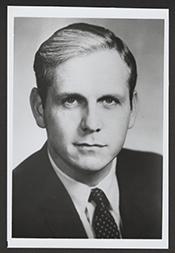
United States · United States Congress · 22 May 1975
Eliminates any requirement that an institution have in effect a utilization review plan in order to qualify for participation in the medicare, medicaid, or maternal and child health and crippled children's services programs as administered under the Social Security Act.
United States · United States Congress · 22 May 1975
Defines the term "navigable waters", for purposes of the Federal Water Pollution Control Act, as it applies to Corps of Engineers responsibility and authority to regulate the discharge of dredged or fill material.
United States · United States Congress · 22 May 1975
Transfers all functions of the Secretary of Agriculture under the Food Stamp Act to the Secretary of Health, Education, and Welfare. Declares that a household shall not participate in the food stamp program while any of its members is on strike due to a labor dispute. Exempts any such household that qualified for food stamps prior to the start of such strike. Stipulates that any individual who is receiving at least one-half of his income from any member of another household shall not be considered as a member of a household for purposes of the Food Stamp Act of 1964. Directs the Secretary to prescribe rules for the purpose of determining the eligibility of such person.
United States · United States Congress · 21 May 1975
Jobs Creation Act - Title I: Individual Income Taxes - Allows a tax credit in the amount of 10 percent (up to $1,000) of the amount of qualified savings deposits and investments made by an individual during the taxable year. Defines qualified investments as amounts used to purchase stock in or debt instruments of a domestic corporation. Provides that the first $1,000 of capital gain shall be excluded from gross income during the taxable year. Provides for purposes of the estate tax, that the lessor of: (1) $200,000; and (2) the value of the decedent's interest in a family farming operation continually owned by him for five years prior to his death and which passes to a related individual shall be excluded from the value of the taxable estate. Title II: Corporation Taxes - Reduces the normal tax rates imposed on corporations. Increases the investment credit to 15 percent (12 percent in the case of property constructed or acquired before an unspecified date in March, 1975). Increases the corporate surtax exemption from $25,000 to $100,000. Increases the class life variance for purposes of the depreciation deduction allowed for property used in a trade or business or held for the production of income. Title III: Employee Stock Ownership Plan Financing - Creates special deductions for dividends paid during the taxable year by employers on securities held by an employee stock ownership plan (as defined by this title). Provides for the distribution of dividends to employees and repurchase of qualifying employer securities from persons receiving distributions. Provides for the exclusion from gross income of that part of a distribution held or reinvested within 60 days in income-producing assets of equivalent value for the purpose of realizing current income from such assets.
United States · United States Congress · 20 May 1975
Truth in Spending Act - Requires that any bill or resolution of a public character introduced in the House of Representatives or the Senate, and the report on any such bill or resolution reported by any committee of either House, shall contain an estimate of the average cost for each taxpaying family, if such bill were enacted into law. Provides that no bill or resolution shall be considered until such determination is made. Calls upon the Director of the Congressional Budget Office to print statistics of the average cost for each taxpaying family of bills and resolutions for the week and for the year in the Congressional Record.
United States · United States Congress · 19 May 1975
Authorizes four-year scholarships for women to participate in the senior division of the Reserve Officers' Training Corps. Requires that such scholarships be in an amount sufficient to pay tuition, fees, books, and reasonable living expenses. Provides that each Senator and Representative shall be entitled to nominate at least one candidate for such scholarships. Sets eligibility requirements for such candidates.
United States · United States Congress · 19 May 1975
Authorizes the use of ad valorem taxes to satisfy the user charge system requirement for applicants for treatment works grants under the Federal Water Pollution Control Act.
United States · United States Congress · 13 May 1975
Establishes in the Office of Education a National Student Financial Assistance Data Bank to assist students in identifying public and private sources of financial assistance for higher education. Directs the Commissioner of Education to (1) collect and assemble all available information pertaining to scholarships, loans, grants, and other financial assistance, and (2) disseminate such information without change to individuals applying to data bank.
United States · United States Congress · 13 May 1975
Authorizes the Administrator of the Environmental Protection Agency, under the provisions of the Clean Air Act, to establish and maintain national ambient air quality standards, standards of performance for new stationary sources, and National emission standards for hazardous air pollutants. States that such standards may not be more stringent than primary and secondary ambient air quality standards. Requires the Administrator to approve State implementation plans for national primary and secondary ambient air quality standards if: (1) they include emission limitations, or operational techniques, schedules and time-tables for compliance with such measures as promulgated by the Administrator as such may be necessary to insure attainment of standards within the areas affected by various sources; and (2) they provide for the granting of a variance for an emission source beyond the dates provided an application is made therefor and specified criteria are met. States that a variance granted under an applicable implementation plan shall be deemed approved by the Administrator unless within 30 days after the grant of the variance by the State, the Administration finds that the requirements of this Act have not been met.
United States · United States Congress · 13 May 1975
Expresses the sense of the House of Representatives that the President should be supported in his efforts in furishing humanitarian and resettlement assistance to refugees from South Vietnam and Cambodia and that such funds as may be necessary to furnish such assistance be provided as expeditiously as possible.
United States · United States Congress · 6 May 1975
Provides, under the Clean Air Act, that no air pollutant emission standard applicable to new motor vehicle engines which requires a greater reduction in emissions of air pollutants than is required under the regulations applicable to model year 1975 new light-duty motor vehicles or new light-duty motor vehicle engines shall take effect before model year 1982. Directs the appropriate agencies of the executive branch, as designated by the President, to conduct a study to determine: (1) the incremental public health and welfare effects that would result from new motor vehicle and new motor vehicle engine emission control standards for air pollutants which are more stringent than the standards applicable for the 1975 model year; and (2) the implications of implementing such standards. Directs that the findings of such study be reported to Congress not later than 12 months after the date of enactment of this Act. Requires the Administrator of the Environmental Protection Agency by June 30, 1976, and each year thereafter to: (1) review the rate of development in motor vehicle emission control technology and fuel economy improvement; (2) report to Congress his findings with respect to both the rate of such technological development and the adequacy of developmental efforts by the automotive industry; and (3) recommend to Congress any amendments to the Clean Air Act which enable the achievement of substantially more stringent automotive emission control levels without the imposition of significant fuel economy or cost penalties.
United States · United States Congress · 30 April 1975
Recommends the Secretary of Transportation to make a concerted effort to come to a voluntary agreement with industry for the development of passive restraint systems in automobiles in order to defer a call for rulemaking until these systems have been proven effective.
United States · United States Congress · 24 April 1975
Increases to $7,500 the amount of outside earnings which (subject to further increases under the automatic adjustment provisions) is permitted each year without any deductions from benefits under the Federal Old-Age, Survivors, and Disability Insurance program of the Social Security Act.
United States · United States Congress · 17 April 1975
Expresses the sense of the Congress that the United Nations should make all possible efforts to aid refugees in Indochina. Urges the United Nations Secretary General to call upon the government of North Vietnam and the Provisional Revolutionary Government not to interfere with such efforts.
United States · United States Congress · 16 April 1975
Coastal Zone Management Act Amendments - Establishes in the Treasury to the United States the Marine Resources Conservation and Development Fund. Authorizes grants from the fund to coastal States impacted by anticipated or actual oil and gas production or exploration. Directs Federal agencies which have authority to grant licenses, leases, or permits for the exploration or development of resources in or on the Outer Continental shelf to make available to affected coastal States all information relating to the timing, location and magnitude of any licensing, leasing, or permitting activity in which those agencies are planning to engage. Requires the Secretary fo the Treasury to apportion the amount available for disbursement in the fund for any fiscal year among the eligible coastal States on the basis of the actual, or anticipated effects and impacts of offshore oil and gas exploration, development, and production on each such State. Authorizes the Secretary to make grants during any fiscal year to noncoastal States to ameliorate the impacts associated with the development of Federal energy resources in or on the Outer Continental Shelf. Authorizes to be appropriated to the fund for each fiscal year after fiscal year 1975, a sum equal to 17 1/2 percent of the revenues derived during the previous year by the United States from acreage leased and production of oil and gas from the Outer Continental Shelf.
United States · United States Congress · 9 April 1975
Authorizes the Secretary of Defense to budget and provide for the authorization of appropriations, and the use of those appropriated funds by the Secretary of the Air Force to assist the Civil Air Patrol in providing services in connection with the noncombatant mission of the Air Force.
United States · United States Congress · 8 April 1975
Establishes within the Department of Health, Education, and Welfare an Office of Population Affairs to be directed by an Assistant Secretary for Population Affairs. Sets forth the duties of the Assistant Secretary. Establishes within the Department an Administration on Reproductive Research and Family Planning. Creates within the Administration a National Center for Family Planning Services, headed by a Director, which shall establish identifiable units to carry out, at a minimum, the following functions: Public information, program planning and evaluation, manpower development and training, supervision of field services, and grants management. Establishes within the Administration, a National Institute for Research on Human Reproduction and Population Change which shall establish identifiable units to carry out, at a minimum, the following functions: Reproduction physiology research, contraceptive development and evaluation, operational research, social science research, public information, manpower development and training, and grants management. Establishes a National Family Planning Services Advisory Council to advise, consult with, and make recommendations to the Director, at meetings held no less than two times each year, on matters relating to the activities of the National Center for Family Planning Services. Establishes a National Population Sciences Advisory Council to advise, consult with, and make recommendations to the Director, at meetings held no less than two times each year, on matters relating to the activities of the National Institute for Research on Human Reproduction and Population Change. Sets forth the functions of the Administration on Reproductive Research and Family Planning. Authorizes to be appropriated for each fiscal year such amounts as may be necessary to meet the administrative expenses of the Administration. Requires the Secretary of Health, Education, and Welfare to submit a report to Congress on each January 1 for the five years following the enactment of this Act. Authorizes appropriations for fiscal years 1976-1978 for the following: (1) special project grants for family planning services; (2) formula grants for family planning, public health services; (3) manpower development and program planning and evaluation; (4) research grants and contracts; (5) grants for support of population sciences research centers; and (6) planning and population growth information distribution and educational materials development.
United States · United States Congress · 26 March 1975
Provides that any grant funds under the Federal Water Pollution Control Act which were withheld from allotment by Presidential direction for fiscal years 1973, 1974, and 1975 shall be alloted among the States by the Administrator of the Environmental Protection Agency in accordance with a specified formula. Revises the distribution of such allotments to the States for fiscal years beginning with 1976.
United States · United States Congress · 26 March 1975
National Aquaculture Development Act - States that it is the purpose of this Act to provide for a national program for aquaculture development in order to increase sources of marine protein for the consumer; to increase the availability and quality level of consumer fishery products; to develop new resources; to improve or maintain recreational fisheries; and to initiate new business, industry, and employment. Requires the Secretary of Commerce, in consultation with interested Federal agencies and other public and private organizations and with the concurrence of the Secretary of the Interior, to establish national objectives for aquaculture development. Requires the Secretary to act as the interagency coordinator for all Federal programs and activities in aquaculture. Sets forth activities regarding aquaculture development which the Secretary may, as he deems appropriate, carry out pursuant to this Act, including: (1) construction, operation, and maintenance of hatcheries or similar facilities and undertaking of natural habitat improvement activities; (2) assistance to public and private organizations and individuals interested or engaged in aquaculture through advisory and other services; (3) consultation and cooperation with Federal, State, and local governments, regional commissions, institutions of higher learning, and private industry; and (4) performance of basic and applied research to establish a sound information base for the development of aquaculture. Provides that the Secretary, in consultation with affected States, shall locate, construct, operate, and maintain such pilot aquaculture facilities as he deems appropriate in order to develop aquaculture technology relative to particular species of fish and shellfish. Authorizes the Secretary to carry out such functions and duties authorized by this Act as he deems appropriate through grants to or contracts with the States, regional commissions, local governments, institutions of higher learning, private industry, and other public and private organizations. Authorizes an appropriation for each fiscal year beginning with fiscal year 1975, equal to 30 percent of the gross receipts from duties collected under the customs laws on fishery products during the period January 1 to December 31, both inclusive, preceding the beginning of each such fiscal year. Authorizes the Secretary to carry out such other research as he deems appropriate in order to perform his functions and duties under this Act. Provides that the authority contained in this Act shall expire at the end of the fiscal year during which occurs the fifth anniversary of the date of enactment.
United States · United States Congress · 26 March 1975
Natural Gas Deregulation Act - Limits the application of provisions of the Natural Gas Act, with specified exceptions. Provides that the Federal Power Commission shall have no power to disallow the rates and charges made by natural gas companies for new natural gas, except to the extent that such rates and charges exceed the amount paid by such companies to non affiliated companies. Defines new natural gas to mean natural gas sold or delivered by a producer in interstate commerce: (1) which is dedicated to interstate commerce for the first time on or after January 1, 1975; (2) which is continued in interstate commerce after the expiration of a contract by its own terms for the sale or delivery of such natural gas existing as of such date; or (3) which is produced from wells commenced after such date.
United States · United States Congress · 26 March 1975
Expresses the sense of the Congress that the President should convene immediately a meeting of the heads of all appropriate Federal departments and agencies for the purpose of taking such steps as may be necessary to prevent Arab discrimination against American business enterprises which have Jewish individuals serving in positions of major responsibility or which do business with Israel.
United States · United States Congress · 24 March 1975
Repeals, under the Social Security Act, the provisions for the establishment of Professional Standards Review Organizations to review services covered under the medicare and medicaid programs.
United States · United States Congress · 24 March 1975
Constitutional Amendment - States that, except in time of war or national emergency, the Congress shall make no appropriation for any fiscal year if the resulting total of appropriations for such fiscal year would exceed the total revenues of the United States for such fiscal year, nor shall there be expended by or on behalf of the United States during any fiscal year an aggregate amount which exceeds the total revenue of the United States for that fiscal year.
United States · United States Congress · 24 March 1975
Creates a select committee in the House of Representatives with authority to conduct a full and complete investigation of the problem of United States servicemen missing in action or known to be dead whose bodies have not been recovered, as a result of military operations in North Vietnam, South Vietnam, Laos and Cambodia. Provides that such investigation shall include an examination of the need for additional international inspection teams to determine whether there are servicemen still held as prisoner of war. Authorizes the Committee to hold hearings, issue subpenas, and maintain a staff as necessary to carry out its responsibilities under this resolution. Directs the committee to report to the House the results of its investigation no later than one year after adoption of this resolution. Provides that the committee's authority shall expire 30 days after the filing of such report. Directs that the expenses of the select committee shall be paid from the contingent fund of the House of Representatives upon vouchers signed by the Chairman.
United States · United States Congress · 21 March 1975
Forbids, under the Immigration and Nationality Act, the employment or referral for employment of aliens who have not been lawfully admitted to the United States for permanent residence. States that a person who employs or refers for employment such an individual shall not be deemed to have violated this Act if he has: (1) obtained a form signed by the individual stating that he is a citizen or lawfully admitted alien; and (2) himself signed a form stating that he has read the individual's birth certificate or any other document which validates the individual's statement. Provides that any person who violates this Act shall be fined not more than $500 or imprisoned for not more than six months, or both, for the first illegal employment or referral, and shall be fined not more than $1,000 or imprisoned for not more than one year, or both, for each subsequent employment or referral. Directs the Immigration and Naturalization Service to increase the personnel of the United States Border Patrol and Investigations Branch by 2,500 by the end of fiscal year 1975. Authorizes to be appropriated such sums as necessary to carry out this provision. Provides that this Act shall take effect 90 days after enactment and shall only apply to aliens who become employed or are referred for employment on or after that date.
United States · United States Congress · 20 March 1975
Fiscal Integrity Act - Revises the Congressional Budget and Impoundment Control Act to define the term "Federal revenue and budget outlay limit" to be the amount derived through a specified series of mathematical formulas. Prohibits the concurrent resolution on the budget from including any provision which exceeds the Federal revenue and budget outlay limit. Requires that each House include in its report to its House a comparison of estimated budget authority as set forth by the President and by the concurrent resolution. Prohibits amendment of the concurrent resolution during consideration by the Senate or the House of Representatives which exceeds the Federal revenue and budget outlay limit. Requires that the impact of new budget authority and budget outlays, and a projection for the next five fiscal years of the impact of new tax expenditures on the Federal revenue and outlay limit be included in a statement accompanying a bill or resolution reported by a committee of either House. Requires the Director of the Congressional Budget Office to include in his five-year projection report, the concomitant predicted Federal revenue and budget outlay limits for each fiscal year. Prohibits a concurrent resolution from being reported at any time which increases total revenues or the budget outlay limit unless such limit has been suspended pursuant to this Act. Prohibits Congress from making any appropriation for any fiscal year in excess of the Federal revenue and budget outlay limit. Provides for the reduction of the public debt by any revenue which exceeds such limit during any fiscal year. Permits the suspension of the revenue and budget outlay limit by the declaration of a fiscal emergency through the passage of a concurrent resolution approved by two-thirds of the members present in each House. Requires that all bills of a public or private character introduced in either House of Congress have printed at the bottom of the first page a fiscal note which States the amounts likely to be the costs and savings achieved in the implementation of a bill.
United States · United States Congress · 18 March 1975
National Welfare Reform Act - Stipulates that no family shall be eligible for the aid to families with dependent children program (AFDC) under the Social Security Act if its total income, without regard to exclusions, exceeds 150 percent of the family's needs. Provides that the Secretary of Health, Education, and Welfare shall provide the full cost of AFDC services to needy families who are not U.S. citizens and are lawfully present in the United States. States that unemployed individuals shall be ineligible for AFDC services for specified periods of time if such individual is determined to have, without good cause, refused an offering of bona fide employment or refused to participate under a work incentive program. Provides procedures for the determination of good cause. States that no sanctions will be applied for a ten day period after failure without good cause has been established, if the individual participates in counseling services. Sets forth procedures governing adjustment of AFDC grant overpayments. Prohibits AFDC grant payments where the caretaker relative is unemployed due to participation in a strike or because he has voluntarily terminated his employment. Defines "income" for purposes of this Act. Authorizes the Secretary to pay directly to any State up to 75 percent of the costs of investigating and prosecuting complaints of fraud under AFDC program. Requires that recipients of aid be issued a detailed identification card specifying the programs for which the recipient is eligible. Provides that any person who resides in the same household of an eligible family, but is not himself eligible for aid, shall be required to make a contribution to the State in an amount equal to the amount of the standard payment for single person household under the State's plan.
United States · United States Congress · 18 March 1975
Excludes from coverage under the Food Stamp Act households whose principal wage earner is on strike due to a labor dispute. States that this provision is inapplicable to households which were eligible for and participating in the food stamp program prior to the start of the strike.
United States · United States Congress · 13 March 1975
Allows a tax deduction up to $750 for ordinary and necessary expenses incurred by a taxpayer under the Internal Revenue Code in making repairs and improvements to his residence during the taxable year. Allows the owner of rental housing to amortize at an accelerated rate (over a 60-month period) the cost of rehabilitating or restoring such housing. Authorizes the taxpayer to switch from such accelerated amortization to the regular depreciation deduction allowable under the Internal Revenue Code for property used in a trade or business or held for the production of income.
United States · United States Congress · 13 March 1975
Revises the Internal Revenue Code to allow as a credit against the income tax the expenses of elementary or secondary education paid by an individual during the taxable year to any private nonprofit elementary or secondary school for a dependent. Limits such credit to the lesser of 100 percent of the expenses or $300. Reduces such credit by an amount equal to 1 percent of the amount by which the adjusted gross income of the taxpayer exceeds $22,500.
United States · United States Congress · 12 March 1975
Automobile Fuel Consumption Tax Act - States that the purpose of this Act is to encourage the development and manufacture of passenger automobiles which are efficient in fuel consumption. Imposes, under the Internal Revenue Code, a tax on all passenger automobiles sold by the manufacturer, producer, or importer, at a graduated rate determined by the fuel consumption rate, in miles per gallon, of each such automobile. States that the taxable fuel consumption rate shall be the rate set forth in the Atuomobile Fuel Consumption Schedule specified in this Act. Imposes a floor stocks tax on new automobiles held by a dealer for sale. Directs the Administrator of the Environmental Protection Agency to periodically study the fuel consumption rates of passenger automobiles and revise the Automobile Fuel Consumption Schedule. Requires that a label describing the fuel consumption rate and the amount of the fuel consumption tax must be affixed to all new cars sold.
United States · United States Congress · 6 March 1975
Exempts the first sale of the share of a State or local government or a subdivision thereof in crude oil produced in the United States from the mineral or leasehold estate of any State or local government or subdivision-owned lands for purposes of the Emergency Petroleum Allocation Act of 1973.
United States · United States Congress · 6 March 1975
Lowers the population requirements from 100,000 to 50,000 for a unit of local government to be eligible to be a prime sponsor under the Comprehensive Employment and Training Act.
United States · United States Congress · 6 March 1975
Provides that the Administrator of the Small Business Administration may render onsite consultation and advice to small business employers who request such assistance in writing to assist such employers in providing safe and healthful working conditions for their employees. Provides that the Administration may issue recommendations and/or written notice with respect to hazards and/or serious violations under the Occupational Safety and Health Act of 1970, but no citation or civil penalty shall follow directly from such onsite consultation and advice.
United States · United States Congress · 5 March 1975
Hobbs Act Amendment - Provides that anyone who interferes with commerce by damaging to the extent of $2,000 or more any property of a person where business is conducted or property is maintained shall be fined not more than $10,000 or imprisoned not more than twenty years or both. Defines the term "extortion" to mean the obtaining of property from another, with his consent, induced by use of actual or threatened force, violence, or fear, or under color of official right notwithstanding that the same acts or conduct may also be a violation of State or local law and notwithstanding that the actual or threatened force, violence, or fear was used in the course of a legitimate labor dispute or in the pursuit of legitimate union or labor ends or objectives. (Amends 18 U.S.C. 1951)
United States · United States Congress · 27 February 1975
Allows a taxpayer a deduction from gross income under the Internal Revenue Code for up to $1500 of the expenses paid by him for the education of any of his dependents at an institution of higher learning.
United States · United States Congress · 27 February 1975
Provides, under the Internal Revenue Code, that real property which is farmland, woodland, or open land and forms part of an estate may be valued, for estate tax purposes, at its value as farmland, woodland, or open land (rather than at its fair market value). Provides that real property which is listed on the National Register of Historic Places may be valued, for estate tax purposes, at its value for its existing use. Provides for the revocation of such lower evaluation and recapture of unpaid taxes with interest upon the conversion, rezoning, or removal of such land from the National Register of Historic Places.
United States · United States Congress · 27 February 1975
Constitutional Amendment - States that the U.S. Constitution shall not bar any State or territory or the District of Columbia from allowing, regulating, or prohibiting the practice of abortion.
United States · United States Congress · 27 February 1975
States that the House of Representatives, pursuant to the Impoundment Control Act of 1974, disapproves of the proposed deferral of $600,000 for State-Federal fisheries management grants (proposed deferral D75-94) which is contained in the President's message to the Congress of November 26, 1974.
United States · United States Congress · 26 February 1975
Provides, under title XVIII of the Social Security Act, for coverage under medicare for routine Papanicolaou tests for the diagnosis of uterine cancer.
United States · United States Congress · 25 February 1975
Provides, under title XVIII of the Social Security Act (Medicare) for payment under the hospital insurance program for care and treatment furnished at a central radiation therapy treatment facility. Provides full payment under the supplementary medical insurance program for radiation therapy services furnished by physicians to inpatients or outpatients of any hospital or any such facility. Defines the terms used in this Act.
United States · United States Congress · 24 February 1975
Provides that a conservation publication published by a State agency which is responsible for management and conservation of fish or wildlife resources shall be considered a publication of a qualified nonprofit organization which qualifies for second-class mail rates. (Adds 39 U.S.C. 3626 (b))
United States · United States Congress · 20 February 1975
Provides an additional personal income tax exemption of $750 under the Internal Revenue Code where a taxpayer, his spouse, or any dependent of the taxpayer is handicapped. Defines the term "handicapped" for the purposes of this Act.