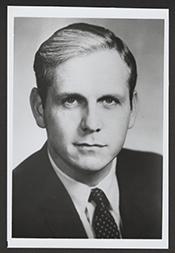
United States · United States Congress · 6 October 1978
Congressional Districting Act - Specifies that each State entitled to more than one Representative in the 98th or any subsequent Congress shall establish a number of districts equal to the number of Representatives to which that State is entitled. Declares that no district shall differ substantially in population size from another. Requires a five-member redistricting commission to be established in such State which shall conduct public hearings with respect to the boundaries of districts and prepare and submit to the Federal Election Commission a plan for redistricting to be published in the Federal Register. Sets forth judicial procedures to insure compliance with this Act. Authorizes the Federal Election Commission to administer and distribute funds to each State for the purpose of carrying out the provisions of this Act.
United States · United States Congress · 5 October 1978
Declares that the Congress opposes the President's promulgation of wage, price, or other economic stabilization standards enforced by a direct or implied threat that compliance with such standards by unions, industries, or other private economic groups will be materially considered in the exercise of administrative discretion by Federal agencies.
United States · United States Congress · 29 September 1978
Amends the Trade Act of 1974, with respect to the authority of the President to negotiate trade agreements, to direct the President to reserve any article for which an agreement limiting agricultural imports has been entered into, from negotiations to reduce or eliminate customs duties or import restrictions.
United States · United States Congress · 21 September 1978
Amends the Internal Revenue Code to limit the application of the attribution of ownership rules to a trust or estate which terminates its interest in a corporation through a stock redemption, for purposes of treating the proceeds from the stock redemption as capital gain.
United States · United States Congress · 20 September 1978
Technology Transfer Ban Act - Amends the Export Administration Act of 1969 to state that goods and technology may contribute to the military potential of possible adversary nations. Declares it to be the policy of the United States to prohibit the transfer to any Communist country of goods or technology which have any potential for military, law enforcement, or intelligence gathering purposes and to encourage friendly countries to exercise similar controls. Authorizes the President to impose export controls for national security purposes regardless of their availability from sources outside the United States. Directs the President to require a license for export of goods and technology to any Communist country. Provides a procedure for Congress to disapprove the issuance of such license. Authorizes the Secretary of Defense to review any proposed export of goods or technology to any Communist country and recommend disapproval if such export has potential military, law enforcement, or intelligence gathering value, which could prove detrimental to the national security of the United States.
United States · United States Congress · 17 August 1978
Total Force Act - Title I: Amendments to Title 10, United States Code - Revises the structure and purpose of the Reserve components of the armed forces. Declares that it is the intent of Congress that the Reserves shall be an equal element in a partnership with the active components of the armed forces. Requires the Chiefs of Reserve, and Chief, National Guard Bureau to establish a career program for personnel whom they designate as being essential to properly support their component's mission. Stipulates that the paid drill strength of the Selected Reserves shall be authorized annually by Congress. Sets forth minimum authorized strength levels for each of the Reserves. Sets forth mandatory minimum training and active duty requirements for members of the Ready Reserve. Reduces the minimum enlistment period for reservists from six to three years. Requires that the Chiefs of Reserve and the Chief, National Guard Bureau be consulted and have input regarding procedures, policies, or actions which may affect their components. Increases the number of Selected Reserves which may be on active duty at any one time from 50,000 to 100,000. Requires the Secretaries of each of the military departments to make available to their reserve components, equipment, services, supplies, and facilities that are necessary to develop and maintain those components at a level comparable to their active component counterparts. Stipulates that exceptions to this requirement by the Secretary concerned may only be made with the prior approval of Congress. Prohibits the withdrawal of serviceable equipment from the Reserves or National Guard forces for transfer to the active forces for a period of more than 60 days without prior notification to Congress. Requires that such a withdrawal be accompanied by an impact statement from the Chief of Reserves or the Chief, National Guard Bureau. Abolishes the position of Assistant Secretary of the Army for Manpower and Reserve Affairs. Establishes the positions of Assistant Secretary of the Army for Mobilization and Reserve Readiness who shall be responsible for supervising the Reserve and National Guard affairs of the Army and Assistant Secretary of the Army for Manpower who shall have overall supervision of the manpower of the Army. Stipulates that the National Guard Bureau shall be the principal supervisory and general staff operating agency for National Guard affairs and shall be responsible for preserving the integrity of the unit and command structure of the Army and Air National Guards as separate and distinct parts of the structure of the Army and the Air Force. Stipulates that the Office of Army Reserve shall be the supervisory and operating agency for the Army Reserve and shall be responsible for maintaining the integrity of the Army Reserve as a separate and distinct part of the structure of the Army. Stipulates that Army reservists may be detailed to Army National Guard positions and that members of the Army National Guard may be assigned to Army Reserve positions. Increases the minimum size of the Marine Corps from three to four combat divisions and from three to four air wings. Stipulates that one combat division and one air wing shall be Reserve. Abolishes the position of Assistant Secretary of the Navy for Manpower and Reserve Affairs. Establishes the positions of Assistant Secretary of the Navy for Mobilization and Reserve Readiness to supervise the Naval Reserve and Marine Corps Reserve and Assistant Secretary of the Navy for Manpower to supervise manpower within the Navy. Establishes an Office of Naval Reserve within the executive part of the Department of the Navy which shall be the principal supervisory and operating agency for the Naval Reserve and which shall be responsible for maintaining the integrity of the Naval Reserve as a separate and distinct part of the Navy. Establishes an Office of Marine Corps Reserve within the Navy which shall be the principal supervisory and operating agency for the Marine Corps Reserve and which shall be responsible for maintaining the integrity of the Marine Corps Reserve as a separate and distinct part of the Marine Corps. Abolishes the Naval Reserve Policy Board and the Marine Corps Reserve Policy Board and establishes the Naval and Marine Corps Reserve Forces Policy Committee which shall review and comment on major policy matters directly affecting the reserve components of the Navy and Marine Corps. Establishes a Subcommittee on Naval Reserve Policy and a Subcommittee on Marine Corps Reserve Policy. Stipulates that where a matter solely affects either the Marine Corps Reserve or the Naval Reserve only the appropriate subcommittee may consider the matter. Abolishes the position of Assistant Secretary of the Air Force for Manpower and Reserve Affairs and establishes the positions of Assistant Secretary of the Air Force for Mobilization and Reserve Readiness who shall supervise the Reserve and National Guard affairs of the department. Stipulates that the Office of Air Force Reserve shall be the principal supervisory and operating agency for the Air Force Reserve and shall be responsible for preserving the integrity of the Air Force Reserve as a separate and distinct part of the Air Force. Stipulates that the Chiefs of the Reserves shall be appointed by the President with the advice and consent of the Senate and shall hold office for four years. Title II: Amendments to Title 14, United States Code - Establishes within the Department of Transportation an Office of Coast Guard Reserve which shall be the principal supervisory and operating agency for the Coast Guard Reserve and which shall be responsible for maintaining the integrity of the Coast Guard Reserve as a separate and distinct part of the Coast Guard. Stipulates that the Chief, Coast Guard Reserve shall be appointed by the President with the advice and consent of the Senate and shall hold office for four years. Establishes a Coast Guard Reserve Forces Policy Committee which shall review and comment upon major policy matters directly affecting the reserve components of the Coast Guard. Title III: Amendments to Title 32, United States Code - Requires that, before federal benefits may be denied a State's National Guard for failing to comply with or enforce regulations or requirements contained in title 32, USC (National Guard), the Secretary concerned shall report such proposed action to the Committees on Armed Services of the Senate and House of Representatives. Stipulates that such proposed action shall take effect unless either committee reports a resolution rejecting such proposed action within 30 days of continuous session. Stipulates that such proposed action shall take effect unless such resolution is adopted by the House of Representatives or the Senate.
United States · United States Congress · 17 August 1978
Authorizes the United States Navy Memorial Foundation to erect a memorial in the District of Columbia or its environs in commemoration of the men and women of the United States Navy who have served their country in war and peace.
United States · United States Congress · 17 August 1978
Recreational Boating and Facilities Safety Improvement Act - Establishes within the Treasury a Recreational Boating and Facilities Safety Improvement Fund which is to be administered by the Secretary of the department in which the Coast Guard is operating and used exclusively to finance recreational boating facilities projects and recreational boating safety services. Stipulates that during the period ending September 30, 1985, the revenues attributable to the special motor fuels and gasoline use in motorboats taxes under the Highway Revenue Act of 1956 shall be covered into the Fund. Authorizes and directs the Secretary to provide financial assistance to States from the Fund for State boating purposes. Stipulates that the Federal share of such a project shall not exceed 50 percent of its cost. Sets forth conditions of eligibility for State boating safety projects and ratios for the allocation of Fund revenues among the States. Stipulates that the National Boating Safety Advisory Council shall act as an advisory body to the Secretary in assessing the need for and suitability of recreational boating facilities and boating safety services projects and in developing priorities for such facilities and projects. Directs the Secretary, within 18 months, to submit to Congress a comprehensive review and report on the needs, problems, and opportunities associated with recreational boating facilities and boating safety programs.
United States · United States Congress · 10 August 1978
Expresses the sense of Congress that the Environmental Protection Agency, the Nuclear Regulatory Commission, and the Federal courts should expedite all remaining administrative and judicial proceedings with respect to the Seabrook Nuclear Station project (New Hampshire), and that all licensing and permitting procedures for the construction and operation of nuclear generating stations should be reviewed and modified to improve the efficiency of such procedures.
United States · United States Congress · 8 August 1978
Amends the charter of the Boy Scouts of America to stipulate that the annual report of the Boy Scouts shall be printed each year as a separate House document.
United States · United States Congress · 4 August 1978
Sikes Act Amendments - Authorizes appropriations to the Secretary of Defense for fiscal years 1979 through 1981 to carry out conservation programs on military reservations and to fulfill responsibilities under cooperative plans, including those for enhancements of fish and wildlife habitat and development of recreation facilities. Authorizes appropriations to the Department of the Interior for fiscal years 1979 through 1981 to carry out conservation programs on public lands, including data collection, research, planning and rehabilitation programs. Authorizes appropriations to the Department of Agriculture for fiscal years 1979 through 1981 for conservation programs. Requires that in requesting funds, the Secretary of Agriculture shall take into account fish and wildlife programs needs identified in State plans as developed under the Forest and Rangeland Renewable Resources Planning Act of 1974.
United States · United States Congress · 4 August 1978
Sugar Stabilization Act - Title I: International Sugar Agreement - Authorizes the President to limit the entry, or withdrawal from warehouse, for consumption in the United States, of sugar from any country not a member of the International Sugar Organization, and otherwise to regulate foreign trade in sugar to implement the International Sugar Agreement. Establishes civil penalties for the violation of such regulations. Requires the President to submit to Congress an annual report on the Agreement. Title II: Domestic Sugar Program - Directs the Secretary of Agriculture to determine, during the July preceding the commencement of each (October 1 to September 30) sugar supply year, the amount of sugar needed to meet the requirements of consumers in the United States. Sets the price of 16 cents per pound of sugar, raw value, delivered to New York (including freight and the applicable tariff and fees) as the price objective for the sugar supply year 1978. Establishes formulae for determining the price objectives for succeeding sugar supply years. Authorizes the Secretary: (1) to establish, and to adjust, a quota for the entry of sugar from foreign countries; and (2) to impose an import fee in order to attain the established price objective. Prohibits filling of the established quota by direct-consumption sugar, except in specified circumstances. Permits the Secretary to suspend such quota and fees under specified circumstances. Authorizes the Secretary to impose a quota on the entry of sugar-containing products. Prohibits: (1) the entry of sugar, liquid sugar, or sugar-containing products after the import quotas have been filled; (2) the importation of certain sugar or liquid sugar into the Virgin Islands in excess of 100 pounds annually; and (3) the exportation of certain sugar from the United States. Regulates the exportation of sugar. Sets forth items to which the sugar quota shall not apply. Title III: General Provisions - Requires every producer of sugar beets and sugarcane for sugar to pay a specified minimum wage to each person employed on the farm in the production, cultivation, and harvesting of such crops. Establishes a civil cause of action against any producer who fails to pay minimum wages, allowing the employees affected to collect the amount of unpaid wages, plus an equal amount as liquidated damages. Prohibits a producer from discharging or discriminating against any employee who has participated in any way in an investigation or proceeding against the producer under this title. Prohibits a producer from charging farm employees any amount in excess of the reasonable cost of furnishing goods or services customarily furnished to employees engaged in the production. Directs the Secretary to issue regulations to assure that producers furnish workmen's compensation insurance to such employees. Requires persons engaged in the manufacture, marketing, transport, or industrial use of sugar to furnish the Secretary with specified information. Prohibits investment in sugar by officials engaged in the administration of this Act, and establishes penalties for the violation of such prohibition. Authorizes the President to suspend the operation of Title II of this Act in a national emergency. Authorizes the Secretary: (1) to conduct surveys and investigations to carry out this Act; and (2) to announce a daily spot price for raw sugar in specified circumstances. Terminates the authority of the Secretary under this Act on September 30, 1983.
United States · United States Congress · 18 July 1978
Directs the Secretary of Defense to rescind that portion of the Department of Defense directive which permits deserters from military service to receive in absentia discharges.
United States · United States Congress · 12 July 1978
Urges the prompt appointment of the National Commission on Social Security established by the Social Security Amendments of 1977. Resolves that the Congress request such Commission to study the feasibility of converting the present old-age, survivors, and disability insurance programs of the Social Security Act into self-renewing investment funds which will fulfill the purpose of the present program with a substantial reduction in taxes.
United States · United States Congress · 29 June 1978
Expresses the House's disapproval of the Secretary of the Treasury's proposal to waive countervailing duties on certain exported fish subsidized by the Canadian Government.
United States · United States Congress · 28 June 1978
Port Safety and Tank Vessel Safety Act - Amends the Ports and Waterways Safety Act of 1972 to remove specified limitations on the conditions under which vessel traffic may be controlled by the Secretary of the department in which the Coast Guard is operating. Authorizes the Secretary to order any vessel to operate or anchor in a specified manner if there is reasonable cause to believe the vessel does not comply with regulations or other applicable law or treaties, if the vessel does not satisfy conditions for port entry or if hazardous conditions warrant such an action. Directs the Secretary to designate necessary fairways and traffic separation schemes for vessels operating in the territorial sea of the United States and in high seas approaches to United States' ports. Places limitations on the Secretary's power to make such designations. Requires the Secretary to conduct a study of the needs for such a designation and to reconcile the needs for such a designation with all other reasonable uses of the area involved before taking such action. Exempts from the provisions of this Act foreign vessels passing through United States territorial waters or through the navigable waters of the United States which form part of an international strait and which are not destined for, or departing from, a port under United States jurisdiction. Specifies vessel safety and environmental considerations to be taken into account by the Secretary in making designations pursuant to this Act. Authorizes the Secretary to take such action as may be necessary to protect structures on or in navigable waters or land structures or shore areas adjacent to such waters and to protect the navigable waters and the resources therein from vessel or structure damage. Specifies actions which the Secretary may take including: (1) establishing procedures for the handling of dangerous articles (including oil) on waterfront structures; (2) prescribing minimum safety equipment requirements for such structures; and (3) establishing water or waterfront safety zones. Stipulates that the National Transportation Safety Board shall, upon its request, be made a party to investigations by the Secretary of incidents causing damage or loss to any structure subject to such Act. Sets forth conditions for the entry of vessels into United States' navigable waters. Prohibits the entry of vessels which do not meet specified manning requirements, which have a history of accidents or pollution incidents which creates reason to believe the vessel is unsafe or may threaten the marine environment, which discharges oil or hazardous material illegally, or which fails to meet regulations or other applicable laws or treaties. Directs the Secretary to transmit, via the Secretary of State, to appropriate international bodies or forums, any regulations issued under this Act, for consideration as international standards. Encourages the President to enter into negotiations with neighboring nations to establish compatible vessel standards and traffic services and to establish international vessel traffic services in areas of mutual concern and to enter into negotiations through international bodies to establish vessel traffic services in appropriate areas of the high seas. Establishes civil and criminal penalties for violations of this Act or regulations issued pursuant to this Act. Directs the Secretary to study possible shore-station systems for monitoring vessels within the Fishery Conservation Zone and to report the findings of such study to Congress. Authorizes appropriations for fiscal years 1979 and 1980 for such purpose. Directs the Secretary to establish eligibility requirements for the issuance of a Federal license to pilot any steam vessel. Establishes minimum eligibility requirements to receive such a license. Stipulates that such licenses shall be renewable every five years. Amends existing law relating to the regulation of steam vessels to include vessels carrying oil or hazardous material in residue. Exempts from such regulation cannery tenders, fishing tenders, and fishing vessels of not more than 500 tons used exclusively in the salmon or crab fisheries of the States of Oregon, Washington or Alaska. Establishes minimum equipment requirements for new crude oil tankers, new product carriers, and old oil tankers and product carriers. Directs the Secretary in prescribing additional requirements to apply standards which are consistent with the International Convention for the Prevention of Pollution from Ships, 1973, and the International Convention for the Safety of Life at Sea, 1974, as modified by the respective Protocols of 1978. Prohibits foreign vessels subject to this Act from operating in the navigable waters of the United States unless such a vessel has been issued a certificate of compliance by the Secretary indicating that the vessel has been inspected and found to be in compliance with appropriate regulations. Authorizes the Secretary to accept certificates issued by foreign nations pursuant to any treaty or other international agreement to which the United States is a party as a basis for issuance of a Certificate of Compliance. Directs the Secretary to prescribe standards for the manning of United States' vessels and the duties, qualifications, and training of the ships' crews and officers. Requires that a specified number of tankermen be aboard United States' vessels carrying oil or hazardous material in bulk as cargo or in residue and requires that a specified number of tankermen be aboard foreign vessels when such vessel transfers oil or hazardous materials in any port or place subject to the jurisdiction of the United States. Directs the Secretary to prescribe qualifications for the issuance of tankerman certificates. Directs the Secretary to issue regulations for the control and verification of manning, training, qualification, and watchkeeping standards promulgated by the certificating state of foreign vessels operating in United States' navigable waters and which transfer oil or hazardous materials in United States' jurisdictions. Specifies regulations which the Secretary is to establish. Sets forth a marine safety information system with regard to vessels subject to this Act which operate in the navigable waters of the United States or which transfer oil or hazardous materials in a United States' jurisdiction. Prohibits the transfer of oil or hazardous materials from one vessel to another in the navigable waters or in the marine environment unless the transfer is in accordance with applicable regulations and both vessels have on board a Certificate of Inspection or a Certificate of Compliance. Directs the Secretary to establish minimum requirements for the transfer of oil or hazardous materials in the navigable waters or marine environment when such cargo is destined for United States' ports. Prohibits vessels from transferring cargo in United States' ports if the vessel has discharged tank washings containing oil or hazardous materials in violation of any law of the United States or in a manner or quantities inconsistent with the provisions of any treaty to which the United States is a party, in preparation for loading cargo in any port or place under United States' jurisdiction. Directs the Secretary to establish control and supervisory measures to implement such prohibition.
United States · United States Congress · 26 June 1978
Act to Combat International Terrorism - Directs the President to transmit a report to the Congress every six months on those incidents determined to be acts of international terrorism as defined in this Act. Requires that, where the incident involves citizens or property of the United States, such report be transmitted not more than 30 days after the incident. Stipulates that such report shall include a description of the incident and persons involved, the identity of any government providing support for such terrorist acts, a description of the actions of any government which assisted in bringing about a positive termination of the incident, and a description of the response of the United States to such incident. Directs the President to submit to the Congress a list of governments which have demonstrated a pattern of support for international terrorism. Directs the President with respect to countries appearing on such list to: (1) provide no assistance under the Foreign Assistance Act of 1961; (2) not authorize any sale of, or extend any credit or guaranty, with respect to defense articles or services; (3) approve no export license for the export of commodities or technical data which has a potential military application or which would otherwise enable a foreign government to support acts of international terrorism; or (4) extend no duty-free treatment under the Trade Act of 1974. Authorizes the President to suspend such sanctions in the interest of national security. Authorizes the President to take such other actions with respect to such countries as are deemed appropriate. Amends the Federal Aviation Act of 1958 to direct the Secretary of Transportation to assess the effectiveness of the security measures at foreign airports. Directs the Secretary, upon a finding that such an airport does not maintain effective security measures, to notify the appropriate authorities of such foreign government of his findings and to recommend any steps necessary to bring the security measures in use to the standards established by the International Civil Aviation Organization. Directs the Secretary to publish the names of foreign airports which fail to bring their security measures into compliance with such standards and to display the names of such airports at United States airports. Authorizes the Secretary to withhold, revoke, or impose conditions on the operating authority of any carrier or foreign air carrier to engage in foreign air transportation utilizing such an airport. Authorizes the Secretary to provide technical assistance concerning aviation security to foreign governments. Makes it unlawful for any person to manufacture explosive materials which do not contain identification taggants which are retrievable after detonation and which make possible the identification of the manufacturer, the date of manufacture and which provide such other information as the Secretary of the Treasury may require. Makes it unlawful to manufacture explosive materials which do not contain a detction taggant which permits detection of such material prior to its detonation. Makes the importation, transportation, or receipt of explosive materials without identification and detection taggants, illegal. Sets forth criminal penalties for violations of such taggant requirements. Makes it illegal: (1) to interfere with the operation of any civil aircraft; (2) to commit any act of violence against an aircraft passenger; or (3) to willfully communicate false information which endangers the safety of any aircraft while in flight. Imposes criminal penalties on individuals committing specified offenses against or on board aircraft registered in a State other than the United States and who are afterwards found in this country. Establishes criminal and civil penalties for individuals imparting false information regarding attempts or alleged attempts to commit specified crimes against aircraft. Directs the President to submit to Congress every two years a Report on Federal and International Capabilities to Combat Terrorism. Urges the President to seek international agreements to assure more effective international cooperation in combating terrorism. Directs the President to develop standards and programs to insure the full implementation of the provisions of the Convention for the Suppression of Unlawful Acts Against the Safety of Civil Aviation (Montreal, September 23, 1971). Amends the Atomic Energy Act of 1954 to direct the Nuclear Regulatory Commission to prescribe regulations and orders to prohibit the unauthorized disclosure of nuclear material security information which could result in the theft of nuclear material for use in a nuclear explosive device.
United States · United States Congress · 21 June 1978
Constitutional Amendment - Prohibits the levels of total budget outlay and new budget authority for any fiscal year from exceeding the corresponding level for the previous year by a percentage greater than the average annual percentage increase of the gross national product during the three calendar years immediately preceeding the beginning of the applicable fiscal year. Provides an exception to the restriction established by this Act in time of war or national emergency.
United States · United States Congress · 21 June 1978
Expresses Congressional objections to proposed Department of Energy amendments which would increase entitlements paid to refiners of foreign crude oil by domestic refiners on the basis that such amendments are premature and unjust, and are being proposed in a manner which does not give Congress an opportunity to approve or disapprove them.
United States · United States Congress · 16 June 1978
Sugar Stabilization Act - Sets forth the policy of the Congress with respect to foreign trade in sugar. Title I: International Sugar Agreement - Authorizes the President to prohibit the importation of sugar from any country not a member of the International Sugar Organization, and to otherwise regulate foreign trade in sugar to implement the International Sugar Agreement. Establishes civil penalties for the violations of such regulations. Requires the President to submit to Congress an annual report on the Agreement. Title II: Domestic Sugar Program - Directs the Secretary of Agriculture to make an annual estimate of the sugar consumption needs of the United States. Establishes a formula for determining the price objectives of domestic sugar. Authorizes the Secretary to establish a quota for the importation of sugar, and to adjust such quota. Authorizes the Secretary to impose an import fee in order to attain the price objective for sugar. Prohibits the established quota from being filled by direct-consumption sugar, except in specified circumstances. Permits the Secretary to suspend such quota and fees under specified circumstances. Authorizes the Secretary to impose a quota on the importation of "sugar-containing products. Prohibits the importation of sugar, liquid sugar, or "sugar-containing products" after the import quotas have been filled. Prohibits the importation of certain sugar or liquid sugar into the Virgin Islands in excess of 100 pounds annually. Prohibits the exportation of certain sugar from the United States. Regulates the exportation of sugar. Sets forth items to which the sugar quota shall not apply. Title III: General Provisions - Authorizes the Secretary to issue regulations to carry out this Act. Establishes penalties for the violation of such regulations. Requires certain information to be furnished to the Secretary by persons engaged in the manufacture, marketing, transports, or industrial use, of sugar. Prohibits officials engaged in the administration of this Act to invest in sugar. Establishes penalties for the violation of such prohibition. Authorizes the President to suspend the operation of Title II of this Act in a national emergency. Authorizes the Secretary of Agriculture (1) to conduct surveys and investigations to carry out this Act, and (2) to announce a "daily spot price" for raw sugar in specified circumstances. Terminates the authority of the Secretary under this Act on December 31, 1982.
United States · United States Congress · 13 June 1978
Urban Growth Act - Amends the Internal Revenue Code to reduce corporate income tax rates. Increases the corporate surtax exemption to $100,000. Makes the regular investment tax credit permanent. Allows an additional ten percent investment tax credit for new property placed in depressed areas. Increases the limitations on the investment credit to allow it to offset 100 percent of the taxpayer's current liability. Increases the credit allowable for employment of new employees by an amount equal to one percent of the unemployment insurance wages paid to qualified employees during periods of unemployment exceeding seven percent nationally. Allows accelerated amortization of depreciable equipment (with a 60 month period) and facilities (with a period equal to one-half each facility's useful life) which are placed in high unemployment areas. Repeals the income tax exclusion of dividends received by individuals. Allows qualified domestic corporations an unlimited deduction for dividends paid. Provides flat limitations on corporate deductions for dividends from foreign corporations where the taxpayer is not claiming a net operating loss. Allows the current deduction of federally-required, nonproductive expenditures as business expenses. Provides for annual cost-of-living adjustments to depreciation allowances, property bases, and the interest paid on United States savings bonds and certificates, as well as the redemption value of all United States obligations of a year or more, including savings bonds and certificates.
United States · United States Congress · 13 June 1978
Anti-Dumping Enforcement Act - Amends the Antidumping Act, 1921, to require the Secretary of the Treasury to notify the International Trade Commission upon the publication of a finding that the price of imported products is less than the foreign market or construction value. Eliminates the requirement that the Secretary postpone publication of such a finding pending a determination by the Commission on whether "dumping" is occurring. Decreases the time periods during which the Secretary must complete the investigation of "dumping" allegations. Imposes liquidation deadlines upon imported merchandise upon which a special "dumping" duty has been imposed. Requires the establishment of a task force for each investigation of "dumping" allegations to serve as an intermediary between the Secretary and the industrial and labor groups interested in the investigation.
United States · United States Congress · 13 June 1978
Truth-in-Regulation Act - Requires the Environmental Protection Agency and all Federal regulatory agencies to prepare with respect to each rule promulgated by such agencies: (1) a statement comparing the private costs of such rule with the benefit such rule would have on the environment; and (2) an environmental impact statement. Establishes standing task forces in each community affected by proposed agency rules to assess the economic and employment impact of each such rule. Requires Congressional approval of any such rule which will cause an increase in unemployment.
United States · United States Congress · 13 June 1978
Constitutional Amendment - Provides that total appropriations shall not exceed estimated revenues. Authorizes the suspension of such prohibition in time of war or national emergency. Prohibits any increase in the national debt as it exists on the date this article is ratified. Sets forth a schedule for repayment of the national debt.
United States · United States Congress · 9 June 1978
Investment Incentive Act - Amends the Internal Revenue Code to restore part of the pre-1969 tax treatment of capital gains by repealing the capital gains item of tax preference for the minimum tax; lowering the corporate alternative tax to 25 percent of net capital gain; and lowering the alternative individual tax to 25 percent of net capital gain.
United States · United States Congress · 6 June 1978
Amends the Congressional Budget Act of 1974 to require the Director of the Congressional Budget Office, at the request of any Member, to prepare for certain public bills and resolutions an estimate of the additional costs to State and local governments of carrying out any additional requirements imposed by such legislation. Prohibits the consideration by either House of any bill or resolution for which such estimate predicts such additional costs to State or local governments, unless such bill or resolution authorizes new budget authority for payment of such costs by the Federal Government.
United States · United States Congress · 31 May 1978
Solar Power Satellite Research, Development, and Demonstration Program Act - Directs the Secretary of Energy and the Administrator of the National Aeronautics and Space Administration to initiate a Solar Power Satellite Research, Development, and Demonstration Program to study technical problems regarding the viability of the solar power satellite concept. Requires the Secretary, after consultation with the Administrator, to submit to the Congress, by January 3, 1979, a comprehensive plan to implement the Program.
United States · United States Congress · 31 May 1978
Authorizes the President of the United States to designate the week beginning on the Sunday preceding the fourth Thursday in November of each year as "National Family Week".
United States · United States Congress · 18 May 1978
Individual Tax Relief Act - Amends the Internal Revenue Code to remove the $35,000 sales price limitation on the exclusion of residential sales gains by the elderly. Provides for the payment of interest on excess taxes withheld from individual's wages. Excludes the first $100 in interest from withdrawable savings accounts and debt securities. Provides for annual cost-of-living adjustments for personal exemptions and the individual tax rates. Allows an individual income tax credit of up to $100 for expenses paid for the education of the taxpayer, his spouse or any dependents.
United States · United States Congress · 16 May 1978
Expresses the sense of the House that the exchange of the Panama Canal Treaty instruments of ratification should not occur earlier than March 31, 1979, unless implementing legislation has been enacted prior to such exchange. Requires specific Congressional authorization by an Act of Congress prior to any conveyance, relinquishment, or disposition of U.S. property in the Panama Canal Zone to any foreign government.
United States · United States Congress · 16 May 1978
Provides that where two or more Members of the House of Representatives pay the basic pay of an individual from the clerk-hire allowance of each such Member, such individual shall be considered to be on the payroll of only one such Member for purposes of determining the number of individuals employed by such Members under the clerk-hire allowance. Requires such Members to designate who shall be considered the employer for the month involved and to report such designation to the Office of Finance.
United States · United States Congress · 11 May 1978
Expresses Congressional objections to proposed Department of Energy amendments which would increase entitlements paid to refiners of foreign crude oil by domestic refiners on the basis that such amendments are premature and unjust, and are being proposed in a manner which does not give Congress an opportunity to approve or disapprove them.
United States · United States Congress · 9 May 1978
Amends the Rehabilitation Act of 1973 to provide that the term "handicapped individual" does not include any individual who is an alcoholic or drug abuser for purposes of provisions of such Act which require affirmative action programs for the handicapped by Federal contractors and which prohibit discrimination against the handicapped by entities receiving Federal financial assistance.
United States · United States Congress · 8 May 1978
Sugar Stabilization Act - Sets forth the policy of the Congress with respect to foreign trade in sugar. Title I: International Sugar Agreement - Authorizes the President to prohibit the importation of sugar from any country not a member of the International Sugar Organization, and to otherwise regulate foreign trade in sugar to implement the International Sugar Agreement. Establishes civil penalties for the violations of such regulations. Requires the President to submit to Congress an annual report on the Agreement. Title II: Domestic Sugar Program - Directs the Secretary of Agriculture to make an annual estimate of the sugar consumption needs of the United States. Establishes a formula for determining the price objectives of domestic sugar. Authorizes the Secretary to establish a quota for the importation of sugar, and to adjust such quota. Authorizes the Secretary to impose an import fee in order to attain the price objective for sugar. Prohibits the established quota from being filled by direct-consumption sugar, except in specified circumstances. Permits the Secretary to suspend such quota and fees under specified circumstances. Authorizes the Secretary to impose a quota on the importation of "sugar-containing products. Prohibits the importation of sugar, liquid sugar, or "sugar-containing products" after the import quotas have been filled. Prohibits the importation of certain sugar or liquid sugar into the Virgin Islands in excess of 100 pounds annually. Prohibits the exportation of certain sugar from the United States. Regulates the exportation of sugar. Sets forth items to which the sugar quota shall not apply. Title III: General Provisions - Authorizes the Secretary to issue regulations to carry out this Act. Establishes penalties for the violation of such regulations. Requires certain information to be furnished to the Secretary by persons engaged in the manufacture, marketing, transports, or industrial use, of sugar. Prohibits officials engaged in the administration of this Act to invest in sugar. Establishes penalties for the violation of such prohibition. Authorizes the President to suspend the operation of Title II of this Act in a national emergency. Authorizes the Secretary of Agriculture (1) to conduct surveys and investigations to carry out this Act, and (2) to announce a "daily spot price" for raw sugar in specified circumstances. Terminates the authority of the Secretary under this Act on December 31, 1982.
United States · United States Congress · 3 May 1978
Amends the Internal Revenue Code to allow handicapped individuals who are incapable of operating highway vehicles an income tax deduction for their comuting expenses.
United States · United States Congress · 3 May 1978
Expresses the sense of the House that the national motto, "In God We Trust," shall continue to be engraved and printed on the currency of the United States.
United States · United States Congress · 1 May 1978
Amends the Controlled Substances Act to make phencyclidine (PCP) a Schedule I (most dangerous substances) rather than a Schedule III drug. Sets forth minimum mandatory prison terms for phencyclidine traffic. Revises provisions specifying penalties for sale of controlled substances to persons under 21 to: (1) repeal the requirement that the seller be at least 18 years old; and (2) set forth separate mandatory prison terms for the sale of phencyclidine.
United States · United States Congress · 1 May 1978
Amends the Administrative Procedure Act to require Federal agencies to prepare and publish in the Federal Register an economic impact analysis of all proposed and final rules subject to the provisions of the Act.
United States · United States Congress · 26 April 1978
Anti-Inflation Tax Reduction and Reform Act - Amends the Internal Revenue Code to provide cost-of-living adjustments for the individual income tax rates and withholding tables.
United States · United States Congress · 25 April 1978
Declares (1) that the Department of the Treasury does not possess authority to implement certain proposed firearms transaction reporting regulations, (2) that such proposed additional recordkeeping requirements serve no useful purpose and are wasteful, and (3) that the Department must seek explicit congressional authorization before proposing any rules or regulations for centralizing records required under existing firearms law.
United States · United States Congress · 25 April 1978
Declares it the sense of Congress that the President should direct the Amabassador to the United Nations to offer a resolution removing the observer of the Palestine Liberation Organization at the United Nations.