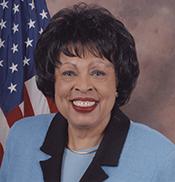
United States · United States Congress · 3 June 2009
School Meal Enhancement Act of 2009 - Directs the Secretary of Agriculture to implement a school-wide paperless free school meal program which allows local educational agencies (LEAs) to select certain schools to provide free meals to all their students without the use of paper applications to determine their eligibility for free or reduced price breakfasts or lunches under the Child Nutrition Act of 1966 or the Richard B. Russell National School Lunch Act. Prohibits the participation of schools that do not have a student enrollment of which at least: (1) 65% are estimated to be eligible for free meals under the Richard B. Russell National School Lunch Act and the Child Nutrition Act of 1966; or (2) 75% are estimated to be eligible for free or reduced price meals under the Richard B. Russell National School Lunch Act. Requires the Secretary to issue guidance that establishes an alternate, paperless method of determining such estimated eligibility rates. Reimburses the school food service authority of each participating LEA pursuant to a formula that factors in such estimated eligibility rates.
United States · United States Congress · 2 June 2009
Directs the Speaker of the House of Representatives and the President Pro Tempore of the Senate to make arrangements for the presentation of a congressional gold medal to Muhammad Ali in recognition of his contributions to the nation.
United States · United States Congress · 21 May 2009
Tax Equity for Health Plan Beneficiaries Act of 2009 - Amends the Internal Revenue Code to: (1) exclude from an employee's gross income employer-provided accident and health plan benefits extended to a domestic partner or non-dependent, non-spouse beneficiary eligible to receive such benefits under an employer plan (i.e., "eligible beneficiary"); (2) exempt such benefits paid to eligible beneficiaries from applicable employment and unemployment taxes; (3) allow self-employed individuals a tax deduction for the health insurance costs of their eligible beneficiaries; (4) allow tax-exempt volutary employees' beneficiary associations to provide sick and accident benefits to the domestic partners and non-dependent, non-spouse beneficiaries of their members; and (5) allow reimbursement of the medical expenses of an eligible beneficiary from a health savings account (HSA). Directs the Secretary of the Treasury to provide guidance relating to reimbursements from a flexible spending arrangement and a health reimbursement arrangement attributable to an eligible beneficiary as defined by this Act.
United States · United States Congress · 21 May 2009
Korean War Veterans Recognition Act - Adds National Korean War Veterans Armistice Day, July 27, to the list of days on which the flag of the United States should be displayed.
United States · United States Congress · 21 May 2009
Working for Adequate Gains for Employment in Services Act or WAGES Act - Amends the Fair Labor Standards Act of 1938 (FLSA) to establish a base minimum wage for tipped employees of at least: (1) $3.75 an hour beginning 90 days after the enactment of this Act; (2) $5.00 an hour beginning July 1, 2011; and (3) beginning on July 1, 2012, and adjusted as necessary thereafter, 70% of the wage in effect under FLSA but in no case less than $5.50 an hour.
United States · United States Congress · 21 May 2009
Honors: (1) the historic election of women to the Kuwait parliament and its implications for gender equality in the region; and (2) those who fought for women's suffrage and advocated for the advancement of the status of women in Kuwait.
United States · United States Congress · 21 May 2009
Permits the National Korean American Service and Education Consortium to sponsor a free public event on the Capitol grounds on September 17, 2009, to celebrate Citizenship Day.
United States · United States Congress · 20 May 2009
Domestic Partnership Benefits and Obligations Act of 2009 - Provides that a federal employee and his or her domestic partner shall be entitled to benefits available to, and shall be subject to obligations imposed upon, a married federal employee and his or her spouse. Defines "domestic partner" to mean an adult unmarried person living with another adult unmarried person of the same sex in a committed, intimate relationship. Defines "benefits" to include federal health insurance and enhanced dental and vision benefits, retirement and disability benefits, family, medical, and emergency leave, group life insurance, long-term care insurance, compensation for work injuries, and benefits for disability, death, or captivity. Excludes members of the uniformed services from the definition of "employee." Sets forth requirements for filing: (1) an affidavit of eligibility as such a domestic partner, which shall include a certification that the employee and the domestic partner are each other's sole domestic partners and intend to remain so indefinitely; and (2) a statement upon dissolution of such a domestic partnership.
United States · United States Congress · 19 May 2009
Puerto Rico Democracy Act of 2009 - Authorizes the government of Puerto Rico: (1) to conduct a plebiscite giving voters the option to vote to continue Puerto Rico's present political status or to have a different political status; (2) if a majority of ballots favor continuing the present status, to conduct additional such plebiscites every eight years; and (3) if a majority of ballots favor having a different status, to conduct a plebiscite on the options of becoming fully independent from the United States, forming with the United States a political association between sovereign nations that will not be subject to the Territorial Clause of the Constitution, or being admitted as a state of the Union. Prescribes the eligibility requirements for voting in the plebiscite. Requires the Puerto Rico State Elections Commission to certify plebiscite results to the President and Congress.
United States · United States Congress · 19 May 2009
Veterans Educational Equity Act - Provides that, in the case of an individual entitled to veterans' educational assistance under the Post-9/11 Educational Assistance program and who is enrolled at an institution of higher education in a state in which the public institutions charge only fees in lieu of tuition, the Secretary of Veterans Affairs (VA) shall allow the individual to use all or a portion of the amount payable under the educational assistance program to pay the tuition or fees for that program of education.
United States · United States Congress · 19 May 2009
Lord's Resistance Army Disarmament and Northern Uganda Recovery Act of 2009 - Directs the President to submit to the appropriate congressional committees a regional strategy to guide U.S. support for multilateral efforts to eliminate the threat to civilians and regional stability posed by the Lord's Resistance Army (LRA) and to enforce the rule of law and ensure full humanitarian access in LRA-affected areas. Authorizes the President to provide assistance to respond to the humanitarian needs of populations in northeastern Congo, southern Sudan, and Central African Republic affected by LRA activity. Expresses the sense of Congress that the Secretary of State and Administrator of the United States Agency for International Development (USAID) should work with the appropriate congressional committees to increase future assistance to Uganda if the government of Uganda demonstrates a commitment to reconstruction in war-affected areas of northern and eastern Uganda. Expresses the sense of Congress that the President should support efforts by the people of northern Uganda and the government of Uganda to: (1) promote local and national reconciliation including mechanisms outlined in the Annexure to the Agreement on Accountability and Reconciliation between the government of Uganda and the LRA; and (2) assist internally displaced people, establish mechanisms for the demobilization and reintegration of former combatants, and enhance the competency of local institutions including the police.
United States · United States Congress · 18 May 2009
Healthy Families Act - Requires certain employers, who employ 15 or more employees for each working day during 20 or more workweeks a year, to permit each employee to earn at least one hour of paid sick time for every 30 hours worked. Declares that an employer shall not be required to permit an employee to earn more than 56 hours of paid sick time in a calendar year, unless the employer chooses to set a higher limit. Allows employees to use such time to: (1) meet their own medical needs; (2) care for the medical needs of certain family members; or (3) seek medical attention, assist a related person, take legal action, or engage in other specified activities relating to domestic violence, sexual assault, or stalking. Prohibits an employer from interfering with an employee's exercise of such rights. Directs the Secretary of Labor to exercise certain investigative and enforcement authority for employees covered by the Family and Medical Leave Act of 1993 or the Government Employee Rights Act of 1991. Grants the same authority, for employees under their jurisdiction, to the Librarian of Congress, the Comptroller General, the Board of Directors of the congressional Office of Compliance, and the Merit Systems Protection Board. Authorizes civil actions by employees, individuals, or their representatives for damages or equitable relief against employers who violate this Act. Waives a state's sovereign immunity with respect to a suit brought by an employee of a federally-assisted state program or activity for relief authorized under this Act. Requires the Commissioner of Labor Statistics annually to compile information annually on paid sick time, and the Comptroller General to study related matters. Declares that nothing in this Act shall be construed to discourage employers from adopting or retaining more generous leave policies.
United States · United States Congress · 18 May 2009
Expresses the sense of Congress that: (1) Africa is of significant strategic, political, economic, and humanitarian importance to the United States; and (2) the United States should pursue an integrated policy to advance economic development and trade relations with African nations and to foster strategic, political, economic, humanitarian, and cultural ties of mutual benefit to the United States and Africa.
United States · United States Congress · 15 May 2009
Net Operating Loss (NOL) Carryback Act - Amends the Internal Revenue Code to allow a five-year carryback of net operating losses, including the operating losses of life insurance companies, incurred in 2008 and 2009. Denies such extended loss carryover period to: (1) taxpayers in whom the federal government acquires an equity interest under the Emergency Economic Stabilization Act of 2008; (2) the Federal National Mortgage Association (Fannie Mae) and the Federal Home Loan Mortgage Corporation (Freddie Mac); and (3) members of certain affiliated groups.
United States · United States Congress · 14 May 2009
Informed Consumer Choices in Health Care Act of 2009 - Amends the Public Health Service Act to direct the Secretary of Health and Human Services (HHS) to: (1) develop standards for health insurance issuers in providing information to group health plans, for forms used in connection with group health insurance coverage, for quality assurance, for marketing of group health insurance coverage, and for the accuracy and clarity of coverage for out-of-network providers; (2) undertake activities to promote accountability of health insurance issuers in meeting federal health insurance requirements; (3) provide grants to Departments of Insurance in states to assist in enforcement of federal health insurance requirements governing health insurance issuers operating in such states; (4) undertake activities to promote transparency in costs, market practices, and other factors for health insurance coverage; and (5) establish within HHS an Office of Health Insurance Oversight to promote accountability and transparency in health insurance and provide for assistance to consumers in selecting health care coverage. Directs the Secretaries of Labor and the Treasury to establish standards and accountability and transparency initiatives for group health plans comparable to the standards established by the HHS Secretary under this Act.
United States · United States Congress · 14 May 2009
Menu Education and Labeling Act or the MEAL Act - Amends the Federal Food, Drug, and Cosmetic Act to require chain restaurants with 20 or more locations doing business under the same trade name to disclose: (1) in a statement adjacent to a standard menu item, the number of calories, grams of saturated plus trans fat, grams of carbohydrate, and milligrams of sodium in each such item; (2) other information designed to enable the public to understand the significance of the nutrition information provided in the context of a total daily diet; (3) that such nutrition information is available in writing at the point of ordering; and (4) the number of calories in food on a drive-through menu board, adjacent to each menu item. Exempts condiments, items placed on a table or counter for general use, daily specials, and temporary menu items. Requires restaurants that sell self-serve food and beverages, such as through a salad bar, buffet line, or cafeteria lines, to place a sign that lists the number of calories per serving adjacent to each food item or beverage offered. Requires vending machine operators who operate 20 or more vending machines to provide a conspicuous sign disclosing the number of calories contained in each article of food dispensed from such machines. Permits restaurants and vending machine operators to voluntarily provide, and states to require, additional nutritional information.
United States · United States Congress · 14 May 2009
Directs the Secretary of Defense to submit a report to Congress, by December 31, 2009, outlining the exit strategy for U.S. military forces in Afghanistan participating in Operation Enduring Freedom.
United States · United States Congress · 14 May 2009
Expresses support for: (1) the goals and ideals of Mental Health Month; and (2) the finding of the President's Commission on Mental Health that the nation's failure to prioritize mental health is a national tragedy. Recognizes that mental well-being is as important as physical well-being for people, the economy, and the country. Applauds the coalescing of national and community organizations in working to promote public awareness of mental health and in providing critical information and support to the people and families affected by mental illness. Encourages all organizations and health practitioners to use Mental Health Month as an opportunity to promote mental well-being and awareness, ensure access to appropriate services, and support overall quality of life for those living with mental illness.
United States · United States Congress · 14 May 2009
Supports the designation of a National Child Awareness Month to promote awareness of children's charities and youth-serving organizations across the United States.
United States · United States Congress · 13 May 2009
Recognizes that the incredible diversity of different racial and ethnic groups, including Asian American and Pacific Islander, is a source of strength for the United States. Recognizes that the Asian American and Pacific Islander community is influential and crucial to the society and culture of the United States. Reaffirms the commitment of the House of Representatives to the goals and ideals of Asian Pacific American Heritage Month. Celebrates the contributions of Asian Americans and Pacific Islanders to the United States.
United States · United States Congress · 13 May 2009
Supports the goals and ideals of Title VI (International Education Programs) of the Higher Education Act of 1965. Recognizes the need to continue to develop and promote international educational programs.
United States · United States Congress · 13 May 2009
Requires the Architect of the Capitol (AOC) to: (1) design an educational display to explain the significance of the naming of Emancipation Hall in the Capitol Visitor Center; and (2) place the display in an appropriate location in Emancipation Hall.
United States · United States Congress · 12 May 2009
Preserving Patient Access to Primary Care Act of 2009 - Amends the Higher Education Act of 1965 to authorize the Secretary of Education to award recruitment incentive grants or contracts to graduate medical schools to enable them to improve primary care education and training for medical students. Amends the Public Health Service Act (PHSA) to direct the Secretary of Health and Human Services, acting through the Administrator of the Health Resources and Services Administration, to: (1) award grants to critical shortage health facilities to enable them to provide scholarships to individuals who agree to serve as physicians at such facilities after completing a residency in a primary care field; (2) establish an educational loan repayment program for individuals who agree to serve as primary care physicians or primary care providers (including nurse practitioners) in an area that is not a health professional shortage area but has a critical shortage of such physicians or providers; and (3) establish an educational loan repayment program for individuals who agree to serve as physicians in the field of obstetrics and gynecology or as certified nurse midwives in an area that is not a health professional shortage area. Amends the Higher Education Act of 1965 to provide for deferment of education loans during medical residency and internships in a primary care field. Amends the PHSA to direct the Secretary to award grants to eligible state and local government entities for the development of informational materials that promote careers in primary care. Amends the PHSA to extend the authorization of appropriations for training in a family medicine, general internal medicine, general geriatrics, general pediatrics, physician assistance, general dentistry, and pediatric dentistry Authorizes increased appropriations for the national health service corps scholarships and loan repayment programs. Amends title XIX (Medicaid) of the Social Security Act (SSA) to allow the use of Medicaid transformation payments for methods for improving medical assistance under Medicaid and SSA title XXI (Children's Health Insurance Program) (CHIP, formerly known as SCHIP) by encouraging certain medical practices to qualify as patient centered medical homes. Amends SSA title XVIII (Medicare) to: (1) increase budget neutrality limits under the physician fee schedule to account for anticipated savings resulting from payments for certain services and the coordination of beneficiary care; and (2) require a separate Medicare payment for designated primary care services and comprehensive care coordination services. Amends SSA title XVIII to cover patient-centered medical home services. Directs the Secretary to develop a methodology to increase payments for designated evaluation and management services provided by primary and principal care providers. Requires: (1) additional incentive payments for primary care services furnished in health professional shortage areas; (2) permanent extension of the floor on the Medicare work geographic adjustment under the physician fee schedule; and (3) permanent extension of the Medicare incentive payment program for physician scarcity areas. Directs the Secretary to study and report to Congress on the process for determining relative value under the Medicare physician fee schedule. Eliminates cost sharing for preventive benefits and the time restriction for initial preventive physical examination. Directs the Secretary to study and report to Congress on: (1) facilitating the receipt of Medicare preventive services by Medicare beneficiaries; (2) increasing the ability of physicians and primary care providers to assist Medicare beneficiaries in obtaining needed prescriptions under Medicare part D (Voluntary Prescription Drug Benefit Program); and (3) developing and implementing mechanisms to promote and increase interaction between physicians or primary care providers and the families of Medicare beneficiaries, as well as other caregivers who support such beneficiaries, for the purpose of improving patient care under the Medicare program. Requires additional payments to physicians for services to individuals with limited English proficiency (LEP). Requires various specified studies. Directs the Medicare Payment Advisory Commission (MEDPAC) to provide an ongoing assessment of the impact of changes in Medicare payment policies in improving access to and equity of payments to primary care physicians and primary care providers. Authorizes distribution of additional residency positions and the counting of resident time in certain outpatient settings. Establishes rules for counting resident time in a nonhospital setting primarily engaged in furnishing patient care in non-patient care activities, such as didactic and scholarly activities and other activities (but not research not associated with the treatment or diagnosis of a particular patient). Authorizes redistribution of residency slots after a hospital closes or is acquired by another entity with the approval of a bankruptcy court. Directs the Secretary to revise the 9th Statement of Work under the Quality Improvement Program to include a requirement that, in order to be an eligible Quality Improvement Organization (QIO) for the 9th Statement of Work contract cycle, a QIO provide assistance, including technical assistance, to physicians under the Medicare program that seek to acquire the elements necessary to be recognized as a patient centered medical home practice under the National Committee for Quality Assurance's Physician Practice Connections -- PCMH module.
United States · United States Congress · 7 May 2009
Family Income to Respond to Significant Transitions Act - Directs the Secretary of Labor to award grants to states to pay for the federal share of the cost of carrying out programs that assist families by providing, through various mechanisms, wage replacement for eligible individuals taking leave to respond to caregiving needs resulting from the birth or adoption of a child, or for other purposes under the Family and Medical Leave Act of 1993 (FMLA) or provided under state or local law.
United States · United States Congress · 7 May 2009
Gun Show Loophole Closing Act of 2009 - Amends the federal criminal code to make it unlawful for any person to operate a gun show unless such person: (1) has attained 21 years of age; (2) is not prohibited from transporting, shipping, or receiving firearms and has not violated any federal firearms requirements; (3) has registered with the Attorney General as a gun show operator and has provided a photograph and fingerprints; (4) has not concealed material information nor made false statements in connection with a gun show operator registration; and (5) notifies the Attorney General of the date, time, and duration of a gun show not later than 30 days before the commencement of such show and verifies the identity of each vendor at the gun show. Imposes recordkeeping requirements on gun show operators and criminal penalties for failure to register as a gun show operator and maintain required records. Grants the Attorney General authority to enter the business premises of any gun show operator, without a showing of reasonable cause or a warrant, to examine records and inventory to determine compliance with this Act. Increases criminal penalties for serious recordkeeping violations and violations of criminal background check requirements. Authorizes the Director of the Bureau of Alcohol, Tobacco, Firearms, and Explosives (ATF) to hire additional investigators to carry out inspections of gun shows.
United States · United States Congress · 7 May 2009
Minority Small Business Enhancement Act of 2009 - Amends the Small Business Act to consider an individual with a net worth of less than $1.5 million as eligible for participation in a Small Business Administration (SBA) program providing grants to small businesses owned and controlled by economically disadvantaged individuals. Allows a small business to receive SBA developmental assistance under the program for the entire period of an SBA-guaranteed loan. Redefines the term "bundled contract" to mean a contract or order entered into to meet procurement requirements that are consolidated in a bundling of contract requirements, without regard to its designation by the procuring agency or whether a study of the effects of the solicitation on civilian or military personnel has been made, subject to exceptions. Expands the definition of "bundling of contract requirements." Makes the revised and expanded definitions inapplicable to contracts for construction services under $65 million or under $5 million for all other types of contracts. Increases from: (1) 23% to 25% the government-wide small business procurement contract goal; and (2) 5% to 10% the government-wide procurement goal for small disadvantaged businesses and women-owned businesses. Limits the number of categories for which a small business may qualify under such goals. Requires a report from the Comptroller General to Congress on disparities in the awarding of federal contracts to small businesses owned and controlled by socially and economically disadvantaged individuals, small businesses, and other businesses.
United States · United States Congress · 7 May 2009
Expresses the sense of the House of Representatives that: (1) the United States recommits to fighting discrimination, xenophobia, and human and civil rights abuses in both domestic and foreign policy; (2) the United States reaffirms its commitment to the Universal Declaration of Human Rights; (3) the Senate should give its advice and consent to the ratification of specified covenants and conventions of the United Nations and the International Labor Organization; and (4) the United States should fully support the Inter-American human rights system.
United States · United States Congress · 6 May 2009
Expresses support for the designation of National Asthma and Allergy Awareness Month. Encourages awareness about the prevalence of asthma and allergies and the disparities in asthma cases based on race, ethnicity, and economic status. Reaffirms the nation's commitment to continued education surrounding asthma and allergy treatment and symptoms and to advancing care for both conditions.
United States · United States Congress · 6 May 2009
Expresses support for the goals and ideals of National Women's Health Week. Recognizes the importance of: (1) preventing diseases that commonly affect women; and (2) federally funded programs that provide research and collect data on common diseases in women. Calls on women to observe National Women's Check-Up Day by receiving preventive screenings.
United States · United States Congress · 5 May 2009
New Frontier Congressional Gold Medal Act - Authorizes the President to present gold medals, on behalf of Congress, to: (1) the astronauts of the Apollo 11 mission to the surface of the moon, Neil A. Armstrong (the first human to walk on the moon), Edwin E. "Buzz" Aldrin Jr. (pilot of the lunar module Eagle and second person to walk on the moon), and Michael Collins (pilot of their command module Columbia) in recognition of the first lunar landing, on July 20, 1969; and (2) John Herschel Glenn, the first American to orbit the Earth, on February 20, 1962.
United States · United States Congress · 4 May 2009
Health Empowerment Zone Act of 2009 - Authorizes the Secretary of Health and Human Services (HHS), at the request of a broad-based community partnership, to designate a community that experiences disproportionate disparities in health status and health care as a health empowerment zone. Requires federal officials to give priority in awarding competitive grants to grants used in or benefiting a health empowerment zone. Directs the Secretary to provide: (1) technical assistance (or grants) to entities seeking to form a community partnership or obtain a health empowerment zone designation for a community; and (2) grants to community partnerships for implementation of the strategic plan for a health empowerment zone.
United States · United States Congress · 30 April 2009
Mercury Pollution Reduction Act - Declares that the United States should develop policies and programs that will reduce: (1) mercury use and emissions; (2) mercury releases from the reservoir of mercury currently in use or circulation; and (3) exposures to mercury, particularly of women of childbearing age and young children. Amends the Toxic Substances Control Act to prohibit: (1) the manufacture of chlorine or caustic soda using mercury cells; and (2) the export of any mercury, mercury cells, mercury compounds, and mixtures containing mercury by the owner or operator of a chlor-alkali facility. Requires the owner or operator of each chlor-alkali facility to report to the Environmental Protection Agency (EPA) Administrator and the state in which the facility is located on mercury waste, emissions, and content in products. Requires the Administrator to: (1) conduct a comprehensive mercury inventory covering the life and closure of chlor-alkali facilities that cease operations on or after January 1, 2009; and (2) obtain mercury purchase records and such other information from each such facility as are necessary to determine the magnitude and nature of mercury releases from the facility into air and other environmental media.
United States · United States Congress · 28 April 2009
Routine HIV Screening Coverage Act of 2009 - Amends the Public Health Service Act, the Employee Retirement Income Security Act (ERISA), and the Internal Revenue Code to require a group health plan to provide coverage for routine HIV screening under terms and conditions no less favorable than for other routine screenings. Prohibits such a plan from taking specified actions to avoid the requirements of this Act. Applies such requirements to health insurance coverage offered in the individual market and coverage offered under the Federal Employees Health Benefits Program (FEHBP).
United States · United States Congress · 28 April 2009
Initiating Foreign Assistance Reform Act of 2009 - Directs the President to develop and implement: (1) a National Strategy for Global Development to further the U.S. foreign policy objective of reducing poverty and contributing to economic growth in developing countries, including responding to humanitarian crises; and (2) a system to monitor and evaluate the effectiveness of U.S. foreign assistance. Expresses the sense of Congress that American taxpayers and foreign assistance recipients should have, to the maximum extent practicable, full access to U.S. foreign assistance information.
United States · United States Congress · 27 April 2009
Amends the Foreign Affairs Reform and Restructuring Act of 1998 to reauthorize the United States Advisory Commission on Public Diplomacy through October 1, 2011.
United States · United States Congress · 27 April 2009
International Protecting Girls by Preventing Child Marriage Act of 2009 - Authorizes the President to provide assistance, including through multilateral, nongovernmental, and faith-based organizations, to prevent child marriage in developing countries and to promote the educational, health, economic, social, and legal empowerment of girls and women. Sets forth priority assistance criteria. Directs the President, through the Secretary of State, to establish a multi-year strategy to prevent child marriage in developing countries and to promote the empowerment of girls at risk of child marriage. Sets forth strategy elements. Amends the Foreign Assistance Act of 1961 to require that Department of State country reports on human rights practices include a description of the status of child marriage for countries with specified rates of child marriage. Defines "child marriage" as the marriage of a girl or boy not yet the minimum age for marriage stipulated in law in the country in which the girl or boy is a resident.
United States · United States Congress · 27 April 2009
Remembers the lives of the women and men who have lost their fight with breast cancer and expresses support and admiration for those who have survived. Congratulates participants in the Global Race for the Cure to raise money for research and education. Urges Americans to walk this year and support their family and friends who participate. Honors the Susan G. Komen Global Race for the Cure.
United States · United States Congress · 23 April 2009
Star-Spangled Banner Commemorative Coin Act - Directs the Secretary of the Treasury to mint and issue $5 gold coins and $1 silver coins in commemoration of the bicentennial of the writing of the Star-Spangled Banner . Requires a coin design emblematic of the War of 1812, and in particular of, the Battle for Baltimore that formed the basis for the Star-Spangled Banner. Limits the period for coin issuance to calendar year 2012. Imposes a surcharge of $35 per coin for the $5 coins and $10 per coin for the $1 coins, which shall be distributed to the Maryland War of 1812 Bicentennial Commission for the purpose of supporting bicentennial activities, educational outreach activities, and preservation and improvement activities pertaining to the sites and structures relating to the War of 1812.
United States · United States Congress · 23 April 2009
Protecting America's Workers Act - Amends the Occupational Safety and Health Act of 1970 (OSHA) to expand its coverage to federal, state, and local government employees. Authorizes the Secretary of Labor, under specified conditions, to cede OSHA jurisdiction to another federal agency with respect to certain occupational standards or regulations for such agency's employees. Declares OSHA inapplicable to working conditions covered by the Federal Mine Safety and Heath Act of 1977. Sets forth increased protections for whistle blowers under OSHA. Sets forth provisions relating to: (1) the posting of employee rights; (2) a prohibition against the adoption or implementation of policies or practices by employers that discourage the reporting of work-related injuries or illnesses or that discriminate or provide for adverse action against any employee for reporting such injury or illness; (3) a prohibition against the loss of wages or employee benefits as a result of an employee participating in or aiding workplace inspections; (4) investigations of incidents in a place of employment resulting in a death or the hospitalization of two or more employees; (5) a prohibition against designating a citation for an occupational health and safety standard violation as an unclassified citation; (6) the rights of an employee who has sustained a work-related injury or illness that is the subject of an investigation; (7) an employer's right to contest citations and penalties; (8) the Secretary's assertion of an employer's failure to correct a serious hazard during an employer's contest to a citation; and (9) employee objections to modifications of citations. Increases civil and criminal penalties for certain OSHA violators. Requires a state that has an approved plan for the development and enforcement of occupational safety and health standards to amend its plan to conform to the requirements of this Act within 12 months after enactment of this Act.
United States · United States Congress · 23 April 2009
Amends the Elementary and Secondary Education Act of 1965 to authorize the Secretary of Education to award competitive grants to educational organizations to carry out proposed or existing Holocaust education programs. Prohibits such grants from being used to supplant nonfederal funds the grantees would otherwise have used for Holocaust education programs.
United States · United States Congress · 23 April 2009
Restitution for the Exonerated Act of 2009 - Authorizes the Attorney General to award grants and supplemental funds to nonprofit organizations to be used only to provide support services (e.g., employment training, health care services, and legal assistance) to exonerees. Prohibits services for exonerees who have not demonstrated financial need or for a period of more than 24 months. Defines "exoneree" as an individual who has been convicted of a crime carrying a prison sentence of one year or more, has served at least six months of such prison sentence, and has been determined to be factually innocent of the crime.
United States · United States Congress · 23 April 2009
Mercury Pollution Reduction Act of 2009 - Declares that the United States should develop policies and programs that will reduce: (1) mercury use and emissions; (2) mercury releases from the reservoir of mercury currently in use or circulation; and (3) exposures to mercury, particularly of women of childbearing age and young children. Amends the Toxic Substances Control Act to prohibit: (1) the manufacture of chlorine or caustic soda using mercury cells; and (2) the export of any mercury, mercury cells, mercury compounds, and mixtures containing mercury. Requires the Secretary of Energy to develop a system for the storage of all mercury, mercury cells, mercury compounds, and mixtures containing mercury from a chlor-alkali facility. Requires the owner or operator of each chlor-alkali facility to report to the Environmental Protection Agency (EPA) Administrator and the state in which the facility is located on mercury waste, emissions, and content in products. Requires the Administrator to: (1) conduct a comprehensive mercury inventory covering the life and closure of chlor-alkali facilities that cease operations on or after January 1, 2009; and (2) obtain mercury purchase records and such other information from each such facility as are necessary to determine the magnitude and nature of mercury releases from the facility into air and other environmental media.
United States · United States Congress · 23 April 2009
Supports the goals and ideals of Financial Literacy Month, including raising public awareness about financial education. Recognizes the importance of managing personal finances, increasing personal savings, and reducing personal debt in the United States.