Bill· HRH.R. 2070 (102nd)referred
To grant a Federal charter to the Fleet Reserve Association.
United States · United States Congress · 24 April 1991
Grants a Federal charter to the Fleet Reserve Association.
The world's political record
Person
United States · Official source
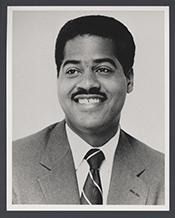
1,892 records where Rep. Wheat, Alan [D-MO-5] is listed as a sponsor, author, or other actor. Search with topics and years
United States · United States Congress · 24 April 1991
Grants a Federal charter to the Fleet Reserve Association.
United States · United States Congress · 24 April 1991
Designates May 15, 1991, as Joe DiMaggio Day, in honor of the 50th anniversary of his remarkable and lasting major league feat of hitting in 56 consecutive games.
United States · United States Congress · 24 April 1991
Declares that it is the sense of the House of Representatives that the United States implement the recommendations of the National Academy of Sciences in its report "Policy Implications of Greenhouse Warming."
United States · United States Congress · 23 April 1991
Designates October 16, 1991, and October 16, 1992, as World Food Day.
United States · United States Congress · 23 April 1991
Expresses the sense of the House of Representatives that it should be U.S. policy to reduce national emissions of carbon dioxide in the next ten years by 20 percent from the 1988 baseline level and to assume a leadership position in negotiating an international climate protection treaty that includes establishing: (1) agreements by industrialized nations to reduce their current carbon dioxide emissions by 20 percent over 1988 levels in the next ten years, by developing nations to reduce their growth in carbon dioxide emissions from fossil fuel combustion, and by all countries to reduce emissions of greenhouse gases; (2) an international fund and other financial mechanisms to help developing countries achieve such objectives; (3) mechanisms for continuing international cooperation for the development of policies for future emissions reductions; and (4) commitments to cease the destruction of primary forests.
United States · United States Congress · 22 April 1991
Defense Environmental Activities Act - Authorizes appropriations for FY 1992 for the armed forces and other agencies and activities of the Department of Defense (DOD) for environmental restoration, defense. Earmarks a specified amount of FY 1992 DOD appropriations for other environmental activities. Requires information pertaining to amounts obligated in the past fiscal year and estimated to be allocated for the current fiscal year for DOD compliance with applicable environmental law and for certain DOD waste minimization programs to be included in an annual report of the Secretary of Defense on DOD environmental restoration.
United States · United States Congress · 18 April 1991
National Training Center for Afro-American Museum Professionals Act - Directs the Secretary of the Interior, acting through the National Park Service, to: (1) provide for the operation and maintenance of, and technical assistance for, the National Afro-American Museum and Cultural Center (the Museum), in Wilberforce, Ohio; and (2) construct a National Training Center at the Museum to prepare professionals for our Nation's museums. Authorizes appropriations for such purposes. Directs the Secretary of Education, acting through the Museum, to: (1) contract with a consortium of institutions of higher education to implement a program of Afro-American professional museum studies at such National Training Center of the Museum; and (2) provide scholarships and loans for students in those studies. Authorizes appropriations. Terminates the National Afro-American History and Culture Commission (established by the National Center for the Study of Afro-American History and Culture Act) 30 days after the enactment of this Act. Provides that ultimate governance of the Museum shall rest with a Board of Governors established by the Congress in consultation with the State of Ohio.
United States · United States Congress · 18 April 1991
Education Savings Bonds Improvement Act - Amends the Internal Revenue Code to exclude from gross income any income from U.S. savings bonds used to pay tuition and fees of any grandchild at an institution of higher learning or vocational school. (Current law limits the exclusion to educational expenses of the taxpayer, spouse, or dependent.)
United States · United States Congress · 18 April 1991
Children's Personal Injury Awards Tax Equity Act - Amends Internal Revenue Code provisions governing situations in which unearned income of a child under age 14 is taxed as if it were parental income. Excludes from income subject to the parental tax rate any earnings attributable to personal injury awards.
United States · United States Congress · 18 April 1991
Designates July 15, 1991, as National Minority Organ Donor Encouragement Day.
United States · United States Congress · 17 April 1991
Long-Term Care Insurance Consumer Protection Act of 1991 - Amends title XIX (Medicaid) of the Social Security Act to afford Federal consumer protection to purchasers of long-term care insurance policies by requiring that, before such policies may be issued or sold, they must have been either certified by the Secretary of Health and Human Services as meeting the minimum Federal standards and requirements outlined below or approved by the State commissioner or superintendent of insurance under a regulatory program each State is required to establish that: (1) incorporates such standards and requirements; (2) provides consumers with access to basic information on issuers and policies; and (3) provides for an approval process for proposed premium increases. Outlines Federal standards long-term care insurance policies must meet, including those which mandate that such policies: (1) offer mandatory inflation protection features, nonforfeitable benefits after a certain vesting period should the policy lapse, and limited premium increases; (2) be guaranteed renewable except for nonpayment of premiums or material misrepresentation; (3) use standard language and a uniform format, with certain variations in language permitted; (4) disclose a detailed outline of coverage; (5) allow purchasers 30 days to rescind their purchase of the policy and to have the premium refunded; (6) not condition or limit eligibility for benefits, including non-institutional benefits, except in cases of preexisting conditions; (7) use functional assessment tools for determining home care eligibility; (8) provide a right to appeal denials for home care eligibility; (9) provide a six-month period of contestability after issuance of the policy; (10) prohibit discrimination in cases of individuals with Alzheimer's disease; and (11) provide benefits over a period of at least 12 consecutive months. Regulates the marketing of long-term care insurance policies by establishing prohibitions on certain sales practices, such as high pressure tactics, and on sales to Medicaid beneficiaries and sales of duplicate service benefit policies. Imposes additional requirements on issuers of long-term care insurance policies with respect to: (1) the prompt mailing of new policies after approval; (2) the furnishing of information to policyholders regarding denied claims and to the Secretary and appropriate State officials regarding policies, premiums, lapse, replacement, and rescission rates and denied claims; (3) the obtaining of medical assessments for elderly applicants if the policy is not guaranteed to issue; and (4) the limiting of compensation to agents for the sale of long-term care insurance policies. Sets forth penalties for issuing unapproved or uncertified policies and for violating prohibited sales practices and the requirements imposed on issuers of long-term care insurance policies. Requires reports on functional ability assessment tools and on solvency protections for such issuers. Requires a study to develop a standard measure of value for long-term care insurance policies. Authorizes appropriations to increase funding for long-term care insurance information, counseling, and assistance.
United States · United States Congress · 17 April 1991
Terminates the effectiveness of certain November 22, 1988, amendments to the foreign repair station rules of the Federal Aviation Administration.
United States · United States Congress · 17 April 1991
Designates June 1991 as National Forest System Month.
United States · United States Congress · 16 April 1991
National Traffic Fatality and Injury Reduction Act of 1991 - Authorizes the Secretary of Transportation to make grants for traffic safety programs to States which require any person riding a motorcycle to wear a helmet and any driver or front seat passenger of a passenger car to have seat belts properly fastened. Authorizes appropriations. Requires States receiving grants to agree to maintain at least their average levels of expenditures for traffic safety programs over the preceding two fiscal years. Prohibits a State from receiving such a grant in more than three fiscal years. Specifies the Federal share of grants and the aggregate amount of such grants to each State. Sets forth requirements with respect to: (1) States' eligibility for grants; and (2) measurement of compliance with State safety laws. Eliminates a provision prohibiting a highway safety program approved by the Secretary from requiring that motorcycle operators or passengers 18 years or older wear a safety helmet. Requires any State where it is lawful to operate or ride a motorcycle without wearing a motorcycle helmet or to occupy a front seating position in a passenger car without using a safety belt or child restraint system to expend a specified percentage of its apportioned Federal aid highway funds for highway safety programs.
United States · United States Congress · 16 April 1991
Designates the Federal building being constructed at 77 West Jackson Boulevard, Chicago, Illinois, as the Ralph H. Metcalfe Federal Building.
United States · United States Congress · 16 April 1991
Social Security Public Pension Offset Amendments Act of 1991 - Amends title II (Old Age, Survivors and Disability Insurance) (OASDI) of the Social Security Act to reduce the proportion of monthly Federal or State pension benefits subtracted from monthly OASDI benefits payable to a spouse, surviving spouse, or parent as the total of such monthly benefits diminishes.
United States · United States Congress · 16 April 1991
Calls upon the South African Government to: (1) repeal all laws and legislation that maintain the system of apartheid; and (2) release all political prisoners, terminate the policy of detention without trial, cease all executions of political prisoners, and grant all black South African exiles the opportunity to return home. Urges the President: (1) through the Secretary of State, to investigate the South African Government's role in the factional fighting affecting the black townships and reports of official South African death squads; and (2) not to ease or lift sanctions against such Government under the Comprehensive Anti-Apartheid Act of 1986 until all the preconditions for lifting such Act are met and the process toward the establishment of nonracial democracy is irreversible.
United States · United States Congress · 10 April 1991
American Employees Equity Act of 1991 - Amends title VII (Equal Employment Opportunities) of the Civil Rights Act of 1964 to include U.S. citizens employed in a foreign country in the definition of "employee." Declares that it is not unlawful to take an action, with respect to an employee in a foreign country, which would otherwise be prohibited by certain unlawful employment practice provisions of such title, if compliance with those provisions would violate the law of the foreign country. Declares that: (1) any practice prohibited by such provisions engaged in by an employer who controls a corporation incorporated in a foreign country is presumed to be engaged in by the employer; and (2) those provisions do not apply to the foreign operations of a foreign employer which is not controlled by an American employee.
United States · United States Congress · 10 April 1991
Freedom of Access to Clinic Entrances Act of 1991 - Amends the Federal criminal code to impose civil or criminal penalties upon persons (other than agents of medical facilities or law enforcement officers acting within the scope of official authority) who intentionally prevent other individuals from entering or exiting a medical facility. Permits aggrieved individuals to obtain appropriate relief through civil actions.
United States · United States Congress · 10 April 1991
Commission to Study Reparation Proposals for African Americans Act - Establishes the Commission to Study Reparation Proposals for African Americans to: (1) examine slavery and discrimination in the colonies and the United States from 1619 to the present, including the lingering negative effects on living African Americans and on U.S. society; and (2) recommend appropriate remedies, including whether the U.S. Government should offer a formal apology and whether some form of compensation is warranted and, if so, its amount, form, and eligibility requirements. Terminates the Commission 90 days after submission of its final report. Authorizes appropriations.
United States · United States Congress · 10 April 1991
Designates the week beginning February 16, 1992, as National Visiting Nurse Associations Week.
United States · United States Congress · 9 April 1991
Urban Schools of America (USA) Act of 1991 - Title I: Urban School Improvement - Authorizes appropriations for this title. Directs the Secretary of Education (the Secretary) to reserve five percent of specified funds for competitive grant awards to exemplary school programs. Directs the Secretary to allot, from remaining amounts, to each eligible local educational agency (LEA) with an approved application an amount based on that LEA's relative allocation under certain provisions of the Elementary and Secondary Education Act of 1965 for education of disadvantaged children (ESEA title I chapter 1). Provides for annual payments to eligible LEAs with approved applications if they comply with certain data collection requirements to monitor progress toward meeting national education goals, and demonstrate such progress. Requires each such LEA to reserve up to five percent of its allotment to make as many grants as practicable, for authorized activities, to community-based organizations or nonprofit partnerships between the LEA and a city-wide collaborative of private sector businesses. Sets limits on the time and the amount of funds to be used for planning purposes. Requires LEAs to use funds under this title to meet national education goals through programs designed to: (1) increase the academic achievement of urban school children to at least the national average; (2) prepare all urban children for school; (3) increase the graduation rates of urban students to at least the national average; (4) prepare urban school graduates to enter higher education, pursue careers, and exercise their responsibilities as citizens; (5) recruit and retain qualified teachers; and (6) decrease the use of drugs and alcohol by urban students, and enhance their physical and emotional health. Sets forth program accountability requirements: (1) in general, for initial grants, renewal grants, and renewal of school participation; (2) for achievement, including demonstration of improvement; and (3) for data collection to monitor progress in achieving national education goals. Authorizes the Secretary to make, from reserved funds, competitive incentive awards to individual schools participating in projects assisted under this title that demonstrate exemplary progress in meeting specified program requirements. Directs the Secretary, by January 1, 1993, to report on the impact of Federal regulations, guidelines, and policies on urban public schools. Requires LEAs desiring to receive an allotment under this Act to establish a local advisory group to: (1) advise on design and conduct of a needs assessment for participating schools; (2) assist in planning for community-wide collaboration in service delivery for youths in participating schools; (3) advise the LEA and the community on how they can work together to use multiple service providers; (4) advise and assist program implementation and review program evaluation; (5) review and approve community-based organizations' applications; (6) advise on strategies for increasing parental involvement and the number of school volunteers and role models; and (7) review community-based programs' progress or national education goals. Allows use of a comparable existing local advisory group to comply with such requirement. Sets forth special rules relating to ranking of schools to determine relative need, in general, on the basis of achievement, poverty, and racial isolation. Requires each LEA receiving a grant to serve between ten and 20 percent of its schools. Requires eligible LEAs to have flexibility to serve homeless children, desegregating students, immigrants, migrants, or other highly mobile populations, within the program assisted under this title. Deems any approved program for any school served under certain ESEA title I chapter 1 provisions to be sufficient to meet the application and program accountability requirements of this title. Title II: School Building Repair and Renovation - Authorizes appropriations to assist eligible LEAs in repairing and renovating instructional facilities in city schools. Directs the Secretary to reserve one percent of such funds for monitoring activities under this title. Directs the Secretary to allot the remainder to eligible LEAs, which shall use such allotment for programs for school building repair and renovation and for programs for school environmental concerns and safety improvement. Directs the Secretary to allocate such funds on the basis of the number of: (1) children from families below the poverty line; (2) school buildings used for instructional purposes; and (3) school buildings more than 25 years old used for instructional purposes. Limits the period covered by a grant application to three years, and requires annual review by the Secretary. Lists types of programs eligible LEAs must conduct with their allotments for: (1) repair and renovation of school buildings; and (2) improvements related to environmental concerns and safety. Title III: Urban School Research - Authorizes appropriations, to carry out this title, for the National Institute for Urban Education (the Institute), established in the Department of Education by this title. Amends the Department of Education Organization Act to create an Assistant Secretary for Urban Education (the Assistant Secretary), who is to establish the Institute in the Department. Directs the Assistant Secretary to: (1) reserve 20 percent of funds for this title for operation of the Institute; and (2) from the remainder of such funds, make allotments to eligible LEAs on the basis of numbers of students. Directs the Institute to: (1) evaluate and disseminate results of activities under title I; (2) conduct research in urban education; (3) serve as a clearinghouse on urban education research findings, policies, and practices; (4) assist LEAs in developing research and evaluation to assess progress toward meeting national education goals; (5) provide training in research and evaluation; (6) design a research and evaluation strategy for assessing progress under this Act; and (7) design and test both common indicators and new multiple-measures of progress toward national education goals. Provides for an Institute Governing Board. Allows LEAs to use of funds under this title for: (1) collaborative and coordinated research and evaluation of educational techniques or approaches in multiple cities served by eligible LEAS; (2) evaluation of projects assisted under title I; (3) dissemination of information on successful projects and approaches under title I; (4) design and implementation of programs for LEA technical assistance to individual schools and teachers involved in title I projects; (5) data and information management services for schools participating in a title I program; (6) staff training in such schools; and (7) evaluation of progress in meeting national educational goals by LEAs receiving assistance under this Act; (8) staff training in test interpretation and use for diagnostic purposes; (9) information for parents on test results and interpretation; (10) research and evaluation technology and training; (11) tools for assessment of students in individualized instruction; (12) research on school policies and practices that may be barriers to student success; and (13) new, multiple, alternative assessments of student progress. Title IV: General Provisions - Establishes the Interagency Council on Urban Schools to: (1) review Federal programs to determine effects on urban schools' ability to meet national education goals; (2) track school progress toward such goals; (3) solicit advice and information for urban education experts and urban school representatives on improvement of Federal programs; (4) review Federal regulations for duplication or contradiction; (5) report annually to the Congress and the President on urban school progress; (6) review and recommend improvement or streamlinig of Federal data collection in urban schools; and (7) conduct research to help urban school practitioners improve school performance. Directs the President to conduct a White House Conference on Urban Education before October 30, 1992. Requires the Conference to: (1) develop recommendations and strategies for improving urban education; (2) marshal the forces of the private sector, governmental agencies at all levels, parents, teachers, communities, and education officials to assist urban schools in meeting national goals; and (3) conduct initial planning for a permanent national advisory commission on urban education. Requires a report to the President. Authorizes appropriations for such Conference. Establishes a National Commission on Urban Education (the Commission). Directs the Commission to: (1) study specified issues relating to urban schools; and (2) report, and recommend changes in Federal legislation, to the President and appropriate congressional committees. Terminates the Commission three years after its first meeting. Authorizes appropriations for the commission. Requires eligible LEAs to use Federal funds received under this Act only to supplement but not supplant non-Federal funds.
United States · United States Congress · 9 April 1991
Nutrition Advertising Coordination Act of 1991 - Amends the Federal Trade Commission Act to deem a food advertisement misleading if it expressly or by implication characterizes the level of any nutrient, the relationship of any nutrient to a disease or a health-related condition, or the amount of any nutrient in a serving or portion of the food, unless the characterization is in accordance with specified provisions of the Federal Food, Drug, and Cosmetic Act. Deems a food advertisement misleading if it contains a claim that fails to: (1) disclose the level of fat or saturated fat when a claim characterizes the level of cholesterol; (2) disclose the level of cholesterol when a claim characterizes the level of saturated fat; (3) disclose the level of total fat when a claim is made that the food is high in dietary fiber; or (4) include clearly and conspicuously the statement, "See product label for complete nutrition information."
United States · United States Congress · 9 April 1991
Amends the Internal Revenue Code to make members of the armed forces serving on extended active duty and stationed outside the United States eligible for the earned income credit.
United States · United States Congress · 22 March 1991
Directs the American Battle Monuments Commission to establish a memorial on Federal land in the District of Columbia or its environs to honor World War II veterans and to commemorate U.S. participation in that conflict. Directs the Commission to plan, design, construct, and oversee the operation of the memorial. Specifies that such design shall provide for accessibility by, and accommodations for, the physically handicapped. Establishes the World War II Memorial Advisory Board to: (1) promote the establishment of the memorial and encourage the donation of private funds for construction and maintenance; (2) assist and cooperate with the Commission in the selection of the site and design for the memorial; and (3) transmit annual reports on its activities to the Congress. Authorizes the Commission to solicit private contributions for such memorial. Establishes a fund in the Treasury which shall be made available to the Commission to carry out this Act. Authorizes Federal funding, in addition to such private funds, for: (1) site preparation, design, planning, and associated administrative costs for establishment of the memorial; and (2) construction, maintenance, and operation of the memorial. Authorizes assistance from specified Federal departments and agencies, including the Library of Congress. Authorizes the transfer of Federal property to the Commission. Authorizes the Commission to purchase suitable property within the District of Columbia for the establishment of such memorial. Urges the Government to encourage 50th anniversary commemorations of the U.S. role in World War II. Urges the Smithsonian Institution and other Federal museums to develop commemorative exhibitions to be shared with academic institutions.
United States · United States Congress · 22 March 1991
World War II 50th Anniversary Commemorative Coin Act - Expresses the sense of the Congress that the United States should recognize the 50th anniversary of World War II by minting and issuing commemorative coins. Directs the Secretary of the Treasury to issue and mint such coins in five dollar, one dollar, and half dollar denominations. Mandates that surcharges received from the sale of such coins be deposited in a coinage profit fund and allocated, upon separate congressional authorization, to the American Battle Monuments Commission to establish a World War II memorial. Directs the Secretary to report semiannually to the Congress regarding implementation of this Act.
United States · United States Congress · 22 March 1991
World Summit for Children Implementation Act of 1991 - Provides for assistance in implementing the plan of action adopted by the World Summit for Children. Expresses the sense of the Congress that: (1) the U.S. Government should commit to increasing participation in the special supplemental food program for women, infants, and children under the Child Nutrition Act (the WIC program) by 20 percent per year in FY 1992 through 1996, to reach full participation by the end of FY 1996; and (2) specified minimum amounts should be appropriated for the WIC program in FY 1992 and 1993 to reach such full participation goal. Expresses the sense of the Congress that the commitment to provide full funding for the Head Start Program, contained in the Human Services Reauthorization Act of 1990, should be implemented in order that the goal of full participation of all eligible three- and four-year-old children can be reached by FY 1994. Amends the Public Health Service Act to direct the Secretary of Health and Human Services to undertake a Children's Vaccine Initiative. Requires that the Director of the National Vaccine Program: (1) plan and coordinate the Initiative; and (2) ensure that the Public Health Service conducts vaccine research, production, and delivery activities under the Initiative in collaboration with non-governmental institutions and with other Federal agencies to ensure the full use of U.S. scientific and industrial capacity to prevent infectious disease. Authorizes appropriations for FY 1992 and 1993. Authorizes appropriations for FY 1992 and 1993 for contributions to the United Nations Children's Fund for activities to promote child health and other assistance programs for children (to carry out specified provisions of the Foreign Assistance Act of 1961). Amends the Foreign Assistance Act of 1961 (the Act) to authorize appropriations for FY 1992 and 1993 for special health needs of children and mothers under the Child Survival Fund. Requires that specified minimum amounts of funds under various provisions for FY 1992 and 1993 be reserved only for such specified child survival activities. Expresses the sense of the Congress that authorization, in such amounts as may be required, should be granted to the President to exercise the (Public Law 480) debt authority with respect to least developed countries that are pursuing reforms to promote long-term economic development (as provided in specified provisions of the Agricultural Trade Development and Assistance Act of 1954, as amended by the Food, Agriculture, Conservation, and Trade Act of 1990). Amends the Act to establish a Vitamin A Deficiency Program. Reserves for such Program specified amounts in FY 1992 and 1993 from funds for development assistance for agriculture, rural development, and nutrition. Amends the Act to direct the President, in carrying out provisions for development assistance for health-related activities, to promote, encourage, and undertake activities relating to research on, and treatment and control of, acquired immune deficiency syndrome (AIDS) in developing countries. Authorizes appropriations for FY 1992 and 1993, for such purpose, to the International AIDS Prevention and Control Fund. Provides that such amounts shall be in addition to other amounts available for such purpose. Amends the Act to reserve specified amounts in FY 1992 and 1993, from funds for development assistance for education and under other provisions of the Act, for international basic education, including early childhood education, primary education, teacher training, other support activities, and adult literacy training. Expresses the sense of the Congress that at least specified minimum amounts should be appropriated for the Migration and Refugee Assistance account, and that at least specified minimum portions of such funds should be reserved for programs of refugee assistance overseas (in addition to amounts available for programs for Soviet, Eastern European, and other refugees resettling in Israel). Amends the Act to replace provisions for certain disadvantaged children in Asia with provisions for assistance to children in exceptionally difficult circumstances. Includes among such children street children, AIDS orphans, other orphaned and abandoned children, and children displaced by armed conflict, poverty, famine, or other disasters. Reserves specified minimum portions of certain funds under the Act in FY 1992 and 1993 for assistance for such children. Requires that such assistance be made available in accordance with policies and general authorities under certain disaster assistance provisions. Directs the President to report annually to the Congress on U.S. contributions to the achievement of the goals of the World Summit for Children, including U.S. efforts to achieve such goals in the United States and in other countries, with an analysis of past, current, and planned funding levels.
United States · United States Congress · 22 March 1991
Agricultural Extended Retirement Credit Act of 1991 - Extends creditable service under the Civil Service Retirement System for periods of service in certain Federal-State cooperative programs which had agricultural or related purposes. Directs the Secretary of Agriculture to transfer to the Department of Agriculture's Surplus Fund the savings resulting from the expedited retirement of those employees of the Department who have been extended such credit. Prohibits the obligation or expenditure of any budget authority or outlays saved in any fiscal year by reason of implementation of this Act. Requires the surplus budget authority and outlays transferred to the fund to be: (1) deposited by the Secretary in the Treasury to the credit of the Civil Service Retirement Fund, as a Government contribution; and (2) credited against pay and other personnel costs required to be sequestered under the Balanced Budget and Emergency Deficit Control Act of 1985 (Gramm-Rudman-Hollings Act). Requires the Comptroller General to notify the Congress of each instance of noncompliance with the requirements of this Act.
United States · United States Congress · 22 March 1991
Directs the Secretary of Veterans Affairs to provide outpatient medical services to any former prisoner of war for any disability.
United States · United States Congress · 21 March 1991
Federal Alternative Fuel Fleet Act - Requires a certain percentage of motor vehicles acquired by the Federal Government for use in a metropolitan or consolidated metropolitan statistical area with a 1990 population of more than 250,000 to be alternative fuel vehicles by specified dates. Amends the Motor Vehicle Information and Cost Savings Act to prohibit the Secretary of Transportation from considering the fuel economy of such alternative fuel vehicles with respect to the enforcement of fuel economy standards under such Act. Prescribes circumstances under which alternative fuels shall be offered for sale to the public. Mandates that the incremental costs of alternative fuel vehicles shall not be applied to any calculation with respect to a limitation under law on the maximum cost of individual vehicles which may be acquired by the United States. Requires the Secretary of Defense to study the feasibility of increasing the use of alternative fuel vehicles in the Department of Defense's motor vehicle fleet. Authorizes appropriations.
United States · United States Congress · 20 March 1991
Violence Against Women Act of 1991 - Title I: Safe Streets for Women - Safe Streets for Women Act of 1991 - Subtitle A: Mandatory Restitution, Treatment, and Rehabilitation for Sex Offenses - Requires that a court order restitution, treatment, and rehabilitation for violations of Federal sexual abuse laws, including participation in a psychotherapeutic treatment program by a licensed therapist for specified persons who committed sexual or sexual-related offenses. Specifies that: (1) the treatment program shall be designed to rehabilitate the affected person and to deter such person from committing a sexual offense after being released from the institution; and (2) treatment for a substance abuse-related condition shall be made available to such person in addition to, but not as a substitute for, counseling under such program. Sets forth provisions with respect to the period of treatment, the requirement of a complete forensic psychological assessment prior to the commencement of the treatment program, termination of treatment, supplemental chemical treatment (but the affected person may refuse to participate, or continue to participate, in supplementary chemical treatment), and the responsibilities of the Attorney General (such as contracting for treatment and documenting subsequent criminal sexual abuse). Directs the Attorney General to establish an advisory committee on therapeutic treatment for sex offenders. Authorizes appropriations. Subtitle B: Law Enforcement and Prosecution Grants to Reduce Violent Crime Against Women - Amends the Omnibus Crime Control and Safe Streets Act of 1968 to require the Director of the Bureau of Justice Assistance to make grants to areas of high intensity crime against women. Requires that the grants be used for personnel, training, technical assistance, data collection, and other equipment for the more widespread apprehension, prosecution, and adjudication of persons committing violent crimes against women. Authorizes the Director to make grants to States, for use by States and their subdivisions, to be used for the same purposes as the high intensity area grants and to reduce the rate of violent crimes against women. Authorizes the Director to make general grants to: (1) States to reduce violent crimes against women; and (2) Indian tribes to reduce violent crimes against women in Indian country. Authorizes the Director, in addition to the grants under this subtitle, to direct any Federal agency, with or without reimbursement, to use its authorities and resources in support of State and local assistance efforts. Authorizes appropriations. Bars any State or other grantee (recipient) from receiving funds under this title unless such recipient incurs the full cost of forensic medical exams for victims of sexual assault when such exams are required under this title. Specifies that a recipient does not incur the full medical cost of such exams if it chooses to reimburse the victim after the fact unless the reimbursement program waives any minimum loss or deductible requirement, provides victim reimbursement within a reasonable time (90 days), permits applications for reimbursement within one year from the date of the exam, and provides information to all subjects of such exams about how to obtain reimbursement. Subtitle C: Safety for Women in Public Transit and Public Parks - Directs the Secretary of Transportation, from funds authorized under existing provisions, to make capital grants for the prevention of crime and to increase security in existing and future public transportation systems. Authorizes the Secretary to make grants and loans to States and local public bodies to increase the safety of public transportation through lighting, camera surveillance, security phones, or other projects. Sets the Federal share of each project at 90 percent of the net cost. Directs the Secretary to provide grants and loans to study ways to reduce violent crimes against women in public transit through better design or operation of public transit systems. Amends the National Park System Improvements in Administration Act to authorize the Secretary of the Interior to provide assistance to reduce violent crime in the National Park System (NPS). Provides for the compilation of a list of areas within the NPS with the highest rates of violent crime. Allows funds to be used, around public parks and recreation areas, for increasing lighting, providing emergency phone lines, increasing security or law enforcement personnel, and any other project to increase security and safety. Amends the Land and Water Conservation Act of 1965 to direct the Secretary of the Interior to provide grants for capital improvements and other measures to increase safety in public parks and recreation areas. Subtitle D: National Commission on Violent Crime Against Women - Establishes the National Commission on Violent Crime Against Women to promote a national policy on violent crime against women and to make recommendations on reducing such crime. Authorizes appropriations. Terminates the Commission after submission of its final report, subject to extension by the President for up to one more year. Subtitle E: New Evidentiary Rules - Amends the Federal Rules of Evidence to exclude, notwithstanding any other provision of law and in criminal cases other than a sex offense case, reputation or opinion evidence of the past sexual behavior of a victim from admission into evidence. Allows other types of evidence of a victim's past sexual behavior in accordance with specified procedures if its probative value outweighs the danger of unfair prejudice. Makes reputation or opinion evidence of the plaintiff's past sexual behavior, notwithstanding any other provisions of law, inadmissible in a civil action involving allegations of actionable sexual misconduct. Makes other types of evidence of a plaintiff's past sexual behavior admissible in accordance with specified procedures if its probative value outweighs the danger of unfair prejudice. Defines actionable sexual misconduct to include sex harassment or discrimination claims under title VII (Equal Employment Opportunity) of the Civil Rights Act of 1964 and gender bias claims under title III of this Act. Makes evidentiary rulings made under specified Federal Rules of Evidence relating to sex offense cases and the relevance of a victim's past behavior subject to interlocutory appeal by the Government or by the alleged victim. Allows the alleged victim to waive those rules if the prosecution seeks to offer evidence of prior sexual history. Makes evidence of an alleged victim's clothing, notwithstanding any other provision of law and in a criminal case under Federal laws relating to sexual abuse, inadmissible to show the victim incited or invited the offense. Subtitle F: Assistance to Victims of Sexual Assault - Amends the Public Health Service Act (PHSA) to allow States to use amounts transferred by the State under block grant provisions for rape prevention and education programs conducted by rape crisis centers or similar nongovernmental nonprofit entities. Authorizes appropriations. Removes a requirement that a minimum amount from the block grants under the PHSA be allotted to States on the basis of population. Authorizes the Secretary of Health and Human Services (Secretary) to make grants for research and service demonstration projects to develop and evaluate techniques for lowering the overall incidence of rape by 20 percent by the year 2000 and for reducing the trauma and long-term impact of rape. Authorizes appropriations. Title II: Safe Homes for Women - Safe Homes for Women Act - Subtitle A: Interstate Enforcement - Provides for a Federal term of imprisonment or fine, in addition to any State penalties, for any person who travels or causes another (including the intended victim) to travel across State lines or in interstate commerce with intent to injure a spouse or intimate partner and who, during the travel or thereafter, injures his or her spouse or intimate partner in violation of a criminal law of the State where the injury occurs, or in violation of a State protection order. Provides for temporary protection orders while a case under these provisions is pending. Mandates that a court order restitution to the victim of an offense under this Act. Requires, provided certain conditions are met, that a protection order issued by the court of one State be accorded full faith and credit by the court of another State. Makes a protection order issued against a person who filed a written pleading for protection not entitled to full faith and credit if no cross or counter petition, complaint, or other written pleading was filed seeking such a protection order or, if a cross or counter petition was filed, the court did not specifically find each party entitled to such an order. Subtitle B: Arrest in Spousal Abuse Cases - Amends the Family Violence Prevention and Services Act (FVPSA) to authorize the Secretary to make grants, with regard to spousal abuse, to: (1) implement pro-arrest programs and policies in police departments and improve case tracking; (2) centralize and coordinate police enforcement, prosecution, or judicial responsibility for cases in one group of officers, prosecutors, or judges; and (3) educate judges to improve judicial handling of cases. Directs the Secretary to delegate to the Attorney General responsibility to carry out these provisions. Authorizes appropriations. Subtitle C: Funding for Shelters - Amends the FVPSA to authorize appropriations to carry out that Act, earmarking at least 85 percent of funds appropriated for States, and at least ten percent for Indian tribes and tribal organizations, for grants (under current law, demonstration grants) to prevent family violence and provide immediate shelter and related assistance. Limits the percentage which may be used to provide training and technical assistance to State, Indian tribal, and local domestic violence programs and to other professionals who provide services to victims of domestic violence. Subtitle D: Family Violence Prevention and Services Act Amendments - Amends the FVPSA to: (1) specify that the purpose of such Act is to increase public awareness of, as well as to prevent, family violence, and to provide for training to the courts, and legal, social service, and health professionals (current law specifies only local public agencies, nonprofit private organizations, and others seeking such assistance); and (2) grant preference in the distribution of funds to States that give special emphasis to projects including counseling and self-help services to victims and their children (current law covers counseling, alcohol and drug abuse treatment, and self-help services to abusers and victims.) Directs the Secretary to provide for the funding of domestic violence coalitions that shall further the purposes of domestic violence intervention and prevention through activities such as: (1) working with judicial and law enforcement agencies to encourage appropriate response to domestic violence cases and specified issues, such as the use of mandatory arrest of accused offenders and the use of interstate extradition in cases of domestic violence crimes; (2) working with family law judges, Child Protective Services agencies, and children's advocates to develop appropriate responses to child custody and visitation issues in domestic violence cases, and where domestic violence and child abuse are both present; and (3) conducting public education campaigns regarding domestic violence through the use of public service announcements and informative materials designed for print and electronic broadcast media, billboards, and public transit advertising. Authorizes appropriations. Sets forth provisions with respect to the allotment of funds. Requires: (1) that any State domestic violence coalition have standing to challenge whether a grantee is in compliance with the eligibility requirements, or to seek enforcement, of provisions of the FVPSA; and (2) that each such coalition submit a report to the Secretary detailing the coordination, training, technical assistance, and public education services performed, and evaluating the effectiveness of such services. Raises the limit on funding of grants in any fiscal year to any single entity (other than to a State) to $75,000 (currently, $50,000, and a $150,000 limit on the total amount of such grants to any such single entity). Modifies provisions with respect to grants to entities other than States to require that the local share as a proportion of the total amount of funds provided under such Act to the project involved be 35 percent for new programs for the first year of the program and 20 percent for each year therafter for existing programs. (Current law specifies 35 percent in the first year such project receives a grant under such Act, 55 percent in the second such year, and 65 percent in the third such year.) Repeals a provision requiring that a specified portion of State demonstration grant funds for preventing, and assisting victims of, family violence be distributed to provide shelter for victims. Includes shelter as "related assistance" that may be funded under grants for such purposes, as well as medical services, legal assistance, technical assistance with respect to obtaining financial assistance under Federal and State programs, employment training, and educational and preventive health services. Increases the minimum allotment to States for grants under the FVPSA. Requires the General Accounting Office, within 120 days, to complete a study of, and submit to the Congress a report and recommendations on, problems of recordkeeping of criminal complaints involving domestic violence. Directs the Secretary to: (1) award to not less than ten States model State leadership grants for domestic violence intervention; and (2) provide grants or contracts with public or private nonprofit organizations for the establishment and maintenance of a national resource center and six specialty resource centers focusing on one or more specified issues of concern to domestic violence victims. Sets forth eligibility requirements, funding provisions, and, with respect to the latter, reporting requirements. Subtitle E: Confidentiality for Abused Persons - Requires the Postmaster General to promulgate regulations to secure the confidentiality of abused persons' addresses. Title III: Civil Rights - Declares that all persons within the United States shall have the same rights, privileges, and immunities in every State as are enjoyed by all other persons to be free from crimes of violence motivated by the victim's gender (defined as any crime of violence, including rape, sexual assault, sexual abuse, abusive sexual contact, or any other crime of violence committed because of or on the basis of gender). Makes any person, including a person who acts under color of any statute, ordinance, regulation, custom, or usage of any State, who deprives another of the rights, privileges, and immunities secured by the Constitution and laws as enumerated by this Act liable to the injured party in an action for compensatory and punitive damages, injunctive and declaratory relief, or other relief as the court deems appropriate. Amends the Civil Rights Attorney's Fees Awards Act of 1976 to allow the awarding of attorney's fees in actions to enforce this title. Title IV: Safe Campuses for Women - Safe Campuses for Women Act - Amends the Higher Education Act of 1965 to authorize the Secretary of Education to make, on a competitive basis, grants to and contracts with institutions of higher education for rape education and prevention programs. Requires that the grants be used to educate and provide support services to student victims of rape or sexual assault, with 25 percent of the funds available for model demonstration programs for rape prevention and education curricula and for local programs to provide services to student rape victims. Authorizes appropriations to carry out title X (Fund for the Improvement of Postsecondary Education) of the Act. Amends the General Education Provisions Act to add sexual assault to the list of criminal offenses about which statistics must be disclosed by institutions participating in certain programs. Title V: Equal Justice for Women in the Courts - Equal Justice for Women in the Courts Act - Subtitle A: Education and Training for Judges and Court Personnel in State Courts - Authorizes the State Justice Institute to make grants for model programs to be used by States in training judges and court personnel in State laws on rape, sexual assault, domestic violence, and other crimes of violence motivated by the victim's gender. Authorizes appropriations. Requires the State Justice Institute to expend at least: (1) 40 percent of appropriated funds on programs regarding domestic violence; and (2) 40 percent on programs regarding rape and assault. Subtitle B: Education and Training for Judges and Court Personnel in Federal Courts - Directs the Federal Judicial Center to study and report on the nature and extent of gender bias in the Federal courts. Requires the Center to develop and disseminate model programs to be used in training Federal judges and court personnel in the laws on rape, sexual assault, domestic violence, and other crimes of violence motivated by the victim's gender. Authorizes appropriations. Requires between 25 and 40 percent of such funds to be used for the study required by this subtitle.
United States · United States Congress · 20 March 1991
Historically Black College and University Capital Financing Act of 1991 - Authorizes the Secretary of Education (the Secretary) to enter into insurance agreements to provide financial insurance to guarantee full payment of principal and interest on qualified bonds to facilitate capital financing for historically Black colleges and universities (eligible institutions). Requires the Secretary to designate a qualified bonding authority that agrees to assume specified responsibilities, including using bond proceeds to make loans to eligible institutions for capital projects. Limits the aggregate principal amount of outstanding bonds insured under this Act together with any accrued unpaid interest thereon. Limits the specified portions of such aggregate amount which may be used for loans to eligible institutions that are, respectively, private or public. (Provides, for such purposes, that Lincoln University of Pennsylvania and Howard University in Washington, D.C., are public institutions.) Sets forth duties and powers of the Secretary under this Act, including procedures for designation of the bonding authority. Establishes, within the Department of Education, the Historically Black College and University Capital Financing Advisory Board. Provides for minority business enterprise utilization under this Act.
United States · United States Congress · 19 March 1991
Amends part B (Supplementary Medical Insurance) of title XVIII (Medicare) of the Social Security Act to reduce from one year to 30 days the deadline for submitting claims for services provided under such part.
United States · United States Congress · 19 March 1991
Repeals a Federal provision prohibiting the payment of veterans' disability compensation to an incompetent veteran having no spouse, child, or dependent when such veteran's estate value exceeds $25,000, until such estate value is reduced to less than $10,000.
United States · United States Congress · 19 March 1991
Designates May 12, 1991, as Infant Mortality Awareness Day.
United States · United States Congress · 14 March 1991
Horn of Africa Recovery and Food Security Act of 1991 - Amends the Foreign Assistance Act of 1961 to authorize the President to provide assistance for civil strife relief and rehabilitation in the Horn of Africa (Ethiopia, Somalia, and Sudan). Amends the Agricultural Trade Development and Assistance Act of 1954 to authorize the President to provide supplemental emergency food assistance for civilian victims of civil strife in the Horn of Africa. Permits the President to transfer funds from unobligated amounts in the economic support fund (ESF) and military assistance to carry out this Act. Makes available a percentage of assistance for management support activities of the Agency for International Development. Requires the President to consult with other nations, armed and unarmed parties in the Horn of Africa, and the United Nations Secretary General to bring about negotiated settlements of the wars in the region. Expresses the sense of the Congress that the President should: (1) direct the U.S. representative to the United Nations to take specified steps with respect to peace and the implementation of an arms embargo in the region; (2) play an active role in other fora in pressing for settlements to such wars; and (3) participate in regional and international peace consultations. Declares that development assistance in the Horn of Africa should be targeted to aid the poor. States that U.S. Government aid institutions should seek to: (1) build upon the capabilities and experiences of organizations active in local grassroots relief, rehabilitation, and development efforts; (2) consult with such organizations and incorporate their views into the policymaking process; and (3) support the expansion of their activities without compromising their private nature. Declares that current legislative provisions that restrict assistance to Ethiopia, Somalia, and Sudan should be retained until concrete steps toward peace, democracy, and human rights are achieved. States that development assistance should be: (1) targeted to the voluntary relocation and repatriation of displaced persons and refugees; and (2) carried out in coordination with strategies for debt relief of countries in the region and with efforts to establish an International Fund for Reconstruction of developing nations which settle civil wars. Prohibits assistance appropriated under this Act from being available for involuntary or forced resettlement of persons. Prohibits development assistance to Ethiopia, Somalia, or Sudan unless the President certifies that the government of the country has: (1) begun to implement peace or national reconciliation agreements; (2) demonstrated a commitment to human rights; (3) manifested a commitment to democracy and has held or scheduled free and fair elections; and (4) agreed to distribute development assistance without discrimination. Requires the Secretary of the Treasury to instruct the U.S. executive directors of the multilateral development banks to oppose any loan or other funds, except to meet basic human needs, to or for Ethiopia, Somalia, or Sudan until the President makes such certification. Prohibits ESF assistance, grant military assistance, or international military education and training assistance to Ethiopia, Somalia, or Sudan unless the President certifies that the government of the country has: (1) begun to implement peace or national reconciliation agreements; (2) demonstrated a commitment to human rights; and (3) held or scheduled free and fair elections.
United States · United States Congress · 13 March 1991
Civil Rights Amendments Act of 1991 - Amends the Civil Rights Act of 1964 and the Civil Rights Act of 1968 to prohibit discrimination on the basis of affectional or sexual orientation. Provides that this Act shall not be construed to permit a finding of discrimination based on statistical differences or the fashioning of any remedy requiring a quota.
United States · United States Congress · 13 March 1991
Silicone Safety and Information Act - Amends the Federal Food, Drug, and Cosmetic Act to require a physician performing a silicone gel implant to provide the patient in advance with a summary prepared by the Secretary of Health and Human Services respecting the associated advantages, disadvantages, and risks. Directs the Secretary to provide such a summary to physicians. Sets forth a civil monetary penalty for violations by physicians.
United States · United States Congress · 13 March 1991
Enclave Fire Protection Act of 1991 - Requires a Federal, State, or regional enclave which relies on the services of the emergency response personnel of a subordinate jurisdiction to cooperate with such personnel when they are planning for and responding to emergencies involving the enclave. Permits such enclaves to take the steps necessary to protect national security information.
United States · United States Congress · 12 March 1991
Allows full-time executive agency employees with at least one year of full-time executive agency service to take off one day each calendar year without loss of pay, leave, or creditable service in order to participate in school activities of their children.
United States · United States Congress · 12 March 1991
Used Oil Recycling Act of 1991 - Amends the Solid Waste Disposal Act to prohibit the Administrator of the Environmental Protection Agency from listing or identifying as a hazardous waste any: (1) recycled oil; (2) used oil transferred to a person who certifies that such oil will be rerefined, processed, or reclaimed for a beneficial purpose or stored less than 12 months prior to such transfer; and (3) used oil which has been removed from the engine of a light duty motor vehicle or household appliance by the owner, transferred to a service station dealer, and stored by the dealer for less than 12 months. Requires the Administrator to determine whether to list as a hazardous waste used oil which is a solid waste and does not satisfy the above-listed criteria. Directs the Administrator to establish management standards for the storage, testing, transportation, treatment, exportation and importation, and processing of used oil. Requires such standards to be designed to protect human health and the environment by encouraging and expanding reliance on recycling of used oil. Exempts generators of used oil from recordkeeping or reporting requirements if such generators: (1) enter into an agreement for delivery of such oil to a recycling facility whose owner or operator certifies compliance with such standards or recycles such oil; (2) do not mix the oil with any hazardous wastes; and (3) maintain necessary records relating to the oil. Prohibits mixing used oil with any hazardous waste identified under such Act except where: (1) such mixing involves an identified hazardous waste and the resulting mixture does not exhibit a characteristic identified in such Act; and (2) the used oil mixture is burned to recover useful energy such that protection of human health and the environment is assured. Deems owners or operators of facilities which process used oil for fuel to have permits for recycling activities if in compliance with management standards. Directs the Administrator to conduct inspections of such facilities to determine compliance with such standards. Requires the Administrator to implement educational programs to inform the public about the environmental and safety hazards associated with improper handling of used oil and the benefits of used oil recycling. Authorizes appropriations. Directs the Administrator to promulgate regulations concerning the procurement of used oil fuel by Federal agencies subject to the requirements of the Solid Waste Disposal Act.
United States · United States Congress · 12 March 1991
Family Education Leave Act - Entitles employees to a total of up to eight hours of paid leave from their jobs, in each school year, applicable for each day in which they are engaged for at least one hour in the activities of a school attended by a dependent, if such leave request is made two weeks in advance. Requires employers to provide such leave to full-time employees who have been in their employ for at least 12 months before such a leave request. Subjects to civil penalties employers who refuse to provide such leave or who discriminate against an employee who requests it. Provides that such leave requirements shall take effect with respect to the school year beginning in 1991. Amends the Internal Revenue Code to grant a family leave credit to employers who provide their employees with family leave for attending school activities. Sets such credit at an amount equal to ten percent of the employer's qualified family leave expenses for the taxable year. Requires employers to post notice of such leave requirements. Sets civil penalties for violations of the notice requirement.
United States · United States Congress · 7 March 1991
Prohibits the shipment in interstate or foreign commerce of steel jaw leghold traps and of articles of fur derived from animals trapped in such traps. Prescribes criminal penalties for violations of this Act. Directs the Secretary of the Interior to reward nongovernment informers for information leading to a conviction under this Act. Empowers enforcement officials to detain, search, and seize suspected merchandise or documents and to make arrests with and without warrants. Subjects seized merchandise to forfeiture.
United States · United States Congress · 7 March 1991
Jobs Corps Amendments of 1991 - Amends the Job Training Partnership Act (the Act) to revise provisions for the Job Corps. Raises the maximum age limit for Job Corps enrollees from 22 to 25, and repeals authority to waive the age limitation for handicapped individuals. Declares that nothing in the Act prohibits participation of Job Corps participants in Training Services programs for the disadvantaged. Increases from ten to 20 percent the maximum percentage of Job Corps enrollees who may be nonresident participants in any year. Gives priority as such nonresidential participants to single parents with dependent children. Prohibits any Department of Labor funds from being used to carry out any contract with a nongovernmental entity to administer or manage a Civilian Conservation Center of the Job Corps on public land. Directs the Secretary of Labor (the Secretary) to provide child care at or near Job Corps centers for the children of Job Corps participants. Requires each Job Corps Center to provide alcohol or drug abuse counseling and referral to related prevention services for enrollees. Directs the Secretary to provide all nonprofit Job Corps contractors with an equitable and negotiated management fee of not less than one percent of the contract amount.
United States · United States Congress · 7 March 1991
Peace, Democracy and Development in El Salvador Act of 1991 - Expresses the sense of the Congress that the United States shall use diplomacy to encourage the Government of El Salvador and the Farabundo Marti National Liberation Front (FMLN) to: (1) participate in good-faith negotiations to achieve a cease-fire and permanent settlement of the conflict in El Salvador; (2) adhere to the terms of agreements signed in Geneva, Switzerland, Caracas, Venezuela, and San Jose, Costa Rica; and (3) support the role of the Secretary General of the United Nations in advancing proposals on the outstanding issues defined in the Caracas accords to resolve the conflict. Withholds from El Salvador unobligated military assistance for FY 1991 and prior fiscal years and military assistance allocated for FY 1992 and 1993 until the Congress enacts a joint resolution authorizing the provision of such assistance and the President reports to the Congress that: (1) those responsible for ordering and carrying out, or obstructing the investigation into, the November 1989 murders of certain priests and civilians have been apprehended and brought to justice; (2) internationally recognized workers' rights have been extended to Salvadoran workers; (3) the El Salvadoran Government has pursued legal avenues to bring to trial and obtain verdicts for those responsible for the murders of Archbishop Romero and certain land reformers and for the bombings of the FENASTRAS headquarters; (4) the El Salvadoran Government is complying with international standards of respect for humanitarian and medical workers; (5) steps have been taken to place the El Salvadoran military under the control of the civilian government; (6) the El Salvadoran Government is negotiating to achieve a cease-fire and a settlement of the conflict and has not rejected a plan for the settlement of the conflict put forth by the United Nations Secretary General; and (7) the El Salvadoran Government, through its military and security forces, has not engaged in assassinations of, or acts of violence against, civilians and has not failed to control such activities by elements subject to the control of such forces. Prohibits funding for: (1) the stationing of U.S. military personnel in El Salvador as trainers or advisors to the El Salvadoran armed forces; and (2) the financing of covert operations in El Salvador or for covert military assistance to the El Salvadoran Government. Establishes the Demobilization, Transition, and Reconstruction Fund to assist with the cost of monitoring a permanent settlement of the conflict, the demobilization of combatants in the conflict and their transition to peaceful pursuits, and the reconstruction of El Salvador. Makes the Fund available only upon the President's notification to the Congress that the El Salvadoran Government and the FMLN have reached a permanent settlement to the conflict. Requires the President, upon notification of a permanent settlement or on September 30, 1992, if no notification has occurred prior to such date, to transfer withheld military assistance to the Fund. Prohibits economic support fund (ESF) assistance from being obligated as balance-of-payments or cash assistance for El Salvador. Makes ESF assistance for El Salvador available only for projects for child nutrition, health, clean water, basic education, agrarian reform, and other human needs of the people of El Salvador. Requires such assistance to be used only for programs implemented solely by civilian agencies. Subjects ESF assistance for El Salvador to reprogramming notifications under the Foreign Assistance Act of 1961.
United States · United States Congress · 7 March 1991
Designates November as National American Indian Heritage Month, beginning in 1991.
United States · United States Congress · 7 March 1991
Designates the second Sunday in October 1991 as National Children's Day.
United States · United States Congress · 6 March 1991
Telephone Advertising Consumer Rights Act - Amends the Communications Act of 1934 to prohibit any person within the United States from: (1) making any telephone solicitation in violation of regulations prescribed by the Federal Communications Commission (FCC) pursuant to this Act; (2) using any telephone facsimile (fax) machine or automatic telephone dialing system that does not comply with prescribed technical and procedural standards, or in a manner that does not comply with such standards, to make any telephone solicitation; (3) using any fax machine, computer, or other device to send an unsolicited advertisement in violation of any such regulations; (4) using any automatic telephone dialing system to make unsolicited calls to an emergency telephone line or pager of any hospital, medical physician or service office, health care facility, or fire protection or law enforcement agency, or to any telephone number assigned to paging or cellular telephone service; or (5) using a computer or other electronic device to send an unsolicited advertisement via a fax machine unless such person clearly marks the date and time it is sent, an identification of the business sending the advertisement, and the telephone number of the sending machine or of such business. Directs the FCC to initiate a rulemaking proceeding: (1) concerning the need to protect telephone subscribers' privacy rights and to establish a single national data base to compile and make available for purchase a list of telephone numbers of subscribers who have submitted objections to receiving telephone solicitations; and (2) to evaluate whether such a data base should be established and administered by the FCC or its designee, to compare and evaluate alternative mechanisms for establishing and administering the data base, and to consider what means other than a national data base could be used to accomplish the purposes of this Act. Requires the FCC to: (1) implement the most cost effective mechanism for establishing and operating such data base; (2) require each common carrier providing telephone exchange service to afford subscribers the opportunity to provide notification that such subscriber objects to receiving telephone solicitations; and (3) to prohibit any person from transmitting a telephone solicitation to any such subscriber. Directs the FCC to: (1) revise the regulations setting technical and procedural standards for fax machines to require that any fax machine manufactured after six months after the enactment of this Act that is used for the distribution of unsolicited advertising clearly marks the date and time sent, an identification of the business or other entity sending the advertisement, and the telephone number of the sending machine or of such business. (Exempts for 12 months fax machines that do not have the capacity for automatic dialing and transmission and that are not capable of operation through an interface with a computer.) Requires the FCC to prescribe standards for automatic telephone dialing systems used to transmit any prerecorded telephone solicitation, including the requirements that: (1) all prerecorded telephone messages clearly state the identity and telephone number or address of the business or other entity initiating the call; and (2) such systems will, as soon as is technically practicable after the called party hangs up, automatically create a disconnect signal or on-hook condition which allows the called party's line to be released. Requires the FCC to prescribe rules to restrict the use of any fax machine, computer, or other electronic device to send any unsolicited advertisement to the fax machine of any person.
United States · United States Congress · 6 March 1991
Collision Damage Waiver Act - Prohibits rental car companies, in private passenger automobile rental agreements of 30 days or less, from: (1) holding any authorized driver liable for any damage, with specified exceptions; (2) requiring or requesting a security deposit for damage during the rental period or pending resolution of any dispute; or (3) offering or selling any collision damage waivers for any of the the specified exceptions or any applicable deductible. Subjects rental car companies to a penalty of from $500 to $1,000 for each violation of this Act.
United States · United States Congress · 6 March 1991
Immunization Now Act of 1991 - Entitles each infant in the United States under two years old, who does not have other health insurance and who meets other requirements, to receive immunizations without charge. Requires any licensed health care professional to provide immunizations in exchange for vouchers issued through hospitals or community health centers or on direct application by the parent, with quarterly reimbursements to health care providers in amounts set by the Secretary of Health and Human Services. Directs the Secretary to carry out activities to inform the public and health care providers regarding the program. Authorizes appropriations. Establishes a national immunization registry system to provide for national surveillance of childhood immunization status through age six. Mandates grants for research and demonstration projects to identify mechanisms and structures to develop the registry. Authorizes appropriations. Requires certain measures in expanding the registry from the projects to cover the Nation, including developing: (1) the capacity to link and process all birth certificate records through a central registry; and (2) mechanisms to collect information on all doses of vaccine administered to pre-school age children. Authorizes appropriations. Requires full implementation of the registry by FY 1995, including registration of all infants born in the United States and collection of information on all doses of vaccines administered to children under six. Authorizes appropriations.