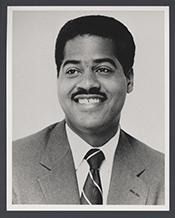
United States · United States Congress · 19 May 1992
Prohibits a member of the armed forces or person seeking to become a member from being discriminated against by the armed forces on the basis of sexual orientation.
United States · United States Congress · 14 May 1992
Amends rule XIV of the Rules of the House of Representatives to prohibit the Speaker of the House from recognizing Members to make special-order speeches. Amends rule XXXIV to prohibit extensions of remarks by Members from being inserted in the Congressional Record, except as they pertain to legislative matters before the House, its committees or subcommittees.
United States · United States Congress · 7 May 1992
Civil War Battlefield Commemorative Coin Act of 1992 - Directs the Secretary of the Treasury to issue a specified number of five-dollar gold coins, one-dollar silver coins, and half-dollar clad coins to commemorate the 100th anniversary of Civil War battlefield preservation. Sets forth certain features of such coins and provides for their design, issuance, and sale. Requires that all sales include a surcharge of $35 per coin for the five-dollar coins, $7 per coin for the one-dollar coins, and $1 per coin for the half-dollar coins. Requires that all surcharges be paid to the Civil War Battlefield Foundation for the preservation of historically significant Civil War battlefields.
United States · United States Congress · 6 May 1992
Dire Emergency Supplemental Appropriations Act, 1992, for Disaster Assistance To Meet Urgent Needs Because of Calamities Such as Those Which Occurred in Los Angeles and Chicago - Makes dire supplemental appropriations for FY 1992 for: (1) the disaster loans program account of the Small Business Administration; and (2) the Federal Emergency Management Agency (FEMA) for disaster relief and the disaster assistance direct loan program account.
United States · United States Congress · 30 April 1992
Prescription Accountability and Patient Care Improvement Act of 1992 - Title I: Assisting in Implementation of Controlled Substance Accountability Prescription Systems - Directs the Secretary of Health and Human Services to make funds available to at least ten States: (1) for electronic prescription accountability and patient care improvement programs under this Act; (2) to supplement State electronic claims management systems under title XIX (Medicaid) of the Social Security Act; (3) for the operations of existing triplicate systems under this Act; and (4) to supplement the implementation of guidelines developed by the Agency for Health Care Policy and Research and accepted drug utilization review principles to improve patient care and physician prescribing practices. Authorizes appropriations, to be derived solely from fees imposed under the Controlled Substances Act, as amended by this Act. Amends the Controlled Substances Act to authorize fees for registration to manufacture controlled substances in certain schedules and relating to the administration of programs to prevent and detect illegal and inappropriate drug distribution by allowing information on prescriptions of drugs that are controlled in Schedules II, III, and IV to be electronically transmitted to State health agencies. Describes a controlled substances electronic accountable prescription system, including requirements that it electronically report the dispensing of certain drugs. Requires the State health agency to: (1) pay transmittal costs; and (2) make all necessary transmittal equipment available to dispensers without charge. Requires each State system to provide for the maintenance of information in a central repository meeting certain requirements. Requires each State to designate a State agency to administer the collection of system information, control information access, and produce reports of aggregated data that indicate that a substance has been dispensed for a period outside the expected standards. Provides for confidentiality and disclosure of information. Requires the Director of a State agency to appoint a Prescription Accountability and Patient Care Improvement Board. Mandates disclosure to: (1) the State narcotics control agency and medical boards or licensing agencies only when there is reasonable cause for further inquiry into the illegal diversion or illegal prescribing of controlled substances; and (2) State medical boards and licensing agencies, and State medical societies only when there is reasonable cause for further inquiry of a medically inappropriate prescribing of controlled substances, for developing rules and procedures to improve physician prescribing practices and patient care. Requires the State health agency to: (1) appoint a Practice Parameter Advisory Panel; and (2) develop procedures to address the needs of individuals in need of substance abuse treatment counseling for controlled substances. Title II: Reports and Studies - Establishes a nationwide patient care improvement telephone hotline to respond to questions from patients, physicians, pharmacists, and any other health care practitioner involved in the dispensing or regulation of drugs. Requires that the hotline collect fees through "1-900" technologies to cover all hotline costs. Establishes the National Commission on Special Medical Needs to: (1) develop new initiatives regarding the appropriate prescribing of medically necessary drugs, including addressing both underprescribing and overprescribing; and (2) establish a system for identifying physicians needing further education on the needs of severely ill patients. Mandates regular consultation between certain officials of the Department of Health and Human Services and the Drug Enforcement Administration (DEA) regarding the annual quota for legal manufacture of schedule II controlled substances. Directs the Secretary to regularly advise the DEA of: (1) continuing medical developments in the therapeutically-effective prescribing of schedule II controlled substances; and (2) any developing shortages of schedule II controlled substances for pain or narcolepsy patients. Requires ongoing studies and reports to the Congress of the costs and benefits of existing electronic data transfer and multiple-copy prescription programs relating to controlled substances, including programs implemented under title I of this Act. Mandates ongoing efforts to identify prescription drugs which are not schedule II-IV controlled substances but which are subject to illegal diversion or needless addiction. Requires development and distribution of a brief information brochure regarding proper prescribing of controlled substances for specialty treatment. Mandates development of printed patient inserts regarding controlled substance use, including listing the hotline number. Requires the Inspector General of the Department of Health and Human Services to develop computer software to administer this Act, taking all steps to ensure compatibility with the Medicaid Audit Data Accounting Systems (MADAS).
United States · United States Congress · 30 April 1992
Declares that long-term care services should be available to all who need them regardless of age or income and any health care reform legislation passed by the Congress should include long-term care benefits.
United States · United States Congress · 29 April 1992
Commission on the Airplane Crash at Gander, Newfoundland, Act - Establishes in the legislative branch of the Government the Commission on the Airplane Crash at Gander, Newfoundland. Directs the Commission to investigate and study the circumstances surrounding the crash of an Arrow Airlines airplane near Gander, Newfoundland, Canada, on December 12, 1985. Requires a report to the President and the Congress on findings and conclusions.
United States · United States Congress · 8 April 1992
Every Fifth Child Act - Makes appropriations for FY 1993, out of any money in the Treasury not otherwise appropriated, in specified amounts to begin a phase-in toward full funding of: (1) the special supplemental food program for women, infants, and children (WIC) under the Child Nutrition Act of 1966; (2) Head Start programs under the Head Start Act; and (3) the Job Corps program under the Job Training Partnership Act. Expresses the sense of the Congress that such programs should receive specified minimum levels of funding to allow: (1) the WIC program to be fully funded through FY 1996; (2) Head Start programs to be fully funded through FY 1998; and (3) the Job Corps to establish at least 50 additional centers and serve at least 50 percent more of low-income disadvantaged youth by the year 2000.
United States · United States Congress · 8 April 1992
Designates October 24 through November 1, 1992, as National Red Ribbon Week for a Drug Free America. Recognize the hard work and dedication of those involved in combatting substance abuse.
United States · United States Congress · 7 April 1992
Condemns the conduct since November 1991 of General Mohamed Farah Aideed, Interim President Ali Mahdi Mohamed, and other warring parties in Somalia (the parties) which has resulted in the destruction of Mogadishu and has placed the entire civilian population of the city at risk. Calls upon the parties to: (1) curb the violence and destruction by immediately suspending artillery shelling; (2) guarantee protection of relief commodities; and (3) participate in good faith in United Nations (UN) sponsored efforts to achieve a ceasefire and political reconciliation in Somalia. Commends: (1) the U.S. Office of Foreign Disaster Assistance for its efforts to provide food and humanitarian relief to Somalia; and (2) UN Secretary General Boutros Ghali for his attention to Somalia and for promoting the adoption of resolutions on Somalia in the UN Security Council. Calls upon the U.S. representative to the UN to urge the UN to: (1) appoint a special UN envoy to Somalia; (2) take steps to assure the safety of UN and other relief personnel and to coordinate relief efforts and facilitate negotiations; and (3) allow the provisions of extensive food and humanitarian relief even in the absence of a ceasefire. Requests that the Secretary of State convey to the parties the U.S. condemnation of the practices employed by all parties which have contributed to the tragedy in Somalia.
United States · United States Congress · 2 April 1992
Global Climate Protection Act - Directs the President to promulgate final regulations that will achieve stabilization of carbon dioxide emissions by January 1, 2000. Requires the Administrator of the Environmental Protection Agency to evaluate and report biennially to the Congress on the progress made pursuant to such regulations. Directs the President to promulgate additional regulations to achieve stabilization if the Administrator finds that the regulations will not achieve stabilization. Permits citizen suits against officers of the United States for failures to perform duties in accordance with this Act.
United States · United States Congress · 31 March 1992
Child Safety Protection and Consumer Product Safety Commission Improvement Act - Title I: Authorization of Appropriations - Amends the Consumer Product Safety Act (CPSA) to authorize appropriations to carry out specified provisions of the Act. Requires fees collected by the Consumer Product Safety Commission to be deposited in the accounts providing appropriations to the Commission. Authorizes appropriations for Commission relocation expenses. Title II: Toy Safety - Mandates certain warning labels in conjunction with any toy or game for children of specified ages which contain small parts, balloons, small balls, or marbles. Considers noncomplying items misbranded hazardous substances under the Federal Hazardous Substances Act (FHSA). Title III: Amendments to Consumer Product Safety Act - Amends the CPSA to change the titles of two of the Commission's officers. Substitutes references to product safety standards for references to product safety rules in provisions exempting certain persons from the application of specified provisions relating to prohibited acts. Adds a requirement that the Commission, in determining the amount of any penalty and any compromise of penalty, consider the nature of the failure to comply and the nature of the risk of injury. Provides for criminal fines in accordance with specified provisions of the Federal criminal code. (Current law provides for criminal fines up to a specified dollar amount.) Modifies Commission powers. Repeals provisions relating to: (1) interim cellulose insulation safety standards; and (2) congressional vetoes of consumer product safety rules. Modifies rules regarding: (1) review by other Federal agencies of information obtained by the Commission relating to trade secrets or related matters; and (2) inspection and record keeping requirements. Requires manufacturers, distributors, and retailers to report to the Commission an apparent failure to comply with certain provisions of the FHSA or the Flammable Fabrics Act (FFA). Amends the CPSA, the FHSA, and the FFA to change procedures and considerations regarding civil penalties. Modifies rulemaking procedures under the FHSA and the FFA. Amends the CPSA to modify requirements regarding extensions of preliminary injunctions. Mandates certain actions by the Commission regarding five gallon buckets and bicycle helmets. Requires certain reports and studies, including regarding: (1) summaries of information provided to a manufacturer prior to public disclosure; and (2) the effectiveness of actions under substantial product hazards provisions of the CPSA and the FHSA. Title IV: Technical Amendments to the Federal Hazardous Substances Act - Amends the FHSA to replace references to the Secretary and Department of Health and Human Services (formerly the Secretary and Department of Health, Education, and Welfare) with references to the Consumer Product Safety Commission. Provides for fines in accordance with specified provisions of the Federal criminal code. (Current law provides for fines up to a specified dollar amount.) Exempts actions brought by the Commission under specified provisions of the Consumer Product Safety Act from requirements that all actions under the FHSA be brought under the name of the United States. Repeals provisions of the FHSA relating to the Toxicological Advisory Board and to congressional vetoes of hazardous substances regulations. Title V: Technical Amendments to the Flammable Fabrics Act - Amends the FFA to replace references to the Secretary of Commerce with references to the Consumer Product Safety Commission. Provides for fines in accordance with specified provisions of the Federal criminal code. (Current law provides for fines up to a specified dollar amount.) Repeals provisions relating to congressional vetoes of flammability regulations. Title VI: Technical Amendments to the Poison Prevention Packaging Act of 1970 - Amends the Poison Prevention Packaging Act of 1970 to replace references to the Secretary of Health and Human Services with references to the Consumer Product Safety Commission.
United States · United States Congress · 25 March 1992
National Child Protection Act of 1992 - Establishes a national criminal background check system (system) to which a designated agency in each State is required to report child abuse crime information, or index such information in the system, for purposes of background checks of child care providers. Directs the Attorney General to establish: (1) guidelines for the reporting of such information; and (2) timetables for each State to report such information to the System (with a three-year deadline for all States to be reporting at a specified level of currency). Requires State agencies to maintain close liaison for the exchange of technical assistance in cases of child abuse with the National Center: (1) on Child Abuse and Neglect; (2) for Missing and Exploited Children; and (3) for the Prosecution of Child Abuse. Directs the Attorney General to publish annually: (1) a statistical summary of the child abuse crime information reported under this Act; and (2) a summary of each State's progress in reporting child abuse crime information to the system. Requires the Administrator of the Office of Juvenile Justice and Delinquency Prevention to conduct a study to determine various factors relating to potential child abuse crimes and offenders, based on a statistically significant sample of convicted child abuse offenders and other relevant information. Requires a report on such study to be submitted to specified congressional committee officials. Authorizes a State to have in effect procedures to permit a qualified entity (i.e., a business or organization that provides child care or child care placement services, or that certifies others to provide such care or services) to contact a State agency to request a nationwide background check to determine if a child care provider is under indictment for, or has been convicted of, a background check crime. Directs the Attorney General to establish: (1) guidelines for State background check procedures, but permits the Attorney General to certify that a State procedure is equivalent to that under this Act under specified circumstances; and (2) criteria for such certifications. Authorizes the Attorney General to: (1) prescribe such other measures as may be required to carry out the purposes of this Act; and (2) encourage the use of the best technology available in conducting background checks. Amends the Omnibus Crime Control and Safe Streets Act of 1968 (Omnibus Act) to provide for the use of drug control and system improvement grants for the improvement of State record systems and the sharing of records of child abuse crime information to implement this Act. Directs the Attorney General, subject to appropriations and with preference to States that have the lowest percent currency of case dispositions in computerized criminal history files, to make additional grants to each State to be used, for purposes of this Act: (1) for the computerization of criminal history files; (2) for the improvement of existing computerized criminal history files; (3) to improve accessibility to the system; and (4) to assist the State in the transmittal of criminal records to, or the indexing of criminal history records in, the system. Authorizes: (1) appropriations; and (2) the withholding of a portion of the allocation for a fiscal year under the Omnibus Act to a State that is not in compliance with the timetable established under this Act.
United States · United States Congress · 24 March 1992
Anti-Car Theft Act of 1992 - Title I: Tougher Law Enforcement Against Auto Theft - Subtitle A: Enhanced Penalties for Auto Theft - Amends the Federal criminal code to provide for a fine, up to 20 years imprisonment, or both, for taking (or attempting to take) a motor vehicle from the person or presence of another by force, violence, or intimidation. Increases penalties for: (1) the importation and exportation of stolen motor vehicles, off-highway mobile equipment, vessels, or aircraft (stolen vehicles); and (2) the transportation, sale, or receipt of stolen vehicles. Makes altering or removing motor vehicle identification numbers, exporting or importing stolen vehicles, and dealing in counterfeit obligations or securities predicate offenses to a violation of the Racketeer Influenced and Corrupt Organizations Act. Subtitle B: Targeted Law Enforcement - Requires the Director of the Bureau of Justice Assistance to make grants to Anti-Car Theft Committees submitting applications in compliance with the requirements of this subtitle. Sets forth application requirements, including a statement from a chief executive of such committee that the applicant committee: (1) is either a State agency, an agency of a unit of local government, or a nonprofit entity organized pursuant to specific authorizing legislation by a State or such unit; (2) is or will be financed in part by a tax or fee on motor vehicles registered by or possessed within the State of not less than one dollar per vehicle; and (3) will devote its resources entirely to combating motor vehicle theft. Establishes formulas for the allocation of grant funds. Authorizes appropriations. Title II: Automobile Title Fraud - Directs the Attorney General: (1) by March 1, 1993, to conduct a review of information systems pertaining to the titling of motor vehicles utilized by one or more States or by a third party which represents the interests of States, and promulgate such regulations as the Attorney General deems necessary to the establishment of an information system to serve as a clearinghouse for information pertaining to the titling of motor vehicles; and (2) within six months of the promulgation of regulations, and by no later than September 1, 1993, to establish such a system. Sets forth additional provisions with respect to: (1) system operation; (2) user fees; (3) minimum capabilities of the system (such as enabling the user to determine the validity and status of a document purporting to be a certificate of title); and (4) information availability. Authorizes appropriations. Authorizes a State, by written notice to the operator, to elect to participate in the system. Grants the Director of the Federal Bureau of Investigation authority to deny access to the National Crime Information Center system to any State failing to participate in the information system pursuant to this Act. Sets forth: (1) title verification requirements (by participating States); (2) reporting requirements (by operators of junk or salvage yards and by insurance carriers); and (3) enforcement provisions (providing for the assessment and collection by the Attorney General of a civil penalty, which sum may be deducted from any sums owed by the United States to the person charged, subject to specified requirements). Title III: Illicit Trafficking in Stolen Auto Parts - Directs the Attorney General to promulgate a vehicle theft prevention standard which conforms to the requirements of this Act and which applies with respect to major automobile parts and replacement parts. Sets forth provisions regarding: (1) deadlines for promulgation of a proposed and final standard, extensions, and the effective date of such standard; and (2) application of such standard (to major parts installed by the motor vehicle manufacturer in automobiles with a model year designation later than the calendar year in which such standard takes effect and major replacement parts manufactured after such standard takes effect). Requires that engines and transmissions installed by the motor vehicle manufacturer be permanently stamped with the vehicle identification number and that other major parts have labels affixed meeting certain specifications. Prohibits the standard, in the case of major replacement parts, from requiring identification of any part which is not designed as a replacement for a major part required to be identified under such standard and the inscribing or affixing of any identification other than a symbol identifying the manufacturer and a common symbol identifying the part as a major replacement part. Prohibits such standards from imposing costs, to comply with such standard, upon any manufacturer of: (1) motor vehicles in excess of $15 per vehicle; or (2) major replacement parts in excess of such reasonable lesser amount per major replacement part as the Attorney General specifies in such standard. Specifies that the cost of identifying engines and transmissions shall not be taken into account in calculating a manufacturer's costs under such provision. Directs the Secretary of Labor, at the beginning of each calendar year commencing on or after January 1, 1993, as data becomes available, to certify to the Attorney General and publish in the Federal Register the percentage difference between the average of the Consumer Price Index for the 12 months preceding the beginning of such calendar year and such average for the base period. Specifies that, effective for model years beginning in such calendar year, the amounts specified in the previous paragraph shall be adjusted by such percentage difference. Requires every manufacturer of a motor vehicle part which is subject to the standard and any manufacturer of major replacement parts subject to such standards: (1) to establish and maintain such records, make such reports, and provide such items and information as the Attorney General may reasonably require to enable the Attorney General to determine whether such manufacturer has acted or is acting in compliance with this Act and such standard; and (2) upon request of an officer or employee (officer) designated by the Attorney General, to permit such officer to inspect vehicles and major parts subject to the standard and appropriate documents relevant to determining whether such manufacturer has acted or is acting in compliance with this Act and such standard. Sets forth additional requirements with respect to inspections, certification of compliance with such standard, notification of errors to the Attorney General, and inapplicability of certification requirements (to motor vehicles or major replacement parts intended solely for export, which are so labeled or tagged on the vehicle or replacement part itself and on the outside of the container, if any, until exported, and which are exported). Directs the Attorney General to enter into an agreement for the operation of an information system containing the identification numbers of stolen motor vehicles and motor vehicle parts and to designate an individual or entity as the operator of such system. Requires such system to include, at a minimum, the following information pertaining to each motor vehicle reported to a law enforcement authority as stolen and not recovered: (1) the vehicle identification number; (2) the make and model year; (3) the date on which the vehicle was reported as stolen; (4) the location of the law enforcement authority that received the reports of the vehicle's theft; and (5) if the vehicle at the time of its theft contained parts bearing identification numbers different from the vehicle identification number of the stolen vehicle, such identification numbers. Sets forth additional provisions regarding availability of information, recordkeeping, and user fees. Authorizes appropriations. Prohibits (with exceptions) any person from: (1) manufacturing for sale, selling, offering for sale, or introducing or delivering for introduction in interstate commerce or import into the United States any motor vehicle subject to the theft prevention standard under this Act or any major replacement part subject to such standard which is manufactured on or after the date the standard takes effect unless it is in conformity with such standard; (2) failing to comply with any rule prescribed by the Attorney General under this Act; (3) failing to keep specified records (or refusing access to or copying of records), make reports or provide items or information, or permit (or refusing to permit) entry or inspection as required by this Act; or (4) failing to furnish certification, or issuing a certification if such person knows that such certification is materially false or misleading, pursuant to this Act. Prohibits (with exceptions) any person from selling, transferring, or installing a major part marked with an identification number without: (1) first making a request of the operator of the system and determining that such major part has not been reported as stolen; and (2) providing the transferee with a written certificate bearing a description of such major part and the identification number affixed to such major part. Establishes civil and criminal penalties for violation of this Act, including injunctions (upon petition by the Attorney General) to restrain specified violations of, and criminal contempt for violation of an injunction or restraining order issued pursuant to, this Act. Sets forth provisions with respect to venue and subpoenas. Sets forth provisions regarding: (1) the confidentiality of information reported to, or otherwise obtained by, the Attorney General pursuant to this Act, with exceptions; (2) judicial review; and (3) coordination of State and local law with the Federal vehicle theft prevention standard. Directs the Attorney General to conduct three- and five-year studies regarding motor vehicle theft and make recommendations to the Congress. Title IV: Export of Stolen Vehicles - Amends the Tariff Act of 1930 to require the Commissioner of Customs to direct customs officers to conduct random inspections of motor vehicles and shipping containers that contain motor vehicles being exported for purposes of determining whether such vehicles were stolen. Directs the Commissioner to require all persons or entities exporting used self-propelled vehicles by air or ship to provide to the U.S. Customs Service, at least 72 hours before the export, the vehicle identification number of each such vehicle and proof of ownership of such vehicle. Makes such requirement applicable to vehicles exported for personal use. Requires the Secretary of the Treasury to conduct a pilot study of the utility of a nondestructive examination system for inspection of containers that contain motor vehicles leaving the country for the purpose of determining whether such vehicles are stolen.
United States · United States Congress · 20 March 1992
Youth Employability Services 2000 Act of 1992 - Amends the Job Training Partnership Act (JTPA) to authorize appropriations to establish five additional Job Corps centers during each of the ten fiscal years beginning with FY 1993. Directs the Secretary of Labor (the Secretary) to evaluate the educational curricula offered by the Job Corps as to whether participants are being adequately prepared with skills to meet the technological demands of the marketplace. Requires a report to the Congress and dissemination of evaluation results. Revises the age limits for participation in the Job Corps to allow not more than 20 percent of the enrollees to be from age 22 through 24. Declares that JTPA allows participants to participate concurrently or sequentially in both the Job Corps and training services for the disadvantaged. Increases from ten to 20 percent the allowable number of nonresidential participants enrolled in the Job Corps in any year. Requires that, in enrolling nonresidential participants, priority be given to those eligible individuals who are single parents with dependent children. Prohibits the Secretary from reducing the number of residential participants in Job Corps programs during any program year below the number during 1991 in order to increase the number of nonresidential participants. Prohibits use of Department of Labor funds to contract with a nongovernmental agency to administer or manage a Civilian Conservation Center of the Job Corps on public land. Directs the Secretary, as practicable, to provide child care at or near Job Corps centers for individuals who require such care for their children in order to participate in the Job Corps. Requires each Job Corps center to provide alcohol and drug abuse counseling and referral to participants who need such services. Directs the Secretary to provide all nonprofit Job Corps contractors with an equitable and negotiated management fee of not less than one percent of the contract amount.
United States · United States Congress · 19 March 1992
Community Services Empowerment Amendments of 1992 - Amends the Omnibus Budget Reconciliation Act of 1981 to establish the National Community Services Empowerment Partnership Corporation (Corporation). Authorizes the Corporation to appoint a Community Services Empowerment Advisory Committee. Establishes in the Corporation an Office of Inspector General. Authorizes the Corporation to make grants to existing or emerging community services empowerment corporations (corporations) for revolving funds that will provide assistance for business and employment opportunities in low-income urban and rural areas. Obligates at least ten percent of existing corporation annual appropriations for loans and capital investments to locally-owned small enterprises in high unemployment areas. Sets forth provisions regarding: (1) eligibility requirements; (2) aggregate grant limits; (3) limitations on capital investment, administrative costs, technical assistance, and training; and (4) limitations on loan repayments and capital investment proceeds. Authorizes the Corporation to make grants for: (1) emerging corporation enhancement, technical assistance, and training; and (2) research and development. Sets forth audit and reporting provisions. Authorizes appropriations.
United States · United States Congress · 19 March 1992
Declares that it is the sense of the Congress that any legislation passed by the Congress to address American health care needs must include coverage for mental disorders.
United States · United States Congress · 3 March 1992
Universal Voter Registration Act of 1992 - Requires each State to establish procedures with respect to presidential and congressional elections to permit voter registration by: (1) application in person simultaneously with application for a motor vehicle driver's license; (2) mail application; or (3) application in person at designated Federal, State, or nongovernmental office locations. Declares that this Act does not apply to any State that has no voter registration requirement with respect to elections for Federal office, or in which voters may register at the polling place at the time of a general election for Federal office. Requires each State to: (1) assure that any eligible applicant who submits an application by a certain deadline before the election is registered to vote in the election; (2) require the appropriate State election official to notify each applicant of the disposition of the application; (3) provide that the name of a voter may not be removed from the official list of eligible voters except by reason of death, criminal conviction, mental incapacity, change in residence, or voter request; (4) inform applicants under this Act of voter eligibility requirements and penalties provided by law for submission of a false voter registration application; (5) ensure that the identity of the voter registration agency through which any particular voter is registered is not disclosed to the public. Provides that any State program or activity to protect the integrity of the electoral process by assuring an accurate and current voter registration roll for elections for Federal office: (1) shall be uniform, nondiscriminatory, and in compliance with the Voting Rights Act of 1965; and (2) shall not result in the removal of the name of any person from the official list of registered voters for failing to vote. Requires a State to complete, not later than 60 days before the date of a primary or general election for Federal office, any program for systematically removing the names of ineligible voters from the official lists of eligible voters. Prohibits a State from removing the name of a voter from the official list of eligible voters for Federal elections on the grounds that the registrant has moved, unless such registrant: (1) confirms in writing that he or she has changed residence to a place outside the jurisdiction of the registrar; or (2) has failed to respond to a notice from the registrar and has not voted or appeared to vote and, if necessary, correct the address in an election during a certain period. Provides that a voting registrar shall correct an official list of eligible voters in elections for Federal office in accordance with change of residence information obtained in conformance with this Act. Sets forth the procedure for voting following a failure to notify the registrar of a change of address. States that in the event of a change of address, for voting purposes, of a voter to another address within the same jurisdiction, the registrar shall correct the voting registration list accordingly. Prohibits such voter's name from being removed from the registry of eligible voters by reason of such change of address, except as provided in this Act. Requires the United States attorney to give the chief State election official written notice of an offender's felony conviction in Federal district court. Amends Federal postal rate law to require the Postal Service to make certain lower postal rates available to State or local election officials who certify that a mailing is required or authorized by this Act. Directs the Federal Election Commission to: (1) develop a mail voter registration application form for Federal elections; (2) submit, not later than June 30 of each odd-numbered year, to the Congress a report assessing the impact of this Act on the administration of Federal elections during the preceding two-year period; and (3) provide information to the States with respect to their responsibilities. Requires each State to designate a chief State election official to coordinate State functions under this Act. Provides a private right of action for an individual aggrieved by a violation of this Act. Provides for the awarding of attorney fees to the prevailing party, other than the United States. Imposes criminal penalties upon any person who: (1) intimidates, threatens, or coerces, or attempts to intimidate, threaten, or coerce any person for registering or voting or exercising any right under this Act.
United States · United States Congress · 19 February 1992
Expresses the sense of the Congress that: (1) consideration of the Low Income Home Energy Assistance Program (LIHEAP) should be a high priority; (2) LIHEAP funding for FY 1993 should be increased to a level greater than or equal to funding for FY 1992; and (3) the President should accept the LIHEAP funding level for FY 1993 as recommended by the Congress.
United States · United States Congress · 11 February 1992
Amends title XVIII (Medicare) of the Social Security Act to limit aggregate payment reductions to urban hospitals in FY 1993 that are attributable to geographical reclassifications in an effort to maintain budget neutrality. Requires the Secretary of Health and Human Services, in a report to the Congress, to make recommendations for: (1) modifications to the methodology used to determine the initial geographic areas in which hospitals are located for purposes of adjusting payments to hospitals under part A (Hospital Insurance) of Medicare for differences in area wage levels; (2) appropriate bases for determining the geographic classification of hospitals under Medicare that recognize the unique labor market conditions affecting hospitals; and (3) modifications to the payment adjustments required under Medicare to offset increases in aggregate payments resulting from changes in geographic classification. Requires the Prospective Payment Commission to submit comments to the Congress on such report. Amends the Balanced Budget and Emergency Deficit Control Act of 1985 (Gramm-Rudman-Hollings Act) to provide that, to the extent that budget neutrality is not achieved under such limitation above, payment of any increase in aggregate hospital payments attributable to such reclassifications will be made through reductions in discretionary defense spending. Amends title XIX (Medicaid) of the Social Security Act to provide that disproportionate share payment adjustments to hospitals that are geographically reclassified shall be computed as if such hospitals had not been so reclassified.
United States · United States Congress · 11 February 1992
Designates April 14, 1992, as Education and Sharing Day, U.S.A., the birthday and the start of the 91st year of Rabbi Menachem Mendel Schneerson, leader of the worldwide Lubavitch movement.
United States · United States Congress · 7 February 1992
Recognizes and grants a Federal charter to the Shepherd's Centers of America, Incorporated, a nonprofit corporation organized under the laws of the State of Missouri.
United States · United States Congress · 5 February 1992
DES Education and Research Amendments of 1992 - Amends the Public Health Service Act to establish a program for the conduct and support of research and training, the dissemination of health information, and other measures with respect to the diagnosis and treatment of conditions associated with exposure to the drug diethylstilbestrol (DES). Mandates: (1) programs to educate health professionals and the public; and (2) longitudinal studies. Authorizes appropriations.
United States · United States Congress · 28 January 1992
Infrastructure Improvement and Job Opportunity Act - Directs the Secretary of Labor (the Secretary) to make grants to assist local job projects that: (1) may include renovation or rehabilitation of public buildings or facilities with commercial, industrial, public, service, housing, historic, or other value; and (2) provide employment to eligible participants. Requires eligible areas that desire such funds to establish District Executive Councils (DECs) to receive such grants. Allows the private industry council in any eligible area that is substantially the same as a service delivery area under the Job Training Partnership Act to petition the Governor to be designated a DEC if it meets specified requirements. Requires DECs to select projects to be assisted under the Secretary's criteria and to submit project plans and annual reports on their activities. Limits use of grant funds for administrative expenses to ten percent. Requires an eligible area to: (1) be a county or comparable general local government unit; and (2) have no more than 300,000 population, unless granted a waiver by the Secretary. Makes eligible for job project participation individuals who: (1) have a high school diploma or equivalent or are at least 18 years of age; (2) have resided in the eligible area for at least 30 days; (3) have been unemployed for 35 days prior to determination of employment for an assisted job project; (4) are U.S. citizens or nationals, lawfully admitted permanent resident aliens, refugees and parolees, or persons otherwise authorized by the Attorney General to work in the United States; (5) had an earned income in the year preceding the determination, and a family income in the year in which the determination is made, respectively, of less than $17,000; (6) work for not more than 16 hours per week in any compensated job other than the assisted project job; (7) demonstrate to the project manager that they sought private sector employment during the 35 days prior to their application for and will continue to do so during their period of assisted employment; and (8) are not eligible for retirement benefits. Limits a household to no more than two eligible participants. Requires testing for basic reading and writing competence prior to a job project employment. Requires that counseling and instruction be furnished to participants who fail to pass such basic competency test. Requires participants who have not received a high school diploma or equivalent to maintain satisfactory progress toward receiving one in order to continue employment. Allows participants with limited English-speaking ability to be furnished with instruction the DEC considers appropriate. Sets forth requirements for job projects. Prohibits selection of a project if an objection is filed by two DEC members appointed by the State Governor or Mayor, of the largest municipality or two appointed by the chief executives of local governments in the eligible area. Prohibits selection of DEC managers, officers, or employees or project participants on the basis of political affiliation (and limits the number of specified types of DEC members who may be from the same political party). Sets limits on job project: (1) expenses for transportation and equipment (ten percent); (2) number of supervisors (one-to-ten ratio); (3) individual workweek (32 hours); and (4) project duration (18 months). Requires project managers to submit monthly progress reports to the DEC. Requires participants to receive wages equal to the higher of: (1) the minimum wage under specified provisions of the Fair Labor Standards Act of 1938; (2) the minimum wage established under the applicable State or local minimum wage law; or (3) the amount the participant receives in assistance under the State plan approved under Aid to Families with Dependent Children (AFDC) or in unemployment compensation, plus ten percent of that amount. Requires that participants be furnished benefits and employment conditions comparable to those of employees in similar occupations employed by a comparable employer, but prohibits any participant from being eligible for unemployment compensation during or on the basis of project employment. Requires participants to be eligible for supportive services necessary for participation. Requires DECs to establish for the eligible area, job clubs to assist participants to prepare resumes, develop interviewing techniques, and evaluate individual job search activities. Sets forth labor standards for job projects, including appropriate conditions of employment and training and health and safety. Prohibits the use of funds for contributions on behalf of any participant to retirement systems or plans. Sets forth displacement rules. Prohibits: (1) any displacing of current employees; (2) impairing of existing contracts or collective bargaining agreements; (3) filling of openings created by related layoffs or terminations; or (4) infringing on promotional opportunities of current employees. Requires that labor organizations representing a substantial number of employees engaged in similar work or training in the same area as that proposed to be funded be given an opportunity to comment on the project proposal at least 30 days before the project is approved. Applies Davis-Bacon Act wage rules to all laborers and mechanics employed by contractors and subcontractors for federally assisted construction and repair work, except with respect to eligible participants in projects assisted under this Act. Sets forth nondiscrimination provisions. Requires DECs to establish and maintain evaluation files for each individual employed on a project assisted under this Act, to be made available to the participant monthly but to no other person without the participant's consent. Provides for allotments to States and substate allocations to DECs for eligible areas. Authorizes the Secretary to waive the following program requirements: (1) testing, for individuals with handicaps; (2) participant maintenance of satisfactory progress toward a high school diploma or equivalent; and (3) the 32-hour per week individual maximum for project employment (for unusual circumstances, subject to a two-thirds vote of each DEC). Requires the Secretary to report annually to the Congress on administration of this Act, with program summaries and recommendations. Provides for auditing by the General Accounting Office. Authorizes appropriations.
United States · United States Congress · 22 January 1992
Title I: Short Title, Findings, and Definitions - Trade Enhancement Act of 1992 - Sets forth congressional findings and purposes with respect to access to Japanese markets by U.S. manufacturers of motor vehicles and motor vehicle parts. Title II: Merchandise Trade Deficit Reduction - Sets forth annual merchandise trade deficit reduction targets with respect to Japan's trade deficit with the United States. Requires the Secretary of Commerce (Secretary) to compute annually whether the target has been met for each year, and if it has not, to publish in the Federal Register the import and production restriction implementation period for such year. Authorizes the Secretary to impose temporary quantitative import restrictions on Japanese or Japanese-related motor vehicles (foreign motor vehicles) entered during the first three months of the calendar year following the year for which such computation is made. Requires the Secretary to submit a report to the Congress. Expresses the sense of the Congress that representatives of the United States and Japan should continue discussions regarding measures, to be selected by the Japanese Government, to achieve the merchandise trade deficit reduction targets. Urges the United States Trade Representative (USTR) during such discussions to address market access priorities for U.S. exports to Japan. Title III: Import and Production Restrictions to Be Implemented If Trade Deficit Reduction Target Not Met - Directs the Secretary to compute for calendar years 1993 through 1999 quantitative import restrictions on foreign motor vehicles and domestic motor vehicle production restrictions for transplanted Japanese-related auto manufacturers, except such computations are not required for calendar years 1997 through 1999 if trade deficit reduction targets for calendar years 1992 through 1996 are met. Sets forth civil penalties. Requires each person that has one or more motor vehicle or motor vehicle parts manufacturing facilities within the United States to certify to the Secretary whether it is a domestic vehicle or parts manufacturer or a transplanted Japanese-related vehicle manufacturer. Sets forth provisions with respect to: (1) the Secretary's authority to obtain information and data; and (2) enforcement of this Act. Sets forth civil penalties. Sets forth provisions with respect to the enforcement and judicial review of such penalties. Requires the Secretary to report annually to the Congress on implementation of this Act. Title IV: Negotiations and Other Actions - Requires the USTR to enter into negotiations with Japan to enter into a bilateral agreement that: (1) provides a phased-in increase in the use by transplanted motor vehicle manufacturers of domestically-produced motor vehicle parts to the point where such parts constitute 60 percent or more of the total parts used in the production of such vehicles; and (2) eliminate those aspects of the Japanese automotive distribution system that affect the access of domestically-produced motor vehicle parts to Japanese markets. Directs the USTR to enter into negotiations with representatives of the European Community, Japan, and the governments of other major vehicle-producing countries to enter into multilateral agreements that rationalize world-wide market access and production of motor vehicles and motor vehicle parts. Considers acts, practices, and policies of Japan (including, but not limited to, acts, policies, and practices utilized in the Japanese automotive distribution system known as "Keiretsu") that affect the access of manufacturers of domestic motor vehicle parts to the Japanese market as being unjustifiable and burdensome or restrictive to U.S. commerce, according to the Trade Act of 1974. Adds to response authority under such Act authority to increase the percentage of domestically-produced motor vehicle parts used in the production of motor vehicles for purposes of the qualification of Japanese manufacturers as domestic vehicle manufacturers. Specifies certain objectives to be included in negotiations with Japan if the USTR decides to take action with respect to such practices. Requires the USTR to make certain estimates with respect to the percentage of the Japanese market that is accounted for by domestic motor vehicle parts manufacturers. Directs the Secretary to commence an antidumping duty investigation under the Tariff Act of 1930 to determine whether imports or sales (or the likelihood of sales) of Japanese motor vehicle parts to the United States warrant the imposition of antidumping duties. Requires the Secretary of the Treasury to study and report to the Congress on the extent to which: (1) "Keiretsu" operations in the United States are in compliance with the internal revenue laws, particularly those relating to transfer pricing; and (2) the Internal Revenue Service is auditing such operations. Amends the Harmonized Tariff Schedule of the United States to classify for the purposes of tariff treatment certain light trucks as motor vehicles for the transport of goods.
United States · United States Congress · 26 November 1991
Directs the Secretary of Health and Human Services and the Secretary of Agriculture to jointly report to the President and the Congress on the differences in program rules under the food stamp program, Aid to Families with Dependent Children program (part A of title IV of the Social Security Act), and Medicaid program (title XIX of the Social Security Act) and how such rules could be made uniform. Requires coordination of such report with the report of the Advisory Committee on Welfare Simplification and Coordination.
United States · United States Congress · 26 November 1991
Equal Remedies Act of 1991 - Amends Federal law relating to damages in cases of intentional employment discrimination to remove provisions limiting the dollar amount of damages awarded for pecuniary and nonpecuniary losses and punitive damages.
United States · United States Congress · 22 November 1991
Amends Federal law to authorize the Secretary of the Interior to acquire the Truman Farm Home in Grandview, Jackson County, Missouri, to add to the Harry S. Truman National Historic Site.
United States · United States Congress · 22 November 1991
Commends: (1) the people of Guam for their patriotism, bravery, loyalty to the United States, and many sacrifices during World War II, particularly during the invasion and occupation of the Guam territory; (2) the members of the Navy Insular Force and U.S. Navy and Marine Corps for the efforts and sacrifices they made in defense of the U.S.; (3) the Hawaiians for their sacrifices and contributions to the U.S. war effort during the attack on Pearl Harbor on December 7, 1941; and (4) the Hawaii Territorial Guard members, Varsity Victory Volunteers, the civilian workers at the Pearl Harbor Naval Ship Yard and other Hawaiian military installations, 100th Infantry Battalion, Military Intelligence Service, and 442nd Regimental Combat Team for their sacrifices and contributions to the U.S. war effort during such attack.
United States · United States Congress · 21 November 1991
Calls upon the President, as part of the Uruguay Round General Agreement on Tariffs and Trade (GATT) talks, to initiate negotiations to make GATT compatible with the Marine Mammal Protection Act and other U.S. health, safety, labor, and environmental laws, including laws to protect the environment outside of the United States. Declares that the Congress will not approve legislation to implement any trade agreement (including the Uruguay Round of the GATT and the U.S.-Mexico Free Trade Agreement) that jeopardizes such laws, including the Federal Food, Drug, and Cosmetic Act and the Clean Air Act.