Bill· HJRESH.J.Res. 397 (99th)referred
A joint resolution to designate November 11, 1985, as George S. Patton Day.
United States · United States Congress · 26 September 1985
Designates November 11, 1985, as George S. Patton Day.
The world's political record
Person
United States · Official source
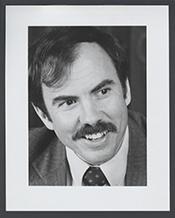
2,448 records where Rep. Wise, Robert E., Jr. [D-WV-2] is listed as a sponsor, author, or other actor. Search with topics and years
United States · United States Congress · 26 September 1985
Designates November 11, 1985, as George S. Patton Day.
United States · United States Congress · 20 September 1985
Expresses the sense of the House of Representatives that employee benefits should not be taxed.
United States · United States Congress · 18 September 1985
Methanol Energy Policy Act of 1985 - Amends the Energy Policy and Conservation Act to direct the Secretary of Energy (the Secretary) to: (1) ensure that of the total number of passenger automobiles and light duty trucks acquired for Federal use during FY 1987 through 1990, at least 5,000 shall be methanol-powered vehicles; and (2) conduct studies related to methanol-powered vehicles in cooperation with the Administrator of the Environmental Protection Agency (the Administrator). Sets guidelines for such studies. Requires that methanol be offered for sale to the public at locations where Federal vehicles are supplied with methanol. Terminates such requirement as of September 30, 1990. Requires the Secretary to provide methanol-powered vehicles to any requesting Federal agency. Requires such agencies to cooperate with the Secretary in studies about such vehicles. Requires the Secretary to report to the Congress regarding the Federal use of methanol-powered vehicles. Exempts such vehicles from: (1) inclusion in any Fleet Average Fuel Economy calculation under specified law; and (2) any limitation on the maximum cost of individual vehicles obtained by the United States. Authorizes appropriations for FY 1987 through FY 1990. Directs the Secretary to: (1) establish a demonstration program for the operation of methanol-fueled diesel trucks on a long-haul, high density interstate truck route; and (2) report to the Congress regarding such program. Authorizes appropriations for such program for FY 1987 through FY 1990. Requires the Administrator to: (1) purchase a minimum of five methanol-powered buses during FY 1987 for use in urban settings to determine emissions and fuel economy tests; and (2) report to the Congress regarding such tests. Authorizes appropriations for FY 1987 through FY 1990. Requires any State which receives Federal mass transportation assistance after January 1, 1991, for the acquisition of motor vehicles transporting 30 or more persons in a nonattainment area to acquire methanol-powered buses with such assistance. Directs the Secretary to provide such States with supplemental grants to cover the amount by which methanol-powered buses exceed the costs of comparable diesel-powered buses. Authorizes appropriations for FY 1991 through FY 1993. Establishes the Interagency Commission on Methanol to develop and coordinate implementation of a national methanol energy policy. Requires the Commission to: (1) perform various studies with respect to the production, use, and promotion of methanol as a fuel; (2) develop a plan for the commercialization of methanol; (3) develop a public-awareness program on methanol as a transportation fuel; (4) coordinate Federal efforts with respect to methanol research and commercialization; and (5) ensure communication between Federal agencies involved in methanol demonstration projects and establish an information clearinghouse for parties working with or interested in methanol and related projects. Requires the Chairman of the Commission to establish a private sector advisory panel to inform the Commission about methanol-related matters. Sets forth reporting requirements which apply to the Commission. Terminates the Commission upon the submission of its last report. Directs the Secretary to report to the Congress regarding a study of the comparative costs of methanol based on natural gas, coal, and other resources. Sets guidelines for such study. Directs the Administrator to prepare a comprehensive air quality and health study regarding specified aspects of methanol as a transportation fuel compared to existing gasoline and diesel fuels. Authorizes appropriations for both studies. Amends the Motor Vehicle Information and Cost Savings Act to set fuel economy determinations for methanol-powered automobiles. Requires all passenger automobiles and light-duty trucks acquired by the United States after October 1, 1986, to be suitable for operation on all fuels for which Environmental Protection Agency waivers are in effect.
United States · United States Congress · 12 September 1985
Amends the Comprehensive Environmental Response, Compensation, and Liability Act of 1980 to add a new title IV: State and Local Coordination of Emergency Response; Community Right to Know. Directs each Governor to appoint an emergency response commission to coordinate response planning in such State for hazardous substance emergencies. Directs these commissions to designate local emergency response committees to develop and implement emergency response plans in case of a hazardous substance emergency. Requires such plans to include emergency notification personnel and procedures, evacuation plans, and an assessment and use plan for local medical and police resources. Requires owners and operators of covered facilities which produce, use, or store hazardous substances to file with local committees a hazardous substance report setting forth the following information for each substance: type; amount; location; emergency and first aid procedures; routes and symptoms of exposure; and emergency personnel to contact. Requires the periodic updating of such reports. Directs the Administrator to publish and update a list of covered hazardous substances requiring such a report. Permits individuals or a local committee to petition the Administrator to add a substance to such list. Requires such owners and operators to submit to the Administrator and the committee and other State and local officials a material safety data sheet on each listed chemical which shall also be furnished with shipments of such substance. Excludes from coverage under these requirements certain small manufacturers, research laboratories, and consumer users. Requires such sheet to be updated and kept (for 30 years), and the information to be made available to the public via a toll-free telephone number. Permits other exemptions from these requirements as specified. Sets forth emergency notice and bulletin procedures a covered operator must follow in the case of any hazardous substance emergency, including notifying the appropriate government officials. Requires such bulletins to include a full description of the nature and scope of the emergency, together with any recommendations for action. Requires that all such plans, reports, data sheets, and bulletins be made available for public inspection. Requires that medical personnel be granted access to necessary information by any owner or operator required to file data sheets or reports. Requires such personnel to maintain the confidentiality of such information beyond health purposes. Permits owners and operators to withhold trade secret information from the data sheets and reports for all but health-related purposes. Sets forth standards for determining what constitutes a trade secret and requires the Administrator to establish procedures for citizen challenge of such a designation. Establishes civil and criminal penalties for violations of these information requirements. Permits citizen suits to enforce this Act. Permits States and local governments to also require the submission of hazardous chemicals information. Authorizes appropriations for FY 1986 through 1990 to the Federal Emergency Management Agency for training government personnel to cope with hazardous substance emergencies.
United States · United States Congress · 12 September 1985
Designates November 24, 1985, as National Day of Fasting to Raise Funds to Combat Hunger.
United States · United States Congress · 11 September 1985
Authorizes educational assistance for apprenticeship or other onjob training under the All-Volunteer Force Educational Assistance Program. Limits the amount of educational assistance payable in any one month where the individual pursuing the educational program fails to complete 120 hours of training.
United States · United States Congress · 11 September 1985
Designates March 25, 1986, and each March 25 thereafter, as Greek Independence Day: A National Day of Celebration of Greek and American Democracy.
United States · United States Congress · 1 August 1985
Children's Television Education Act of 1985 - Amends the Communications Act of 1934 to require each television broadcasting station to broadcast a substantial amount of programming which: (1) serves the educational and informational needs of children who are 12 years old or younger; and (2) is reasonably scheduled throughout the week. Directs the Federal Communications Commission to designate for hearing any license renewal application by a television station if a petition for denial is filed alleging that the applicant has failed to broadcast a specific minimum amount of such programming. Provides that the burden shall be on the applicant to prove it has fulfilled its obligation to serve the child audience. Permits the Commission to dismiss a petition to deny an application for renewal only if it determines that the petition is frivolous. Requires the Commission's annual report to the Congress to: (1) list the television licensees whose licenses were renewed notwithstanding a failure to meet children's programming requirements, with an explanation of each such renewal; and (2) describe the implementation of this Act and its impact on children's programming. Directs the Commission to conduct and report to the Congress on an inquiry into program length commercials for which the primary audience is children who are 12 years old or younger.
United States · United States Congress · 1 August 1985
Amends the Federal Tort Claims Act to allow members of the armed forces serving on active duty or on full-time National Guard duty to bring claims for damages against the United States for personal injury or death arising out of medical or dental care furnished by a medical treatment facility operated by the military or the United States.
United States · United States Congress · 1 August 1985
Designates March 16, 1986, as Freedom of Information Day.
United States · United States Congress · 31 July 1985
Surface Transportation and Uniform Relocation Assistance Act of 1985 - Title I: Federal-Aid Highway Act of 1985 - Federal-Aid Highway Act of 1985 - Directs the Secretary of Transportation to: (1) apportion for FY 1987 and 1988 the sums authorized to be appropriated for such years for expenditure on the National System of Interstate and Defense Highways; (2) transmit to the Congress within ten days after January 2, 1989, a revised cost estimate for completing the Interstate System; (3) use the Federal share of congressionally approved estimates in making apportionments for FY 1991; and (4) apportion for FY 1986 and 1987 certain sums for substitute highway and urban mass transit projects. Reduces the authorized appropriations per fiscal year for highway assistance programs for FY 1986 through 1990. States that 25 percent of substitute highway project funds for FY 1987 through 1990 shall be distributed at the Secretary's discretion. Directs the Secretary to use the Federal share of certain congressionally approved substitute highway cost estimates in making apportionments for FY 1987 through 1990. Sets distribution guidelines for the apportionment of substitute transit funds for FY 1987 through 1990. Amends the Federal-Aid Highway Act of 1956 to authorize appropriations for the Interstate System through FY 1991. Sets a ceiling, with specified exceptions, for the total of all obligations for Federal-Aid Highways and highway safety construction programs for FY 1986 through 1990. Sets guidelines for redistribution by the Secretary of unused obligational authority among the States. Authorizes appropriations out of the Highway Trust Fund for FY 1986 through 1990 for: (1) the Federal-aid primary system in rural areas; (2) the Federal-aid secondary system in rural areas; (3) the Federal-aid urban system; (4) Indian reservation roads; (5) forest highways; (6) public lands highways; and (7) parkways and park highways. Requires that a minimum of ten percent of the authorized appropriations be expended with small businesses owned and controlled by socially and economically disadvantaged individuals. Revises the apportionment ratios for resurfacing, restoring, rehabilitating, and reconstructing the Interstate System. Extends the authorization formula for Federal-aid primary systems from FY 1986 to 1990. Prohibits Federal approval of State projects on any Federal-aid system unless: (1) the State agrees to provide displaced owners with relocation assistance equal to Federal relocation assistance; (2) the displacement is authorized by State law and is in accordance with the terms of the rental agreement; and (3) the displacement is directly necessitated by such project. Requires contracts relating to State highway department construction projects upon the Federal-aid system to include a standard clause concerning site conditions which differ from those specified in the contract. Permits the use of convict labor and convict-produced materials in highway construction on Federal-aid systems: (1) if such convicts are on supervised release; or (2) if the materials are produced by convicts in a qualified prison facility, but the amount of materials produced in any 12-month period does not exceed the amount previously produced in such facility during the 12-month period ending July 1, 1985. Provides that apportioned funds not obligated within the authorized fiscal year for the Interstate System within a State shall be made available by the Secretary according to certain priorities (including high cost projects for construction of high occupancy vehicle lanes and other lanes on any highway in Los Angeles County, California, designated as part of the Interstate System). Authorizes the Secretary to make discretionary funds available to California for construction of high occupancy vehicle lanes, even if such State does not meet certain eligibility criteria. Makes funds available to Puerto Rico for construction of access and development roads on a Federal-aid system. Makes the Virgin Islands, Guam, American Samoa, and the Northern Mariana Islands eligible for emergency relief funding. Exempts tank trucks and ocean transport containers from vehicle weight and length limitations until September 1, 1988. Allows Federal participation in a State toll road which is part of the Interstate System even though the State highway department and the toll road authority have incurred an indebtedness to finance certain ineligible construction expenses for a feature recommended by a final environmental impact statement. Authorizes appropriations out of the Highway Trust Fund for FY 1986 through 1990 for highway beautification. Extends from March 9, 1984, to July 1, 1985, the deadline by which States may use certain Federal-aid highway funds for additional route designations on the Interstate System. Exempts a certain route designation in Weirton, West Virginia, from such deadline. Increases the amounts available for FY 1986 through 1990 for the discretionary bridge program. Authorizes the Secretary to approve, upon application by Arkansas, Federal assistance for construction of a highway bridge to replace ferryboat service. Limits the Federal share of such construction cost to 80 percent. Limits the amount of certain Interstate highway funds which the States may expend for purposes of transportation planning. Authorizes appropriations out of the Highway Trust Fund for Federal-aid highway purposes for FY 1986 through 1990. Directs the Secretary to establish national bridge safety inspection standards for all highway bridges. Prescribes guidelines for such standards. Directs the Secretary to establish a training program for bridge inspectors. Directs the Secretary to: (1) implement a strategic highway research program; and (2) set aside specified funds for FY 1987 through 1991 to implement such program. Changes Buy American provisions to increase from 50 percent to 85 percent the domestic content requirements for certain manufacturers of buses and other rolling stock. Makes eligible for Federal-aid highway funds the construction costs of a certain alternative interstate route in Massachusetts which provides access to an international airport. Authorizes Arkansas to use apportioned funds for the planning, design, and construction of a specified highway. Limits the amount of apportioned funds available for FY 1987 through 1989 for rehabilitation of elevated toll roads in Chicago, Illinois. Prohibits the obligation of Federal funds for: (1) route construction on the National System of Interstate and Defense Highways located mainly in a landfill placed in a river after May 1, 1985; and (2) substitute highway or transit projects which include landfill construction (exempts landfills necessary to preserve existing waterfront character and facilities). Sets guidelines for the obligation of Federal funds for alternative interstate projects. Makes certain interstate lane construction projects eligible for certain Federal-aid highway funds. Authorizes the Secretary to approve (upon the joint request of the Governor of California and the local governments concerned) a substitute transit construction project for a fixed guideway system in lieu of eligible interstate lane construction if the substitute project is in or adjacent to the proposed right-of-way for such lanes. Directs the Secretary to approve certain transfer concept plan modifications requested by the Governors of Maryland and Connecticut which include substitute highway and mass transit projects. Prescribes criteria for such approval. Exempts a certain privately-owned facility located on specified Interstate routes in Michigan from Federal prohibitions against commercial establishments on commercial rights-of-way of the Interstate System. Declares that the fair market value of any lands donated to California for the right-of-way for relocation and construction of a certain highway in Orange County shall be credited to the non-Federal share of such project costs. Authorizes the Secretary to approve construction of a certain Interstate route section in Hawaii. Releases the State of Maryland from certain road conveyance requirements under the Federal-Aid Highway Act of 1970. Authorizes appropriations for railroad-highway crossing demonstration projects for FY 1986 through 1990. Authorizes appropriations out of the Highway Trust Fund for FY 1986 for rights-of-way acquisition and railroad construction costs in the vicinity of Carbondale, Illinois. Requires the Secretary to: (1) make a grant to each State within which the Consolidated Rail Corporation operates a rail vehicle safety demonstration program over railroad-highway crossings; and (2) report to the Congress regarding such program's effectiveness in improving railroad-highway crossing safety. Authorizes appropriations for such programs for FY 1986 through 1990. Directs the Secretary to complete a gap on the Federal-aid primary system in an urban area in Passaic County, New Jersey, utilizing procedures to accelerate design and construction. Requires the Secretary to report to the Congress, not later than 180 days after the completion of such project, on its results, including specified analyses. Directs the Secretary to carry out the following demonstration projects: (1) in Brick Township, New Jersey, to demonstrate methods of improving traffic operations and reducing accidents at a high-volume rotary intersection; (2) in the vicinity of Johnstown, Pennsylvania, to demonstrate methods by which a highway construction project on the Federal-aid primary system will enhance highway safety and economic development in an area of high unemployment; (3) in the vicinity of Fort Smith, Arkansas, to demonstrate the economic growth and development benefits of widening a segment of the Federal-aid urban system connecting a community college and a large commercial center, and of improving traffic signalization on such segment; (4) in the vicinity of Moorhead, Minnesota, to demonstrate the economic and safety benefits of constructing a grade separation between a railroad line and a highway on the Federal-aid urban system; (5) in the vicinities of Fosston and Bagley, Minnesota, to demonstrate the economic and safety benefits of reconstructing two segments of a major highway on the Federal-aid primary system; (6) in Kentucky, to demonstrate methods of improving traffic flow and safety on a State highway which connects an Interstate route in the vicinity of the City of Dry Ridge with a highway on the Federal-aid primary system in the vicinity of the City of Owentown; (7) in San Bernardino County, California, in the vicinity of the Ontario International Airport, to demonstrate methods of improving highway access to an airport which is projected to incur a substantial increase in air service; (8) in Pennsylvania, to demonstrate the state of the art delineation technology by closing a gap in a multi-lane limited access road connecting the City of Altoona to the Borough of Tyrone in Blair County; (9) in Lafayette, Louisiana, to demonstrate the benefits on traffic flow and transportation of labor and materials by construction of a highway to provide limited continuous access between an Interstate route and a highway on the Federal-aid primary system; (10) in Shreveport, Louisiana, to demonstrate methods of reducing traffic congestion in the central business district, improving access to such district, providing highway continuity, and satisfying national defense requirements by connecting two Interstate routes; (11) in Miami, Florida, to demonstrate the most cost-effective method of improving interstate motor vehicle access for passengers and cargo moving to and from the port of Miami; (12) in Arkansas and Missouri, to demonstrate methods of improving highway safety and of accelerating highway construction on specified segments on the Federal-aid primary system; (13) in the vicinity of Sanford, Florida, to demonstrate methods of reducing costs and expediting construction of an interchange by contracting with a private consultant to design and construct such project; (14) in the vicinity of San Jose and Santa Clara, California, to demonstrate a unified method of reducing traffic congestion where a Federal-aid urban highway intersects with two other of such highways on a railroad crossing; (15) in the vicinity of the C&O Canal in the District of Columbia, to improve motor vehicle access at a major traffic generator without decreasing the efficiency of a Federal-aid primary highway; (16) in the vicinity of Pardee, West Virginia, to demonstrate the improvement in motor vehicle transportation of energy resources resulting from the completion of a consolidated network of modern highway; (17) in Modesto, California, to demonstrate methods by which construction of a grade separation for a railroad crossing of a primary highway enhances urban redevelopment and the effectiveness of a planned transportation center; (18) in Kalamazoo, Michigan, to demonstrate the benefits of cooperation between the private sector and the government in relieving traffic congestion caused by a railroad crossing a Federal-aid highway through construction of a highway overpass; (19) in East Milton, Massachusetts, to demonstrate the advantages of joint development and use of air rights in the construction of a deck over a depressed portion of an Interstate route; (20) in Alabama, to demonstrate methods of accelerating the widening of a high volume segment of a primary highway necessary for rapid evacuation of individuals during emergency weather conditions; (21) in the vicinity of Wilder, Kentucky, to demonstrate the economic benefits to a port facility, industrial complex, and foreign trade zone by reconstruction of a segment of an urban highway which connects an Interstate route with a port facility; (22) in Illinois, to demonstrate the safety benefits of providing additional and improved vehicular passing opportunities on, adding truck climbing lanes to, and straightening a segment of a primary highway which carries a high volume of traffic in Jo Daviess and Stephenson Counties; (23) in Allentown, Pennsylvania, to demonstrate methods of accelerating construction to eliminate a major rail-highway crossing at grade, reducing traffic delays for rail and vehicular traffic, and minimizing the impact on the surrounding urban environment; (24) in Riverside, California, to demonstrate methods of improving safety on a specified highway; (25) in Buffalo, New York, to demonstrate methods of facilitating redevelopment of a waterfront area by construction of a connector off a primary highway; (26) in Cleveland, Ohio, to demonstrate the relationship between infrastructure improvement and economic vitality; (27) in Lauderdale and Colbert Counties, Alabama, to demonstrate methods of improving highway transportation and enhancing economic development through construction of a bridge to cross the Tennessee River; (28) in the vicinity of Huron, Ohio, to demonstrate methods of enhancing highway safety and economic development in an area of high unemployment through construction of a bypass segment to provide access to an amusement park; (29) in Chicago, Illinois, to demonstrate the cost savings to be obtained by converting a fixed-span bridge to a movable bridge; (30) in Harney County, Oregon, to demonstrate methods of protecting roadways against damage and destruction due to wave erosion; (31) in Wayne County, Michigan, to demonstrate the benefits of enhancing safety and improving economic vitality of a depressed area; (32) in Cook County, Illinois, to demonstrate the benefits from specified highway reconstruction; (33) in Erie County, New York, to demonstrate methods of enhancing safety and reducing traffic congestion by relocating an interstate route terminus; (34) in the vicinity of Mount Vernon, Kentucky, to demonstrate methods of improving highway safety and traffic flow and access to a national river and recreation area; (35) in Pine City, Minnesota, to demonstrate methods of improving highway safety and traffic flow by constructing an interchange between certain highways; (36) in Paso Robles, California, to demonstrate methods of improving highway safety and traffic flow and enhancing economic development through the construction of a two-lane bridge spanning the Salinas River, a highway, and a railroad line; (37) in Columbus, Ohio, to demonstrate methods of relieving traffic congestion through reconstruction of highway portions in an interstate route connecting Columbia with its airport; (38) in Suffolk County, New York, to demonstrate construction techniques to accelerate upgrading an existing highway to freeway standards with minimum traffic disruption; (39) in the vicinity of Southington, Connecticut, to demonstrate the latest construction techniques in reconstructing a segment of urban highway, and in the vicinity of Kent Center, to demonstrate methods of solving safety and flooding problems on a primary highway; (40) in Dover, New Jersey, to demonstrate traffic congestion reduction methods on an existing bridge and facilitating the redevelopment of the central business district; (41) in Los Angeles County, California, to demonstrate methods of improving vehicular circulation related to intermodal transportation or port-related traffic and alleviating congestion caused by increased port activities; (42) in the vicinity of the Greater Pittsburgh International Airport to demonstrate methods of improving economic development and airport terminal placement; (43) in Steuben County, New York, to demonstrate how the economy of an industrialized high unemployment area can be improved by completing key elements of a controlled highway which serves such area; (44) in Santa Rosa and Petaluma, California, to demonstrate how traffic congestion can be relieved by reconstructing a certain arterial which connects the two cities; (45) in the vicinity of Tampa, Florida, to demonstrate motor vehicle congestion relief measures and improve motor vehicle access between rapidly growing urban areas; (46) in Savannah, Georgia, to demonstrate how replacing an obsolete bridge with a modern highway-level structure will improve vehicular and waterborne traffic flow; (47) in New Sewickly, Pennsylvania, to demonstrate methods of accommodating increasing truck traffic and improving highway safety; (48) in the vicinity of Croyle Township, Pennsylvania, to demonstrate methods of improving public access to a flood memorial; (49) in Orange, Texas, to demonstrate how rail line consolidation will reduce motor vehicle traffic congestion and increase jobs in a high unemployment area; (50) in Baton Rouge and East Baton Rouge, Louisiana, to demonstrate traffic congestion alleviation methods; (51) in Minden, Louisiana, to demonstrate enhanced economic development by providing Minden with alternative highway access to the Interstate System; (52) in the area of Brunswick-Topsham, Maine, to demonstrate increased access to defense related facilities by the construction of a limited access highway connecting a major interstate highway corridor with a naval air station and a shipyard engaged in defense production activities; (53) in Isle of Palms, South Carolina, to demonstrate increased accessibility to a sea island by construction of a high-level fixed span bridge over a high-volume intracoastal waterway segment; (54) in Clarksville, Tennessee, to demonstrate highway safety improvement methods by providing direct access from the Fort Campbell Military Reservation; (55) between Clarinda and Shenandoah, Iowa, to demonstrate how highway rehabilitation in an economically depressed rural area will increase economic activity; (56) in the vicinity of Oceanside and Escondido, California, to demonstrate methods of reducing traffic congestion by expanding an interstate route connection; (57) in St. Charles County, Missouri, to demonstrate methods of alleviating commuter traffic congestion by construction of a bypass highway; (58) in Hammond, Indiana, to relocate railroad lines in order to eliminate railroad-highway grade crossings; (59) in Shawnee, Oklahoma, to demonstrate small community air service improvement by extending a runway over a depressed road; (60) between Concord and West Pittsburg, California, to demonstrate improved highway safety through highway modification; (61) in Georgia, to demonstrate improved highway safety by reconstructing as a six-lane controlled access freeway a certain highway segment between a specified State route and Interstate routes; (62) in Pike County, Kentucky, to demonstrate highway safety improvement in a mountainous area; (63) in Madison County, Illinois, to demonstrate the economic benefits of reconstructing a road segment serving a high-growth industrial area; and (64) in Erwin, Tennessee, to extend a certain highway on the Appalachian development system for transportation improvement purposes. Directs the Secretary to submit status reports to the Congress regarding the highway demonstration projects. Authorizes appropriations for such demonstration projects for FY 1986 through 1990. Authorizes the Secretary to implement highway projects on the Federal-aid system in Wheeling, West Virginia, at full Federal expense, upon the request of local officials. Authorizes appropriations for such projects from sums appropriated to implement a certain railroad-highway demonstration project. Amends the Federal-Aid Highway Act of 1978 to direct the Secretary to implement specified state-of-the-art bridge construction technology projects in Ohio. Requires the Secretary to report to the Congress regarding such projects. Authorizes the Secretary to prepare an environmental impact statement regarding additional highway capacity in Staten Island, New York. Authorizes appropriations. Designates a certain portion of an Oklahoma State Route which lies on the Federal-aid primary system as United States Highway 377. Designates a certain bridge crossing the Mississippi River near Le Claire, Iowa, as the Fred Schwengel Bridge. Directs the Secretary to conduct feasibility studies and report to the Congress regarding: (1) highway expenditures, revenues and relative needs; (2) highway apportionment and allocation formulas; (3) enforcement of vehicle weight limitation on bridges; (4) highway bridges which cross rail lines; (5) improvement of the Theodore Roosevelt Bridge connecting the District of Columbia and Virginia; (6) flood prevention methods on an Interstate route between Galveston and Houston, Texas; (7) constructing a highway between Aurora-Hoyt Lakes and Silver Bay, Minnesota; (8) the cost-effectiveness of upgrading a certain highway between Pennsylvania and New York State; (9) State bridge management programs; (10) establishing minimum Federal guidelines for maintenance of the Federal-aid primary, secondary and urban systems; (11) a proposed highway from Shreveport, Louisiana, to Texarkana, Fort Smith, and Fayetteville, Arkansas, and Carthage and Kansas City, Missouri; (12) a highway connecting Santa Fe, New Mexico, and the Los Alamos National Laboratory. Authorizes appropriations. Requires the Secretary to make a grant to the California Department of Transportation to determine the feasibility of using a highway electrification system as an energy source for highway vehicles. Authorizes appropriations. Title II: Highway Safety Act of 1985 - Highway Safety Act of 1985 - Authorizes appropriations out of the Highway Trust Fund (other than the Mass Transit Account) for FY 1986-1990 for the following programs: (1) bridge replacement and rehabilitation; (2) hazard elimination; (3) highway safety research and development under the auspices of the National Highway Traffic Safety Administration and the Federal Highway Administration. Authorizes appropriations for highway safety programs for: (1) FY 1988 through 1990 implemented by the National Highway Traffic Safety Administration (NHTSA); and (2) FY 1987-1990 implemented by the Federal Highway Administration (FHWA). Amends the Surface Transportation Assistance Act of 1982 to authorize appropriations for FY 1987 for highway safety programs implemented by the NHTSA. Sets forth minimum amount of authorized funds which must be obligated for enforcement of the national speed limit and for safety belt programs. Sets an obligation ceiling for highway safety programs for FY 1986 through 1990. Amends the Surface Transportation Assistance Act of 1982 to authorize appropriations for FY 1984 through 1990 to make grants to the States for enforcement of commercial motor vehicle safety standards. Sets forth a weighted compliance formula to be used by the Secretary in determining a State's apportionment of Federal-aid highway funds based upon State enforcement of the national speed limit. Amends the penalty for a State's non-compliance with the national minimum drinking age laws to require the Secretary to withhold certain apportioned amounts from such State on the first of each fiscal year after the second fiscal year beginning after September 30, 1985, in which purchase or public possession of alcoholic beverages by a person under 21 years of age is lawful. Sets forth guidelines under which withheld funds shall be available subject to State compliance. Revises the State eligibility criteria under which the States may receive alcohol traffic safety program grants. Declares that State reports regarding certain hazard elimination programs and rail-highway crossings are inadmissible evidence in any action for damages arising out of matters referred to in such reports. Revises the definition of "highway safety improvement project" to include a project which installs emergency motorist-aid call boxes. Amends the Highway Safety Act of 1973 to authorize appropriations for FY 1985 through 1990. Amends the National Driver Register Act of 1982 to extend the deadline by which the Secretary is required to: (1) promulgate final rules regarding establishment of the National Driver Register; and (2) begin a pilot test program for an electronic information retrieval system regarding individual motor vehicle driving records; and (3) report to the Congress regarding the Register. Amends the Highway Safety Act of 1978 to prohibit the obligation of certain authorized funds for any education or information program conducted in connection with the implementation of Federal Motor Vehicle Safety Standard 208. Directs the Secretary to conduct a comprehensive investigation of railroad-highway crossing needs (in consultation with specified groups) and to report to the Congress regarding such investigation. Directs the Secretary to: (1) arrange with the National Academy of Sciences to conduct a study of problems facing older drivers; and (2) request the Academy to report to the Secretary and the Congress regarding such study. Title III: Federal Mass Transportation Act of 1985 - Federal Mass Transportation Act of 1985 - Amends the Urban Mass Transportation Act of 1964 to replace the letters of intent procedure with provisions which authorize the Secretary to enter into multi-year contracts for the construction of mass transportation facilities. Requires the Secretary, starting January 1986, to annually submit to the appropriate congressional committees: (1) a proposal on the total amount of funding needed to finance grants and loans for bus and bus-related activities, rail modernization, and the construction and extension of fixed guideway systems; and (2) a proposal on the allocation of such funds to finance grants and loans for rail modernization and fixed guideway construction and extension projects. Makes such proposals effective upon approval by law. Sets forth the circumstances under which the Secretary is authorized to approve advance construction for certain mass transportation projects. Prohibits the issuance of funds for new fixed guideway systems or extensions unless such projects are determined to be: (1) based on the results of alternatives analysis and preliminary engineering; (2) cost-effective; and (3) supported by local financial commitment. States that any public body which receives Federal financial assistance for mass transportation may not displace a structure from the mass transportation system property for which such public body receives rent from a private owner unless: (1) such displacement is necessary; (2) the owner receives relocation assistance in a certain amount; or (3) such displacement is authorized by State statute and is in accordance with the terms of the rental agreement. Sets a limit upon the amount of funds which the Secretary may use to enter into a construction management oversight contract. Authorizes appropriations for FY 1982 through 1990 for public transportation projects substituted for withdrawn Interstate segments. Authorizes certain funds apportioned for expenditure in an urbanized area with a population of less than 200,000 to be expended in an urbanized area with a population of more than 200,000. Permits certain grant recipients to continue the preferential fare collection system for elderly and handicapped persons in lieu of the collection of half-fares for such persons. Permits block grants to be made to implement an urban mass transportation program of projects in whole or in part. Excludes certain advertising and concession revenues from consideration as a revenue source for purposes of the Federal block grant program for urban mass transportation. Requires Federal block grant recipients to submit an annual report to the Secretary regarding revenues derived from the sale of advertising and concessions relating to the operation of a public mass transportation system. Revises the limitations placed upon the use of certain apportioned funds by small urbanized areas for operating assistance. Extends from 1984 to 1990 the authority for (block grant) recipients to transfer capital assistance for operating assistance. Limits the use of discretionary amounts resulting from such transfer to the replacement, rehabilitation, and purchase of buses and related equipment and the construction of bus-related facilities. Prohibits certain grant recipients after FY 1985 from making such transfers except for emergency repairs or pursuant to predated authority. Sets a deadline by which funds appropriated for the block grant program must be apportioned. Directs the Secretary to make grants to nonprofit institutions of higher learning to establish and operate one regional transportation center in each of the ten Federal regions. Sets forth criteria to be met by grant recipients. Establishes in the Department of Transportation a national advisory council to: (1) coordinate the research and training to be carried out by grant recipients; (2) disseminate the results of such research; (3) act as a clearinghouse between such centers and the transportation industry; and (4) review and evaluate programs carried out by such centers. Authorizes appropriations for such centers for FY 1986 through 1990. Makes eligible for construction assistance: (1) any bus remanufacturing project which extends the economic life of a bus eight years or more; and (2) any project for the overhaul of rolling stock, whether or not such overhaul increases the useful life of the rolling stock. Lowers the expense threshold for associated capital maintenance items which are eligible for certain mass transportation block grants. Makes the Federal grant for any mass transportation construction project 80 percent of the net project cost. Directs the Secretary to issue regulations requiring a prebid and postdelivery audit regarding any grant under this Act for the purchase of buses. Authorizes appropriations for FY 1986 through 1990 for block grants and for a formula grant program for areas other than urbanized areas. Authorizes appropriations out of the Mass Transit Account of the Highway Trust Fund for FY 1986 through 1990 for specified activities, and authorizes appropriations for certain projects for FY 1985 through 1990. Requires the Secretary to: (1) enter into a multi-year contract with the Southern California Rapid Transit District to complete a specified segment of a certain Los Angeles Metro Rail Project; and (2) make a grant to an eligible local public body to conduct an electric trolley bus line feasibility study using a certain bus technology being developed in California. Directs the Secretary to develop a comprehensive mass transportation plan for the Virgin Islands and report to the Congress on it within one year of enactment of this Act. Prescribes guidelines under which the Interstate Commerce Commission shall issue bus carrier certificates to recipients of governmental assistance. Subjects the issuance of intrastate passenger transportation certificates to the condition that any intrastate transportation service be provided only as part of a regularly scheduled interstate transportation service on the route. Title IV: Uniform Relocation Act Amendments of 1985 - Amends the Uniform Relocation Assistance and Real Property Acquisition Policies Act of 1970 to revise various definitions for purposes of such Act. Permits a Federal agency to discharge its responsibilities by accepting the certification by a State agency that it will implement State law to carry out the Federal relocation assistance program, provided that the lead agency determines that such State law will accomplish the purpose and effect of the Uniform Relocation Assistance and Real Property Acquisition Policies Act of 1970. Requires the head of such agency, prior to accepting certification, to provide interested parties with an opportunity for public review and comment, and to consult with interested local governments. Directs the head of the lead agency to monitor and report biennially to the Congress on State agency implementation of such certification. Permits an agency to withdraw acceptance of a certification after providing the State government with notice. Permits a Federal agency to withhold approval of any grant, contract, or cooperative agreement with any displacing agency found to have failed to comply with certification or State law. Requires the payment to displaced persons of actual expenses, not exceeding $10,000, necessary to reestablish a displaced small business, nonprofit organization, or displaced farm at its new site. Removes the limitation on the moving expense allowance and the fixed amount of the dislocation allowance that a person displaced from a dwelling may elect to receive in lieu of itemized expenses. Declares that such allowances shall be determined according to a schedule established by the head of a lead agency. Increases the maximum and decreases the minimum limitations on the payment a person displaced from a business or farm operation may elect to receive in lieu of itemized deductions. Declares that such amount shall be determined according to criteria established by the lead agency. (Currently, such amount is based on the annual earnings of the farm or business.) Increases the maximum amount of assistance that a displacing agency may provide to a displaced homeowner for replacement housing. Requires such assistance to include an amount necessary to: (1) meet the reasonable cost of a comparable replacement dwelling as defined in this Act; and (2) compensate the displaced person for any increased financing costs. Authorizes a displacing agency to extend the one-year period, following payment for an acquired home, during which the displaced person must purchase and occupy a replacement dwelling in order to qualify for housing replacement payments, but limits such payments to the costs of relocating such person within that one-year period. Increases the ceiling (currently $4,000) on the amount of rental housing replacement assistance provided to displaced tenants to $6,000. Permits eligible displaced tenants to apply such rental assistance toward the downpayment on a decent, safe, and sanitary replacement dwelling. Declares that displaced homeowners who meet the residency requirement for rental housing replacement assistance but not for homeowner's housing replacement assistance may qualify for rental assistance, at the discretion of the lead agency. Requires that all relocation assistance advisory programs: (1) provide information on suitable locations for displaced farming (and business) operations; and (2) assure that no person is required to move before being given a reasonable choice of comparable replacement dwellings. Provides for the designation of a single, cognizant Federal agency to establish procedures to be used by a non-Federal displacing agency to implement related activities funded by two or more Federal agencies. Authorizes advisory services to certain renters in properties acquired by a displacing agency. Directs the lead agency to require that provisions authorizing a displacing agency to use project funds to provide dwellings for displaced persons, if the project would be delayed because suitable replacement housing is not otherwise available, be used to exceed housing replacement assistance ceilings only on a case-by-case basis and for good cause. Provides that any payment a displaced person receives under State law shall replace a housing replacement or real property acquisition payment for substantially the same purpose under the Uniform Relocation Assistance and Real Property Acquisition Policies Act. Requires the head of the lead agency to: (1) promulgate rules to carry out such Act; (2) coordinate relocation assistance activities with Federal and federally-financed low-income housing programs; (3) monitor the implementation of such Act; and (4) perform such other duties as necessary. Declares low-income housing assistance as income for purposes of determining eligibility for assistance under the Social Security Act or any other Federal law. Requires a State agency to pay the United States all net amounts (currently all amounts) received from the sale of surplus Federal property transferred to the agency for the purpose of providing replacement housing. Repeals the authority of any displacing agency to make loans to various organizations for planning and obtaining federally-insured mortgage financing for housing for displaced persons. Authorizes the lead agency to prescribe a procedure under which Federal agencies may acquire real property without having it appraised. Permits a displaced person to donate the real property being acquired or any of the compensation paid for such property to the acquiring agency. Sets forth effective dates of specified provisions of this Act.
United States · United States Congress · 30 July 1985
Pension Plan Reversion Moratorium Act of 1985 - Provides for a 270-day moratorium, beginning on June 12, 1985, on: (1) the Secretary of the Treasury's issuance of determinations of continuing qualification of certain retirement plans, under specified Internal Revenue Code provisions, upon actual or proposed plan terminations; and (2) the Pension Benefit Guaranty Corporation's issuance of notices of sufficiency of assets with respect to certain plans under specified provisions of the Employee Retirement Income Security Act of 1974. Makes such moratorium effective only in cases where plan termination has resulted or would result in an aggregate amount of reversions to employers in excess of $1,000,000. Sets forth the effects of such moratorium on declaratory judgments relating to qualification and on the period of issuance of a notice of sufficiency. Sets forth procedures under which the Secretary of Treasury may waive such moratorium in cases of substantial business hardship. Declares that such moratorium shall not apply to multiemployer plans.
United States · United States Congress · 30 July 1985
Amends the Communications Act of 1934 to direct the Federal Communications Commission to: (1) establish regulations necessary to ensure access (currently, reasonable access) to telephone service by persons with impaired hearing; and (2) require that all telephones (currently, essential telephones) provide internal means for effective use with hearing aids specially designed for telephone use. Repeals a provision directing the Commission to consider the costs and benefits to all telephone users when making rules concerning telephone service for the disabled.
United States · United States Congress · 24 July 1985
Designates the week of October 6 through October 13, 1985, as National Housing Week.
United States · United States Congress · 23 July 1985
Designates March 1986 as Music In Our Schools Month.
United States · United States Congress · 18 July 1985
Authorizes the President, on behalf of the Congress, to present a gold medal to Aaron Copland in recognition of his contributions to American musical composition. Authorizes the Secretary of the Treasury to provide for the sale of bronze duplicates of the medal. Authorizes appropriations.
United States · United States Congress · 18 July 1985
Trade Emergency and Export Promotion Act - Declares that actions by the President, the International Trade Commission (ITC), the Secretary of the Treasury, the Secretary of Agriculture, and the U.S. Trade Representative (USTR) pursuant to this Act shall not be reviewable by any court, except for abuse of discretion. Title I: International Trade Actions and Agreements - Declares that a national emergency exists because of distortions and imbalances in trade and instability in exchange rates and that such emergency requires extraordinary measures, including action to: (1) restore the value of the dollar; and (2) either eliminate foreign unfair trade barriers or prohibit countries which employ such barriers from enjoying trade surpluses with the United States or increasing shares of world export markets. Authorizes the President to negotiate and enter into with any foreign country or entity agreements limiting the export from such country or entity, and the importation into the United States, of any article. Directs the USTR to initiate proceedings against Japan before appropriate international bodies in order to obtain authorization to take trade actions against Japan on the grounds that: (1) Japan has failed to comply with trade agreements entered into with the United States; and (2) Japan has adopted numerous domestic policies and practices that impair and violate such trade agreements and impede achievement of their objectives. Directs the USTR, with the cooperation of the Secretary of Agriculture, to initiate actions under all international trade agreements to which the United States is a party in order to take appropriate countermeasures against agricultural export subsidies provided by the European Communities and other countries which will be used to prevent: (1) injury to U.S. agricultural producers; (2) nullification or impairment of such trade agreements; and (3) serious prejudice to the United States. Authorizes the USTR to initiate actions against each foreign country (except Japan and the European Communities) or entity that was an excess worldwide trade surplus country or an excess bilateral trade surplus country for 1984 under all applicable U.S. laws and international agreements in order to: (1) enforce the rights of the United States under such international agreements; and (2) obtain the elimination of certain trade acts, policies, and practices of such countries or entities. Directs the USTR to explain in proceedings initiated under this title that the United States finds it necessary to take the actions provided in title II of this Act as interim measures pending the outcome of such proceedings in order to protect vital U.S. interests. Directs the Secretary of the Treasury to develop a plan to reduce fluctuations between currencies on foreign currency exchange markets. Sets forth characteristics of such plan. Title II: Interim Domestic Trade Actions to Respond to the Trade Emergency - Subtitle A: Stand-by Duties - Directs the ITC to determine annually each major exporting country's: (1) worldwide nonpetroleum export percentage; (2) bilateral nonpetroleum export percentage; (3) worldwide nonpetroleum trade surplus; (4) bilateral nonpetroleum trade surplus; (5) worldwide trade surplus limitation; and (6) bilateral trade surplus limitation. Requires the ITC to report annually to the President on: (1) the determinations on the trade of such major exporting countries; (2) the identity of each foreign country which was an excess worldwide trade surplus country or excess bilateral trade surplus country during the preceding year; and (3) whether or not standby duties should be imposed on imports from such countries. Requires the President, within 15 days of receiving such report to determine, with respect to each country identified as an excess worldwide trade surplus country or excess bilateral trade surplus country: (1) whether such country unfairly restricts or limits the access of imports to its markets; and (2) if the President determines that such country does restrict access to its markets, whether such restriction contributes to that country's trade surplus. Requires the President, if both such determinations are positive, to impose stand-by duties on all imports from such countries. Prohibits making such determinations or imposing such duties if the U.S. trade deficit divided by the U.S. gross national product is less than one and one-half percent. Requires the President to report to the Congress, within 15 days of receiving the reports on worldwide and bilateral trade, on the determinations made with respect to imposing stand-by duties. Declares that the rate of a stand-by duty shall be 25 percent ad valorem and that such duty shall be in addition to any other duties. Provides for the implementation of such duties. Requires all revenues from such stand-by duties to be allocated to the Public Debt Reduction Account in the Treasury. Expresses the sense of the Congress that all funds in such Account be used only to reduce the Federal debt. Directs the Secretary of the Treasury to report annually to the Congress on the revenue derived from such stand-by duties. Prohibits imposing stand-by duties on articles imported after April 30, 1992. Prohibits requiring reports and determinations on trade surpluses after April 1991. Subtitle B: Reports - Directs the President to report annually to specified congressional committees on the operation of this Act. Title III: Trade Law Reform - Amends the Trade Act of 1974 to transfer to the USTR from the President the authority to order import relief and the authority to extend tariff preferences. Amends the Tariff Act of 1930 to transfer to the USTR from the President the authority to approve or disapprove ITC actions to prevent unfair practices in import trade.
United States · United States Congress · 17 July 1985
Grants a Federal charter to the National Association of State Directors of Veterans Affairs, Incorporated.
United States · United States Congress · 16 July 1985
Children's Justice Act - Amends the Child Abuse Prevention and Treatment Act to authorize the Secretary of Health and Human Services to make additional grants to States for developing, operating, or implementing programs for: (1) handling child abuse cases in a manner to reduce trauma to the child (especially in sexual abuse cases); (2) successful prosecution or legal action against child abusers; and (3) protection of children from abuse. Makes a State eligible for such assistance if it establishes a multidisciplinary task force and adopts reforms recommended by such task force. Requires the task force to be comprised of professionals experienced in the criminal justice system. Requires a State to adopt reforms recommended by the task force in each of the three stipulated categories or submit a detailed explanation of the reasons for not carrying out such recommendations. Requires the Secretary, through the National Center on Child Abuse and Neglect, to: (1) compile, publish, and disseminate evaluations of the approaches utilized with respect to the investigation and prosecution of child abuse cases; (2) develop and disseminate model training materials and procedures to help insure that law enforcement, legal, judicial, and child welfare personnel are adequately trained to deal with child abuse victims; and (3) provide for support of research projects to assist in identifying effective approaches to achieving successful investigation and prosecution of child sexual abuse cases. Directs the Secretary, within two years, to review and evaluate the effectiveness of the activities carried out with the funds made available under this Act and report the results to the Congress. Requires the evaluation to be made available to State officials within 180 days after enactment of this Act. Authorizes appropriations. Directs the Attorney General, the Secretary of Health and Human Services, the Secretary of Education, and any other agency or department head designated by the President, to meet regularly to coordinate and prevent the overlap of programs that address child abuse. Requires the Secretary of Health and Human Services to report to the Congress on the coordination of Federal programs. Requires the Attorney General to modify the classification system used by the National Crime Information Center in its Interstate Identification Index, and by the Identification Division of the Federal Bureau of Investigation in its Criminal File and its Uniform Crime Reporting System, with respect to offenses involving the sexual exploitation of children. Amends the Public Health Service Act with regard to the confidentiality of patient records to provide that nothing in such section shall supersede any State or local requirement for the reporting of incidents of suspected child abuse to authorities.
United States · United States Congress · 11 July 1985
Calls upon the President to grant asylum in the United States to individuals who do not want to serve in the armed forces of South Africa because of the policy of apartheid.
United States · United States Congress · 10 July 1985
Amends the Racketeer Influenced and Corrupt Organizations Statute (RICO) to allow a civil action to be brought by a plaintiff only when the private suit rests on an injury caused by conduct that led to the defendant's conviction of one of the predicate offenses listed in the statute or of a criminal violation of RICO itself. Requires the plaintiff to bring such action within one year of the defendant's conviction.
United States · United States Congress · 10 July 1985
Methanol Vehicle Incentives Act of 1985 - Amends the Motor Vehicle Information and Cost Savings Act to set forth the manner of determining the fuel economy of methanol powered automobiles.
United States · United States Congress · 9 July 1985
Designates the week beginning September 1, 1985, as National Buy American Week.
United States · United States Congress · 27 June 1985
Institutional Aid Act of 1985 - Amends title III (Institutional Aid) of the Higher Education Act of 1965 (HEA) to revise institutional aid programs, especially in relation to the development needs of historically black colleges and universities and other institutions with large concentrations of minority, low-income students. Includes as eligible institutions, for purposes of the title III part A (Strengthening Institutions) grants program, any institution of higher education which meets specified requirements and which has an enrollment of which at least: (1) 20 percent are Mexican American, Puerto Rican, Cuban, or other Hispanic students, or combination thereof; (2) 60 percent American Indian, Alaska Native, or Aleut, or combination thereof; or (3) five percent Native Hawaiian, American Samoan, Micronesian, Guamian (Chamorro), or Northern Marianan, or any combination thereof. Establishes under title III part B, "Strengthening Historically Black Colleges and Universities" (which replaces the current part B, Aid to Institutions with Special Needs). Defines a "part B institution" as any historically black college or university that was established prior to 1964 and whose principal mission was, and is, the education of black Americans. Sets forth authorized uses for grants allotted to institutions under the part B program. Directs the Secretary of Education (the Secretary) to make allotments to part B institutions according to formulas based on number of: (1) Pell grant recipients; (2) graduates; and (3) graduates in attendance at graduate or professional schools in degree programs in disciplines in which blacks are underrepresented. Sets forth a special rule regarding allotments to Howard University or the University of the District of Columbia. Sets forth provisions for applications for part B grant allotments. Sets forth provisions for part B program grants to professional and graduate institutions. Directs the Secretary, subject to the availability of appropriations for such purpose, to award such grants to each of listed postgraduate institutions that the Secretary determines to be making a substantial contribution to the legal, medical, dental, veterinary, or other graduate education opportunities for black Americans. Prohibits any such grant in excess of $500,000 unless the postgraduate institution assures that 50 percent of the cost of the purposes for which the grant is made will be paid from non-Federal sources. Limits the duration of any such grant to five years. Provides that any one undergraduate or postgraduate institution may receive no more than two such five-year grants. Allows use of such grants for: (1) any of the authorized uses of part B allotment grants; (2) contribution development offices; and (3) institutional endowments. Sets forth application requirements. Provides that independent professional or graduate institutions eligible for such grants include: (1) Morehouse School of Medicine; (2) Meharry Medical School; (3) Charles R. Drew Postgraduate Medical School; (4) Atlanta University; and (5) Tuskegee Institute School of Veterinary Medicine. Sets forth reporting and audit requirements and penalties for misuse of funds. Revises title III part C (Challenge Grants for Institutions Eligible for Assistance Under Part A or Part B) to rename the "endowment grants" under such part "challenge grants." Makes technical and conforming amendments to eligibility requirements under such part. Reduces the maximum amount of any such part C challenge grant for FY 1985 through 1987. (Retains the current maximum for FY 1988 and succeeding fiscal years.) Establishes under title III a new part D, "Reservation for Hispanic, Native American, and Pacific Basin Institutions." (Redesignates the current part D as part E.) Directs the Secretary, from part A appropriations, to make available for use for the purpose of such part the greater of specified amounts or the following portions of such funds: (1) 20 percent for Hispanic institutions; (2) five percent for Native American, Native Alaskan, or Aleut institutions; and (3) five percent for institutions serving Native American Pacific Islanders, including Native Hawaiians residing in the Pacific Basin, including the State of Hawaii. Sets forth authorized uses of such part A funds which are reserved under the new part C. Revises the redesignated part E (General Provisions) under title III. Directs the Secretary to publish in the Federal Register all policies and procedures required to exercise the authority to approve applications for title III assistance. Prohibits any other criteria, policies, or procedure from being applicable for such purpose. Directs the Secretary to: (1) use the most recent and relevant data concerning the number and percentage of students receiving need-based assistance under title IV (Student Assistance) of HEA in making eligibility determinations under part A of title III; and (2) advance the base-year forward following each annual grant cycle. Requires the Secretary to waive specified part A institutional eligibility requirements (involving an institution's having a relatively high percentage of students receiving need-based assistance under title IV of HEA) in the case of an institution which is: (1) extensively subsidized by the State in which it is located and charges low or no tuition; (2) serving a substantial number of low- and middle-income students as a percentage of its total student population; (3) contributing substantially to increasing higher education opportunities for black Americans, Hispanic Americans, Native Americans, Native American Pacific Islanders, including Native Hawaiians, who are low-income individuals; or (4) substantially increasing higher educational opportunities for individuals in rural or other isolated areas unserved by postsecondary institutions. Includes Hispanic, Native American, or Pacific Basin institutions which have been determined eligible under part D, although not satisfying a specified eligibility criterion (involving an institution's having relatively low and general expenditures), among those institutions which must be included in an annual report of the Secretary to the Congress. Includes among those reasons for which the Secretary may grant a waiver of specified eligibility requirements (involving an institution's being accredited by a nationally recognized accrediting agency and its being authorized to offer bachelor's or junior or community college degrees) a determination that such waiver will substantially increase higher education opportunities appropriate to the needs of Hispanic Americans or Native American Pacific Islanders, including Native Hawaiians. Directs the Secretary to take care to assure that representatives of historically black colleges, Hispanic institutions, Native American institutions, and Native American Pacific Islanders, including Native Hawaiians, are included as readers on title III application review panels. Revises provisions for grants to encourage cooperative arrangements to include such arrangements between title III aid recipients and institutions not receiving such assistance. Includes benefit to the applicant institutions as a priority criterion in making such grants. Authorizes appropriations for FY 1987 through 1991 for the following title III programs: (1) part A, Strengthening Institutions; (2) part B, Strengthening Historically Black Colleges and Universities (with a separate authorization for part B provisions for Professional and Graduate Institutions); and (3) part C, Challenge Grants for Institutions Eligible for Assistance Under Part A or Part B. Directs the Secretary to make available part A funds for any fiscal year to eligible institutions as follows: (1) at least 30 percent to junior or community colleges; (2) at least 20 percent (or a specified minimum amount, if that is greater) for Hispanic institutions; (3) at least five percent (or a specified minimum amount if that is greater) for Native American, Alaskan, or Aleut institutions; (4) at least five percent (or a specified minimum amount if that is greater) for Pacific Basin institutions; and (5) the remainder to institutions that plan to award a bachelor's degree during that year.
United States · United States Congress · 27 June 1985
Community and Family Living Amendments of 1985 - Amends title XIX (Medicaid) of the Social Security Act to require a State plan to provide a severely disabled individual who is entitled to medical assistance and who is residing in a family home or community living facility with an array of community and family support services which will provide for the health, safety, and effective habilitation or rehabilitation of such individual. Includes community and family support services for severely disabled individuals as "medical assistance" under Medicaid. Permits the inclusion of such services as medical assistance only if: (1) such services are provided to a severely disabled individual residing in a family home or in a community living facility; (2) such services are provided in accordance with an individually written habilitation or rehabilitation plan; and (3) the total amount of funds spent by the State from non-Federal funds for such services equals at least a specified base amount. Specifies services included and excluded as community and family living services. Requires a State, in order to receive payment for community or family support services provided, to: (1) enter into a community and family living implementation agreement with the Secretary of Health and Human Services; and (2) submit required reports to the Secretary. Requires a community and family living implementation agreement to include, among others, the following provisions: (1) community living facilities will not be unduly concentrated in any residential area; (2) all the staff of each facility must have appropriate training; (3) parents of the severely disabled will have training available; (4) case management; (5) an individual will reside as close to his or her family as possible; (6) hearing procedures for individuals who feel they have been inappropriately placed; and (7) suitable State supplementary payments as authorized under title XVI (Supplemental Security Income) of the Social Security Act. Requires such agreement to include other specified provisions with respect to severely disabled individuals living in residential facilities which are not family homes or community living facilities. Requires the agreement to include descriptions of methods to be used to achieve the following objectives: (1) to advise severely disabled individuals of alternative arrangements and services available to them, of their right to choose providers, and of their right to a fair hearing; (2) to assure fair and equitable provisions to protect the interests of public employees who will be affected by the transfer of severely disabled individuals from public institutions to community or family living facilities under the agreement; (3) to assure application of fair employment standards and equitable compensation to workers in facilities offering care and services for which payments are made under this Act; and (4) to assure timely submission of any reports required by the Secretary; and (5) to assure opportunities for participation by interested citizens in the development of the implementation plan or agreement. Sets forth provisions providing for: (1) auditing a State's compliance with this Act; (2) noncompliance; and (3) review by the Comptroller General. Includes, under Medicaid, within the definition of "intermediate care facilities" services in an institution for mentally retarded persons or persons with related conditions if: (1) the individual needs of each newly admitted individual are ascertained by an interdisciplinary team within 30 days; (2) the institution, if not operated by the State, has a written agreement with an appropriate State agency to cooperate in the implementation of the agreement. Limits, effective FY 2000, the amounts payable under Medicaid to any State for skilled nursing facility services and intermediate care facility services furnished to severely disabled individuals under age 65 in facilities having not more than 15 beds. Provides that such limitations shall not apply, if: (1) payments are for services for individuals in a facility which meets the size and location requirements for a community living facility; (2) payments are for services for individuals in a facility which was in operation on September 30, 1985, which has not increased the number of beds since September 30, 1985, and which has no more than 15 beds; (3) payments are for services for individuals in a cluster home; or (4) payments are for necessary therapeutic services which are not available in a family home or community living facility in the States. Reduces, effective FY 1988, the Federal medical assistance percentage for skilled nursing facility services and intermediate care facility services furnished to any severely disabled individual under age 65. Requires a State, in order to receive any payments for furnishing community and family support services, to have in effect a system to protect and advocate the rights of eligible severely disabled individuals which is in addition to any provided by the Federal Government as of September 1985. Permits an individual injured or adversely affected or aggrieved by a violation of the Community and Family Living Amendments of 1985 to bring an action to enjoin such violation. Requires a State's Medicaid plan to provide for the payment of community and family support services for severely disabled individuals through the use of rates which are reasonable and adequate to assure the provision of services of adequate quality. Permits a State to provide for the eligibility of any severely disabled individual for community and family support services if such individual spends at least five percent of his or her adjusted gross income for necessary medical care and for community and family support services. Provides that whenever an individual is receiving benefits under title II (Old Age, Survivors and Disability Insurance) of the Social Security Act on the basis of a disability which began before such individual attained the age of 22, and but for those benefits would be eligible under title XVI (Supplemental Security Income) of such Act for either SSI or State supplementary payments then such individual shall be deemed, for Medicaid purposes only, to be receiving SSI or State supplementary payments. Provides for the Medicaid eligibility of a severely disabled individual under age 65 who would otherwise be denied assistance because of earnings if termination of such eligibility would seriously inhibit the individual's ability to continue employment or effectively limit the individual's ability to live in a family home or community living facility and such earnings are not sufficient to provide benefits equivalent to SSI and Medicaid. Directs the Secretary to: (1) make assessments, conduct a study, and report to the Congress; and (2) issue regulations. Sets forth the effective date.
United States · United States Congress · 26 June 1985
Amends the Federal Aviation Act of 1958 to prohibit the purchase, lease, or acquisition of control in any manner of a substantial portion of an air carrier by the following persons: (1) any air carrier which is a debtor; (2) any person who is a debtor and controls an air carrier; (3) any person controlling an air carrier which is a debtor; or (4) any person who is a debtor and is substantially engaged in the business of aeronautics.
United States · United States Congress · 25 June 1985
Extends adverse action provisions (concerning removal, suspension for more than 14 days, reduction in grade or pay, or furlough for 30 days or less) to Postal Service employees who: (1) are preference eligibles, except to the extent of inconsistency with a collective bargaining agreement; (2) are supervisors or employees engaged in confidential personnel work; and (3) have completed two years of continuous service in the same or similar positions.
United States · United States Congress · 25 June 1985
Medicaid Home and Community-Based Services Improvement Act of 1985 - Amends title XIX (Medicaid) of the Social Security Act to provide coverage for home or community-based services provided to an individual with respect to whom there has been a determination that but for the provision of such services the individual would require the level of care provided in a skilled nursing facility or intermediate care facility, the cost of which would be reimbursed under Medicaid. Repeals provisions which required a State to apply for and receive a waiver in order to provide such services.
United States · United States Congress · 25 June 1985
Designates July 13, 1985, as Live Aid Day.
United States · United States Congress · 18 June 1985
Fairness for Adopting Families Act - Amends the Internal Revenue Code to limit the amount of the income tax deduction for the legal adoption of a child by a taxpayer to not exceed $5,000 ($7,000 in the case of an international adoption). Reduces the amount of the deduction for taxpayers whose taxable income exceeds $60,000. Expands such deduction to include all reasonable and necessary expenses which are directly related to a legal adoption of a child (current law restricts expenses to those incurred in the adoption of a child with special needs), if such adoption has been arranged by a State or local agency, a nonprofit agency, or through a private placement which does not violate a Federal or State law. Disallows such deduction for expenses of adoption by an individual of a child who is a child of such individual's spouse. Disallows such deduction for expenses in connection with artificial insemination, embryo transplantation, in vitro fertilization, or surrogate parenthood. Disallows such deduction for expenses incurred for travel outside the United States, unless such travel is required as a condition of the child's adoption, to assess the health and status of the child, or to escort the child back to the United States. Excludes from an employee's gross income any amounts paid on his behalf by an employer pursuant to an adoption assistance program. Establishes dollar amount and income amount limitations on such exclusion.
United States · United States Congress · 17 June 1985
Designates the square dance as the national folk dance for 1985 and 1986.
United States · United States Congress · 13 June 1985
Performing Arts Labor Relations Amendments - Amends the National Labor Relations Act to exclude specified types of employers and performers in the performing arts from coverage under unfair labor practice provisions prohibiting specified contracts or agreements between employers and labor organizations and prohibiting specified actions of labor organizations to force or require cessation of dealings with others, joining of labor or employer organizations, or recognition of or negotiation with labor organizations not certified as representative. Permits such employers, excluding employers in the broadcasting or motion picture industries, to: (1) agree with a labor organization to make membership in such organization a condition of performing arts employment; and (2) make agreements with a labor organization covering performing artists even if the majority status of the organization has not yet been established. Defines "employer" to include purchasers of musical performance services. Defines "employee" to include independent contractors engaged to perform musical services.
United States · United States Congress · 12 June 1985
Fair Insurance Coverage Act - Prohibits any insurer from discriminating in an insurance contract against any person because of blindness. Includes within the prohibition refusing to make or negotiate a contract for insurance or giving different treatment with respect to terms, conditions, rates, or benefits because of blindness. Establishes a preference for State actions prior to judicial enforcement under this Act. Authorizes any aggrieved person, in the absence of State actions or jurisdiction, to bring an action under this Act for individual relief. Authorizes the Attorney General of the United States to bring an action for injunctive relief whenever there is reasonable cause to believe a person is engaged in a pattern or practice of discrimination or when an individual is aggrieved and an issue of general public importance is raised. Grants the Federal district courts jurisdiction of such actions regardless of the amount in controversy. Allows a court to order monetary, equitable, or other appropriate relief, including punitive damages.
United States · United States Congress · 12 June 1985
Designates the month of November 1985 as National Diabetes Month.
United States · United States Congress · 6 June 1985
Plan Termination and Reversion Control Act of 1985 - Amends the Employee Retirement Income Security Act of 1974 (ERISA) and the Internal Revenue Code (IRC) to revise provisions relating to terminations of single-employer plans and reversions to employers resulting from such terminations. Prohibits mergers and consolidations of pension plans and transfers of plan assets or liabilities if any act or failure to act in accomplishing the merger, consolidation, or transfer violates the fiduciary duty of the employer under specified provisions (which provide that the assets of a plan shall never inure to the benefit of any employer and shall be held for the exclusive purposes of providing benefits to plan participants and their beneficiaries and defraying reasonable administrative expenses of the plan). Sets forth provisions for fiduciary responsibility: (1) for meeting specified requirements relating to distribution of residual assets upon termination of a single-employer plan; and (2) in connection with related plans following single-employer plan terminations. Makes it unlawful for any individual who is a party in interest, as described under specified provisions, in connection with a single-employer plan to exert undue influence on or cause a material misrepresentation to a plan fiduciary, with the intent to initiate or facilitate a plan termination in order to entrench or otherwise protect the status of such individual. Authorizes the Pension Benefit Guaranty Corporation (the Corporation) to assess a civil penalty against any person who commits such a violation. Limits the maximum amount of such penalty to five percent of the amount of any distribution from the plan to the employer pursuant to specified provisions. Makes such person also personally liable to make good to any aggrieved participant or beneficiary their losses resulting from such violation. Makes liability for any such violation joint and several. Authorizes the Corporation to seek: (1) injunctions against any act or practice constituting such a violation; or (2) other appropriate equitable relief to redress such violations or to enforce such requirements. Places limitations on distributions of residual assets to employers after single-employer plan terminations. Provides that those residual assets of the plan which are attributable to employee contributions shall be equitably distributed to the employees who made such contributions (or their beneficiaries) in accordance with their rate of contributions, in a specified manner. Provides that the remaining residual assets be available for distribution as follows: (1) 50 percent to participants and beneficiaries as compensation for unpaid constructive cost-of-living increases; and (2) 50 percent to participants who are within five years of normal retirement age under the plan. Provides for adjustments to the amounts of residual assets distributable to participants and beneficiaries through: (1) proration of available assets; (2) reallocation of excess available assets; and (3) adjustment to ensure equitable distribution. Provides that, only after all of the above requirements for distribution of residual assets to participants and beneficiaries have been met, any remaining residual assets shall be distributed to the employer if: (1) such distribution does not contravene any applicable Federal or State law; and (2) the plan has, since its establishment, provided explicitly for such a distribution in these circumstances. Gives plans in effect on the date of enactment of this Act 60 days after such date to contain such an explicit provision. Requires such plans to notify in writing each employee or retiree who qualifies as an interested party of the proposed plan amendment incorporating such provision at least 30 days before its adoption. Sets forth a special rule for distributions to employers in cases of transfers of coverage to other plans. Requires that any other residual assets of the plan, which remain after the above requirements for distribution to participants and beneficiaries are met and which are not distributable to employers because of the above requirements, be distributed to participants and beneficiaries in a specified manner. Directs the Corporation to issue regulations for such distributions of residual assets, including provision of consideration of administrative costs to the plan. Authorizes the Corporation to waive any such requirements, individually or by class, upon its determination that such administrative costs reader the distribution impracticable. Provides for increased availability to employers of residual assets upon certification of business necessity. Provides that a plan termination is a business necessity if it meets the requirements of: (1) a special rule for certain terminations incident to the sale of a business for fair value to an unrelated party; or (2) certain distress requirements. Provides that such distress requirements are met if the plan termination meets the conditions set forth in at least one of the following categories: (1) recent funding waivers; (2) liquidation in bankruptcy proceedings; (3) inability to pay debts and continue in business; and (4) unreasonably burdensome pension costs caused by a declining workforce (but not in the case of substantial layoffs). Precludes a business necessity determination: (1) where the primary purpose is to finance corporate take-overs; or (2) in the case of recently established plans, i.e. plans which have not completed five years. Revises ERISA provisions relating to the termination of single-employer plans to require 60 days' advance written notice to the plan participants and their beneficiaries before the plan administrator files a notice with the Corporation that the plan is to be terminated on a proposed date. Revises IRC provisions relating to plan qualification to set forth a five-year disqualification rule for replacement plans where plan termination is not a business necessity. Makes exceptions to such rule for derivative or successor plans which meet certain conditions. Places various limitations on the availability, after various types of employer reversions (i.e. employer acceptance of residual assets of a terminated plan pursuant to various requirements of this Act), of: (1) funding waivers for replacement plans; and (2) extensions of amortization periods for comparable plans. Requires faster funding for replacement plans after employer reversions. Provides that an alternative minimum funding standard is not available while such plans are subject to such faster funding requirement. Revises IRC provisions (relating to excise taxes in connection with qualified pension, etc., plans) to add an excise tax on reversions to employers upon termination of single-employer plans. Requires the employer to pay such tax in the amount of ten percent of the fair market value of the residual assets so distributed to the employer. Revises ERISA requirements relating to employer securities acquired or held by plans. Provides that, by specified dates and under certain conditions, a plan may not hold: (1) any employer security which is not qualifying employer stock; or (2) any qualifying employer stock to the extent that the aggregate fair market value of employer securities held by the plan exceeds five percent (currently ten percent) of the plan's assets. Provides for regulations requiring plans to divest themselves of 50 percent of their holdings of employer securities and employer real property by a specified deadline (in order to comply with the five percent limitation). Defines "qualifying employer stock" as an employer security which: (1) is stock in the employer; (2) does not constitute, and is not acquired subject to, any bond, debenture, note, or certificate or other evidence of indebtedness; and (3) is not subject to any restriction on marketability or voting power applicable by reason of its acquisition by a plan. Directs the Joint Board for the Enrollment of Actuaries to conduct a study of the reasonable actuarial assumptions and methods, for each of the various types of pension plans, which are appropriate for use by enrolled actuaries and others under ERISA and IRC in determining the actuarial status and funding requirements of such plans. Requires the Joint Board, within two years after enactment of this Act, to: (1) complete such study and report, with recommendations, to specified congressional committees; and (2) prescribe by regulation appropriate procedures for determining, for each type of plan, such appropriate actuarial assumptions and methods; and (3) determine such actuarial assumptions and methods for each type of pension plan in accordance with such procedures and publish such assumptions and methods in the Federal Register. Authorizes the Joint Board to: (1) revise by regulation the prescribed procedures; and (2) publish revised reasonable actuarial assumptions and methods for each type of plan. Requires the termination of enrollment of enrolled actuaries if they fail to use such prescribed assumptions and methods. Set forth requirements relating to the voting rights of participants in employee stock ownership plans (ESOPs) to which assets are transferred upon plan termination, under IRC tax qualification requirements and under ERISA transaction rules applicable irrespective of tax qualification status. Allows such transfer of assets only if: (1) the transfer is approved in advance in writing by a majority of the participants in the terminated plan; (2) the assets allocated to each participant are immediately deposited to an account under the ESOP for such participant; and (3) the voting ratio under the ESOP of each participant is not less than the participant's asset ratio under the plan. Makes the amendments made by this Act applicable (except as otherwise provided in this Act) to pension plan terminations with respect to which notices are filed with the Corporation, pursuant to specified ERISA provisions, on or after January 1, 1984. Treats any such notice filed before the date of the enactment of this Act as filed on such date for purposes of specified amendments made by this Act.
United States · United States Congress · 5 June 1985
Designates the period of October 1, 1985, through September 30, 1986, as the time to reflect on the achievements of the Peace Corps during its 25 years and on ways such programs might be used in the future. Authorizes and requests the President to proclaim this period as a time to honor Peace Corps volunteers and reaffirm the Nation's commitment to such programs.
United States · United States Congress · 4 June 1985
Improved Standards for Laboratory Animals Act - Amends the Animal Welfare Act to revise the humane standards for animals transported in commerce. Requires the Secretary of Agriculture to promulgate standards to govern the humane handling, care, treatment, and transportation of animals by dealers, research facilities, and exhibitors. Requires each research facility to establish an institutional animal study committee with sufficient expertise to assess the appropriateness of animal care and treatment in experimental research. Requires the committee at each facility to: (1) inspect at least semiannually all animal study areas and animal areas and animal facilities at the research facility; (2) file an inspection certification report of each inspection at the research facility; (3) notify the administrative representative of the research facility of any deficiencies; and (4) notify the Animal and Plant Health Inspection Service and the funding Federal agency if such deficiencies remain uncorrected. Requires each research facility to provide for annual training in the humane treatment of animals for scientists, animal technicians, and other personnel involved with animal care and treatment in such facility. Directs the Secretary to establish an information service at the National Agricultural library to provide information on improved methods of animal experimentation, including: (1) employee training; (2) preventing unnecessary duplication of animal experimentation; (3) reducing or replacing animal use; and (4) minimizing pain and distress. Requires funding Federal agencies to revoke Federal support for a project if it is determined that conditions of animal care, treatment, or practice in a particular project have not been in compliance with standards promulgated under this Act. Requires the Secretary to inspect each research facility at least once each year. Requires such follow-up inspections as may be necessary until all deficiencies which may be found are corrected. Imposes penalties for the release of any confidential information or trade secrets by any member of an institutional animal committee. Increases penalties for violations of the Animal Welfare Act.
United States · United States Congress · 4 June 1985
Designates August 14, 1985, as Social Security Day and the week of August 11 through August 17, 1985, as Social Security Week. Authorizes and requests the President to commemorate August 14, 1985, as the 50th anniversary of the Social Security Act.
United States · United States Congress · 22 May 1985
Authorizes and requests the President to designate July 16, 1985, as National Atomic Veterans Day.
United States · United States Congress · 16 May 1985
Even Start Act - Establishes a pilot program to combine adult basic education for parents and school readiness training for children into a single educational program. Requires that funds made available to a grant recipient under this Act be used to provide a program of adult literacy training which includes as a major component involving parents and children together to enhance the likelihood of educational achievement. Requires that each such program receiving a grant include the following elements: (1) identifying and recruiting eligible participants; (2) screening and preparing parents and children for participation (including testing, referral to necessary counseling, and related services); (3) designing programs and providing support services to suit the participants' work and other responsibilities (including child care, transportation, and scheduling and locating services to allow joint participation by parents and children); (4) establishing instruction programs that promote adult literacy, equip parents to support the education and growth of their children, and prepare children for success in regular school program; and (5) providing and monitoring integrated instructional services to participants through home-based programs. Makes eligible for participation in such programs families that: (1) include a parent eligible to participate in an adult basic education program under the Adult Education Act; and (2) reside, with a child aged four or five, in a school attendance area designated for receipt of funds under chapter 1 (Financial Assistance to Meet Special Educational Needs of Disadvantaged Children) of the Educational Consolidation and Improvement Act of 1981 (ECIA). Makes eligible to apply for such program grants any agency, organization, or institution that operates an adult basic education program under the Adult Education Act and that serves an area: (1) in which the unemployment rate exceeds the national average; and (2) at least 75 percent of which is comprised of school attendance areas designated for receipt of funds under chapter 1 of ECIA. Sets forth grant application requirements, including: (1) a demonstration that the applicant can coordinate programs under the Adult Education Act with program under chapter 1 of ECIA, with other related programs such as health care, nutrition, child abuse, and substance abuse control and with State and local educational agencies; (2) a statement of methods to be used to provide program services for those most in need of them and for special populations, such as the handicapped and those with limited English proficiency; and (3) a demonstration that the applicant has qualified personnel to provide staff training and preparation. Directs the Secretary of Education to select 15 to 20 applications for final review, with two-thirds of these from urban areas and one-third from rural areas. Provides that three of these applications shall be selected for receipt of funds by a review panel composed of the Secretary, and specified members of State and local directors of programs under chapter 1 of ECIA and the Adult Education Act, chief State school officers, and representatives from a local Parent-Teacher Association and from institutions of higher education with training, respectively, in early childhood education and in adult literacy training. Sets forth program agreement requirements, including: (1) participant enrollment for at least 12 months; and (2) grant recipient provision of at least 25 percent of program costs for the third year of operation, 50 percent for the fourth year, and continued program operation after the expiration of assistance under this Act, if the program has been demonstrated to be effective. Sets forth requirements for evaluation and dissemination of results of such pilot projects. Requires that the results of such evaluation be submitted by the end of FY 1992 to the national diffusion network for possible dissemination. Directs the Secretary, in order to carry out this Act, to reserve specified amounts from FY 1987 through 1991 funds which would otherwise be available for: (1) grants to States for adult basic education and adult education programs to be carried out by local educational agencies and private nonprofit agencies; and (2) evaluation and studies under chapter 1 of ECIA. Provides that such requirement shall not apply to funds appropriated before the enactment of this Act.
United States · United States Congress · 16 May 1985
Extended Benefits Reform Act of 1985 - Amends the Federal-State Extended Unemployment Compensation Act of 1970 to require cessation of payment of extended compensation to any individual following the third week after the first week for which there is a State "off" indicator if that individual was not receiving extended compensation in the second week after the first week for which there is a State "off" indicator. Revises provisions for State "on" and "off" indicators for purposes of such Act. Provides that there is a State "off" indicator for a week if, for the most recent three calendar months for which data are available, the seasonally adjusted unemployment rate in the State averaged: (1) nine percent or more, there is a State "on" indicator for a week; and (2) less than nine percent. Repeals provisions which used the insured unemployment rate to determine State "on" and "off" indicators under such Act.
United States · United States Congress · 14 May 1985
Designates October 1985 as Learning Disabilities Awareness Month.
United States · United States Congress · 9 May 1985
Designates the week of May 11 through May 17, 1985, as Handicapped Awareness Week.
United States · United States Congress · 8 May 1985
National Nutrition Monitoring and Related Research Act of 1985 - Title I: Nutrition Monitoring and Related Research - Establishes a ten-year coordinated program, to be known as the National Nutrition Monitoring and Related Research Program, which will be implemented by the Secretary of Health and Human Services. Establishes an Intergovernmental Science Board for Nutrition Monitoring and Related Research to facilitate the management and implementation of such program. Directs the Secretary to appoint an Administrator of Nutrition Monitoring and Related Research Program to coordinate such program. Sets forth the functions of the Secretary with respect to such program including: (1) establishing a National Science Foundation administered matching grant program for specified nutritional and dietary purposes; and (2) submitting an annual report to the President and the Congress. Requires the Secretary to prepare and implement a comprehensive National Nutrition Monitoring and Related Research Plan which shall: (1) assess and report on U.S. nutritional and dietary trends; (2) assess and report on low-income food and household expenditures; (3) sponsor and conduct research; and (4) develop and update a national dietary and nutritional status data bank; (5) assist State and local agencies in developing procedures and networks for nutrition monitoring and surveillance; and (6) focus the activities of Federal agencies. Requires the plan to allocate the project functions and activities among the various Federal agencies and offices involved. Requires the Secretary to provide for and coordinate such scientific research and development as may be necessary to support the coordinated program and comprehensive plan. Authorizes appropriations. Title II: National Nutrition Monitoring Advisory Council - Establishes a 15-member Advisory Council to: (1) provide scientific and technical advice on the development and implementation of all components of the coordinated program and the comprehensive plan; (2) evaluate such program and plan; and (3) submit an annual report to the Secretary.
United States · United States Congress · 6 May 1985
Gifted and Talented Children's Education Act - Amends the Elementary and Secondary Education Act of 1965 (ESEA) to add this Act as part A (Gifted and Talented Children) of title IX (Additional Programs) of ESEA. Authorizes appropriations for FY 1986 through 1990 for programs for gifted and talented children. Directs the Secretary of Education to reserve a specified portion of such funds for discretionary programs. Requires that the remainder of such appropriations be available for State programs. Sets forth provisions for State programs. Directs the Secretary to make grants to State educational agencies (SEAs) for the Federal share of the costs of planning, developing, operating, and improving programs to meet the educational needs of gifted and talented children at the preschool, elementary, and secondary levels. Permits such programs to include: (1) inservice training of personnel to teach such children; (2) demonstration programs designed to develop special techniques for teaching such children, and assessments of such programs; and (3) State leadership programs to assist in extending programs for such children throughout the State. Directs the Secretary to allot such funds in accordance with specified provisions. Requires SEA applications for such grants to contain specified assurances, including the assurance that appropriate consideration will be given to the particular educational needs of disadvantaged gifted and talented children. Prohibits an SEA from reserving more than ten percent of grant funds for program administration, technical assistance, coordination, and statewide planning. Requires an SEA to distribute, on a competitive basis, at least 90 percent of grant funds to local educational agencies (LEAs) which apply, with due regard for the quality of the proposed activities. Requires an SEA to use at least 50 percent of grant funds for programs and projects which include a component for the identification and education of disadvantaged gifted and talented children from low-income families. Permits use of grant funds for instructional equipment only if such equipment will enhance the program or project. Prohibits SEA approval of an LEA application unless the needs of children in nonprofit private elementary and secondary schools have been taken into account. Requires the SEA to provide technical assistance for proposals and programs of LEAs which are unable to compete due to smaller size or lack of financial resources. Requires that an opportunity for a hearing be afforded before the Secretary may disapprove an application which does not meet specified requirements. Sets forth provisions for discretionary programs relating to education of gifted and talented children. Authorizes the Secretary, from amounts reserved for discretionary programs, to pay the Federal share of the costs of grants or contracts to SEAs, LEAs, institutions of higher education, and other public or private organizations for: (1) leadership training of personnel engaged in the education of gifted and talented children; (2) an information clearinghouse; and (3) research, evaluation, and related activities. Sets forth application requirements for discretionary program grants and contracts. Applies specified ESEA requirements relating to private school pupil and teacher participation in such discretionary programs, unless such requirements cannot be legally met in the State. Sets forth provisions for State allotments of appropriations for programs for gifted and talented children. Directs the Secretary to allot up to one percent of such appropriations, in accordance with their respective needs, among: (1) Guam, American Samoa, the Virgin Islands, the Trust Territory of the Pacific Islands, and the Northern Mariana Islands; (2) programs in schools operated for Indian children by the Department of the Interior; and (3) programs in overseas dependent schools of the Department of Defense. Directs the Secretary to allot the remainder among applicant States on the basis of numbers of children aged five through 17, with a $50,000 minimum allotment to each State. Sets forth provisions for reallotment of any State allotment exceeding the amount a State needs and will be able to use in a fiscal year. Directs the Secretary to designate an administrative unit within the Office of Education to administer and coordinate programs for gifted and talented children and youth. Provides that any Indian tribe or Hawaiian organization which operates schools for its children shall be deemed an LEA for purposes of this Act. Makes the Federal share for any fiscal year 90 percent, but 100 percent for programs and projects involving participation of private school students.
United States · United States Congress · 30 April 1985
Truth in Savings Act - Requires each advertisement, announcement, or solicitation made by any depository institution regarding the rate of interest payable on any account to: (1) state the annual percentage yield and the method of compounding interest; (2) state the annual rate of simple interest and the period such interest is in effect; (3) state the frequency of interest payments; (4) give equal prominence to all annual percentage yields and annual rates of simple interest; and (5) include specified statements explaining how fees and penalties could affect the annual yield and how the yield on accounts which mature in less than one year is determined on the basis of compounding for an entire year. Requires the annual percentage yield to be stated before the annual rate of simple interest. Requires an institution to give a person a written summary of such information concerning an offered account upon request. Requires each depository institution to maintain a written schedule of all fees, charges, and terms and conditions applicable to each type of account and service routinely offered. Requires that such schedule be disclosed to potential customers and requesting individuals and mailed to account holders. Directs the Board of Governors of the Federal Reserve System to prescribe: (1) uniform terminology to be used by depository institutions to describe interest rates and other terms affecting account earnings; and (2) uniform methods of calculating annual rates of simple interest and annual percentage yields. Provides for the enforcement of this Act.
United States · United States Congress · 30 April 1985
Comprehensive Alzheimer's Assistance, Research, and Education Act of 1985 - Title I : Amendment to the Public Health Service Act - Amends the Public Health Service Act to establish a National Alzheimer's Education Program to: (1) coordinate education and training programs of the National Institutes of Health (NIH), the Veterans Administration, other Federal entities, State and local governments, and private organizations; (2) establish an information clearinghouse; (3) provide information to health care providers, organizations, patients, and the general public; and (4) provide technical assistance to States and public and private organizations in the collection and dissemination of information. Authorizes appropriations for FY 1986 through 1988 for such purposes. Directs the Secretary of Health and Human Services to make grants to States to plan, establish, and operate programs to: (1) coordinate the development and operation of diagnostic, treatment, care management, respite care, legal counseling, and education services provided by public and private organizations within the State; (2) provide respite care to patients with Alzheimer's disease and related disorders; (3) provide information to health care providers, organizations, and the general public on treatment and related services for patients and their families; (4) coordinate the development and operation of continuing education for health care providers on the diagnosis, treatment, and care management of Alzheimer's disease and related disorders; (5) review State policies on the financing and reimbursement of health care costs for such patients; (6) review State nursing home regulations as they apply to such patients; and (7) coordinate with the National Alzheimer's Education Program. Limits Federal grants for such programs to the lesser of one half the cost or $1,000,000. Authorizes appropriations for FY 1986 through 1988. Directs the Secretary to establish a plan for a research program for the study of Alzheimer's disease and related disorders. Directs the Secretary to make grants and enter into contracts with public and private entities for ten to 20 Alzheimer's disease research centers. Authorizes appropriations for FY 1986 through 1988. Provides for the recovery from Alaska of Federal grants provided under the Public Health Service Act if within 20 years from the date of completion of a medical facility, such facility ceases to be a publicly owned facility operated for the care or treatment of patients under Alaska's mental health program. Title II: Medicare and Medicaid Research, Demonstrations, and Waivers - Directs the Secretary to conduct research, waiver, and demonstration projects under the Medicare and Medicaid provisions of the Social Security Act to determine the: (1) coverage of alternative methods of health care for patients with Alzheimer's disease and related disorders; (2) coverage of nursing home care; and (3) appropriate reimbursement levels for nursing homes with such patients. Title III: Report - Directs the Secretary to report to the Congress within two years after the date of enactment.
United States · United States Congress · 29 April 1985
Recognizes the 20th anniversary of the enactment of the Older Americans Act of 1965, and reaffirms congressional support for such Act.
United States · United States Congress · 25 April 1985
Expresses the sense of the Congress that the President should establish a task force of expert farmers to address the long-range concerns of the U.S. agricultural industry.
United States · United States Congress · 24 April 1985
Korean War Memorial Act - Directs the Secretary of the Interior to erect and maintain a memorial on Federal land in the District of Columbia or its environs to honor members of the U.S. armed forces who served in the Korean War. Subjects the selected site, design, and plans for the construction of such memorial to the approval of the National Commission of Fine Arts and the National Capital Planning Commission. Authorizes appropriations.