Bill· HRH.R. 4382 (119th)referred
America’s Olympic and Paralympic Games Commemorative Coins Act
United States · United States Congress · 14 July 2025
The world's political record
Person
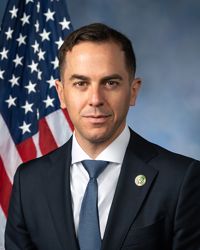
United States · Official source
619 records where Rep. Menendez, Robert [D-NJ-8] is listed as a sponsor, author, or other actor. Search with topics and years
United States · United States Congress · 14 July 2025
United States · United States Congress · 10 July 2025
United States · United States Congress · 26 June 2025
United States · United States Congress · 26 June 2025
United States · United States Congress · 26 June 2025
United States · United States Congress · 26 June 2025
United States · United States Congress · 26 June 2025
United States · United States Congress · 26 June 2025
United States · United States Congress · 25 June 2025
United States · United States Congress · 24 June 2025
Women's Health Protection Act of 2025 This bill prohibits governmental restrictions on the provision of, and access to, abortion services. Before fetal viability, governments may not restrict providers from using particular abortion procedures or drugs, offering abortion services via telemedicine, or immediately providing abortion services if delaying risks the patient's health. Furthermore, governments may not require providers to perform unnecessary medical procedures, provide medically inaccurate information, or comply with credentialing or other conditions that do not apply to providers who offer medically comparable services to abortions. Additionally, governments may not require patients to make medically unnecessary in-person visits before receiving abortion services or disclose their reasons for obtaining services. After fetal viability, governments may not restrict providers from performing abortions when necessary to protect a patient's life and health. The same provisions that apply to abortions before viability also apply to necessary abortions after viability. Additionally, states may authorize post-viability abortions in circumstances beyond those that the bill considers necessary. Further, the bill recognizes an individual's right to interstate travel, including for abortion services. The bill also prohibits governments from implementing measures that are similar to those restricted by the bill or that otherwise target and impede access to abortion services, unless the measure significantly advances the safety of abortion services or health of patients and cannot be achieved through less restrictive means. The Department of Justice, individuals, or providers may sue states or government officials to enforce this bill, regardless of certain immunity that would otherwise apply.
United States · United States Congress · 24 June 2025
United States · United States Congress · 24 June 2025
United States · United States Congress · 24 June 2025
United States · United States Congress · 23 June 2025
United States · United States Congress · 23 June 2025
United States · United States Congress · 12 June 2025
Enhancing Science, Treatment, and Upkeep of America’s Resilient and Important Estuarine Systems Act or the ESTUARIES Act This bill reauthorizes through FY2031 grants provided under the National Estuary Program to protect and restore estuaries of national significance. Estuaries are coastal waterbodies where freshwater from rivers and streams mixes with the ocean’s saltwater. Under the existing program, the Environmental Protection Agency provides grants for (1) developing and implementing comprehensive conservation and management plans for estuaries of national significance, and (2) addressing issues that threaten the ecological and economic well-being of such estuaries. The existing program provides grants to states, regional water pollution control agencies and entities, state coastal zone management agencies, interstate agencies, other public or nonprofit private agencies, institutions, organizations, and individuals.
United States · United States Congress · 12 June 2025
United States · United States Congress · 12 June 2025
United States · United States Congress · 10 June 2025
Bipartisan Background Checks Act of 2025 This bill establishes new background check requirements for firearm transfers between private parties (i.e., unlicensed individuals). Specifically, it prohibits a firearm transfer between private parties unless a licensed gun dealer, manufacturer, or importer first takes possession of the firearm to conduct a background check. The prohibition does not apply to certain firearm transfers or exchanges, such as a gift between spouses.
United States · United States Congress · 10 June 2025
Enhanced Background Checks Act of 2025 This bill establishes more stringent background check requirements for proposed firearm transfers from a federal firearms licensee (e.g., a licensed gun dealer) to an unlicensed person. Specifically, it increases the amount of time, from 3 business days to a minimum of 10 business days, that a federal firearms licensee must wait to receive a completed background check prior to transferring a firearm to an unlicensed person. (This type of transaction is often referred to as a default proceed transaction.) If a submitted background check remains incomplete after 10 business days, then the prospective purchaser may submit a petition for a final firearms eligibility determination. If an additional 10 days elapse without a final determination, then the federal firearms licensee may transfer the firearm to the prospective purchaser. The Government Accountability Office must report on the extent to which the changes have prevented firearms transfers to prohibited persons. The Federal Bureau of Investigation must report on the number of petitions it receives for final federal firearms determinations. The Department of Justice, in consultation with the National Resource Center on Domestic Violence and Firearms, must report on further amendments to the background check process that would likely reduce the risk of death or great bodily harm to victims of domestic violence, domestic abuse, dating partner violence, sexual assault, and stalking.
United States · United States Congress · 10 June 2025
United States · United States Congress · 5 June 2025
United States · United States Congress · 5 June 2025
United States · United States Congress · 4 June 2025
United States · United States Congress · 4 June 2025
Equal Access to Justice for Victims of Gun Violence Act of 2025 This bill removes limitations on the civil liability of gun manufacturers and the disclosure of gun trace data in civil actions. Specifically, the bill repeals the Protection of Lawful Commerce in Arms Act, which prohibits civil actions against a firearm or ammunition manufacturer, seller, importer, dealer, or trade association for damages resulting from the criminal or unlawful misuse of a firearm. Additionally, the bill states that firearms trace data maintained by the Bureau of Alcohol, Tobacco, Firearms and Explosives is not immune from legal process. Such data is subject to discovery; is admissible as evidence; and may be used, relied on, or disclosed in a civil action or administrative proceeding.
United States · United States Congress · 2 June 2025
United States · United States Congress · 29 May 2025
Menstrual Equity For All Act of 2025 This bill expands access to menstrual products (e.g., tampons) in certain locations and for particular groups, such as in schools and for low-income individuals, through federal programs and requirements. It also prohibits state or local sales taxes for these products. The bill expands access to menstrual products through federal programs by requiring Medicaid to cover such products, establishing grants within the Temporary Assistance for Needy Families (TANF) program to provide benefits to ensure access to such products, authorizing the Emergency Food and Shelter Program to provide menstrual products to homeless individuals, and increasing Social Services Block Grant funding to provide such products to low-income individuals. Also, the bill sets out requirements to make free menstrual products available in federal and state correctional facilities (including Department of Homeland Security detention facilities) and restrooms in federal buildings that are open to the public. Further, the bill (1) establishes grants to provide free menstrual products to students at institutions of higher education, and (2) permits elementary and secondary schools to use certain grant funds to provide menstrual products to students. In addition, the bill requires employers with at least 100 employees to provide free menstrual products for employees. Finally, the bill prohibits states and local governments from taxing retail sales of menstrual products.
United States · United States Congress · 29 May 2025
United States · United States Congress · 21 May 2025
United States · United States Congress · 21 May 2025
College for All Act of 2025 This bill establishes measures to expand access to higher education, including by eliminating tuition and required fees for eligible students, revising the Federal Pell Grant program, and reauthorizing certain programs to assist students from disadvantaged backgrounds. Specifically, the bill provides funding to enable states and tribal colleges and universities, through a federal-state partnership, to eliminate tuition and required fees for (1) all students at community colleges and two-year tribal colleges and universities, and (2) working- and middle-class students at four-year public institutions of higher education and tribal colleges and universities. The bill provides funding to enable private, nonprofit historically Black colleges and universities and minority-serving institutions to eliminate tuition and required fees for eligible students. The bill permanently reauthorizes and otherwise revises the Federal Pell Grant program by providing funding to increase the maximum award for each eligible student, increasing the duration limit for the use of Pell Grants, allowing students to use their awards to cover living and nontuition expenses, and expanding eligibility to Dreamer students (i.e., students who have been granted Deferred Action for Childhood Arrivals status and who entered the United States before the age of 16) and students with other immigration statuses. Further, the bill requires the Department of Education to award grants to eligible states and tribal colleges and universities for improving student outcomes. The bill reauthorizes through FY2035 the Federal TRIO Programs and reauthorizes through FY2029 the Gaining Early Awareness and Readiness for Undergraduate Programs.
United States · United States Congress · 20 May 2025
Improving Seniors' Timely Access to Care Act of 2025 This bill establishes several requirements and standards relating to prior authorization processes under Medicare Advantage (MA) plans. Specifically, MA plans must (1) establish an electronic prior authorization program that meets specified standards; (2) annually submit to the CMS for publication specified prior authorization information, including the percentage of requests approved and the average response time; and (3) meet other standards, as set by the Centers for Medicare & Medicaid Services (CMS), relating to the quality and timeliness of prior authorization determinations. The CMS and the Office of the National Coordinator for Health Information Technology must publish on the CMS' website a report that analyzes the information received from MA plans, the feasibility of implementing real-time decision making with respect to prior authorization requests, and the impact of decisions that are made using artificial intelligence on patient access.
United States · United States Congress · 20 May 2025
United States · United States Congress · 20 May 2025
United States · United States Congress · 15 May 2025
United States · United States Congress · 15 May 2025
Stronger Communities through Better Transit Act This bill requires the Department of Transportation (DOT) to establish a grant program to support operating projects for public transportation and related service improvements, particularly in underserved communities and areas of persistent poverty. Specifically, the bill requires DOT to allocate funding under the program for urbanized areas, states, and Indian tribes that are recipients of funds under either the Federal Transit Administration's (FTA's) Urbanized Area Formula Funding program or Formula Grants for Rural Areas program. Eligible recipients may use funding for operating costs associated with projects that improve public transportation service for transit-dependent populations and support increased transit ridership (e.g., service expansion, information technology enhancements, and workforce development). DOT must apportion the funding so that recipients receive funds that are proportional to their share of operating costs. The bill also provides for an increased federal cost share for operating assistance for projects or programs carried out in areas of persistent poverty or underserved communities. DOT must set up a multimodal access measurement interface for public agencies to aid transit agencies in determining and reporting on access to jobs and essential services. A grant recipient must (1) report specific information to the FTA for inclusion in the National Transit Database, and (2) survey transit riders and non-riding residents regarding transit service improvements. Further, the bill expands the purposes of the public transportation programs to include supporting public transportation's role in combating climate change through growing/retaining transit ridership.
United States · United States Congress · 13 May 2025
United States · United States Congress · 13 May 2025
Improving Training for School Food Service Workers Act of 2025 This bill adds requirements regarding the availability of training that the Department of Agriculture provides under current law for local food service personnel in schools. The training must be scheduled during regular, paid working hours; provided at no cost to food service personnel; offered in-person whenever appropriate; and incorporate experiential learning. If the training is scheduled outside of working hours, food service personnel must be informed about the necessity of scheduling the program, consulted to schedule the program, and compensated for attending the program. Personnel may not be penalized for failing to attend a program outside of working hours.
United States · United States Congress · 13 May 2025
United States · United States Congress · 8 May 2025
This resolution recognizes the significance of Asian American, Native Hawaiian, and Pacific Islander Heritage Month as an important time to celebrate the significant contributions of Asian Americans, Native Hawaiians, and Pacific Islanders to the history of the United States.
United States · United States Congress · 8 May 2025
United States · United States Congress · 8 May 2025
United States · United States Congress · 7 May 2025
United States · United States Congress · 5 May 2025
United States · United States Congress · 5 May 2025
Improving Helicopter Safety Act of 2025 This bill generally prohibits the operation of a civil helicopter within a 20-mile radius of the Statue of Liberty National Monument in New York, New York. The bill includes an exception for flights carried out for the purposes of (1) public health and safety (e.g., for law enforcement or the provision of medical services), or (2) heavy-lift operations in support of construction and infrastructure maintenance. The Federal Aviation Administration must issue or update regulations to carry out the requirements of this bill.
United States · United States Congress · 5 May 2025
This resolution recognizes the historic struggle of the people of Mexico for independence and freedom, which Cinco de Mayo commemorates, and encourages the people of the United States to observe Cinco de Mayo.
United States · United States Congress · 1 May 2025
United States · United States Congress · 1 May 2025
Ensuring Community Access to Pharmacist Services Act This bill provides for permanent coverage under Medicare of certain pharmacist services. Specifically, the bill provides for permanent coverage of testing and treatment services provided by pharmacists relating to (1) COVID-19, influenza, respiratory syncytial virus (RSV), and streptococcal pharyngitis (strep throat); and (2) other public health needs in relation to a declared public health emergency. (Similar authorities were temporarily granted during the COVID-19 public health emergency.) Such services must be provided in accordance with the applicable state laws governing pharmacists' scope of practice.
United States · United States Congress · 1 May 2025
United States · United States Congress · 30 April 2025
United States · United States Congress · 30 April 2025