Bill· HRH.R. 2089 (119th)referred
Generating Retirement Ownership through Long-Term Holding
United States · United States Congress · 11 March 2025
The world's political record
Person
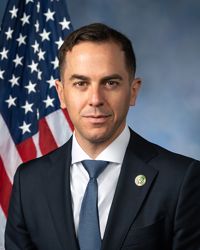
United States · Official source
619 records where Rep. Menendez, Robert [D-NJ-8] is listed as a sponsor, author, or other actor. Search with topics and years
United States · United States Congress · 11 March 2025
United States · United States Congress · 11 March 2025
United States · United States Congress · 11 March 2025
Caring for Survivors Act of 2025 This bill increases the monthly rate of dependency and indemnity compensation payable to surviving spouses through the Department of Veterans Affairs (VA). Dependency and indemnity compensation is a monthly payment made to eligible survivors (i.e., spouses, parents, or children) of (1) certain veterans who died as a result of a service-connected condition; (2) service members killed while on active military duty or active or inactive duty for training; or (3) veterans who did not die from a service-connected condition, but were totally disabled by a service-connected disability for a certain period of time. The bill also (1) reduces, from 10 years to 5 years, the period of time that certain veterans must have been rated totally disabled due to a service-connected disability in order for a survivor to qualify for benefits; and (2) specifies the amount that is payable to survivors of veterans who were rated totally disabled for a period of less than 10 years before their death.
United States · United States Congress · 10 March 2025
25th Anniversary of 9/11 Commemorative Coin Act This bill directs the Department of the Treasury to mint and issue coins to commemorate the 25th anniversary of the September 11, 2001, terrorist attacks on the United States and the establishment of the National September 11 Memorial and Museum at the World Trade Center. The sale of all coins issued under this bill must include a surcharge to be paid to the National September 11 Memorial and Museum at the World Trade Center to support operations and maintenance. However, if the issuance of this commemorative coin exceeds certain annual limits, no surcharge may be included.
United States · United States Congress · 10 March 2025
American Teacher Act This bill establishes grants to increase the minimum salary of public elementary and secondary school teachers. It also authorizes a national campaign regarding the value of the teaching profession. First, the bill directs the Department of Education (ED) to award four-year grants to state educational agencies (SEAs) and, through them, subgrants to local educational agencies to establish a minimum annual salary of $60,000 (to be adjusted annually for inflation) for these teachers. Second, the bill directs ED to award grants to eligible SEAs to provide cost-of-living adjustments to the annual base salary of teachers. Finally, the bill authorizes ED to carry out a national campaign to (1) increase awareness about the importance of teachers and the value of the teaching profession, (2) encourage secondary school and college students to consider teaching as a professional career, and (3) diversify the pool of individuals who enter the teaching profession.
United States · United States Congress · 10 March 2025
United States · United States Congress · 6 March 2025
United States · United States Congress · 5 March 2025
Broadcast Freedom and Independence Act of 2025 This bill prohibits the Federal Communications Commission (FCC) from taking action against or imposing certain conditions on individuals on the basis of viewpoints broadcast or disseminated by the individuals or their affiliates. Specifically, the FCC may not revoke a license or authorization of, or otherwise take action against, an individual or entity on the basis of viewpoints broadcast or otherwise disseminated by the individual or entity or an affiliate thereof. Further, the FCC may not impose conditions on its approval of certain transactions on the basis of viewpoints broadcast or otherwise disseminated by the individual or entity seeking approval of the transaction, or an affiliate thereof. Under the bill, the FCC retains its authority to take action or impose conditions on the basis of (1) violations of certain existing laws regarding lottery information, fraud, and obscene language; or (2) the broadcast or other dissemination of content that constitutes incitement under the First Amendment.
United States · United States Congress · 5 March 2025
Protecting Americans’ Social Security Data Act This bill prohibits political appointees and special government employees from accessing Social Security data systems that contain personally identifiable information about Social Security beneficiaries. Specifically, political appointees and special government employees may not access systems maintained by the Social Security Administration (SSA) that issue or record Social Security account numbers, that are used to determine eligibility for or to pay Social Security benefits, or that otherwise contain personally identifiable information about individuals receiving or applying for benefits. The bill also establishes a civil right of action for an individual whose information was negligently accessed or disclosed in violation of these provisions. The individual may bring suit against the United States if the violator was a U.S. employee or officer, or against the violator if they were not a U.S. employee or officer. Such a claim must be brought within two years of the affected individual’s discovery of the violation. Upon a finding of liability, defendants are liable for specified monetary damages. If an individual is criminally charged or subject to proposed disciplinary or adverse action by a federal or state agency for having accessed or disclosed information in violation of these provisions, SSA must notify the individual whose information was accessed or disclosed of the violation as soon as practicable. Finally, the bill requires the SSA Office of the Inspector General to investigate and report to Congress on any unauthorized access to or disclosure of information in a beneficiary data system.
United States · United States Congress · 5 March 2025
TAP Promotion Act This bill requires that pre-separation counseling under the Transition Assistance Program include a presentation that promotes the benefits available to veterans from the Department of Veterans Affairs (VA). The bill also requires the VA to annually report on the presentation to (1) identify veterans service organizations that participate, (2) provide the number of members of the Armed Forces who attend, and (3) provide any recommendations for changes to the presentation.
United States · United States Congress · 5 March 2025
John R. Lewis Voting Rights Advancement Act of 2025 This bill establishes new criteria for determining which states and political subdivisions must obtain preclearance before changes to voting practices may take effect. Preclearance is the process of receiving preapproval from the Department of Justice (DOJ) or the U.S. District Court for the District of Columbia before making legal changes that would affect voting rights. A state and all of its political subdivisions shall be subject to preclearance of voting practice changes for a 10-year period if, during the previous 25 years: 15 or more voting rights violations occurred in the state; 10 or more violations occurred, at least 1 of which was committed by the state itself; or 3 or more violations occurred and the state administers the elections. A political subdivision as a separate unit shall also be subject to preclearance for a 10-year period if three or more voting rights violations occurred there during the previous 25 years. States and political subdivisions that meet certain thresholds regarding minority groups must preclear covered practices before implementation, such as redistricting. States and political subdivisions must notify the public of changes to voting practices. The bill authorizes DOJ to require states or political subdivisions to provide certain documents or answers to questions for enforcing voting rights. The bill outlines factors courts must consider when hearing challenges to voting practices, such as the extent of any history of official voting discrimination in the state or political subdivision.
United States · United States Congress · 5 March 2025
United States · United States Congress · 4 March 2025
United States · United States Congress · 3 March 2025
United States · United States Congress · 3 March 2025
United States · United States Congress · 3 March 2025
Safe Schools Improvement Act This bill requires states to direct their local educational agencies (LEAs) to establish policies that prevent and prohibit bullying and harassment of elementary and secondary school students. In particular, these policies must prohibit bullying and harassment based on race, color, national origin, disability, religion, or sex. Sex includes sexual orientation, gender identity, and sex characteristics (including intersex traits). Further, LEAs must provide (1) students, parents, and educational professionals with annual notice of the conduct prohibited in their disciplinary policies; (2) students and parents with grievance procedures that target such conduct; and (3) the public with annual data on the incidence and frequency of that conduct at the school and LEA level. The Department of Education must conduct and report on an independent biennial evaluation of programs and policies to combat bullying and harassment in elementary and secondary schools. The National Center for Education Statistics must collect state data to determine the incidence and frequency of the conduct prohibited by LEA disciplinary policies.
United States · United States Congress · 27 February 2025
Communications Security Act This bill provides statutory authority for a council established by the Federal Communications Commission (FCC) to provide advice regarding the security, reliability, and interoperability of communications networks. (This advice is currently provided by the FCC’s Communications Security, Reliability, and Interoperability Council.) The bill specifies that the FCC may designate an existing advisory committee to fulfill this role, provided the committee’s membership is modified, as necessary, to comply with membership requirements set forth in the bill. Specifically, the bill requires the council to include, to the extent practicable, representatives of companies in the communications industry; public interest organizations or academic institutions; and federal, state, tribal, and local governments (with at least one member representing each level of government). Members are to be selected by the FCC's chair and generally may not include representatives of entities owned or controlled by, or subject to the influence of, a foreign adversary, or otherwise deemed to pose a threat to U.S. national security. Under current law, federal advisory committees must generally terminate after two years unless they are renewed or a statute specifies a different termination date. However, the bill exempts the council from this requirement.
United States · United States Congress · 27 February 2025
Governing Unaccredited Representatives Defrauding VA Benefits Act or the GUARD VA Benefits Act This bill imposes fines on individuals for soliciting, contracting for, charging, or receiving any unauthorized fee or compensation with respect to the preparation, presentation, or prosecution of any claim for Department of Veterans Affairs benefits. The attempted commission of such offenses is also punishable by fine.
United States · United States Congress · 27 February 2025
Keep Americans Safe Act This bill establishes a new criminal offense for the import, sale, manufacture, transfer, or possession of a large capacity ammunition feeding device (LCAFD). The bill does not prohibit certain conduct with respect to an LCAFD, including the following: importation, sale, manufacture, transfer, or possession related to certain law enforcement efforts, or authorized tests or experiments; importation, sale, transfer, or possession related to securing nuclear materials; and possession by a retired law enforcement officer. The bill permits continued possession of, but prohibits sale or transfer of, a grandfathered LCAFD. Newly manufactured LCAFDs must display serial number identification and the date of manufacture. Additionally, the bill allows a state or local government to use Edward Byrne Memorial Justice Assistance Grant Program funds to compensate individuals who surrender an LCAFD under a buy-back program.
United States · United States Congress · 27 February 2025
Save America's Forgotten Equines Act of 2025 or the SAFE Act of 2025 This bill permanently prohibits the slaughter of equines (e.g., horses and mules) for human consumption. (Current law prohibits the slaughter of dogs and cats for human consumption. This bill extends the prohibition to equines.) Specifically, this bill prohibits a person from knowingly (1) slaughtering an equine for human consumption; or (2) shipping, transporting, possessing, purchasing, selling, or donating an equine to be slaughtered for human consumption or equine parts for human consumption. The bill subjects a violator to a fine. The bill applies to conduct in or affecting interstate or foreign commerce or within the special maritime and territorial jurisdiction of the United States. However, it does not apply to an activity carried out by an Indian for a religious ceremony. As background, in recent years, the appropriations acts have prohibited the Department of Agriculture (USDA) from using federal funds to inspect horses before they are slaughtered for human consumption. Therefore, there are currently no USDA-inspected horse slaughter facilities in the United States.
United States · United States Congress · 27 February 2025
United States · United States Congress · 27 February 2025
This joint resolution redesignates the memorial to Robert. E. Lee in Arlington National Cemetery as the Arlington House National Historic Site.
United States · United States Congress · 27 February 2025
Prevent All Soring Tactics Act of 2025 or the PAST Act of 2025 This bill increases protections for horses at shows, exhibitions, sales, or auctions (horse events) to prevent the practice of soring horses. Generally, the soring of horses includes certain actions taken on horses' limbs to produce higher gaits that may cause pain, distress, inflammation, or lameness. Specifically, the bill expands existing soring prohibitions under the Horse Protection Act, including by banning the use of certain action devices (e.g., nonprotective boots) on specified horse breeds. The bill also requires soring inspectors at horse events to be assigned by the Animal and Plant Health Inspection Service (APHIS) of the Department of Agriculture rather than appointed by the management of horse events. APHIS must also license, train, and oversee inspectors to detect and diagnose soring at such events. Additionally, the bill increases penalties for violations of the act. It also directs APHIS to disqualify horses found to be sore from being shown or exhibited for specified periods. Further, APHIS may permanently disqualify violators from participating in horse events after the third or any subsequent violation. By way of background, APHIS issued a rule in 2024 to increase efforts to protect horses from soring practices. However, in 2025, a court vacated parts of the rule as exceeding APHIS' statutory authority (e.g., prohibiting the use of certain action devices) while deeming other parts acceptable (e.g., establishing APHIS-designated inspectors). APHIS subsequently delayed the effective date of the rule to December 31, 2026.
United States · United States Congress · 26 February 2025
Creating a Respectful and Open World for Natural Hair Act of 2025 or the CROWN Act of 2025 This bill prohibits discrimination based on a person's hair texture or hairstyle if that style or texture is commonly associated with a particular race or national origin. Specifically, the bill prohibits this type of discrimination against those participating in federally assisted programs, housing programs, public accommodations, and employment. Persons shall not be deprived of equal rights under the law and shall not be subjected to prohibited practices based on their hair texture or style. The bill provides for enforcement procedures under the applicable laws (e.g., the Civil Rights Act of 1964).
United States · United States Congress · 26 February 2025
United States · United States Congress · 26 February 2025
American Dream and Promise Act of 2025 This bill provides certain non-U.S. nationals ( aliens under federal law) with a path to receive permanent resident status and contains other immigration-related provisions. The Department of Homeland Security (DHS) or the Department of Justice (DOJ) shall provide conditional permanent resident status for 10 years to a qualifying individual who entered the United States as a minor and (1) is deportable or inadmissible, (2) has deferred enforced departure (DED) status or temporary protected status (TPS), or (3) is the child of certain classes of nonimmigrants. The bill imposes various qualifying requirements, such as the individual being continuously physically present in the United States since January 1, 2021, passing a background check, and being enrolled in or having completed certain educational programs. DHS shall remove the conditions placed on permanent resident status granted under this bill if the individual applies and meets certain requirements, such as completing certain programs at an educational institution, serving in the military, or being employed. Furthermore, DHS or DOJ shall provide lawful permanent resident status to certain individuals who had TPS, were eligible for TPS, or were eligible for DED status on certain dates. Such individuals must meet certain requirements and apply for such status within three years of this bill's enactment. This bill also repeals a restriction that bars a state from providing higher education benefits to undocumented individuals unless those benefits are available to all U.S. nationals without regard to residency in the state.
United States · United States Congress · 25 February 2025
Ethan's Law This bill establishes a framework to regulate the storage of firearms on residential premises at the federal, state, and tribal levels. At the federal level, the bill establishes statutory requirements for firearms on residential premises to be safely stored if a minor is likely to gain access without permission or if a resident is ineligible to possess a firearm. An individual who violates the requirements is subject to criminal penalties. A firearm stored in violation of the requirements is subject to seizure and forfeiture. At the state and tribal levels, the bill requires the Department of Justice to award grants to implement functionally identical requirements for the safe storage of firearms.
United States · United States Congress · 24 February 2025
New Era of Preventing End-Stage Kidney Disease Act This bill establishes regional centers of excellence, postgraduate fellowships, and training for health professionals relating to the diagnosis and treatment of rare kidney disease. It also requires the Department of Health and Human Services (HHS) to conduct various studies on rare kidney disease. Specifically, it authorizes the National Institute of Diabetes and Digestive and Kidney Diseases to award funding to public and private nonprofit entities for establishing regional centers of excellence that will increase public awareness, conduct research, and develop resources for diagnosing and treating rare kidney diseases. A center may receive such funding for up to five years, unless extended by the institute. The bill also requires health professions schools receiving a grant from the Health Resources and Services Administration (HRSA) Centers of Excellence program to award fellowships for training on preventing, diagnosing, and treating rare kidney disease in disproportionately impacted populations. Also, the bill expands the priorities of HRSA’s Primary Care Training and Enhancement program to include training for health care workers to care for individuals with kidney disease. Additionally, HHS must conduct several studies and report to Congress on topics such as treating rare kidney disease in disproportionately affected populations, eliminating the need for dialysis or kidney transplants, and increasing public awareness of rare kidney disease.
United States · United States Congress · 24 February 2025
United States · United States Congress · 24 February 2025
This resolution supports the designation of Public Schools Week.
United States · United States Congress · 21 February 2025
Animal Cruelty Enforcement Act of 2025 This bill establishes a new section in the Environment and Natural Resources Division of the Department of Justice to enforce federal laws concerning animal cruelty.
United States · United States Congress · 21 February 2025
This bill reauthorizes from FY2026-FY2030 and expands Department of Health and Human Services (HHS) programs relating to traumatic brain injuries. It also requires HHS to conduct a study and report to Congress on traumatic brain injuries. Specifically, the bill reauthorizes Centers for Disease Control and Prevention (CDC) grants to states for traumatic brain injury surveillance and registries (renaming the program after the late Representative Bill Pascrell, Jr.), CDC research and public awareness activities to reduce traumatic brain injuries, Administration for Community Living (ACL) grants to states and American Indian consortiums for services and support for individuals living with traumatic brain injuries, and ACL grants for protection and advocacy agencies supporting individuals with traumatic brain injuries. Also, the bill generally expands the scope and requirements of these programs, including by requiring the CDC to publish information on populations at higher risk for traumatic brain injuries and strategies for preventing such injuries in these populations. Additionally, HHS must conduct a study on long-term symptoms or conditions in people who experience traumatic brain injuries and report the findings to Congress. HHS must also submit a report to Congress on populations with a higher risk of traumatic brain injuries and outreach efforts for such populations.
United States · United States Congress · 21 February 2025
Air Traffic Noise and Pollution Expert Consensus Act of 2025 This bill requires the Federal Aviation Administration to enter into an arrangement with the National Academies of Sciences, Engineering, and Medicine to examine and report on the various health impacts of air traffic noise and pollution.
United States · United States Congress · 18 February 2025
This bill designates the facility of the United States Postal Service located at 2407 State Route 71, Suite 1, in Spring Lake, New Jersey, as the "James J. Howard Post Office".
United States · United States Congress · 18 February 2025
Enhanced Iran Sanctions Act of 2025 This bill imposes sanctions on certain foreign persons (individuals and entities) that are involved in Iran's petroleum sector as well as certain associated persons. The bill also requires or authorizes actions to facilitate the enforcement of sanctions on Iran. Specifically, the bill requires the President to impose visa- and property-blocking sanctions on any foreign person that, after the bill's enactment, knowingly engages in any transaction related to the processing, export, or sale of oil, condensates, gas, liquefied natural gas, or other petrochemical products in whole or in part from Iran. The President must also impose sanctions on certain foreign persons associated with a sanctioned individual or entity. For example, the President must sanction the subsidiaries and corporate officers of a sanctioned business. The bill provides certain exceptions to these sanctions, including specifying that sanctions do not apply to the importation of goods or to conducting or facilitating transactions for humanitarian assistance. The Department of State must establish an interagency working group that shall seek to establish a multilateral contact group to coordinate international efforts to enforce sanctions on Iran. The bill expands the State Department rewards program to authorize a reward payment to any individual who furnishes information leading to the identification of a person (1) subject to sanctions under this bill, or (2) that has attempted or is attempting to evade sanctions under this bill.
United States · United States Congress · 18 February 2025
9/11 Responder and Survivor Health Funding Correction Act of 2025 This bill modifies the World Trade Center Health Program (WTCHP), including by updating the formula for determining the program’s annual funding amounts and authorizing mental health providers to provide certain evaluations under the program. The WTCHP is a federal health care program (terminating in FY2090) providing responders and survivors with monitoring and treatment of certified medical conditions related to the terrorist attacks that occurred on September 11, 2001. Under current law, the program’s annual federal funding is determined based on the amount specifically appropriated in the previous fiscal year, adjusted for inflation. The bill establishes a new federal funding formula for FY2026-FY2090 that is generally based on annual changes in the number of enrollees. The bill also increases the amounts the program may spend annually on medical research and activities relating to data collection. The bill requires the National Institute for Occupational Safety and Health (NIOSH), which administers the program, to submit a report to Congress on the program’s projected budgetary needs and expenditures. In addition, the bill authorizes licensed mental health providers to perform initial health evaluations with respect to mental health conditions for purposes of determining eligibility under the WTCHP. NIOSH must issue regulations specifying the categories of mental health providers that may perform these activities.
United States · United States Congress · 13 February 2025
Black History Matters Act This bill directs the National Museum of African American History and Culture to study and report on Black history education in public elementary and secondary schools. Among other elements, the study must (1) identify the states and local educational agencies that require (and those that do not require) Black history education as part of the curriculum taught in public elementary and secondary schools, (2) assess the quality of Black history education provided by schools, and (3) assess the types and quality of instructional material used to teach students about Black history.
United States · United States Congress · 13 February 2025
United States · United States Congress · 13 February 2025
United States · United States Congress · 12 February 2025
United States-Israel Defense Partnership Act of 2025 This bill requires or authorizes certain actions to increase defense-related cooperation between the United States and Israel. Specifically, the bill requires the Department of Defense (DOD) to establish a cooperative program, with the concurrence of Israel's Ministry of Defense (MOD), to develop and deploy advanced technologies for countering unmanned systems that threaten the United States and Israel; establish in Israel an office of the Defense Innovation Unit (an organization that focuses on rapidly fielding and scaling commercial technology across the U.S. military); and seek to engage Israel's MOD on the ascension of Israel into the national technology and industrial base (currently defined in law as the persons and organizations engaged in research, development, production, integration, services, or information technology activities conducted within the United States, the United Kingdom, Australia, New Zealand, and Canada). The bill authorizes DOD, upon request of Israel's MOD, to jointly conduct research, development, test, and evaluation (RDT&E) of emerging technologies such as artificial intelligence and robotics to meet defense challenges. Additionally, the bill extends the authority for DOD to (1) carry out RDT&E on a joint basis with Israel to establish anti-tunnel and counter unmanned aerial systems capabilities through 2028, and (2) transfer defense articles intended for use as reserve stocks for Israel through January 1, 2029.
United States · United States Congress · 12 February 2025
Alternatives to Prevent Addiction In the Nation Act or the Alternatives to PAIN Act This bill reduces cost-sharing and prohibits the imposition of certain utilization requirements under the Medicare prescription drug benefit for certain non-opioid pain management drugs. Specifically, the bill requires such drugs to be covered without a deductible and to be placed on the lowest cost-sharing tier (if any). The bill also prohibits the imposition of prior authorization requirements (i.e., requiring prior approval from a plan) or step therapy requirements (i.e., requiring the use of alternative drugs before a drug is covered under a plan) with respect to such drugs.
United States · United States Congress · 12 February 2025
United States · United States Congress · 12 February 2025
Give Kids a Chance Act of 2025 This bill expands the Food and Drug Administration’s (FDA’s) authority with respect to research on rare pediatric diseases, including by permitting the FDA to take enforcement action against drug sponsors that fail to satisfy pediatric study requirements and by reauthorizing programs that support pediatric research. Specifically, the bill modifies requirements relating to molecularly targeted pediatric cancer investigations to permit research on new drugs in combination with active ingredients that have already been approved, provided certain conditions are met; permits the FDA to take enforcement action against drug sponsors that fail to comply with pediatric study requirements, if such sponsors demonstrated a lack of due diligence in satisfying the requirement; renews the FDA’s authority to award priority review vouchers to sponsors of new products intended to treat rare pediatric diseases through September 30, 2029; and reauthorizes through FY2027 certain funding for the National Institutes of Health to support priority pediatric research. The bill also provides statutory authority for the FDA’s interpretation of the orphan drug exclusivity period. The bill specifies, consistent with FDA regulations, that the seven-year market exclusivity period for drugs for rare diseases or conditions (i.e., orphan drugs) prohibits the approval of the same drug for the same approved use or indication with respect to the disease or condition. (In Catalyst Pharmaceuticals, Inc. v. Becerra , a court rejected the FDA’s interpretation and held that orphan drug exclusivity extends to all uses or indications for the disease or condition.)
United States · United States Congress · 10 February 2025
Honoring Our Fallen TSA Officers Act This bill includes Transportation Security Administration (TSA) employees in the Public Safety Officers' Benefits (PSOB) program under certain conditions. Specifically, the bill extends PSOB program death and disability benefits to TSA employees performing official duties related to protecting the nation's transportation systems. As background, the PSOB program provides cash benefits to federal, state, and local law enforcement officers; firefighters; employees of emergency management agencies; and members of emergency medical services agencies who are killed or permanently and totally disabled as the result of personal injuries sustained in the line of duty. PSOB death benefits are payable to the eligible spouse and children of a public safety officer. Further, the Public Safety Officers’ Educational Assistance program, a component of the PSOB program, provides higher-education assistance to the children and spouses of public safety officers who are eligible for PSOB death or disability benefits.
United States · United States Congress · 6 February 2025
Protecting Sensitive Locations Act This bill prohibits immigration enforcement actions within 1,000 feet of a sensitive location except in exigent circumstances, such as the imminent risk of death, violence, or physical harm to any person. Sensitive locations include health care facilities; schools and school bus stops; places that provide assistance for people such as children, pregnant women, and abuse victims; child care facilities; places that provide disaster or emergency services; places of worship; courthouses and lawyers’ offices; facilities used as polling places; certain labor union facilities; and public assistance offices. The prohibition shall apply to Department of Homeland Security officers and agents, as well as state employees pursuing immigration enforcement actions. If an enforcement action is carried out in violation of this prohibition (1) no information resulting from the action may be entered into the record in a resulting removal proceeding, and (2) the affected individual may move to immediately terminate such a proceeding. U.S. Immigration and Customs Enforcement and U.S. Customs and Border Protection shall annually report to Congress about enforcement actions taken at sensitive locations in the preceding year.
United States · United States Congress · 6 February 2025
Protect Our Letter Carriers Act of 2025 This bill requires or authorizes certain actions related to the U.S. Postal Service (USPS). The bill requires the Department of Justice to appoint an assistant U.S. attorney in each judicial district to coordinate and supervise the investigation and prosecution of various crimes related to postal services (for example, assault on a postal service employee, breaking into a post office, or obstruction of mails). The bill also requires the U.S. Sentencing Commission to amend sentencing guidelines to provide that the assault or robbery of a postal employee shall be treated the same as the assault of a law enforcement officer. Additionally, the bill authorizes appropriations for the USPS to install high security collection boxes and replace older versions of the universal mailbox key with electronic versions.
United States · United States Congress · 6 February 2025
Taxpayer Data Protection Act This bill restricts access to any public money receipt or payment system belonging to the Department of the Treasury. Specifically, access is limited to authorized Treasury officers, employees, or contractors meeting certain performance standards who have held a qualified position for at least a year, or who hold other qualifications as provided by the bill. The bill specifically prohibits special government employees (i.e., temporary appointees hired to perform specific tasks) from having access to such systems. The bill also provides that an individual accessing such systems shall be treated as an executive branch employee for purposes of federal criminal conflict of interest laws. Treasury's Office of Inspector General must investigate and report on each instance of unauthorized use or other access of such payment systems.
United States · United States Congress · 6 February 2025
This resolution condemns Azerbaijan for its treatment of Dr. Gubad Ibadoghlu, practice of wrongful detention, and suppression of academic freedom. The resolution also calls for Dr. Ibadoghlu's immediate and unconditional release and for the Department of State to prioritize his well-being and release in all engagements with Azerbaijan.
United States · United States Congress · 5 February 2025
Love Lives On Act of 2025 This bill extends entitlement for various benefit programs and services for surviving spouses of deceased members of the Armed Forces or veterans. The bill provides that the remarriage of a surviving spouse must not bar the furnishing of dependency and indemnity compensation or special pension benefits to such spouse. Additionally, the Department of Defense may not terminate the payment of an annuity for a surviving spouse under the Survivor Benefit Plan solely because the surviving spouse remarries. The bill also expands the definition of a dependent under TRICARE to include a remarried widow or widower whose subsequent marriage has ended due to death, divorce, or annulment.
United States · United States Congress · 5 February 2025
AM Radio for Every Vehicle Act of 2025 This bill requires the Department of Transportation (DOT) to issue a rule requiring AM radio capabilities to be standard in all new passenger vehicles. (AM radio is often used to deliver emergency alerts and news and entertainment programming; some newer vehicles do not include AM equipment.) Specifically, this bill applies to passenger vehicles (1) manufactured in the United States for sale in the United States, imported into the United States, or shipped in interstate commerce; and (2) manufactured after the rule's effective date. The rule must require all such vehicles to have devices that can receive signals and play content transmitted by AM stations or digital audio AM stations installed as standard equipment and made easily accessible to drivers. Prior to the rule's effective date, manufacturers that do not include devices that can access AM radio as standard equipment (1) must inform purchasers of this fact through clear and conspicuous labeling, and (2) may not charge an additional or separate fee for AM radio access. DOT may assess civil penalties for any violation of the rule. The Department of Justice may also bring a civil action to enjoin a violation. The rule, including DOT’s authority to enforce it, must expire 10 years after the bill’s enactment. Further, the Government Accountability Office must study and report on the dissemination of emergency alerts to the public, including by conducting an assessment of AM radio relative to other Integrated Public Alert and Warning System communication technologies.