Bill· HRH.R. 7100 (119th)referred
Sikh American Anti-Discrimination Act of 2026
United States · United States Congress · 15 January 2026
The world's political record
Person
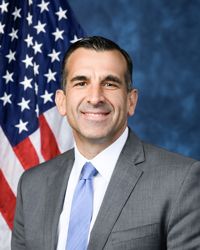
United States · Official source
198 records where Rep. Liccardo, Sam T. [D-CA-16] is listed as a sponsor, author, or other actor. Search with topics and years
United States · United States Congress · 15 January 2026
United States · United States Congress · 14 January 2026
United States · United States Congress · 13 January 2026
United States · United States Congress · 13 January 2026
United States · United States Congress · 12 January 2026
United States · United States Congress · 9 January 2026
United States · United States Congress · 9 January 2026
United States · United States Congress · 8 January 2026
United States · United States Congress · 7 January 2026
United States · United States Congress · 7 January 2026
This concurrent resolution directs the President to remove U.S. Armed Forces from Venezuela unless a declaration of war or authorization to use military force for such purpose has been enacted.
United States · United States Congress · 18 December 2025
United States · United States Congress · 18 December 2025
United States · United States Congress · 18 December 2025
This bill designates the facility of the United States Postal Service located at 2121 Meridian Park Boulevard in Concord, California, as the "Carl Jefferson Post Office Building".
United States · United States Congress · 17 December 2025
United States · United States Congress · 11 December 2025
Housing for the 21st Century Act This bill revises federal housing programs, including by expanding available financing for affordable housing and providing grants for planning and community development activities. For example, the bill increases the statutory maximum loan limits for mortgage insurance programs administered by the Federal Housing Administration for multifamily homes and requires the use of a more specific inflation index for such loans. The bill also increases the maximum eligible income for the Department of Housing and Urban Development's (HUD's) HOME Investment Partnerships Program (grants to states and localities to support housing for low-income households) and establishes a grant program to assist regional, state, and local entities with strategies to support affordable housing. In addition, the bill exempts certain housing-related activities from the environmental review process, including certain construction, improvement, or rehabilitation of residential buildings; excludes veterans' disability benefits from being considered as income for purposes of determining eligibility for the Veterans Affairs Supportive Housing (VASH) program; establishes a pilot program to provide grants to public housing agencies (PHAs) and other owners of federally assisted housing to test the efficacy of temperature sensors to support compliance with temperature requirements; eliminates the requirement that manufactured homes must be constructed with a permanent chassis; and authorizes HUD to conduct performance reviews of organizations that provide housing counseling services. The bill also expands oversight of HUD and PHAs, such as by requiring PHAs to post information about contracts on their websites. For more information about this bill, see CRS Report R48849 .
United States · United States Congress · 10 December 2025
United States · United States Congress · 9 December 2025
United States · United States Congress · 3 December 2025
United States · United States Congress · 1 December 2025
This concurrent resolution directs the President to remove U.S. Armed Forces from hostilities within or against Venezuela unless a declaration of war or authorization to use military force for such purpose has been enacted.
United States · United States Congress · 20 November 2025
United States · United States Congress · 19 November 2025
This bill designates the facility of the United States Postal Service located at 28201 Franklin Parkway in Santa Clarita, California, as the "Deputy Ryan Clinkunbroomer Post Office Building".
United States · United States Congress · 17 November 2025
This concurrent resolution directs the President to remove U.S. Armed Forces from hostilities with any presidentially designated terrorist organization in the Western Hemisphere unless a declaration of war or authorization to use military force for such purpose has been enacted.
United States · United States Congress · 10 November 2025
United States · United States Congress · 7 November 2025
United States · United States Congress · 31 October 2025
United States · United States Congress · 10 October 2025
United States · United States Congress · 30 September 2025
United States · United States Congress · 26 September 2025
United States · United States Congress · 23 September 2025
United States · United States Congress · 19 September 2025
United States · United States Congress · 19 September 2025
United States · United States Congress · 18 September 2025
Redistricting Reform Act of 2025 This bill sets forth requirements for congressional redistricting and generally prohibits mid-decade redistricting. Specifically, the bill requires that congressional redistricting be conducted in accordance with a plan developed by (1) a state-established independent commission; or (2) if such a commission does not enact a plan, a three-judge panel from a U.S. District Court. This requirement does not apply to a state that has a plan developed and approved by an independent redistricting commission that complies with specified requirements. The bill outlines the criteria for a redistricting plan, including that congressional districts must be drawn to (1) ensure the practical ability of a protected group to participate in the political process, nominate candidates, and elect representatives of choice; and (2) represent communities of interest and neighborhoods. Additionally, the bill prohibits the use of a redistricting plan that was drawn with the intent (or has the effect of) materially favoring or disfavoring any political party. Further, the bill establishes the requirements for appointing members to a state-established independent redistricting commission, including diversity requirements. The Government Accountability Office must report on the extent to which these commissions meet the diversity requirements. The bill includes a provision to prevent states from redistricting more than once following an apportionment (i.e., mid-decade redistricting). The bill also directs the Election Assistance Commission to make payments to states to carry out congressional redistricting.
United States · United States Congress · 17 September 2025
United States · United States Congress · 16 September 2025
United States · United States Congress · 16 September 2025
United States · United States Congress · 15 September 2025
NSF AI Education Act of 2025 This bill establishes, or authorizes the National Science Foundation (NSF) to establish, various scholarship, fellowship, and grant programs to promote education and professional development related to artificial intelligence (AI). The bill authorizes NSF to award scholarships and fellowships to college students focusing their studies on AI. NSF may also support AI-related professional development fellowships for (1) students and faculty, (2) K-12 teachers and school professionals, and (3) industry professionals seeking short-term appointments to teach AI. NSF must also establish up to eight centers of AI excellence at community colleges or area career and technical education schools. Designated centers must develop best practices for AI research and education, integrating AI into the classroom, and facilitating partnerships with the private sector, among other topics. This program must be administered in coordination with the Department of Commerce Regional Technology and Innovation Hubs program. NSF may make merit-based grants to eligible entities, including institutions of higher education and nonprofit organizations, for research on AI teaching models, integration of AI in the classroom, and AI’s impact on educational outcomes for students through grade 12. Awards must be used to (1) prepare K-12 teachers to integrate AI into their classrooms; and (2) research, test, and implement AI-related instructional materials, teaching models, and professional development for teachers. Finally, NSF may establish a pilot program through which regional cohorts will provide AI-related peer support, mentoring, and research experiences to K-12 teachers and school leaders.
United States · United States Congress · 15 September 2025
Ensuring Patient Access to Critical Breakthrough Products Act This bill provides for Medicare coverage of medical devices that are approved under the Food and Drug Administration (FDA) Breakthrough Devices Program. (Under the program, manufacturers work with the FDA to expedite the review and approval of certain medical devices that provide for more effective treatment or diagnosis of life-threatening or irreversibly debilitating human diseases or conditions.) The bill allows designated medical breakthrough devices to be temporarily covered under Medicare during a four-year transitional period. Manufacturers must apply to the Centers for Medicare & Medicaid Services (CMS) to receive this designation. Qualifying devices must (1) have received priority review from the FDA, (2) received premarket approval (if applicable) based on clinical data that includes data from Medicare beneficiaries, (3) already generally qualify for Medicare coverage, and (4) not present an undue risk of harm that outweighs potential clinical benefits for Medicare beneficiaries. The CMS must approve or deny applications within six months of receipt and must provide an explanation in the case of a denial. In addition, the CMS must make permanent coverage decisions before the end of the transitional period upon a timely request to do so, as specified. The bill provides funds through FY2030 for the CMS to implement the bill.
United States · United States Congress · 11 September 2025
United States · United States Congress · 11 September 2025
United States · United States Congress · 3 September 2025
United States · United States Congress · 3 September 2025
United States · United States Congress · 2 September 2025
United States · United States Congress · 29 August 2025
United States · United States Congress · 19 August 2025
United States · United States Congress · 1 August 2025
Protecting Health Care and Lowering Costs Act 2025 This bill makes permanent temporary provisions that generally expand eligibility for and increase the amount of the premium tax credit. This bill also repeals multiple Medicaid, Medicare, and health-related tax provisions enacted by the One Big Beautiful Bill Act (OBBBA). Currently, eligible taxpayers may claim the premium tax credit, which applies toward the cost of obtaining health insurance through health insurance exchanges. To qualify, a taxpayer’s household income must meet or exceed 100% of the federal poverty level (FPL) and, after 2025, may not exceed 400% of the FPL (maximum income limit). For 2021-2025, the maximum income limit is eliminated, which generally expands eligibility for the premium tax credit. Further, under current law, the amount of the premium tax credit is partially based on the taxpayer’s household income multiplied by the applicable percentage. The applicable percentage varies depending on which of six income ranges (adjusted for inflation after 2025) the taxpayer’s household income falls within. For 2021-2025, the applicable percentages are lowered and the adjustment of the applicable percentages for inflation is eliminated, which generally increases the amount of the premium tax credit. The bill permanently eliminates the 400% maximum income limit, lowers the applicable percentages, and eliminates the inflation adjustment for the applicable percentages. Finally, the bill repeals multiple Medicaid, Medicare, and health-related tax provisions enacted by the OBBBA, including certain Medicare and Medicare eligibility and verification requirements, the reduced window for retroactive Medicaid coverage, and premium tax credit verification requirements.
United States · United States Congress · 29 July 2025
United States · United States Congress · 29 July 2025
United States · United States Congress · 25 July 2025
Fix Our Flooded Basements Act of 2025 This bill expands the disaster assistance provided to individuals and households for repairs to and property in flood-damaged basements. It also expands eligibility and coverage for certain group flood insurance. Under current law, the Individual Assistance (IA) program of the Federal Emergency Management Agency (FEMA) limits home repair assistance for flood-damaged basements to damage affecting the safety, sanitation, or functionality of the home (e.g., structural damage, hazardous conditions). The bill allows home repair assistance for disaster-caused mold, mildew, and moisture damage in basements regardless of whether the damage affects safety, sanitation, or functionality. Additionally, flood-damaged basements are eligible for home repair assistance even when the basement is not required for occupying the dwelling. Also, currently, IA assistance for flood-damaged personal property in basements is limited to washers, dryers, and property essential for occupying the dwelling. The bill expands IA personal property assistance to more broadly cover property damaged by disaster-caused flooding in basements. The scope of such assistance must at least equal the coverage for such damage by a standard policy under the National Flood Insurance Program (e.g., covering air conditioning units and freezers in basements). Additionally, FEMA must expand the eligibility and coverage of the group flood insurance it provides to IA recipients, including increasing the maximum coverage and expanding coverage for basements. The bill also excludes from the maximum for IA housing assistance expenses for (1) hazard mitigation measures in flood-damaged basements, and (2) premiums for group flood insurance policies.
United States · United States Congress · 23 July 2025
This bill designates the facility of the United States Postal Service located at 6444 San Fernando Road in Glendale, California, as the "Paul Ignatius Post Office".
United States · United States Congress · 23 July 2025