Resolution· HCONRESH.Con.Res. 81 (119th)referred
Recognizing the significance of equal pay and the disparity between wages paid to men and women.
United States · United States Congress · 26 March 2026
The world's political record
Person
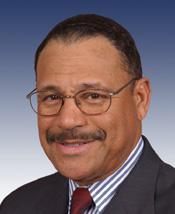
United States · Official source
6,517 records where Rep. Bishop, Sanford D. [D-GA-2] is listed as a sponsor, author, or other actor. Search with topics and years
United States · United States Congress · 26 March 2026
United States · United States Congress · 24 March 2026
United States · United States Congress · 19 March 2026
United States · United States Congress · 19 March 2026
This resolution supports the designation of National Women in Agriculture Day. It also recognizes the important role of women in agriculture as producers, educators, leaders, mentors, and more.
United States · United States Congress · 18 March 2026
United States · United States Congress · 18 March 2026
United States · United States Congress · 17 March 2026
United States · United States Congress · 12 March 2026
United States · United States Congress · 12 March 2026
United States · United States Congress · 12 March 2026
United States · United States Congress · 9 March 2026
United States · United States Congress · 5 March 2026
United States · United States Congress · 5 March 2026
United States · United States Congress · 4 March 2026
Democracy Is Strengthened by Casting Light On Spending in Elections Act of 2026 or the DISCLOSE Act of 2026 This bill addresses campaign finance, including by expanding the prohibition on campaign spending by foreign nationals, requiring additional disclosures of campaign expenditures, and requiring additional disclosures regarding certain political advertisements. Specifically, the bill expands existing foreign money prohibitions to include disbursements for paid web-based or digital communications and federal judicial nomination communications. It also prohibits foreign nationals from contributing to campaigns related to ballot initiatives and referenda. The Government Accountability Office must, for each four-year election cycle, study and report on the incidence of illicit foreign money in federal elections. Next, the bill makes it unlawful to establish or use a corporation, company, or other entity with the intent to conceal an election contribution or donation by a foreign national. A violator is subject to criminal penalties—a fine, a prison term of up to five years, or both. Covered organizations (e.g., corporations, labor organizations, and political organizations) must, within 24 hours, file reports with the Federal Election Commission to disclose campaign expenditures of more than $10,000 during an election cycle. The bill also requires organizations to provide additional disclosures regarding political advertisements, including the donors who contributed the most money to that organization in the last year.
United States · United States Congress · 4 March 2026
United States · United States Congress · 3 March 2026
United States · United States Congress · 3 March 2026
United States · United States Congress · 26 February 2026
United States · United States Congress · 26 February 2026
United States · United States Congress · 26 February 2026
Land Grant Research Prioritization Act of 2026 This bill includes additional priorities as Department of Agriculture (USDA) high-priority research and extension areas. Under the bill, USDA may award grants for developing and evaluating (1) technologies to mechanize agricultural processes (and may emphasize processes for harvesting specialty crops), and (2) agricultural uses of artificial intelligence (and may emphasize uses for improving specialty crop production). Further, USDA may award grants to support research projects at land-grant colleges and universities to develop and apply methods to manage and eradicate invasive species of plants and animals, including through methods of biocontrol; and aquaculture methods, including through the propagation and rearing of economically and ecologically valuable aquatic and marine species.
United States · United States Congress · 26 February 2026
United States · United States Congress · 25 February 2026
United States · United States Congress · 25 February 2026
United States · United States Congress · 23 February 2026
This resolution supports the designation of National FFA (Future Farmers of America) Week. It also celebrates the 50th anniversary of the chartering of Alaska as a State FFA Association of the National FFA Organization.
United States · United States Congress · 17 February 2026
United States · United States Congress · 17 February 2026
United States · United States Congress · 12 February 2026
This resolution supports the designation of Career and Technical Education Month to celebrate career and technical education across the United States.
United States · United States Congress · 11 February 2026
Department of Homeland Security Appropriations Act, 2026 This bill provides FY2026 appropriations for various agencies and offices within the Department of Homeland Security (DHS), except for U.S. Immigration and Customs Enforcement (ICE), U.S. Customs and Border Protection (CBP), and management and oversight activities of the Office of the Secretary. Specifically, the bill provides appropriations to DHS for the Federal Protective Service, the Office of Inspector General, the Transportation Security Administration, the U.S. Coast Guard, the U.S. Secret Service, the Cybersecurity and Infrastructure Security Agency, the Federal Emergency Management Agency (FEMA), U.S. Citizenship and Immigration Services, the Federal Law Enforcement Training Centers, and the Science and Technology Directorate. The bill does not provide appropriations for some agencies and activities that have been funded in prior DHS appropriations acts, including ICE, CBP, and management and oversight activities of the Office of the Secretary.
United States · United States Congress · 10 February 2026
United States · United States Congress · 9 February 2026
United States · United States Congress · 9 February 2026
This resolution recognizes National Mentoring Month.
United States · United States Congress · 5 February 2026
United States · United States Congress · 5 February 2026
United States · United States Congress · 4 February 2026
Rebuild America's Schools Act of 2026 This bill provides support for long-term improvements to public elementary and secondary school facilities. First, the bill sets forth allocations to states and establishes a need-based grant program for local educational agencies (LEAs) to improve school facilities. Further, the bill specifies allowable uses of grant funds, including carrying out major repairs, improving indoor air quality, and making facilities accessible to individuals with disabilities. Additionally, the bill requires LEAs that receive funds for new construction, modernization, or renovation projects to comply with hazard-resistance building codes and performance criteria under the WaterSense program of the Environmental Protection Agency. Further, the bill requires such LEAs to adopt certain green practices (environmental standards) and requires the use of iron, steel, and manufactured products that are made in the United States (Buy America). The bill restores school infrastructure tax credit bonds. The bill also sets forth reporting requirements, including annual reports on grant program projects and a report by the Government Accountability Office that requires a study of the geographic distribution of projects, the impact of selected projects on student and staff health and safety, and the accessibility of projects to high-needs schools. The bill also establishes the Office of School Infrastructure and Sustainability within the Department of Education. Next, the bill extends through FY2031 the Impact Aid Construction program. Finally, the bill establishes a grant program to assist LEAs with repairing or replacing concrete foundations affected by pyrrhotite (an iron sulfide material linked to crumbling foundations).
United States · United States Congress · 30 January 2026
This resolution supports the designation of the International Year of the Woman Farmer and recognizes the critical role of women in agriculture. The resolution also encourages citizens to celebrate the impact these women have on the food systems and agricultural workforce of the United States by encouraging and empowering women to pursue careers in agriculture and cultivate leadership opportunities.
United States · United States Congress · 27 January 2026
United States · United States Congress · 22 January 2026
United States · United States Congress · 22 January 2026
United States · United States Congress · 22 January 2026
United States · United States Congress · 22 January 2026
United States · United States Congress · 16 January 2026
United States · United States Congress · 15 January 2026
Equitable Access to School Facilities Act This bill expands and revises certain grant programs under the Charter Schools Program (CSP). Currently, the CSP's State Charter School Facilities Incentive Grant (SFIG) program provides competitive grants to help states establish and enhance or administer per-pupil facilities aid for charter schools. The bill replaces the SFIG program with a new grant program, which requires the Department of Education to (1) award competitive grants to state entities with the highest-quality applications for paying the federal share of acquiring and maintaining charter school facilities; and (2) give priority to certain state entities, such as those located in a state that has tax-exempt financing for charter schools. Further, the bill outlines program requirements (e.g., cost-sharing) and allowable uses of grants. Currently, the CSP's State Entities (SE) program authorizes competitive grants to state entities and, through them, subgrants to eligible applicants to enable them to open and prepare for the operation of a new charter school or replicate or expand a charter school. The bill revises the SE program by allowing grants to be used for (1) providing assistance to charter schools with locating and accessing a facility, and (2) providing one-time assistance to ensure the facility complies with building codes. Further, state entities may reserve up to 10% of grant funds for a revolving loan fund. The bill (1) specifies that no funds made available under the CSP create a federal interest in associated property, and (2) revises reporting requirements for the CSP's Credit Enhancement grants.
United States · United States Congress · 15 January 2026
This resolution recognizes the important role that local nutrition programs supported through the Older Americans Act of 1965 play in addressing senior hunger, malnutrition, and isolation.
United States · United States Congress · 15 January 2026
United States · United States Congress · 15 January 2026
United States · United States Congress · 13 January 2026
Hemp Planting Predictability Act This bill extends by two years the implementation of changes to the regulation of hemp products, which reimpose certain federal controls over some hemp products. Specifically, Congress enacted the FY2026 agriculture appropriations act (P.L. 119-37) on November 12, 2025. Effective November 12, 2026, the act modifies the statutory definition of hemp products that are considered to be lawful. This bill extends the effective date to November 12, 2028. As background, the 2018 farm bill excluded hemp from the Controlled Substances Act definition of marijuana and defined hemp . As a result, hemp and hemp-derived products at or below the 0.3% delta-9 tetrahydrocannabinol (THC, the psychoactive component of marijuana) concentration threshold were no longer regulated as Schedule I controlled substances and registration with the Drug Enforcement Administration was no longer required to cultivate or handle hemp and hemp-derived products. However, hemp remained subject to Department of Agriculture and Food and Drug Administration regulation. The 2025 changes to the definition of hemp, include changing the limit to a total THC concentration of not more than 0.3% on a dry weight basis rather than only delta-9 THC, explicitly including industrial hemp, excluding seeds from a cannabis plant that exceed a certain THC concentration, and excluding various types of hemp-derived cannabinoid products. Cannabinoids refer to unique chemical compounds that are found in hemp and marijuana (e.g., THC) and are known to exhibit a range of psychological and physiological effects.
United States · United States Congress · 13 January 2026
United States · United States Congress · 13 January 2026
United States · United States Congress · 8 January 2026
United States · United States Congress · 19 December 2025