Bill· HRH.R. 5519 (119th)referred
Welles Remy Crowther Congressional Gold Medal Act
United States · United States Congress · 19 September 2025
The world's political record
Person
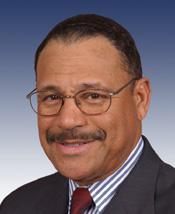
United States · Official source
6,517 records where Rep. Bishop, Sanford D. [D-GA-2] is listed as a sponsor, author, or other actor. Search with topics and years
United States · United States Congress · 19 September 2025
United States · United States Congress · 19 September 2025
United States · United States Congress · 18 September 2025
United States · United States Congress · 18 September 2025
United States · United States Congress · 17 September 2025
This joint resolution nullifies the rule titled Patient Protection and Affordable Care Act; Marketplace Integrity and Affordability , which was issued by the Centers for Medicare & Medicaid Services on June 25, 2025. The rule makes several changes to enrollment requirements for health insurance exchanges, including (1) requiring annual open enrollment periods for all exchanges to begin by November 1 and end by December 31, (2) requiring all exchanges to conduct pre-enrollment verification of eligibility for at least 75% of new enrollments through special enrollment periods, and (3) prohibiting Deferred Action for Childhood Arrivals (DACA) recipients from enrolling in plans through exchanges or in state Basic Health Programs (state programs for certain low-income residents). The rule also prohibits individual and small group health insurers from covering certain sex-trait modification procedures as an essential health benefit.
United States · United States Congress · 17 September 2025
United States · United States Congress · 17 September 2025
United States · United States Congress · 16 September 2025
Pay Our Troops Act of 2026 This bill provides continuing appropriations for military pay for any period during which interim or full-year appropriations for FY2026 are not in effect (i.e., a government shutdown). Specifically, the bill provides FY2026 continuing appropriations for the pay and allowances of (1) members of the Armed Forces, including reserve components, who perform active service during the period; and (2) civilian personnel and contractors of the Department of Defense (and the Department of Homeland Security in the case of the Coast Guard) who are providing support to such members of the Armed Forces. If a government shutdown occurs, the bill provides the continuing appropriations until the earlier of (1) the enactment into law of specified appropriations legislation, or (2) January 1, 2027.
United States · United States Congress · 16 September 2025
Faster Labor Contracts Act This bill establishes mandatory deadlines for parties negotiating an initial collective bargaining agreement (CBA) and provides for mediation and arbitration to finalize CBAs. Under the bill, CBA negotiations must begin within 10 days after an employer receives a written request from a newly recognized or certified bargaining representative. The bill provides that parties must make every reasonable effort to conclude and sign a CBA. Further, the bill provides that, if the parties have not reached an agreement after 90 days, either party may request mediation by the Federal Mediation and Conciliation Service (FMCS). The bill directs FMCS to use its best efforts to secure an agreement. If mediation does not result in an agreement within 30 days (or an additional period agreed to by both parties), FMSC must refer the parties to an arbitration panel to render a decision settling the dispute. The panel must consider specified factors, including the employer's financial prospects and employees' cost of living. The resulting CBA is binding on the parties for two years. (Parties may agree to amend the terms during the two-year period.) The bill specifies that (1) an employer must maintain current wages, hours, terms, and conditions of employment during negotiations; and (2) an employer's duty to collectively bargain continues even if a representative has been decertified. The Government Accountability Office must report to Congress regarding the average number of days between the certification or recognition of a bargaining representative and the date the initial CBA was executed.
United States · United States Congress · 16 September 2025
United States · United States Congress · 15 September 2025
This bill designates the multispecialty clinic of the Department of Veterans Affairs in Marietta, Georgia, as the Colonel Michael H. Boyce Department of Veterans Affairs Multispecialty Clinic or the Colonel Michael H. Boyce VA Clinic.
United States · United States Congress · 15 September 2025
George Floyd Justice in Policing Act of 2025 This bill addresses a wide range of policies and issues regarding policing practices and law enforcement accountability. It increases accountability for law enforcement misconduct, restricts the use of certain policing practices, enhances transparency and data collection, and establishes best practices and training requirements. The bill enhances existing enforcement mechanisms to remedy violations by law enforcement. Among other things, it does the following: lowers the criminal intent standard—from willful to knowing or reckless—to convict a law enforcement officer for misconduct in a federal prosecution, limits qualified immunity as a defense to liability in a private civil action against a law enforcement officer, and grants administrative subpoena power to the Department of Justice (DOJ) in pattern-or-practice investigations. It establishes a framework to prevent and remedy racial profiling by law enforcement at the federal, state, and local levels. It also limits the unnecessary use of force and restricts the use of no-knock warrants, chokeholds, and carotid holds. The bill creates a national registry—the National Police Misconduct Registry—to compile data on complaints and records of police misconduct. It also establishes new reporting requirements, including on the use of force, officer misconduct, and routine policing practices (e.g., stops and searches). Finally, it directs DOJ to create uniform accreditation standards for law enforcement agencies and requires law enforcement officers to complete training on racial profiling, implicit bias, and the duty to intervene when another officer uses excessive force.
United States · United States Congress · 15 September 2025
United States · United States Congress · 11 September 2025
United States · United States Congress · 10 September 2025
United States · United States Congress · 10 September 2025
This resolution (1) recognizes the 135 years of significant and meaningful contributions the 1890 Institutions (i.e., historically Black universities established under the Second Morrill Act of 1890) have made to the United States, (2) supports the efforts of the Department of Agriculture and other federal agencies to build stronger partnerships with such institutions, and (3) commits to working in a bipartisan way to address the past funding and program inequities of such institutions.
United States · United States Congress · 9 September 2025
United States · United States Congress · 9 September 2025
United States · United States Congress · 19 August 2025
Farm Credit Adjustment Act This bill allows the Farm Credit Administration (FCA) to examine low-risk Farm Credit System institutions every 24 months. Specifically, FCA has the sole discretion to extend the currently mandated 18-month examination period for all institutions to 24 months for low-risk institutions. FCA regulates the Farm Credit System, which is a network of borrower-owned lending institutions that operates as a government-sponsored enterprise and makes loans to creditworthy farmers.
United States · United States Congress · 15 August 2025
United States · United States Congress · 15 August 2025
United States · United States Congress · 12 August 2025
United States · United States Congress · 5 August 2025
This resolution supports the designation of National Farmers Market Week. The resolution also recognizes the vital role that farmers markets play in bringing communities together and in supporting the livelihoods of millions of people in the United States.
United States · United States Congress · 1 August 2025
Protecting Health Care and Lowering Costs Act 2025 This bill makes permanent temporary provisions that generally expand eligibility for and increase the amount of the premium tax credit. This bill also repeals multiple Medicaid, Medicare, and health-related tax provisions enacted by the One Big Beautiful Bill Act (OBBBA). Currently, eligible taxpayers may claim the premium tax credit, which applies toward the cost of obtaining health insurance through health insurance exchanges. To qualify, a taxpayer’s household income must meet or exceed 100% of the federal poverty level (FPL) and, after 2025, may not exceed 400% of the FPL (maximum income limit). For 2021-2025, the maximum income limit is eliminated, which generally expands eligibility for the premium tax credit. Further, under current law, the amount of the premium tax credit is partially based on the taxpayer’s household income multiplied by the applicable percentage. The applicable percentage varies depending on which of six income ranges (adjusted for inflation after 2025) the taxpayer’s household income falls within. For 2021-2025, the applicable percentages are lowered and the adjustment of the applicable percentages for inflation is eliminated, which generally increases the amount of the premium tax credit. The bill permanently eliminates the 400% maximum income limit, lowers the applicable percentages, and eliminates the inflation adjustment for the applicable percentages. Finally, the bill repeals multiple Medicaid, Medicare, and health-related tax provisions enacted by the OBBBA, including certain Medicare and Medicare eligibility and verification requirements, the reduced window for retroactive Medicaid coverage, and premium tax credit verification requirements.
United States · United States Congress · 29 July 2025
United States · United States Congress · 29 July 2025
United States · United States Congress · 23 July 2025
United States · United States Congress · 23 July 2025
Fixing Emergency Management for Americans Act of 2025 or the FEMA Act of 2025 This bill reestablishes the Federal Emergency Management Agency (FEMA) (currently within the Department of Homeland Security) as an independent, cabinet-level agency. It also makes broad changes to FEMA’s disaster and hazard mitigation assistance programs. The bill generally transfers FEMA’s current functions and authorities to the independent FEMA, except for certain security-related programs. The bill makes various changes to the Public Assistance program, including by establishing new grants for expedited funding to repair or replace disaster-damaged facilities, establishing block grants that recipients may choose instead of Public Assistance for smaller disasters, expediting and expanding uses of funding for emergency response and debris removal, and allowing use of excess administrative funds for increasing recipients’ disaster management capacity. The bill makes various changes to the Individual Assistance program, including by expanding eligibility for housing assistance, expanding mitigation and direct (non-financial) assistance for residences, reducing certain restrictions on funds duplicating program benefits, and establishing a unified disaster application system. The bill makes various changes to FEMA’s mitigation programs, including by establishing mitigation plans with preapproved projects, authorizing an entire Hazard Mitigation Grant Program grant to be provided before costs are incurred, changing pre-disaster mitigation assistance to noncompetitive formula grants, and allowing recipients to combine mitigation project funds from multiple federal programs. Additionally, federal entities must publish various information relating to disaster assistance and conduct various studies on related topics (e.g., preliminary damage assessments, fast-moving disasters, and government emergency alerting systems).
United States · United States Congress · 23 July 2025
Resident Physician Shortage Reduction Act of 2025 This bill increases the number of residency positions eligible for graduate medical education payments under Medicare for qualifying hospitals, including hospitals in rural areas and health professional shortage areas. The bill provides for an additional increase of 2,000 positions per fiscal year from FY2026-FY2032; during this period, each hospital may receive up to 75 additional positions in total under the bill and current law. Additionally, one-third of the positions that are made available under the bill must be allocated to hospitals that are already operating above applicable resident limits. The bill also requires the Government Accountability Office to report on strategies to increase the diversity of the health professional workforce, including with respect to representation from rural, low-income, and minority communities.
United States · United States Congress · 23 July 2025
Freedom to Move Act This bill directs the Department of Transportation to award competitive five-year grants (i.e., Freedom to Move Grants) to states, local governments, transit agencies, and nonprofit organizations in both rural and urban areas to cover the lost fare revenue for fare-free public transportation and improve public transportation. Grants must be used to support (1) implementing a fare-free transit program; and (2) efforts to improve public transportation, particularly in underserved communities, such as costs associated with efforts to provide more safe, frequent, and reliable bus service, including bus stop safety and accessibility improvements, and pedestrian and bike shelters.
United States · United States Congress · 22 July 2025
United States · United States Congress · 22 July 2025
United States · United States Congress · 17 July 2025
United States · United States Congress · 17 July 2025
United States · United States Congress · 17 July 2025
United States · United States Congress · 15 July 2025
Farmers First Act of 2025 This bill extends through FY2030 and revises the Farm and Ranch Stress Assistance Network (FRSAN). This Department of Agriculture program provides competitive grants to states, Indian tribes, and qualified nonprofit organizations to provide stress assistance programs (i.e., professional agricultural behavioral health counseling, helplines, and resources) to individuals engaged in farming, ranching, and agriculture-related occupations. The bill specifies that the grant funding for farm telephone helplines and websites may also be used for crisis lines. Further, FRSAN grant recipients may establish referral relationships with providers, including Certified Community Behavioral Health Clinics, health centers, rural health clinics, and critical access hospitals.
United States · United States Congress · 15 July 2025
United States · United States Congress · 14 July 2025
United States · United States Congress · 14 July 2025
United States · United States Congress · 10 July 2025
United States · United States Congress · 10 July 2025
United States · United States Congress · 10 July 2025
This resolution expresses support for the designation of Journeyman Lineworkers Recognition Day. (A journeyman lineworker is a person who builds and maintains electrical power systems.)
United States · United States Congress · 2 July 2025
United States · United States Congress · 30 June 2025
United States · United States Congress · 27 June 2025
United States · United States Congress · 26 June 2025
United States · United States Congress · 26 June 2025
United States · United States Congress · 25 June 2025
United States · United States Congress · 24 June 2025
Women's Health Protection Act of 2025 This bill prohibits governmental restrictions on the provision of, and access to, abortion services. Before fetal viability, governments may not restrict providers from using particular abortion procedures or drugs, offering abortion services via telemedicine, or immediately providing abortion services if delaying risks the patient's health. Furthermore, governments may not require providers to perform unnecessary medical procedures, provide medically inaccurate information, or comply with credentialing or other conditions that do not apply to providers who offer medically comparable services to abortions. Additionally, governments may not require patients to make medically unnecessary in-person visits before receiving abortion services or disclose their reasons for obtaining services. After fetal viability, governments may not restrict providers from performing abortions when necessary to protect a patient's life and health. The same provisions that apply to abortions before viability also apply to necessary abortions after viability. Additionally, states may authorize post-viability abortions in circumstances beyond those that the bill considers necessary. Further, the bill recognizes an individual's right to interstate travel, including for abortion services. The bill also prohibits governments from implementing measures that are similar to those restricted by the bill or that otherwise target and impede access to abortion services, unless the measure significantly advances the safety of abortion services or health of patients and cannot be achieved through less restrictive means. The Department of Justice, individuals, or providers may sue states or government officials to enforce this bill, regardless of certain immunity that would otherwise apply.
United States · United States Congress · 24 June 2025